




Arles is not only one of southern France’s great historic cities. It is also a remarkably practical base for exploring Roman monuments, medieval towns, Mediterranean city life, the Camargue wetlands and the limestone landscapes of the Alpilles. The best day trips from Arles range from a 20-minute train ride to a full day on the wild edge of the Rhône delta.
We are a French family and former France travel planners, and we have designed this guide to help you choose an excursion that is genuinely realistic in one day. Journey times below are indicative and should always be checked for your exact date, especially for regional buses and summer travel.
Best Day Trips from Arles at a Glance
- Best easy train trip: Nîmes, for major Roman monuments only about 31 km (19 miles) from Arles.
- Best medieval city: Avignon, reached by the fastest trains in roughly 17 to 20 minutes.
- Best lively city break: Montpellier, for pedestrian streets, squares and a younger urban atmosphere.
- Best Mediterranean day: Marseille, where the Old Port, Le Panier and the Mucem can fill a complete day.
- Best classic Camargue trip: Saintes-Maries-de-la-Mer, around 37 km (23 miles) from Arles by road.
- Best wild landscapes: Salin-de-Giraud, for salt flats, open horizons and the eastern Camargue.
- Best fortified town: Aigues-Mortes, surrounded by remarkably complete medieval ramparts.
- Best art and history combination: Saint-Rémy-de-Provence, with its old streets and nearby ancient remains.
- Best hilltop village: Les Baux-de-Provence, the most dramatic short drive from Arles.
- Best single Roman monument: Pont du Gard, where history, landscape and walking trails come together.
Arles sits naturally between the Camargue and the Alpilles, while rail links open the way toward several important cities. That unusual position explains why it works so well as a base. For a broader view of the region before choosing, consult our Provence travel guide and interactive Provence tourist map.
Easy City Day Trips from Arles by Train
1. Nîmes: Roman Monuments and a Walkable Historic Center
Nîmes is the easiest all-round day trip from Arles for travelers who want maximum historical interest with minimum transport effort. The two cities are about 31 km (19 miles) apart by road, and the fastest direct trains can complete the journey in around 24 minutes. Some departures take longer, so prioritize a direct service when comparing schedules.
The city’s Roman identity is immediately visible. Its great amphitheater still dominates the center, while the Maison Carrée presents the clear, balanced form of an ancient temple in an urban setting that remains lively rather than museum-like.
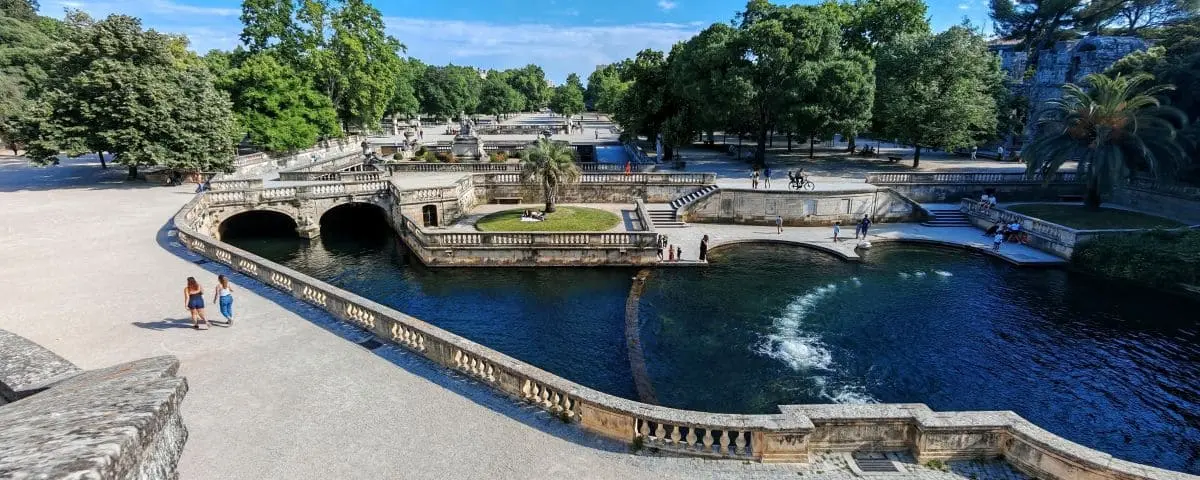
Nîmes also has shaded streets, elegant squares and gardens that give the day more variety than a simple succession of ruins. The official tourism board places the Arena, Maison Carrée and Tour Magne among the city’s defining monuments.
Start with the amphitheater before the busiest part of the day, continue toward the Maison Carrée, then allow time to wander rather than rushing from monument to monument. The historic center is compact enough to explore on foot from Nîmes Centre station, which makes a car unnecessary and removes the problem of city parking.
For a deeper itinerary, use our guide to the best things to do in Nîmes. We especially recommend Nîmes to first-time visitors, Roman history enthusiasts and anyone looking for a reliable excursion in poor or very hot weather, when a short rail journey is preferable to a long drive.
2. Avignon: Papal History and Rhône-Side Views
Avignon offers a completely different historical atmosphere. Where Arles and Nîmes look back to Rome, Avignon is shaped above all by the Middle Ages and the presence of the papal court.
The shorter road route is about 37 km (23 miles), while the fastest trains from Arles can reach Avignon Centre in roughly 17 minutes. Average journey times vary by departure, but direct services make this one of the simplest day trips from Arles without a car.
The Palais des Papes is the essential visit. Its immense stone walls, ceremonial halls and elevated position convey the scale of medieval religious power more effectively than any long explanation.
The complex covers about 15,000 square meters and is presented by Avignon’s official tourism office as the largest Gothic palace, with papal apartments and surviving painted decorations among its highlights.
After the palace, walk through the old streets toward the Rhône and the Pont Saint-Bénezet. Only four of its original twenty-two arches remain, yet the fragment has become one of the most recognizable images of the city.
Avignon works best when you combine one major interior visit with time outside on the squares, lanes and river viewpoints.
Our Avignon things to do guide gives you a fuller walking plan. Travelers staying longer in the area can also compare these excursions with the best day trips from Avignon, since Arles and Avignon make complementary bases rather than interchangeable cities.
3. Montpellier: Historic Streets and Southern French City Life
Montpellier is the choice for travelers who want a change of rhythm. It does not have the concentrated Roman grandeur of Nîmes or the monumental medieval character of Avignon.
Instead, Montpellier offers a large pedestrian center, animated squares, handsome façades and the energy of a major university city.
The road distance from Arles is approximately 73 to 82 km (45 to 51 miles), depending on the route. The fastest trains can take about 52 minutes, although services with connections may take considerably longer.
Check both the journey duration and the arrival station, and favor Montpellier Saint-Roch because it places you close to the historic center.
Begin at Place de la Comédie, the great open gathering place marked by the opera house and the Three Graces fountain. From there, disappear into the narrower streets of the old center, where small squares repeatedly interrupt the urban fabric.
The tourist office describes Place de la Comédie as one of Europe’s largest pedestrian spaces, and the broader center is well suited to an unhurried day on foot.
Choose Montpellier for atmosphere, urban wandering and contrast, not for a checklist of famous monuments. It is particularly enjoyable for couples, repeat visitors to Provence and travelers who like architecture, street life and contemporary culture.
Leave enough margin before your return train, since the fastest outbound and inbound services may not fall at equally convenient times.
4. Marseille: Mediterranean Views, Museums and Old Neighborhoods
Marseille is the most ambitious city trip in this guide, but it is also the most complete. This is the day trip to choose when you want the Mediterranean, a working port, major museums and neighborhoods with a strong personality.
The road distance is roughly 86 to 92 km (53 to 57 miles). Direct trains are far more convenient, with the fastest journeys taking about 46 minutes and many services taking around one hour.
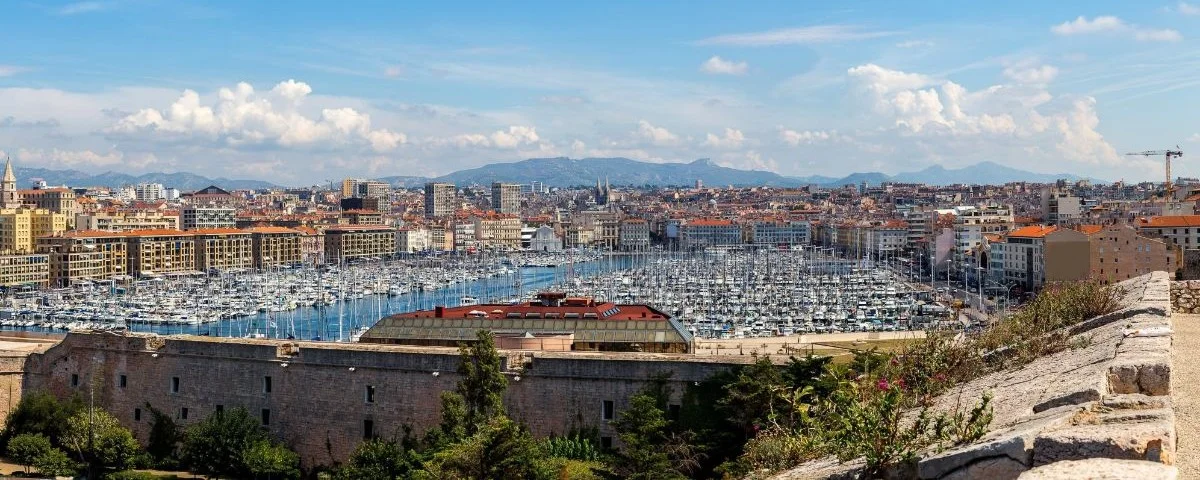
From Saint-Charles station, descend toward the Old Port and let the city reveal itself gradually. The port remains Marseille’s visual and emotional center, framed by boats, broad quays and streets climbing toward different districts.
Continue to Le Panier, the oldest neighborhood, where stairs, small squares and colorful façades create a dense village-like texture within the metropolis.
Then walk toward the Mucem and Fort Saint-Jean. The museum occupies a symbolic position at the entrance to the port and extends across a large cultural complex linking modern architecture with historic defenses.
Even travelers who do not enter every exhibition should keep time for the exterior walkways and views around the Mucem.
One day is not enough to understand Marseille fully, so avoid crossing the whole city. Build your route around the Old Port, Le Panier and the waterfront, or follow our focused guide to the best things to do in Marseille.
This excursion suits energetic travelers who are comfortable walking and prefer urban intensity to the quiet landscapes of inland Provence.
Camargue Day Trips from Arles

5. Saintes-Maries-de-la-Mer: Beaches, Wetlands and Camargue Culture
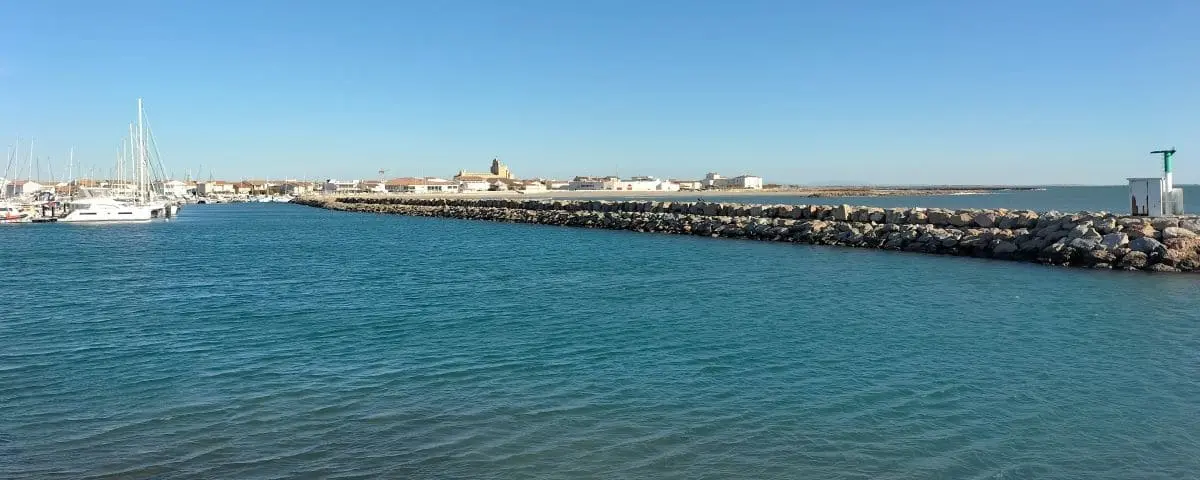
Saintes-Maries-de-la-Mer is the classic answer to the question of how to visit the Camargue from Arles. It combines a compact coastal village with access to beaches, wetlands, horses, birdlife and the traditions most closely associated with the Rhône delta.
The road journey is about 37 km (23 miles) and usually takes 30 to 35 minutes in light traffic.
The village itself is low, bright and exposed to the elements. Its fortified church rises above the surrounding roofs and once served as both a religious building and a place of protection.
Climbing to its upper level gives you a clearer sense of the immense flat landscape around the town. The seafront adds an easy walk, but the real value of the excursion lies in combining the village with the natural environment beyond it.
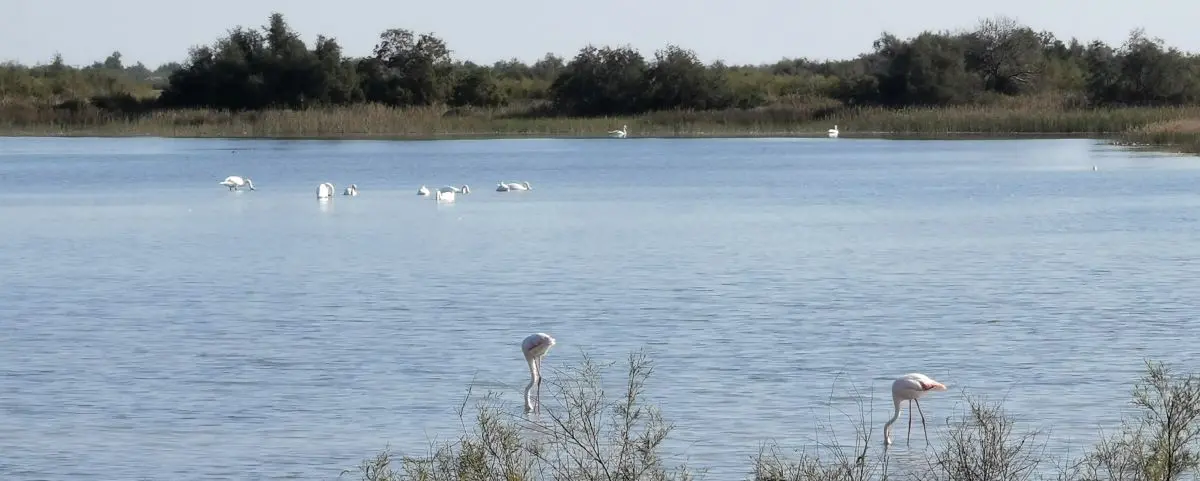
For wildlife, allow time for an ornithological area or a carefully chosen route through the wetlands. Flamingos are the emblematic sight, but the Camargue rewards slower observation: reed beds, lagoons, open grazing land and sudden movements of birds across the water.
Horse riding is widely offered, though a nature walk or guided outing may suit visitors who want more interpretation. The official tourism office highlights the seawall, bird park, panoramic church view and riding experiences among the essentials.
A car gives you the greatest freedom, but seasonal buses can make the trip possible without one. Always check the last return service before leaving Arles.
For a first Camargue day, we recommend Saintes-Maries over Salin-de-Giraud because it offers more facilities and a clearer balance between village, coast and nature.
6. Salin-de-Giraud: Salt Flats and Wild Camargue Landscapes
Salin-de-Giraud feels more remote, more industrial and more austere than Saintes-Maries-de-la-Mer. That difference is precisely its appeal.
This is the best day trip from Arles for travelers who want the Camargue as a vast working landscape rather than a polished seaside destination.
The village lies about 39 km (24 miles) from Arles by road, with a typical drive of roughly 42 minutes. Bus connections exist, but they are less flexible than traveling by car, particularly if you want to reach viewpoints, nature areas or the coast beyond the settlement.
The landscape is shaped by salt production, broad basins and immense piles of harvested salt. The regional nature park notes that the salt gathered in summer is stored in mounds that can reach impressive dimensions, visible from the salt-lake viewpoint on the road toward Piémanson.
Around this industrial geometry, birds occupy lagoons and shallow waters, creating one of the Camargue’s most unusual combinations of human activity and wildlife.
Do not plan this day as a conventional village visit. Bring water, sun protection and a clear route. The strongest experience comes from the open horizons, changing colors and feeling of isolation, not from a long list of monuments.
Wind can be intense, shade is limited, and distances that look short on a map may feel longer in summer heat.
Salin-de-Giraud is ideal for photographers, birdwatchers and repeat visitors who have already seen the more accessible side of the Camargue. Families seeking an easier introduction will generally prefer Saintes-Maries or Aigues-Mortes.
7. Aigues-Mortes: Medieval Walls on the Edge of the Camargue
Aigues-Mortes creates one of the most striking silhouettes in southern France. Its circuit of walls rises from an almost level landscape of canals, wetlands and salt marshes, giving the town a sense of separation from the modern world before you even pass through a gate.
The road distance from Arles is about 48 km (30 miles), and the drive takes approximately 45 minutes in normal conditions. Public transport is possible through combinations, but it is rarely as simple or efficient as driving for a day trip.
Walk the ramparts first if the weather is comfortable. The circuit extends for roughly 1,643 meters and opens repeated views over the rooftops, canal and salt flats.
From above, the relationship between the fortified town and its environment becomes obvious. The streets inside are easy to explore, but they are busiest around the central square, so move toward the quieter edges of the enclosure as well.
The nearby saltworks provide the second half of the day. Located only minutes from the walls, they form a landscape of water, salt and changing color that is quite different from the eastern Camargue around Salin-de-Giraud.
Aigues-Mortes is the best choice when you want medieval heritage and Camargue scenery in one coherent excursion.
Arrive early in summer because heat and crowds can make the rampart walk tiring. This trip suits families with older children, history lovers and travelers who want impressive views without committing to a remote nature itinerary.
Alpilles Day Trips from Arles

8. Saint-Rémy-de-Provence: Roman Heritage and Provençal Streets
Saint-Rémy-de-Provence offers a softer, more intimate day than the larger cities. Its appeal comes from the combination of a refined old center, shaded streets, artistic associations and ancient remains just outside town.
The road distance is approximately 25 to 28 km (16 to 18 miles), with a typical drive of 29 to 35 minutes.
Spend the first part of the day in the center, where narrow lanes open onto small squares and elegant houses. Saint-Rémy is particularly attractive on market mornings, but those are also the busiest times.
If you prefer architecture and atmosphere to shopping, arrive after the initial rush or choose another day.
South of town, the ancient site of Glanum introduces a very different landscape. Ruins spread below the limestone relief of the Alpilles, linking archaeology with the surrounding terrain.
The area is also associated with Vincent van Gogh, whose stay near Saint-Rémy produced some of his most recognized landscapes. The official tourism office presents both Glanum and the artist’s footsteps as central experiences.
A car is the simplest option because it lets you connect the center, Glanum and the surrounding countryside without losing time. Regional buses may work for the town itself, but timetables must be checked carefully.
We recommend Saint-Rémy to travelers who want a balanced day with history, art and Provençal atmosphere rather than one dominant monument.
9. Les Baux-de-Provence: A Hilltop Village with Dramatic Views
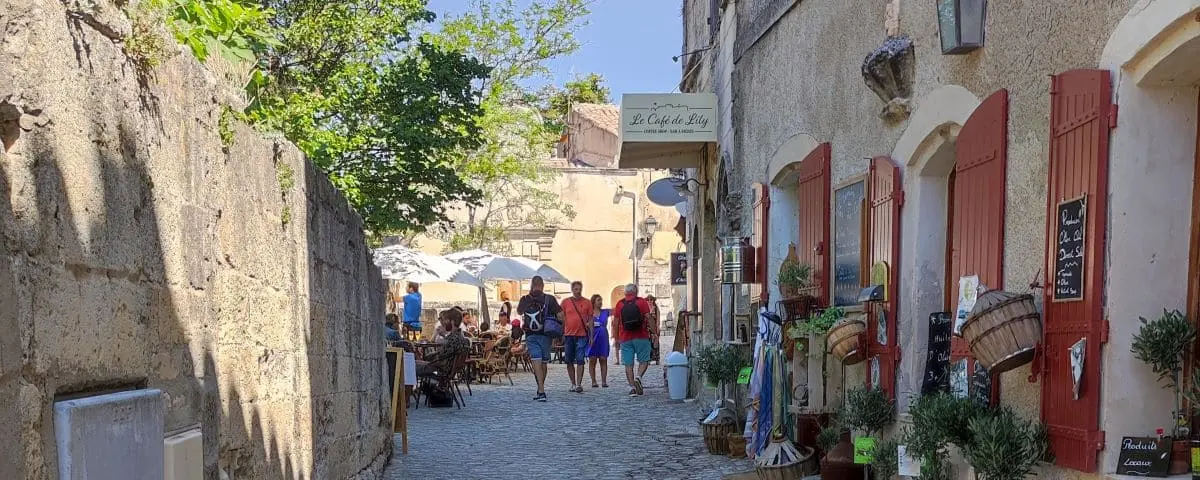
Les Baux-de-Provence is the shortest road trip in this selection and one of the most spectacular. The village occupies a rocky spur in the Alpilles, with stone buildings appearing to grow directly from the pale limestone.
It lies about 18 km (11 miles) from Arles, and the drive can take around 24 minutes before allowing for traffic and parking.
The ruined castle above the village is the key visit. From the exposed upper ground, the view extends across olive groves, vineyards and the plains toward the horizon.
The site is windy, uneven and largely outdoors, so footwear matters. Below, the village lanes are attractive but small, and they can become extremely crowded in peak season.
Nearby, the Carrières des Lumières occupy former stone quarries and host large-scale projected exhibitions. They are around 800 meters from the castle area, according to the venue’s practical information.
Combining the castle and the quarries creates a full day, but booking ahead is wise during busy periods.
Arrive early or late in the day for a calmer experience. Parking, heat and crowds are the main practical constraints, not the road journey itself.
Les Baux is best for first-time visitors, photographers and families who enjoy dramatic sites. Travelers seeking a quieter village atmosphere may prefer to spend more time in Saint-Rémy or explore smaller Alpilles communities by car.
A Roman Heritage Day Trip from Arles
10. Pont du Gard: Provence’s Great Roman Aqueduct
Pont du Gard is not a town to stroll through. It is a monumental site set within a broad Mediterranean landscape, and that focus gives the excursion unusual clarity.
You come for one extraordinary Roman structure, then stay for the riverbanks, museum spaces, viewpoints and walking trails.
The site is about 39 to 40 km (24 to 25 miles) from Arles by road. Driving commonly takes around 45 to 52 minutes, depending on the route and traffic.
Reaching it without a car generally requires traveling through Nîmes or Avignon and connecting with a regional bus, so the journey must be planned around current timetables.
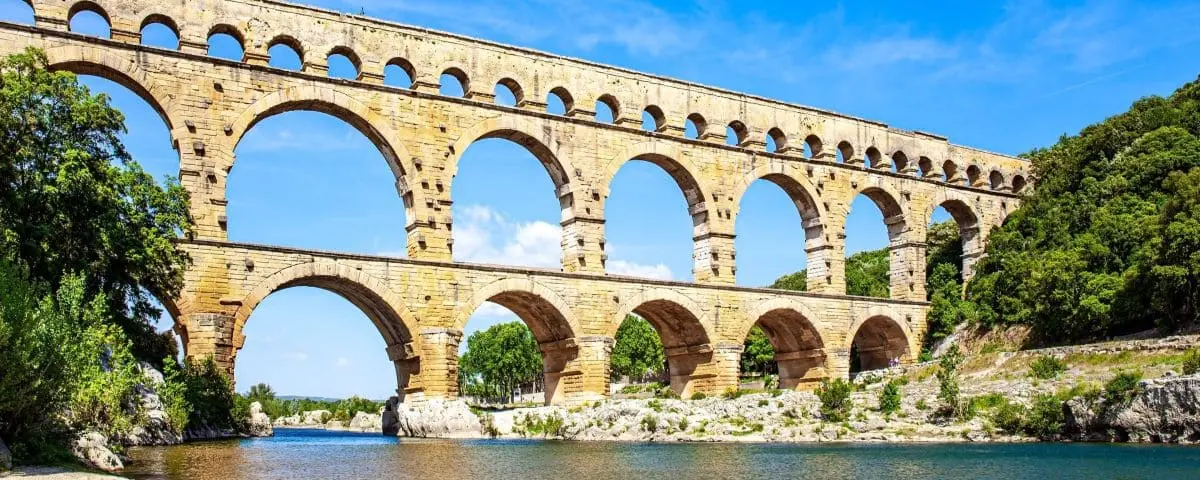
Built in the first century AD, the bridge rises 49 meters and formed the most spectacular section of a roughly 50 km aqueduct carrying water toward Nîmes.
Its three levels of arches demonstrate Roman engineering on a scale that remains immediately understandable, even to visitors with little prior interest in archaeology.
Allow at least 90 minutes for a basic visit, but half a day is far better if you want the museum and surrounding paths. For families, Pont du Gard is often more engaging than another urban monument because children can move between history, outdoor space and the river environment.
The official site recommends at least half a day for a fuller experience and notes that the grounds are pedestrian once you leave the parking areas.
This is our favorite excursion for travelers who have already explored Arles and still want Roman history without repeating the atmosphere of another ancient city.
How to Plan Your Day Trips from Arles
Taking Day Trips from Arles by Train
Arles station makes Nîmes, Avignon, Montpellier and Marseille realistic without a car. Nîmes and Avignon are the easiest rail excursions, while Montpellier and Marseille require more attention to the exact departure because journey times vary.
Use our interactive France train map to understand the broader network, then check SNCF Connect for your travel date.
Do not assume that the fastest journey shown in one direction will be available at the time you want to return. Regional engineering works, strikes and seasonal changes can also alter schedules.
Arrive at the station with a margin, especially if your ticket is tied to a specific train. For city visits, the train is usually preferable to driving because it removes parking and places you close to the center.
Exploring Around Arles Without a Car
A car-free stay in Arles is entirely possible, but not every excursion is equally convenient. Build a no-car itinerary around Nîmes, Avignon, Marseille and carefully selected bus trips, rather than trying to force remote Camargue locations into a tight schedule.
Saintes-Maries-de-la-Mer and some Alpilles destinations may have regional services, but frequency can be limited and seasonal. Always verify the final return bus, not only the outbound departure.
Guided tours from Arles can be worthwhile for the Camargue because they solve the transport problem and add interpretation of landscapes that are otherwise easy to cross without fully understanding.
For ideas within the base city itself, see our guide to the best things to do in Arles.
When Renting a Car Is Worth It
Rent a car for the Camargue, the Alpilles and Pont du Gard if flexibility matters more than avoiding driving. These landscapes are not defined by a single center. Their value lies in the roads between wetlands, viewpoints, villages, archaeological sites and walking areas.
A car is especially useful for combining Saint-Rémy with Les Baux, or for reaching Salin-de-Giraud and nearby natural viewpoints.
It is less useful for central Nîmes, Avignon, Montpellier and Marseille, where trains are straightforward and parking can consume time.
Before setting out, consult our overview of Provence cities and towns and our selection of the best things to do in Provence.
These help prevent an overloaded itinerary built from places that look close on a map but require separate days.
The Best Time of Year for Arles Day Trips
Spring and early autumn offer the best overall balance. Temperatures are generally more comfortable for ramparts, archaeological sites and exposed nature trails, while daylight remains long enough for a relaxed return.
Summer brings festivals, bright landscapes and long evenings, but it also creates heat, heavier traffic, crowded parking and more pressure on fragile natural areas. Begin outdoor excursions early, carry water and avoid assuming that every path has shade.
Winter is underrated for Nîmes, Avignon, Montpellier and Marseille. Some attractions reduce their hours, but the cities are calmer and the low light can be beautiful.
The Camargue remains compelling in cooler months, although wind and limited transport require more preparation.
Which Day Trip from Arles Should You Choose?
For the simplest decision, match the excursion to your main interest. Choose Nîmes for Roman history, Avignon for the Middle Ages, Marseille for the Mediterranean and Saintes-Maries for a first Camargue experience.
Choose Saint-Rémy and Les Baux if you have a car and want the Alpilles. Pick Aigues-Mortes when medieval walls and salt landscapes appeal equally.
Salin-de-Giraud is the more adventurous choice, while Pont du Gard delivers the strongest single monument in a natural setting.
Travelers with only two spare days should avoid choosing destinations that repeat the same experience. Pair one city with one landscape, such as Nîmes plus Saintes-Maries, or Avignon plus Les Baux.
Contrast creates a better Provence itinerary than collecting similar historic centers.
Wrap-Up: The Best Places to Visit Near Arles
- For the easiest excursion, take the train to Nîmes or Avignon.
- For a first encounter with the Camargue, choose Saintes-Maries-de-la-Mer.
- For wilder salt landscapes and fewer urban distractions, drive to Salin-de-Giraud.
- For the most complete medieval outing, combine the walls and saltworks of Aigues-Mortes.
- For an Alpilles day, pair Saint-Rémy-de-Provence with Les Baux-de-Provence if you have a car.
- For a major Mediterranean city, devote a full day to Marseille rather than trying to see it quickly.
- For one unforgettable Roman structure in the countryside, choose Pont du Gard.
Arles is unusual because so many different versions of southern France begin close to its doorstep. The best day trip is not necessarily the farthest or most famous one. It is the place that adds the strongest contrast to what you have already seen in Arles.