


PRESENTATION
A Region Between France, Germany, and the Rhine River
Alsace is one of the most distinctive regions in France, shaped by the Rhine, the Vosges mountains and centuries of contact between French and German cultures. For a traveler, this is what makes the region feel so special from the very first days of a trip. You are in France, but the architecture, food, place names, local traditions and even the rhythm of certain towns often reveal a strong Rhine identity.
This border position has deeply influenced Alsace. The region has changed political hands several times, and its history has left visible traces in its cities, villages, language and monuments. Strasbourg expresses this perfectly. It’s both a historic Alsatian capital and a major European city, home to important European institutions. Its old center, crossed by waterways, still preserves the image of a medieval and Renaissance city, while its European district looks toward the future and symbolizes reconciliation across borders.
Landscapes: Vineyards, Mountains, and Villages
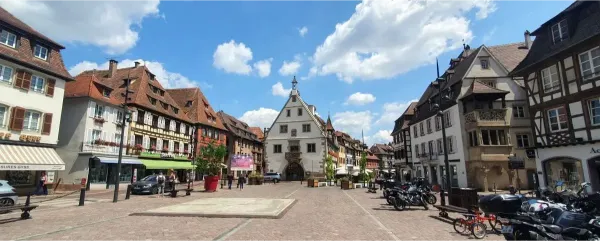
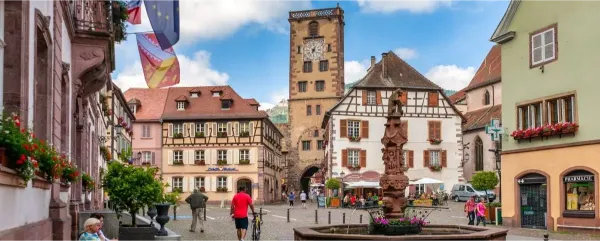
Alsace is compact, but its landscapes are surprisingly varied. The most famous image is the line of wine villages set between the plain and the lower slopes of the Vosges. The Alsace Wine Route is one of the region’s great travel experiences, linking a long series of villages, vineyards and old towns. It is a route of views: vine-covered hills, church towers, fortified gates, narrow streets, flowered balconies and colored façades.
Villages are among the places that give the region its postcard beauty. Many preserve old houses, defensive walls, cobbled streets and a strong wine-growing atmosphere. Their charm is not only decorative. They are part of a living vineyard culture, where the landscape, houses and cellars all belong to the same story. Even if you do not visit for wine tasting, the Wine Route remains one of the best ways to understand Alsace visually.
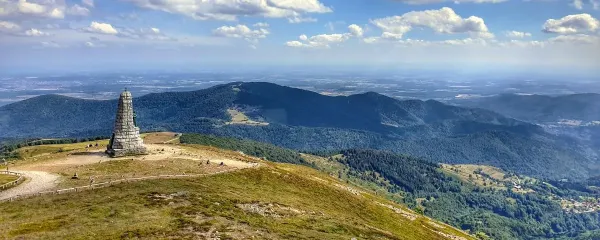
To the west, the Vosges mountains create a complete change of atmosphere. The slopes rise behind the vineyards and lead to forests, valleys, ridges, lakes and open high pastures. The Route des Crêtes is one of the great scenic drives, following the high line of the mountains and offering wide views over forests, rounded summits and mountain landscapes. In summer, this is hiking country; in winter, the higher areas can become snowy and quiet.
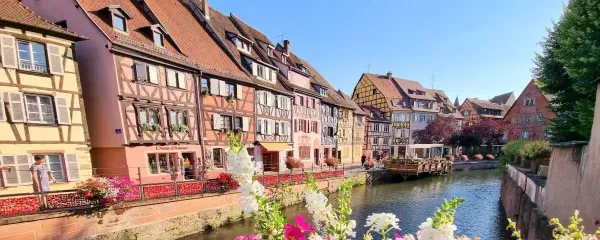
This contrast is essential to Alsace. In a short trip, you can pass from a Gothic cathedral to a wine village, from a vineyard path to a mountain ridge, from a memorial site to a canal-side old town.
Culture, Traditions, and the Alsatian Art of Living
Alsatian culture is one of the strongest reasons to visit the region. It’s expressed through architecture, food, wine, festivals, markets, local memory and everyday habits. The famous half-timbered houses are not just picturesque façades; they create the visual identity of the region. In many villages and old centers, they stand close together along narrow streets, often painted in warm colors and decorated with flowers.
Food is another central part of the Alsatian experience. The cuisine is generous, seasonal and rooted in both French and German influences. Choucroute, coq au Riesling, flammekueche, munster cheese, charcuterie, pastries and mountain meals are all part of the local table.
Wine is equally important. Alsace is known for white wines such as Riesling, Gewurztraminer, Pinot Gris and Muscat, as well as Crémant d’Alsace. The vineyard shapes both the economy and the scenery. Villages along the Wine Route are deeply linked to wine-growing, and the rhythm of the seasons changes the mood of the trip: green slopes in spring and summer, golden vines in autumn, and a more intimate atmosphere in winter.
Christmas is perhaps the most famous Alsatian tradition abroad. The region’s Christmas markets are rooted in a long history and remain one of its most atmospheric experiences. Lights, wooden stalls, spices, hot drinks, decorations, music and the smell of festive baking transform towns and villages. Strasbourg has one of the oldest and most famous Christmas markets, but the magic is found across the region.
Alsace also has a serious, reflective side. Its memorials, forts and historical sites remind visitors that this beautiful region was marked by wars and shifting borders. This memory gives depth to the journey.
OVERVIEW
Map
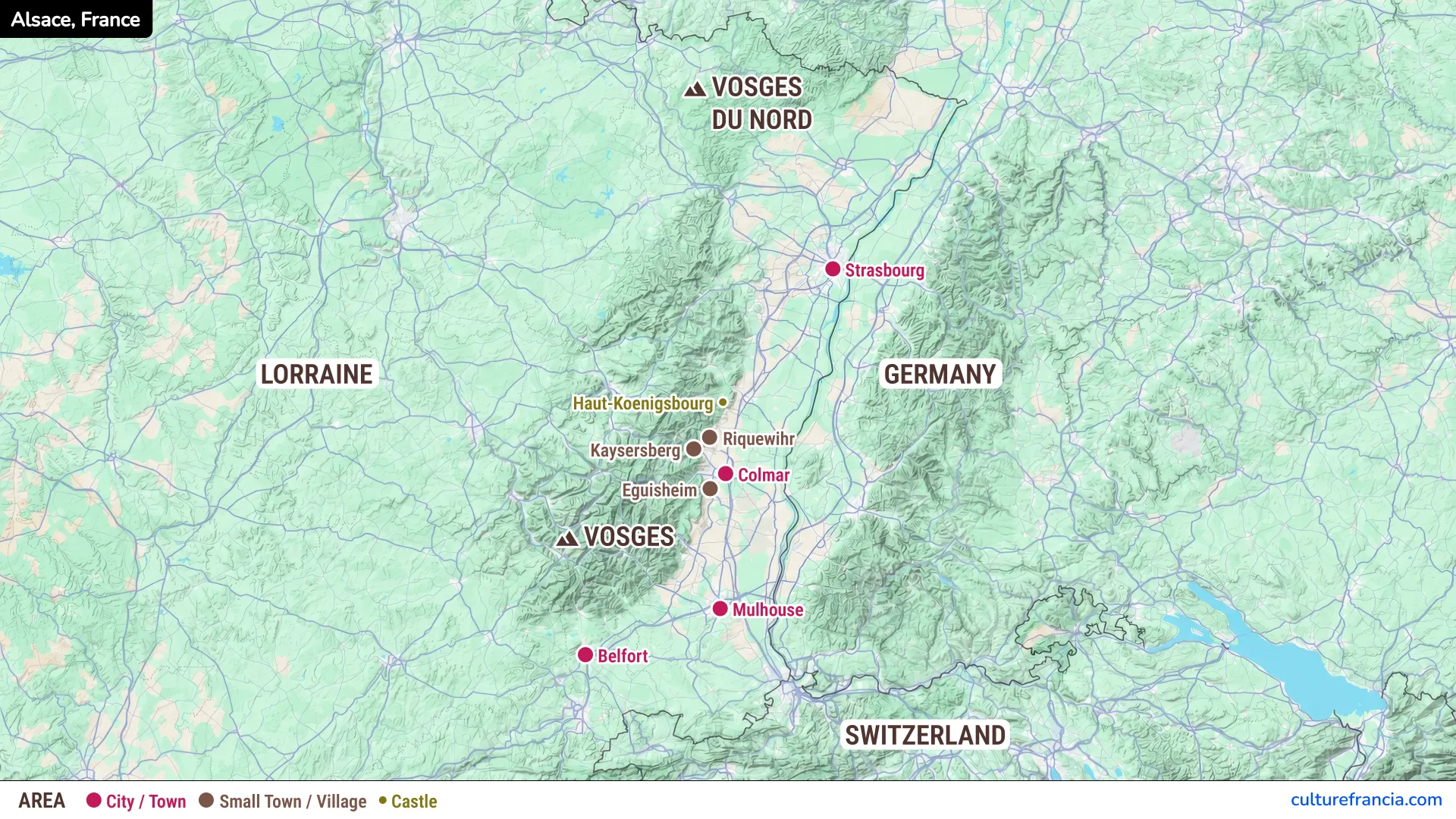
Simplified
Static Map
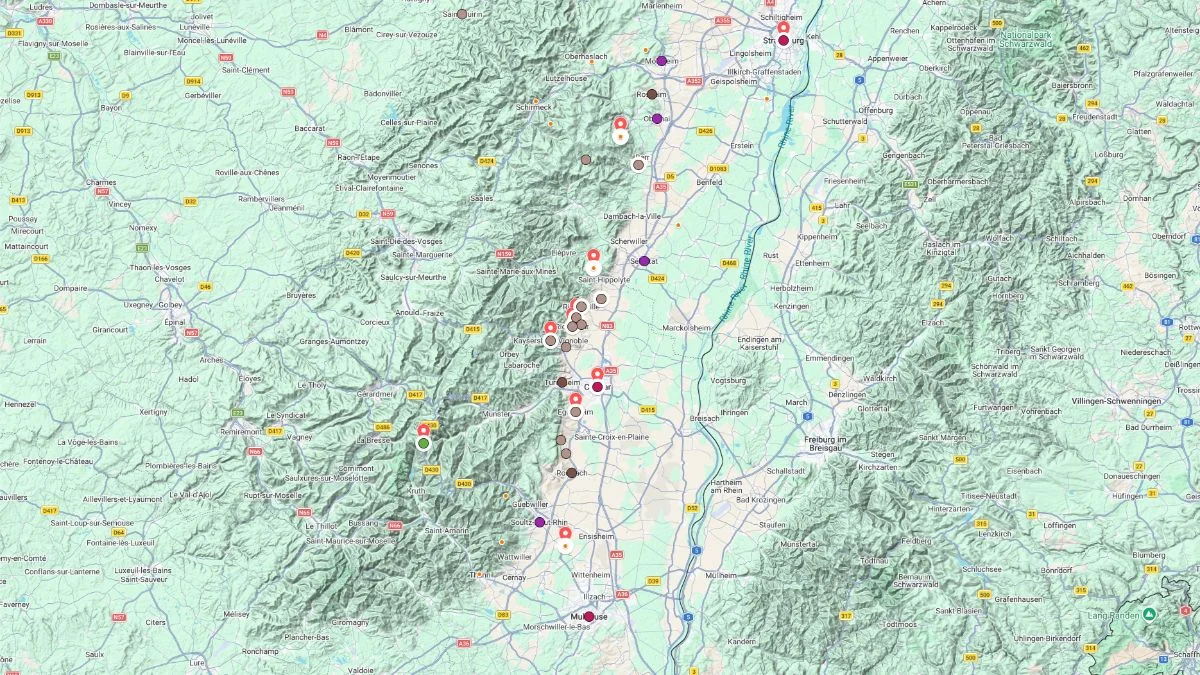
Interactive Map
Interactive Map
Click on the icon  in the top-left corner to display the map legend.
Show/Hide layers as needed.
Click on the arrow icons (v) to display the sublayers.
Top