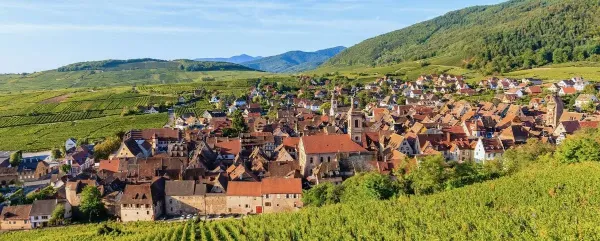



INTERACTIVE MAP
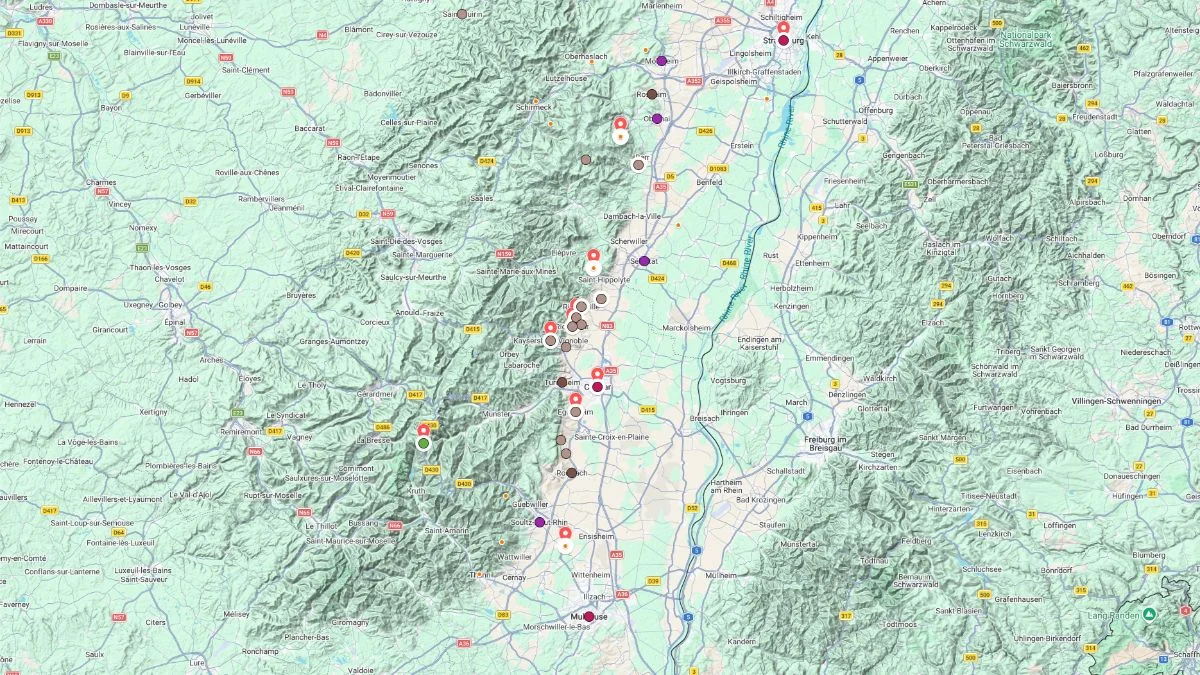
Click on the icon  in the top-right corner to view the map in full screen.
Show/Hide layers as needed.
After clicking on the image,
click on the icon  in the top-left corner to display the map legend.
Show/Hide layers as needed.
NORTH
Overview Table
| Name | Top Picks | Exp. Picks |
|---|---|---|
| Hunspach | ☑️ | |
| La Petite-Pierre | ||
| Saint-Quirin | ||
| Le Hohwald | ||
| Mittelbergheim | ☑️ |
Hunspach

In Our Expanded Picks ☑️
Hunspach gives you a very neat, almost quiet side of Alsace, with its white farmhouses framed by dark timber. The village was rebuilt after the destruction of the seventeenth century, which explains its orderly, peaceful and carefully maintained appearance.
As you walk around, you pass large houses where living quarters, former work areas and farm buildings were all part of the same complex. The village is still very much alive, but it has kept a simple gentleness, far from the feel of a picture postcard set.
La Petite-Pierre
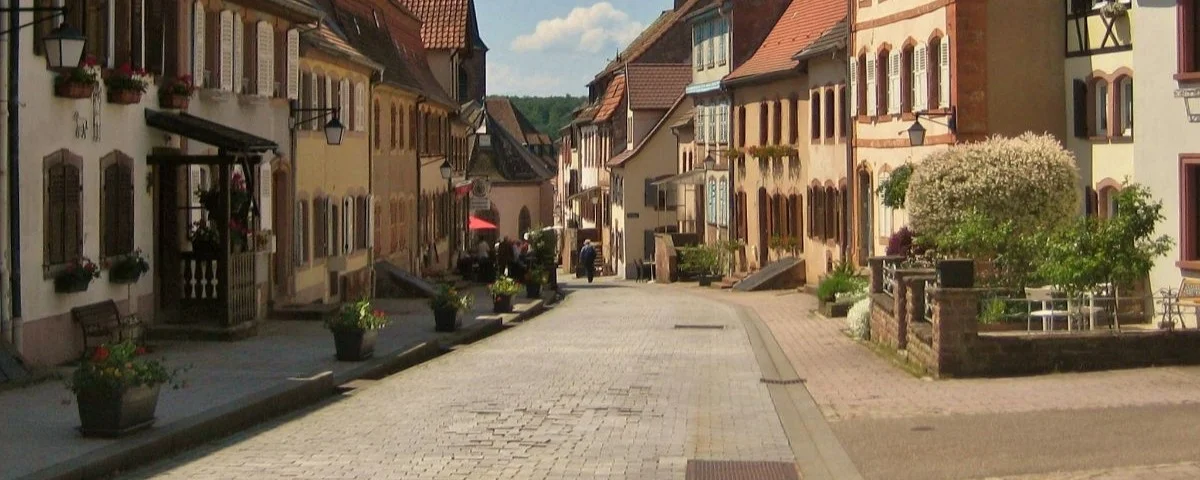
La Petite Pierre sits on a long rocky ridge, like a village suspended above the valleys. Its defensive past is still easy to read in its position, with the castle at one end and the old centre connected by a bridge.
What stands out most is the feeling of height and the surrounding forest. The area opens onto a vast natural landscape of wooded valleys, meadows, ponds and walking trails. Around the village, ruined castles and sandstone rocks give the scenery an almost secret and wild feel.
Saint-Quirin
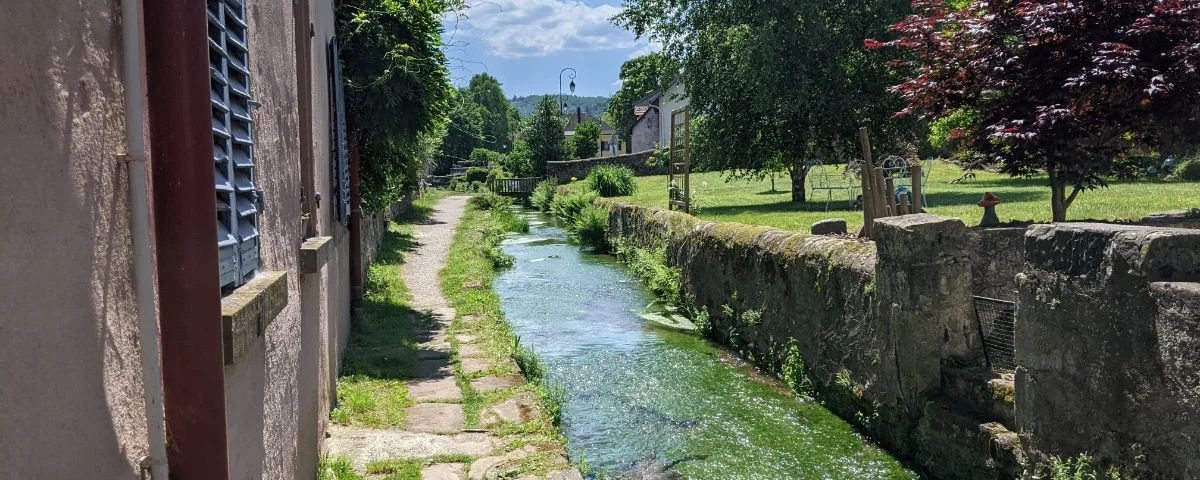
Saint Quirin lies among green hills and carries a strong sense of religious and ancient heritage.
You discover a long village, with houses lined up on both sides of the main street. The church with its rounded towers, the chapel overlooking the village, the fountains and the traces of its glassmaking past create a peaceful atmosphere shaped by stone, water and wooded hills.
Le Hohwald
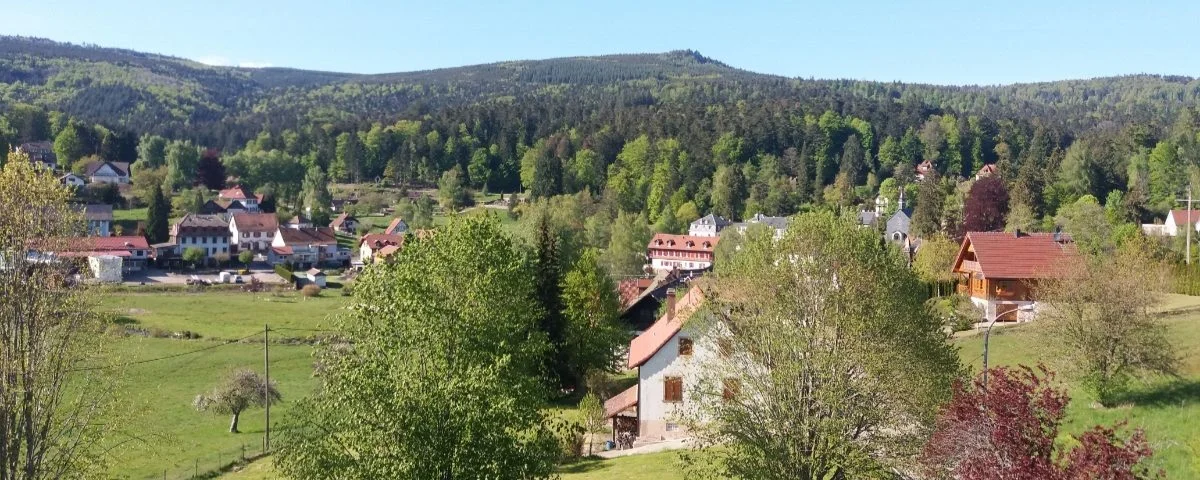
Le Hohwald reveals a different side of Alsace, one that is more mountainous, greener, cooler and less urban. It belongs to the Villé Valley area, known for its open landscapes, small villages and sturdy farmhouses, in a setting where rural traditions are still very much present.
You come here to breathe, walk and enjoy the feeling of being surrounded by forest. The nearby countryside leads up to Champ du Feu, the highest point in northern Alsace, with snow covered landscapes in winter and wide open views during the warmer months.
Mittelbergheim
In Our Expanded Picks ☑️
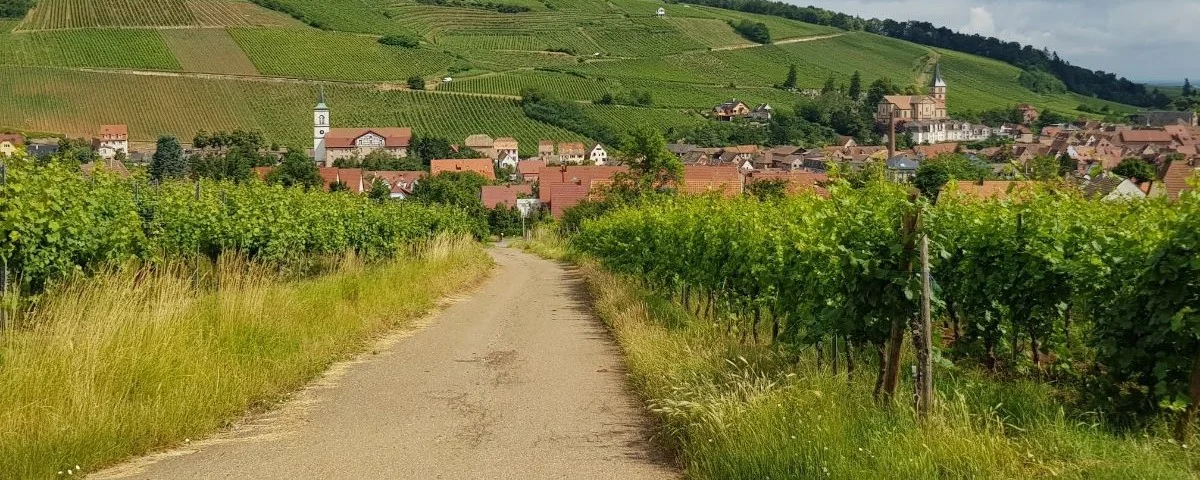
Perched on a hillside, Mittelbergheim is appealing for the remarkable unity of its large winegrowers’ houses. Nothing feels scattered, the façades, proportions and streets all come together in a very coherent whole shaped by centuries of vine growing.
You notice the former sixteenth century town building with its stone staircase, then the remarkable houses along the main street. At the northern edge of the village, the view opens onto a broad hollow covered in vineyards, glowing in the evening sun, with pleasant walks among the slopes and distant silhouettes.
SOUTH
Overview Table
| Name | Top Picks | Exp. Picks |
|---|---|---|
| Bergheim | ☑️ | |
| Ribeauvillé | ☑️ | |
| Hunawihr | ✅ | ☑️ |
| Zellenberg | ||
| Riquewihr | ✅ | ☑️ |
| Kaysersberg | ✅ | ☑️ |
| Kientzheim | ||
| Eguisheim | ✅ | ☑️ |
| Gueberschwihr | ||
| Pfaffenheim | ||
| Ferrette |
Bergheim

In Our Expanded Picks ☑️
In Bergheim, you discover a small historic town still enclosed by an exceptionally well preserved line of defensive walls. Seen from outside, the whole place keeps a closed, almost untouched silhouette, with flower filled houses and very few visible signs of modern development.
As you wander through the streets, what stands out most are the old façades, timber details, muted colours and peaceful corners. You can also follow the former ramparts along a path dotted with towers, little gardens and views over the nearby vineyards.
Ribeauvillé

In Our Expanded Picks ☑️
Ribeauvillé stretches along the foot of vine covered hills, with a main street lined with old houses, signs, decorated façades and narrower alleys. Here, you get a very lively side of Alsace, still shaped by a long history of powerful families, musicians and wine culture.
Above the village, three castles dominate the landscape: Saint Ulrich, Girsberg and Haut Ribeaupierre. In the centre, the Butchers’ Tower, the House of the Minstrels and the carved details throughout the streets add plenty of character to the walk.
Hunawihr

In Our Top Picks ✅
Hunawihr is a peaceful winegrowing village set among houses, fields and rows of vines. The atmosphere feels gentler than in the more crowded places, with a clear balance between historic homes, agricultural life and vine covered slopes.
To the north, a small wooded hill overlooks the Rosacker area, famous for its vineyards. The winegrowers’ houses, quiet streets and the Church of Sainte Hune, surrounded by its old enclosure, give the village a discreet presence, almost as if it were suspended in time.
Zellenberg
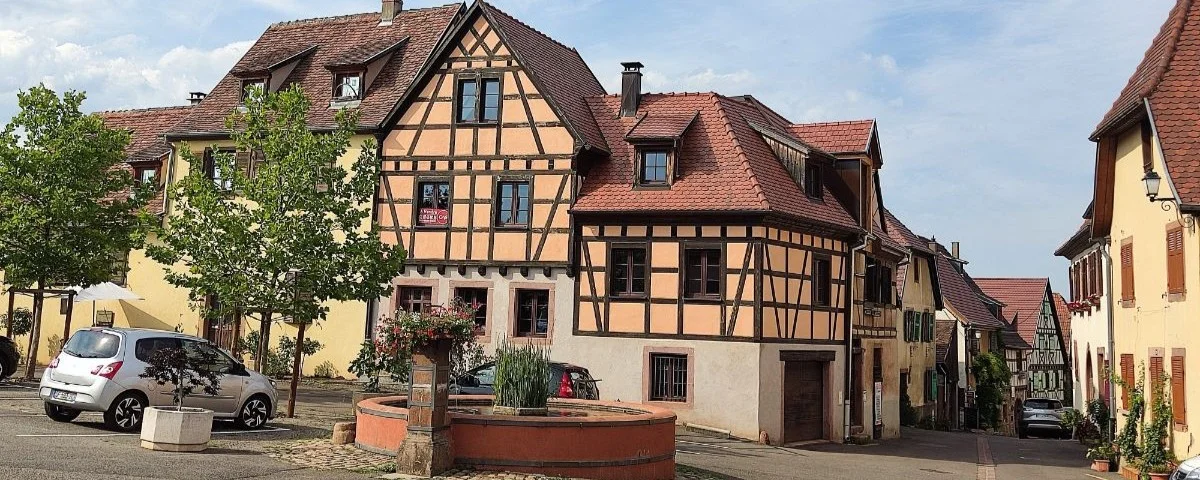
Zellenberg stands out right away. The village sits on top of a hill, like a lookout post in the middle of the vineyards. The rows of vines climb almost all the way to the houses, giving the place a very distinctive silhouette.
You leave the car below and make your way up on foot. From the Schlossberg path and the site of the former Saint Michael’s Chapel, the view opens out over Riquewihr, the vineyard covered hills and the first wooded ridges beyond.
Riquewihr

In Our Top Picks ✅
Riquewihr offers perhaps the most striking image of the traditional Alsatian village: winegrowers’ houses, timber framed façades, grander buildings, cobbled streets and walls that still surround the old centre. Walking through it feels like stepping into a remarkably preserved setting, almost theatrical, especially early in the morning or later in the evening.
Its charm comes as much from the overall atmosphere as from the small details: gateways, courtyards, signs, flower filled windows and tightly packed houses within the old fortified area. All around, the vineyards form a continuous backdrop, crossed by a walking trail that passes through several renowned winegrowing sites.
Kaysersberg

In Our Top Picks ✅
Kaysersberg offers a wonderfully complete picture of old Alsace, with flower filled streets, tightly packed houses, beautifully detailed façades and vineyards climbing the surrounding slopes. You quickly get the feeling that the village has a deep historical character without losing its lively atmosphere.
The fortified bridge, the old stonework and the vine covered hills give the village a striking sense of relief. If you wander a little beyond the centre, you’ll come across open viewpoints overlooking the slopes, rooftops and neat rows of vines.
Kientzheim
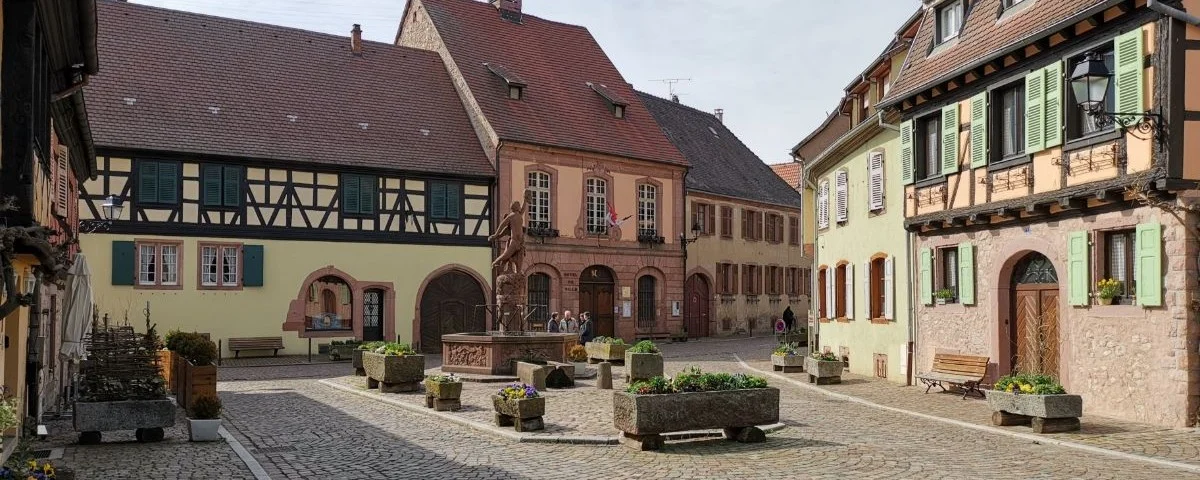
Kientzheim lies just beside Kaysersberg, but the atmosphere feels noticeably quieter. The village charms visitors with its cobbled streets, flowers, historic houses and strong connection to winegrowing. Walking through it feels more understated and less dramatic, yet beautifully harmonious.
Eguisheim

In Our Top Picks ✅
Eguisheim is a very compact village, built like a spiral around its historic centre. You don’t follow long straight streets here. Instead, you turn corners, circle around and make your way between colourful façades, timber framed houses and narrow passages that give the village its unmistakable character.
Much of its appeal comes from this sense of winding around the centre. With every turn, the view changes slightly: a pink or yellow façade, a flower filled balcony, an old sign or a tighter corner opening onto another charming street.
At the heart of the village, the Counts’ Castle overlooks a small square with a fountain. The chapel dedicated to Pope Leo IX adds a more unusual touch, with its vivid colours and an interior covered in paintings.
Gueberschwihr
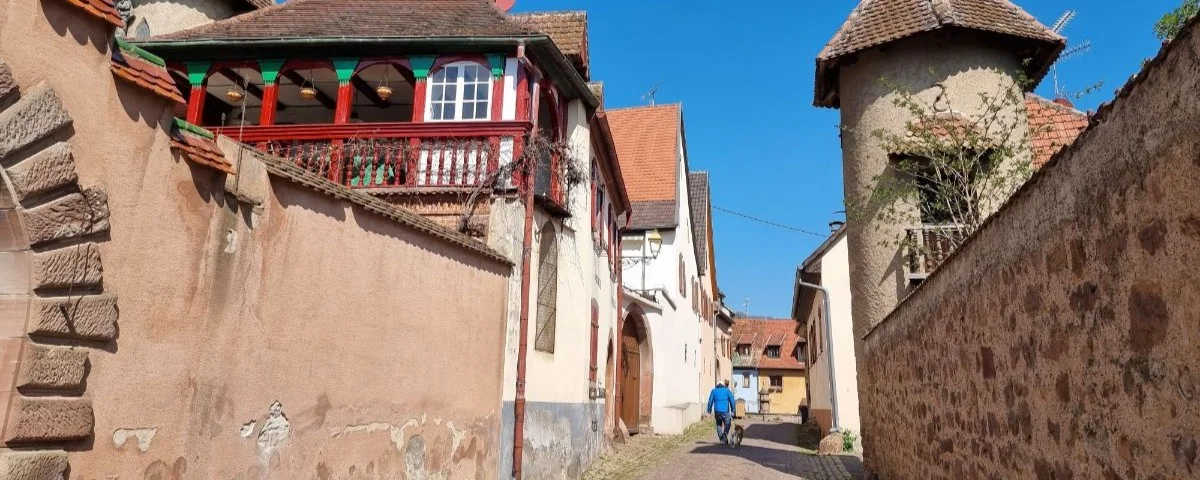
Gueberschwihr is less touristy, perched on a slope above the plain with dark forest rising behind it. The village is dominated by an elaborate twelfth century bell tower, standing above the houses like a landmark.
Around the main square, the lime trees, old façades and narrow streets create a slow and well preserved atmosphere. As you walk around, you’ll notice gateways, carved stones, old signs and many details that hint at the village’s former prosperity.
Pfaffenheim
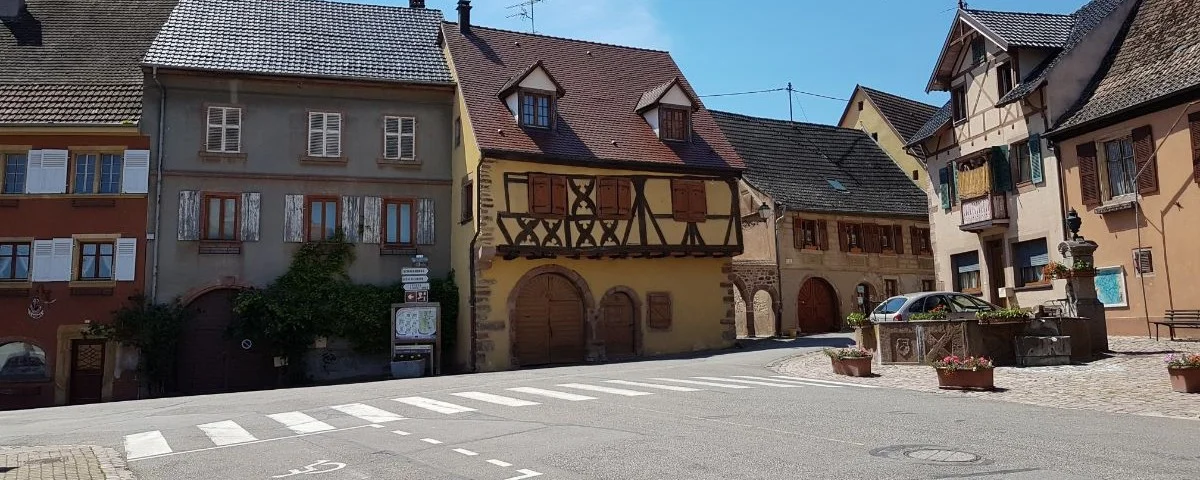
Pfaffenheim is a quieter, more understated village set among the vineyards, with a peaceful atmosphere and very little sense of staging. You’ll find old houses, simple streets, restrained façades and the feeling of being somewhere that still belongs closely to its landscape.
Beyond the village, the vineyards quickly take over. Here, you can experience a calmer, less photographed side of Alsace.
Ferrette
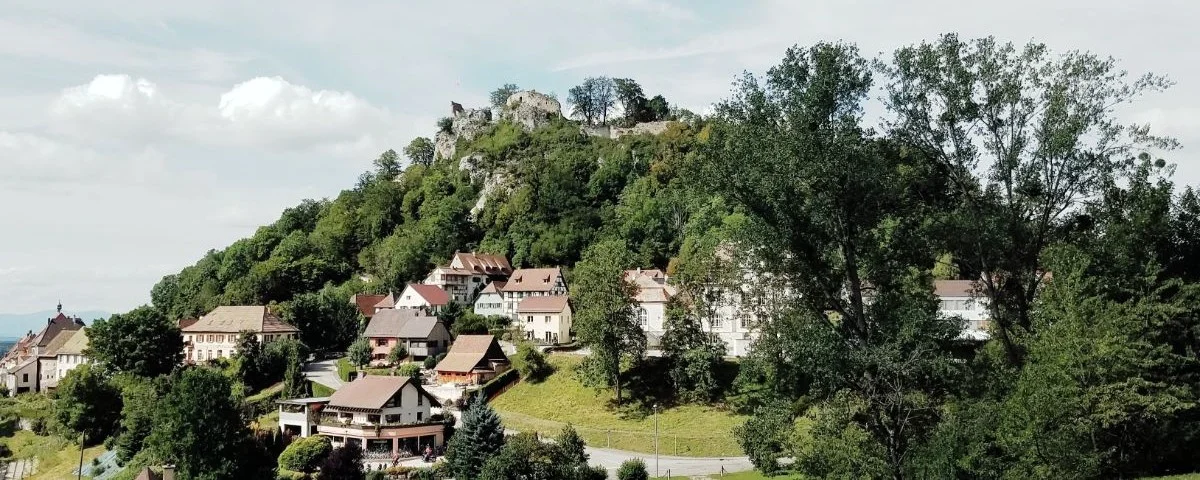
Ferrette feels very different from the wine villages. The landscape becomes more wooded and rocky, with the village lying beneath the ruins of its castle. You immediately notice the stronger relief, almost mountainous in character, far removed from the colourful streets of the plain.
As you climb higher, the houses gradually give way to stone, trees and open views. Ferrette is especially appealing for this sense of being at the edge of Alsace, where an old village, forest, rocky outcrops and silence come together.