


PRESENTATION
A Land of Contrasts
Provence is not a single landscape, a single atmosphere or a single idea of the South of France. It is a region of contrasts, where the sea, dry hills, fertile plains, deep gorges, old towns and high plateaus all belong to the same travel experience.
This is what makes Provence so rich for visitors: you can arrive expecting lavender, sunshine and stone villages, and quickly discover that the region is also shaped by ports, mountains, wetlands, art, popular traditions and strong local character.
Cities, Villages and Open Landscapes
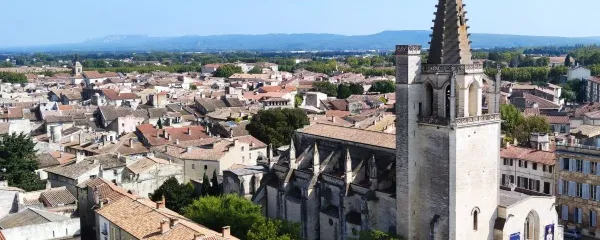
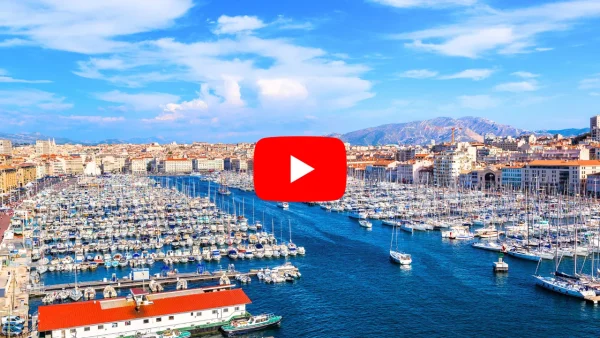
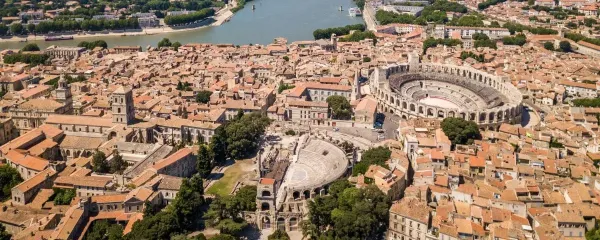
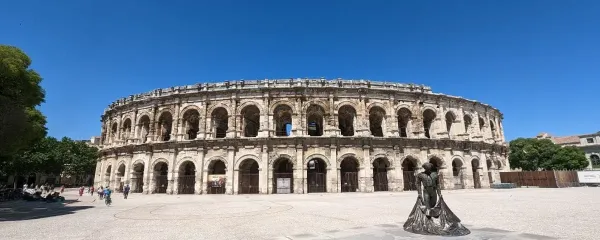
A trip through Provence often begins with its great towns and cities. Marseille brings the energy of the Mediterranean, with its port, sea views and cosmopolitan atmosphere. Aix-en-Provence offers a more elegant and historic face, full of old streets, fountains and cultural memory. Avignon brings another mood again, marked by its grand past and its strong connection with theatre and heritage. Arles adds Roman history, artistic echoes and a deep link with the Rhône River.
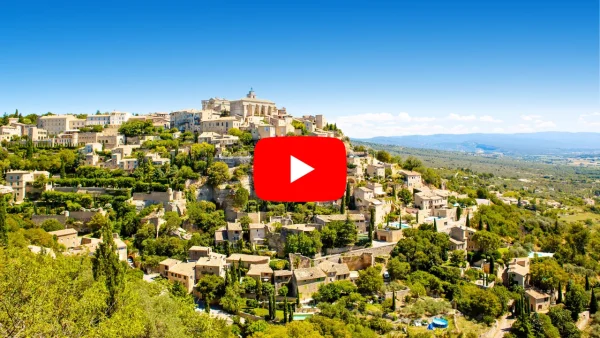
But Provence is just as much about smaller places. The villages of the Luberon and the Alpilles reveal another rhythm, slower and more visual, with stone houses, narrow streets, dry-stone walls, olive trees and vineyards. Some villages seem to rise directly from the rock, while others are surrounded by fields, hills or ochre-colored cliffs. These places are often the ones that give visitors the strongest feeling of being in Provence.
Nature, Light and the Art of Slow Travel
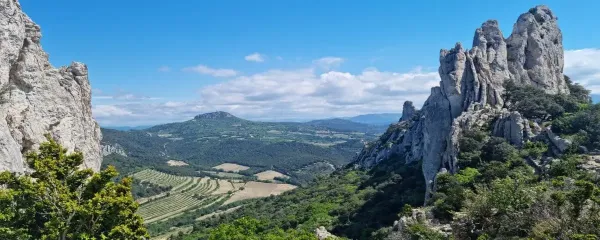
Nature is one of the great reasons to travel in Provence. The Calanques, between Marseille and Cassis, offer a spectacular meeting of white limestone, blue water and steep paths. The Camargue feels completely different, with wide open spaces, horses, birds, water and marshland. The Alpilles and the Luberon are ideal for scenic drives, cycling, walking and village-hopping, while the Verdon brings a more dramatic landscape, with deep gorges and turquoise water.
The light is part of the experience too. It changes the color of stone, hills and cliffs throughout the day, and helps explain why so many artists and writers were drawn to the region. Morning can make the landscape feel sharp and calm; evening gives it a warmer, golden depth.
Provence is not only a place to visit quickly from one famous site to another. It is also a region to experience slowly, by following small roads, stopping often and letting the scenery set the pace.
The Many Ways to Experience Provence
Provence can be explored in many different ways depending on the kind of trip you want. You can focus on historic cities, Roman remains and museums. You can build a route around villages, markets and local traditions. You can follow landscapes, from the coast to inland hills, from lavender plateaus to mountain valleys. You can also choose a more active trip, with hiking, cycling, kayaking, horse riding or simply long walks through old streets and natural sites.
The region also changes as you move east and north. Around Marseille, Arles and the coast, Provence feels maritime, open and full of movement. In the Northern part, it becomes more interior, with perched villages, vineyards, ochre landscapes and historic towns. Further into the East, it takes on a more confidential and sometimes alpine character.
That variety is the best introduction to Provence. It is famous, yes, but never limited to its clichés. It can be elegant, wild, crowded, peaceful, artistic, rural, sunny, windy, festive or deeply quiet. The best way to understand it is to accept its many faces and travel through them one by one.
OVERVIEW
Map
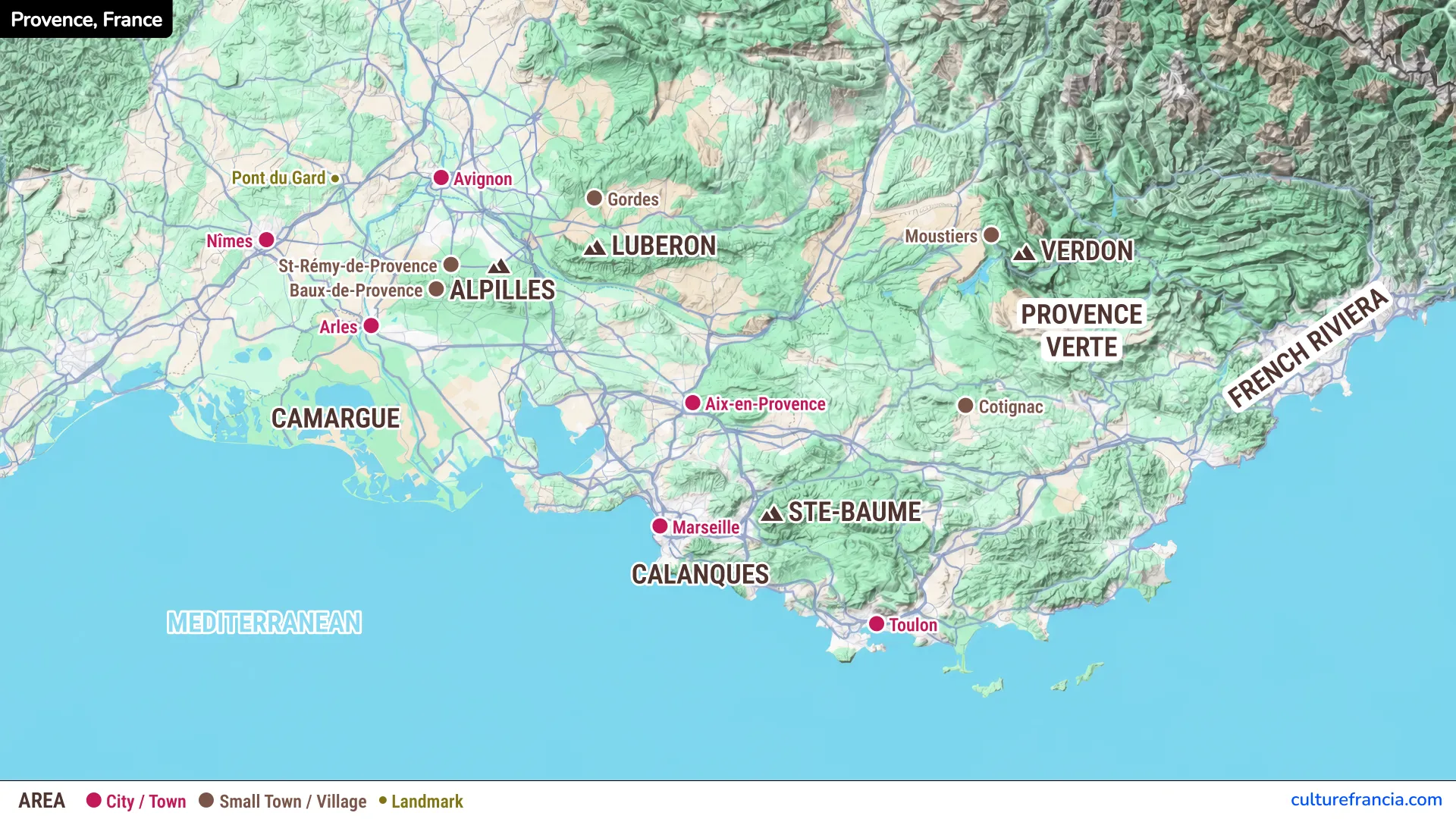
Simplified
Static Map
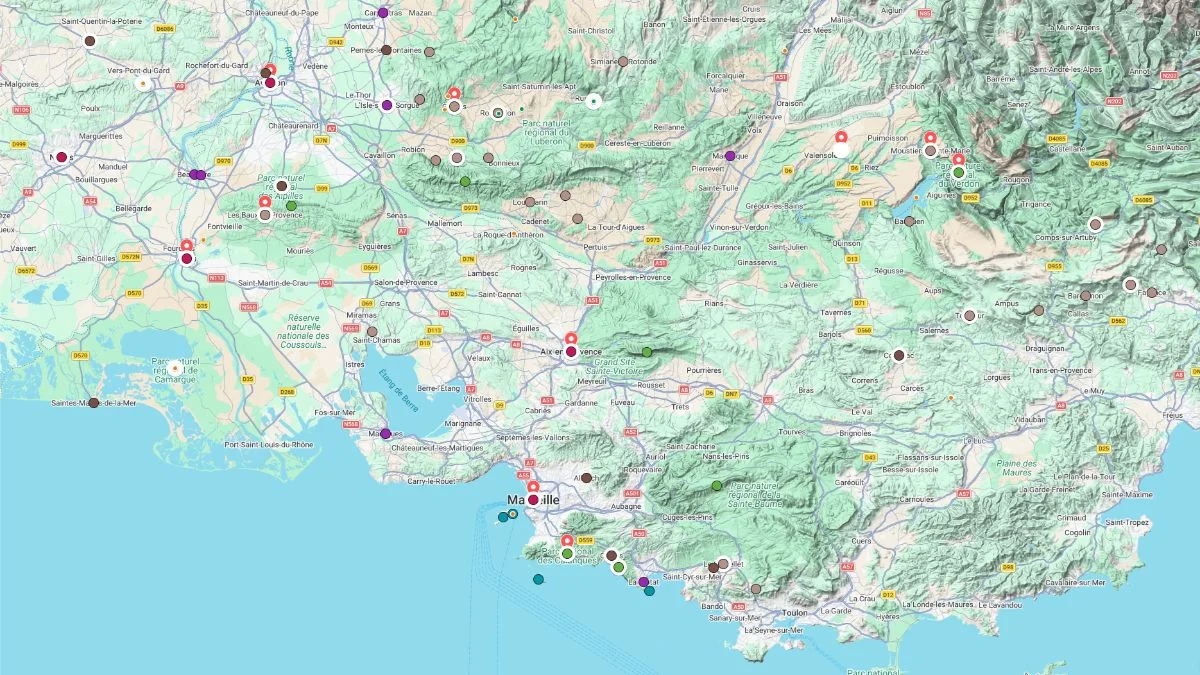
Interactive Map
Interactive Map
Click on the icon  in the top-left corner to display the map legend.
Show/Hide layers as needed.
Click on the arrow icons (v) to display the sublayers.