




Arles rewards travelers who look closely. In one compact day, Roman arches, medieval stone, Van Gogh’s restless light, market scents, and the broad Rhône fit together naturally. This itinerary shows you what to prioritize, what to skip, and how to enjoy Arles without rushing.
The Best Way to See Arles in One Day
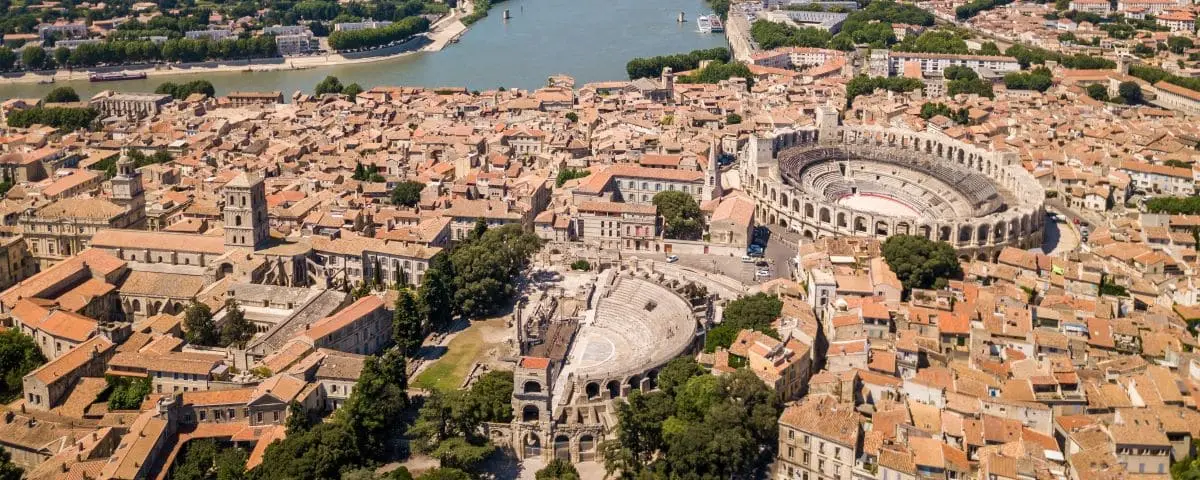
Arles is compact, but its concentration of Roman monuments, medieval architecture, museums, and Van Gogh sites makes careful planning essential. The most efficient route begins with the ancient city, continues through the historic centre, and finishes near the Rhône and La Roquette.
- Start with the Arles market, when it takes place, before continuing to the Roman monuments.
- Visit the Amphitheatre and Roman Theatre while the centre is still relatively quiet.
- Continue to Place de la République and Saint-Trophime, then choose one smaller Roman site.
- Stop for a simple Provençal lunch in the historic centre.
- Spend the afternoon following Van Gogh’s footsteps between Espace Van Gogh, Place du Forum, and the Rhône.
- Choose either the Fondation Vincent van Gogh or Alyscamps, rather than rushing through both.
- End the day in La Roquette and along the Rhône, where Arles feels calmer and more local.
This route limits unnecessary backtracking and leaves enough time to appreciate the city rather than simply moving between attractions.
Arles 1 Day Itinerary at a Glance
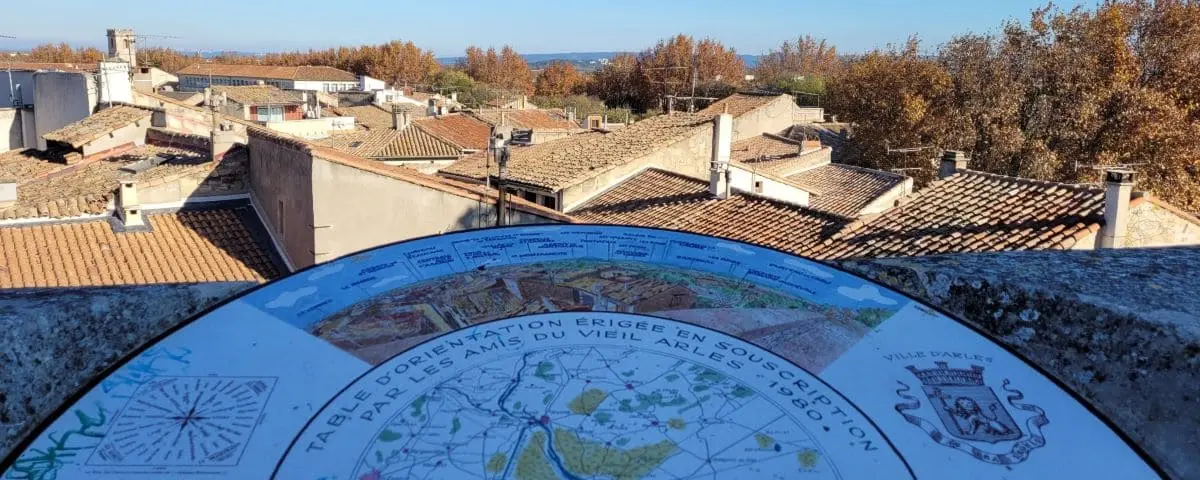
The best Arles one day itinerary follows a simple curve. Begin around Boulevard des Lices, cross the Roman and Romanesque center, pause for lunch, then continue toward the Van Gogh sites, the Rhône, and La Roquette. Avoid crossing the old town repeatedly, especially in summer heat.
Arles is compact but remarkably dense. Its UNESCO-listed heritage includes Roman structures and Saint-Trophime, woven into the modern city rather than separated in an archaeological park.
At Culture Francia, we are a French family and former France travel planners. We favor clear choices, realistic routes, and enough breathing room to enjoy each place. For more context, see the best things to do in Arles and whether Arles is worth visiting.
Morning: Explore Roman Arles and the Historic Centre
Morning is when the honey-colored stone looks freshest and the lanes remain calm. Give the first half of the day to Arles’s ancient and medieval layers, while your energy is high.
Visit the Arles Market on Wednesday or Saturday
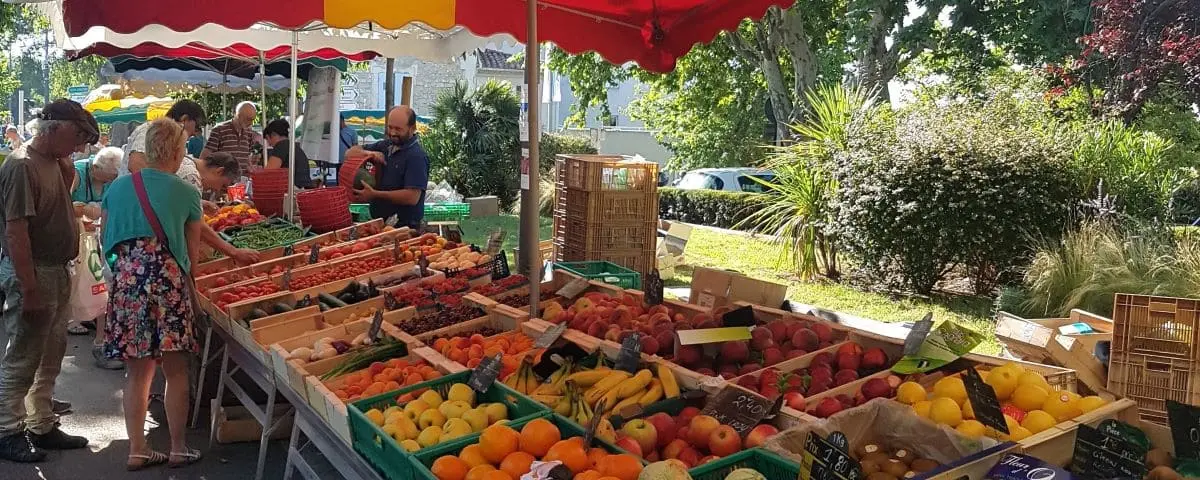
The market opens the day with olives, tapenade, cheese, fruit, herbs, charcuterie, fabric, and the cheerful noise of Provençal commerce. On market days, begin here before entering the monuments. It presents Arles as a living southern town, not merely a collection of ruins.
Do not inspect every stall. Walk one section slowly, buy fruit or fougasse for later, and watch local shoppers move with purpose. Saturday is generally larger; Wednesday feels easier to combine with sightseeing.
Allow about forty-five minutes, then continue toward the Amphitheatre. When the market is not operating, use the time for coffee near Boulevard des Lices or an earlier start at the Roman sites.
Tour the Arles Amphitheatre and Roman Theatre
The Arles Amphitheatre is the essential monument. Its two levels of arches rise directly from the old town, and the transition from narrow street to immense arena creates the city’s strongest visual shock. Enter the Amphitheatre rather than viewing it only from outside. The upper passages reveal rooftops, towers, and flat Provençal horizons.
Walk around before climbing. The arena feels massive at street level, open from above, and almost domestic where houses press against its walls.
The nearby Roman Theatre is quieter and more fragmentary. Columns, seating, and scattered remains require imagination. Visit it immediately after the arena, while the historical sequence remains clear. Together, the sites show Roman spectacle at two scales: public combat and theatrical performance.
Explore Place de la République, Saint-Trophime and a Lesser-Known Roman Site
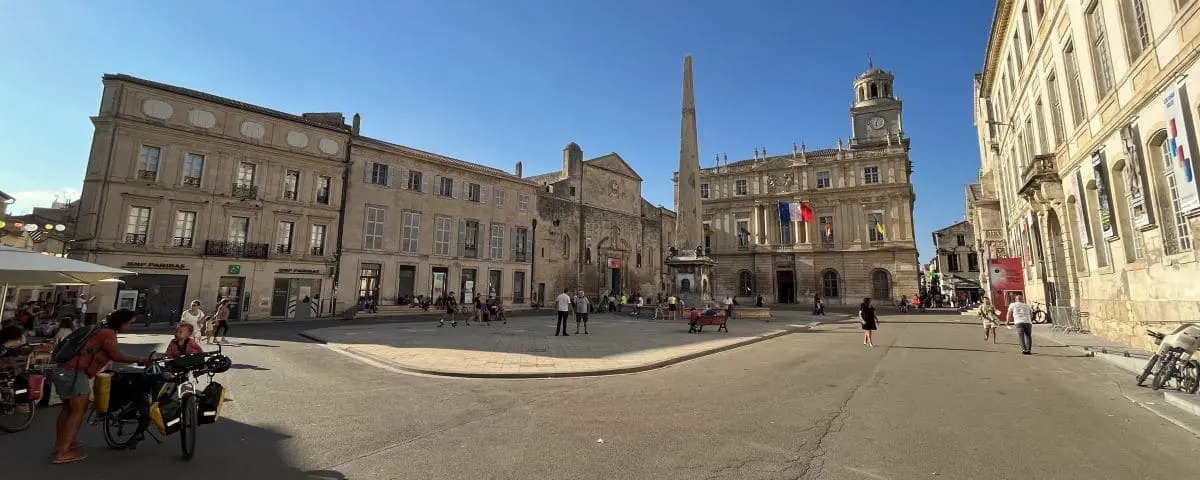
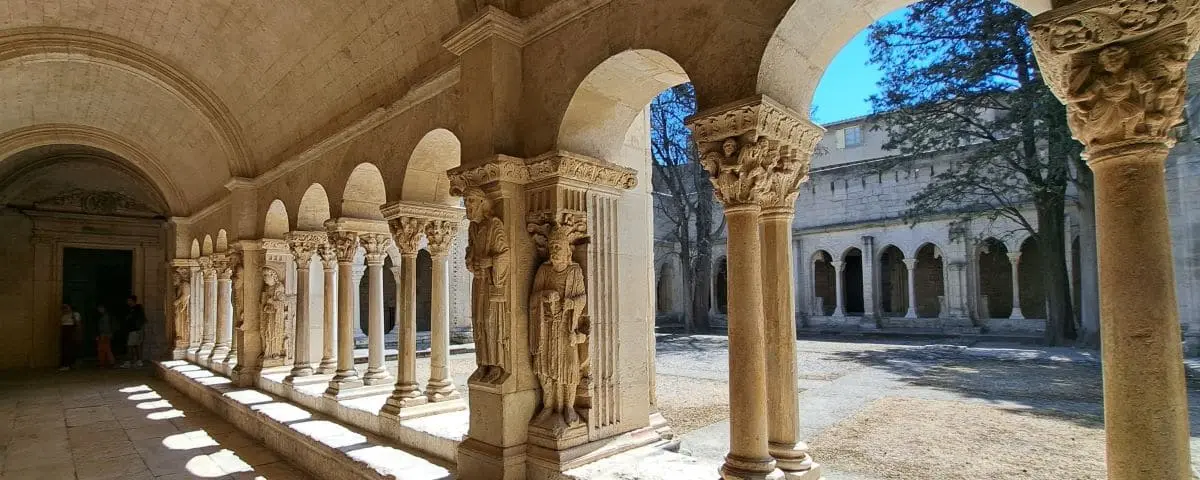
Continue to Place de la République, where an obelisk marks a formal pause in the medieval streets. The square’s treasure is Saint-Trophime. Do not rush past its Romanesque portal. The biblical figures, beasts, faces, and deeply carved folds deserve close attention.
Visit the cloister if queues are manageable, particularly for its capitals and quiet upper galleries. Saint-Trophime shows how Arles absorbed Antiquity into medieval Provence.
Choose one lesser-known site. The Cryptoporticus offers cool underground galleries beneath the ancient forum; the Baths of Constantine provide a quicker open-air stop near the Rhône. For atmosphere, we prefer the Cryptoporticus; for a lighter schedule, choose the baths. This keeps the morning coherent without racing through every monument.
Lunch: Taste Provençal Food in Central Arles
Lunch should restore the day, not consume it. Choose a small restaurant, bakery, market counter, or shaded terrace between Place du Forum and Rue de la République. Look for seasonal vegetables, Camargue rice, bull stew, grilled fish, local cheese, olives, or a simple Provençal plate.
Avoid a long formal lunch if you want both Van Gogh and an afternoon attraction. About one hour is enough. In hot weather, sit indoors or in deep shade and refill your water bottle.
Arles also has a local specialty, saucisson d’Arles, traditionally made with mixed meats and spices. Try it as part of a plate. The goal is to taste the region and continue comfortably, not emerge ready for a nap.
Afternoon: Follow Van Gogh’s Footsteps Through Arles
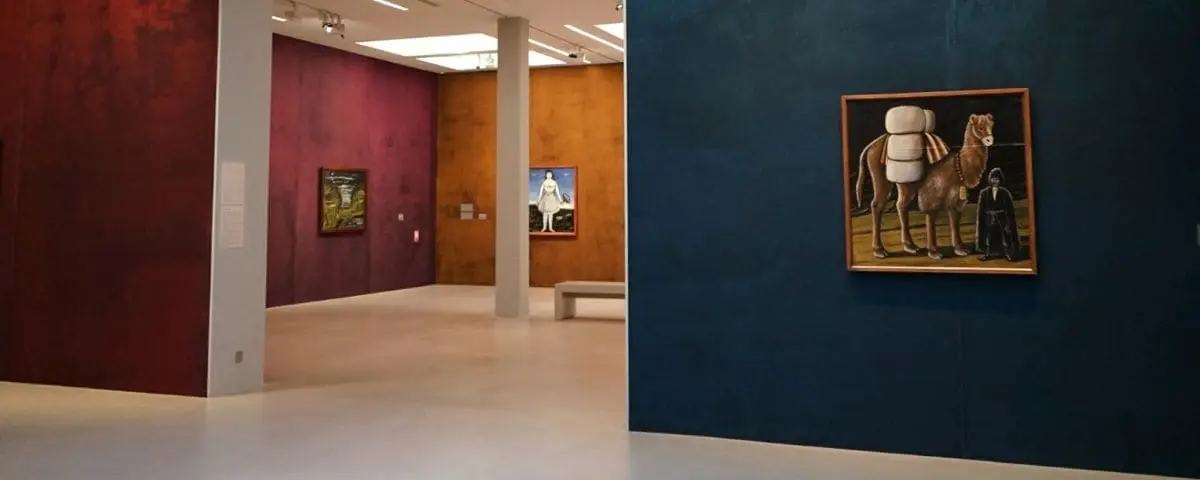
Roman engineering now gives way to gardens, café façades, river light, and artistic memory. Van Gogh’s Arles is best understood as a walking trail, not a single attraction.
Visit Espace Van Gogh and Place du Forum
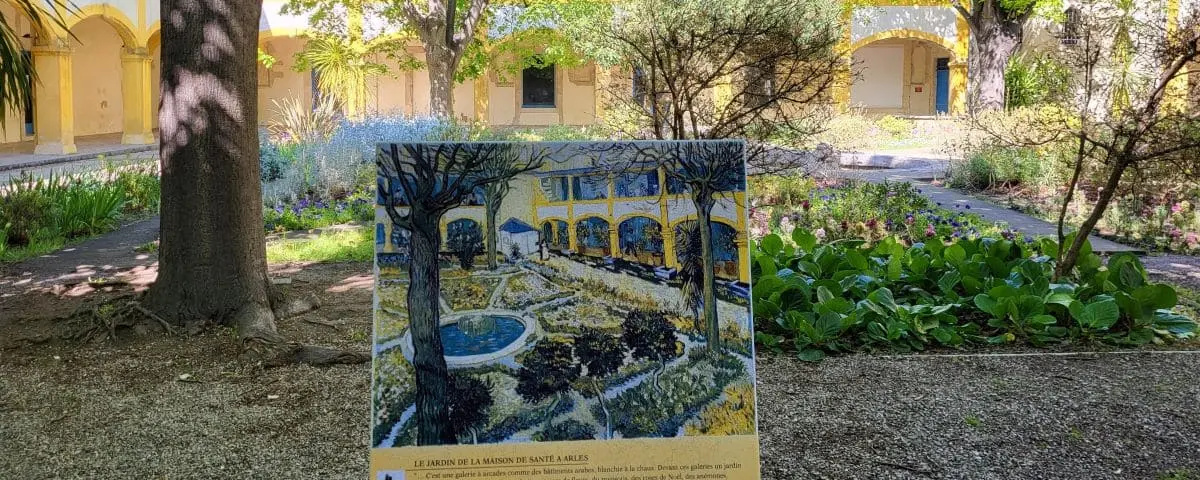
Begin at Espace Van Gogh, the former hospital where the painter was treated. Its arcaded courtyard and planted garden make it easy to compare a present scene with Van Gogh’s work. The courtyard is the reason to stop, so a brief visit is sufficient unless an exhibition interests you.
Continue to Place du Forum. A panel marks the viewpoint associated with Café Terrace at Night. The modern square is busy and commercial, yet the essential ingredients remain: warm walls, compressed perspective, and color waiting in the stone.
Do not expect Van Gogh’s world to survive untouched. The pleasure comes from comparing painting, memory, and modern life. The official trail identifies locations including Place du Forum, Espace Van Gogh, the Rhône quays, Alyscamps, and the arena.
Walk the Self-Guided Van Gogh Trail
From Place du Forum, walk toward the Rhône. The river opens the city after its tight streets, bringing wind, moving water, and a horizon that explains the painter’s fascination. The Rhône is the most atmospheric part of the Van Gogh walking tour.
Find the viewpoint linked with Starry Night Over the Rhône, then continue along the quays without chasing an exact nineteenth-century angle. Flood defenses and urban changes have altered the scene. What remains is the relationship between dark water, reflected light, and the southern sky.
The full trail reaches the Pont Van Gogh outside the center. Skip the bridge on a first one-day visit unless Van Gogh is your main priority. The journey there and back is better spent at the Fondation, Alyscamps, or La Roquette.
Choose Between the Fondation Vincent van Gogh and Alyscamps
This is the day’s key choice. The Fondation Vincent van Gogh explores the artist’s legacy through changing exhibitions and dialogue with contemporary art. Choose the Fondation when art is central to your trip, but check the current show first. It is not a permanent museum packed with Van Gogh masterpieces; its strength is interpretation and curation.
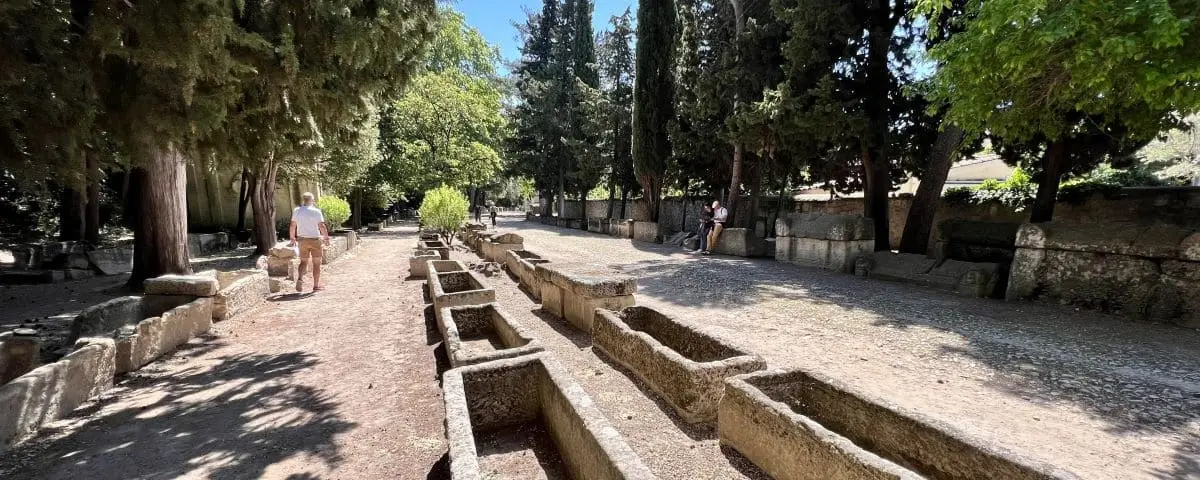
Choose Alyscamps for archaeology and outdoor atmosphere. This ancient necropolis follows a long avenue of stone sarcophagi toward Saint-Honorat. Van Gogh and Gauguin painted here, but the place feels far older than either artist, especially when trees cast broken shadows across the path.
Do not squeeze both into a standard one-day itinerary. Pick the Fondation for artistic context and indoor comfort. Pick Alyscamps for ancient Arles, photography, and a contemplative walk.
Late Afternoon and Evening: Discover Arles’ Local Gems
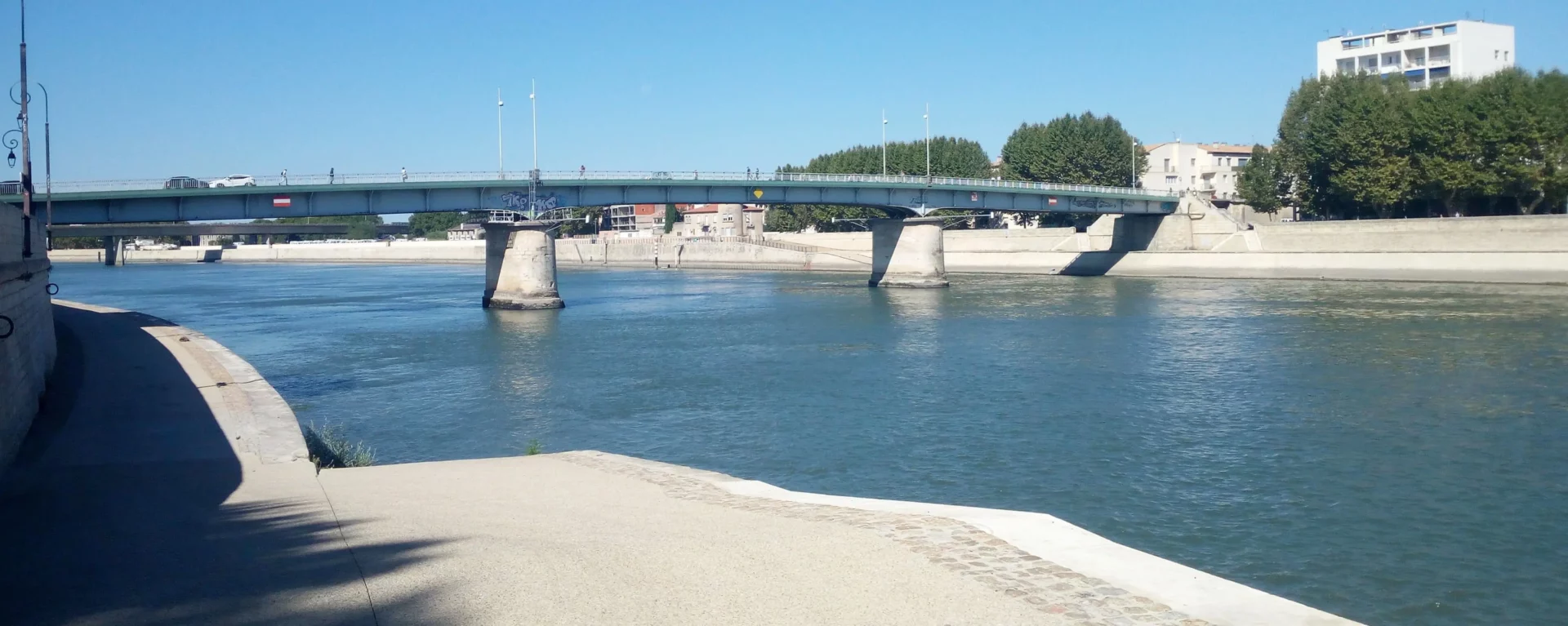
The essential monuments are now behind you. Let the final hours become less instructional and more personal, with streets, river air, and no urgent destination.
Stroll Through La Roquette and Along the Rhône
La Roquette lies between the center and the Rhône, a former working neighborhood shaped by river life. Its low houses, worn doors, plants, small squares, and creative workshops create a gentler rhythm than the monument district. This is our favorite area for an unstructured walk.
Enter through Place Paul Doumer and follow whichever lane looks inviting. There is no landmark to conquer. The pleasure is in shutters, bicycles, fragments of stone, and the sudden appearance of the river at a street’s end.
La Roquette ss popular, slightly bohemian, and lined with small workers’ houses recalling its port history. Allow yourself to get mildly lost, while using the Rhône as an easy orientation line.
End Your Day with Dinner or a Sunset Drink
Remain near La Roquette, Place du Forum, or the historic center. Reserve ahead in high season when a particular restaurant matters, although spontaneous travelers can usually find wine bars, bistros, and terraces.
A sunset drink beside the Rhône makes a graceful conclusion. Façades deepen in color and the monumental day becomes quieter. If energy remains, circle back past the illuminated Amphitheatre. Arles after dark feels more intimate, especially once many day-trippers have left.
How to Plan a One-Day Trip to Arles
Good planning here is mainly about removing friction. Keep the route compact, confirm essential details, and leave room for an unexpected street or café.
Getting to Arles by Train or Car
The train is usually the easiest option. Arles station is within walking distance of the historic center, so sightseeing begins without transfers. For visitors arriving from Avignon, Nîmes, Marseille, or nearby Provence, rail is generally the least stressful choice.
Drivers should park outside the tightest old-town streets and continue on foot. Central lanes may be restricted, confusing, or simply unpleasant for unnecessary driving. Save the parking location on your phone.
When choosing a regional base, compare Arles or Avignon. On arrival, open our Arles tourist map. It helps connect the station, arena, Rhône, and La Roquette without backtracking.
Tickets, Monument Passes and Opening Hours
Arles offers monument and museum passes, but value depends on how many interiors you will actually visit. Do not buy a pass merely because it exists. Compare the current price with the Amphitheatre, Theatre, one smaller ancient site, and perhaps Saint-Trophime’s cloister.
Pass conditions, seasonal hours, closures, and last admissions can change. Check official information shortly before visiting. The tourist office presents themed walking routes and pass formats covering selected monuments and museums.
Preselect the Fondation or Alyscamps too. This prevents afternoon indecision and protects your final walk through La Roquette.
Walking Distances, Weather and What to Bring
Arles is walkable, but ancient paving, stairs, hot stone, and standing inside monuments make the day tiring. Wear supportive shoes rather than delicate sandals. Bring water, sun protection, and a light layer when the mistral blows.
In summer, start early and use churches, underground galleries, lunch, or a museum during the hottest hours. In cooler months, shorter daylight makes route discipline more important.
Carry less than you think you need. A small bag, charged phone, refillable bottle, and compact sun protection are enough. Comfort determines how much attention remains for the final neighborhood.
Alternative One-Day Itineraries in Arles
The main route balances history, art, and atmosphere. Change it only when one interest clearly dominates.
A Roman History-Focused Arles Itinerary
Add the Cryptoporticus, Baths of Constantine, and Alyscamps, while reducing Van Gogh to Espace Van Gogh and the Rhône. The Musée Départemental Arles Antique becomes the best addition, particularly for sculpture, mosaics, models, and the Roman barge recovered from the river.
Skip the Fondation to protect time. Travelers comparing ancient cities should read Arles or Nîmes. Choose Arles for layered atmosphere; choose Nîmes for a concentrated monumental display.
An Art and Van Gogh-Focused Arles Itinerary
Begin with the Amphitheatre for context, then continue to Espace Van Gogh, Place du Forum, the Rhône viewpoints, and the Fondation. Give the current exhibition enough time to work on you, rather than treating it as another box.
Add LUMA Arles only when contemporary art and architecture matter more than Saint-Trophime or Alyscamps. Its campus sits beyond the tight center, so plan deliberately. End beside the Rhône, where changing light gives the strongest connection with Van Gogh.
A Slower Itinerary for Markets and Local Life
Begin at the market, visit only the Amphitheatre and Saint-Trophime, then devote more time to lunch, independent shops, La Roquette, and the river. This is ideal for repeat visitors, food lovers, photographers, and travelers who dislike museum fatigue.
You will see fewer ticketed sites but remember more textures: sliced saucisson, cool church stone, plane-tree shade, a faded doorway, and glasses touching on a terrace. Arles is especially good when you stop trying to finish it.
Frequently Asked Questions About Visiting Arles in One Day
Is One Day Enough for Arles?
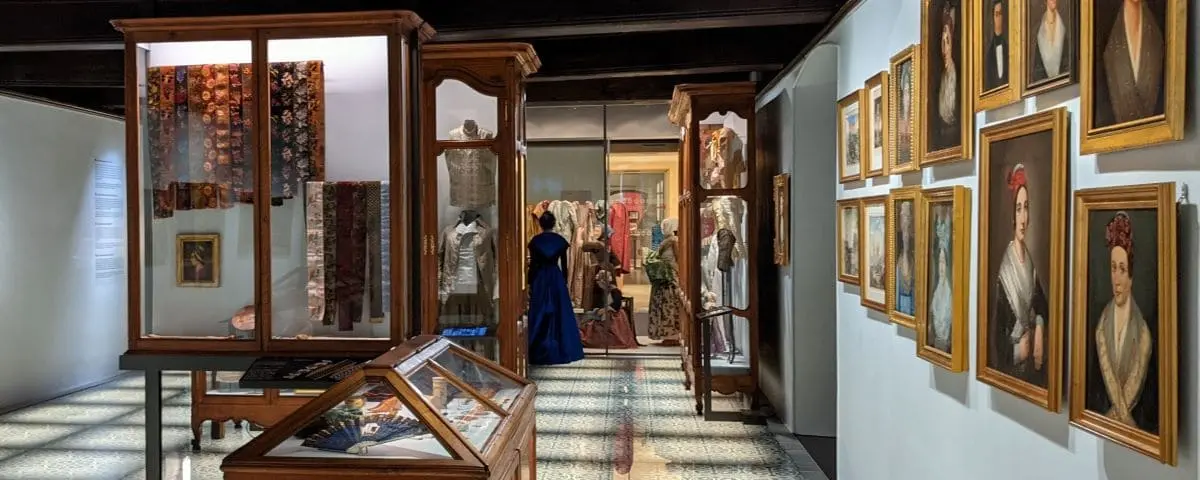
Yes. One day covers the historic center, major Roman sites, several Van Gogh locations, and one local neighborhood. It cannot comfortably include every museum, Alyscamps, LUMA, the Pont Van Gogh, and a relaxed meal.
Choose one major afternoon attraction and accept that missing something is better than rushing everything. A second day adds museums, deeper wandering, and quieter mornings.
What Should You Not Miss in Arles?
Do not miss the Amphitheatre, Saint-Trophime’s portal, one Van Gogh viewpoint, and the Rhône. Together, they reveal Roman scale, medieval craft, artistic memory, and the landscape shaping Arles.
Then choose by personality. Archaeology lovers should enter the Cryptoporticus or Alyscamps. Art travelers should visit the Fondation. Atmosphere seekers should save time for La Roquette.
Is Arles Easy to Explore on Foot?
Yes. The station, Roman monuments, squares, Van Gogh locations, Rhône quays, and La Roquette form a manageable walking area. A car is unnecessary once you reach central Arles.
The challenge is surface and climate, not distance. Cobblestones, stairs, heat, and mistral winds slow the pace. Group nearby sites and avoid returning across town for something passed earlier.
Can You Visit Arles and the Camargue in One Day?
Technically yes, but we rarely recommend it for a first visit. Combining Arles with a meaningful Camargue experience makes both feel abbreviated, and public transport reduces flexibility.
Keep the full day for Arles, then use another for wetlands, horses, bulls, birdlife, beaches, or Saintes-Maries-de-la-Mer. Our guide to the best day trips from Arles helps choose the right extension.
Wrap-Up: The Perfect Day in Arles
- Begin with market life and the Roman monuments while the streets are still relatively quiet.
- Treat the Amphitheatre as the main priority, then add the Roman Theatre and one smaller heritage site.
- Reserve the afternoon for Van Gogh’s Arles, choosing the Fondation or Alyscamps according to your interests.
- Keep the final part of the day free for La Roquette and the Rhône.
- Follow a logical route, but leave room for an unexpected square, café, or quiet street.
Arles works particularly well as a one-day destination because its greatest historical and artistic layers are concentrated within a walkable centre. Roman power, medieval craftsmanship, Van Gogh’s legacy, Provençal food, and river landscapes can all fit into the same itinerary.