




Provence is often presented as a land of isolated farmhouses and hilltop villages reached only by car. Yet a rewarding first trip through Provence is perfectly possible by train, provided you choose the right bases.
This seven-day route links Marseille, Cassis, Aix-en-Provence, Avignon, Arles, L’Isle-sur-la-Sorgue and Orange. Two hotels are enough; the railway does the rest.
The Best Provence Train Route Without a Car
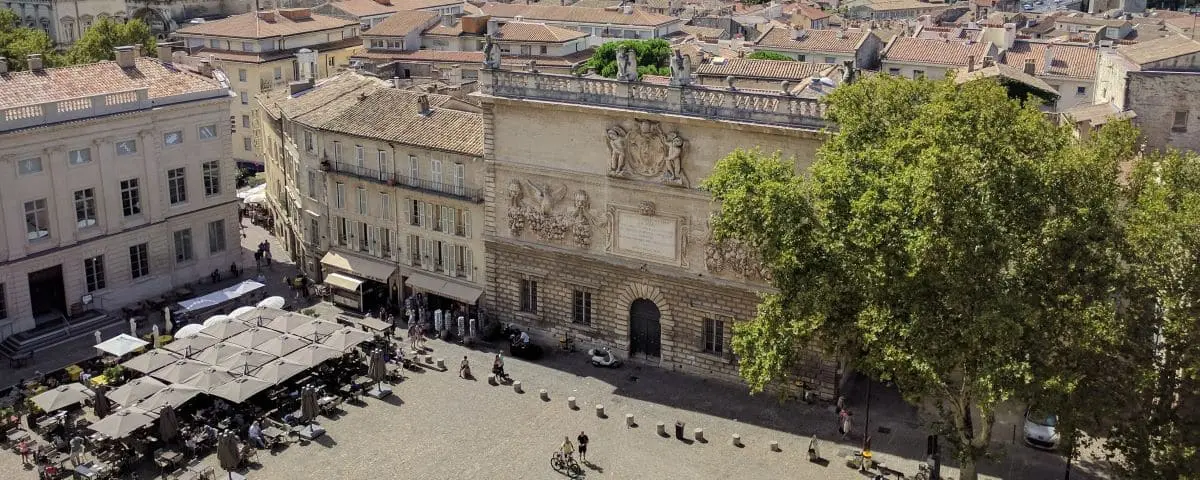
- Spend three nights in Marseille, using the city as your base for Marseille itself, Cassis and Aix-en-Provence.
- Spend four nights in Avignon, with easy rail day trips to Arles, L’Isle-sur-la-Sorgue and Orange.
- Use Marseille Saint-Charles and Avignon Centre whenever possible, because both stations are close to the main sights and local transport.
- Allow seven full days for the best balance, rather than rushing through Provence in four or five nights.
- Treat rural Provence as a separate trip, since the Luberon’s smaller villages and many lavender areas are less straightforward without a car.
- Check the final return train before leaving each morning, especially on Sundays, public holidays and during engineering work.
- Travel with light luggage, because cobbled streets, station stairs and short hotel transfers are part of a car-free Provence itinerary.
For the wider geography, open our interactive France train map alongside our Provence tourist map. Together, they make the logic of this route immediately clear.
Can You Explore Provence Without a Car?
Yes, but not every corner of Provence is equally suitable. The region has a useful spine of TER regional trains connecting its major cities and several attractive smaller towns. Marseille, Aix-en-Provence, Arles, Avignon, Orange, Cassis and L’Isle-sur-la-Sorgue can all form part of a practical Provence train itinerary.
Build the journey around the railway rather than forcing a road-trip plan onto public transport. As a French family and former travel planners, we recommend choosing fewer places and experiencing them properly, instead of waiting for rural buses.
Use our Provence travel guide and best things to do in Provence to set your priorities.
Which Places in Provence Are Easy to Reach by Train?
The easiest destinations are those with a central station and a walkable historic core. Marseille Saint-Charles stands above the city centre, connected to the Vieux-Port by metro and a direct downhill walk. Aix-en-Provence Centre sits only a few minutes from the old town. Avignon Centre is just outside the ramparts, while Arles station is roughly a ten-minute walk from the historic centre.
Cassis requires one extra step because its station is inland and uphill from the harbour. A local shuttle links the station to the centre in around 10 to 15 minutes. The train from Marseille itself is very quick, so the complete outing remains easy with a little planning.
Orange and L’Isle-sur-la-Sorgue also work well from Avignon. Their walkable centres make Provence without a car enjoyable rather than merely possible.
For more inspiration before choosing your stops, browse our guide to the main cities and towns in Provence.
Which Places Require a Bus, Bike or Guided Tour?
The railway is strongest between cities and weaker in the postcard countryside. Gordes, Roussillon, Bonnieux, Ménerbes, Lacoste, Les Baux-de-Provence and many lavender-growing areas do not sit beside convenient passenger stations. Reaching them can involve a regional bus, seasonal service, bicycle, taxi or a long wait between connections.
This route does not pretend that every famous village is a simple rail excursion. Use our guide to the villages of Provence to judge whether one rural detour merits the logistics.
The Calanques also require judgment. From Cassis, you can walk toward Port-Miou and continue according to your fitness, the weather and local access rules. The wildest coves demand proper footwear, water and time. A car would not remove the physical effort, and in busy periods it may create more trouble than it solves.
The Perfect 7-Day Provence Itinerary by Train
This itinerary uses Marseille for the coastal and Aix side of the journey, then Avignon for western Provence. It includes only one hotel change, keeps most rail journeys short and gives each day a distinct character.
You can reverse the route, but Marseille to Avignon creates a satisfying progression from Mediterranean coast to Roman and papal Provence.
Day 1: Discover Marseille’s Old Port and Historic Centre

Begin in Marseille, a city too often treated as a transport hub rather than a destination. Give Marseille a full day and let it introduce you to Mediterranean Provence. From Saint-Charles station, descend toward La Canebière and the Vieux-Port, where fishing boats, ferries, café terraces and limestone hills share the same wide view.
Walk toward Le Panier, whose sloping lanes and small squares form a village within the city. Continue to the cathedral, the Mucem and Fort Saint-Jean. Marseille’s contrasts are the point: grand and rough, French and profoundly Mediterranean.
Use our one-day Marseille itinerary, compare the best things to do in Marseille and group nearby sights with the Marseille tourist map.
End at the Palais du Pharo, Vallon des Auffes or Notre-Dame de la Garde. The finest Marseille moment is often the last hour of daylight, when white stone turns honey-coloured. Dinner can be pizza, grilled fish or panisses.
Our guide to whether Marseille is worth visiting explains why it deserves more than an arrival night.
Day 2: Take the Train to Cassis and Explore the Calanques

Take a morning TER from Marseille Saint-Charles to Cassis. The rail journey can take little more than a quarter of an hour, but remember that Cassis station is not beside the port. Use the local station shuttle, then begin in the compact centre with its pastel façades, small beach and café-lined harbour. Services are frequent, though timetables must always be checked for your date.
Cassis is best enjoyed before the middle of the day, when the waterfront is calmer and the light still feels fresh. Walk around the port, climb through the old lanes and choose between a relaxed coastal day and a more active Calanques outing.
For the easiest taste of the park, walk toward Port-Miou. Strong walkers can continue, but rocky paths, sun exposure and steep sections slow the pace. Carry plenty of water and verify current access rules.
A boat excursion reveals the scale of the cliffs when sea conditions allow. Back in Cassis, leave time for the beach or a harbour drink before taking the shuttle.
Do not schedule an elaborate Marseille dinner immediately after a demanding hike. The sensible plan is to keep the evening flexible, eat near your hotel and prepare a light day bag for Aix-en-Provence.
Day 3: Visit Aix-en-Provence on a Day Trip from Marseille

Aix-en-Provence provides a complete change of mood. Regional trains connect Marseille Saint-Charles with Aix-en-Provence Centre, generally in under an hour. Make sure your destination is the downtown station, not Aix-en-Provence TGV, which lies outside the city and requires a shuttle. Official tourism information places the centre station only a few minutes from the old town.
Walk toward Cours Mirabeau, shaded by plane trees and lined with fountains and cafés. Aix becomes even more rewarding in the northern lanes, where ochre façades, markets and quiet squares create its rhythm.
The essential Aix experience is not a checklist but a long, curious walk. Visit the cathedral area, browse the food market, look into courtyards and pause at a fountain when the heat builds. Art lovers can add the Musée Granet or a Cézanne-related site, but it is wise to reserve timed attractions before the day trip.
Our Aix-en-Provence one-day itinerary gives a logical walking order. You can also compare the best things to do in Aix-en-Provence and follow the Aix-en-Provence tourist map.
Lunch away from Cours Mirabeau for better value, then allow time for coffee and a calisson. Check the final return trains that morning.
Our guide to whether Aix-en-Provence is worth visiting helps you compare an extra day here with another coastal excursion.
Day 4: Travel to Avignon and Explore the City of the Popes
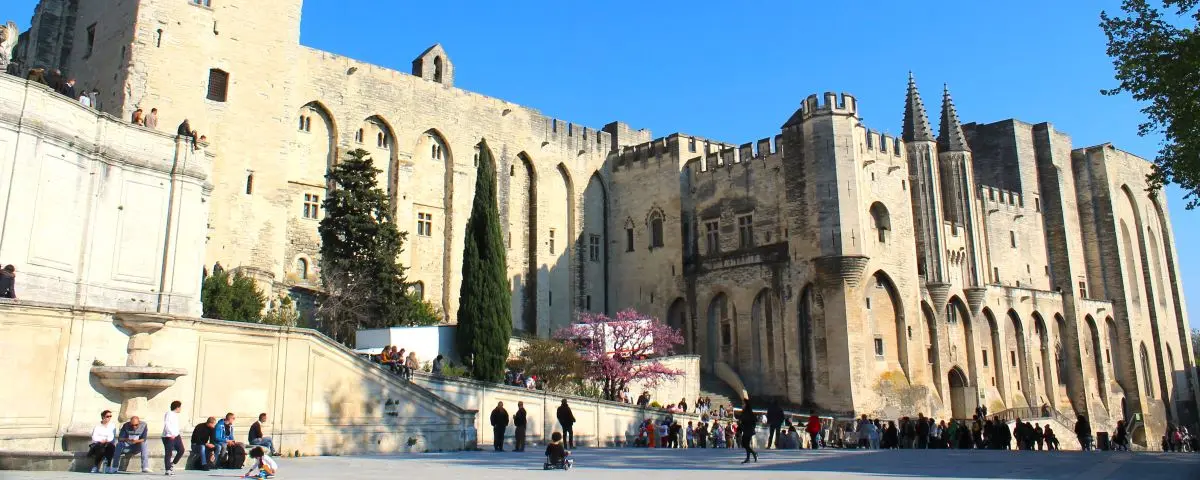
Check out after breakfast and take the train from Marseille to Avignon. For this itinerary, Avignon Centre is the most convenient arrival station because it stands just outside the historic walls. Some fast services use Avignon TGV, about six kilometres from the centre, but a short TER connection links the two stations.
Leave your luggage, enter through the ramparts and begin with the Palais des Papes and Pont Saint-Bénézet. Then wander around Place de l’Horloge, Rue des Teinturiers and the quieter eastern quarters.
The Palais des Papes deserves a reserved time slot, particularly during busy weekends and the summer festival season. Its vast rooms can seem austere, so use the visit to understand the scale of medieval papal power rather than expecting a furnished royal residence.
Follow our one-day Avignon itinerary, compare the best things to do in Avignon and use the Avignon tourist map to understand the walled centre.
At sunset, walk toward the Rhône or cross to Barthelasse Island for a broad view back toward the bridge, ramparts and palace. Avignon is theatrical even outside festival season. Stay within walking distance of Avignon Centre station, and the next three day trips become remarkably simple.
See why Avignon is worth visiting before finalising your route.
Day 5: Discover Roman Arles on a Day Trip from Avignon
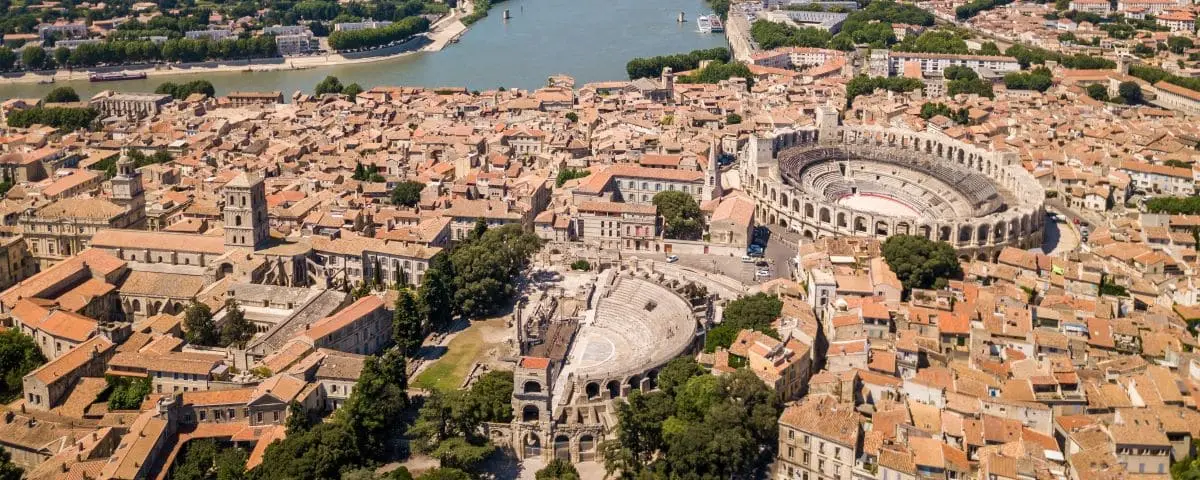
Arles is one of the strongest reasons to travel through Provence by train. Direct regional services connect it with Avignon, and the historic centre begins around ten minutes from the station. The route is straightforward enough that you can arrive early, explore all day and return without feeling that transport has dominated the experience.
Begin at the amphitheatre, then continue to the ancient theatre, Place de la République and Saint-Trophime. Roman Arles is woven directly into the living city, beside cafés, houses and market streets.
After lunch, follow Vincent van Gogh’s traces or choose LUMA Arles. Photography, architecture and exhibitions add another layer to the Roman and medieval city.
Our Arles one-day itinerary arranges the major sights into a walkable sequence. For alternatives, consult the best things to do in Arles and the Arles tourist map.
Arles is also the gateway to the Camargue, but do not squeeze a serious wetland excursion into this city day. Public transport into the delta is more limited, and the landscapes deserve unhurried attention. Use this day for Arles itself, then return to Avignon for dinner.
Read whether Arles is worth visiting when comparing stops.
Day 6: Visit L’Isle-sur-la-Sorgue by Train
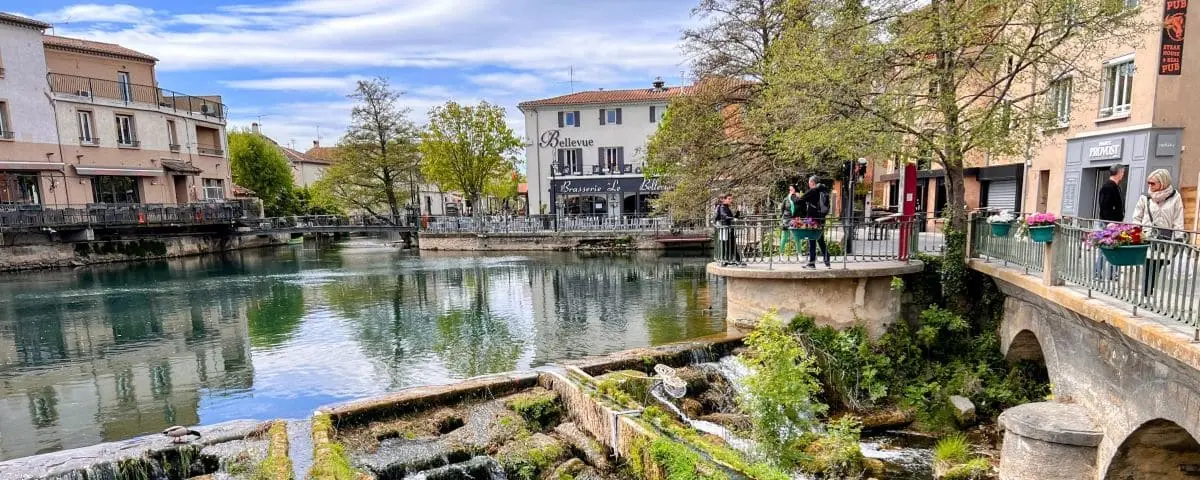
L’Isle-sur-la-Sorgue offers the gentlest day of the itinerary. Trains run from Avignon Centre to the station officially named L’Isle-sur-la-Sorgue Fontaine-de-Vaucluse. From there, walk toward the canals, waterwheels and low stone buildings of the centre. Current station information shows services toward both Avignon and Marseille, confirming its useful position on the regional network.
Visit on a market day if antiques and food stalls are a priority, but expect considerably more people. On a quieter weekday, the town reveals a softer personality. Follow the branches of the Sorgue, search for old mossy waterwheels and linger over lunch rather than racing from monument to monument.
L’Isle-sur-la-Sorgue is known for antiques. Even without buying, you can enjoy its courtyards, shops and mix of water, stone and greenery.
Do not confuse the station name with Fontaine-de-Vaucluse itself. The famous village and spring are farther away and require onward road transport. For a clean car-free itinerary, keep Day 6 focused on L’Isle-sur-la-Sorgue. This avoids turning a relaxed day into a fragile chain of bus connections.
Return to Avignon for a riverside walk or dinner beyond the busiest squares. Our best day trips from Avignon offers alternatives.
Day 7: Take a Final Train Trip to Orange
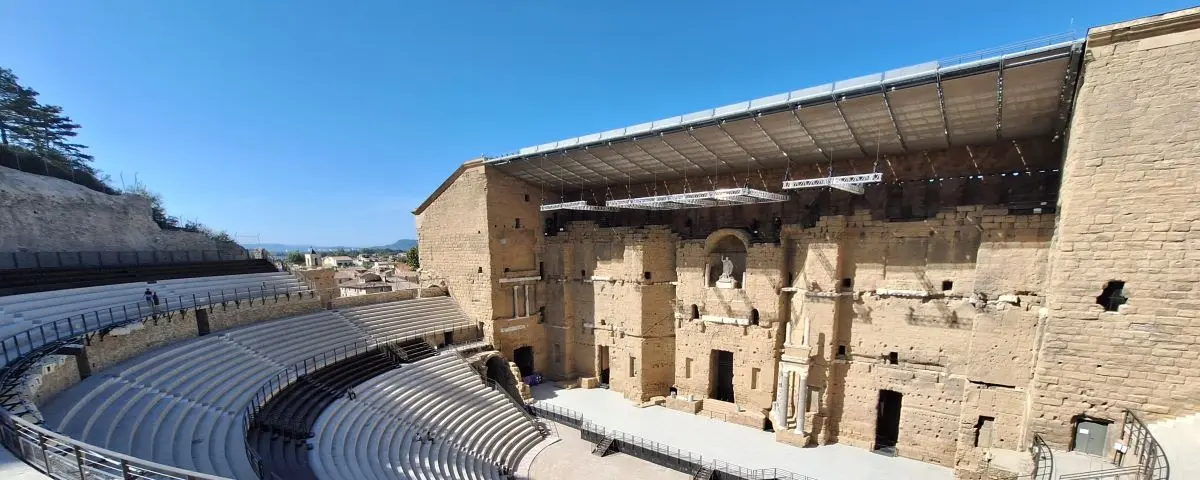
Orange is compact, direct and historically substantial, making it an excellent final excursion. Trains from Avignon can complete the journey in well under half an hour, with the fastest current listings around a quarter of an hour. As always, frequency and fares vary by date.
Walk from the station toward the Roman Theatre. Its immense stage wall is the reason to come, and it remains one of the most memorable Roman monuments in southern France. An audio or multimedia visit helps reconstruct the theatre’s original decoration and its role in public life.
Continue to the Arc de Triomphe, then return for lunch. Orange does not need an overloaded schedule. Its great monument requires little transport time.
With a late departure, collect your luggage in Avignon and continue by TGV. Otherwise, enjoy a final terrace evening without an agenda.
Travellers who prefer a bigger final day can replace Orange with another option from our guide to the best day trips from Avignon. Still, Orange is the most dependable choice when simplicity matters.
Where Should You Stay in Provence Without a Car?
Accommodation location matters more on a rail itinerary than on a road trip. A beautiful hotel twenty minutes from the station can become tiresome after three early departures. Choose a neighbourhood that lets you walk to transport, dinner and major sights.
Marseille: The Best Base for the Coast and Aix-en-Provence
Stay between Saint-Charles station, the Vieux-Port and the lower part of Le Panier. This broad central zone gives you easy access to regional trains, metro lines, restaurants and the main historic areas. The immediate streets around the station vary in atmosphere, so check the exact location rather than booking by distance alone.
The Vieux-Port is scenic, while Saint-Charles is efficient for early trains. Noailles has markets and inexpensive food. Le Panier is charming but inconvenient with luggage.
Marseille works especially well because Cassis and Aix-en-Provence lie in different directions but remain easy day trips. Three nights here create variety without a hotel change: one urban day, one coastal day and one elegant inland city.
For additional choices beyond this route, consult our guide to the best day trips from Marseille.
Avignon: The Best Base for Western Provence
Avignon Centre station is the anchor. The ideal hotel sits between the station and the old town, either just inside the ramparts or immediately outside them. You can then reach the platform quickly while keeping restaurants and evening walks close at hand.
Place de l’Horloge is central but can be noisy. The eastern old town is quieter but farther from the station. Modern hotels outside the walls simplify luggage handling.
Avignon succeeds as a base because several rail lines spread from it. Arles lies to the south, Orange to the north and L’Isle-sur-la-Sorgue to the east. Four nights do not mean four repetitive days, since each excursion presents a different face of Provence.
How to Plan Your Train Journeys in Provence
Regional transport rewards preparation. Search the exact date, save results offline and note the last practical return the evening before.
How to Use TER, TGV and Local Buses
TER trains form the backbone of this itinerary. They serve regional journeys and generally do not require the same advance commitment as high-speed trains. TGV services are most useful for reaching Provence, leaving it or moving quickly between major hubs when the fare and station are convenient.
Use TER for the day trips and compare TER with TGV for Marseille to Avignon. A fast train may save time, but arriving at Avignon TGV creates an extra transfer unless the service continues to Avignon Centre. The slower regional route can be more convenient door to door.
The regional ZOU network covers trains and buses across Provence-Alpes-Côte d’Azur. Official sources currently advertise one-day and multi-day products, including a three-day regional pass, but offers and conditions can change. Compare the pass price with your actual planned journeys before buying.
Local buses solve the final kilometre in places such as Cassis. Keep small timing buffers between modes, especially when the bus is less frequent than the train.
Which Train Stations Should You Choose?
Station names can save or cost you an hour. Choose Aix-en-Provence Centre for the Day 3 excursion. Aix-en-Provence TGV is designed for long-distance services and sits outside town, with a shuttle required to reach the centre.
Choose Avignon Centre for your hotel and day trips. Avignon TGV is useful for long-distance arrivals, but it is six kilometres away. A TER link connects the stations, so the transfer is simple when properly allowed for.
Marseille Saint-Charles, Arles, Orange and L’Isle-sur-la-Sorgue Fontaine-de-Vaucluse are less confusing. Cassis is the exception: the station bears the correct town name but is not at the harbour.
Before booking accommodation, enter the exact station and hotel on a map. A “central” hotel is not automatically central for your railway plans.
How to Book Tickets, Use Regional Passes and Set Your Budget
SNCF Connect and official TER or ZOU channels are the safest starting points for schedules and fares. Regional tickets may remain flexible, while TGV prices generally reward earlier booking. Read the conditions displayed for each ticket rather than assuming all French trains follow one rule.
Price the itinerary journey by journey before buying a pass. A pass can be excellent for concentrated travel, but this route also contains days with only one inexpensive return trip. Two travellers, families and groups may have different discount options from solo adults.
Budget for the Cassis shuttle, urban transport and any Avignon station transfer. Keep a small reserve for a later train or unexpected bus.
Service changes are the greater risk, not cost. Engineering work and disruptions can alter normal patterns, so consult live traffic information before important travel days. Official TER pages publish modified schedules and current traffic notices.
How to Adapt This Provence Train Itinerary
Seven days is the sweet spot, but the route can be compressed or extended. The key is to remove whole day trips rather than cutting every destination in half.
A 5-Day Provence Itinerary Without a Car
For five days, keep Marseille, Aix-en-Provence, Avignon and Arles. Spend two nights in Marseille and three in Avignon. On Day 1, explore Marseille. Use Day 2 for Aix-en-Provence or Cassis, choosing city culture or coast according to your interests.
Travel to Avignon on Day 3 and explore the old town. Visit Arles on Day 4. Use Day 5 for Orange, L’Isle-sur-la-Sorgue or more time in Avignon, depending on your departure schedule.
Do not attempt all seven original stops. A five-day Provence itinerary without a car remains enjoyable only if it preserves breathing room.
A 10-Day Provence Itinerary by Train
With ten days, add depth before adding distance. Give Marseille a second full day for neighbourhoods, museums or the coast. Stay overnight in Aix-en-Provence if you want evening calm after the day visitors leave. Add a second Arles day for LUMA, museums or a carefully planned Camargue outing.
You could also spend one night in L’Isle-sur-la-Sorgue, especially around a market day, or extend north from Orange. Another option is to keep the same two bases and build in rest days, which can be welcome during hot weather.
A longer trip is also the moment to consider one bus-based village excursion. Research the precise seasonal timetable first. Do not let one famous village destabilise an otherwise smooth rail itinerary.
Practical Tips for Travelling Around Provence Without a Car
A successful car-free trip depends less on complicated hacks than on a few sound decisions. Location, luggage and timing matter every day.
Stay Within Walking Distance of the Train Station
Aim for a genuine 10 to 15-minute walk with luggage, not an optimistic distance measured without hills, heat or cobbles. In Marseille, metro access can compensate for a longer walk. In Avignon, a station-side location is especially valuable because it benefits three excursion days.
Check evening surroundings, reception hours and lift access. Small historic hotels may have stairs, while apartment rentals can involve strict check-in windows. Convenience is part of the travel experience, not a failure of imagination.
Check Timetables and Last Trains Before Every Day Trip
Timetables vary by weekday, season and engineering programme. Save both the intended return and one earlier backup train. That simple habit prevents a delayed lunch or museum visit from becoming stressful.
Check whether the last connection requires a change. Sundays and public holidays may offer fewer options. At Cassis, coordinate the station shuttle with the train rather than assuming a bus will be waiting.
Travel Light and Avoid Unnecessary Hotel Changes
A medium suitcase is easier on station stairs and old streets. Keep water, sun protection and comfortable shoes in a day bag.
Two bases are better than seven hotels. You gain slower evenings, familiar neighbourhoods and freedom from repeated check-in routines. The train becomes a scenic daily tool rather than a conveyor belt between beds.
Frequently Asked Questions About Visiting Provence by Train
What Is the Best Base in Provence Without a Car?
Avignon is the best single base for western Provence, especially for Arles, Orange and L’Isle-sur-la-Sorgue. Marseille is the stronger base for the coast, Cassis and Aix-en-Provence. For a full week, combining both produces the most varied itinerary with only one hotel change.
Can You Visit Provence’s Lavender Fields by Train?
Not easily by train alone. The most celebrated lavender areas are generally beyond the convenient rail network and require a bus, bicycle, taxi or organised transport. Do not promise yourself effortless lavender access on a rail-only trip. Build the week around cities and rail-connected towns, then add lavender only after confirming a realistic same-day connection.
How Many Days Do You Need in Provence Without a Car?
Seven days is ideal for a first car-free itinerary. Five days works if you remove two or three excursions, while ten days allows more museums, rest and one carefully planned rural trip. Fewer than five days is better treated as a Marseille and Aix trip or an Avignon and Arles trip, not a complete tour of Provence.
Is It Better to Stay in Marseille or Avignon?
Stay in Marseille for sea views, urban culture, nightlife, Cassis and Aix-en-Provence. Stay in Avignon for compact historic streets and easy trips to Arles, Orange and L’Isle-sur-la-Sorgue. For this route, the answer is not Marseille or Avignon, but Marseille then Avignon.
Provence by Train Without a Car: The Final Takeaway
- Use Marseille for three nights, covering the city, Cassis and Aix-en-Provence.
- Use Avignon for four nights, covering Avignon, Arles, L’Isle-sur-la-Sorgue and Orange.
- Choose central stations over peripheral TGV stations whenever the journey time remains sensible.
- Accept that rural villages require more planning, and save an ambitious Luberon circuit for another trip if necessary.
- Verify live schedules before every excursion, because regional services and engineering work can change.
- Keep luggage light and hotels close to transport, turning each train day into pleasure rather than logistics.
- Travel slowly enough to notice Provence, from the morning fish market in Marseille to Roman stone in Arles and evening light on Avignon’s walls.
A Provence itinerary by train does not reproduce a road trip, and it should not try. It offers something different: central arrivals, café stops without parking worries, views from the carriage and the freedom to concentrate on places built for walking. With the right route, Provence without a car feels less like a compromise and more like a better way to travel.