




Aix-en-Provence does not reveal itself through one spectacular monument. It wins you over gradually, with fountains murmuring beneath plane trees, market baskets brushing past café tables, honey-colored façades, and narrow streets that seem made for wandering.
This one-day Aix-en-Provence itinerary brings together the city’s essential sights without turning your visit into a race. You will cross the historic center, experience its Provençal markets, choose one major art museum, and finish beside Paul Cézanne’s final studio, where the urban elegance gives way to quieter hills today.
As a French family of former travel planners specializing in France, we favor routes that work on the ground, not only on a map. That means realistic choices, limited backtracking, and enough freedom to enjoy the small moments that make Aix memorable: a market tasting, an open courtyard, or the sound of water on a shaded square.
One Day in Aix-en-Provence at a Glance

- Begin at Fontaine de la Rotonde and walk along Cours Mirabeau, the elegant boulevard that separates the old town from the Mazarin district.
- Spend the morning in the historic center, combining Place Richelme, the market streets, Place d’Albertas, Place de l’Hôtel de Ville, and Saint-Sauveur Cathedral.
- Keep lunch central and unhurried, but avoid a long formal meal if you want enough time for a museum and Cézanne’s Studio.
- Explore Quartier Mazarin during the afternoon, then choose either Musée Granet for broad art collections or Hôtel de Caumont for a refined mansion and temporary exhibition.
- End at Cézanne’s Studio only when it is open and reserved, since it lies outside the compact historic center and access can be limited.
- Return to the old town for an apéritif and dinner, preferably on a lively square rather than directly beside the busiest tourist flow.
Aix-en-Provence One-Day Walking Route: Map, Distance and Route
Recommended Walking Route Through the Historic Center
Follow a simple south-to-north loop before leaving the center for Cézanne’s Studio. Start at La Rotonde, cross Cours Mirabeau, enter the old town through Rue Espariat, and weave through Place d’Albertas, Place Richelme, Place de l’Hôtel de Ville, and the cathedral quarter.
After lunch, return south through the shopping streets, cross Cours Mirabeau again, and explore Quartier Mazarin, Fontaine des Quatre Dauphins, Hôtel de Caumont, and Musée Granet. Our Aix-en-Provence tourist map will help you visualize this compact route before adding the uphill extension to Cézanne’s Studio.
The route also leaves room for improvisation. Aix is compact enough to permit a wrong turn without ruining the day, and those small deviations often reveal the best doorways, fountains, galleries, and quiet lanes. Keep direction in mind, but do not navigate constantly through your phone.
How Much Walking Does This Aix-en-Provence Itinerary Include?
Expect a comfortable city walk rather than a demanding urban hike. The historic center and Quartier Mazarin are compact, mostly pedestrian-friendly, and best explored slowly because façades, fountains, courtyards, and market stalls provide much of the pleasure.
The Cézanne extension changes the rhythm. His studio stands north of the center, so allow extra energy for the uphill walk or use a local bus. In total, most visitors will cover roughly 6 to 8 kilometers, or 3.7 to 5 miles, depending on museum detours, shopping, and the route back for dinner.
Is One Day Enough in Aix-en-Provence?
One day is enough for a rewarding first visit, but not for every museum, Cézanne site, and leisurely terrace. Aix is less a checklist city than a place of atmosphere, so the main challenge is resisting the temptation to add too much.
This itinerary gives you the old town, markets, major squares, Quartier Mazarin, one cultural visit, and Cézanne’s Studio when available. Stay longer for Sainte-Victoire, the Bibémus quarries, the Jas de Bouffan, or a slower second museum. Our guide on whether Aix-en-Provence is worth visiting explains why the city rewards travelers who can give it more time.
Morning: Markets and the Historic Center
Start at Fontaine de la Rotonde and Cours Mirabeau
La Rotonde is the natural gateway to Aix-en-Provence. Its monumental fountain introduces the city’s obsession with water, while the broad avenue beyond it offers the classic first view of plane trees, café terraces, fountains, and dignified private mansions.
Walk along Cours Mirabeau without trying to inspect every address. The promenade is 440 meters long and historically links the old commercial town with Quartier Mazarin. Notice the mossy Fontaine d’Eau Chaude, fed by thermal water, then look up at carved doors and wrought-iron balconies. Aix begins at street level, but its most elegant details often sit above the shopfronts.
Explore the Aix-en-Provence Markets
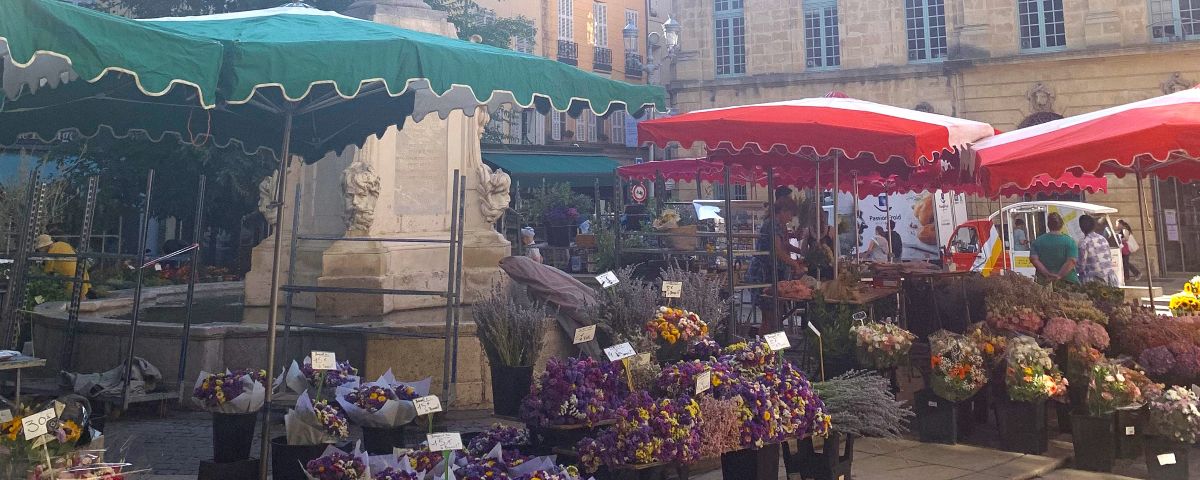
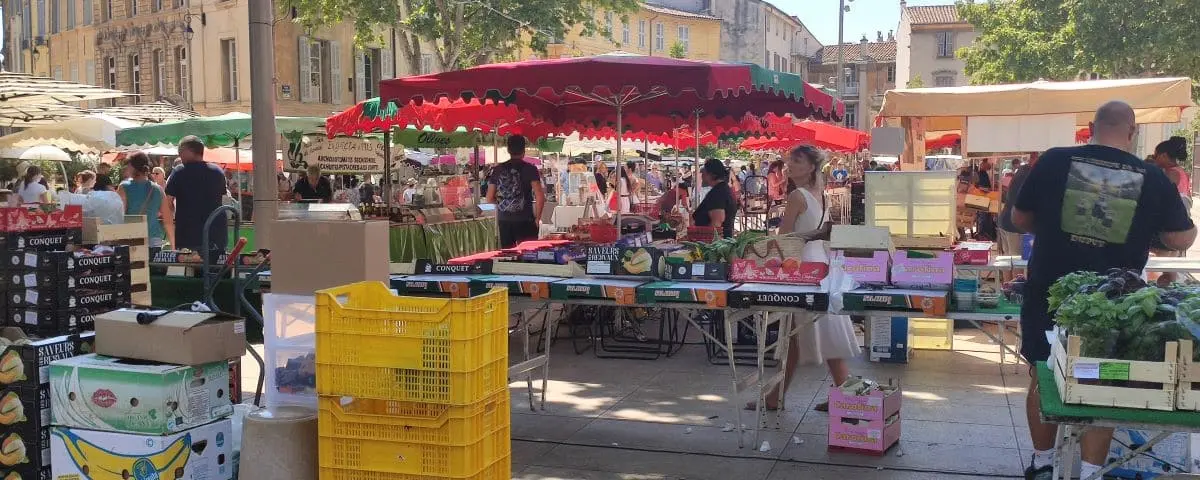
Place Richelme should be your priority market stop because it hosts food stalls every morning. Expect seasonal fruit, vegetables, cheese, olives, herbs, bread, and the easy conversation of a market used by locals as well as visitors.
On Tuesdays, Thursdays, and Saturdays, the central market scene expands across several squares with flowers, textiles, antiques, and regional products. Arrive earlier on these days, when the colors are brightest and the lanes remain manageable. Do not treat the market as a separate attraction. Buy something small, watch the city wake up, and let it become part of your breakfast or picnic.
Discover the Old Town and Its Most Beautiful Squares
The best old-town route is intentionally indirect. From Place Richelme, wander toward Place de l’Hôtel de Ville, where the clock tower, town hall, and café terraces create one of Aix’s liveliest urban scenes. Nearby streets twist between fountains, old signs, food shops, and aristocratic façades.
Make a detour to Place d’Albertas, an intimate Baroque square with theatrical curves and a fountain at its center. Then continue through the former count’s town toward the Saint-Sauveur quarter. For a broader list of landmarks, fountains, museums, and hidden corners, open our guide to the best things to do in Aix-en-Provence.
Look beyond the obvious postcard angles. Aix’s old town is a collection of details rather than a single grand panorama: stone masks above doorways, tiny religious niches, weathered shutters, patches of shade, and sudden glimpses into courtyards. This visual rhythm explains why walking slowly produces a richer visit than chasing extra monuments.
Visit Saint-Sauveur Cathedral
Saint-Sauveur Cathedral is the morning’s essential historic monument. Its façade places Romanesque stone beside a richly carved Gothic portal, an immediate clue that the building evolved across many centuries on a site connected with ancient Aix.
Inside, move slowly between the baptistery, chapels, paintings, and contrasting architectural styles. The cathedral’s famous triptych is not permanently open, so consider it a bonus rather than the sole reason to visit. When the Romanesque cloister is accessible, its paired columns and carved capitals offer a calmer, more intimate experience than the main nave. Dress respectfully and remember that this remains an active religious building.
Lunch: Enjoy a Provençal Break in the Historic Center
Choose atmosphere and efficiency over a destination restaurant at lunchtime. The lanes around Place des Cardeurs, Place Ramus, Rue d’Italie, and the streets near Cours Mirabeau offer everything from market cooking and Provençal dishes to salads, tartes, and Mediterranean plates.
Aix tempts visitors into a two-hour terrace lunch, which is delightful when you have several days but risky on a one-day itinerary. Aim for a relaxed meal that still leaves the afternoon open. Look for seasonal vegetables, goat cheese, olive oil, tapenade, or a simple daily special. We generally prefer a small side street to the most exposed tables on Cours Mirabeau, where the setting often matters more than the plate.
Reserve your appetite for quality, not quantity. A good lunch here should restore your energy without making the museum feel like a test of endurance.
Afternoon: Quartier Mazarin, Art and Cézanne’s Aix
Explore Quartier Mazarin and Fontaine des Quatre Dauphins
Cross Cours Mirabeau and the city’s mood becomes quieter and more geometric. Quartier Mazarin was laid out in the seventeenth century, with straighter streets and private mansions built for the local elite. The neighborhood feels composed rather than improvised.
Walk to Place des Quatre Dauphins, where four stone dolphins support the fountain’s obelisk. Pause to examine the surrounding façades, carriage entrances, and discreet courtyards. This is not a district of blockbuster sights. Its appeal lies in proportion, pale stone, shuttered windows, and the sense that elegant Aix has stepped away from the commercial bustle just north of Cours Mirabeau.
Choose Between Musée Granet and Hôtel de Caumont
With only one day, choose one major cultural visit rather than rushing through both. Musée Granet is the better option for travelers who want a broad art collection, archaeology, Provençal painters, Cézanne, and modern works spread across its main building and Granet XXe.
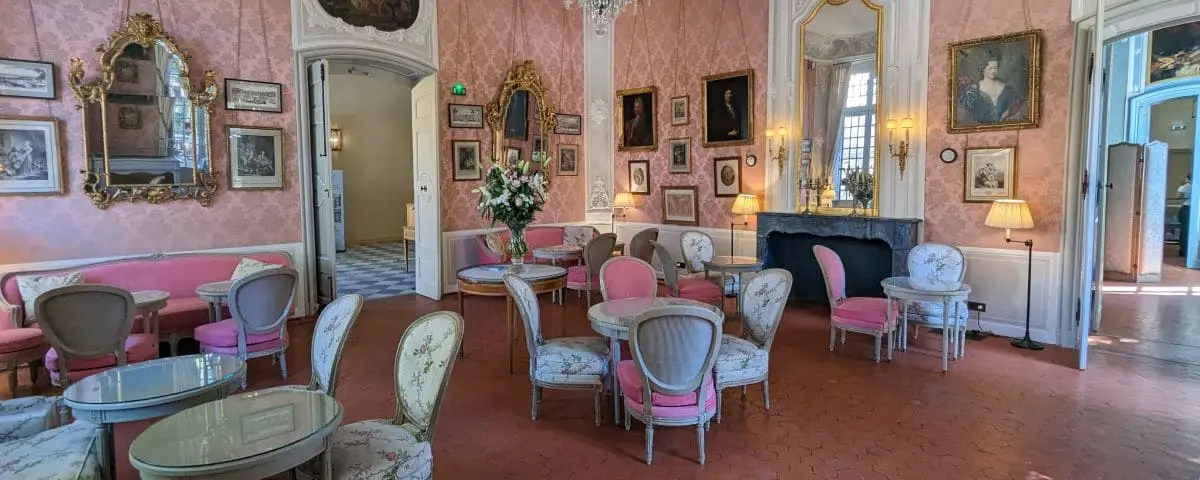
Hôtel de Caumont suits visitors who value architecture, decorative interiors, gardens, and a focused temporary exhibition. The eighteenth-century mansion also offers a gentler pause in the heart of Quartier Mazarin. Check the current exhibitions before deciding, since programming may outweigh the permanent collections. Musée Granet usually demands more concentration; Caumont often delivers a shorter, more polished experience.
Stop for Calissons and Coffee
Taste at least one calisson before leaving Aix. This small almond-shaped sweet combines ground almonds, candied melon, and a thin layer of royal icing over a wafer base. It is delicate, sugary, and more interesting when bought from a specialist confectioner rather than a generic souvenir shelf.
Several historic and modern confiseries operate near the center, making this an easy pause between the museum and Cézanne’s Studio. Buy a single piece first, then decide whether a box deserves luggage space. Pair it with coffee or tea, but keep the stop brief. The afternoon still has one important climb, and Cézanne is waiting beyond the comfortable circle of terraces.
End the Afternoon at Cézanne’s Studio
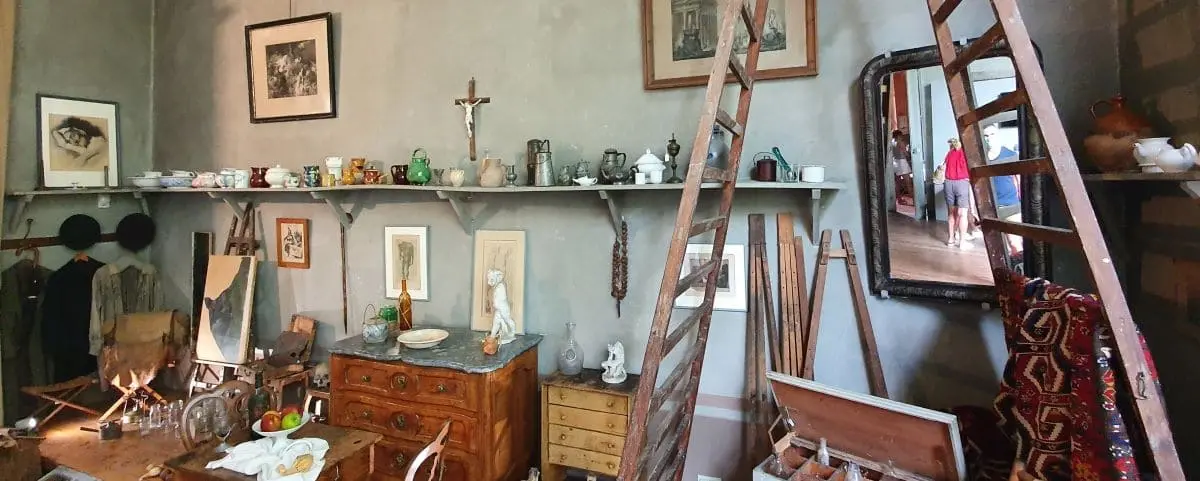
Cézanne’s Studio is the logical final sightseeing stop because it lies uphill, outside the historic center. The preserved workspace at Les Lauves contains furniture, tools, still-life objects, and the tall opening used to move large canvases. Its power comes less from spectacle than from proximity to the painter’s working life.
Book before going, especially in summer, and confirm the seasonal calendar. For 2026, the tourist office announced a reopening beginning on July 4 after major work, which makes advance verification essential. When the studio is closed, follow the bronze markers of the Cézanne trail in town or spend longer with his work at Musée Granet.
Where to End Your Day in Aix-en-Provence
Return to the center and let the evening become less organized. Aix works beautifully after sightseeing hours, when shoppers thin out, façades warm in the lower light, and squares fill with students, couples, and friends meeting over wine.
Place des Cardeurs is lively and restaurant-heavy, while Place Richelme and the smaller old-town squares feel more intimate. Cours Mirabeau remains the grand stage, but one street away often brings better value and a more local mood. Order a glass of Provence wine, a pastis, or a nonalcoholic aperitif, then choose dinner according to your remaining appetite rather than another list of mandatory specialties.
If you still have energy, repeat part of the morning route after dark. Familiar squares feel different under lamps, market stands have vanished, and the quieter streets reveal the residential side of a city that can seem almost theatrical by day.
Essential Tips for Visiting Aix-en-Provence in One Day
Choose the Best Day and Season for Your Visit
Tuesday, Thursday, and Saturday mornings offer the fullest market experience. These days suit first-time visitors who want food, flowers, textiles, and busy Provençal squares, although they also bring larger crowds. Place Richelme’s food market gives other mornings a pleasant local start.
Spring and early autumn provide the best balance of light, comfortable temperatures, and active streets. Summer is vibrant but hot, so start early, carry water, and reserve indoor attractions. Winter feels quieter and more local, with shorter days but fewer tour groups. During major festivals or exhibitions, accommodation and museum slots can disappear quickly.
Sunday can be pleasant for atmosphere, but retail opening patterns are less predictable. Match the day to your priority: major markets for energy, weekdays for easier reservations, and quieter winter mornings for architecture without the crowds.
Parking and Getting Around Aix-en-Provence Without a Car
Do not attempt to drive through the historic center. Its pedestrian lanes, one-way streets, restricted access, and expensive central parking make a car more burden than benefit during the visit.
Drivers should use a central underground garage or, preferably, one of the park-and-ride facilities connected to local transport. Once you arrive, walk. Small electric shuttles and buses can help if mobility is limited or if you visit Cézanne’s Studio. Aix is perfectly enjoyable without a car, and the slow pace of walking is precisely what reveals its fountains, courtyards, shopfronts, and changing street life.
Tickets, Opening Hours and What to Book in Advance
Reserve Cézanne-related sites first, then build the rest of the day around that fixed point. Capacity at the studio is limited, and its calendar has changed during restoration and reopening work. Temporary exhibitions at Hôtel de Caumont and Musée Granet can also attract queues during peak periods.
Opening hours vary by season, weekday, exhibition, religious service, and public holiday. Check official pages shortly before traveling rather than relying on an old screenshot. The Aix City Pass can be worthwhile when you combine several paid attractions, but it does not remove every reservation requirement. Flexibility is useful; overbooking turns an elegant city into an obstacle course.
How to Adapt This Itinerary on a Monday or Rainy Day
On Monday, verify museums carefully and give more space to streets, churches, cafés, and markets. Museum closing days and seasonal schedules are not always aligned, so swap the cultural visit rather than abandoning the afternoon.
In rain, begin with Saint-Sauveur Cathedral, covered market browsing, Musée Granet, or Hôtel de Caumont, then use dry intervals for the squares and Cours Mirabeau. If Cézanne’s Studio is unavailable, do not force a long wet walk uphill. Stay central and explore Granet XXe, confectioners, bookshops, and covered passages. Aix loses some terrace sparkle in poor weather, but its stone interiors and art collections compensate gracefully.
One Day in Aix-en-Provence: Final Recommendations
- Follow a compact route and protect time for wandering, because Aix’s fountains, markets, and façades matter as much as its formal attractions.
- Prioritize the morning markets and historic center, then cross into Quartier Mazarin after lunch for a calmer architectural contrast.
- Choose Musée Granet or Hôtel de Caumont, not both, unless you are willing to skip Cézanne’s Studio or shorten your meal.
- Place Cézanne at the end of the afternoon, when you are ready to leave the central loop and climb toward Les Lauves.
- Use the city as a pleasure, not a checklist. A coffee, a calisson, and ten quiet minutes beside a fountain belong in the itinerary.
- Stay longer when possible. Our guides comparing Avignon or Aix-en-Provence and Marseille or Aix-en-Provence can help you choose a base, while these day trips from Aix-en-Provence show what to add beyond the city.