




Avignon looks grand without becoming unmanageable. Behind its honey-colored ramparts, papal halls, shaded squares, markets and quiet lanes sit close enough to explore on foot. One day in Avignon is enough for a rewarding first visit when you follow a sensible route and resist rushing through every doorway.
Avignon 1 Day Itinerary at a Glance
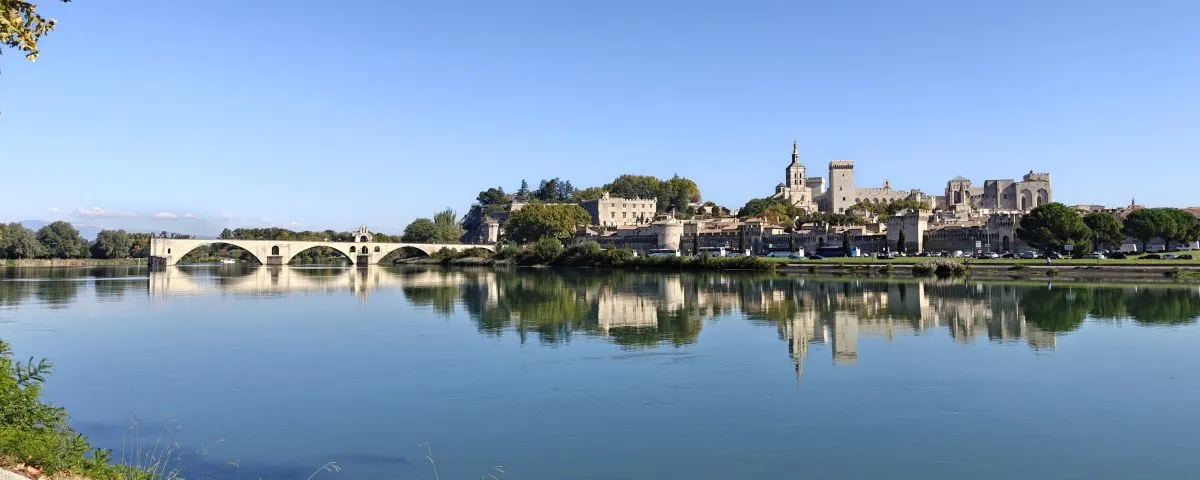
- Begin at Les Halles and Place Pie, where market stalls and café terraces introduce the city through food and daily life.
- Make the Palais des Papes your main visit, because no other monument explains Avignon’s history and personality so powerfully.
- Continue to Avignon Cathedral and the Rocher des Doms for Romanesque architecture, shade and wide Rhône views.
- Pause for lunch around Place de l’Horloge, choosing a side street for a calmer table and less touristy atmosphere.
- Walk onto the Pont Saint-Bénézet, then look back toward the ramparts and palace to understand Avignon’s dramatic setting.
- Explore the Quartier de la Balance and the Old Town slowly, leaving time for squares, stone façades and unexpected passages.
- Finish on Rue des Teinturiers, where waterwheels, plane trees and theaters reveal a more intimate Avignon.
- Keep the day on foot, using our Avignon tourist map to avoid unnecessary detours.
Map, Walking Distance and Timing for This Avignon Itinerary
This Avignon walking itinerary forms a compact loop through the historic center. The route covers roughly 5 to 6 kilometers, or 3 to 4 miles, depending on your detours. Allow a full day because the monuments and pauses deserve time, not because the distances are long.
Avignon is highly walkable, although the climb toward the Palais des Papes and Rocher des Doms requires a little effort. Wear comfortable shoes, carry water in summer and seek shaded streets during the hottest hours.
Because the route stays inside or beside the ramparts, public transport adds little value after arrival. Pace is the main decision. Medieval history lovers should protect extra time for the palace, while photographers may linger at the Rocher des Doms and riverbank. Food-focused visitors can spend longer at Les Halles and shorten the Old Town wander.
Do not sacrifice the bridge, palace or Rue des Teinturiers simply to fit in another minor sight. Seasonal conditions also matter. Spring and autumn encourage slower walking, summer rewards early movement and shaded breaks, and winter offers quieter streets but shorter daylight. Check monument opening times before departure, especially when events affect access.
We plan French city days around one major reservation, a logical walking line and flexible pauses. That method works especially well in Avignon, where essential sights sit within a compact historic core.
Use the map as a guide rather than a military order. A courtyard, church or market display may delay you, and that is not a failure. The best itinerary leaves enough room for Avignon to interrupt it.
Morning: Markets, the Palais des Papes and Rhône Views
Start at Les Halles and Place Pie
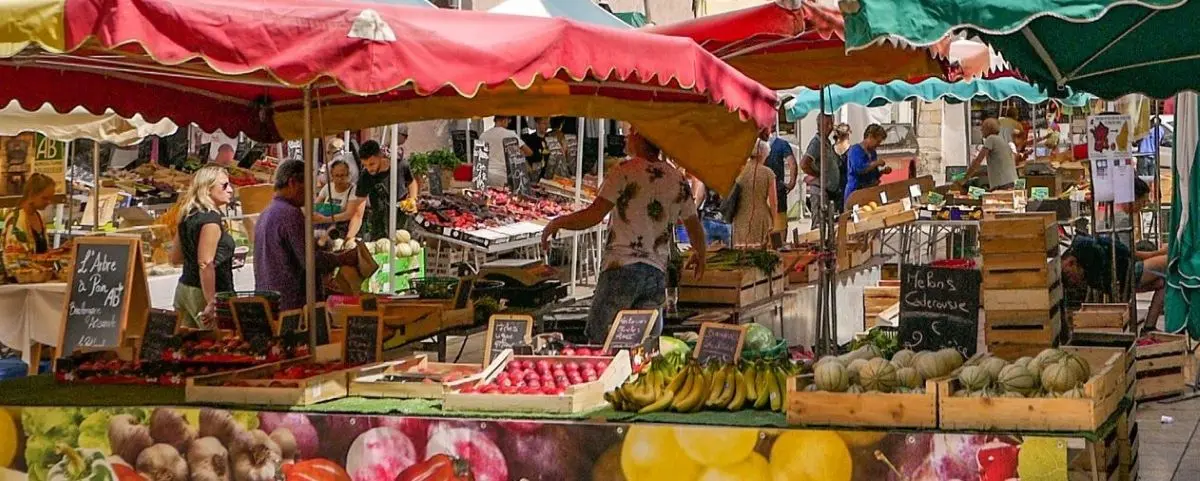
Begin at Les Halles, the covered market where Avignon wakes among cheeses, olives, vegetables, charcuterie and Provençal flavors. The building’s green wall catches the eye, but the real attraction is inside. Start here if you want the day to feel local before it becomes monumental.
Walk between the stalls, pick up fruit or a pastry, and notice how residents shop rather than simply photograph the displays. Opening patterns vary, so check before relying on a particular stall. Even without a picnic, the market introduces the ingredients you may meet at lunch.
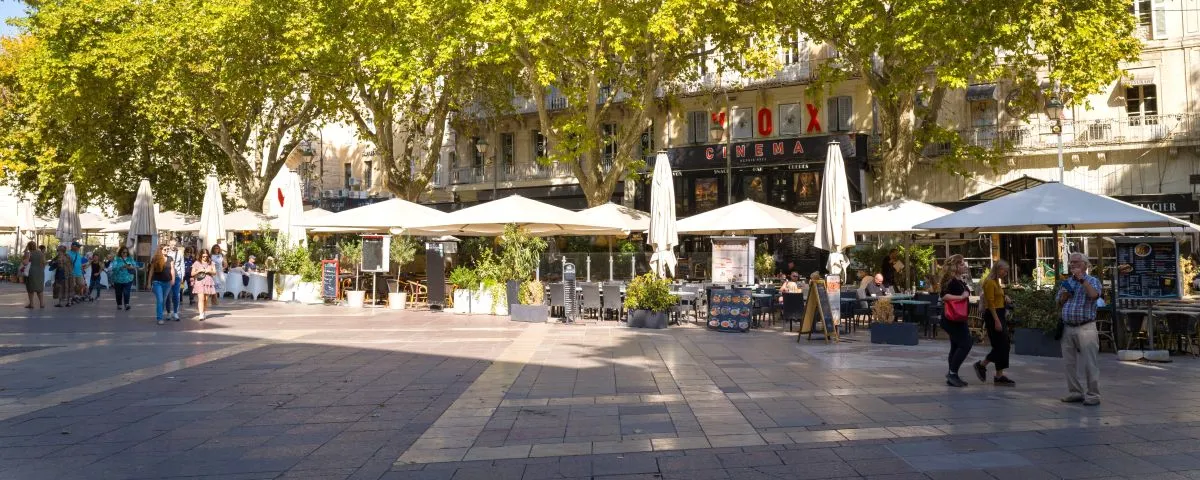
Outside, Place Pie is busier and less polished than the ceremonial squares. Cafés fill the pavement while the city gets on with its day. Then walk toward the papal quarter. For more attractions beyond this route, see our guide to the best things to do in Avignon.
Visit the Palais des Papes
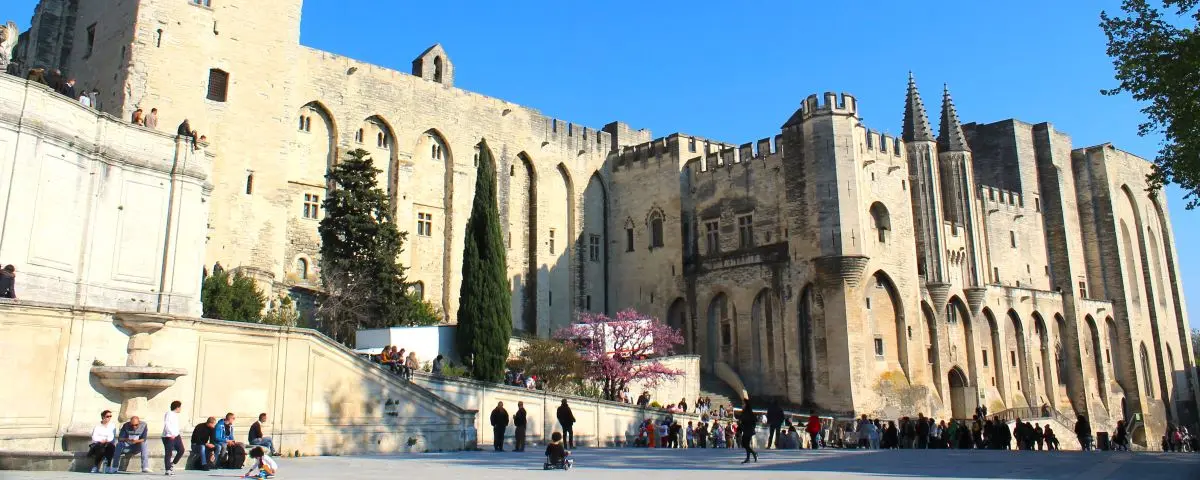
The Palais des Papes does not charm gently. It looms over the square like a fortress built to settle an argument. During the fourteenth century, Avignon became the seat of the papacy, and the palace grew into a complex of ceremonial rooms, chapels, courtyards and private apartments. If you visit one paid monument, make it the Palais des Papes.
The rooms can appear austere if you expect a furnished royal residence, but their scale tells the story. Look for surviving frescoes, imagine ceremonies filling the halls and enter the courtyards later associated with the Festival d’Avignon. The official visit generally takes around one and a half to two hours, making the palace the anchor of your day.
The visitor tablet reconstructs lost decoration and explains how spaces functioned. Use it selectively, then look up. The palace’s power lies in the contrast between bare stone, immense proportions and flashes of refinement.
Before leaving, turn toward the Hôtel des Monnaies, cathedral and surrounding façades. Avignon is often called beautiful, but dramatic is more accurate.
See Avignon Cathedral and the Rocher des Doms
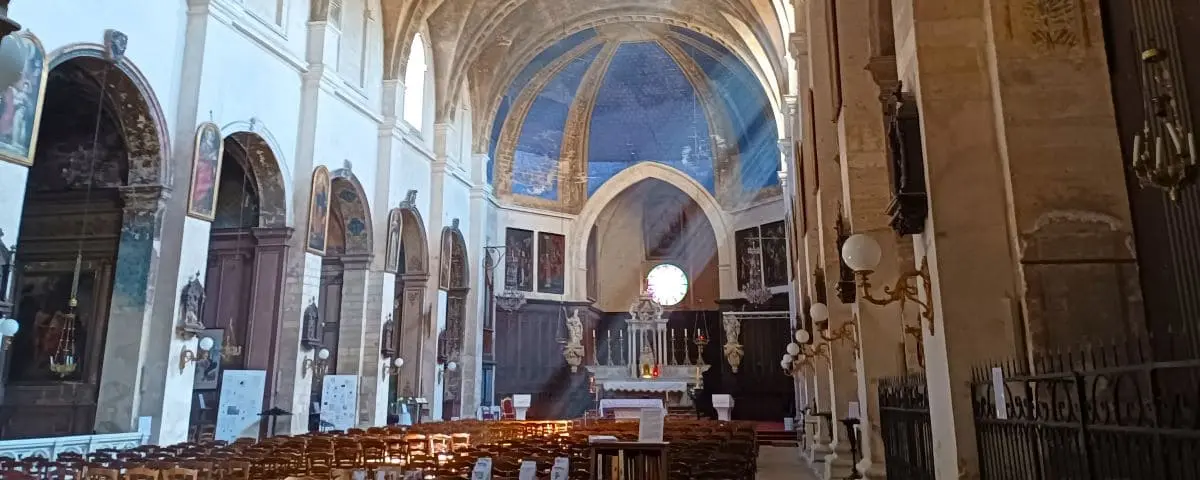
Next door, Notre-Dame des Doms changes the scale and mood. Its Romanesque origins connect the papal city to an older religious history, while the gilded statue above the bell tower watches over the rooftops. Do not skip the cathedral simply because the palace is larger.
Continue to the Rocher des Doms, the elevated garden above the Rhône. Trees, paths and viewpoints open toward the Pont Saint-Bénézet, Villeneuve-lès-Avignon, Fort Saint-André and the river beyond.
The panorama clarifies Avignon’s geography. The fortified city rises above the Rhône, while the opposite bank feels greener and broader. Here, Avignon stops being a collection of monuments and becomes a complete landscape.
Take a bench if the day is hot. There is no prize for reaching lunch exhausted, and the garden is an ideal place to slow down.
Have Lunch near Place de l’Horloge
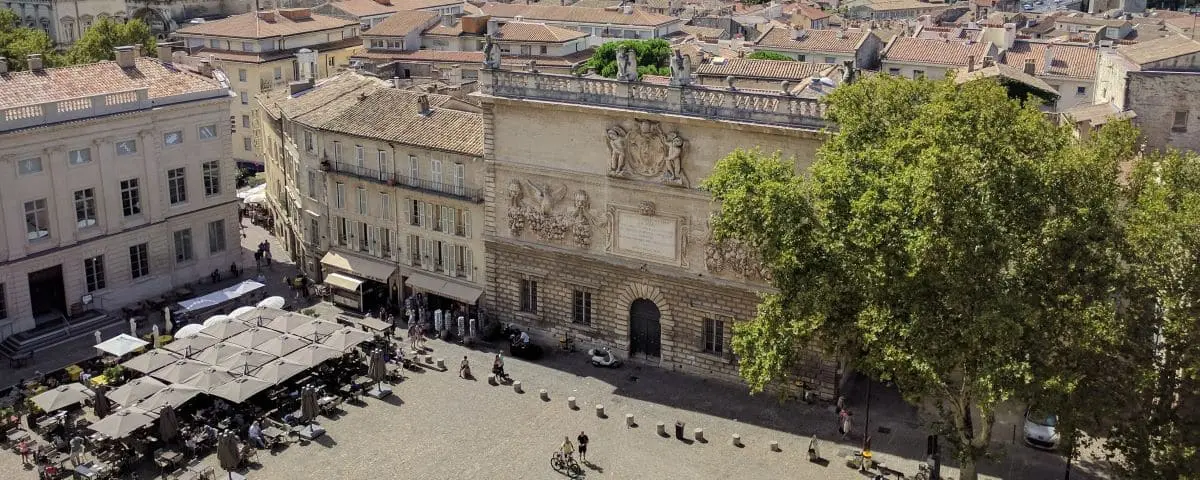
Return toward Place de l’Horloge, Avignon’s civic living room. The Hôtel de Ville and opera house provide the formal setting, while terraces, performers and visitors add movement. The square is convenient, but the best table may be one or two streets away.
Menus on the busiest stretch often sell location as much as cooking. We prefer nearby lanes offering a shorter seasonal menu, a Provençal dish or a simple plate based on market produce. Look for vegetables, goat cheese, tapenade, charcuterie or fish according to the season.
Keep lunch relaxed but not endless. If you are choosing a longer Provence base, our Avignon or Aix-en-Provence comparison explains why Avignon suits active sightseeing, while Aix favors a slower café-and-market rhythm.
Afternoon: Pont d’Avignon, the Old Town and Rue des Teinturiers
Walk onto the Pont Saint-Bénézet
After lunch, descend toward the Rhône and Pont Saint-Bénézet, better known as the Pont d’Avignon. Its surviving arches reach into the river and stop abruptly, which is exactly why the bridge is memorable. Walk onto it for the views, not merely for the song.
The bridge once belonged to a longer medieval crossing. Floods repeatedly damaged it, and rebuilding eventually ceased. From the deck, look toward the palace, ramparts and Rocher des Doms. The city appears stern, compact and almost stage-built.
A combined palace and bridge ticket is usually practical for this route, and online booking is recommended. Prices and conditions change, so verify them on the official website.
Back on the riverbank, pause for the reverse view. Avignon’s finest postcard is the bridge framed by the fortified city behind it.
Explore the Quartier de la Balance and Avignon’s Old Town
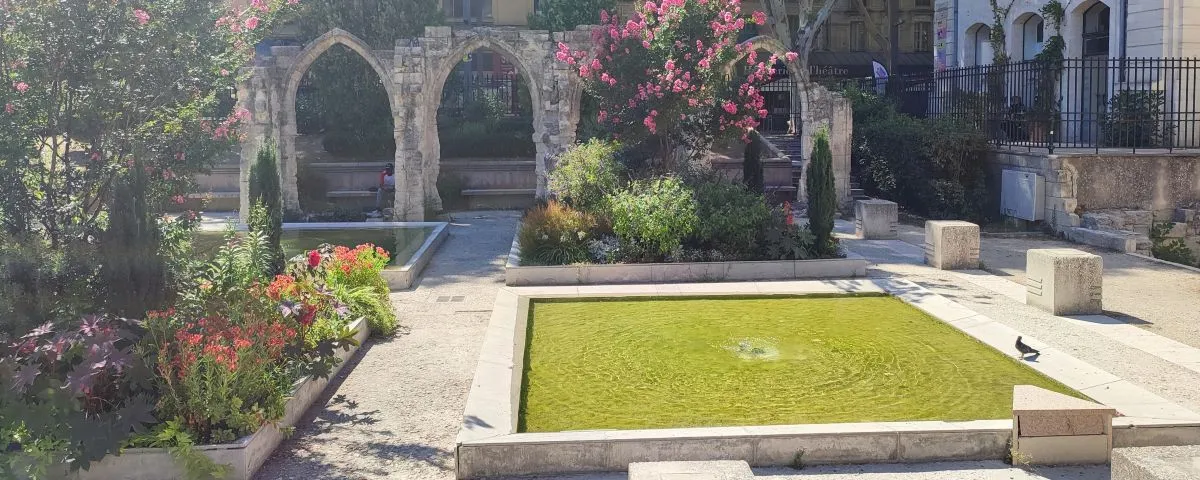
From the bridge, enter the Quartier de la Balance between the Rhône and papal quarter. Its lanes feel smaller and quieter than Place du Palais. Stone houses, discreet restaurants and old passages make this a pleasant area for wandering eastward.
This is where you should stop following the checklist for a while. Turn into inviting lanes, glance into open courtyards and let the Old Town’s texture do the work. Avignon’s charm often appears between major sights.
Continue toward smaller squares and churches. You might pass Place des Carmes, browse a bookshop or stop for coffee. The ramparts surround a varied interior, from stately mansions to lively neighborhood streets.
Travelers often compare Avignon with nearby Arles, another cultural base with a different identity. Our Arles or Avignon guide helps you choose between papal grandeur and Roman heritage.
Stroll along Rue des Teinturiers
Rue des Teinturiers provides the soft landing this itinerary needs. The street follows a narrow branch of the Sorgue, shaded by plane trees and marked by waterwheels recalling Avignon’s textile industry. Here, the city returns to a smaller, more human scale.
Footbridges cross the water, façades lean toward the canal and theaters reveal Avignon’s creative life. During festival season, posters, performers and audiences transform the street.
Notice the Chapelle des Pénitents Gris, uneven stones and contrast between shaded water and bright walls. A drink here may be more rewarding than squeezing in another museum. This neighborhood walk balances monumental history with everyday atmosphere.
End Your Day with an Apéritif and Dinner
Choose between staying near Rue des Teinturiers, returning to Place Pie or heading toward the central squares. Rue des Teinturiers feels intimate, Place Pie energetic, and the palace quarter more ceremonial after day visitors leave.
Order an apéritif and watch the light. Avignon becomes especially handsome when evening tones soften the palace and ramparts. Rhône Valley wine is an obvious choice, although a cold nonalcoholic drink may feel wiser after a summer walk.
For dinner, favor a concise menu and regional ingredients over a restaurant promising every Provençal classic. This is also the moment to decide whether the city deserves more time. Our answer in is Avignon worth visiting is yes, especially for history lovers and travelers seeking a walkable Provence base.
How to Get to Avignon for a Day Trip
Arriving by Train: Avignon Centre or Avignon TGV?
Avignon has two stations, and confusing them can complicate your day. Avignon Centre sits outside the ramparts, a short walk from the historic center and roughly fifteen minutes from the Palais des Papes. For a day trip, Avignon Centre is the most convenient arrival point.
Avignon TGV lies about 6 kilometers away and receives many high-speed services. A local rail connection links it with Avignon Centre, so check whether your journey requires this transfer.
Leave a margin before your return train. The route ends inside the walls, and Rue de la République leads conveniently toward Avignon Centre.
Arriving by Car: Where to Park near the City Walls
Driving inside the ramparts is rarely a clever introduction. Streets can be narrow, access restricted, and searching for a space wastes precious time. Park outside or beside the walls, then explore on foot.
Avignon offers central garages, paid street parking and park-and-ride options. Surface rules vary between intramural and extramural zones, with limits and seasonal conditions, so consult official parking information before departure.
During the festival and busy summer weekends, arrive earlier. There is no secret space beside the palace. Avignon has had centuries to hide things, but easy central parking is not one of them.
Practical Tips for Visiting Avignon in One Day
Book the Palais des Papes and Pont d’Avignon in Advance
The palace is the least flexible part of the day, so arrange everything around it. Reserve online, especially in summer, on weekends and during major events. The Palais des Papes opens throughout the year, but schedules, final admission and room access can vary.
A combined palace and bridge ticket suits this itinerary. Keep the confirmation accessible, arrive before your slot and travel light.
Start Early to Avoid the Heat and Crowds
Avignon’s pale stone reflects summer sun enthusiastically. An early start brings cooler streets, quieter photographs and more freedom inside the palace. Save shaded lanes, lunch and indoor pauses for the hottest hours.
Carry water, wear a hat and avoid overloading the route. One palace, one bridge, one garden and several neighborhoods already make a full day.
Adapt Your Route during the Festival d’Avignon
In July, Avignon becomes a giant performance space. Posters cover walls, actors promote shows and audiences move between temporary venues. During the festival, allow more time and treat the atmosphere as part of the attraction.
The 2026 Festival d’Avignon ran from July 4 to July 25. Future dates change, so check the official program for your travel year.
Book transport, accommodation and visits early. If you dislike crowds, come outside the festival. If you love theater and street energy, the apparent chaos is the show.
Follow This Rainy-Day Version of the Itinerary
Rain does not ruin Avignon, although it may rearrange the cast. Prioritize Les Halles, the Palais des Papes and a long lunch, then use clearer intervals for the bridge and Rocher des Doms.
Add an indoor museum or church if rain persists, and postpone Rue des Teinturiers until the paving feels comfortable. Keep the route compact and avoid crossing the city repeatedly.
Frequently Asked Questions about Spending One Day in Avignon
Is One Day Enough for Avignon?
Yes, one day is enough for Avignon’s essential landmarks, including the Palais des Papes, Pont Saint-Bénézet, Rocher des Doms and part of the Old Town. It is not enough for every museum and neighborhood.
Stay longer for slower meals, evening atmosphere or an excursion. Our guide to the best day trips from Avignon shows why the city works as a Provence base.
Is Avignon Easy to Explore on Foot?
Avignon is one of Provence’s easiest major destinations to explore on foot. The historic center is compact, landmarks stand close together, and Avignon Centre station sits near the ramparts.
Expect cobbles, heat and a climb to the palace and garden. Comfortable shoes, water and common sense are usually enough.
What Should You Not Miss in Avignon?
Do not miss the Palais des Papes, Rocher des Doms and Pont Saint-Bénézet. Together, they explain the city’s papal history, skyline and relationship with the Rhône.
Add Les Halles and Rue des Teinturiers for a less ceremonial Avignon. The contrast between grand history and daily life makes the day memorable.
Is Avignon Worth Visiting as a Day Trip?
Avignon is absolutely worth visiting as a day trip, particularly by train. Few Provence cities combine such major monuments with a compact center.
The only danger is discovering that one day feels too short. That is a pleasant problem and a good reason to return.
Wrap-Up: How to Make the Most of One Day in Avignon
- Start with local life at Les Halles, then reach the historic heart before the busiest hours.
- Give the Palais des Papes the largest share of your time, because it is Avignon’s essential experience and historical key.
- Link the cathedral, Rocher des Doms and Pont Saint-Bénézet continuously to avoid unnecessary climbing and backtracking.
- Leave room for the Quartier de la Balance and Rue des Teinturiers, where Avignon feels quieter and more intimate.
- Arrive at Avignon Centre when possible, or transfer efficiently from Avignon TGV, then complete the route on foot.
- Book the palace in advance and start early, especially during summer, weekends and the festival.
- Accept that one day reveals the essentials rather than everything, and let a market stall, shaded square or terrace slow you down.