




Provence is not only lavender, rosé and pretty hilltop villages. Well, it is that too, and very nicely so. But behind the postcard, there is a region full of odd details, ancient stories, clever traditions and small surprises that make you look twice.
Here are some fun facts about Provence to read before your trip, or simply to enjoy if you like the South of France with a bit more spice than the usual clichés.
Quick Fun Facts About Provence
Before diving into the stories, here are a few Provence facts to keep in your pocket:
- Provence gets its name from the Romans, who saw it as their first major province beyond the Alps.
- Marseille is one of the oldest cities in France, founded long before France even existed as a country.
- Rosé is not a tourist gimmick here, it is part of a very old wine culture.
- The mistral wind can change the mood of a whole day, from café terraces to bike rides.
- Lavender season is beautiful but surprisingly short, so timing matters more than many travelers think.
- The Camargue feels almost like another country, with flamingos, white horses, black bulls and wide watery landscapes.
If these little facts make you want to go deeper, our complete Provence travel guide will help you connect the anecdotes with real places, routes and towns.
Ancient History and Surprising Origins
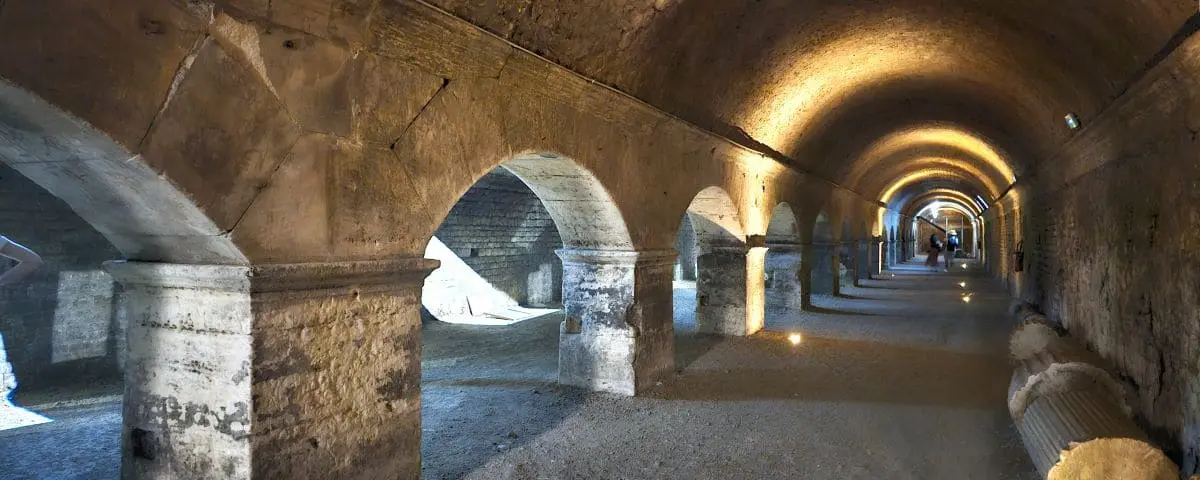
Provence Got Its Name From the Romans
The word “Provence” sounds soft and sunny today, but its origin is quite imperial. It comes from the Latin “Provincia”, because this part of southern France became one of Rome’s first provinces outside Italy.
That means that when you walk around Provence, you are not just passing through a pretty French region. You are walking through an old Roman gateway into Gaul.
The funny thing is that the name stayed, softened by time, language and accent. Provincia became Provence, and suddenly an administrative Roman word ended up sounding like cicadas, olive trees and warm stone.
At Culture Francia, we like this kind of detail because it changes the way you travel. A Roman arch, a road, an arena or a fragment of wall suddenly feels less decorative, and more like a clue left in plain sight.
Marseille Is One of the Oldest Cities in France
Marseille has a reputation: loud, sunny, chaotic, proud, sometimes misunderstood. But here is the fun fact: Marseille was already an ancient city when many famous French cities were barely starting to exist.
Founded by Greek sailors from Phocaea around 600 BC, Massalia became a major Mediterranean trading port. So when you stand by the Vieux-Port, watching boats, fish stalls and people arguing cheerfully over nothing and everything, you are in a place with a very long memory.
The city still feels different from the rest of Provence. More maritime, more mixed, more rebellious. It has Greek roots, Roman layers, North African influences, Italian echoes and a strong local personality.
If you hesitate to include it in your itinerary, read our guide on whether Marseille is worth visiting. Spoiler: it is not always polished, but it is rarely boring.
Arles Is Much Bigger Than Most Visitors Expect
Most travelers picture Arles as a compact town of Roman monuments, Van Gogh cafés and golden streets. That is true in the historic center. But administratively, Arles is enormous, stretching far into the Camargue.
This makes it one of the most surprising cities in Provence. One moment, you are near Roman arenas and old stones; later, still technically around Arles, you may find wetlands, horses, bulls and endless horizons.
This is one reason comparing Arles with nearby Roman cities can be tricky. Arles is not only a museum-like town. It is a city, a landscape and a gateway to the Camargue all at once.
For travelers building a Roman-themed itinerary, our comparison of Arles or Nîmes can help you choose without turning the decision into a gladiator fight.
Food and Wine Facts That Feel Very Provençal
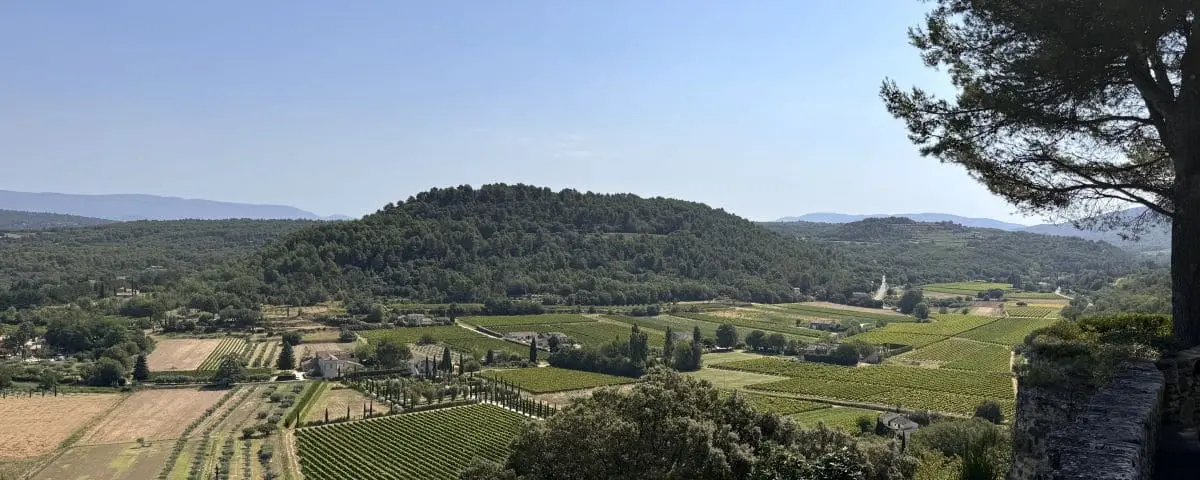
Provence Is One of France’s Oldest Wine Regions
Wine in Provence is not a recent lifestyle accessory designed for sunny Instagram pictures. Vines arrived here very early, carried by Mediterranean traders and shaped by centuries of local know-how.
The result is a wine culture that feels relaxed from the outside, but much more serious once you look closer. Vineyards are part of the landscape: near the coast, around Aix-en-Provence, in the Luberon, beneath limestone ridges, beside olive groves and villages.
And yes, you may drink a glass on a terrace with no ceremony at all. That is part of the charm. In Provence, wine can be both ancient and wonderfully unpretentious.
The best way to enjoy it? Do not only chase famous labels. Try local bottles with local food, ideally after a market morning or a village walk.
Rosé Is a Serious Local Tradition, Not Just a Summer Drink
Elsewhere, rosé sometimes has a slightly frivolous image: pool drink, holiday drink, “don’t think too much” drink. In Provence, things are different. Rosé is a regional specialty with real history, technique and pride behind it.
Its pale color is not an accident. Its freshness is not just a marketing trick. Provençal rosé is made to suit the climate, the cuisine and the rhythm of the South.
It pairs naturally with grilled fish, tomatoes, olive oil, herbs, ratatouille, tapenade and long meals that somehow start casually and end three hours later.
So yes, you can absolutely drink it chilled in summer. But remember this fun fact: in Provence, rosé is not a lighter version of “real wine”, it is often the main character.
Pastis Has a Funny Trick When You Add Water
Order pastis in Provence, and the glass arrives with a small dose of amber liquid. Add water, and magic happens: the drink suddenly turns cloudy and milky.
This little transformation is called the louche effect. It happens because the anise-flavored oils no longer stay dissolved when water is added.
For locals, of course, it is not a science lesson. It is an aperitif. Pastis belongs to the slow hour before lunch or dinner, when the light softens, the conversation loosens and the ice cubes do their tiny music in the glass.
Drink it slowly. Pastis is not meant to be rushed, and neither is Provence, at least when Provence is doing its job properly.
Nature Facts From Lavender Fields to Wild Wetlands
The Mistral Wind Shapes Life in Provence
The mistral is not just wind. It is a character in the story of Provence, and sometimes a very dramatic one.
It can clear the sky until everything looks freshly washed. It can make the light sharper, the air drier and the views wider. It can also turn a pleasant bike ride into a small personal battle, especially if you are pedaling the wrong way.
Locals know it. Travelers learn it quickly. A day with mistral can be bright and beautiful, but also tiring. Terraces change atmosphere, shutters bang, hair becomes theoretical, and cyclists suddenly understand humility.
If you plan an autumn trip, this is one of the small seasonal details to keep in mind. Our guide to Provence in October can help you understand the region beyond the summer postcard.
Lavender Season Is Shorter Than Many Travelers Think
Lavender is the superstar of Provence, but here is the catch: the famous purple fields do not bloom all year.
Depending on altitude, weather and location, the best period is usually from late June to July, sometimes into early August in higher areas. That means a traveler arriving in September expecting endless lavender may find neat rows of green instead of purple waves.
There is another fun detail: not everything people call lavender is true lavender. In lower areas, you often see lavandin, a hybrid widely cultivated for essential oil. True lavender prefers higher, drier ground.
So yes, the photos are real. The scent is real. The bees are definitely real. But lavender in Provence is a short seasonal performance, not permanent decoration.
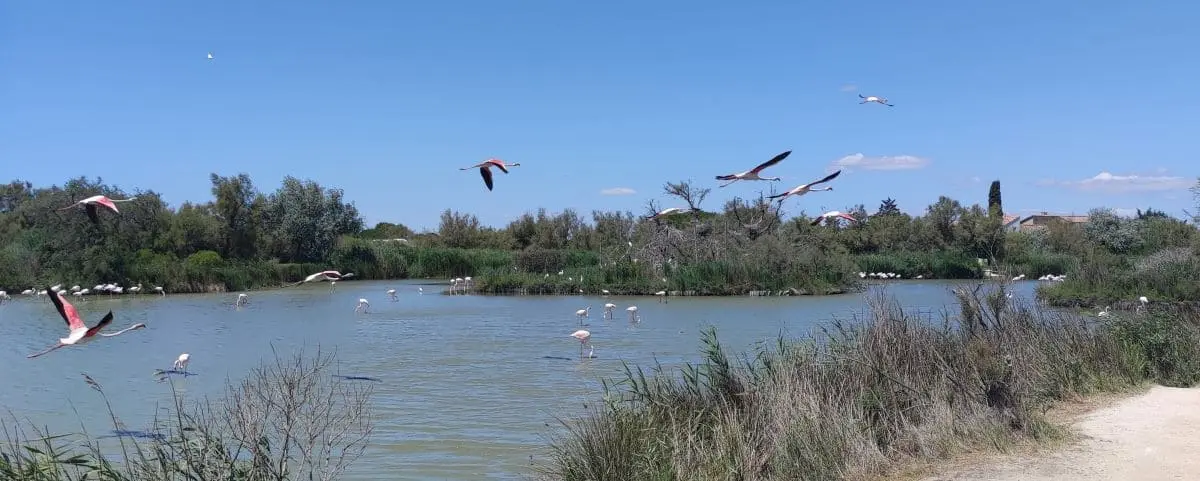
The Camargue Is Home to Flamingos, White Horses and Black Bulls
The Camargue feels like Provence took a deep breath and spread out into water, reeds and sky. It is one of the most unusual landscapes in southern France, and it does not look like the lavender-and-village image many people expect.
Here, flamingos stand in lagoons, white horses move through marshes, and black bulls are part of local ranching traditions. The horizon is flat, the light is huge, and the atmosphere feels wilder than in the hill towns.
It is also a place where nature and culture are closely linked. The gardians, often described as local cowboys, are part of the Camargue identity.
The fun fact here is simple: you can visit Provence and feel, for a moment, as if you have entered another world entirely.
Art, Language and Local Culture
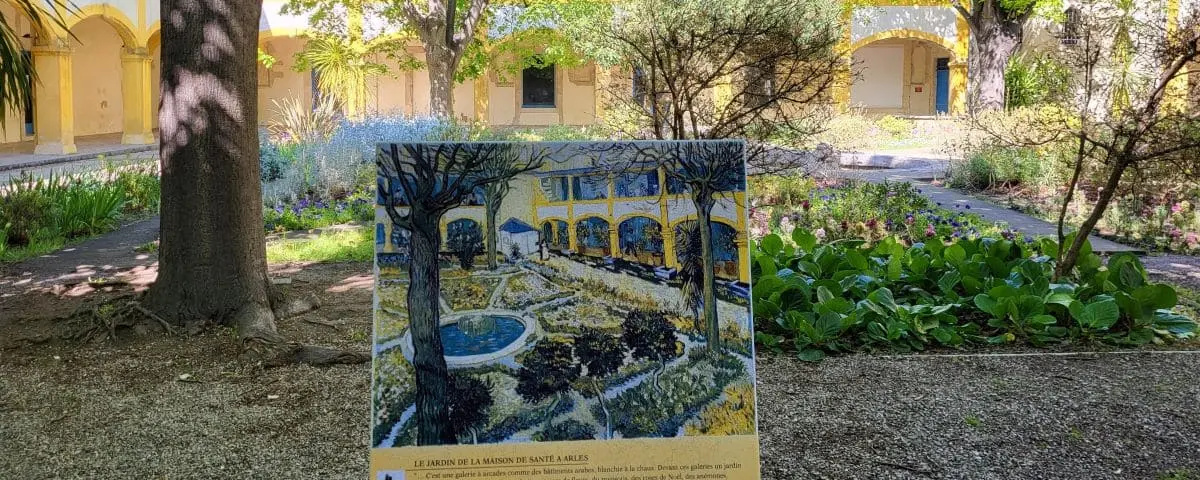
Van Gogh Created Some of His Most Famous Works in Provence
Van Gogh did not just pass through Provence with a sketchbook and a hat. He created an extraordinary part of his work here, especially in Arles and Saint-Rémy-de-Provence.
The light fascinated him. So did the orchards, cafés, streets, fields and night skies. Provence gave him strong colors, sharp contrasts and scenes that became part of art history.
What is fun for travelers today is that some places still feel strangely familiar, even if the exact scene has changed. A yellow wall, a line of cypresses, a café terrace, a wheat field: suddenly, the region seems to wink at a painting you already know.
Provence did not only inspire Van Gogh, it helped shape how millions of people imagine the South of France.
Provence Has Its Own Historic Language
French is spoken in Provence, of course. But the region also has a deeper linguistic layer: Provençal, a variety of Occitan, belongs to the historic identity of the South.
You may spot it on signs, hear it in expressions, or meet it through poetry, songs and local traditions. Frédéric Mistral, the great Provençal writer, helped defend and celebrate this language in the 19th century.
Even if you do not speak a word of it, Provençal explains something important. This region has never been only “France with sunshine.” It has its own memory, rhythms and pride.
For the traveler, it adds texture. A village name, a festival or a market word can suddenly reveal an older Provence, still present under the everyday surface.
Pétanque Is Deeply Linked to Southern French Culture
Few images feel more Provençal than people playing pétanque under plane trees, with a glass nearby and a debate over distance that seems more serious than international diplomacy.
The game is especially associated with southern France, and its modern form is often linked to La Ciotat, near Marseille. The name comes from “pieds tanqués,” meaning feet planted, because players throw while standing still.
That tiny rule changed everything. It made the game accessible, sociable and perfect for village squares.
Do not be fooled by the relaxed atmosphere. Locals can be extremely precise. A casual-looking throw may involve geometry, experience and a small dose of theatre.
Pétanque is not just a pastime in Provence, it is a social ritual with metal balls.
FAQ About Fun Facts About Provence
What Is the Most Surprising Fun Fact About Provence?
The most surprising fact may be that Provence owes its very name to the Romans. The sunny region known today for lavender, rosé and village markets began, in name at least, as a Roman “province.”
It is a perfect example of what makes Provence fascinating. The surface feels relaxed and beautiful, but under it you find Greek sailors, Roman roads, medieval popes, Provençal poets, artists, shepherds and winemakers.
So the best fun fact is not just one detail. It is the way Provence hides deep history inside everyday beauty.
Are These Provence Facts Useful Before Visiting?
Yes, because fun facts make travel more alive. When you know the story behind a place, you notice more and rush less.
A Roman arena becomes more than a photo stop. A glass of rosé becomes part of a regional tradition. A windy day becomes the mistral, not just bad luck. A lavender field becomes seasonal, fragile and more precious.
This is exactly how we like to help travelers at Culture Francia: not by drowning you in information, but by giving you the right details at the right moment.
For practical inspiration after these anecdotes, you can explore our guide to the best things to do in Provence.
Is Provence the Same as the French Riviera?
Not exactly. Provence and the French Riviera overlap in the imagination, but they are not the same experience.
Provence usually evokes inland villages, Roman heritage, lavender areas, vineyards, markets, the Luberon, Avignon, Aix-en-Provence, Arles and the Camargue. The French Riviera is more coastal, with Nice, Cannes, Monaco, Antibes and Mediterranean glamour.
Of course, real travel is messier and more interesting than neat definitions. Marseille, Cassis and the Calanques already blur the line beautifully.
If you are choosing bases, especially between elegant towns and historic centers, our comparison of Avignon or Aix-en-Provence may help you build a trip that feels coherent rather than rushed.
Final Thoughts on These Fun Facts About Provence
Provence is famous for beautiful things, yes. But the best way to enjoy it is to look beyond the obvious.
- Remember that Provence is ancient, with Greek, Roman and medieval layers still visible in everyday places.
- Do not reduce it to lavender, because rosé, wind, language, art, markets and wetlands tell equally good stories.
- Let the small details guide your trip, from a pétanque game to a cloudy glass of pastis.
- Use these fun facts as travel keys, not just trivia, because they help you understand what you are seeing.
- Keep a little curiosity in reserve, since Provence always seems to have one more story hiding behind a sunlit wall.