


PRESENTATION
Burgundy, From the Vineyards to the Forests of the Morvan
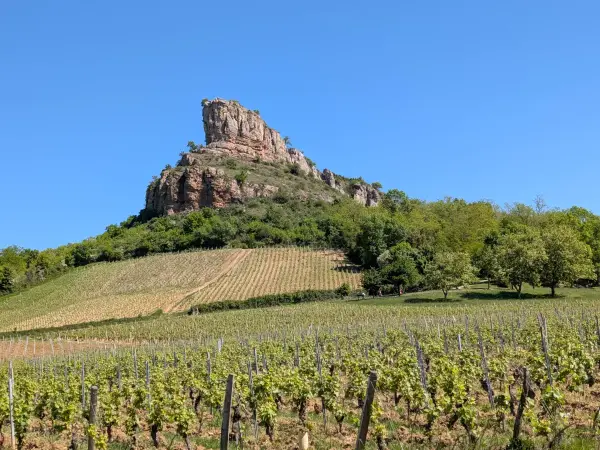
Located between Paris and Lyon, in east-central France, Burgundy is about much more than its famous vineyards. Of course, the rows of vines stretching down the hills south of Dijon immediately set the scene. But take a turn onto a quieter country road, and the landscape changes completely.
To the north, the valleys become gentler, with rivers and long, tree-lined canals winding through them. To the south, rolling hills are dotted with vineyards and meadows. Everywhere, old villages with tiled roofs are scattered across a landscape that remains deeply rural.
At the heart of the region, the Morvan offers a striking contrast. Gone are the neatly lined-up vineyards. Instead, you’ll find granite hills, dense forests, streams, and lakes. The narrow country roads twist and turn, revealing a village, an old bridge, or an unexpected view around almost every bend.
Further west, hedgerows surround the meadows where cows graze, while the Loire winds its way between islands and sandy banks. To the east, wide plains stretch towards the more rugged landscapes of the nearby Jura Mountains.
And then there are the seasons. In spring, the countryside turns green and the trees burst into blossom. In summer, the fields take on golden shades. Autumn transforms the vineyards into a patchwork of reds, oranges, and yellows, before winter brings a sense of peace and quiet back to the villages.
Water is also a constant companion on walks through the region, from the Saône to the Yonne, not to mention the canals originally built to transport goods. Their old towpaths are now popular with walkers and cyclists, offering peaceful routes away from the main roads.
A Land of History and Remarkable Heritage
In Burgundy, sometimes all it takes is turning a street corner to step into another century. Long before the castles and cathedrals, the Aedui, a Celtic people who lived in the region, had established a major city on Mont Beuvray: Bibracte.
Then came the Romans, who built roads, theaters, and defensive walls. In Autun, the remains of this period are still clearly visible. This nearly 2,000-year-old heritage now stands alongside monuments built over the centuries that followed.
During the Middle Ages, Burgundy became one of Europe’s major religious centers. Communities of monks founded vast monasteries throughout the region. Cluny Abbey, founded in 910, had an enormous influence far beyond France, while Fontenay Abbey remains an outstanding example of monastic architecture.
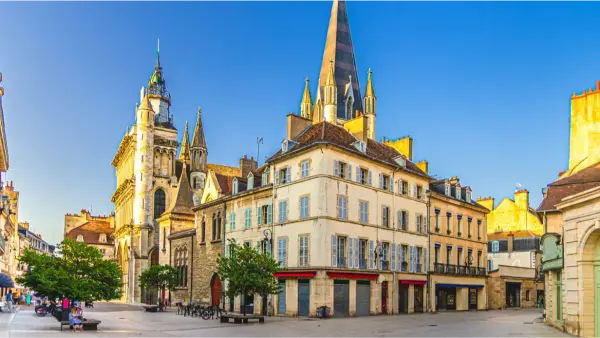
The region was also ruled by powerful dukes, princes who could rival kings. During the 14th and 15th centuries, their court turned Dijon into a leading political and artistic center, with a reputation that extended far beyond France’s borders.
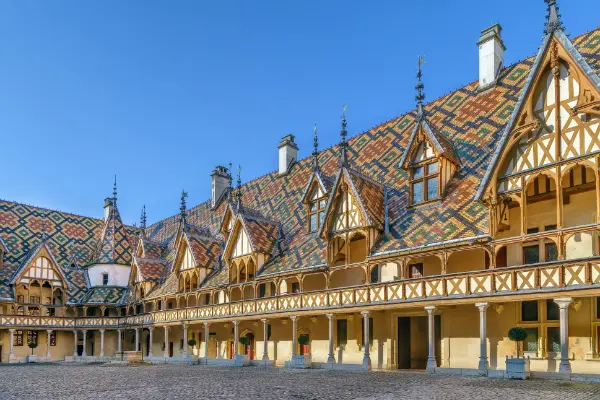
This prosperous past left behind palaces, sculptures, castles, and those remarkable roofs covered in colorful glazed tiles that immediately catch the eye. In Beaune, the former 15th-century hospital offers one of the most spectacular examples.
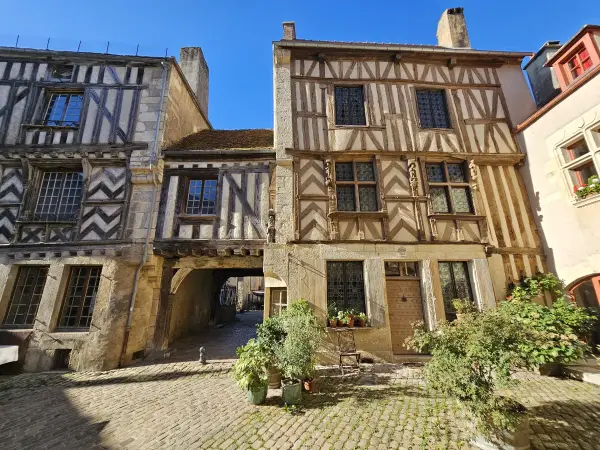
But Burgundy’s heritage can also be discovered in its smaller towns and villages. Beyond a fortified gateway, along a cobbled alley, or beneath the exposed wooden beams of an old house, you’ll find traces of a past that was sometimes grand, sometimes much more modest. Stone churches, defensive towers, and ancient walls all tell the story of centuries gone by.
Wine, Food, and the Burgundian Way of Life
In Burgundy, wine is as much a part of the landscape as it is of the region’s history. For centuries, first monks and then winemakers have paid close attention to the land: the slope of a hillside, the type of soil, the morning sunshine, or the direction of the wind.
The result is a fascinating patchwork of small vineyard plots, sometimes separated by nothing more than a stone wall, each capable of producing a different wine. Two grape varieties take center stage: Pinot Noir for the region’s great reds and Chardonnay for its whites.
From Dijon to Beaune, this approach to growing vines and recognizing the unique character of each individual plot is so distinctive that Burgundy’s vineyard landscapes have been listed as a UNESCO World Heritage Site since 2015. The names of some villages have become famous among wine lovers around the world.
But wine culture goes far beyond the vineyards themselves. It shapes the rhythm of the seasons, plays a central role in traditional festivals, and is passed down from one generation to the next. The grape harvest, which takes place in late summer or early autumn, remains a major event in local life.
And when it comes to food, Burgundy certainly doesn’t do things by halves! Beef bourguignon is slowly simmered in red wine, while snails are traditionally prepared with butter, garlic, and parsley. Add to that full-flavored cheeses, mustard, and hearty country dishes rooted in generations of home cooking.
This love of good food goes hand in hand with a real appreciation for the pleasures of life. People take their time to chat, share a meal, or extend a walk through the vineyards. It’s a tradition of warmth and togetherness, where wine continues to hold a special place, both at major celebrations and in everyday moments.
OVERVIEW
Map
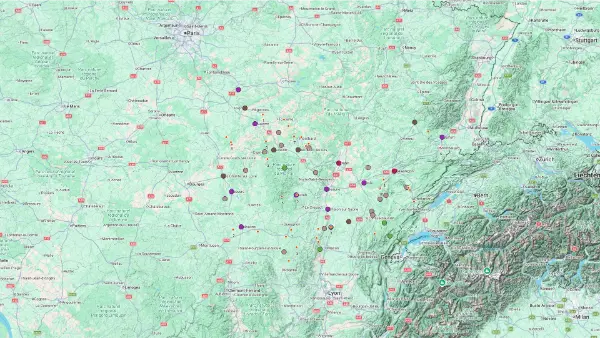
Interactive Map
Interactive Map
Click on the icon  in the top-left corner to display the map legend.
Show/Hide layers as needed.
Click on the arrow icons (v) to display the sublayers.
Top Picks