


MAP
Burgundy
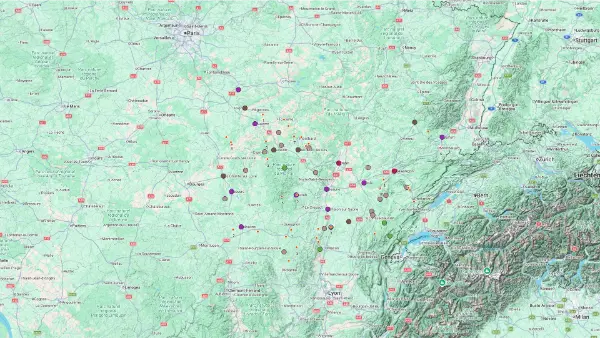
Interactive Map
Burgundy
Interactive Map
Click on the icon  in the top-left corner to display the map legend.
Show/Hide layers as needed.
Click on the arrow icons (v) to display the sublayers.
TOP
| Name | Type | Top+ |
|---|---|---|
| Guédelon | Castle Construction | |
| Vézelay | Village | ✅ |
| Noyers | Village | ✅ |
| Abbaye de Fontenay | Abbey | ✅ |
| Semur-en-Auxois | Small Town | |
| Dijon | City | ✅ |
| Châteauneuf-en-Auxois | Village | |
| Beaune | Town | ✅ |
| Bibracte | Roman Site | |
| Abbaye de Cluny | Abbey | |
| Besançon | City | ✅ |
| Dole | Town | |
| Saline d'Arc-et-Senans | Ancient Factory | |
| Château-Chalon | Village | |
| Baume-les-Messieurs | Village | ✅ |
Guédelon
Type Castle Construction
Price €19
Full Name
Château de Guédelon
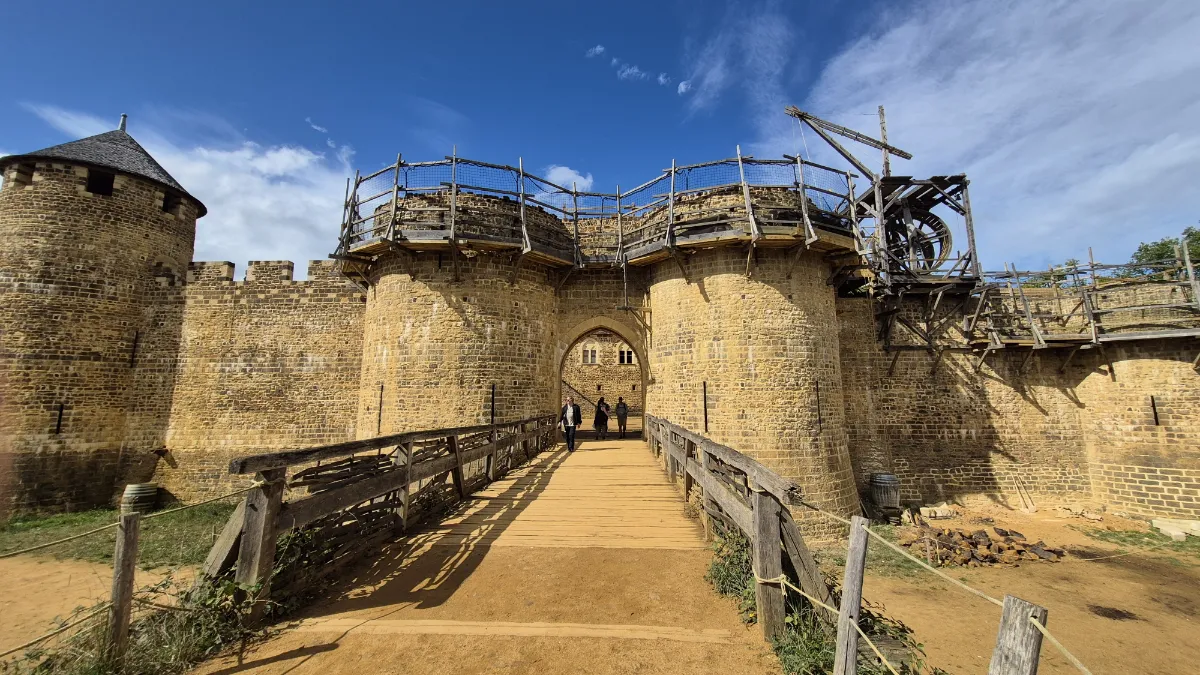
At Guédelon, you’re not visiting the ruins of a castle. You’re watching men and women build one, just as they would have done in the 13th century. Since 1997, this remarkable construction project has been taking shape in the middle of a forest, using stone quarried on site and techniques inspired by the Middle Ages.
Stonemasons, carpenters, blacksmiths and other craftspeople demonstrate their skills, explain their tools and answer visitors’ questions. You get to see how walls, vaults, doors and timber frames are made. The smell of freshly worked wood, the sound of hammers and the conversations around the site bring it to life in a way no traditional museum could.
One of the most fascinating things is coming back a few years later to see how much progress has been made. The buildings rise slowly, following the rhythm of the seasons and the pace of manual labour. Check the opening dates before visiting, as the site isn’t open to the public all year round.
Vézelay
In Our Top+ ✅
Type Village
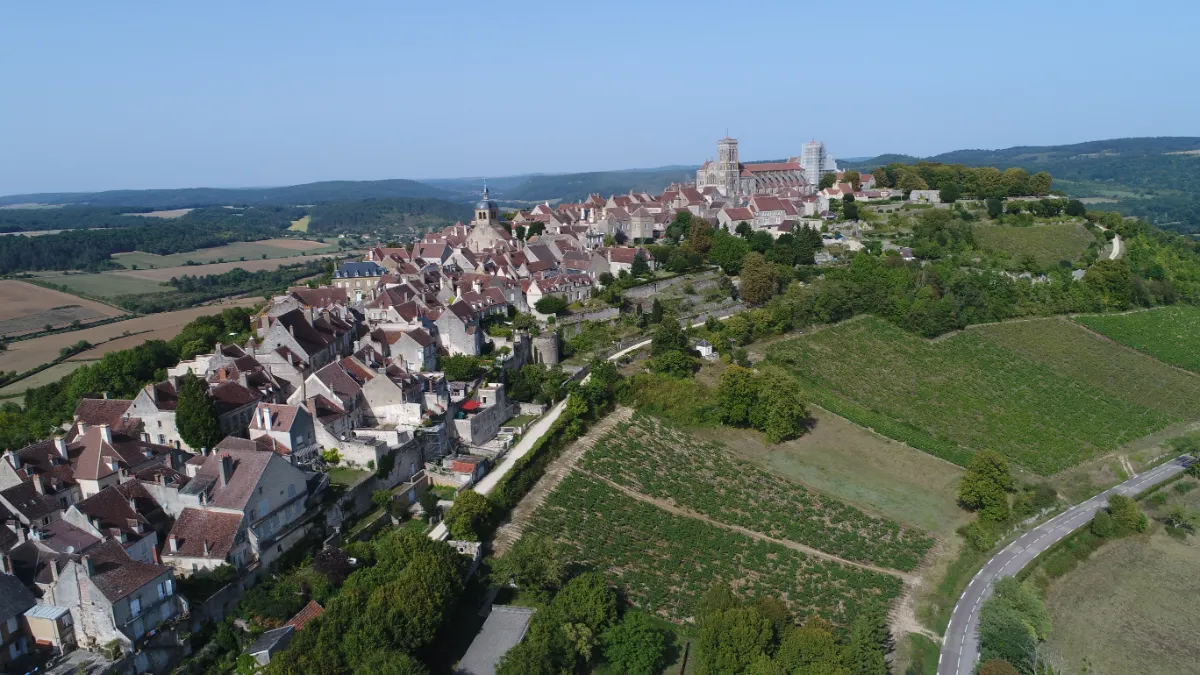
You can spot Vézelay from a distance, perched on its hill above the green countryside. For nearly a thousand years, this village has drawn pilgrims to the magnificent medieval Basilica of Sainte-Madeleine, now a UNESCO World Heritage Site. Its light-filled nave and sculptures tell the story of the site’s spiritual importance over the centuries.
The main street climbs towards the basilica, passing old houses and golden stone façades. But be sure to explore the quieter side streets too, before reaching the terraces behind the church. The views stretch across hills, meadows and the first forests of the Morvan, especially beautiful in the evening light.
Noyers
In Our Top+ ✅
Type Village
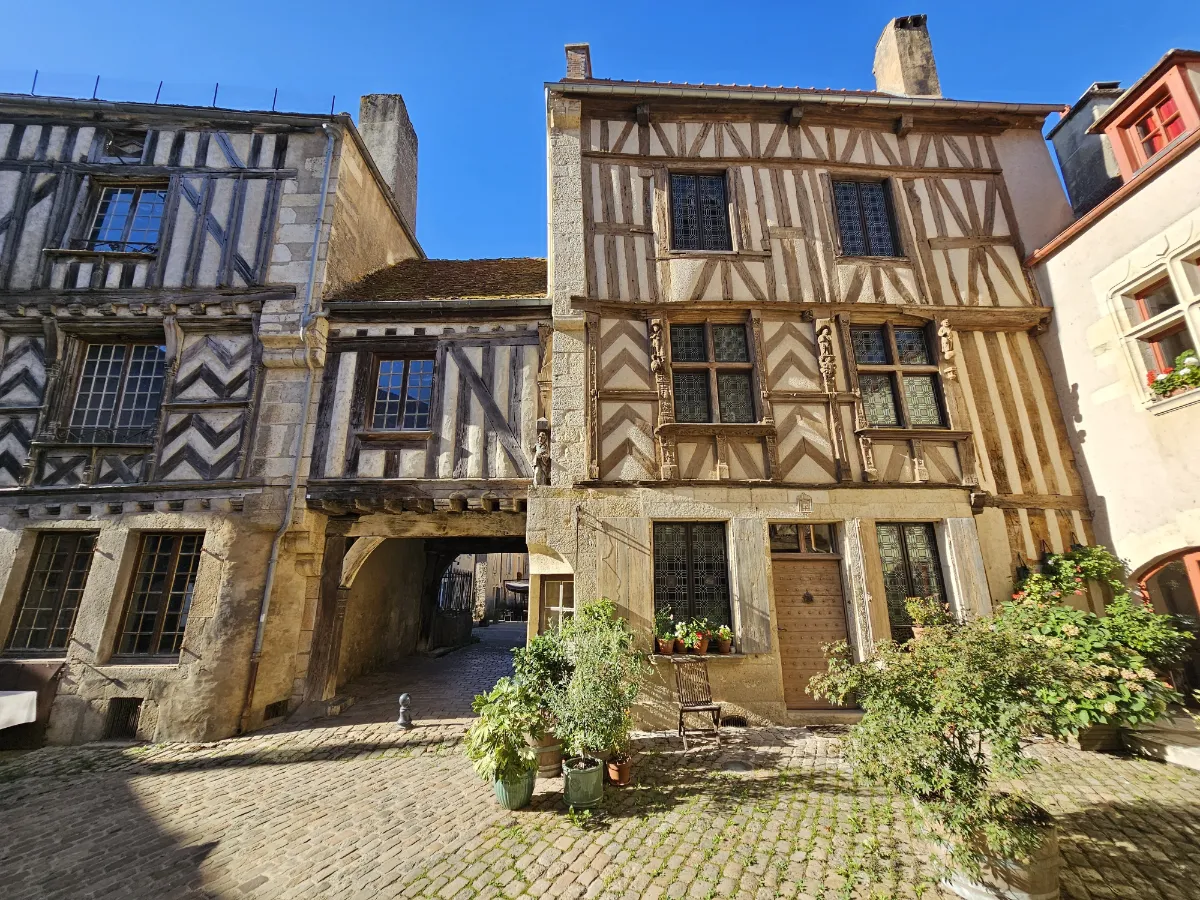
Noyers-sur-Serein feels as though it has passed through the centuries safely tucked behind its ramparts. The village has preserved numerous half-timbered houses, some decorated with carvings, along with vaulted passageways and irregular little squares. The pale stone and dark wooden beams create a wonderfully harmonious setting, with a new beautiful façade around every corner.
Follow the narrow streets towards the old fortified gates, then head down to the Serein, the small river that runs alongside the village. The remains of the towers recall a time when this settlement was protected by defensive walls. In spring and summer, flowers add even more charm to the old walls and courtyards.
Abbaye de Fontenay
In Our Top+ ✅
Type Abbey
Price €11.50
Full Name
Abbaye de Fontenay
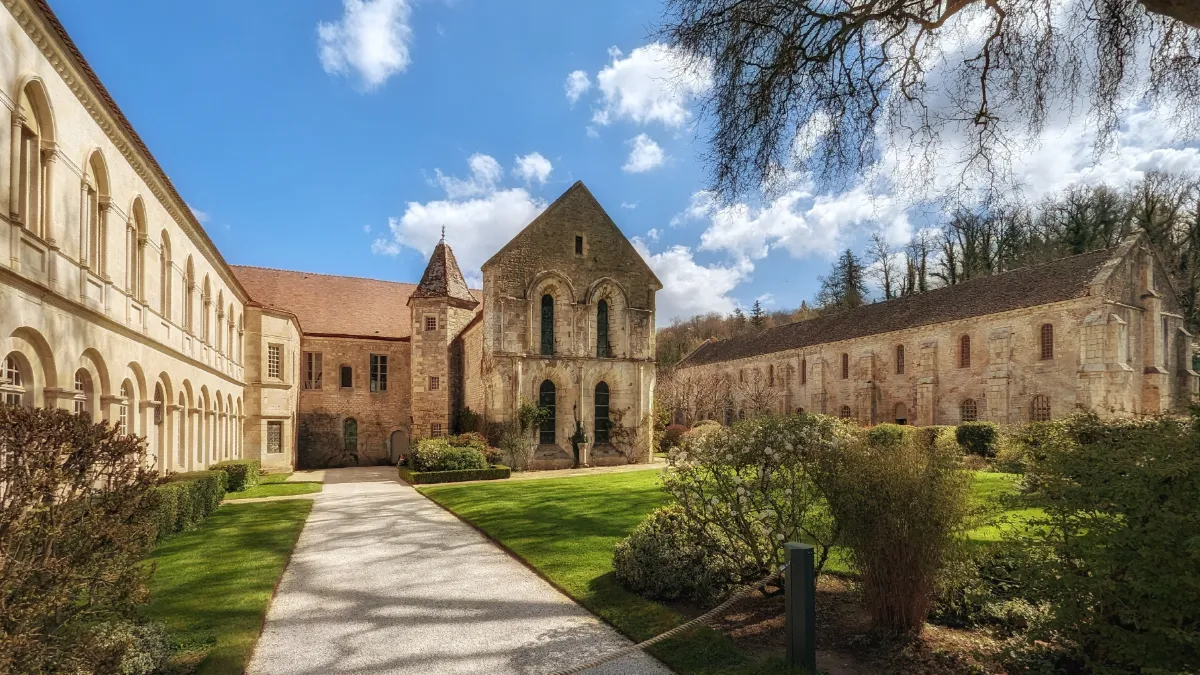
Tucked away in a wooded valley, Fontenay Abbey feels as though it has been sheltered from the turmoil of the centuries. Founded in 1118, it belonged to a monastic movement whose members sought a simple life devoted to work and prayer. This UNESCO World Heritage Site is remarkably well preserved, with pale stone buildings surrounded by gardens.
Step inside the church. Its clean lines, soaring vaults and lack of elaborate decoration create a striking atmosphere. The cloister, a courtyard surrounded by covered walkways where monks once walked and meditated, is one of the abbey’s most beautiful spaces.
The visit continues through the old working areas, particularly the forge, where you’ll discover the importance of manual work in monastic life. The gardens and pools add to the sense of balance between architecture and nature. The site also preserves reminders of its more recent industrial uses, which helped ensure the buildings survived.
Semur-en-Auxois
Type Small Town
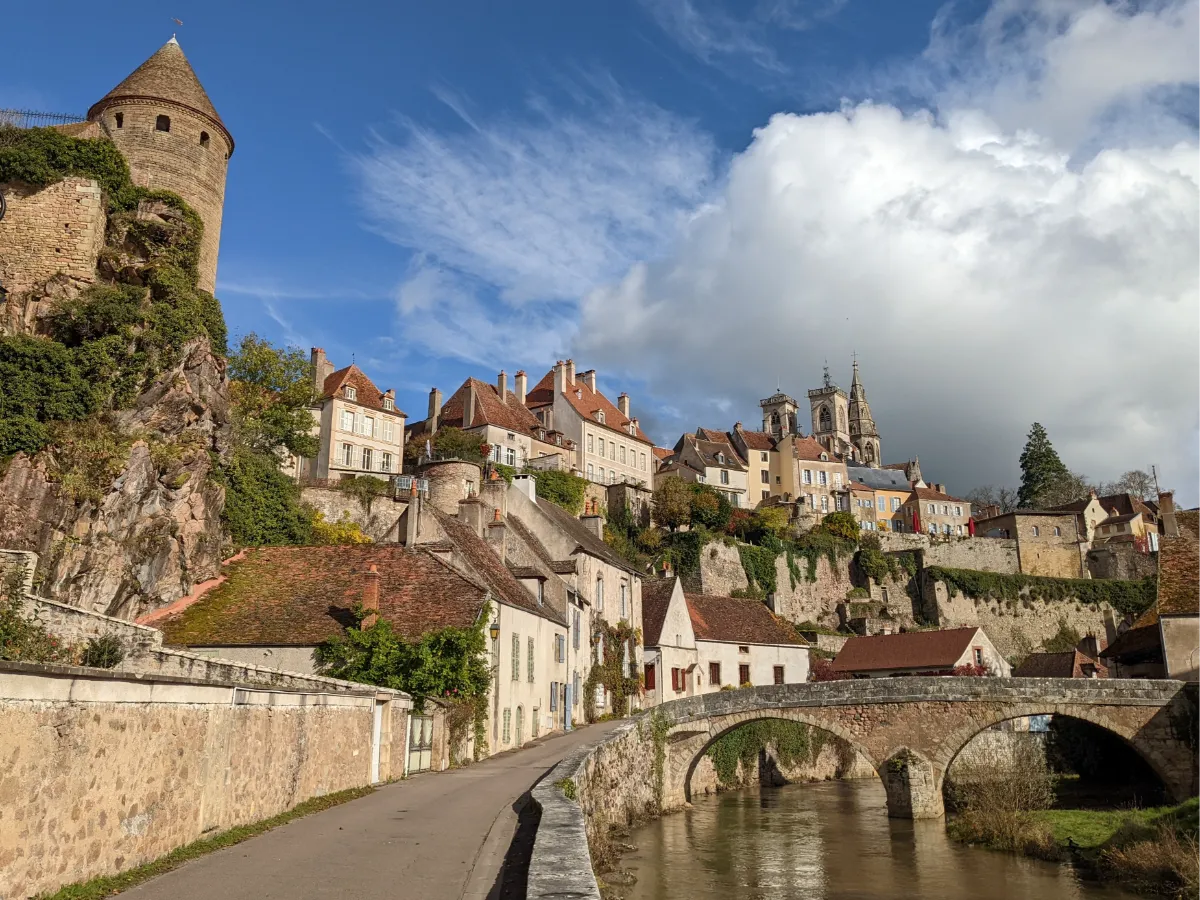
Perched on a rocky outcrop, Semur-en-Auxois looks like something straight out of a medieval fairy tale. Its four massive round towers rise above the Armançon River and the brown-tiled rooftops. To get the best sense of the setting, start with the viewpoints along the riverbanks before climbing the narrow streets to the upper town.
Behind the old fortifications, stone houses seem to huddle together. Notre-Dame Church is worth a stop for its sculptures and soaring architecture. Venture away from the busiest streets and you’ll discover stairways, little squares and hidden passages that recall the town’s defensive past.
Dijon
In Our Top+ ✅
Type City
Population 160 000
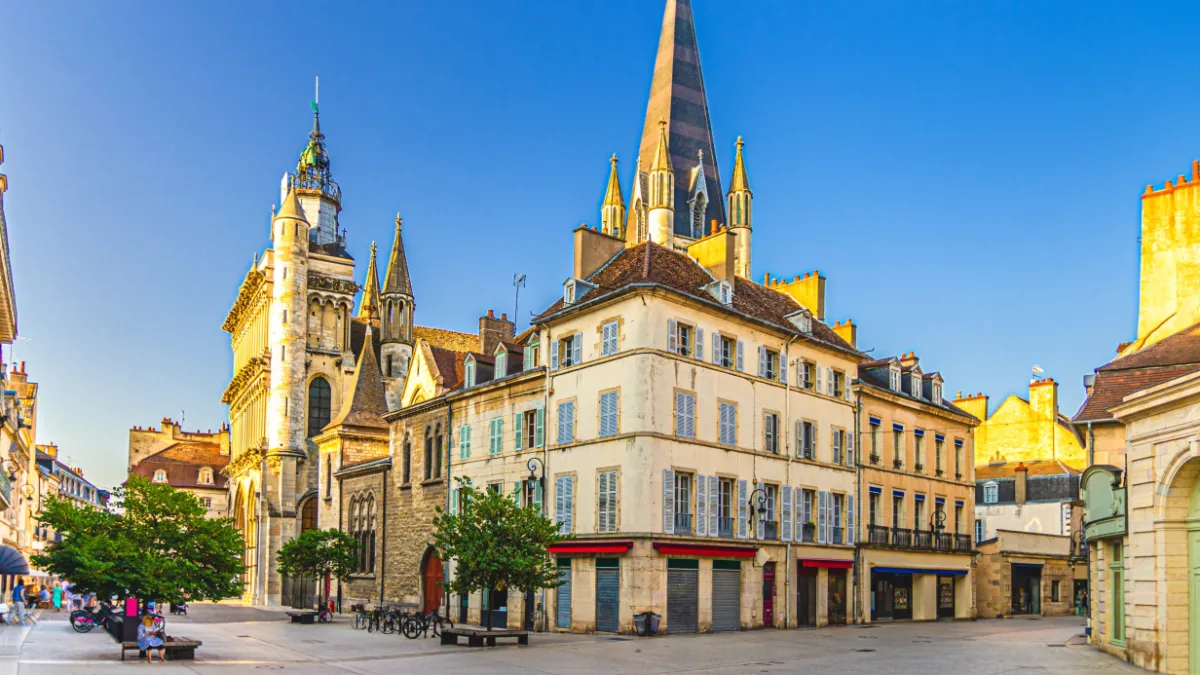
Dijon may be famous for its mustard, but there’s so much more to discover here. Once the capital of the powerful Dukes of Burgundy, the city has preserved an astonishingly rich historic centre. Pale stone façades stand alongside half-timbered houses, those old buildings with their exposed wooden beams.
Start at the Palace of the Dukes, a vast complex that tells the story of centuries of power and now houses the Museum of Fine Arts. As you explore the surrounding streets, remember to look up. Carved windows, hidden courtyards, grand doorways and colourful tiled roofs make for some impressive scenery.
Dijon also has a quieter side. Gardens, shady squares and pedestrian streets invite you to slow down and take your time. The architecture changes from one neighbourhood to another, from elegant 17th and 18th century mansions to much older traces of the city’s past.
And of course, you can’t ignore Dijon’s close ties to Burgundy wine. The vineyards begin almost on the city’s doorstep, while the International City of Gastronomy and Wine explores part of this rich history.
Châteauneuf-en-Auxois
Type Village
Châteauneuf-en-Auxois overlooks the countryside from its hilltop, with its massive castle and defensive walls. You can spot it from far away, especially when the stone turns golden in the late afternoon light. Below, the Burgundy Canal winds through fields and meadows, adding a peaceful touch to the panorama.
In the village, old houses cluster around little streets and flower-filled courtyards. The castle, built and expanded throughout the Middle Ages, still preserves its towers, rooms and reminders of life among the medieval nobility. Make sure to explore the various viewpoints too, with hills stretching as far as the eye can see.
Beaune
In Our Top+ ✅
Type Town
In Beaune, wine is never far away. Surrounded by vine-covered hills, this historic town has plenty more to offer than its prestigious bottles. Behind the ramparts that still surround part of the old centre, cobbled streets, stone houses and hidden courtyards make for a lovely walk.
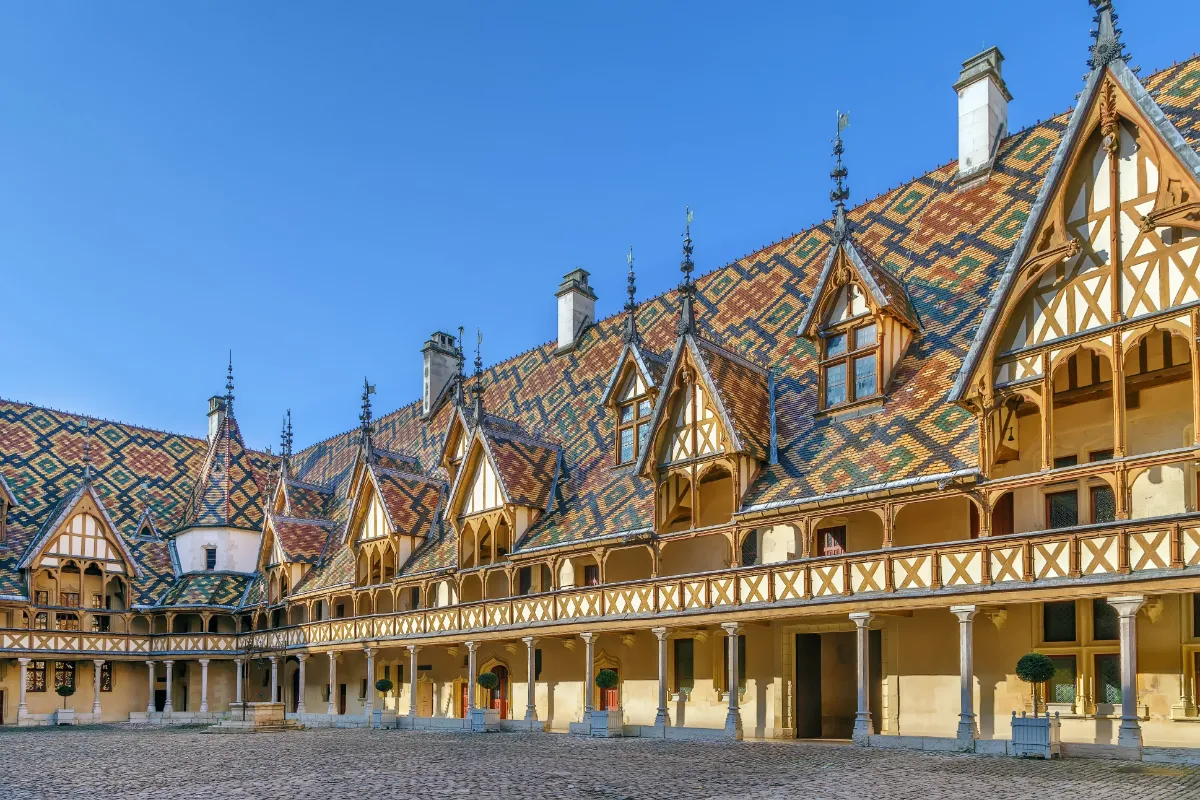
The undisputed star is the Hôtel-Dieu, a former hospital founded in 1443 to care for the sick and the poor. Its architecture is spectacular. In the courtyard, yellow, green, red and black roof tiles form striking geometric patterns. Inside, the vast hospital ward and works of art help you understand the important role this building played over the centuries.
But there’s much more to Beaune than its most famous landmark. Notre-Dame Church, historic houses and stretches of the old ramparts are all good reasons to keep exploring.
Just outside town begins one of the world’s most famous wine-growing landscapes. Vineyard plots cover the slopes, separated by paths and sometimes old stone walls. Each has its own history and distinctive character. Autumn is particularly spectacular, when the leaves turn red and gold, but spring, with its fresh green shoots, is beautiful too.
Bibracte
Type Roman Site
Full Name
Site et Musée de Bibracte
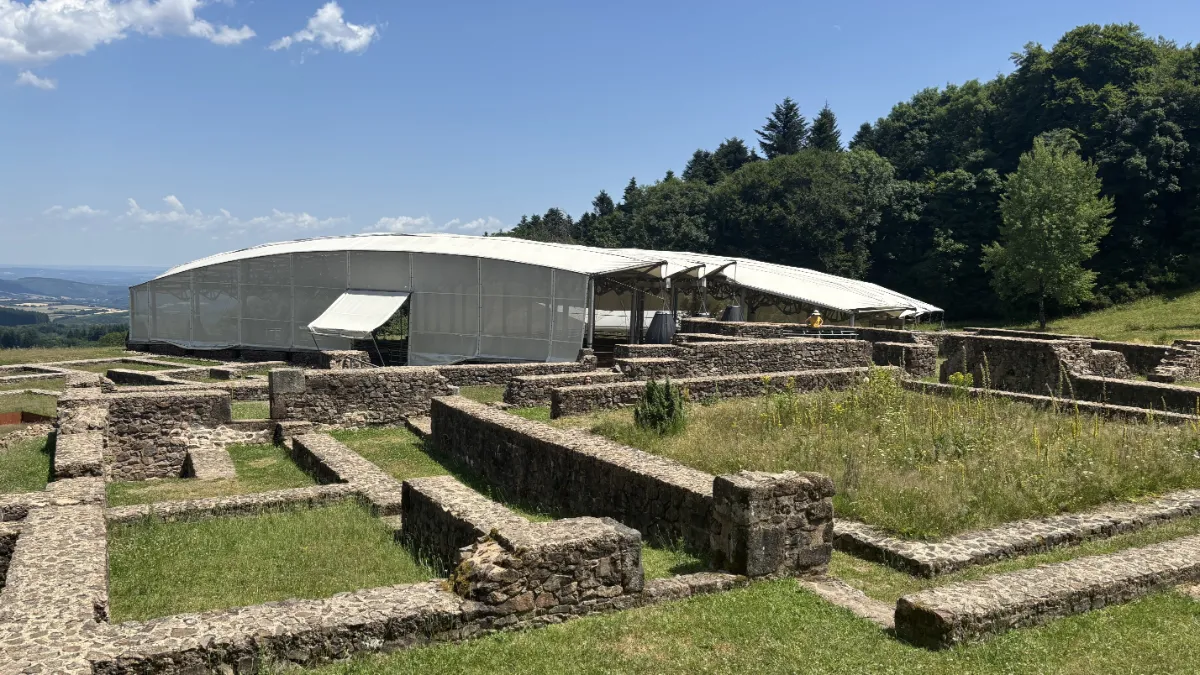
Long before the Romans arrived, Mount Beuvray was home to Bibracte, a major town of the Aedui, a Celtic people. More than 2,000 years ago, merchants and craftspeople brought this hilltop settlement in the Morvan to life. Today, the forest has reclaimed part of the site, but archaeological excavations are gradually uncovering its lost streets, houses and workshops.
A modern museum displays objects found during the excavations and explains how the inhabitants lived. Outside, you can discover the remains as you walk through woods and meadows, with information about the research still being carried out.
The landscape is an important part of the experience. From the heights, views stretch across the wooded hills of the Morvan and, on clear days, far beyond. Centuries-old trees still line some areas that were once busy streets and homes.
Archeological & Natural Site
Price Free
⚙️ Hours – 24/7
⚙️ Visitor Info (Official Website)
Museum
Price €10
Abbaye de Cluny
Type Abbey
Price €11
Full Name
Abbaye de Cluny
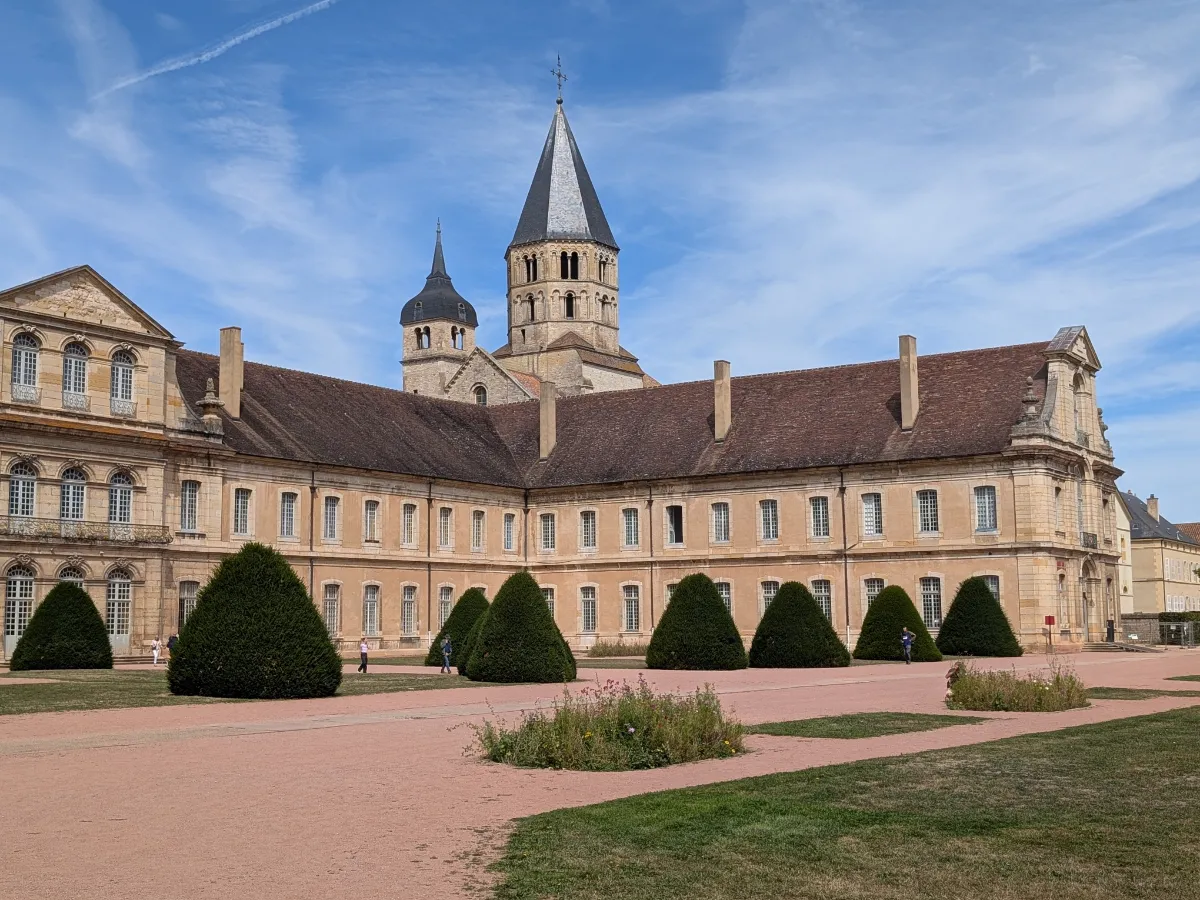
It’s hard to imagine just how enormous Cluny Abbey once was. Founded in 910, this monastery became one of the most powerful religious centres in Europe. Its church, expanded over the centuries, was for a long time the largest in Western Christianity. Much of the complex disappeared after the French Revolution, but the surviving remains still give you a sense of its extraordinary ambition.
The visit calls for a little imagination, thankfully helped along by the reconstructions available on site. The surviving high vaults, towers and former monastic spaces reveal an architectural achievement on an exceptional scale. You’ll also discover the role Cluny’s monks played in spreading art, ideas and architectural styles across Europe.
Around the abbey, the small town has preserved old streets and numerous medieval houses. Take time to wander around and spot traces of this history in the façades and courtyards.
Besançon
In Our Top+ ✅
Type City
Population 120 000
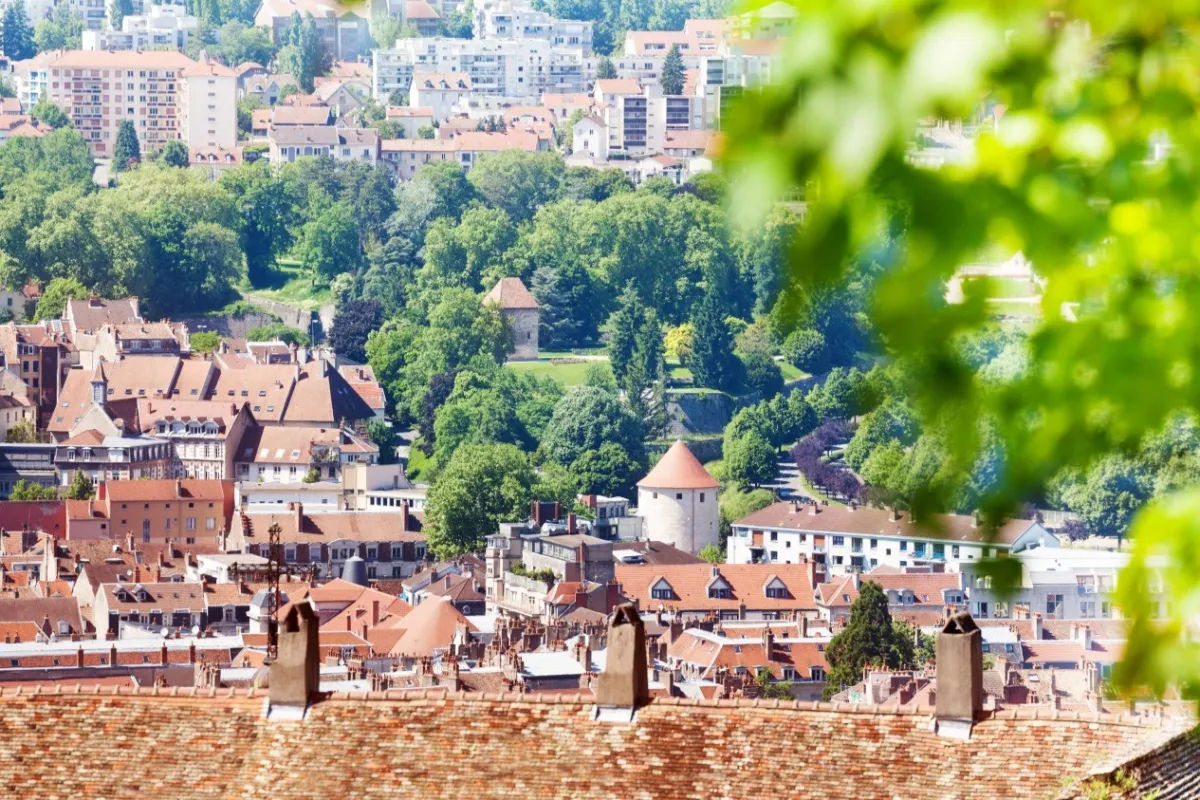
Besançon enjoys a remarkable setting, tucked into an almost complete loop of the Doubs River. The river wraps around its old town, while wooded hills rise above houses built from warm, golden and bluish stone. This unusual location made the city a strategically important military stronghold for centuries.
You can’t miss the citadel, an enormous fortress perched high above the rooftops. Redesigned in the 17th century by Vauban, the great military engineer of King Louis XIV, it’s now a UNESCO World Heritage Site. Its ramparts offer spectacular views over the city and surrounding hills. Several museums inside also explore local history, warfare and the natural world.
Back down in the historic centre, there’s plenty more to discover. The Porte Noire, a monumental arch built in Roman times, is a reminder that Besançon has nearly 2,000 years of urban history. Nearby, Saint-Jean Cathedral houses an extraordinary astronomical clock, made up of thousands of components and designed to show much more than just the time.
Besançon was also once a major centre of watchmaking. The Museum of Time, housed in a former palace, offers a fascinating introduction to this traditional craft. Make time for a walk along the Doubs too, where buildings reflect in the water and the views change with every bridge you cross.
Dole
Type Town
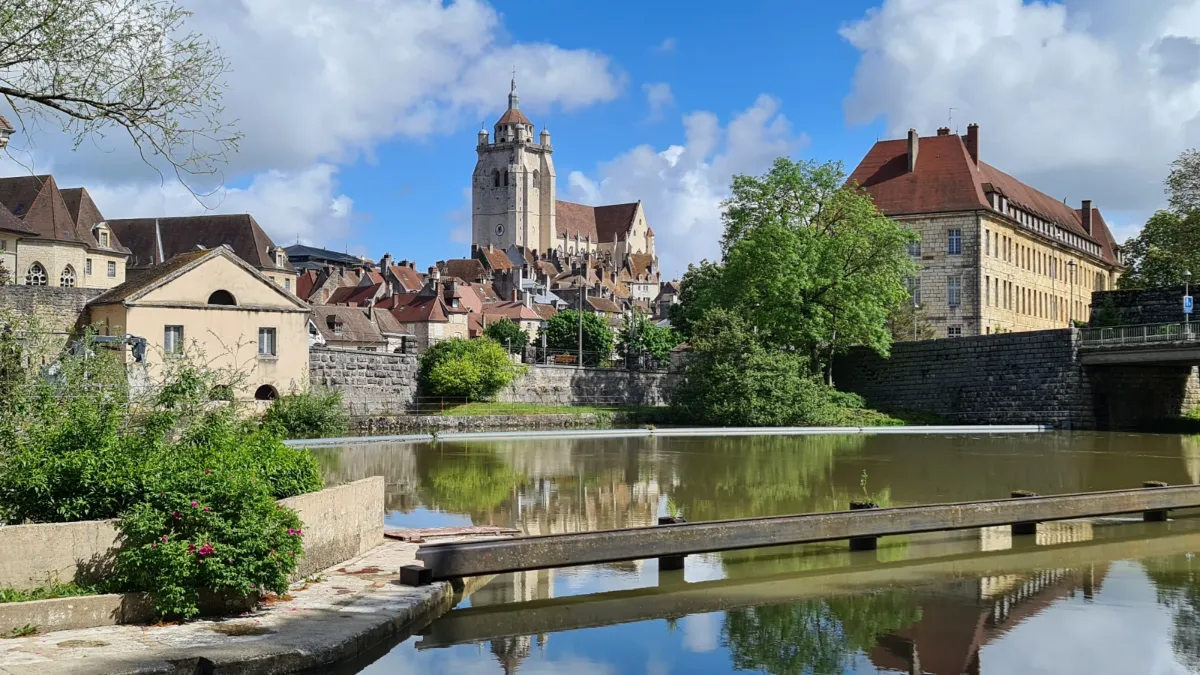
Dole is one of the loveliest surprises along the Doubs River. Once an important seat of power, it has preserved a tightly packed historic centre, with tall stone houses, narrow passageways and hidden courtyards. Approaching from the river, you’ll spot the enormous bell tower of Notre-Dame rising above the rooftops.
The Collegiate Church of Notre-Dame, a grand 16th century building, is impressive for both its size and its interior furnishings. Around it, old Dole is a wonderful place to get lost among the sloping streets. Don’t miss the Tanners’ Canal, lined with old houses where animal hides were once processed. This little waterside corner has a charm all of its own.
Dole is also the birthplace of Louis Pasteur, the scientist famous for his work on microbes and vaccines. His childhood home offers an insight into his life and the artisan community in which he grew up. From the bridges, your eyes are naturally drawn back to the great bell tower and the houses clustered above the water.
Saline d'Arc-et-Senans
Type Ancient Factory
Price €15
Full Name
Saline Royale d’Arc-et-Senans
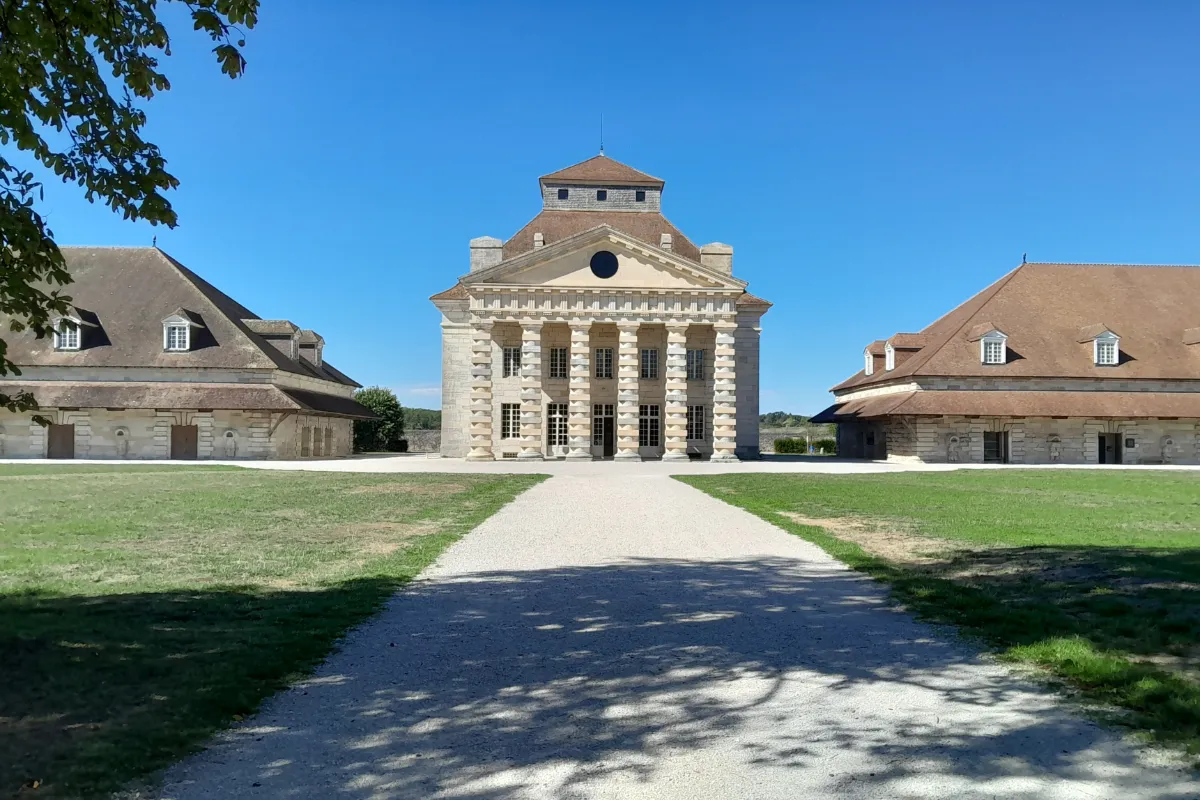
At first glance, the Royal Saltworks of Arc-et-Senans could easily be mistaken for an enormous palace. Yet this monumental complex, built from 1775 onwards, was actually a factory designed to produce salt. Its architect imagined buildings arranged in a semicircle around a vast courtyard, creating an organised working environment while expressing the ambitions of the Age of Enlightenment.
The salt came from naturally salty water transported from Salins-les-Bains through a 21-kilometre pipeline. Once it arrived, the water was heated until it evaporated, leaving behind salt crystals. The buildings housed both workshops and living quarters. Now a UNESCO World Heritage Site, the complex reflects an era fascinated by science and progress.
As you explore, you’ll discover the symmetry of the architecture, imposing columns and wide open spaces. Exhibitions tell the story of the architect’s vision, which even included an ideal city planned around the factory. This grand design was never fully completed.
Château-Chalon
Type Village
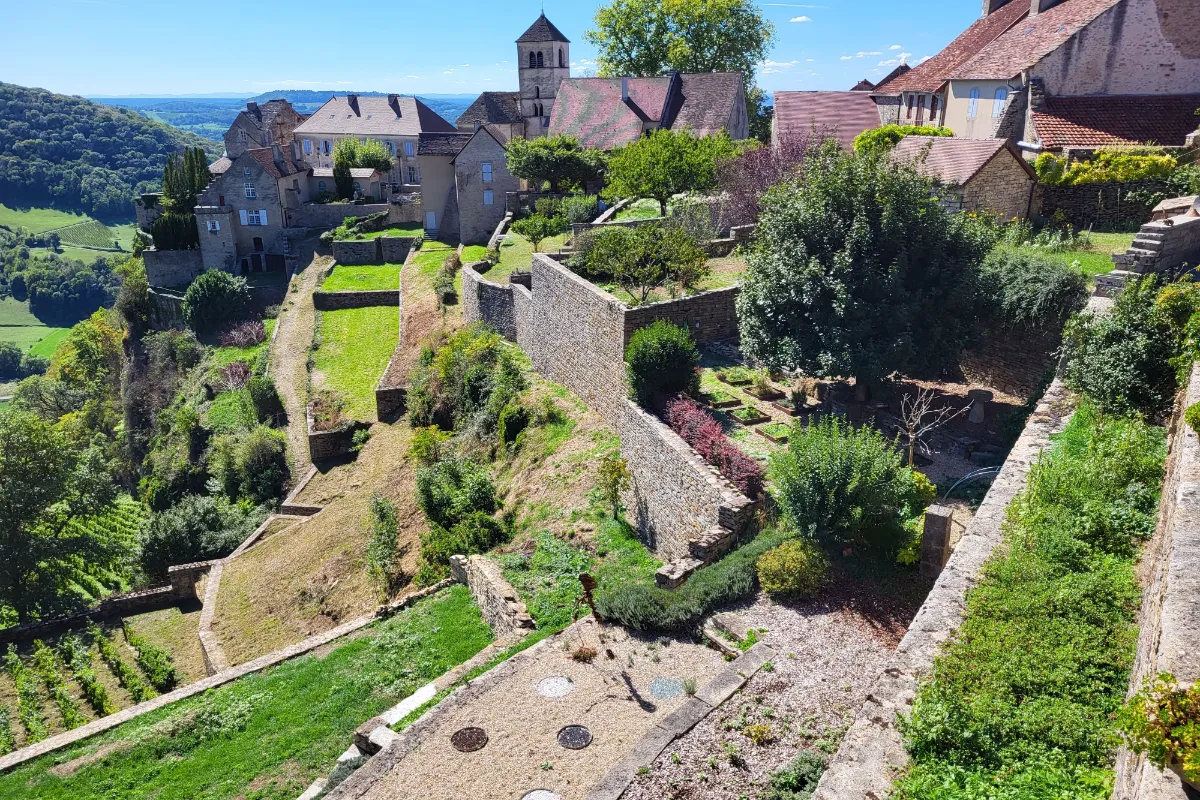
Château-Chalon enjoys a spectacular position on top of a cliff overlooking the Jura vineyards. Its stone houses, gardens and little streets cluster around an old church. From the natural terraces around the village, the views plunge down towards vine-covered slopes and green valleys.
This little village is closely associated with vin jaune, a local wine aged for years in barrels using a special method. A few traces of the old castle and monastery recall its past. But here, the landscape is almost the main attraction. On a clear day, you can see one line of hills after another stretching into the distance.
Baume-les-Messieurs
In Our Top+ ✅
Type Village
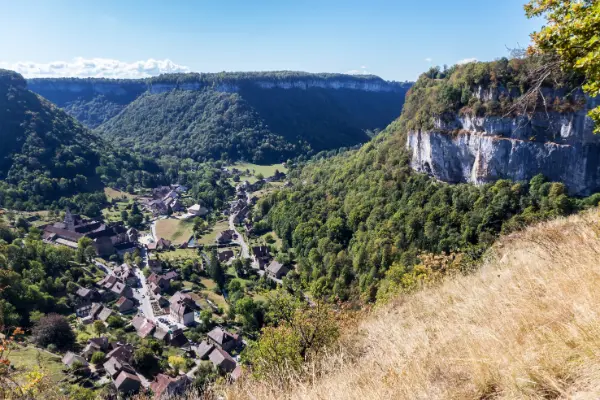
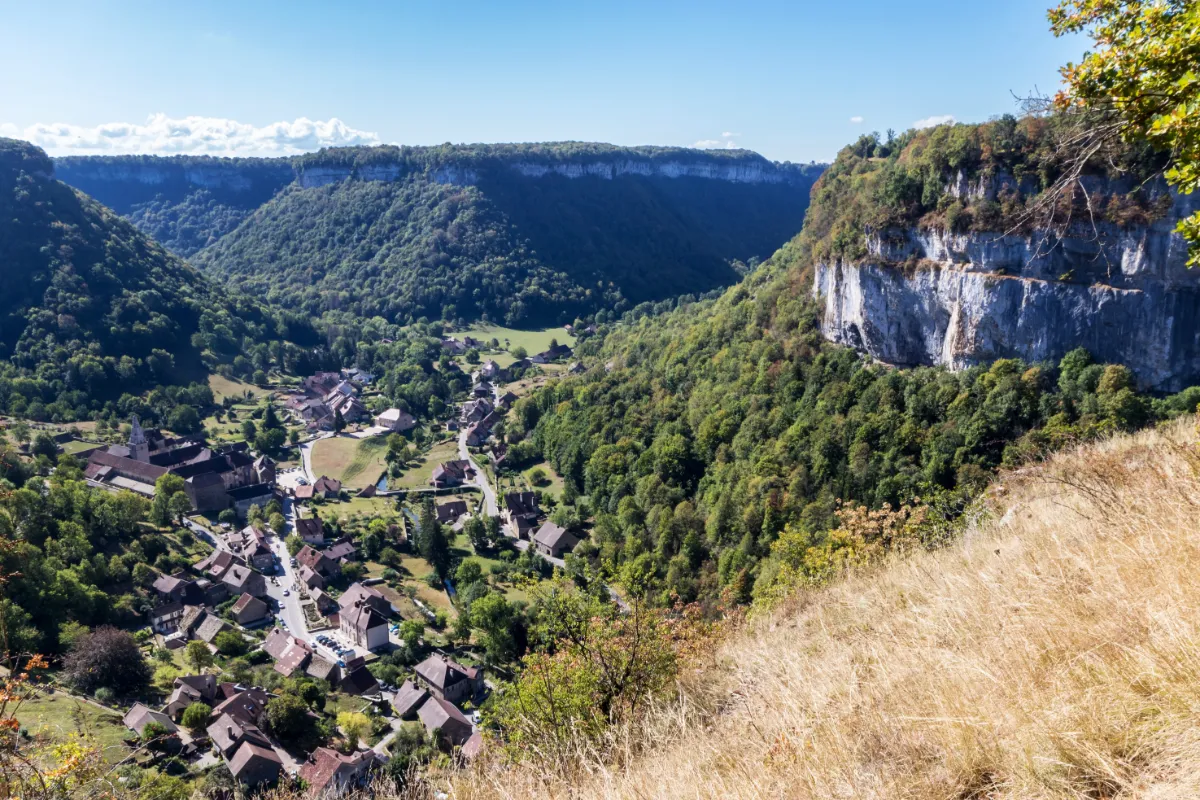
Baume-les-Messieurs hides at the bottom of a spectacular valley, surrounded by enormous limestone cliffs. Arriving here is quite an experience, with towering rock faces enclosing the houses, meadows and an ancient abbey. Founded more than a thousand years ago, the abbey still has a remarkable church and several buildings that tell the story of monastic life.
The surrounding area also offers some wonderful natural sights, including caves and a waterfall that tumbles over moss-covered rocks. To get a real sense of the landscape, head up to one of the viewpoints above the village. From there, you can appreciate the depth of the valley and the village’s extraordinary location.