


PRESENTATION
Rivers, Vineyards and the Atlantic Ocean
Located in southwestern France, on the Atlantic coast, the Bordeaux Region offers an incredible variety of landscapes. In one region, you can explore world-famous vineyards, historic villages, vast pine forests, lakes and long sandy beaches. Bordeaux is its main city, but there’s so much more to discover beyond it, from the rolling hills of Saint-Émilion to the dunes of the Atlantic coast.
Water plays a major role in shaping the region’s landscape. Two major rivers, the Garonne and the Dordogne, flow through the region before meeting north of Bordeaux. Together, they form a vast estuary that gradually widens towards the Atlantic Ocean. Along its banks, you’ll come across small harbors, historic villages and wide-open views across the water.
On either side of these rivers lie several wine-growing areas, each with its own distinctive character. To the northwest, the Médoc combines prestigious vineyards with vast stretches of forest. To the east, Saint-Émilion and the surrounding villages sit among rolling hills covered in vines. Between the Garonne and Dordogne rivers, Entre-deux-Mers offers lush green countryside dotted with stone villages, quiet country roads and farms. Further south, the vineyards of Graves and Sauternes give way to stretches of forest.
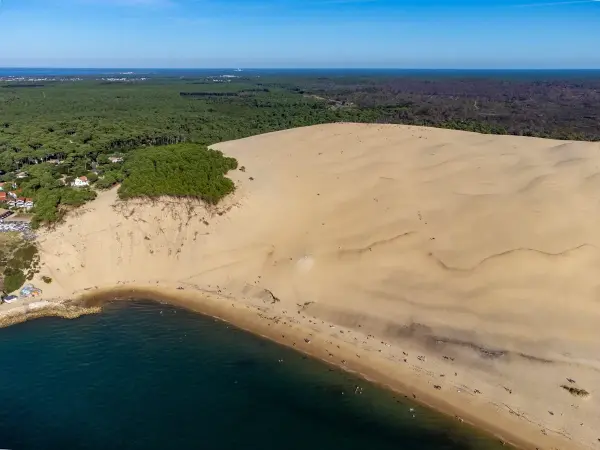
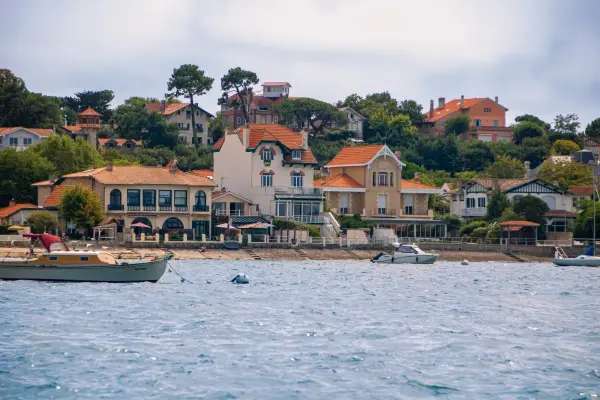
As you head west, the scenery changes. Pine forests stretch for miles before reaching the dunes and beaches of the Atlantic coast. Arcachon Bay offers a striking contrast to this wave-battered coastline. Its sheltered waters are home to fishing harbors, oyster farms and seaside villages. Nearby, the enormous Dune du Pilat offers spectacular views over the ocean, sandbanks and surrounding forests.
Further north, the beaches of Lacanau and Soulac-sur-Mer, along with the large lakes of Hourtin and Carcans, add even more variety to the natural scenery. An extensive network of cycling paths runs through these landscapes, making it easy to explore the region at your own pace, whether you’re riding through forests, discovering wine villages or heading out towards the coast.
A Region Rich in History and Architecture
The Bordeaux region’s history is everywhere, from the streets of Bordeaux to small countryside villages, fortresses and historic wine estates. Thanks to its rivers and access to the Atlantic Ocean, the region has long held an important position in trade. Its architectural heritage reflects centuries of commerce, prosperity and conflict.
Bordeaux is a perfect example of this rich past. Built around the Garonne River, the city has a remarkable historic center, with grand squares, pale stone facades and elegant 18th-century buildings. Place de la Bourse and the Grand Théâtre are reminders of a time when Bordeaux was one of France’s leading trading ports. You’ll also discover much older streets dating back to the Middle Ages, as well as former dockside neighborhoods that have since been transformed.
But some of the most fascinating historical sites are found outside Bordeaux. In Saint-Émilion, cobbled streets, medieval walls and stone houses create an exceptionally well-preserved medieval setting. The village is particularly famous for its enormous church carved directly into the rock, an impressive structure that reflects its former religious importance.
Overlooking the Gironde estuary, Blaye is home to an imposing 17th-century fortress built to protect maritime access to Bordeaux. Its walls, passageways and former military buildings rise above the water. Further north, the Cordouan Lighthouse, standing offshore near the Atlantic coast, tells the story of centuries of navigation through these challenging waters.
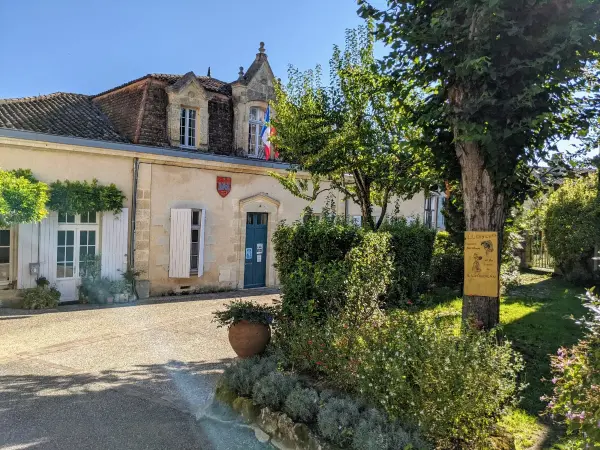
Inland, you’ll find plenty of villages that have preserved their medieval layout. Sauveterre-de-Guyenne, Saint-Macaire and Castelmoron-d’Albret are wonderful places to wander through old streets, admire historic houses and discover traditional local architecture. Several villages still have central squares surrounded by covered walkways that were once used for markets.
Castles and châteaux are another important part of the region’s heritage. Some were built as fortresses, such as Château de Villandraut, while others served as aristocratic residences. Château de La Brède is particularly well known for its connection to Montesquieu, the famous 18th-century French writer and philosopher.
With its religious buildings, fortified villages and grand historic estates, the region has an architectural heritage that goes far beyond the famous landmarks of Bordeaux city.
Wine, Food and the Way of Life
Wine is a huge part of the regional identity. Vineyards have been cultivated here since ancient times, shaping the landscape and helping the region earn its worldwide reputation. Today, thousands of wine estates produce an incredible range of wines, depending on the soil, grape varieties and winemaking techniques.
You can discover the great red wines of the Médoc, Saint-Émilion and Pomerol, the dry white wines of Graves and Entre-deux-Mers, and the sweet white wines of Sauternes. Each wine-growing area has its own landscapes, traditions and distinctive character.
A visit to the vineyards is about much more than tasting wine. Wine estates are often called “châteaux”, but that doesn’t necessarily mean they’re actual historic castles. The term can also refer to a simple wine-producing estate. Many offer guided tours of their winemaking and storage facilities, along with tastings and opportunities to meet the people behind the wines. You can also explore the vineyards on foot or by bike, following scenic routes through charming villages and past beautiful old houses.
The Bordeaux region’s food is just as varied as its landscapes. Around Arcachon Bay, oysters are a local favorite. In Gujan-Mestras, Andernos-les-Bains or on the Cap Ferret peninsula, you can enjoy them straight from the producers in small oyster huts, often served with bread, butter and a glass of white wine.
Further inland, local specialties reflect the region’s farming heritage and traditional cooking. Pauillac lamb, Bazas beef and porcini mushrooms, which are especially popular in southwestern France, are among the region’s most iconic products. Village markets are great places to discover locally grown fruit and vegetables, cheeses and handmade specialties.
When it comes to desserts, the cannelé is Bordeaux’s most famous treat. This small cake, flavored with rum and vanilla, has a caramelized crust and a soft, almost custardy center.
But the local way of life is about more than just good food and wine. You’ll experience it in lively markets, on village café terraces, in small harbors and while exploring the great outdoors. You can enjoy lunch surrounded by vineyards, eat fresh oysters overlooking the water, cycle through a pine forest or watch the sunset from an Atlantic beach.
This mix of winemaking traditions, historic heritage, great food and beautiful natural scenery makes this regions a destination where every area offers something different, while sharing the same welcoming atmosphere and appreciation for life’s simple pleasures.
OVERVIEW
Map
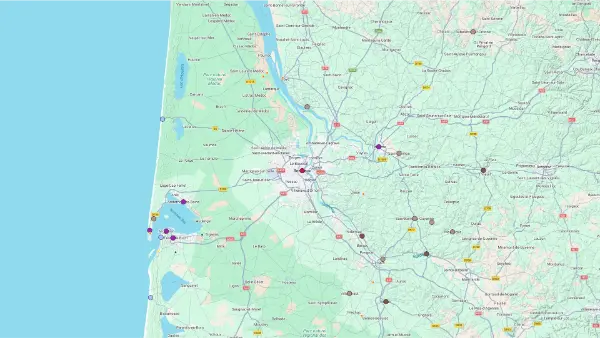
Interactive Map
Interactive Map
Click on the icon  in the top-left corner to display the map legend.
Show/Hide layers as needed.
Click on the arrow icons (v) to display the sublayers.
Top Picks
10 Top
Including 5 Top+
BY PLACE
Bordeaux
