


PRESENTATION
Champagne, a Region at the Heart of French History
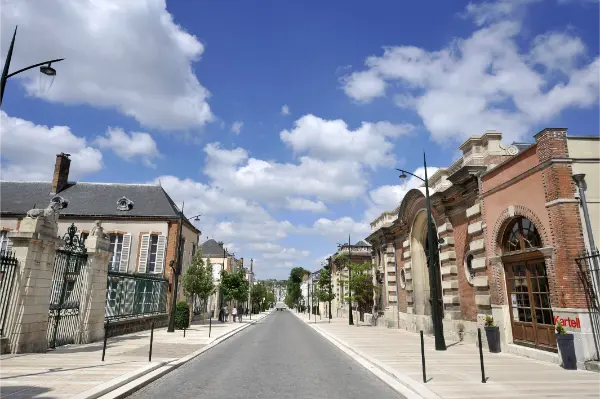
Located in northeastern France, east of Paris, Champagne is a region of contrasts, with a reputation that stretches far beyond France’s borders. Although its name immediately brings to mind the world-famous sparkling wine, the region also boasts an incredible historical heritage shaped by more than 2,000 years of history. From historic towns to peaceful countryside, you’ll discover a region where the past is never far away.
Champagne was already home to Gallic tribes before the Roman conquest and later became an important part of the Roman Empire. Reims, then known as Durocortorum, was one of the major cities of Roman Gaul. But it was at the end of the 5th century that the city took on a particularly important role in French history, with the baptism of Clovis, King of the Franks, a defining moment in the history of the French monarchy.
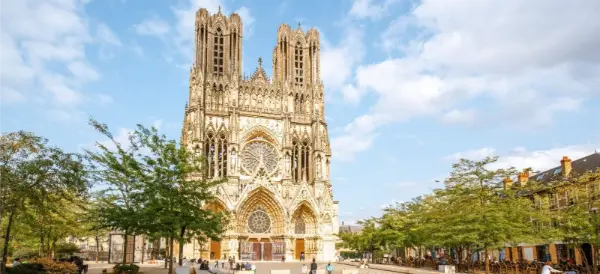
Over time, Reims became the traditional place where French kings were crowned. For centuries, monarchs came here to receive their crowns in the magnificent Notre-Dame Cathedral, a masterpiece of Gothic architecture that’s now a UNESCO World Heritage Site. This royal tradition gave Champagne considerable political and religious importance.
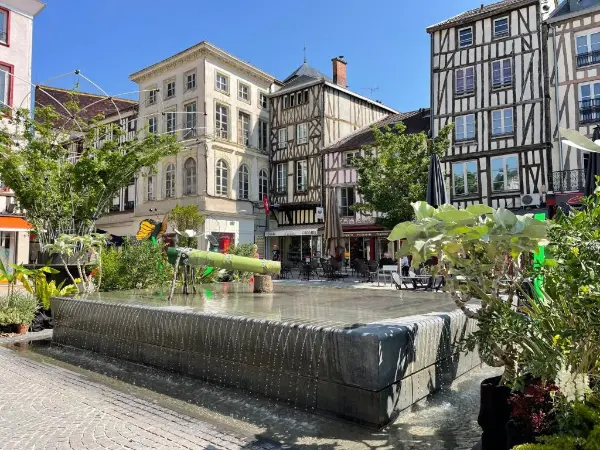
During the Middle Ages, the region also enjoyed remarkable commercial prosperity. In the 12th and 13th centuries, the famous Champagne fairs, major international trading events, attracted merchants from places such as Italy and Flanders. Troyes became one of Europe’s leading economic centers, while trade helped towns grow wealthier and encouraged the development of local crafts.
Champagne has also experienced some tragic chapters in its history, particularly during World War I. The region was the scene of fierce fighting between French and German forces, including the famous Battles of the Marne in 1914 and 1918. Devastated towns, destroyed villages and numerous military cemeteries still bear witness to this painful period.
Landscapes of Vineyards, Plains and Forests
There’s much more to Champagne than its vineyards. The region offers a surprisingly diverse range of landscapes, from vast agricultural plains and vine-covered hills to deep forests, lush green valleys and large lakes. Gentle rolling hills, wide-open horizons and a largely rural countryside define this part of France.
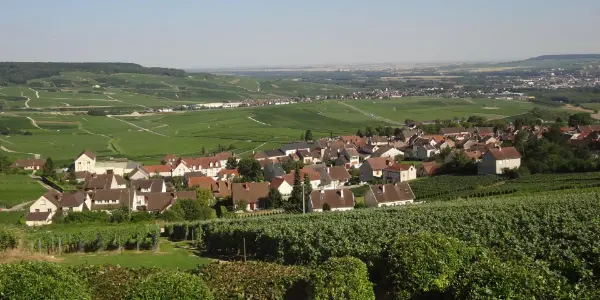
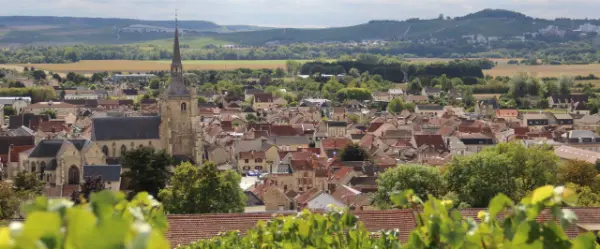
Some of Champagne’s most iconic scenery can be found around Reims and Épernay, where vineyards cover sun-drenched hillsides. Neat rows of vines stretch across the slopes, dotted with small villages and traditional stone houses. The Marne Valley, Montagne de Reims and Côte des Blancs offer some of the region’s most beautiful and characteristic vineyard views.
Beyond these famous wine-growing areas, Champagne opens up into vast stretches of farmland, particularly in its central plains. The chalk-rich soil, made up of the white limestone that’s so characteristic of the region, gives the landscape its distinctive appearance. Fields of grain and other crops stretch as far as the eye can see, broken up by small patches of woodland and isolated villages.
Further south and east, the scenery changes noticeably. The open plains gradually give way to forests, meadows and wetter landscapes. The Forêt d’Orient Regional Natural Park, near Troyes, is home to large lakes surrounded by oak forests and wetlands that are particularly popular with migratory birds. Lac du Der is another vast natural area that’s ideal for birdwatching.
This variety of landscapes makes Champagne a wonderful place to explore on foot or by bike, following quiet country roads and trails that wind through the vineyards. In spring, the countryside bursts back into color, while in autumn, the hillsides turn beautiful shades of gold and copper. The forests and lakes reveal a completely different side of the region with each changing season.
Champagne Wine, Local Traditions and the Art of Living
You can’t talk about Champagne without mentioning the wine that made the region famous around the world. Winemaking here has ancient roots dating back to Roman times, but the champagne we know today is the result of centuries of experimentation and refinement. Originally produced as still wines, Champagne wines gradually developed their famous bubbles from the 17th century onward.
Champagne has a protected designation of origin, meaning that only wines produced within a strictly defined geographical area and according to specific rules can carry the name. Three main grape varieties are used in its production: Chardonnay, which brings freshness and elegance, Pinot Noir, valued for its structure, and Meunier, which produces softer, fruitier wines. By blending these grapes, winemakers can create an impressive range of champagne styles.
The production process follows a special method. After an initial fermentation turns grape juice into wine, a second fermentation takes place directly inside the bottle. This is what creates champagne’s signature bubbles. The bottles are then aged for many months, sometimes several years, in cool cellars before going through several stages to remove sediment and prepare the wine for drinking.
The cellars themselves are an extraordinary part of the region’s heritage. Carved into the chalk beneath the ground, they form enormous networks of underground tunnels, particularly beneath Reims and Épernay. In 2015, Champagne’s historic vineyards, prestigious champagne houses and underground cellars were added to the UNESCO World Heritage List, recognizing a unique winemaking tradition deeply connected to the region’s history and landscapes.
But Champagne’s culture goes far beyond its wine. The grape harvest, known in French as the vendanges, remains one of the most important moments in local life, bringing large numbers of workers together in the vineyards each year. The region also has strong culinary traditions, including the famous pink biscuits of Reims, Chaource cheese and Troyes andouillette, a traditional pork sausage.
Through its winemaking traditions, local food specialties and popular festivals, Champagne celebrates a way of life where sharing good moments with others is especially important. Long associated with royal courts and special occasions, champagne has become a worldwide symbol of celebration. Yet it remains deeply rooted in the villages and winemaking families that have passed down their knowledge and skills from generation to generation.
OVERALL
Map
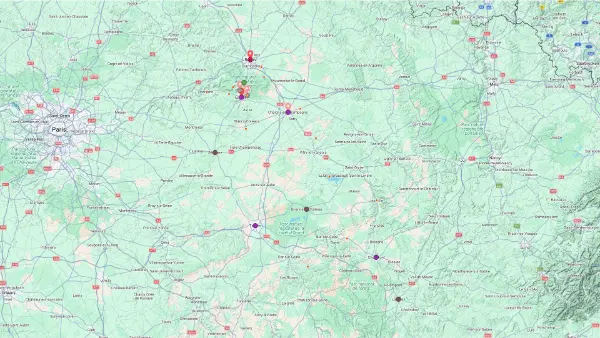
Interactive Map
Interactive Map
Click on the icon  in the top-left corner to display the map legend.
Show/Hide layers as needed.
Click on the arrow icons (v) to display the sublayers.