


MAP
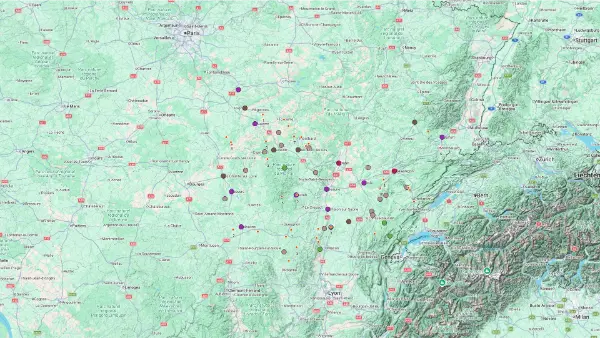
Burgundy
Interactive Map
Burgundy
Interactive Map
Click on the icon  in the top-left corner to display the map legend.
Show/Hide layers as needed.
Click on the arrow icons (v) to display the sublayers.
WEST
| Name | Top+ | Top |
|---|---|---|
| Noyers | ✅ | |
| Montréal | ||
| Vézelay | ✅ | |
| Arthel | ||
| Apremont-sur-Allier | ||
| Flavigny-sur-Ozerain | ||
| Châteauneuf-en-Auxois | ☑️ | |
| Brancion | ||
| Semur-en-Brionnais |
Noyers
In Our Top+ ✅
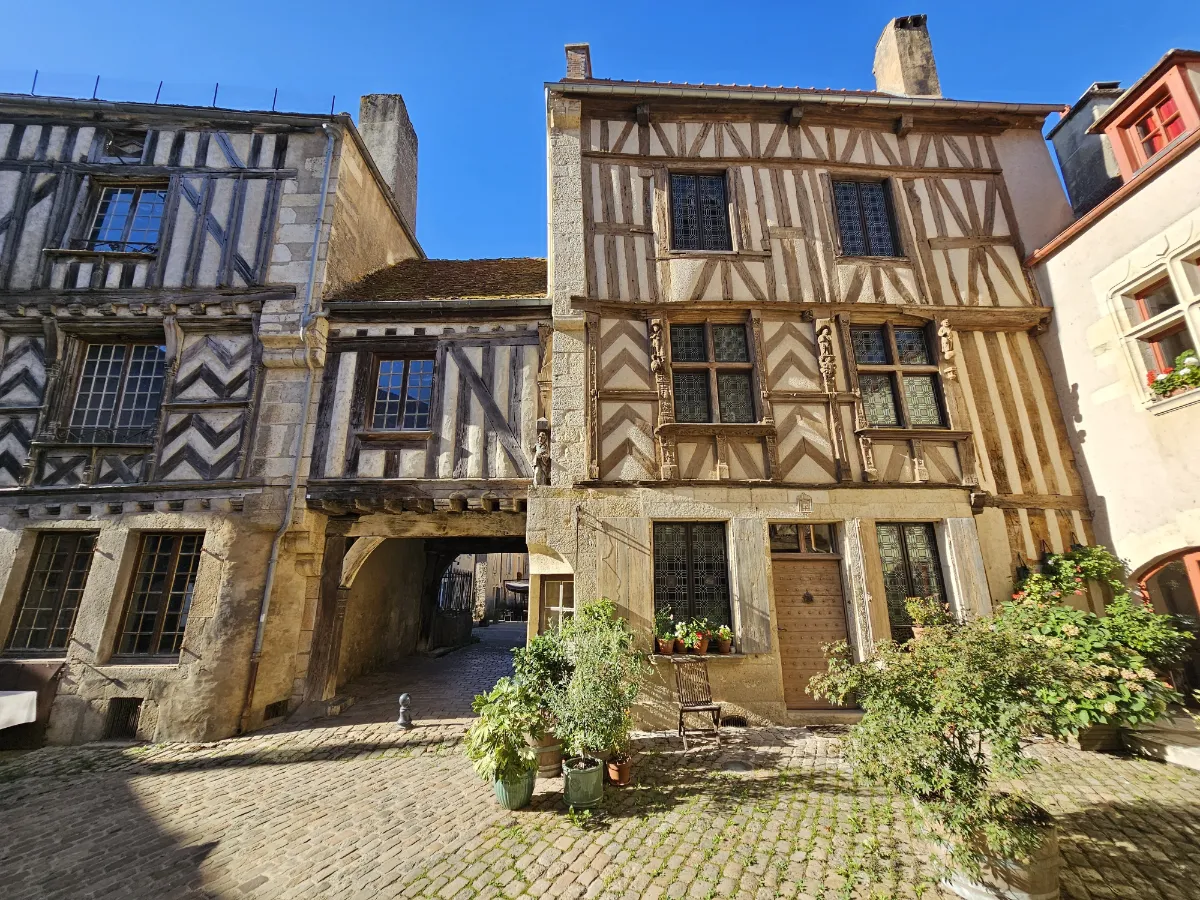
Noyers-sur-Serein feels as though it has passed through the centuries safely tucked behind its ramparts. The village has preserved numerous half-timbered houses, some decorated with carvings, along with vaulted passageways and irregular little squares. The pale stone and dark wooden beams create a wonderfully harmonious setting, with a new beautiful façade around every corner.
Follow the narrow streets towards the old fortified gates, then head down to the Serein, the small river that runs alongside the village. The remains of the towers recall a time when this settlement was protected by defensive walls. In spring and summer, flowers add even more charm to the old walls and courtyards.
Montréal
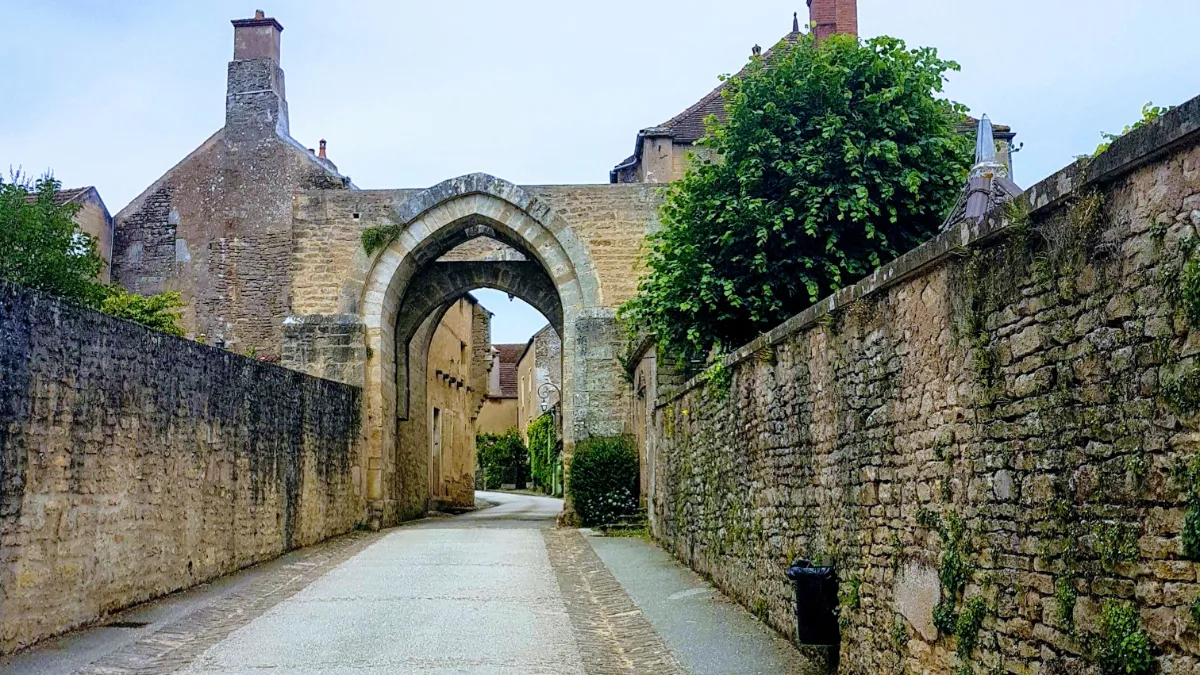
This little Burgundy village sits on a hill overlooking the countryside around Avallon. Once fortified, it has kept its ancient stone buildings, quiet lanes and several historic houses that reflect its former importance. Views open out across the surrounding hills and fields.
Right at the top, the 12th century Notre-Dame Church is well worth a leisurely visit. Inside, you’ll find beautifully carved wooden choir stalls from the 16th century, decorated with expressive figures. Afterwards, wander through the peaceful streets, where old doorways, enclosed gardens and glimpses of the countryside make for a lovely walk.
Vézelay
In Our Top+ ✅
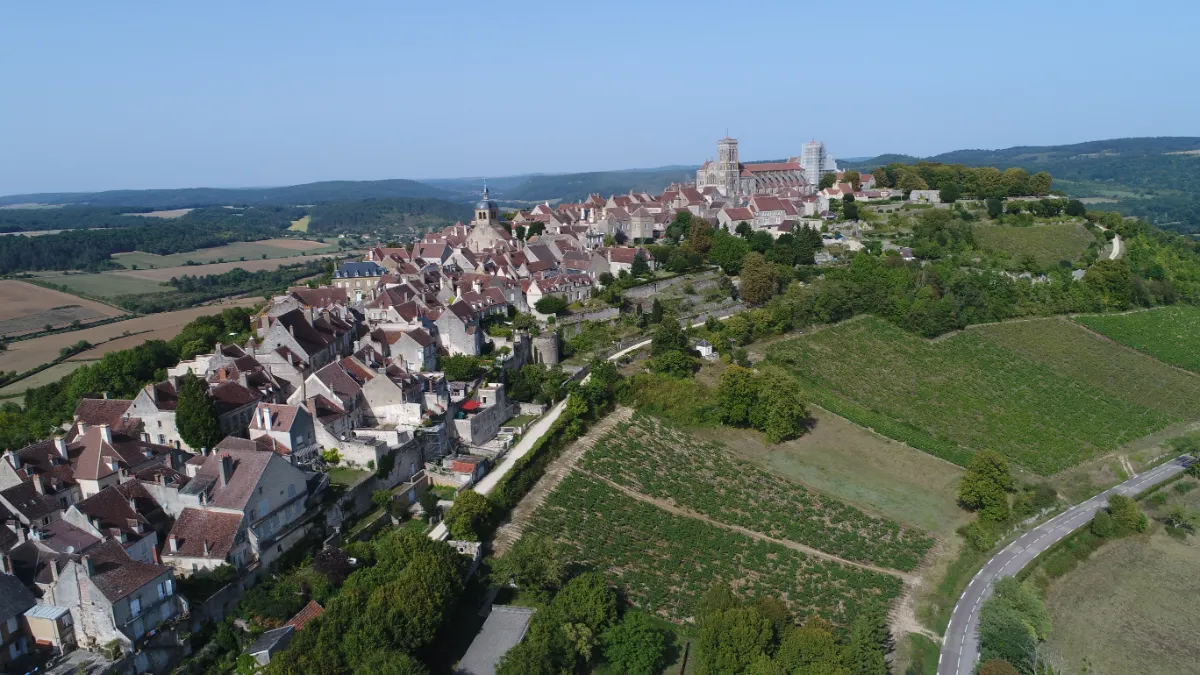
You can spot Vézelay from a distance, perched on its hill above the green countryside. For nearly a thousand years, this village has drawn pilgrims to the magnificent medieval Basilica of Sainte-Madeleine, now a UNESCO World Heritage Site. Its light-filled nave and sculptures tell the story of the site’s spiritual importance over the centuries.
The main street climbs towards the basilica, passing old houses and golden stone façades. But be sure to explore the quieter side streets too, before reaching the terraces behind the church. The views stretch across hills, meadows and the first forests of the Morvan, especially beautiful in the evening light.
Arthel
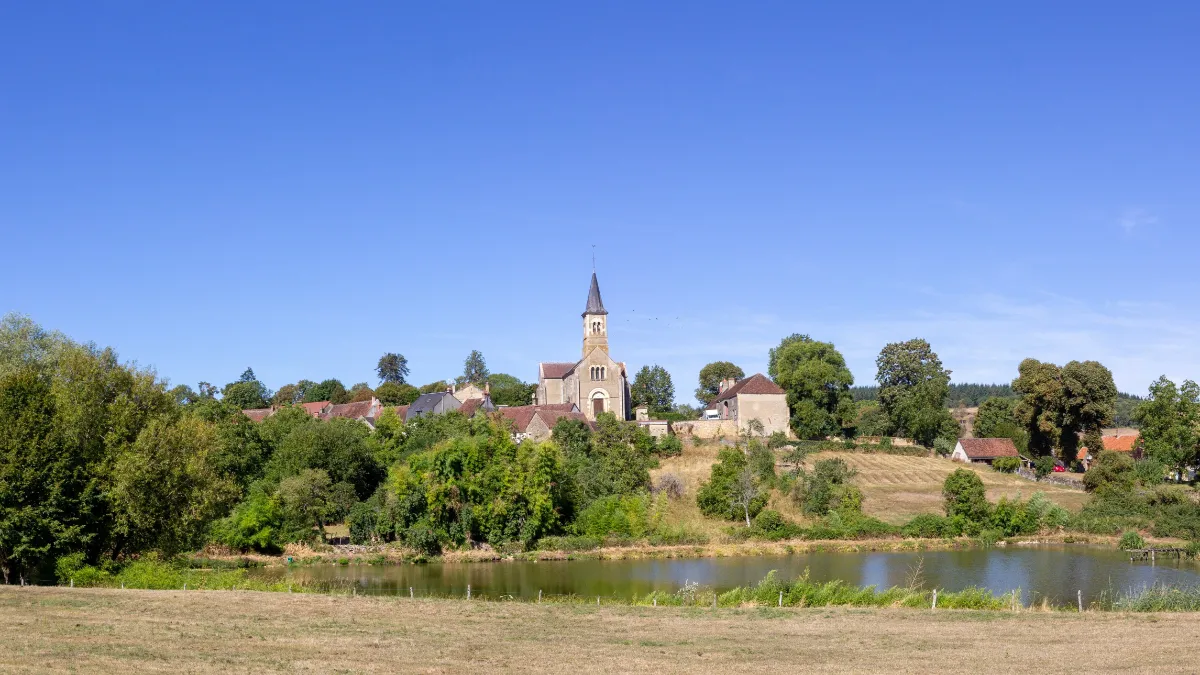
Arthel is the kind of place best discovered in near silence, among meadows, flower-filled gardens and old stone houses. This tiny village has kept a rural charm that owes as much to its surroundings as to its architecture. Two castles, including Château de la Motte with its old defences, hint at a history much more significant than the village’s size would suggest.
Stroll along the flower-lined streets, then look for the Grand-Font spring and its old communal wash basin. A small pond recalls the days when water was used to transport timber. The ancient stone walls surrounding the gardens still show traces of old doors and openings.
Flavigny-sur-Ozerain
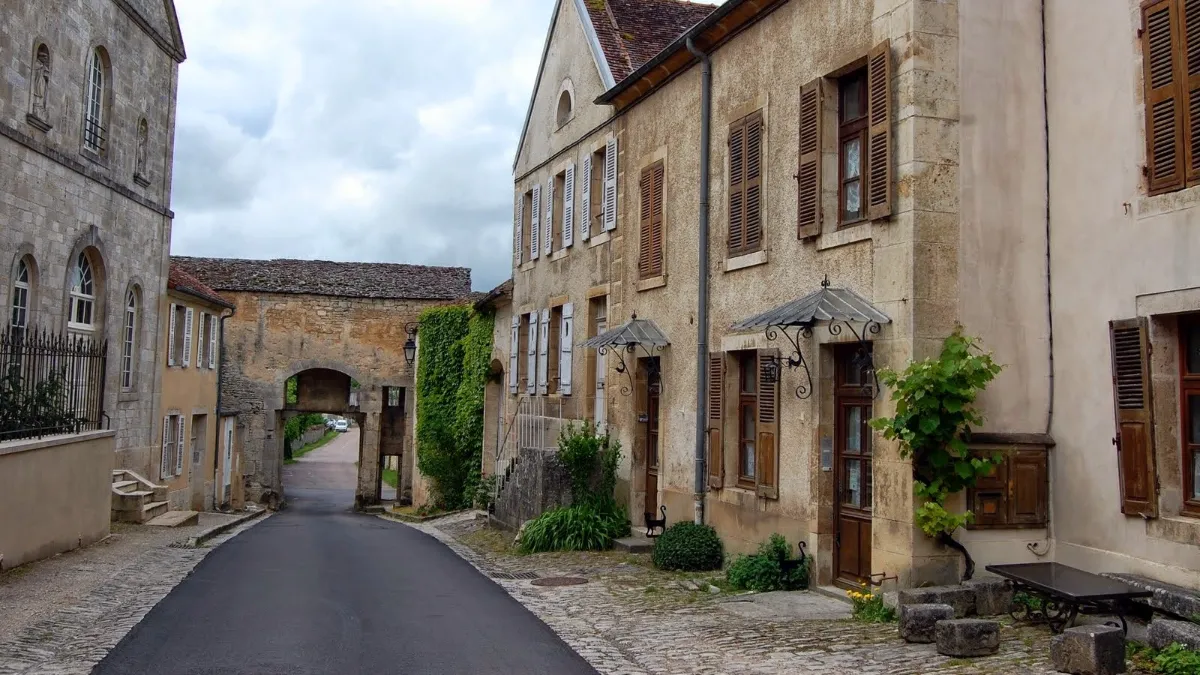
Behind its old fortified gates, Flavigny-sur-Ozerain seems to move at the pace of centuries gone by. Cobbled lanes, golden stone houses and hidden gardens create a village full of character. Perched on a hill, it also offers lovely views over the surrounding meadows and valleys.
Flavigny is famous for its little aniseed sweets, made for centuries around a fragrant anise seed. Their history is closely linked to the village’s former abbey. Wander without a set route and you’ll come across vaulted passageways, steps and historic façades, all in a wonderfully peaceful atmosphere outside the busiest visitor periods.
Châteauneuf-en-Auxois
In Our Top ☑️
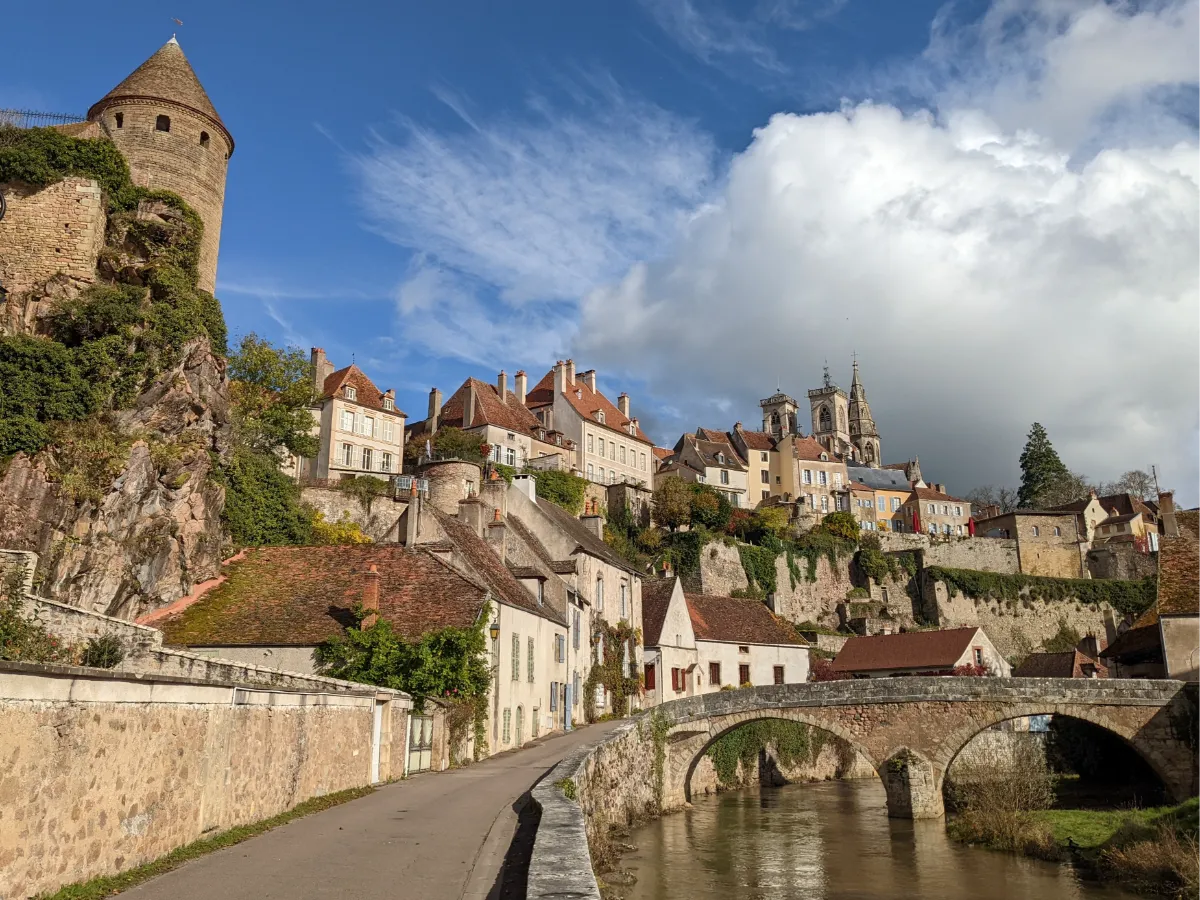
Châteauneuf-en-Auxois overlooks the countryside from its hilltop, with its massive castle and defensive walls. You can spot it from far away, especially when the stone turns golden in the late afternoon light. Below, the Burgundy Canal winds through fields and meadows, adding a peaceful touch to the panorama.
In the village, old houses cluster around little streets and flower-filled courtyards. The castle, built and expanded throughout the Middle Ages, still preserves its towers, rooms and reminders of life among the medieval nobility. Make sure to explore the various viewpoints too, with hills stretching as far as the eye can see.
Brancion
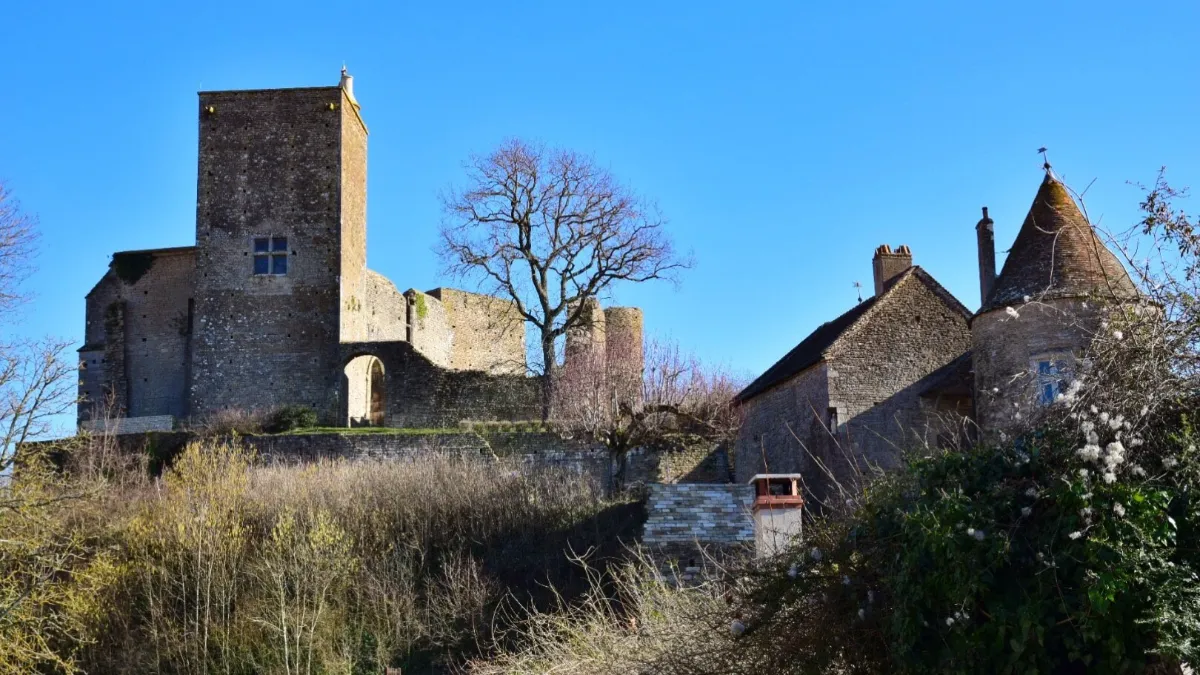
Brancion takes a little effort to reach, but it’s worth it. Perched above the green hills of southern Burgundy, this fortified village has preserved its medieval character. You enter through an old gateway before following stone streets lined with historic houses. The peaceful atmosphere and absence of large modern buildings make it feel like stepping back in time.
The castle ruins overlook the surrounding countryside, while Saint-Pierre Church contains old wall paintings. From the heights, you can enjoy sweeping views of fields, forests and little roads winding between the hills. Inside the church, the ancient frescoes reveal a religious history just as rich as that of the fortifications.
Semur-en-Brionnais
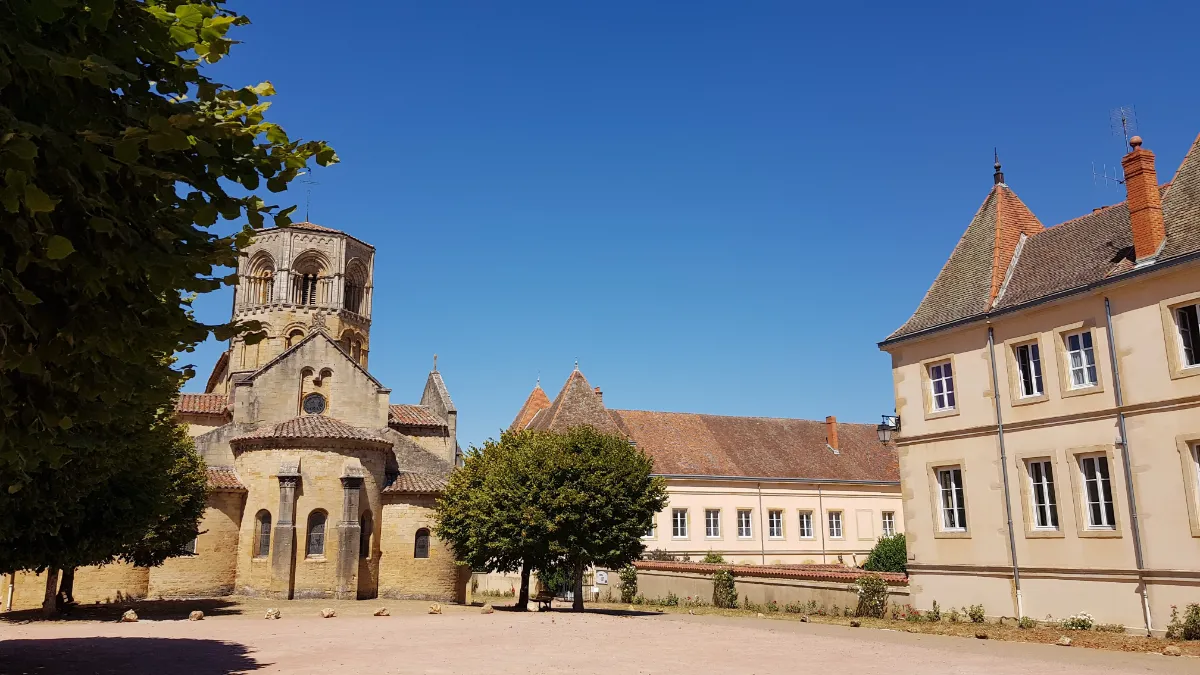
Semur-en-Brionnais still bears the marks of its past as a fortified settlement, set among meadows and gently rolling hills. Saint-Hugues Castle, with its surviving massive tower, rises above the historic houses. Little streets lead to open viewpoints overlooking a deeply rural landscape.
Saint-Hilaire Church is the village’s other great treasure. Built in the 12th century, it stands out for its harmonious proportions and stone carvings. Take time to admire its entrance before wandering among the gardens and old houses. From the higher ground, brown-tiled roofs stand out against the rolling pastures.
EAST
| Name | Top+ | Top |
|---|---|---|
| Pesmes | ||
| Lods | ||
| Salins-les-Bains | ||
| Arbois | ||
| Château-Chalon | ☑️ | |
| Baume-les-Messieurs | ✅ |
Pesmes
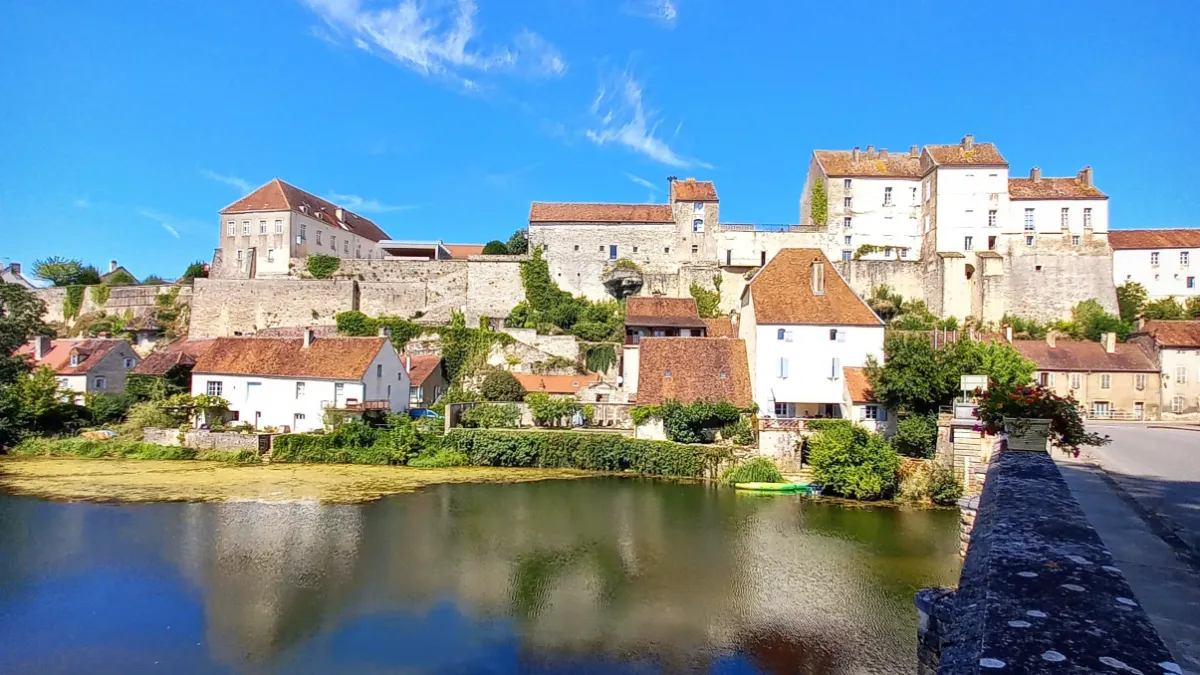
Pesmes stretches along a rocky promontory above the Ognon, a peaceful river lined with trees. Once protected by defensive walls, the village still has cobbled streets, old houses and beautiful views from its higher ground. The stone façades reveal a history shaped by trade, wine-growing and traditional crafts.
Saint-Hilaire Church is worth a look for its artworks and bell tower topped with colourful tiles. As you head down towards the river, you’ll discover old structures linked to metalworking. The riverbanks offer another perspective on the village, with its houses appearing to watch over the water below.
Lods
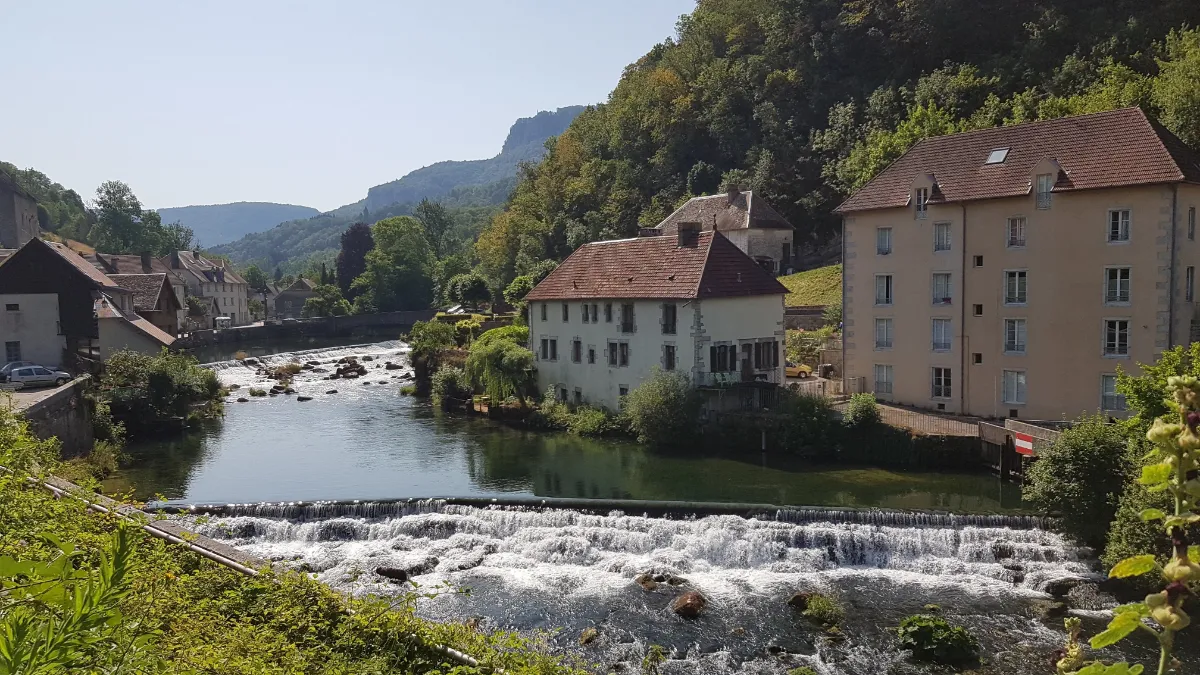
Clinging to the slopes of the Loue Valley, Lods is every bit the picture-postcard village. Its stone houses tumble down towards the river, which flows over small drops to form cascades. From the bridges, you get lovely views of the rooftops, gardens and tree-covered hills.
The village once depended heavily on wine-growing and ironworking. Old winegrowers’ houses and former forge buildings keep that history alive. To really get a feel for the place, follow the steep streets before heading back down to the Loue. The sound of flowing water accompanies almost your entire walk.
Salins-les-Bains
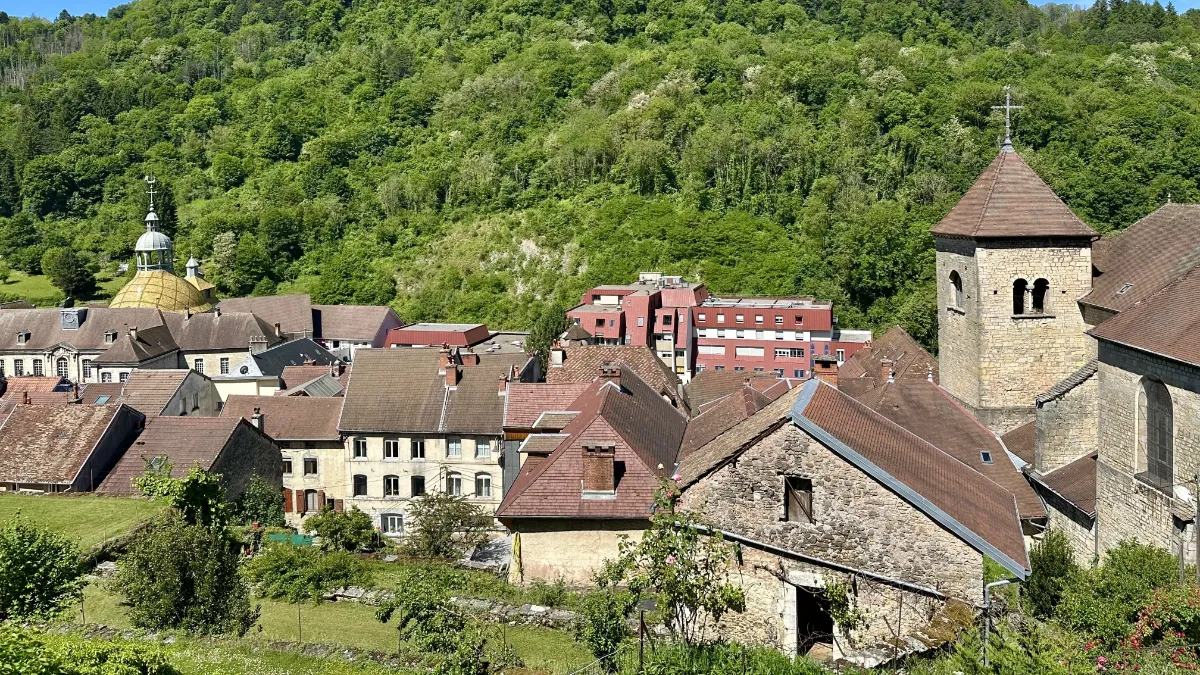
In Salins-les-Bains, salt shaped the town’s history for centuries. At the bottom of a narrow valley between two wooded hills, naturally salty underground water was extracted and heated to produce salt crystals. The Grande Saline, now a UNESCO World Heritage Site, lets you explore the underground galleries and equipment used for this demanding work.
The town has preserved old houses, an imposing church and traces of its former fortifications. Its salty mineral waters also encouraged the development of thermal baths. As you walk through the streets, you can’t help noticing the hills rising around the rooftops, giving the town its distinctive setting.
Arbois
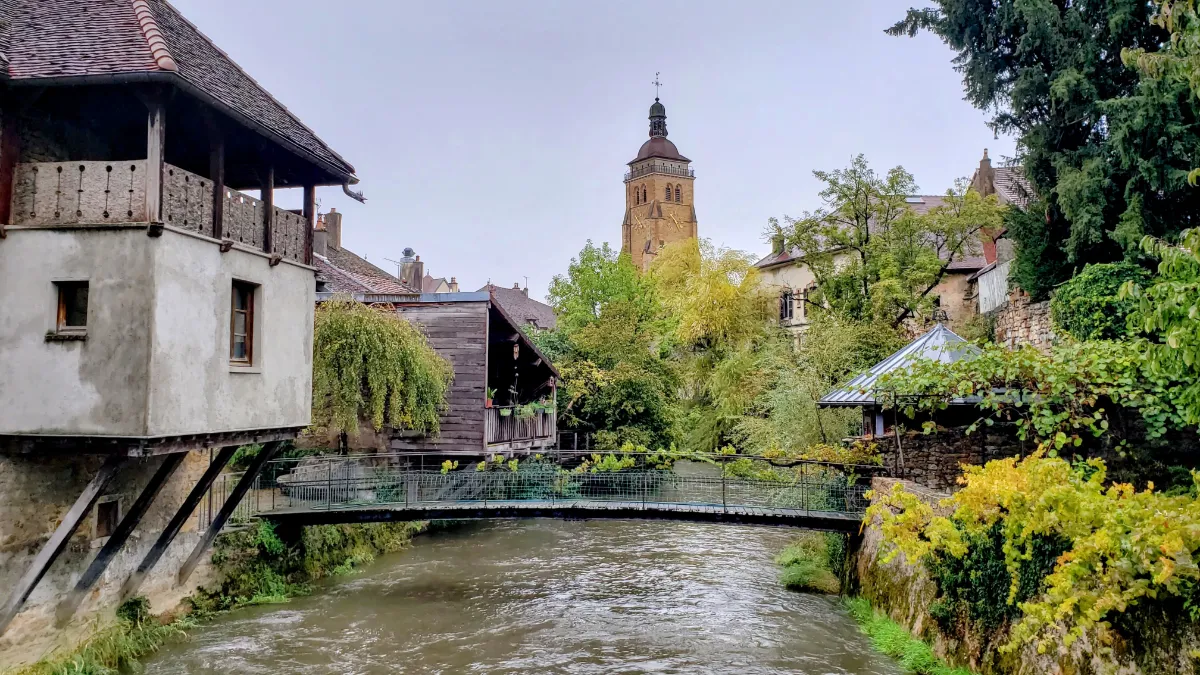
Arbois has all the charm of a small town shaped by water. The Cuisance River winds between houses, gardens and old stone buildings, while vineyards cover the surrounding hills. In the centre, squares and narrow streets have a lively atmosphere, watched over by the bell tower of Saint-Just Church.
Louis Pasteur spent part of his youth in Arbois and often returned here to carry out his research. His house, preserved with its laboratory, offers a glimpse into the work of this great scientist. The town also lies at the heart of a wine-growing region with some very distinctive traditions. Paths climbing above the rooftops offer beautiful views.
Château-Chalon
In Our Top ☑️
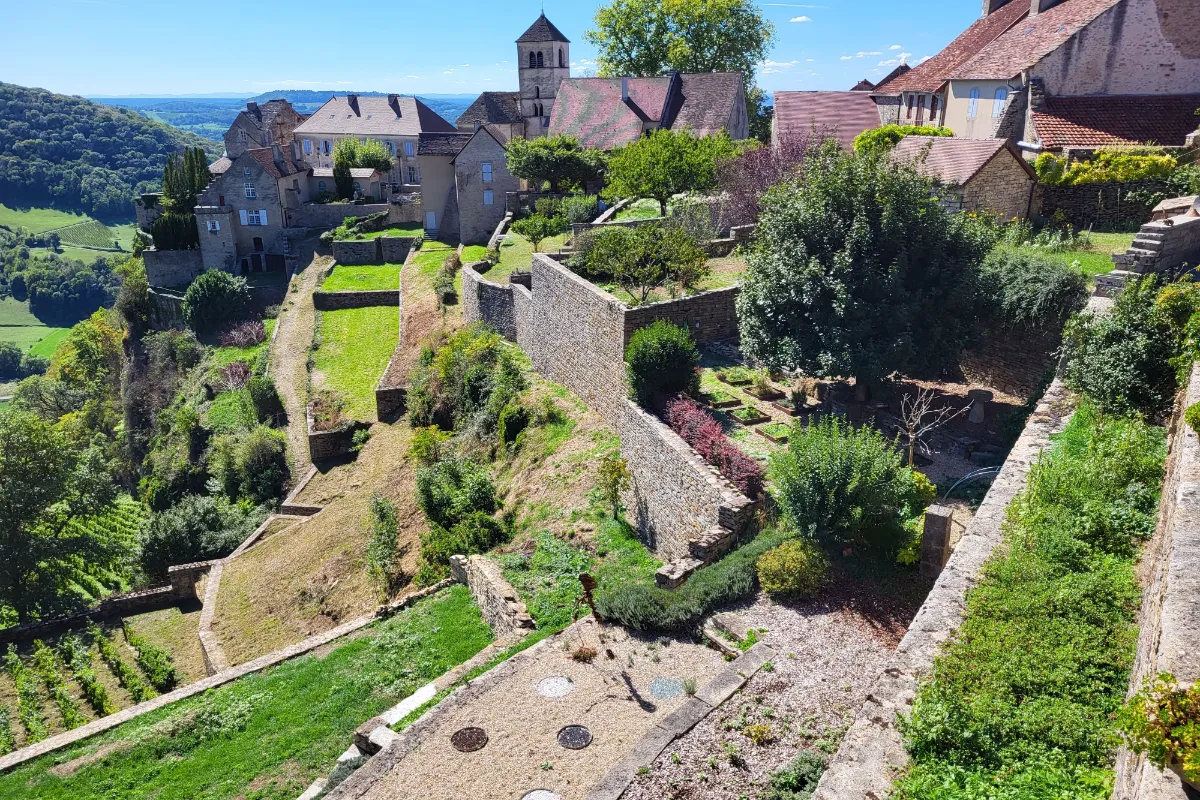
Château-Chalon enjoys a spectacular position on top of a cliff overlooking the Jura vineyards. Its stone houses, gardens and little streets cluster around an old church. From the natural terraces around the village, the views plunge down towards vine-covered slopes and green valleys.
This little village is closely associated with vin jaune, a local wine aged for years in barrels using a special method. A few traces of the old castle and monastery recall its past. But here, the landscape is almost the main attraction. On a clear day, you can see one line of hills after another stretching into the distance.
Baume-les-Messieurs
In Our Top+ ✅
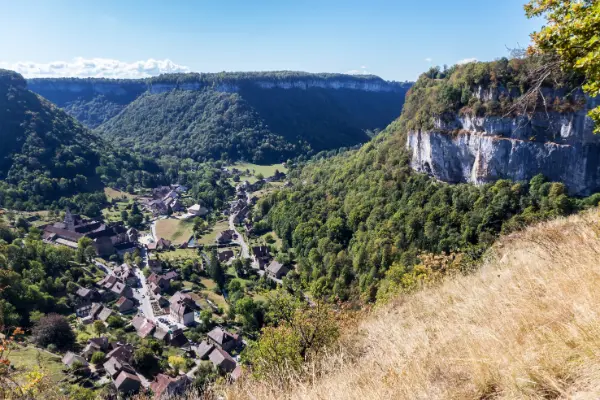
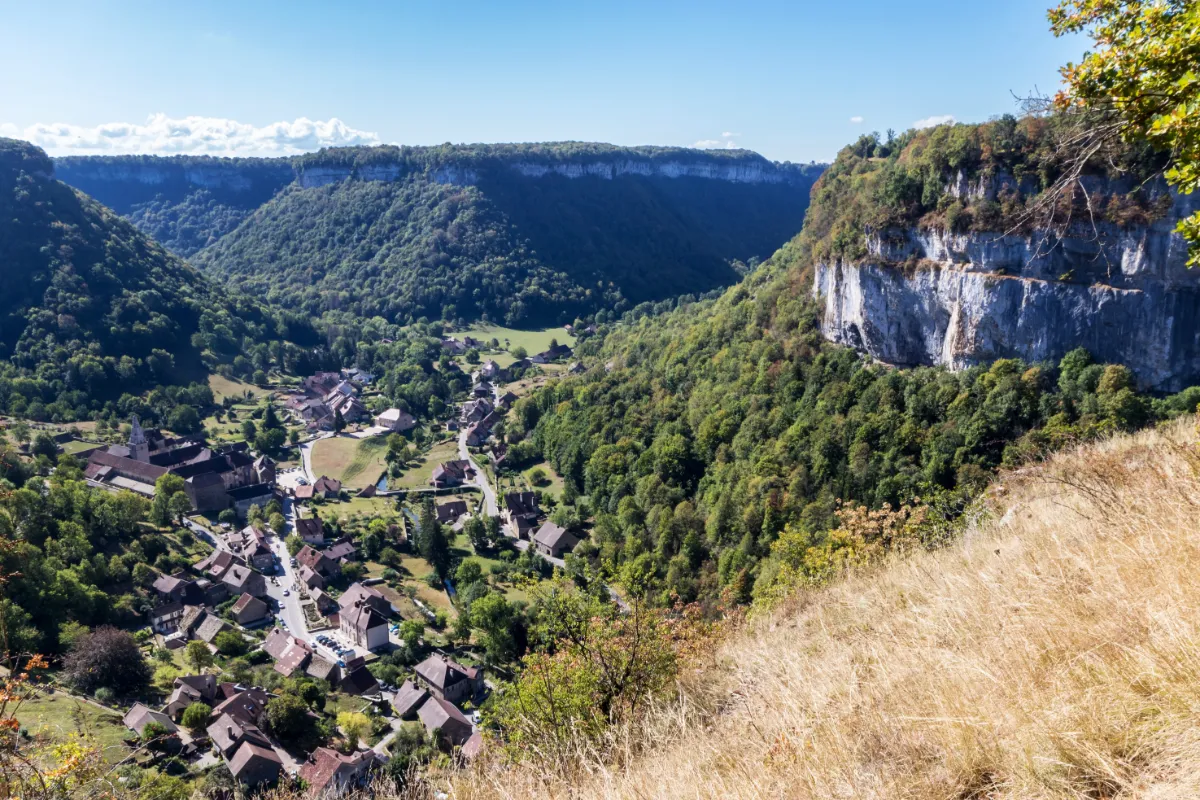
Baume-les-Messieurs hides at the bottom of a spectacular valley, surrounded by enormous limestone cliffs. Arriving here is quite an experience, with towering rock faces enclosing the houses, meadows and an ancient abbey. Founded more than a thousand years ago, the abbey still has a remarkable church and several buildings that tell the story of monastic life.
The surrounding area also offers some wonderful natural sights, including caves and a waterfall that tumbles over moss-covered rocks. To get a real sense of the landscape, head up to one of the viewpoints above the village. From there, you can appreciate the depth of the valley and the village’s extraordinary location.