


MAP
Burgundy
Interactive Map
Burgundy
Interactive Map
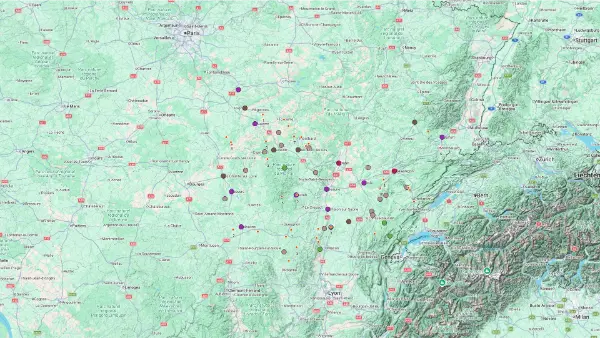
Click on the icon  in the top-left corner to display the map legend.
Show/Hide layers as needed.
Click on the arrow icons (v) to display the sublayers.
CITIES
| Name | Top+ | Top |
|---|---|---|
| Dijon | ✅ | |
| Besançon | ✅ |
Dijon
In Our Top+ ✅
Population 160 000
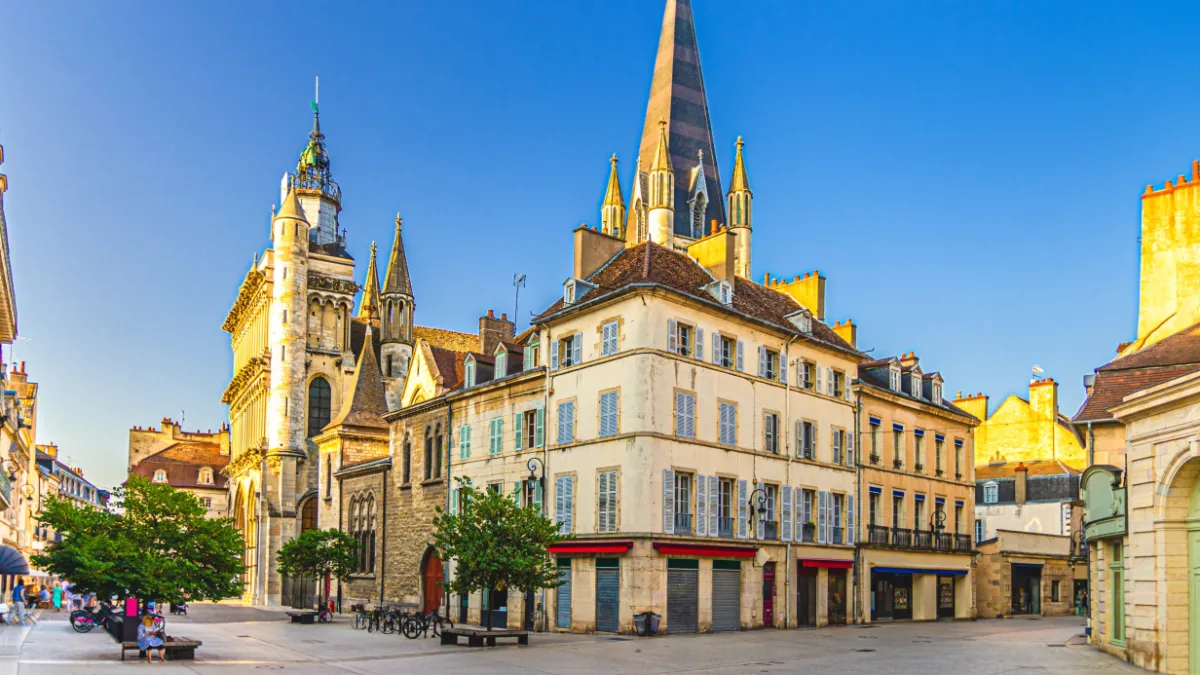
Dijon may be famous for its mustard, but there’s so much more to discover here. Once the capital of the powerful Dukes of Burgundy, the city has preserved an astonishingly rich historic centre. Pale stone façades stand alongside half-timbered houses, those old buildings with their exposed wooden beams.
Start at the Palace of the Dukes, a vast complex that tells the story of centuries of power and now houses the Museum of Fine Arts. As you explore the surrounding streets, remember to look up. Carved windows, hidden courtyards, grand doorways and colourful tiled roofs make for some impressive scenery.
Dijon also has a quieter side. Gardens, shady squares and pedestrian streets invite you to slow down and take your time. The architecture changes from one neighbourhood to another, from elegant 17th and 18th century mansions to much older traces of the city’s past.
And of course, you can’t ignore Dijon’s close ties to Burgundy wine. The vineyards begin almost on the city’s doorstep, while the International City of Gastronomy and Wine explores part of this rich history.
Besançon
In Our Top+ ✅
Population 120 000
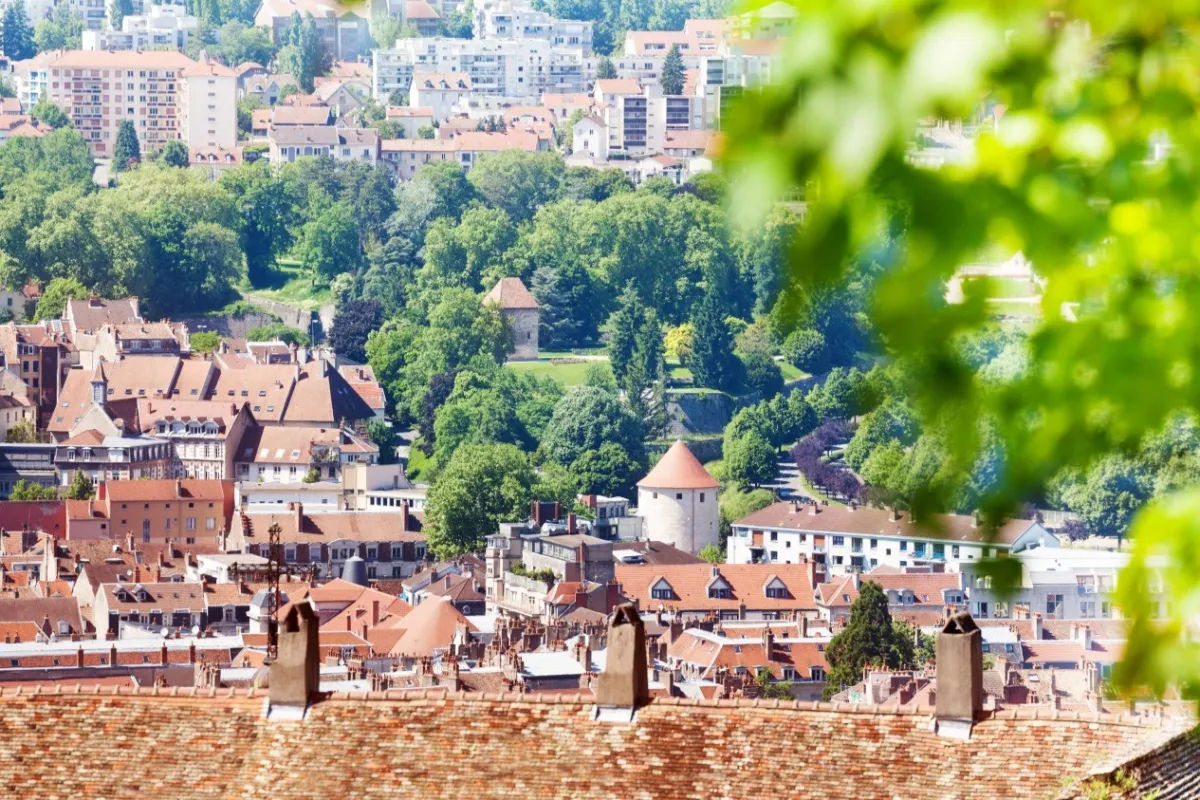
Besançon enjoys a remarkable setting, tucked into an almost complete loop of the Doubs River. The river wraps around its old town, while wooded hills rise above houses built from warm, golden and bluish stone. This unusual location made the city a strategically important military stronghold for centuries.
You can’t miss the citadel, an enormous fortress perched high above the rooftops. Redesigned in the 17th century by Vauban, the great military engineer of King Louis XIV, it’s now a UNESCO World Heritage Site. Its ramparts offer spectacular views over the city and surrounding hills. Several museums inside also explore local history, warfare and the natural world.
Back down in the historic centre, there’s plenty more to discover. The Porte Noire, a monumental arch built in Roman times, is a reminder that Besançon has nearly 2,000 years of urban history. Nearby, Saint-Jean Cathedral houses an extraordinary astronomical clock, made up of thousands of components and designed to show much more than just the time.
Besançon was also once a major centre of watchmaking. The Museum of Time, housed in a former palace, offers a fascinating introduction to this traditional craft. Make time for a walk along the Doubs too, where buildings reflect in the water and the views change with every bridge you cross.
TOWNS
| Name | Top+ | Top |
|---|---|---|
| Autun | ||
| Beaune | ✅ | |
| Sens | ||
| Nevers | ||
| Auxerre | ||
| Chalon-sur-Saône | ☑️ | |
| Moulins | ||
| Dole | ☑️ | |
| Belfort |
Autun
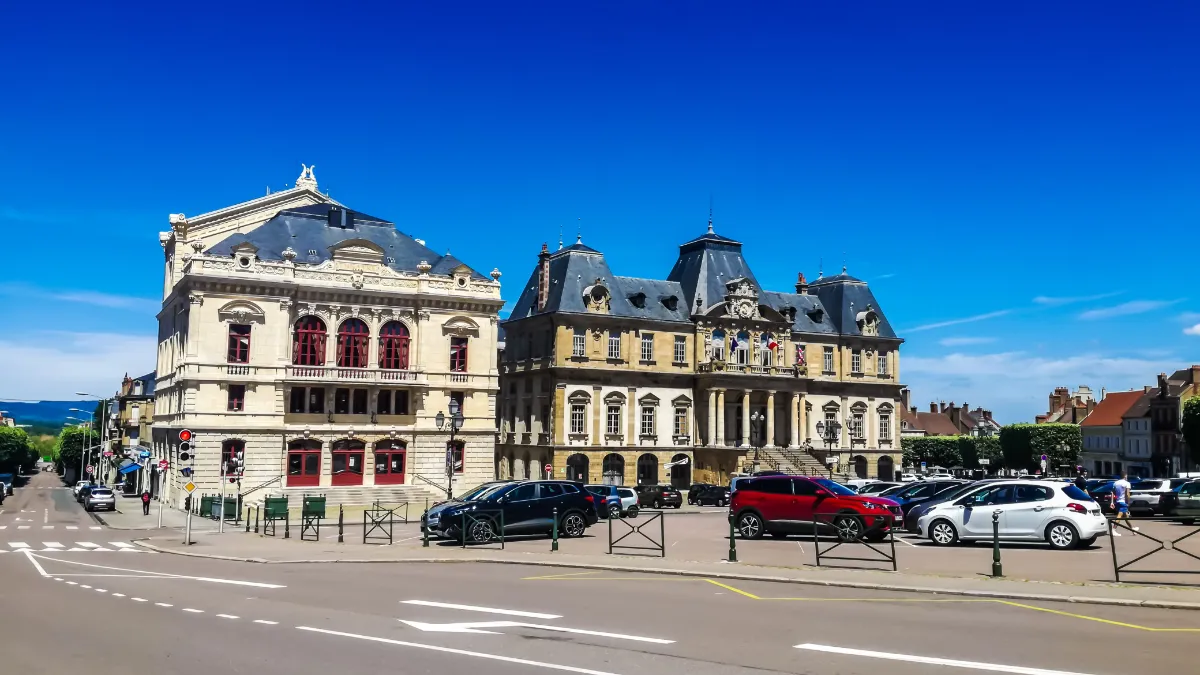
Autun doesn’t reveal all its treasures at first glance. You need to wander into its streets, follow its ancient stone walls and remember that the city was founded by the Romans at the end of the 1st century BC. Back then, it was called Augustodunum and was intended to showcase the power of Rome.
The Roman theatre, originally enormous, is one of the most impressive reminders of that past. Two monumental ancient gates have also survived through the centuries. Then the atmosphere changes around Saint-Lazare Cathedral, built in the 12th century. Its sculptures, especially those around the grand entrance, reveal an amazingly expressive medieval art style, with figures that almost seem to come alive before your eyes.
Autun is also a city of hills and sweeping views, sitting on the edge of the forests of the Morvan. Take your time exploring its sloping streets and old squares, without trying to see everything too quickly.
Beaune
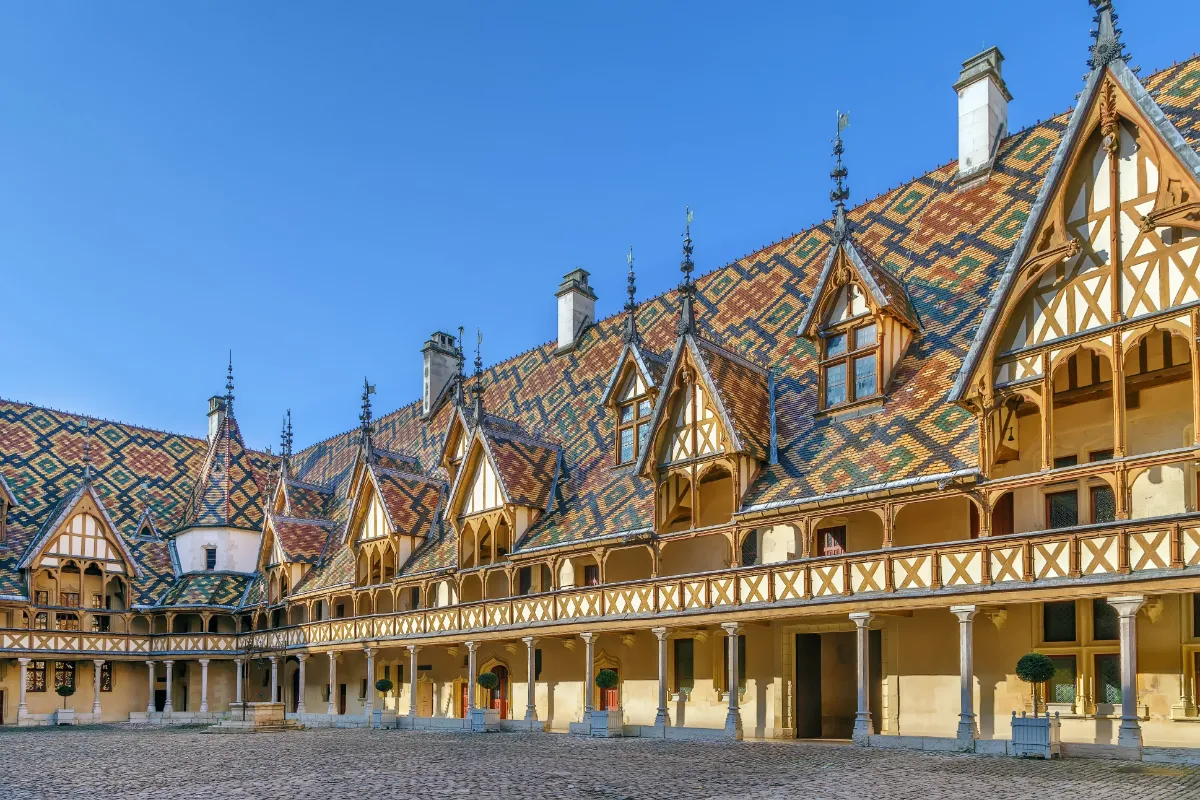
In Our Top+ ✅
In Beaune, wine is never far away. Surrounded by vine-covered hills, this historic town has plenty more to offer than its prestigious bottles. Behind the ramparts that still surround part of the old centre, cobbled streets, stone houses and hidden courtyards make for a lovely walk.
The undisputed star is the Hôtel-Dieu, a former hospital founded in 1443 to care for the sick and the poor. Its architecture is spectacular. In the courtyard, yellow, green, red and black roof tiles form striking geometric patterns. Inside, the vast hospital ward and works of art help you understand the important role this building played over the centuries.
But there’s much more to Beaune than its most famous landmark. Notre-Dame Church, historic houses and stretches of the old ramparts are all good reasons to keep exploring.
Just outside town begins one of the world’s most famous wine-growing landscapes. Vineyard plots cover the slopes, separated by paths and sometimes old stone walls. Each has its own history and distinctive character. Autumn is particularly spectacular, when the leaves turn red and gold, but spring, with its fresh green shoots, is beautiful too.
Sens
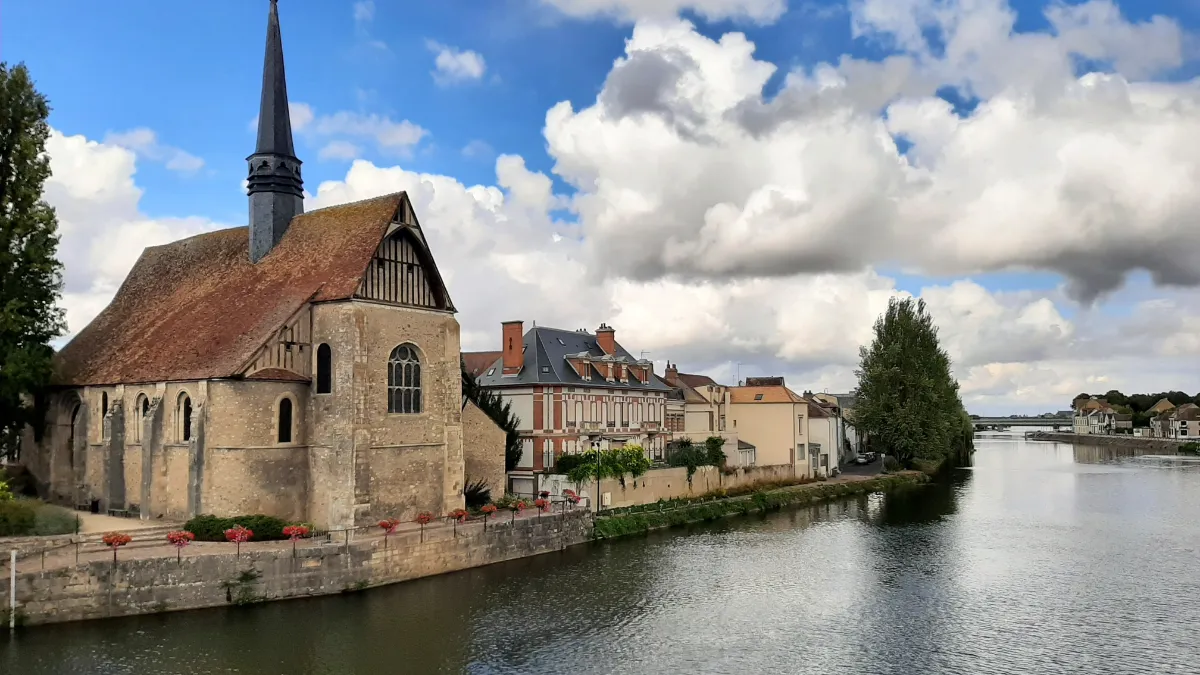
Sens has far more historical treasures than you might expect from a town of its size. Its old centre still has half-timbered houses, lively shopping streets and a relaxed, small-town atmosphere. But it’s the cathedral that really steals the show.
Begun in the 12th century, Saint-Étienne was one of the very first great cathedrals built with pointed arches and soaring vaults, a style that would transform churches across Europe. Inside, light streams through remarkable stained-glass windows. The contrast between the strength of the stonework and the delicacy of the glass is well worth taking a moment to appreciate.
Nearby, the former Archbishops’ Palace recalls the religious importance Sens held for centuries. Afterwards, wander down to the banks of the Yonne River, where the atmosphere becomes much more peaceful. Gardens and riverside walks reveal another side of this town, long situated on major routes between Paris and Burgundy.
Nevers
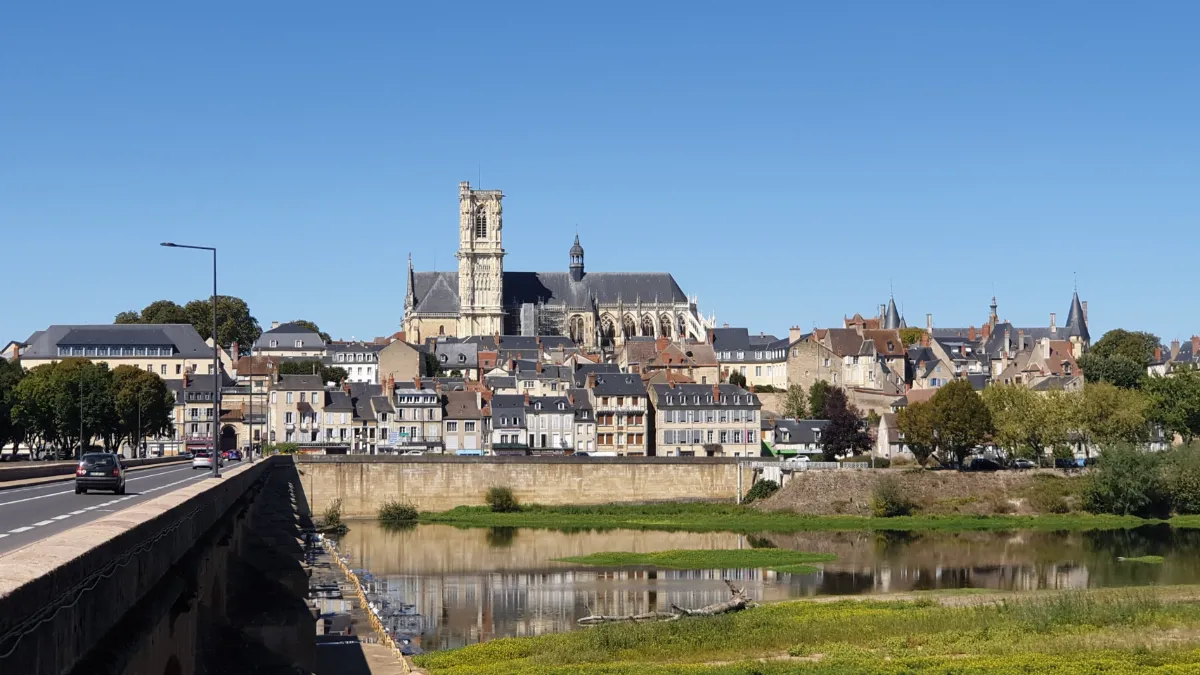
Nevers overlooks the Loire, one of Europe’s last great rivers to retain stretches of relatively wild scenery. From the riverbanks, the rooftops and towers of the old town create a beautiful skyline above the water.
The Ducal Palace, with its elegant façade, recalls the powerful families that once ruled the city. Further on, Saint-Cyr-et-Sainte-Julitte Cathedral has a surprising feature: two separate worship spaces face each other from opposite ends of the building. The cathedral combines several architectural styles and contains contemporary stained-glass windows whose colours transform the light inside.
Nevers is also known for its faience, a type of decorated pottery that made the city famous from the 16th century onwards, and for Bernadette Soubirous, the young woman associated with the apparitions at Lourdes, who spent the final years of her life here. The city’s pottery heritage can still be traced in its historic buildings, while walks along the Loire reveal sandy banks and small islands.
Auxerre
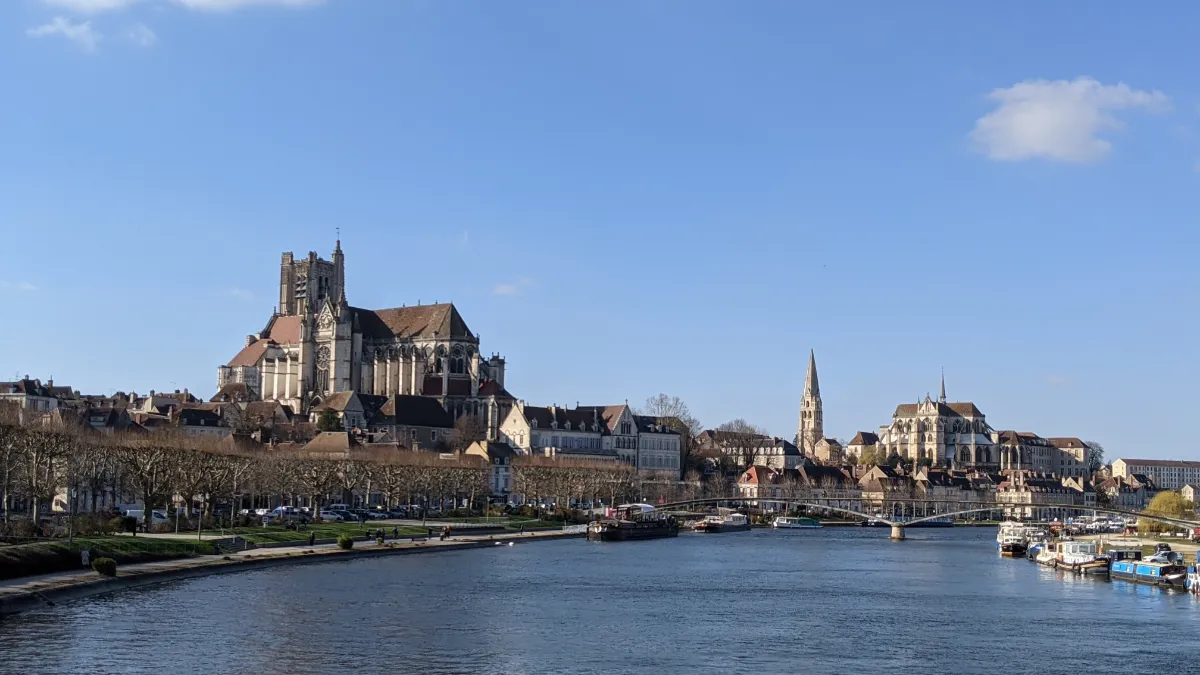
On the banks of the Yonne River, Auxerre has one of those skylines you recognise straight away. Historic houses slope down towards the water, while church towers rise above the rooftops. The view from the quays is especially beautiful when the sun lights up the golden stone.
At the top of town stands Saint-Étienne Cathedral, known for its remarkable sculptures and stained-glass windows. Not far away, Saint-Germain Abbey preserves some exceptionally old wall paintings, rare examples of 9th century art. Along the way, you’ll pass the Clock Tower, half-timbered houses and narrow lanes that seem to have changed very little over the centuries.
Above all, Auxerre is a place made for wandering. The surrounding vineyards have contributed to the town’s prosperity for generations. You can still see signs of that wealth in some of its grand old houses, with carved façades appearing among the winding streets of the historic centre.
Chalon-sur-Saône
In Our Top ☑️
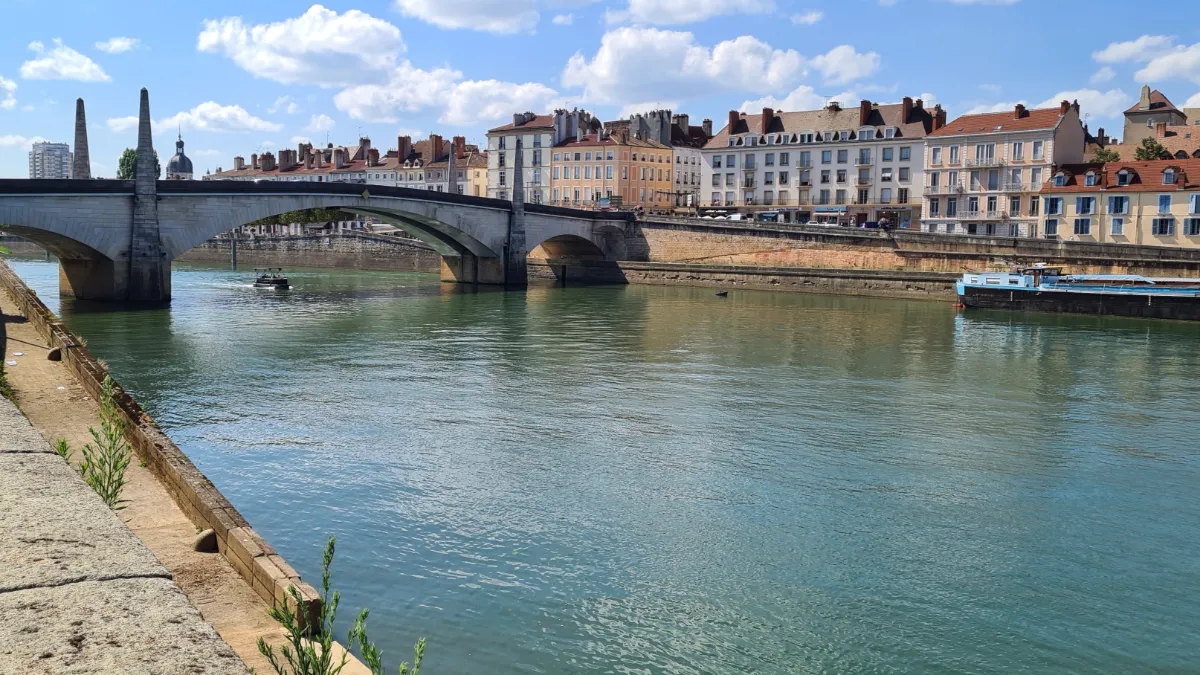
Chalon-sur-Saône grew up beside a river that brought it prosperity for centuries. The Saône flows peacefully through the town, separating the historic centre from Saint-Laurent Island. The quays and bridges offer lovely views of the colourful buildings lining the waterfront.
In the old town, Place Saint-Vincent is surrounded by half-timbered houses gathered around the cathedral. The nearby narrow streets have a welcoming atmosphere, with a mix of stone buildings and more modest homes. The Nicéphore Niépce Museum tells another chapter of local history. One of the pioneers of photography was born in Chalon and created the first permanent photographic images in the 19th century.
The town also remembers its commercial past, shaped by river transport and trade between northern and southern France. Along the waterfront, old passages leading down to the quays recall the trading activity that kept the town busy for centuries.
Moulins
For many years, Moulins was the capital of the powerful Bourbon dynasty, whose descendants would eventually sit on the French throne. This royal past helps explain the elegance of the historic centre, with its old houses, brick and stone streets and the remains of a castle.
Notre-Dame Cathedral is normally home to a painting masterpiece created around 1500: the Triptych of the Master of Moulins, made up of three panels. The Dukes’ Castle and the old mansions also recall the sophistication of the princely court.
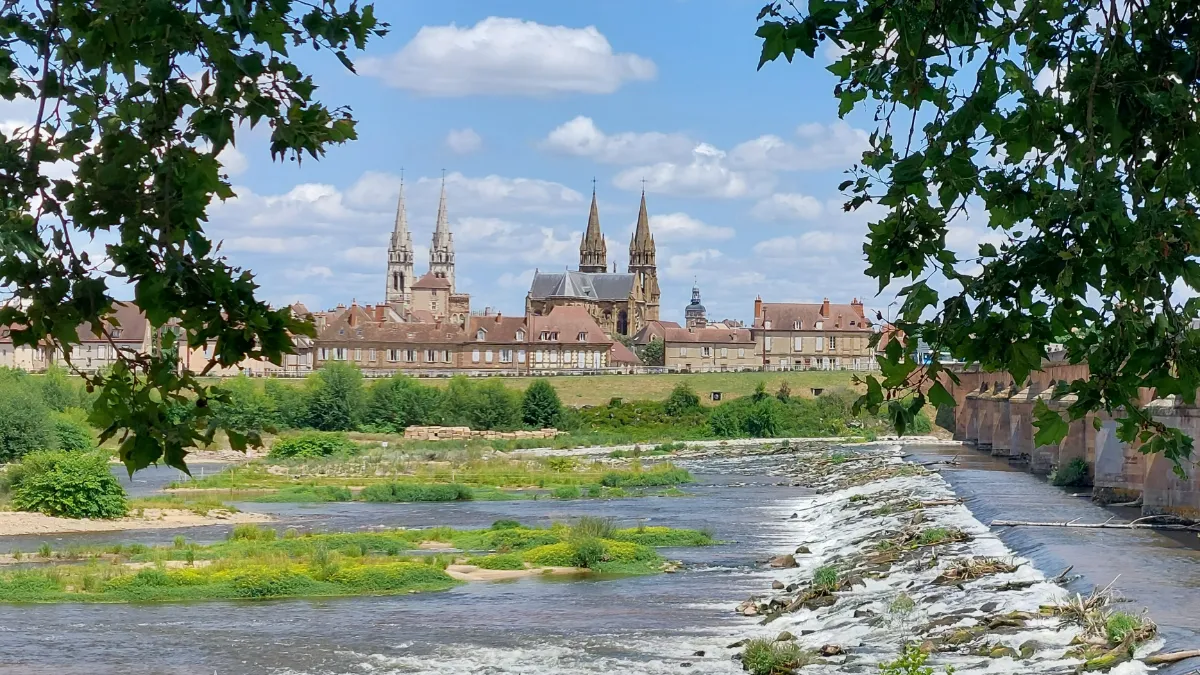
Another unusual attraction is the National Centre for Stage Costume, which preserves costumes worn in theatre productions, operas and ballets. From the bridge, you can see the church towers of the old town and the wide, open banks of the Allier River.
Dole
In Our Top ☑️
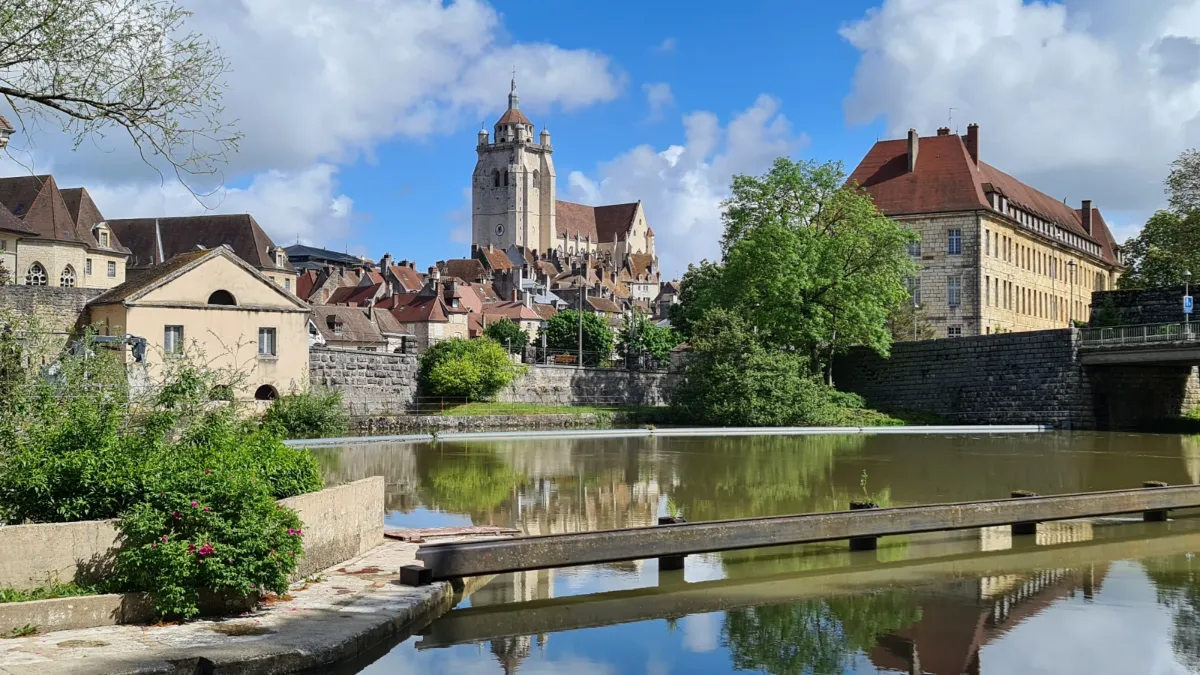
Dole is one of the loveliest surprises along the Doubs River. Once an important seat of power, it has preserved a tightly packed historic centre, with tall stone houses, narrow passageways and hidden courtyards. Approaching from the river, you’ll spot the enormous bell tower of Notre-Dame rising above the rooftops.
The Collegiate Church of Notre-Dame, a grand 16th century building, is impressive for both its size and its interior furnishings. Around it, old Dole is a wonderful place to get lost among the sloping streets. Don’t miss the Tanners’ Canal, lined with old houses where animal hides were once processed. This little waterside corner has a charm all of its own.
Dole is also the birthplace of Louis Pasteur, the scientist famous for his work on microbes and vaccines. His childhood home offers an insight into his life and the artisan community in which he grew up. From the bridges, your eyes are naturally drawn back to the great bell tower and the houses clustered above the water.
Belfort
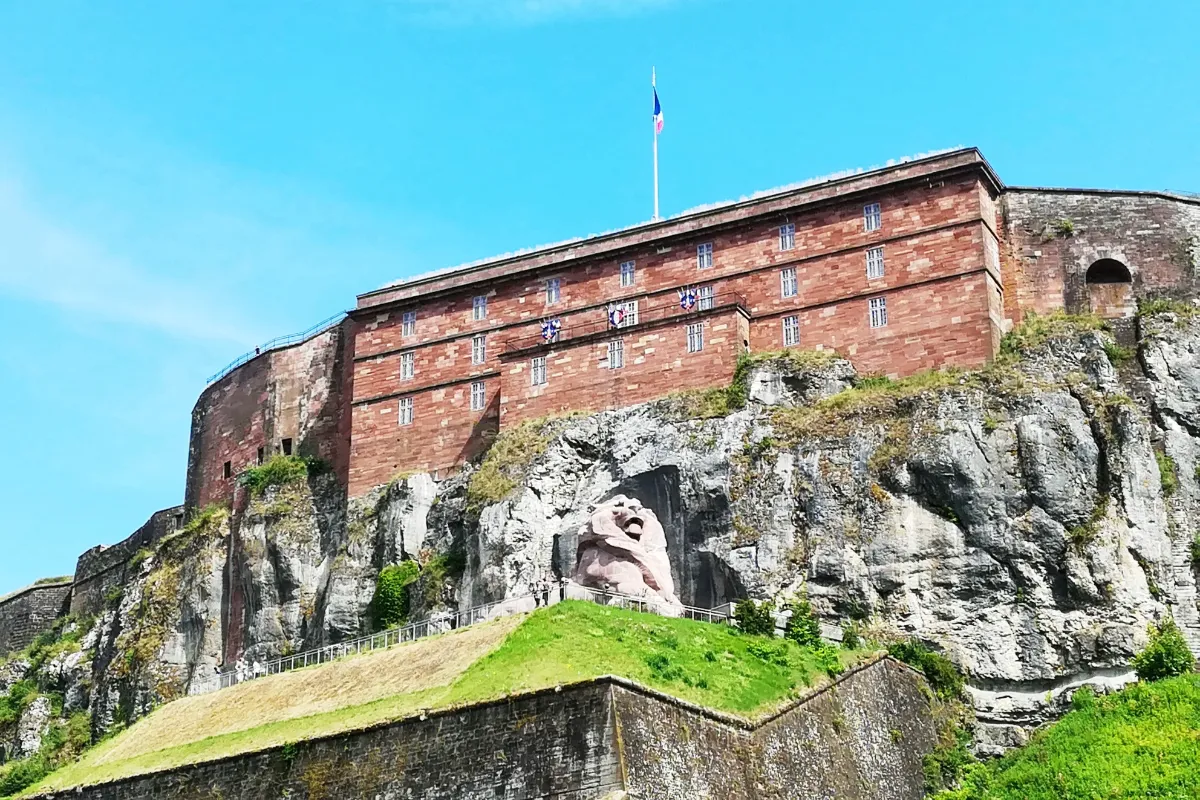
Belfort hasn’t forgotten its past as a fortified town. Set between the Vosges and Jura mountains, it once guarded a strategic passage between several regions of Europe. Above its colourful streets stands a mighty citadel, redesigned in the 17th century by Vauban.
At the foot of the fortress stands the impressive Lion of Belfort, a monumental sculpture carved into the rock in the late 19th century. Its creator, Frédéric Auguste Bartholdi, also designed New York’s Statue of Liberty. The lion commemorates the town’s resistance during the siege of 1870-1871, in the war between France and Prussia.
Down below, the old town contrasts with the stern military fortifications. Open squares, pastel-coloured façades and narrow streets make it a pleasant place to spend some time. From the heights, views stretch across the neighbourhoods and surrounding hills.
Museums, exhibitions and major music events bring life to a town that doesn’t just dwell on its military past. Save some time to explore the fortifications on foot. The views change as you go, and traces of military history can be seen in both the stonework and the landscape.
SMALL TOWNS (Village Feel)
| Name | Top+ | Top |
|---|---|---|
| Semur-en-Auxois | ☑️ | |
| Charité-sur-Loire | ||
| Tournus | ||
| Avallon | ||
| Louhans | ||
| Joigny | ||
| Luxeuil-les-Bains |
Semur-en-Auxois
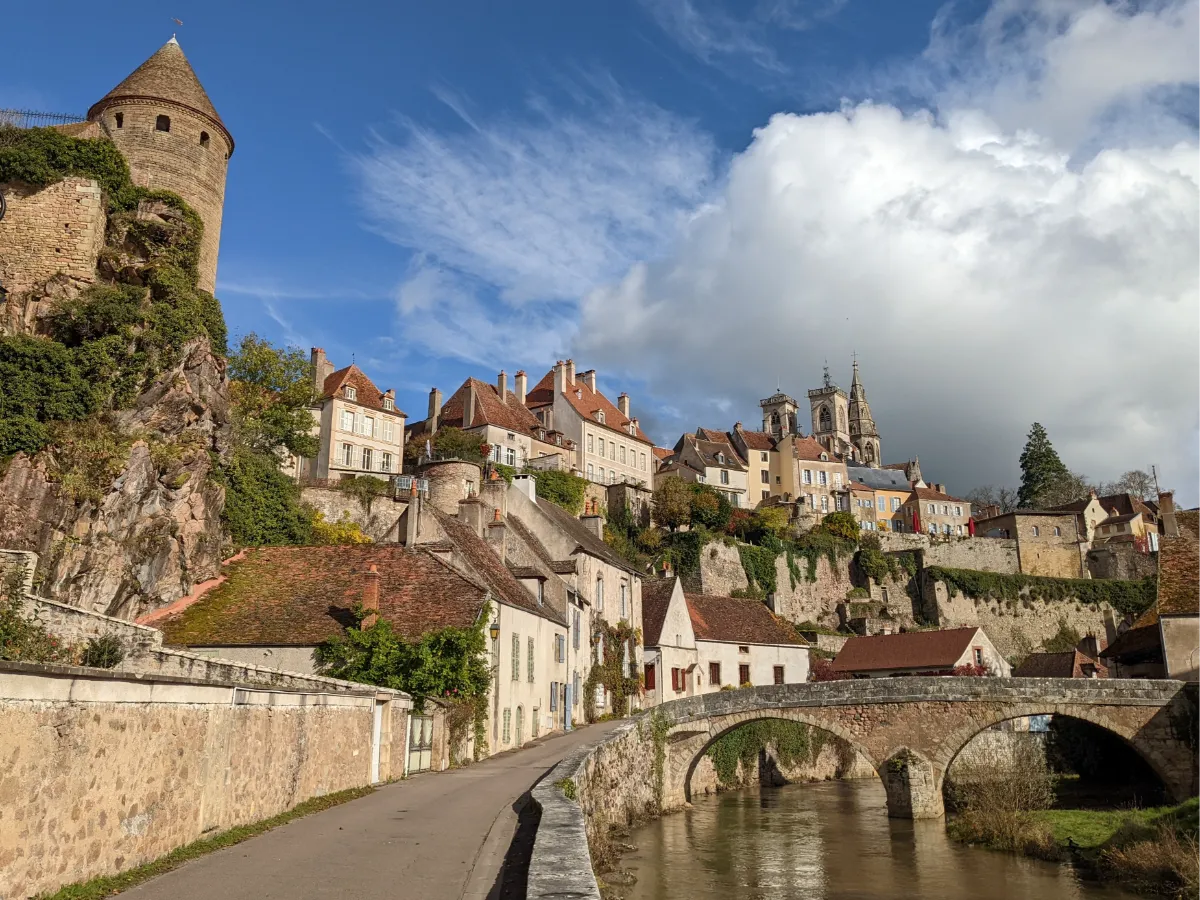
In Our Top ☑️
Perched on a rocky outcrop, Semur-en-Auxois looks like something straight out of a medieval fairy tale. Its four massive round towers rise above the Armançon River and the brown-tiled rooftops. To get the best sense of the setting, start with the viewpoints along the riverbanks before climbing the narrow streets to the upper town.
Behind the old fortifications, stone houses seem to huddle together. Notre-Dame Church is worth a stop for its sculptures and soaring architecture. Venture away from the busiest streets and you’ll discover stairways, little squares and hidden passages that recall the town’s defensive past.
Charité-sur-Loire
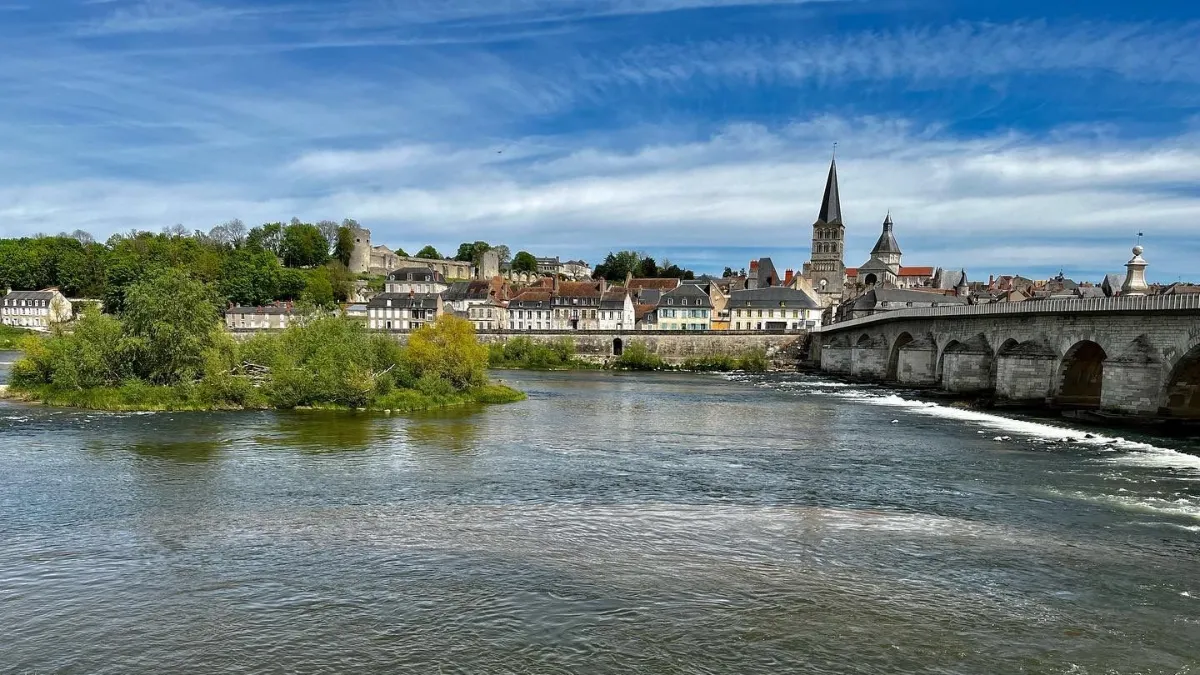
La Charité-sur-Loire developed around a large monastery founded in the 11th century, along the pilgrimage routes used by travellers heading to Spain. Its Notre-Dame Church, still impressive despite centuries of changes, reflects the religious power the town once held. Old lanes slope gently down towards the Loire, passing stone houses and stairways.
From the bridge, you get sweeping views of the rooftops, the church and the river’s broad sandy banks. The Loire still feels wild here, with its islands and birdlife. The town is also known for its books, literary gatherings and words painted on its walls.
Tournus
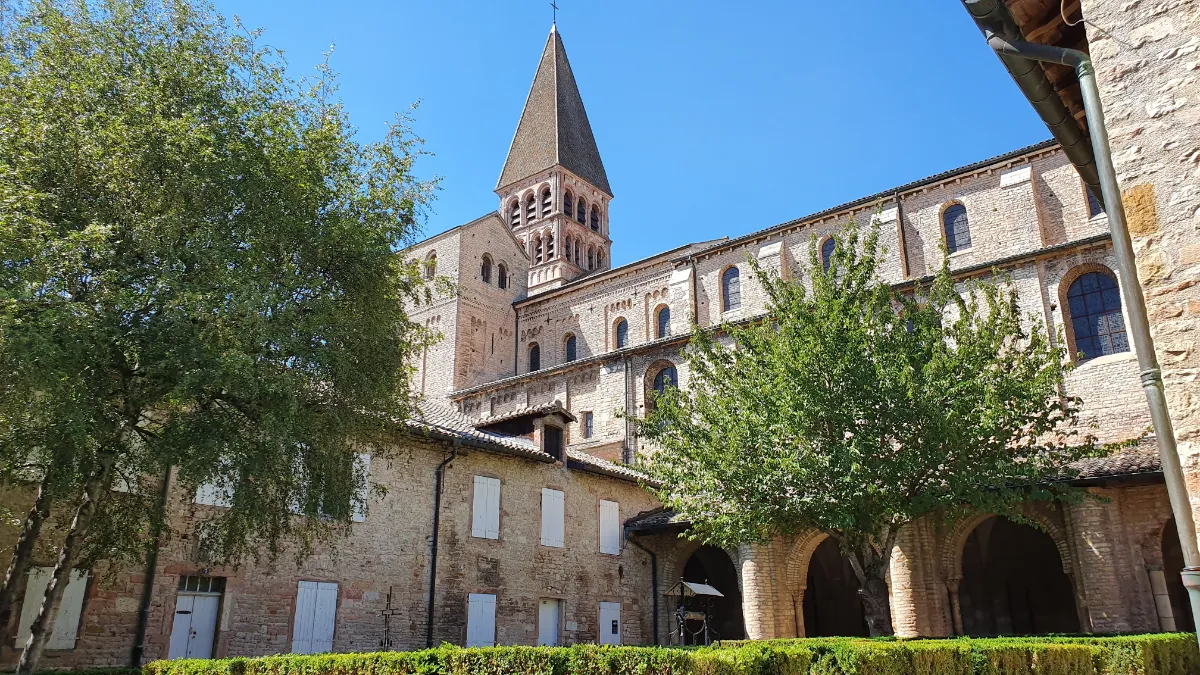
In Tournus, your first impressions are likely to come from the Saône River, which flows peacefully alongside the old town. But the real treasure lies a few streets away: Saint-Philibert Abbey. Built mainly in the 11th and 12th centuries, this great church is striking for its massive forms, high vaulted ceilings and softly lit interior.
Take your time exploring its ancient spaces, where the architecture tells the story of monastic life. Around the abbey, narrow streets reveal stone houses and tucked-away courtyards. Afterwards, the riverside quays are perfect for a stroll, with lovely views of the rooftops and church towers.
Avallon
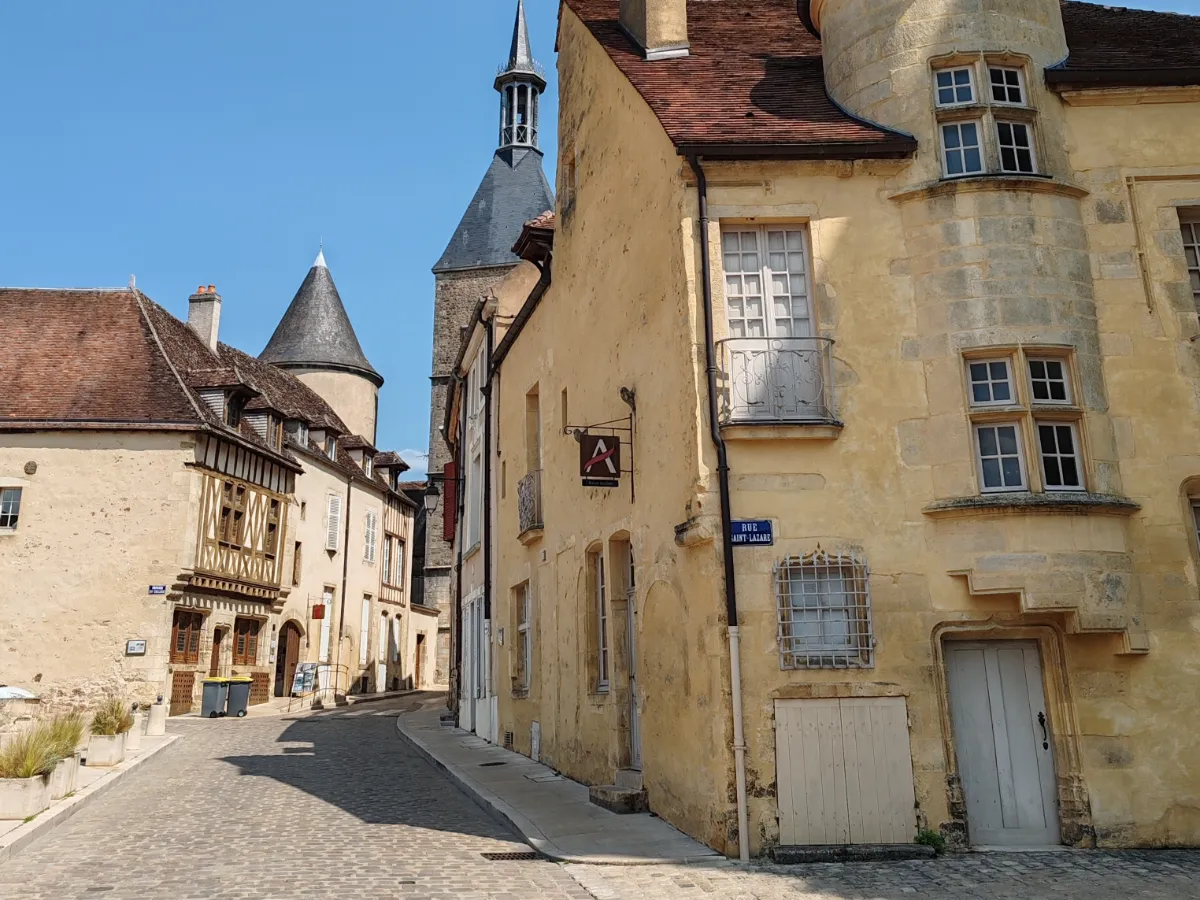
Avallon clings to a rocky spur overlooking the Cousin Valley. From its gardens and old ramparts, the views drop down towards the trees, river and wooded slopes below. The historic centre has kept a peaceful atmosphere, with its defensive towers, old houses and stone-paved streets.
Saint-Lazare Church is particularly striking for its richly carved entrances, reminders of medieval craftsmanship. Further on, leafy walking paths offer views across the surrounding countryside. Avallon also marks the transition towards the wilder landscapes of the Morvan, where forests and winding country roads gradually replace the broad agricultural plains.
Louhans
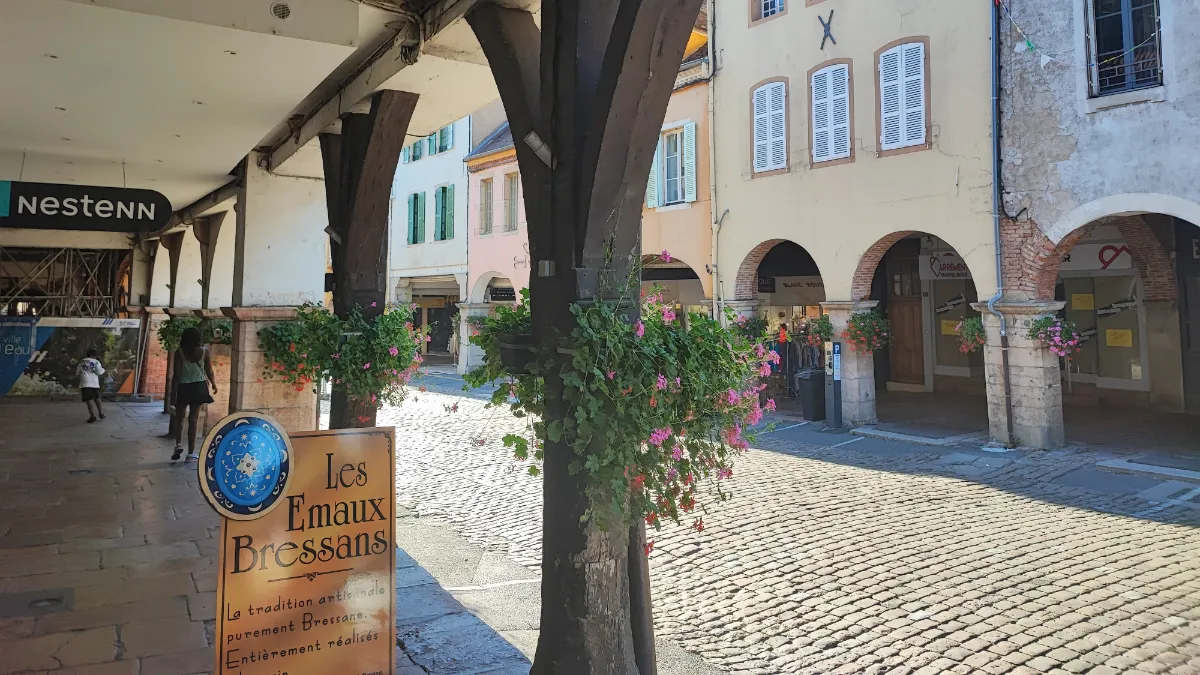
Louhans has a rather unusual feature: a long street lined with covered arcades supported by columns and wooden beams. These sheltered walkways have been used for trading for centuries. Today, they give the town centre a distinctive look, especially on market days, when the streets and squares come alive.
Every Monday morning, the traditional market still draws people from the surrounding countryside. Among its specialities are the famous Bresse chickens, raised in this region. The printing museum and old half-timbered houses offer more opportunities to discover a town deeply connected to its rural traditions.
Joigny
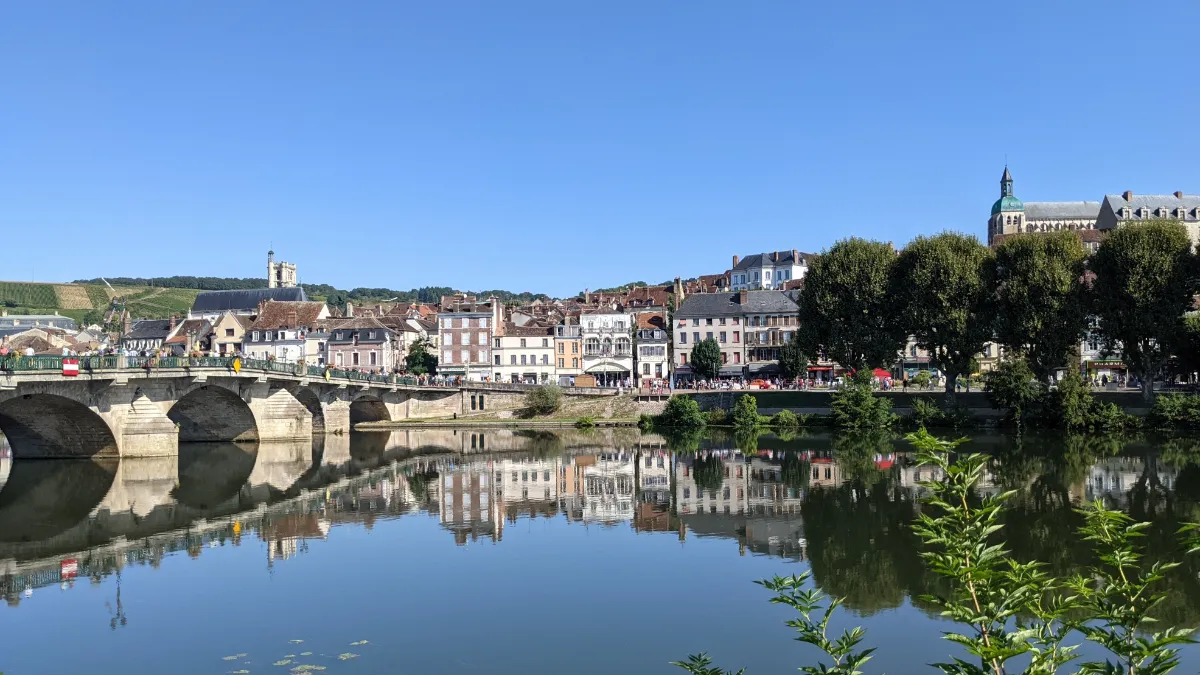
Joigny stretches along the Yonne River, at the foot of a vine-covered hill. In its old streets, the half-timbered façades are particularly impressive. Carved beams, overhanging upper floors and decorative details tell the story of the town’s former wealth. Some buildings date back to the 15th and 16th centuries.
Climb towards the higher neighbourhoods to discover the churches and enjoy views over the rooftops and river. The centre is compact enough to explore on foot, although some streets are seriously steep. Down on the quays, boats and reflections on the water give the walk a completely different atmosphere.
Luxeuil-les-Bains
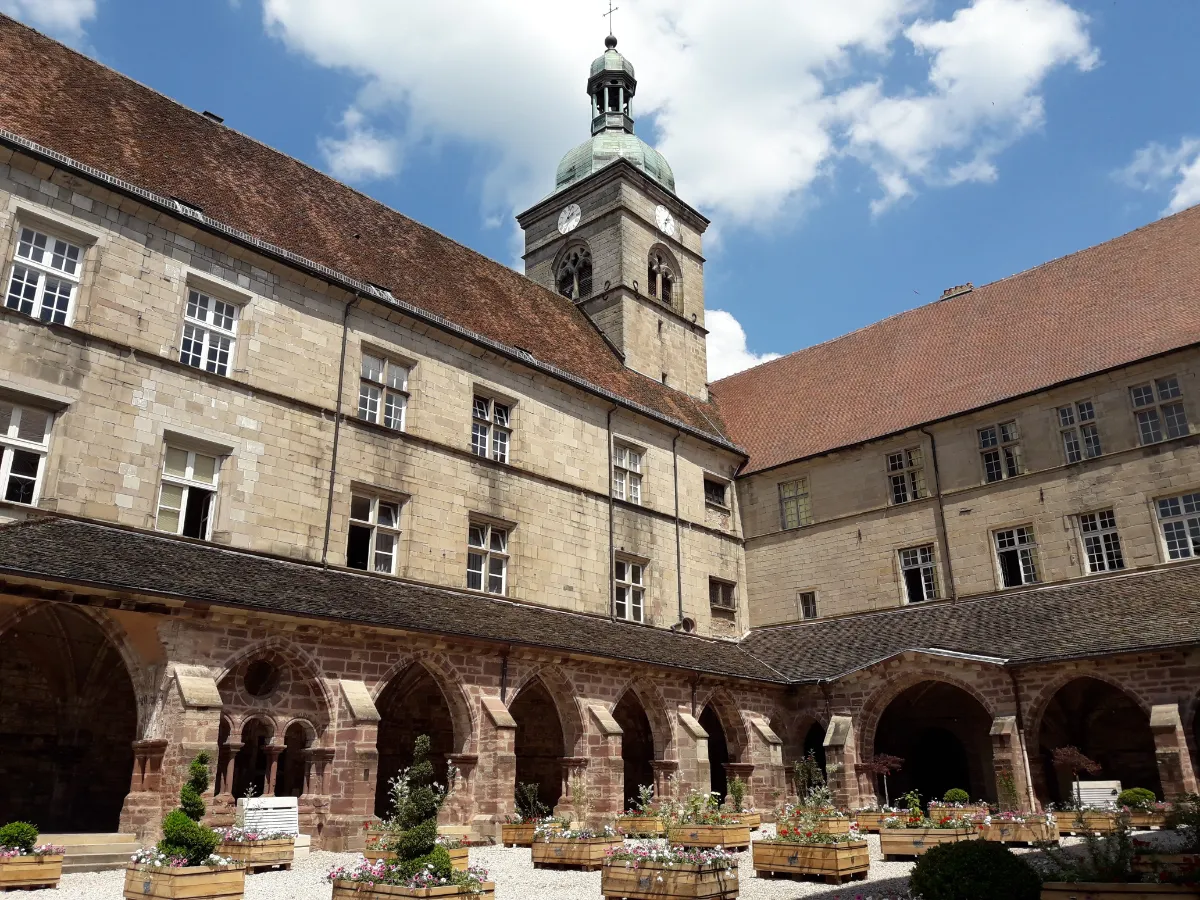
Despite its reputation as a spa town, Luxeuil-les-Bains hides a historic centre full of character. You’ll come across pink sandstone façades, beautiful houses from the 15th and 16th centuries and a tower rising above the rooftops. As you follow the old streets, take time to admire the carved windows and elegant details around the doorways.
The town also owes much of its fame to the Irish monk Columbanus, who founded a monastery here in the 6th century. Saint-Pierre Church and its cloister keep his memory alive. Even older remains have been discovered beneath the historic centre. And the naturally hot waters have been attracting visitors since Roman times.