




Provence was made for the open road. One bend reveals a limestone cove; the next leads through lavender country, ochre cliffs or a village balanced above the vineyards. This one-week Provence road trip gives you the region’s greatest contrasts without turning your holiday into a race.
The route starts and ends in Marseille, then links Cassis, Aix-en-Provence, Valensole, the Verdon Gorge, the Luberon, Avignon, the Alpilles, Arles and the Camargue. It is a genuine self-drive itinerary, designed for travelers exploring Provence by car. For broader preparation, begin with our complete Provence travel guide.
Provence Road Trip at a Glance
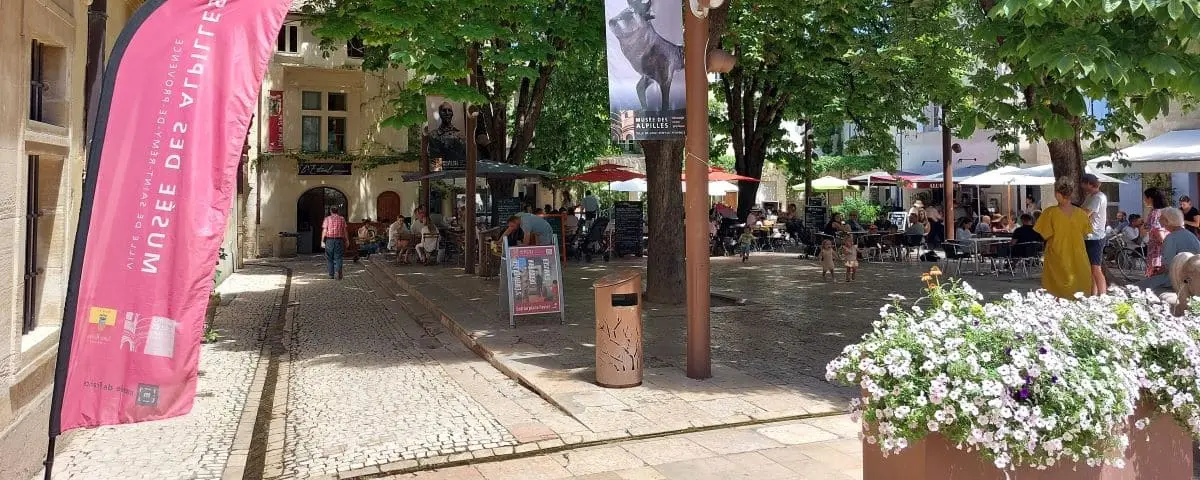
- Best route: Marseille, Cassis, Aix-en-Provence, Valensole, Moustiers-Sainte-Marie, Verdon Gorge, Roussillon, Gordes, Avignon, Saint-Rémy-de-Provence, Les Baux-de-Provence, Arles, Camargue, Marseille.
- Recommended duration: 7 days and 6 nights, with no fewer than four overnight bases.
- Approximate driving distance: 700 to 800 kilometers, or 435 to 500 miles, depending on scenic detours.
- Best arrival point: Marseille Provence Airport, where a rental car makes the loop straightforward.
- Best travel months: May, June, September and early October for pleasant weather and more manageable crowds.
- Lavender season: Usually late June to July, though flowering and harvest dates vary by altitude and weather.
- Best vehicle: A compact car, easier on village streets and in older parking areas.
- Main planning rule: Start early and protect time for slow stops, markets, viewpoints and long terrace lunches.
Route of Our 7-Day Provence Road Trip
The route forms a broad clockwise loop through southern Provence. From Marseille, you first follow the Mediterranean coast to Cassis. You then turn inland toward Aix-en-Provence, cross the lavender country around Valensole and reach the dramatic Verdon landscape. The second half moves west through the Luberon, Avignon and the Alpilles before dropping toward Arles and the Camargue.
Think of the itinerary as four connected landscapes: the coast, Haute-Provence, the hilltop villages and the Rhône delta. Each has a different rhythm. Cassis is bright and maritime. Valensole opens into wide agricultural plateaus. The Luberon is intimate, with lanes, dry-stone walls and villages clustered on ridges. The Camargue ends the trip with horizon, marshland and wind.
Use our Provence tourist map alongside your navigation app. A digital route is useful for traffic, but a regional map gives you the larger picture and makes spontaneous detours easier to understand.
Provence Road Trip Route and Daily Stops
The itinerary is organized to reduce backtracking while keeping the most demanding scenic roads in daylight. You will change atmosphere almost every day, but you should not change hotels every night unless you enjoy packing more than traveling.
Day 1 runs from Marseille to Cassis. Day 2 combines the Calanques area, the Route des Crêtes when accessible, and Aix-en-Provence. Days 3 and 4 are devoted to Valensole, Moustiers-Sainte-Marie and the Verdon Gorge. Day 5 crosses to the Luberon. Day 6 joins Avignon to the Alpilles. Day 7 finishes in Arles and the Camargue before returning to Marseille.
The program includes many of the region’s essential experiences, but it does not pretend to exhaust Provence. Our guide to the best things to do in Provence is useful for choosing optional additions according to your interests.
Total Distance, Driving Time and Overnight Stops
Plan for roughly 700 to 800 kilometers, or 435 to 500 miles, over the full week. The exact figure depends on your accommodation, parking choices, Verdon circuit and Camargue detours. Daily driving generally remains between one and three hours, although the final day can be longer.
Driving time in Provence is deceptive. Fifty kilometers on an autoroute can pass quickly; fifty kilometers through the Verdon or Luberon can involve bends, cyclists, village traffic and repeated stops for photographs. Never build the day around the theoretical time shown by a route planner alone. Add at least 20 percent for parking, viewpoints and slower local roads.
A comfortable arrangement is:
- Night 1: Cassis or Aix-en-Provence, depending on your arrival time.
- Nights 2 and 3: Moustiers-Sainte-Marie or the Sainte-Croix area for the Verdon.
- Night 4: Gordes, Roussillon or another Luberon village.
- Night 5: Avignon, Saint-Rémy-de-Provence or Les Baux surroundings.
- Night 6: Arles, ideal for an early Camargue departure.
Your 7-Day Route Through Provence
Day 1: Start in Marseille and Drive to Cassis
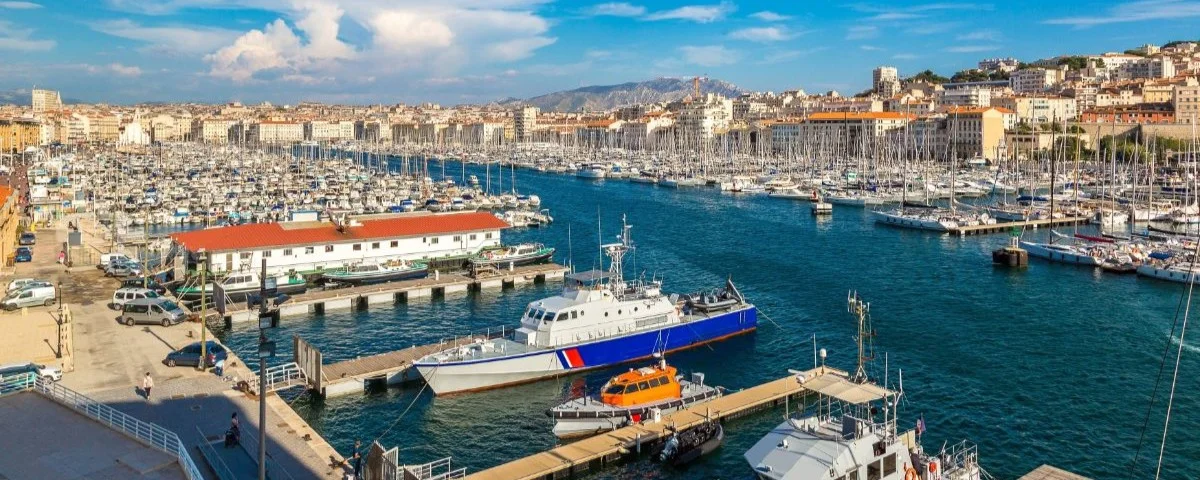
Marseille is not a city to judge through a windscreen. Park the car and walk. Begin around the Vieux-Port, where fishing boats, ferries, café terraces and the great sweep of the harbor immediately set the Mediterranean tone. Continue into Le Panier for steep lanes, old façades and small squares, or walk toward the Mucem and Fort Saint-Jean for sea views and contemporary architecture.
Give Marseille at least half a day if your flight arrives in the morning. The city rewards curiosity more than checklist sightseeing. A quick lunch might involve panisses, seafood or a simple plate on a terrace rather than a formal meal that consumes the afternoon.
The road to Cassis is short in distance, but avoid leaving Marseille at the busiest commuting time. Once in Cassis, park outside the compact center and descend on foot toward the harbor. Pastel houses line the water, cafés occupy the quays and Cap Canaille rises beyond the bay like a wall of ochre and limestone.
Spend the late afternoon walking through the old center and along the waterfront. If energy remains, follow part of the coastal path toward Port-Miou. Do not attempt a major Calanques hike late in the day, especially in warm weather or when access rules are restrictive. Save the serious walking for the morning.
Dinner in Cassis should stay close to the sea. Fish, grilled vegetables and chilled local white wine suit the setting better than an overcomplicated tasting menu. The harbor can be busy and expensive, so compare menus and consider streets slightly removed from the waterfront.
Our recommendation: sleep in Cassis when you want an early coastal start. Sleep in Aix-en-Provence only if your arrival is late and the Calanques are not a priority. Travelers who enjoy comparing regional urban characters can explore our guide to Provence cities and towns.
Day 2: Explore the Calanques, Route des Crêtes and Aix-en-Provence
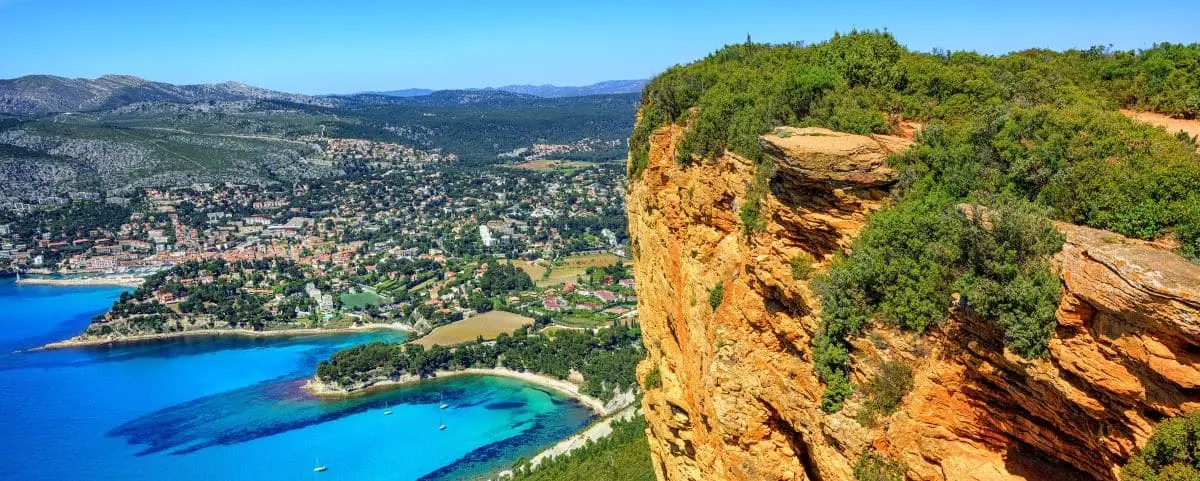
Rise early. The Calanques are beautiful, but they are not a casual urban park. The limestone terrain is stony, shade is limited and summer access may be controlled because of heat, fire risk or overcrowding. Check official access conditions before setting out, carry plenty of water and wear proper walking shoes.
From Cassis, Port-Miou is the natural gateway. A shorter outing can combine Port-Miou and Port-Pin, while stronger hikers may continue farther if conditions, time and regulations permit. The sea appears almost unreal between the white rock walls, but the route demands attention. Our overview of Provence hikes will help you choose a walk suited to your level.
Return to Cassis for lunch, then drive toward La Ciotat by the Route des Crêtes if it is open and weather conditions allow. This road climbs above Cap Canaille and offers some of the finest coastal viewpoints in Provence. It is exposed, winding and not a place for hurried driving. Treat the Route des Crêtes as an experience, not merely a shortcut.
Continue inland to Aix-en-Provence. The transition is striking: fishing harbor and cliffs give way to plane-tree avenues, pale stone and elegant squares. Leave the car in a central parking facility and explore on foot. Cours Mirabeau provides the grand introduction, but Aix becomes more appealing in the smaller streets north of the avenue, where fountains, markets and shaded squares create a calmer rhythm.
Cézanne’s presence is never far away. You can visit locations associated with the painter or simply watch the evening light touch the stone façades. Sainte-Victoire rises outside the city and will tempt walkers, but this seven-day itinerary does not have room for a full mountain hike unless you shorten the coast or Verdon section.
Spend the night in Aix or continue toward the Valensole area if you prefer a quieter morning on Day 3. Aix offers more restaurants and nightlife; a rural stop reduces the next day’s drive. The decision depends on whether you value evening atmosphere or an early start among the fields.
Day 3: Drive Through Valensole to Moustiers-Sainte-Marie
Leave Aix early and head northeast into Haute-Provence. The city gradually falls away, the land opens and the road begins to feel more spacious. Around Valensole, fields spread across a broad plateau framed by distant mountains. In lavender season, the geometric purple rows dominate the scene; outside flowering season, cereals, almond trees and changing light still make the drive worthwhile.
Valensole is not only a lavender photo stop. Pause in the village, buy something from a local producer and notice how agriculture shapes the entire plateau. Lavender oil, honey and almonds make better memories when purchased with some understanding of where they come from.
Photograph fields respectfully. Use proper pull-offs, never block farm access and do not step between rows without permission. The land is working farmland, not an open-air studio. A good road trip should leave farmers with nothing to complain about except the weather.
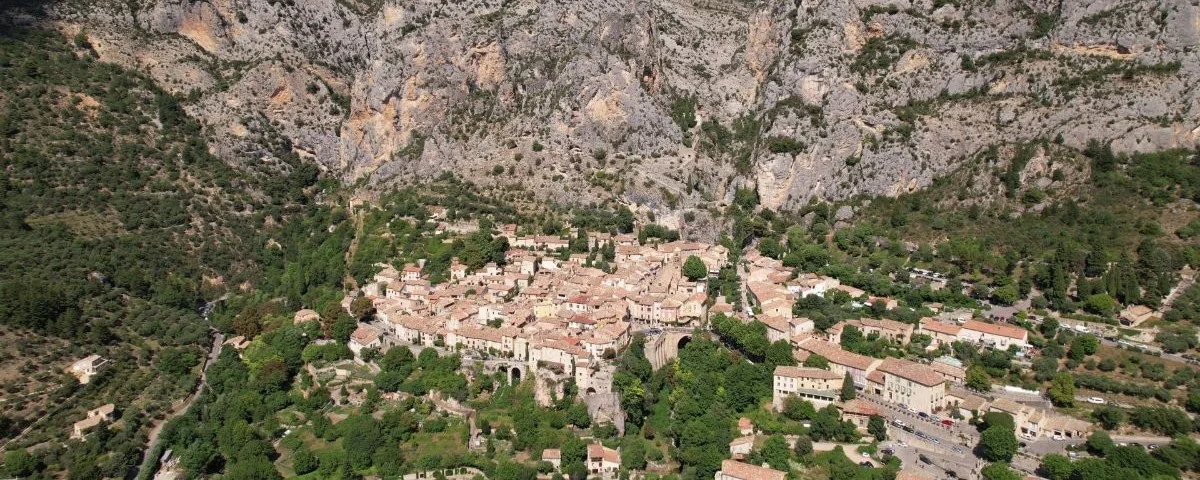
Continue south toward Moustiers-Sainte-Marie. The approach is one of Provence’s theatrical arrivals: the village seems attached to the rock beneath two cliffs, with a star suspended above the ravine. Park below the historic center and climb through lanes, small squares and fountains. Moustiers is known for faience, and workshops or shops provide a welcome cultural counterpoint to the day’s landscapes.
Allow at least two hours for the village, more if you climb toward the chapel of Notre-Dame-de-Beauvoir. The steps are steep, particularly in heat, but the changing views justify the effort. Comfortable shoes matter here as much as they do in the Calanques.
Late in the afternoon, descend toward Lac de Sainte-Croix. Its turquoise water brings an almost alpine freshness to the journey. The Pont du Galetas area offers the classic view into the mouth of the Verdon Gorge, but it can be crowded. Visit late, when day-trippers begin to leave, or simply save the water for the following morning.
Sleep in Moustiers-Sainte-Marie for atmosphere or near Sainte-Croix for easier lake access. Moustiers is more romantic after sunset; lakeside accommodation is practical for kayaking or swimming. Book well ahead in summer, when this small area absorbs a very large number of visitors.
Day 4: Discover the Gorges du Verdon and Lac de Sainte-Croix

The Verdon deserves a full day. Trying to squeeze the gorge, lake and onward drive to the Luberon into one hurried schedule misses the point. Choose either a substantial scenic circuit or a major outdoor activity, then add the lake. Do not force everything into the same day.
For a road-focused day, follow the northern rim and explore sections of the Route des Crêtes around La Palud-sur-Verdon where access and direction rules permit. Viewpoints reveal the canyon in fragments: sheer limestone, a green ribbon of river and birds circling in the rising air. Distances are modest, but constant bends and stops make progress slow.
The road requires concentration. Drivers uncomfortable with exposed mountain roads may prefer selected viewpoints around Point Sublime, Moustiers and the lake rather than the entire circuit. A compact car and an unhurried pace make the Verdon considerably easier. Let faster local traffic pass when safe, and never stop outside marked areas for a photograph.
Hikers can consider a shorter marked walk or a carefully planned section of a longer route. The famous Blanc-Martel trail is a serious outing requiring logistics, time, water and suitable conditions; it does not combine neatly with a complete driving circuit. In a one-week itinerary, select it only if hiking is one of your central reasons for visiting Provence.
For a gentler experience, rent a kayak, canoe or electric boat near the Pont du Galetas and enter the lower gorge from Lac de Sainte-Croix. From water level, the limestone walls feel higher and the color of the lake changes with every cloud. Go early for calmer conditions and easier parking. Swimming afterward turns the day into a welcome pause from constant sightseeing.
Return to the same accommodation for a second night. This is one of the itinerary’s most important design choices. No packing, no evening transfer and no pressure to leave the gorge before you are ready. Buy a picnic, linger over dinner and enjoy the silence once most vehicles disappear.
Day 5: Visit Roussillon, Gordes and the Villages of the Luberon
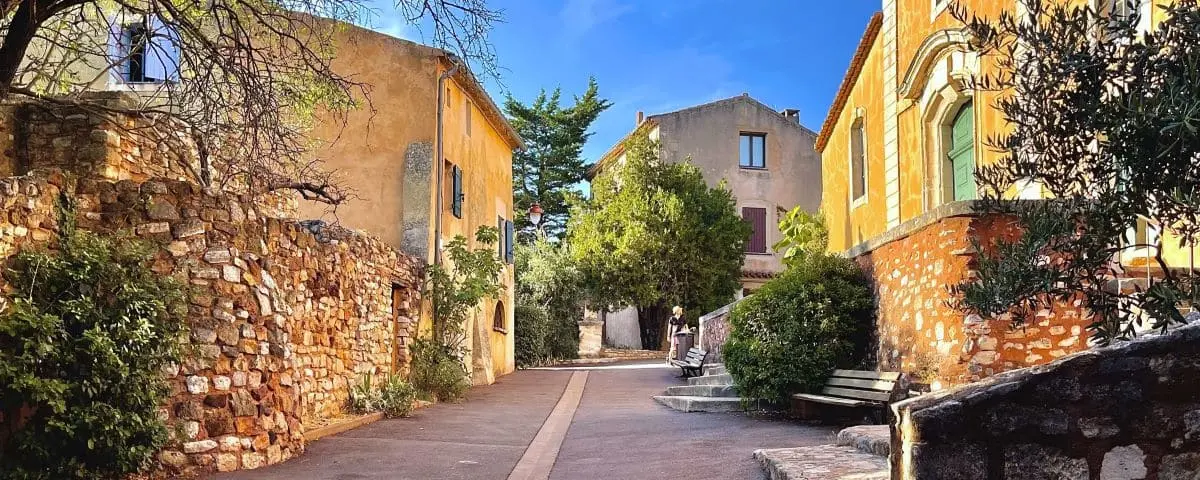
Today is the longest transition through inland Provence, so start early. Drive west from Moustiers through the landscapes of the lower Verdon and toward Apt or Roussillon. The road changes gradually from open plateau to the more enclosed, cultivated country of the Luberon.
Roussillon makes a vivid first stop. Its houses borrow their colors from the surrounding ochre, shifting from yellow and orange to deep red. Walk the village before visiting the nearby ochre trail if it is open. Arrive early, because Roussillon’s beauty is easier to appreciate before tour groups and midday heat fill the lanes.
Wear shoes that can tolerate colored dust. The ochre clings cheerfully to pale soles and clothing, a small souvenir that no gift shop can improve. After the trail, wander through the village rather than rushing straight back to the car. Terraces around the upper streets offer views across the Luberon countryside.
Continue to Gordes, one of the most celebrated villages in Provence. Stop first at the roadside viewpoint facing the village, then park and explore on foot. Gordes rises in tiers above the valley, all pale stone, steep lanes and rooftops. Its reputation brings crowds and polished prices, but the setting remains exceptional.
From Gordes, detour to the Abbaye de Sénanque if time, opening conditions and traffic permit. The abbey is most photographed when lavender blooms in front of its stone walls, yet the site retains a quiet architectural power throughout the year. Respect silence, private areas and any restrictions around the fields. This is a living religious site, not simply a postcard background.
Do not attempt every famous Luberon village in one afternoon. Bonnieux, Lacoste, Ménerbes and Lourmarin are all rewarding, but adding them all produces a day spent entering and leaving parking lots. Choose one according to your route and interests. Bonnieux offers broad views, Lacoste has a dramatic hillside profile, Ménerbes is compact and refined, while Lourmarin lies farther south with a livelier village atmosphere.
Sleep in or near Roussillon, Gordes or Bonnieux if you want a rural evening. Stay in Avignon if you prefer a larger choice of restaurants and an early start for the Palais des Papes. For this itinerary, a Luberon night is usually more memorable, provided you book dinner and accommodation in advance.
Day 6: Explore Avignon, Saint-Rémy-de-Provence and Les Baux-de-Provence
Drive to Avignon in the morning and park outside or beneath the historic center. Once inside the walls, the car becomes useless. Avignon is a city of stone, narrow streets and sudden open squares, dominated by the Palais des Papes and the Rocher des Doms above the Rhône.
Make the Palais des Papes your priority, especially if this is your first visit. Its scale tells the story before any guidebook does. The interiors can appear austere, but understanding Avignon’s period as a center of papal power transforms the visit. Afterward, walk toward the famous bridge and the gardens above the river.
Lunch in Avignon, then leave for Saint-Rémy-de-Provence. The drive introduces the Alpilles, a compact range of pale, jagged rock surrounded by olive groves and vineyards. Saint-Rémy has an attractive center, cafés, shops and strong associations with Vincent van Gogh. If Roman history interests you, the archaeological site of Glanum lies just outside town.
A few regional fun facts about Provence add useful context here: Roman remains, papal history, artists and local traditions overlap within surprisingly short distances. Provence is not a single landscape or historical period, but a series of layers. Day 6 makes that especially clear.
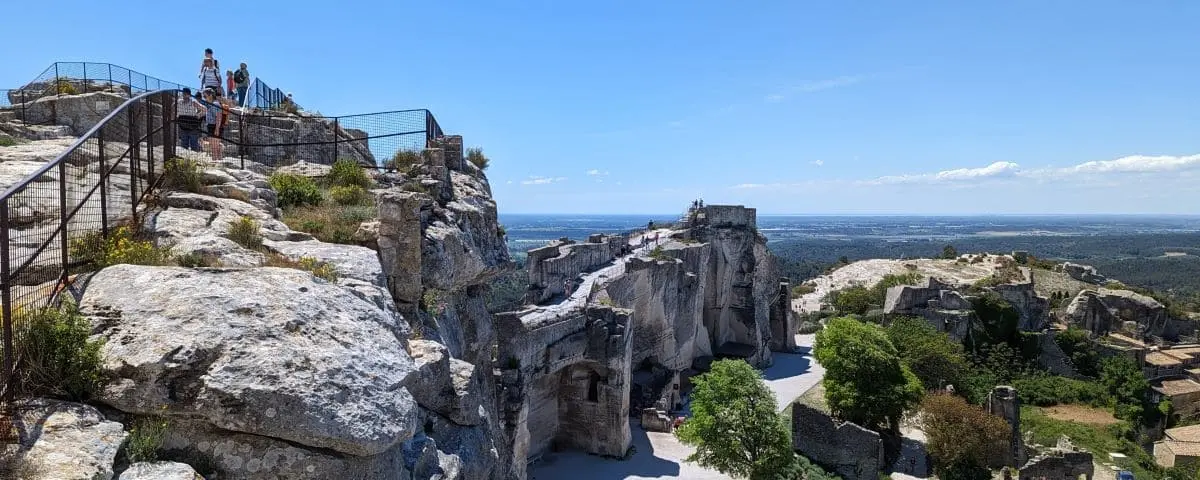
Continue to Les Baux-de-Provence in the late afternoon. The village occupies a rocky spur above the Alpilles and appears almost carved from the stone. Arriving later helps you avoid the busiest hours and gives the landscape warmer light. Walk up through the old village and, if time allows, visit the castle area for far-reaching views.
The Carrières des Lumières, near the village, offers immersive digital exhibitions inside former quarries. It can be spectacular, but it requires a timed visit and may not fit comfortably after a full morning in Avignon. Choose it only by shortening another stop. The better itinerary is selective, not greedy.
Spend the night in Saint-Rémy, around Les Baux or in Arles. Saint-Rémy is polished and convenient, rural properties around the Alpilles offer quiet, and Arles positions you perfectly for the final day. We usually favor Arles when the Camargue is non-negotiable.
Day 7: Visit Arles and the Camargue Before Returning to Marseille
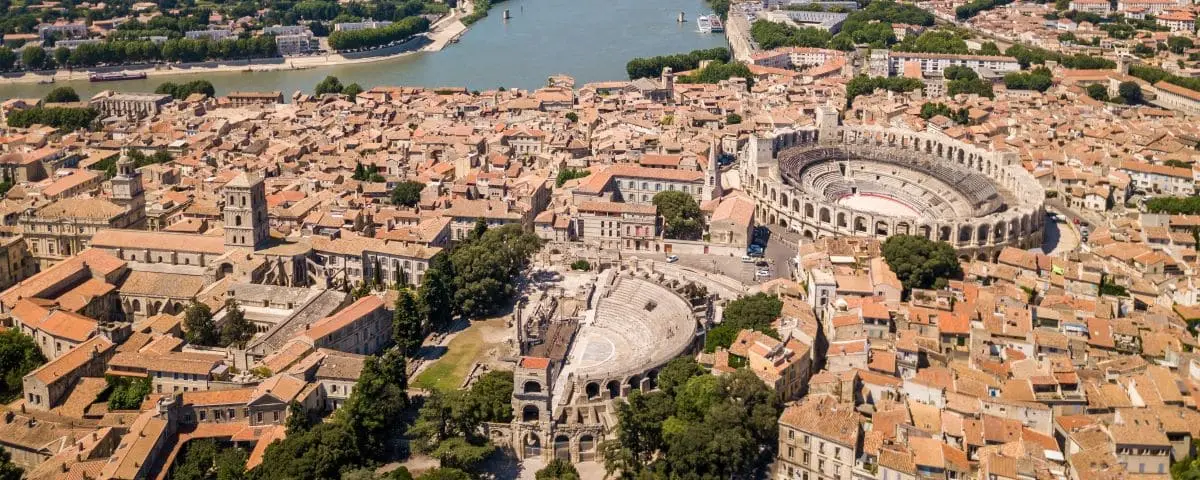
Begin early in Arles. The old center is compact enough for a rewarding two or three-hour walk, yet its monuments reveal an extraordinary depth of history. Start with the Roman amphitheater, continue toward the ancient theater and then wander through streets and squares associated with Van Gogh.
Arles deserves more than a photograph of the arena. Its charm lies in the meeting of Roman stone, medieval lanes, southern light and contemporary culture. Market day adds color and appetite, although it also complicates parking. Leave your car in a suitable lot outside the tightest historic streets.
By late morning, drive south into the Camargue. The land flattens and the sky seems to grow. Wetlands, rice fields, grazing horses, black bulls and birdlife replace the rocky landscapes of the previous days. This is a fragile working environment, not an amusement park, so drive slowly and stay on permitted roads and paths.
Choose one main Camargue experience. Birdwatchers can focus on wetland reserves and observation areas. Families may enjoy a guided visit connected with local horse or bull traditions. Others will prefer the road to Saintes-Maries-de-la-Mer, followed by a walk near the sea. Do not chase flamingos from viewpoint to viewpoint. Pick one well-managed natural site and give it time.
A horseback ride can be memorable, particularly outside the hottest part of summer, but select a responsible operator suited to your ability. Cycling is another good way to experience the flat landscape when wind conditions are reasonable. Bring water, sun protection and insect repellent.
Allow approximately two hours for the return to Marseille, more during busy traffic periods or after a long detour. Refuel before returning the rental car and photograph the vehicle, fuel gauge and parking position. Plan to reach the airport at least three hours before an international flight, with extra margin for rental return procedures.
If your flight leaves the following morning, spend the final night near Marseille or the airport instead of driving directly from the Camargue under time pressure. The last evening is better with a relaxed meal than with one eye fixed on the clock.
Where to Stay During Your Provence Road Trip
Where to Stay in Cassis or Aix-en-Provence
Choose Cassis for the sea, early Calanques access and evening harbor atmosphere. It is the better first-night base when you arrive before midday and want Day 2 to begin outdoors. Rooms are limited and summer prices can be high, so reserve early.
Choose Aix-en-Provence for restaurant choice, elegant evening streets and easier onward travel. Cassis is best for scenery; Aix is best for urban comfort and logistics. Parking is important in both places, so confirm whether your accommodation includes a space or recommends a nearby facility.
Where to Stay Near Moustiers-Sainte-Marie and the Verdon Gorge
Moustiers-Sainte-Marie offers the strongest sense of place. Once day visitors leave, the lanes become calmer and the cliffs darken above the rooftops. It is ideal for couples and travelers who value atmosphere.
Accommodation near Lac de Sainte-Croix is more practical for early water activities, while La Palud-sur-Verdon suits hikers and drivers concentrating on the northern rim. Stay two consecutive nights in the Verdon area, even if that means accepting a slightly longer drive to one activity.
Where to Stay in the Luberon or Avignon
A village stay in the Luberon provides stone houses, countryside views and a quiet evening. Gordes is prestigious and expensive; Roussillon is colorful and compact; Bonnieux and nearby rural properties often offer a useful balance of location and charm.
Avignon works better for travelers who want hotel choice, museums and dinner without driving. Pick the Luberon for romance and Avignon for convenience. In rural areas, verify restaurant opening days and book dinner, especially outside the high season.
Where to Stay Near Arles and the Camargue
Arles is the most efficient base before the final day. You can visit its monuments early, leave the car parked overnight and enter the Camargue before the roads become busy. It also offers a wider range of accommodation than the smaller delta villages.
Saintes-Maries-de-la-Mer is preferable when the Camargue itself is a major focus and you have a late flight or an extra night. For this exact seven-day loop, Arles gives the best balance between culture, access and return time to Marseille.
When Is the Best Time for a Provence Road Trip?
Provence in Spring: Mild Weather and Fewer Crowds
April and May bring green landscapes, wildflowers and generally pleasant conditions for walking. Days are long enough for sightseeing, while major villages are usually less congested than in midsummer. Weather can still change, and the mistral may blow with enthusiasm.
May is one of the best all-round months for a Provence road trip. You will not see peak lavender, but you gain easier parking, comfortable hikes and a more relaxed experience in Cassis, the Luberon and the Verdon.
Provence in Summer: Lavender Fields and Peak Season
Late June and July attract travelers for lavender, long evenings and reliable sunshine. They also bring heat, higher prices, crowded villages and possible access restrictions in natural areas. August remains lively but can feel intense, especially on the coast and around the lake.
Start every summer day early and reserve accommodation, activities and key visits well ahead. Never assume that hiking routes, forest roads or scenic drives are open during high fire-risk periods. Check conditions locally before departure.
Provence in Fall: Harvests, Markets and Quieter Roads
September often combines warm days with softer light and fewer families traveling during school holidays. Read our guide to Provence in September for seasonal details. September is our favorite month for this driving itinerary, particularly for the Verdon, Luberon and Camargue.
October brings autumn color, grape harvest atmosphere and increasingly quiet villages. Our guide to Provence in October explains what remains open and how conditions change. November is calmer and more local, but days shorten and some seasonal businesses close; see Provence in November.
December can suit travelers interested in Christmas traditions, markets and cities rather than swimming or long mountain days. The Provence in December guide covers the seasonal character. For the full route described here, early fall is easier than late fall or winter.
Renting a Car and Driving in Provence
Where to Rent a Car for This Provence Road Trip
Marseille Provence Airport is the most straightforward pick-up point for a loop that starts and ends in Marseille. The airport avoids collecting a vehicle in the dense city center and offers direct access to the regional road network.
Book the car for the morning you leave central Marseille if you plan to spend a full day there first. A rental car is valuable for the regional circuit, but inconvenient inside Marseille, Aix, Avignon and Arles. In cities, park once and walk.
Check the fuel policy, deposit, insurance excess, mileage allowance and opening hours before payment. If you need an automatic, reserve early because availability can be more limited than for manual vehicles.
What Type of Rental Car Is Best for Provence?
A compact hatchback is the sensible default. It fits more comfortably on village streets, narrow rural roads and older parking spaces while still handling autoroutes and mountain routes. Large SUVs offer little advantage unless your group or luggage genuinely requires one.
Choose the smallest car that comfortably carries everyone and every suitcase. Soft bags are easier than rigid cases when trunk space is limited. Confirm air conditioning for summer travel and learn the basic controls before leaving the rental area.
An electric car can work if your accommodation provides reliable charging and you plan stops carefully. For a first one-week Provence road trip, however, a petrol or hybrid vehicle may simplify the Verdon and rural portions.
What to Know About Roads, Parking, Fuel and Tolls
Autoroutes are fast but often tolled. Secondary roads are slower and more scenic. Use the autoroute when it protects time, then leave it for the landscapes that justify the road trip. Do not avoid every toll only to spend an extra hour in traffic or on unremarkable roads.
In historic towns, follow signs to official parking rather than attempting to reach your hotel door. Cassis, Gordes, Roussillon, Moustiers and Les Baux can all become congested. Park below or outside the center and walk uphill.
Fuel is easy to find around larger towns but less convenient late at night in rural areas. Refill before entering the Verdon or returning a rental car. Keep a payment card with a PIN, and do not wait until the warning light appears.
French driving is generally straightforward, but roundabouts, changing speed limits and priority rules require attention. Avoid alcohol when driving, keep valuables out of sight and never leave passports in the vehicle. The safest Provence road trip is the one with generous time margins and no rushed scenic roads.
How Much Does a 1-Week Provence Road Trip Cost?
Estimated Budget for Car Rental, Fuel, Hotels and Activities
Costs vary sharply by season. For two people sharing a room, a realistic mid-range budget is often built around four major categories: rental car and insurance, fuel and tolls, accommodation, and food or activities. Summer prices can be substantially higher in Cassis, Gordes and the Verdon.
As a planning framework, allow €70 to €140 per day for accommodation, more in sought-after villages; €40 to €80 per person per day for food; and a combined allowance for rental, fuel, tolls and parking based on your booking dates. Activities such as kayaking, museums and guided rides should be added separately.
Budget for convenience, not only for the lowest headline price. A hotel with parking or a well-located two-night stay can save time, fuel and frustration.
How to Save Money on Your Provence Road Trip
Travel in May, September or early October, reserve early and compare accommodation outside famous village centers. A guesthouse ten minutes from Gordes may offer better value than a room inside the village.
Buy breakfast or picnic supplies from bakeries and markets, then spend selectively on memorable dinners. Use free viewpoints, village walks and beaches alongside paid monuments. The easiest savings come from timing and location, not from removing every pleasure from the trip.
Avoid unnecessary one-way rental charges by completing the loop at the same location. Choose a compact car, limit hotel changes and use toll roads strategically rather than automatically.
How to Customize This Provence Road Trip Itinerary
How to Make the 7-Day Route Slower and More Relaxed
The route is achievable, but it is active. To slow it down, remove either Marseille’s half-day visit, the Route des Crêtes, Avignon or the Camargue. Do not remove a full Verdon night, since that creates more driving rather than less.
The gentlest version uses three bases: Cassis or Aix, Moustiers, and the Luberon or Avignon, followed by one final night in Arles. Choose one major activity and one town per day, then leave space for lunch and unplanned stops.
Travelers who dislike changing hotels can spend three nights near Aix, two near the Luberon and one in Arles, accepting longer day trips in exchange for less packing.
How to Extend the Road Trip to 10 Days
With three extra days, add one night in Marseille, one in the Verdon and one in the Luberon or Camargue. This allows a proper Calanques hike, a full Verdon activity day and a less compressed exploration of the hilltop villages.
You could also include Lourmarin, Ménerbes, Fontaine-de-Vaucluse, Pont du Gard or more of the Camargue. A ten-day Provence itinerary should deepen the route rather than merely stretch it farther. Avoid adding the French Riviera unless you are comfortable with a faster trip.
Travelers who prefer public transport can compare this circuit with our 7-day Provence itinerary by train, which necessarily favors cities and rail-connected stops.
Provence Road Trip FAQ
Is One Week Enough for a Provence Road Trip?
Yes, one week is enough for a rewarding first road trip if you accept that Provence cannot be completed like a collection. This itinerary covers the coast, the Verdon, the Luberon, Avignon, the Alpilles, Arles and the Camargue.
Seven days are enough for the highlights, but not for every village, hike, market and museum. The route works because it makes choices. Travelers who prefer long hikes, winery visits or slow mornings should remove one region or extend the trip.
How Many Kilometers/Miles Will You Drive in One Week?
Expect approximately 700 to 800 kilometers, or 435 to 500 miles, including scenic loops and local detours. Your exact total will depend on hotel locations, parking, the Verdon route and how far you explore the Camargue.
The raw distance is not excessive for seven days, but the nature of the roads matters. Plan for slower progress in the Verdon, Luberon, Cassis area and Alpilles, where bends, viewpoints and village traffic add time.
Where Should You Start and End the Road Trip?
Marseille is the most logical start and finish for travelers arriving by air or high-speed train. It offers major rental facilities and places Cassis at the beginning of a clockwise loop.
Nice can work for a longer southeastern route, while Avignon is practical for travelers arriving from Paris by train. For the exact itinerary in this article, starting and ending in Marseille minimizes backtracking and keeps the final Camargue transfer manageable.
Wrap-Up: Planning the Perfect Provence Road Trip
- Follow a clockwise loop from Marseille to keep the route logical and reduce unnecessary backtracking.
- Reserve two nights near the Verdon, the one part of the itinerary that should never be rushed.
- Choose a compact rental car and park outside historic centers rather than forcing your way through narrow streets.
- Start early in Cassis, Valensole, Roussillon and the Camargue for easier parking, cooler conditions and quieter landscapes.
- Select rather than collect: one meaningful village, walk or activity is better than five hurried stops.
- Check local access conditions before natural sites and scenic roads, particularly in summer and during strong wind or fire risk.
- Aim for May, June, September or early October unless lavender flowering is your overriding priority.
- Leave room for Provence itself: a market conversation, an unplanned viewpoint and a long lunch often become the best memories.
A successful Provence road trip is not measured by the number of pins removed from a map. It is measured by how often you were willing to stop, look and let the landscape set the pace.