




Nîmes is one of those cities that makes a single day feel surprisingly generous. Roman arches rise beside café terraces, medieval lanes lead toward an immaculate ancient temple, and a formal garden climbs to a tower overlooking the red roofs of the city. This Nîmes 1 day itinerary follows the most logical walking route, balancing major monuments with old-town atmosphere, lunch and a quieter afternoon among fountains and trees.
Nîmes 1 Day Itinerary at a Glance
This route starts at Nîmes Centre station, reaches the Arena, crosses the historic center, and finishes at the Jardins de la Fontaine and Tour Magne. It avoids backtracking and focuses on the places that best explain Nîmes.
- Start with the Arena of Nîmes, the city’s most spectacular Roman monument.
- Add the Musée de la Romanité when you want context, mosaics and a deeper understanding of ancient Nemausus.
- Cross the Old Town on foot, passing lively squares, the cathedral and local shops.
- Stop for lunch in the historic center, rather than leaving the walking route.
- Continue to the UNESCO-listed Maison Carrée, Nîmes at its most elegant.
- Finish in the Jardins de la Fontaine, with the Temple of Diana and Tour Magne.
- Allow a full sightseeing day, but shorten the museum visit if your pace is relaxed.
For a broader overview before choosing your priorities, our guide to the best things to do in Nîmes places the main sights in context.
Before You Start This Nîmes Walking Itinerary

Where to Start and Finish the Route
Nîmes Centre station is the best starting point for this itinerary. From the station, Avenue Feuchères creates a direct and handsome approach to the historic center. The Arena appears at the end of the avenue, so the city delivers its biggest visual surprise almost immediately.
The route finishes at Tour Magne, above the Jardins de la Fontaine. From there, walk back through the gardens and Old Town, return to the station, or settle on a terrace. The day follows a clean line through the city, not disconnected detours.
This route remains pleasant through most travel seasons.
Keep our Nîmes tourist map open on your phone. It is especially useful inside the Old Town, where wandering is enjoyable but street names and small squares can blur together.
Walking Distance, Visit Duration and Tickets
Nîmes is compact, and the essential route is comfortable on foot for most travelers. The main challenge is the gradual climb through the upper gardens toward Tour Magne. Wear comfortable shoes, particularly on warm days.
A complete day usually includes two substantial visits, the Arena and Musée de la Romanité, followed by shorter stops. Maison Carrée and Tour Magne may also involve admission. Reserve most of your time for the Arena, museum and gardens.
Opening arrangements can change during festivals, performances or restoration work. Check official monument pages shortly before visiting, especially if an interior visit is essential to you.
Morning: Arena of Nîmes and Musée de la Romanité
Walk from Nîmes Centre Station to the Arena
Leave the station by the main exit and follow Avenue Feuchères. The broad perspective, fountains and pale façades make this more than a practical transfer. It is the city’s ceremonial introduction, drawing your eye toward the Arena rather than hiding the center behind traffic.
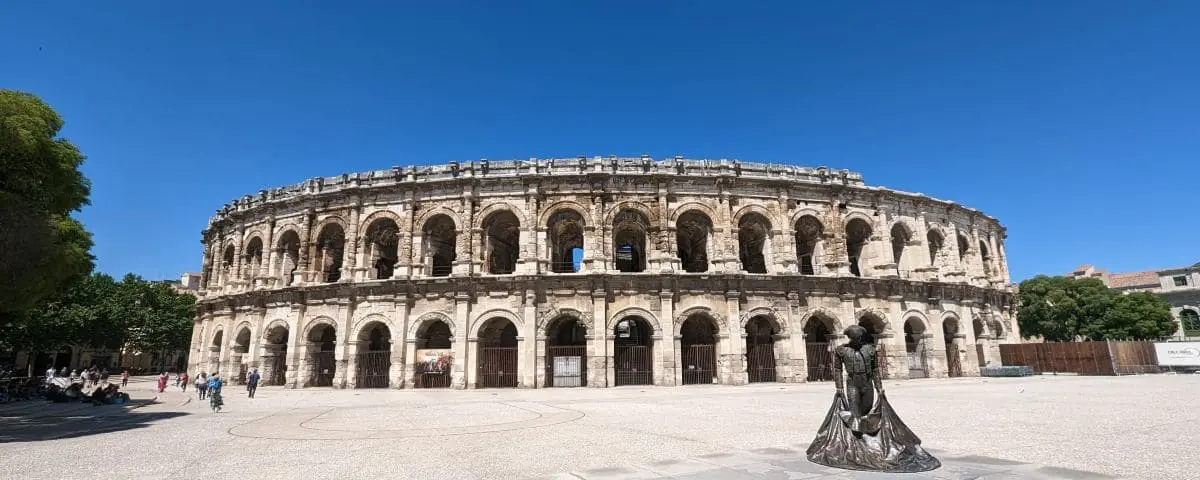
Near Esplanade Charles-de-Gaulle, cafés open onto the pavement and the amphitheatre suddenly fills the view. Walk around its exterior before entering. The repeating arches and massive oval form are best understood from several angles.
This first walk also confirms why Nîmes works so well as a day trip. The station, Roman monuments and pedestrian streets sit close enough together that little time is lost in transit.
Visit the Arena of Nîmes
The Arena is the monument that gives Nîmes its immediate sense of grandeur. Built in the Roman period for public spectacles, it remains remarkably complete and still serves as a venue. Begin here because the amphitheatre provides the strongest introduction to Roman Nîmes.
Inside, galleries, stairways and seating levels reveal Roman engineering. The structure moved large crowds efficiently while separating spectators by social rank. Climbing through the passages turns an impressive façade into a comprehensible building.
Pause in the vaulted corridors, where stone, shade and echoes create a more intimate impression. Then climb toward the upper seating to appreciate the scale and modern city. From above, ancient Nemausus and present-day Nîmes occupy the same frame.
The Arena later became a fortified settlement before returning to public use. That complicated afterlife is important: the building survived not because it was untouched, but because generations repeatedly adapted it.
Travelers comparing the city with nearby Arles can read our detailed guide to Arles or Nîmes. Choose Nîmes for a concentrated Roman route and monumental impact; choose Arles for a more atmospheric blend of antiquity, art and Provençal streets.
Explore the Musée de la Romanité
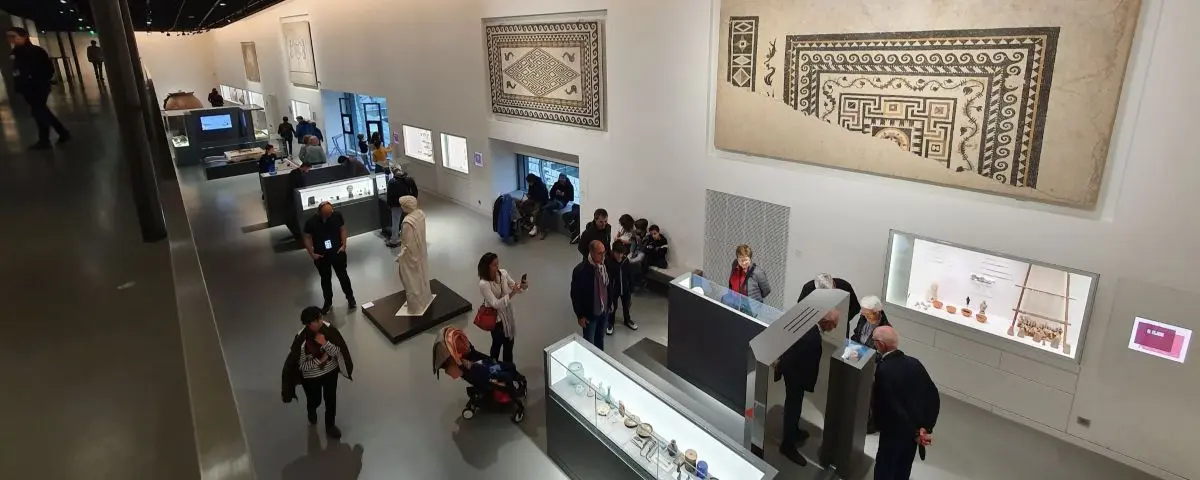
Directly opposite the Arena, the Musée de la Romanité offers a striking contrast. Its contemporary façade faces the ancient stone, making the square feel like a conversation between two periods. Visit the museum after the Arena, when the questions raised by the amphitheatre are still fresh.
The collections trace Nemausus from its pre-Roman origins through later centuries. Mosaics, sculptures, inscriptions and everyday objects show that Roman history was not only about emperors and spectacles, but also homes, water, trade and religion.
The interactive museum can absorb several hours. Focus on the Roman galleries and objects connected to the city’s monuments. A selective visit gives you context without sacrificing the Old Town and gardens.
Before leaving, look toward the Arena from the museum side. The modern building’s light surface makes the amphitheatre appear even heavier and older, a simple architectural contrast that stays in the memory.
Midday: Nîmes Old Town and a Local Lunch
Walk Through Place du Marché, Place aux Herbes and Nîmes Cathedral
From the Arena, enter the pedestrian center rather than following the larger boulevards. Nîmes Old Town, known as the Écusson, has a compact medieval pattern of narrow streets, small squares and sudden openings. The pleasure here comes from linking landmarks without turning the walk into a checklist.
Head toward Place du Marché, recognizable by its crocodile and palm-tree fountain. These symbols refer to the city’s Roman identity. Terraces and shops replace the Arena’s ceremonial scale with ordinary southern life.
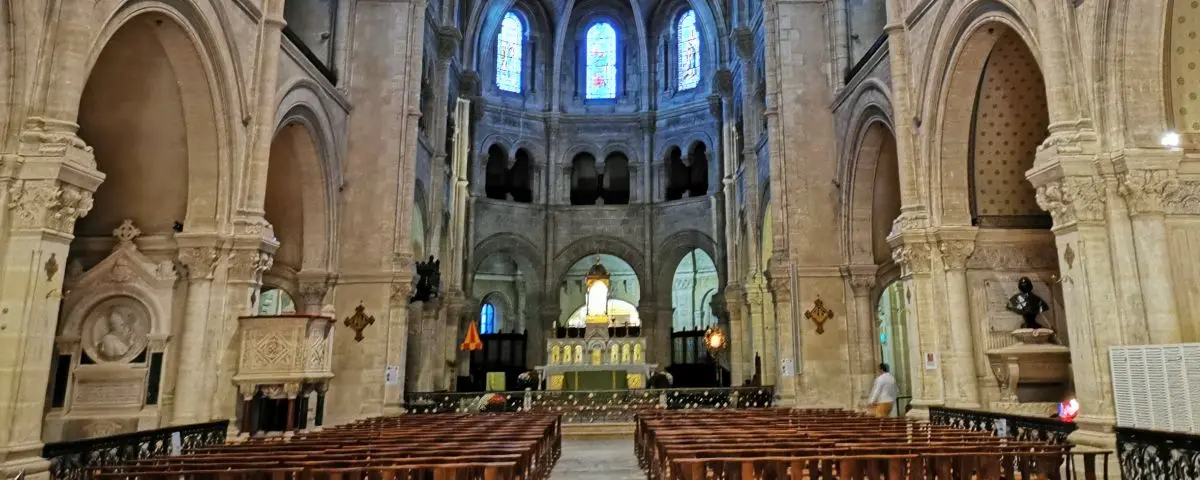
Continue toward Place aux Herbes and Nîmes Cathedral, one of the Old Town’s liveliest corners. The cathedral bears traces of different periods, while nearby streets invite detours past bakeries, boutiques and townhouses.
Allow yourself to wander, but keep moving generally west toward the Maison Carrée. Rue de l’Aspic and nearby lanes provide an easy passage through the commercial heart of the city. This section gives the itinerary its balance: Nîmes is not merely a collection of Roman ruins, but a lived-in city with markets, bookshops, fountains and shaded tables.
Have Lunch in the Historic Center
Stop for lunch inside the Écusson, between the cathedral and Maison Carrée. Staying in the historic center protects the itinerary’s rhythm and leaves the afternoon free for gardens.
Look for a short seasonal menu or a casual market-style meal. Brandade de Nîmes, traditionally made with salt cod and olive oil, is the obvious local specialty. You may also find dishes influenced by the Camargue, Mediterranean vegetables and wines from the Costières de Nîmes.
A long lunch works only if you shorten the museum or skip the Tour Magne interior. We recommend a relaxed meal that leaves energy for the uphill garden walk. In summer, choose shade and drink water.
Afternoon: Maison Carrée and the Jardins de la Fontaine
Visit the Maison Carrée
The Maison Carrée is smaller than the Arena but, in many ways, more astonishing. Its raised podium, deep portico and Corinthian columns form an exceptionally harmonious Roman temple. Where the Arena impresses through scale, the Maison Carrée impresses through proportion.
Built in the first century for the imperial cult, it was dedicated to Gaius and Lucius Caesar, heirs of Augustus. Later uses kept the structure occupied and helped it survive.
Walk around before deciding whether to enter. From the square, the temple seems almost too complete to be ancient. Notice the porch, column alignment and carved decoration. The monument rewards slow observation more than a hurried photograph.
The Maison Carrée was inscribed on the UNESCO World Heritage List in 2023. Opposite it, the glass and steel Carré d’Art creates another deliberate meeting between ancient and contemporary Nîmes.
Walk Along Quai de la Fontaine
From Maison Carrée, follow the direction of Boulevard Victor-Hugo and continue toward Quai de la Fontaine. The streets gradually open, and the city’s mood shifts from shopping and café life to water, trees and elegant façades.
Quai de la Fontaine is the natural transition between the Old Town and the gardens. The canal leads your eye forward, while plane trees offer welcome shade. It is a pleasant stretch to slow down after the concentrated history of the morning.
This walk also follows the story of water in Nîmes. The ancient city developed around the sacred spring later monumentalized by the Romans, and the Jardins de la Fontaine grew around that historic source.
Explore the Jardins de la Fontaine and Temple of Diana
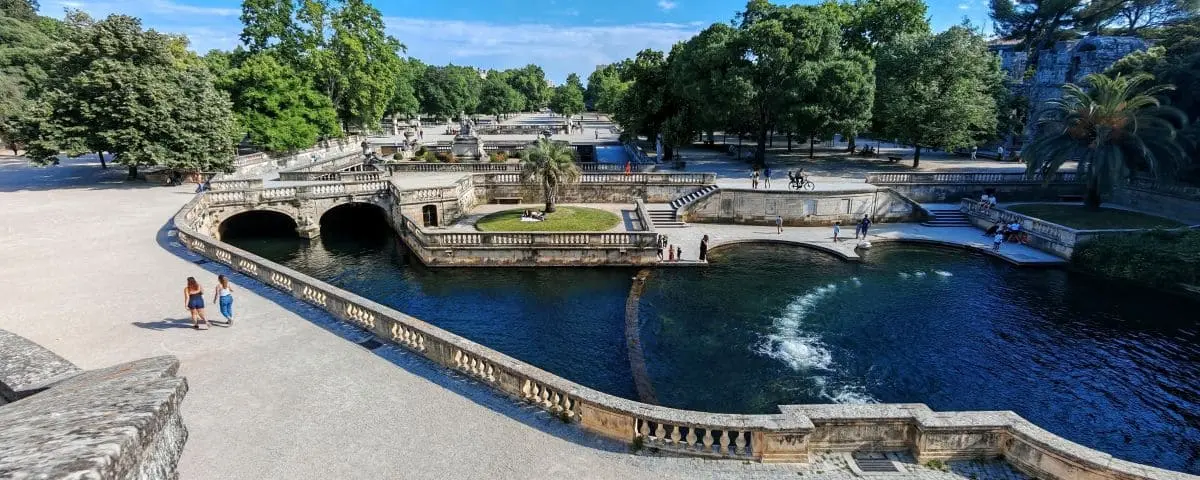
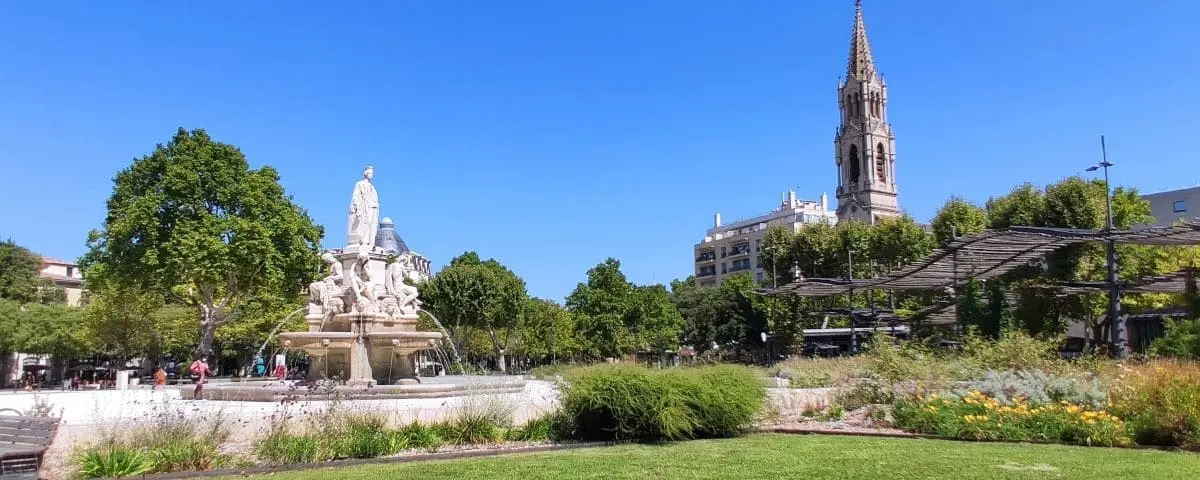
The Jardins de la Fontaine are not simply a park added to the itinerary for rest. They occupy one of the foundational places of Nîmes, where the ancient spring and Roman sanctuary shaped the city’s identity. History, water and landscape meet here more naturally than anywhere else in Nîmes.
The formal lower garden has balustrades, statues, symmetrical paths and reflective water. Developed in the eighteenth century around archaeological remains, it feels calm and theatrical after the busy Old Town.
Find the Temple of Diana on the western side. Despite its name, the Roman building was probably not dedicated to Diana, and its function remains debated. Its collapsed vaults and niches feel romantic beside the precision of Maison Carrée.
Take time to sit near the water before climbing higher. The gardens are large enough to feel like a destination, not merely a route to Tour Magne.
Climb to Tour Magne for the View
Paths and stairways rise from the formal garden toward Mont Cavalier. The climb is steady rather than extreme, but heat can make it tiring. Go slowly and treat the ascent as part of the experience, with changing views through pines and Mediterranean vegetation.
Tour Magne stands at the highest point. Incorporated into the Augustan fortifications, the Roman tower signaled Nîmes across the landscape. Its position mattered as much as its defensive role.
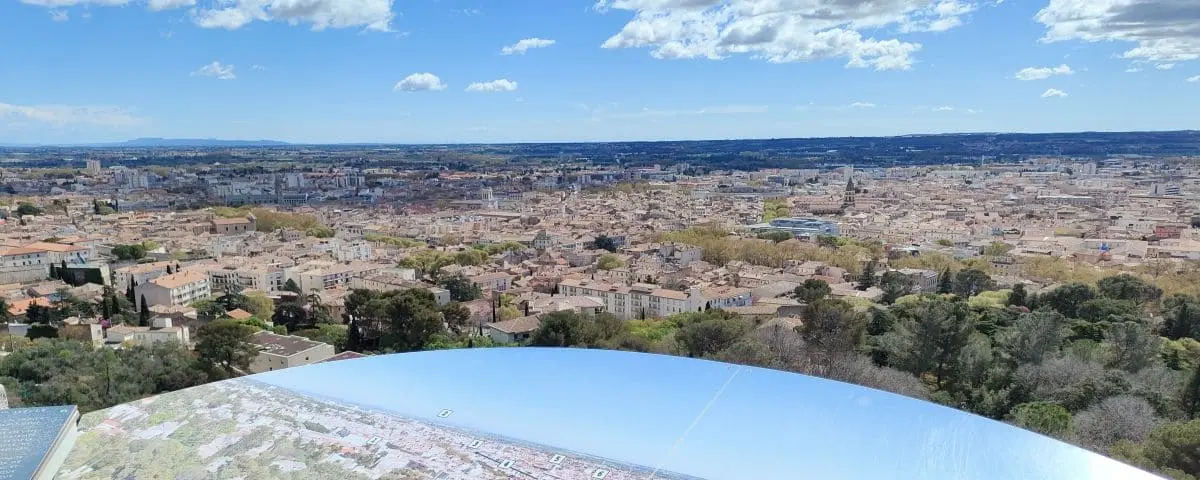
If the tower is open and stairs suit you, climb for the day’s broadest panorama over rooftops and countryside. Tour Magne is a perfect ending because it reveals the route from above.
You have moved from the station to the Arena, crossed the Écusson, followed water to the gardens and climbed to the ancient edge of Nemausus. Few one-day city itineraries finish with such a clear sense of geography.
Late Afternoon and Evening in Nîmes
Return Through the Old Town for a Drink or Dinner
Descend through the Jardins de la Fontaine and return toward the center at an unhurried pace. The best final stop is a terrace around Maison Carrée, Place aux Herbes or one of the quieter surrounding streets. You can now enjoy the Old Town without another monument waiting.
For dinner, remain in the Écusson if you are staying overnight. The center grows atmospheric after day-trippers leave. Use our Provence travel guide to connect Nîmes with Avignon, Arles and the Camargue.
If Nîmes is your base for several nights, browse our guide to the best day trips from Nîmes. Pont du Gard, Uzès, Arles and Avignon all extend the Roman and southern French themes of this day.
How to Adapt This Nîmes One-Day Itinerary
A Faster Itinerary Without the Museum
When you have limited time, keep the Arena, Old Town, Maison Carrée and Jardins de la Fontaine. Skip the Musée de la Romanité rather than cutting every stop in half. This preserves the city’s visual variety and gives you both major Roman architecture and outdoor atmosphere.
Walk around the Arena, enter if possible, cross the Écusson, visit Maison Carrée, then continue to the gardens. Add Tour Magne only if energy and time allow. A shorter itinerary should still feel coherent, not rushed.
A Slower Itinerary with Less Walking
For a gentler day, visit the Arena and museum, take a leisurely lunch, then see Maison Carrée and the lower Jardins de la Fontaine. Skip the climb to Tour Magne if stairs, heat or mobility are concerns.
The lower gardens, canal and Temple of Diana already provide a satisfying finish. You can return to the center along the same waterside route and pause frequently. Nîmes remains rewarding even without reaching every viewpoint, because its strongest monuments sit close to the pedestrian core.
FAQ: One Day in Nîmes

Is One Day Enough in Nîmes?
Yes, one day is enough to see the essential sights of Nîmes when you follow a logical walking route. The Arena, Musée de la Romanité, Old Town, Maison Carrée and Jardins de la Fontaine fit into a full day.
One day cannot cover every museum or minor Roman remain, but it provides a complete introduction to the city’s history and atmosphere.
How Many Hours Do You Need in Nîmes?
Plan roughly seven to nine hours for the complete itinerary, including lunch. A full day lets you visit rather than merely photograph the monuments.
With four or five hours, focus on the Arena, Maison Carrée, Old Town and lower gardens. Museum lovers should allow more time or remove Tour Magne from the route.
Can You Visit Nîmes and Pont du Gard in One Day?
It is possible, but combining Nîmes and Pont du Gard creates a faster, less relaxed day. Transport reduces time for the museum, Old Town and gardens.
For a first visit, devote one day to Nîmes and another half-day to Pont du Gard. When only one day is available, see the Arena and Maison Carrée in Nîmes, then continue to the aqueduct. Travelers prioritizing atmosphere over engineering should remain in the city.
Wrap-Up: The Perfect Day in Nîmes

- Follow the city from south to north, beginning at the station and ending above the gardens.
- Make the Arena your first major visit, when your attention and energy are highest.
- Use the Musée de la Romanité for context, but keep the visit selective.
- Cross the Old Town slowly, with time for squares, shops and a local lunch.
- Notice the contrast between the Arena and Maison Carrée, one monumental, the other perfectly proportioned.
- Save the Jardins de la Fontaine for the afternoon, when shade and water feel most welcome.
- Climb Tour Magne only if conditions suit you, since the lower gardens already make a beautiful finale.
- Above all, avoid overloading the day. Nîmes is memorable because Roman history remains part of a lively southern city, not because you tick every site off a list.