




Marseille is bright, steep, noisy and proudly Mediterranean. With only one day, the goal is not to collect attractions, but to follow a coherent route through the historic harbor, old streets, modern waterfront, hilltop basilica and coast. This Marseille 1 day itinerary reveals the city’s essential contrasts without turning the visit into a race.
Marseille 1 Day Itinerary at a Glance
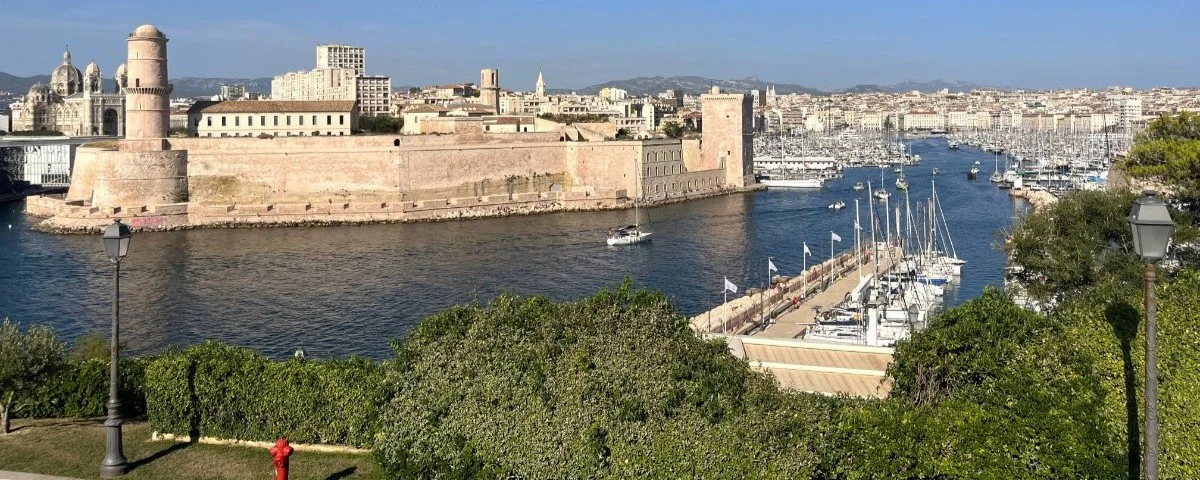
- Begin at the Vieux-Port, where boats, ferries, cafés and the morning fish market introduce Marseille’s maritime identity.
- Walk through Le Panier, the oldest neighborhood, for narrow lanes, colorful façades, street art and village-like squares.
- Continue to Marseille Cathedral, Fort Saint-Jean and Mucem, which form one compact heritage and culture zone beside the sea.
- Choose a quick local lunch near the waterfront, rather than losing time crossing Marseille for a famous restaurant.
- Take public transport to Notre-Dame de la Garde, because the steep climb can consume energy better saved for sightseeing.
- Finish around Corniche Kennedy and Vallon des Auffes, where Marseille feels most intimately connected to the Mediterranean.
- Leave the Calanques and Frioul Islands for another day, as either excursion would weaken this first-time city route.
For more inspiration, see our guide to the best things to do in Marseille.
Before You Start Your One Day in Marseille
Marseille is vast, but its historic center is manageable when you visit each area in the right order. The first half of this route is mainly walkable. Transport becomes useful for the hilltop basilica and the coastline.
Our team is a French family of former travel planners specializing in France. We combine field knowledge, traveler feedback and information from local tourism professionals to create clear, practical itineraries. Is One Day Enough to Visit Marseille?
One day is enough for an excellent introduction, but not a complete visit. You can discover the Vieux-Port, Le Panier, the Mucem waterfront, Notre-Dame de la Garde and part of the Corniche without spending the entire day in transit.
What you cannot do comfortably is add a Calanques hike, an island cruise and several long museum visits. Marseille’s distances are deceptive, and a place that appears close across the harbor may require a significant detour.
Focus on Marseille itself rather than adding a distant excursion. If the city is part of a longer Provence stay, use our guide to the best day trips from Marseille. Travelers still deciding how long to stay can also read whether Marseille is worth visiting.
Walking Distance and Getting Around Marseille
Expect plenty of walking on uneven and sometimes steep streets. Comfortable shoes are essential. Le Panier contains steps and slopes, while the approaches to Notre-Dame de la Garde are especially demanding.
Walk between the Vieux-Port, Le Panier, La Major, Fort Saint-Jean and Mucem. Later, use a bus, taxi or tourist train for the basilica. Marseille’s RTM network includes metro, tram and bus services, with official tools for routes and disruptions. Marseille tourist map shows how the harbor, old center, basilica and coast fit together.
Morning: Vieux-Port, Le Panier and Marseille Cathedral
Start Your Day at the Vieux-Port
The Vieux-Port is the natural starting point for a first visit to Marseille. It is not simply a marina. For centuries, the harbor has been the city’s meeting place, stage and compass. Fishing boats share the water with pleasure craft and ferries, while hills rise around the basin.
Begin near the eastern end and look across the boats. Notre-Dame de la Garde appears above the rooftops, giving you a clear sense of where the day is heading. In the morning, fish sellers may still gather near the quay, continuing a tradition closely tied to Marseille’s identity.
Walk along the northern side toward the town hall. The view across the harbor toward the basilica is one of Marseille’s defining scenes. Stop for a coffee if you like, but keep breakfast simple before climbing into Le Panier.
Explore Le Panier and La Vieille Charité
From the port, climb into Le Panier, often described as a village within the city. This is the best place to experience Marseille at street level. Laundry hangs above narrow lanes, murals brighten old walls and small workshops occupy former homes.
Le Panier remains residential and occasionally rough around the edges. That is part of its appeal. Allow a few detours, but respect the people living behind the picturesque shutters.
Make La Vieille Charité your central landmark. Its arcaded courtyard offers a peaceful contrast with the surrounding lanes. Admire the architecture first, then decide whether a museum visit fits your priorities. Entering every exhibition would force you to remove another major stop.
Families can turn the walk into a search for murals, painted signs and glimpses of the sea. More ideas appear in our guide to Marseille with kids.
Walk to Marseille Cathedral
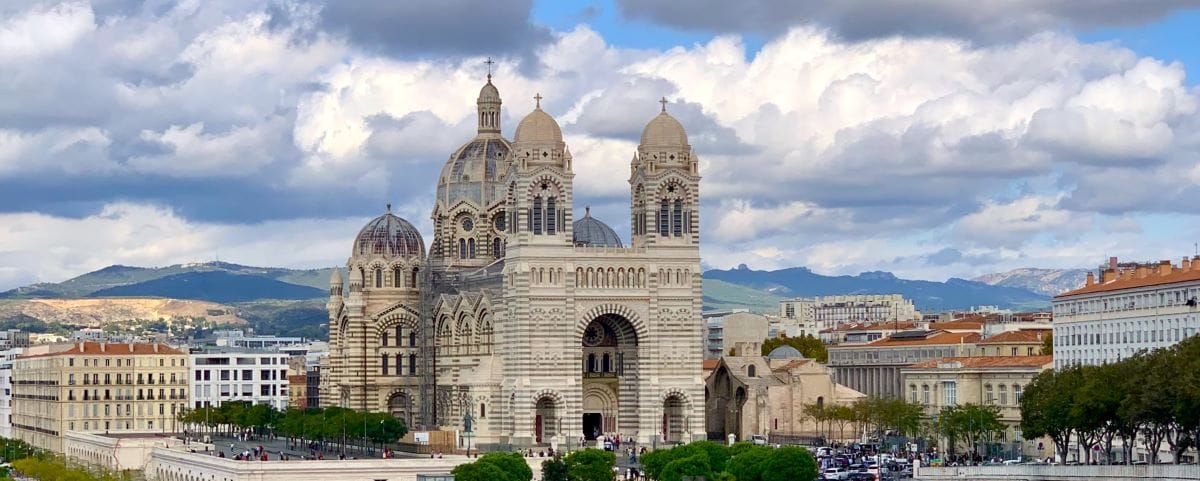
Descend toward Cathédrale de la Major, whose striped stone, domes and monumental scale are impossible to miss. The cathedral creates a dramatic transition between old Marseille and the regenerated waterfront. Its architecture feels almost theatrical in the Mediterranean light.
Step inside when access is available, but keep the visit focused. The exterior, forecourt and relationship with the sea are equally important. From here, the city’s transformations become visible: religious heritage stands beside broad public spaces and contemporary museums.
Behind you are Le Panier’s lanes. Ahead are Fort Saint-Jean and Mucem. Continue along the waterfront rather than returning to the Vieux-Port, keeping the route linear and avoiding repeated streets.
Midday: Mucem, Fort Saint-Jean and Lunch
Visit Fort Saint-Jean and Mucem
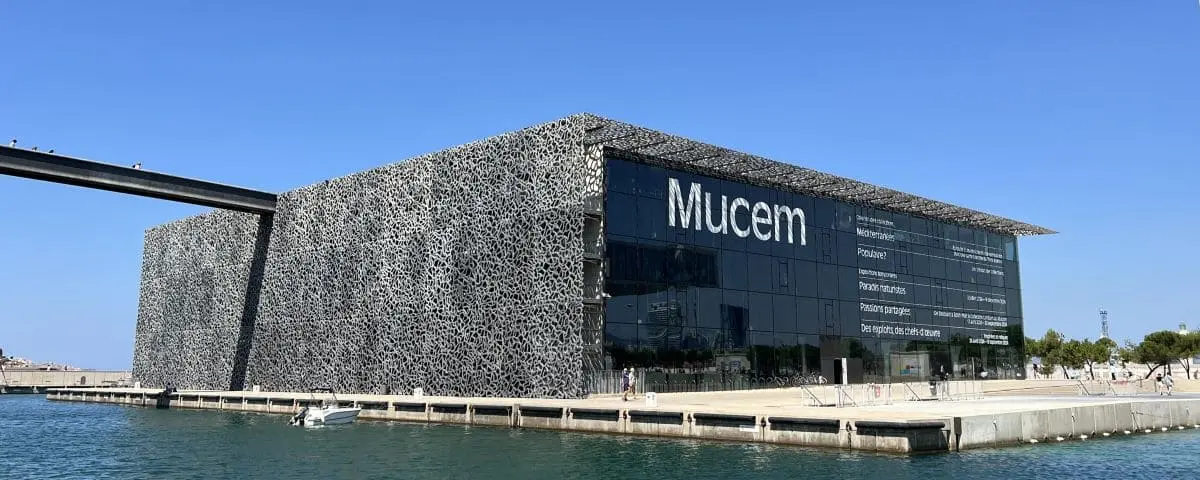
Explore Fort Saint-Jean’s exterior spaces, ramparts and gardens. The fort occupies a strategic position at the entrance to the Vieux-Port, where it has watched over ships and generations of Marseillais.
A footbridge links the historic stonework to Mucem, the Museum of European and Mediterranean Civilisations. The contrast between the fort and the museum’s concrete lattice captures Marseille’s ability to reinvent itself. Even without visiting an exhibition, walk through the outdoor areas and enjoy the sea views.
Marseille’s official one-day route also connects the Vieux-Port, Le Panier, Mucem, La Major and Notre-Dame de la Garde, confirming that these landmarks form the most efficient heritage circuit.
A full museum visit can absorb much of the day. Choose one exhibition at most if culture is a priority. Otherwise, concentrate on the architecture, bridges, terraces and changing light.
Stop for a Marseille-Style Lunch
Choose a restaurant near Mucem, Le Panier or the Vieux-Port. Crossing the city for a famous table wastes valuable time. Check that the menu offers local cooking rather than generic tourist dishes.
Marseille’s food reflects the Mediterranean and the communities that shaped the port. Depending on appetite and budget, look for panisses, grilled fish, seafood, North African dishes or pizza. Bouillabaisse is emblematic, but an authentic version is a substantial and expensive meal that deserves time.
For this itinerary, a daily special, focaccia, salad or market-style plate is more practical. Save the slow waterfront meal for dinner, when no major attraction remains. Carry water and avoid eating too heavily in hot weather, since the afternoon still includes viewpoints and coastal walking.
Afternoon: Notre-Dame de la Garde
How to Reach Notre-Dame de la Garde
Use motorized transport unless you are fit and enjoy steep urban walking. The climb is possible on foot, but it can drain energy and reduce the time available for the coast.
The practical options are a public bus, taxi or tourist train from the Vieux-Port area. The bus is usually the most economical. A taxi can save time when several people share the fare. The tourist train is slower but adds commentary and suits visitors who prefer an easy sightseeing experience.
Check live information because routes and traffic conditions may change. Do not plan the connection too tightly, especially during summer weekends or major events. Whichever option you choose, watch the city unfold during the climb.
Visit the Basilica and Enjoy the Panorama
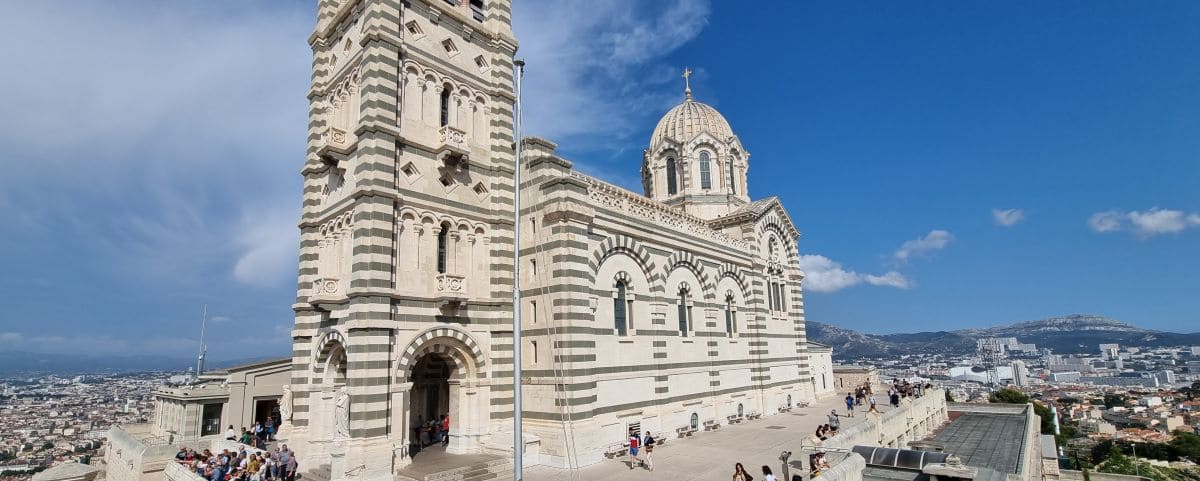
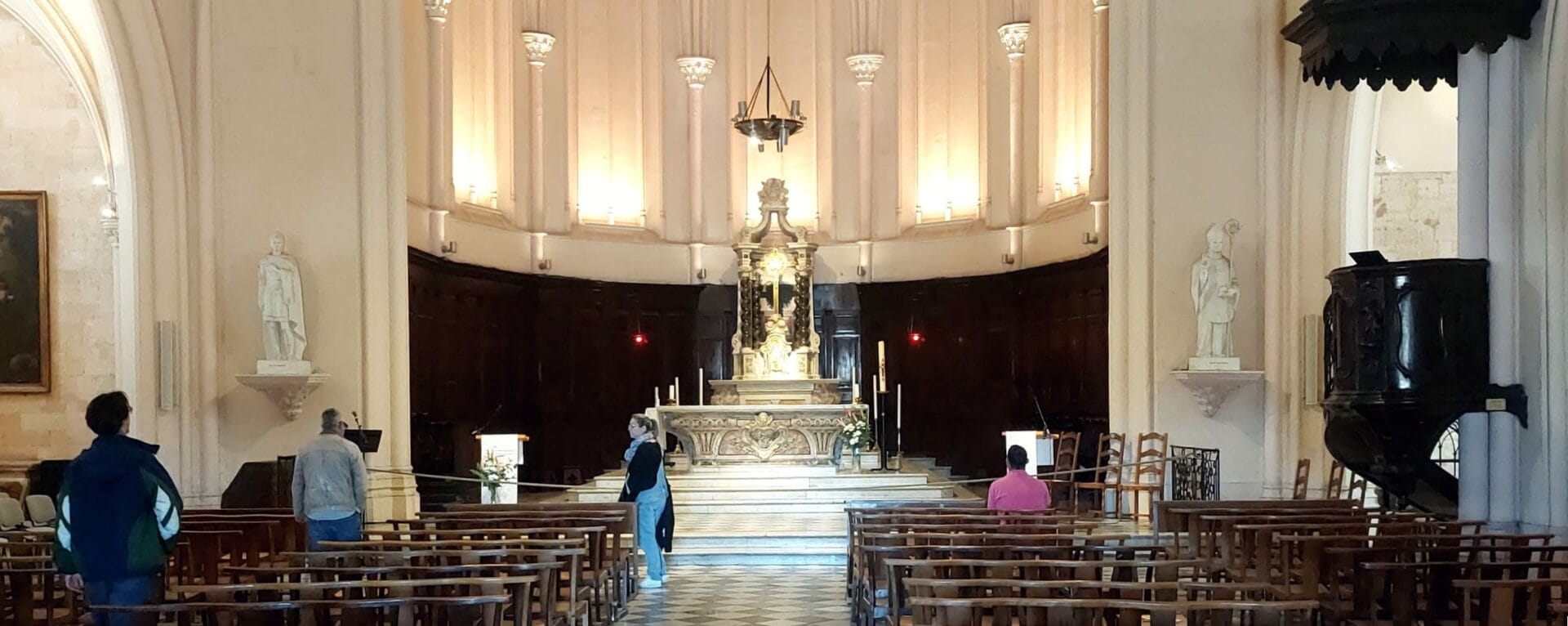
Known locally as the Bonne Mère, Notre-Dame de la Garde is more than a viewpoint. It is Marseille’s strongest symbol and a place closely connected to sailors and local families. Maritime offerings inside recall generations who looked to the basilica for protection.
After visiting respectfully, move onto the terraces. The panorama stretches across the Vieux-Port, northern docks, Frioul Islands, rooftops and surrounding hills. It explains why Marseille cannot be understood as a compact postcard destination. This is a vast city pressed between stone and sea.
Look for Le Panier, La Major, Fort Saint-Jean and Mucem around the harbor. This visual summary is why the basilica belongs after the historic center, not before it. Wind can be strong at the summit, so secure hats and bring a light layer outside midsummer.
Evening: Corniche Kennedy and Vallon des Auffes
Follow the Seafront to Vallon des Auffes
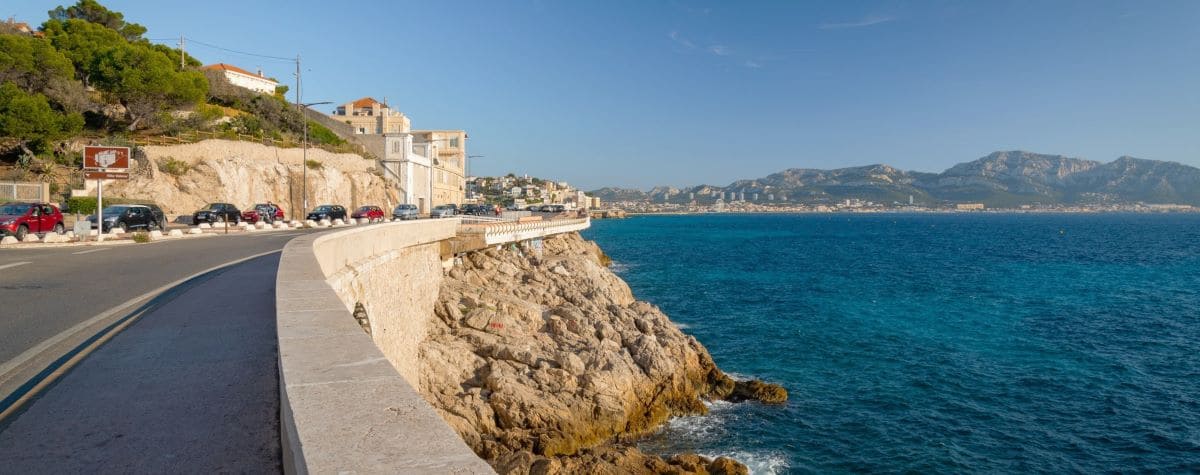
Travel toward Corniche Kennedy and continue to Vallon des Auffes, a small fishing harbor tucked below the road. This final section reveals Marseille’s intimate maritime side. Stone cabins, traditional boats and the narrow inlet contrast with the vast city seen from the basilica.
Explore part of the Corniche on foot and use a bus for the rest if needed. Walking every section is unnecessary. Choose the stretches with open sea views and save energy for descending into the Vallon.
Move respectfully around working boats and homes. Notice the ropes, painted hulls, stone arches and changing water rather than treating the harbor as a film set. Swim only where local conditions and rules make it safe, and keep valuables secure.
Watch the Sunset and Have Dinner by the Sea
The coastline provides the strongest ending to a Marseille one day itinerary. As evening arrives, the islands darken offshore, limestone catches the last light and conversations spread across terraces.
Book ahead for a specific seafood restaurant, in high season. Otherwise, remain flexible. A simple meal with a sea view can be more memorable than an ambitious reservation requiring another rushed transfer.
If the weather is poor, return to the center. The Vieux-Port, Noailles and Cours Julien offer very different evening moods. Finish where your interests feel strongest, not where a checklist tells you to stop. By now, you have already encountered Marseille’s essential contrasts.
How to Adapt This Marseille Itinerary
A One-Day Marseille Itinerary for Cruise Passengers
Cruise passengers must allow generous time to return to the terminal. Marseille’s cruise port is not the Vieux-Port, and the transfer may take longer than expected depending on the berth, shuttle arrangements and traffic.
Start with Mucem and Le Panier if your shuttle drops you near the center, then continue to the Vieux-Port and Notre-Dame de la Garde. Treat Vallon des Auffes as optional.
Confirm the ship’s all-aboard time, not only its departure. Plan backward from the required return and keep a wide buffer. Passengers with only a few hours should focus on the Vieux-Port, Le Panier and Mucem, which provide the strongest concentration of Marseille character.
A Rainy-Day or Low-Walking Alternative
In rain or extreme heat, reduce outdoor wandering and use transport more frequently. Prioritize Mucem, La Vieille Charité and the basilica interior, then connect them by bus, taxi or tourist train.
Le Panier’s stones and steps can become slippery, so shorten the neighborhood loop. Replace the Corniche walk with a café, covered food stop or museum visit. Travelers with limited mobility should check accessibility in advance because historic gradients complicate spontaneous detours.
A low-walking version can begin at Mucem, continue by taxi to Notre-Dame de la Garde and end at the Vieux-Port. Comfort matters more than completing every stop.
What to Replace If You Prefer Museums, Beaches or Street Art
Museum lovers should spend longer at Mucem and remove Vallon des Auffes. One meaningful exhibition is better than several rushed entrances. La Vieille Charité can become a second cultural stop when its program appeals to you.
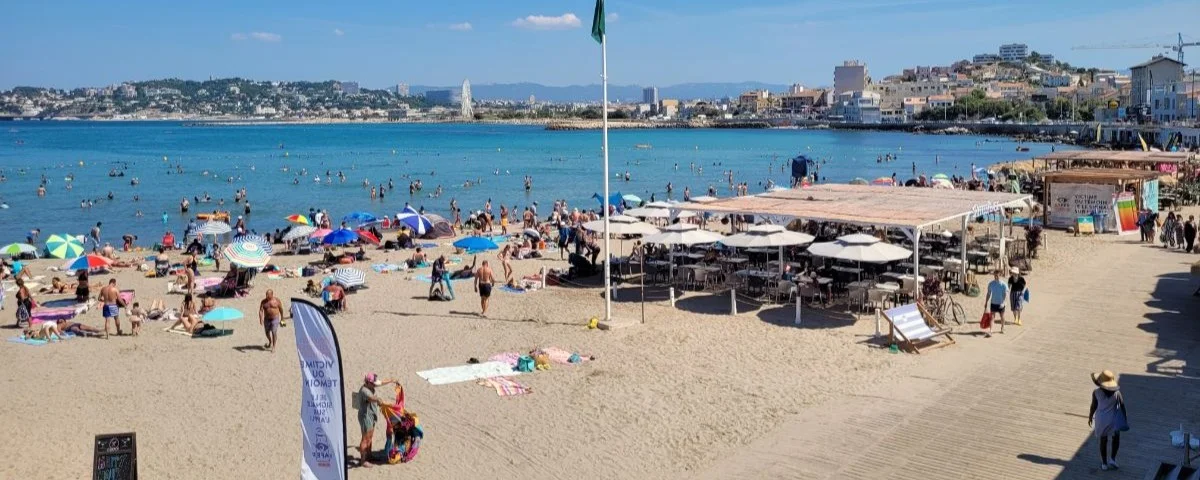
For beaches, replace the longer Le Panier loop or museum interior with time near Catalans. Central beaches are convenient rather than secluded, while the Calanques need separate planning and more time.
Street-art fans can add Cours Julien, but this creates a detour from the waterfront route. Use the metro or a taxi. Never add a new district without deliberately removing another stop. That rule keeps a one-day route enjoyable.
Practical Tips for Visiting Marseille in One Day
Start early, carry water and check opening days before entering museums. Keep valuables secure in crowded areas. Dress for sun, wind and hills: summer requires a hat and sunscreen, while the basilica and Corniche can feel cooler than sheltered streets.
Reserve only what matters most, such as a special dinner or exhibition. Elsewhere, stay flexible. Marseille’s appeal often appears in an unexpected square, bakery or view.
Frequently Asked Questions About a Marseille 1 Day Itinerary
Can You Explore Marseille on Foot in One Day?
You can explore the historic core on foot, but not the entire itinerary comfortably. Walk around the Vieux-Port, Le Panier, La Major, Fort Saint-Jean and Mucem. Use transport for Notre-Dame de la Garde and at least part of the coast.
Trying to walk everything can turn a rewarding day into an endurance test. Marseille’s slopes, heat and road crossings add more effort than the map suggests.
Can You Visit the Calanques and Marseille in the Same Day?
Technically yes, but we do not recommend combining a proper Calanques visit with this first-time city route. Access, transport, hiking conditions and seasonal restrictions require preparation. A boat glimpse is possible, but it replaces several central landmarks.
Give the Calanques a separate half or full day. They are a major natural destination with their own rhythm and safety considerations, not a quick extra stop.
Is the Marseille CityPass Worth It for One Day?
The CityPass may be useful when your selected attractions and transport benefits exceed its price, but it is not automatically necessary. Much of Le Panier, the Vieux-Port, Fort Saint-Jean’s outdoor areas and the viewpoints can be enjoyed without admission.
Compare current inclusions with your actual route. If you plan several museum entries and included sightseeing services, it may offer value. If the day is mostly walking, views and food, individual tickets may be simpler.
Wrap-Up: The Best Way to See Marseille in One Day
- Follow a linear route from the Vieux-Port to Le Panier, La Major and Mucem to avoid repeating streets.
- Use transport for Notre-Dame de la Garde, preserving energy for the panorama and evening coast.
- Choose museum depth or broader sightseeing, because one day cannot comfortably provide both.
- Keep lunch simple and save a slower meal for dinner, when the main visits are finished.
- End at Corniche Kennedy or Vallon des Auffes for the Mediterranean atmosphere that makes Marseille unforgettable.
- Leave the Calanques, Frioul Islands and distant districts for another day, rather than weakening a strong first visit.
Marseille resists tidy summaries, and that is part of its charm. Follow this route, remain curious and allow room for surprises between the planned stops. In one well-organized day, you will not see all of Marseille, but you will understand why so many travelers want to return.