




A fountain splashes in a quiet square, market stalls spill over with fruit and flowers, and a café terrace is full before lunch. Aix-en-Provence makes a fine first impression. The harder question is whether that charm deserves a place in your South of France itinerary.
Our honest answer is yes, for the right traveller. Aix is beautiful, walkable, cultured and wonderfully easy to enjoy. It is also polished, pricey in places and lighter on major landmarks than some other French cities.
As a French family and former travel planners specialising in France, we judge destinations by one question: what kind of trip do they genuinely suit? That is the approach behind this guide.
Is Aix-en-Provence worth visiting? Our quick answer

Yes, Aix-en-Provence is worth visiting if you enjoy historic streets, Provençal markets, café culture, art and slow travel. The city is at its best when you leave a little empty space in your schedule.
- Yes, Aix-en-Provence is worth visiting for most first-time visitors to Provence, especially if you like elegant old towns, food markets, art and wandering on foot.
- Two days is the ideal length for a first visit. One day works for the highlights, while three or more days make sense if you want museums, Sainte-Victoire or day trips.
- You do not need a car in central Aix, but a car becomes useful for exploring the wider countryside and smaller villages.
- The main drawbacks are summer crowds, high prices and a lack of blockbuster monuments.
- Our verdict: visit Aix for atmosphere rather than a checklist. If that sounds like your kind of travel, the city is an easy recommendation.
For practical planning, our guides to the best things to do in Aix-en-Provence and the Aix-en-Provence tourist map will help you turn that decision into an itinerary.
Why Aix-en-Provence is worth visiting
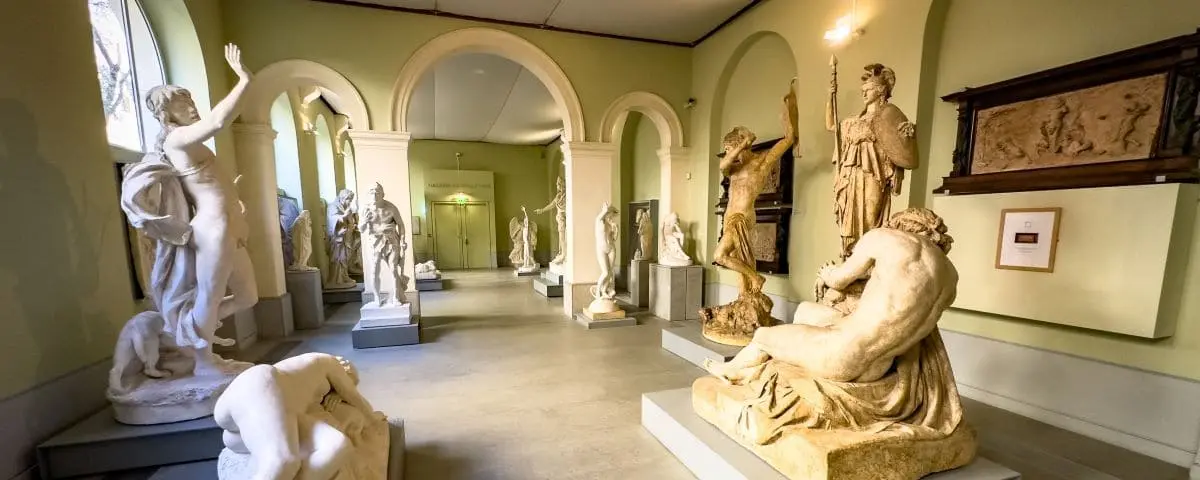
The best reasons to visit Aix-en-Provence are scattered through the old town: a carved doorway here, a mossy fountain there, a market in one square and a shaded terrace in the next. That is both the city’s strength and the key to enjoying it.
The historic centre is made for slow, aimless wandering
Aix is one of those places where taking the wrong street usually improves the day. North of Cours Mirabeau, the old town folds into a maze of narrow lanes, small squares, fountains, bookshops and handsome façades. South of the avenue, the Mazarin Quarter feels calmer and more ordered, with elegant private mansions and pale stone streets.
The pleasure of Aix is not checking sights off a list. It is the city itself. Walk without urgency. Look up at balconies, slip into a side street, then sit down when a square tempts you.
Cours Mirabeau is the obvious spine of the city, but do not spend all your time there. Rue Gaston-de-Saporta, Place d’Albertas, the cathedral area and the smaller lanes around Place Richelme reveal more personality. Aix rewards curiosity much more than speed. The old city is compact enough to explore on foot, and our Aix-en-Provence tourist map is useful for seeing how close the main quarters actually are.
The markets, cafés and terraces capture the Provençal art of living
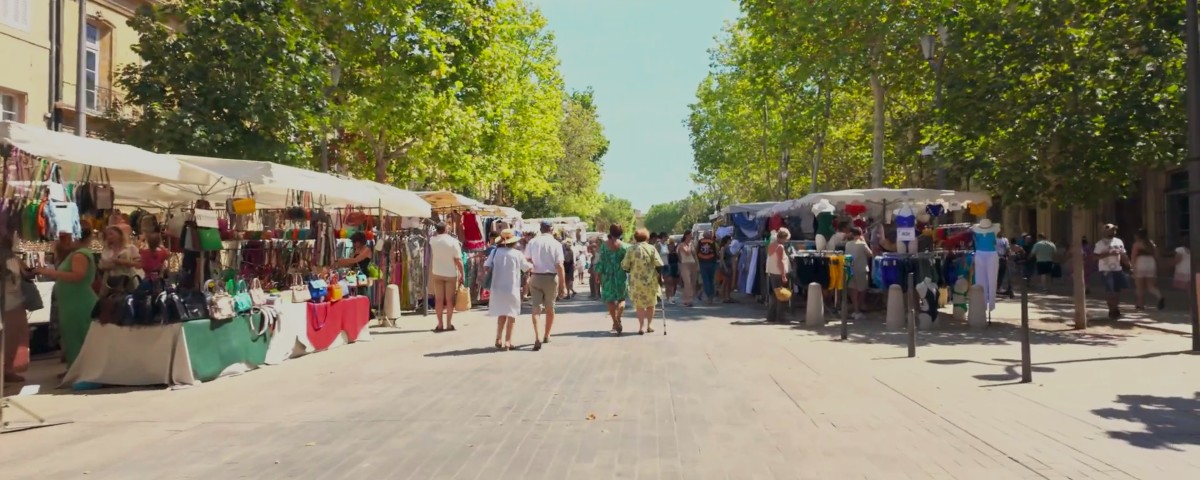
Come early and Aix smells different. Fruit, herbs, cheese, flowers and warm bread take over the squares. A little later, chairs scrape across stone as cafés fill up, and the city settles into its favourite activity: watching itself go by.
Aix feels most Provençal when you stop trying to see it and start living at its pace. Browse a market, taste a calisson, order coffee on a terrace and allow lunch to last longer than planned.
This is not decorative atmosphere created only for visitors. Aix is a university city too, so the bourgeois elegance is mixed with students, busy local markets and lively terraces. The result is more animated than the polished façades first suggest. At night, there are wine bars and crowded little places, although anyone expecting a major clubbing destination may find the city rather sensible once the evening grows late.
Art and Cézanne give the city real cultural depth
What is Aix-en-Provence famous for? Fountains, certainly. Calissons, perhaps. But above all, Paul Cézanne.
The painter was born in Aix, worked here and repeatedly returned to the surrounding landscape. You can follow traces of his life through the city, visit his studio and understand why the hard white mass of Sainte-Victoire became an obsession.
Aix is not only pretty. It has genuine cultural weight. Musée Granet, the Granet XXe collection and the exhibitions at Caumont Centre d’Art give art lovers several strong reasons to stay beyond a quick day trip. Cézanne’s studio is smaller and more intimate, less about masterpieces on walls and more about the objects, light and working environment that shaped his final years.
For us, that combination matters. A beautiful city can hold your attention for a few hours. A city with a visual language of its own can stay with you much longer.
Sainte-Victoire adds nature to a city break
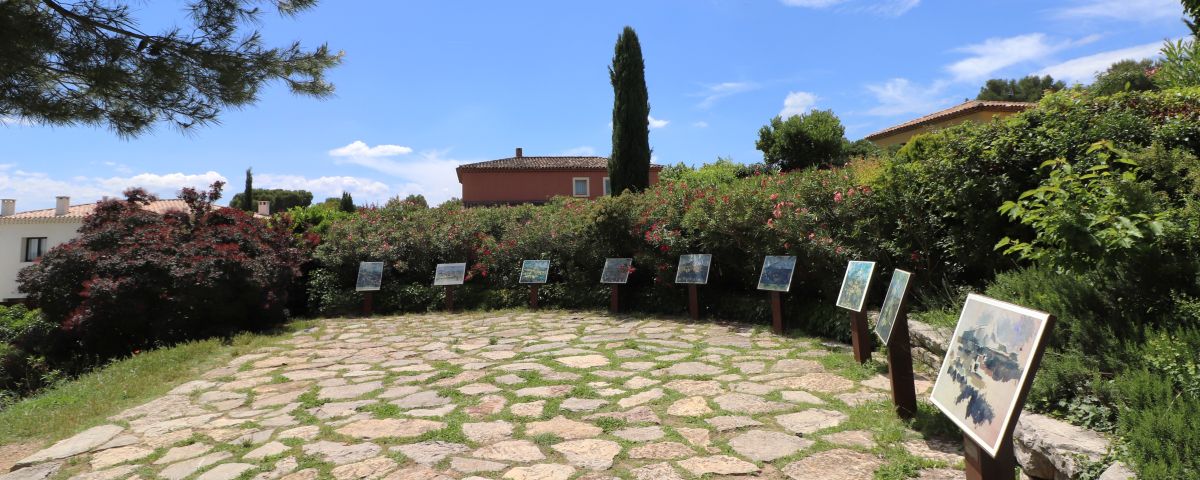
Then there is the mountain. Sainte-Victoire rises east of Aix, pale and angular, changing with the hour and the weather. Seen in late afternoon light, it becomes much easier to understand why Cézanne kept painting it.
Sainte-Victoire is the reason Aix feels larger than a city break. You can spend the morning among markets and museums, then head towards walking trails, viewpoints and dry Provençal landscapes.
You do not have to complete a serious hike to enjoy the massif. A scenic drive or a shorter walk can be enough to change the rhythm of your stay. Keen hikers should plan more carefully, especially in the warmer months, when access to sensitive natural areas can be regulated because of fire risk. The mountain should be treated as a real landscape, not simply a background for photographs.
Aix makes a convenient base for exploring Provence
Aix sits between Marseille, the inland countryside and many classic Provençal landscapes. In the right itinerary, it works well as a base.
Aix works well as a base, but only if your itinerary matches its geography. It is a strong choice for travellers who want city comforts in the evening and day trips during the day. Marseille and Sainte-Victoire fit naturally into the picture, while the Luberon and other parts of inland Provence become easier with a car.
Before booking several nights, check our Provence tourist map. Our Provence travel guide and guide to the best things to do in Provence can help you decide whether Aix is genuinely central to your trip, or simply looks central on a map.
The downsides of visiting Aix-en-Provence
Our honest opinion cannot stop at fountains and pretty shutters. Aix has drawbacks, and for some travellers they are significant enough to shorten the stay.
It can feel crowded and expensive in peak season
Aix is attractive, fashionable and popular. None of those qualities usually leads to bargain prices.
Aix can be expensive, especially in the historic centre and in summer. Hotels with charm command a premium, restaurant bills can climb quickly and the most obvious terraces are not always the best value. Some central streets also feel heavily visited in peak season.
The solution is to be selective. Book accommodation early, compare locations outside the tight historic core, and do not assume that the grandest square serves the best meal.
Crowds are also uneven. Step away from the main pedestrian routes, go out earlier in the morning or visit in the shoulder seasons, and Aix quickly becomes easier to breathe in.
There are fewer blockbuster sights than in larger French cities
This is the most important warning for travellers asking, “Should I visit Aix-en-Provence?”
Do not come expecting Rome, Paris or even Avignon-sized monuments. Aix has fine museums, handsome architecture and strong cultural history, but its appeal is cumulative. A fountain, a market, an elegant street and a long lunch add up to the experience.
If you need one spectacular monument to justify every stop, you may prefer Avignon. If you are choosing between the two, our guide to Avignon or Aix-en-Provence goes deeper into the differences.
For us, Aix is better judged like a good neighbourhood than a trophy sight. The city wins by accumulation, not by shock and awe.
Exploring the wider region is easier with a car
Is Aix-en-Provence worth visiting without a car? Absolutely. The historic centre is compact and walking is the best way to experience it.
You do not need a car to visit Aix itself. You may want one for Provence. Reaching major cities can be straightforward by public transport, but small villages, rural landscapes and flexible day trips are another matter.
A car gives you freedom, but it also brings parking and traffic into the equation. Our preferred approach is simple: spend the city portion of the trip on foot, then rent a car only for the days when the countryside truly requires it.
Travelling around France by rail? Use our interactive France train map to see where trains make sense before building an itinerary that depends on them.
Who will love Aix-en-Provence, and who might want to skip it?
Aix is not a universal destination. The better question is, “Is Aix worth visiting for you?”
Aix is ideal for slow travellers, couples, food lovers and art fans
Aix is an excellent match for travellers who value atmosphere as much as attractions. Couples tend to enjoy the evening terraces and walkable streets. Food lovers get markets, bakeries, Provençal produce and plenty of excuses to sit down. Art fans have Cézanne, Musée Granet and a wider cultural scene.
It also suits first-time visitors who want a softer introduction to Provence. The city is easy to navigate.
Slow travellers benefit most of all. Aix gives more back when you stop rushing it. Leave room for a market you did not plan, a second coffee or a street that looks more interesting than the route on your phone.
It may disappoint travellers looking for beaches, nightlife or major landmarks
Aix is inland. There is no beach at the end of Cours Mirabeau, however persuasive the summer light may be.
Aix may disappoint you if your priorities are beaches, intense nightlife or a dense list of world-famous monuments. It can also feel too polished for travellers who prefer rough edges, big-city energy or remote village life.
In that case, look at the wider choice of cities and towns in Provence. Marseille offers more urban intensity, coastal destinations bring the sea, and smaller towns can feel more intimate.
The key is not to force Aix into a role it does not play. Visit it for elegance, culture and the pleasure of being there.
How many days do you need in Aix-en-Provence?

The right length depends on whether Aix is the destination or part of a wider Provence itinerary.
Is one day enough for a trip to Aix-en-Provence?
One day is enough to understand Aix, but not enough to fully enjoy it. A day trip can cover the old town, Cours Mirabeau, a market and one cultural stop.
This works particularly well if you are based nearby. An Aix-en-Provence day trip from Marseille is a reasonable choice for travellers with limited time.
The danger is overplanning. Do not try to squeeze every museum, Cézanne site and square into eight hours. Pick the historic centre, one meaningful visit and a proper lunch. A rushed Aix is a contradiction in terms.
Why two days is the sweet spot for a first visit
For most first-time visitors, two days is the sweet spot. Day one can focus on the old town, markets, fountains and Cours Mirabeau. Day two leaves room for art, Cézanne and a slower exploration of the Mazarin Quarter.
Two days also give you an evening in the city. Day trippers see the streets at their busiest, then leave. Staying overnight lets you enjoy Aix when the pace softens.
Use our guide to the best things to do in Aix-en-Provence to choose priorities rather than trying to collect every attraction. Two well-paced days beat three frantic checklists.
When three days or more in Aix-en-Provence is worth it
Stay three days or more if you want Aix to become a base, not just a stop. Extra time makes sense for Sainte-Victoire, several museums, slower food-focused travel or day trips into the surrounding region.
A longer stay also suits travellers who like a comfortable base after busy days.
But be honest about your route. If most of your dream destinations lie far west or deep in another part of Provence, moving bases may save time. More nights in Aix are worthwhile only when they reduce travel, not when they create it.
When is the best time to visit Aix-en-Provence?

Your ideal season depends on whether you care most about weather, atmosphere, price or quiet streets.
Spring and autumn offer the best balance
For most travellers, late spring and early autumn offer the best balance. Days are generally pleasant for walking, terraces remain part of daily life and the city is easier to explore than at the height of summer.
These seasons also suit travellers combining Aix with the wider countryside, when walking and lingering outdoors feel more comfortable.
Our preference is simple: choose the shoulder season when you can. Aix does not need peak summer to look Provençal. The stone, markets and café life do the work perfectly well.
Summer is lively but hotter, busier and more expensive
Summer brings long evenings, festivals and a powerful holiday atmosphere. It also brings heat, demand and more competition for rooms and tables.
Summer is worth it only if you accept the trade-off: more energy for less breathing room. Start early, slow down in the hottest part of the day and book accommodation before the best options disappear.
This is also the season when plans around natural areas such as Sainte-Victoire require extra attention because access may be restricted in periods of high fire risk.
For some travellers, the buzz is part of the pleasure. For others, it is exactly why September feels so good.
Winter suits travellers looking for a quieter city break
Winter strips away some of the postcard effect. Streets are calmer, museums more tempting and the city feels less like a stage set for summer.
Winter changes the proposition rather than ruining it. You come less for long golden evenings and more for culture, food, architecture and a compact city break.
Not every day will be terrace weather, of course. Still, travellers who dislike crowds may prefer this quieter rhythm. Aix in winter is a city first and a Provence fantasy second, which can be refreshing.
Our final verdict: is Aix-en-Provence worth it?

Yes. Aix-en-Provence is worth visiting, but its value depends on what you expect from it.
We would not recommend crossing France only to photograph Cours Mirabeau and leave two hours later. Nor would we sell Aix as a city of endless major monuments. That is not its strength.
What Aix does beautifully is combine an elegant historic centre, everyday market life, serious art, Provençal food culture and quick access to the landscape of Cézanne. The city asks you to slow down a little. Usually, that is when it starts working.
Our conclusion
- Visit Aix if you love walkable old towns, markets, art, cafés and slow travel.
- Plan two days for a first trip, or one well-edited day if time is tight.
- Stay longer for Sainte-Victoire and regional day trips, especially when Aix fits naturally into your route.
- Consider another destination if beaches, nightlife or major monuments are your top priorities.
- Our honest opinion: Aix is not the most spectacular city in Provence, but it is one of the easiest to enjoy.
That, in the end, is why we think Aix is worth visiting.