




The Luberon is Provence in concentrated form: pale stone villages, red ochre cliffs, vineyards, olive groves and roads that twist toward one beautiful view after another. Two days are enough for a memorable first journey if you choose the stops carefully and resist collecting villages like postcards.
This 2-day Luberon itinerary follows a practical route from Gordes and Roussillon to Bonnieux, Lacoste, Ménerbes and Lourmarin, with time for the landscapes between them. For wider inspiration before you travel, see our Provence travel guide and our selection of the best things to do in Provence.
2-Day Luberon Itinerary at a Glance
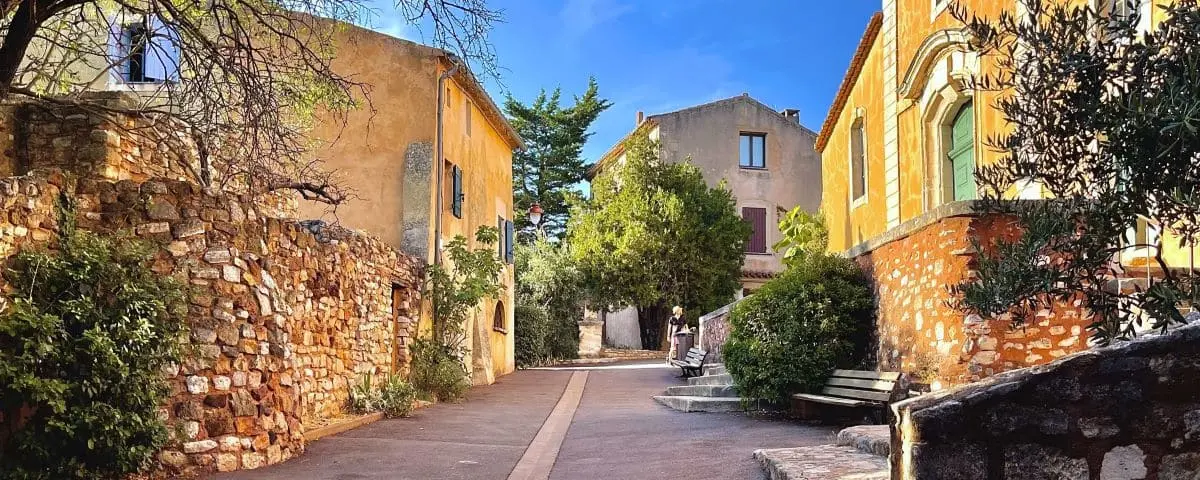
- Day 1 focuses on the northern Luberon: explore Gordes early, choose Sénanque Abbey or the Village des Bories, then spend the afternoon in Roussillon and on the Ochre Trail.
- Day 2 links four contrasting villages: begin with Bonnieux, cross to quieter Lacoste, pause in Ménerbes, then finish among the terraces and Renaissance heritage of Lourmarin.
- A car is the most efficient choice: the villages are close on a map, but public transport does not connect them conveniently enough for a compact two-day road trip.
- Do not add every famous stop: six villages plus two major sights already make a full itinerary, and the small roads, viewpoints and parking all take more time than expected.
- Stay inside the Luberon for one night: Bonnieux, Roussillon or Ménerbes gives the best balance between the two days.
Day 1 Route: Gordes, Sénanque Abbey and Roussillon
Begin at Gordes before the busiest part of the day. After walking through the village, make one deliberate side trip, either to Sénanque Abbey for architecture and its secluded valley, or to the Village des Bories for dry-stone rural heritage. Continue to Roussillon for lunch, the village streets and the former ochre quarries.
This sequence gives the most popular village the quietest hours and leaves Roussillon for the warmer afternoon light. Gordes and Roussillon are two of the most recognizable villages in Provence, but they offer completely different atmospheres.
Day 2 Route: Bonnieux, Lacoste, Ménerbes and Lourmarin
The second day follows the villages along the Petit Luberon before crossing the Combe de Lourmarin. Start in Bonnieux, whose steep streets climb toward a wide panorama. Lacoste faces it across the valley, darker and more austere beneath its château. Ménerbes stretches along a rocky ridge, while Lourmarin sits lower and feels livelier.
The logic is north to south, from panoramic hill villages to an easy final evening. Lourmarin has more cafés, restaurants and shops than the smaller stops, so there is no pressure if you arrive later than planned. The road itself is part of the day as vineyards and wooded slopes replace the wider valley views.
Estimated Driving Time and Distance
The core itinerary is compact. Most transfers take roughly 10 to 30 minutes, although summer traffic, narrow village approaches and finding a parking space can stretch them. Across both days, expect around two to three hours behind the wheel, excluding arrival and departure transfers.
Use our Provence tourist map to understand the region before saving the individual stops to your navigation app. Do not trust driving time alone when planning the day: parking, climbing into the historic centers and stopping at viewpoints are the real time consumers.
Day 1: Gordes, Sénanque Abbey and the Ochres of Roussillon
Morning: Arrive Early to Explore Gordes

Gordes makes a grand entrance. From the classic roadside viewpoint, the village rises in pale tiers above the valley, its houses apparently stacked against the rock. Stop only where parking is permitted, take in the full silhouette, then continue to the designated parking areas and enter the village on foot.
Inside, the experience becomes more intimate: sloping lanes, stone façades, small squares and sudden openings over the countryside. Give Gordes about 90 minutes, enough to walk without turning the visit into a shopping expedition. Its fame brings crowds, but the setting justifies the reputation. The village can become difficult to enjoy during the busiest months, which is why an early arrival matters.
Late Morning: Visit Sénanque Abbey or the Village des Bories

After Gordes, choose according to your interests rather than squeezing in both. Sénanque Abbey is the better choice for a first visit if you value Romanesque architecture, an isolated valley and the contrast between austere stone and cultivated fields. It remains a religious site, so quiet behavior and respect for restricted areas matter.
The Village des Bories offers a different story. Its dry-stone structures recall the agricultural life of the Luberon and show how local limestone was assembled without mortar. It is closer to a rural open-air museum than to a conventional village. Choose it if vernacular architecture fascinates you, or if traffic toward Sénanque looks heavy. One substantial visit is more rewarding than two rushed ticket stops.
Afternoon: Discover Roussillon and Walk the Ochre Trail
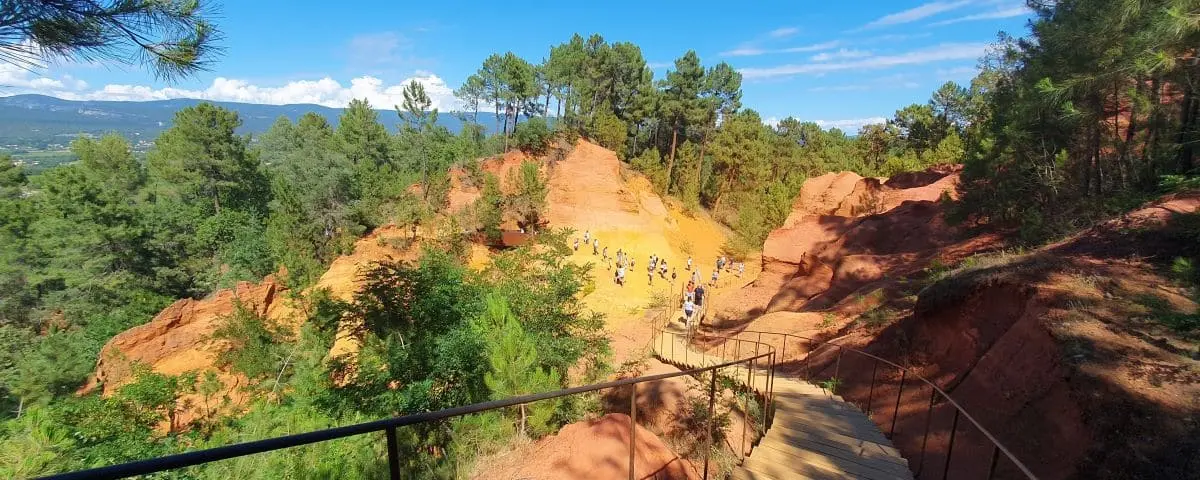
Roussillon seems to have borrowed its palette from the ground. The houses carry shades of rust, coral, orange and yellow, while the nearby cliffs reveal the mineral source of those colors. Walk uphill through the village first, looking for the panorama near the church and the views toward the red formations of the Val des Fées.
Then follow the Sentier des Ocres, the Ochre Trail, through former quarries shaped by extraction and erosion. Allow at least two hours for Roussillon when the trail is included. The walk suits most visitors, but ochre dust stains pale shoes and clothing. Check access conditions and the final admission time on the day of your visit.
Evening: Watch the Sunset in the Northern Luberon
Do not race south immediately. The northern Luberon is at its best when the day-trippers begin to disappear and the light softens across the Calavon Valley. A terrace in Roussillon, a country road near Goult or a quiet viewpoint outside the villages can provide the final scene without adding another formal attraction.
Sleep near Roussillon, Bonnieux or Ménerbes, depending on availability and your budget. Roussillon is convenient after Day 1, Bonnieux suits Day 2, and Ménerbes offers a quieter compromise. Reserve dinner in high season, as rural kitchens may have limited seating and closing days that do not match a visitor’s appetite.
Day 2: Bonnieux, Lacoste, Ménerbes and Lourmarin
Morning: Begin With the Panoramic Views From Bonnieux
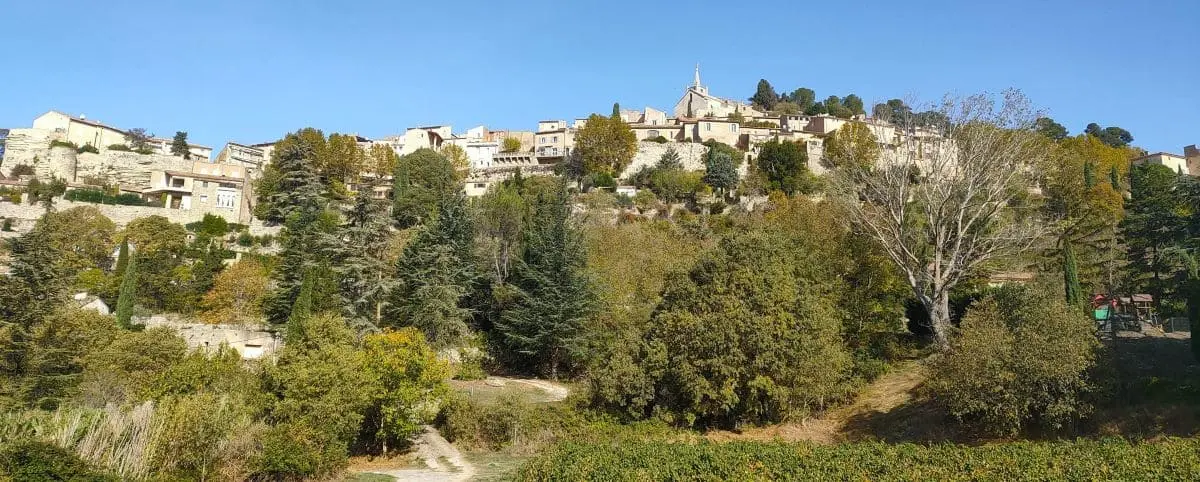
Bonnieux climbs rather than spreads. Its old houses and remains of medieval defenses follow steep streets toward the upper church, where the view opens across vineyards, orchards and the villages on the opposite side of the valley. Start before 9:30 a.m. and climb first, while the air is cooler and the lanes are still calm.
The appeal lies in the ascent, layered roofs, old doorways and changing perspectives toward Lacoste. Pause for coffee after the climb rather than before it. Bonnieux is one of the most prized perched villages of the Luberon, and the panorama explains why. Comfortable shoes are essential because polished stones and slopes can be unforgiving.
Late Morning: Wander Through the Stone Streets of Lacoste
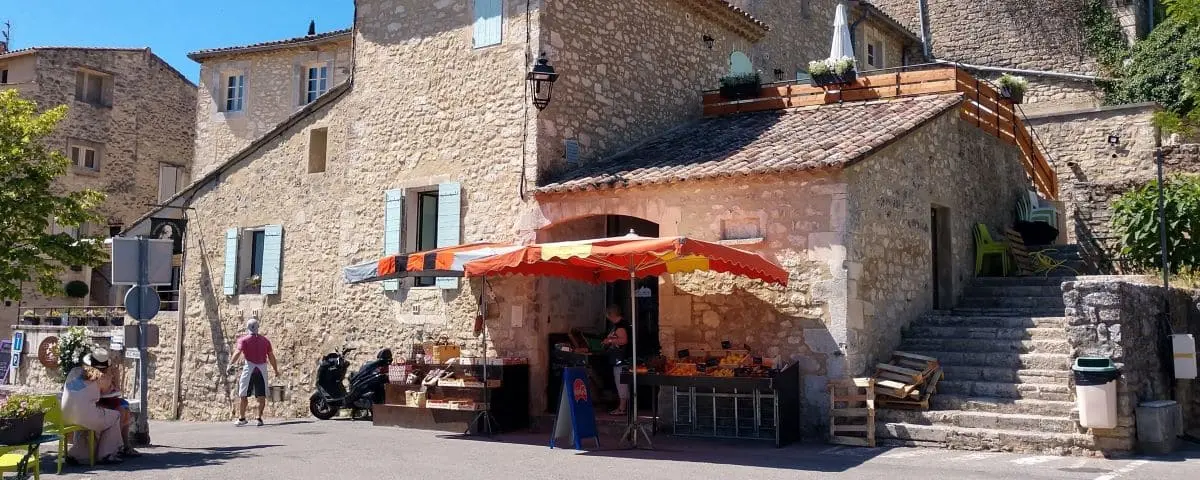
Lacoste stands opposite Bonnieux, but its mood is more severe. Narrow cobbled lanes rise between old stone houses toward the château associated with the Marquis de Sade and later with Pierre Cardin. Even without entering the château, the upper village provides a commanding view and a strong sense of the site’s defensive position.
Plan 60 to 75 minutes here and prioritize atmosphere over a checklist. Lacoste has fewer commercial distractions than Gordes or Lourmarin, so the pleasure comes from the climb, the silence and the relationship between village, ruins and valley. Here, the architecture seems to follow the rocky terrain.
Early Afternoon: Stop for Lunch and a Walk in Ménerbes
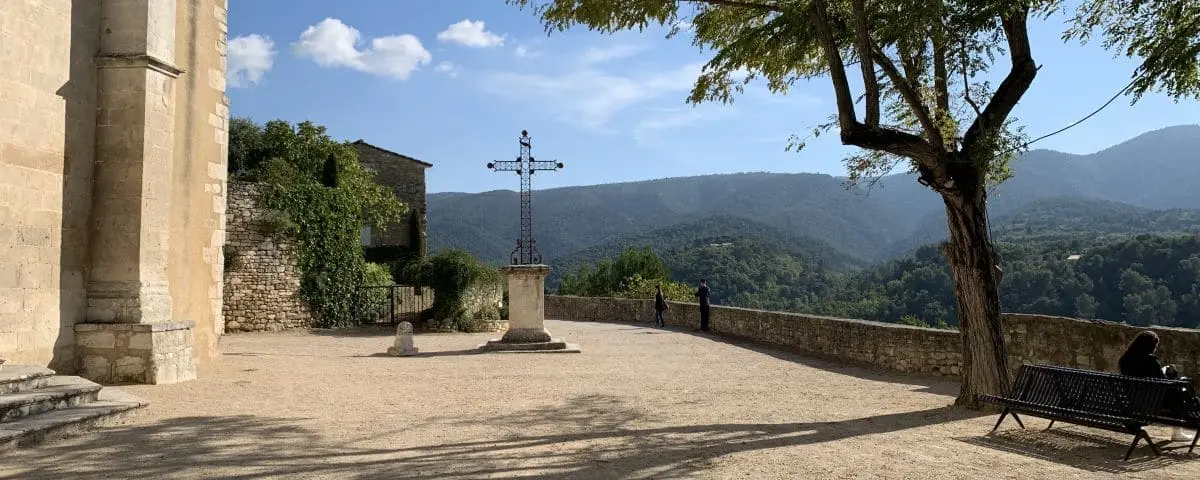
Ménerbes appears as a long stone vessel anchored on its ridge. Once a fortified stronghold, it still feels linear: you walk along the crest rather than circling a compact center. Old houses, defensive traces and openings across vineyards make the village especially satisfying at a slow pace.
Have lunch here or nearby, then walk toward the upper end of the village for the panorama. Ménerbes deserves about 90 minutes including lunch only if you keep the meal simple. Artists including Nicolas de Staël, Picasso and Dora Maar came here, but the view remains the village’s best argument. Parking may be paid in summer.
Late Afternoon: Take the Scenic Road to Lourmarin
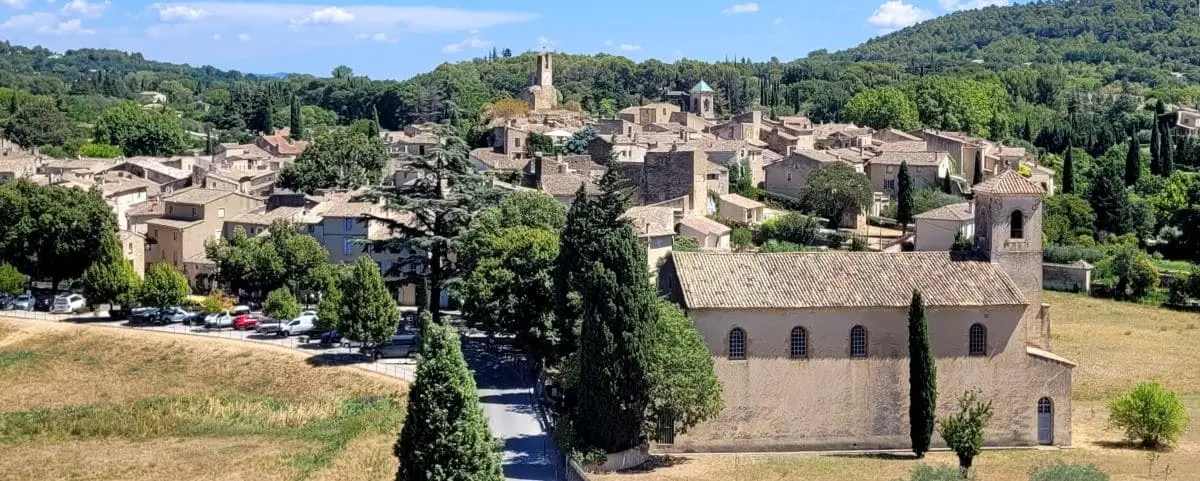
The road to Lourmarin crosses the Luberon range through its natural passage. The landscape closes in, with wooded slopes replacing the open valley, before releasing you into the softer country of the southern Luberon. Treat this transfer as a scenic drive, not dead time. Pull over only in marked places and let faster local vehicles pass when safe.
Lourmarin announces itself differently from the perched villages. Its three bell towers and Renaissance château sit on neighboring rises, while the historic center remains lower, accessible and animated. The change of rhythm feels welcome after three hilltop climbs.
Evening: Finish Your Luberon Road Trip in Lourmarin
Leave the car in one of the parking areas around the center and wander. Lourmarin’s main streets carry galleries, craft shops and busy terraces, yet quieter lanes remain only a turn away. The château, built in the late medieval period and reshaped during the Renaissance, dominates the entrance to the combe and has long been connected with artistic life.
End the trip with dinner in Lourmarin rather than adding Cucuron or Ansouis. You have already seen six villages, and a relaxed meal will give the journey a proper conclusion. Readers of Albert Camus or Henri Bosco may also wish to pause at the village cemetery, where both writers are buried.
Where to Stay for a 2-Day Luberon Itinerary
Gordes or Roussillon for Easy Access to Day 1
Choose Gordes if you want a famous address, refined hotels and the pleasure of seeing the village after most visitors leave. Expect higher prices and book early. Roussillon is generally the more practical option for this route, particularly if you want to finish the Ochre Trail without watching the clock.
Roussillon offers the smoother transition into Day 2, with Bonnieux within easy reach the next morning. Both villages become much quieter in the evening, but restaurant choices may be narrower than in larger towns.
Bonnieux or Ménerbes for a Central Location
Bonnieux is our preferred base for this itinerary. It sits between the two day routes, has enough dining options for an evening, and lets you start Day 2 without a long transfer. Ménerbes is quieter and particularly attractive for travelers who prefer a guesthouse among vineyards rather than a room in a busy center.
For the best balance of location, atmosphere and efficiency, stay in or near Bonnieux. As a French family and former travel planners specializing in France, we favor bases that reduce unnecessary packing and protect the best morning hours. That practical, synthesized approach is central to how Culture Francia builds its itineraries.
Lourmarin for Restaurants and Evening Atmosphere
Lourmarin works well if your journey continues toward Aix-en-Provence, Marseille or the southern Luberon. It has a broader evening atmosphere than the smaller ridge villages, with terraces and shops concentrated around an easily walkable center.
Sleeping in Lourmarin before the northern villages adds extra driving, so use it as a final night rather than a central base. Stay here when the next stage of your Provence road trip lies south or east.
How to Get Around the Luberon in Two Days
Why a Car Is the Most Efficient Option
The Luberon’s charm lies in a scattered landscape of villages, abbeys, farms and viewpoints. Public buses serve some towns, but they are designed for local needs rather than a visitor hoping to connect six villages in forty-eight hours. A rental car gives you control over early starts and lets you adjust the route when parking or weather changes the plan.
Choose a compact car if possible. Village approaches can be narrow, parking spaces modest and rural lanes unfamiliar. A larger vehicle offers little advantage unless your group genuinely needs the space.
Parking and Driving Tips for the Hilltop Villages
Follow signs to official car parks instead of attempting to enter historic centers. The final walk uphill is part of the visit. Arrive early in Gordes, Roussillon and Bonnieux, and never stop on a bend or private access road for a photograph.
Add at least 20 minutes beyond every navigation estimate for parking, walking and orientation. Keep water in the car, but do not leave valuables visible. In summer, shaded spaces are rare and car interiors heat quickly, so carry anything sensitive with you.
Can You Follow This Luberon Itinerary Without a Car?
Not in its complete form. Without a car, base yourself in Apt or Cavaillon, use available buses for one or two villages, then book a guided excursion, taxi or e-bike for the rest. Cycling can be wonderful, but the climbs are real and the mistral can become a stubborn opponent.
For a car-free two-day stay, reduce the itinerary to two or three nearby places. Quality matters more than reproducing the same route through slower transport.
Best Time to Follow This Luberon Itinerary
Spring and Early Autumn for Mild Weather and Fewer Crowds
Late April, May, June and September usually offer the best balance for a Luberon road trip. Days are long enough for several stops, village streets are easier to walk than in peak heat, and the landscape remains active rather than dormant.
September is our strongest all-round recommendation, especially for travelers interested in markets, vineyards and warm evenings without the full pressure of July and August. Our guide to Provence in September explains the month in more detail.
Summer for Lavender, Markets and Long Evenings
Summer provides bright light, long opening hours and the widest choice of activities, but it also demands discipline. Leave early, reserve accommodation and dinner, carry water, and avoid promising yourself six leisurely lunches in two days.
Lavender near Sénanque is seasonal and agricultural, not a permanent stage set. Visit respectfully and never enter fields without permission. The Luberon can also experience heat, heavy traffic and access restrictions during periods of fire risk, so check local conditions before walking in natural areas.
Winter for Quiet Villages and a Slower Experience
October still brings color and often pleasant walking conditions, while November and December reveal a quieter, more local Luberon. Some restaurants, shops and attractions reduce their hours or close temporarily, but parking becomes easier and the villages regain a more contemplative atmosphere.
For seasonal planning, read our guides to Provence in October, Provence in November and Provence in December. In winter, confirm every major visit and build the day around daylight rather than a summer timetable.
How to Customize Your Two Days in the Luberon
A Slower Itinerary With Fewer Villages
For a gentler trip, keep Gordes and Roussillon on Day 1, then choose only Bonnieux and Lourmarin on Day 2. This leaves time for a long lunch, a château visit or an unplanned walk through vineyards.
Remove Lacoste first, then Ménerbes, if you need to shorten the route. Both are rewarding, but Gordes, Roussillon, Bonnieux and Lourmarin provide the broadest contrast for a first visit.
A Market-Focused Luberon Itinerary
Build the order around the market that falls on your travel dates, but do not assume a market is a quick stop. Parking fills earlier, the village becomes busier and browsing can absorb an entire morning. Arrive before the main rush and buy picnic ingredients rather than committing to a long restaurant lunch.
Let one market replace a sight, not sit on top of the schedule. This is the difference between experiencing local life and spending the day watching the clock.
A Nature-Focused Route With More Walking
Replace the Village des Bories with a longer ochre visit, a cedar forest walk near Bonnieux or a marked route in the regional park. Check fire-risk restrictions and trail conditions, particularly in summer. Carry proper shoes and more water than a village-only itinerary requires.
Do not combine a substantial hike with all six villages. If walking is your priority, dedicate half a day to it and keep only one village afterward. For a broader journey that includes the Verdon, coast and Alpilles, compare our 7-day Provence road trip and 4-day Provence itinerary.
Practical Tips for a 2-Day Luberon Road Trip
Start each day early, especially between June and September. Download maps before entering the hills, because reception can become inconsistent on smaller roads. Keep the itinerary flexible enough to reverse two nearby stops if parking is full.
Wear shoes suitable for steep cobbles and ochre dust. Carry water, sun protection and a light layer for mistral days. Check current opening hours directly with each attraction, since abbeys, châteaux and trails may have seasonal schedules, private events or temporary restrictions.
Lunch is another strategic decision. A picnic saves time, while a reserved restaurant provides a welcome pause from driving. Avoid eating in the car beside narrow roads or on private land. In villages, look for daily dishes, local goat cheese, olive products, fruit, seasonal vegetables and wines from nearby estates.
Finally, leave space for the unexpected. A photo stop can become a walk, and a quiet terrace may outshine the next attraction. The successful Luberon itinerary is not the one with the most pins, but the one that still feels like Provence.
Frequently Asked Questions About Visiting the Luberon in Two Days
Is Two Days Enough to See the Luberon?
Yes, for a first overview. Two days allow you to experience the major landscapes and several of the best villages without reducing the trip to a single hurried circuit. You will not see the entire Luberon, which stretches well beyond this route toward Apt, Rustrel, Cucuron, Ansouis and the eastern villages.
Two days are enough for the highlights, not for the whole region. A third day would be best used for nature, markets or the quieter southern Luberon.
Which Luberon Villages Are Essential for a First Visit?
Gordes and Roussillon are the clearest priorities because their landscapes and architecture are unlike each other. Bonnieux adds the classic hilltop panorama, while Lourmarin introduces a lower, livelier village with a Renaissance château.
For the strongest four-village route, choose Gordes, Roussillon, Bonnieux and Lourmarin. Add Lacoste and Ménerbes only when you are comfortable with a full pace.
Can You Add the Colorado Provençal in Rustrel?
Not without removing something substantial. The Colorado Provençal lies east of this route and deserves its own walking time. Adding it to Day 1 after Gordes, Sénanque and Roussillon creates too much driving and too little attention for each site.
Replace the Gordes side trip or most of Day 2 if Rustrel is a priority. Do not treat it as a quick roadside viewpoint.
Should You Include L’Isle-sur-la-Sorgue?
L’Isle-sur-la-Sorgue is attractive for its waterways, antiques and lively center, but it sits outside the core village loop. It fits best before Gordes on arrival day or after the Luberon if your route continues toward Avignon.
Do not add it between the scheduled villages. Give it at least half a day, particularly when the antiques markets are central to your interest.
Wrap-Up: Making the Most of Your 2-Day Luberon Itinerary
- Begin early in Gordes: the famous panorama and stone lanes are far more enjoyable before the busiest hours.
- Choose Sénanque Abbey or the Village des Bories: one focused side trip protects the afternoon in Roussillon.
- Give Roussillon at least two hours: the village and Ochre Trail form one complete experience.
- Use Bonnieux as the central overnight base: it minimizes driving and gives Day 2 a natural start.
- Follow Bonnieux, Lacoste, Ménerbes and Lourmarin in that order: the route is logical and ends where dinner choices are strongest.
- Travel by compact car and use official parking: narrow roads and hilltop centers reward patience, not improvisation.
- Cut a village when the day slips: the Luberon is best remembered through light, views and atmosphere, not through a completed checklist.
Two days in the Luberon can feel surprisingly generous. The secret is simple: see fewer places properly, let the scenic roads connect them, and keep enough time to sit beneath a plane tree with nowhere urgent to be.