




The French Riviera looks made for road trips, but you can see an impressive stretch of the coast without ever renting a car. With Nice as your base, regional trains put beaches, old towns, hilltop villages and even a wild corner of the Estérel within easy reach.
This 10-day French Riviera train itinerary is designed for travelers who want variety without changing hotels every night. You get two proper days in Nice, a sequence of carefully chosen day trips, several coastal walks and enough breathing room to enjoy the Riviera instead of simply collecting place names.
As a French family and former travel planners, we favor itineraries that work on the ground, not only on a map. Here, that means using the train where it is genuinely convenient, walking when the landscape deserves it, and avoiding awkward transfers just to say you visited one more place.
French Riviera Train Itinerary at a Glance
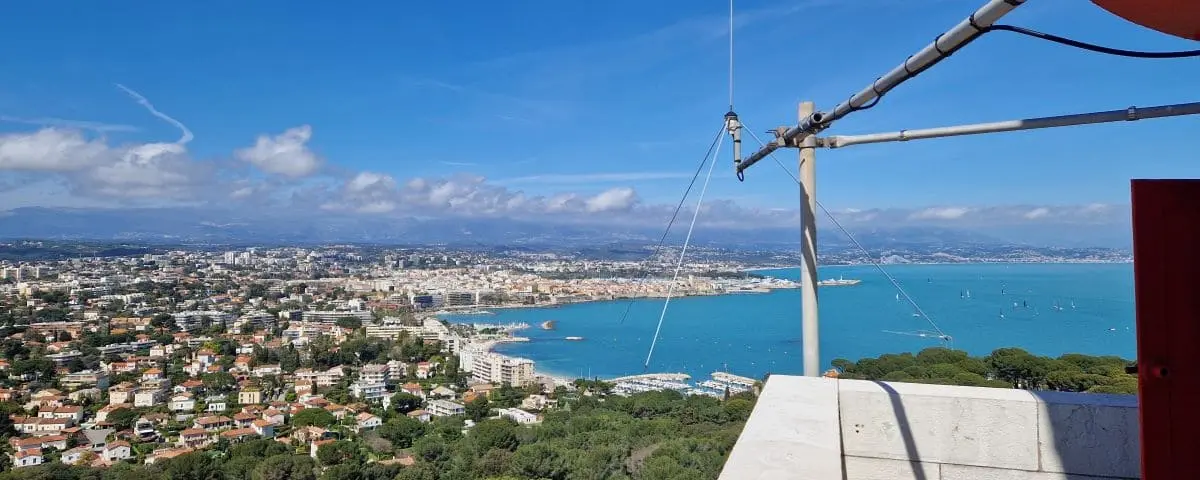
If you want the whole route before getting into the details, this is the version we recommend:
- Day 1: Arrive in Nice and settle in, using the tram or a taxi from Nice Airport.
- Day 2: Discover Nice Old Town, Castle Hill and the Promenade des Anglais, with no train needed.
- Day 3: Spend a second full day in Nice, giving yourself time for museums, neighborhoods, markets or the seafront.
- Day 4: Walk from Nice to Villefranche-sur-Mer, then return by train, combining a coastal hike with one of the Riviera’s prettiest bays.
- Day 5: Take the train to Menton, then stop in Roquebrune-Cap-Martin, mixing an elegant seaside town with a perched medieval village.
- Day 6: Spend a full day in Monaco, dividing your time between Monaco-Ville and Monte-Carlo.
- Day 7: Visit Èze Village, hike down to the coast and continue by train to Antibes, one of the most varied days of the trip.
- Day 8: Take a day trip from Nice to Cannes, focusing on La Croisette, Le Suquet and the old port.
- Day 9: Ride west to the Estérel for a coastal hike, where red rock, Mediterranean vegetation and blue water replace the polished resort atmosphere.
- Day 10: Enjoy a final morning in Nice before departure, keeping the end of the itinerary intentionally light.
Before the trip, it helps to visualize the railway line and the order of the towns. Our interactive France train map makes that much easier, while our French Riviera tourist map helps you understand how the coast, hill towns and main bases fit together.
Can You Explore the French Riviera Without a Car?
Yes. In fact, the eastern and central French Riviera are among the easiest parts of southern France to explore without a car.
The coastal railway line links Nice with many of the places travelers most want to see, including Villefranche-sur-Mer, Monaco, Menton, Antibes and Cannes. Trains are useful not only because they avoid driving, but because they remove the least enjoyable part of a Riviera road trip: summer traffic, parking searches and the temptation to spend half the day inside a car.
Seaside destinations such as Menton, Monaco, Antibes and Cannes are straightforward. You step off the train and can begin exploring on foot. Villefranche-sur-Mer is similarly easy, although the town is built on a slope.
Hilltop villages are different. Èze Village is not beside Èze train station. The station is at sea level, while the medieval village sits dramatically above the coast. Roquebrune village has the same basic geographical problem: the station is below, the historic center is above, and your legs have to do some of the work.
If you are still deciding which places deserve a place in your trip, our complete French Riviera travel guide gives a broader overview of the coast beyond this rail itinerary.
Why Nice Is the Best Base for This French Riviera Train Itinerary
For this route, Nice works best as a single base because it sits near the middle of the places you will visit.
Look east and you have Villefranche-sur-Mer, Èze, Monaco, Roquebrune-Cap-Martin and Menton. Look west and you have Antibes, Cannes and the Estérel. That balance matters. Instead of dragging luggage onto a train every second day, you can leave most of your belongings in one hotel and travel light.
Nice is also worth staying in for its own sake. It should never be reduced to a railway junction with a beach attached.
We recommend giving Nice two full days before the day trips begin. That may sound generous if you are looking at a map and counting destinations, but it improves the rhythm of the entire trip. You arrive, settle in, understand your base and only then start using the railway.
For first-time visitors, our guide to whether Nice is worth visiting explains what makes the city more than a transport hub. You can also use our one-day Nice itinerary as a foundation, then expand it over two days.
For planning on the ground, our best things to do in Nice guide and Nice tourist map are useful companions.
10-Day French Riviera Train Itinerary
Day 1: Arrive in Nice and Settle In
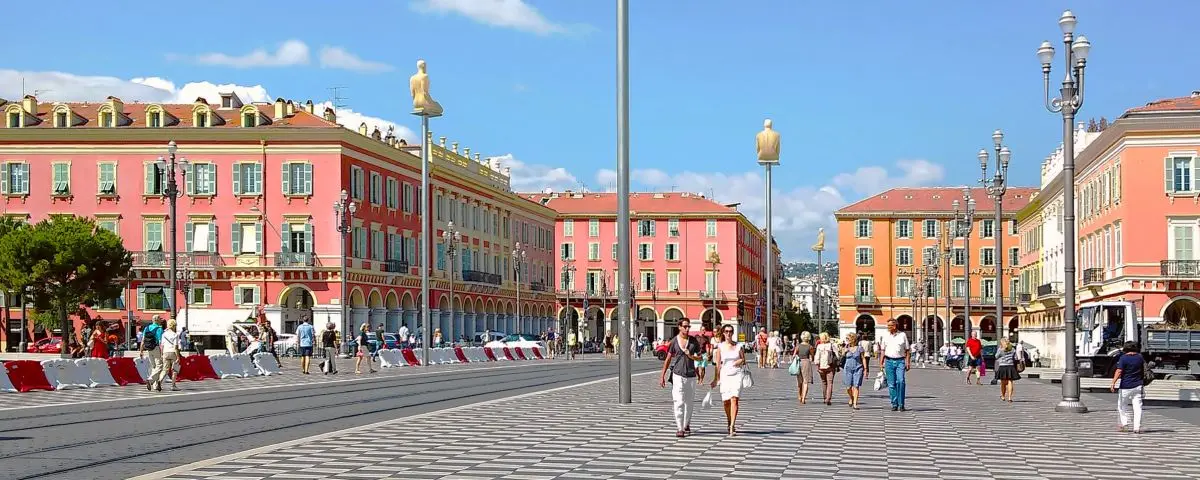
Day one should be simple. Do not begin a 10-day trip by trying to win a sightseeing competition before dinner.
After landing at Nice Côte d’Azur Airport, the easiest transfer depends on your luggage and energy. The tram is practical and links the airport with central Nice. A taxi is more comfortable if you are carrying several bags, traveling as a family or simply want a door-to-door arrival.
Once checked in, take a first walk rather than building a formal itinerary.
If your hotel is near Nice-Ville station, you will make the coming day trips easier. You do not need to sleep directly opposite the platforms, but being within a comfortable walk of the station is one of the smartest practical choices for this itinerary.
The evening is also a good time to check your first few train journeys and decide whether a regional transport pass is useful for your dates. Do not overplan every departure yet. For most days, knowing the first train you are likely to take and the final practical return window is enough.
Day 2: Explore Nice Old Town, Castle Hill and the Seafront
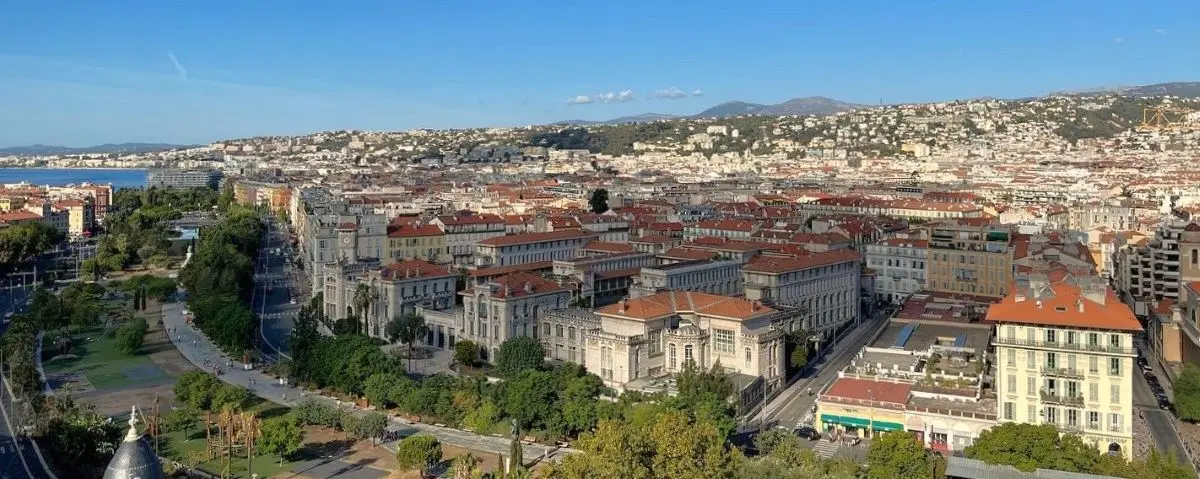
Your first full day belongs to Nice.
Start with Vieux Nice, where the streets are narrow enough to make the modern city feel far away. The pleasure here is not racing between monuments. It is looking at façades, stepping into churches, noticing small squares and passing food shops, market stalls and cafés.
The old town is at its best when you allow yourself to wander without turning every street into a waypoint.
Cours Saleya is one of the natural anchors of the area. Depending on the day, the market adds flowers, produce and the general hum of local life. From here, the seafront is only moments away.
Then climb Castle Hill. There is no castle to visit, which is a useful detail to know before you arrive expecting battlements and drawbridges. The reason to go up is the view.
From the top, Nice suddenly makes sense. The old town sits below you, the Promenade curves west along the bay, and the port appears on the other side of the hill. It is one of the best orientation points at the beginning of a French Riviera trip.
Later, walk a section of the Promenade des Anglais. The contrast with Vieux Nice is part of the pleasure: one moment you are in a close-packed Mediterranean old town, the next you have a broad horizon and the open sea.
Do not worry about covering all of Nice today. You have deliberately kept a second full day in the city tomorrow, which is what makes this itinerary feel like a holiday rather than a military exercise.
Day 3: Spend a Second Full Day in Nice
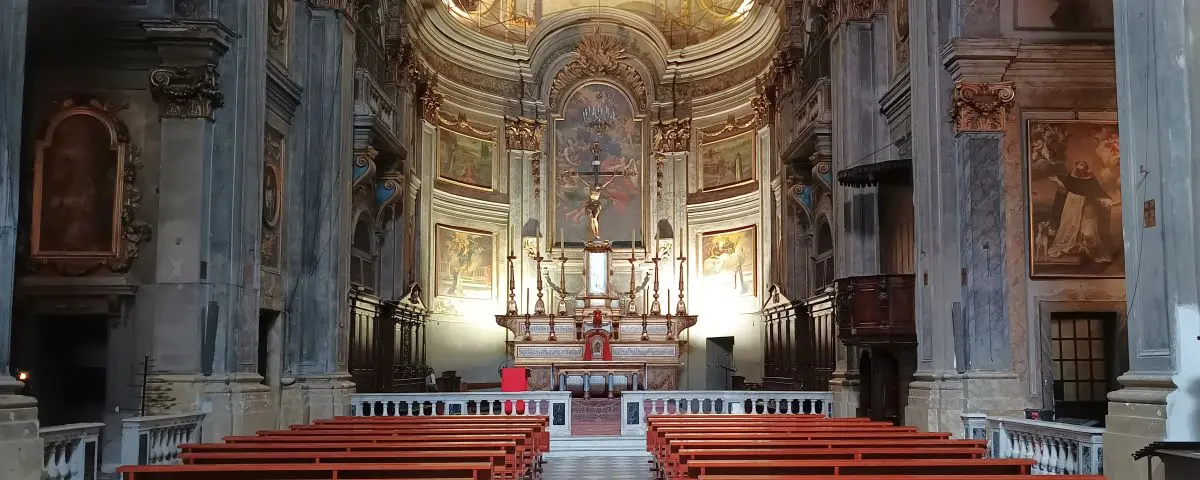
The second day in Nice is where the itinerary becomes flexible.
You can return to the old town, visit a museum, explore around the port, spend time around Cimiez, look for churches you skipped yesterday or simply take a slower morning beside the sea.
There is no single “correct” Day 3, and that is precisely why it belongs in the itinerary.
Many first-time Riviera plans make the same mistake: they use Nice only for sleeping, then depart every morning at full speed. That saves nothing if you return exhausted and realize at the end of the trip that you never really saw the city.
This is also a good moment to prepare for tomorrow’s first mixed walking-and-train day. Comfortable footwear matters more than people expect on the Riviera. The distances can be modest, but staircases, slopes and rocky paths quickly make fashionable city shoes less fashionable.
Day 4: Walk from Nice to Villefranche-sur-Mer and Return by Train
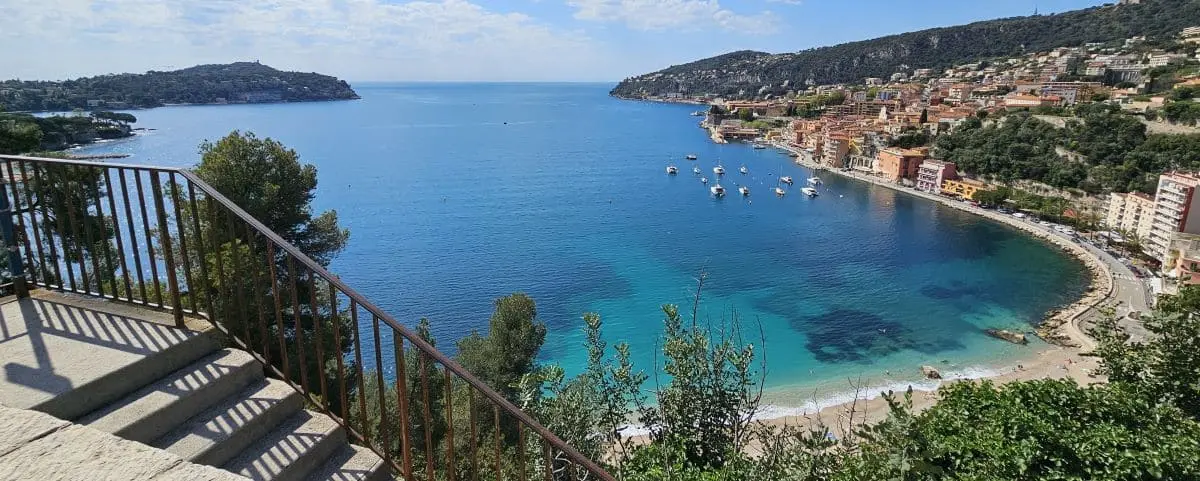
Day four is where the trip begins to show what a car-free Riviera itinerary can do better than a conventional road trip.
Instead of taking the train out of Nice, start on foot and follow the coast toward Villefranche-sur-Mer.
The route around the Cap de Nice gradually changes the scenery. Urban Nice gives way to rockier coastline, Mediterranean vegetation and glimpses of the sea between headlands. The distance is not enormous, but walking creates a genuine transition from one place to another.
This is what a train-based itinerary does well: it lets you travel in one direction without worrying about returning to a parked car.
Reach Villefranche around late morning or lunchtime, then slow down.
The town sits around one of the Riviera’s most beautiful natural bays. Its old center climbs behind the waterfront in a tangle of narrow streets and stairways. Compared with Nice, everything feels compressed: smaller scale, tighter lanes, a more intimate harbor atmosphere.
Have lunch, walk the waterfront and explore the old town. There is no need to make the afternoon complicated. Villefranche is a place to absorb rather than conquer.
When you have had enough, walk to Villefranche-sur-Mer station and take the train back to Nice. No backtracking on foot, no taxi required, no car waiting where you started.
If the sea is rough or the coastal path is closed, simply reverse the logic and take the train both ways. The day still works.
Day 5: Take the Train to Menton and Roquebrune-Cap-Martin
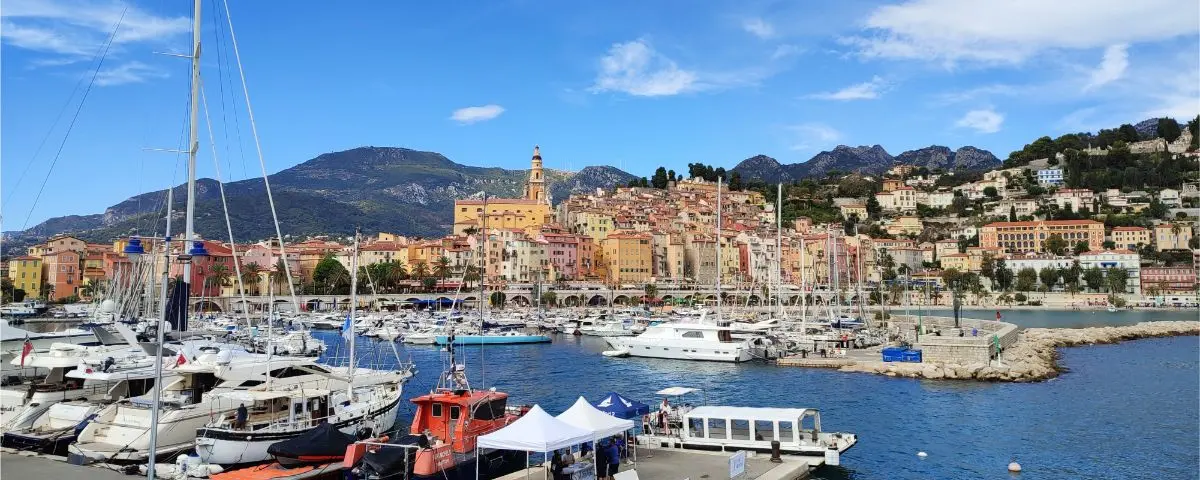
Day five heads east, almost to Italy.
For the most satisfying approach to Menton, consider staying on the train to Menton-Garavan rather than getting off immediately at the main Menton station. Starting from Menton-Garavan lets you approach the historic center from the eastern side and walk gradually toward the town.
Menton is one of the most distinctive places on this itinerary. Its old town rises above the Mediterranean in warm colors, with stairways and tight lanes climbing toward the churches above the seafront.
The Italian border is close, and Menton has a personality that feels different from Nice or Cannes. Lemons have become part of the town’s identity, gardens flourish in the mild climate, and the old town offers the postcard view most visitors remember.
If you want to plan the stop in detail, read our guide to whether Menton is worth visiting and our complete one-day Menton itinerary. We also have a guide to the best things to do in Menton and a practical Menton tourist map.
After exploring, you do not need to return to Menton-Garavan. Walk across town and leave from the main Menton station.
From there, take a westbound train to Roquebrune-Cap-Martin.
Here is the important geographical detail: Roquebrune-Cap-Martin station is down by the coast, while historic Roquebrune village is high above it. The afternoon therefore includes a real climb.
Use the stairways and steep pedestrian routes that rise from the coast. As you gain height, the Riviera opens below you. Roquebrune itself is compact, but the setting is the reason to come: medieval lanes, an old hilltop atmosphere and broad views over a very developed coastline.
After the visit, walk back down to the station and return to Nice by train.
This is one of the fuller days of the itinerary, so start reasonably early and keep lunch efficient. Menton deserves time, but Roquebrune should feel like a complementary second stop rather than another full sightseeing program.
Day 6: Spend a Full Day in Monaco
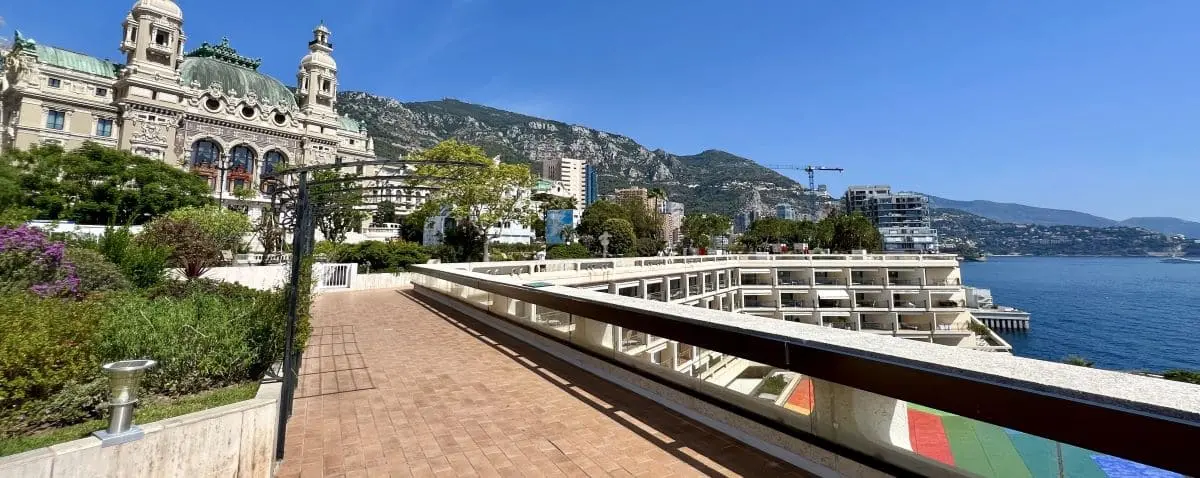
Monaco is tiny on a map and surprisingly layered on foot.
Take the train from Nice in the morning and give the principality a full day. The best way to understand Monaco is to divide your time between Monaco-Ville and Monte-Carlo rather than spending the entire visit around the casino.
Begin on the Rock, where Monaco-Ville preserves the historic core around the Prince’s Palace. The streets are narrow, viewpoints open over the harbor and the urban geography becomes almost absurdly vertical.
Depending on the season and your interests, the palace may be part of your morning. The old town itself is worth wandering, even if you do not enter every attraction.
For a deeper plan, use our guide to whether Monaco is worth visiting and our one-day Monaco itinerary. Our guide to the best things to do in Monaco and Monaco tourist map can help you organize the steepest parts of the day.
In the afternoon, shift toward Monte-Carlo.
This is the Monaco of grand hotels, manicured gardens, polished façades, luxury cars and the Casino de Monte-Carlo. It is theatrical, yes, but the contrast with the old town is what makes the day interesting.
Monaco becomes more rewarding when you treat it as a strange little country rather than a single glamorous square.
Expect slopes, elevators, tunnels and pedestrian passages. Distances look short but can be deceptive because you are constantly moving between levels. Comfortable shoes matter here too.
At the end of the afternoon, return to Monaco-Monte-Carlo station and take the train back to Nice. You will probably appreciate the simplicity of returning to the same hotel after a day of staircases and vertical streets.
Day 7: Visit Èze and Antibes
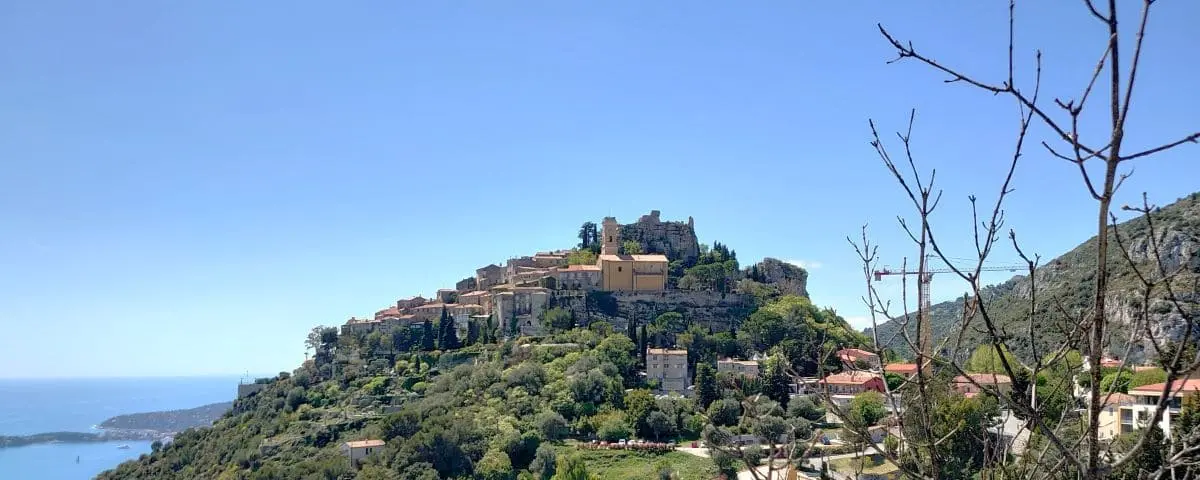
This is the most varied day of the itinerary and one of our favorites.
Start early and go directly to Èze Village. A taxi from Nice is the simplest option if you want to maximize time, while buses can also work depending on your schedule.
The key point is worth repeating: do not take a train to Èze station expecting the medieval village to be beside the platform. Èze-sur-Mer is at sea level. Èze Village is high above the Mediterranean.
Arriving early is useful because the village is small and very popular. Inside the old walls, steep stone lanes twist between restored houses, tiny passages, galleries and terraces.
Continue to the Exotic Garden at the top. The garden is attractive in its own right, but the view is the showstopper. From this height, the coastline looks completely different from the sea-level towns you have visited during the previous days.
Then hike down from the village to Èze-sur-Mer using the Nietzsche Path.
Going downhill fits this itinerary much better than hiking up, but do not mistake the trail for an urban staircase. It is a proper path, rocky in places, and sensible footwear makes a real difference.
At the bottom, continue to Èze station and take a westbound train. Pass through Nice and stay on until Antibes.
By late morning or around lunchtime, the atmosphere changes again.
Antibes has a historic center directly beside the sea. The old ramparts frame open Mediterranean views, the port is filled with boats of every imaginable size, and the lanes of the center invite aimless wandering.
If art interests you, the Picasso Museum is the obvious cultural stop. If not, Antibes still works extremely well. The old town, ramparts, port and coastline are enough to justify the afternoon.
For more planning, see our guide to whether Antibes is worth visiting and our one-day Antibes itinerary. You can also browse the best things to do in Antibes and use our Antibes tourist map to orient yourself.
Return to Nice by train in the late afternoon or evening.
It is a busy day, but the sequence makes sense: high village first, downhill hike second, coastal town third. Each part feels different, so the day rarely feels repetitive.
Day 8: Take a Day Trip from Nice to Cannes
After yesterday’s combination of hill village, hike and coastal town, Cannes is logistically simple.
Take a direct regional train from Nice to Cannes and walk from the station toward the center.
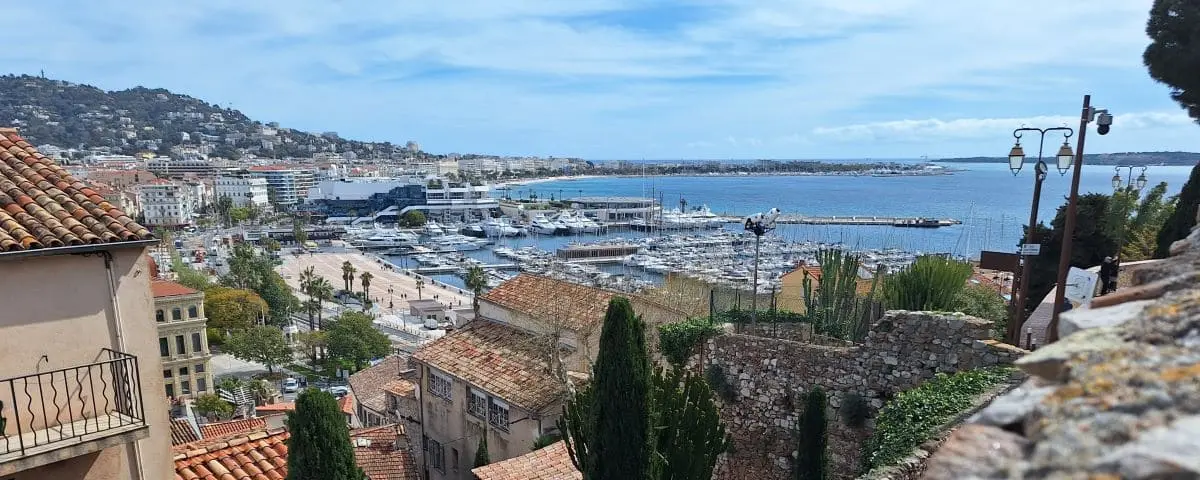
Cannes is famous for the film festival, red carpet and luxury hotels, and you should absolutely see that polished side of the city rather than pretending it does not exist. Walk around the Palais des Festivals and continue along La Croisette.
Then change the mood by heading toward Le Suquet.
This is the oldest part of Cannes, rising above the old port in a cluster of smaller streets. The scale changes immediately. Climb toward the top for views back across the harbor and modern seafront.
For a fuller breakdown, read our guide to whether Cannes is worth visiting and our one-day Cannes itinerary. We also have a guide to the best things to do in Cannes and a Cannes tourist map.
This itinerary does not add the Lérins Islands to the day. Trying to combine central Cannes, Le Suquet and a proper island excursion usually makes a one-day visit feel rushed.
Keep the islands for another trip or an extra day. Here, the aim is to understand Cannes itself.
Return to the station when you are ready and take the train back to Nice. By now, the railway routine should feel wonderfully ordinary: walk to the platform, ride along the coast, step off in your home base.
Day 9: Reach the Estérel by Train for a Coastal Hike

By Day 9, you have seen several versions of the urban Riviera. The Estérel changes the visual language completely.
Take a westbound train from Nice, passing Cannes and continuing along the coast toward the red-rock landscape of the massif.
For this itinerary, Le Trayas is useful because it gives rail access to a part of the Estérel that still feels wild and strongly Mediterranean.
Plan a hike suited to your ability, the weather and current trail conditions. Do not improvise a long summer walk at midday with one small bottle of water. Heat, exposed terrain and fire restrictions can all affect access in this part of southern France.
Proper shoes, sun protection and enough water are basic equipment rather than optional extras.
Check the exact rail ticket and transport-pass coverage before departure, because the western edge of this itinerary may fall outside the zone covered by some local passes. It is better to buy a separate ticket than discover the limitation while standing on a platform.
After the hike, return to Le Trayas station and take the train back east to Nice.
Day 10: Enjoy a Final Morning in Nice and Depart
The final day is intentionally light.
Do not schedule a last-minute excursion to another town. A spare morning in Nice is more valuable than squeezing one more destination into the itinerary.
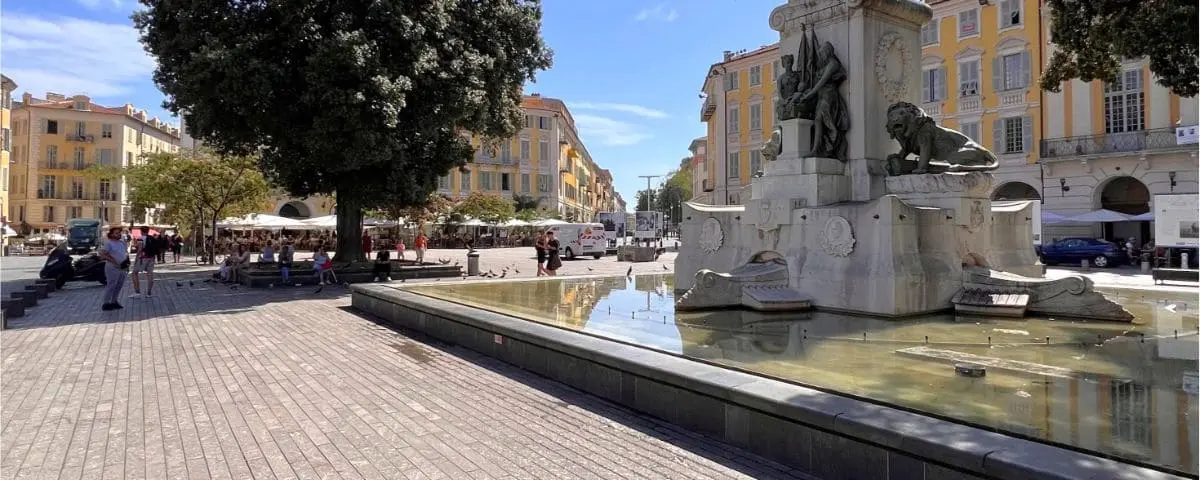
Have breakfast somewhere you liked earlier in the trip. Walk the Promenade des Anglais one last time, return to the old town, buy a few things to take home or simply sit near the sea.
This spare time also acts as insurance. If rain affected one of your Nice days, you can revisit something. If you discovered a favorite neighborhood, you can go back. If you are tired, there is nothing wrong with doing very little.
Then collect your luggage and head to Nice Airport.
As on arrival day, the tram is practical while a taxi can be easier with bags or for a family. Leave a sensible time buffer and remember that the pleasant simplicity of this itinerary comes from not trying to make every hour productive.
Ten days later, you have covered a large stretch of the Côte d’Azur without a rental car, without changing accommodation repeatedly and without spending the trip worrying about parking.
How to Travel Around the French Riviera by Train
Using TER Trains Along the French Riviera
For most of this itinerary, regional TER trains are the backbone of the trip.
The coastal line is easy to understand because many of the most useful destinations sit in sequence. From Nice, trains run east toward Villefranche-sur-Mer, Monaco and Menton, and west toward Antibes and Cannes.
That makes spontaneous travel much easier than in parts of France where every excursion requires a reservation or a complicated connection.
For short Riviera journeys, the train is usually about movement rather than ceremony. You arrive at the station, check the departure board, validate or activate whatever ticket format applies to your journey, and go.
Still, do not become careless. Train frequency varies by time of day, season and engineering work. Always check the current timetable for the specific date you travel, especially for Day 9 in the Estérel or if you plan to return late in the evening.
It also helps to learn the station names before the trip. “Monaco-Monte-Carlo” is obvious enough, but Menton and Menton-Garavan are different stops, and Èze station does not put you in Èze Village.
Train Tickets and the SudAzur Explore Pass
For a trip with repeated regional journeys, compare individual fares with the current local transport-pass options.
The SudAzur Explore Pass can be particularly interesting for travelers who plan several consecutive days of regional transport, because the value comes from repeated use rather than one spectacularly cheap journey.
However, transport products change. Zones, validity periods, eligible services and pricing can be revised, so check the current conditions shortly before travel rather than relying on an old screenshot or forum post.
The same applies to the Estérel day. Depending on your chosen station and the current pass boundaries, a separate train ticket may be required.
A useful rule is simple: calculate the journeys you genuinely expect to make, then compare. Do not buy a pass just because the name sounds convenient.
Also remember that a pass does not solve the hill-village problem. Èze Village and Roquebrune still require walking, bus or taxi logic in addition to rail.
Train Stations You Need to Know Before You Go
A few station details make this itinerary much smoother.
Nice-Ville is the main station you will use, so staying within walking distance is helpful. Nice also has other rail stops, but Nice-Ville is the practical reference point for this route.
Villefranche-sur-Mer station is near the waterfront but above parts of the seafront level, so expect stairs or slopes.
Menton-Garavan lies east of central Menton. It works well as an arrival point if you want to walk through town and leave later from Menton station.
Roquebrune-Cap-Martin station is on the coast. The historic village sits considerably higher.
Èze station serves Èze-sur-Mer, not Èze Village. This distinction can save you a frustrating morning.
Monaco-Monte-Carlo station is large, built into the rock and connected to different exits. Pay attention to signs because the wrong exit can add unnecessary climbing.
Antibes and Cannes stations are both well placed for exploring their historic centers on foot.
Finally, Le Trayas is a small station in a much less urban environment. Do not treat it like Nice-Ville, where missing one train is a minor inconvenience. Check return options before starting your hike.
Practical Tips for a Car-Free French Riviera Itinerary
Where to Stay in Nice for Easy Train Day Trips
The ideal accommodation for this itinerary balances station access with the pleasure of staying in Nice.
Aim for a hotel within roughly 10 to 20 minutes on foot of Nice-Ville station, provided the neighborhood and accommodation still suit your budget and travel style.
Sleeping directly beside the station is not essential. If you prefer the old town or seafront, you can still make the itinerary work, but factor in the extra walk or tram ride each morning.
For travelers prioritizing rail day trips, the central areas between Nice-Ville and the old town are often a practical compromise.
When to Visit the French Riviera by Train
Spring and early autumn are excellent for this itinerary.
Temperatures are generally more comfortable for walking, daylight remains useful and the coast can feel less intense than in peak summer.
Summer is completely possible, but heat and crowds change how you should structure the days. Start earlier, especially for Èze, Monaco and hiking days. Carry more water than you think you need and avoid planning exposed walks at the hottest time of day.
The railway itself can also be busier in summer, particularly around beaches and major events.
Winter has advantages too. The Riviera is not a tropical destination, but the coast often stays comparatively mild, and the reduced crowds can make old towns far more enjoyable. The trade-off is shorter daylight, more limited opening hours in some places and a different beach atmosphere.
Major local events can affect both prices and crowds. Cannes during the film festival, Monaco around major sporting events and Nice during its biggest festivals are very different experiences from an ordinary weekday.
How to Plan Hiking and Walking Days Without a Car
This itinerary includes more walking than the phrase “train itinerary” might suggest.
That is intentional.
The train handles the long linear distances, while walking gives you access to the landscapes between stations and villages.
Day 4 includes the coastal route toward Villefranche-sur-Mer. Day 5 involves the climb to Roquebrune village. Day 7 includes the Nietzsche Path down from Èze. Day 9 is a genuine hiking day in the Estérel.
For these days, check weather and trail conditions. Coastal paths can close after damage or in rough conditions. Forest access in southern France can be restricted when fire risk is high. A route that looks easy on a map may be unpleasant in extreme heat.
Wear shoes with decent grip, carry water and protect yourself from the sun. If conditions are poor, change the day rather than forcing the original plan.
The beauty of using Nice as a base is flexibility. You can swap Cannes with a hiking day, keep Monaco for cloudier weather or spend more time in Nice if conditions make an outdoor route unwise.
French Riviera Train Itinerary FAQ
How Many Days Do You Need on the French Riviera?
For a first trip focused on the eastern and central Riviera, 8 to 10 days gives you a much better balance than trying to compress everything into four or five.
With 10 days, you can spend two full days in Nice, visit several major towns and still include hiking and smaller places.
Five days is enough for a highlights trip, but you will need to choose. Nice, Monaco, Menton, Antibes and Cannes already fill the schedule quickly.
Two weeks gives you room to add places that are harder to reach by train, spend more time on beaches or islands and include slower days.
This itinerary deliberately chooses depth over geographic bragging rights. It does not try to include Saint-Tropez, the Verdon, every perched village and every island in one breath.
Which French Riviera Towns Are Easiest to Visit by Train?
Antibes, Cannes, Monaco, Menton and Villefranche-sur-Mer are among the easiest choices for train-based day trips from Nice.
Their stations place you close enough to the main sights that the rest of the visit works largely on foot.
Èze is the famous exception because the railway station serves the coast below the village. Roquebrune-Cap-Martin is similar if your goal is the historic hilltop village.
The Estérel is possible by train but requires more planning because the stations are smaller and hiking conditions matter.
This distinction is one reason we prefer building a realistic itinerary rather than publishing a generic list of “places near Nice.” Distance is only half the question. What happens between the station and the place you actually want to see matters just as much.
Do You Need to Book French Riviera Trains in Advance?
For the regional trains used on most of this itinerary, advance seat reservations are generally not the central issue in the way they are for high-speed long-distance trains.
What matters more is having the correct ticket or pass and checking the timetable for your day of travel.
That said, transport rules and ticketing systems can change, so verify the current conditions before your trip.
If you are traveling into or out of the Riviera by TGV or another long-distance service, that is a separate question. Those journeys are worth booking ahead when your dates are fixed, especially in busy periods.
For local day trips, keep the routine simple and flexible.
Can You Visit Èze by Train from Nice?
Yes, but there is an important catch.
The train from Nice takes you to Èze-sur-Mer, not directly to Èze Village.
The medieval village is high above the coast. If you arrive at Èze station, reaching the village involves a substantial uphill hike or connecting transport.
For this 10-day itinerary, we prefer the opposite direction: go up to Èze Village first by road, explore the village and Exotic Garden, then hike downhill on the Nietzsche Path to Èze-sur-Mer station.
From there, continue by train to Antibes.
It creates a cleaner, more enjoyable travel sequence and avoids beginning the morning with a steep climb before you have even entered the village.
Is 10 Days Enough for a French Riviera Train Trip?
Yes. Ten days is long enough to experience the Riviera as a series of distinct places rather than a blur seen through a train window.
You get city life in Nice, intimate seaside streets in Villefranche, Italian-influenced colors in Menton, a hilltop atmosphere in Roquebrune, the strange vertical luxury of Monaco, stone lanes in Èze, old ramparts in Antibes, cinematic glamour in Cannes and wild red rock in the Estérel.
Just as importantly, you do it without moving hotels every other night.
Wrap-Up
- Use Nice as your single base for the full itinerary and avoid unnecessary hotel changes.
- Give Nice two full days before starting the day trips so the city feels like part of the journey, not just a railway hub.
- Use regional trains for Villefranche-sur-Mer, Menton, Monaco, Antibes and Cannes, where rail works especially well.
- Treat Èze and Roquebrune as mixed transport days, because their historic villages sit above the coastal railway.
- Keep the Estérel for a dedicated nature day, and check weather, trail access and return trains before setting off.
- Choose accommodation within easy reach of Nice-Ville station if train day trips are a priority.
- Check current ticket and transport-pass conditions shortly before travel, rather than relying on old prices or coverage maps.
- Leave Day 10 light, giving yourself time for Nice, packing and an easy airport transfer.
- Build flexibility into the schedule, especially for hiking days, heat or poor weather.
- Do not add destinations simply because they fit on a map. This route works because each day has a clear purpose and a realistic rhythm.
A French Riviera trip without a car is not a compromise. Planned well, the train becomes part of the experience itself, linking a chain of Mediterranean towns while giving you the freedom to walk one way, return another and come back each evening to a city you have actually had time to know.