




Nice or Menton? The two cities sit on the same dazzling stretch of Mediterranean coast, yet they offer two very different versions of the French Riviera.
Nice is lively, cultural and cosmopolitan, with museums, grand avenues, a famous seafront and enough restaurants to keep you busy for days. Menton is smaller, calmer and more intimate, its pastel old town climbing above the sea only a few kilometers from Italy. Choosing between them is not really about finding the “better” city. It is about finding the Riviera experience that suits your trip best.
Nice or Menton Overview
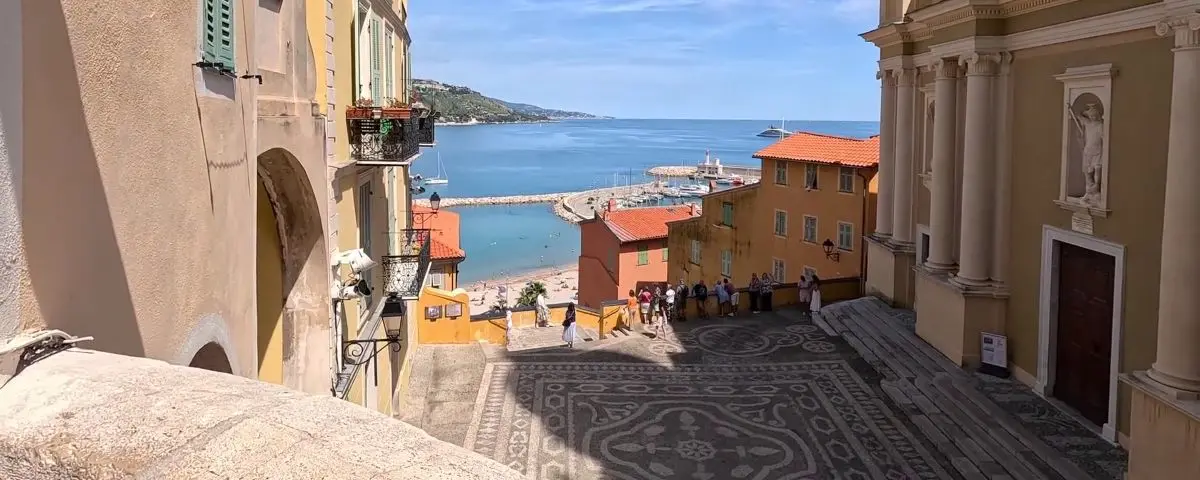
- Choose Nice if this is your first trip to the French Riviera. It offers more museums, restaurants, nightlife, transport connections and day-trip possibilities, making it the most versatile base.
- Choose Menton if you want a quieter and more romantic Mediterranean stay. Its compact old town, gardens, colorful waterfront and Italian influence create a gentler atmosphere.
- Nice is better for sightseeing and cultural variety. You can easily fill several days with Old Nice, Castle Hill, museums, markets, neighborhoods and the Promenade des Anglais.
- Menton is better if atmosphere matters more than quantity of attractions. The pleasure is in wandering through steep lanes, sitting by the sea, exploring gardens and slowing down.
- For beaches, Menton has a slight advantage if swimming is a priority. Nice has an iconic waterfront, but its broad beaches are mainly pebbly and more urban in character.
- Nice is the stronger choice for restaurants and nightlife. Menton has excellent Mediterranean and Italian-influenced food, but evenings are generally quieter.
- Without a car, both work very well, but Nice is the more practical transport hub. It has direct airport access and excellent connections along the coast.
- For most first-time travelers, we recommend staying in Nice and visiting Menton as a day trip. For couples, repeat Riviera visitors or anyone seeking a slower holiday, Menton can be the better base.
If you are still deciding where to base yourself on the coast, our broader French Riviera travel guide explains how the different parts of the region fit together.
Nice vs Menton: Atmosphere and Overall Experience
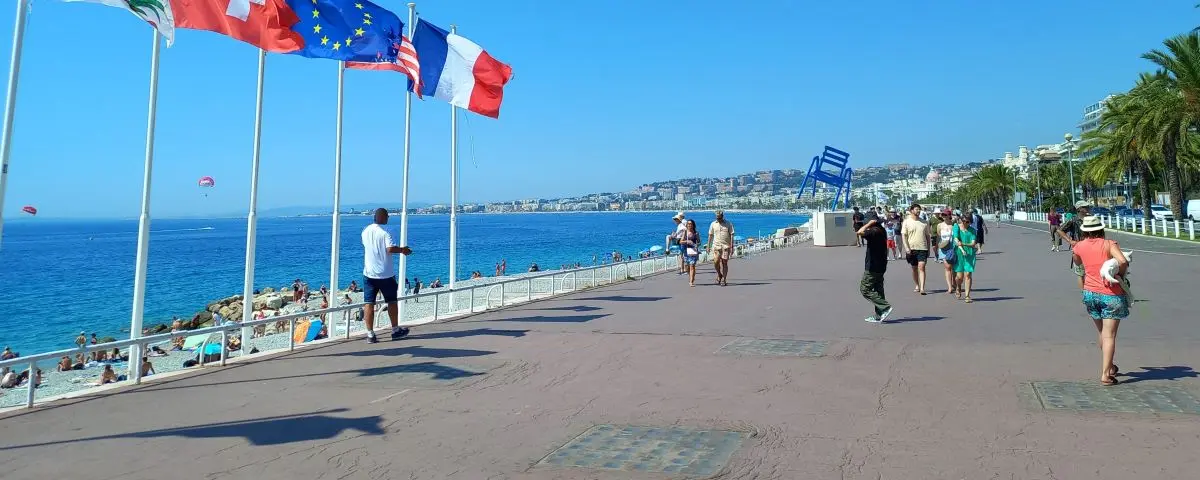
The biggest difference between Nice and Menton appears before you even start sightseeing.
Nice feels like a city. There is traffic, local life, busy shopping streets, crowded markets, grand architecture, commuters, restaurants opening late and neighborhoods that continue well beyond the postcard center. The Mediterranean is always there, but it shares the stage with urban life.
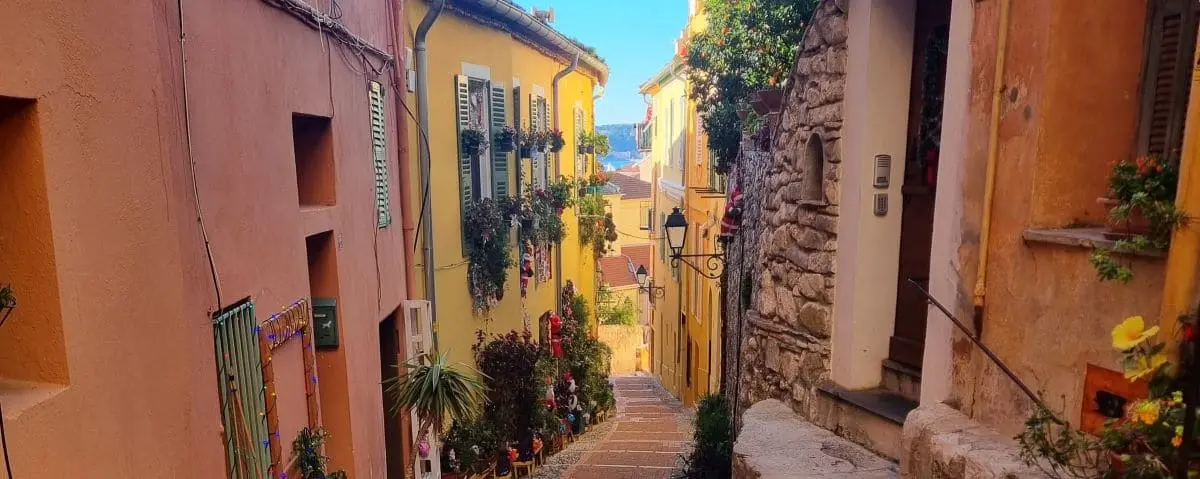
Menton feels smaller and softer. Mountains rise almost immediately behind the town, Italy lies just beyond the eastern edge of the French Riviera, and the historic center seems to tumble toward the sea in layers of ochre, yellow and terracotta.
For travelers who struggle to choose among Riviera destinations, it helps to look at our overview of the main French Riviera cities and towns. Nice and Menton occupy almost opposite positions on that spectrum.
Nice: A Lively Mediterranean City
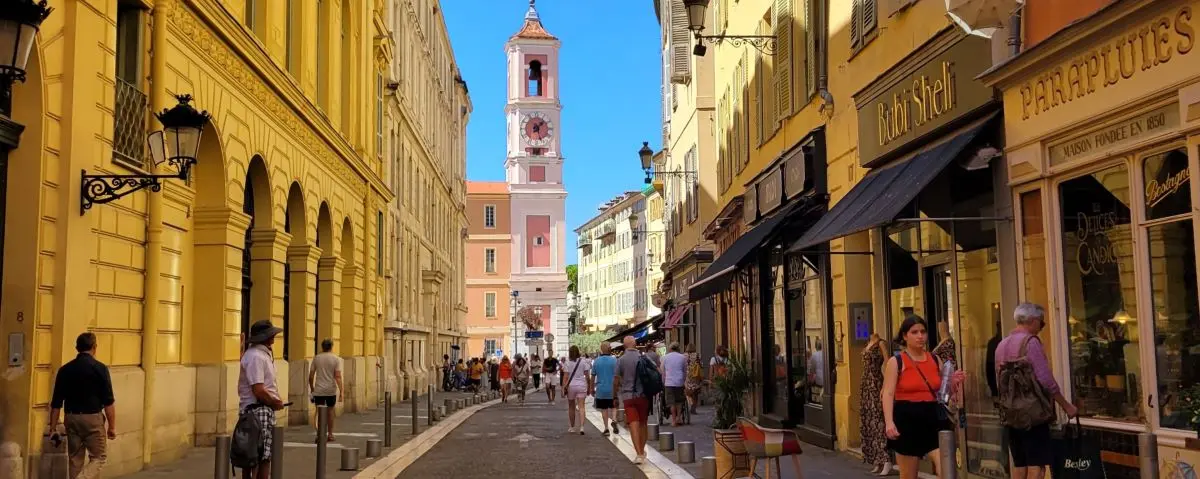
Nice has the energy of a regional capital without losing its southern character. You can start the morning among market stalls, cross elegant Place Masséna before lunch, spend the afternoon in an art museum and finish the day beside the port or in the narrow streets of Vieux Nice.
Choose Nice if you want variety and do not want your Riviera holiday to revolve only around the beach. The city rewards travelers who like changing atmosphere several times in one day.
Vieux Nice supplies the colorful Mediterranean postcard, while the Promenade des Anglais brings scale and spectacle. Cimiez feels quieter and more residential. The Libération district revolves around one of the city’s great food markets, while Port Lympia provides another evening scene entirely.
There is also something pleasantly imperfect about Nice. This is not a polished resort existing only for visitors. Laundry hangs above centuries-old streets, locals queue at market counters, scooters dart through the city, and beautiful Belle Époque façades stand beside ordinary apartment blocks.
That lived-in quality is part of its attraction. Nice feels like somewhere you can explore, not simply somewhere you admire.
If you choose it, our detailed guide to the best things to do in Nice and our Nice tourist map can help organize the city by neighborhood.
Menton: A Quieter Riviera Escape with Italian Flair
Menton makes a different first impression. The waterfront is colorful, the mountains seem closer, and the old town rises dramatically behind the sea. Look east and the Italian border is barely beyond the surrounding hills.
Its character reflects that location. Architecture, food and colors all carry an Italian note, while the town’s history as a winter resort survives in elegant villas, old hotels and remarkable gardens.
Menton is the better choice when you want the Riviera to feel peaceful rather than exciting. You come here less for a packed schedule and more for the pleasure of being somewhere beautiful.
That does not mean there is nothing to see. The Basilica of Saint-Michel-Archange towers above a maze of old streets, gardens flourish in the mild climate, Jean Cocteau left an artistic mark on the town, and the covered market injects plenty of local life into the waterfront.
But Menton rarely pushes you to hurry. A morning can disappear between the market, a café and the old town steps without feeling wasted.
Its greatest attraction is the town itself. The colorful façades, citrus trees, church towers, sea and mountains combine into one of the most distinctive urban landscapes on the eastern French Riviera.
For a closer look, see our guide to the best things to do in Menton and use our Menton tourist map to visualize the main sights.
Nice or Menton for Beaches and the Seafront?
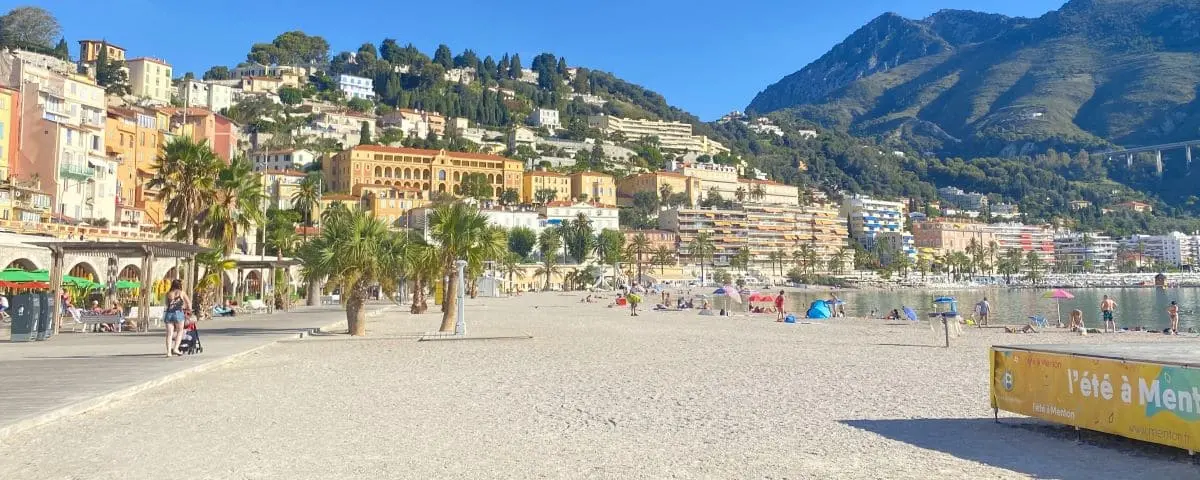
If you imagine the French Riviera as long hours beside turquoise water, the beach comparison matters.
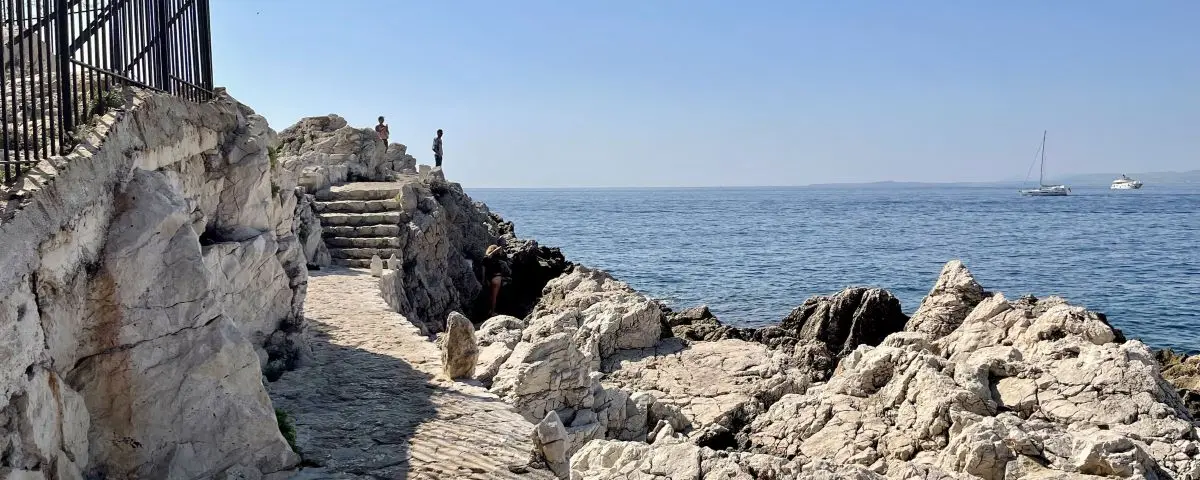
Nice has one of Europe’s most recognizable seafronts. The Promenade des Anglais curves around the Baie des Anges, backed by historic hotels and apartment buildings. It is magnificent for walking, cycling, people-watching and watching the Mediterranean change color as the light shifts.
The beaches themselves are mainly pebbles. The water can be wonderfully clear and intensely blue, but entering the sea is not always as effortless as it looks from the promenade. Beach shoes can make the experience considerably more comfortable.
Menton’s coastline feels smaller and less monumental. It lacks Nice’s sweeping urban theatre, but several beaches around the town offer a more relaxed setting for travelers who actually want to spend time swimming and sunbathing.
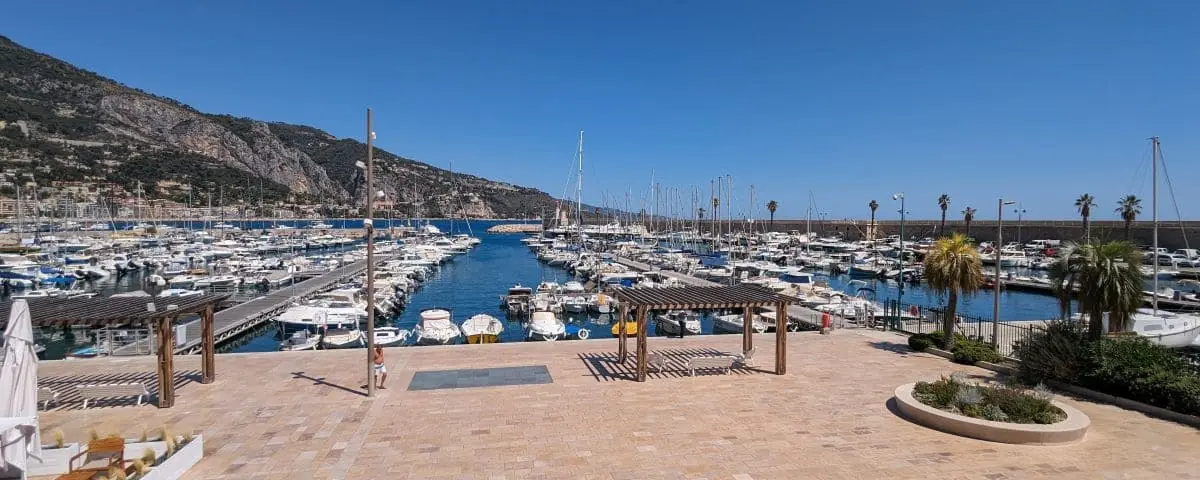
The most photogenic perspective is from the eastern waterfront, looking back toward the old town as its pastel buildings climb above the harbor. It is one of those Riviera views that seems designed for late-afternoon light.
If your priority is an iconic promenade and a lively city behind the beach, Nice wins.
If your priority is a quieter seaside holiday where the beach forms a larger part of the day, we would give Menton a slight advantage.
Neither should be chosen exclusively as a classic sandy-beach resort, however. The French Riviera is at its best when the sea is combined with markets, old towns, coastal walks, art and excursions.
Which Has More Things to Do: Nice or Menton?
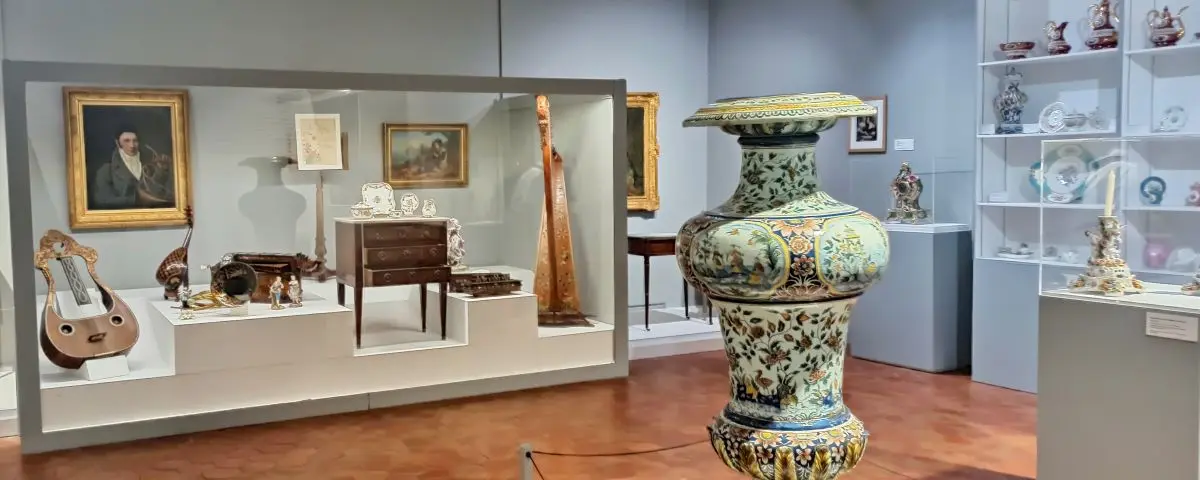
For sheer quantity, Nice wins comfortably.
A traveler can spend several days in Nice without needing to leave the city. Menton, by contrast, is easier to understand in one or two days, although slow travelers can happily stay longer.
That distinction is important. Nice gives you more things to do; Menton gives you more reason to do less.
Culture, Museums and Historic Sights
Nice is one of the strongest cultural destinations on the Côte d’Azur. Its appeal extends far beyond the Promenade des Anglais.
Art is particularly important. Matisse and Chagall are inseparable from the city’s cultural identity, while other museums explore fine art, archaeology, photography and local history. The hill of Cimiez adds Roman remains and elegant residential streets to the mix.
Vieux Nice provides the historic heart. Its tightly packed streets unfold between Baroque churches, old palaces, shops and tiny squares. The façades glow in shades of ochre, yellow and red, often framed by green shutters.
Then there is Castle Hill. The former château itself is gone, but the elevated park remains one of the city’s essential viewpoints, looking over both the old town and the port.
For museum lovers, art enthusiasts and travelers who like full sightseeing days, Nice is clearly the stronger destination.
Menton operates on a smaller scale. Its old town is the main historical attraction, rising steeply from the waterfront toward the Basilica of Saint-Michel-Archange. The ensemble is more compact than Vieux Nice, but arguably more dramatic from a distance.
Jean Cocteau adds another cultural thread. His connection with Menton appears through works and spaces associated with the artist, giving the town an artistic identity very different from Nice’s larger museum scene.
Menton cannot compete with Nice for cultural quantity, but its heritage feels unusually coherent. Baroque architecture, Belle Époque traces, Mediterranean gardens and Italian influences all belong naturally to the same small place.
Old Towns, Markets, Gardens and Scenic Walks
The old-town comparison is closer.
Vieux Nice is larger and livelier. Narrow streets stay busy with restaurants, bakeries, shops and bars. Cours Saleya, on the southern edge, is one of the best-known market areas on the Riviera and gives the neighborhood much of its daytime rhythm.
There are always more streets to turn down, another square to discover, another church interior or food counter to investigate. Nice is better if you enjoy the density and unpredictability of an urban old town.
Menton’s vieille ville is quieter and more vertical. Stairs climb between pastel façades toward the basilica and the old cemetery above town. From certain angles, the buildings seem stacked one on top of another between mountain and sea.
Gardens strengthen Menton’s case. Its mild climate and history of wealthy winter residents produced several remarkable botanical spaces, filled with Mediterranean and exotic vegetation.
This is where Menton can surpass Nice for a particular kind of traveler. If you prefer gardens, architectural details, panoramic walks and slow exploration to museums and urban bustle, Menton may actually feel richer.
The markets also reveal the difference between the two places. Nice offers greater variety, including Cours Saleya and the substantial Libération market. Menton’s covered market is smaller but wonderfully placed near the sea and old town.
One feels metropolitan. The other feels intimate.
Nice vs Menton for Restaurants and Nightlife

Nice is the obvious winner for variety.
As a much larger city, it supports everything from tiny Niçoise institutions and market counters to contemporary restaurants, cocktail bars, wine bars and international cooking. Local specialties give the city a particularly strong culinary identity: socca, pan bagnat, petits farcis and salade niçoise are not decorative tourist inventions here, but part of the local food culture.
If eating somewhere different every night is an important part of your holiday, choose Nice.
The evening also lasts longer. Vieux Nice, the port and central neighborhoods provide plenty of places for drinks after dinner, and the city has a genuine nightlife scene rather than merely a collection of resort bars.
Menton is more subdued. Mediterranean cooking naturally meets Italian influence, and its proximity to the border makes pasta, fresh produce, seafood and citrus flavors feel entirely at home.
There are very good places to eat, but less choice overall. After dinner, the town becomes noticeably calmer.
For a romantic meal followed by an evening walk beside the sea, Menton is excellent. For bars, nightlife and sheer restaurant choice, Nice wins easily.
This difference should not be underestimated when choosing where to stay for four or five nights. A quiet town can feel wonderfully restorative to one traveler and too sleepy to another.
Nice or Menton for Hotels and Budget?
Neither Nice nor Menton is automatically a budget destination. This is the French Riviera, and summer demand can push accommodation prices upward across the coast.
The difference lies more in choice.
Nice has a much larger accommodation market. You can find hostels, apartments, simple hotels, boutique properties, grand historic addresses and luxury hotels along the waterfront. That range makes it easier to adjust the trip according to budget and location.
The downside is demand. The most desirable central neighborhoods can become expensive, particularly during busy periods and major events.
Menton has fewer hotels overall, but the smaller scale can work beautifully for travelers looking for character, sea views or a quieter residential atmosphere.
Nice is usually easier for finding the exact accommodation type you want. Menton is better when the setting of the hotel matters more than having dozens of alternatives.
Location is especially important in Menton because the town rises sharply away from the sea in places. A hotel that looks close on a map may involve a serious uphill walk.
In Nice, staying around the center, Old Nice, Jean-Médecin or the port generally gives you easy access to restaurants and public transport.
From our experience helping travelers plan trips around France, we would not choose between Nice and Menton based on room price alone. First decide which destination suits your travel style, then compare accommodation for your actual dates. Seasonal variation can matter more than the general reputation of either city.
Which Is a Better Base for Exploring the French Riviera?
This is where Nice has its strongest advantage.
Nice sits at the center of one of the most interesting stretches of the Riviera and has excellent transport connections. To the east lie Villefranche-sur-Mer, Saint-Jean-Cap-Ferrat, Èze, Monaco and Menton. To the west are Antibes and Cannes.
For a first French Riviera trip without a car, Nice is difficult to beat as a base.
Menton is not isolated. Far from it. Regional trains make the coastal corridor easy to explore, and Monaco lies conveniently between Menton and Nice.
But Menton sits near the eastern end of the French coast. That is perfect for Monaco, Roquebrune-Cap-Martin and excursions toward Italy, but less convenient if you also want to spend significant time in Antibes, Cannes or farther west.
Our French Riviera tourist map makes this geography much easier to understand before you choose a base.
Getting There and Getting Around Without a Car
Nice is the easiest of the two for international arrivals. Nice Côte d’Azur Airport sits beside the city, and public transport connects the airport with central Nice.
Once there, the tram and bus networks cover the main urban areas, while regional trains provide access along the coast. You can build an excellent French Riviera itinerary without renting a car.
Menton is also perfectly manageable without one. The railway station is within walking distance of the center, while local buses connect surrounding communities and inland valleys.
In fact, we would actively avoid choosing a car simply for travel between Nice, Monaco and Menton. Parking and summer traffic can remove much of the pleasure from these compact coastal destinations.
Nice’s main advantage is that more journeys begin or pass through it. Menton has the practical disadvantage of being farther east, but the emotional advantage of feeling closer to the quieter edge of the Riviera.
Best Day Trips from Nice and Menton
From Nice, the possibilities are unusually good. Villefranche-sur-Mer offers a postcard harbor almost next door. Èze provides the classic perched-village experience. Monaco is straightforward to reach, while Antibes gives you another old town with an entirely different atmosphere.
Cannes is also realistic for a day out. If that city is competing for your accommodation choice, read our comparison of Nice or Cannes.
Antibes makes another strong alternative for travelers wanting a smaller coastal base without going as far east as Menton. We compare them directly in Nice or Antibes.
From Menton, Monaco becomes an obvious excursion, as does Roquebrune-Cap-Martin. Italy is also tantalizingly close, opening the possibility of crossing the border for a change of language, food and atmosphere.
For travelers tempted by the principality, our Nice or Monaco comparison helps clarify which makes the better base.
Nice wins for the number and geographical spread of day trips. Menton wins if your plans are concentrated around the eastern Riviera and the Italian border.
Who Should Choose Nice and Who Should Choose Menton?
By this stage, the comparison becomes less about sights and more about you.
Two travelers can visit exactly the same places and come away with opposite preferences. The easiest way to make the final decision is to match each destination to the type of trip you are planning.
First-Time Visitors
For a first visit to the French Riviera, we recommend Nice.
It gives you the broadest introduction to the region in one place: sea, old streets, local food, Belle Époque architecture, art, markets and urban Mediterranean life.
More importantly, it makes exploring the rest of the Riviera remarkably simple. You can sleep in the same hotel while visiting several dramatically different destinations.
That matters on a first trip. Instead of changing accommodation every couple of nights, you can learn how the coast fits together and decide which places deserve a longer stay next time.
Menton is still an excellent first destination if you know exactly what you want: quiet evenings, attractive streets, gardens and a slower pace.
But if you are genuinely undecided, Nice is the safer all-round choice.
Couples and Romantic Trips
Here Menton fights back strongly.
The old town glowing above the sea at sunset, palm-lined waterfront walks, quiet gardens and Italian flavor create an atmosphere that feels naturally romantic.
There is also less temptation to turn every day into an itinerary. You can spend a morning exploring, take a long lunch, return to the beach, then climb into the old town before dinner.
For couples wanting a relaxed romantic getaway, we would choose Menton.
Nice works better for couples who associate romance with activity: museums, wine bars, restaurants, evening walks through busy streets and spontaneous day trips.
Both can work beautifully. The question is whether your ideal couple’s holiday involves doing more together or slowing down together.
Families and Beach-Focused Trips
Families can enjoy both, but Nice has the advantage for variety.
If children tire of the beach, you have parks, museums, markets, different neighborhoods and easy excursions. Public transport also makes it simpler to structure days without spending hours in a car.
Menton’s compact scale is appealing for families wanting a calmer holiday. The town is easier to grasp, the waterfront is never far away, and the overall rhythm is more relaxed.
For a trip strongly focused on swimming, we would lean toward Menton.
For a family holiday combining beach time with sightseeing and multiple day trips, Nice is the more flexible option.
One small consideration matters: both cities have elevation changes. Castle Hill and parts of Nice require climbing, while Menton’s old town rises steeply from the waterfront. Families traveling with very young children should choose accommodation location carefully.
Travelers Looking for Nightlife or a Quieter Stay
This is the easiest category of all.
Choose Nice for nightlife. Choose Menton for peace.
Nice has more bars, late restaurants, evening activity and people in the streets. You do not need to party to appreciate that energy. Simply knowing that the city remains alive after dinner makes a stay feel more spontaneous.
Menton becomes calmer. A walk beside the Mediterranean, a drink on a terrace and an unhurried dinner are closer to the natural evening rhythm.
For some visitors, that is precisely the dream.
For others, three quiet nights are enough before they start looking toward Nice.
If you are comparing the eastern Riviera with a far more glamorous resort experience, our Nice or Saint-Tropez guide explores another very different choice.
Can You Visit Nice and Menton on the Same Trip?

Absolutely, and for many travelers this is the best solution.
The two destinations are linked by the coastal railway, with Monaco between them, so you do not actually need to choose one and ignore the other.
If you have three or four nights on the French Riviera, we would normally stay in Nice and visit Menton for the day. Arrive in the morning, explore the market and old town, visit one of the gardens or cultural sites, enjoy lunch, then linger by the waterfront before returning.
With five to seven nights, you have more options. Nice still works as a single base, particularly if you want to add Antibes, Èze, Monaco or Cannes.
Splitting the stay makes more sense when you actively want the contrast. Spend several busy days in Nice, then move to Menton for two quieter nights at the end.
The combination works because the cities complement rather than duplicate each other. Nice supplies scale, culture and movement. Menton supplies intimacy, color and calm.
Wrap-Up: Nice or Menton, Our Final Verdict
- Best overall choice: Nice. For most travelers, especially first-time visitors, it offers the best balance of sightseeing, restaurants, transport, culture and day trips.
- Best for a quiet Riviera holiday: Menton. Choose it if you value atmosphere, gardens, leisurely meals and Mediterranean calm more than a long list of attractions.
- Best for culture and things to do: Nice. Its museums, historic neighborhoods, markets and urban variety easily fill several days.
- Best for couples and romance: Menton. The smaller scale, Italian influence and colorful old town make it especially appealing for a slower trip together.
- Best for nightlife and dining variety: Nice. The larger city simply gives you far more choice once the sun goes down.
- Best for a beach-focused stay: Menton, by a small margin. Nice has the more famous seafront, but Menton often feels easier for days built around swimming and relaxation.
- Best French Riviera base without a car: Nice. Its airport access and position on the coastal transport network make exploring in both directions straightforward.
- Best strategy if you still cannot decide: stay in Nice and visit Menton. You will experience both sides of the eastern French Riviera without complicating your itinerary.
So, Nice or Menton? Choose Nice when you want the Riviera to give you more. Choose Menton when you want the Riviera to ask less of you.
There is no poor choice here. One is a Mediterranean city with an endless appetite for art, food and movement; the other is a sunlit border town where pastel houses, gardens and mountains meet the sea. Pick the rhythm that feels like your holiday.