




Intro: The Best of Nice Doesn’t Need a Price Tag

Nice has a reputation for luxury hotels, glamorous beach clubs, and expensive Riviera holidays. Yet some of its greatest pleasures cost nothing: a morning among ochre-colored lanes, a swim in the Mediterranean, or a panorama from a pine-covered hill. You can discover the city’s character without paying a single admission fee.
We’ve brought together 23 genuinely worthwhile free things to do in Nice, from famous landmarks to quieter gardens and cultural discoveries. Some require nothing more than comfortable shoes; others are best enjoyed on particular days. Here’s where to go, what to look for, and how to make the most of your time.
Free Things to Do in Nice at a Glance
If you’re short on time, start with these highlights:
- Best overall experience: Wander through Old Nice, especially early in the morning.
- Best sea views: Climb Castle Hill and follow the Promenade des Anglais.
- Best free beach activity: Swim or relax on a public section of the Baie des Anges.
- Best local atmosphere: Browse Cours Saleya or the Libération food market.
- Best free museum: Explore the Musée des Arts Asiatiques.
- Best quieter escape: Choose Mont Boron or the Cimiez Monastery Gardens.
Our advice: Combine the Old Town, Cours Saleya, Castle Hill, and the seafront on your first day. Save the more distant gardens and museums for a longer stay.
Explore Nice’s Old Town and Historic Squares for Free
Nice is a city made for wandering. Its historic streets and public squares offer an introduction to the architecture, everyday rituals, and Italian influences that distinguish it from other French seaside resorts. No tickets, no guided tour necessary.
1. Wander Through Old Nice (Vieux Nice)
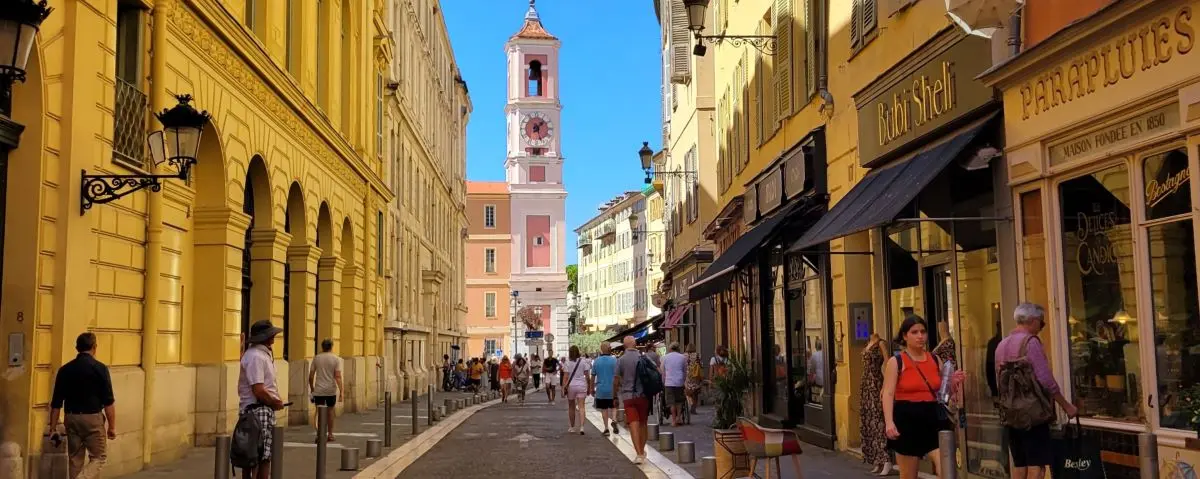
Step into Vieux Nice and the elegant Riviera suddenly turns into a lively Mediterranean village. Narrow passages wind between tall buildings painted saffron, terracotta, and faded red. Green shutters hang over tiny shops, while church domes appear unexpectedly above the rooftops.
The pleasure is in getting pleasantly lost. Follow Rue Droite, slip through Rue de la Préfecture, and emerge into Place Rossetti beneath the cathedral’s dome. Early morning is particularly rewarding, before the souvenir shops and restaurant terraces take over.
Allow at least an hour, preferably more. Our Old Nice tourist map helps you keep your bearings without turning the walk into a rigid checklist. If historic streets are your priority elsewhere on the coast, our Nice or Antibes comparison is worth a look.
2. Visit Place Masséna
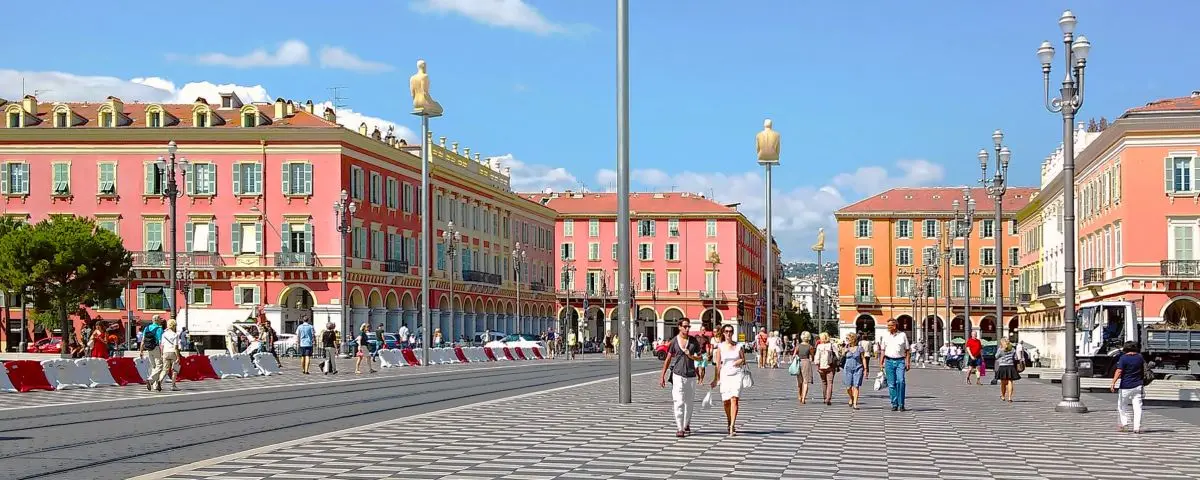
Between the Old Town and modern Nice lies Place Masséna, the grand square where most walks across the center seem to converge. Red-ochre buildings, elegant arcades, and a bold black-and-white checkerboard pavement make it immediately recognizable.
Look up. Seven illuminated figures by artist Jaume Plensa sit high above the square, part of the installation Conversation à Nice. Below, trams glide past the Fountain of the Sun and its statue of Apollo. It’s one of the city’s best places to appreciate Nice’s architectural contrasts.
The square is especially atmospheric after dark, when the sculptures glow above the passing crowds. You can locate it and nearby landmarks on our Nice tourist map.
3. Admire Place Garibaldi
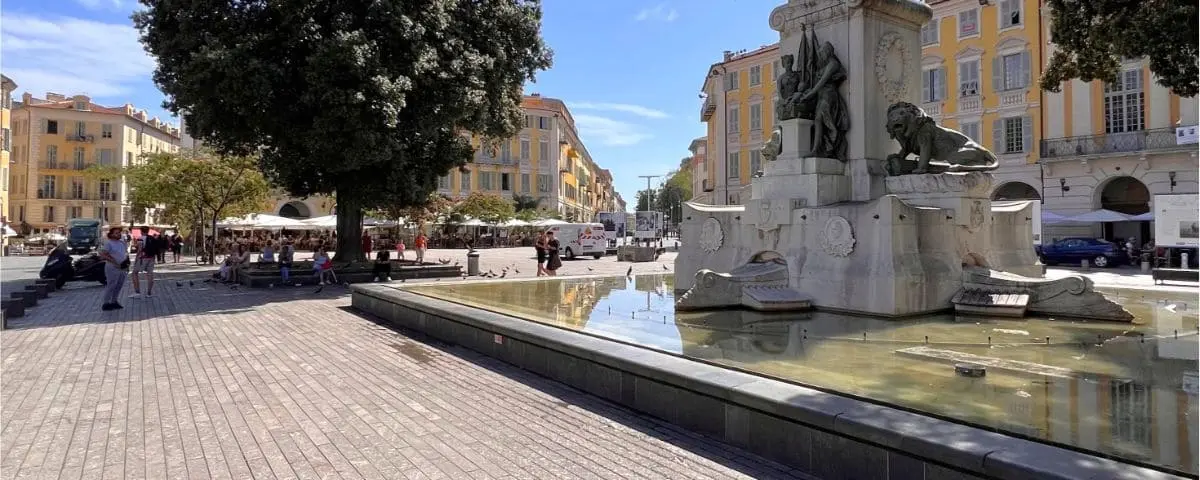
With its arcades, yellow façades, and green shutters, Place Garibaldi feels as though a corner of Turin has been transported to the French Riviera. The square honors Giuseppe Garibaldi, born in Nice in 1807, when the city was part of the Kingdom of Sardinia.
Come for the Italian atmosphere, not for an expensive café terrace. Walking beneath the arcades and admiring the symmetrical architecture costs nothing. Watch the trams cross the square, then notice how the atmosphere changes as you head toward the port.
This is also a convenient crossroads between Vieux Nice, Castle Hill, and Port Lympia.
4. Relax Along the Promenade du Paillon

A green corridor runs through the heart of Nice, replacing traffic and hard urban edges with lawns, trees, and playful fountains. The Promenade du Paillon is a favorite with local families, especially around the broad reflecting pool where jets of water rise unexpectedly from the paving.
For families, this is one of the easiest free activities in Nice. Children can enjoy the water features and play areas while adults find a shady bench. On a hot afternoon, the mist and greenery are a welcome change from the seafront.
The park also connects several major sights, making it a natural walking route rather than a separate excursion. Some sections or fountains may be temporarily unavailable during maintenance or redevelopment works.
Enjoy Nice’s Free Beaches and Coastal Walks
The Mediterranean is Nice’s most generous attraction. Public beaches, harbor views, and dramatic coastal paths all offer ways to enjoy the sea without renting a lounger or booking a boat trip. Just remember that the shoreline here is mostly pebbles, not sand.
5. Walk Along the Promenade des Anglais
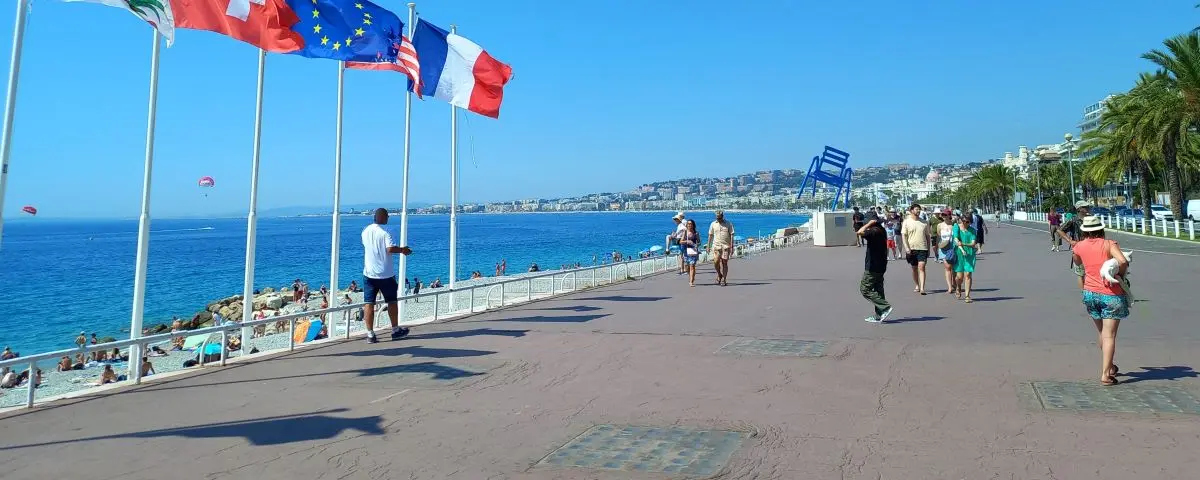
The Promenade des Anglais is Nice’s signature boulevard, stretching beside the sweeping Baie des Anges. Palm trees, sea-facing hotels, cyclists, and walkers form an ever-changing scene, with the famous blue chairs offering front-row seats to the Mediterranean.
Walk it in the morning for softer light and a calmer atmosphere. You’ll pass distinguished buildings such as Le Negresco and gain a sense of why the city became a fashionable winter retreat in the nineteenth century. The waterfront also tells the story of Nice’s UNESCO-listed winter-resort heritage.
There’s no need to cover the entire promenade. A stroll between the Old Town and the central beaches captures its essence. Return around sunset, when the sea changes from turquoise to silver.
6. Relax on Nice’s Public Beaches

Nice’s beachfront is a long succession of public and private stretches, with smooth pebbles replacing the golden sand found at some Riviera resorts. Public sections are free to access: spread out your towel, read a book, or simply watch the waves break beneath the promenade.
Choose a public beach and bring your own towel to avoid beach-club charges. Plage du Centenaire and the beaches farther west are options, while the small coves around La Réserve offer a different, rockier setting. Water shoes make a surprising difference on the stones, and the seabed can drop away quickly.
Swimming is best when the sea is calm and supervised areas are operating. For a broader seaside comparison, see Nice or Cannes, since the two cities offer rather different beach experiences.
7. Stroll Around Port Lympia
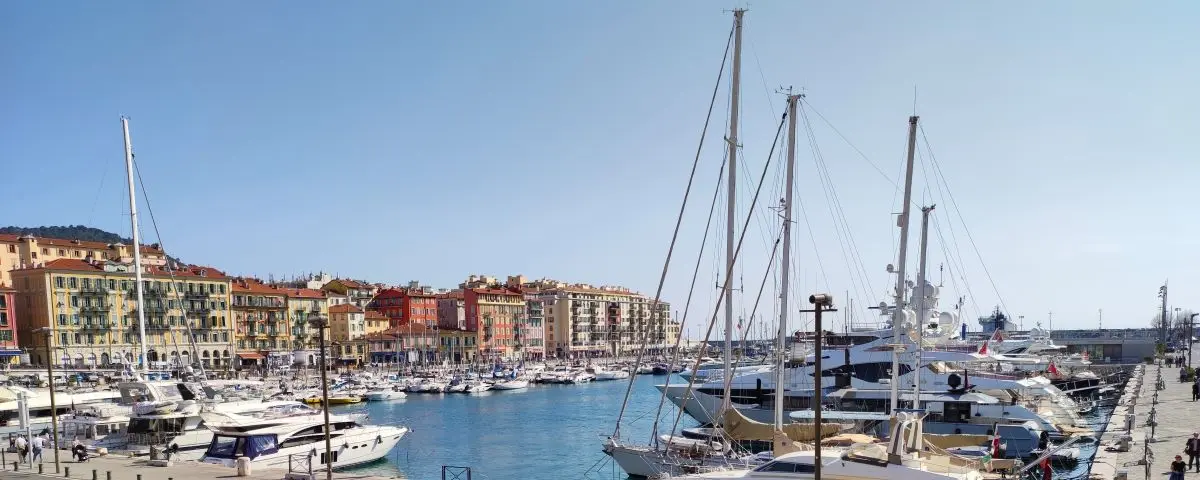
A few minutes beyond the Old Town, Port Lympia exchanges the beachfront’s open horizon for a colorful harbor framed by hills. Traditional fishing boats share the water with sailing vessels and expensive yachts, while pastel façades climb above the quays.
Walk around the basin and pause near the church of Notre-Dame du Port. The real attraction is the contrast between working-port details and Riviera elegance.
We particularly like this area toward the end of the afternoon, when the light warms the buildings. If harbors are central to your holiday plans, compare the very different personalities of Nice and Saint-Tropez.
8. See the Lighthouse from Nice’s Port Jetty

Follow the harbor toward its seaward edge and the city begins to feel wonderfully distant. The outer jetty and lighthouse frame the entrance to Port Lympia, where sheltered water meets the open Mediterranean and boats arrive from beyond the bay.
It’s a good spot for harbor photography and a quieter coastal perspective. Look back toward the colorful buildings and the slopes of Castle Hill, or watch vessels negotiate the port entrance.
Port facilities are working areas, however. Access to sections of the jetty can be restricted, so stay on clearly public paths, obey signs and barriers, and never venture onto exposed structures in rough weather.
9. Hike the Sentier du Littoral Coastal Path
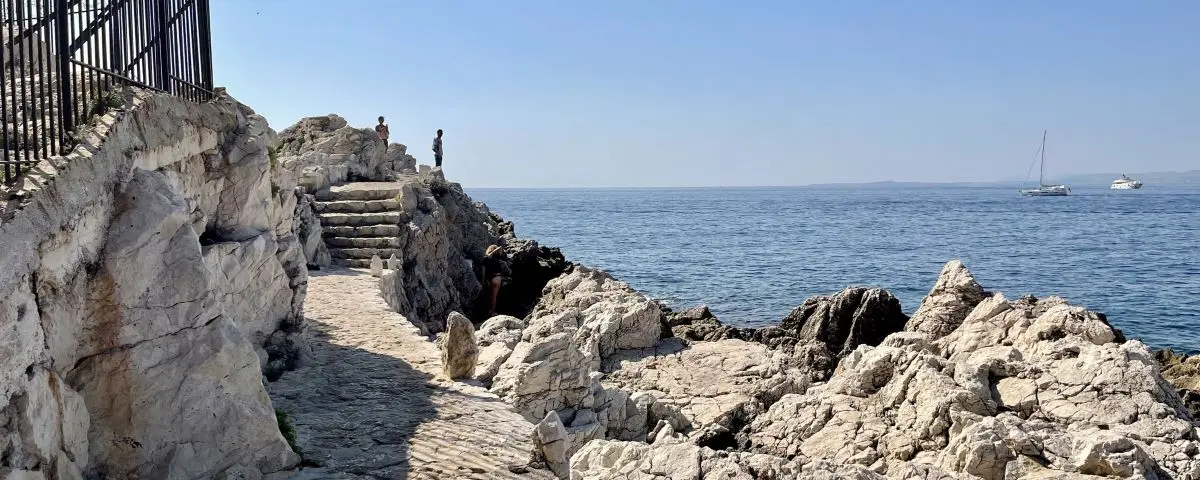
Beyond the port, Nice reveals a wilder coastline of limestone rock, pines, and small coves. The Sentier du Littoral begins near Coco Beach and winds around Cap de Nice before continuing, with an inland interruption, toward Villefranche-sur-Mer.
This is the best free walk for travelers who prefer natural scenery to city streets. Expect staircases, uneven surfaces, and stretches close to the water. The full route is roughly 6 km (3.7 miles) and takes around two hours one way, although many people simply walk a short section and turn back.
Wear suitable shoes and avoid the route during heavy seas or after weather-related closures. For more ideas away from the usual landmarks, see our unusual things to do in Nice. Those considering a quieter coastal base can also compare Nice or Menton.
Browse Nice’s Markets for Free
Markets are part of everyday life in Nice. Browsing is free, even when the olives, flowers, antique books, and secondhand treasures make resisting temptation difficult. Each of these four markets offers a different atmosphere, so choose according to the day and your interests.
10. Experience the Cours Saleya Market
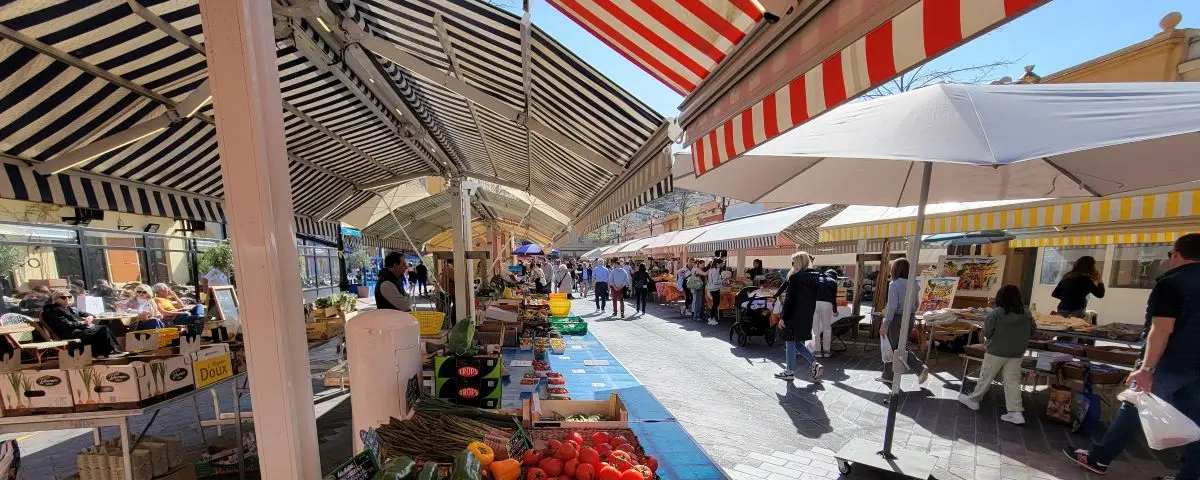
Cours Saleya is the colorful stage of the Old Town. On most mornings from Tuesday to Sunday, stalls fill the broad pedestrian street with flowers, vegetables, herbs, and local specialties. Mimosa in season, bunches of lavender, and fragrant fruit all compete for attention.
Visit before late morning to enjoy the market at its liveliest. You can admire the displays, listen to stallholders chatting, and enjoy the atmosphere without buying anything. Behind the stalls, the low buildings of the Ponchettes recall an older Nice, when the sea lay at the center of fashionable promenades.
A word of caution: this is also a major tourist attraction, and not every product is local. Treat it as a wonderful place to look, rather than assuming it is automatically the cheapest place to shop.
11. Discover the Libération Market

For a more everyday side of Nice, head north to the Libération neighborhood. Around Avenue Malausséna and Place du Général de Gaulle, market stalls supply residents with seasonal produce, cheese, seafood, and flowers, generally from Tuesday to Sunday mornings.
Libération feels less like a sightseeing attraction and more like a neighborhood at work. Shoppers inspect tomatoes, vendors call out prices, and the smell of fresh produce drifts through the streets.
Nearby, the former Gare du Sud adds an architectural flourish to the district. Come in the morning, when the market is active, rather than expecting the same atmosphere late in the afternoon.
12. Browse the Place du Palais Antiques and Book Market

On Saturdays, Place du Palais de Justice becomes an outdoor market for collectors, readers, and anyone who likes old objects with a story. The focus changes through the month: secondhand books and rare editions on some Saturdays, postcards and vintage records on others, and arts or crafts at other times.
You don’t have to be a collector to enjoy browsing. Old photographs reveal another Riviera, while faded book covers and postcards offer glimpses of holidays long past.
This is distinct from the Monday antiques market on Cours Saleya. Check the weekly theme if you’re hoping to see a particular type of stall.
13. Explore Les Puces de Nice Flea Market

Tucked into the port district around Rue Robilante, Les Puces de Nice is a smaller, more permanent flea-market destination. Antique furniture, mirrors, ceramics, vintage ornaments, and curious household objects create the sort of clutter that rewards an unhurried look.
Come for the pleasure of the hunt, even if you don’t intend to buy. Unlike Cours Saleya, the setting is less theatrical, and the finds are sometimes more specialized. One stall may be devoted to furniture; the next could be crowded with prints or porcelain.
It’s easy to include while visiting Port Lympia. Typical opening days run from Tuesday to Sunday, but individual dealers may keep different hours.
Discover Free Parks, Gardens, and Viewpoints in Nice
Nice is not only a city of façades and beaches. Its surrounding hills offer panoramic views, ancient olive groves, and peaceful gardens, often within easy reach of the center. These are some of the best places to slow down and enjoy the Riviera without paying for an attraction.
14. Climb Castle Hill (Colline du Château)

If you do only one free activity in Nice, make it Castle Hill. Despite the name, there’s little castle left to admire. Instead, the wooded hill above the Old Town offers something better: magnificent views over the Baie des Anges, terracotta rooftops, and Port Lympia.
Climb the steps near Quai des États-Unis, or use the public lift when operating. At the top, wander between viewpoints, shaded paths, the artificial waterfall, and traces of the former fortress. The scenery changes dramatically from one side of the hill to the other.
Allow about an hour, longer if you want a leisurely picnic. The park itself is free, although opening hours vary with the season. These views are also a good reminder of what makes Nice or Monaco such an interesting choice for Riviera visitors.
15. Visit the Château Cemetery (Cimetière du Château)

Near the summit of Castle Hill lies one of Nice’s most atmospheric and overlooked places. The Château Cemetery occupies a spectacular hillside setting, with elaborate tombs, sculpted angels, and views toward the city and sea.
It’s worth visiting for its funerary art and quiet sense of history, not simply for another viewpoint. The graves reflect Nice’s international past, from local families to foreigners who made the Riviera their home.
Entry is free during cemetery opening hours. Speak softly, respect mourners, and keep photography discreet. It’s a place of remembrance first, however tempting the panorama may be.
16. Explore Mont Boron
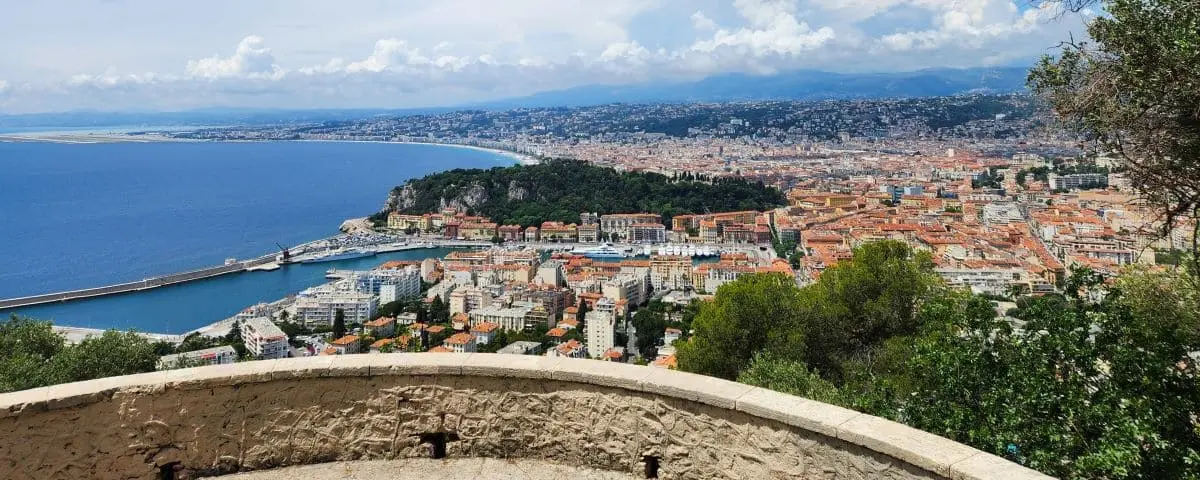
Between Nice and Villefranche-sur-Mer, Mont Boron rises above the coast with a broad belt of Mediterranean woodland. Its forest park contains miles of paths scented with pine and aromatic shrubs, with openings that reveal the sea far below.
Choose Mont Boron if you want a proper nature walk without leaving Nice. Some trails are short and easy; others climb steeply through the trees. From selected viewpoints you can admire both the Bay of Angels and the coastline toward Cap Ferrat. The exterior of Fort du Mont Alban is another landmark to seek out, although access inside is not generally open.
Carry water, wear walking shoes, and give yourself time to find the viewpoints rather than rushing straight uphill.
17. Relax in the Cimiez Monastery Gardens
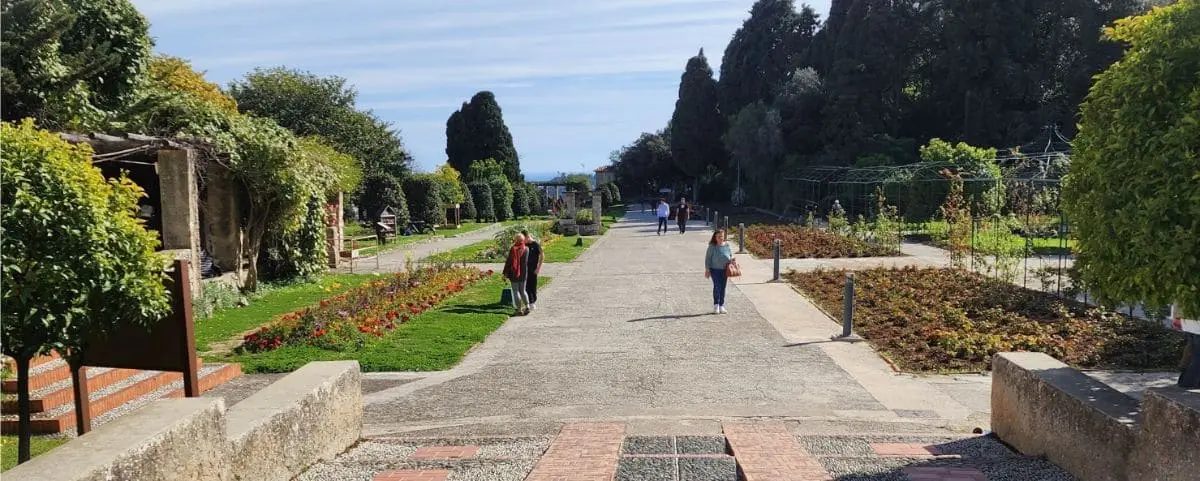
High above central Nice, Cimiez offers a different rhythm. Beside the historic Franciscan monastery, its landscaped gardens unfold in orderly paths, flower beds, and terraces overlooking the city. The setting feels a world away from the packed summer seafront.
The gardens are free and especially pleasant for a peaceful afternoon. Walk among roses when they are blooming, pause beneath the trees, and look out toward the rooftops and Mediterranean. The monastery’s exterior and nearby square add to the historic atmosphere.
Make this a combined visit with the Arènes de Cimiez, just a short walk away. Both places reveal an older, calmer Nice that many first-time visitors overlook.
18. Visit Nice Botanical Garden
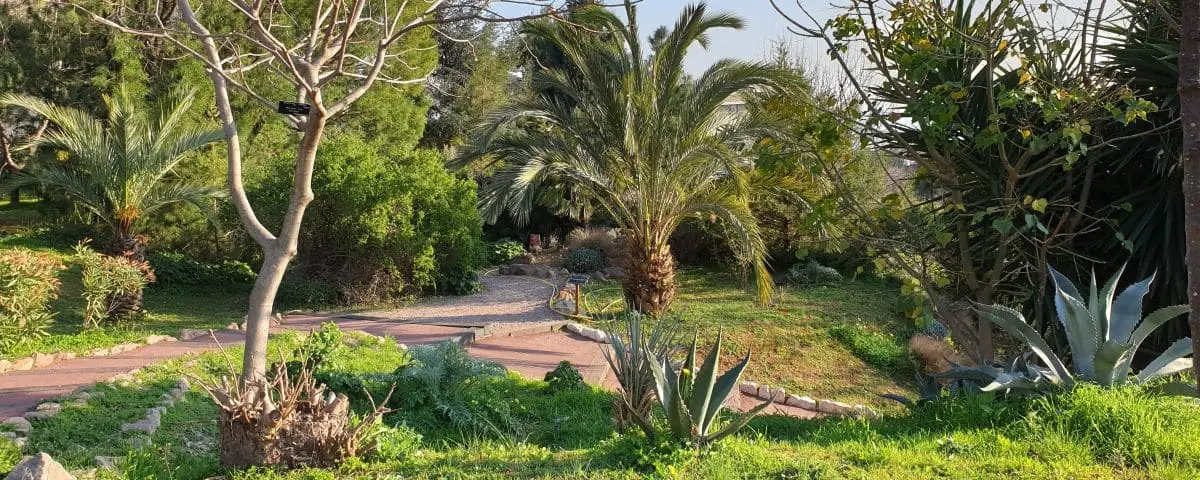
Perched on the western hills near the airport, the Jardin Botanique de Nice is an unexpected green retreat. Collections of Mediterranean and acclimatized plants spread across the slopes, with sweeping views of the city and coastline beyond.
It’s one of the best genuinely free gardens in Nice, especially for plant lovers and families seeking a break from the busiest tourist areas. Paths introduce local flora, while a children’s play area makes the outing easier for younger visitors.
The garden is less convenient for a quick Old Town sightseeing loop, so allow extra time for transport. Opening hours change by season, and the grounds are generally open daily apart from certain holidays.
19. See the Roman Amphitheatre at Cimiez

Nice’s history began long before the beach hotels. On the Cimiez hill, the ancient Roman city of Cemenelum left traces of baths, streets, and an amphitheatre. The surviving arena gives visitors an intriguing glimpse of life nearly two thousand years ago.
The surrounding Jardin des Arènes is freely accessible, making it possible to appreciate the amphitheatre’s historic setting without buying a museum ticket. Century-old olive trees and open lawns make the park a lovely place to rest after exploring Cimiez.
Don’t confuse the free public garden with the adjacent Archaeology Museum and its ticketed areas. If you want to explore Nice’s wider heritage, our complete list of things to do in Nice covers both free and paid attractions.
Visit Free Museums and Cultural Sites in Nice
Not every Riviera museum comes with an admission charge. These three cultural stops offer free ways to discover Asian art, contemporary exhibitions, and the prehistoric people who lived near what is now Nice. Their visiting schedules are worth checking before you set out.
20. Discover the Musée des Arts Asiatiques
Near Parc Phoenix and the airport, the Musée des Arts Asiatiques is a rewarding contrast to the city’s Mediterranean architecture. Its contemporary building, designed by Japanese architect Kenzo Tange, uses water, glass, and clean geometric lines to create an unusually serene setting.
Inside, collections and exhibitions introduce artistic traditions from different parts of Asia. General self-guided admission is free, so this is an excellent cultural stop on a tight budget. Guided tours, workshops, and tea ceremonies may carry separate charges.
The museum is usually closed on Tuesdays, with shorter hours outside summer. It sits well away from Old Nice, so combine it with activities in western Nice rather than making a special round trip during a busy one-day visit.
21. Explore Free Exhibitions at Espace Culturel Lympia

The old port has a surprise hidden among its quays. Espace Culturel Lympia occupies historic buildings associated with the port, including a former prison complex, now transformed into a venue for temporary art and cultural exhibitions.
Admission to the exhibition space is free, making it a worthwhile addition to a stroll around Port Lympia. The program changes, so one visit might focus on painting or ceramics while another explores photography or regional history.
The venue generally opens from Wednesday to Sunday and closes on Mondays and Tuesdays. Allow around 30 to 60 minutes, depending on the exhibition.
22. Discover Prehistory at Grotte du Lazaret

At the foot of Mont Boron, the Grotte du Lazaret takes you much further back than the Roman remains of Cimiez. Prehistoric humans occupied this cave more than 100,000 years ago, leaving behind stone tools, animal bones, and evidence of everyday life.
Free visits allow you to discover the site without purchasing a museum ticket. The experience includes an educational presentation and, when available, an immersive sound-and-light introduction to the cave’s ancient inhabitants.
The cave is normally open Wednesday to Sunday, with sessions and capacity limits. Check the current schedule before traveling, as guided visits or special activities can operate under different conditions.
Visit Nice’s Churches and Cathedrals for Free
23. Admire Nice’s Historic Churches and Cathedrals

Nice’s religious buildings offer a free journey through several centuries of architecture. Start with Sainte-Réparate Cathedral on Place Rossetti, where rich Baroque decoration and a painted dome contrast with the modest lanes outside. Nearby, Sainte-Rita and the Church of the Gesù are equally rewarding for their gilded altars and theatrical interiors.
Continue toward Saint-Martin-Saint-Augustin near Place Garibaldi and Saint-François-de-Paule close to the opera house. Beyond the Old Town, look for the neo-Gothic Basilica of Notre-Dame de l’Assomption, the imposing Notre-Dame Auxiliatrice, and the neoclassical Notre-Dame du Port.
Cimiez Monastery adds a quieter Franciscan setting, while Saint-Nicolas Russian Orthodox Cathedral stands out for its onion domes and richly decorated interior. Ordinary visits to places of worship are generally free when permitted, but special tours can cost extra. All remain active religious spaces: dress respectfully, avoid services, and accept that opening times may change.
Practical Tips for Enjoying Nice on a Budget
Free entry does not always mean every service is free. Public beaches have no admission fee, but private loungers and umbrellas cost money. Museums may offer free self-guided visits while charging for workshops, guided tours, or special activities. Churches can restrict access during services, and outdoor paths may close in bad weather.
A few simple decisions make a free day easier:
- Walk the center: Old Nice, Place Masséna, Castle Hill, and Port Lympia are close enough to combine on foot.
- Use transport strategically: Cimiez, western Nice, and the botanical garden may justify a paid tram or bus journey, even though the attractions themselves are free.
- Plan markets by day: Cours Saleya’s produce market normally runs Tuesday to Sunday; antiques take over on Monday. Place du Palais operates on Saturdays.
- Pack for the terrain: Bring water shoes for pebble beaches, proper footwear for coastal paths, and sun protection in every season.
- Check opening hours: Gardens can close at dusk, museums have weekly closure days, and free visits may require capacity-controlled entry.
To avoid unnecessary journeys, keep our French Riviera tourist map handy when planning nearby outings. Our French Riviera travel guide is useful if Nice is only one stop on a longer trip.
Finally, don’t assume the city requires a luxury budget. If you’re wondering whether Nice is worth visiting, its free seafront, markets, viewpoints, and public spaces are among the strongest reasons to go. Budget for meals and transport if necessary, but leave plenty of room for the experiences that cost nothing.
Wrap-Up: Nice Is at Its Best in the Open Air
Nice doesn’t need an expensive itinerary to be memorable. Its finest experiences often happen between official attractions, in a quiet alley, at a bustling market, or beside the Mediterranean.
- For a first visit, prioritize Old Nice, Castle Hill, Cours Saleya, and the Promenade des Anglais.
- For local atmosphere, choose Libération Market, Port Lympia, and the flea markets.
- For nature and quieter views, head to Mont Boron, Cimiez, or the Botanical Garden.
- For free culture, don’t miss the Musée des Arts Asiatiques, Espace Culturel Lympia, and Grotte du Lazaret.
The secret is simple: spend less time chasing paid attractions and more time enjoying Nice itself.