




Nice is one of those cities that seems built for a short escape. The sea is never far away, the Old Town rewards aimless wandering, and a tram or a pair of comfortable shoes will take you almost everywhere that matters.
With two full days, you can see far more than the Promenade des Anglais. This Nice 2 days itinerary combines the historic center, Mediterranean views, Niçoise food, art and neighborhood life without turning your weekend into a race. We have organized it geographically, so you spend less time crossing the city and more time enjoying it.
If you are still building your wish list, our guide to the best things to do in Nice is a useful companion to this route.
Nice 2 Days Itinerary at a Glance
For a first visit, this is the 48-hour route we recommend:
- Day 1 morning: begin at Cours Saleya, then wander through Vieux Nice before climbing Castle Hill for the classic panorama over the Baie des Anges.
- Day 1 lunch: stay in or around the Old Town, where it is easy to try socca, pissaladière, pan bagnat or another Niçoise specialty.
- Day 1 afternoon: follow the waterfront along the Promenade des Anglais, slowing down for the sea, the pebble beach and the Belle Époque façades.
- Day 1 evening: finish around Place Masséna and central Nice, an easy area for an aperitif, dinner and an evening stroll.
- Day 2 morning: head uphill to Cimiez, combining ancient history, olive trees and one of Nice’s major art museums.
- Day 2 afternoon: return toward Place Garibaldi and Port Lympia, where Nice feels more residential and distinctly maritime.
- Day 2 evening: end by the Mediterranean rather than squeezing in another attraction. Nice is best when you leave a little room for doing nothing.
For orientation before you start, keep our Nice tourist map open on your phone.
Day 1 Morning: Cours Saleya, Vieux Nice and Castle Hill
Start at Cours Saleya Market
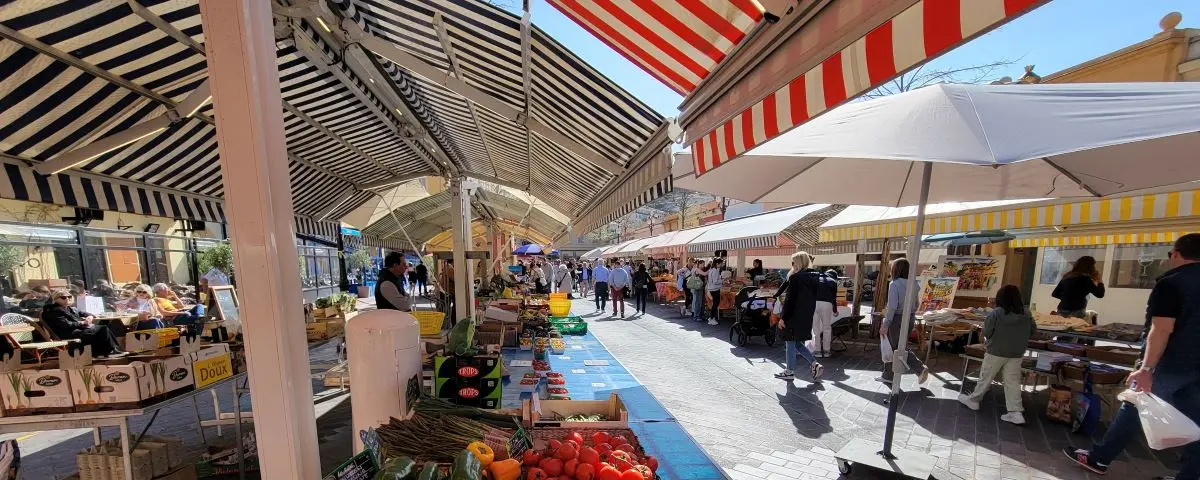
Begin early, ideally before the lanes of Vieux Nice fill with day-trippers. Cours Saleya is the obvious starting point, but that does not make it a bad one. Flowers, fruit, vegetables, olives and local products bring color to a long square that has been part market, part meeting place for generations.
Come for the atmosphere first and shopping second. Have a coffee, inspect the stalls, and notice the ochre façades and low Ponchettes between the market and the sea. If the market is quieter or different on the day you visit, do not worry. Cours Saleya remains one of the best doors into the Old Town.
Explore the Streets of Vieux Nice
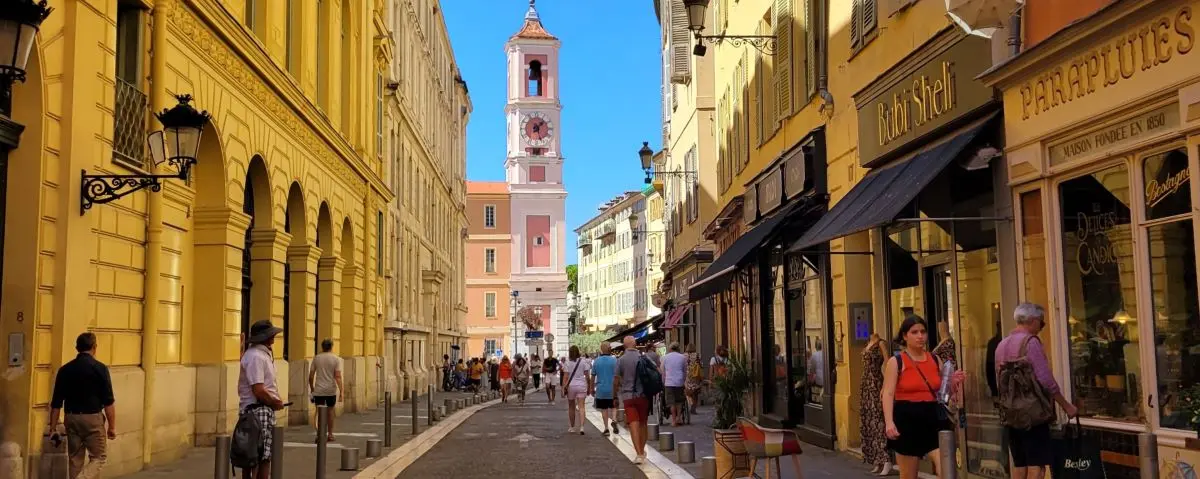
From Cours Saleya, forget the straight line. Vieux Nice is a place to get pleasantly lost, with tall houses in shades of yellow, orange and red, green shutters, dark passageways and tiny squares appearing without warning.
Walk toward Rue de la Préfecture, Rue Droite and the lanes around Place Rossetti. Look up as much as you look ahead. The Old Town can feel almost Italian, a reminder that Nice’s history is tied as much to the House of Savoy and the Mediterranean world as to modern France.
The pleasure is in the details: a bakery window, a baroque doorway, laundry above an alley, the smell of olive oil from a food shop. If you only have one day rather than a full weekend, our Nice 1 day itinerary compresses the essentials into a faster route.
See Nice Cathedral and Place Rossetti
Place Rossetti gives the Old Town a little breathing room. Cafés spill onto the square, shutters brighten the surrounding buildings, and the façade of Nice Cathedral, dedicated to Sainte-Réparate, announces the baroque character found throughout this part of the city.
Step inside if the cathedral is open, then give yourself a few minutes simply to stand in the square. This is not a sight that needs to be “completed”; it is a place to absorb the rhythm of Vieux Nice.
Climb Castle Hill for Panoramic Views
Castle Hill, or Colline du Château, is the moment when the geography of Nice suddenly makes sense. There is no grand castle waiting at the top, but that hardly matters. What you get instead is greenery, a waterfall and extraordinary viewpoints over the Old Town, Port Lympia and the long curve of the Baie des Anges.
For a first-time visitor, Castle Hill is the one viewpoint we would not skip. Walk up if you want the full approach; use the public lift when available if you would rather save your legs. Either way, allow time at the top rather than treating it as a photo stop.
From above, the red roofs of Vieux Nice crowd toward the blue Mediterranean, while the Promenade des Anglais traces the shore to the west. It is the perfect visual bridge between your morning in the old city and the waterfront afternoon ahead.
Day 1 Afternoon and Evening: Promenade des Anglais and Place Masséna
Have Lunch and Try Niçoise Specialties
Come back down toward Vieux Nice for lunch. The local food is robust, sunny and wonderfully unfussy. A good first meal in Nice should include at least one genuinely Niçoise specialty, not simply generic Provençal or Italian food with a Riviera address.
Socca, the thin chickpea pancake with crisp edges, is ideal for a quick bite. Pissaladière brings together soft onions, anchovies and olives. Pan bagnat turns the flavors of salade niçoise into a portable sandwich. For a sit-down meal, look for vegetables, olive oil, fish and seasonal dishes rather than an enormous menu translated into half a dozen languages.
Walk Along the Promenade des Anglais
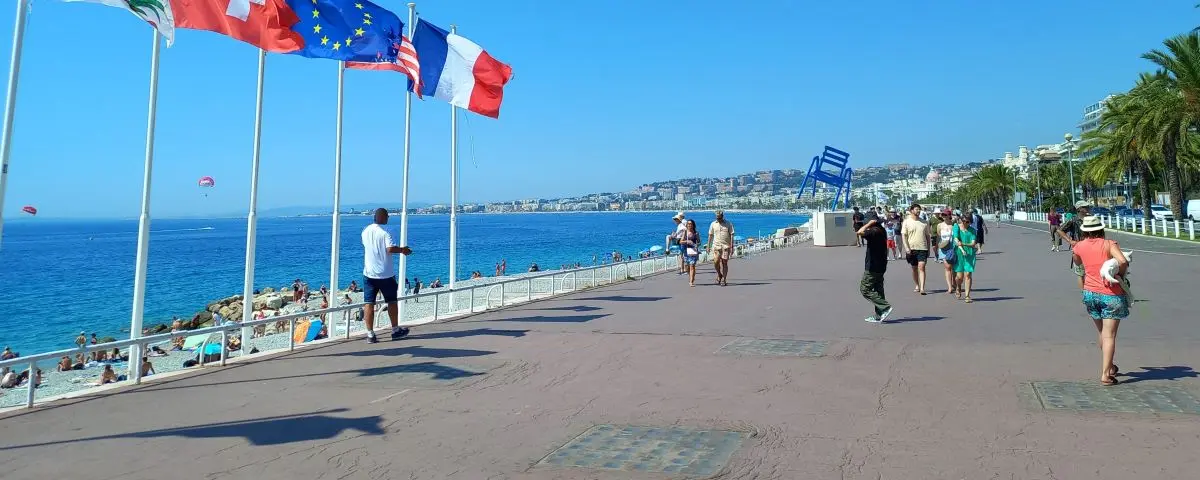
Now head to the sea and turn west. The Promenade des Anglais stretches for kilometers, but you do not need to walk all seven of them to understand why it became Nice’s signature boulevard.
Start near Quai des États-Unis and continue past the pebble beaches, palm trees and blue chairs. The Mediterranean changes color with the hour, sometimes milky turquoise, sometimes hard cobalt blue. On the city side, grand hotels and apartment façades recall the period when European elites came to Nice for winter sun, a history that helped earn the city UNESCO World Heritage status.
Explore Place Masséna and the Promenade du Paillon
Turn inland toward Place Masséna, where Nice suddenly becomes more formal. Red façades frame the broad square, black-and-white paving creates a graphic foreground, and the tram glides through with surprising discretion.
From here, follow part of the Promenade du Paillon, the green corridor separating the Old Town from the newer city. This is an excellent transition between historic Nice and the modern center, especially after several hours in dense medieval streets.
Spend Your First Evening in Central Nice
For your first night, keep things simple. Central Nice gives you plenty of choice between Vieux Nice, Place Masséna and the Carré d’Or. Start with an aperitif, then choose a restaurant a street or two away from the busiest tourist flow.
Our preference after a full sightseeing day is to stay central rather than chase another “must-see.” Nice is an evening city. The temperature softens, façades pick up warmer colors, and the seafront becomes irresistible again after dinner.
Day 2 Morning: Cimiez and Nice’s Art Museums
Explore the Historic Cimiez District
Day 2 starts away from the seafront. Take public transport uphill to Cimiez, a quieter district where Roman remains, villas and gardens reveal another layer of the city.
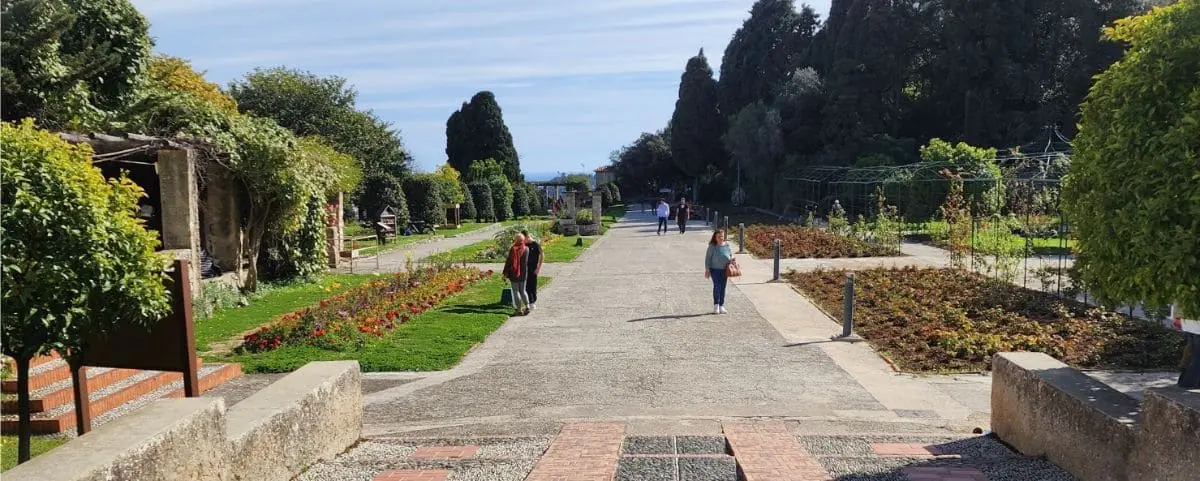
Begin around the Jardin des Arènes de Cimiez. The old olive grove is worth the journey even before you enter a museum, especially in the morning when the neighborhood still feels calm. Nearby are the archaeological remains of ancient Cemenelum and the monastery of Cimiez, while elegant residences recall the district’s later life as a prestigious winter resort.
Visit the Matisse Museum
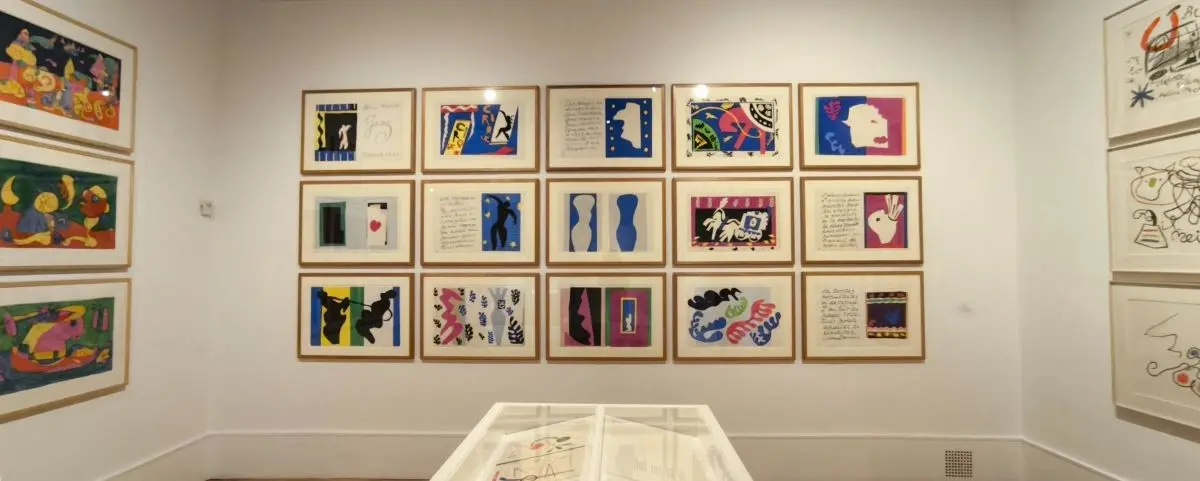
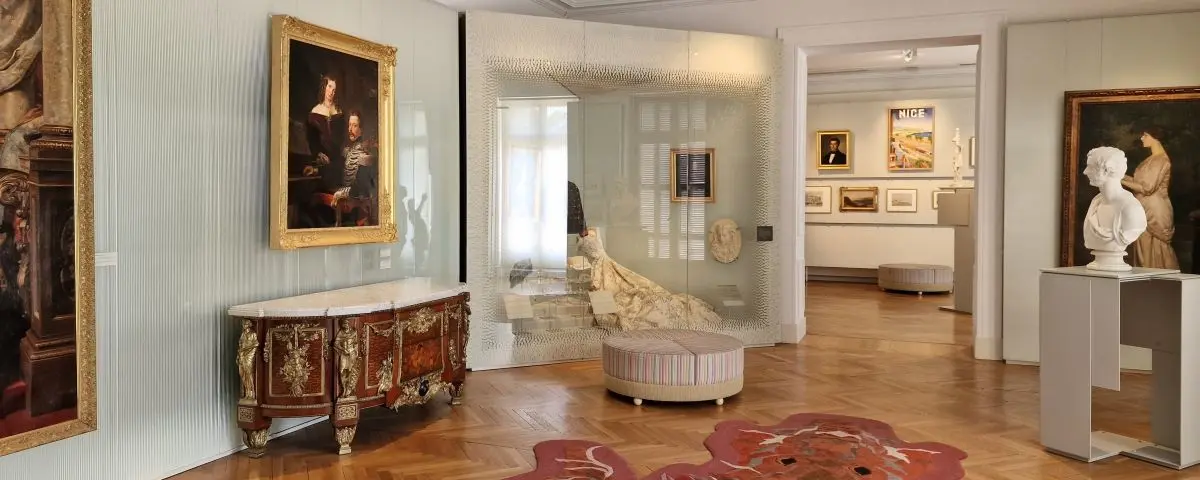
Henri Matisse lived in Nice for decades, and the city is inseparable from the light and color of his later work. The Musée Matisse occupies a Genoese villa beside the olive grove and traces his development through paintings, drawings, sculptures, objects and cut-paper work.
Choose the Matisse Museum if you want the strongest connection between an artist and Nice itself. The setting matters almost as much as the collection: Cimiez is where Matisse spent his later years, and the quiet above the busy center helps explain the attraction.
Discover the Marc Chagall National Museum
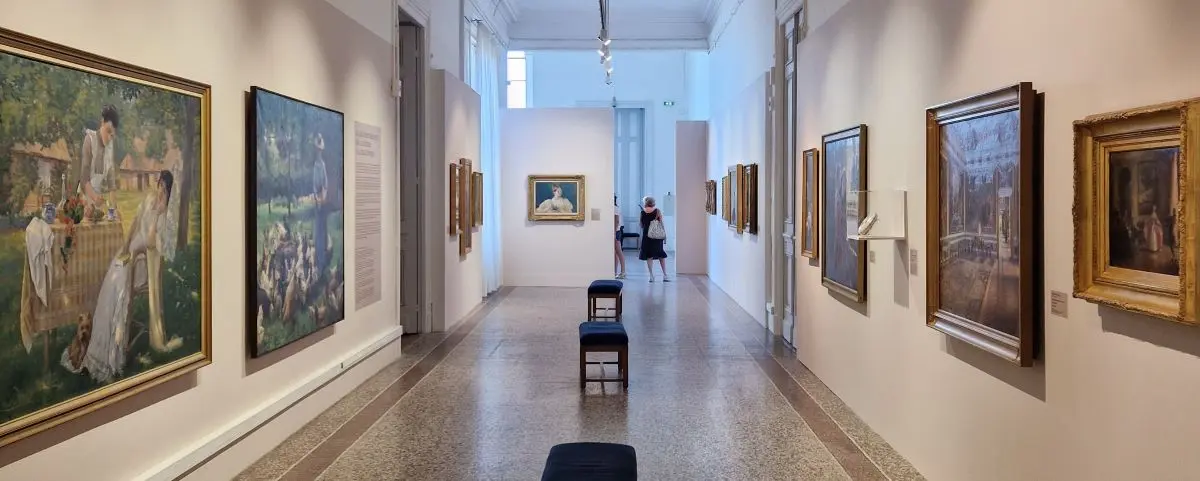
The Marc Chagall National Museum lies lower down toward the center and offers a very different experience. Its core is Chagall’s Biblical Message cycle, surrounded by works that show his unmistakable colors, dreamlike figures and spiritual imagination.
Most travelers should choose either Matisse or Chagall rather than rushing through both. If art is a major reason for your visit, however, doing both is perfectly possible with an early start and a brisk museum pace.
We slightly favor Matisse for a first 48-hour itinerary because it fits naturally with Cimiez. Chagall is the better choice if his work already speaks to you. Check opening days before committing, as museum closures can affect the order of Day 2.
Day 2 Afternoon and Evening: Place Garibaldi and Port Lympia
Have Lunch Around Place Garibaldi
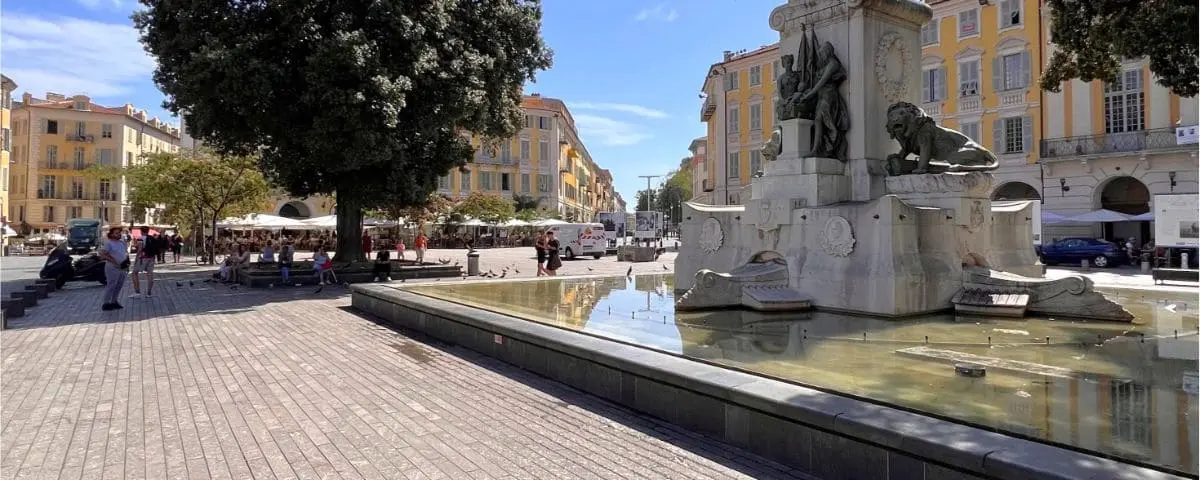
Come back down toward Place Garibaldi for lunch. With its ochre façades, arcades and terraces, the square feels spacious after the narrow streets of Vieux Nice. Giuseppe Garibaldi, born in Nice in 1807, stands at the center, a neat reminder of the city’s cross-border history.
Place Garibaldi is a good lunch base because it sits between the Old Town and the Port district. You can eat here, in the nearby streets around Rue Bonaparte, or continue a little farther toward the port before sitting down.
Walk to Port Lympia
From Place Garibaldi, it is a short and easy walk to Port Lympia. The scenery changes quickly: colorful façades frame the basin, yachts share the water with traditional wooden pointus, and the neighborhood feels more connected to daily maritime life.
Port Lympia shows a less ceremonial side of Nice than the Promenade des Anglais. Walk along the quays, look back toward Castle Hill, and notice how compact the city really is. The hill you climbed yesterday now forms a green wall between the port and the Old Town.
Explore Nice’s Eastern Waterfront
Continue around the port toward the eastern waterfront if energy and weather allow. The views toward Mont Boron and the open Mediterranean become more rugged, with rock replacing the long urban beach of the Baie des Anges.
The reward here is contrast rather than another headline attraction. Nice can be polished, crowded and grand, but it can also feel almost village-like a few streets from the port. That variety is one reason we find the city particularly satisfying for a two-day break.
If you are planning a longer stay on the coast, our French Riviera travel guide and French Riviera tourist map can help you see how Nice fits into the wider region.
Finish Your 48 Hours by the Mediterranean
For the last hours, do not schedule too much. Return toward the sea, choose a terrace or a viewpoint, and let Nice finish the trip for you.
The best ending is usually a slow one: an aperitif near the port, a sunset walk, then dinner without another checklist. If the light is good, head toward Rauba Capeu or the seafront for one last view across the Baie des Anges.
Is 2 Days in Nice Enough?
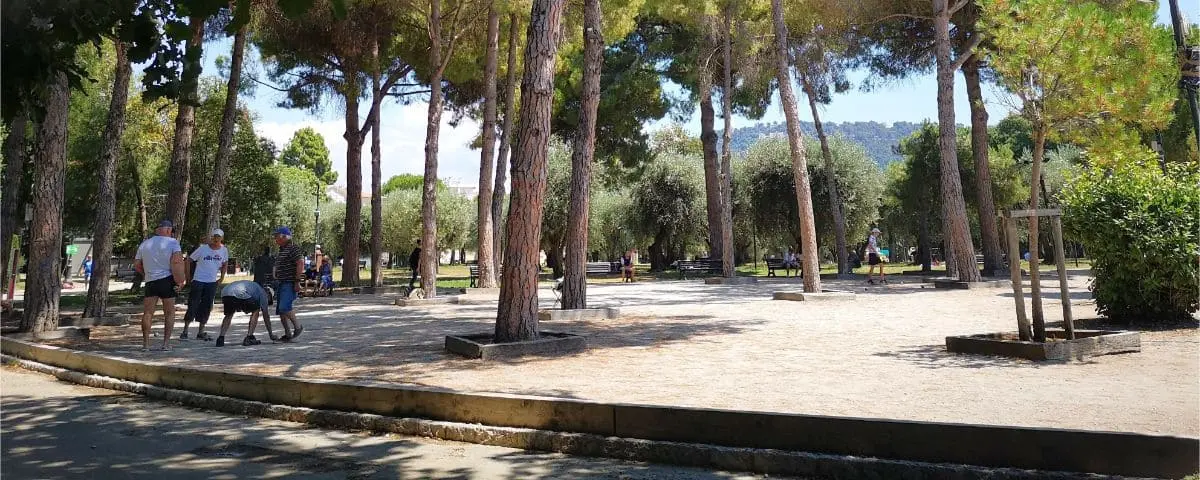
Yes. Two full days are enough to see Nice’s essential sights at a comfortable pace, provided you keep both days mainly for the city. You will have time for Vieux Nice, Castle Hill, the Promenade des Anglais, Cimiez, an art museum, Place Garibaldi and Port Lympia, plus proper meals and unstructured wandering.
One day can cover the highlights, but two days lets Nice breathe. Three or four days are better if you want beach time or Riviera excursions. If you are still deciding whether the city deserves a stop, read our guide on whether Nice is worth visiting.
What to Eat During 2 Days in Nice
Niçoise Specialties You Should Try
Nice has one of the most distinctive local food traditions on the French Mediterranean coast. Prioritize dishes that actually belong to Niçoise cooking, especially socca, pissaladière, pan bagnat, petits farcis and salade niçoise.
Socca works as street food, especially around the Old Town. Pan bagnat makes a convenient lunch when you would rather keep walking. Petits farcis, vegetables filled with seasoned stuffing, are more suited to a table. Olive oil, anchovies, tomatoes, zucchini and local herbs appear again and again.
Where to Fit Food Stops Into Your Itinerary
Use food as part of the route rather than a separate activity. Have coffee at Cours Saleya on Day 1, lunch in Vieux Nice, then dinner around the center. On Day 2, plan lunch around Garibaldi or the Port and save your final dinner for somewhere you can linger.
For restaurants, short menus are often a reassuring sign. When possible, look for places that foreground local cuisine rather than restaurants trying to serve pizza, burgers, seafood, crêpes and Provençal classics all at once.
Where to Stay in Nice for 2 Days
Vieux Nice for Atmosphere and Sightseeing
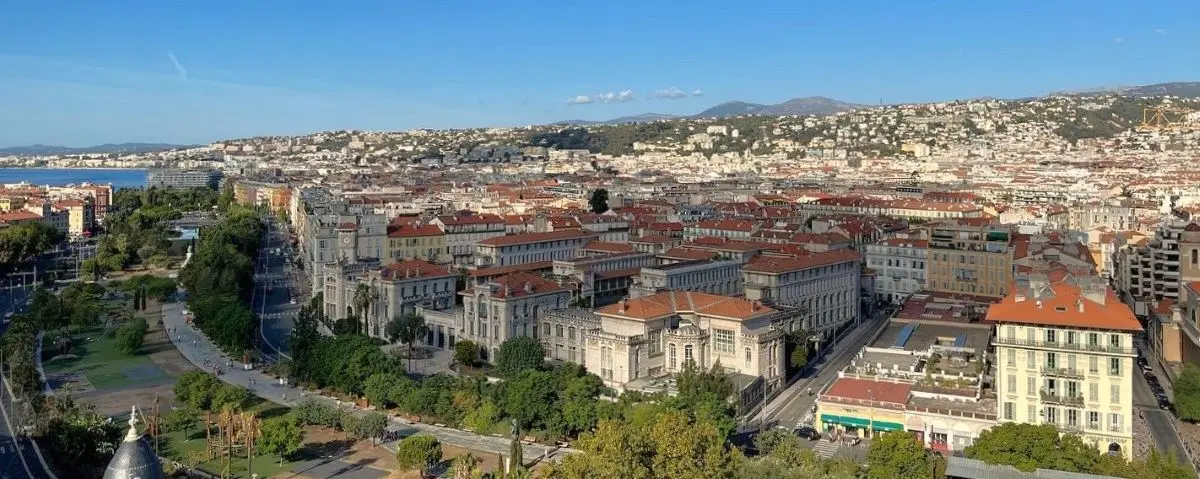
Choose Vieux Nice if atmosphere matters more than absolute quiet. You will be close to Cours Saleya, Castle Hill, the sea and evening restaurants, making it exceptionally convenient for a short first visit.
The trade-off is noise and tighter streets. If you are a light sleeper, check room location carefully rather than assuming every romantic Old Town address will be peaceful.
Carré d’Or for a Central Location
The Carré d’Or, between the sea and central shopping streets, is our most balanced choice for many first-time visitors. It combines walkability, easy access to the Promenade des Anglais and a calmer feel than the busiest parts of Vieux Nice.
Jean Médecin for Convenient Transport
Stay around Avenue Jean Médecin or closer to Nice-Ville station if onward travel matters. This area is practical for visitors arriving by train or planning additional French Riviera stops, while the Old Town remains within walking or tram distance.
If you are choosing between bases for a broader trip, our comparisons of Nice or Cannes, Nice or Antibes and Nice or Menton may help.
How to Get Around Nice in 2 Days
Walking Around Nice
Central Nice is highly walkable, and walking should be your default for this itinerary. Vieux Nice, Place Masséna, the Promenade des Anglais, Place Garibaldi and Port Lympia all sit within a manageable central area.
Using the Tram and Public Transport
Use the tram for the journeys where it genuinely saves time, especially Cimiez connections and longer cross-city hops. Do not turn a compact city into a transport puzzle. Walk when sights are close, then use buses or trams for uphill districts and transfers.
A map is useful for seeing these relationships at a glance, so save the Nice tourist map before arrival.
Getting From Nice Airport to the City Center
Nice Côte d’Azur Airport is unusually close to the city. Tram connections make the transfer straightforward, with direct access toward central Nice and the port area.
For most visitors staying centrally, there is no reason to rent a car for a two-day Nice city break. A car is more burden than benefit once parking and dense streets enter the equation.
Practical Tips for Your 2 Days in Nice
Best Time to Visit Nice
Nice works year-round, but spring and early autumn offer the best balance of pleasant weather, long days and manageable crowds. Summer brings the warmest sea and the biggest crowds, while winter can be wonderfully bright and mild compared with much of Europe.
Whatever the season, check museum opening days and the weather shortly before your visit. A rainy morning is a perfect excuse to swap the museum and outdoor portions of Day 2.
What to Pack for 48 Hours in Nice
Comfortable walking shoes come first. Add sunglasses, sun protection and a reusable water bottle for much of the year. If you plan to swim, pack water shoes for Nice’s pebble beaches.
A light layer is useful for evenings outside the hottest months. Most importantly, travel light enough that arriving and leaving by train or tram remains easy.
Frequently Asked Questions About Spending 2 Days in Nice
Do You Need a Car in Nice?
No. A car is unnecessary for this 2-day Nice itinerary and can make a central stay less convenient. Walking and public transport cover the route well.
Consider a car only if Nice is one part of a larger road trip into places that are awkward to reach by train or bus.
Can You Explore Nice Mostly on Foot?
Yes. Most of the essential sights in central Nice can be linked on foot. The main exception in this itinerary is Cimiez, where public transport saves time and energy.
Castle Hill involves climbing, but a lift can reduce the effort when operating.
Should You Visit Monaco or Èze During a 2-Day Stay?
For a first visit, we would not. Keep both days for Nice and save Monaco or Èze for a third day. Otherwise, you risk seeing the Old Town and Promenade while missing the deeper layers that make Nice memorable.
If Monaco is tempting you, our Nice or Monaco comparison will help you decide where to spend your limited time. For other Riviera choices, see Nice or Saint-Tropez.
Is Nice Worth Visiting for Only Two Days?
Absolutely. Nice is particularly well suited to a 48-hour city break because its major experiences sit close together. You get old streets, sea views, food, art and a strong local identity without spending half the trip in transit.
Two days will not exhaust the city, and that is part of the appeal. You leave with reasons to return.
Making the Most of Your Nice 2 Days Itinerary
Nice rewards travelers who mix the famous sights with a little Mediterranean idleness. Follow the route, but do not be afraid to stop when a square, market stall or patch of blue sea makes you want to linger.
- Use Day 1 for the classic Nice experience: Cours Saleya, Vieux Nice, Castle Hill, the Promenade des Anglais and Place Masséna.
- Use Day 2 to add depth: Cimiez, Matisse or Chagall, Place Garibaldi and Port Lympia.
- Walk whenever possible and use public transport strategically, especially for the hills and airport transfer.
- Try real Niçoise food instead of filling every meal with generic Riviera fare.
- Do not sacrifice half of a two-day stay to a day trip unless Monaco, Èze or another Riviera destination is your main priority.
- Leave some empty space in the schedule. Nice is at its best when you have time to sit by the Mediterranean and watch the city pass by.