




Cannes may be famous for red carpets, grand hotels and movie stars, but the city makes much more sense once you leave the flashbulbs behind. In two days, you can wander through a Provençal market, climb the lanes of Le Suquet, walk the Croisette, swim in the Mediterranean and escape to a peaceful monastic island just offshore.
Two days in Cannes are enough to see the city’s essential sights without rushing, especially if you keep the route compact. This Cannes 2 days itinerary does exactly that: one day for the historic center and seafront, then one day combining Île Saint-Honorat with the eastern end of Cannes.
If you are still deciding whether the city deserves a stop, our guide to whether Cannes is worth visiting gives a broader look at what makes it different from the rest of the French Riviera.
Cannes 2 Days Itinerary at a Glance
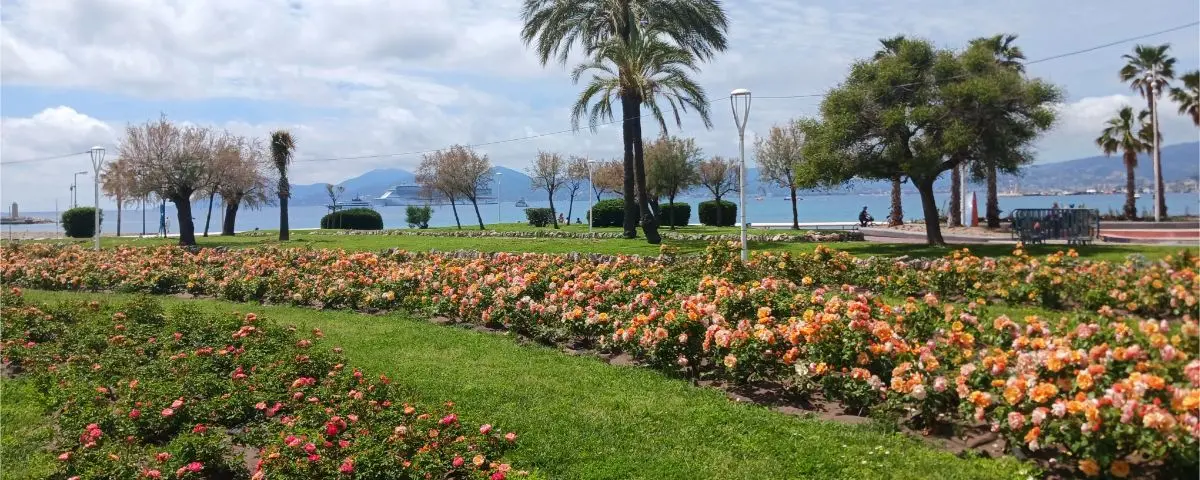
For a first visit, we recommend organizing your 48 hours in Cannes like this:
- Day 1 morning: start with local Cannes, browsing Marché Forville before climbing through Le Suquet, enjoying the hilltop views, descending to the Vieux Port and reaching the Palais des Festivals.
- Day 1 afternoon: follow the seafront east, with lunch in central Cannes, a walk along La Croisette, some beach time, Rue d’Antibes and a relaxed evening near the Mediterranean.
- Day 2 morning: take the boat to Île Saint-Honorat, where vineyards, pines, quiet coves and the Abbey of Lérins create a very different atmosphere from central Cannes.
- Day 2 afternoon: return to the mainland and continue east, walking toward Port Canto and Pointe Croisette before finishing your stay by the sea.
- Most of this itinerary can be done on foot, with the ferry to Saint-Honorat being the main exception. A car is more nuisance than help in central Cannes.
If you prefer to visualize the route before arriving, keep our Cannes tourist map open while planning. Travelers with less time can also use our Cannes one day itinerary instead.
Day 1 Morning: Explore Cannes Old Town and Historic Center
Start at Marché Forville
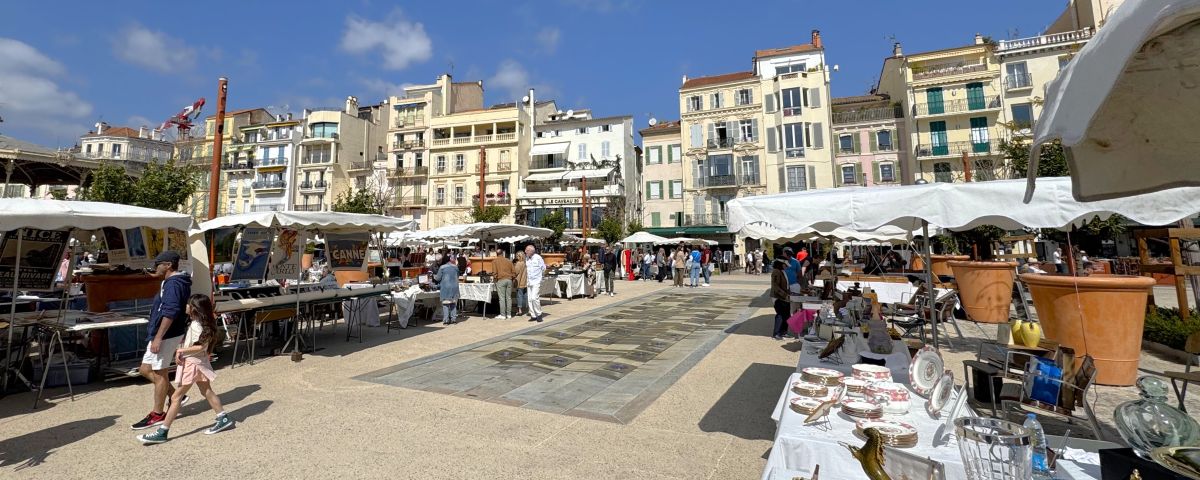
Begin where Cannes feels least like a film set. Marché Forville sits close to the old town and remains one of the best places to catch the city’s Provençal side: stalls of fruit and vegetables, seafood, olives, cheeses and seasonal produce under one roof.
Come here for atmosphere rather than a checklist attraction. Browse slowly, watch what locals are buying and pick up something small for later if the mood takes you. The market also places you exactly where you need to be for the rest of the morning, at the foot of Le Suquet.
Wander Through Le Suquet Old Town
From the market, start climbing into Le Suquet, the historic heart of Cannes. Forget straight lines. The pleasure here is in the narrow lanes, worn steps, pastel facades and sudden glimpses of blue sea between buildings.
Rue Saint-Antoine is one of the natural routes upward, but there is no need to follow it religiously. Small side streets, old doorways and shuttered houses give the neighborhood a character that feels far removed from the polished hotels below.
Enjoy the Views from the Suquet Hill
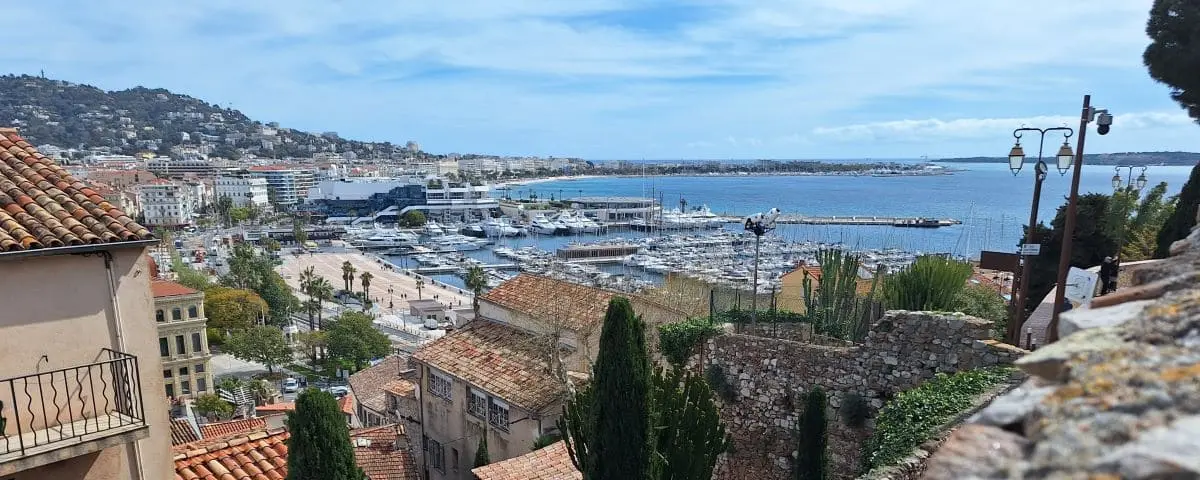
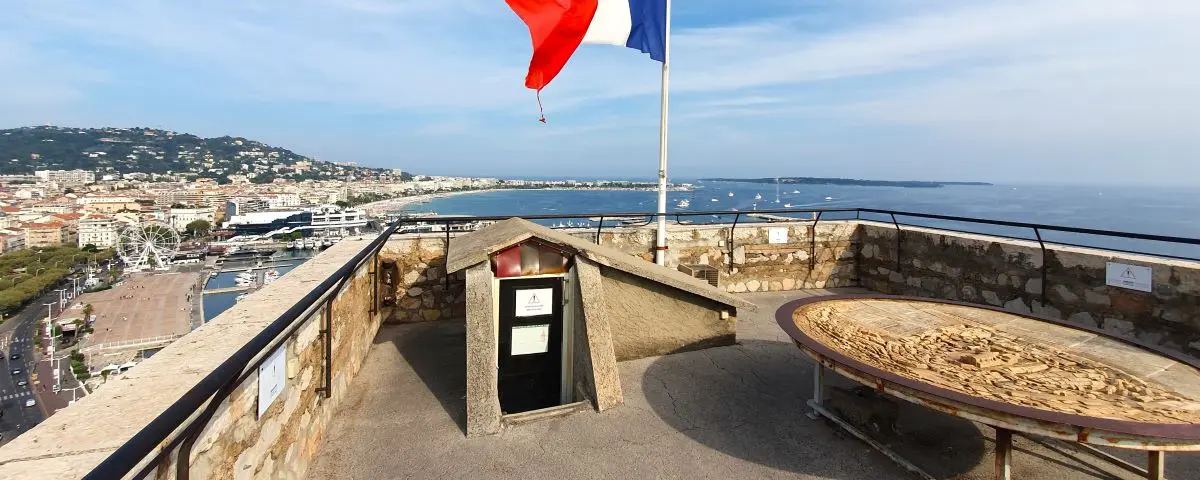
Keep climbing until the streets open around the heights of Le Suquet. From here, the view ties the whole itinerary together: the Vieux Port below, La Croisette sweeping along the bay, the Lérins Islands offshore and the hills closing the horizon.
Do not simply take a photograph and immediately head down. The contrast between old stone, tiled roofs, palms, yachts and the Mediterranean is one of the city’s most memorable scenes, particularly before the streets become busier.
Walk Down to the Vieux Port
Descend from Le Suquet toward the Vieux Port. This short walk is one of Cannes’ best transitions, taking you from old village lanes to a waterfront filled with fishing boats, sailing boats and polished yachts.
There is no need to spend a long time here, but do not skip it. The port gives context to the city and acts as the hinge between historic Cannes and the Croisette. It is also the area you will return to on day two for the boat toward the Lérins Islands.
See the Palais des Festivals and the Famous Red Carpet
Continue along the waterfront to the Palais des Festivals et des Congrès, home of the Cannes Film Festival. The building itself is more functional than romantic, but this is the symbolic center of Cannes’ cinema mythology.
The famous steps and red carpet are the obvious photo stop. Nearby, look down as well as up: the area around the Palais features handprints associated with actors, directors and film personalities.
For more ideas beyond this itinerary, see our guide to the best things to do in Cannes.
Day 1 Afternoon: Discover La Croisette and Central Cannes
Have Lunch in Central Cannes
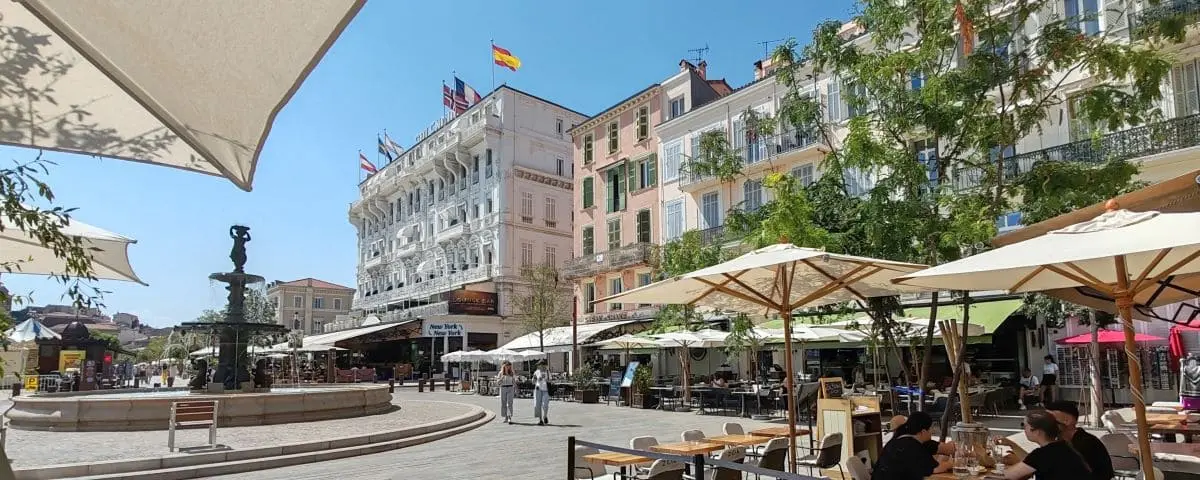
By now you will have covered the most historic part of the city, so stop for lunch before tackling the long seafront walk. We would choose the streets behind the Croisette rather than automatically sitting on the most visible waterfront terrace. You will generally find more variety and a less theatrical atmosphere.
Look for Mediterranean cooking, grilled fish, Provençal vegetables or a simple plat du jour. If you bought something at Marché Forville, this can also be the moment for a lighter picnic, provided you choose an appropriate public spot and leave no trace behind.
Walk Along La Croisette
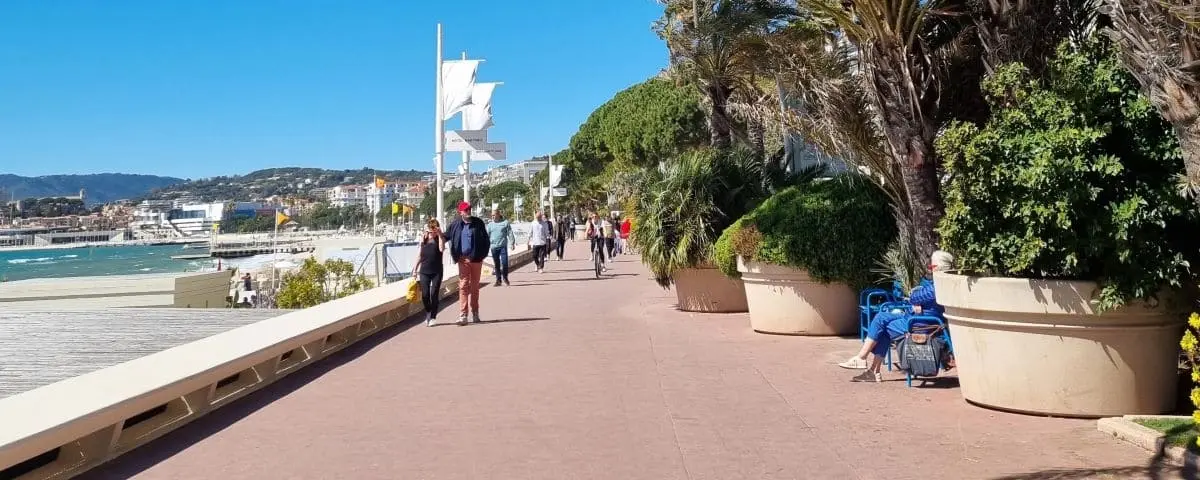
Now for the postcard. La Croisette runs along the Bay of Cannes between beaches, palms, luxury hotels and designer boutiques. Walk it at least once from the Palais des Festivals toward Port Canto rather than seeing it only in fragments.
Yes, it is glamorous. Yes, some of the storefronts and hotels belong to a world of spectacular budgets. But the promenade itself is democratic: everyone gets the same sea breeze and the same view toward the Lérins Islands.
Spend Some Time on a Cannes Beach
Cannes is one of those Riviera cities where sightseeing and swimming can genuinely share the same day. If the weather is good, give yourself a real beach break instead of treating the sea as background scenery.
There are both public and private beach areas along and near the Croisette. A private beach buys comfort and service; a public section keeps the day simple and cheaper. Either way, the Mediterranean is only a few steps from the city center.
Explore Rue d’Antibes and the City Center
Leave the seafront for Rue d’Antibes, Cannes’ main shopping street. Compared with La Croisette, Rue d’Antibes feels busier, more commercial and more connected to everyday city life, with a broad mix of boutiques and familiar brands.
If you are using Cannes as part of a wider trip, this is also a good moment to think about how the city compares with its neighbors. Our guides to Nice or Cannes and Cannes or Antibes can help if you are still dividing nights between different Riviera bases.
End the Day with Sunset and Dinner in Cannes
For the evening, resist the temptation to fill another list of attractions. The best ending to day one is simply to return toward the water and let Cannes slow down. Depending on the season, the bay can shift from sharp blue to softer gold and pink as the light drops.
Choose dinner in Le Suquet for old-town atmosphere, around the central streets for choice, or near the waterfront if the setting matters more than the bill. Afterward, a final stroll past the port or Palais works well without requiring any planning.
Day 2 Morning: Escape to Île Saint-Honorat
Take the Ferry from Cannes to Île Saint-Honorat
Start day two at the maritime side of Cannes. Boats for the Lérins Islands leave from the port area, and Saint-Honorat lies just offshore behind its larger neighbor, Sainte-Marguerite. Check the current sailing schedule before setting out, especially outside the busiest months.
The crossing is short enough to feel like a simple excursion, yet the arrival creates an immediate break with the mainland. Cannes’ hotels and apartment blocks recede behind you; ahead are low vegetation, stone buildings and the quiet outline of a monastic island.
Explore the Island’s Coastal Paths
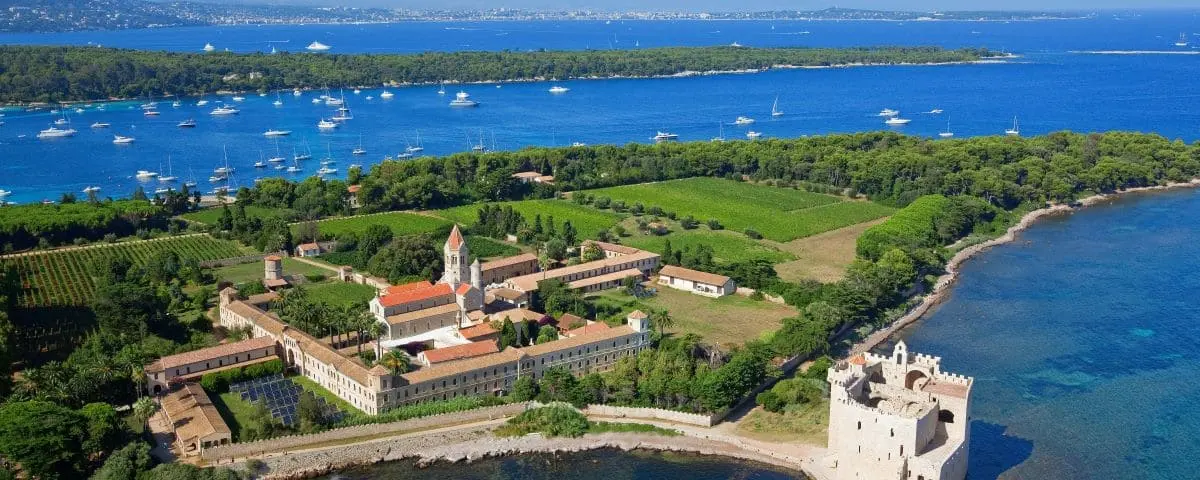
Saint-Honorat is threaded with paths that pass pines, Mediterranean vegetation, vineyards and rocky shore. Walk rather than rush: the island’s main attraction is the feeling of space and calm so close to Cannes.
There are no urban distractions here. That is precisely the point. The island rewards slow travel, with the scent of pine, the sound of cicadas in warm weather and the Mediterranean flashing through the trees.
Visit the Abbey of Lérins
The Abbey of Lérins gives Saint-Honorat its identity. Monastic life has deep roots on the island, and a Cistercian community still lives here today. Approach the abbey as a living religious place, not simply another attraction to tick off.
Even travelers with little interest in religious history tend to remember the setting: an active monastery surrounded by Mediterranean vegetation and sea, only a boat ride from one of Europe’s most famous resort cities.
Discover the Monastery, Vineyards and Mediterranean Scenery
Continue around the island to appreciate the fortified monastic architecture, chapels, vineyards and open shoreline. Saint-Honorat has long been associated with vines, and the cultivated rows give the island a character quite unlike the forested image many visitors expect from the Lérins Islands.
Lavender and other Mediterranean plants soften the stone landscape, while the fortified monastery near the water remains one of the island’s defining silhouettes. If access to an interior area is limited, the walk around the site is still worthwhile for the setting alone.
Day 2 Afternoon: Return to Cannes and Explore Pointe Croisette
Have Lunch on Île Saint-Honorat or Back in Cannes
You have two sensible options for lunch. Stay on Saint-Honorat if you want to stretch the island atmosphere a little longer, or return to Cannes if you prefer a wider choice and a more flexible afternoon.
A simple picnic can work particularly well on an island day, provided you respect local rules and take everything away afterward. Otherwise, plan around whatever food options are operating when you visit rather than assuming every service will be open year-round.
Return to Cannes by Ferry
The ride back is your chance to look at Cannes from the water. From offshore, the city reads as a long Mediterranean facade framed by hills, with La Croisette tracing the edge of the bay.
Once ashore, continue east rather than repeating the central sights. This keeps your 48 hours in Cannes efficient without making the trip feel rigid.
Walk from La Croisette to Port Canto
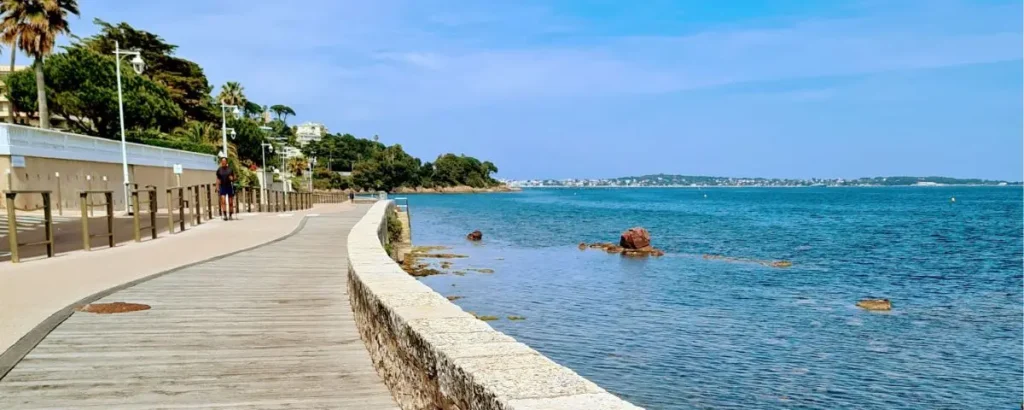
Follow the promenade toward Port Canto, where Cannes’ nautical personality becomes more obvious. This stretch is calmer than the section nearest the Palais des Festivals, with gardens, sea views and a gradually wider perspective back toward old Cannes.
It is an easy, scenic continuation rather than a separate attraction, which makes it ideal for the second afternoon.
Continue to Pointe Croisette
Beyond Port Canto, continue toward Pointe Croisette, the eastern tip of the famous promenade. This is where the city begins to loosen its grip, with more open sea and a sense of having reached the end of the bay.
Historically, this area was connected with the pilgrimage route toward Saint-Honorat, which gives the walk a pleasing symmetry after your morning on the island.
Finish Your 2 Days in Cannes by the Mediterranean
Give the final part of your stay some flexibility. If the weather is warm, end with another swim; if not, settle for a seaside walk, drink or early dinner. There is no prize for squeezing in one more museum before departure.
By this point you will have seen three different versions of Cannes: the old Provençal quarter, the glamorous seafront and the quieter maritime landscape facing the Lérins Islands.
How to Get Around Cannes in 2 Days
Walking Around Central Cannes
Central Cannes is compact. For this itinerary, walking should be your default mode of transport. Marché Forville, Le Suquet, the Vieux Port, Palais des Festivals, La Croisette and Rue d’Antibes all fit naturally into a pedestrian route.
Wear comfortable shoes because Le Suquet involves slopes and steps, while the Croisette adds distance without feeling strenuous. If you want to see how the main sights relate to one another before arriving, our French Riviera tourist map is useful for wider geographic context.
Using Buses and Ferries
Local buses can save your legs for longer stretches or when the weather turns hot, but they are not essential for the core itinerary. The ferry to Île Saint-Honorat is the one transport you should actively plan around.
Check current departures and return options in advance, particularly outside peak season. Leave enough margin so that a missed boat does not derail the rest of your day.
For broader planning beyond Cannes, our French Riviera travel guide covers the region’s main destinations and how they fit together.
Do You Need a Car in Cannes?
For these two days, no. A car adds parking and traffic problems without improving the central itinerary. Walking plus the ferry is simpler.
A car becomes more useful only if Cannes is a base for inland villages or places that are awkward by train. For neighboring coastal destinations, rail is often more convenient.
If your wider trip includes more glamorous stops, compare Cannes or Monaco and Cannes or Saint-Tropez before deciding where a car genuinely earns its keep.
Where to Stay for 2 Days in Cannes
Best Areas to Stay for First-Time Visitors
For a short stay, location matters more than having the fanciest hotel address. Around the center, the station, Rue d’Antibes, the Vieux Port or the lower part of Le Suquet, you can walk almost everywhere in this itinerary.
Staying directly on La Croisette puts the sea and grand hotels outside your door, but usually at a premium. Le Suquet offers more character and evening atmosphere, while the central streets balance transport, restaurants and convenience.
For only two nights, we would avoid accommodation far from the center unless the price difference is substantial. The whole advantage of Cannes in 48 hours is being able to step outside and start walking.
When Is the Best Time to Visit Cannes?
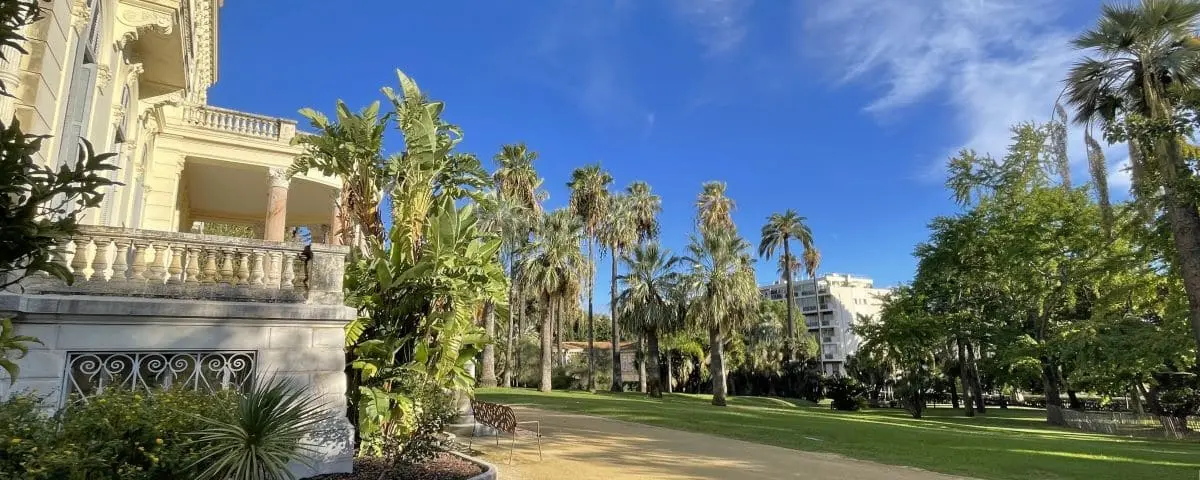
Spring and early autumn are especially attractive for a two-day Cannes itinerary: warm light, generally pleasant walking conditions and a better chance of enjoying the coast without peak summer intensity. Summer is best for a beach-focused trip, but it also brings heavier crowds and higher accommodation pressure.
The Cannes Film Festival changes the city dramatically, with exceptional energy but also tighter access, busier streets and very high hotel demand. If cinema atmosphere is your priority, that can be part of the appeal. If you mainly want to explore Cannes calmly, choose another period.
Winter can still work for sightseeing. You may not swim, but Le Suquet, the Croisette and the waterfront remain enjoyable on bright Mediterranean days. If Saint-Honorat is important to you, check maritime conditions before building the whole day around the crossing. For the best balance of walking, outdoor lunches and coastal atmosphere, late spring and early autumn are our favorite choices.
How Much Should You Budget for 2 Days in Cannes?
Cannes has a luxury reputation, but you do not need a luxury budget to follow this itinerary. Walking is free, public beaches cost nothing, and much of the pleasure comes from neighborhoods, views and the waterfront.
As a rough guide, excluding accommodation, a careful traveler can keep daily spending moderate with bakery breakfasts, simple lunches and public beach time. A mid-range trip with restaurant meals, drinks, the Saint-Honorat ferry and a few paid extras will cost noticeably more. Private beach clubs, cocktails at palace hotels and fine dining can push the budget upward very quickly.
Accommodation is the biggest variable. Prices can jump sharply during major events and peak summer periods, so booking dates matter more here than in many inland French destinations. The easiest way to control costs is to book a central room early, use public beaches and spend selectively on the experiences that matter most to you. Cannes is a place where a simple market lunch and a palace cocktail can exist in the same day, so the final budget depends heavily on your travel style.
FAQs About Spending 2 Days in Cannes
Are 2 Days Enough in Cannes?
Yes. Two days are enough for Cannes’ main sights plus a half-day escape to Île Saint-Honorat, provided you stay reasonably central and avoid unnecessary cross-city trips.
One day gives you the highlights; two days let you slow down, include the beach and see a quieter side of the bay. More time is useful if you want day trips to Antibes, Grasse, Nice or other Riviera towns.
Is Cannes Walkable?
Very much so. Most first-time visitor sights sit within a compact central area, and the seafront is particularly easy to navigate on foot.
The main physical effort is Le Suquet, where slopes and steps are unavoidable. Otherwise, the itinerary is mostly flat, with plenty of cafés and seaside stops if you need a break.
Is Île Saint-Honorat Worth Visiting from Cannes?
Yes, especially on a two-day stay. Saint-Honorat gives you the strongest possible contrast with central Cannes: monastery instead of movie palace, vineyards instead of boutiques, rocky shoreline instead of hotel beach clubs.
If your priority is a larger island with more forest and broader walking possibilities, Sainte-Marguerite may suit you better. For history, spirituality and a more singular atmosphere, we prefer Saint-Honorat for this itinerary.
Can You Visit Cannes Without a Car?
Absolutely. Cannes is one of the easiest French Riviera bases to enjoy without driving, thanks to its compact center, railway station and coastal connections.
A car is unnecessary for the route in this article. If you plan to continue along the coast afterward, trains can connect many of the major towns without the headache of parking.
What Can You Do in Cannes If It Rains?
Rain does not ruin a two-day visit, but it changes the priorities. Keep Marché Forville, central shopping streets, long lunches and indoor cultural stops for wet periods, then move the Croisette and Le Suquet to the clearest weather window.
For Saint-Honorat, poor sea conditions or persistent rain can make the excursion less appealing, so stay flexible. If the boat trip does not make sense, use the extra time for museums, shopping, cafés and a slower exploration of central Cannes.
Wrapping Up Your Cannes 2 Days Itinerary
Two days give Cannes enough time to reveal more than its famous image:
- Start with the city’s local side, from Marché Forville to the lanes and viewpoints of Le Suquet.
- Follow the waterfront gradually, taking in the Vieux Port, Palais des Festivals, La Croisette and a proper Mediterranean beach break.
- Use your second morning for Île Saint-Honorat, where the abbey, vineyards and coastal paths provide a striking change of pace.
- Finish toward Port Canto and Pointe Croisette, rather than doubling back through sights you have already seen.
- Walk as much as possible and skip the car, which keeps a short Cannes itinerary simple and efficient.
- Leave room to do nothing for a while, because a coffee by the port or an unplanned swim can be as memorable as another attraction.
Cannes works best when you accept both sides of it: polished and popular, cinematic and Provençal, busy and unexpectedly calm. In 48 hours, you can see the red carpet without letting it dominate the trip.