




Intro: Discover the Nice Most Visitors Miss

Nice is easy to love at first sight: the Promenade des Anglais, the blue sweep of the Baie des Anges, the ochre lanes of the Old Town. But the city becomes far more interesting when you move a few streets beyond the postcard views.
These unusual things to do in Nice reveal a quieter, stranger and more local side of the city, from a prehistoric cave and Roman ruins to flea markets, overlooked churches and an art gallery inside a former prison. We have selected places that add something genuinely different to a stay, rather than simply padding out a list of famous attractions.
Some are hidden in plain sight. Others require a small detour. All reward curiosity.
The Best Unusual Things to Do in Nice
- Best unusual walk: head to the Port Lympia jetty for sea air, harbor views and a completely different perspective on Nice.
- Best for treasure hunters: browse the Marché des Antiquités and Puces de Nice around the port.
- Best overlooked heritage stop: the Monastery of Cimiez combines art, history, gardens and a peaceful atmosphere.
- Best unusual museum: the Musée International d’Art Naïf Anatole Jakovsky is unlike the major art museums most visitors prioritize.
- Best ancient-history experience: the Archaeological Museum of Nice-Cimiez reveals the Roman city of Cemenelum.
- Best prehistoric experience: combine Terra Amata with the Grotte du Lazaret to discover a Nice that existed hundreds of thousands of years before the Riviera.
- Best strategy: use our Nice tourist map to group nearby places rather than crossing the city repeatedly.
Hidden Gems Around Port Lympia
Port Lympia is one of our favorite areas for finding unusual places in Nice without leaving the city center far behind. Colorful façades, fishing boats, grand arcades and maritime history all sit within a compact neighborhood that feels distinctly different from the Promenade des Anglais.
1. Walk to the End of the Port Lympia Jetty

Most visitors admire Port Lympia from the quays, take a photograph and move on. Instead, keep walking toward the sea. The jetty gives you a sense of separation from the city without actually leaving it.
From here, the harbor opens behind you while the Mediterranean stretches ahead. Ferries, yachts and small boats create constant movement, but the atmosphere can be surprisingly calm when you come outside the busiest hours. It is less a conventional attraction than a simple place to stop, look back at Nice and enjoy the geography of the city.
We particularly like this walk late in the afternoon, when the façades surrounding the port pick up warmer tones. It also works well after exploring Castle Hill or before heading farther east toward Mont Boron.
If this is your first visit and you want to balance famous sights with quieter discoveries, our 2-day Nice itinerary makes that easier without rushing from one attraction to the next.
2. Step Inside Notre-Dame du Port

At the far end of the harbor, Notre-Dame du Port stands on Place de l’Île de Beauté, framed by arcaded buildings whose architecture gives the square an almost Italian air.
The church belongs naturally to the port. Sailors historically arrived beneath its gaze, and the whole composition still has a maritime dignity that is easy to miss if you only pass through on the way elsewhere. Its neoclassical façade and the Genoese-influenced setting make this one of the most distinctive religious ensembles in Nice.
Go inside if the church is open, but also take time to step back across the square. The exterior, port and surrounding arcades are part of the same experience. This is not one of Nice’s headline monuments, which is precisely why it works so well in a list of hidden gems.
For a broader selection of landmarks, neighborhoods and museums, see our guide to the best things to do in Nice.
3. Visit Espace Culturel Lympia in a Former Prison

Just when Port Lympia seems to be all pastel façades and pleasure boats, the neighborhood produces something much less expected: a former penal complex transformed into a cultural venue.
The old prison buildings on the port have been renovated and used for temporary exhibitions. The setting itself is half the reason to go. You are visiting contemporary exhibitions inside a place associated with Nice’s former prison administration and convict history, a contrast that gives Lympia an atmosphere no conventional white-cube gallery can reproduce.
Look out for the distinctive tower and imagine the building before its cultural conversion. Inside, the surviving spaces help tell the story even when the current exhibition has nothing to do with the prison.
This is a good reminder that unusual things to do in Nice are often hidden inside familiar neighborhoods. You do not always need to travel to the outskirts to find them.
Unusual Markets and Vintage Finds in Nice
For travelers who prefer rummaging to sightseeing, the port area has another advantage. Nice has a long-established antiques scene where old furniture, prints, curiosities and objects with no obvious purpose can turn an ordinary morning into a treasure hunt.
4. Browse the Marché des Antiquités

Antiques shopping in Nice can be wonderfully unpredictable. One stall may be full of polished silver and elegant glassware; the next has old posters, ceramics, books or objects that look as though they have been waiting decades for someone to ask what they are.
The pleasure here is not necessarily buying something. It is browsing slowly and seeing what turns up. That makes the antiques market a good alternative when you have already visited the Old Town’s better-known markets or simply want a less touristy activity.
Give yourself time. Markets like this are at their best when you stop comparing every object with a shopping list and start looking at the details. Even a small vintage postcard can say something about how the Riviera once presented itself to visitors.
If you also plan to spend time around Cours Saleya and Vieux Nice, our Nice Old Town tourist map is useful for keeping the historic center and port in one logical walking route.
5. Hunt for Treasures at the Puces de Nice

The Puces de Nice extend the treasure-hunting mood around the port, with dealers and antique shops concentrated around streets such as Catherine Ségurane, Antoine Gautier and Emmanuel Philibert.
This is where you come to poke around rather than tick off a monument. Furniture, decorative pieces, paintings and miscellaneous collectibles fill shops and warehouse-like spaces. Prices can vary enormously, so do not assume that “flea market” automatically means bargain.
What makes the Puces interesting is the density of dealers in a neighborhood you can explore on foot. You can drift between antiques, the harbor and nearby cafés without turning the morning into a dedicated shopping expedition.
For us, that combination is the attraction. It is local urban wandering with the possibility of finding something unexpected along the way.
If you only have a short stay, you can still fit the port into a one-day Nice itinerary, but choose selectively rather than trying to visit every museum and market.
Lesser-Known Churches and Sacred Places
Nice’s religious architecture goes far beyond the churches most people notice in the Old Town. These three stops reveal very different periods and styles, from nineteenth-century Gothic revival to a striking twentieth-century church and a Franciscan monastery surrounded by the history of Cimiez.
6. Discover the Basilica of Notre-Dame de l’Assomption

You can walk along Avenue Jean Médecin several times without giving this basilica more than a passing glance. Its twin towers rise above one of the busiest commercial axes in Nice, creating a dramatic contrast with trams, shops and crowds below.
Built in the nineteenth century, the basilica adopts a Gothic Revival language that feels deliberately northern compared with the warmer Mediterranean architecture elsewhere in the city. The surprise is seeing such a strongly neo-Gothic silhouette in the heart of the Riviera.
Step inside for a quieter view of the building, then return outside and look at it from farther down the avenue. The façade reads best with a little distance.
We would not rank it above Nice’s great baroque churches for sheer decorative impact. That is not the point. Its value here is contrast: it adds another architectural layer to a city too often reduced to ochre façades and Belle Époque hotels.
If you are still deciding whether the city deserves several days, our guide to whether Nice is worth visiting looks at the bigger picture.
7. Escape the Crowds at the Monastery of Cimiez
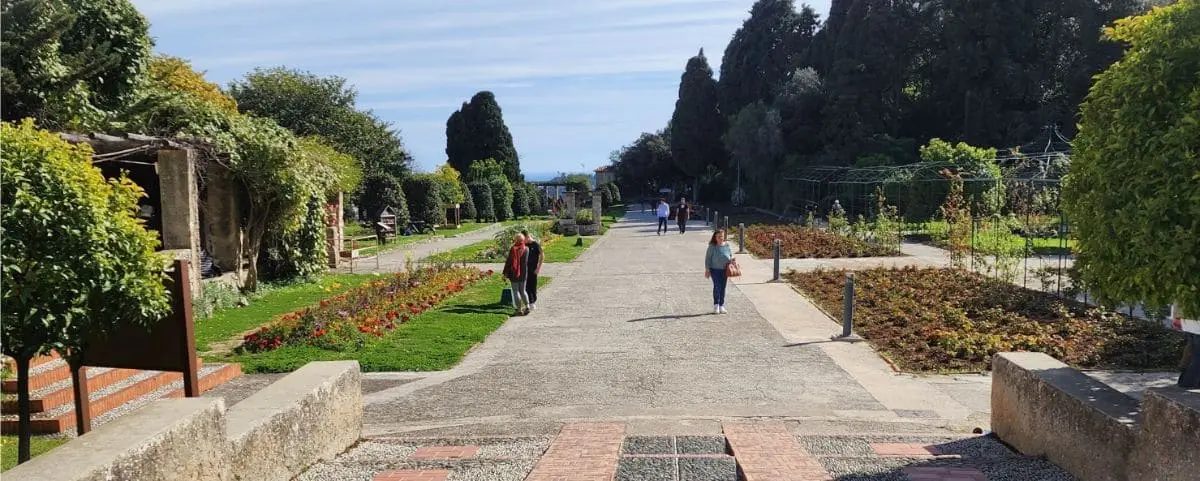
Cimiez is one of the best places to understand how many historical layers Nice contains. Roman remains, Belle Époque residences, museums and a Franciscan monastery all occupy the same hill.
The Franciscans established themselves here in the sixteenth century in an earlier Benedictine priory. The church contains important works by the Niçois painter Louis Bréa, while the cloister and monastic spaces bring a welcome sense of calm. This is the kind of place where slowing down matters more than seeing as much as possible.
Do not treat the monastery as an isolated stop. Walk around the surrounding gardens and explore Cimiez as a whole. The district feels removed from the seafront even though it remains firmly within Nice.
For travelers deciding between different Riviera bases, this depth is one reason Nice works so well. You can compare the experience in our guides to Nice or Cannes and Nice or Antibes.
8. See the Unusual Notre-Dame Auxiliatrice Church

Notre-Dame Auxiliatrice is easy to overlook because it does not conform to the mental picture most visitors have of a grand European church.
Built in the twentieth century, it has a distinctly 1930s appearance and was constructed in reinforced concrete. From outside, with palms nearby and its broad proportions, it can almost resemble an imposing civic building or villa. Inside, the atmosphere changes completely.
The painted nave, ceiling and chapel frescoes make the interior the real surprise. This is why we recommend going in rather than judging the church from the façade alone.
It is also a useful stop for anyone interested in architecture between the Belle Époque and postwar modernism, periods often overshadowed by Nice’s baroque and nineteenth-century heritage.
If your trip continues beyond the city, our guide to the best day trips from Nice can help you decide which days to keep for Nice itself and which to use for the wider Riviera.
Unusual Museums and Art Spaces in Nice
Nice has major-name museums, but some of its most memorable cultural stops sit outside the standard first-visit checklist. These four range from naïve art and Roman archaeology to photography and visual trickery.
9. Explore the Musée International d’Art Naïf Anatole Jakovsky

Housed in the former Château Sainte-Hélène in the Fabron district, this museum is unusual before you even reach the collection. A historic villa and park provide the setting for an art form that receives far less attention than Impressionism or modernism on the Riviera.
The museum grew from the collection of critic and advocate Anatole Jakovsky and presents naïve art through paintings, drawings and sculptures by artists from different countries. Expect direct color, imaginative scenes and work that often ignores the academic rules of perspective and proportion.
The result can be playful, strange or unexpectedly moving. Even visitors who think naïve art is not “their thing” may find the museum refreshing precisely because it differs from the usual art-historical progression.
We recommend it particularly if you have already visited Nice’s headline museums and want something less predictable.
10. Discover Roman Nice at the Musée d’Archéologie de Nice-Cimiez

Before the Promenade des Anglais, before the Belle Époque palaces and long before tourism, there was Cemenelum, the Roman settlement on the hill of Cimiez.
The archaeological museum brings together finds from excavations in Cimiez and the surrounding area, including Roman glassware, funerary objects, sculpture and material connected with everyday life and trade. Outside, the archaeological site preserves the remains of substantial thermal complexes.
The best part is the connection between museum objects and the ruins immediately beside them. Models help make sense of the baths, while the surviving walls, channels and traces of an ancient road turn the site into something more than a collection of artifacts behind glass.
Give Cimiez a half-day if you can. Combining the archaeology museum with the monastery and gardens makes far more sense than treating each place as a separate mission.
11. Visit the Musée de la Photographie Charles Nègre
Near Cours Saleya, the Musée de la Photographie Charles Nègre is an easy cultural detour in a part of Nice where most visitors are focused on food, façades and the Old Town.
The museum presents photography through temporary exhibitions, often featuring major photographers, while its collections also connect the medium to Nice and the Riviera. Charles Nègre himself photographed the region in the nineteenth century, giving the museum a natural local anchor.
It is compact enough to fit into a walking day, but substantial enough to change the rhythm of an afternoon in Vieux Nice. That makes it especially useful when the weather turns, when you want a break from the streets, or when a particular exhibition catches your eye.
Photography also offers a different way of seeing a city obsessed with light. After a visit, you may find yourself paying more attention to shadows, shutters and street scenes outside.
12. Play With Your Senses at the Musée de l’Illusion
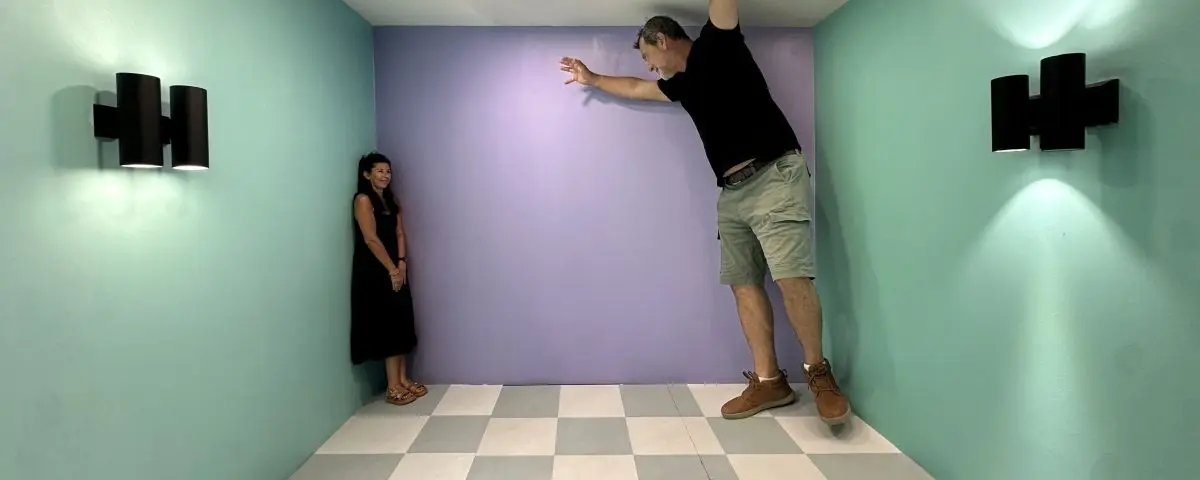
Not every unusual museum needs ancient artifacts or fine art. The Musée de l’Illusion works through optical effects, perspective tricks and interactive installations designed to make your eyes disagree with your brain.
This is one of the more playful things to do in Nice, particularly with children, teenagers or a group that has reached its limit of churches and archaeological fragments. Come for participation rather than contemplation: the point is to test, photograph and experience the illusions.
We would not choose it over Cimiez or Terra Amata if you have only one day in Nice. But as an alternative indoor activity, it provides a complete change of pace.
It can also be a useful reminder that “hidden gems” do not have to mean old or secret. Sometimes the unusual part is simply doing something that breaks the expected Riviera routine.
Discover Nice’s Prehistoric Past
For us, this is the most surprising chapter of Nice. The city is famous for nineteenth-century tourism, Italianate streets and Mediterranean glamour, yet evidence of human occupation here reaches astonishingly far into prehistory.
13. Go Back 400,000 Years at the Terra Amata Museum

Terra Amata was uncovered during construction work near the foot of Mont Boron. The archaeological discoveries revealed traces of human occupation dating back roughly 400,000 years, including evidence associated with temporary shelters and daily life.
The museum stands on the site itself. Displays include stone tools and animal remains, while reconstructions help visitors imagine the shoreline and environment inhabited by these extremely early residents.
Few places in Nice change your sense of the city’s timescale as dramatically as Terra Amata. One moment you are walking through a modern Mediterranean neighborhood; the next you are thinking about humans living beside an ancient beach hundreds of millennia ago.
It is not a huge museum, which is an advantage. You can absorb the story without museum fatigue, then continue toward the port or Mont Boron.
Nice’s depth is one reason we often recommend it as a base rather than simply a day-trip stop. For comparison with nearby destinations, see Nice or Monaco and Nice or Menton.
14. Step Inside the Prehistoric Grotte du Lazaret

The Grotte du Lazaret may be the strongest answer to anyone who thinks Nice is all beaches and Belle Époque villas.
Set near Mont Boron, the cave preserves traces of prehistoric occupation from roughly 190,000 to 120,000 years ago. Archaeological finds include stone tools and animal remains, helping researchers reconstruct how early humans used this sheltered space.
A walkway allows visitors to enter the cave and understand its dimensions without turning the experience into an expedition. Standing inside a prehistoric site while modern Nice continues just outside is wonderfully disorienting.
The contrast is what stays with you. Palm trees, traffic, sea views, then a cave that pushes the human history of the area back into deep time.
We recommend pairing Lazaret with Terra Amata rather than visiting them on separate days. Together they form one of the most distinctive unusual experiences in Nice, especially for travelers interested in archaeology and human history.
And if you are tempted to keep moving west along the Riviera afterward, our comparison of Nice or Saint-Tropez explains how different those two experiences really are.
Wrap-Up: How to See a Different Side of Nice
- Do not try to visit all 14 places in one day. The best approach is to group Port Lympia, the antique shops and Terra Amata together, then give Cimiez its own half-day.
- Choose places that contrast with your main sightseeing. After Vieux Nice, try archaeology; after the Promenade, head to the port; after a major art museum, visit Art Naïf or Lympia.
- For the strongest hidden-gem experience, prioritize Cimiez, Terra Amata, the Grotte du Lazaret and Espace Lympia. They reveal sides of Nice that many short-stay visitors never see.
- Leave room for wandering. Around Port Lympia and the antiques district, the streets between the official stops are part of the experience.
- Use Nice as a base if you want variety. The city combines beaches, archaeology, museums and local neighborhoods while keeping the rest of the Riviera within reach.
- Most importantly, look beyond the postcard. Nice becomes more rewarding when you stop asking only what you are supposed to see and start following the places that make you curious.