


INTERACTIVE MAP
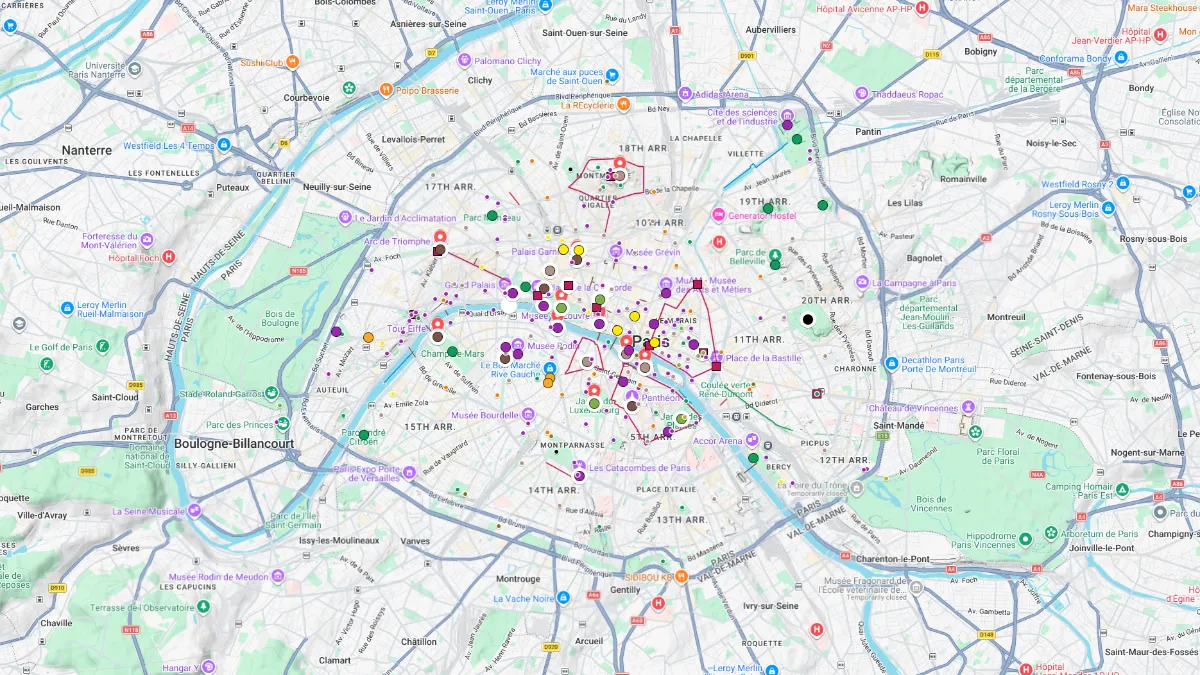
Click on the icon  in the top-right corner to view the map in full screen.
Show/Hide layers as needed.
After clicking on the image,
click on the icon  in the top-left corner to display the map legend.
Show/Hide layers as needed.
FAMOUS NEIGHBORHOODS
Overview Table
| Name | Top+ | Top | Appeal | Arr. |
|---|---|---|---|---|
| Le Marais | ✅ | ☑️ | ✦✦✦✦✦ | 3 & 4 |
| Montmartre | ✅ | ☑️ | ✦✦✦✦✦ | 18 |
| St-Germain-des-Prés | ☑️ | ✦✦✦✦✧ | 6 | |
| Latin Quarter | ☑️ | ✦✦✦✦✧ | 5 |
Le Marais
In Our Top+ ✅
Appeal ✦✦✦✦✦
Arrondissement 3rd & 4th
Full Name
Le Marais
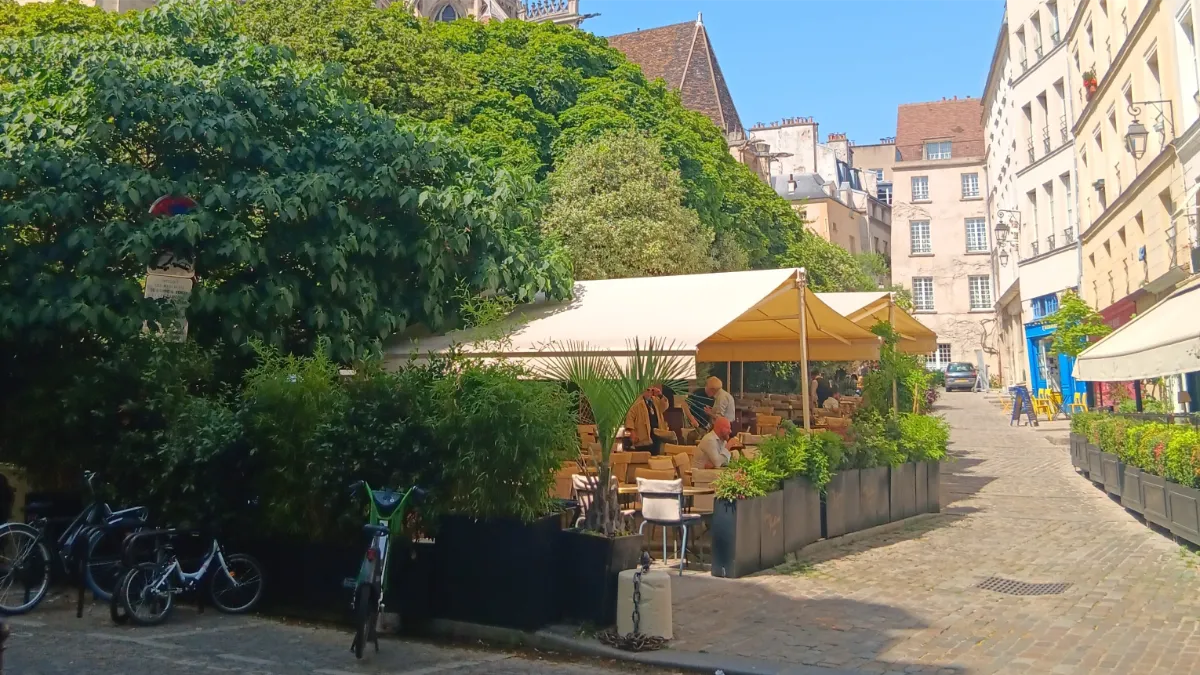
Le Marais covers one of the oldest parts of central Paris, on land that was once marshland. From the 12th century onward, a powerful religious community laid out new streets and oversaw new construction. Several centuries later, the French aristocracy chose the area for their grand townhouses, many of them built around elegant courtyards with private gardens.
As you walk around, take a look at the façades, the monumental gateways, and the passageways that sometimes reveal quiet inner courtyards. The former mansions of Soubise, Carnavalet, and Salé are among the finest examples. They date from the 16th and 17th centuries, when the neighborhood was one of the most prestigious addresses in Paris.
Place des Vosges is one of the area’s main landmarks. Originally known as Place Royale, it features a remarkably balanced design, surrounded by brick and stone buildings. Its covered arcades, central garden, and harmonious proportions create a rare sense of unity in a city shaped by centuries of change.
By the early 1960s, much of Le Marais had fallen into disrepair and faced demolition. A preservation policy launched by André Malraux saved and restored many of its historic buildings. Thanks to that effort, museums, cultural institutions, and art galleries now occupy buildings that might otherwise have disappeared.
The neighborhood also has a strong Jewish identity and a vibrant LGBTQ+ community. Around Rue des Archives, Rue des Francs Bourgeois, Rue Vieille du Temple, and Rue Sainte Croix de la Bretonnerie, you’ll find one of the liveliest parts of the district, where different communities have played an important role in its revival. At the same time, quieter streets like Rue Aubriot still preserve an intimate atmosphere and a strong sense of old Paris.
Montmartre
In Our Top+ ✅
Appeal ✦✦✦✦✦
Arrondissement 18th
Full Name
Montmartre
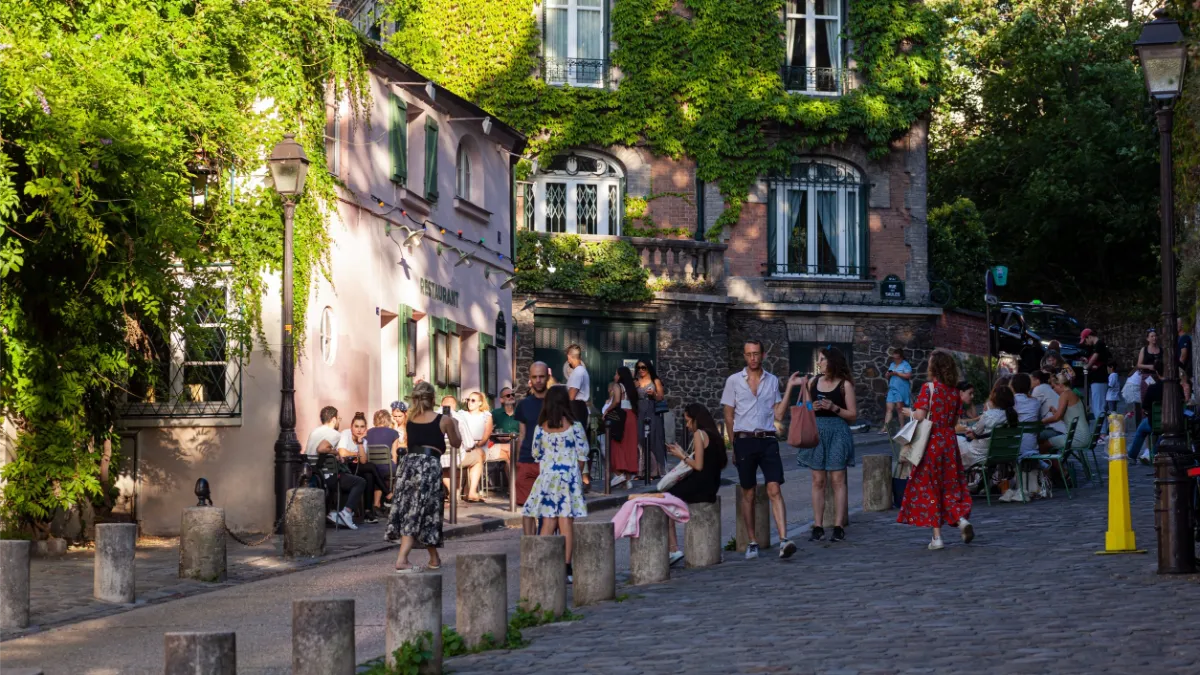
Montmartre rises on a hill in northern Paris, where steep streets, stairways, and cobbled lanes make it a place best explored on foot. From the viewpoints near Sacré Cœur, you’ll get sweeping views across the city. Early morning is one of the best times to visit, before the crowds arrive and while the light is especially clear.
Place du Tertre reflects the area’s artistic past, but Montmartre is much more than its busiest squares. The northern slopes, the streets around Saint Vincent, the lanes near Abbesses, and the paths bordering the cemetery reveal a much quieter side. Some of these corners seem almost unchanged since the 19th century.
For centuries, Montmartre remained a village separate from central Paris. In the late 19th and early 20th centuries, its inexpensive housing and free spirited atmosphere attracted painters, sculptors, writers, and poets. Renoir worked here, Maurice Utrillo became known for his melancholic views of its streets, and Suzanne Valadon built her artistic career in the neighborhood.
The Bateau Lavoir, a run down artists’ residence, became one of the most important centers of modern art. Max Jacob, Henri Matisse, Georges Braque, and Guillaume Apollinaire all spent time here. In 1907, Pablo Picasso painted Les Demoiselles d’Avignon in the building, a work widely associated with the birth of Cubism and a turning point in European painting.
Montmartre also played a major political role in 1871. When the French government tried to seize the cannons stationed on the hill, part of the army refused to act against the local population. That event triggered the Paris Commune, during which residents and workers attempted to govern the capital themselves for nearly two months.
Saint-Germain-des-Prés
In Our Top ☑️
Appeal ✦✦✦✦✧
Arrondissement 6th
Full Name
Saint-Germain-des-Prés
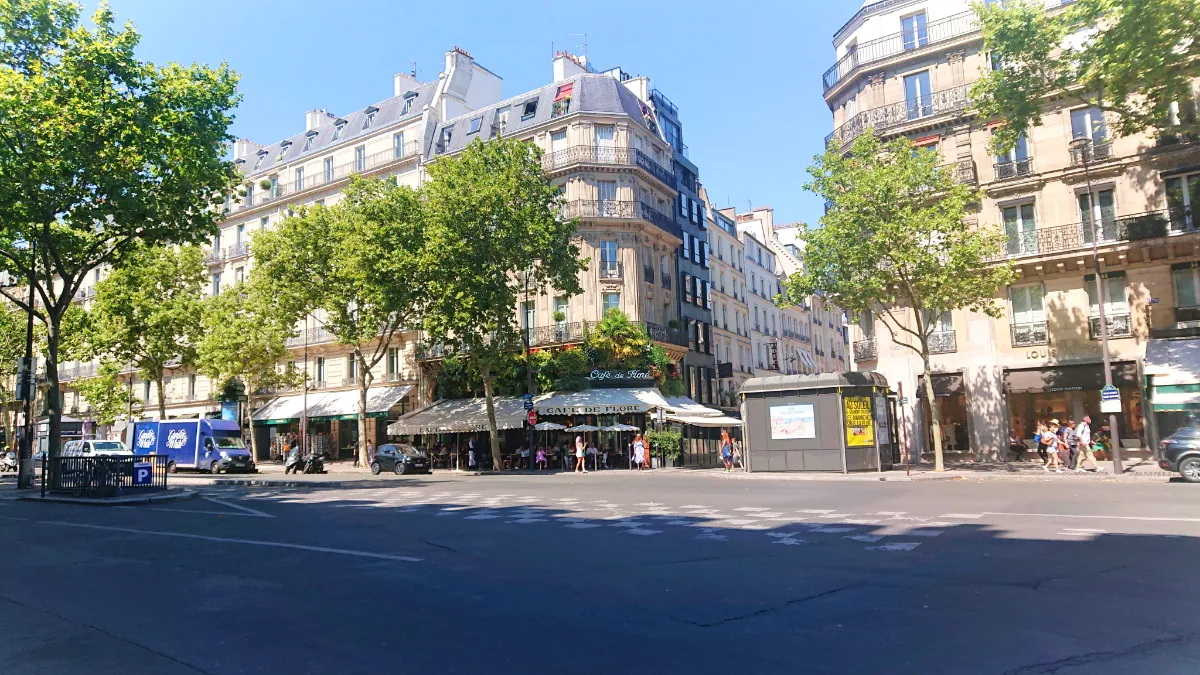
Saint Germain des Prés has a character quite distinct from the neighboring Latin Quarter. Its history began around a major religious community founded in the 6th century. For several centuries, this vast complex functioned almost like a small independent town and became an important center for learning, the preservation of manuscripts, and intellectual life.
The Church of Saint Germain des Prés is considered the oldest church in Paris still standing in its present form. Most of the medieval abbey disappeared over time, but its tower and parts of the choir, dating from the 11th and 12th centuries, still survive. The nave was originally built in the Romanesque style before later being transformed according to Gothic principles.
Inside, medieval capitals stand alongside decorative paintings added during the 19th century. Around the church, a few remaining structures recall the former abbey, which was almost entirely demolished in the early 19th century after serving as a prison during the French Revolution.
Place de Furstemberg was once the ceremonial courtyard of this vast religious complex. Today, it’s one of the most romantic squares in the neighborhood. In spring, its trees bloom with blue and purple flowers, while the old street lamps and elegant façades create a peaceful atmosphere.
Rue Cardinale, Rue de l’Échaudé, and Rue de Bourbon le Château still preserve their narrow medieval layout and historic houses. Along Rue de Seine, some grand residences open onto small courtyards, sometimes filled with greenery. On Rue Jacob, plaques on the façades commemorate the many artists and writers who once lived here.
After the Second World War, Saint Germain des Prés became the center of Parisian literary and philosophical life. Jean Paul Sartre, Simone de Beauvoir, Boris Vian, and Juliette Gréco were all part of a period when literature, jazz, political debate, and existentialist philosophy shaped the lasting identity of the neighborhood.
Latin Quarter
In Our Top ☑️
Appeal ✦✦✦✦✧
Arrondissement 5th
Full Name
Quartier Latin
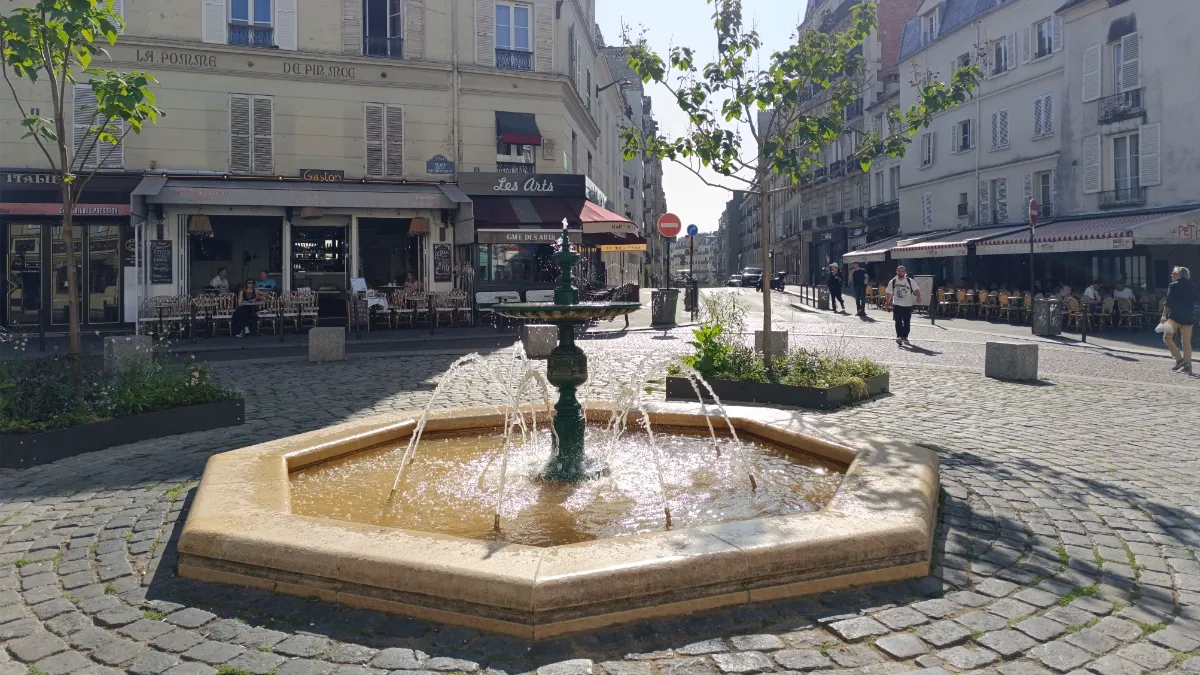
The Latin Quarter stretches mainly around Boulevard Saint Michel and the slopes of Sainte Geneviève Hill. Its history began long before the emergence of modern France. The Roman Baths of Cluny and the Arènes de Lutèce are reminders of the ancient city built here, when Paris was still known as Lutetia.
From the 12th century onward, the hill became one of Europe’s great centers of learning. The philosopher Peter Abelard attracted students here after falling into conflict with the religious authorities on the Île de la Cité. Classes were taught in Latin, the international language of medieval universities, which eventually gave the neighborhood its name.
Many educational institutions followed. In 1253, Robert de Sorbon founded a college for poor students, laying the foundations of what would become the Sorbonne. The chapel of this former university remains one of the finest architectural reminders of the district’s long academic tradition.
The neighborhood still preserves several medieval buildings, including the Church of Saint Séverin and the former Paris residence of the abbots of Cluny. The Panthéon belongs to a later period. Originally built as a church, it became after the French Revolution a national monument honoring men and women considered among the most important figures in French history.
You can leave the main streets behind and explore Rue du Chat qui Pêche, one of the narrowest streets in Paris, as well as Rue Saint Séverin or Rue de la Montagne Sainte Geneviève. Rue Mouffetard and Place de la Contrescarpe offer a livelier atmosphere, while the area around Saint Julien le Pauvre feels much quieter and more intimate.
The Latin Quarter remains closely connected to student life and political activism. During the 1960s, it was the scene of demonstrations against the Algerian War, the Vietnam War, and police violence. Today, independent cinemas, experimental theaters, bookshops, and street art continue that long tradition of alternative culture.
FAMOUS STREET
Overview Table
| Name | Top+ | Top | Appeal | Arr. |
|---|---|---|---|---|
| Champs-Élysées | ☑️ | ✦✦✦✦✧ | 8 |
Champs-Élysées

In Our Top ☑️
Appeal ✦✦✦✦✧
Full Names
Avenue des Champs-Élysées
Les Champs
The Champs-Élysées, often referred to as “the world’s most beautiful avenue,” is a renowned thoroughfare, stretching from the Arc de Triomphe to the Place de la Concorde. This iconic avenue is famous for its theaters, cafés, and luxury shops, including high-end brands.
It serves as a cultural hub, hosting significant events such as the annual Bastille Day military parade and the finish line for the Tour de France cycling race. The name “Champs-Élysées” translates to “Elysian Fields,” drawing inspiration from Greek mythology, symbolizing a paradise for heroes.