


PRESENTATION
Corsica, an island between the sea and the mountains
Set in the heart of the Mediterranean, south of mainland France and north of Sardinia, Corsica feels like a little continent of its own. Covering around 8,680 km², the island brings together white sandy beaches, dramatic cliffs, deep forests and mountains that seem to rise straight out of the sea. You can swim in turquoise waters in the morning and, just a few hours later, find yourself high up in the mountains, surrounded by pine trees and rocks.
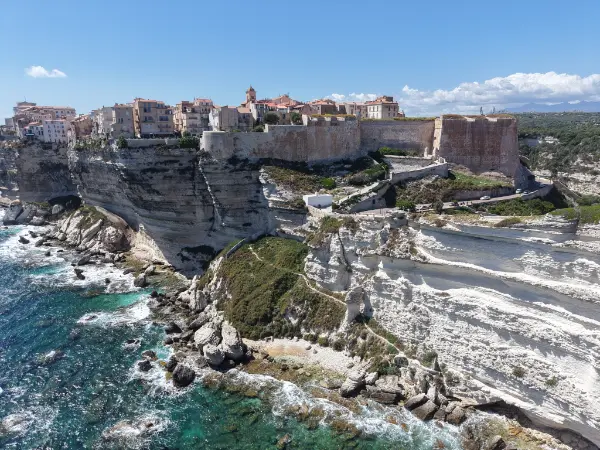
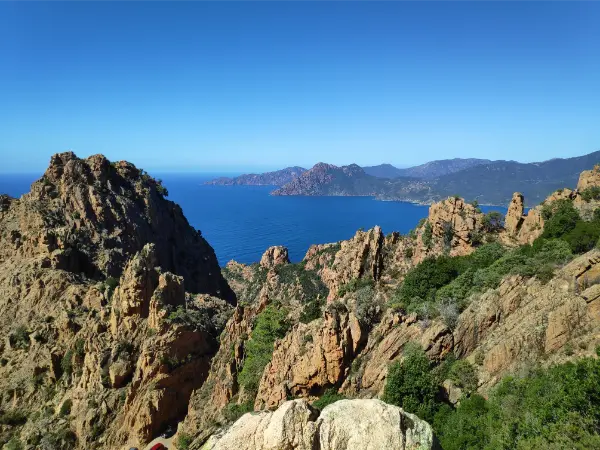
With more than 1,000 km of coastline, the scenery is constantly changing. In the south, near Porto-Vecchio, the beaches of Palombaggia and Santa Giulia are known for their crystal-clear waters and stretches of pale sand. On the west coast, the spectacular red rock formations of Piana plunge towards the sea, while the white cliffs of Bonifacio tower above the strait separating Corsica from Sardinia. Further north, tiny coves are tucked away between rocky outcrops and fishing villages.
But don’t just stick to the beaches. Corsica is, above all, a mountainous island. Its highest peak, Monte Cinto, reaches 2,706 metres. Inland, winding roads weave through valleys, chestnut forests and hilltop villages. Rivers have carved out deep gorges, dotted with waterfalls and natural swimming pools. The landscape can feel wonderfully wild, a world away from the lively seaside resorts.
And then there’s the maquis, the dense Mediterranean scrubland made up of shrubs, aromatic plants and small trees. In spring, flowers bring splashes of colour to the hillsides. In summer, the warmth of the sun releases the scents of rosemary, myrtle and everlasting flowers into the air. It’s a distinctive fragrance that follows you wherever you walk.
A land of history, culture and traditions
To really understand Corsica, you also need to head away from the coast and take the time to explore its villages. Behind the stone façades, narrow streets and little shaded squares lies a particularly turbulent history. Over the centuries, the island has experienced invasions, conflicts and periods of foreign rule, including domination by Genoa, a powerful trading city in what is now Italy. The old watchtowers that still dot the coastline are reminders of a time when the island needed protection from attacks coming from the sea.
In the 18th century, Pasquale Paoli became one of the leading figures in Corsica’s struggle for independence. It was also in Ajaccio, in 1769, that Napoleon Bonaparte was born. He would go on to become Emperor of the French and one of the most famous figures in European history. Although Corsica came under French rule around the same time, it has held on to a strong cultural identity. You’ll soon notice that the Corsican language, which is closely related to Italian, is still very much present in village names, on road signs and in everyday conversations. Traditions also remain an important part of local life.
And you can’t talk about Corsican culture without mentioning its polyphonic singing. These traditional songs, performed by several voices and often without instruments, have long been part of gatherings, celebrations and religious ceremonies.
Corsica’s identity is also something you can discover through its food. Local cuisine makes the most of the island’s produce, from traditional cured meats and sheep’s and goat’s cheeses to slow-cooked meat dishes flavoured with herbs, honey and chestnut flour. Make sure you try brocciu, a local cheese speciality, or canistrelli, small, crunchy biscuits. In inland villages, sitting down for a meal is often a chance to discover family recipes passed down from one generation to the next.
An island of many faces, beyond the picture postcards
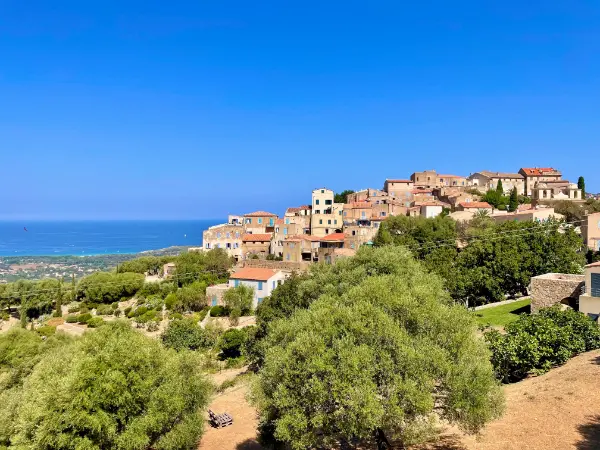
There’s no single version of Corsica. In fact, the island has almost as many different sides as it has valleys, villages and stretches of coastline. In the north, Cap Corse, a long mountainous peninsula jutting out into the sea, is home to small fishing harbours, hillside villages and spectacular coastal roads. On the northwestern coast, the Balagne region combines beautiful beaches, olive groves and hilltop villages where local craftspeople keep traditional skills alive.
On the west coast, the scenery becomes more rugged. Around Scandola and Piana, red rocks, towering cliffs and deep blue waters create one of the most remarkable natural landscapes in the Mediterranean. To the east, the terrain becomes gentler, giving way to long beaches and farmland. Further south, Bonifacio is an incredible sight, with houses perched right on the edge of limestone cliffs, while the mountains of Alta Rocca offer a completely different setting, with forests and jagged peaks.
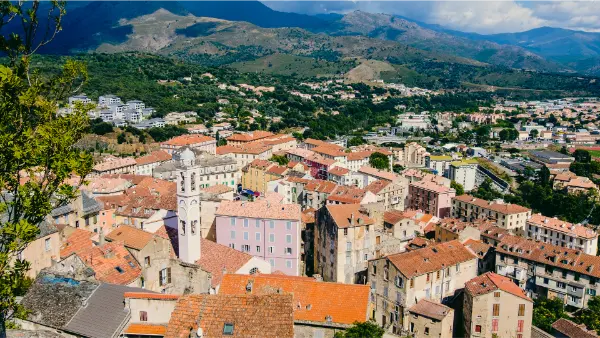
The island’s interior is well worth exploring too. Around Corte, a historic town surrounded by mountains, you’ll discover a more rural side of Corsica, with old walking trails, rivers and villages that are sometimes far from the main tourist routes. Here, distances are measured less in kilometres than in the time it takes to navigate the winding roads. It’s much better to slow down, stop to enjoy a viewpoint or have a coffee in a village square than to try to see everything in just a few days.
Each season brings its own atmosphere. Summer draws visitors looking for sunshine and swimming, but it also means bigger crowds on the most famous beaches. In spring, the countryside bursts into bloom and the temperatures are ideal for walking. Autumn brings softer colours, quieter villages and the return of the chestnut harvest.
And perhaps that’s where Corsica’s real charm lies, in being able to move from one completely different world to another without ever leaving the island.
OVERVIEW
Map
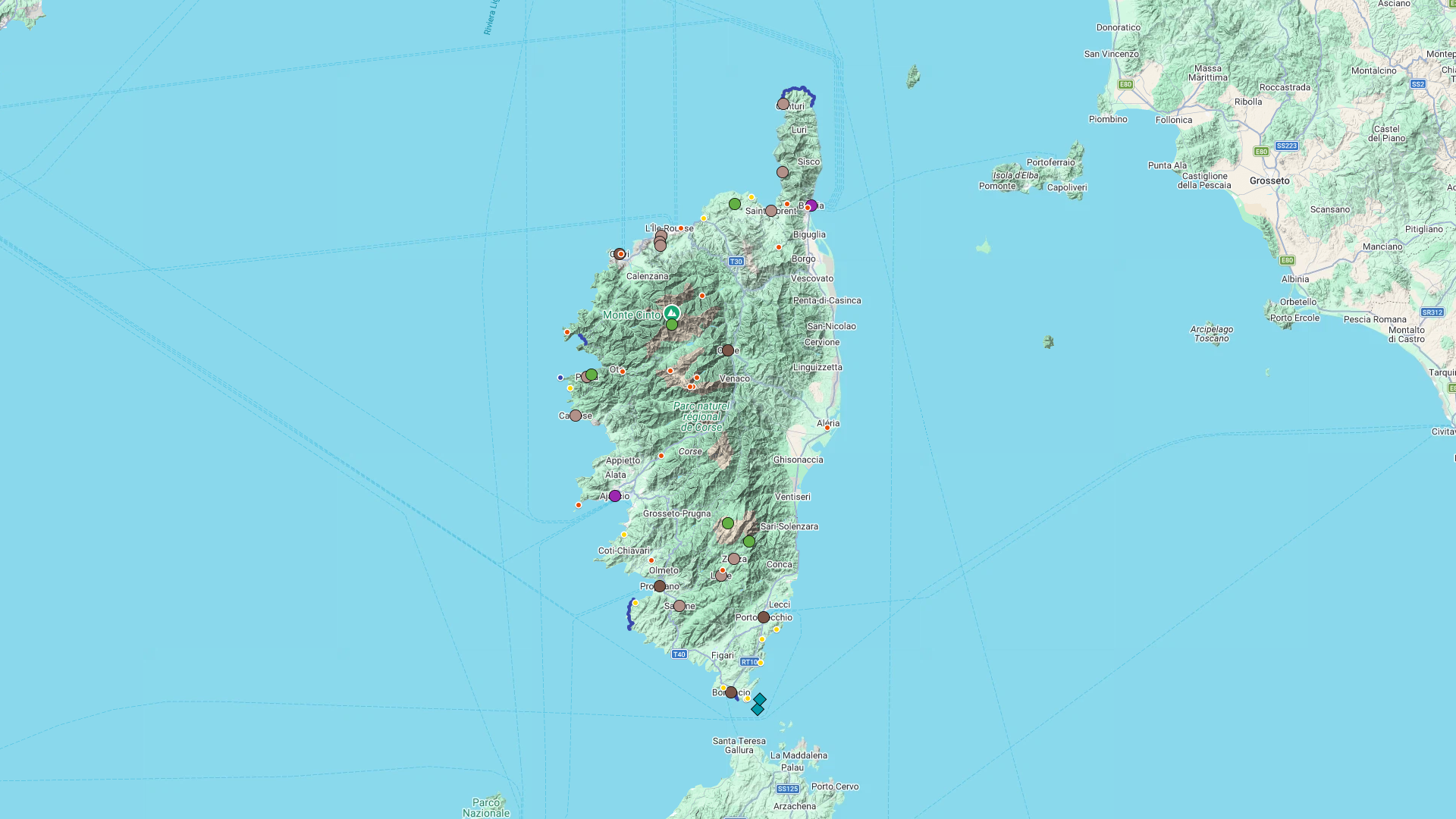
Interactive Map
Interactive Map
Click on the icon  in the top-left corner to display the map legend.
Show/Hide layers as needed.
Click on the arrow icons (v) to display the sublayers.
Top Picks