


MAP
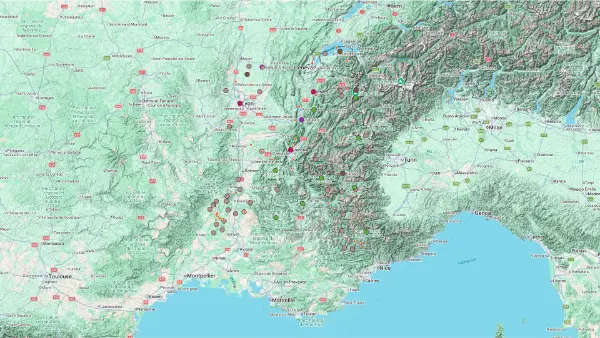
Lyon, Alps, Rhône Valley
Interactive Map
Lyon, Alps, Rhône Valley
Interactive Map
Click on the icon  in the top-left corner to display the map legend.
Show/Hide layers as needed.
Click on the arrow icons (v) to display the sublayers.
NORTH-WEST
| Name | Top+ | Top |
|---|---|---|
| Vonnas | ||
| Val d'Oingt | ||
| Pérouges | ✅ | |
| Sainte-Croix-en-Jarez | ||
| Saint-Antoine-l'Abbaye |
Vonnas
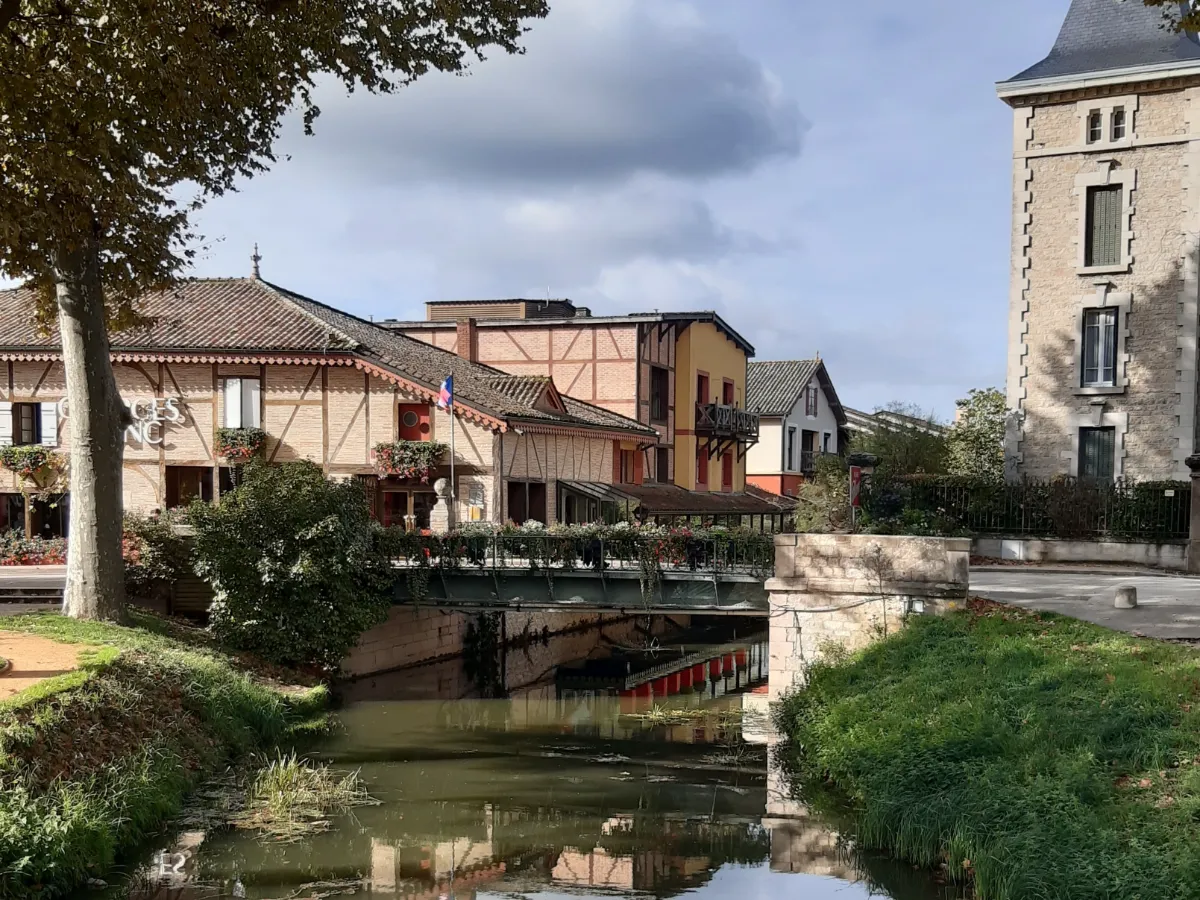
In Vonnas, water is everywhere. Rivers, small canals, bridges and footbridges create a peaceful rural setting amid the meadows of Bresse. The village has kept some lovely old houses, with brick façades and timber frames.
Take your time following the banks of the Renon and Veyle rivers. You won’t find grand monuments here, just a lovely countryside atmosphere, flower filled gardens and a beautiful harmony between the buildings and the waterways.
Vonnas is also known for its culinary traditions, closely tied to the produce of this fertile countryside. It’s a way of life with deep roots.
Val d'Oingt
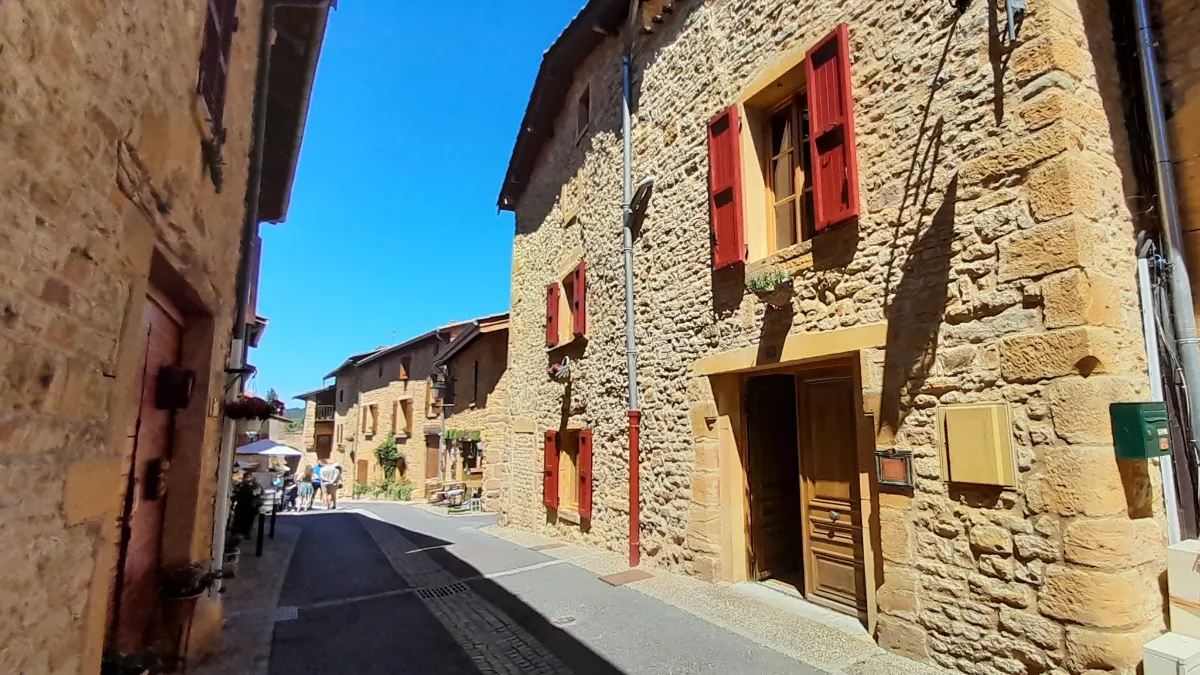
In the rolling hills of Beaujolais, the historic village of Oingt more than deserves its nickname, the “Pearl of the Golden Stones”. Almost every house is built from yellow limestone that takes on wonderful honey coloured tones in the sunshine.
Pass through the Porte de Nizy and climb the cobbled lanes, lined with old houses featuring beautifully carved windows. At the top, the medieval tower recalls the village’s fortified past. And the view is well worth the climb. Vine covered hills roll away towards the horizon. Late in the day, the façades glow golden, making the village especially photogenic.
Pérouges
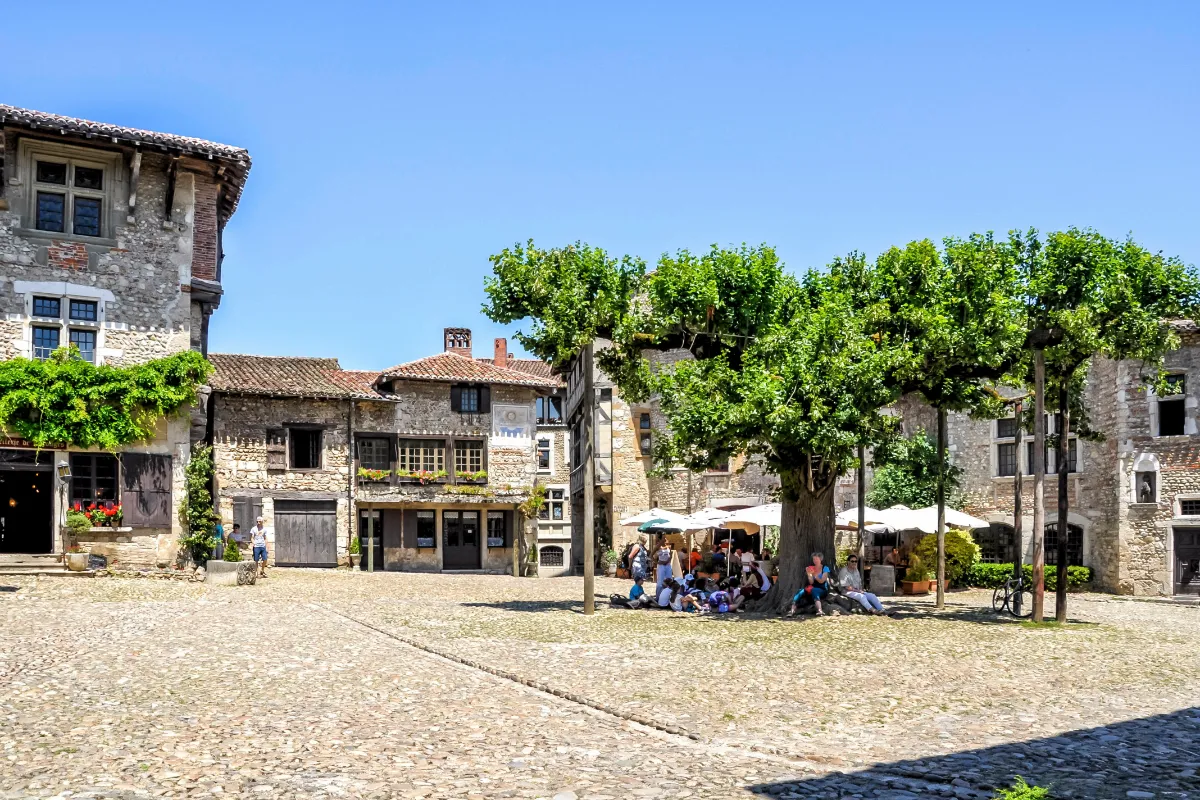
In Our Top+ ✅
In Pérouges, you half expect to bump into a knight around the next corner. This former fortified town, perched on a hill, has preserved its medieval houses, cobbles made from rounded stones and defensive walls. It feels as though time stopped here several centuries ago. Walk through the old gateways and make your way to Place du Tilleul, surrounded by handsome houses built from timber and stone. It’s quite a sight.
Pérouges was once a prosperous textile town before falling into decline and obscurity. Rescued from ruin in the early 20th century, it has regained much of its former appearance.
Sainte-Croix-en-Jarez
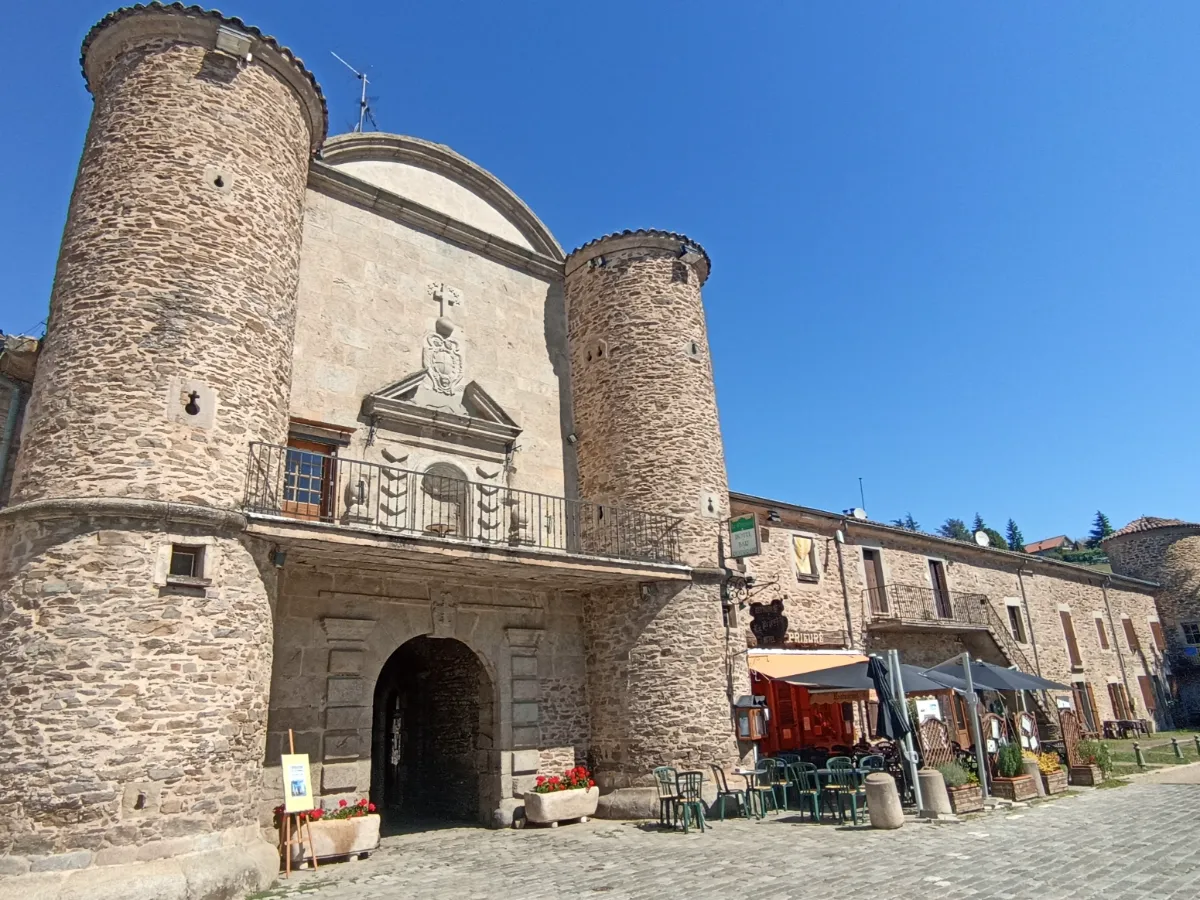
A village inside a monastery, that’s the remarkable story of Sainte-Croix-en-Jarez. Founded in 1280 at the foot of the Pilat mountains, this vast religious complex was turned into homes after the French Revolution. The monks’ former cells became houses, while the courtyards and passageways kept their original layout. It’s an exceptionally rare example in France.
Walk through the monumental gateways to discover vaulted galleries, ancient stonework and gardens. Perhaps the most surprising thing is seeing everyday life carry on in a place once devoted entirely to silence and prayer.
Saint-Antoine-l'Abbaye
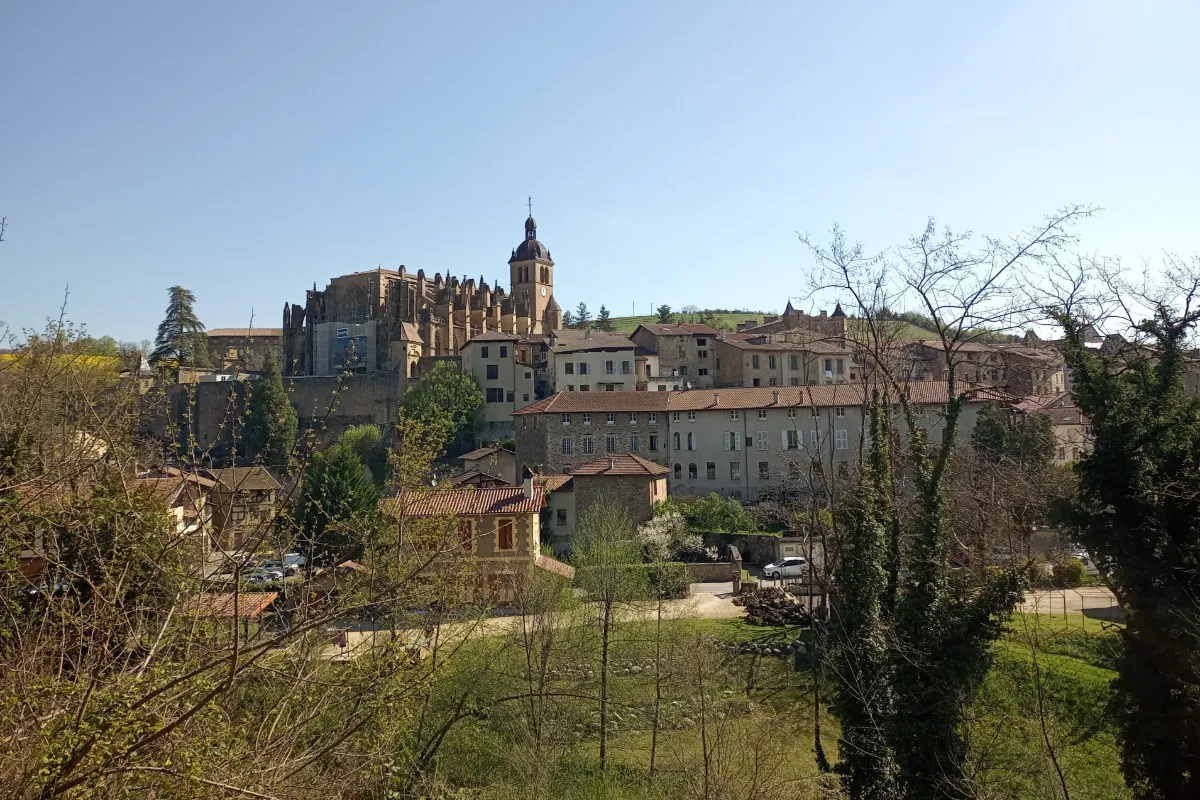
The first thing that strikes you about Saint-Antoine-l’Abbaye is its enormous church, which seems far too big for such a small country village. Built between the 13th and 15th centuries, it once welcomed pilgrims from all over Europe. Its sculpted façade and magnificent interior decorations certainly make an impression.
But don’t stop at the church. The steep lanes, old houses and vaulted passageways are well worth exploring. Around the former monastery, the stone buildings tell the story of centuries of religious life. From the higher parts of the village, you get lovely views across the green hills and rooftops below.
SOUTH-WEST
| Name | Top+ | Top |
|---|---|---|
| Beauchastel | ||
| Mirmande | ✅ | |
| Sceautres | ||
| Alba-la-Romaine | ||
| Vogüé | ☑️ | |
| Balazuc | ✅ | |
| Viel Audon | ||
| Labeaume | ||
| Le Poët-Laval | ||
| Grignan | ☑️ | |
| La Garde-Adhémar | ||
| Saint-Montan | ||
| Aiguèze | ||
| Montclus | ||
| La Roque-sur-Cèze | ||
| Lussan | ||
| Châtillon-en-Diois |
Beauchastel
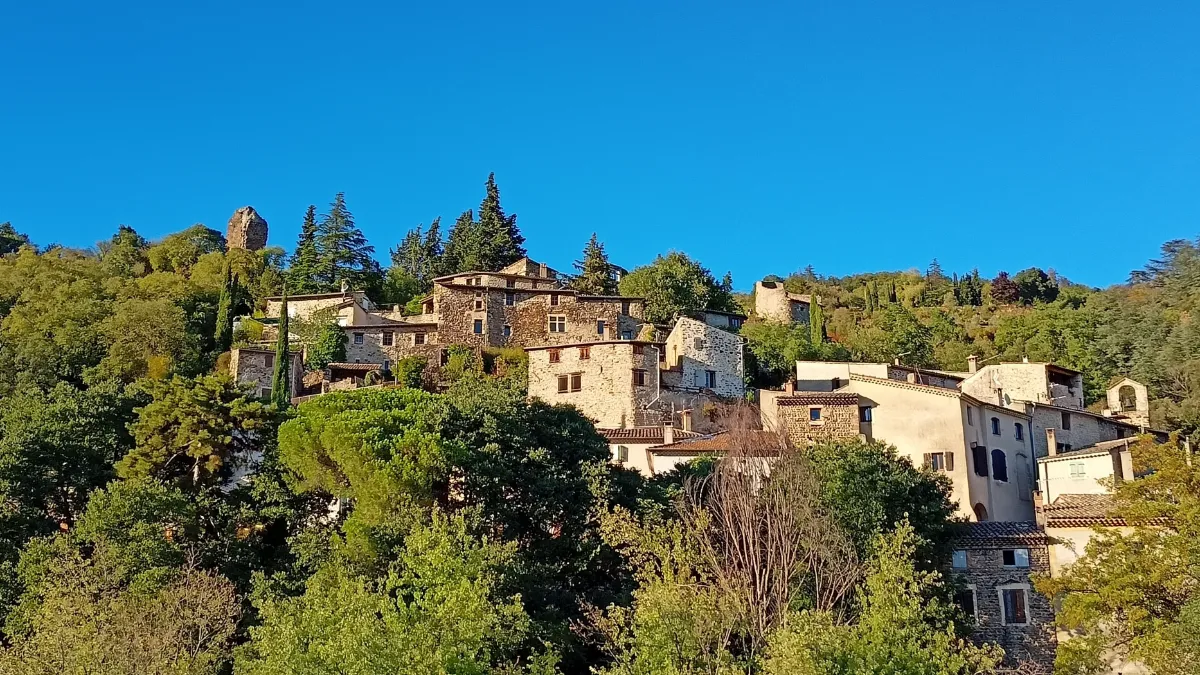
Clinging to a hillside above the Rhône Valley, Beauchastel makes you work a little for its charms. You have to climb its cobbled lanes and staircases to discover the old village, beautifully tucked behind its ancient fortifications. But what a pleasure it is to get lost among its vaulted passageways, sandstone façades and houses huddled closely together. A few carved details reveal the craftsmanship of the builders who worked here centuries ago.
Higher up, the remains of the old castle still survive. And the views make the climb worthwhile: the Ardèche hills on one side, and the Rhône stretching like a broad ribbon between the mountains on the other.
Mirmande
In Our Top+ ✅
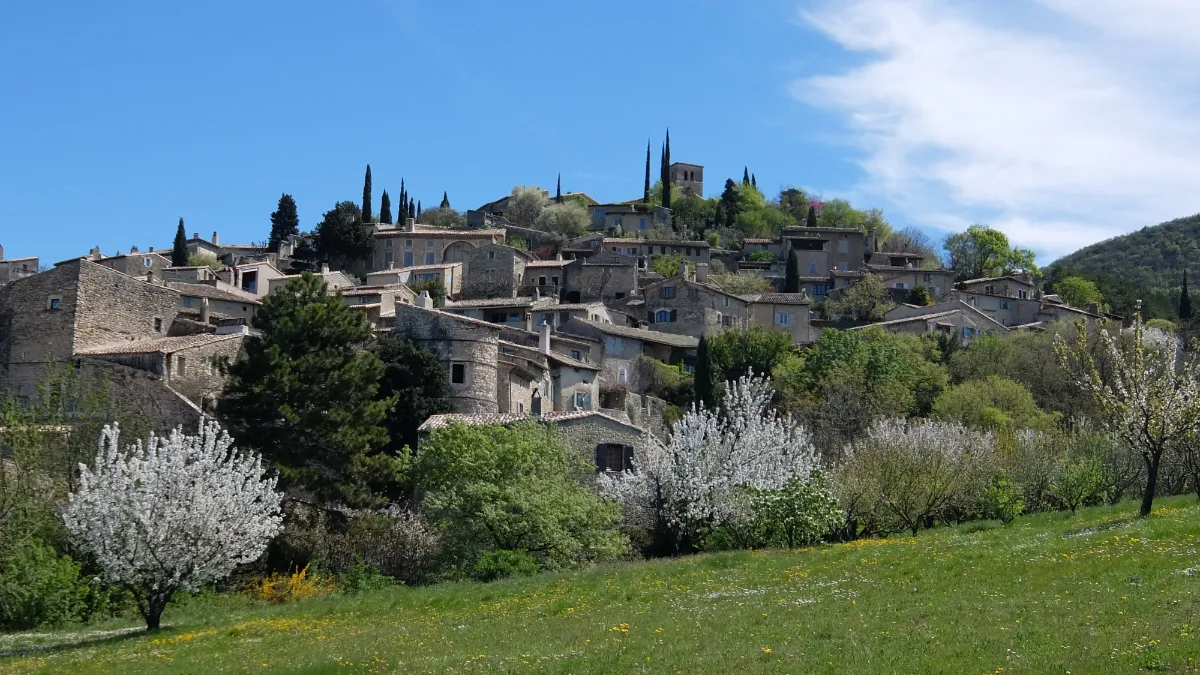
Mirmande has a knack for winning people over. Clinging to its hillside, this village in the Drôme is a jumble of stone houses, cobbled lanes and flower filled staircases. No two façades seem to want to look alike.
Neglected for many years, it was brought back to life by artists, including the painter André Lhote, who settled here in the 20th century. Climb to the old Sainte-Foy Church at the top of the village. Below you, roofs covered in terracotta tiles tumble down the hillside, with the Rhône Valley and its orchards in the distance. The stone takes on lovely warm shades in the sunshine.
Sceautres
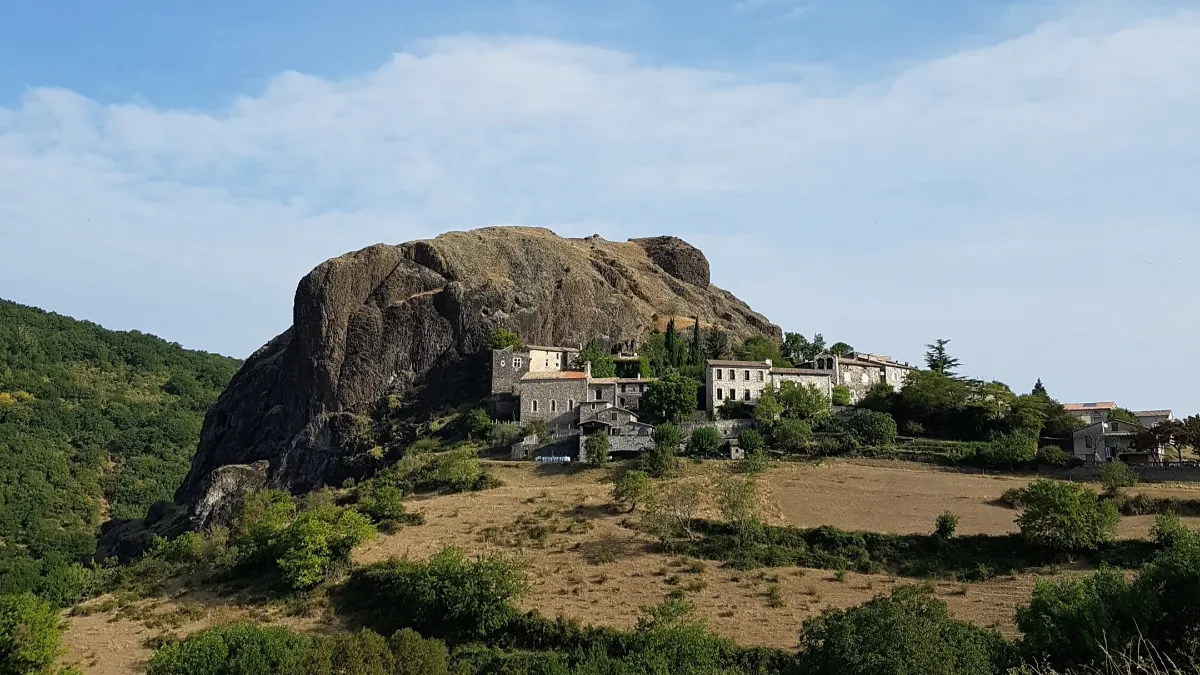
Sceautres has a rather extraordinary setting. This tiny Ardèche village sits at the foot of an enormous volcanic plug, the remains of an ancient chimney of solidified lava exposed by millions of years of erosion.
The basalt and limestone houses look tiny beside this giant mass of rock. It only takes a few lanes to explore the whole village, but don’t rush off just yet. A path climbs to the top of the rock, 543 metres above sea level. After about fifteen minutes of effort, you’re rewarded with wonderful views across the hills and ancient volcanic landscapes of Ardèche.
Alba-la-Romaine
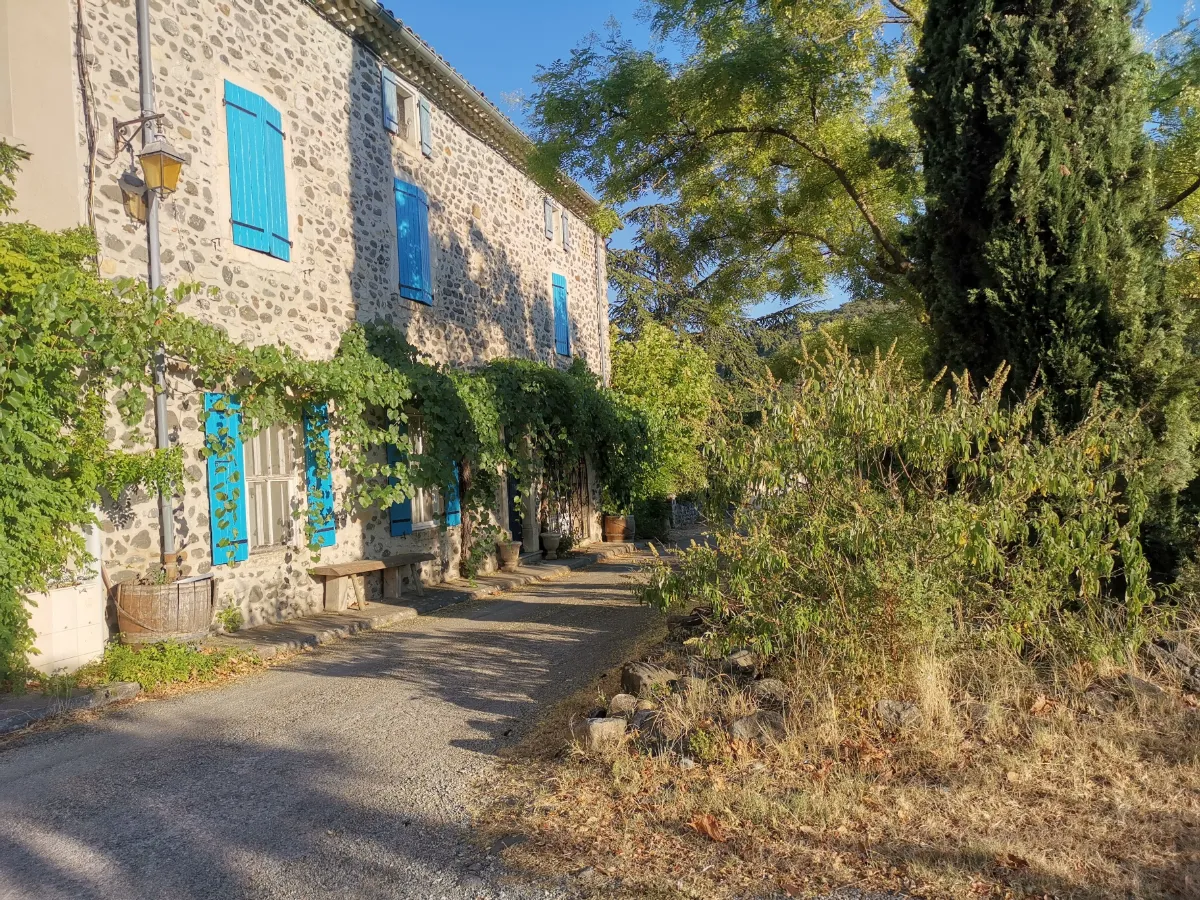
Alba-la-Romaine has two surprises in store. First comes its old village, where houses combine pale limestone with dark volcanic stone, giving the façades a striking contrast. Add a castle, a few vaulted passageways and cobbled lanes, and you’ve got quite a setting.
But the history here goes back much further. Nearby lie the remains of Alba Helviorum, an important town in Roman times. An ancient theatre, old streets and the foundations of public buildings help you imagine what the town looked like almost 2,000 years ago. A lovely journey through time, from the Romans to the Middle Ages.
Vogüé
In Our Top ☑️
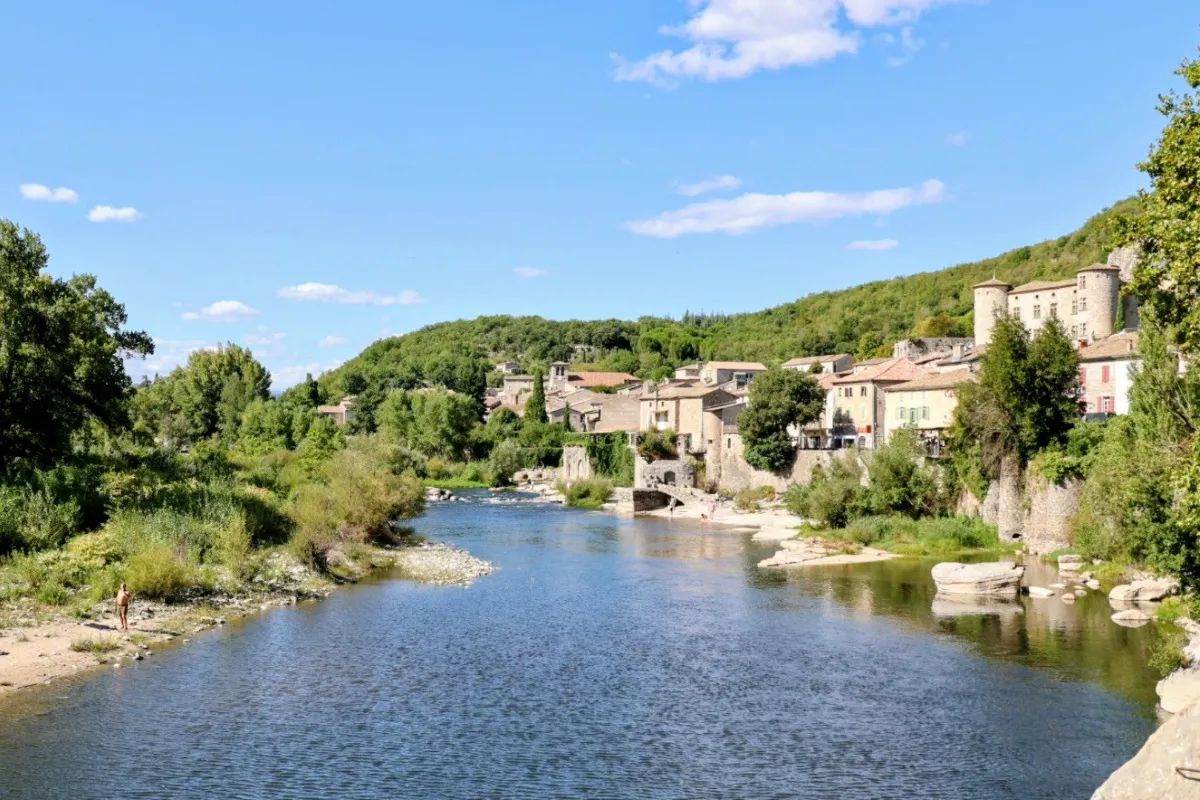
Vogüé looks as though it’s literally glued to the cliff. Its pale stone houses are packed together beside the Ardèche River, overlooked by an imposing castle with round towers. From the opposite bank, the view is beautiful.
Wander through the cobbled lanes, slip beneath vaulted passageways and climb the staircases connecting the houses. The village also has a quirky little feature: Rue des Puces, an incredibly narrow passage squeezed between buildings.
Below the houses, the river flows between pebbled banks and limestone cliffs. When the weather is warm, the riverside is a lovely place to enjoy the water and admire the village.
Balazuc
In Our Top+ ✅
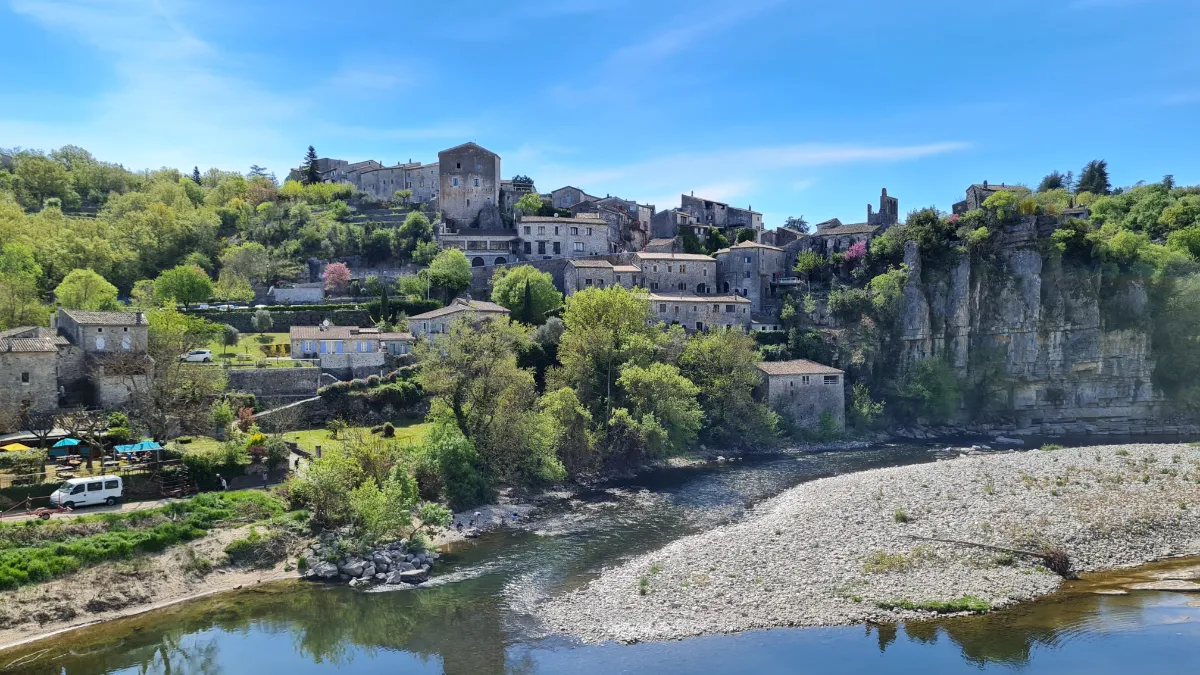
Perched on its rock above the Ardèche River, Balazuc is an impressive sight. Its houses seem to cling to one another, forming a maze of stone overlooked by an ancient castle.
In the narrow streets, vaulted passageways give way to steep staircases. The Romanesque church, with its simple architecture, recalls the village’s medieval origins. Take the time to look up, as the old façades have some lovely details.
Far below, the Ardèche sweeps around a broad bend lined with pebbles. From the opposite bank, the silhouette of Balazuc rising above the river is spectacular.
Viel Audon
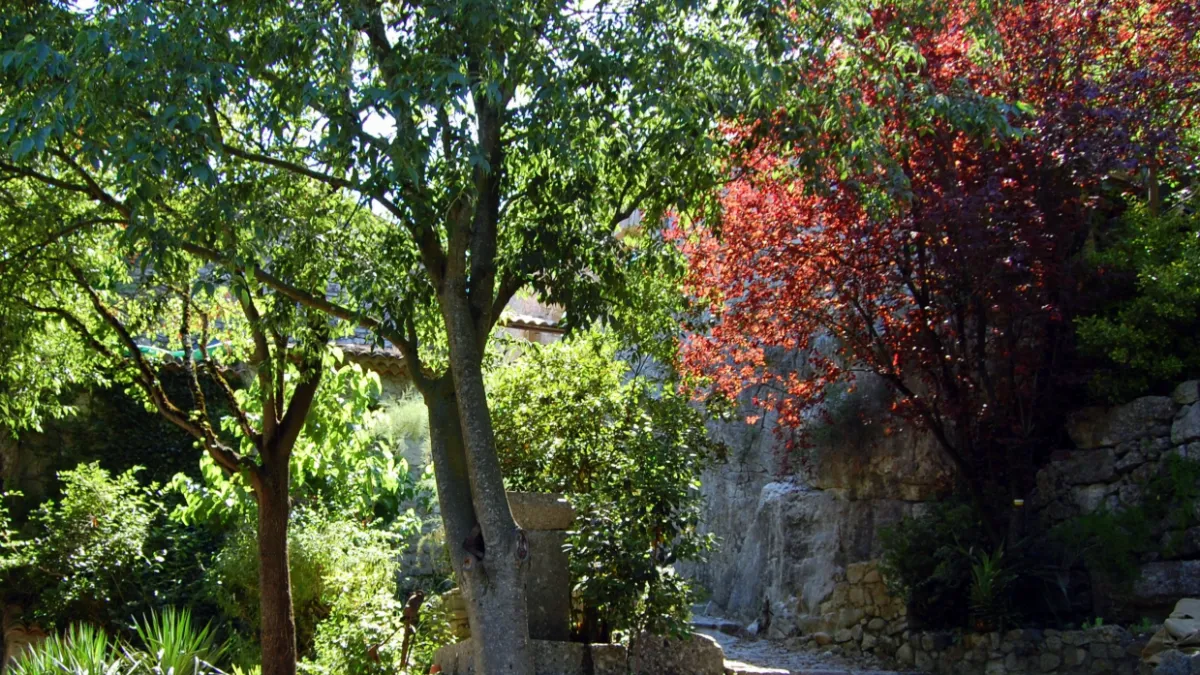
Viel Audon has quite a story to tell. This tiny village, tucked beside the Ardèche River, lay abandoned for decades. Then, in the 1970s, a group of enthusiasts decided to rebuild it, stone by stone. And they certainly didn’t do things by halves.
Accessible only on foot, the hamlet has regained its old houses, passageways and gardens thanks to the work of countless volunteers. Today, a farm and community activities have brought the place back to life. Between the limestone cliffs and the river, the setting has remained wonderfully wild. It’s a remarkable human adventure, written into every restored wall.
Labeaume
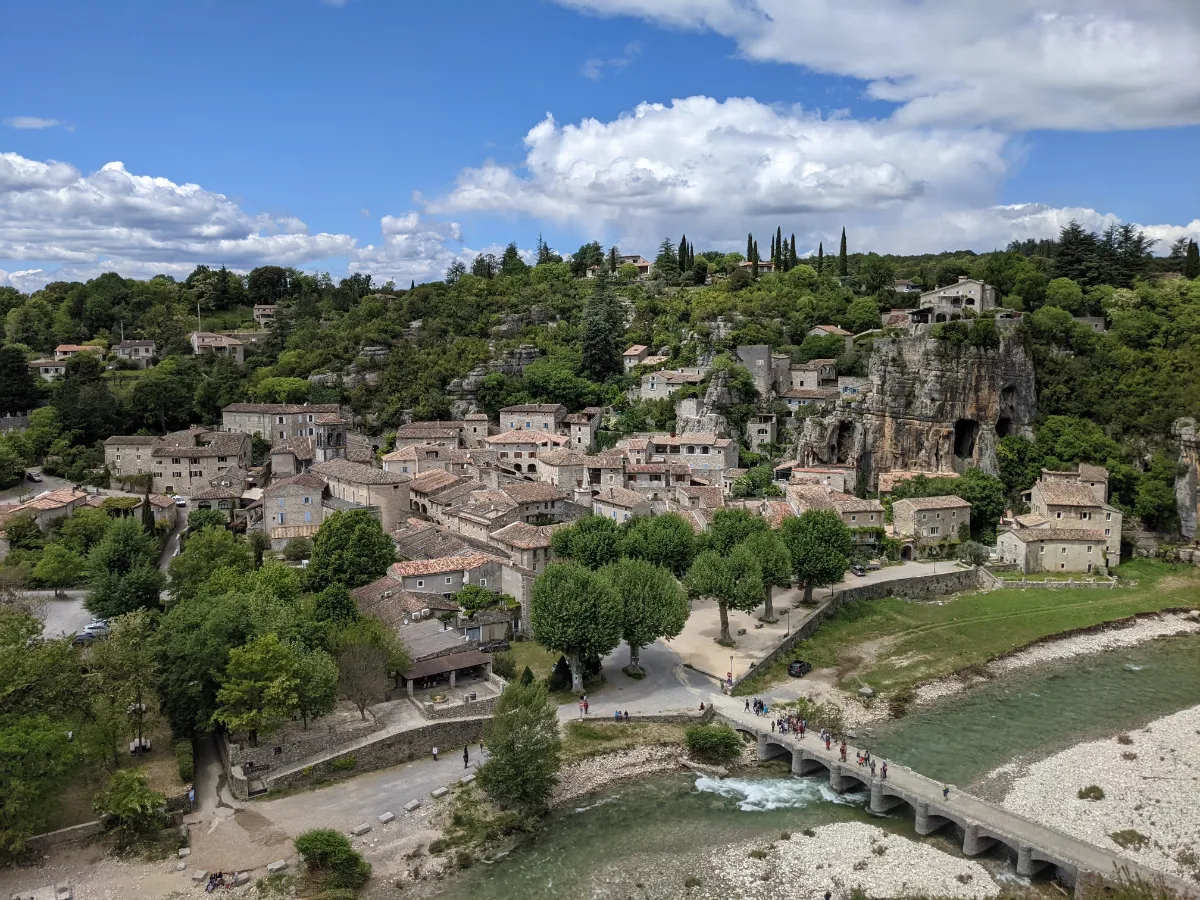
In Labeaume, the stone seems to grow straight out of the cliff. Tucked beside the Beaume River, the village blends its old houses with limestone rocks in a landscape of steep gorges and narrow passageways. Wander between the façades, then head for the old bridge crossing the river. From there, the view of the houses clustered at the foot of the cliffs is delightful.
Another curiosity is the hanging gardens, small terraces once carved into the rock to grow vegetables. In warmer weather, the pebbled banks and clear river water attract plenty of swimmers.
Le Poët-Laval
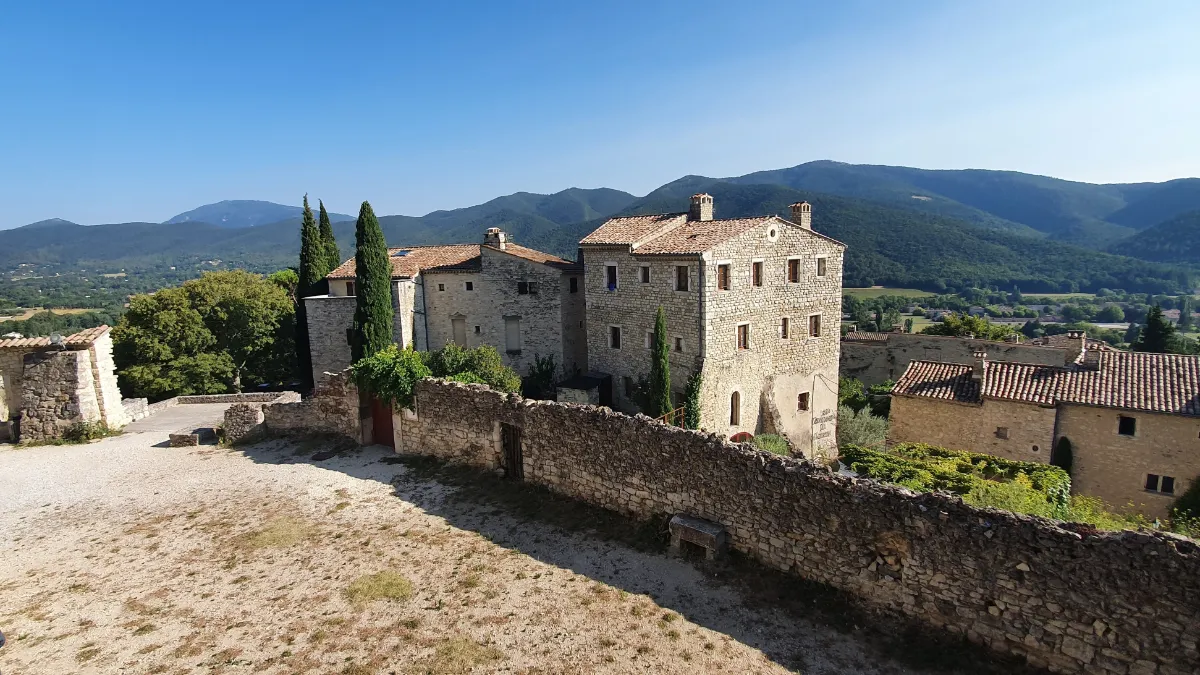
Le Poët-Laval sits on a hill, as though keeping watch over the surrounding countryside. Founded in the Middle Ages by a religious order of knights, this fortified village still has an imposing keep, an old chapel and beautiful stone houses.
The lanes wind uphill, pass beneath arches and emerge onto quiet little squares. You’ll also find traces of an important Protestant community, whose history is told in a museum.
From the upper part of the village, wooded hills and fields stretch out across the sunlit Drôme countryside.
Grignan
In Our Top ☑️
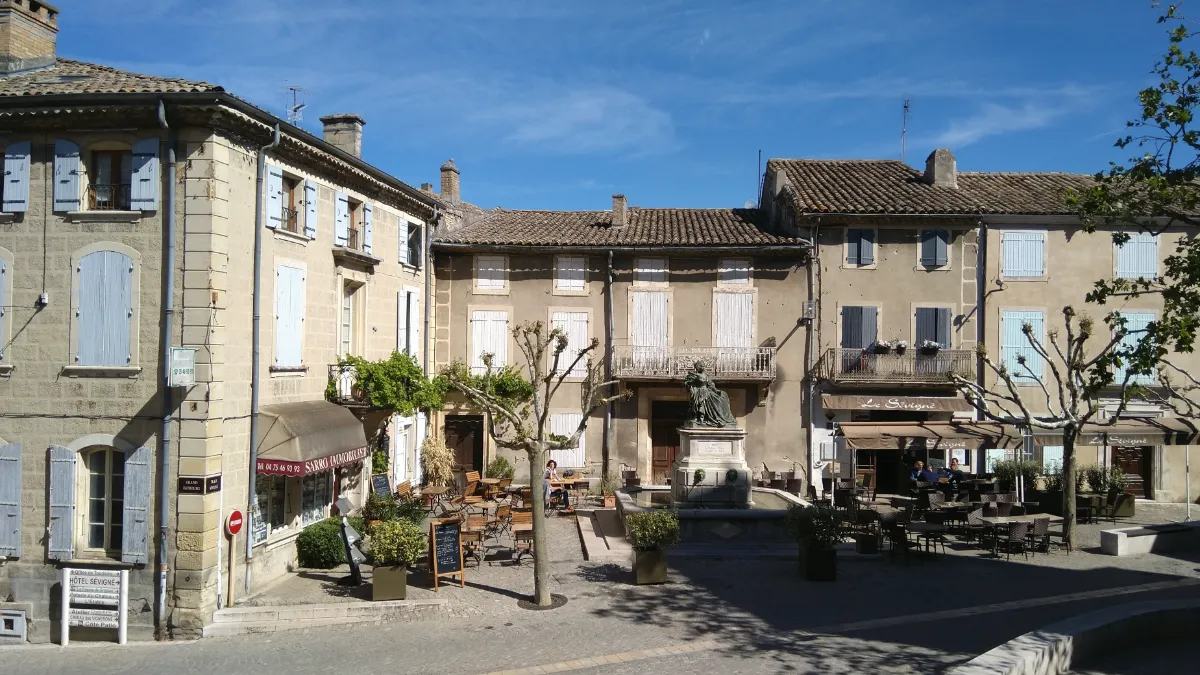
Grignan certainly knows how to make an impression. At the top of a hill, its castle towers over a stone village surrounded by vineyards, lavender fields and wooded hills. The castle owes much of its fame to Madame de Sévigné, the celebrated 17th century letter writer, who came here to visit her daughter. Behind its monumental façades are magnificent rooms and panoramic terraces.
In the village, narrow streets climb between beautiful old houses. Take time to admire the gardens and flower covered façades too, especially lovely in the summer sunshine.
La Garde-Adhémar
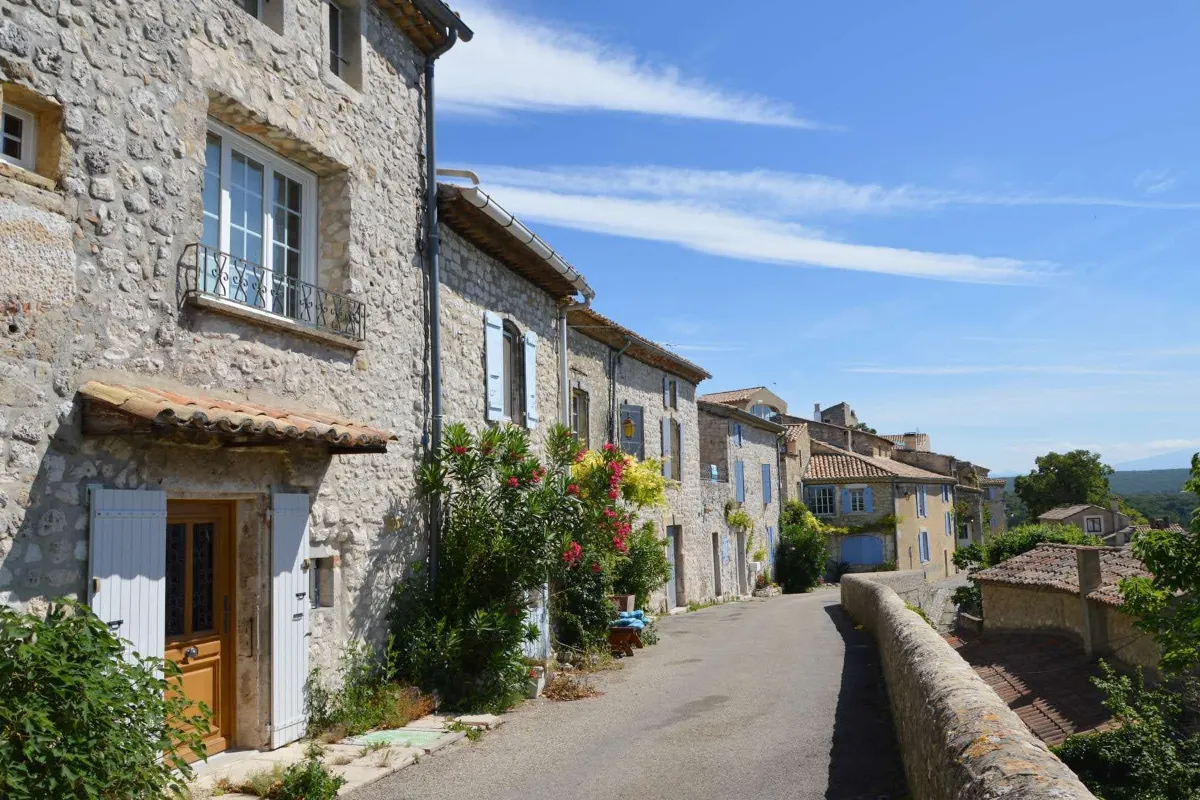
Perched on a rocky outcrop, La Garde-Adhémar has been keeping watch over the Rhône Valley for centuries. Its pale stone houses, cobbled lanes and ancient ramparts form a beautifully harmonious whole.
At the top, the 12th century Saint-Michel Church is worth taking your time over. Clean lines, elegant proportions, the builders of old certainly knew their craft.
Just a few steps away, the Jardin des Herbes brings together aromatic and medicinal plants, recalling the region’s botanical traditions.
From the village terraces, the views stretch far across the Rhône Valley and the surrounding hills.
Saint-Montan
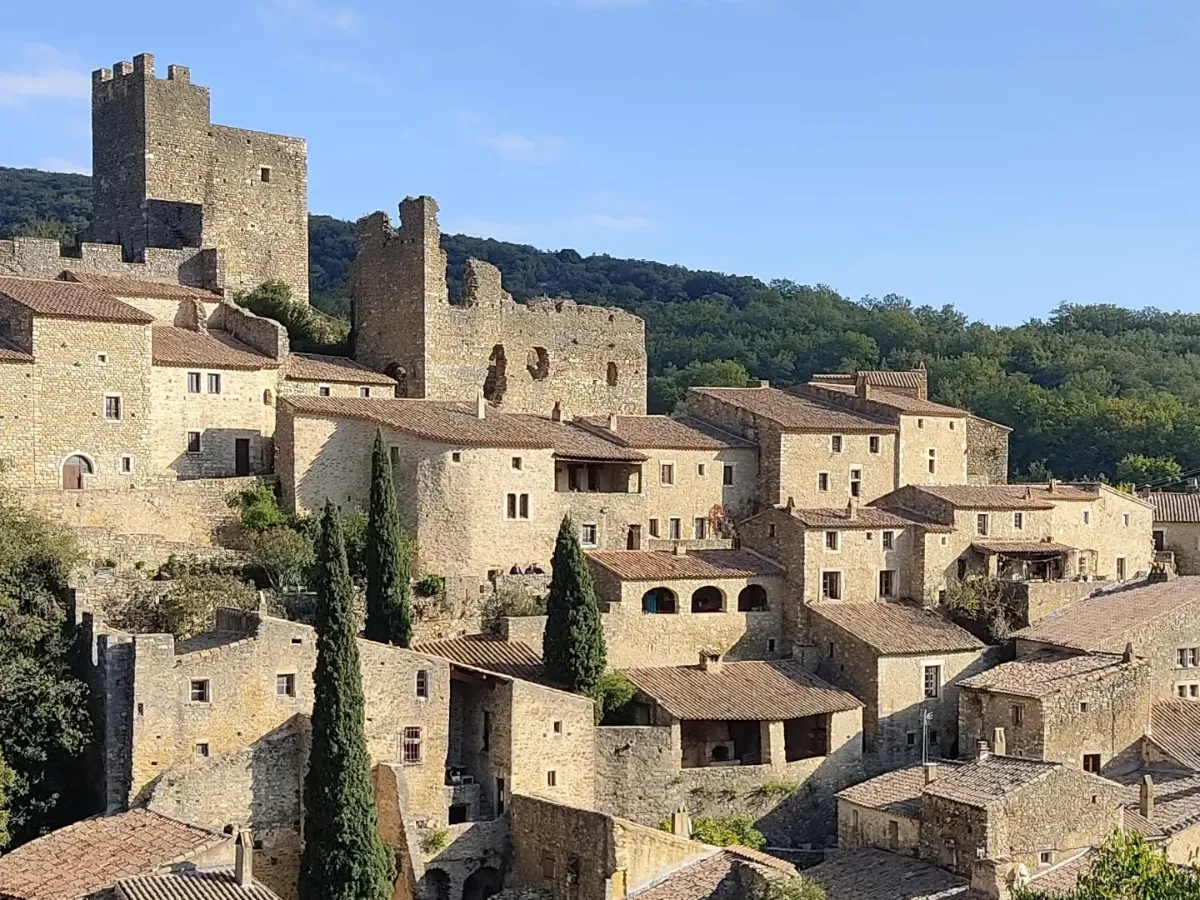
Saint-Montan very nearly disappeared. Clinging to a rocky hillside beneath an old castle, the historic village was in ruins when a handful of enthusiasts began restoring it in the 1970s. It took decades of work to bring these old stones back to life.
Today, the cobbled lanes, staircases and vaulted passageways have regained their former charm. The houses seem to climb on top of one another all the way up to the castle ruins.
All around, limestone gorges and Mediterranean vegetation create a wild landscape. The climb to the upper part of the village offers some beautiful views over the rooftops.
Aiguèze
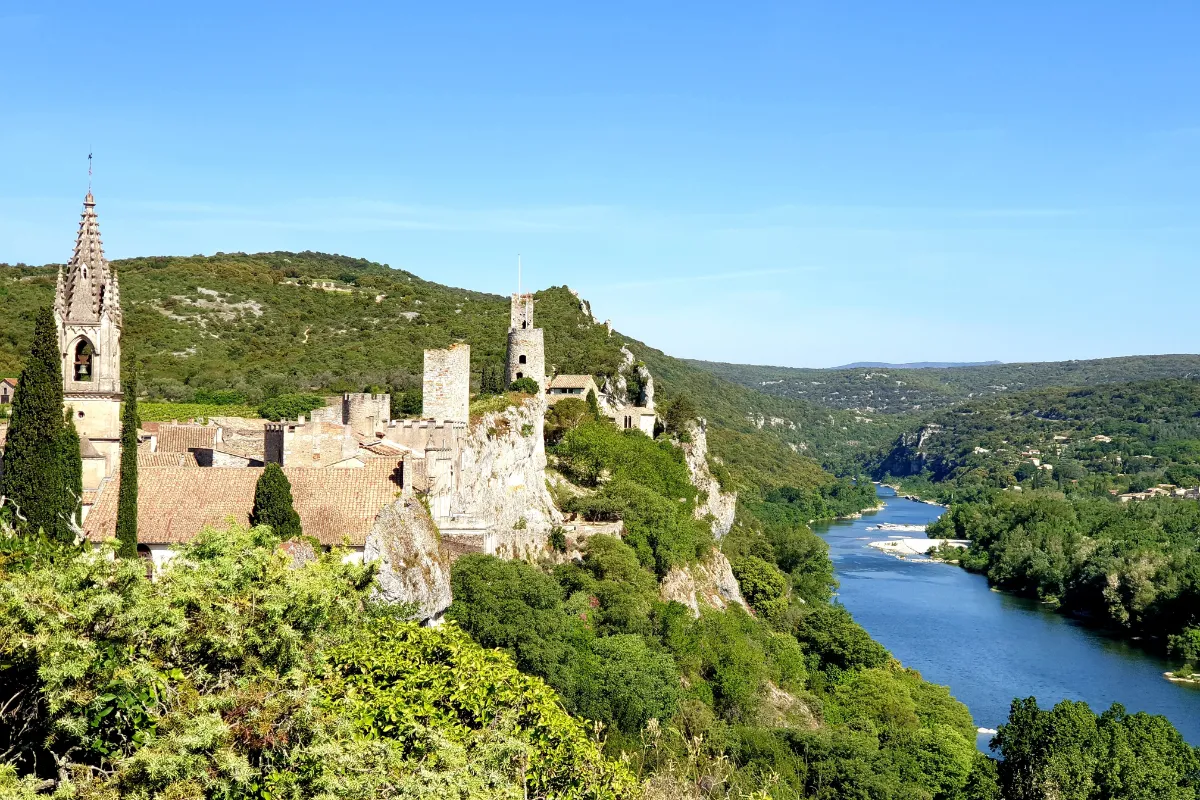
Aiguèze stands guard above the Ardèche. Perched on a cliff overlooking the entrance to the famous gorges, this fortified village has preserved its old towers, sections of ramparts and handsome stone houses. In the cobbled lanes, vaulted passageways lead to a pretty square shaded by plane trees. The richly decorated church is also worth a look.
But the real highlight lies at the edge of the village. From the clifftop, you look straight down onto the river winding between towering rock faces. It’s an impressive sight, especially when the Ardèche takes on its beautiful emerald green colours.
Montclus
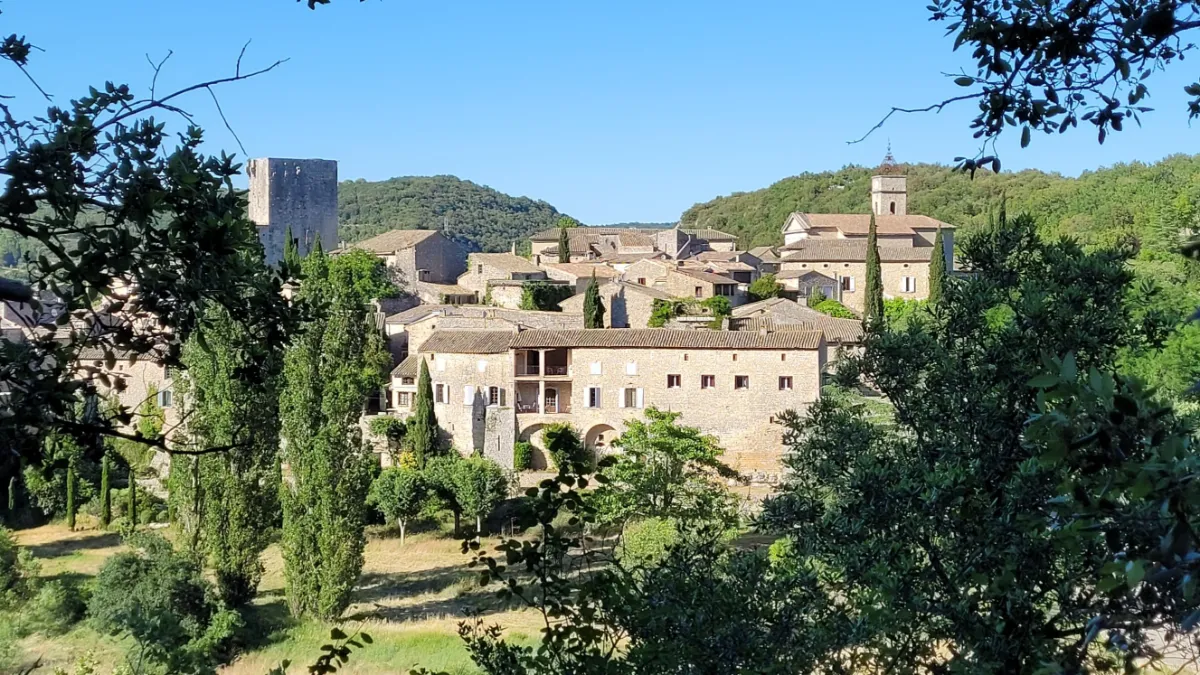
Montclus nestles in a bend of the Cèze River, surrounded by green hills. With its narrow lanes, vaulted passageways and honey coloured stone houses, the village has a quiet charm, far from the big crowds. The keep of the old castle recalls its medieval past, while the historic façades tell the story of centuries of rural life.
A stone bridge crosses the river, offering a lovely view of the village as a whole. In summer, the waters of the Cèze and its little pebbled beaches provide a welcome chance to cool off. It’s a refreshing change from the drier landscapes nearby.
La Roque-sur-Cèze
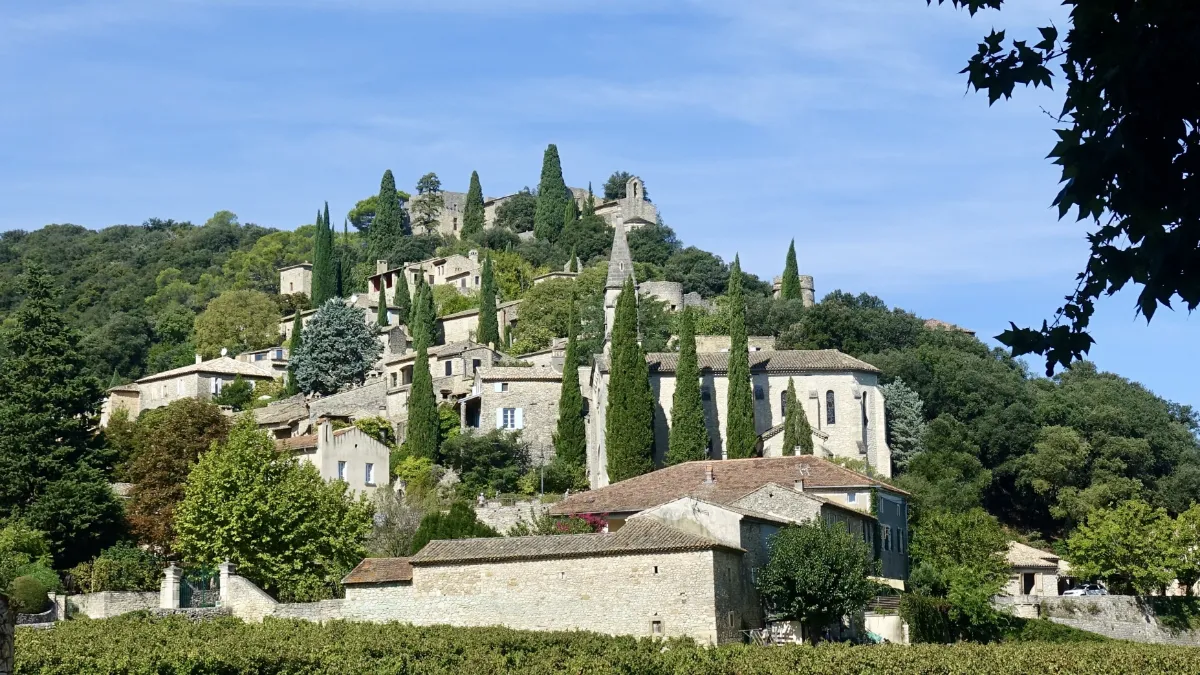
La Roque-sur-Cèze makes an impression the moment you arrive: an old stone bridge with twelve arches, a hill and, right at the top, a village of golden stone houses. That’s quite an introduction.
Climb the cobbled lanes to the remains of the castle and the old chapel. Stone façades, staircases and shady passageways create a setting full of character.
Down below, the Sautadet waterfalls put on an impressive show. The Cèze rushes between the rocks, carving out deep hollows in the stone.
Lussan
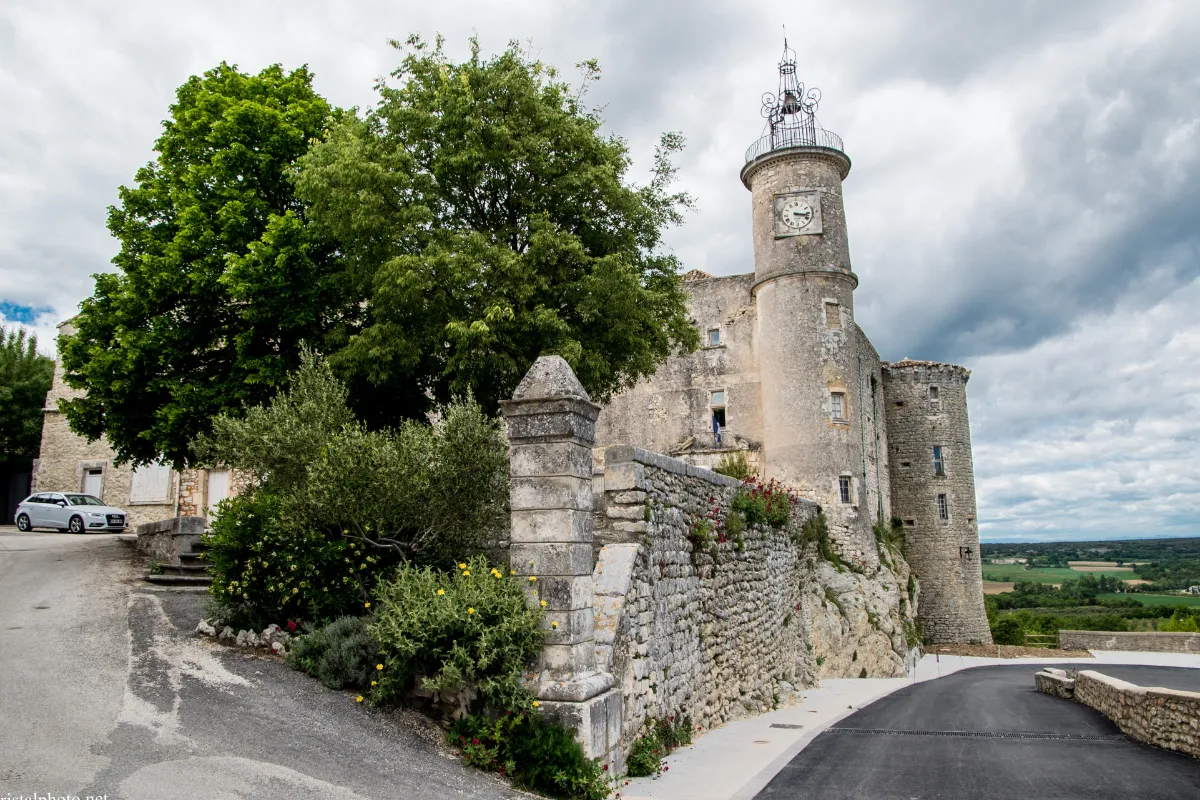
Perched on a hill above the Gard countryside, Lussan has preserved its ramparts, castle and beautiful old houses. It’s a village of honey coloured stone, where the lanes seem to have taken their time passing through the centuries. From the fortifications, the views stretch across wooded hills and garrigue, the fragrant Mediterranean scrubland made up of low shrubs.
A few kilometres away, the Concluses de Lussan hold another surprise: deep limestone gorges carved by water, where cliffs form narrow rocky passages. It’s a wild landscape, particularly spectacular when the river is flowing strongly.
Châtillon-en-Diois
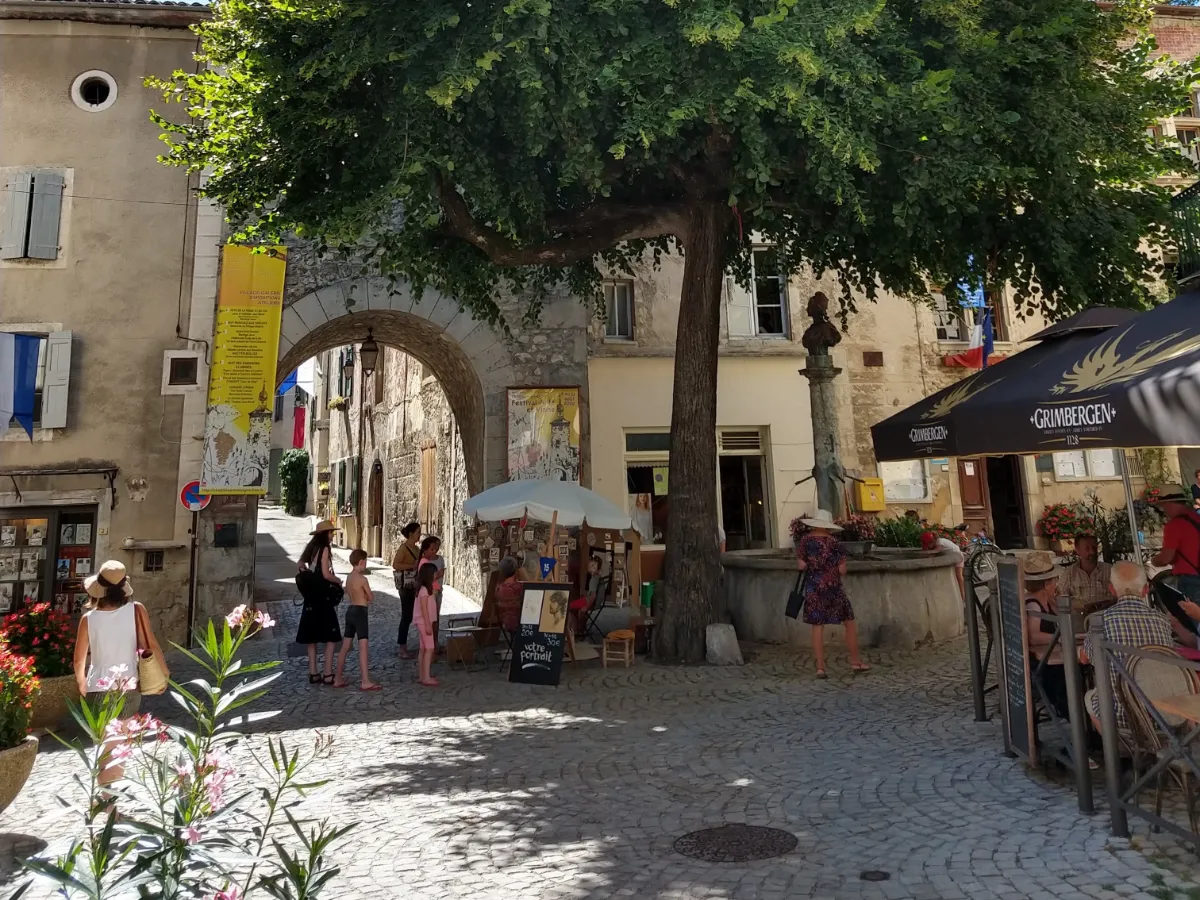
Châtillon-en-Diois nestles at the foot of the mountains, surrounded by vineyards and cliffs. Its old centre has preserved a whole network of narrow lanes, vaulted passageways and historic houses, some with climbing plants covering their façades. Fountains and little shady squares invite you to slow down. The village was once surrounded by fortifications, and several traces of them can still be seen.
All around are vineyards that have been cultivated for centuries. The region also preserves a tradition of livestock farming and the seasonal movement of herds up to the high mountain pastures.
NORTH-EAST
| Name | Top+ | Top |
|---|---|---|
| Yvoire | ☑️ | |
| Cordon | ||
| Megève | ||
| Bonneval-sur-Arc | ☑️ | |
| Besse |
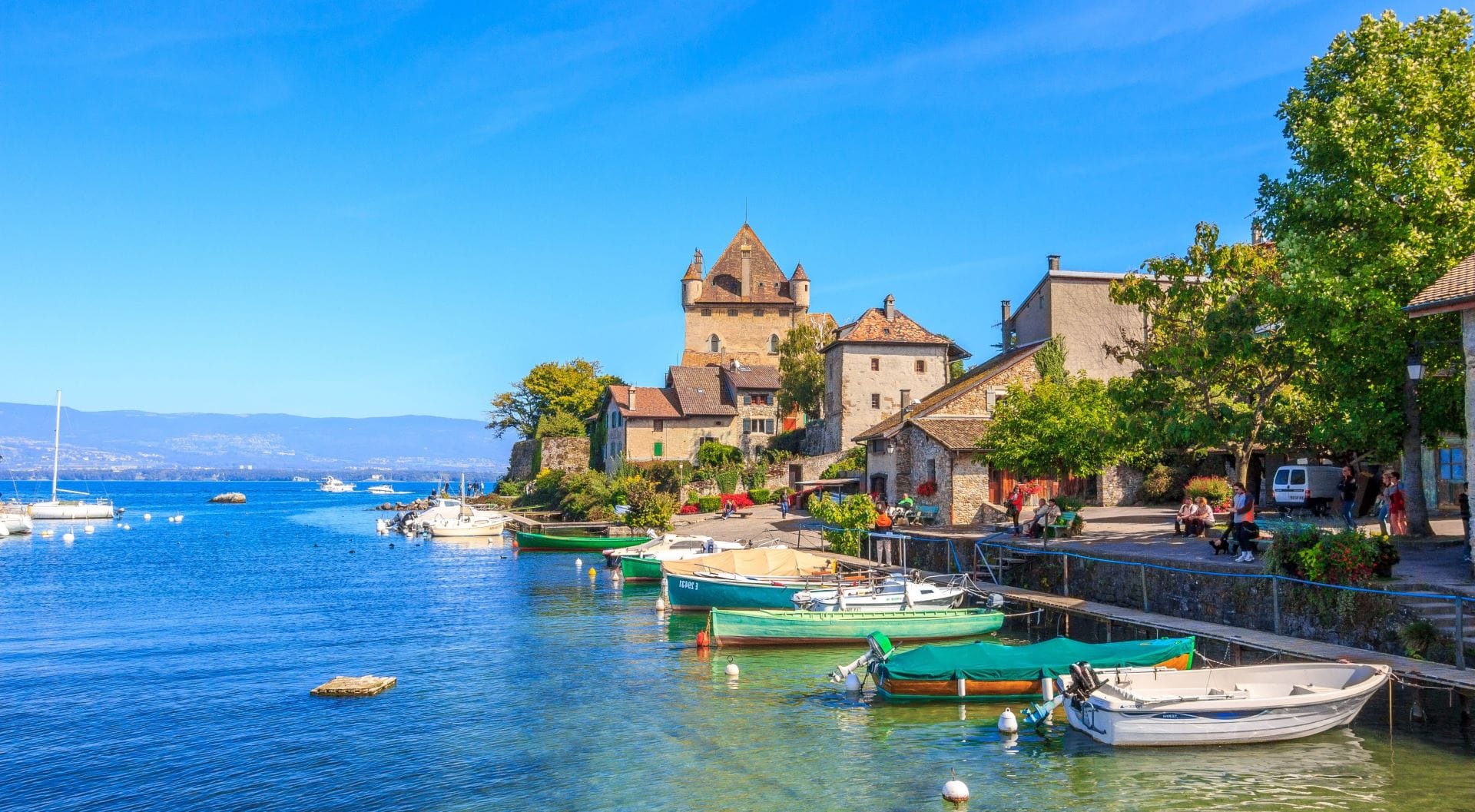
Yvoire
In Our Top ☑️
Yvoire is a little medieval gem on the shores of Lake Geneva. With its flower covered stone houses, old fortified gateways and castle rising above the water, the village has an incredibly photogenic silhouette. Built as a stronghold in the early 14th century, it has retained much of its original character. Behind the ramparts, cobbled lanes slope gently down towards the harbour.
Don’t miss the Jardin des Cinq Sens, inspired by medieval gardens. Flowers, aromatic plants and leafy greenery create a trail that’s as much a treat for your sense of smell as it is for your eyes.
Cordon
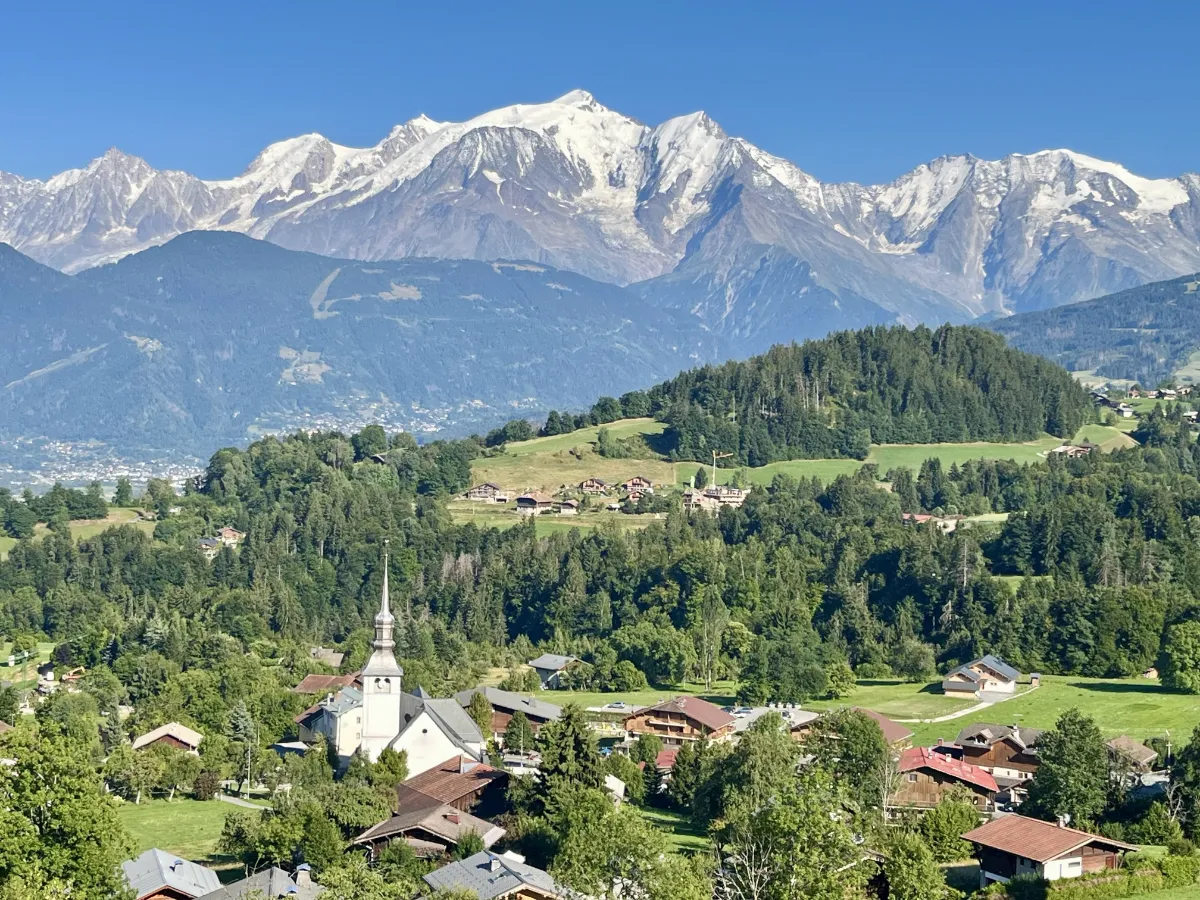
Cordon hasn’t earned its nickname, the “Balcony of Mont Blanc”, for nothing. Set high above an Alpine valley, the village offers magnificent views straight across to the snow covered peaks. On a clear day, it’s hard to look anywhere else.
The village has preserved its old wooden chalets, farms and pastures. Flower filled meadows dotted with traditional barns give the landscape an authentic mountain feel. In the centre, the Notre-Dame-de-l’Assomption Church contains richly decorated religious interiors dating from the 17th and 18th centuries. Step back outside, and the spectacle begins again, with the entire Mont Blanc range stretching across the horizon.
Megève
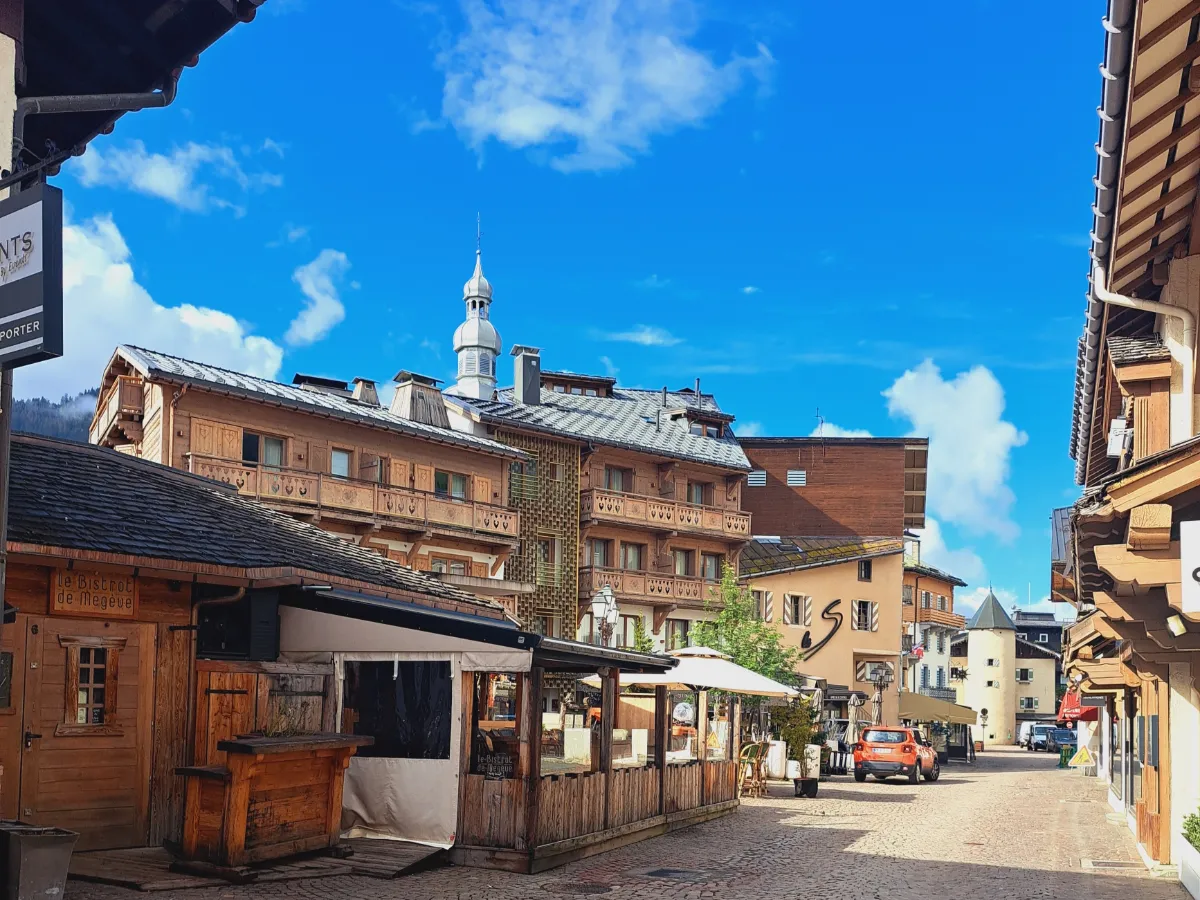
Megève may be one of the most exclusive ski destinations in the Alps, but it hasn’t entirely forgotten its roots. Behind the elegant chalets, you’ll still find an old Savoyard village, with cobbled lanes, wooden houses and a historic church.
It was in the early 20th century that the Rothschild family helped transform this farming village into a prestigious winter resort.
But Megève is just as rewarding in summer. The meadows fill with flowers, herds return to the mountain pastures and hiking trails offer magnificent views of the surrounding peaks, with Mont Blanc taking pride of place.
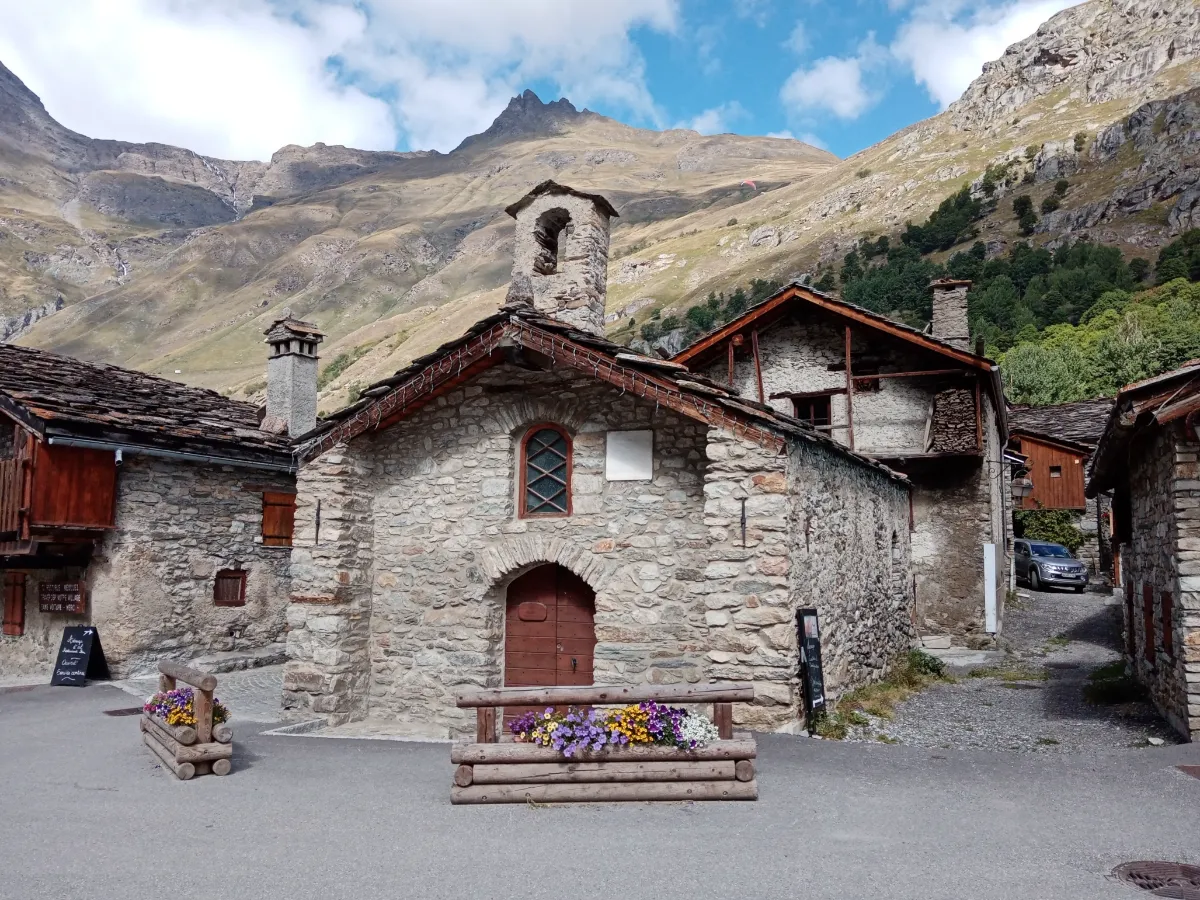
Bonneval-sur-Arc
In Our Top ☑️
In Bonneval-sur-Arc, winter means business. Perched at over 1,800 metres, this mountain village has preserved its sturdy stone houses, topped with heavy roofs designed to withstand enormous snowfalls. The narrow lanes and passageways between the houses tell the story of a once harsh way of life, shaped by the seasons and the herds.
Around the village, the scenery is on an epic scale: glaciers, mountain streams, pastures and peaks rising above 3,000 metres. In summer, hiking trails lead through spectacular high mountain landscapes. In winter, the village almost disappears beneath its thick blanket of snow.
Besse
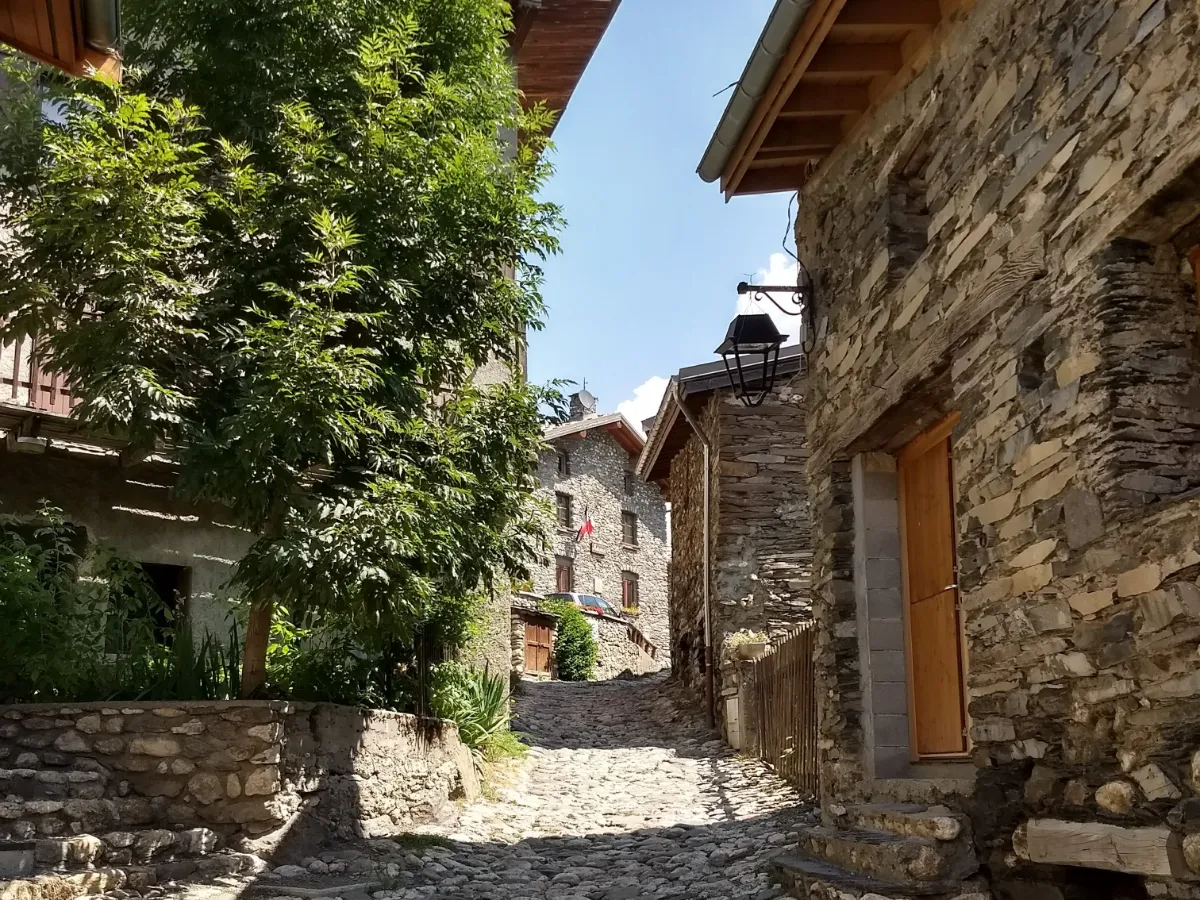
Perched at over 1,500 metres, Besse is an authentic mountain village, with schist and granite houses, stone roofs and lanes paved with large, rough blocks. Its solid architecture was designed to withstand Alpine winters. You won’t find big apartment blocks or flashy new buildings here. The village has kept its traditional appearance.
Besse is also one of the gateways to the Plateau d’Emparis, a vast expanse of mountain pastures with magnificent views of the glaciers and peaks of La Meije.
SOUTH-EAST
| Name | Top+ | Top |
|---|---|---|
| Prapic | ||
| Mont-Dauphin | ☑️ | |
| Saint-Véran | ☑️ | |
| Barcelonnette | ||
| Colmars | ||
| Annot | ||
| Entrevaux | ☑️ |
Prapic
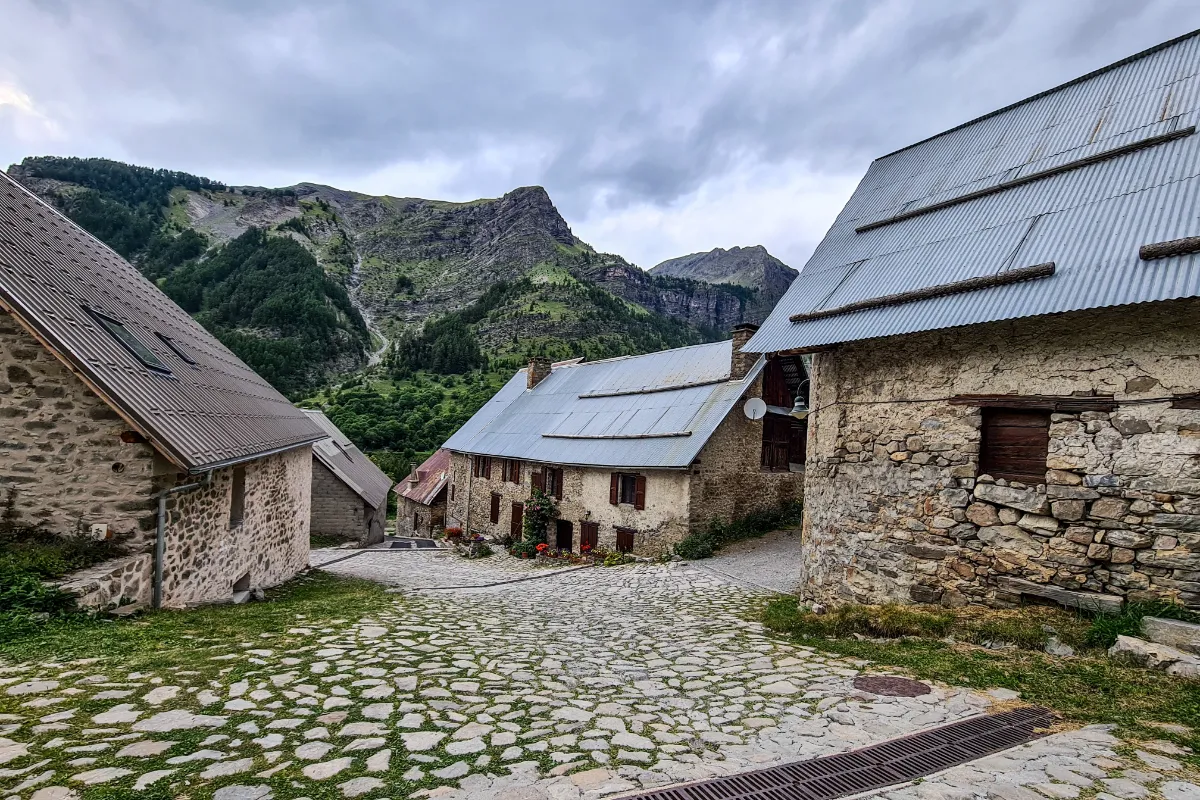
Prapic is almost literally the end of the road. Tucked away at the far end of a valley in the Hautes-Alpes, this little stone village seems lost beneath enormous mountains. Traditional houses huddle around a handful of lanes in a setting that has remained deeply rural.
In the past, local people lived mainly from livestock farming, often in difficult conditions, especially during winter.
Today, hikers come here for the peace and the landscapes of the Écrins mountains. Trails cross flower filled meadows and mountain streams, in a land where you’re more likely to hear marmots before you actually see them.
Mont-Dauphin
In Our Top ☑️
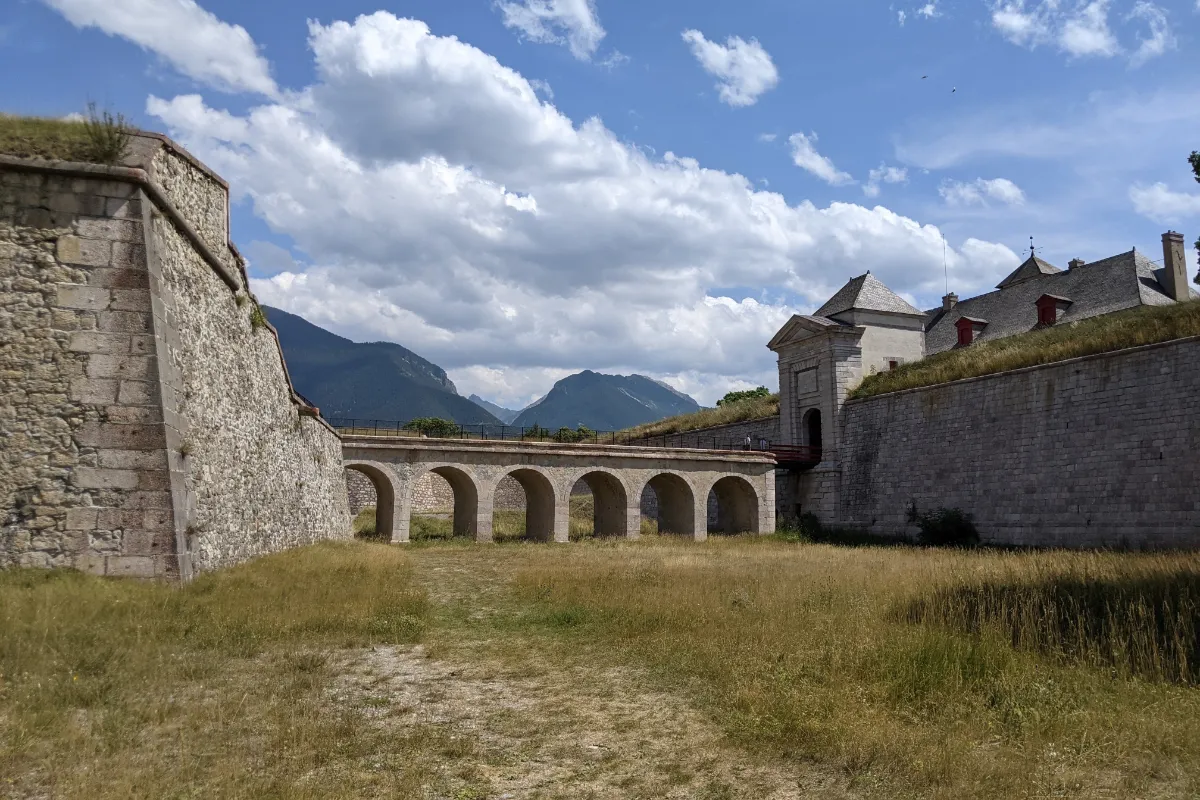
Mont-Dauphin looks like an enormous stone ship stranded on top of a plateau. In the late 17th century, Louis XIV ordered this fortress to be built to protect the Alpine valleys near the Italian border. The military engineer Vauban designed an impressive network of ramparts, moats and bastions, defensive structures projecting out from the walls.
Inside, straight streets, former barracks and military buildings form a small town in their own right. From the fortifications, there are sweeping views down into the steep valleys and across the surrounding mountains. Today, the site is recognised by UNESCO.
Saint-Véran
In Our Top ☑️
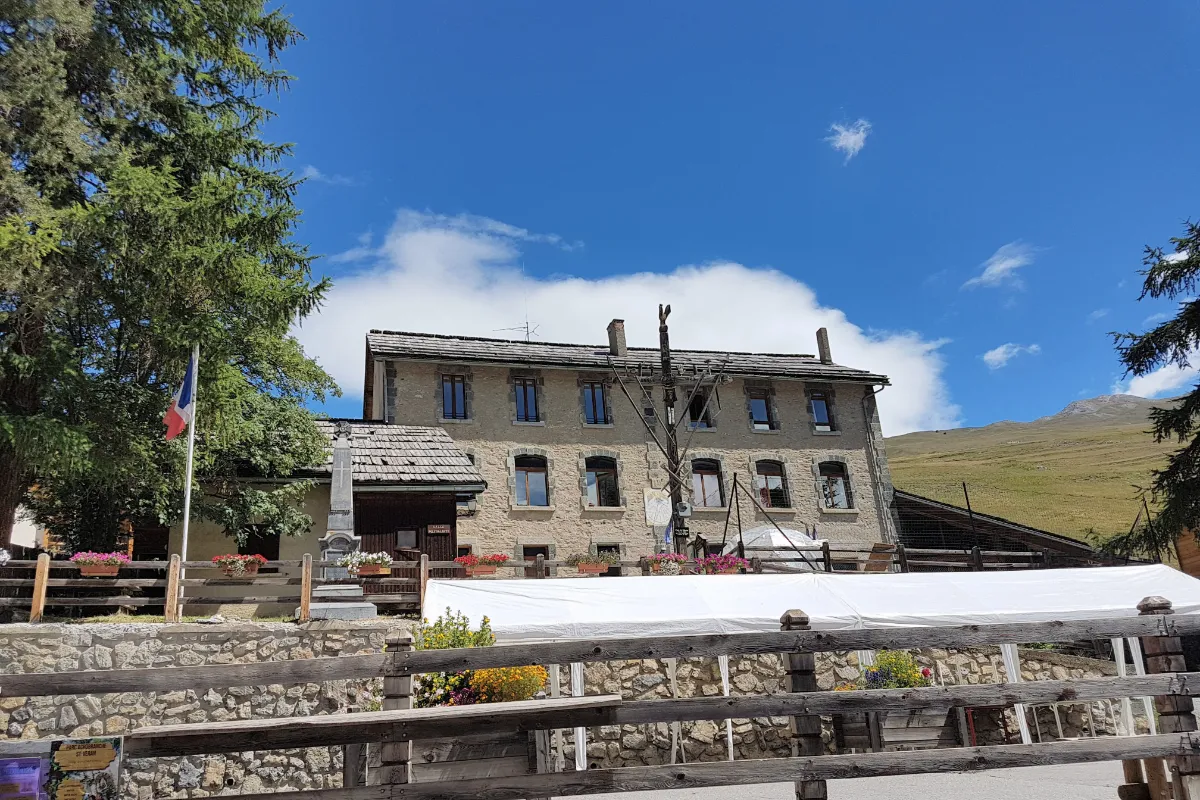
At over 2,000 metres above sea level, Saint-Véran proudly claims to be one of the highest villages in Europe inhabited all year round. And it has every reason to be proud of its old houses. These combine sturdy stone foundations with large wooden structures, once used to dry and store hay. It’s architecture that’s as clever as it is photogenic.
Painted sundials, fountains and little chapels dot the streets. All around, larch forests and the peaks of the Queyras create a magnificent setting. The night skies here are wonderful for stargazing too.
Barcelonnette
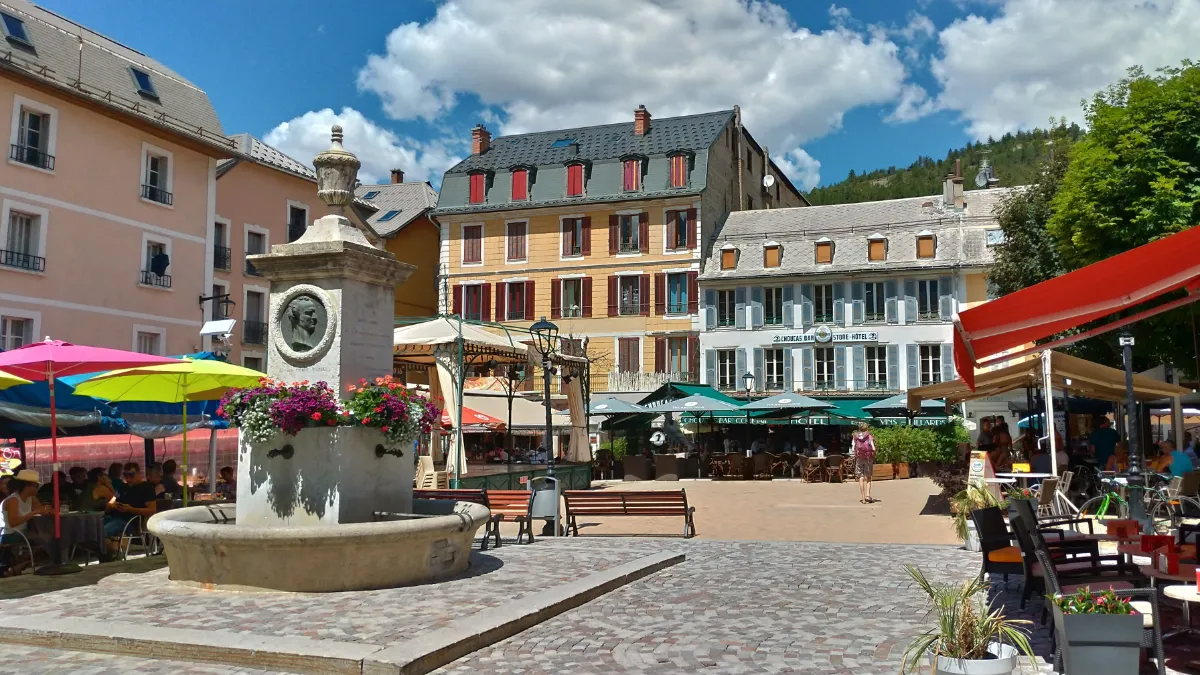
Barcelonnette has a little touch of Mexico in the middle of the mountains. Strange, isn’t it? In the 19th century, many people from the Ubaye Valley crossed the Atlantic to seek their fortunes. Some became wealthy and returned home to build lavish villas. Towers, verandas, grand colourful façades and gardens give the town an appearance quite unlike anywhere else in the Alps.
The centre also has attractive squares and neatly laid out streets that are pleasant to explore. Above the town, the Ubaye mountains rise towards peaks that can remain snow covered into early summer. The contrast between these exotic mansions and the Alpine scenery is striking.
Colmars
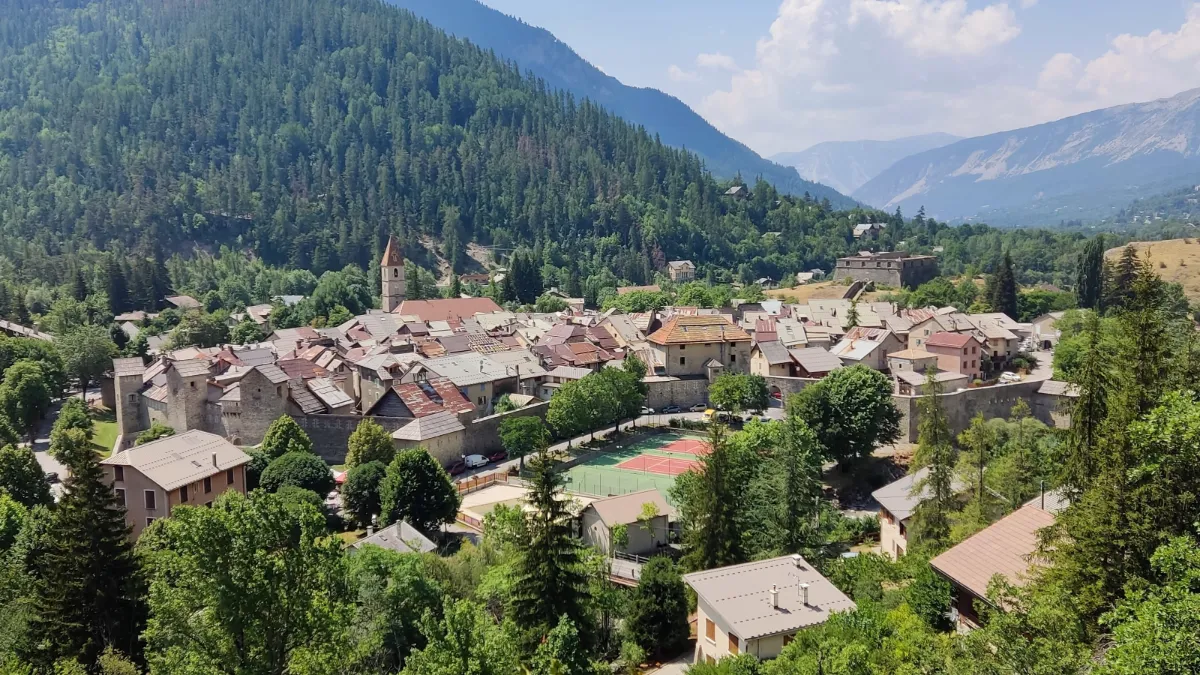
At the bottom of a valley surrounded by forests, Colmars looks as though it was built to withstand anything. Its high ramparts, towers and massive gateways recall the days when this little town guarded a strategic border. The fortifications were strengthened several times, particularly in the late 17th century. Two forts still overlook the surrounding area, one to the north and the other to the south.
Inside the walls, narrow streets reveal old stone houses, passageways and a church incorporated into the former defences. The Verdon River flows nearby, at the foot of the wooded mountains.
Annot
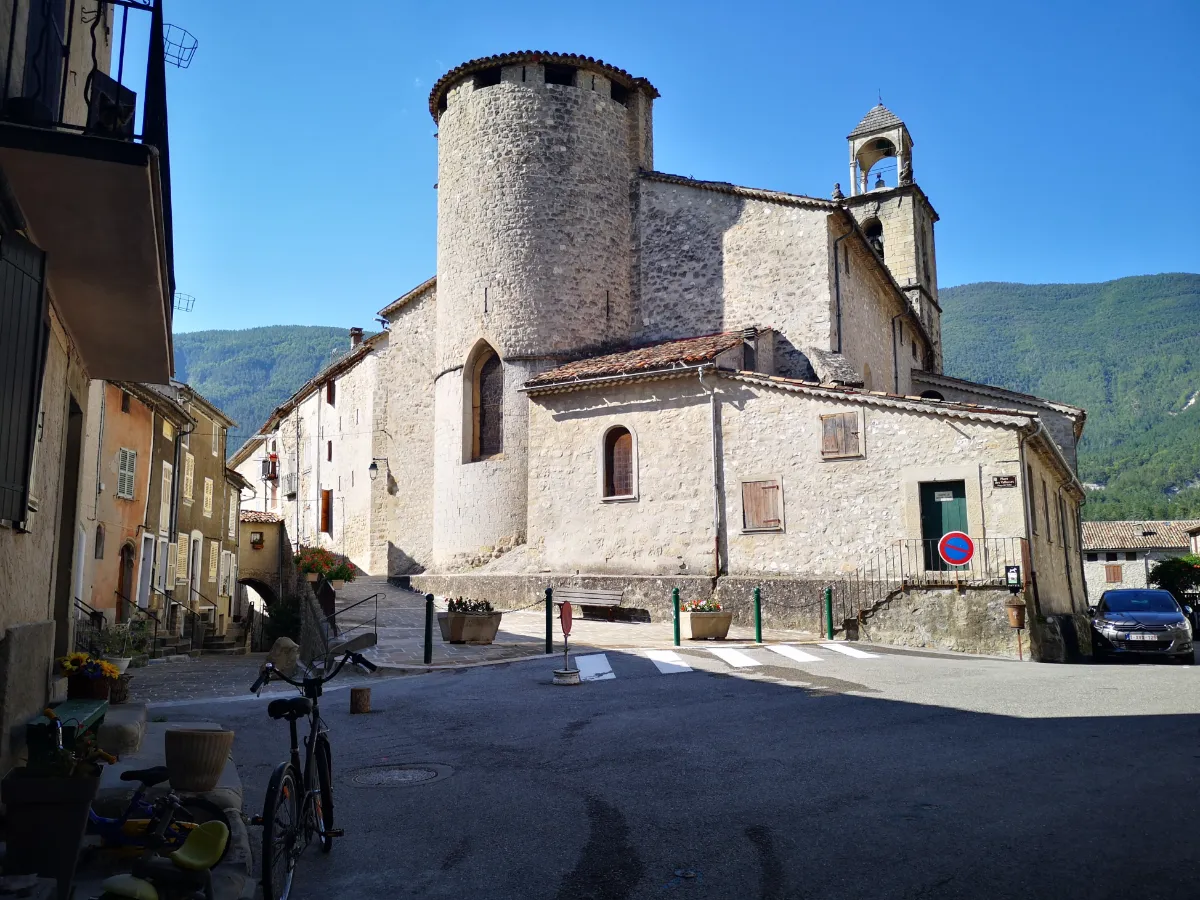
Annot has a wonderful surprise in store for geology lovers. The village sits among an extraordinary jumble of sandstone boulders, rocks formed from grains of sand cemented together over time. Some are absolutely enormous.
Before heading up into the rocks, explore the old centre, with its vaulted passageways, fountains and houses dating from the 16th and 17th centuries. Above the village, trails wind between huge boulders, cliffs and chestnut trees. It’s a real stone labyrinth, shaped by erosion, with beautiful views in places across the surrounding mountains and valleys.
Entrevaux
In Our Top ☑️
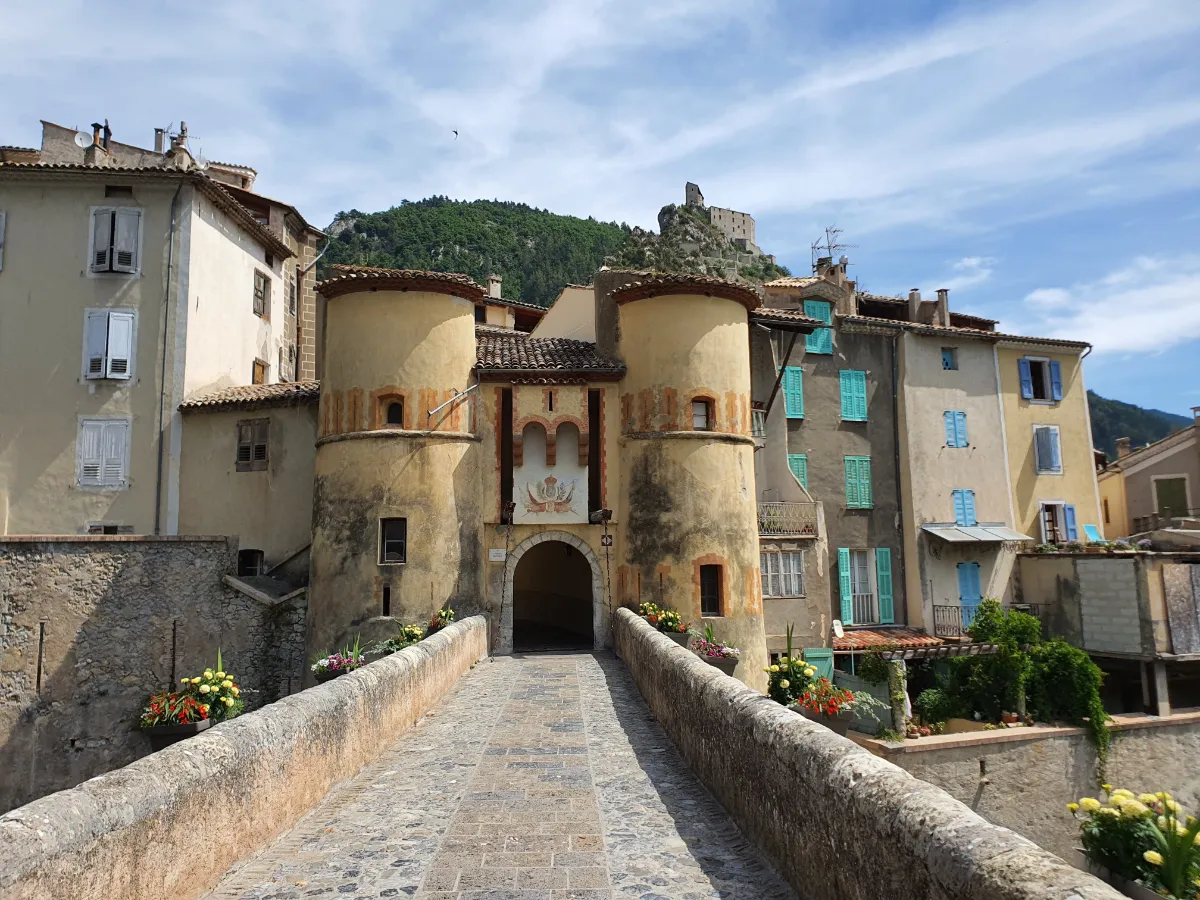
Entrevaux is an impressive sight, especially from a distance. This fortified village is overlooked by a citadel perched high on a rocky peak. To reach it, a zigzag path climbs up the mountainside.
You enter the old town across a bridge and through an imposing fortified gateway. Behind the ramparts, narrow lanes are lined with tall houses and an old cathedral. The citadel, reinforced under Louis XIV, towers above the village rooftops and the gorges of the valley.