


MAP
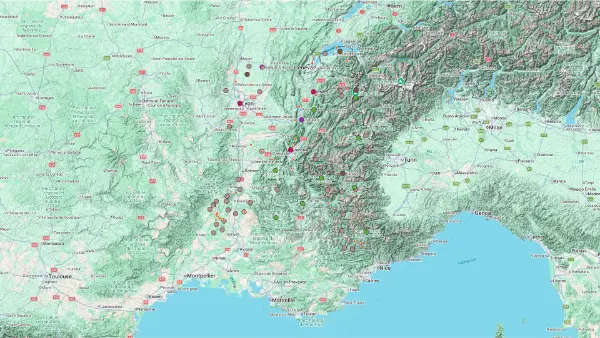
Lyon, Alps, Rhône Valley
Interactive Map
Lyon, Alps, Rhône Valley
Interactive Map
Click on the icon  in the top-left corner to display the map legend.
Show/Hide layers as needed.
Click on the arrow icons (v) to display the sublayers.
TOP (25)
| Name | Type | Top+ |
|---|---|---|
| Pérouges | Village | ✅ |
| Lyon | City | ✅ |
| Palais du Facteur Cheval | Naïve Art | |
| Mirmande | Village | ✅ |
| Vogüé | Village | |
| Balazuc | Village | ✅ |
| Grotte Chauvet 2 | Prehistoric Cave | |
| Gorges de l'Ardèche | Gorges | |
| Aven d'Orgnac | Prehistoric Cave | |
| Grignan | Village | |
| Vercors | Mountains | |
| Yvoire | Village | |
| Annecy | City | ✅ |
| Lac d'Annecy | Lake | |
| Chamonix | Small Town | |
| Bonneval-sur-Arc | Village | |
| Vanoise | Mountains | ✅ |
| Briançon | Small Town | ✅ |
| Écrins | Mountains | ✅ |
| Queyras | Mountains | ✅ |
| Saint-Véran | Village | |
| Mont-Dauphin | Village | |
| Lac de Serre-Ponçon | Lake | |
| Mercantour | Mountains | ✅ |
| Entrevaux | Village |
Pérouges
In Our Top+ ✅
Type Village
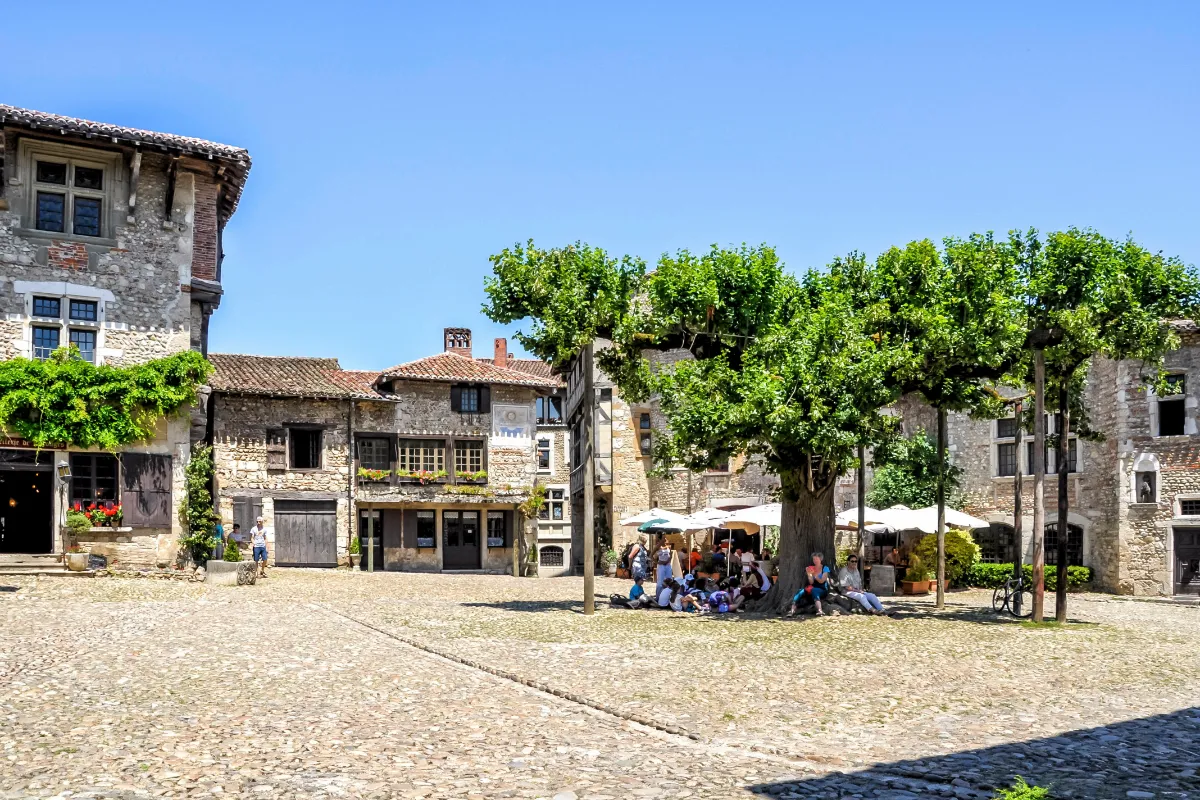
In Pérouges, you half expect to bump into a knight around the next corner. This former fortified town, perched on a hill, has preserved its medieval houses, cobbles made from rounded stones and defensive walls. It feels as though time stopped here several centuries ago. Walk through the old gateways and make your way to Place du Tilleul, surrounded by handsome houses built from timber and stone. It’s quite a sight.
Pérouges was once a prosperous textile town before falling into decline and obscurity. Rescued from ruin in the early 20th century, it has regained much of its former appearance.
Lyon
In Our Top+ ✅
Type City
Population 520 000
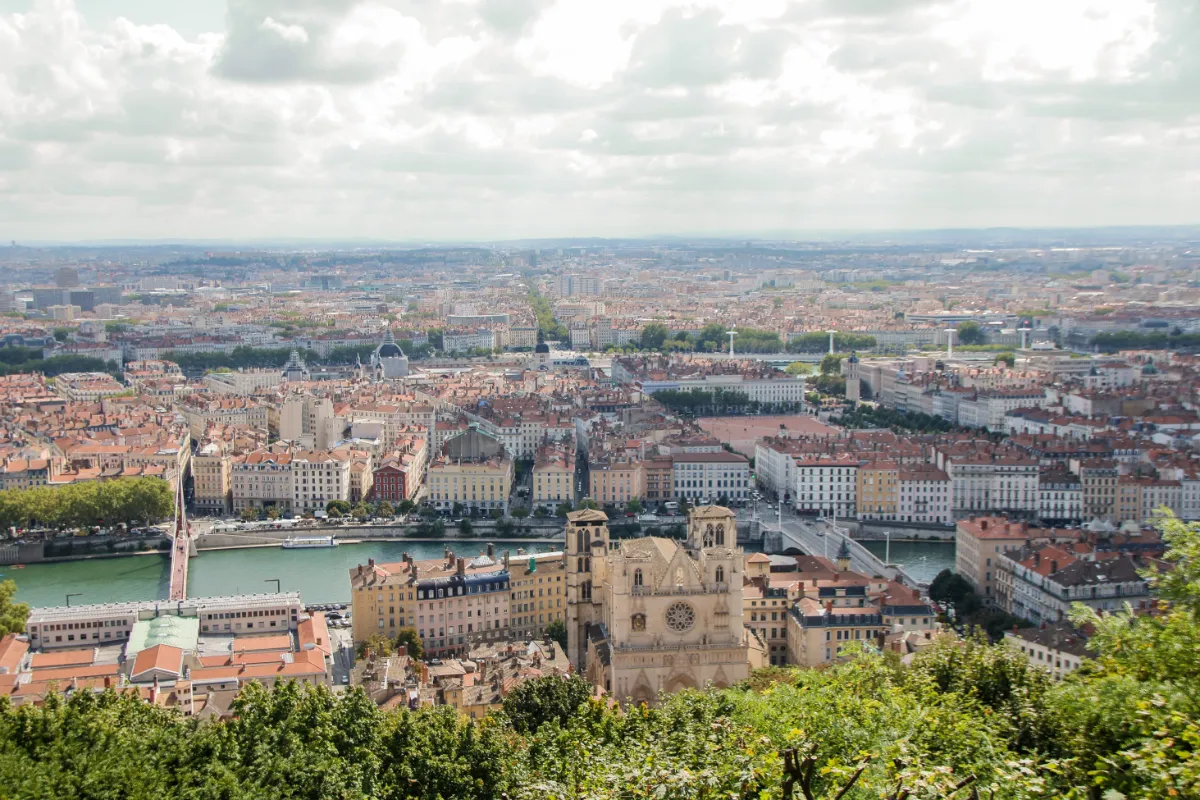
Lyon has character, and plenty of it. Sitting where the Rhône and Saône rivers meet, between two hills, the city has more than 2,000 years of history behind it. Capital of Roman Gaul, a major trading centre during the Renaissance and the heart of the silk industry in the 19th century, Lyon has seen its fair share of illustrious visitors.
To go back to where it all began, head up Fourvière Hill. The remains of the Roman theatres take you back to a time when Lugdunum was one of the most important cities in the Roman Empire. A little further up, the imposing Basilica of Notre-Dame de Fourvière watches over the city. The views from its terrace are spectacular.
Make your way back down to Vieux Lyon, one of the finest Renaissance districts in France. Houses with ochre and pink façades line narrow cobbled streets. Step through the doors that are open to the public to discover the famous traboules, hidden passageways that cut through buildings and their inner courtyards. Spiral staircases, galleries stacked one above another, ancient wells, a whole secret world waiting to be explored.
On the other side of the Saône lies the Presqu’île, with its grand squares, monumental façades and elegant avenues. The enormous Place Bellecour offers a striking contrast to the bustling streets around it. Further north, Place des Terreaux brings together the city hall, the Museum of Fine Arts and an impressive fountain.
Another hill, another atmosphere. Croix-Rousse was once the kingdom of the silk workers. For generations, looms clattered away inside buildings with unusually high ceilings. Today, its stairways, passageways and sloping streets still give the neighbourhood something of a village feel.
Lyon also knows how to embrace the future. Where the two rivers meet, contemporary buildings stand alongside former industrial sites that have been given a new lease of life. Meanwhile, the banks of the Rhône offer long, pleasant promenades, especially popular with cyclists.
And then, of course, there’s the food. For centuries, Lyon has taken its love of good eating seriously, from hearty local specialities to the finest culinary traditions. Its reputation stretches well beyond France.
Palais du Facteur Cheval
Type Naïve Art Monument
Price €10.50
Full Name
Palais Idéal du Facteur Cheval
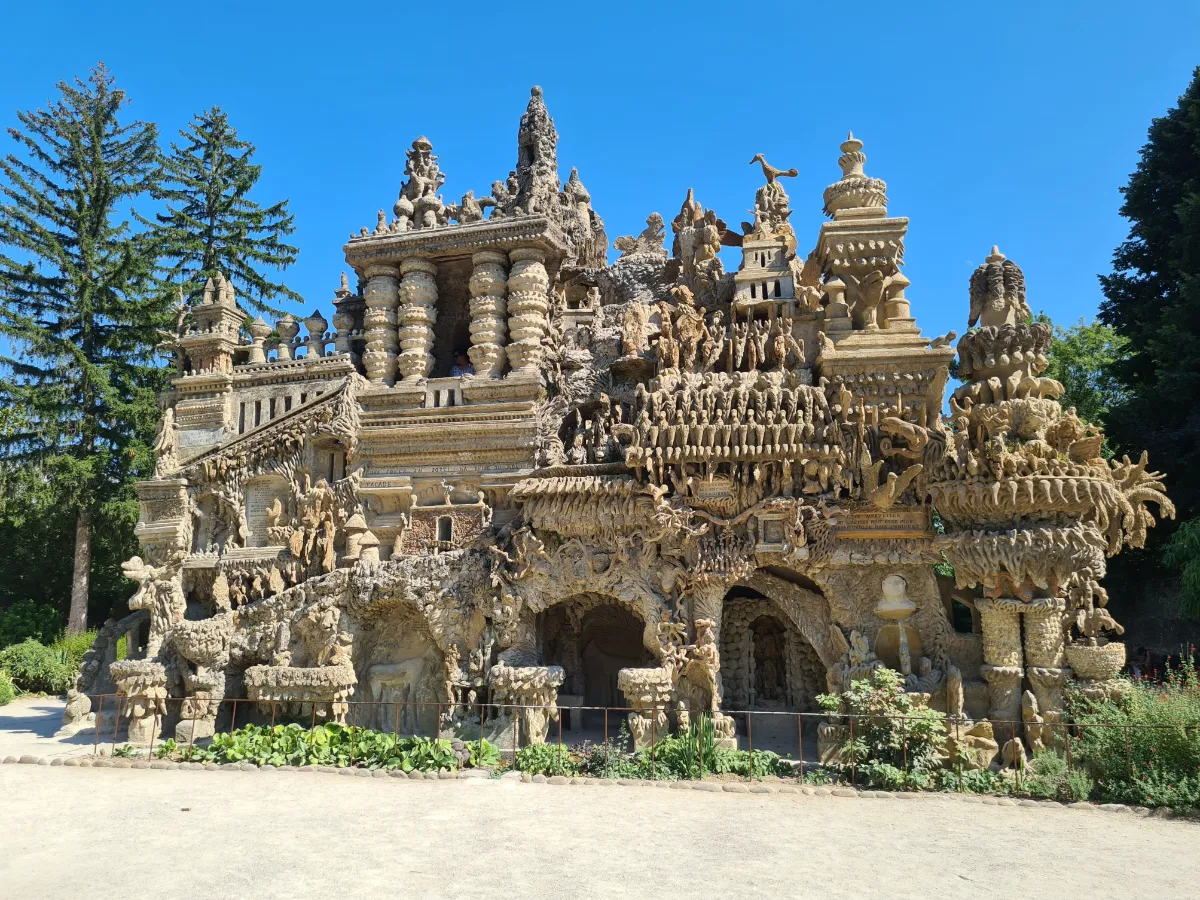
A palace built by a postman, all on his own. Now that’s an ambitious idea. In Hauterives, Ferdinand Cheval spent 33 years of his life, from 1879 to 1912, creating an extraordinary building in his garden.
Every day, while delivering the mail, he collected stones and brought them home, sometimes in a wheelbarrow. Little by little, imaginary temples, fantastic animals, columns, caves and extravagant towers began to take shape.
The result defies every rule of architecture. Eastern influences, folk art sculptures and mythological figures come together in a wonderfully eccentric world of stone. A childhood dream turned into a monument, now recognised as an exceptional work of folk art.
Mirmande
In Our Top+ ✅
Type Village
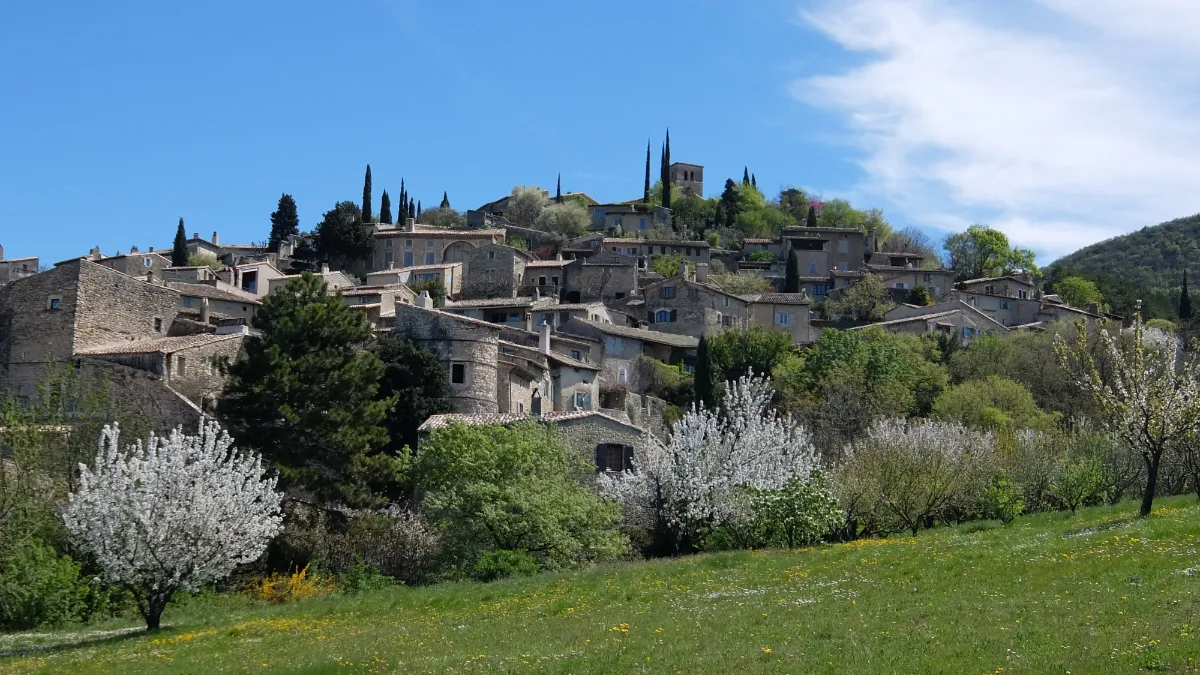
Mirmande has a knack for winning people over. Clinging to its hillside, this village in the Drôme is a jumble of stone houses, cobbled lanes and flower filled staircases. No two façades seem to want to look alike.
Neglected for many years, it was brought back to life by artists, including the painter André Lhote, who settled here in the 20th century. Climb to the old Sainte-Foy Church at the top of the village. Below you, roofs covered in terracotta tiles tumble down the hillside, with the Rhône Valley and its orchards in the distance. The stone takes on lovely warm shades in the sunshine.
Vogüé
Type Village
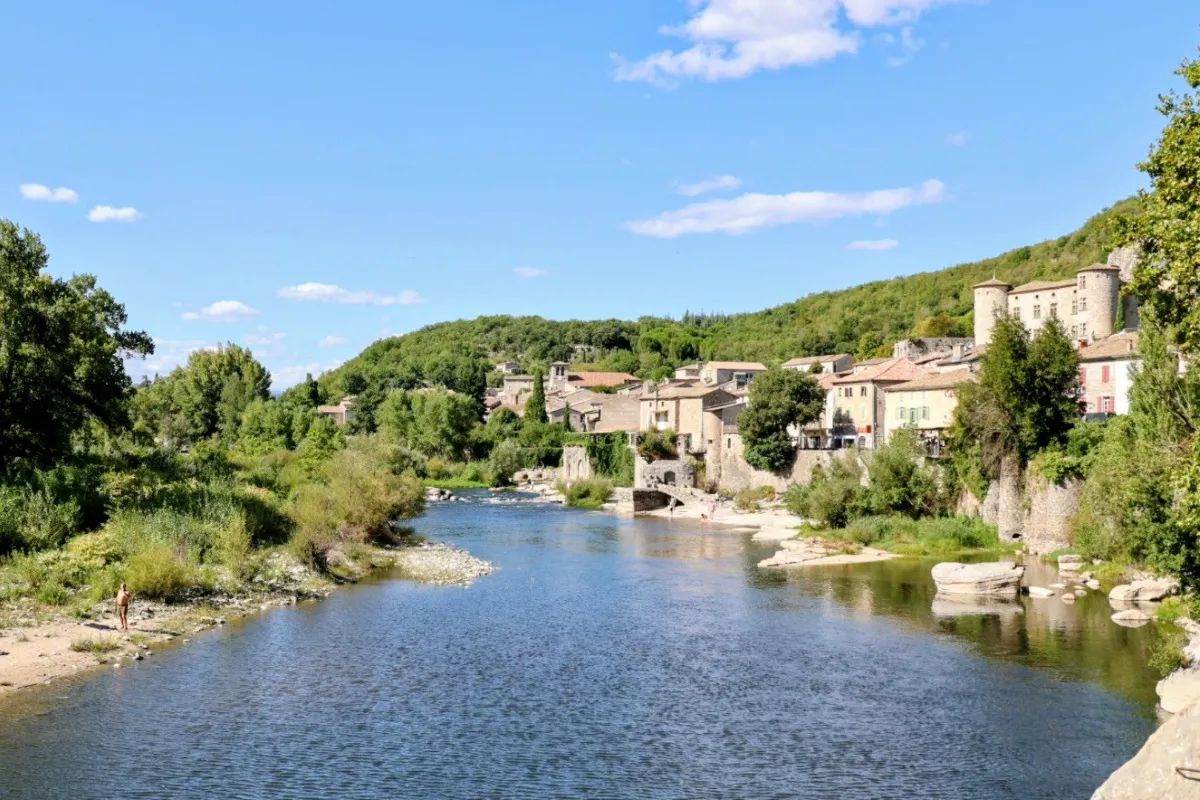
Vogüé looks as though it’s literally glued to the cliff. Its pale stone houses are packed together beside the Ardèche River, overlooked by an imposing castle with round towers. From the opposite bank, the view is beautiful.
Wander through the cobbled lanes, slip beneath vaulted passageways and climb the staircases connecting the houses. The village also has a quirky little feature: Rue des Puces, an incredibly narrow passage squeezed between buildings.
Below the houses, the river flows between pebbled banks and limestone cliffs. When the weather is warm, the riverside is a lovely place to enjoy the water and admire the village.
Balazuc
In Our Top+ ✅
Type Village
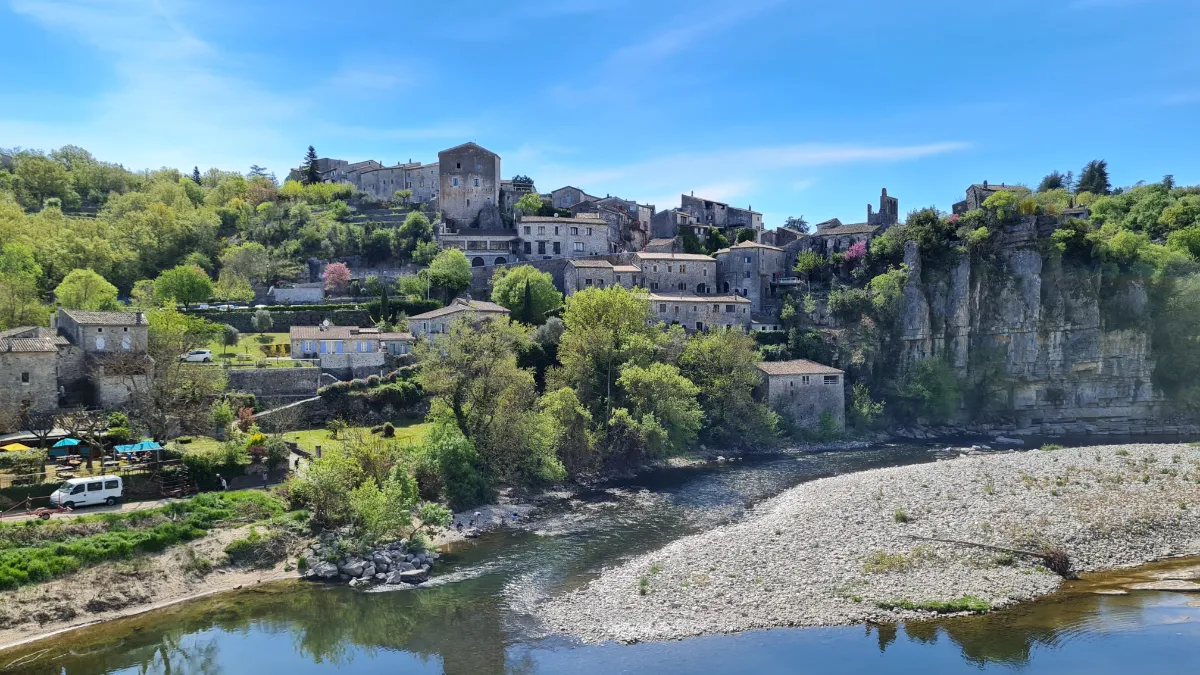
Perched on its rock above the Ardèche River, Balazuc is an impressive sight. Its houses seem to cling to one another, forming a maze of stone overlooked by an ancient castle.
In the narrow streets, vaulted passageways give way to steep staircases. The Romanesque church, with its simple architecture, recalls the village’s medieval origins. Take the time to look up, as the old façades have some lovely details.
Far below, the Ardèche sweeps around a broad bend lined with pebbles. From the opposite bank, the silhouette of Balazuc rising above the river is spectacular.
Grotte Chauvet 2
Type Prehistoric Cave
Price €18
Full Name
Grotte Chauvet 2
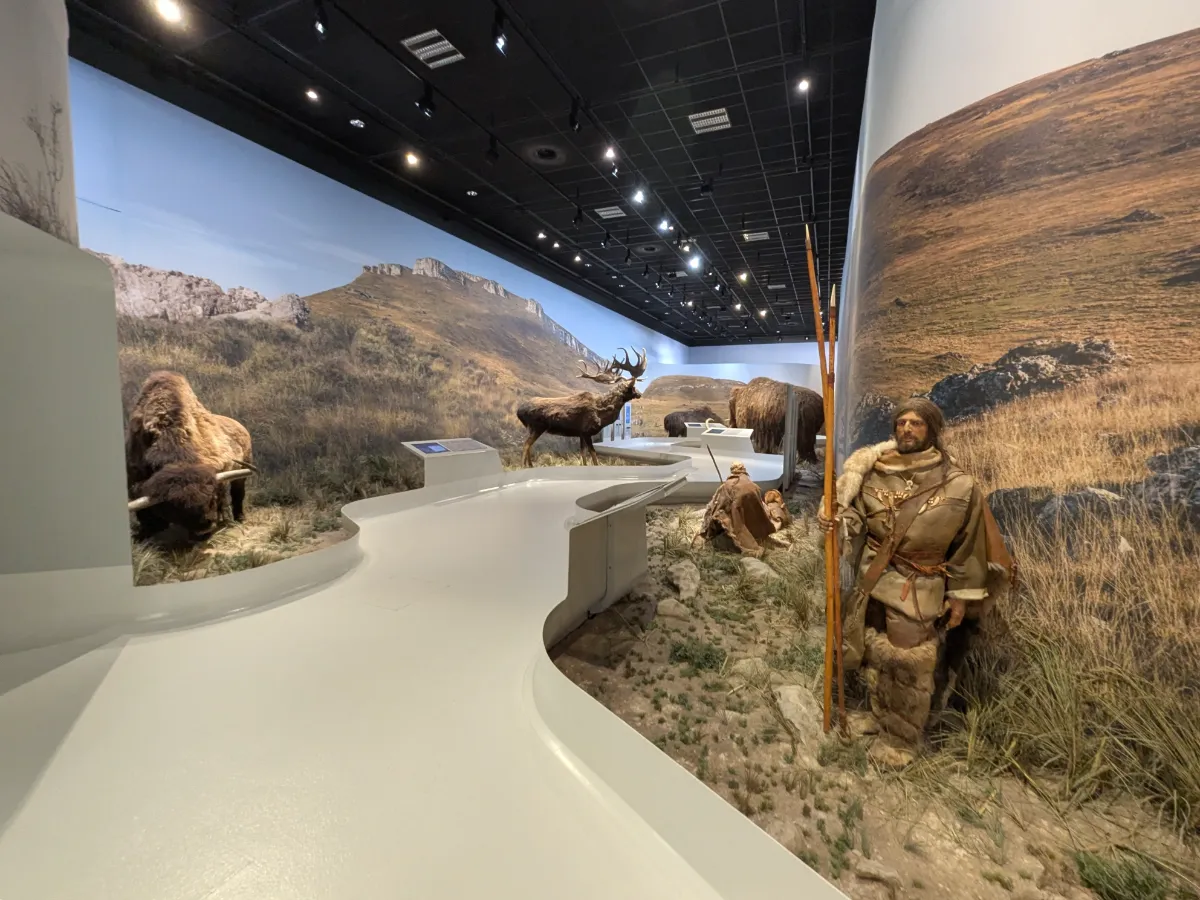
Take a leap 36,000 years into the past. Near Vallon-Pont-d’Arc, Grotte Chauvet 2 introduces you to some of humanity’s first great artists. And what artists they were.
Discovered in 1994, the original cave contains hundreds of prehistoric paintings and engravings depicting lions, horses, mammoths, rhinoceroses and other animals. To protect these fragile works, the cave is closed to the public.
Instead, an extraordinary replica has been created nearby, faithfully reproducing the cave walls, rock formations and even the tiniest details of the drawings. The result is astonishing.
In the dim light, animals seem to emerge from the rock, sometimes shown in motion with a remarkable understanding of perspective. The visit reveals the techniques used by these artists and offers a fascinating insight into the lives of prehistoric humans. It’s a genuine journey back to the origins of art.
Gorges de l'Ardèche
Type Gorges
Full Name
Gorges de l’Ardèche
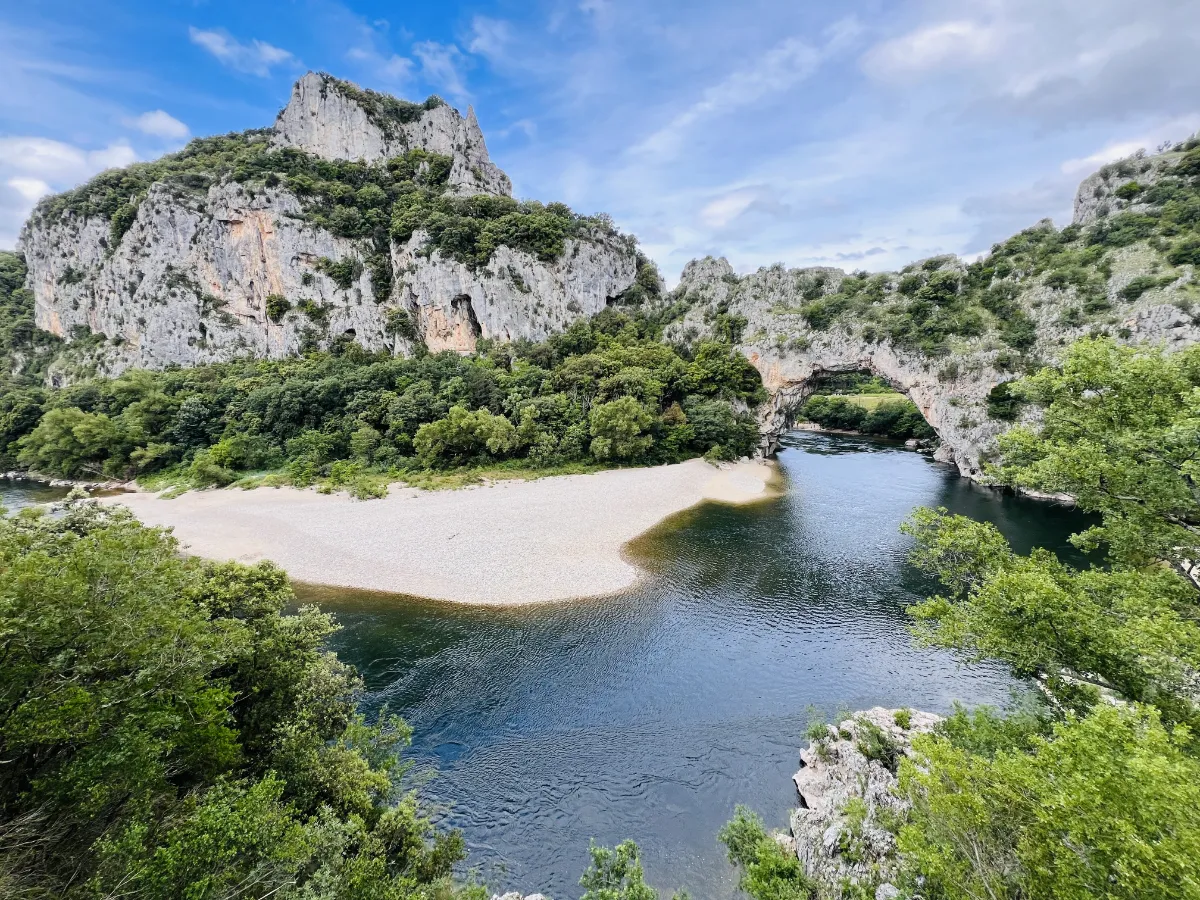
The Ardèche Gorges are a truly spectacular stretch of wilderness. For around 30 kilometres, the river winds its way between enormous limestone cliffs, with sharp bends, pebble beaches and sheer rock faces towering above the water.
For some breathtaking views, take the scenic road and stop at the viewpoints perched high above the gorge. Or, for a different perspective, paddle down the river in a canoe, alternating between rapids and calmer stretches of water.
At the entrance to the gorges, the Pont d’Arc, a natural stone arch carved out by the river, is a particularly impressive sight.
Aven d'Orgnac
Type Prehistoric Cave
Price €16.50 – Guided Visit only
Full Name
Aven d’Orgnac
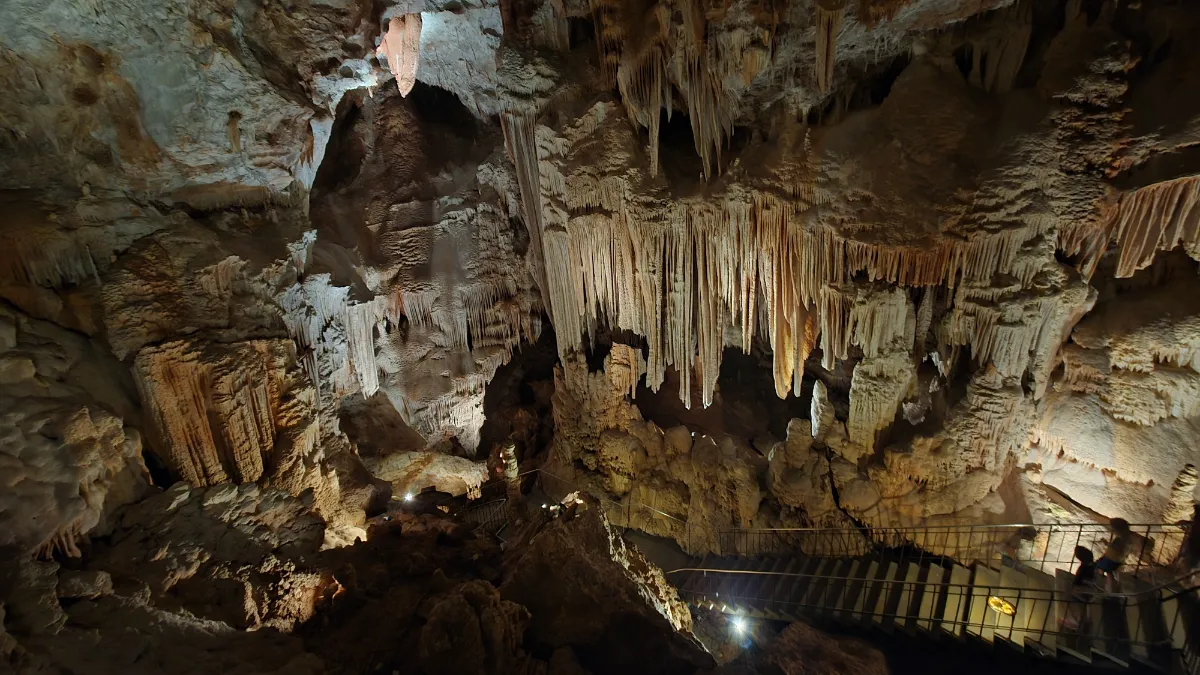
At the Aven d’Orgnac, you have to descend deep into the Earth to discover one of Ardèche’s most spectacular underground wonders. And what a sight it is. Enormous chambers, gigantic limestone columns, hanging stalactites and rock formations in the most extraordinary shapes.
Discovered in 1935, this cave was sculpted by water over millions of years. Some chambers are so vast that you feel as though you’ve entered a natural cathedral. The tour takes you 120 metres underground, along a route involving 700 steps.
Back above ground, a prehistoric exhibition explores the techniques, tools and ways of life of our distant ancestors.
Grignan
Type Village
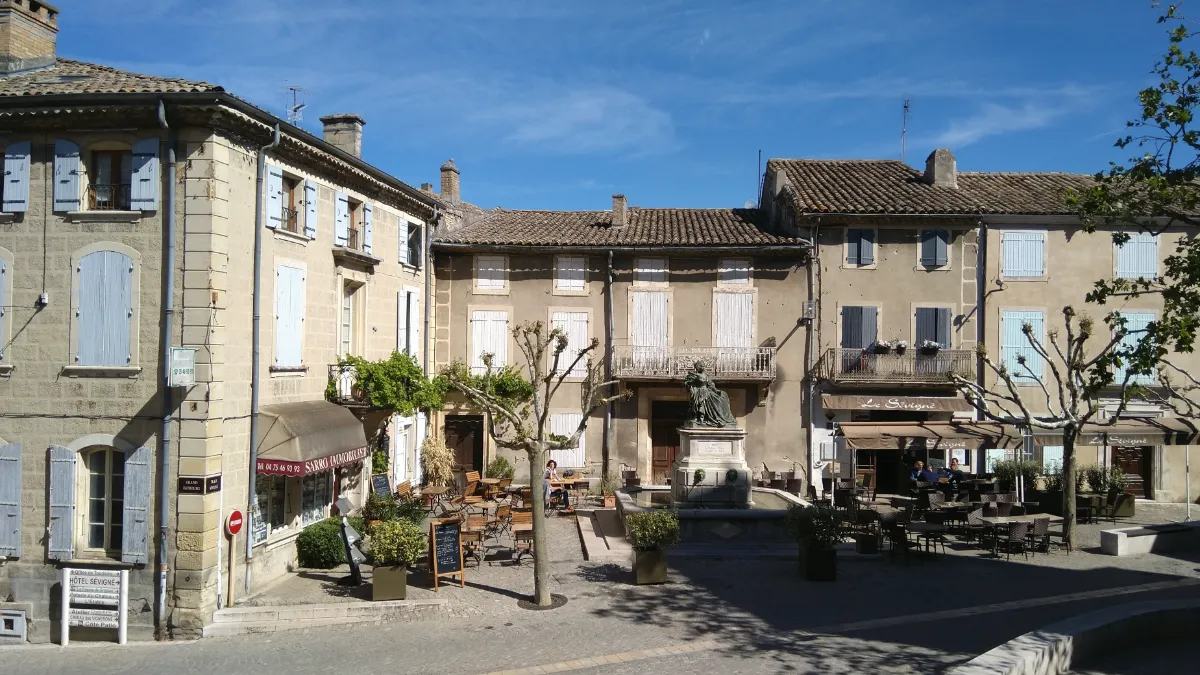
Grignan certainly knows how to make an impression. At the top of a hill, its castle towers over a stone village surrounded by vineyards, lavender fields and wooded hills. The castle owes much of its fame to Madame de Sévigné, the celebrated 17th century letter writer, who came here to visit her daughter. Behind its monumental façades are magnificent rooms and panoramic terraces.
In the village, narrow streets climb between beautiful old houses. Take time to admire the gardens and flower covered façades too, especially lovely in the summer sunshine.
Vercors
Type Mountains
Full Names
Massif du Vercors
Parc Naturel Régional du Vercors
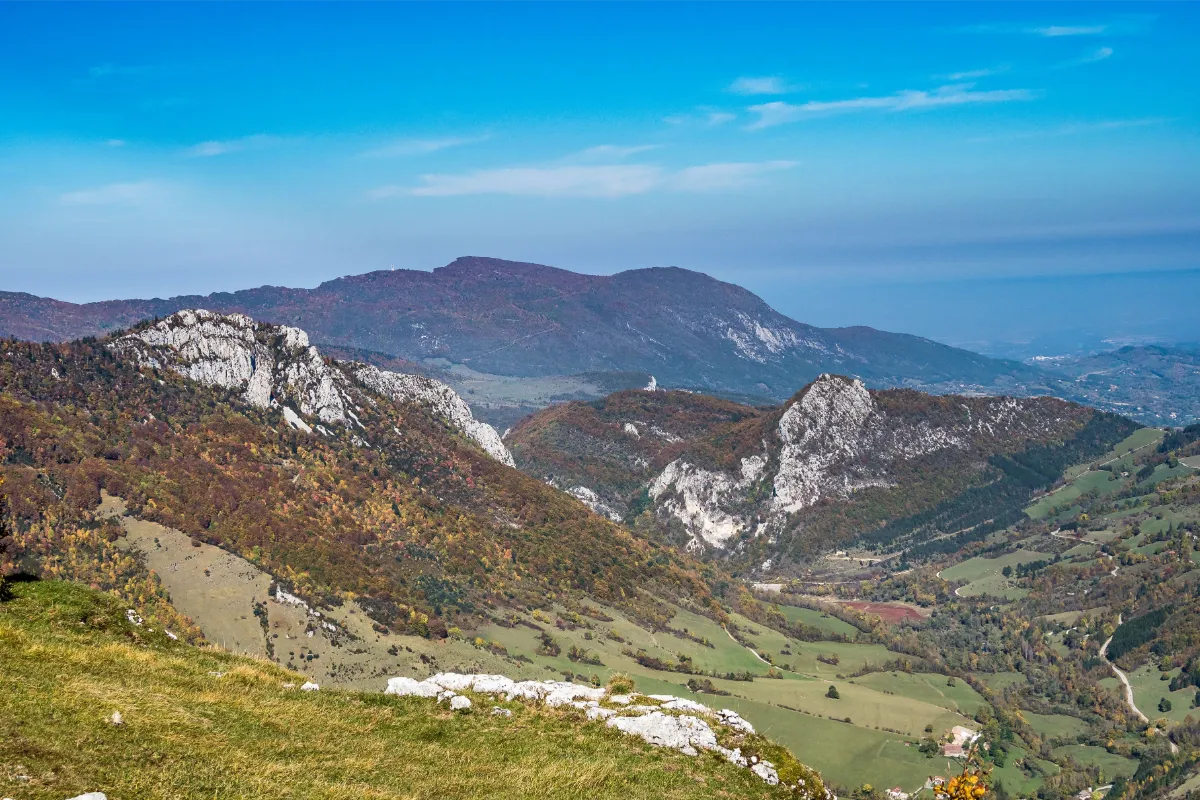
The Vercors looks like a natural fortress. Picture enormous limestone cliffs, vast wooded plateaus, deep gorges and meadows perched high above the valleys. It’s a mountain range where the landscape can be as gentle as it is breathtakingly steep.
The scenery is full of contrasts. Down in the valleys, villages and farmhouses nestle among the pastures. Higher up, forests give way to vast wilderness areas, where chamois, deer and other mountain animals roam far from the roads.
The Vercors is also famous for its spectacular roads, carved into the cliffs during the 19th century. Tunnels cut straight through the rock, bends hanging high above sheer drops and dizzying stretches of road. Better keep your eyes on the road and pull over when you want to admire the scenery.
Hikers, cyclists, climbers and cross country skiers will find a fantastic adventure playground in these mountains, both summer and winter.
Yvoire
Type Village
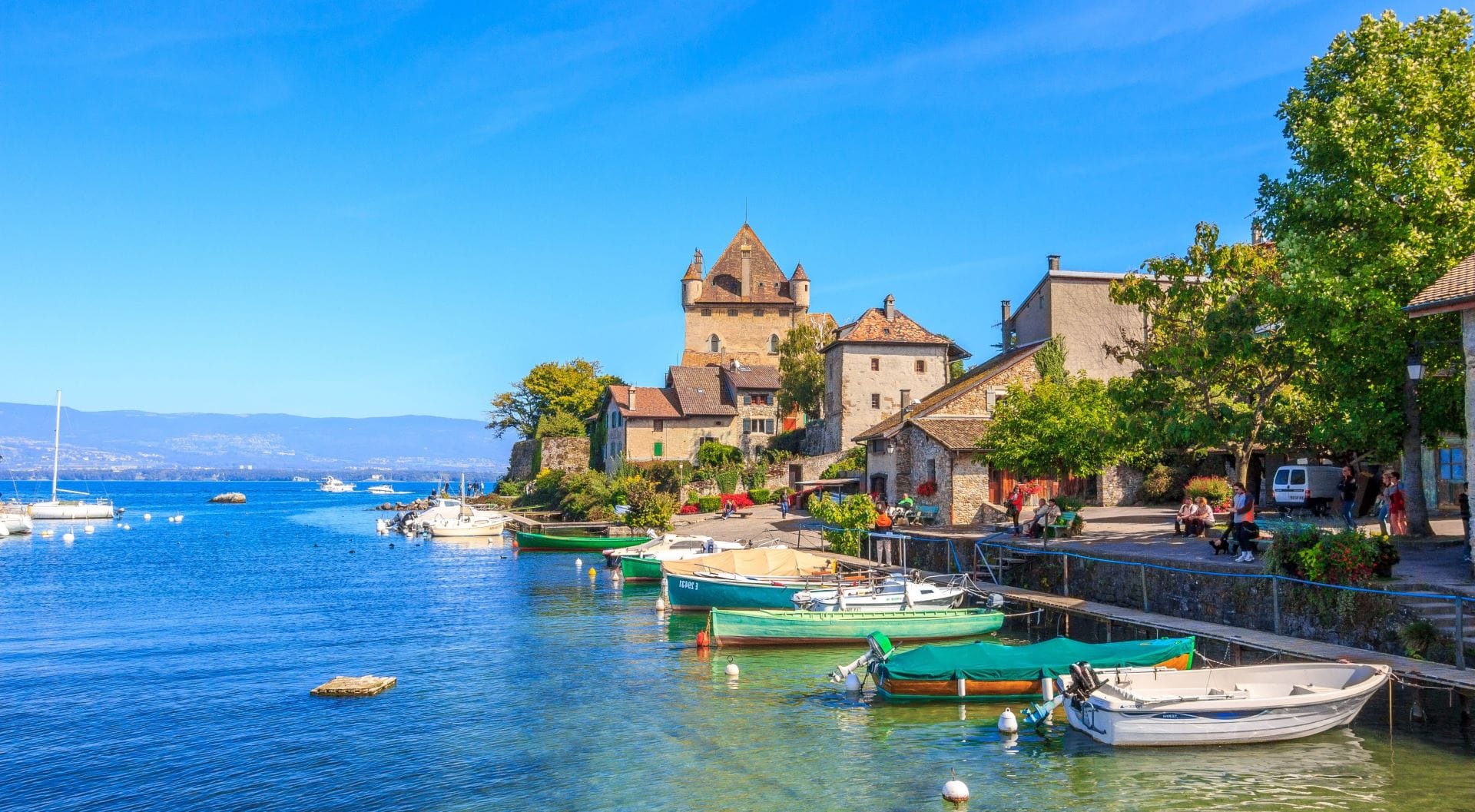
Yvoire is a little medieval gem on the shores of Lake Geneva. With its flower covered stone houses, old fortified gateways and castle rising above the water, the village has an incredibly photogenic silhouette. Built as a stronghold in the early 14th century, it has retained much of its original character. Behind the ramparts, cobbled lanes slope gently down towards the harbour.
Don’t miss the Jardin des Cinq Sens, inspired by medieval gardens. Flowers, aromatic plants and leafy greenery create a trail that’s as much a treat for your sense of smell as it is for your eyes.
Annecy
In Our Top+ ✅
Type City
Population 130 000
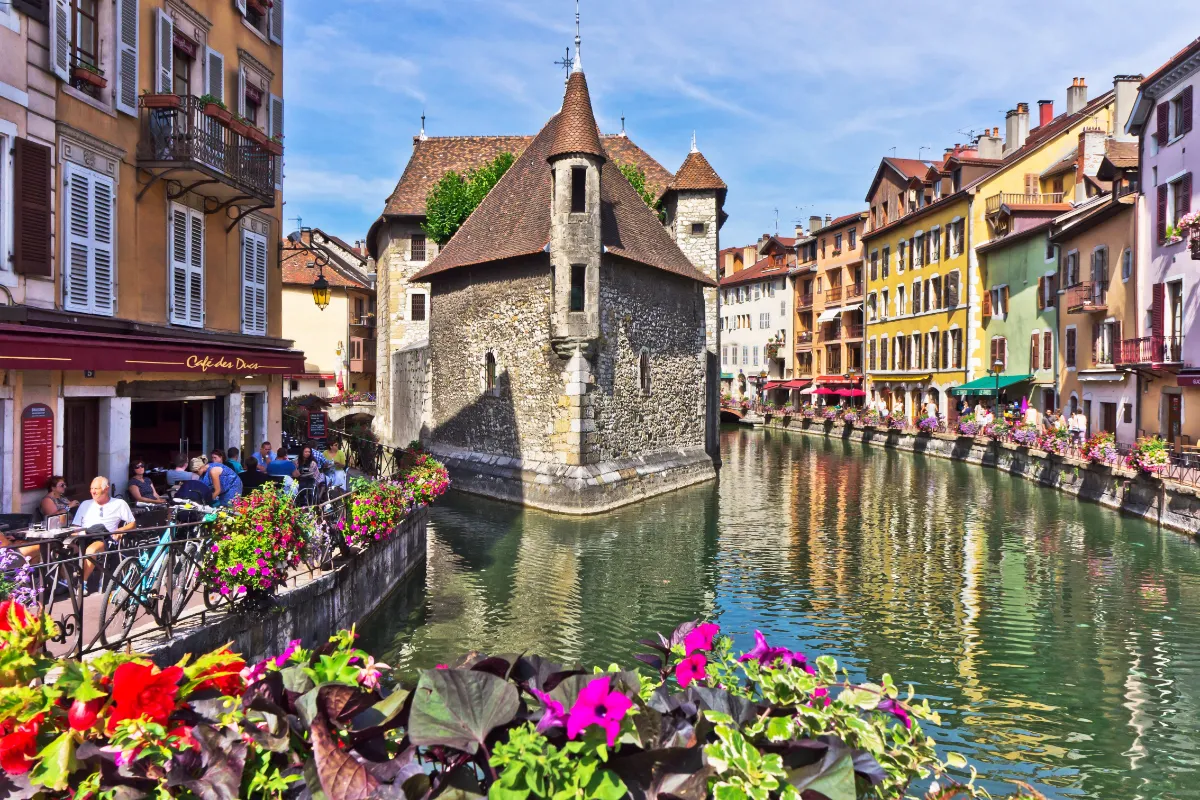
Annecy has everything it takes to turn heads: canals, colourful houses, a turquoise lake and mountains in the background that look almost too perfect for a postcard. No wonder it’s nicknamed the “Venice of the Alps”, even if comparing it to the Italian city is perhaps a little generous. Never mind, the charm works its magic from the moment you arrive.
The old town is a maze of cobbled lanes, passageways beneath houses and little bridges. The Thiou, a short river flowing out of the lake, winds its way between pastel façades. Geraniums in the windows, old stone staircases and vaulted passageways, it’s hard not to want to photograph every corner.
Standing in the middle of the river is the Palais de l’Île, a curious building shaped like a stone ship. Built in the Middle Ages, it once served as a prison, among other things. With its little towers and reflection in the water, it’s probably the most photographed landmark in town.
Next, head uphill to the castle, once home to the powerful lords of the region. Its buildings, constructed and altered over the centuries, now house a museum. From around the castle, you get a different perspective on the rooftops of the old town.
But in Annecy, it only takes a few minutes on foot to leave the old stone buildings behind and reach the lake. The Jardins de l’Europe, with their centuries old trees, and the wide lawns of Le Pâquier offer a lovely escape beside the water. Just nearby, the Pont des Amours is well worth a quick stop.
As soon as the warmer weather arrives, the lakeside comes alive. Cyclists, walkers, swimmers and sailing enthusiasts make the most of this glacial lake, famous for its exceptionally clear water. The surrounding mountains offer wonderful hiking opportunities, from gentle trails to proper uphill climbs.
In winter, the scenery changes completely. The peaks turn white, mist sometimes drifts over the water and the old streets become peaceful again. The evening light is particularly beautiful when it casts a pink glow over the façades and mountains.
Lac d'Annecy
Type Lake
Full Name
Lac d’Annecy
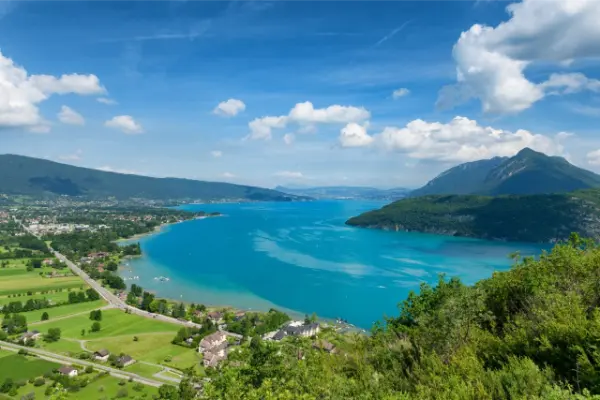
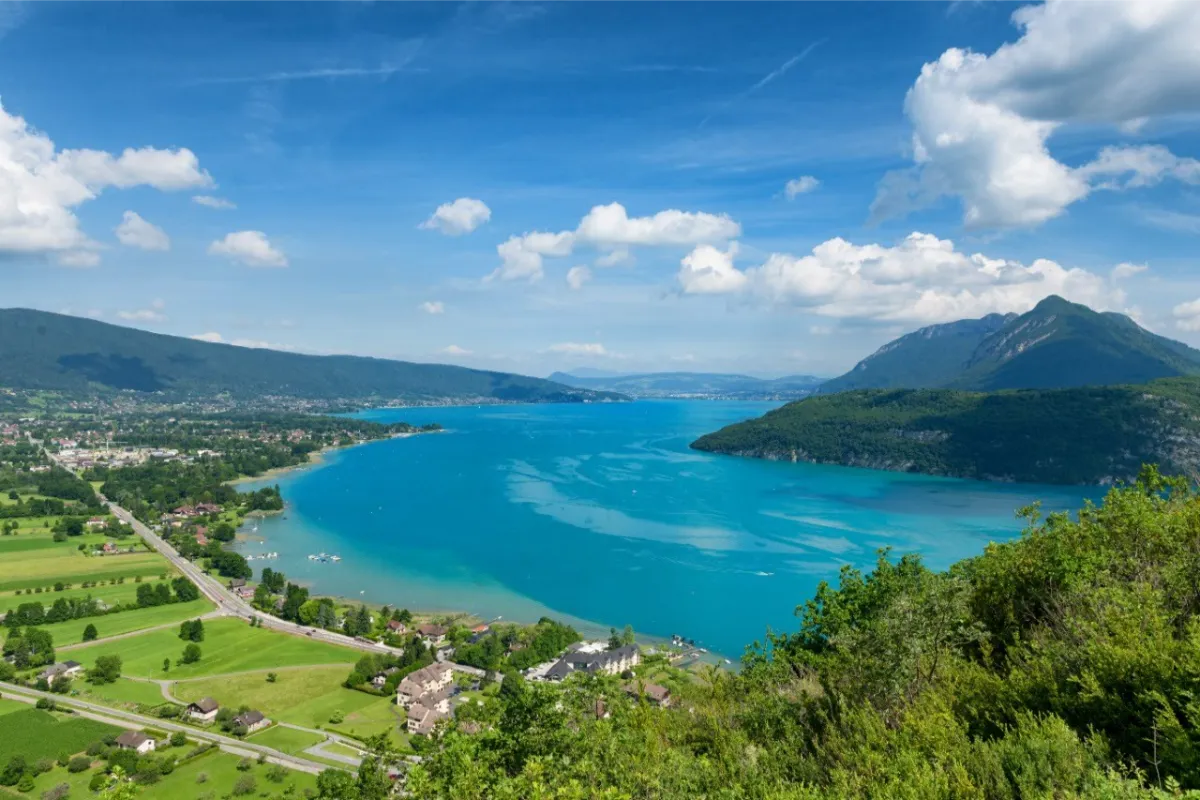
Lake Annecy has a colour that almost doesn’t look real. Turquoise in the sunshine, deep blue beneath the clouds, it stretches for around fifteen kilometres between green mountains and towering limestone cliffs. Its shores alternate between beaches, picturesque villages and gardens, with magnificent views of the surrounding peaks. A dedicated cycle path lets you ride along much of the lakeshore.
In summer, the crystal clear waters attract swimmers, sailors and kayakers. Hikers, meanwhile, head up into the mountains to admire the lake from the ridges. From up there, the panorama is simply breathtaking.
Chamonix
Type Small Town
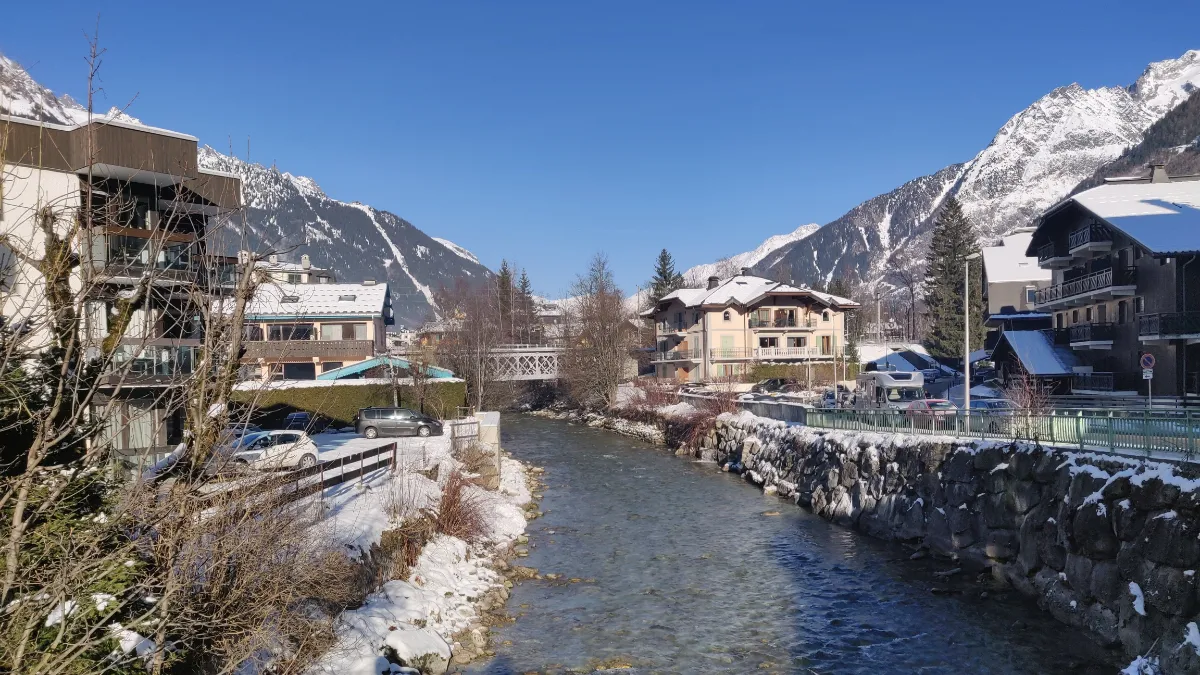
In Chamonix, the mountains don’t just provide a pretty backdrop. Enormous granite spires, glaciers and snow covered peaks rise up on every side. Dominated by Mont Blanc, the town has been one of the world’s great mountaineering centres since the 18th century.
For an unforgettable experience without having to become a mountaineer yourself, take the cable car up to the Aiguille du Midi. At 3,842 metres, you’re almost face to face with the giants of the Alps. Just be warned, those sheer drops are never far away.
Another legendary excursion is the Montenvers cog railway, which takes you up to a viewpoint overlooking the Mer de Glace. Once immense, this glacier is now retreating at an alarming rate.
In the town centre, old mountain houses stand alongside buildings dating from the early days of tourism. Statues and monuments pay tribute to the pioneers who first dared to tackle these formidable mountains.
Bonneval-sur-Arc
Type Village
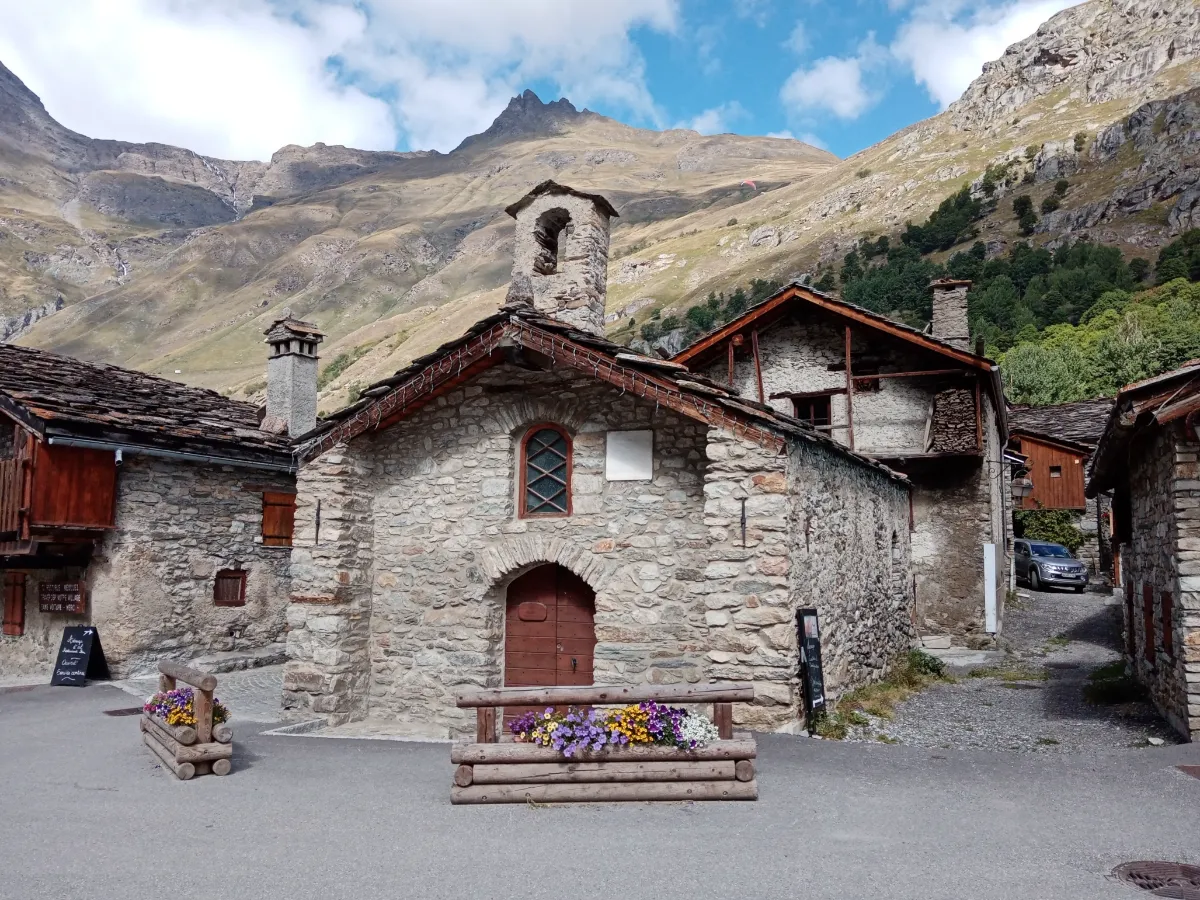
In Bonneval-sur-Arc, winter means business. Perched at over 1,800 metres, this mountain village has preserved its sturdy stone houses, topped with heavy roofs designed to withstand enormous snowfalls. The narrow lanes and passageways between the houses tell the story of a once harsh way of life, shaped by the seasons and the herds.
Around the village, the scenery is on an epic scale: glaciers, mountain streams, pastures and peaks rising above 3,000 metres. In summer, hiking trails lead through spectacular high mountain landscapes. In winter, the village almost disappears beneath its thick blanket of snow.
Vanoise
In Our Top+ ✅
Type Mountains
Full Names
Massif de la Vanoise
Parc National de la Vanoise
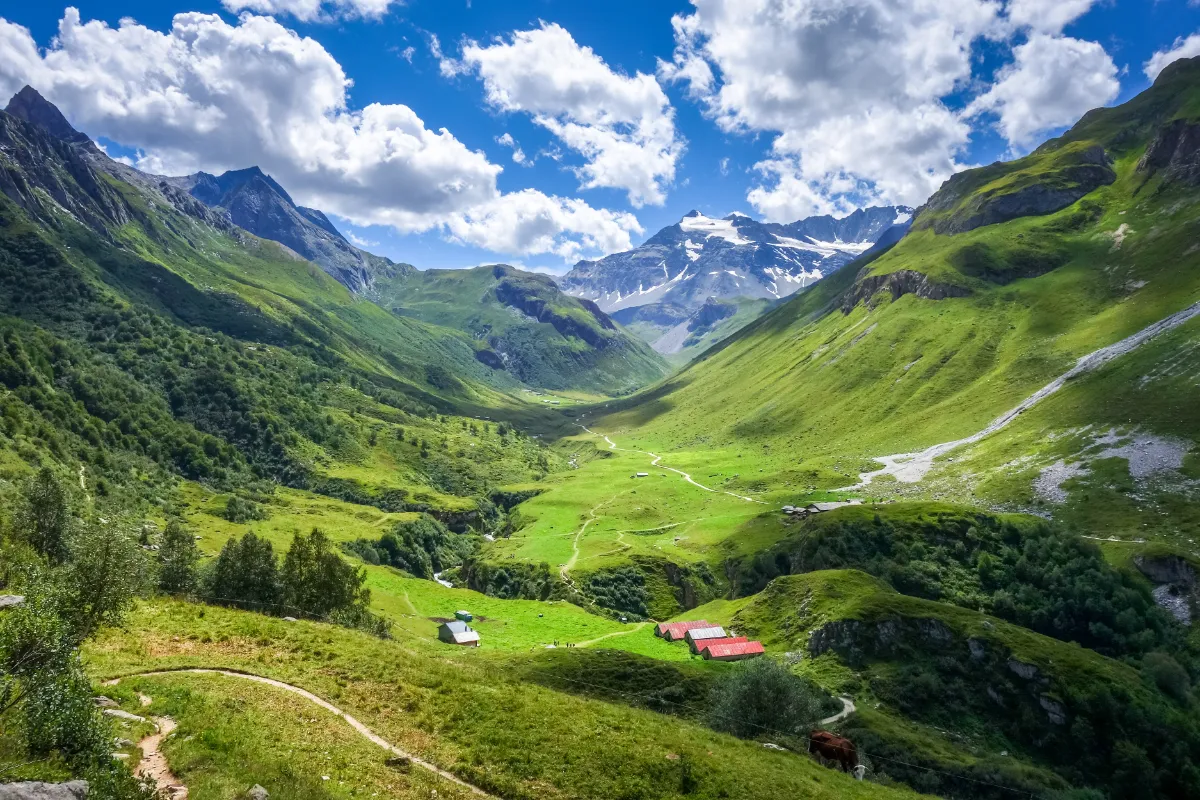
The Vanoise is a magnificent stretch of unspoilt Alpine wilderness, with peaks rising above 3,000 metres, glaciers, mountain lakes and meadows bursting with colour during the short Alpine summers. Located near the Italian border, this mountain range is home to some of the richest natural heritage in the French Alps.
In 1963, France created its first national park here, partly to protect the Alpine ibex, an impressive animal with long, curved horns that was once threatened with extinction. Today, it’s not unusual to spot them on rocky slopes, provided you keep quiet and your eyes open.
Chamois are also part of the picture, along with marmots, whose whistles echo across the pastures. High above, golden eagles and bearded vultures, enormous birds of prey with wingspans approaching three metres, patrol the valleys.
But there’s much more to the Vanoise than its wildlife. The scenery shifts between wide green valleys, larch forests, glacial streams and towering snow covered mountains. Old stone and wooden chalets recall the days when families would move up to the mountains with their herds for the summer.
As soon as the snow melts, the trails become a paradise for hikers. Some wind through gentle meadows full of flowers, while others climb towards mountain passes, lakes or refuges perched at the foot of glaciers. The more adventurous can set off on long treks lasting several days.
In winter, the landscape changes completely. The peaks disappear beneath the snow and the valleys turn white.
In summer, the morning light on the glaciers and the colours of the meadows give the scenery a much softer feel. Many old shepherds’ trails still cross these mountains, linking villages to the highest pastures.
Briançon
In Our Top+ ✅
Type Small Town
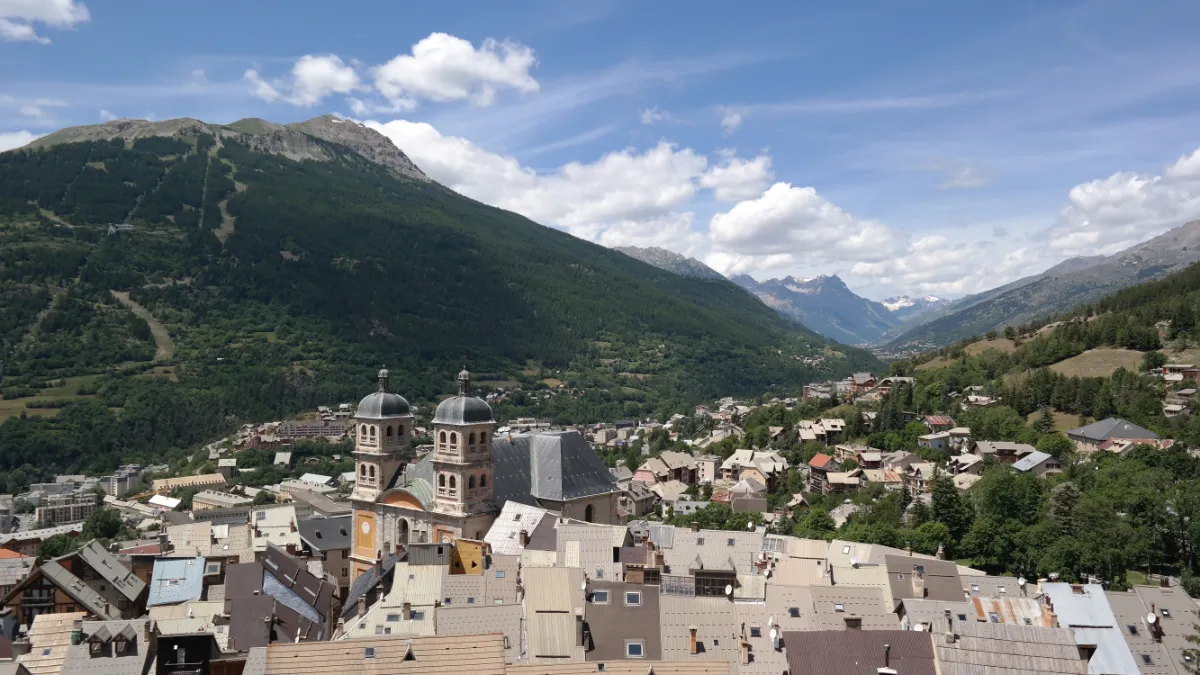
Briançon is a town with its feet in the mountains and its head behind the ramparts. Perched at over 1,300 metres near the Italian border, it spent centuries guarding the strategic passes through the Alps.
Its fortified old town, known as the Cité Vauban, overlooks the surrounding valleys. The imposing walls, improved from the late 17th century onwards by the military engineer Vauban, are now part of a UNESCO World Heritage Site.
Inside, colourful houses line steep streets. Running down the middle of the cobbles is the Gargouille, a little channel once used to drain away water. It’s a small detail that gives the streets plenty of character.
Pass through the fortified gateways, explore the church and old military buildings, then enjoy the views from the ramparts. Further afield, several forts still stand guard over the mountains.
Écrins
In Our Top+ ✅
Type Mountains
Full Names
Massif des Écrins
Parc National des Écrins
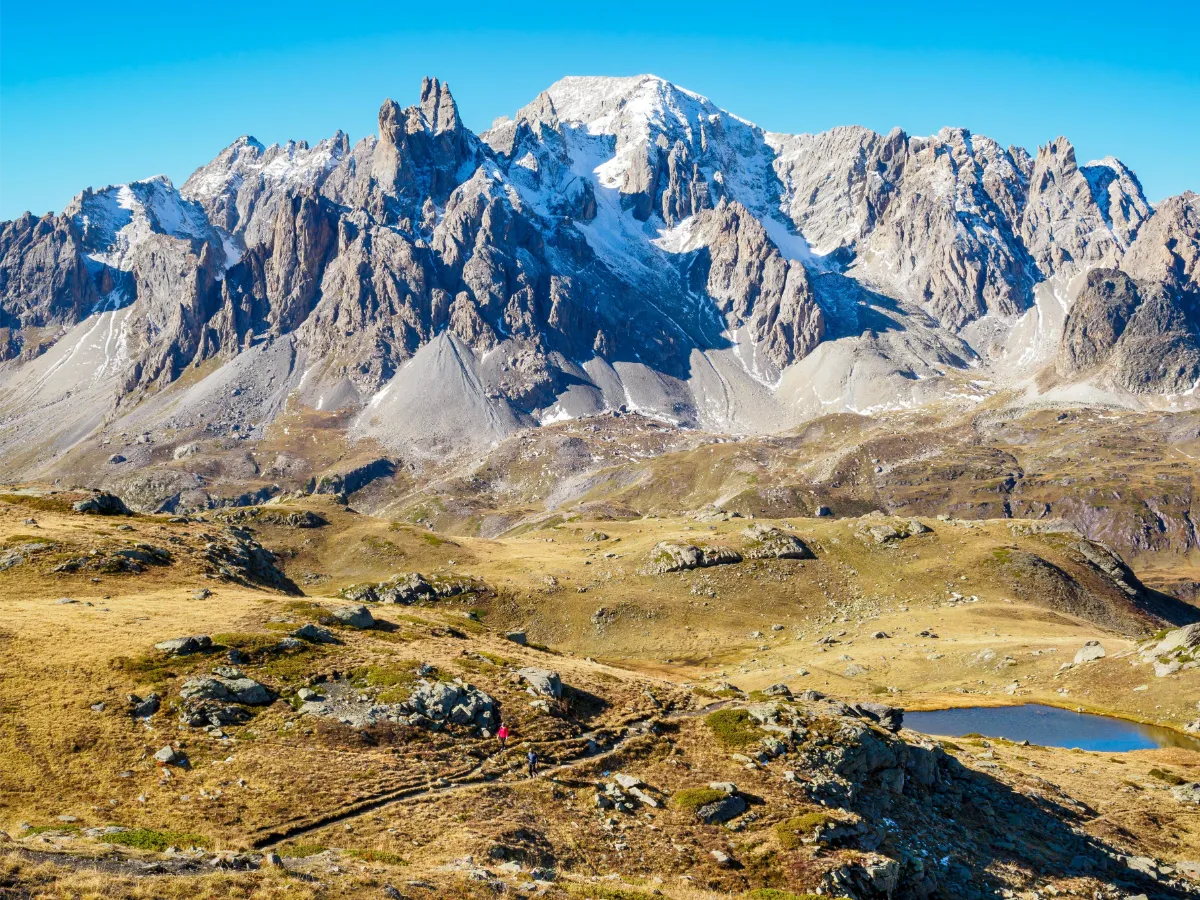
The Écrins are mountains with a capital M. A world of jagged peaks, enormous glaciers, sheer cliffs and deep valleys, where nature still calls the shots. Nothing here is done by halves. Some summits rise above 4,000 metres, and the scenery has an almost intimidating power.
The Barre des Écrins, the highest point in the massif at 4,102 metres, towers above this world of ice and granite. Nearby, La Meije rises in a spectacular silhouette that has become one of the great symbols of French mountaineering. Since the 19th century, these mountains have attracted some of the most experienced climbers.
And yet, the Écrins also have a gentler side. Down in the valleys, mountain streams race down the slopes, waterfalls burst between the rocks and traditional villages huddle around their old churches. Stone farmhouses are reminders of how difficult life could be for mountain communities.
Created in 1973, the national park protects much of this wilderness. Ibex, chamois, marmots and golden eagles find refuge here, while the meadows fill with gentians, lilies and countless other Alpine flowers as soon as the warmer weather arrives.
Hikers have an enormous choice of routes. Easy trails let you explore the valley floors, while more demanding hikes lead up to glacial lakes and mountain refuges. Some places feel like the very edge of the world, with immense rock faces and streams carrying milky glacial water.
In autumn, the larch trees turn golden, contrasting with the first snowfalls. In winter, the mountains regain all their harshness. Glaciers, steep slopes and challenging weather conditions mean some excursions are suitable only for properly equipped and experienced mountaineers.
Higher up, snow can linger well into summer, even while the valleys below are already basking in sunshine. This contrast between sparkling glaciers, forests and meadows is one of the defining features of the massif.
Queyras
In Our Top+ ✅
Type Mountains
Full Name
Massif du Queyras
Parc Naturel Régional du Queyras
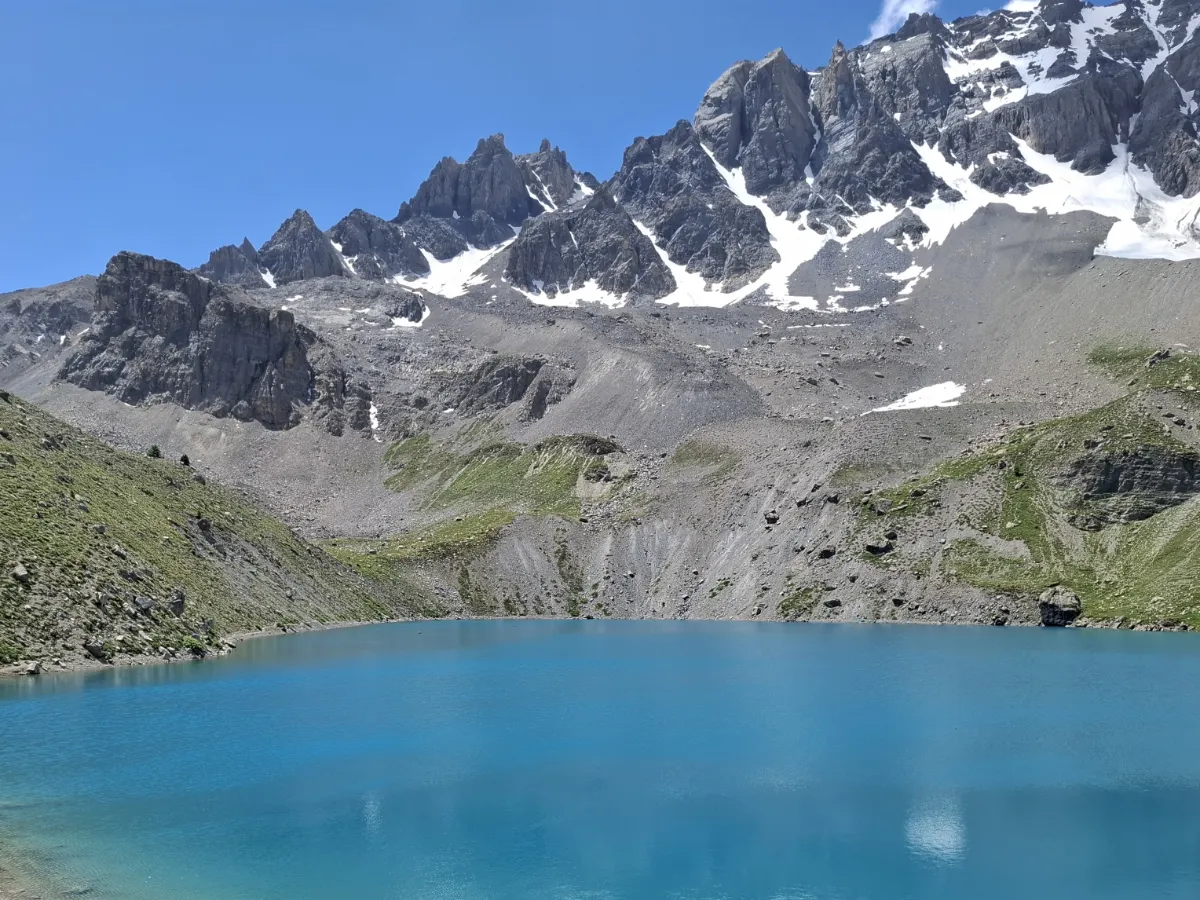
The Queyras shows a different side of the Alps. Less flashy than the big mountain resorts, this region near the Italian border has kept its wild character, traditional villages and sometimes astonishingly beautiful landscapes. It’s a land of high valleys, larch forests and peaks rising above 3,000 metres.
Long difficult to reach, the Queyras has preserved a strong sense of identity. Its villages have kept their old stone and wooden houses, built to withstand harsh winters. Enormous barns were once used to store hay, while animals were often kept on the lower floor, providing a little extra warmth for the people living above.
Another distinctive feature is the sundials painted on house façades, sometimes accompanied by sayings full of wisdom or humour. It’s a tradition that reflects the region’s long history of exchanges with neighbouring parts of Italy.
Nature takes centre stage here. In spring, mountain streams swell with melting snow. In summer, the meadows burst into flower and herds make their way up to the high pastures. Marmots whistle among the rocks, while chamois and ibex roam the steepest slopes.
But autumn might just be when the Queyras looks its most spectacular. The larch trees, conifers that lose their needles in winter, turn brilliant shades of yellow and orange. Beneath the blue skies of the Southern Alps, the forests seem to burst into flames. It’s a sight you never get tired of.
The massif is also a fantastic hiking destination, with countless trails linking villages, mountain passes and high altitude lakes. In winter, snow transforms the valleys into peaceful white landscapes, perfect for cross country skiing, snowshoeing and walks through the forests.
Saint-Véran
Type Village
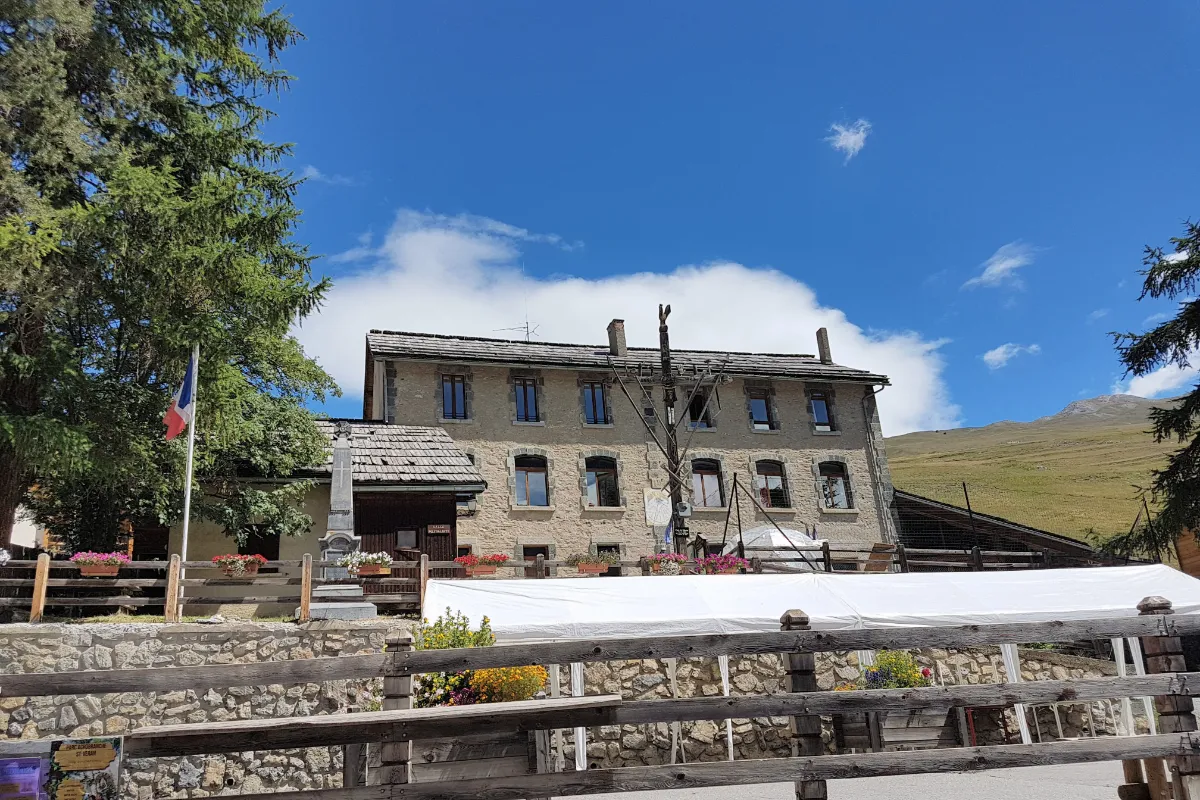
At over 2,000 metres above sea level, Saint-Véran proudly claims to be one of the highest villages in Europe inhabited all year round. And it has every reason to be proud of its old houses. These combine sturdy stone foundations with large wooden structures, once used to dry and store hay. It’s architecture that’s as clever as it is photogenic.
Painted sundials, fountains and little chapels dot the streets. All around, larch forests and the peaks of the Queyras create a magnificent setting. The night skies here are wonderful for stargazing too.
Mont-Dauphin
Type Village
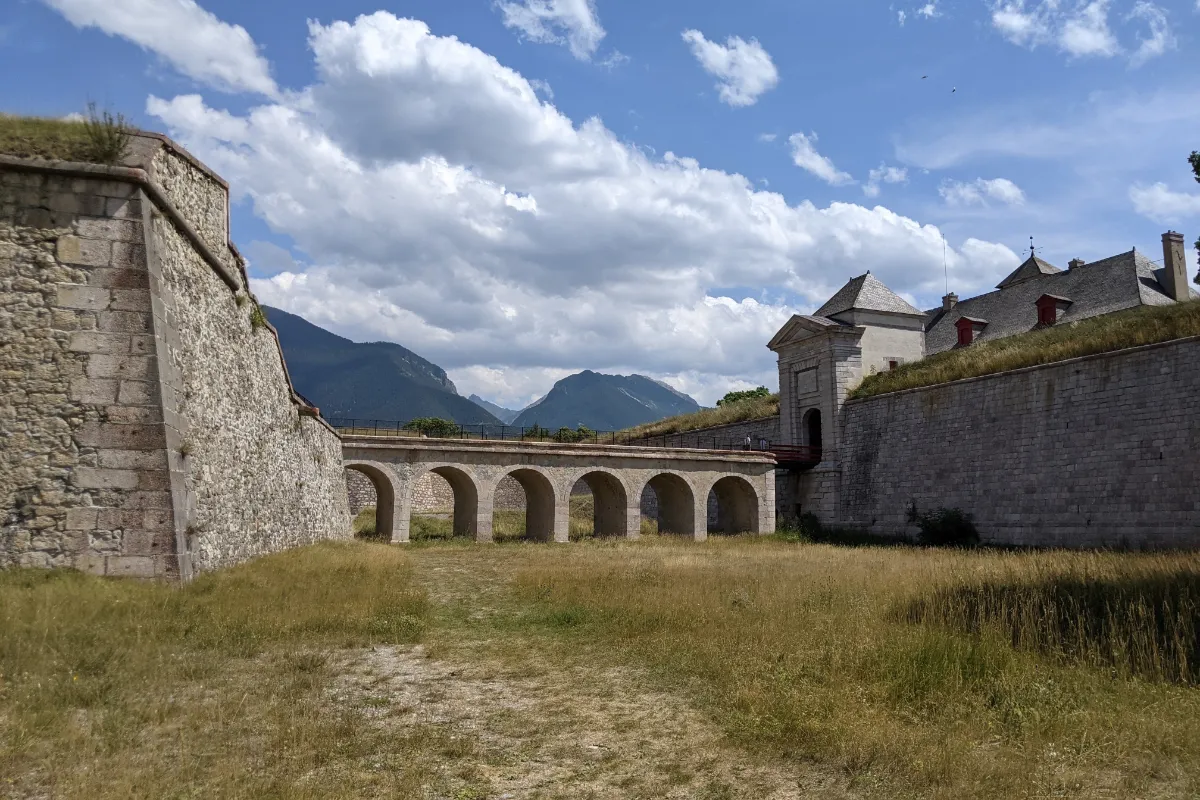
Mont-Dauphin looks like an enormous stone ship stranded on top of a plateau. In the late 17th century, Louis XIV ordered this fortress to be built to protect the Alpine valleys near the Italian border. The military engineer Vauban designed an impressive network of ramparts, moats and bastions, defensive structures projecting out from the walls.
Inside, straight streets, former barracks and military buildings form a small town in their own right. From the fortifications, there are sweeping views down into the steep valleys and across the surrounding mountains. Today, the site is recognised by UNESCO.
Lac de Serre-Ponçon
Type Lake
Full Name
Lac de Serre-Ponçon
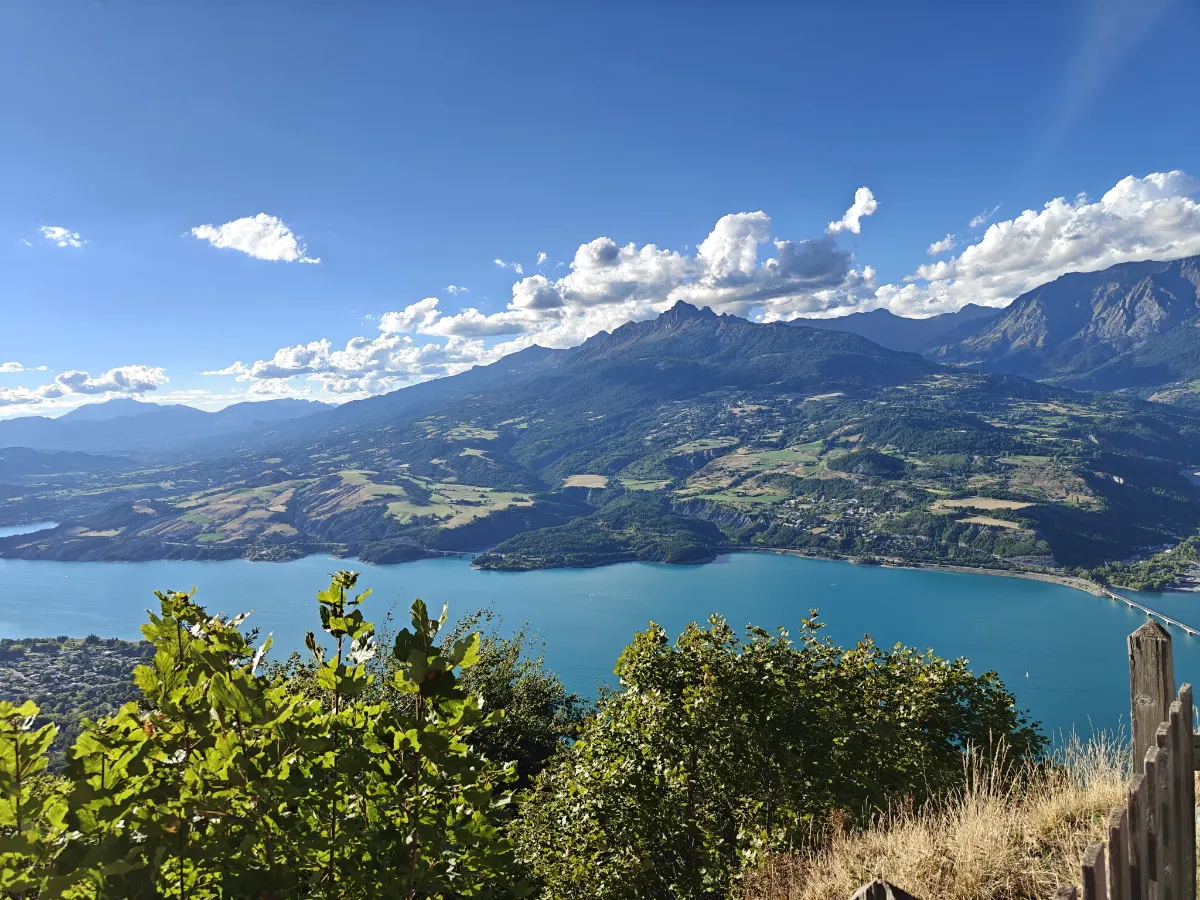
A sea in the middle of the Alps, or almost. Created by the construction of an enormous dam completed in 1961, Lake Serre-Ponçon stretches its brilliant blue waters between the mountains of the Hautes-Alpes.
Its winding shoreline hides little coves, beaches and headlands offering magnificent panoramic views. In summer, sailors, kayakers and swimmers make the most of this gigantic natural playground.
Mercantour

In Our Top+ ✅
Type Mountains
Full Name
Parc National du Mercantour
Highest Peak 3143m (10,314ft) 📍Cime du Gélas
The Mercantour is a one-of-a-kind place tucked away in the far southeast corner of the French Alps, where the mountains practically dip into the Mediterranean. It’s one of the wildest and best-preserved national parks in France, a natural treasure full of snowy peaks, deep valleys, crystal-clear streams and little villages clinging to the hillsides.
The park’s made up of seven main valleys, like the Tinée, Vésubie, Var, Cians, Roya and Bévéra, and the variety of landscapes is pretty amazing. You’ve got the red gorges of Cians and Daluis, which look a bit like the canyons in Colorado, mixed in with larch forests and blooming alpine meadows. Along the trails, you might bump into ibexes, chamois, marmots and if you’re lucky, you could even catch a glimpse of a golden eagle or a bearded vulture.
Right in the heart of the area, there’s the Vallée des Merveilles, up near Tende, which is one of the biggest open-air rock art sites in Europe. There are over 40,000 prehistoric carvings there, more than 5,000 years old, etched into the rocks at the foot of Mont Bégo. Hiking through this valley, or the nearby Fontanalba one, gives you this mix of raw natural beauty and ancient art. To keep the place protected, you can only check out the carvings with a guide.
Entrevaux
Type Village
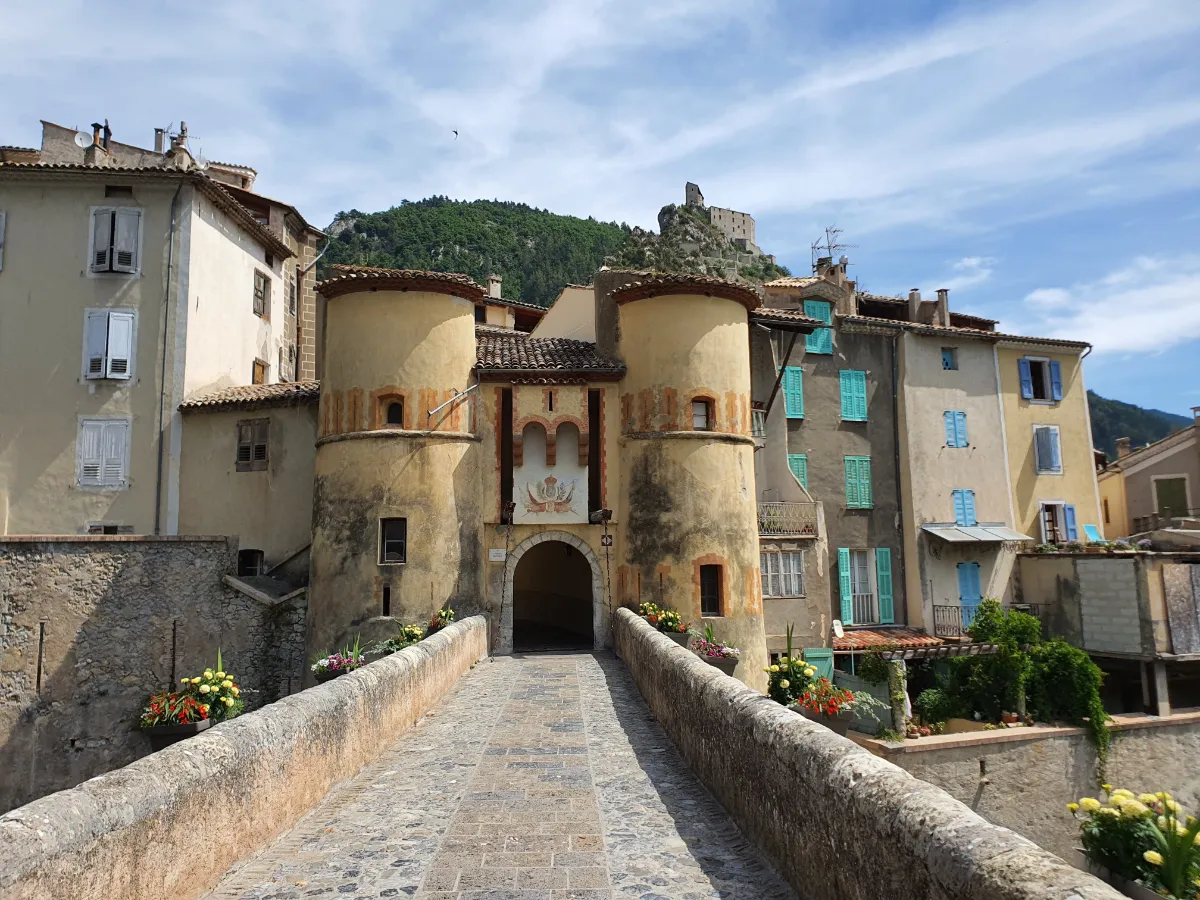
Entrevaux is an impressive sight, especially from a distance. This fortified village is overlooked by a citadel perched high on a rocky peak. To reach it, a zigzag path climbs up the mountainside.
You enter the old town across a bridge and through an imposing fortified gateway. Behind the ramparts, narrow lanes are lined with tall houses and an old cathedral. The citadel, reinforced under Louis XIV, towers above the village rooftops and the gorges of the valley.