


YOUTUBE VIDEO (10:59)
INTERACTIVE MAP
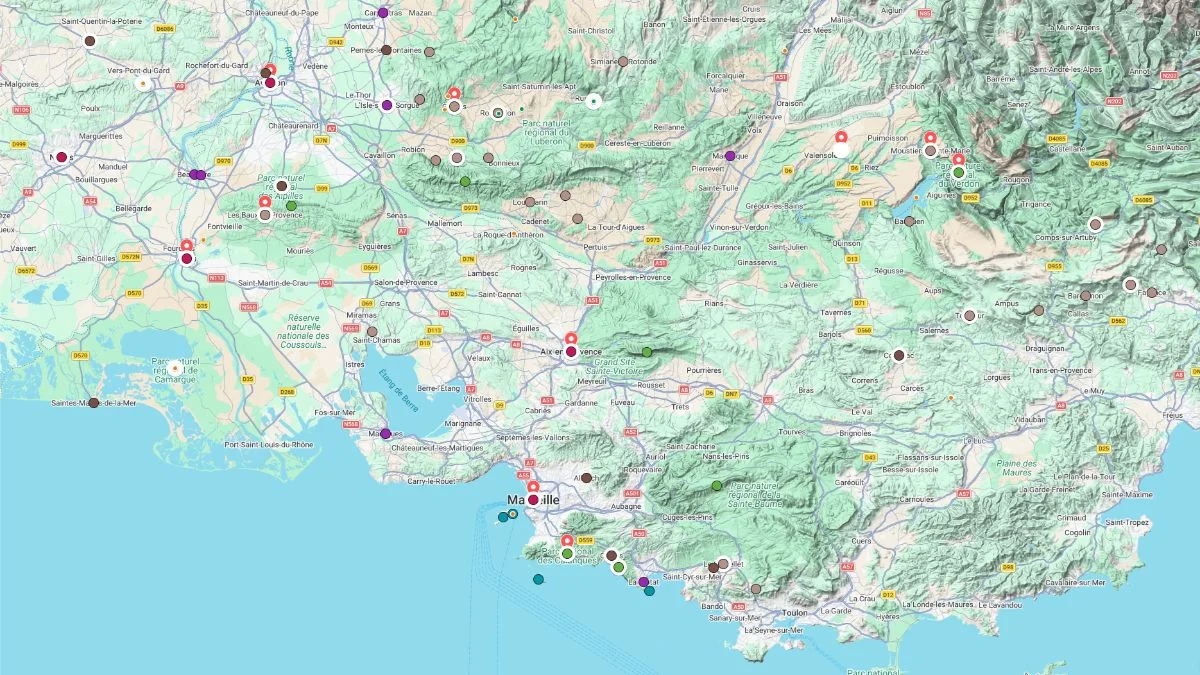
Click on the icon  in the top-right corner to view the map in full screen.
Show/Hide layers as needed.
After clicking on the image,
click on the icon  in the top-left corner to display the map legend.
Show/Hide layers as needed.
ALL
Overview Table
| Name | Type |
|---|---|
| Arles | City |
| Baux-de-Provence | Village |
| Avignon | City |
| Gordes | Village |
| Aix-en-Provence | City |
| Marseille | City |
| Calanques | Rocky Inlets |
| Lavender Fields | Fields |
| Verdon | Canyon |
| Moustiers-Ste-Marie | Village |
Arles
Type City
Population 50 000
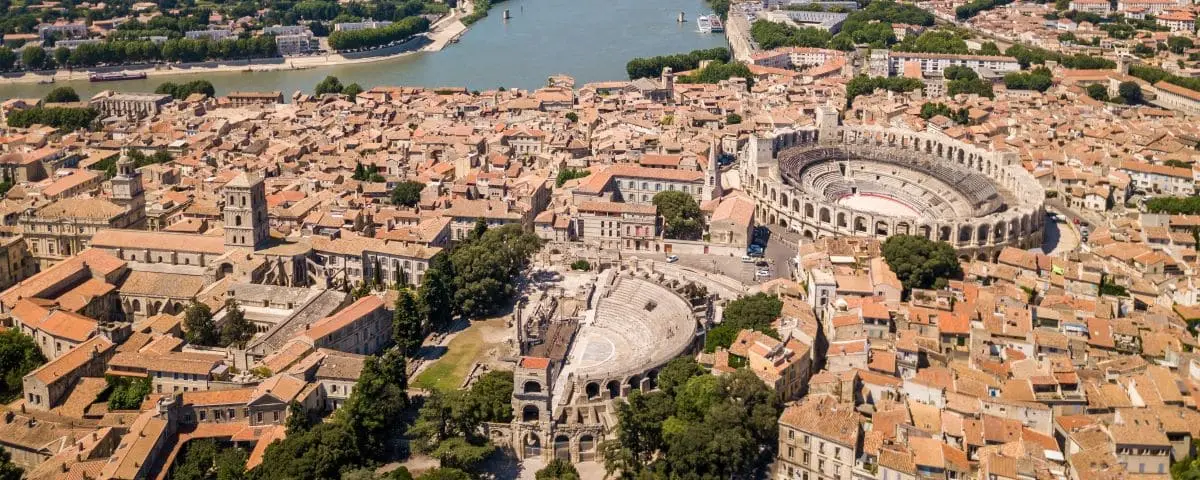
Set right at the gateway to the Camargue and along the Rhône river, Arles is a city deeply shaped by its history and by that very special Provençal light. Beaten by the mistral wind, warmed by the sun, and weathered by the centuries, it still has a remarkably beautiful old center where pale stone and terracotta rooftops stand out everywhere.
Arles goes all the way back to Antiquity, when the city, then known as Arelate, supported Julius Caesar during the civil war against Pompey. As a reward, it was granted a vast territory and privileged access to the sea, and the city quickly became one of the great Roman ones in the region. Emperors such as Augustus and Constantine helped it grow, and the remains you can still see today, especially the arena and the forum, are clear signs of that ancient prosperity. Its strategic position meant it could control access to the Rhône Valley and serve as a key hub for trade and movement.
Arles was also an important religious center very early in Christian history. According to tradition, the city was evangelized as early as the 3rd century by Saint Trophimus. The city even became the seat of the Primate of Gaul and hosted several church councils, which encouraged the building of many churches and gave rise to a rich religious heritage.
Even today, Arles still charms you with its unique atmosphere and with the harmony between its ancient monuments, its medieval heritage, and its old neighborhoods. Walking through the city means moving from one history filled place to another, from the arena to the town hall, past 17th century mansions and the cloister of Saint Trophime. Together, they create a city with a very distinctive character, where the past is everywhere and where you really enjoy getting lost in the streets.
Baux-de-Provence
Type Village
Altitude 200m (650ft)
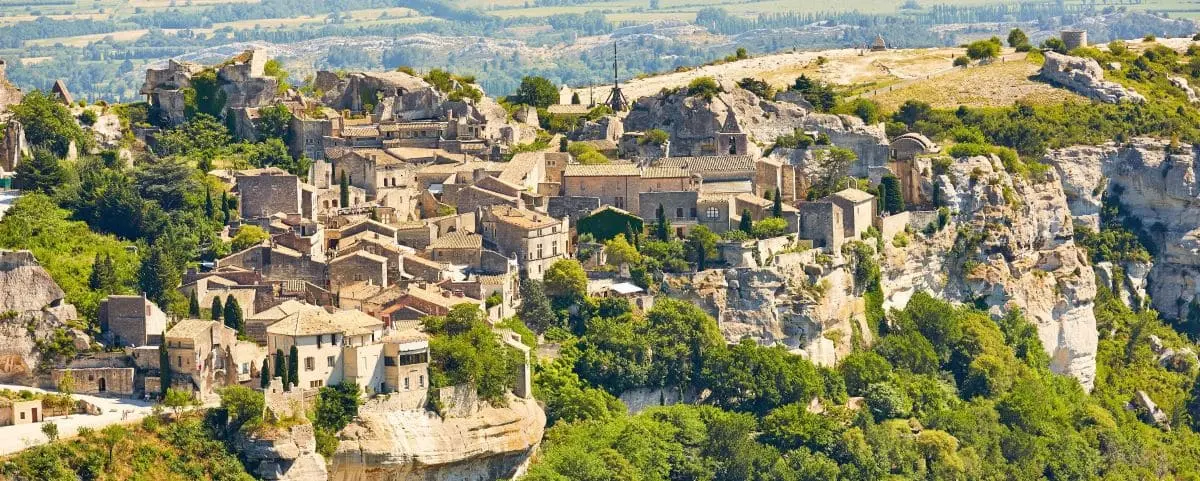
Situated in the heart of the Alpilles mountains, Les Baux de Provence is a spectacular village perched on a rocky spur. With only a few hundred residents, it still overlooks one of the most iconic landscapes in Provence, a sea of vineyards, olive trees, and limestone rocks swept by the mistral wind. The village is literally built into the stone, so the houses seem to rise straight out of the rock, creating a unique mineral landscape.
The site first impresses you with its steep relief and with the presence of the citadel of Les Baux, a real eagle’s nest dominating the valley. From the ruins of the castle, you can see far across Provence, and on a clear day you can even glimpse the Mediterranean. This strategic position explains why the village used to have such strong military and political importance. Even today, the outline of the fortifications and the remains of the castle remind you of the major defensive role of this rocky promontory.
The narrow cobbled streets invite you to wander around. As you walk through the village, you discover remarkable architecture, old houses, vaulted passages, and small squares that show the rich history of Les Baux. Even though the village is small, it feels monumental, partly because of the pale stone that is typical of the Alpilles.
Avignon
Type City
Population 90 000
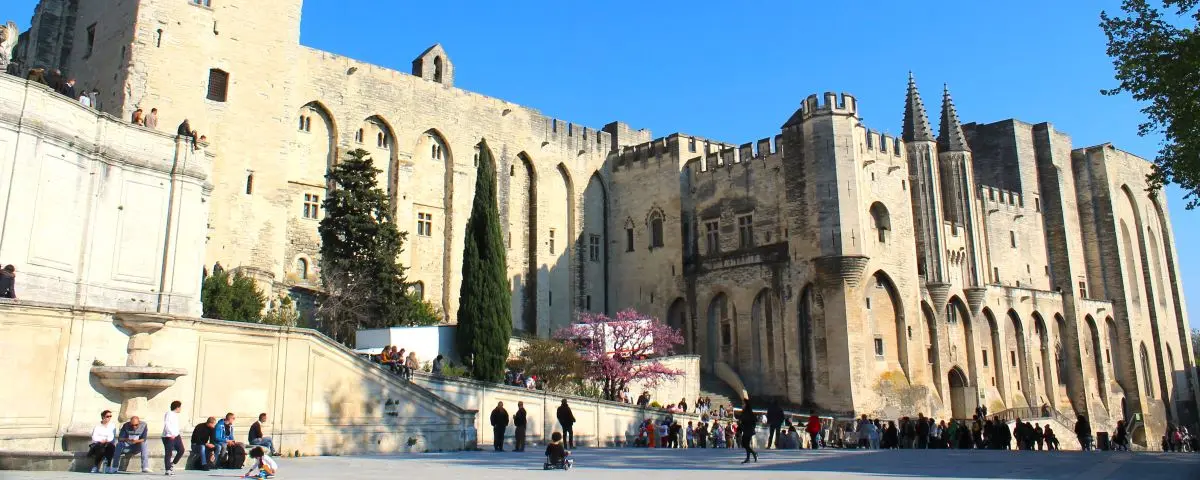
The city is world famous because of its papal past. Between 1309 and 1376, seven popes followed one another in Avignon after leaving Rome, which was then shaken by major political and religious unrest. The arrival of the papal court completely transformed the city, and Avignon became one of the main religious and political centres of medieval Europe. It was during this period that work began on the first papal palace, with construction starting in 1335 under the third pope.
That time was Avignon’s golden age. Around the papal court, you would have found cardinals, diplomats, artists, and merchants. The city grew richer and richer, with many buildings, palaces, and grand townhouses going up, all reflecting the power and prestige of the Church at the time. On the opposite bank of the Rhône, in Villeneuve lès Avignon, wealthy cardinals also settled in large residences known as cardinal palaces, another clear sign of the influence of the papal court.
Even today, Avignon still carries the mark of that exceptional past. Its historic centre, enclosed by ramparts, overlooks the Rhône and is organised around the famous Palace of the Popes.
The city is also known for its lively cultural atmosphere, especially during the famous theatre festival in July, which attracts thousands of visitors and artists every year.
Gordes

Type Village
Altitude 350m (1,150ft)
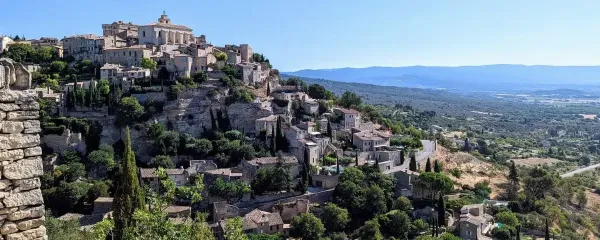
You’re perched up in the hills of the Luberon, Gordes is one of the most famous villages in Provence. Clinging to the side of a hill, this dry stone village overlooks the valley and gives you an amazing panorama over the landscapes of the Vaucluse. The houses, built with pale stones taken from local quarries, rise in terraces around the rock, creating a spectacular silhouette that’s one of the iconic images of the region. This dramatic setting explains a lot of the village’s tourist appeal, especially in summer.
The village is organized around a network of narrow, winding streets that weave between old houses. As you walk through them, you discover typically Provençal heritage, sun-worn façades, shaded little squares, and terraces looking out over the valley.
With its spectacular panorama, stone architecture, and still-vibrant rural traditions, Gordes perfectly captures the image of a hilltop Provençal village in the heart of the Luberon.
Aix-en-Provence

Type City
Population 150 000
Aix en Provence, the elegant historic capital of Provence, draws you in with its refined atmosphere and rich heritage. The city goes all the way back to Antiquity, it was founded by the Romans, who set up a thermal town there.
Over the centuries, Aix established itself as a city of culture and power. In the 15th century, the city became an important artistic and intellectual centre, the court attracted many artists and helped spread the city’s influence across Provence.
Even today, the old town reflects that prestigious history. As you walk through it, you find a maze of old streets lined with magnificent mansions, among them some fine examples of aristocratic architecture from the 17th and 18th centuries.
Today, Aix en Provence is an elegant city centre where old streets, bright squares and countless fountains create the feeling of a calm, cultured and beautifully maintained place. You wander between honey coloured façades, narrow passageways, hidden courtyards and broad tree lined avenues, in an atmosphere that feels more refined than dramatic.
The Cours Mirabeau is one of the city’s main landmarks. This broad promenade shaded by plane trees connects very different parts of Aix. On one side lies the tightly packed old town, while on the other are more orderly districts marked by grand historic houses built for wealthy families. As you walk along, it quickly becomes clear why Aix embodies a vision of urban Provence, bright, elegant and prosperous, far removed from stone villages or lively fishing ports.
You can also follow the footsteps of Cézanne, who was born here and remained deeply attached to the surrounding landscapes. His studio still contains objects associated with his work, pots, bottles, a ladder and the props he used for his still life paintings. Visiting it offers a more personal and tangible insight into the artist than a museum.
Marseille

Type City
Population 850 000
Founded around 600 BC by Greek sailors from Phocaea, Marseille, then called Massalia, quickly became a city shaped by the sea and by trade. Its port soon turned into the symbol of that maritime and commercial identity, open to the whole Mediterranean.
In the 2nd century BC, the Romans stepped into the region at the request of the people of Marseille, to protect them from raids by Celto Ligurian groups. They then founded Aquae Sextiae, present day Aix en Provence, which marked the beginning of a lasting Roman presence. But during the civil war between Caesar and Pompey, Marseille sided with Pompey. After his defeat, the city was forced to submit to Rome, which absorbed it into Transalpine Gaul, then into Gallia Narbonensis under Emperor Augustus.
At the beginning of the 5th century, the monk John Cassian founded two monastic communities, including Saint Victor, which played a major spiritual role. In spite of the unrest of the early Middle Ages, with invasions and periods of insecurity, Marseille experienced a revival around the year 1000 thanks to the influence of this abbey. The port became active again, taking part in Mediterranean trade and also in the Crusades.
The city still kept its reputation for being independent and unruly. In the 13th century, popular revolts even led religious authorities to place Marseille under interdict, and during a second uprising they went as far as excommunicating its population. The viscounts of Marseille held on for a long time to a high degree of autonomy from the counts of Provence. It was only in the middle of the 15th century, that the city’s strategic importance as a naval base was fully recognized.
When Provence was attached to the Kingdom of France in 1481, Aix was chosen as the regional capital. Marseille then remained on the edge of provincial power and saw itself above all as a Mediterranean city, more focused on the sea than on the inland areas.
Even today, that maritime and cosmopolitan identity still deeply shapes the city. The Old Port, Marseille’s historic and symbolic heart, remains a lively place to walk around, where a small fish market is held every morning.
Not far from there, the Panier district, a real village in the middle of the city, shows the mix of people that has defined Marseille for centuries. Its narrow streets, squares, and historic buildings reflect a rich urban heritage, despite the destruction it suffered during WW2.
The city also shows strong cultural energy. Modern institutions like the Mucem, with its openwork concrete architecture overlooking the harbor, symbolize Marseille’s ability to renew itself while still highlighting its Mediterranean heritage. Facing it, the reconstruction of Cosquer Cave, the famous prehistoric site discovered off the Calanques, reminds you that human history in the region goes back thousands of years.
Calanques
Type Rocky Inlets
Full Names
Parc National des Calanques
Massif des Calanques
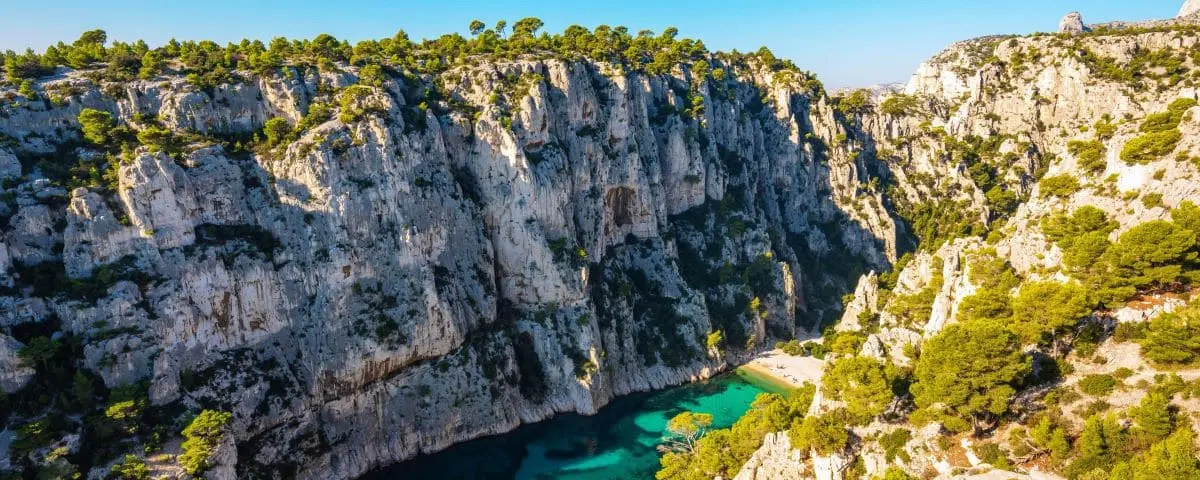
Between Marseille and Cassis, you get one of the most spectacular natural landscapes in Provence, the Calanques. This rugged stretch of coastline, shaped by deep limestone inlets and turquoise water, forms a one of a kind natural setting where white rock drops straight down into the Mediterranean. The high, steep cliffs that define these places sometimes fall vertically into the sea, creating dramatic, untamed views that are among the most striking on the French Mediterranean coast.
These spectacular landscapes also continue below the surface of the sea. Underwater, the cliffs turn into dizzying drop offs, home to especially rich marine life. The seabed in the calanques is considered one of the most beautiful in the French Mediterranean and has played an important role in the history of scuba diving.
Today, the whole area is protected as part of Calanques National Park. You mainly discover this natural territory on foot, through a network of trails winding between cliffs, pine woods, and limestone valleys. The park’s main crossing follows a path of about 28 kilometres linking Marseille to Cassis and giving you spectacular views over the sea and the wild inlets.
Hiking is still the best way to explore this landscape. A lot of the coves are isolated and can only be reached after a sometimes demanding walk, which helps preserve their wild character. As a walker, you can discover remarkable spots, enjoy a swim in crystal clear water, or follow the many marked trails running through the park.
You can also take in the calanques from the sea, thanks to boat trips leaving from Marseille, Cassis, or La Ciotat. These cruises let you admire the vertiginous cliffs, the narrow coves, and the impressive rock formations that make up this exceptional landscape, while still respecting the rules put in place to protect this fragile environment.
⚙️ Visitor Info (Official Website – Fr)
Access to the Sugiton and Pierres Tombées area requires prior reservation during the summer.
Lavender Fields
Type Fields
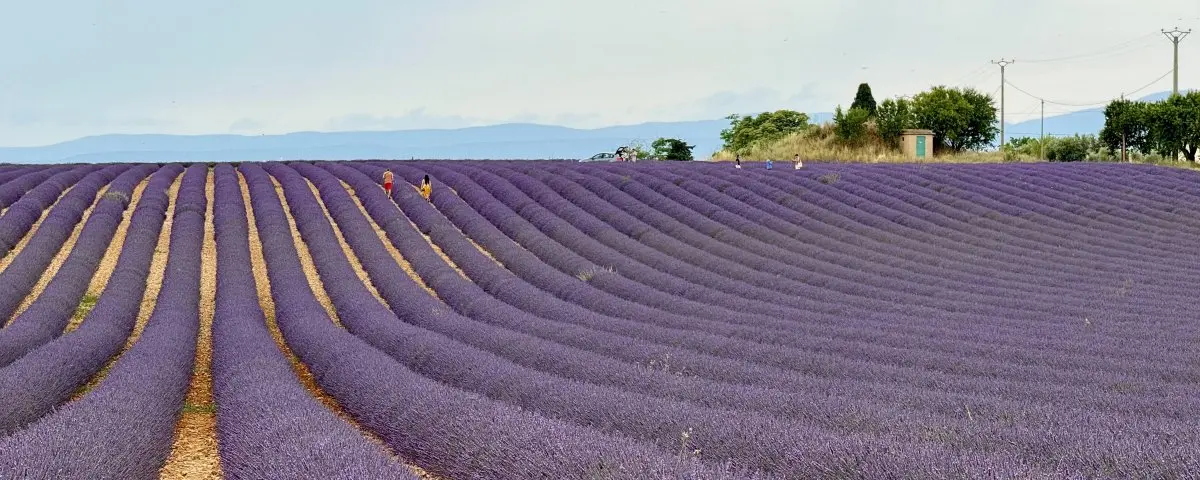
Lavender fields are one of the most iconic sights in Provence. This aromatic plant was already being grown in Roman times to perfume laundry and baths, but it only really became an agricultural crop in the 19th century. Its growth sped up even more at the start of the 20th century, especially because it was so close to the perfume houses of Grasse, which used its essential oil to make perfumes.
Even today, those purple fields spreading across the Provençal plateaus attract visitors and photographers, even though traditional lavender production has changed a lot. The main growing areas are still concentrated in a few emblematic places: the Albion plateau, the Lure mountain, the Sault valley, and the Valensole plateau. Since the 1970s, farming there has become largely mechanized to make harvesting and processing easier.
It is important to tell apart two plants that people often confuse: true lavender and lavandin. True lavender usually grows at altitudes between 600 and 1,600 meters, and its essential oil is known for its high quality. Lavandin, which is a more productive hybrid, is grown at lower altitudes and now dominates the fields of Provence, because it produces a larger quantity of essential oil.
The harvest takes place at the beginning of summer, when strong heat helps concentrate the essence in the flowers. Traditionally, the plants were distilled directly in the fields using mobile stills. That handmade process has become much rarer, and distillation is now usually done in specialized facilities where steam is used to extract the plant’s essential oil.
Verdon

Type Canyon
Full Names
Gorges du Verdon
Parc Naturel Régional du Verdon
The Verdon Gorge is one of the most spectacular natural landscapes in Provence. It’s considered the most impressive gorge in Europe.
The scenery is breathtaking, with sheer cliffs rising 300 to 600 meters above the river, rocky chaos, wild banks, and dramatic views. This grand setting is a perfect playground for anyone who loves nature and adventure. If you enjoy hiking or climbing, you are in paradise here, and the roads running along the gorge give you incredible views over the canyon.
To protect this exceptional area, a regional natural park was created in 1997. It covers about 180,000 hectares and brings together 45 towns and villages. The park’s mission is to balance environmental protection with local development, while preserving the Verdon’s remarkable landscapes.
The wildlife and plant life are also rich. Reintroduction programs have made it possible for the griffon vulture, which had disappeared from Provence in the 19th century, to return. If you pay close attention, you might also spot golden eagles soaring above the cliffs. Along the discovery trails, signs introduce you to the trees, shrubs, and aromatic plants that make up the local vegetation, helping you understand the canyon’s unique ecosystem.
The Verdon Gorge is also part of the Haute Provence geological reserve, which means minerals and fossils are strictly protected. Even so, the region is ideal for many outdoor activities, including hiking, climbing, wildlife watching, and fishing in the Verdon and its tributaries, where trout, pike, and carp live.
Beyond the natural spectacle, the Verdon is also a lived in land full of history. Hilltop villages, Gallo Roman remains, old churches, and rural heritage all show that people have lived here for a very long time.
Moustiers-Sainte-Marie
Type Village
Altitude 640m (2,100ft)
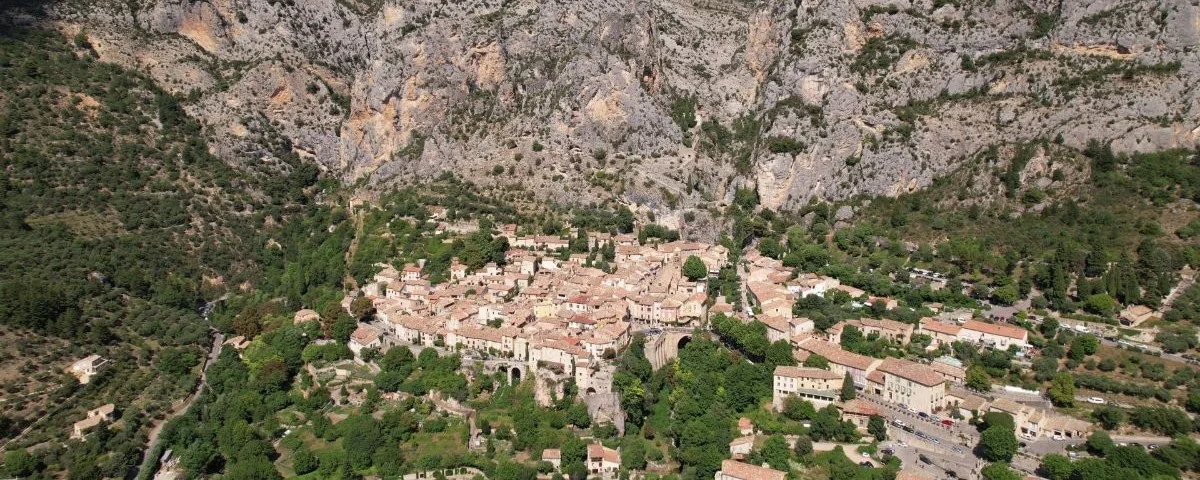
You’re right in the heart of the Verdon canyon when you arrive in Moustiers-Sainte-Marie, one of the most iconic villages in Provence. The village clings to the mountainside and sits beneath the chapel of Notre Dame de Beauvoir, looking almost suspended between the sky and the rock, with a spectacular setting that perfectly reflects the Alpine landscapes of Provence.
As you walk through the village, you move along a maze of cobbled streets, small shaded squares, and old washhouses that quietly tell the story of its past and the gentle rhythm of local life. A river runs through the village and is crossed by several small humpback bridges, adding even more charm to the picturesque scenery. The atmosphere feels authentic and almost timeless, which is exactly why so many visitors fall in love with the place.
Moustiers-Sainte-Marie is also famous for its long tradition of faience pottery, an art that has shaped the village’s identity for centuries. Workshops and small boutiques still keep this craft alive today, producing decorative pieces and fine tableware that have become one of the symbols of the region.