


MAP
Lorraine
Interactive Map
Lorraine
Interactive Map
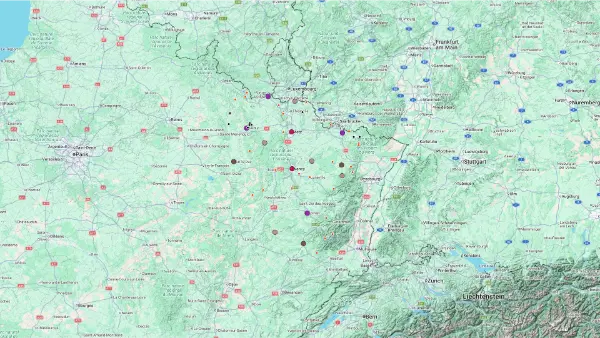
Click on the icon  in the top-left corner to display the map legend.
Show/Hide layers as needed.
Click on the arrow icons (v) to display the sublayers.
ALL
| Name | Type | Top+ |
|---|---|---|
| Citadelle de Montmédy | Citadel | |
| Meuse-Argonne American Cemetery | WW1 Cemetery | ✅ |
| Ossuaire de Douaumont | WW1 Ossuary & Cemetery | ✅ |
| Mémorial de Verdun | Museum | |
| Rodemack | Village | |
| Ouvrage Hackenberg | WW2 Fortification | ✅ |
| Metz | City | ✅ |
| Parc Explor Wendel | Museum | |
| Nancy | City | ✅ |
| Château de Lunéville | Castle & Garden | |
| Saint-Quirin | Village | |
| Rocher De Dabo | Viewpoint |
Citadelle de Montmédy
Type Citadel
Full Names
Citadelle et Musée de Montmédy
Place Forte de Montmédy
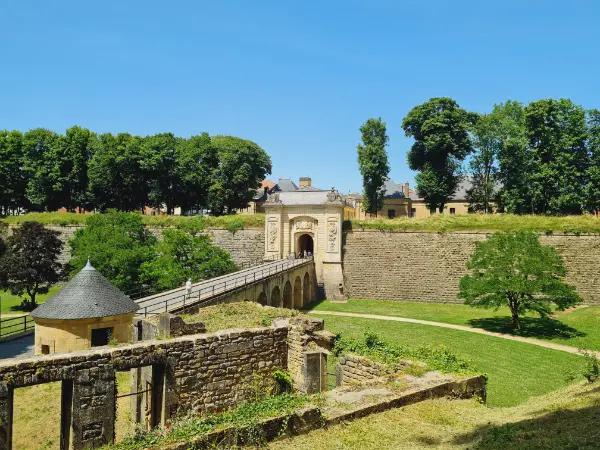
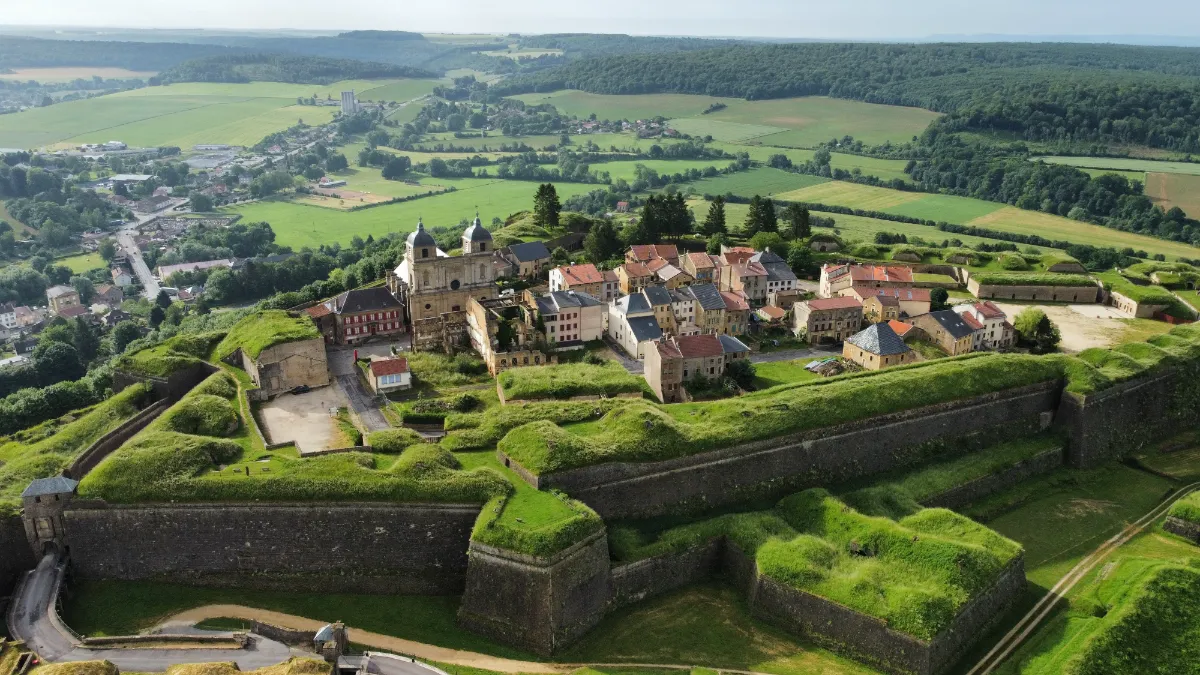
Overlooking the surrounding valleys, the Citadel of Montmédy looks like a little town perched behind enormous defensive walls. Its first major fortifications were built in the 16th century, when the region belonged to Charles V, one of Europe’s most powerful rulers. Later, Vauban, Louis XIV’s military engineer, strengthened its defences for the French crown.
Pass through the gates and explore the streets of the upper town, with its old houses, vaulted passageways and military remains. From the ramparts, you can enjoy sweeping views of the wooded hills. Two museums explore the history of the fortifications and showcase works by the painter Jules Bastien-Lepage.
Citadel
Price Free
⚙️ Hours – 24/7
Ramparts + Museum
Price €6
Meuse-Argonne American Cemetery
In Our Top+ ✅
Type WW1 Cemetery
Full Names
Meuse-Argonne American Cemetery and Memorial
Cimetière Militaire Américain de Romagne-sous-Montfaucon
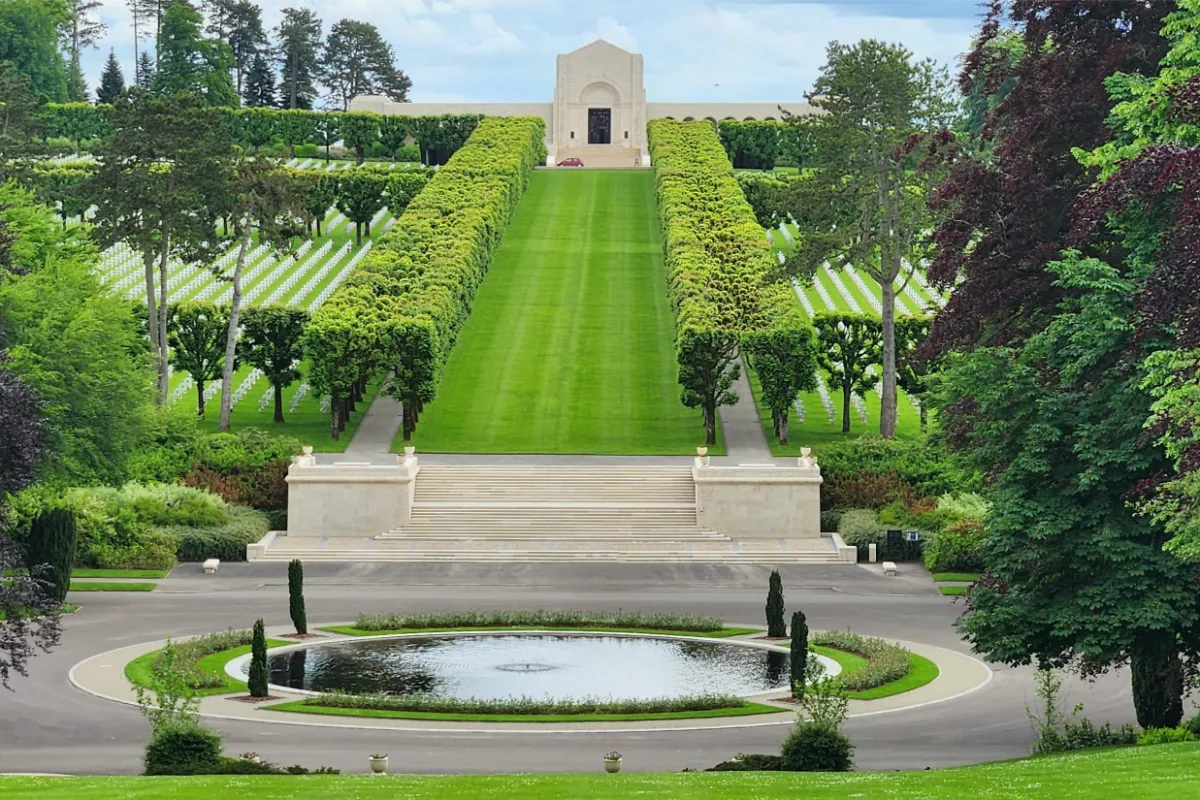
In Romagne-sous-Montfaucon, surrounded by peaceful countryside, lies an enormous American military cemetery. Thousands of white crosses and Stars of David stretch across immaculate lawns towards the chapel overlooking the grounds. The sheer scale of the cemetery is as moving as the silence between the rows of graves.
A total of 14,246 American service members are buried here, most of whom died during the Meuse-Argonne Offensive towards the end of the First World War. Between September and November 1918, US troops took part in fierce fighting to push back the German army. It was the largest operation carried out by American forces during the war.
The cemetery covers more than 50 hectares. The graves are laid out around a large pool, with paths leading uphill towards the chapel. Inside, stained-glass windows display the emblems of American military units. The adjoining galleries are engraved with the names of 954 missing service members whose remains were never found or identified.
A visitor centre displays photographs, personal belongings and soldiers’ testimonies, putting human faces to these staggering numbers.
Ossuaire de Douaumont
In Our Top+ ✅
Type WW1 Ossuary & Cemetery
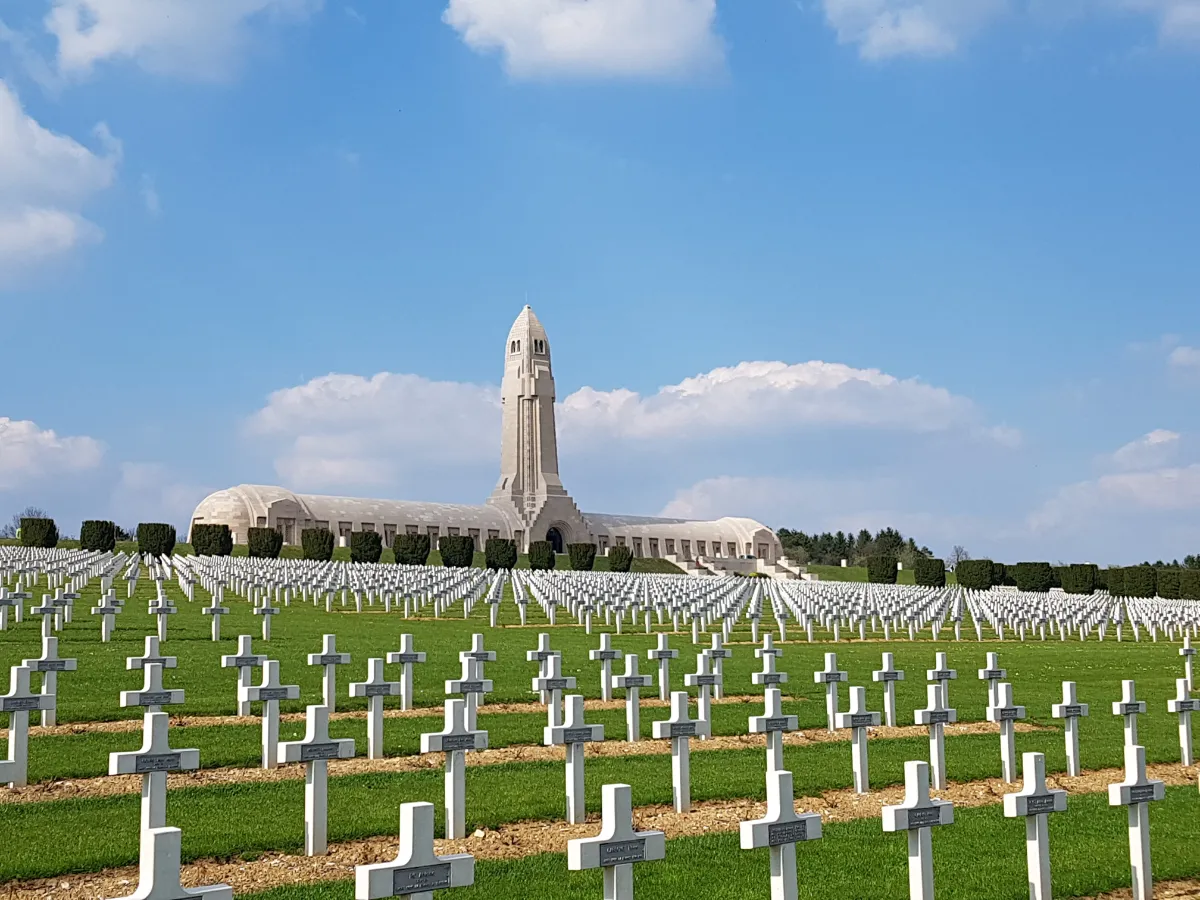
On the hills above Verdun, a long stone building stands out against the former battlefields. This is the Douaumont Ossuary, built to hold the remains of soldiers killed during the First World War. Behind its walls lie the bones of around 130,000 French and German soldiers who could never be identified.
In 1916, the fighting turned the surrounding hills into a devastated landscape. Bombardments destroyed villages and forests, churning up the earth. After the war, thousands of human remains were found among the craters, with no way of identifying them.
Inside, a 137-metre-long vaulted corridor forms the heart of the monument. The walls bear thousands of inscriptions honouring the soldiers, while the burial chambers contain remains recovered from different parts of the battlefield. A chapel and a 46-metre tower complete this striking memorial.
In front of the ossuary, more than 16,000 graves of French soldiers form long white rows across the lawn. From the tower, you can look out over the forest that has grown back across the former battlefield. Beneath the trees, though, the hollows left by artillery shells are still clearly visible.
Ossuary
Price €7
Full Name
Ossuaire de Douaumont
⚙️ Hours & Prices (Official Website – Fr)
Cemetery
Price Free
Full Name
Nécropole Nationale de Fleury-Devant-Douaumont
Mémorial de Verdun
Type Museum
Theme WW1
Price €14
Full Name
Mémorial de Verdun – Champ de bataille
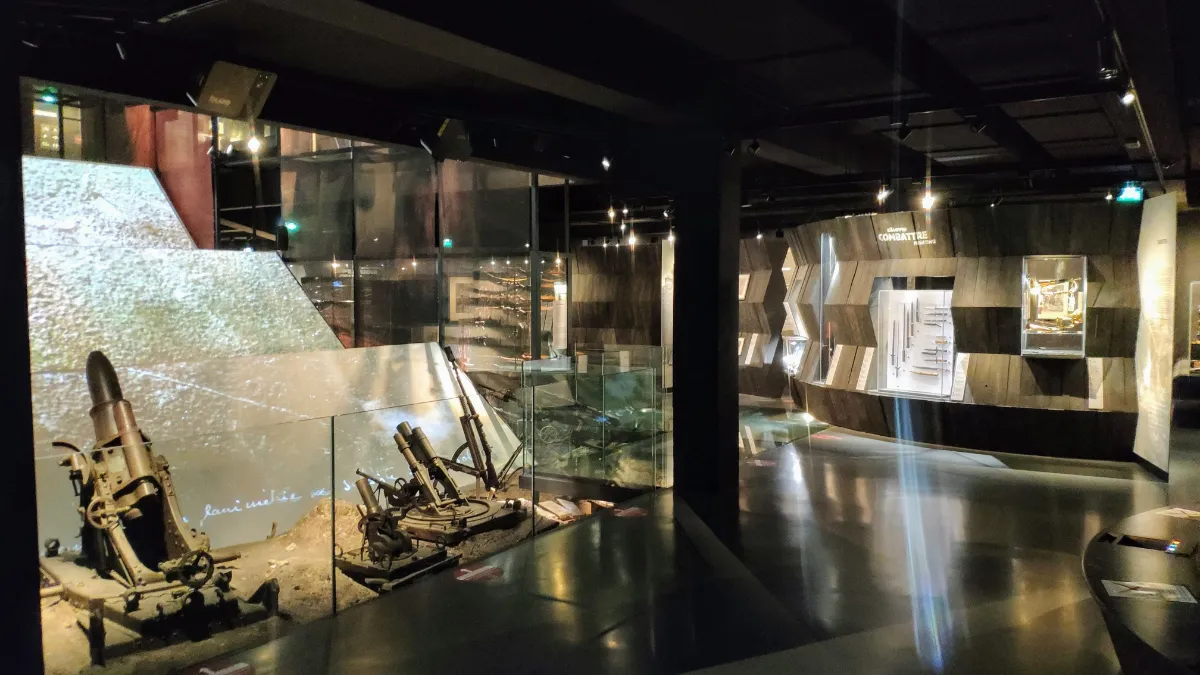
In the heart of the former battlefield, the Verdun Memorial tells the story of one of the most tragic chapters of the First World War. Founded at the initiative of veterans and completely renovated in 2016, the museum focuses above all on the soldiers’ experiences. Through objects, photographs and personal accounts, it brings their stories to life.
The exhibition covers both French and German soldiers. Uniforms, weapons, letters and personal belongings offer a glimpse into everyday life in the trenches. Reconstructions and film projections convey the violence of the shelling, the mud, the cold and the endless waiting. You’ll also discover the enormous efforts involved in keeping the armies supplied.
The battle began on 21 February 1916 with a German offensive. For almost ten months, the two sides fought over a handful of hills and fortifications, suffering terrible losses. Maps and films trace the different stages of the fighting and tell the story of civilian villages destroyed in the conflict.
Rodemack
In Our Top ☑️
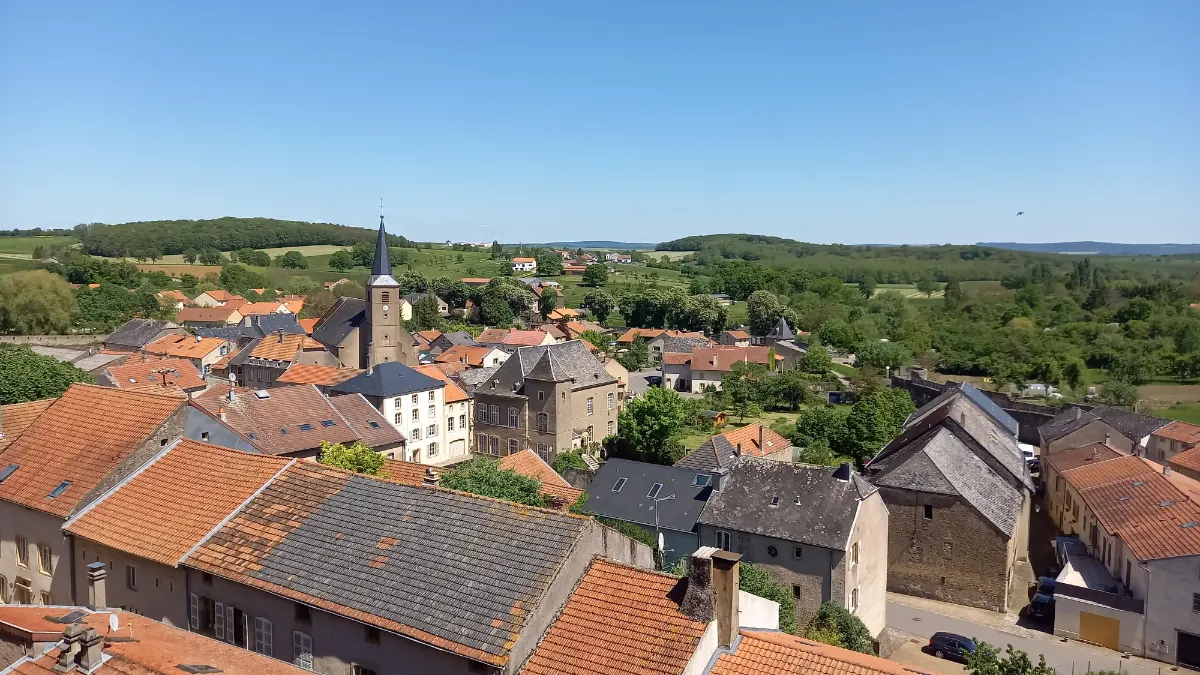
With its ramparts, fortified gates and cobbled lanes, Rodemack certainly lives up to its nickname, “Lorraine’s Little Carcassonne”. Just a few kilometres from Luxembourg, this village has retained a remarkably medieval feel. Yet it was often fought over, particularly in 1815, when General Hugo, father of the writer Victor Hugo, held out against a Prussian siege.
More than 600 metres of defensive walls are still standing. Walk through the Porte de Sierck and you’ll find old stone houses, castle ruins and a charming medieval garden. Its plants reflect the uses of centuries past, with medicinal herbs, vegetables and flowers traditionally grown behind the ramparts.
Ouvrage Hackenberg
In Our Top+ ✅
Type WW2 Fortification
Price €15 – Guided Visit only
Full Name
Gros Ouvrage du Hackenberg
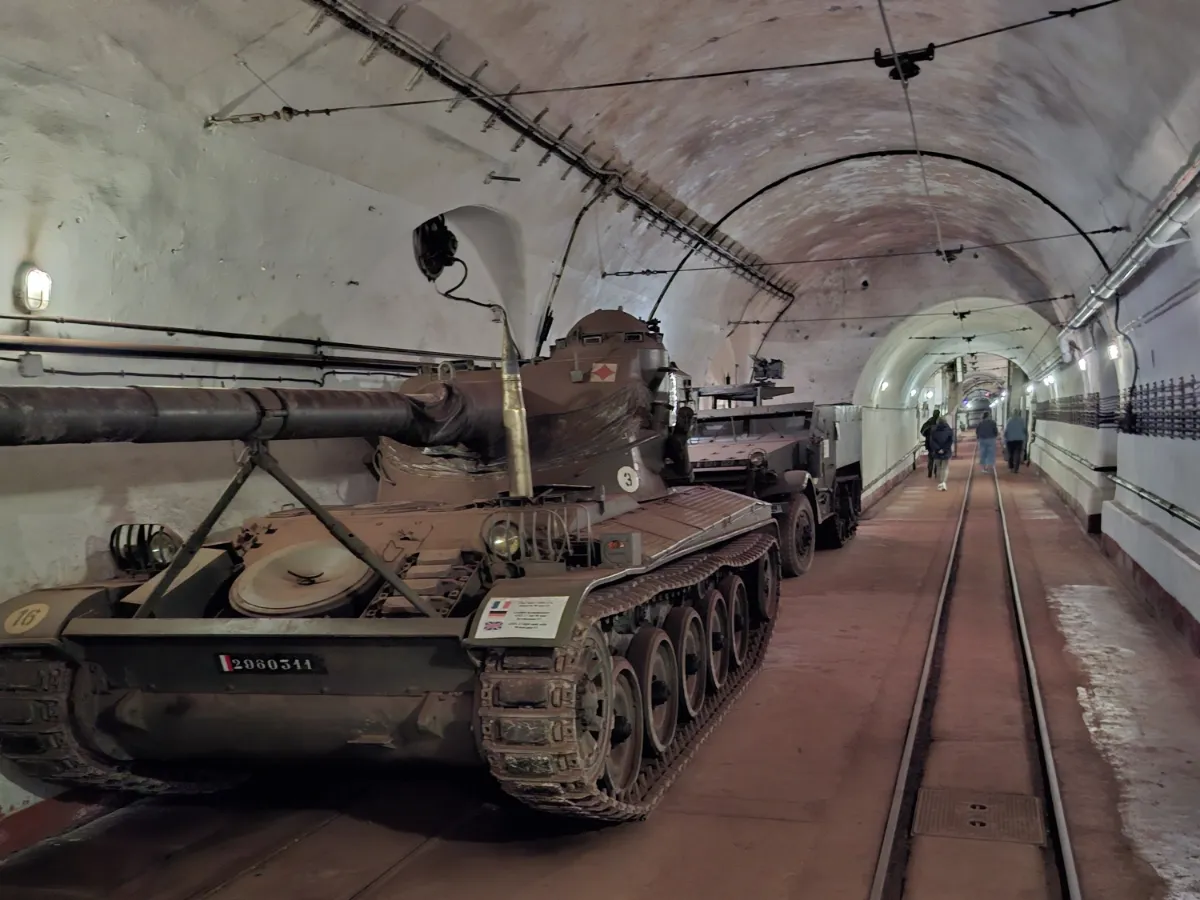
Hidden beneath a wooded hill near Veckring is an entire underground town. Hackenberg Fortress is one of the most impressive sections of the Maginot Line, the network of fortifications built in the 1930s to defend against a possible German invasion. From the outside, though, all you can make out are a few concrete structures.
Underground, the scale is staggering: around 10 kilometres of tunnels, armoured firing positions, ammunition stores and enough facilities to accommodate more than a thousand soldiers. Kitchens, dormitories, a medical unit, a power station and ventilation systems allowed the garrison to live and fight almost entirely independently.
The tour takes you through technical rooms and former living quarters. Some of the machinery still works, showing just how ingenious the whole installation was. One of the main attractions is the little electric train, once used to transport ammunition through the tunnels. The mechanisms that operate the artillery turrets are particularly spectacular.
Metz
In Our Top+ ✅
Population 120 000
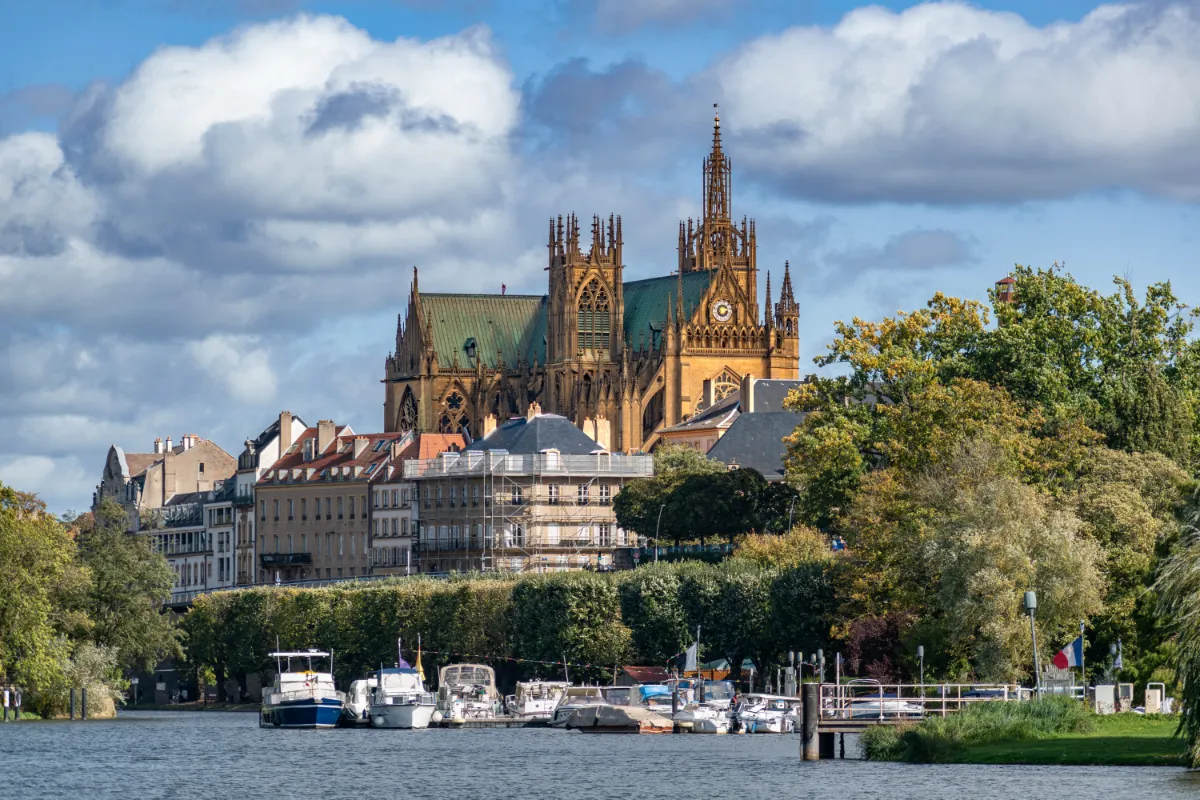
Metz has plenty to surprise anyone who still pictures it as a grey, military and industrial city. With several branches of the Moselle River running through it, Metz boasts a remarkably well-preserved old town, plenty of gardens and architecture in warm, inviting colours. The golden stone quarried nearby even takes on an almost orange glow at sunset. A pretty appealing first impression.
The historic centre is easy to explore on foot, wandering along cobbled lanes and across squares lined with beautiful old buildings. Place Saint-Louis, with its arcaded houses and uneven façades, is particularly charming. Further on, Place de la Comédie reveals an elegant 18th-century ensemble right by the water, facing the Temple Neuf.
You can’t miss Saint Stephen’s Cathedral, a towering stone giant rising above the rooftops. Built between the 13th and 16th centuries, it has around 6,500 square metres of stained glass, earning it the nickname “God’s Lantern”. Inside, the soaring vaulted ceilings are just as impressive as the windows, some of which were created by Marc Chagall.
Metz’s history has been deeply shaped by its position between France and Germany. Under German rule from 1871 to 1918, the city acquired a monumental district with broad avenues and imposing buildings. Its railway station, built in the early 20th century, is worth a visit in its own right, with its massive tower and countless sculpted details.
Another of the city’s landmarks, though in a decidedly contemporary style, is the Centre Pompidou-Metz, with its striking white roof whose sweeping curves were inspired by a traditional Chinese hat. Opened in 2010, it hosts major exhibitions of modern and contemporary art. Its woven timber roof rests on large curved structures that can be seen from the station district.
Parc Explor Wendel
Type Museum
Theme Mining
Price €13
Full Names
Parc Explor Wendel
Musée Les Mineurs Wendel
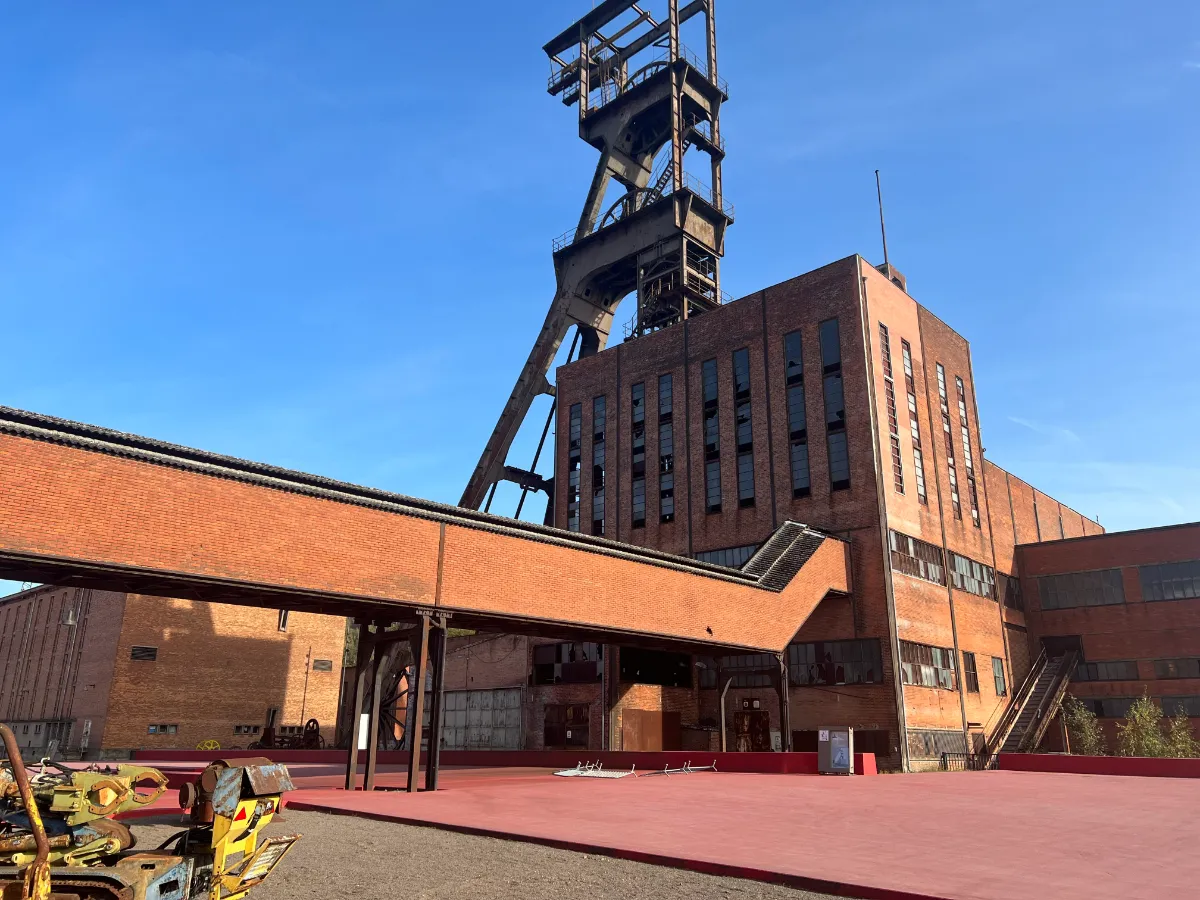
In Petite-Rosselle, close to the German border, Parc Explor Wendel takes you into the world of coal miners. Set on a genuine former industrial site, it preserves huge brick buildings, monumental machinery and the steel structures that once towered over the mine shafts. The whole setting is a striking reminder of its industrial past.
Coal was mined here from 1856 to 1986. At its peak, around 5,000 miners worked on the site. Their daily lives were tough, with heat, dust, noise and the risk of accidents accompanying long hours underground. Entire families lived according to the rhythm of the mine.
The Miners’ Museum tells this story through the old changing rooms, washrooms, lamps and working tools. Photographs and personal accounts bring everyday routines to life, along with the strong bonds of solidarity between workers. The hanging clothes and preserved equipment give the experience a very human dimension.
Another fascinating part of the site is the Wendel Mine, where full-scale reconstructed tunnels are fitted with real mining machinery. You can discover how techniques evolved, from hand tools to powerful mechanical equipment. Sound effects and realistic displays recreate the atmosphere of working underground, without actually descending into the old mine shafts.
Nancy
In Our Top+ ✅
Population 100 000
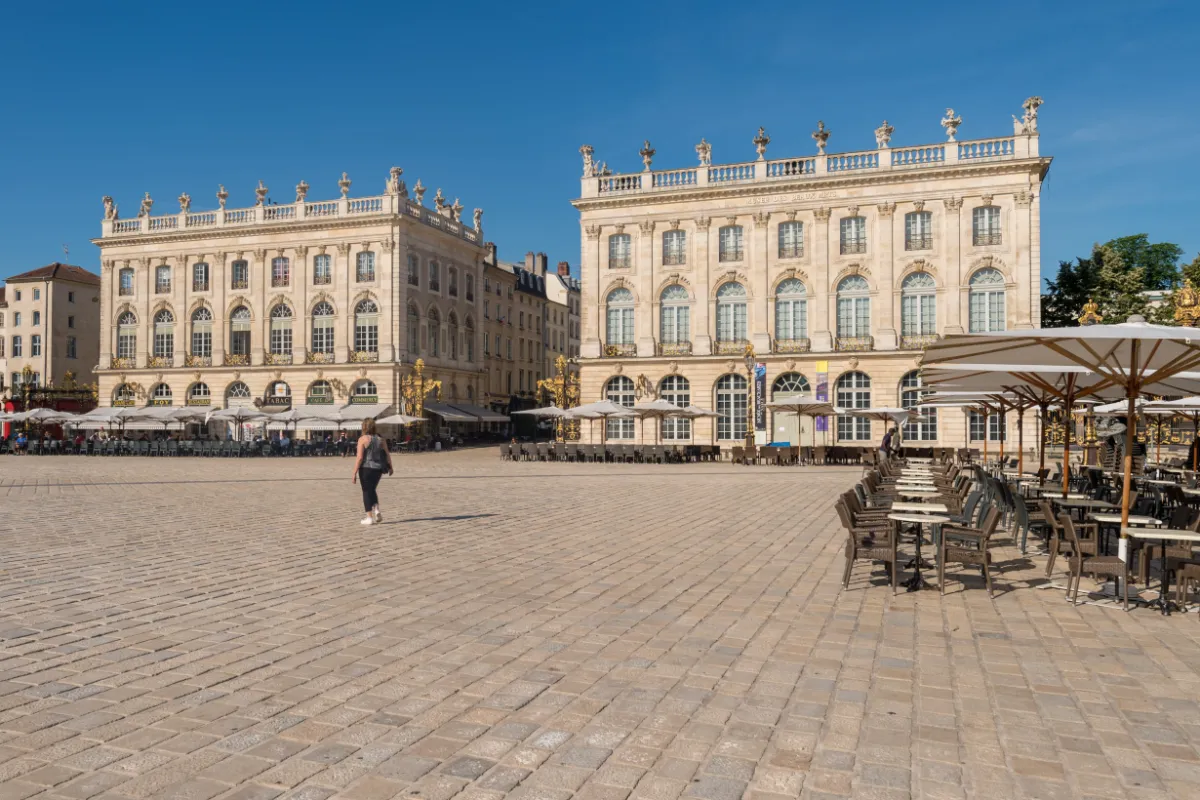
Nancy is home to one of Europe’s most beautiful squares, and it certainly doesn’t do things by halves. Right in the heart of the city, Place Stanislas is a stunning display of classical façades, sculpted fountains and famous gilded gates. Laid out in the 18th century, it’s an architectural ensemble of remarkable elegance.
The square takes its name from Stanislas, the former king of Poland who later became ruler of Lorraine. He wanted to connect the old town with the more recently built districts. Today, Place Stanislas, Place de la Carrière and Place d’Alliance together form a UNESCO World Heritage Site. Their perfectly designed vistas reflect the grand ambitions of the time.
Just a few streets away, Old Nancy has a completely different atmosphere. Narrow lanes, historic houses and Renaissance façades recall the days when the city was the capital of an independent territory. The Porte de la Craffe, flanked by two large round towers, is a reminder of the city’s former defences. Further along, the Palace of the Dukes of Lorraine still features some beautiful carved details.
But Nancy has another claim to fame, and it’s a big one: Art Nouveau. In the late 19th century, local artists and architects developed a style inspired by plants and natural forms. Flowers, foliage and flowing curves began appearing on façades, stained-glass windows and furniture. It was a true decorative revolution, and Nancy remains one of Europe’s finest places to discover it.
The Musée de l’École de Nancy brings together magnificent creations from this period, while Villa Majorelle offers the chance to explore a house designed as a work of art in its own right. As you wander through the residential neighbourhoods, remember to look up. Wrought-iron balconies, colourful stained glass and plant-inspired ornaments sometimes hide on otherwise unassuming houses. Nearby, Parc de la Pépinière offers broad, shady paths.
Château de Lunéville
Type Castle & Garden
Price €9
Full Name
Château de Lunéville
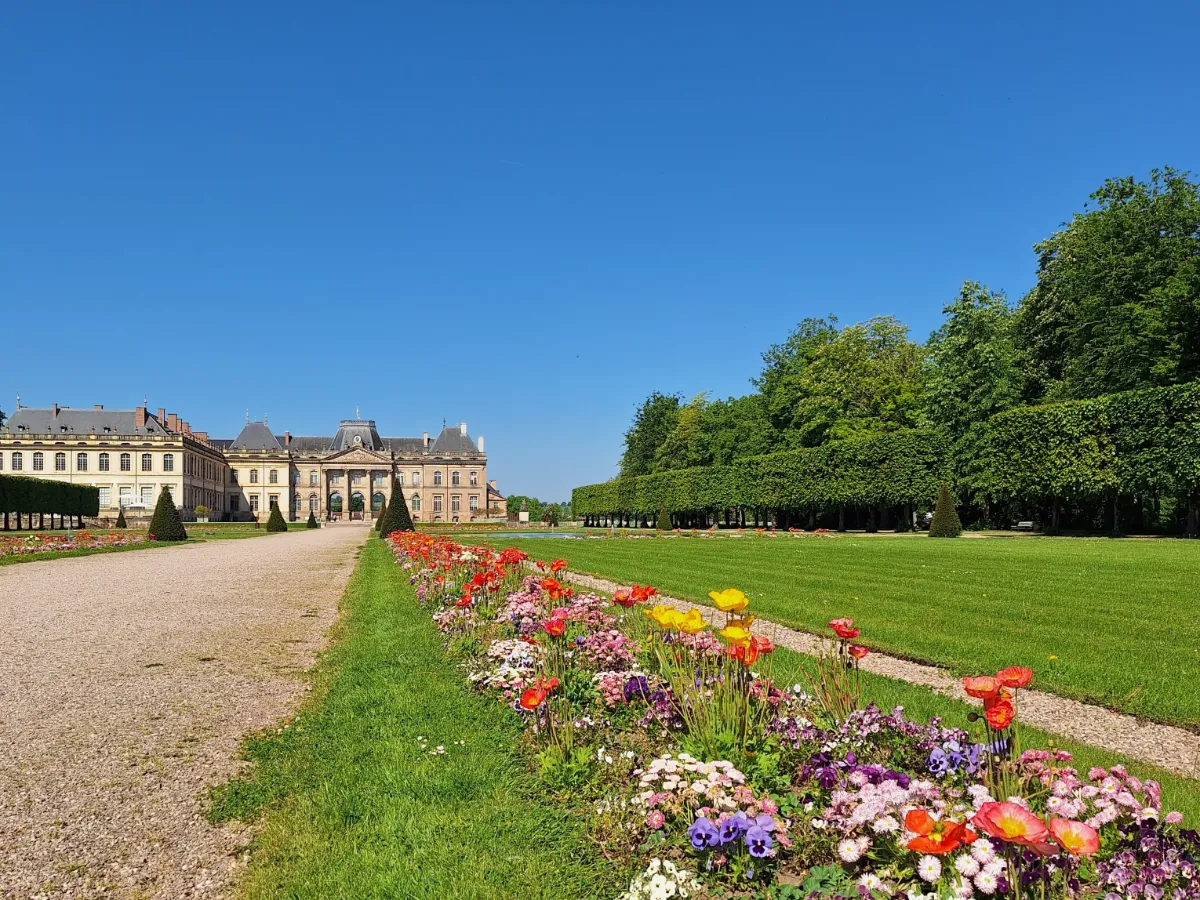
The Château de Lunéville fully deserves its nickname, “the Versailles of Lorraine”. With its long classical façades, enormous courtyard and gardens, this former princely residence recalls the splendour of the French court in the 18th century. Construction began in 1702 for Leopold, ruler of Lorraine, and the palace was designed by leading architects of the day.
Under Stanislas, the former king of Poland who became ruler of Lorraine, the château enjoyed a true golden age. Artists, writers and scholars gathered at this brilliant court, including Voltaire and Émilie du Châtelet. The architecture, grand staircases and decorative interiors still reflect a time when Lunéville rivalled some of Europe’s finest royal residences.
A devastating fire destroyed part of the palace in 2003. Since then, major restoration work has gradually brought its rooms and chapel back to life. Behind the château, the Bosquets Gardens unfold in long vistas, shady avenues and carefully laid-out lawns.
Rocher De Dabo
Type Viewpoint
Price €2
Full Name
Rocher de Dabo
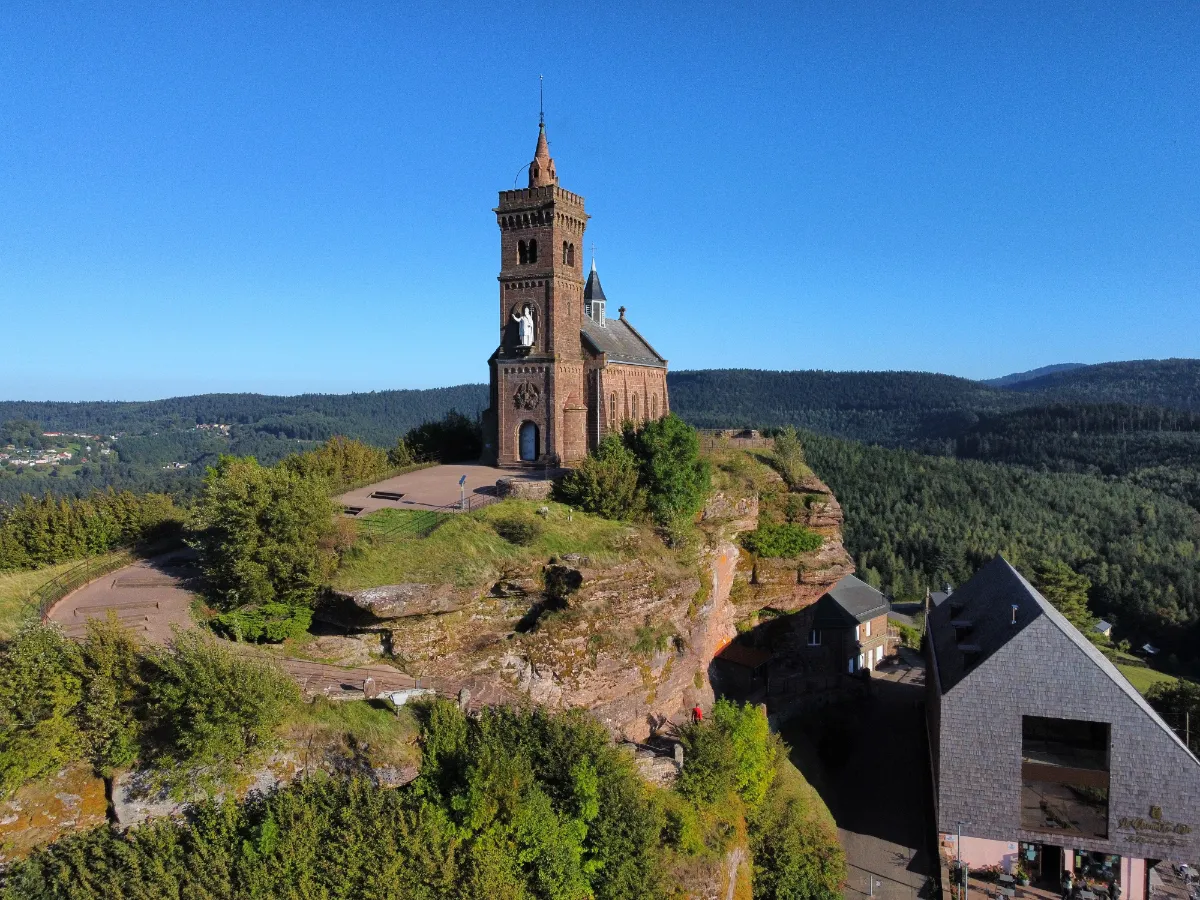
Rising above a vast expanse of forest, the Rocher de Dabo looks like a gigantic block of pink sandstone balanced on top of the hills. Standing 664 metres above sea level, it was once crowned by a fortified castle, destroyed in the 17th century on the orders of King Louis XIV. Today, a small chapel dedicated to Pope Leo IX stands at the summit.
From the viewing platform, the panorama stretches across villages, valleys and the wooded ridges of the Vosges Mountains. On a clear day, you can see hills rolling away into the distance. Several trails wind through the surrounding forests, past rocks sculpted by erosion, pine trees and shady woodland.