


MAP
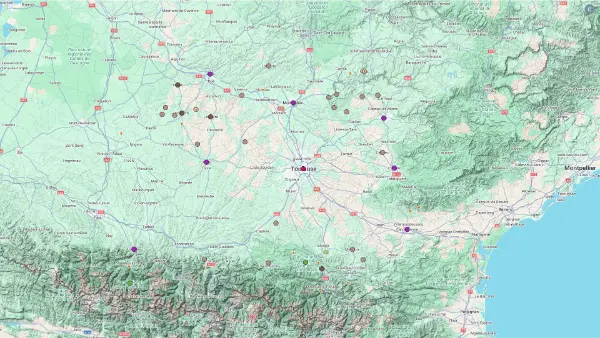
Toulouse Region
Interactive Map
Toulouse Region
Interactive Map
Click on the icon  in the top-left corner to display the map legend.
Show/Hide layers as needed.
Click on the arrow icons (v) to display the sublayers.
MOUNTAINS
| Name | Top+ | Top |
|---|---|---|
| Parc des Pyrénées Ariégeoises | ✅ | |
| Parc National des Pyrénées | ✅ |
Parc des Pyrénées Ariégeoises
In Our Top+ ✅
Full Name
Parc Naturel Régional des Pyrénées Ariégeoises
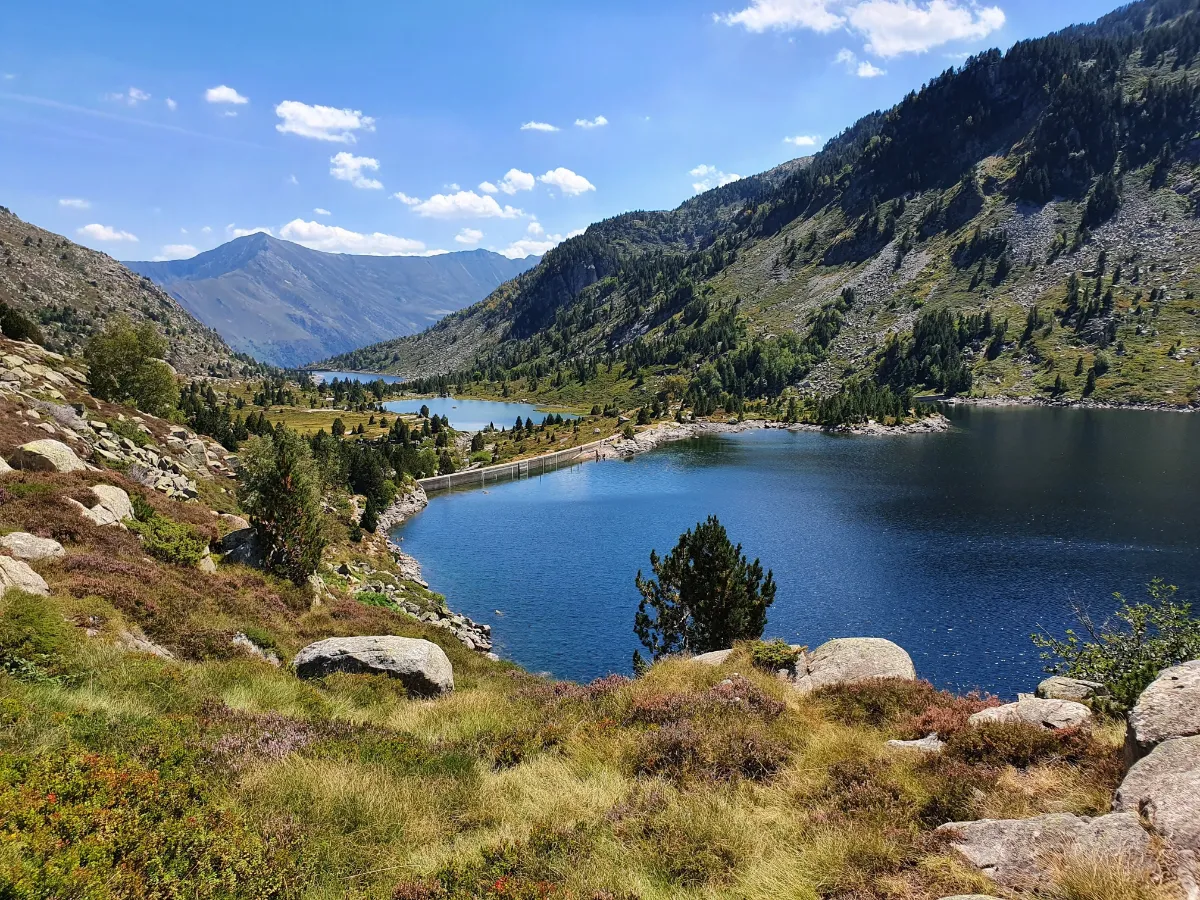
In the Ariège Pyrenees, the mountains reveal their wildest side. This vast protected natural area stretches across deep valleys, forests, high-altitude pastures, and rugged peaks. Far from the major tourist resorts, you’ll discover unspoiled landscapes and villages where mountain traditions are still very much alive.
There are plenty of hiking options for all kinds of walkers. Easier trails take you through beech forests, alongside rushing streams, or to small, isolated villages. Higher up, the paths climb toward mountain pastures, where herds graze during the summer, before reaching alpine lakes and spectacular viewpoints.
Mont Valier, one of the region’s most iconic peaks, rises to 2,838 meters. Climbing to the summit is best left to experienced hikers, but the surrounding valleys also offer plenty of accessible trails where you can admire its impressive silhouette from easier-to-reach viewpoints.
Étang de Lers is another popular destination for nature lovers. Sitting at an altitude of over 1,200 meters, this lake is surrounded by meadows, rounded hills, and rocky peaks. Several trails let you explore the surrounding landscapes and discover the local mountain plants.
Wildlife is particularly abundant here. Look up and you might spot a griffon vulture or a bearded vulture, an enormous bird of prey found in mountain regions. Pyrenean chamois, known locally as isards, live on the steep slopes. Brown bears are also present, although sightings are extremely rare.
The region’s cultural heritage is just as interesting. Down in the valleys, stone villages reflect centuries of traditional mountain farming. Old barns, agricultural terraces, and paths connecting small hamlets are reminders of the close relationship between local communities and their environment.
June to September is generally the best time for hiking at higher altitudes, although snow can linger on some sections of the trails well into the season. In spring and autumn, lower mountain routes offer beautiful colors and a quieter atmosphere.
Before setting off, check the weather forecast and the difficulty of your chosen trail. Elevation gains can be significant, even over relatively short distances. Make sure you have sturdy walking shoes, plenty of water, and clothing suited to rapidly changing mountain weather.
Parc National des Pyrénées
In Our Top+ ✅
Full Name
Parc National des Pyrénées
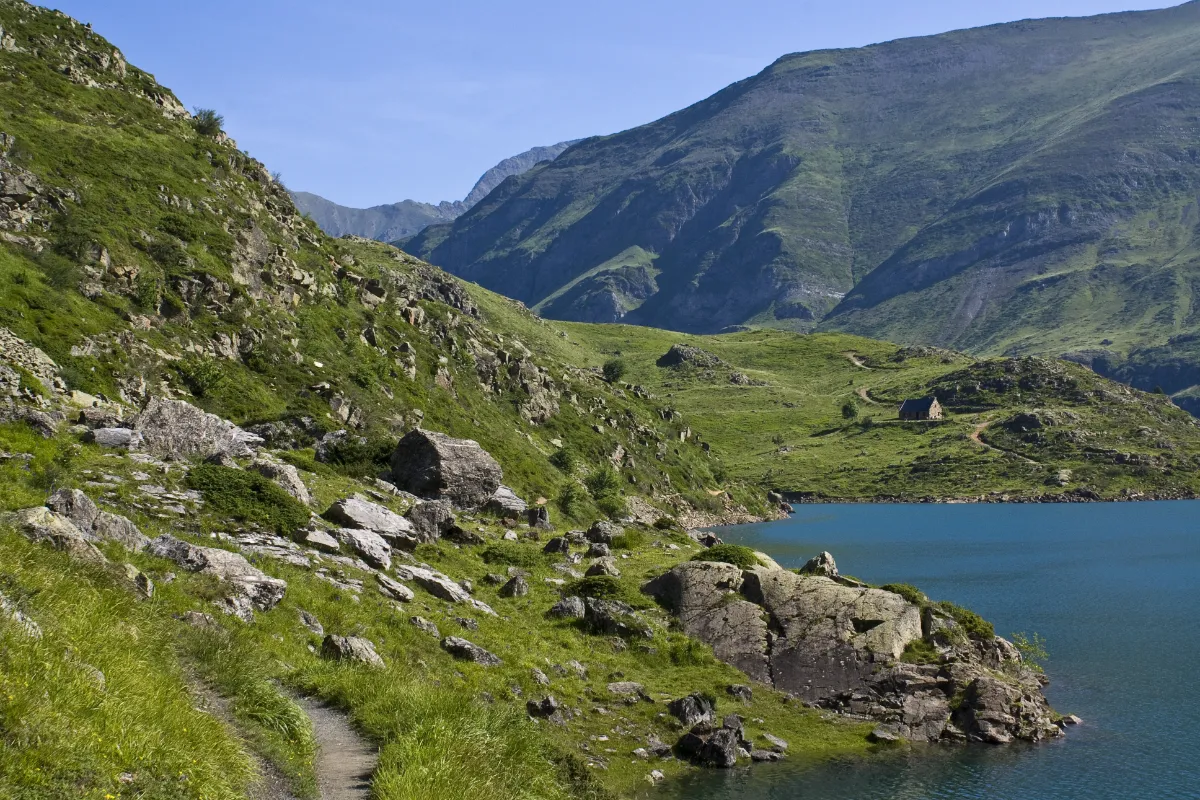
Established in 1967, Pyrenees National Park protects some of the most spectacular landscapes in the mountain range separating France and Spain. Snow-covered peaks, alpine lakes, deep forests, and waterfalls make it a true paradise for hikers and anyone who loves the great outdoors.
The mountain scenery is incredibly dramatic, with deep valleys surrounded by towering rock faces. Water is everywhere: rushing mountain streams, crystal-clear creeks, and turquoise lakes line the trails, while glaciers can still be found in parts of the highest mountain ranges.
The Cirque de Gavarnie is one of the park’s most breathtaking sights. This enormous natural amphitheater, carved out by glaciers, is surrounded by rock walls rising more than 1,000 meters high. A gigantic waterfall plunges down the cliffs, creating a spectacular landscape recognized as a UNESCO World Heritage Site.
Around Cauterets, hiking trails lead to equally remarkable scenery. Pont d’Espagne, surrounded by forests and waterfalls, is a popular starting point. Higher up, Lac de Gaube offers magnificent views of the mountain peaks reflected in its waters.
The park is also home to extraordinary mountain wildlife. Marmots whistle as walkers approach, Pyrenean chamois move across rocky slopes, and large birds of prey soar above the valleys. In early summer, the meadows burst into bloom, creating a striking contrast with the snow that still covers the higher peaks.
There are walking routes to suit a wide range of abilities. Some follow relatively easy paths to waterfalls and lakes, while others involve several hours of climbing. Experienced hikers can head up to mountain refuges and take on longer treks across the mountains.