


MAP
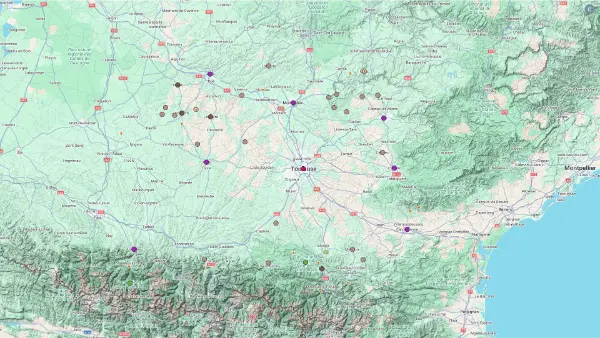
Toulouse Region
Interactive Map
Toulouse Region
Interactive Map
Click on the icon  in the top-left corner to display the map legend.
Show/Hide layers as needed.
Click on the arrow icons (v) to display the sublayers.
CITY
| Name | Top+ | Top |
|---|---|---|
| Auch | ||
| Agen | ||
| Montauban | ||
| Albi | ✅ | |
| Castres | ||
| Carcassonne | ✅ | |
| Lourdes | ✅ |
Toulouse
In Our Top+ ✅
Population 515 000
Known as the “Pink City,” Toulouse owes much of its charm to its brick façades, which take on warm orange tones at sunset. With the Garonne River running through it, this major city in southwestern France combines remarkable historical heritage, a welcoming atmosphere, and a particularly lively cultural scene.
Start exploring at Place du Capitole, the very heart of Toulouse. Behind its impressive brick and stone façade are the city hall and a historic theater. This large, bustling square is the perfect starting point for discovering the old town.
Just a few minutes away on foot, the narrow streets reveal beautiful mansions built by wealthy merchants in the 16th century. Some hide remarkable inner courtyards decorated with galleries and carved staircases. The Hôtel d’Assézat, a stunning Renaissance building, is one of the finest examples.
Toulouse also has an outstanding religious heritage. The Basilica of Saint-Sernin, built mainly in the 11th and 12th centuries, impresses visitors with its sheer size and distinctive bell tower. The Jacobins Convent holds another surprise: a spectacular stone vault that looks like the branches of a palm tree.
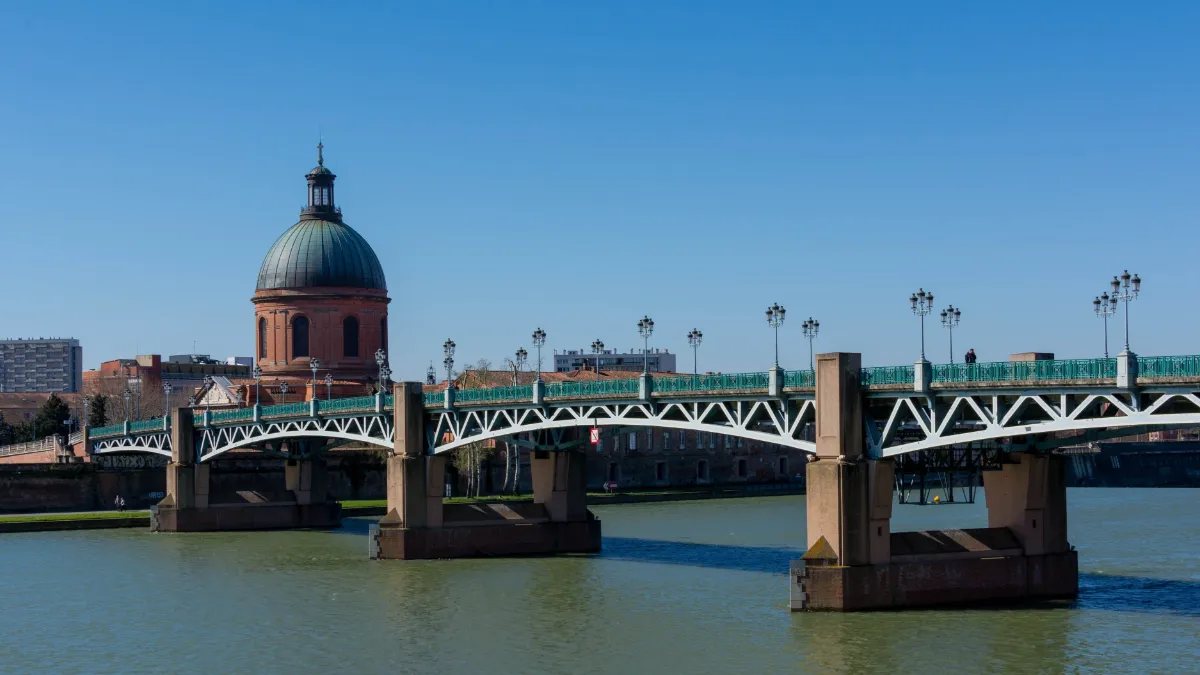
To discover another side of the city, head down to the banks of the Garonne. From the Pont-Neuf, Toulouse’s oldest bridge still in use, you’ll enjoy beautiful views of the riverfront, domes, and historic buildings lining the water.
But Toulouse isn’t just about its past. As a major European hub for the aerospace industry, it is home to Airbus facilities and several attractions dedicated to space exploration. At the Cité de l’Espace, you can discover rockets, satellites, and some of the greatest adventures in scientific exploration.
With its large student population, Toulouse has an infectious energy. Its squares and gardens are popular meeting places, while festivals, concerts, and rugby matches keep the city buzzing throughout the year. Here, a love of tradition goes hand in hand with modern life.
Take some time to explore the Canal du Midi as well. Built in the 17th century to connect Toulouse to the Mediterranean, its shady paths, locks, and canal boats make for a peaceful walk or bike ride, away from the hustle and bustle of the city center.
TOWNS
| Name | Top+ | Top |
|---|---|---|
| Auch | ||
| Agen | ||
| Montauban | ||
| Albi | ✅ | |
| Castres | ||
| Carcassonne | ✅ | |
| Lourdes | ✅ |
Auch
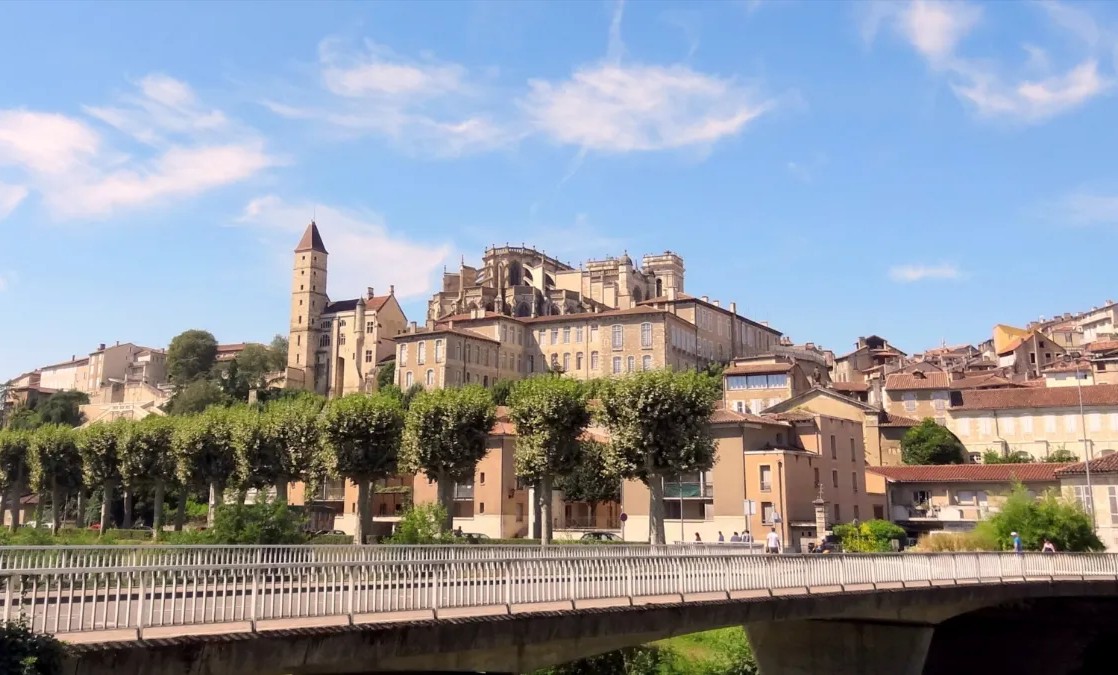
Perched on a hill overlooking the Gers Valley, Auch has all the laid-back charm of a small historic capital. Once the heart of Gascony, a region known for its rural traditions, the town is full of steep little streets, old houses, and beautiful views of the surrounding countryside.
Its main attraction is Sainte-Marie Cathedral. Built between the 15th and 17th centuries, it features extraordinary stained-glass windows and beautifully carved wooden sculptures. Nearby, a monumental staircase with 374 steps connects the upper town to the neighborhoods along the river.
You’ll also come across d’Artagnan, the famous musketeer immortalized by Alexandre Dumas, whose statue is a reminder of his Gascon roots. Auch has a gentle, relaxed, almost small-town atmosphere that you’ll discover as you wander through its little squares and passageways lined with old buildings.
Agen
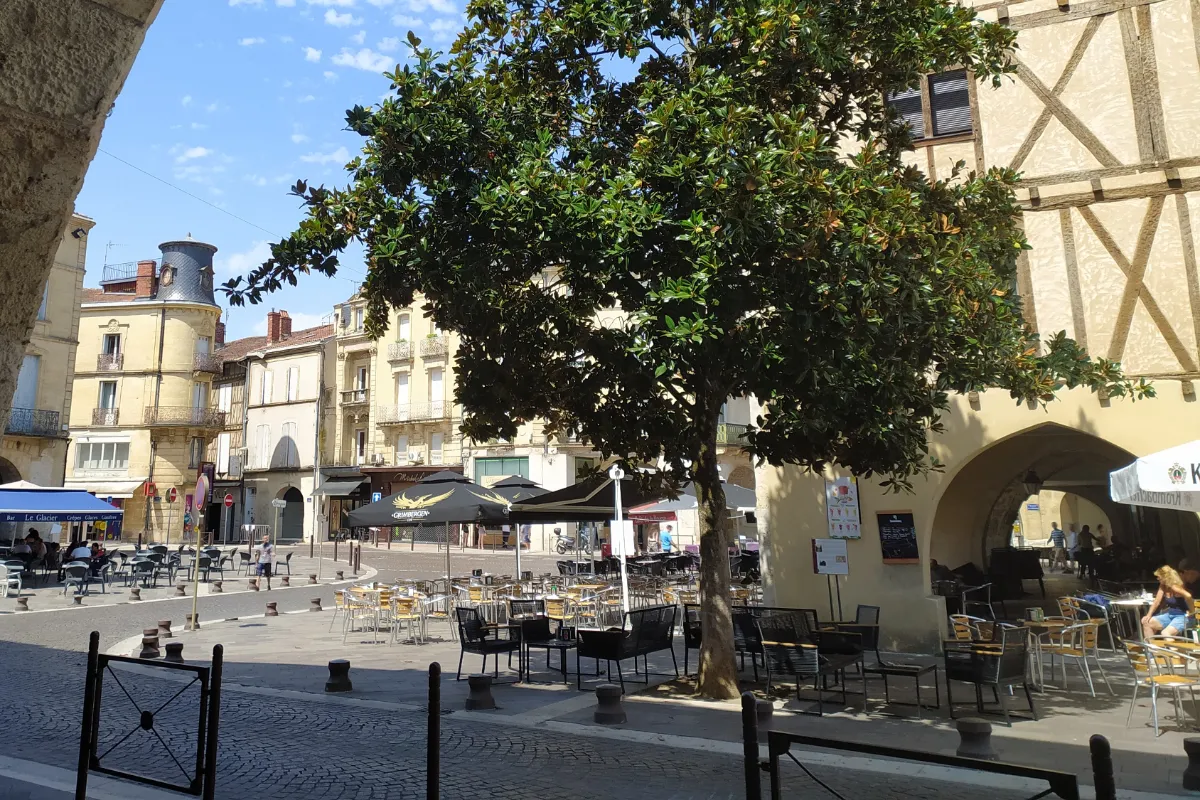
Set along the banks of the Garonne, Agen has a pleasant historic center shaped by centuries of trade. Its streets are lined with old façades, half-timbered houses, and elegant buildings. Less touristy than some of its neighboring towns, it’s a great place for a relaxed stroll.
Saint-Caprais Cathedral is worth visiting for its richly colored interior paintings. A little farther away, the canal bridge, built in the 19th century, is an impressive sight: boats actually cross over the Garonne on a monumental structure supported by 23 arches.
Agen is also famous for its prunes, made from dried plums, a local specialty known well beyond the region. Around the town, the landscape alternates between orchards, farmland, and green hills, reflecting Agen’s strong connection to the countryside.
Montauban
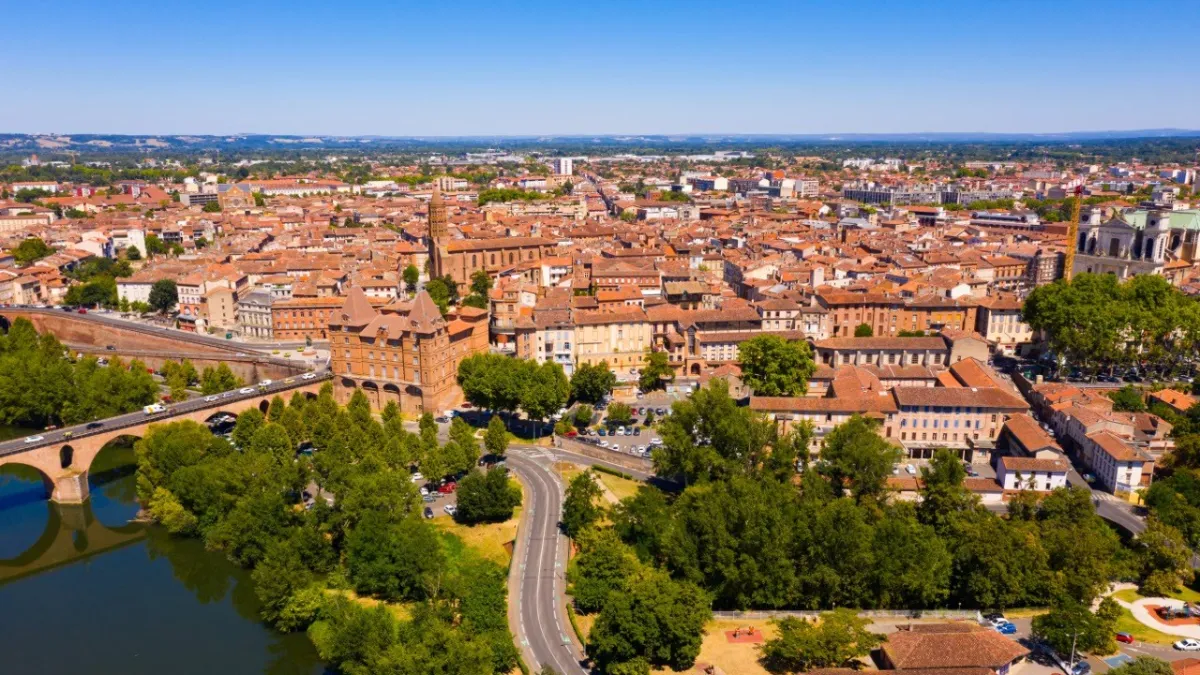
About 50 kilometers north of Toulouse, Montauban charms visitors with its harmonious pink-brick architecture. Founded in 1144, it has a remarkably well-preserved historic center, with old streets, elegant squares, and buildings featuring warm-colored façades.
Place Nationale is its crown jewel. Completely surrounded by brick buildings and covered arcades, it forms an exceptional architectural ensemble. Take a moment to admire its perfectly spaced arches and two rows of windows, which give the square its striking sense of harmony.
Head down toward the Tarn River and you’ll discover Pont-Vieux, a sturdy stone and brick bridge built in the 14th century. Its arches reflect in the water, creating one of the prettiest views of the town, especially as the sun begins to set.
Montauban is also the birthplace of painter Jean-Auguste-Dominique Ingres and sculptor Antoine Bourdelle. The Ingres Bourdelle Museum, housed in a former fortified palace, displays their works. This rich artistic heritage makes a lovely contrast with the peaceful atmosphere of the surrounding streets.
Albi
In Our Top+ ✅
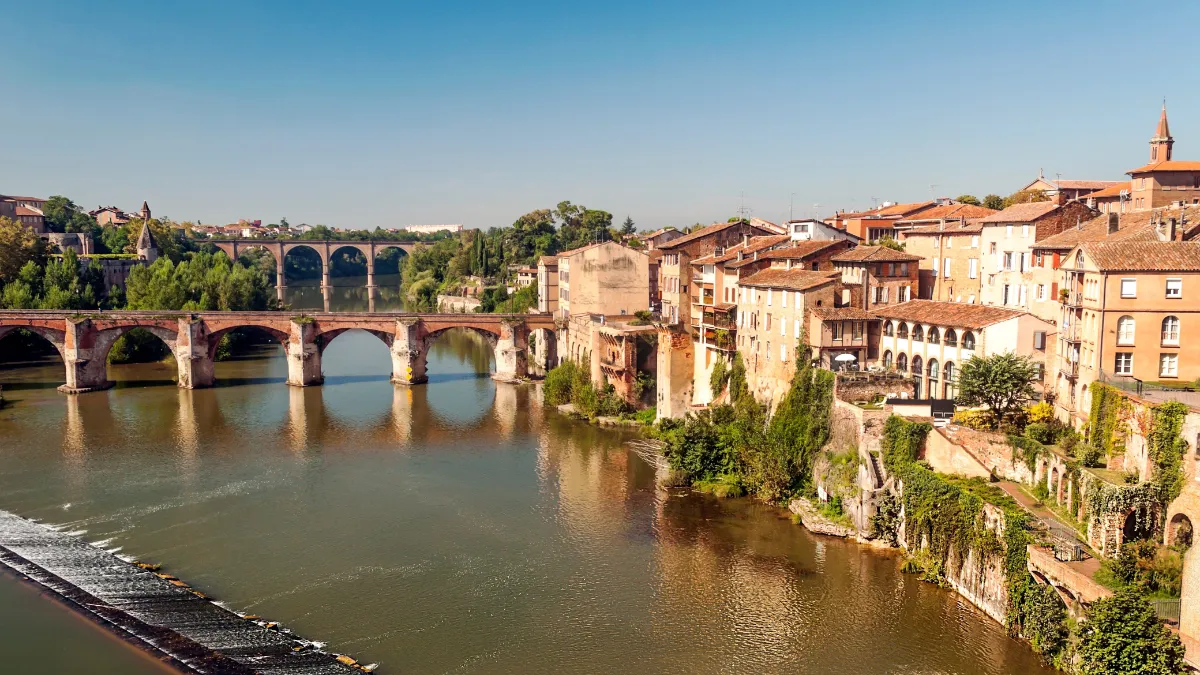
Overlooking the Tarn River, Albi is one of the most beautiful historic towns in southern France. Nicknamed the “Red City” because of its brick buildings, it boasts an exceptional architectural heritage recognized as a UNESCO World Heritage Site.
You can’t miss Sainte-Cécile Cathedral. Built from the 13th century onward, this enormous brick structure looks more like a fortress than a church. Step inside, though, and the contrast is breathtaking: the walls and vaulted ceilings are covered in extraordinarily colorful paintings.
Right next door, the former bishops’ palace houses the Toulouse-Lautrec Museum, dedicated to the famous painter who was born in Albi in 1864. Its gardens offer beautiful views of the Tarn, the old bridges, and the historic houses that seem to cling to the riverbanks.
In the streets of the town center, medieval houses stand alongside elegant buildings from later centuries. Cross the Pont-Vieux, built in the 11th century, and you’ll get an especially photogenic view of the cathedral and the rooftops of the old town.
Castres
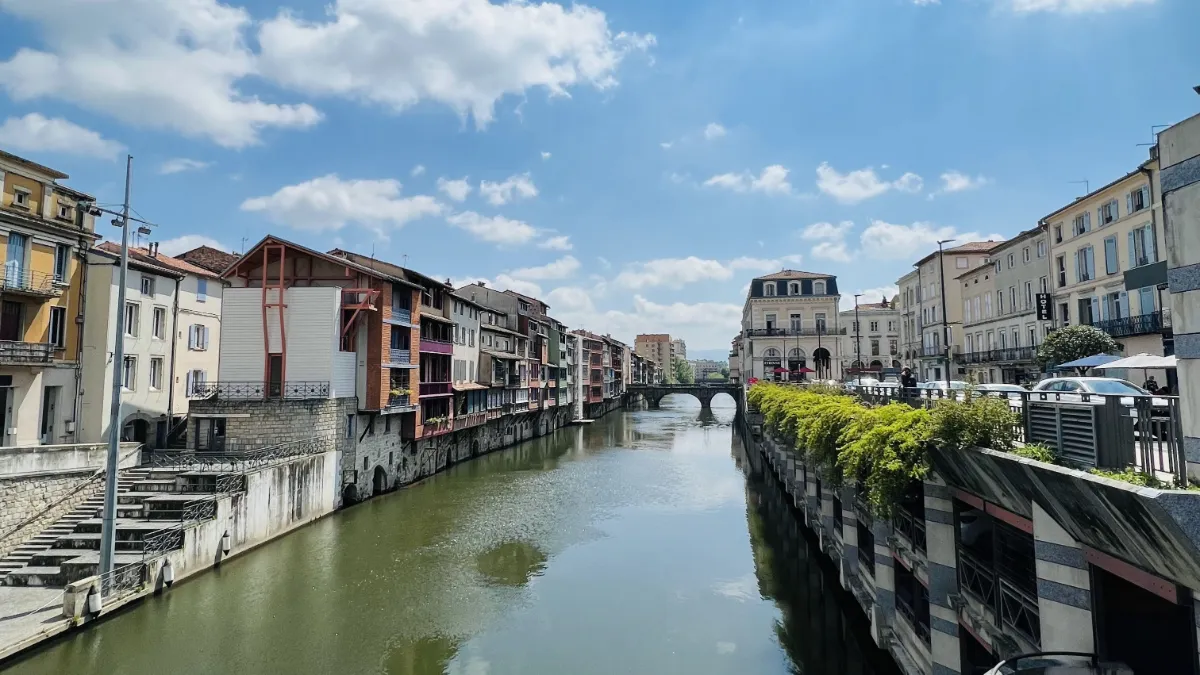
With the Agout River flowing through it, Castres has a peaceful atmosphere and plenty of architectural charm. Its most iconic sight is the row of colorful houses reflected in the river. Once home to craftsmen working with leather and textiles, these buildings feature traditional half-timbered façades.
The old town is full of beautiful buildings and narrow passageways that are perfect for wandering. The Bishop’s Garden, designed in the 17th century, stands out for its beautifully maintained geometric patterns. Right next door, the Goya Museum houses an important collection of Spanish paintings.
Castres also has a strong cultural and sporting identity. It’s the birthplace of Jean Jaurès, a major figure in French political history, and a town with a real passion for rugby. As you stroll along the Agout, you’ll discover a charming place that’s often overlooked by the main tourist routes.
Carcassonne
In Our Top+ ✅
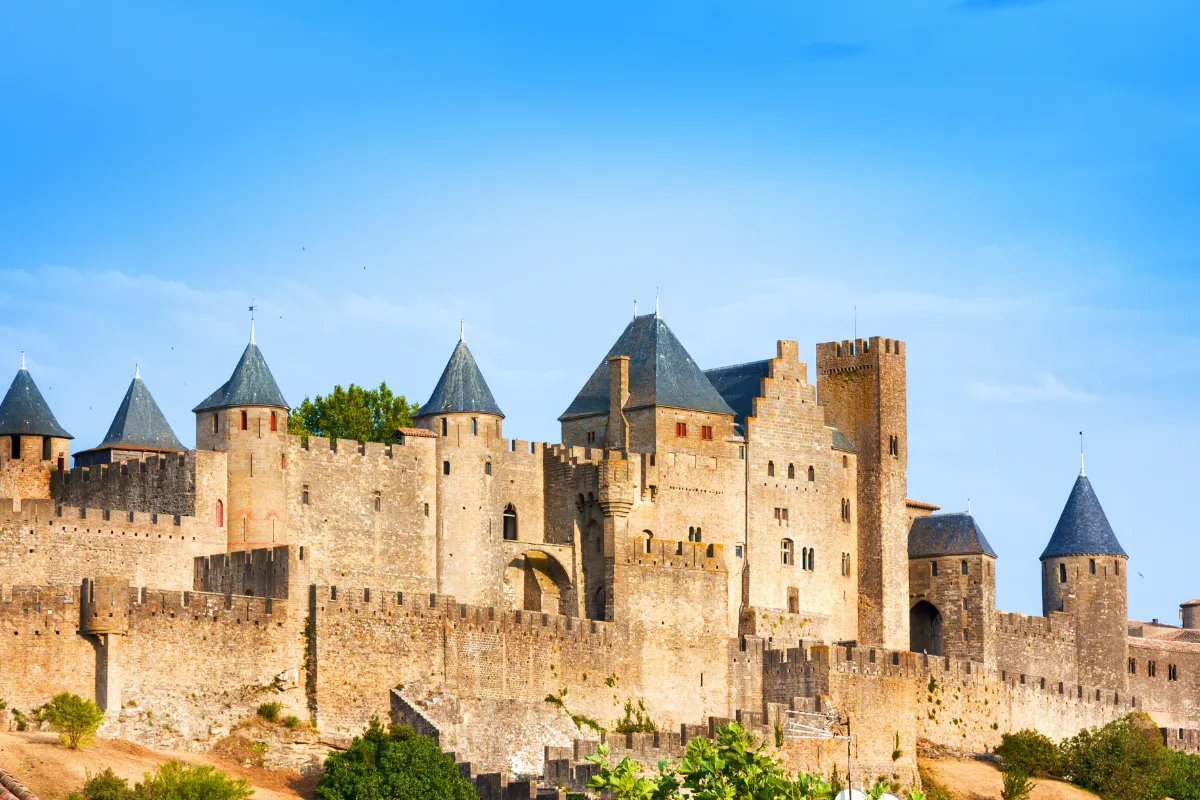
With its massive ramparts and towers topped with pointed roofs, Carcassonne looks like something straight out of a medieval fairy tale. Its famous fortified city, perched on a hill overlooking the Aude River, is one of the most impressive defensive complexes in Europe and a UNESCO World Heritage Site.
Built and expanded over the centuries, it has two rings of defensive walls, 52 towers, and nearly three kilometers of ramparts. Pass through its monumental gateways and you’ll find yourself in a maze of cobbled streets where the architecture brings the Middle Ages to life.
The Château Comtal, built in the 12th century, offers a fascinating look at how this fortress was organized. Walking along the ramparts gives you spectacular views over the rooftops, surrounding vineyards, and distant mountains. The Basilica of Saint-Nazaire is also worth a visit for its beautiful stained-glass windows.
Carcassonne’s history was shaped by the religious wars of the 13th century, when armies from northern France fought against the Cathars, a Christian movement considered heretical by the Catholic Church. In the 19th century, architect Viollet-le-Duc undertook a major restoration of the fortified city.
For the best view of Carcassonne in all its glory, move a little farther away from the walls. From the Pont-Vieux, the silhouette of the medieval city rises majestically above the river. At sunset, its golden ramparts create a truly breathtaking sight.
Lourdes
In Our Top+ ✅
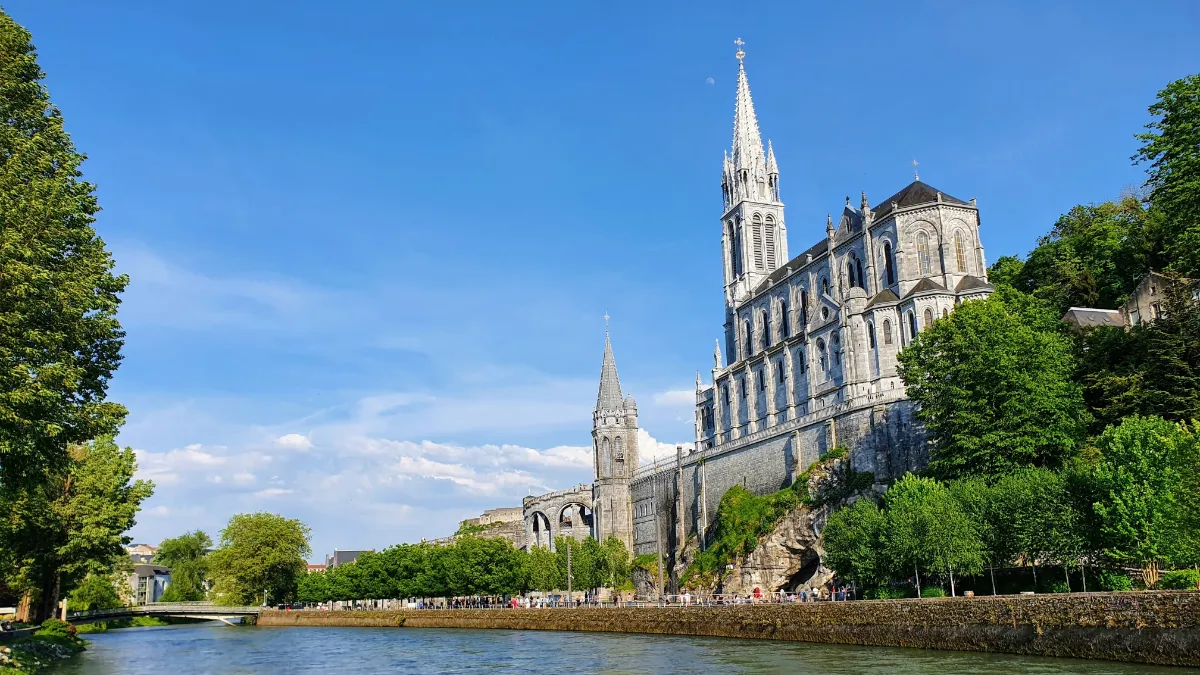
At the foot of the Pyrenees, Lourdes is one of the most important Catholic pilgrimage destinations in the world. Its history changed in 1858, when Bernadette Soubirous, a 14-year-old girl, claimed to have seen the Virgin Mary several times in a grotto beside the river.
Today, the Sanctuary of Our Lady of Lourdes attracts visitors from all five continents. Its large churches, spacious prayer areas, and the Grotto of Massabielle form an impressive complex. Every year, thousands of pilgrims take part in religious ceremonies and candlelit processions.
Even if you’re not religious, Lourdes has a unique atmosphere that makes it worth exploring. The fortified castle, standing on a rocky outcrop above the town, is a reminder of its medieval past. From the top, you can enjoy sweeping views over the rooftops and the first peaks of the Pyrenees.
The nearby mountains are also well worth discovering. The Gave de Pau, a river flowing down from the Pyrenees, runs through the town, and its banks are lovely for a stroll. In spring, the still snow-covered peaks create a beautiful backdrop.
SMALL TOWNS (Village Feel)
| Name | Top+ | Top |
|---|---|---|
| Lectoure | ||
| Condom | ||
| Nérac | ||
| Foix | ☑️ |
Lectoure
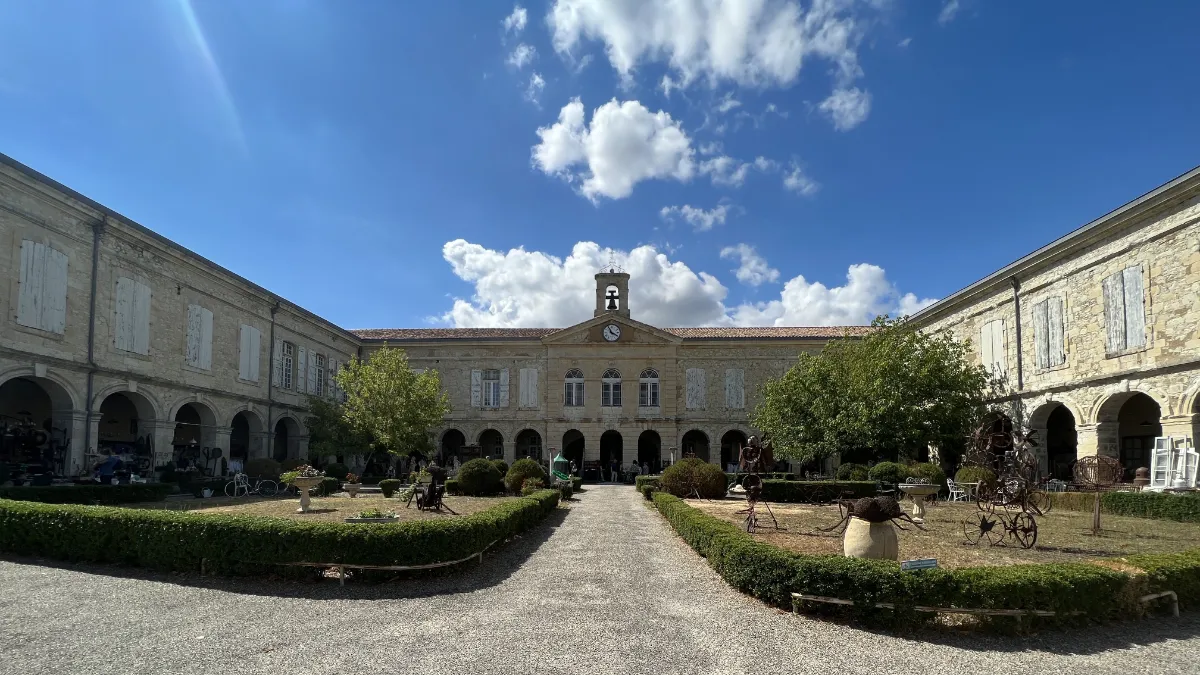
Set on a long ridge overlooking the Gascon countryside, Lectoure has an elegant character and more than 2,000 years of history. Once a Roman town, it still has beautiful stone mansions, old ramparts, and sweeping views over the surrounding hills.
Saint-Gervais-Saint-Protais Cathedral, with its imposing bell tower, dominates the streets of the historic center. You’ll also come across several buildings from the 17th and 18th centuries, reminders of the town’s former prosperity. Small streets lead to viewpoints with wide-open views of the countryside.
Lectoure is also known for its thermal springs and traditional summer melons. The pilgrimage routes to Santiago de Compostela in Spain pass through the town, winding between pale stone façades and gently rolling farmland.
Condom
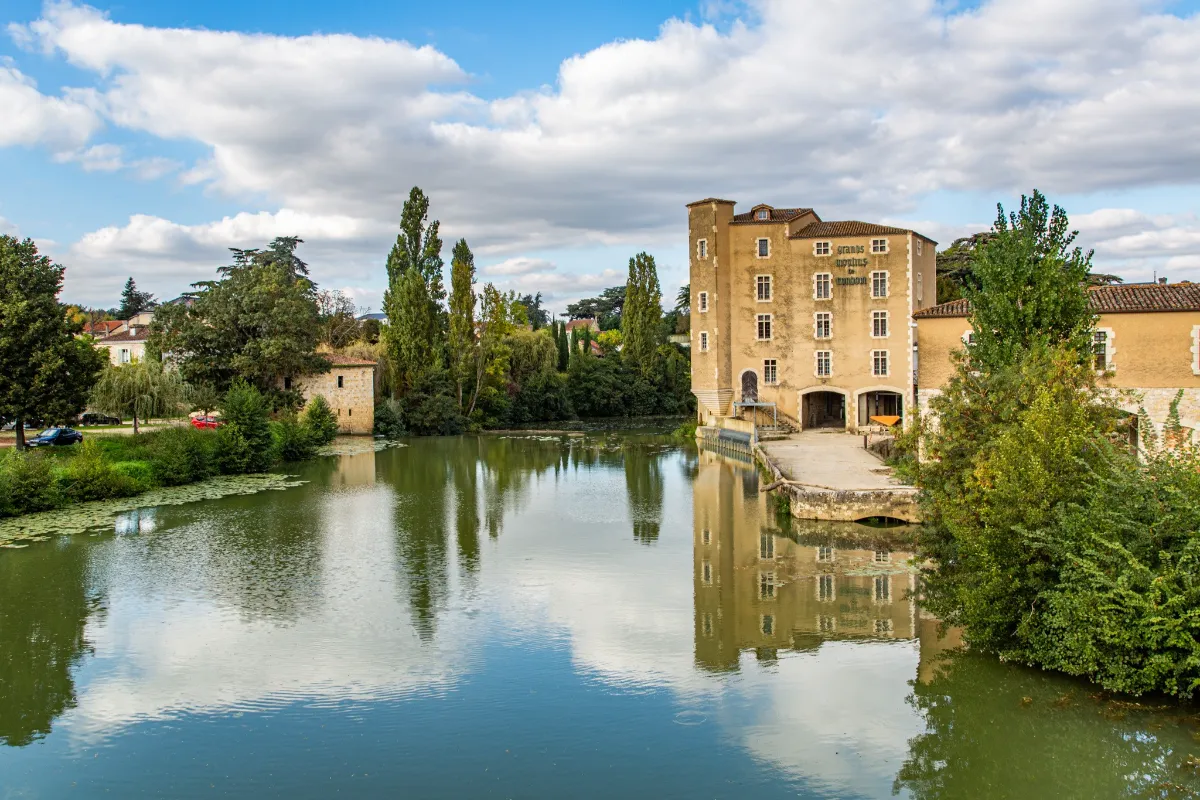
On the banks of the Baïse River, Condom is a former religious center that became one of the historic heartlands of Armagnac production, a type of brandy made from wine. Its old town is home to beautiful mansions, inner courtyards, and several impressive buildings.
Saint-Pierre Cathedral, built mainly in the 16th century, stands out for its architecture and cloister. In the nearby square, a sculpture depicts d’Artagnan and the Three Musketeers, a playful nod to Gascony’s history and traditions.
Head down toward the river and you’ll discover the old port, once used to transport goods. The surrounding countryside is a patchwork of vineyards, fields, and wooded hills, reflecting the gentle landscapes and traditions that have made this region so well loved.
Nérac
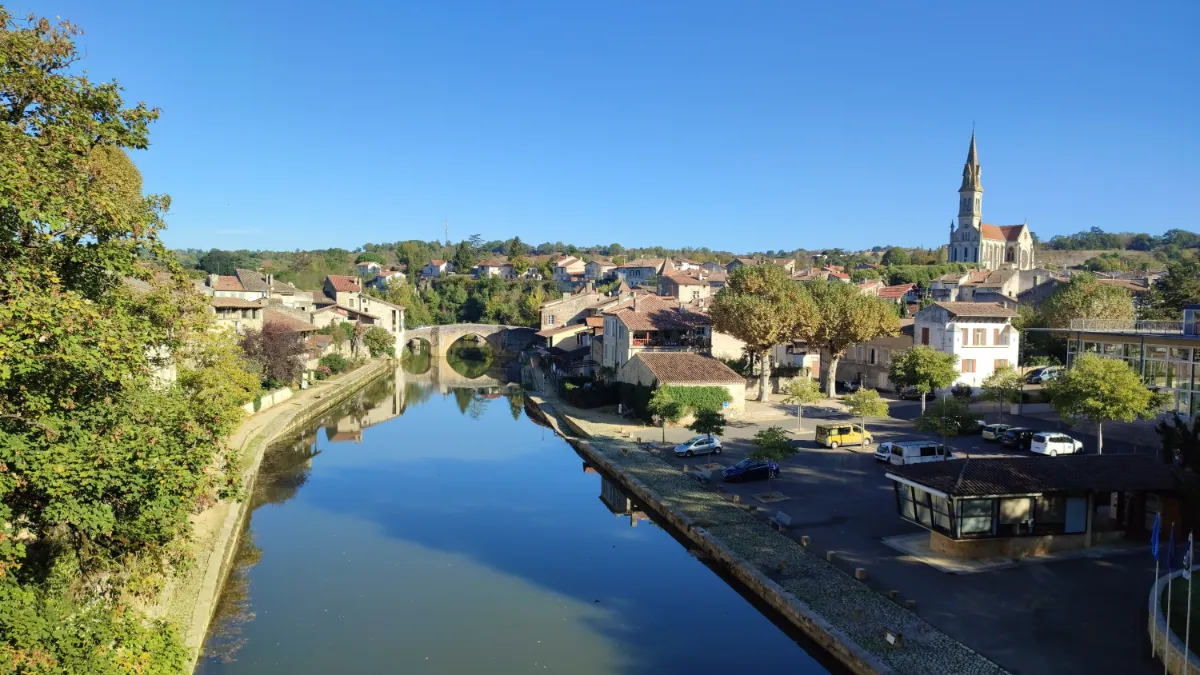
With the Baïse River running through it, Nérac is a charming little town closely associated with Henry IV, King of France in the late 16th century. Its old neighborhoods, stone houses, and steep little streets create a wonderfully picturesque setting.
The Château Henri IV recalls the days when Nérac was home to a brilliant and cultured royal court. Nearby, Parc de la Garenne stretches along the river with its long, shady pathways. This historic park has a peaceful atmosphere that’s especially enjoyable in summer.
Across the river, the Petit Nérac neighborhood is full of old houses clustered around narrow streets. Its bridges, former quays, and the reflections of the buildings in the Baïse make for some lovely views of the town.
Foix
In Our Top ☑️
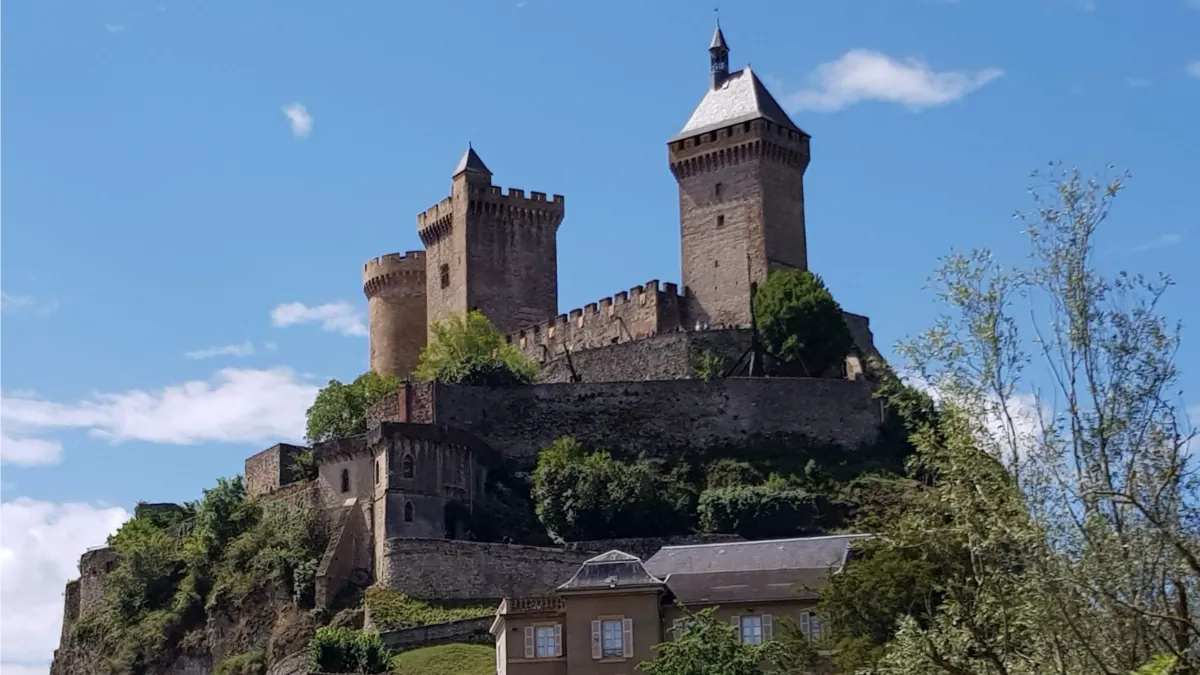
At the foot of the Pyrenees, Foix is instantly recognizable thanks to its spectacular castle perched high on a rocky outcrop. Rising above the rooftops of the old town, its three stone towers are a reminder of the turbulent past of this former stronghold, once ruled by powerful lords.
A visit to the castle gives you a glimpse into everyday life in the Middle Ages, with displays of weapons, grand halls, and defensive systems. From the top, you’ll enjoy magnificent views of the mountains and rivers surrounding Foix.
Down below, narrow streets wind between old houses and small squares. Located where two rivers meet, the town has a lively mountain atmosphere, with the first peaks of the Pyrenees rising just beyond it.