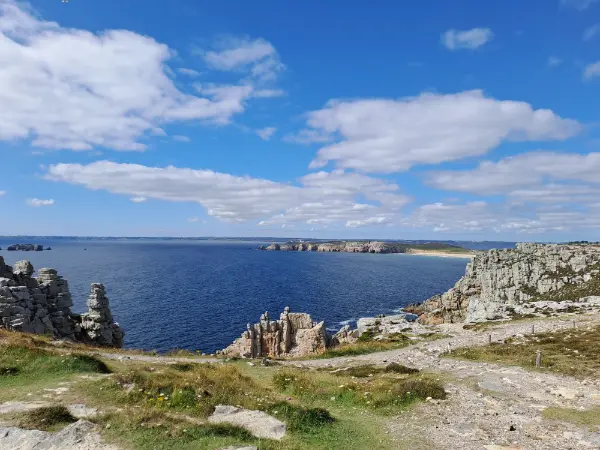



NORTH
| Name | Top+ | Top |
|---|---|---|
| Saint-Suliac | ☑️ | |
| Moncontour |
Saint-Suliac
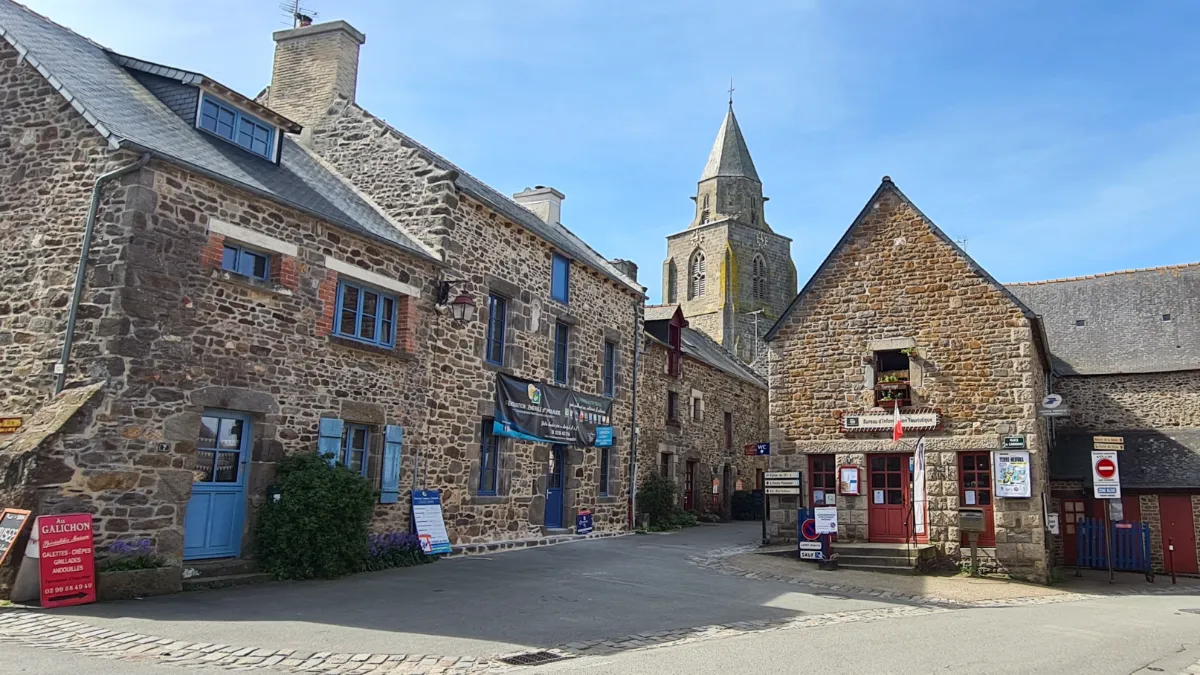
In Our Top ☑️
About ten kilometres from Saint-Malo, Saint-Suliac is clustered around a small harbour on the banks of the Rance. Granite houses, narrow passageways and gardens sloping down towards the water give the village an almost timeless feel.
For a long time, life here depended on the sea. Some men would spend several months fishing for cod off the coast of Canada, while others worked in the calmer waters of the Rance.
The small traditional boats you can still see today are a reminder of those tough times. Some were used for fishing locally, while others accompanied the larger ships on their long voyages to Newfoundland.
Saint-Suliac’s church, built mainly in the 13th century, remains one of the village’s main landmarks. Inside, model ships and pictures of sailors are reminders of this centuries-old connection with the ocean, while fishing nets still hanging on some of the houses keep the village’s maritime heritage alive.
Moncontour
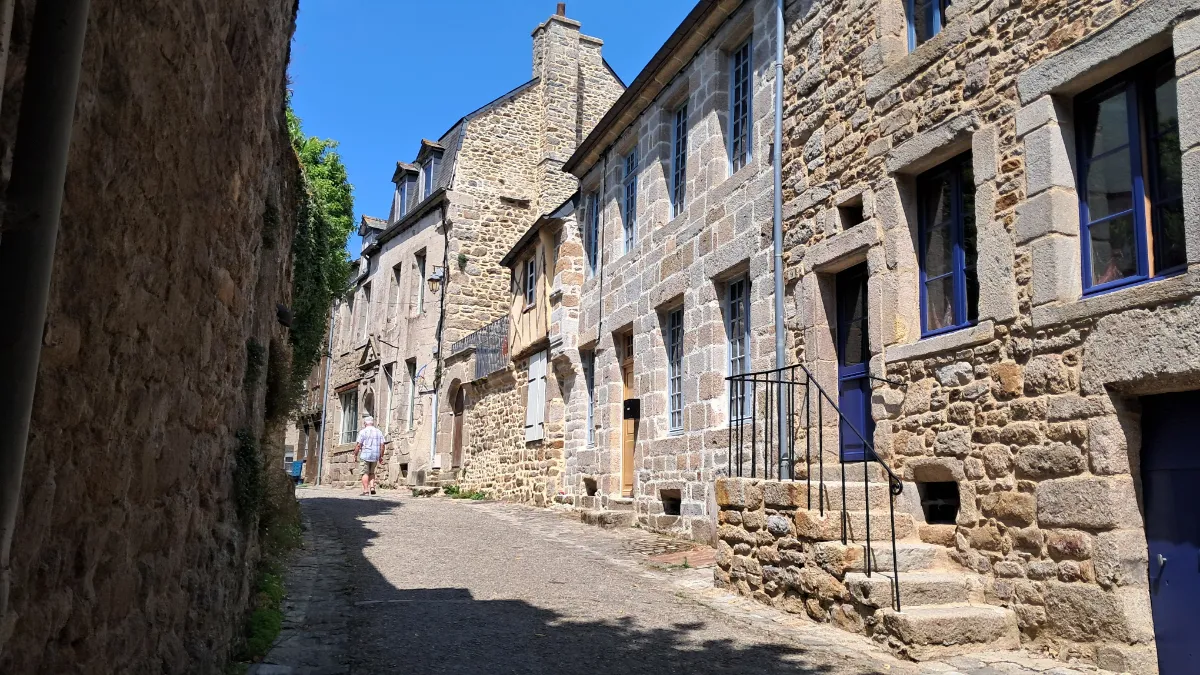
Perched above two valleys, Moncontour still feels a little like a fortress. In the Middle Ages, its position made it possible to watch over the surrounding roads, and the small town was protected by solid walls and eleven towers.
Part of these defences still survives today, enough to give the streets their compact, almost theatrical character. As you wander around, you pass old stone walls, steps and historic houses, with sudden views opening up over the countryside.
In the 17th and 18th centuries, the town’s wealth came mainly from linen and hemp cloth. It was exported as far as South America and Asia, bringing considerable wealth to local merchants and manufacturers.
The centre doesn’t take long to explore, but it’s worth taking your time. The cobbled streets and changes in level constantly offer new perspectives. Inside Saint-Mathurin Church, the 16th-century stained-glass windows are among Moncontour’s most remarkable treasures.
SOUTH
| Name | Top+ | Top |
|---|---|---|
| Locronan | ✅ | |
| Pont-Aven | ☑️ | |
| Saint-Goustan | ||
| Rochefort-en-Terre | ☑️ |
Locronan
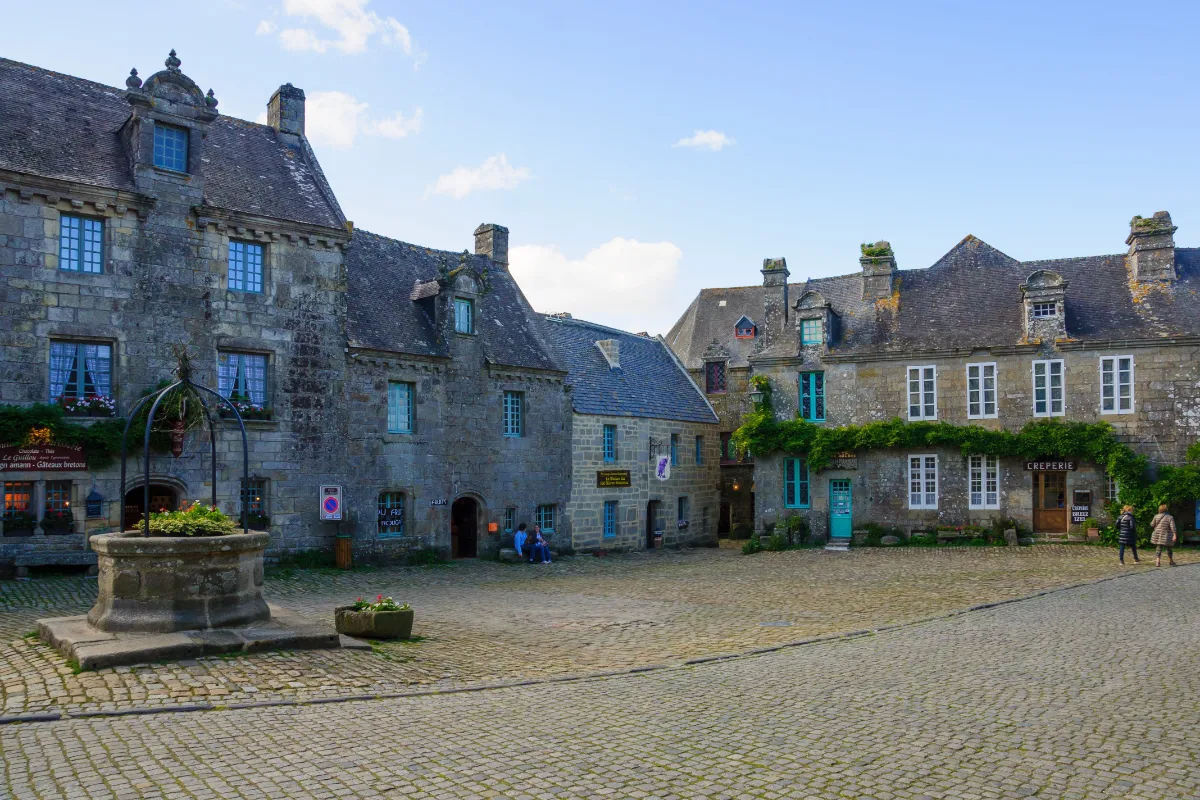
In Our Top+ ✅
Locronan looks as though it was built to be a film set, and that’s not entirely a coincidence, as several films have been shot here. Its cobbled streets, solid granite houses and large central square have preserved a rare architectural harmony.
The village made its fortune mainly through textiles. From the 15th century onwards, highly durable hemp cloth was produced here for the sails of Europe’s great ships, an industry that brought considerable wealth to local merchants and manufacturers.
The grand houses around the main square mostly date from this prosperous period. By the 17th century, several hundred weavers were working here. The industry later declined with the arrival of modern ships and mechanised production.
Saint-Ronan Church is a reminder of an even older history, linked to a holy man who came from Ireland. His name is still associated with a major religious procession whose origins blend Christian traditions with beliefs that go back much further.
Pont-Aven
In Our Top ☑️
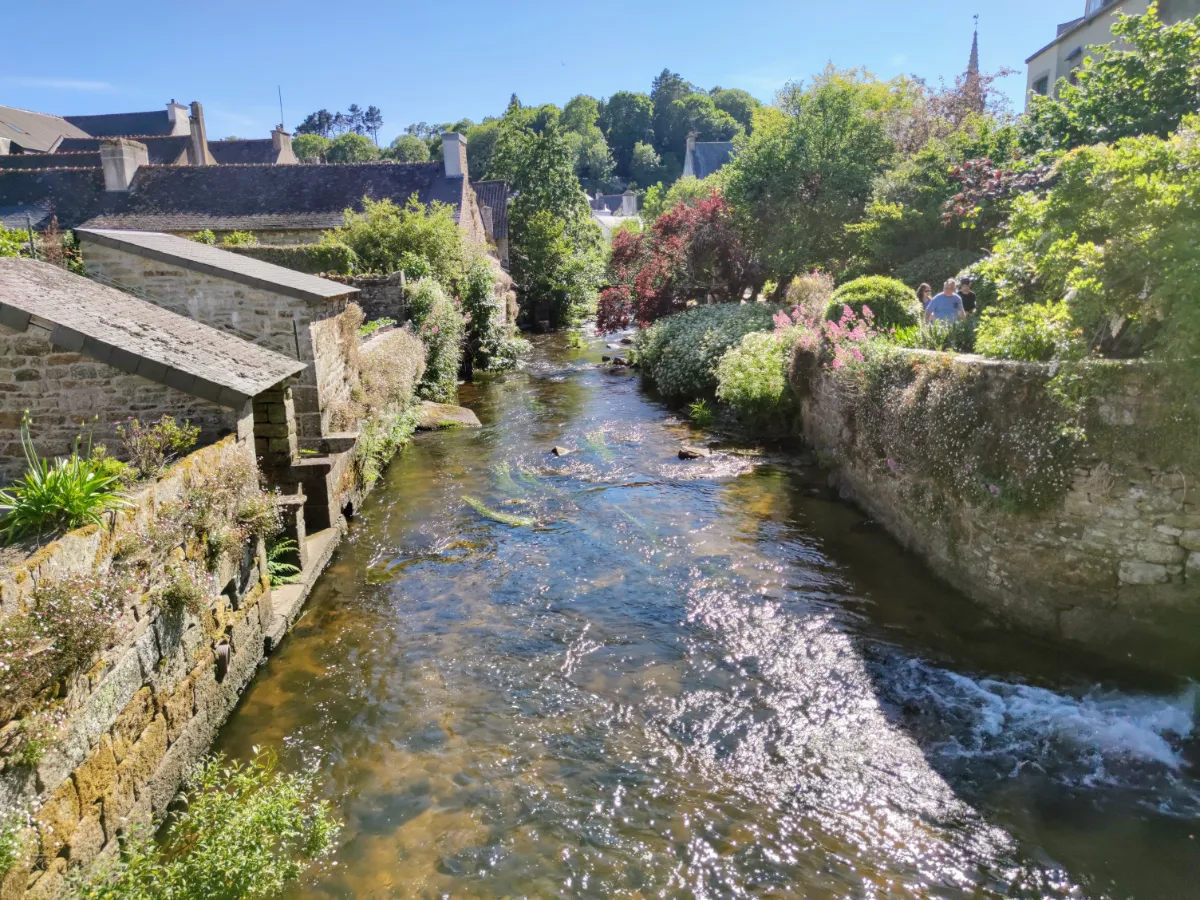
Pont-Aven owes much of its fame to a rather unlikely encounter between a small Breton port and painters from around the world. From the 1860s onwards, American and later European artists began arriving here, drawn by the light, the river and the mills.
Paul Gauguin first stayed here in 1886. Around him, Émile Bernard, Paul Sérusier and other artists soon began experimenting with a new style of painting, far removed from the traditional rules taught in Paris.
Simplified shapes, bold outlines and large areas of vivid colour, these experiments gave rise to the Pont-Aven School, which would play an important role in the development of modern European art.
The River Aven remains the real thread running through the village. It flows between the houses, passes beneath small bridges and eventually reaches the sea. The old mills are a reminder that long before the painters arrived, Pont-Aven was already shaped by water, trade and the constant movement of boats.
Saint-Goustan
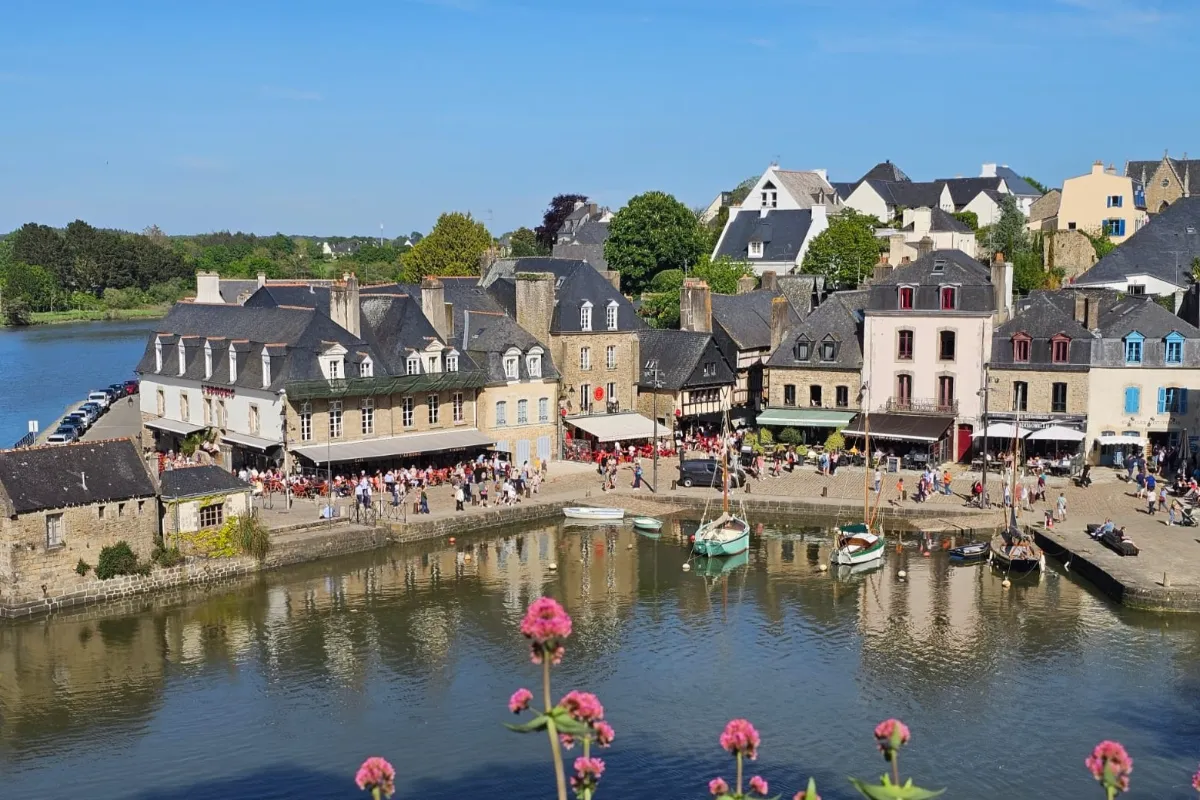
Below Auray, Saint-Goustan nestles at the end of a tidal inlet that carries the sea deep inland. An old stone bridge, curved quays and houses with exposed timber frames create a remarkably harmonious setting.
The port enjoyed its golden age between the 15th and 17th centuries. Ships loaded wine, salt, grain and other goods here before sailing on to other ports along the Atlantic coast.
Then the major port of Lorient began to develop, trade routes shifted and the railway arrived in the 19th century. Saint-Goustan gradually lost its economic importance, which also helped preserve much of its historic appearance.
An unexpected chapter in American history took place here on 3 December 1776. Benjamin Franklin landed at Saint-Goustan before travelling on to Versailles, where he went to negotiate French support for the American colonies in their fight for independence.
Rochefort-en-Terre
In Our Top ☑️
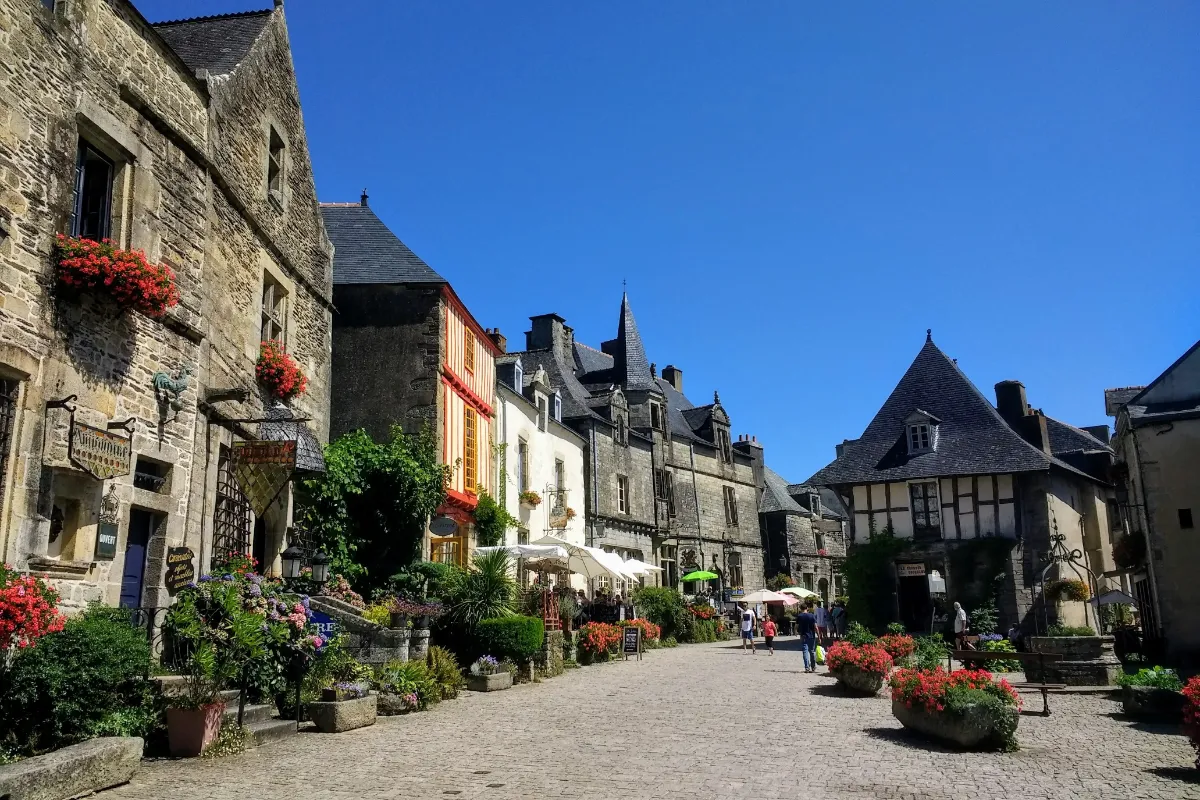
Rochefort-en-Terre certainly lives up to its name, the small town clings to a rocky ridge overlooking a lush green valley. Cobbled streets, granite façades and historic houses form a remarkably well-preserved setting, almost swallowed up by the surrounding greenery.
A castle was first established here in the 12th century. Destroyed, rebuilt and damaged again over the course of various wars, it survived several turbulent centuries before taking on an entirely new life at the beginning of the 20th century.
In 1903, American painter Alfred Klots discovered Rochefort-en-Terre. He later bought the castle ruins, turned part of the site into a home and invited other artists to come and work in the village.
In 1911, Klots also launched a competition encouraging residents to decorate their windows with flowers. The idea left a lasting mark on the village. Even today, plants and flowers spill over the façades, creating a striking contrast with the dark stone and old walls.