


PRESENTATION
From the Loire Estuary to the Gironde Estuary
On France’s west coast, between the mouth of the Loire River and the vast Gironde Estuary, the Atlantic Ocean sets the pace. From north to south, you’ll find bustling ports, seaside resorts, islands and villages with strong ties to the sea. Each has its own distinct personality, but they all share the same ocean horizon and a way of life shaped by the tides, fishing and the pleasures of being outdoors.
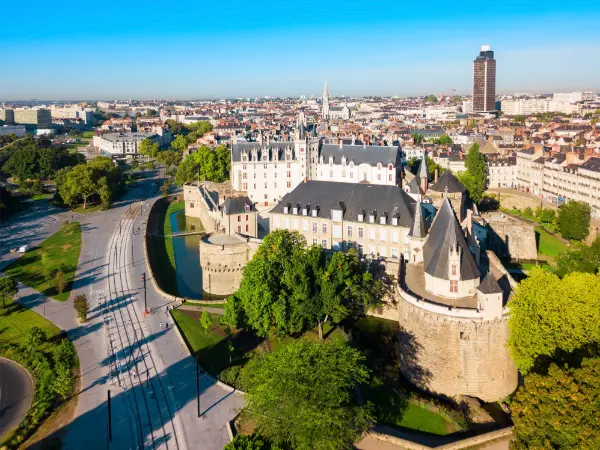
In the north, the coastline offers a first taste of this diversity. The sweeping beach at La Baule contrasts with the small harbours of Le Croisic and Pornic, while Saint-Nazaire carries on a long tradition of shipbuilding. Just a few miles inland, Nantes, on the banks of the Loire, combines historic heritage, artistic creativity and lively city life. Further south, long sandy beaches, pine forests and family-friendly seaside resorts follow one another, along with the islands of Noirmoutier and Yeu, each with a character all its own.
Further down the coast, La Rochelle stands out for the towers guarding the entrance to its Old Harbour. Beyond lie the islands of Ré and Oléron, followed by Rochefort and Royan, at the gateway to the Gironde Estuary. Here, coastal scenery goes hand in hand with reminders of a rich commercial and military past.
But there’s much more to the region than its coastline. The vineyards around Nantes, the rolling green hills and villages of the countryside, and the historic town of Saintes are all worth exploring. They offer a different, more rural and often quieter atmosphere, providing a welcome contrast to a trip otherwise dominated by the ocean.
Atlantic Landscapes: Beaches, Islands and Marshes
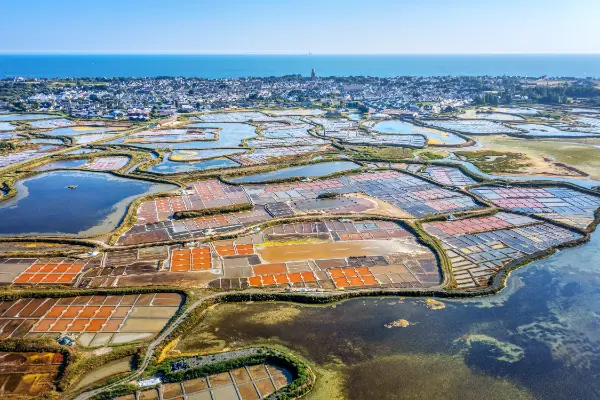
There’s much more to this coastline than its beaches, even if they’re among its biggest attractions. In the north, rocky stretches of coast alternate with sheltered coves and wide expanses of sand. Around Guérande, the salt pans form a striking patchwork of land and water. Their colours shift with the light, from silvery grey to pink, while small piles of salt remind you that these beautiful landscapes are also places where people work.
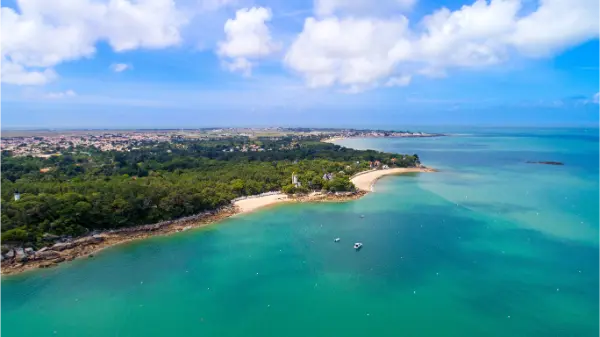
Further south, the scenery changes completely. From Saint-Jean-de-Monts to the area around La Tranche-sur-Mer, vast beaches backed by dunes and forests are perfect for walking, cycling and swimming. Just offshore, Noirmoutier charms visitors with its whitewashed houses, salt marshes and pine-fringed beaches. The island of Yeu has a wilder feel, with rocky shores, cliffs and secluded little coves. It’s a wonderful place to escape to and experience a different side of the coast.
Further south still, the islands of Ré and Oléron carry on this seaside atmosphere, each in its own way. Villages with colourful shutters, little harbours, beaches facing the open ocean and cycle paths make them ideal places to slow down and take your time. Back on the mainland, oyster farms and traditional fishing huts perched on stilts give the coastline its distinctive look.
And then there are the marshes, which are everywhere in this part of France. Some are connected to the sea, while others form vast freshwater wetlands. The Marais Poitevin, north of La Rochelle, is one of the most remarkable. In its greenest areas, flat-bottomed boats glide along canals between the trees, through vegetation so thick that it sometimes forms leafy tunnels. It’s a peaceful world, far from the sound of the waves, where birds find shelter and life moves to the rhythm of the water.
Characterful Harbours, Maritime Traditions and the Local Way of Life
The sea hasn’t just shaped the landscape. It has also left its mark on the history of the towns and the everyday lives of the people who live here. In Nantes, the old trading port is a reminder of the city’s connections with the wider world. Saint-Nazaire tells a different story, one of great ocean liners and shipyards. In La Rochelle, imposing stone towers, quays and arcaded streets bear witness to centuries of maritime activity. Rochefort is also well worth a visit for its former naval arsenal, where warships were once built for the French crown.
But you can get just as much of a feel for the soul of this coastline in its smaller harbours. In Saint-Gilles-Croix-de-Vie, sardine fishing is part of the local heritage. In Les Sables-d’Olonne, sailing has a special place in local life, while the little harbours of Ré and Oléron still have their colourful huts and fishing boats. Take your time wandering along the quays, watching the fishermen return to harbour or settling down at a café terrace. These are often the best ways to soak up the local atmosphere.
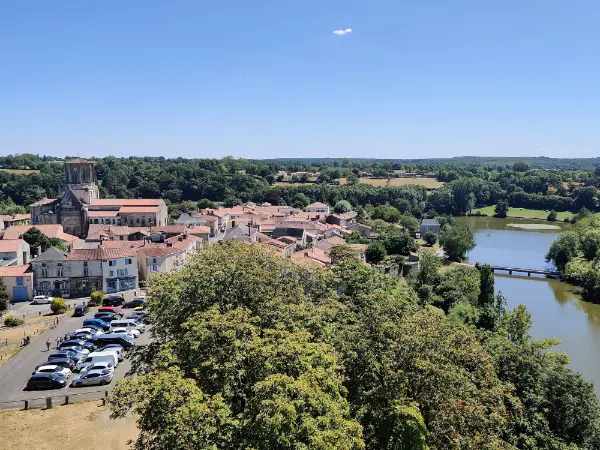
The region’s heritage goes well beyond the sea, though. Guérande has preserved its medieval ramparts, while inland villages are home to old stone churches, castles and traditional houses. In Saintes, remains from Roman times are a reminder that the area’s history stretches back long before the rise of the great Atlantic ports.
And of course, you can’t explore this coastline without discovering its food. Marennes-Oléron oysters, mussels, freshly caught fish, grilled sardines and locally harvested sea salt are all part of a simple, hearty cuisine with deep roots in the ocean. Add some fresh vegetables from the local markets, regional butter and a glass of white wine from the vineyards near Nantes. Nothing too elaborate, and that’s exactly what makes these culinary pleasures so appealing.
Life here is best enjoyed outdoors, whether you’re walking, cycling or out on the water. Between a swim, a stroll through a village and lunch overlooking the harbour, you’ll discover a welcoming stretch of France’s Atlantic coast, proud of its traditions but very much in touch with the present.
OVERVIEW
Map
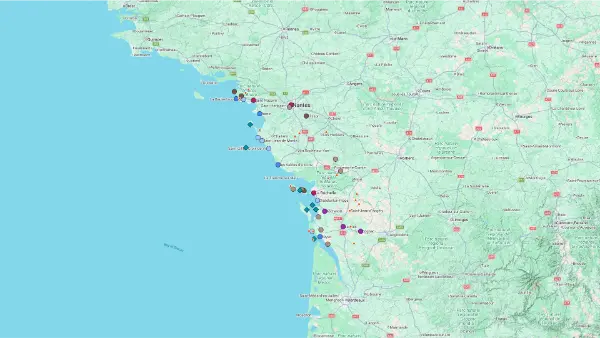
Interactive Map
Interactive Map
Click on the icon  in the top-left corner to display the map legend.
Show/Hide layers as needed.
Click on the arrow icons (v) to display the sublayers.
Top Picks