


PRESENTATION
From Rolling Hills to the Pyrenees, the Many Faces of the Toulouse Region
It’s hard to imagine more contrasting landscapes! In the heart of southwestern France, the Toulouse region offers an amazing mix of fertile plains, rolling green hills, deep valleys and rugged mountains. Here, you only have to travel a few dozen kilometres to find yourself in a completely different setting. From sun-drenched countryside to the snow-capped peaks of the Pyrenees, nature certainly knows how to mix things up.
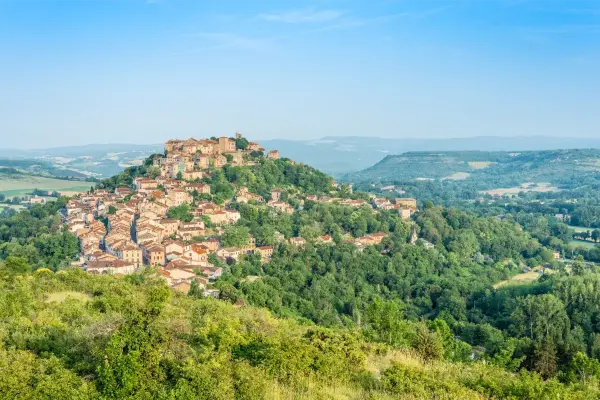
Around Toulouse, the Garonne River flows through vast stretches of farmland, dotted with villages full of pink-brick houses. Head west and the landscape becomes hillier. This is a land of sunflower fields, vineyards, isolated farmhouses and little country roads winding through the hills. It’s a peaceful world where time sometimes seems to stand still. To the east, the hills are covered in forests, while rivers carve spectacular gorges between towering limestone cliffs.
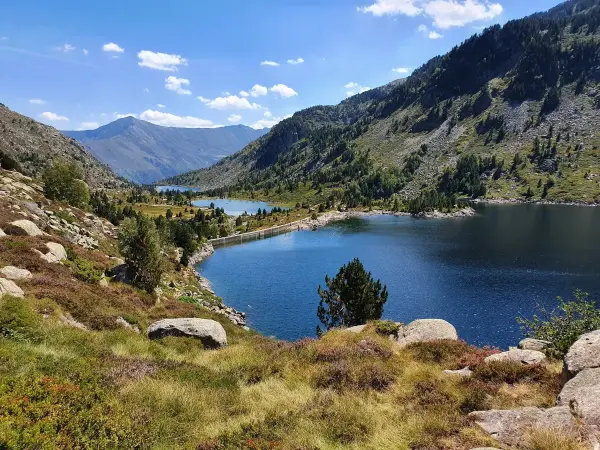
Further south, the scenery changes completely! The first foothills mark the beginning of the Pyrenees, the huge mountain range that forms a natural border with Spain. Stone villages nestle in the valleys, surrounded by dense forests and peaks that sometimes rise above 3,000 metres. Rushing mountain streams, waterfalls, high-altitude lakes and flower-filled meadows create some truly breathtaking scenery.
The mountains are also home to an incredible variety of wildlife. Vultures, golden eagles, marmots and isards, the Pyrenees’ own relatives of the chamois, live in these protected natural areas. With a bit of luck and plenty of patience, you might spot some of them along a hiking trail.
If you love hiking, you’re in for a treat! From easy walks along rivers to more challenging mountain climbs, the possibilities seem endless. The Cirque de Gavarnie, a vast natural amphitheatre surrounded by towering cliffs, is one of the most spectacular sights in the Pyrenees. In summer, herds of livestock make their way up to the high mountain pastures, keeping alive a tradition that goes back centuries.
Two Thousand Years of History, from Pink-Brick Cities to Medieval Villages
The history of the Toulouse region goes back more than two thousand years. Long before the Romans arrived, several peoples were already living on this fertile land. The Romans developed thriving towns, roads and large farming estates, leaving behind plenty of traces of their presence. But it was mainly during the Middle Ages, between the 5th and 15th centuries, that the region began to take on the appearance we recognise today.
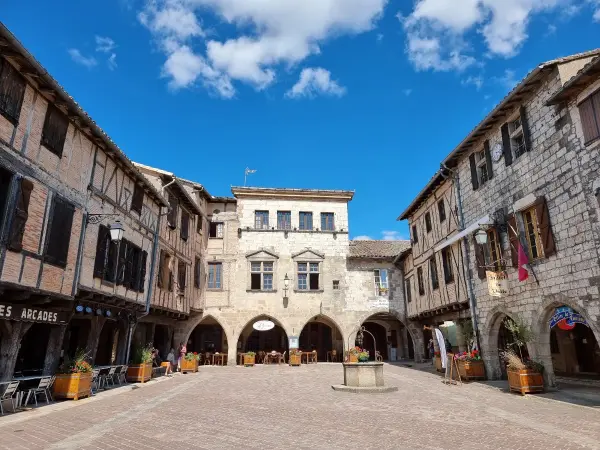
Castles, churches and fortified villages sprang up across the countryside. Some perched on hilltops, protected by defensive walls, while others grew around squares lined with covered arcades. As you wander through their cobbled streets, you’ll come across half-timbered houses with exposed wooden beams, ancient doorways and vaulted passageways. They’re all reminders of a time when people needed protection from wars and raids.
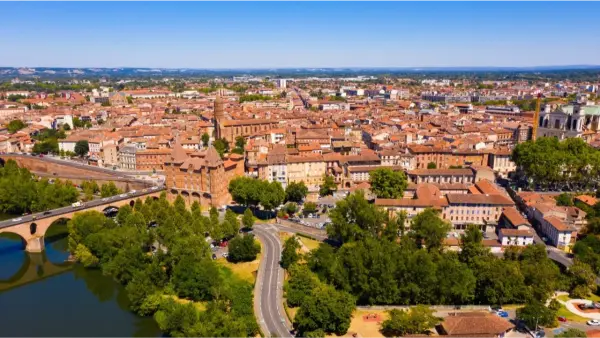
The towns and cities have just as much to offer. Toulouse, Albi and Montauban owe much of their character to the red brick that has been used in local buildings for centuries. Monumental churches, elegant palaces and wealthy merchants’ mansions make up an extraordinary architectural heritage. It’s hard not to be impressed by Albi’s imposing cathedral or the Basilica of Saint-Sernin in Toulouse, one of the largest medieval churches in Europe.
Religion has also left a deep mark on the region’s history. In the 13th century, violent conflicts broke out between the Catholic Church and the Cathars, a Christian movement considered heretical at the time. Several castles and fortified villages still bear traces of this turbulent period. Meanwhile, the pilgrimage routes leading to Santiago de Compostela in Spain encouraged the construction of churches and monasteries, some of which still contain extraordinary sculptures.
From the 16th century onwards, trade brought wealth to the major towns and cities, particularly Toulouse. A century later, the construction of the Canal du Midi transformed trade by linking Toulouse to the Mediterranean. Its locks, bridges and long, tree-lined paths are still reminders of this remarkable feat of human engineering.
A Warm and Welcoming Way of Life, Where Traditions, Food and Modern Life Come Together
In the Toulouse region, enjoying life is something people take seriously! Here, hospitality and good company are part of everyday life. People love taking their time, having a chat, sharing a good meal and celebrating local traditions. You’ll feel this relaxed atmosphere everywhere, from the lively streets of Toulouse to small villages where festivals and gatherings still mark the changing seasons.
Food plays a huge part in local life. Duck is king here, served in all sorts of ways, often with beans, vegetables or potatoes. And you simply can’t miss cassoulet, a hearty dish of white beans slowly cooked with meat and sausages. Further west, foie gras, made from duck or goose liver, is another famous local speciality. Then there are mountain cheeses, fresh fruit and traditional pastries to enjoy.
When it comes to drinks, the Toulouse region has plenty to offer too. Local vineyards produce red, white and rosé wines with a wide range of flavours and styles. Gascony is also the birthplace of Armagnac, a grape-based brandy aged in oak barrels that has been produced here for centuries. All these flavours reflect the region’s deep attachment to local produce and skills passed down from one generation to the next.
But local traditions go far beyond food and drink. Rugby is a huge passion, especially in Toulouse, where matches often turn into major celebrations. Music, dancing, festivals and village fairs keep the cultural scene buzzing throughout the year. In the Pyrenees, the arrival of summer brings the traditional movement of livestock up to the high mountain pastures, a reminder of the close bond between local communities and the mountains.
And yet, the Toulouse region is anything but stuck in the past. Today, Toulouse is one of Europe’s leading centres for aerospace and the space industry, thanks in particular to Airbus. This modern side of the city is easy to see, with historic buildings standing alongside facilities dedicated to aviation and space exploration.
OVERVIEW
Map
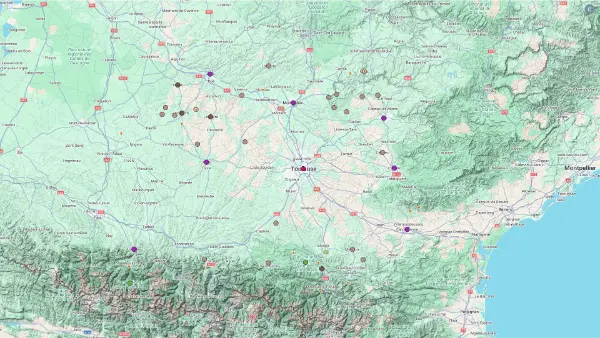
Interactive Map
Interactive Map
Click on the icon  in the top-left corner to display the map legend.
Show/Hide layers as needed.
Click on the arrow icons (v) to display the sublayers.
Top Picks