


CITIES
| Name | Top+ | Top | Population | Area |
|---|---|---|---|---|
| Rennes | 230 000 | East | ||
| Brest | 140 000 | West |
Rennes
Population 230 000
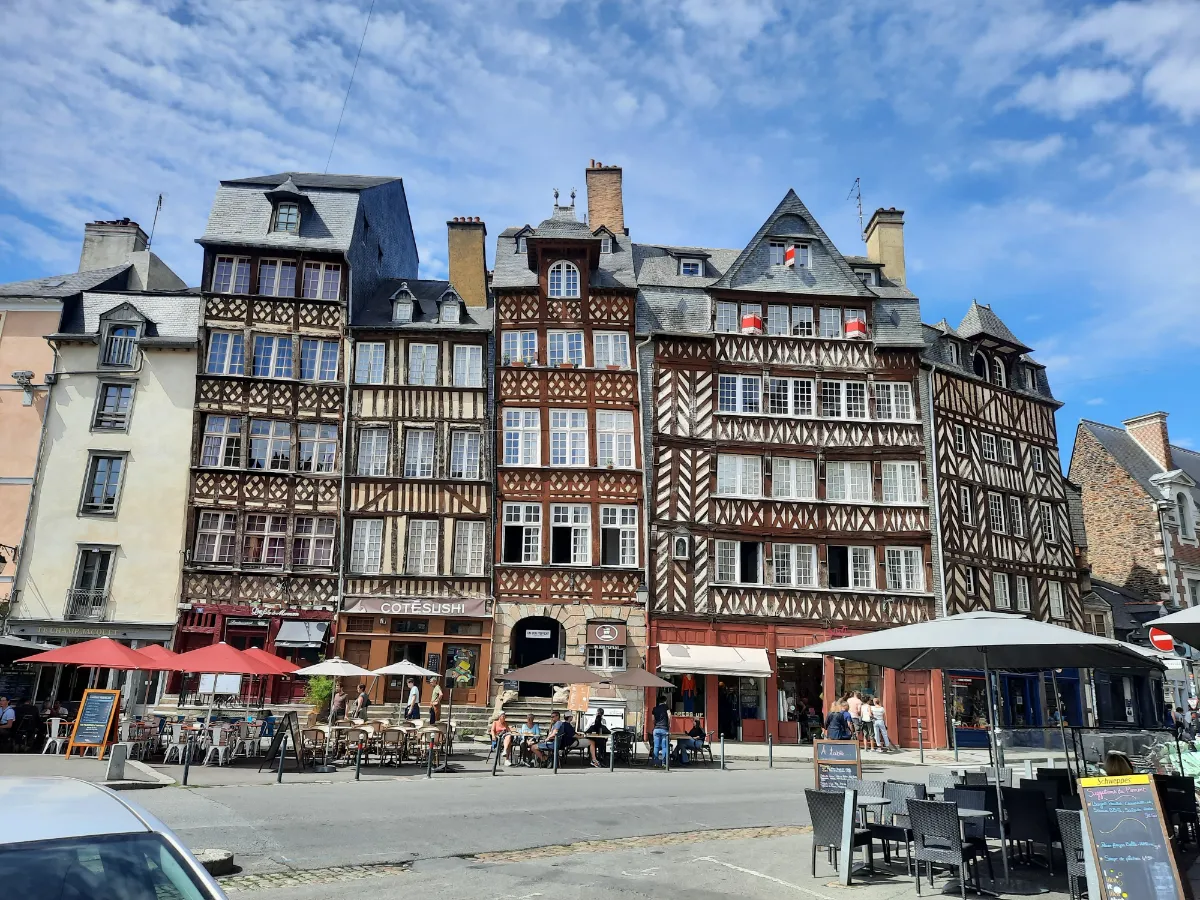
Rennes has two very different sides to it. On the one hand, there’s the historic centre, where timber framed façades sometimes lean at crazy angles and somehow look incredibly charming. On the other, there’s a young, creative university city that has never stopped evolving. And you really don’t need a car here, the heart of Rennes is very easy to explore on foot.
Part of the city’s appearance comes from a dramatic event. In 1720, a huge fire destroyed between 850 and 900 houses. The neighbourhoods that escaped the flames kept their colourful timber façades, while the areas that were rebuilt adopted more regular lines and made greater use of stone. Today, this contrast gives the city centre an amazing variety of styles.
The Parliament of Brittany, once home to an important court of justice, remains one of Rennes’ major landmarks. All around it, small squares, cobbled passageways and pedestrian streets make this a particularly enjoyable city to wander around without any real plan.
But Rennes is definitely not a museum city! Students, concerts, contemporary art and festivals keep the place buzzing throughout the year. Modern architecture has also found its place confidently among the older buildings, adding to the city’s curious, cultured personality and its strong connection to the 21st century.
Brest
Population 140 000
Brest isn’t trying to be one of those picture perfect Breton towns you see on postcards. And that’s exactly what gives it its personality. Sitting above a huge sheltered bay that opens onto the Atlantic, Brest has lived for centuries with boats, wind, departures for the open sea and that constantly changing light racing across the water.
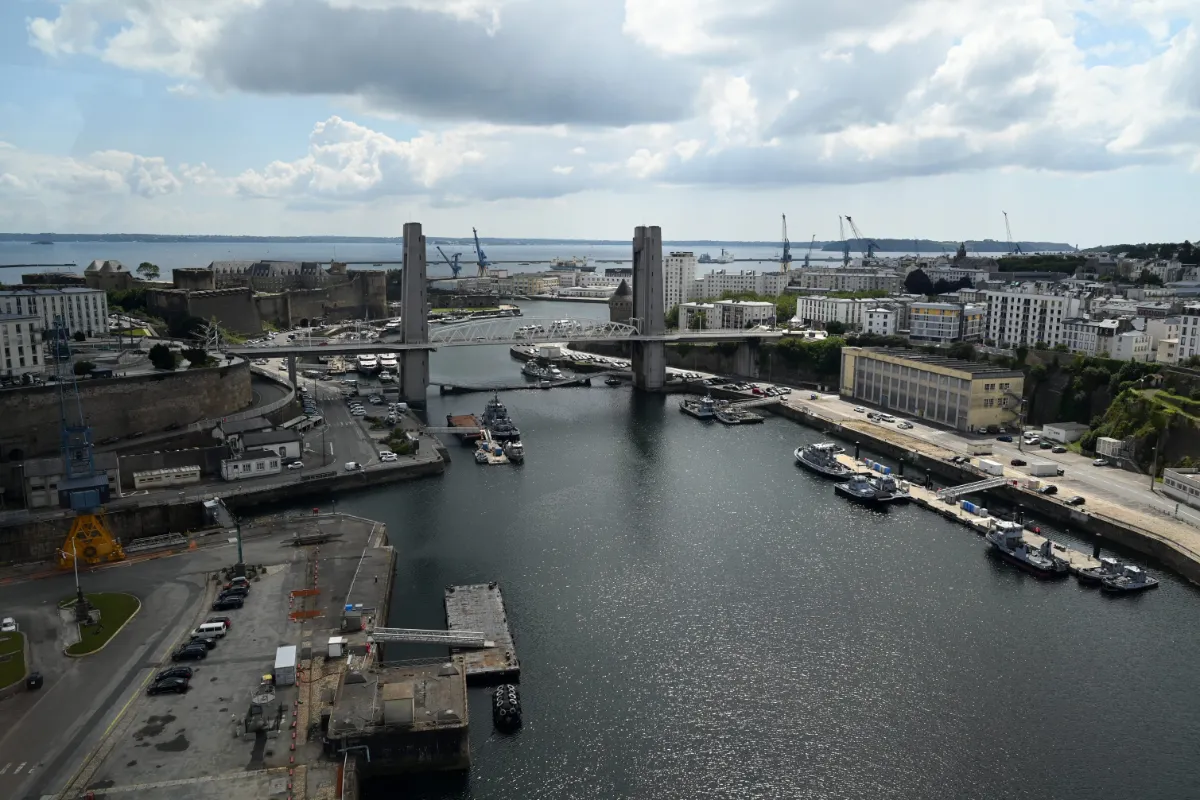
From the 17th century onwards, Brest became one of France’s major naval ports. A vast shipyard for building and maintaining warships developed along the Penfeld, the river that divides the city in two. Even today, the sea remains deeply connected to Brest’s economy, identity and landscape.
Then came the Second World War. After years of bombing and six weeks of fighting in 1944, Brest was devastated. Its reconstruction explains the wide avenues, simple architectural lines and very geometric layout of the modern city centre. A handful of older buildings survived, however, sometimes creating some striking architectural contrasts.
To really get a feel for Brest, head up above the city. The urban cable car crosses the Penfeld and gives you a fantastic view over the maritime facilities, bridges and the huge expanse of the bay. Below you, the city drops sharply towards the water, with the constant feeling that the ocean is never very far away.
TOWNS
| Name | Top+ | Top | Area |
|---|---|---|---|
| Fougères | East | ||
| Cancale | North | ||
| Dinan | ✅ | North | |
| Saint-Malo | ✅ | North | |
| Dinard | North | ||
| Quimper | South | ||
| Concarneau | South | ||
| Vannes | ☑️ | South |
Fougères
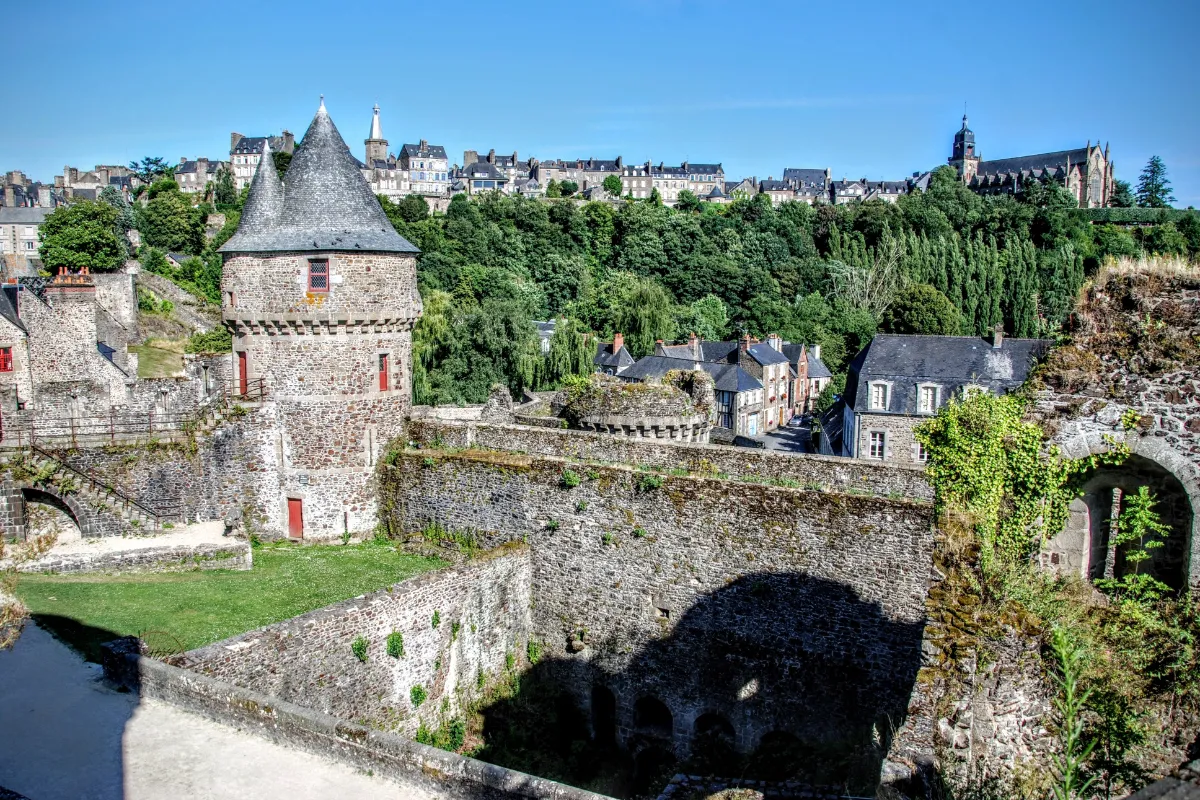
In eastern Brittany, Fougères clings to the hillside overlooking a green valley. You immediately get the sense that this is a town built to guard an old frontier. Its enormous medieval castle is undoubtedly the star of the show, with massive towers, walls and defensive passageways forming a particularly impressive complex.
But there is much more to Fougères than its fortress. As you make your way up towards the upper town, the streets begin to change, revealing another side of its history, first as a trading town and later as an industrial centre, long associated with shoemaking.
The contrast works beautifully. Dark stone, gardens, old houses and traces of the town’s industrial past all sit within a fairly compact area. This makes Fougères very easy to explore on foot, although there are a few climbs along the way.
Views of the castle suddenly appear between the buildings. As daylight begins to fade, the walls and rooftops stand out sharply against the valley.
Cancale
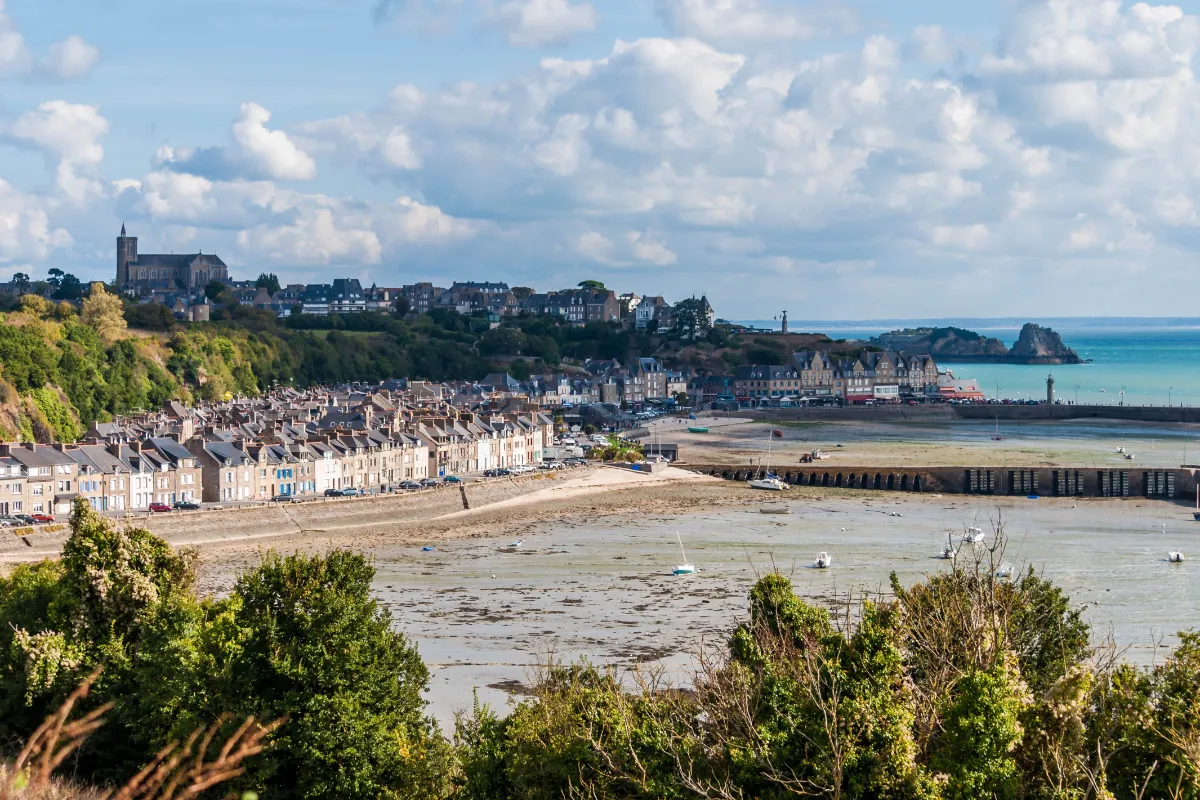
Cancale lives and breathes the sea. You see it everywhere, you feel it, and sometimes you can even taste it in the salty air. The old fishing harbour still has its tightly packed houses at the foot of the hillside, while the scenery constantly changes with the tides.
At low tide, the sea retreats a long way, revealing the oyster beds. Oyster farming has been part of local life for centuries, helped by the shallow waters of the bay and its particularly powerful tides.
Cancale also remembers the sailors who once left for months at a time to fish as far away as the waters off Newfoundland, Canada. During their long absences, women took care of much of the family and economic life back home.
Walk between the seafront and the streets higher up the hill. When the tide goes out, boats, wet sand and rows of oyster beds create an almost graphic landscape.
Dinan
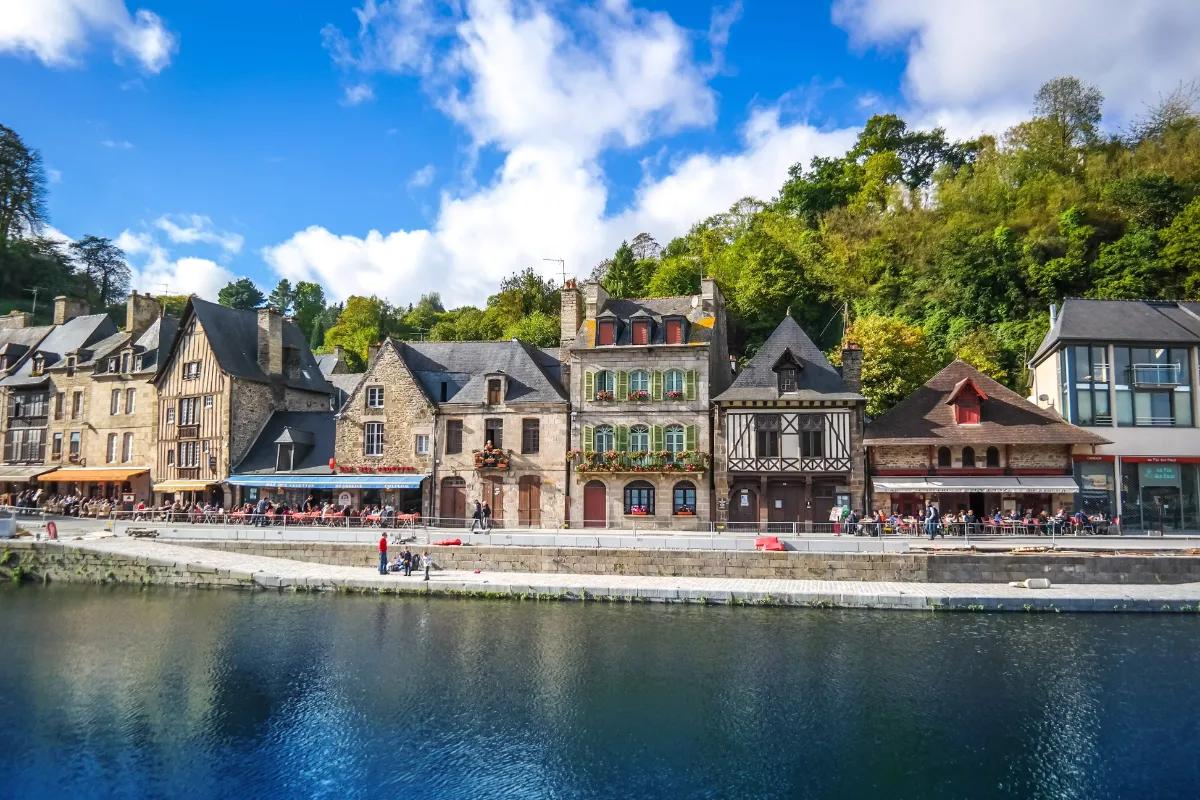
In Our Top+ ✅
Dinan feels as though it has held on to much of its medieval character. Behind the ramparts, cobbled streets climb, descend and narrow between countless houses with their timber frames still visible. The town has an exceptional concentration of them for Brittany.
Its fortifications stretch for around 3 km, with towers and imposing gateways that tell the story of several centuries of defence. They are among the most impressive fortifications in Brittany.
The landscape itself adds a lot to the town’s charm. The old town sits high above the river, while the port lies much further down, beside a river connected to the sea. The slope between the two is pretty serious, so be ready to give your legs a workout.
This difference in height is also a reminder of Dinan’s former role as a trading town. Towards the end of the day, the streets become quieter, and the timber façades, stonework and fortified gateways seem to stand out even more.
Saint-Malo
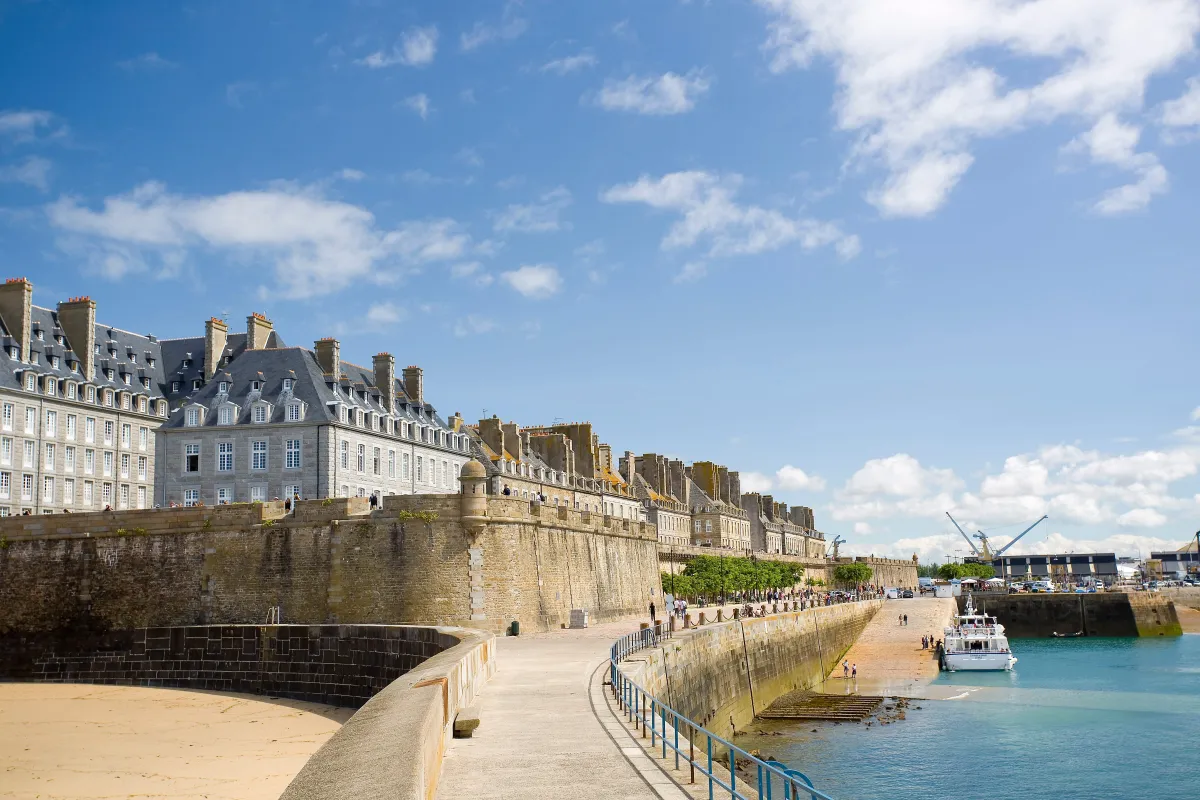
In Our Top+ ✅
Saint-Malo reaches out towards the sea behind a powerful belt of granite. Its ramparts, around 1.8 km long, immediately set the tone. Navigation, overseas trade and defence shaped the city for centuries.
Its history is inseparable from the corsairs, sailors authorised by the King of France to attack enemy ships during wartime. Wealthy shipowners left behind tall granite houses that are particularly characteristic of the old town.
The fighting in 1944 destroyed a very large part of the historic centre. The city was later rebuilt with the aim of recreating its former appearance, which explains the remarkable architectural unity you see today.
Walk all the way around the ramparts. At high tide, the sea seems to crash directly against the walls. Just a few hours later, it retreats and reveals huge stretches of sand.
Dinard
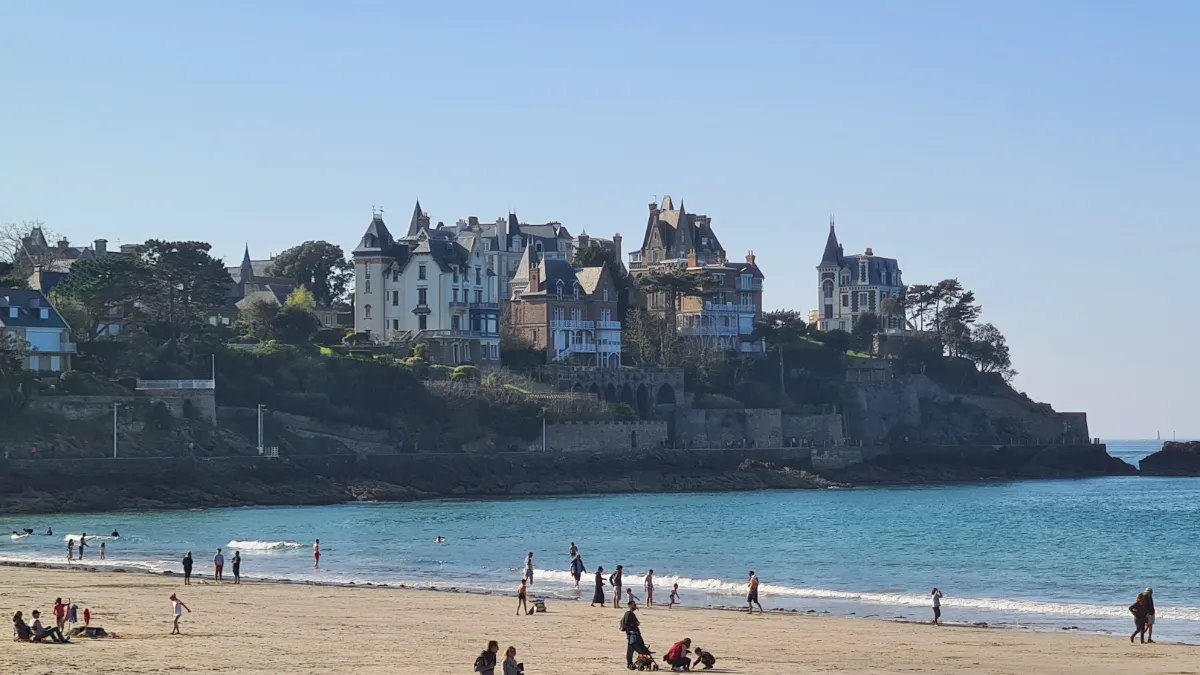
Dinard developed in the 19th century as an elegant seaside resort. British visitors and wealthy European families built spectacular homes here, creating an architectural landscape that is instantly recognisable.
Today, nearly 400 villas are protected. Towers, large bay windows, brick, stone and decorative details borrowed from a wide variety of styles reflect the taste for extravagance that defined the luxurious holiday homes of the period.
As you walk along the coast, the scenery constantly shifts between sweeping sea views and the silhouette of a villa perched above the rocks. The Clair-de-Lune promenade, one of Dinard’s best known walks, perfectly captures this combination of architecture and sea.
Mornings are often quieter. The façades are bathed in soft light, while the wind, tides and seabirds remind you that, for all its elegance, Dinard is completely shaped by the ocean.
Quimper
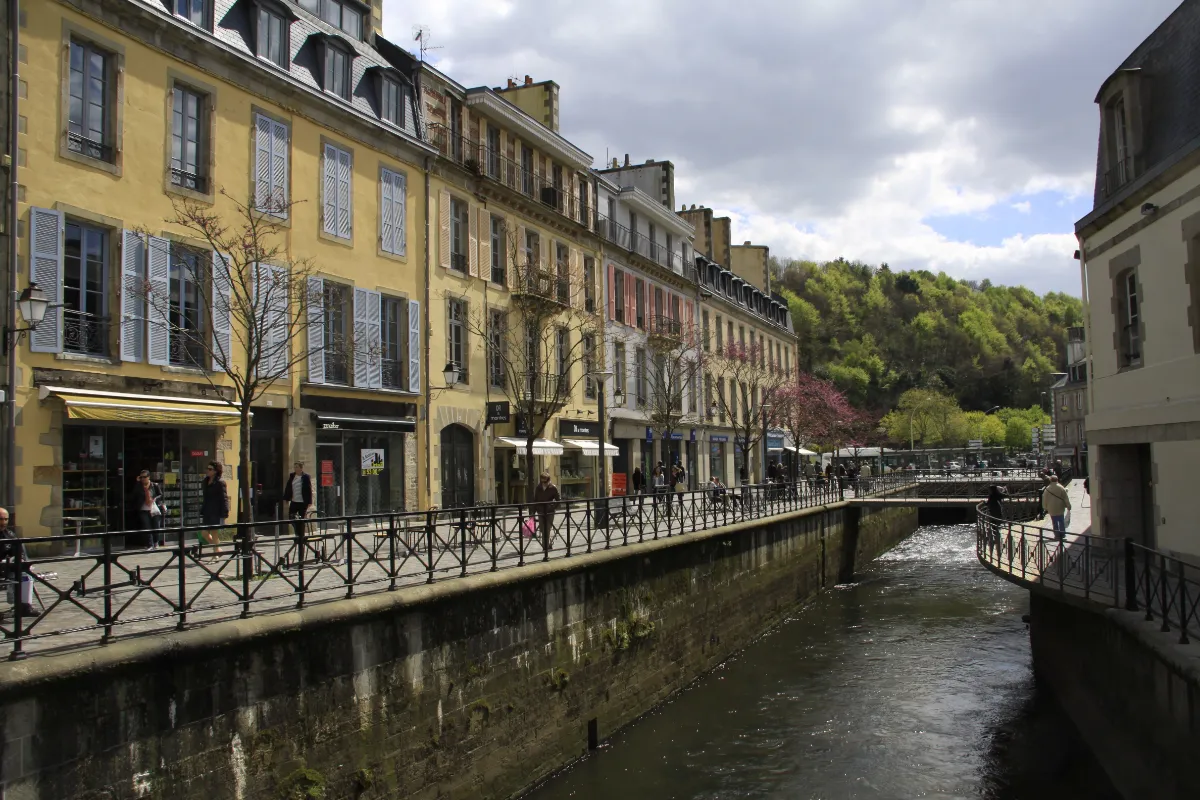
Quimper has an appealing mix of small city charm and the cultural importance of one of Brittany’s major centres. Its historic heart is easy to explore on foot, with timber framed houses, small squares, riverside paths and footbridges crossing the water.
At the centre of it all, Saint-Corentin Cathedral rises above the city with its two tall spires. Construction began in 1239 and continued over several centuries. Today, it remains one of Quimper’s most recognisable landmarks.
The city also has a long connection with decorated ceramics, which have become one of its best known crafts. This tradition is a major part of Quimper’s identity, along with patterns and colours inspired by Breton culture.
Remember to look up as you walk. Overhanging upper floors, colourful façades and irregular rooftops provide endless details. In a light rain, the stone and slate take on noticeably deeper shades.
Concarneau
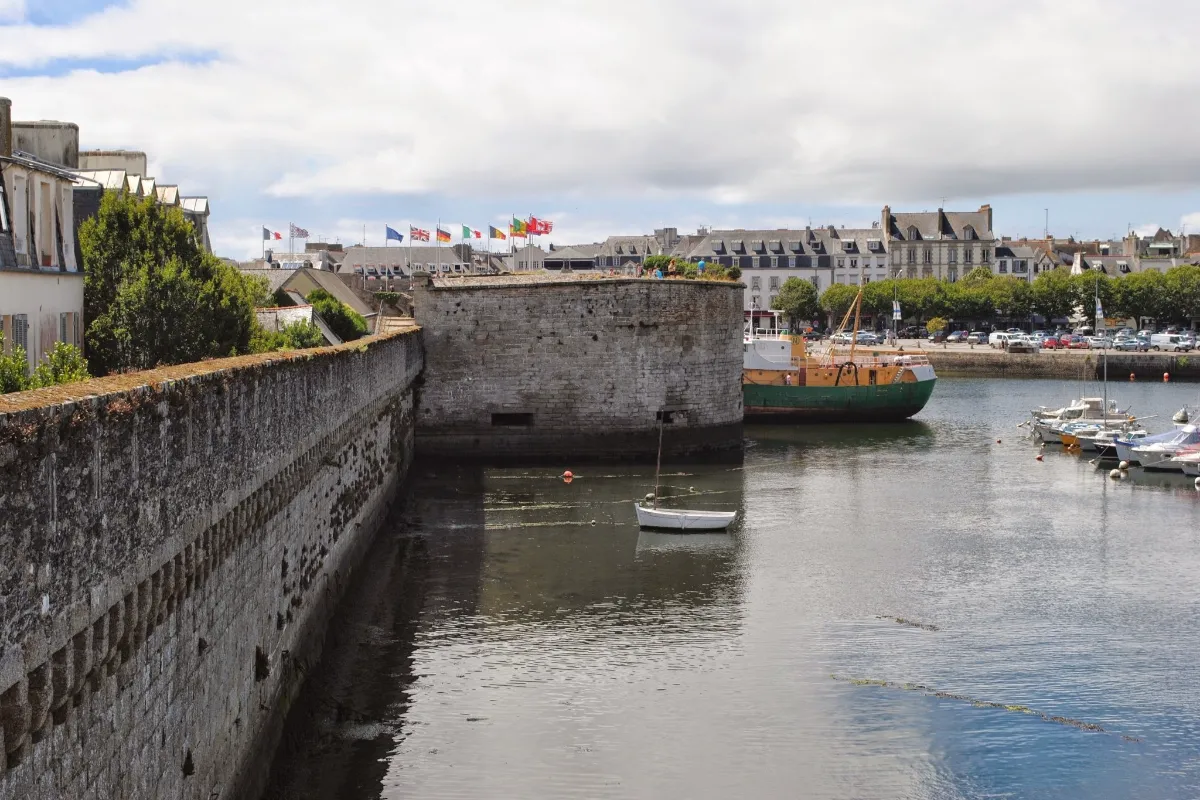
Concarneau revolves around the sea, but its historic heart fits almost entirely onto a small fortified island. The Ville Close, the name given to this walled centre, remains the city’s most iconic sight, with its powerful granite ramparts.
Walking inside feels like entering a small fortress floating on the water. Narrow streets, old houses and defensive walls contrast with the fishing harbour and marina immediately outside.
Fishing has deeply shaped Concarneau. From the 19th century onwards, fish canning factories multiplied, and the town began to expand well beyond its old fortifications.
The Ville Close gets very busy in summer, so mornings and evenings are much quieter. Once the crowds thin out, the walls regain their sense of scale, while reflections on the bay make the fortress seem as though it is floating on the water.
Vannes
In Our Top ☑️
Vannes combines a remarkably well preserved historic centre with a real sense of being close to the sea. Once you pass through the fortified gates, you enter a network of narrow streets lined with old houses, many of them with colourful timber frames still clearly visible.
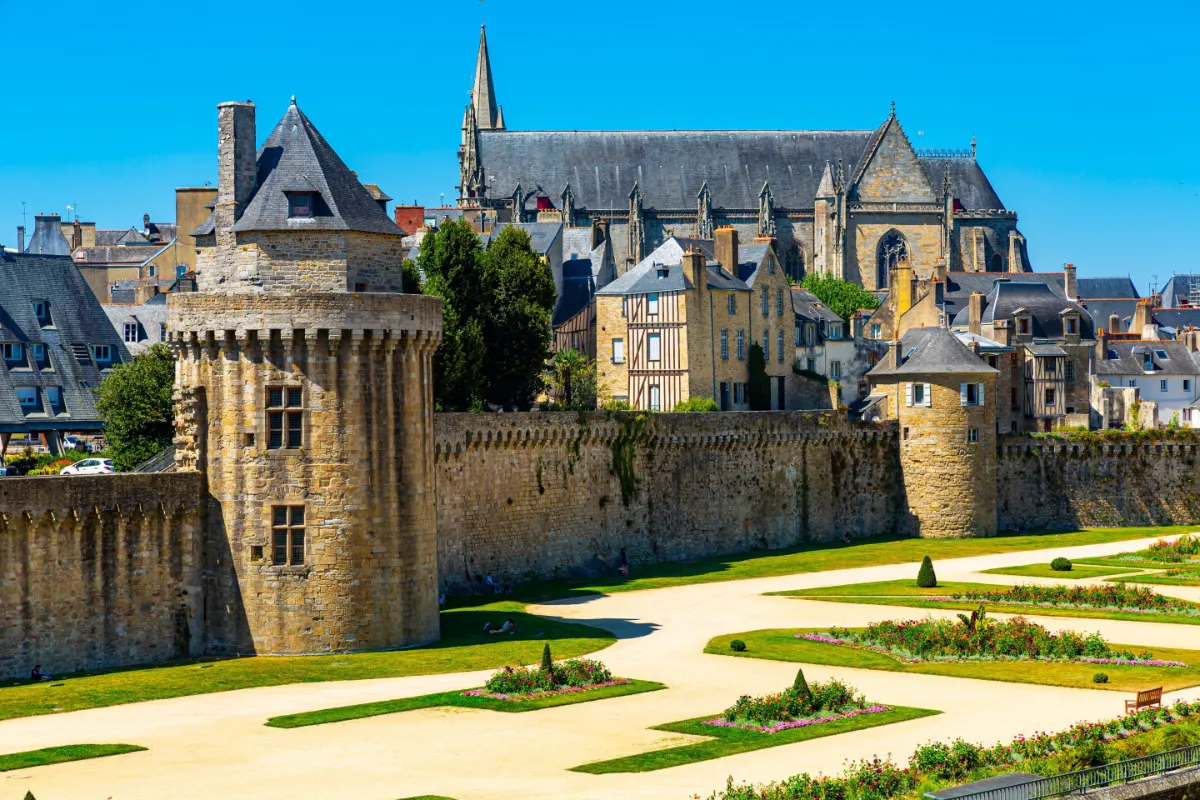
The ramparts are the city’s other great landmark. Towers, walls, gardens and old gateways still form a large part of the defensive system that once protected Vannes. The city’s history stretches back more than 2,000 years.
Despite all this history, Vannes never feels frozen in time. As you head down towards the harbour, the streets become wider, the light opens up, and the boats hint at the coastal landscapes waiting just beyond the city.
Everything is easy to explore on foot. Within just a few minutes, you can go from narrow streets squeezed between timber framed façades to open quays, then on to gardens laid out at the foot of the old walls.
SMALL TOWNS (Village Feel)
| Name | Top+ | Top | Area |
|---|---|---|---|
| Dol-de-Bretagne | North | ||
| Roscoff | ☑️ | North | |
| Josselin | South | ||
| La Gacilly | ☑️ | South |
Dol-de-Bretagne
Between Saint-Malo and the Bay of Mont-Saint-Michel, Dol-de-Bretagne tends to fly under the radar. Yet for centuries, this small town was a powerful religious centre. Its historic buildings survived the wars without suffering the widespread destruction of 1944, which explains why its old streets have remained so remarkably intact.
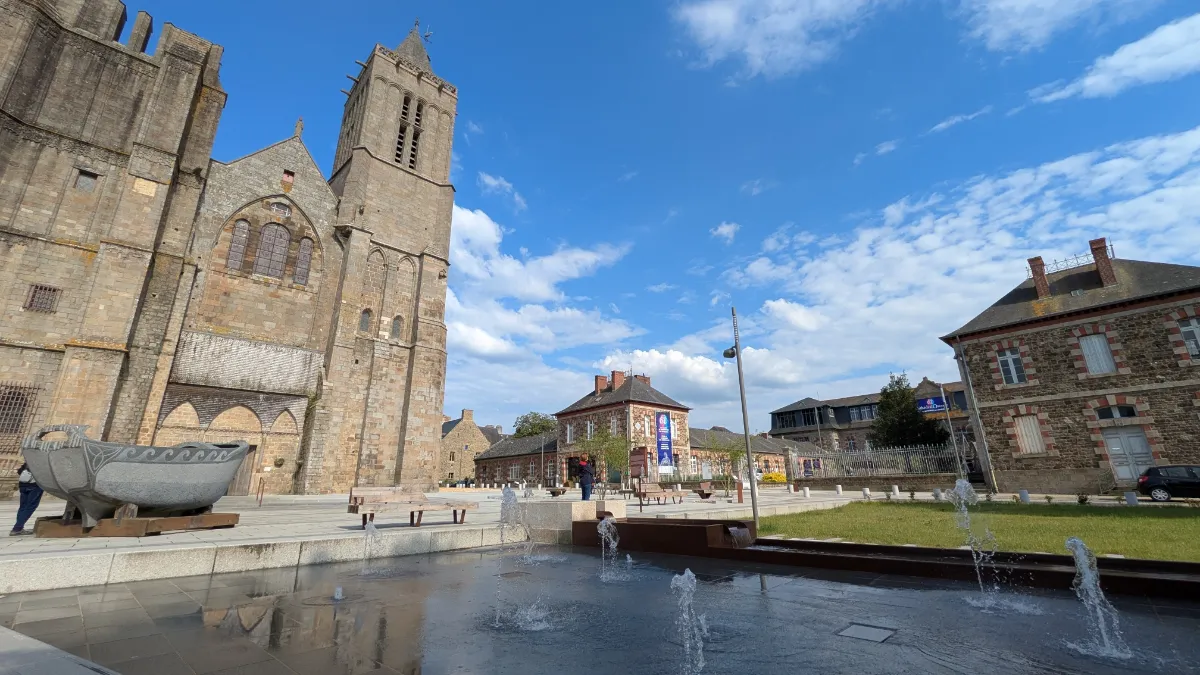
Saint-Samson Cathedral towers above the rooftops. Built mainly in the 13th century, it impresses more through its sheer power than through decoration, with austere granite, huge spaces and subdued light. Its almost oversized presence is a reminder of just how important Dol once was, back when religious travellers crossed Brittany on foot.
Around the cathedral, everything feels more intimate. Medieval houses, narrow passageways and façades supported by massive pillars make you want to slow down. Remember to look up, some of these houses are among the oldest in Brittany. And although Dol is only a few kilometres from the sea, it has a surprisingly rural atmosphere, peaceful and almost secret.
Roscoff
In Our Top ☑️
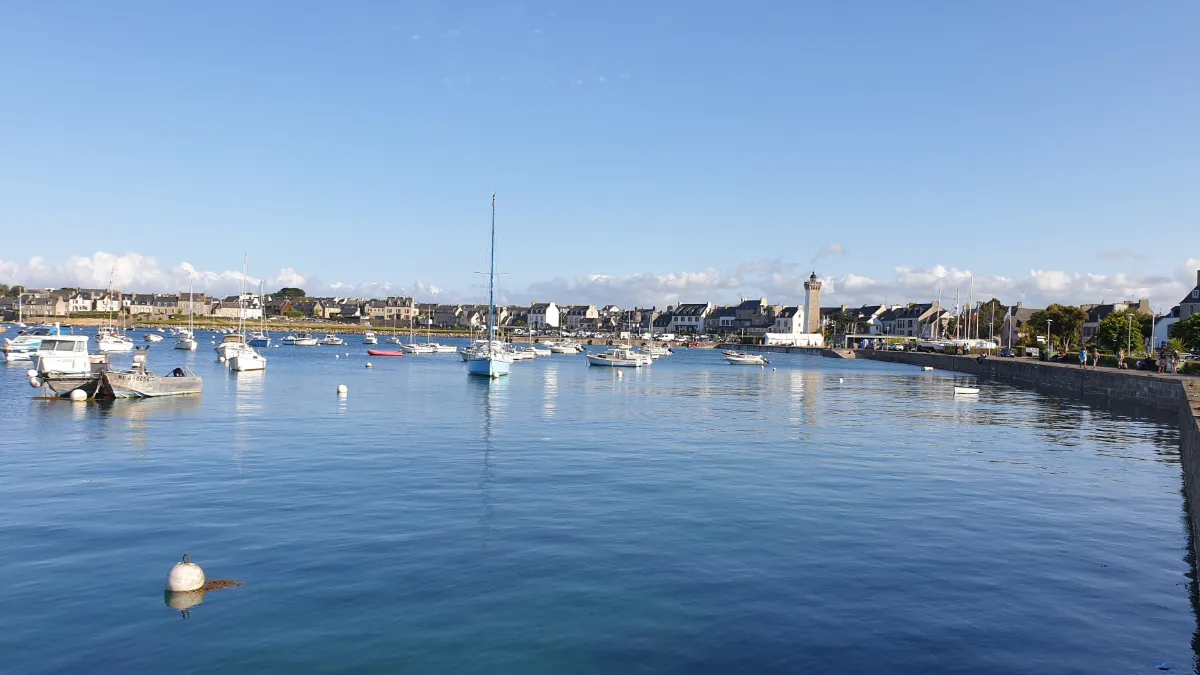
Roscoff is built from solid granite, with its heart firmly turned towards the English Channel. From the 16th century onwards, its port played a major role in a thriving maritime trade with England and northern Europe. Merchants, sailors and later corsairs, who were authorised to attack enemy ships during wartime, brought wealth to the town.
They left behind tall stone houses, some decorated with carved windows and small towers. Here, the sea is never just part of the scenery. The tides reveal the rocks, the Île de Batz seems almost close enough to touch, and the old harbour is a reminder of several centuries of trade and travel.
In the 19th century, local onion farmers also began crossing the sea to sell their produce in Britain. It was an extraordinary adventure that became an inseparable part of Roscoff’s identity. The mild climate, seaweed and salty air also helped make the town a pioneer in treatments using seawater, which began developing here in the late 19th century.
Josselin
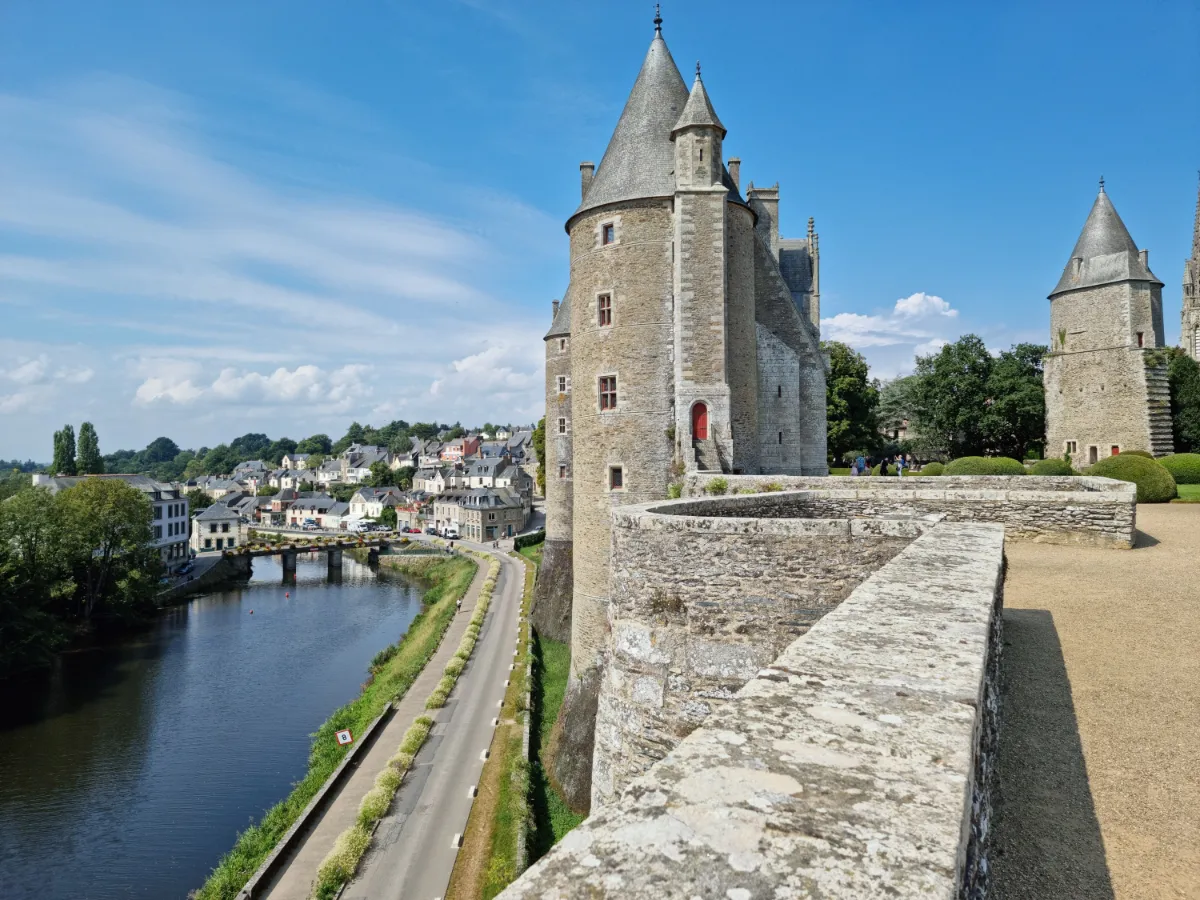
Now this is a small town that knows how to make an entrance! Josselin slopes gently down towards the Oust, a peaceful river, while its castle rises dramatically above the water with three enormous towers. The fortress carries the traces of almost a thousand years of history and has belonged to the Rohan family for centuries.
The contrast is stunning. From the river, you see a massive defensive fortress built into the rock. From the courtyard, the castle reveals a much more delicate side, with a richly carved façade transformed in the late 15th century. Wars, destruction and successive restorations have given it these surprisingly different faces.
In the surrounding streets, everything suddenly feels smaller and more intimate. Old timber framed houses sometimes seem to lean towards each other. Cobbles, granite and small squares create a remarkably harmonious setting without making the town feel like a museum. Down by the water, the castle reflected in the river gives you Josselin’s most spectacular view.
La Gacilly
In Our Top ☑️
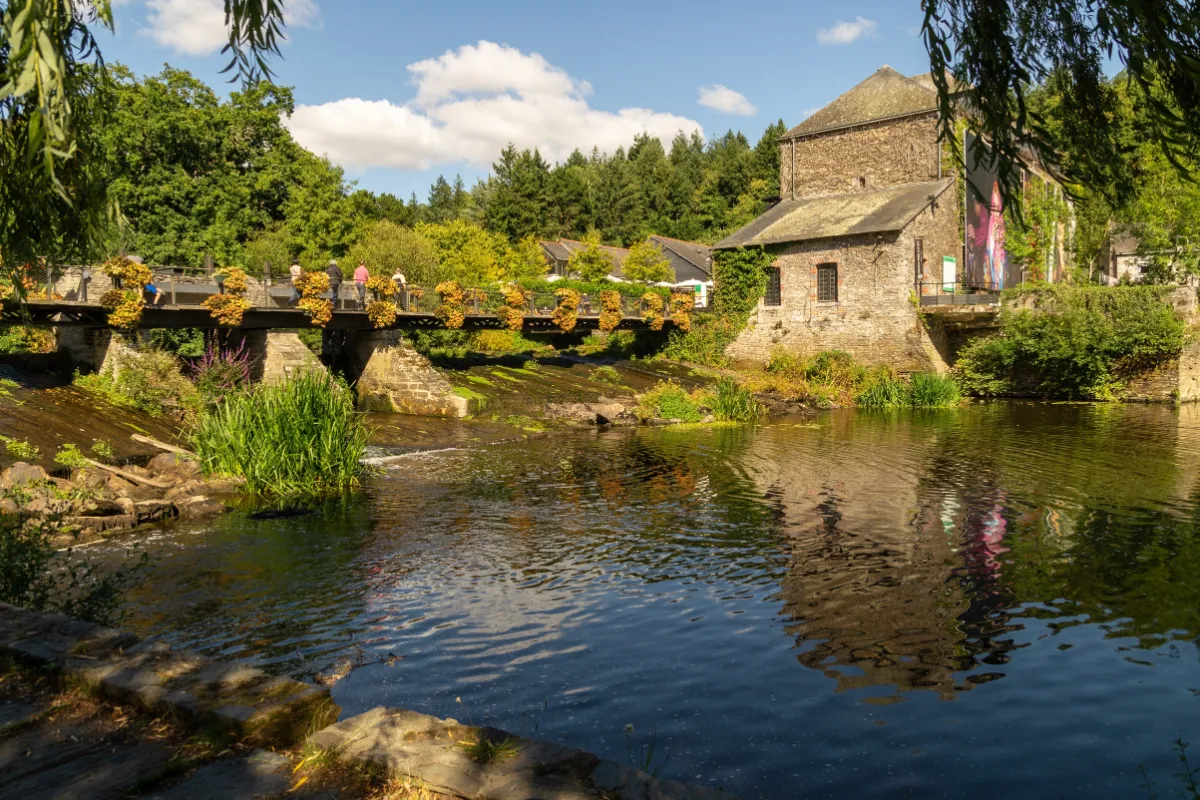
La Gacilly is more about flowers than grand monuments. Set in a green valley crossed by the Aff River, the village is a mix of sloping streets, old houses and little passageways where plants seem determined to cover every wall. The atmosphere is peaceful and creative, with a slightly bohemian feel that gives the place plenty of charm.
Much of this personality comes from the artists and craftspeople who have settled here over the past few decades, but also from the story of Yves Rocher, who was born in La Gacilly. His interest in plants had a profound influence on the village and helped shape an identity centred around botany, nature and environmental protection.
During the warmer months, the village takes on a whole new look. The La Gacilly Photo Festival transforms its streets, façades and gardens into one huge open air exhibition. Hundreds of large scale photographs explore themes including the relationship between people and the environment. You simply wander from one photograph to the next through the narrow streets, sometimes barely noticing where the village ends and the exhibition begins.