


MAP
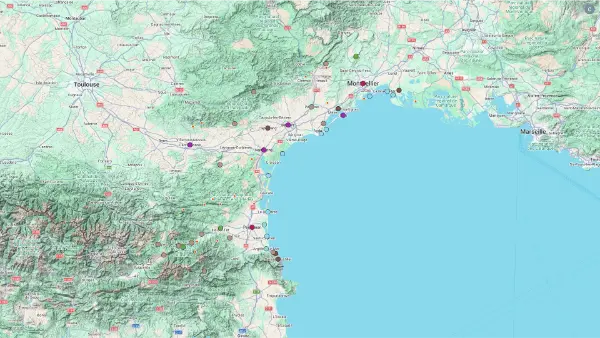
Languedoc
Interactive Map
Languedoc
Interactive Map
Click on the icon  in the top-left corner to display the map legend.
Show/Hide layers as needed.
Click on the arrow icons (v) to display the sublayers.
CITIES
| Name | Top+ | Top |
|---|---|---|
| Montpellier | ✅ | |
| Perpignan | ☑️ |
Montpellier
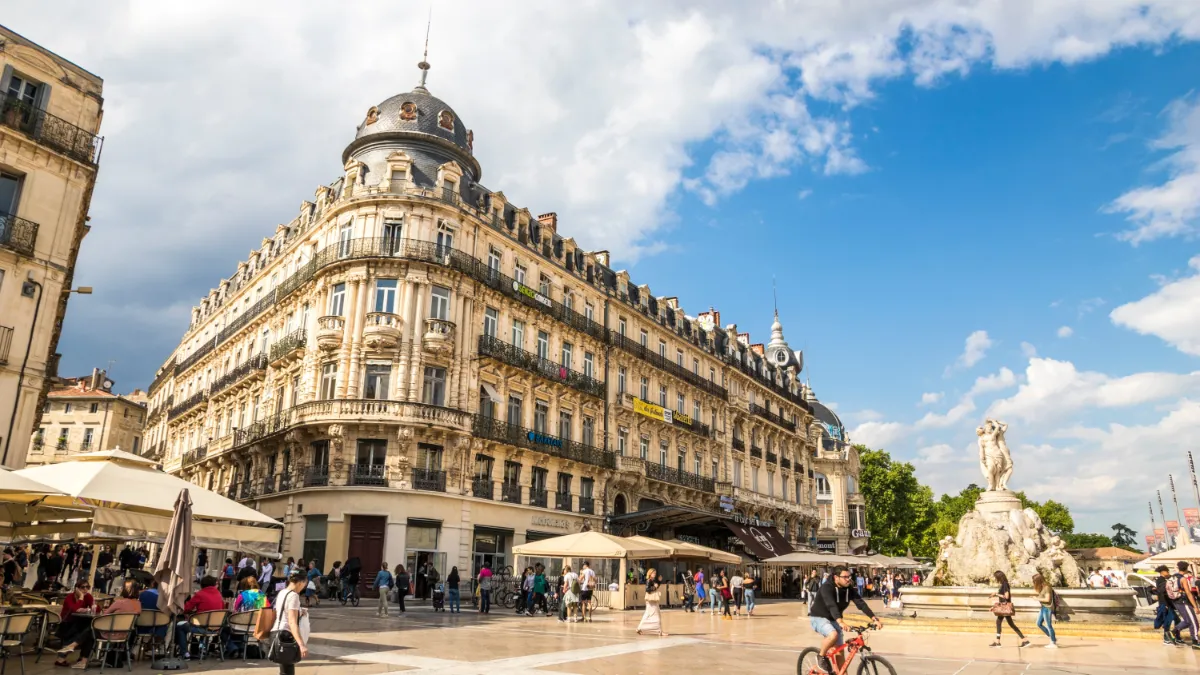
In Our Top+ ✅
Population 320 000
Montpellier doesn’t need sunny weather to win you over. With its almost entirely pedestrianized old town, shady squares and youthful energy, the city has a way of life shaped as much by its history as by its remarkable vitality. Founded in the Middle Ages, it has grown without ever really turning its back on its historic buildings.
The historic heart of the city, nicknamed the Écusson because of its shape, is a maze of winding streets where you can suddenly emerge from a tiny square onto a grand monumental façade. Behind heavy wooden doors, you’ll sometimes find magnificent inner courtyards, a legacy of the wealthy families who lived here in the 17th and 18th centuries. The best way to explore is on foot, wandering through hidden passageways and up old staircases.
From the vast Place de la Comédie, dominated by its opera house, it’s a short walk to the Promenade du Peyrou, laid out in honor of Louis XIV. With its triumphal arch, terraces and old aqueduct, this part of Montpellier feels almost like a royal capital. Nearby, the Musée Fabre takes you through several centuries of painting, from European masters to contemporary artists.
But Montpellier has also been a center of learning for centuries. Its medical school, which dates back to the 13th century, is one of the oldest still operating in the world. That academic tradition lives on today in a particularly lively cultural scene, with festivals, performances and events attracting young people from all kinds of backgrounds.
You’ll discover a very different side of Montpellier to the east, where modern neighborhoods have pushed the city’s boundaries far beyond its historic center. In Antigone, architect Ricardo Bofill designed a monumental district inspired by classical antiquity in the 1980s. Farther along the Lez, the river running through the newer neighborhoods, bold contemporary buildings create a striking contrast with the intimate atmosphere of the medieval streets.
Perpignan
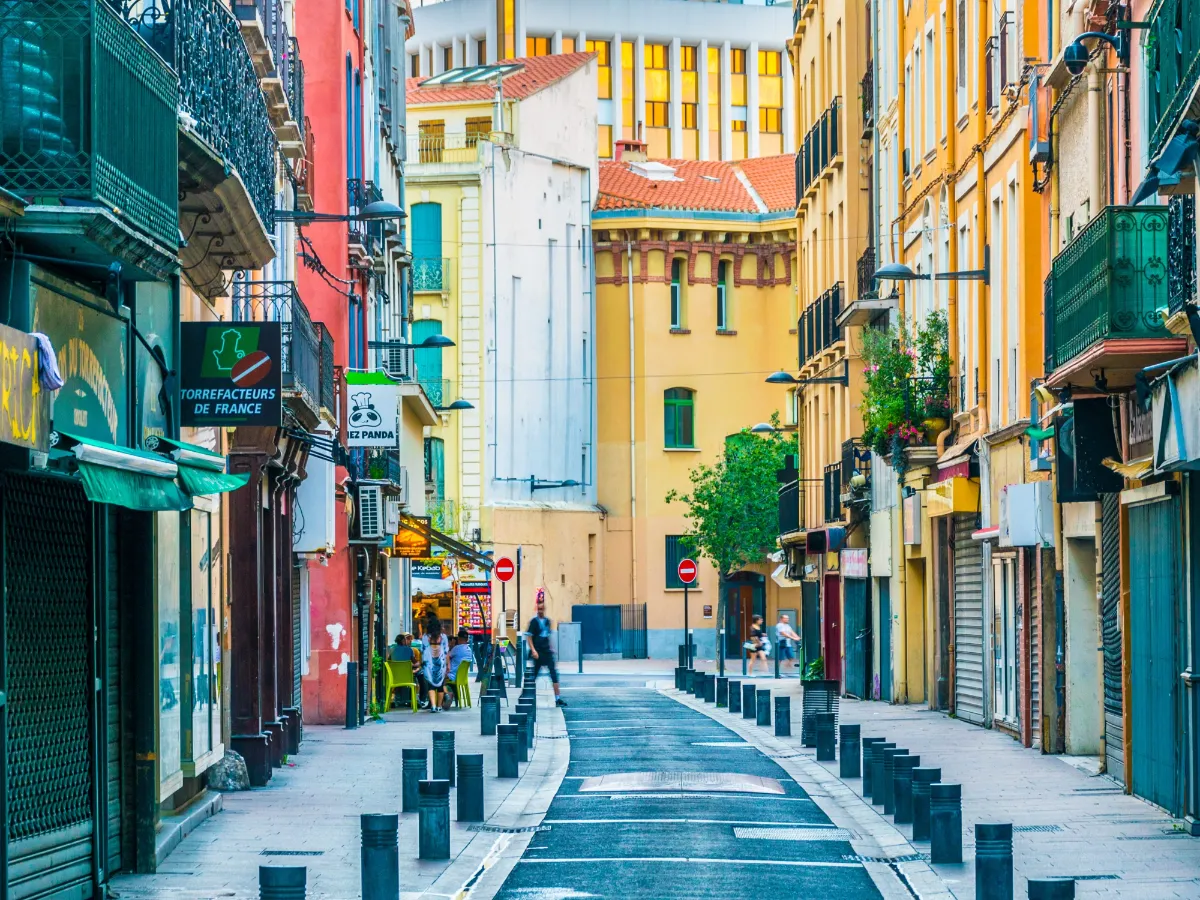
In Our Top ☑️
Population 120 000
In Perpignan, it’s hard to forget just how close Spain is. The local accent, colorful façades, popular traditions and bilingual signs all remind you that the city’s identity is rooted just as deeply in Catalan history as in French history. Under the southern sun, palm-lined squares and narrow streets give the old town a distinctly Mediterranean atmosphere.
To understand this unique identity, you have to go back to the 13th century, when Perpignan became the mainland capital of the Kingdom of Majorca, which also controlled territories on both sides of the Pyrenees. One of the greatest reminders of this prosperous period is the Palace of the Kings of Majorca, a vast fortified residence overlooking the city. Its courtyards and chapels reveal the elegance of medieval Catalan architecture.
Down below, the historic center has plenty of other surprises, starting with the Castillet. This former fortified gateway, built from red brick, has become the symbol of Perpignan and recalls the defensive walls that once surrounded the city. The nearby streets lead to Saint-Jean-Baptiste Cathedral and old houses with beautifully detailed façades.
Catalan culture is still very much alive, especially during traditional festivals filled with local music and dancing. Perpignan also has the relaxed pace of life you’d expect from a southern French city, despite the tramontane, the sometimes fierce northwesterly wind that sweeps across the plain. In the distance, the peaks of the Pyrenees form a dramatic backdrop.
TOWNS
| Name | Top+ | Top |
|---|---|---|
| Sète | ☑️ | |
| Béziers | ||
| Narbonne | ||
| Carcassonne | ✅ |
Sète
In Our Top ☑️
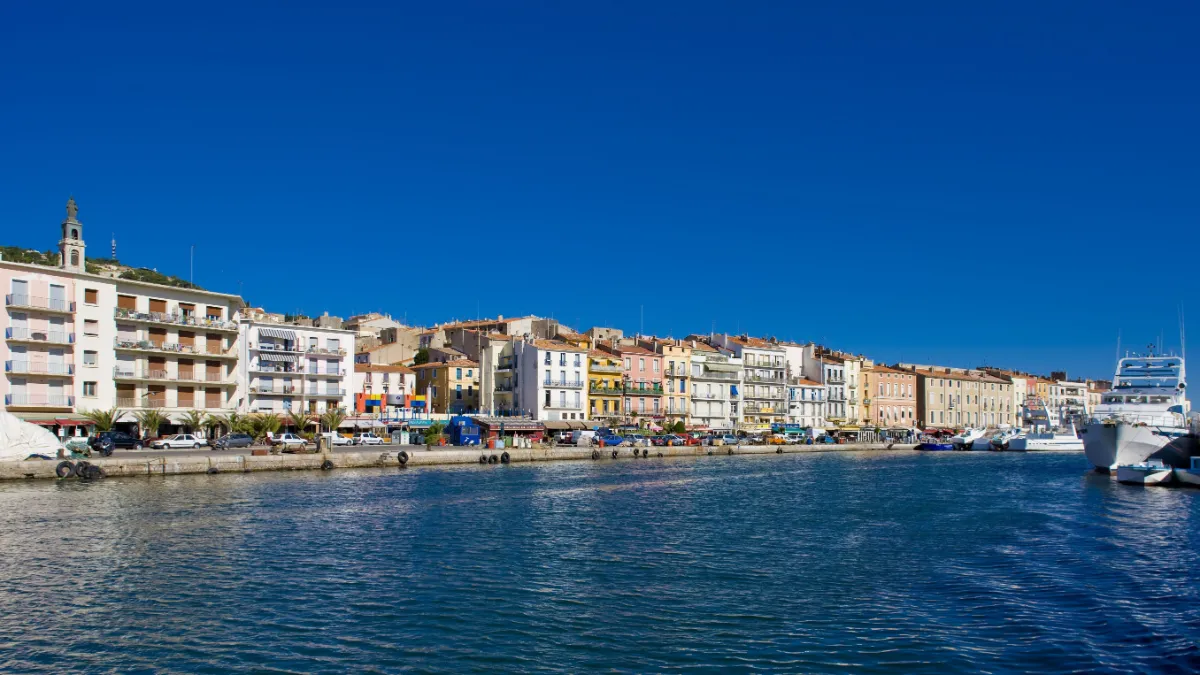
In Sète, water is everywhere. Tucked between the Mediterranean Sea and the vast Thau Lagoon, this canal-filled port town has a character all its own, with fishing boats, bridges and colorful houses. Founded in 1666 under Louis XIV to establish a major seaport, it grew through trade and fishing without losing its down-to-earth, working-class spirit.
The Quartier Haut, built on the slopes of Mont Saint-Clair, still has a distinctly Italian feel, a legacy of fishing families who arrived from places such as Naples in the 19th century. Down by the water, the quays are bustling with port activity. In summer, the town’s famous water jousting tournaments bring two opponents face to face, each standing on a platform at the back of a boat and trying to knock the other into the water.
From the top of Mont Saint-Clair, you get sweeping views over the canals, beaches and enormous lagoon. Sète was also home to singer-songwriter Georges Brassens and poet Paul Valéry, whose famous poem The Graveyard by the Sea captures the Mediterranean landscape stretching out below.
Béziers
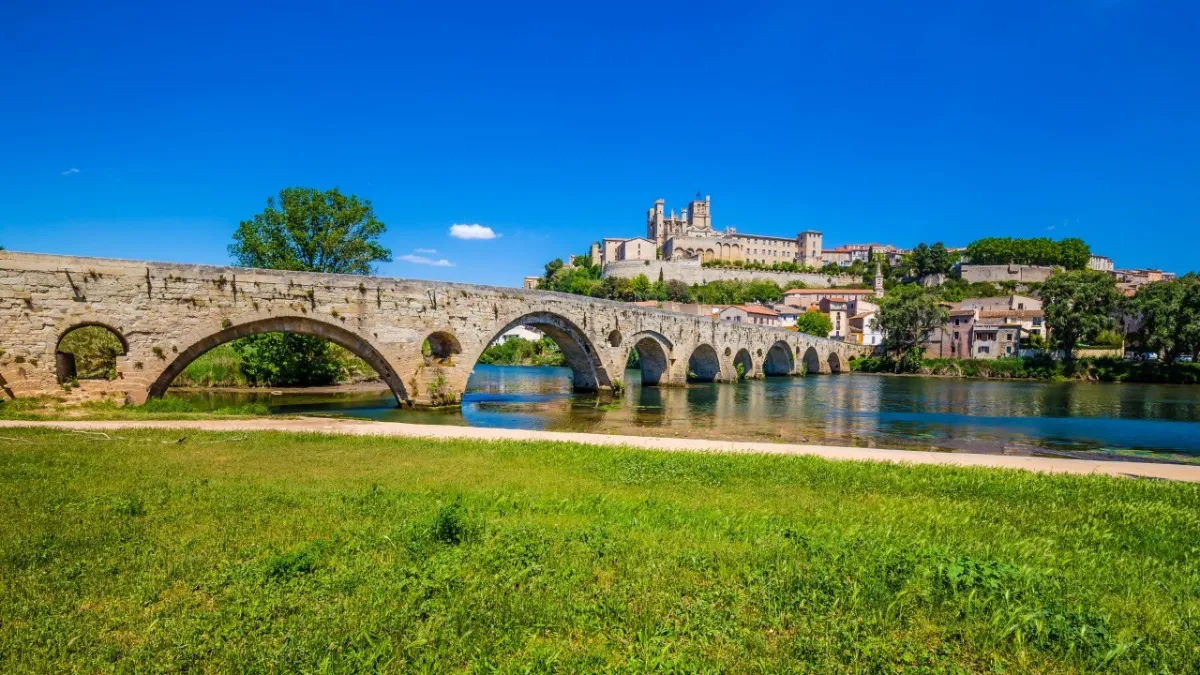
Perched on a hill overlooking the Orb River, Béziers has a strong personality, with its old streets, wide boulevards and surrounding vineyards. Its skyline is dominated by the imposing Saint-Nazaire Cathedral, whose massive walls and towers make it look almost like a fortress. Inhabited since ancient times, the city has also seen its share of turbulent history. In 1209, Béziers was the scene of a massacre during the crusade against the Cathars, a Christian religious movement condemned by the Roman Catholic Church.
Several centuries later, wine production and trade brought the city considerable wealth, reflected in its broad avenues and elegant 19th-century buildings.
The Canal du Midi, built in the 17th century to connect the Atlantic Ocean with the Mediterranean, is another major part of Béziers’ heritage. At the Fonseranes Locks, boats pass through a series of chambers designed to overcome the change in elevation, an impressive feat of engineering.
Narbonne
Narbonne has plenty of grandeur, even if its old town is relatively small today. Founded in 118 BC, it was once one of the most important Roman cities in southern France, located on the major route linking Italy and Spain. A section of that ancient Roman road, the Via Domitia, can still be seen right in the heart of the city.
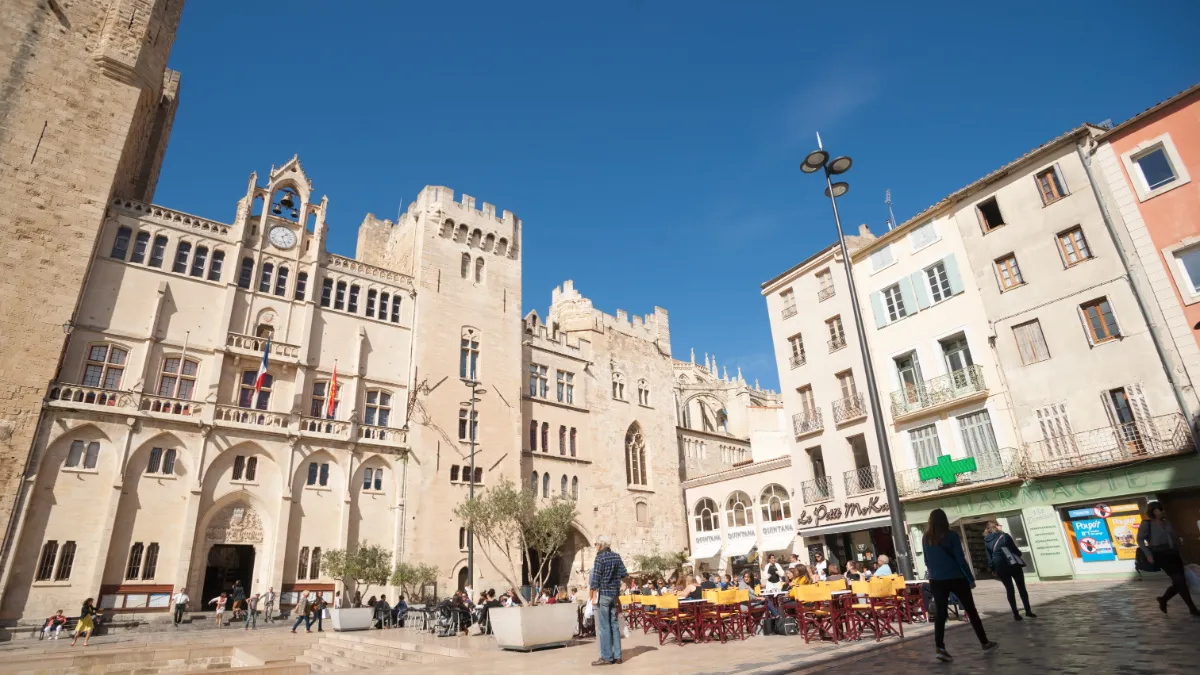
The Middle Ages left Narbonne with an impressive collection of monuments, dominated by the Palace of the Archbishops, once home to the city’s powerful religious leaders. Right beside it stands Saint-Just-et-Saint-Pasteur Cathedral, begun in the 13th century but never completed. Its soaring vaults and monumental architecture show just how ambitious its builders were.
The Canal de la Robine runs through the city, lined with trees and waterfront paths that are perfect for a stroll. The Narbo Via Museum, dedicated to Roman Narbonne, brings together sculptures, mosaics and ancient inscriptions that reveal just how important the city was two thousand years ago.
SMALL TOWNS (Village Feel)
| Name | Top+ | Top |
|---|---|---|
| Aigues-Mortes | ✅ | |
| Bouzigues | ||
| Port-Vendres | ||
| Banyuls-sur-Mer | ||
| Capestang |
Aigues-Mortes
In Our Top+ ✅
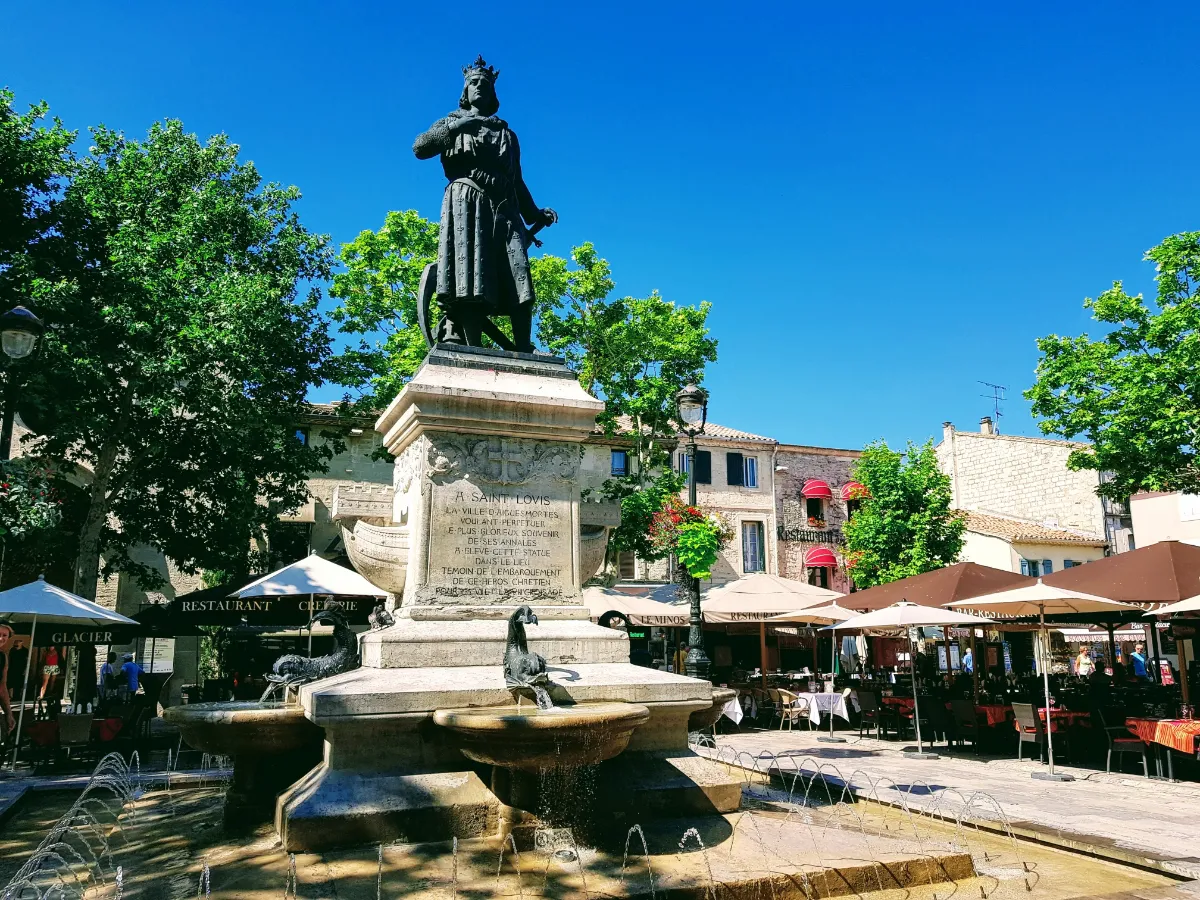
It’s quite a sight to see the almost perfectly preserved medieval walls of Aigues-Mortes rising out of the marshes and saltwater lagoons. Founded in the 13th century on the orders of King Louis IX, the town was intended to give the Kingdom of France a Mediterranean port, particularly for military expeditions to the Middle East.
More than 1.6 kilometers of defensive walls still surround the town, and you can walk along them for views over the salt pans, which sometimes turn pink, and the surrounding Camargue landscape.
Bouzigues
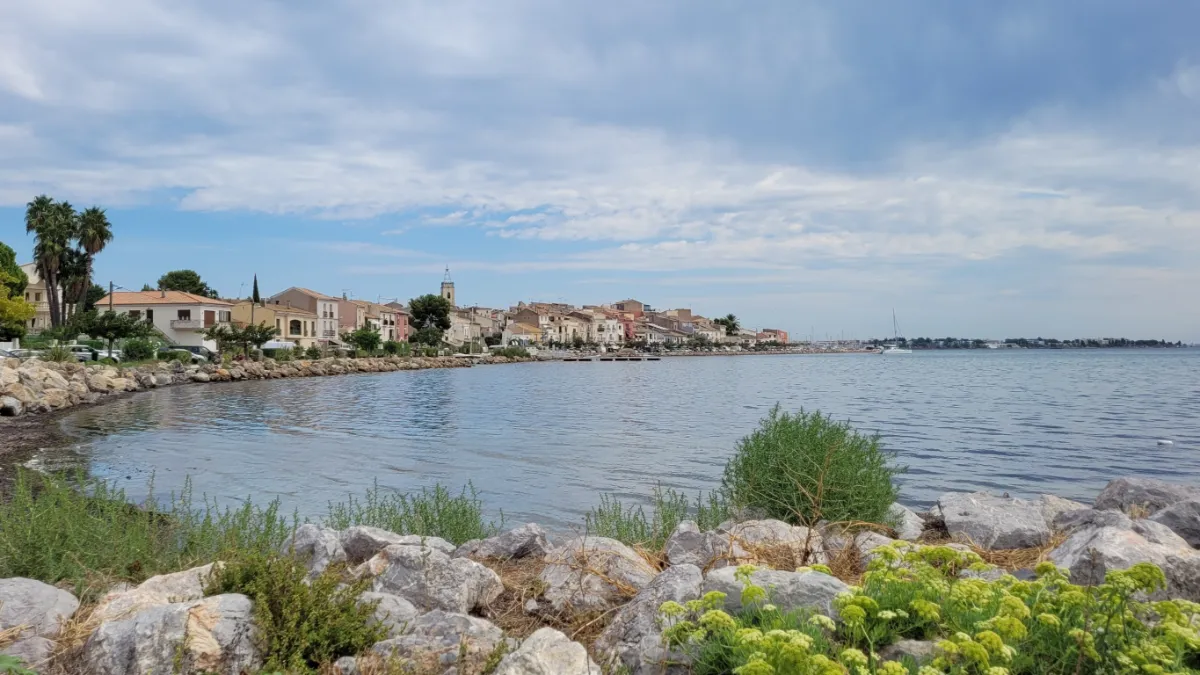
A small harbor on the northern shore of the Thau Lagoon, Bouzigues has lived to the rhythm of fishing and shellfish farming for generations. Just offshore, long rows of structures used to grow oysters and mussels create a distinctive pattern across the water.
The waterfront promenade offers lovely views of Sète and Mont Saint-Clair on the opposite side of the lagoon. It’s also a great place to learn about local fishing traditions at the Musée de l’Étang de Thau, which explores traditional techniques and the history of the area’s maritime activities.
Port-Vendres
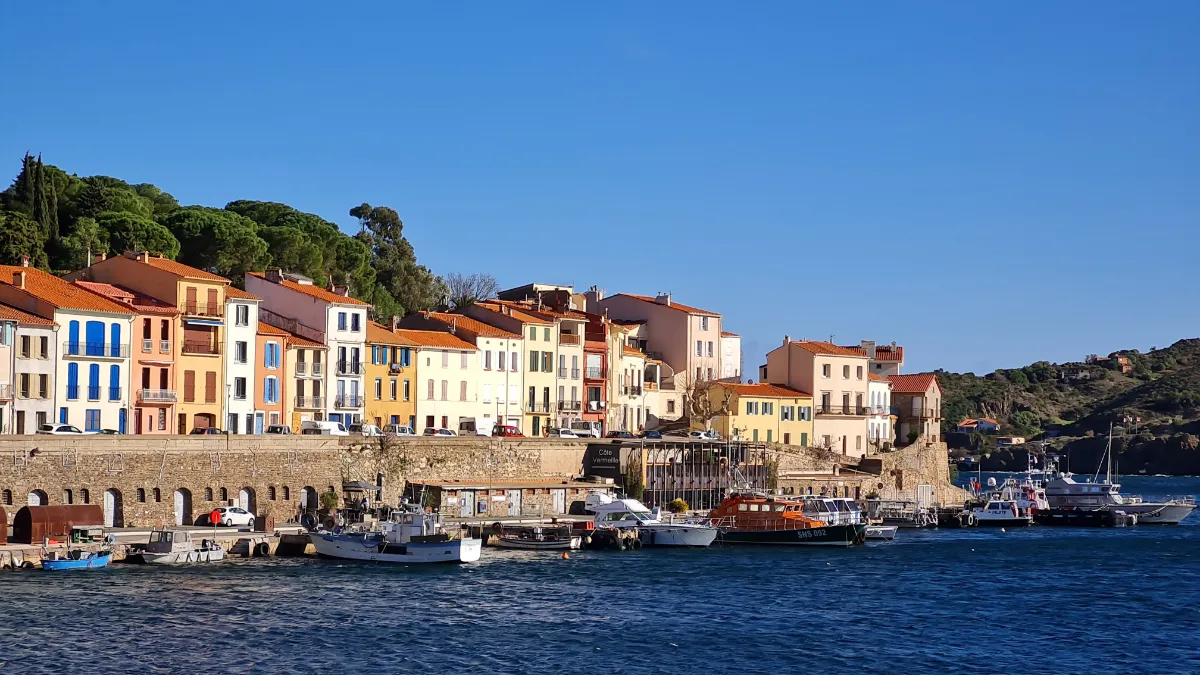
Port-Vendres is a far cry from a sleepy seaside resort. Nestled at the back of a naturally deep bay, this working port is still busy with fishing boats and commercial ships. Already used in ancient times, it was significantly expanded in the 18th century, as the obelisk erected in honor of Louis XVI reminds visitors.
Here, the mountains plunge almost straight into the Mediterranean, giving the surrounding coastline a spectacular appearance. Toward Cap Béar, old military installations and a lighthouse overlook a rugged stretch of cliffs and small rocky coves, where the sea takes on beautiful shades of turquoise.
Banyuls-sur-Mer
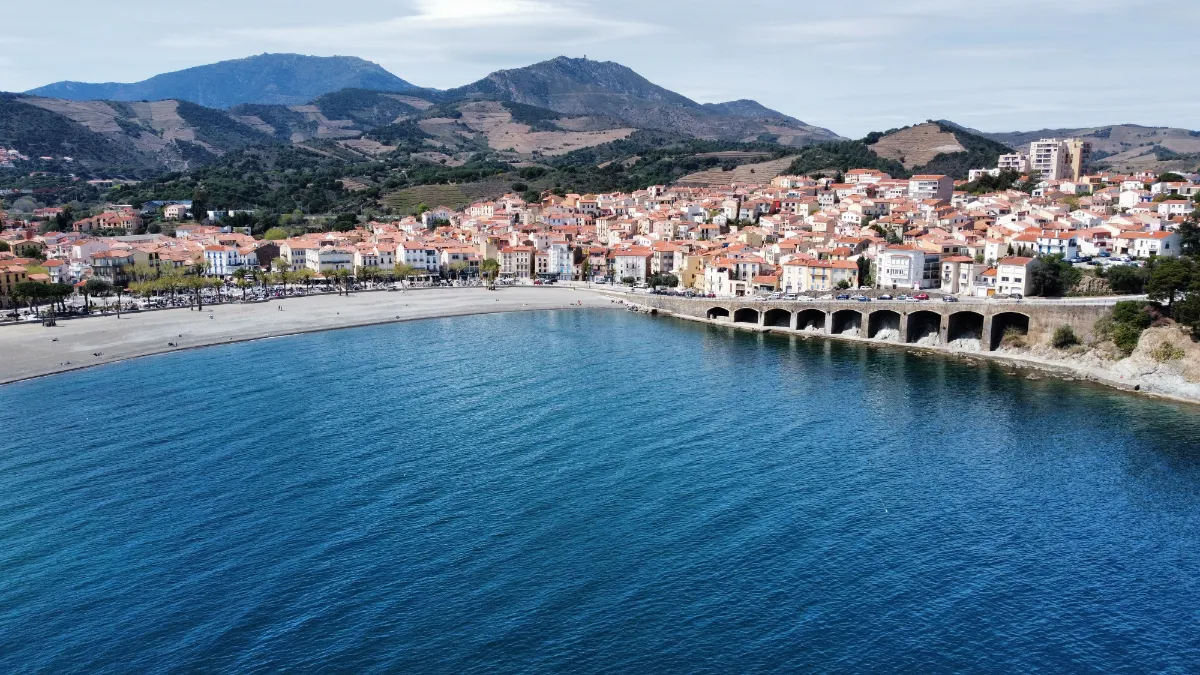
In Banyuls-sur-Mer, the last slopes of the Pyrenees tumble down toward the Mediterranean. The village stretches around a bay lined with colorful houses, while the surrounding hills are covered in terraced vineyards. Growing grapes here is hard work, with slopes so steep that the stone walls sometimes seem to be holding the entire mountainside in place.
Banyuls is also the birthplace of sculptor Aristide Maillol, whose works reflect his deep connection to his Catalan roots. Farther south, the protected waters of the Cerbère-Banyuls Marine Reserve are home to an impressive variety of fish and underwater plants, many of which you can discover simply by snorkeling.
Capestang
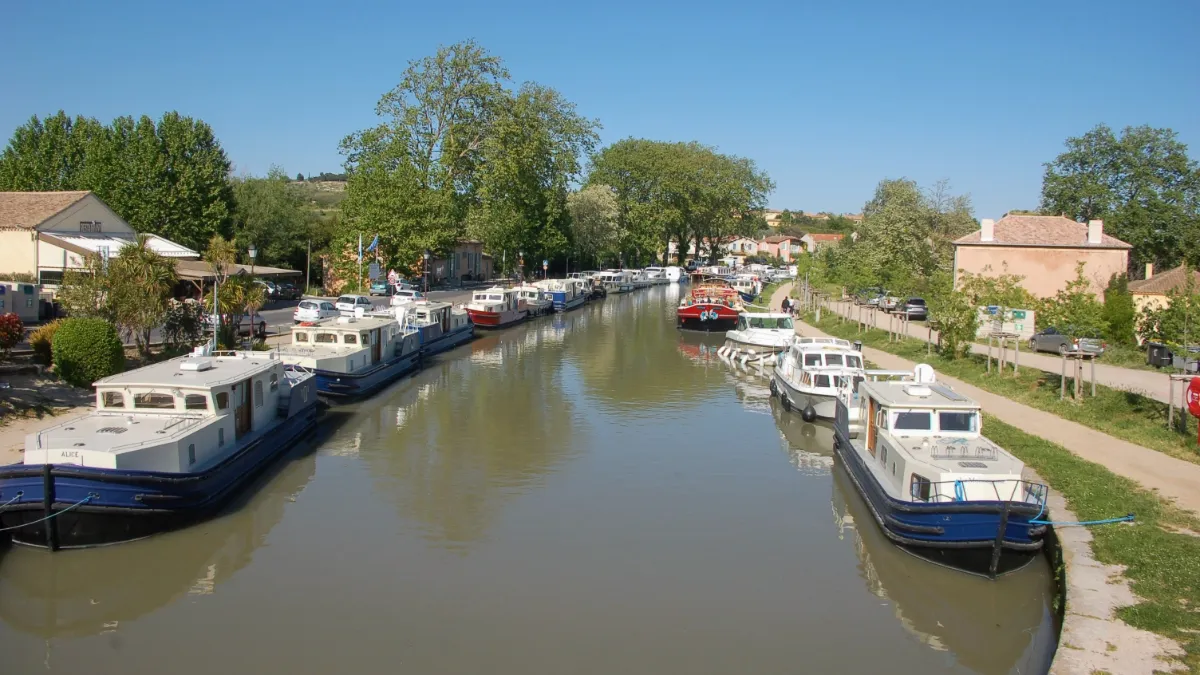
Surrounded by vineyards and the Canal du Midi, Capestang has preserved much of its medieval heritage, a reminder of the days when the village belonged to Narbonne’s powerful religious authorities. The imposing Saint-Étienne Church rises above the rooftops, its bell tower visible from far across the fields and former marshlands.
Hidden among the streets of the old center are historic houses and the former Archbishops’ Castle, famous for its remarkable painted ceiling dating from the 15th century. A little farther down, the peaceful waters of the Canal du Midi invite you to take a stroll beneath the plane trees, past barges moored near the village.