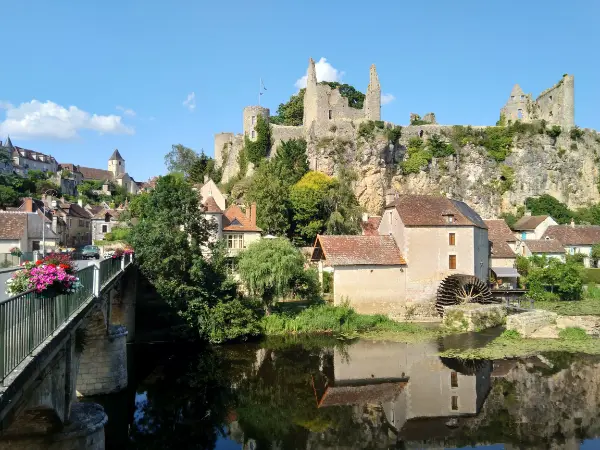



MAP
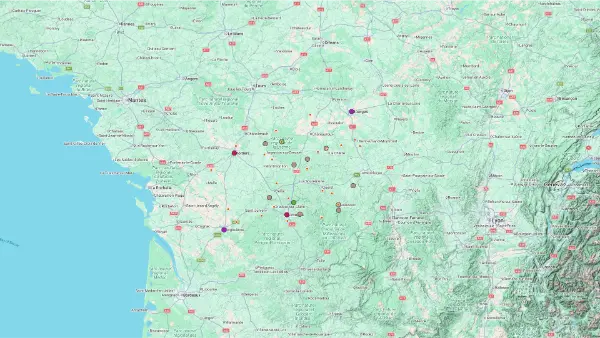
West Central
Interactive Map
West Central
Interactive Map
Click on the icon  in the top-left corner to display the map legend.
Show/Hide layers as needed.
Click on the arrow icons (v) to display the sublayers.
CITIES
| Name | Top+ | Top |
|---|---|---|
| Poitiers | ☑️ | |
| Limoges | ☑️ |
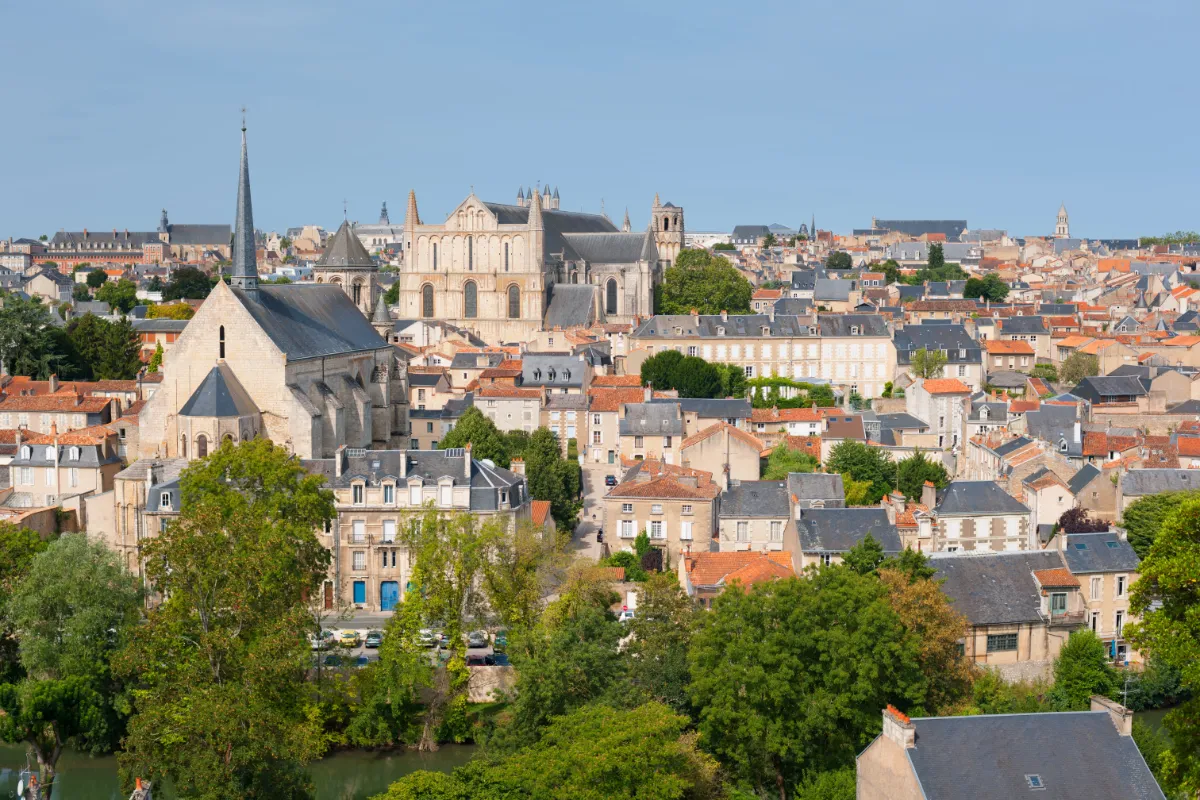
Poitiers
In Our Top ☑️
Population 90 000
Perched between two valleys, Poitiers cuts an impressive figure with its church towers, golden stone façades and winding streets that have been around for nearly 2,000 years. Long known as both a religious and university town, it has always brought together student life and centuries of history.
Look up as you explore Notre-Dame-la-Grande. Its façade, covered in biblical figures and fantastic creatures, looks like a picture book carved in stone. A little further on, Saint-Pierre Cathedral impresses with its sheer size and centuries-old stained-glass windows.
Step further back in time at the Baptistery of Saint-Jean, one of the oldest Christian buildings in Western Europe. Adults were once baptised in a pool set into the centre of the building. The Palais, meanwhile, is a reminder of the power of Eleanor of Aquitaine, who became Queen of France and then Queen of England, with its enormous hall and grand fireplaces.
Between visits, wander past half-timbered houses and discover the stairways and passageways connecting the different levels of the town. From the gardens up on the hills, rooftops stretch out above the trees and waterways. Come evening, the squares in the town centre come alive with a student atmosphere that goes all the way back to the Middle Ages.
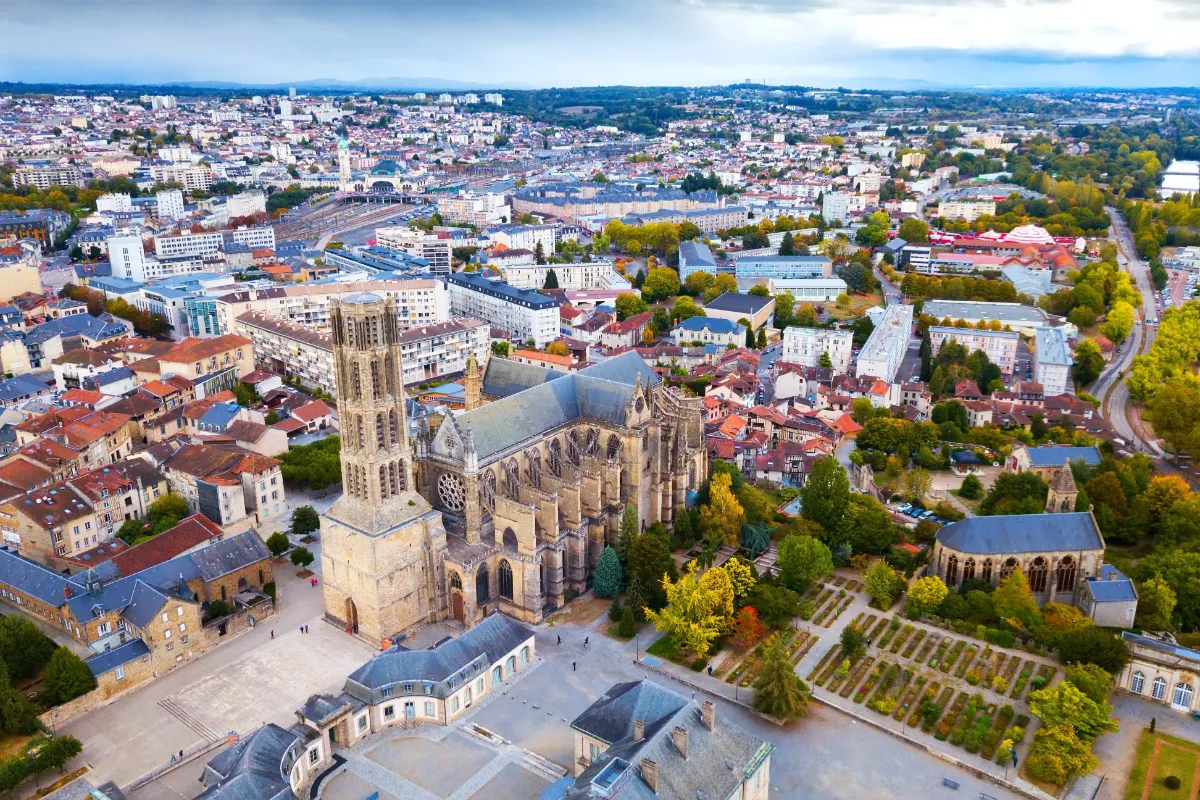
Limoges
In Our Top ☑️
Population 130 000
Porcelain, of course. But there’s much more to Limoges than plates and vases. Built on high ground, the town is home to two historic districts, once separate from each other, that reveal themselves through cobbled streets, half-timbered houses and charming little squares.
Around Saint-Étienne Cathedral, terraced gardens offer lovely views down towards the river. The cathedral took several centuries to build, which explains its unusual mix of architectural styles. In the Boucherie district, old houses recall the days when craftspeople lived and worked side by side in the same narrow streets.
Limoges owes its fame to the decorative arts that use fire: porcelain, colourful enamels on metal and stained glass. The Adrien-Dubouché Museum takes you through the history of ceramics with pieces from around the world. The Fine Arts Museum also houses enamels made here as far back as the Middle Ages.
And then there’s the Bénédictins railway station. With its huge copper dome, tall clock tower and 1920s decorations, it looks more like a palace than a train station. Take time to admire its glasswork and sculptures before heading down to the banks of the Vienne, lined with old bridges and peaceful walking paths.
TOWNS
| Name | Top+ | Top |
|---|---|---|
| Bourges | ✅ | |
| Angoulême | ☑️ |
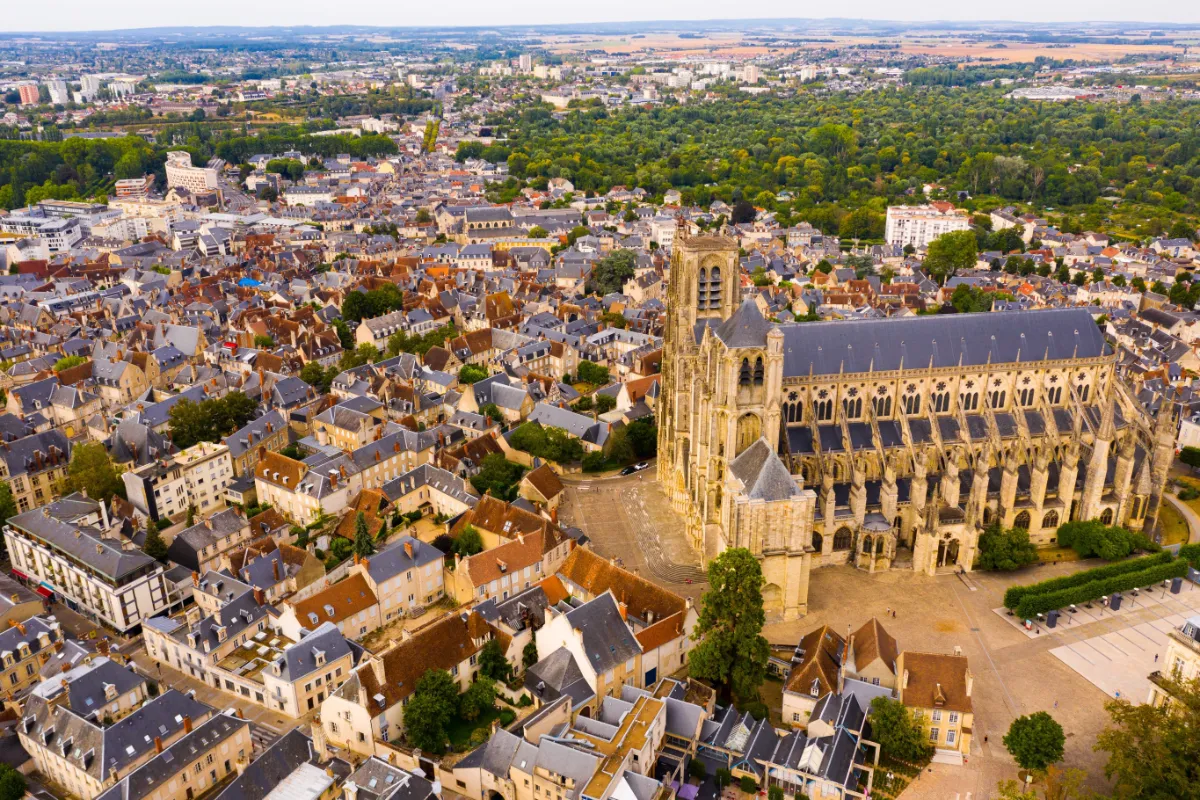
Bourges
In Our Top+ ✅
Bourges may seem peaceful, but its past is anything but dull. In the Middle Ages, it attracted merchants and artists from far and wide. Today, it still has a maze of narrow streets and hundreds of half-timbered houses, some with upper floors that lean at rather unusual angles.
You can’t miss the enormous Saint-Étienne Cathedral, with its five sculpted doorways and richly coloured stained-glass windows. Just a few streets away, the Palais Jacques-Cœur tells the remarkable story of a merchant who became one of the richest men in the kingdom during the 15th century. His tower-studded mansion was anything but modest.
There’s another, much greener side to Bourges: the marshes just outside the centre, where a surprising network of canals and little gardens forms a patchwork across the landscape. You can wander between trees and water in a peaceful setting that feels a world away from the busy old streets. Climb a little higher and the cathedral’s silhouette appears once again above this mosaic of greenery.
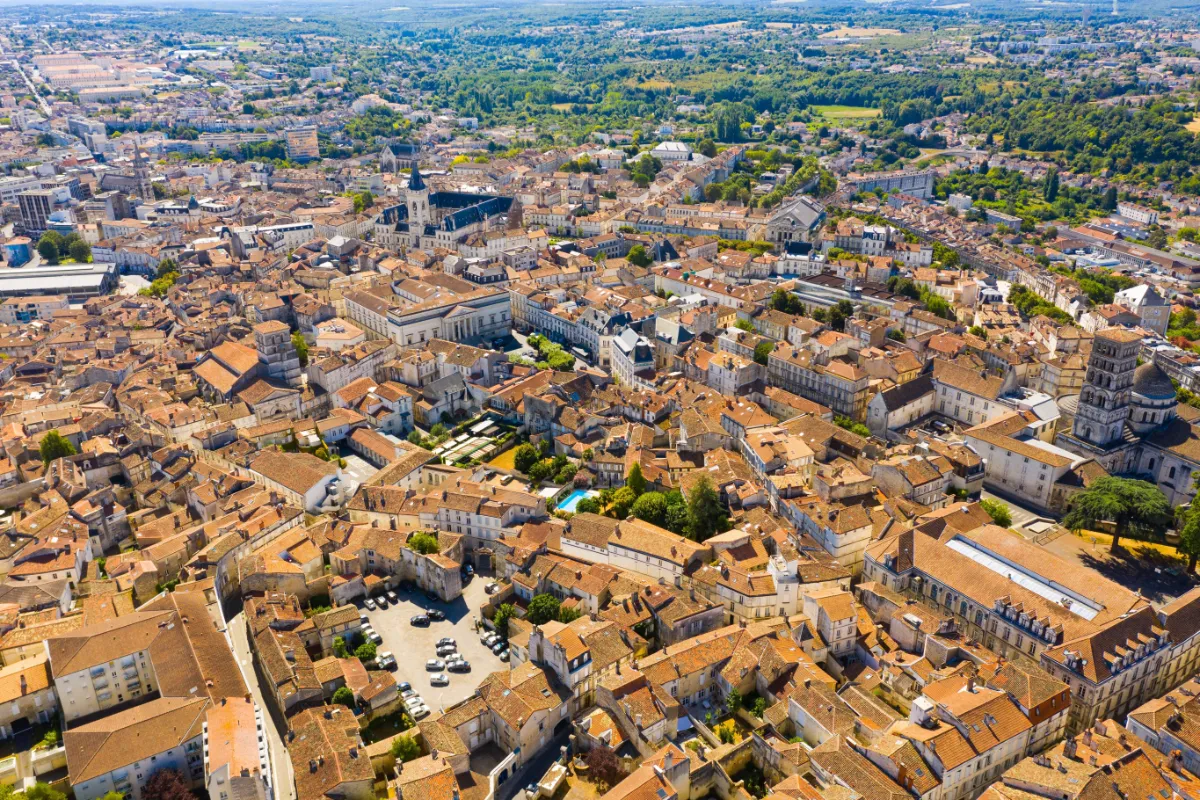
Angoulême
In Our Top ☑️
In Angoulême, comic-book art is everywhere, even on the walls. The town attracts illustrators from around the world, but its characters don’t stay on the pages. Murals pop up around street corners, and even some street signs are shaped like speech bubbles.
Perched above the River Charente, the old town has preserved its ramparts, elegant houses and lovely little streets that are perfect for exploring without a plan. Saint-Pierre Cathedral is worth a stop, especially for its 12th-century façade, covered in dozens of sculpted figures. It’s storytelling through pictures, long before comic books existed.
Angoulême also has a long history of papermaking, thanks to the river’s water and the mills in the surrounding area. The Paper Museum tells the story of this industrial heritage, while the Comic Strip Museum traces the development of the ninth art.