


PRESENTATION
A Patchwork of Landscapes, from Western Plains to Wooded Hills
In this part of west-central France, vast stretches of farmland sit alongside lush green valleys, dense forests, and gently rolling hills. Far from big cities and seaside resorts, the countryside sets the pace, with its stone villages, winding country roads, and horizons that sometimes seem to go on forever.
To the west, the countryside unfolds in gentle hills, green meadows, and hedgerow-lined paths. Small woodlands alternate with cultivated fields, while rivers wind their way between stone villages and old farmhouses. Heading north towards Poitiers, the scenery opens up into wide agricultural plateaus broken up by peaceful valleys. It’s a rural landscape with many different faces, where ancient churches and medieval villages often appear around a bend in a quiet country road.
Further northeast, near Châteauroux, the scenery takes on a completely different feel. Thousands of ponds dot a landscape of meadows, woodlands, and wetlands. It’s a haven for migratory birds, which you can spot from walking trails and specially built observation hides along the water’s edge.
Further south, around Limoges and Guéret, the landscape becomes hillier. Meadows where reddish-brown cattle graze give way to chestnut and oak forests, while rivers carve their way through granite rocks.
This is also a wonderful place to escape into nature. You can follow the wooded shores of Lake Vassivière, explore the winding course of the Creuse River, venture into the hills, or walk beneath centuries-old oak trees in the Tronçais Forest, near Montluçon.
Whether you’re exploring on foot, by bike, or on the water, this part of France is best enjoyed at a leisurely pace. And around the next bend, you might just stumble upon a forgotten hamlet, an old chapel, or a viewpoint that makes you want to linger a little longer.
A Rich Heritage of Historic Towns, Castles, and Charming Villages
History has left some remarkable treasures here, sometimes in the most unexpected places. In Poitiers, narrow old streets lead to impressive medieval churches, their carved facades telling stories that go back centuries. In Bourges, it’s impossible not to be amazed by the enormous cathedral, a 13th-century masterpiece with colourful stained-glass windows and breathtaking proportions.
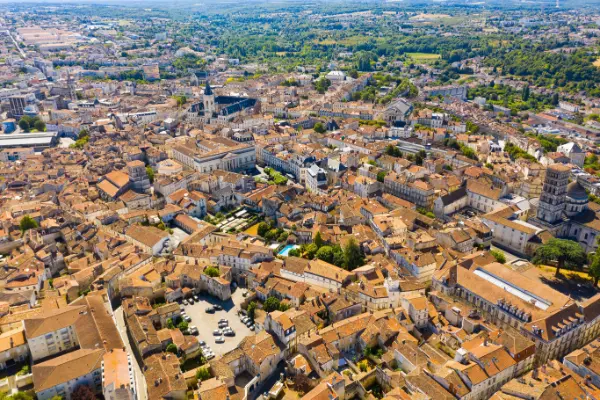
Further south, Angoulême brings together historic architecture and contemporary creativity. Perched on a hill, the town has become a major centre for comic book art, with giant murals turning its walls into illustrated pages.
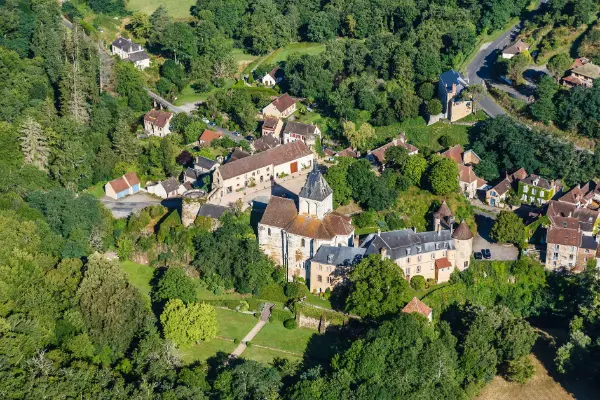
There’s just as much heritage to discover in smaller towns and villages. You might come across a church whose carved capitals are filled with fantastic creatures, a stone bridge crossing a river, an old covered market, or a square lined with half-timbered houses. In Saint-Savin, extraordinary 11th and 12th-century murals cover the vaults of a remarkable church, like a giant medieval picture book.
But history here goes far beyond monuments. Around Nohant, you can follow in the footsteps of George Sand, one of France’s great literary figures. Further east, the wild landscapes around Crozant and Fresselines inspired Claude Monet and many other painters. These cultural discoveries add an unexpected depth to this often-overlooked part of France.
Local Flavours, Traditions, and the Good Life: A Different Way to Experience France
After exploring historic buildings and enjoying scenic walks, it’s time to discover the local food. In this fertile countryside, markets are packed with regional produce, including goat’s cheese, seasonal vegetables, artisan cured meats, honey, and specialities made from recipes passed down through generations. Food lovers will enjoy meat from local farms, especially the famous Limousin beef, while anyone with a sweet tooth will be tempted by potato pies, almond pastries, and chestnut desserts.
When it comes to drinks, two very different worlds meet here. Around Cognac, vineyards stretch as far as the eye can see, and producers open their cellars to reveal the secrets behind a world-famous spirit. Further northeast, the hills of Sancerre produce wines known for their freshness and distinctive character. It’s a great opportunity to explore two very different but equally fascinating winemaking traditions.
This part of France is also famous for its traditional craftsmanship. In Limoges, porcelain has made the city famous far beyond France’s borders. In Aubusson, the art of tapestry weaving has been passed down for centuries, with craftspeople creating intricate woven works of art that combine traditional techniques with contemporary designs. Local museums offer a closer look at these crafts, where patience and precision make all the difference.
And then there’s the relaxed way of life, something you come to appreciate through the people you meet along the way. Here, there’s no need to rush from one attraction to the next to enjoy your trip. This is a rural, often overlooked side of France, far from the usual tourist trails. It’s an ideal destination if you want to discover a different side of the country, quieter and more understated, but every bit as charming.
OVERVIEW
Map
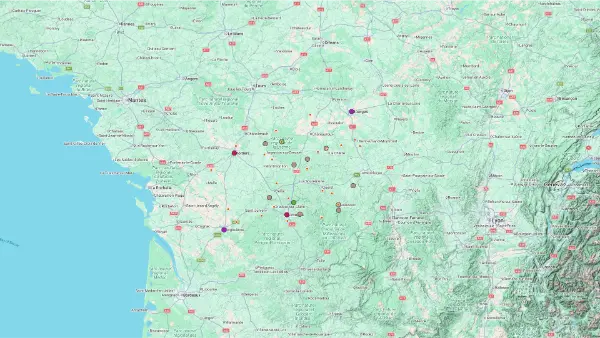
Interactive Map
Interactive Map
Click on the icon  in the top-left corner to display the map legend.
Show/Hide layers as needed.
Click on the arrow icons (v) to display the sublayers.
Top Picks