


PRESENTATION
The French Basque Country, Between the Atlantic Ocean and the Pyrenees
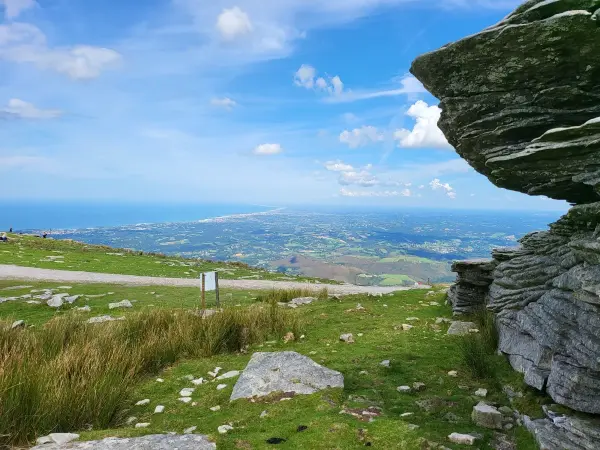
Tucked between the Atlantic Ocean and the Pyrenees, in the far southwest of France, the French Basque Country packs an amazing variety of landscapes into a relatively small area. You only need to travel a few dozen kilometres to go from wave-battered beaches to rolling green hills and then into the foothills of the mountains. And the contrast can be pretty striking! On one side, there’s a lively coastline with seaside resorts, fishing harbours and rugged cliffs. On the other, there’s peaceful countryside, where winding roads weave between meadows and isolated farmhouses.
The ocean plays a huge role here. It shapes the coastline, keeps the climate mild and, let’s face it, brings its fair share of rain. A shower is never far away, even in summer, but all that rain is what makes the landscape so lush and colourful. The hills stay green for much of the year, forests cover the slopes and streams and rivers run through the valleys. It’s an especially beautiful place in spring and autumn.
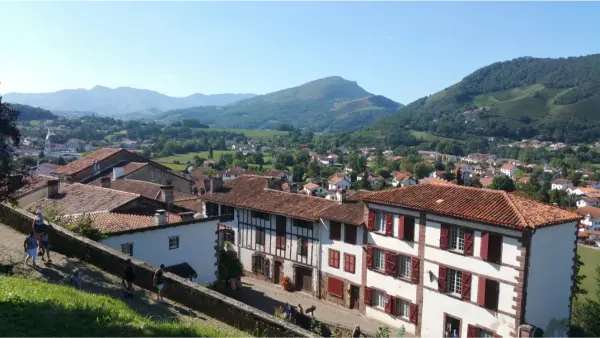
As you head inland, the landscape gradually becomes more mountainous. Villages get smaller, houses are further apart and pastures spread across the mountainsides. Hiking trails wind through beech forests, climb up to open ridges and, on clear days, reward you with stunning views of the Pyrenees. You’ll also come across plenty of flocks of sheep, along with pottoks, the small, hardy horses native to the Basque Country.
Having the sea and mountains so close together gives you plenty of freedom when exploring the region. You can spend the morning by the Atlantic and, just a few hours later, find yourself enjoying the peace and quiet of a remote valley. But don’t be fooled by the distances on the map. Inland, the roads are winding, some of the climbs are pretty steep, and the scenery will often tempt you to pull over and take it all in.
A Strong Cultural Identity on Both Sides of the Border
The Basque Country may be divided between France and Spain, but its people share a strong sense of identity that goes well beyond the border. The Basques call their homeland Euskal Herria, a name that refers to a land, a people and a culture all at once. It’s an important part of understanding the region: the political border doesn’t mark a cultural divide. On both sides of the Pyrenees, you’ll find shared traditions, family names and a common language, even though local histories and ways of life have developed differently over time.
That language is one of the most distinctive things about the Basque Country. Known as euskara, it bears no resemblance to French or Spanish and has no known connection to any other language family. Its exact origins are still a mystery. You’ll spot it on road signs and buildings, and you might even hear it in everyday conversations. After a long period of decline, the language is now being taught and passed down through many families and schools, although how widely it’s spoken varies a lot from place to place.
Basque identity also comes alive through festivals and popular traditions. Basque pelota, a sport played in several different ways, involving hitting a ball against a wall or towards an opponent, holds a special place in local culture. Village squares also host traditional dances, group singing and sometimes displays of strength inspired by old farming activities. These events aren’t just put on for tourists. They’re still an important part of local life, bringing different generations together.
History helps explain why these traditions mean so much. For centuries, people here lived between the mountains, the ocean and shifting borders, making their living from activities as varied as fishing, farming and trade. As early as the 16th century, Basque sailors were travelling all the way to the coast of North America to hunt whales and fish for cod. Meanwhile, farming communities in the valleys maintained their own customs and ways of organising daily life. It’s a rich and complex history, and you can still see its influence on Basque culture today.
From Coastal Towns to Mountain Villages, a Region with Many Faces
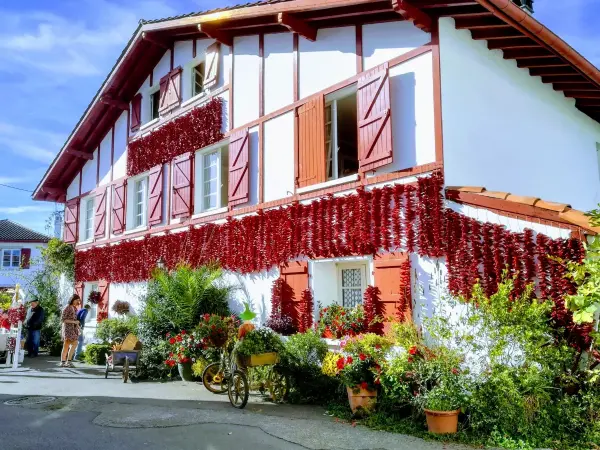
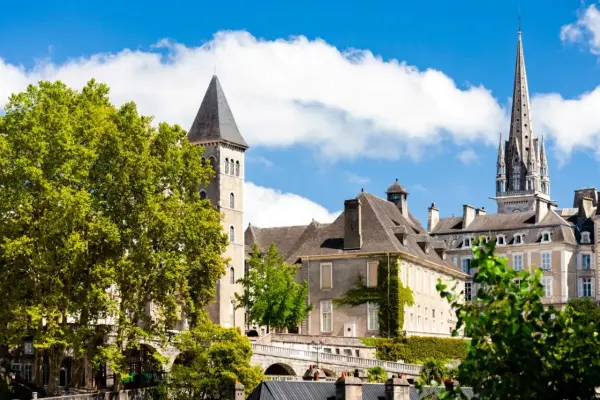
It would be a shame to think of the French Basque Country as nothing more than beaches and those famous white houses with red shutters. The coastal towns each have their own distinct character. Bayonne, with its historic streets, colourful houses and lively traditions, has a personality all its own. Biarritz has an elegant feel that dates back to the 19th century, when European aristocrats came here to enjoy sea bathing. And Saint-Jean-de-Luz, with its picturesque harbour, still brings to mind the days of fishermen and privateers, long before holidaymakers started arriving.
But it’s often when you leave the coast behind that you discover a completely different pace of life. Inland villages are traditionally built around a central square, a church and a wall used for Basque pelota. The large white houses, with their red or green wooden beams, often have broad, sloping roofs. Some still have inscriptions carved into the stone, showing when they were built or the names of their former owners.
Out in the countryside, farmhouses are an important part of both the landscape and family history. The traditional Basque house is much more than just a building. For generations, it was at the heart of family life and the passing down of land from one generation to the next. Around these houses, livestock graze in the pastures, while cultivated fields and woodland cover the surrounding hills. Higher up, mountain villages have kept a particularly peaceful atmosphere, although some become popular with hikers during the warmer months.
You’ll notice this variety in everyday life too. Coastal towns get very busy in summer, with visitors flocking to their beaches and water sports, while inland areas are still largely shaped by farming and livestock breeding. But the contrast isn’t quite as clear-cut as it might seem. Traditions are still very much alive along the coast, and mountain villages haven’t been left behind by the modern world. Behind those historic façades, the Basque Country continues to change and evolve, without losing what makes it so special.
OVERVIEW
Map
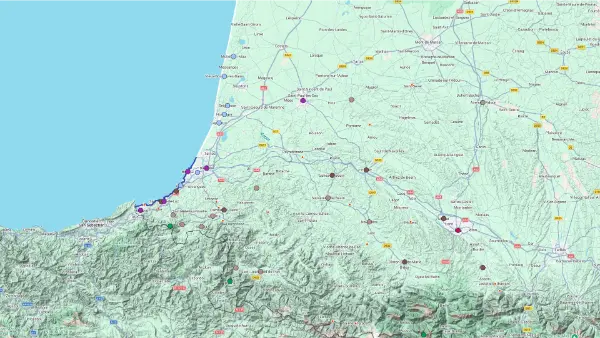
Interactive Map
Interactive Map
Click on the icon  in the top-left corner to display the map legend.
Show/Hide layers as needed.
Click on the arrow icons (v) to display the sublayers.
Top Picks