


MAP
Languedoc
Interactive Map
Languedoc
Interactive Map
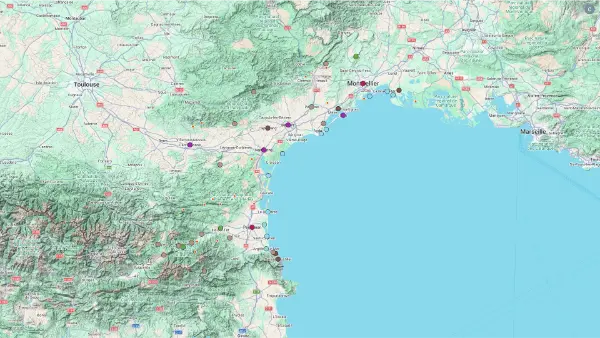
Click on the icon  in the top-left corner to display the map legend.
Show/Hide layers as needed.
Click on the arrow icons (v) to display the sublayers.
TOP (20)
| Name | Type | Top+ |
|---|---|---|
| Aigues-Mortes | Small Town | ✅ |
| Montpellier | City | ✅ |
| Saint-Guilhem-le-Désert | Village | ✅ |
| Sète | Town | |
| Pézenas | Village | ✅ |
| Fontfroide | Abbey | |
| Minerve | Village | |
| Gouffre Géant de Cabrespine | Cave | |
| Carcassonne | Town | ✅ |
| Lagrasse | Village | ✅ |
| Gorge de Galamus | Gorges | |
| Château de Peyrepertuse | Castle Ruins | ✅ |
| Château de Quéribus | Castle Ruins | |
| Perpignan | City | |
| Collioure | Village | ✅ |
| Orgues d'Ille-sur-Têt | Fairy Chimneys | |
| Eus | Village | |
| Villefranche-de-Conflent | Village | ✅ |
| St-Martin-du-Canigou | Abbey | |
| Pyrénees Catalanes | Mountains | ✅ |
Aigues-Mortes
In Our Top+ ✅
Type Village
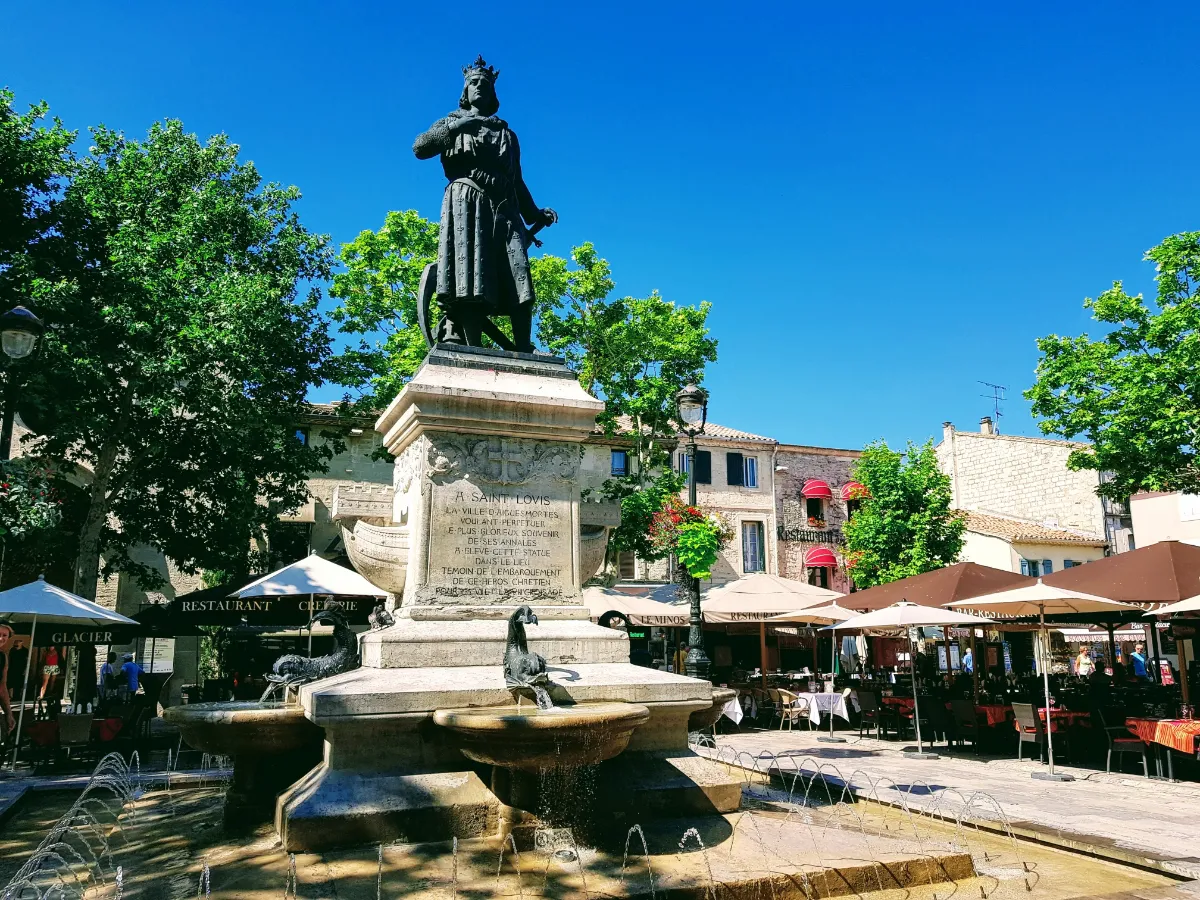
It’s quite a sight to see the almost perfectly preserved medieval walls of Aigues-Mortes rising out of the marshes and saltwater lagoons. Founded in the 13th century on the orders of King Louis IX, the town was intended to give the Kingdom of France a Mediterranean port, particularly for military expeditions to the Middle East.
More than 1.6 kilometers of defensive walls still surround the town, and you can walk along them for views over the salt pans, which sometimes turn pink, and the surrounding Camargue landscape.
Montpellier
In Our Top+ ✅
Type City
Population 320 000
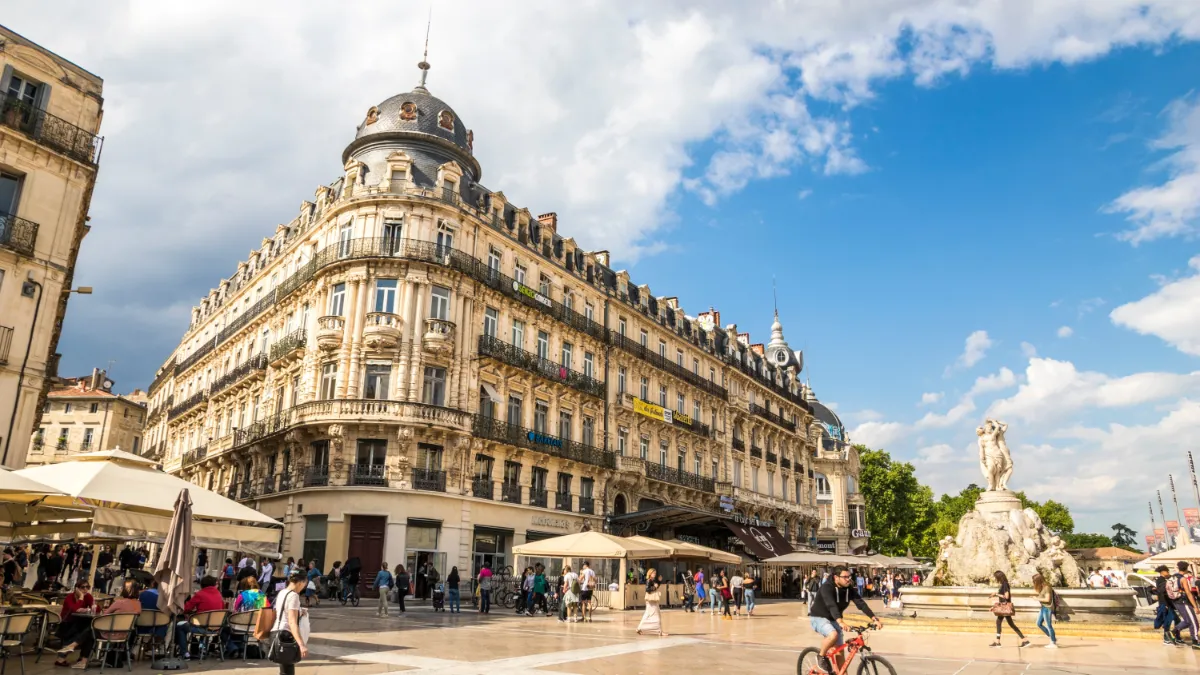
Montpellier doesn’t need sunny weather to win you over. With its almost entirely pedestrianized old town, shady squares and youthful energy, the city has a way of life shaped as much by its history as by its remarkable vitality. Founded in the Middle Ages, it has grown without ever really turning its back on its historic buildings.
The historic heart of the city, nicknamed the Écusson because of its shape, is a maze of winding streets where you can suddenly emerge from a tiny square onto a grand monumental façade. Behind heavy wooden doors, you’ll sometimes find magnificent inner courtyards, a legacy of the wealthy families who lived here in the 17th and 18th centuries. The best way to explore is on foot, wandering through hidden passageways and up old staircases.
From the vast Place de la Comédie, dominated by its opera house, it’s a short walk to the Promenade du Peyrou, laid out in honor of Louis XIV. With its triumphal arch, terraces and old aqueduct, this part of Montpellier feels almost like a royal capital. Nearby, the Musée Fabre takes you through several centuries of painting, from European masters to contemporary artists.
But Montpellier has also been a center of learning for centuries. Its medical school, which dates back to the 13th century, is one of the oldest still operating in the world. That academic tradition lives on today in a particularly lively cultural scene, with festivals, performances and events attracting young people from all kinds of backgrounds.
You’ll discover a very different side of Montpellier to the east, where modern neighborhoods have pushed the city’s boundaries far beyond its historic center. In Antigone, architect Ricardo Bofill designed a monumental district inspired by classical antiquity in the 1980s. Farther along the Lez, the river running through the newer neighborhoods, bold contemporary buildings create a striking contrast with the intimate atmosphere of the medieval streets.
Saint-Guilhem-le-Désert
In Our Top+ ✅
Type Village
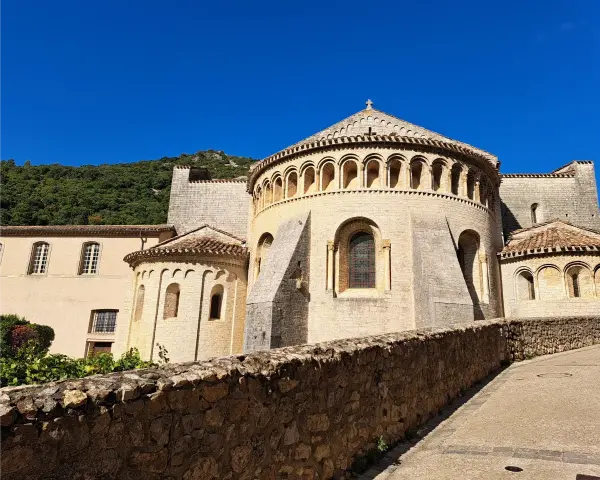
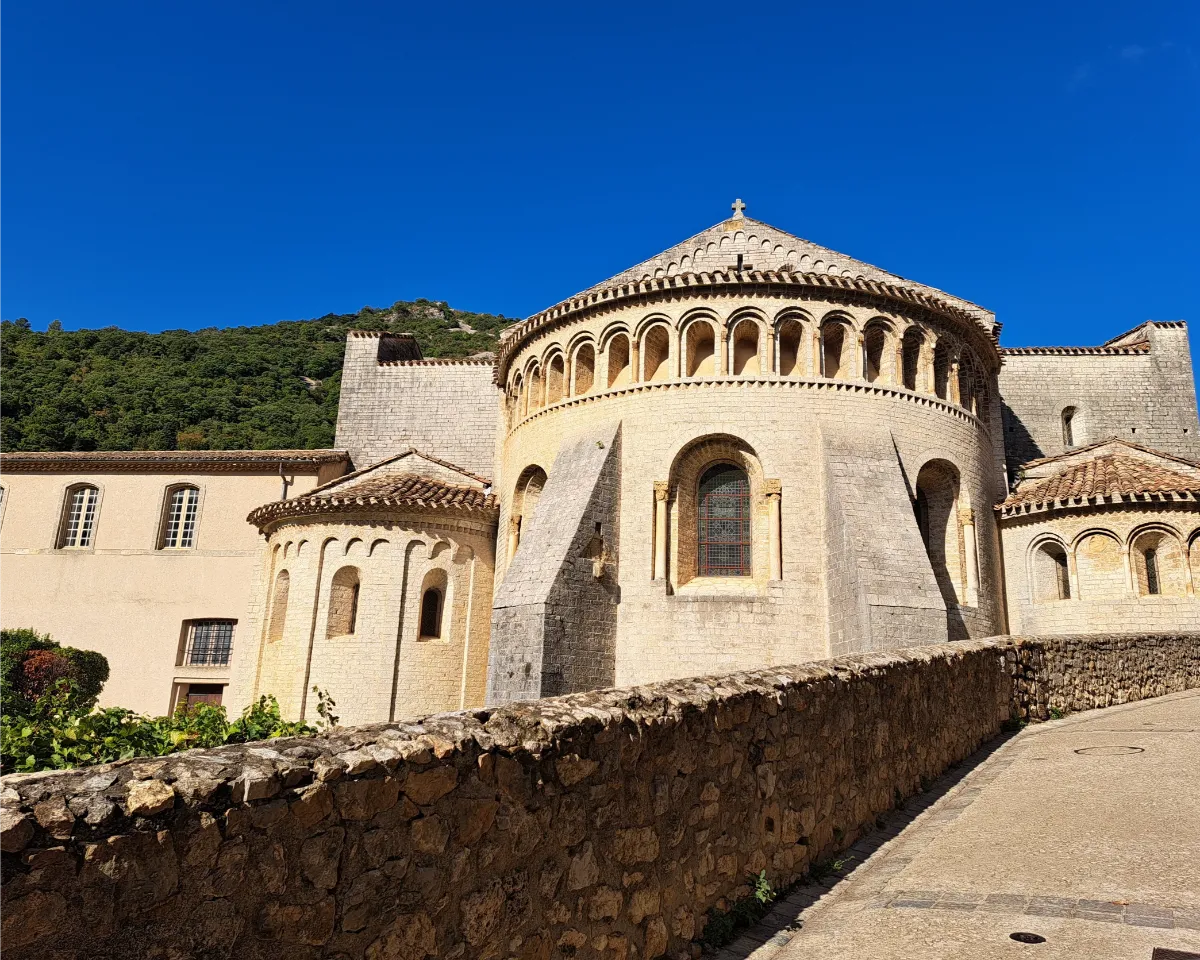
Tucked into a narrow valley beneath towering cliffs, Saint-Guilhem-le-Désert has a medieval charm that’s hard to resist. The village grew around Gellone Abbey, founded in 804 by Guilhem, a former companion of Charlemagne who became a monk.
Its cobbled streets, vaulted passageways and old stone houses cluster around the church, which for centuries welcomed pilgrims heading to Santiago de Compostela in Spain. Today, the village attracts plenty of visitors.
Sète
Type Town
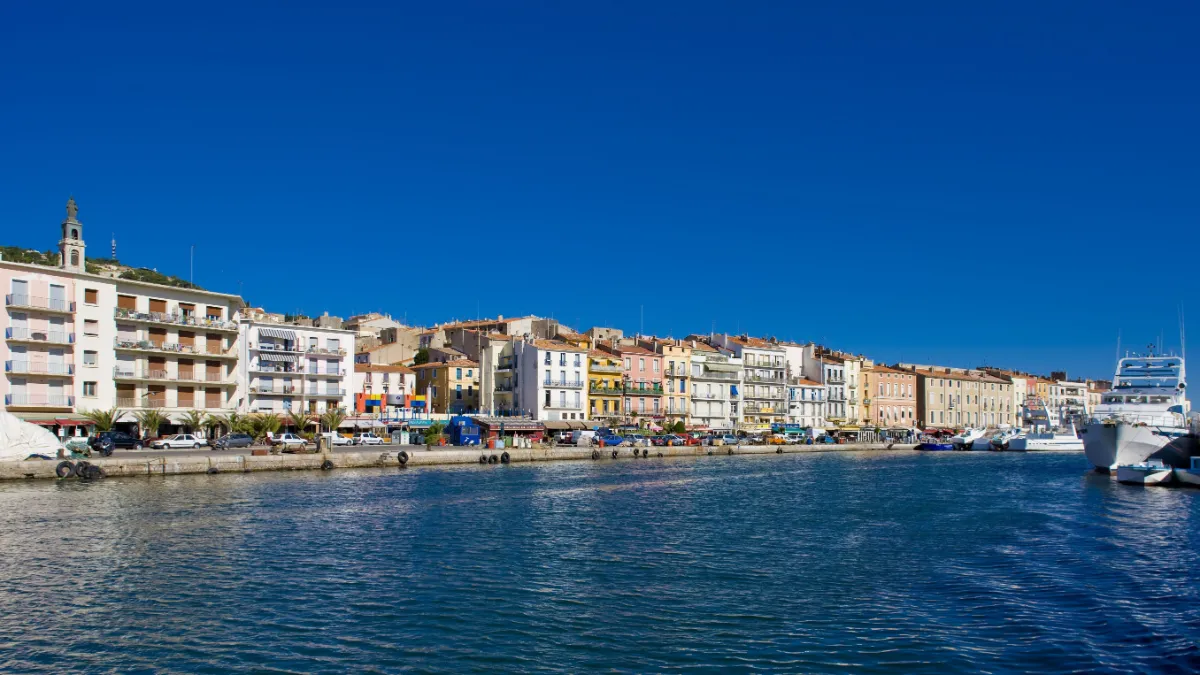
In Sète, water is everywhere. Tucked between the Mediterranean Sea and the vast Thau Lagoon, this canal-filled port town has a character all its own, with fishing boats, bridges and colorful houses. Founded in 1666 under Louis XIV to establish a major seaport, it grew through trade and fishing without losing its down-to-earth, working-class spirit.
The Quartier Haut, built on the slopes of Mont Saint-Clair, still has a distinctly Italian feel, a legacy of fishing families who arrived from places such as Naples in the 19th century. Down by the water, the quays are bustling with port activity. In summer, the town’s famous water jousting tournaments bring two opponents face to face, each standing on a platform at the back of a boat and trying to knock the other into the water.
From the top of Mont Saint-Clair, you get sweeping views over the canals, beaches and enormous lagoon. Sète was also home to singer-songwriter Georges Brassens and poet Paul Valéry, whose famous poem The Graveyard by the Sea captures the Mediterranean landscape stretching out below.
Pézenas
In Our Top+ ✅
Type Village
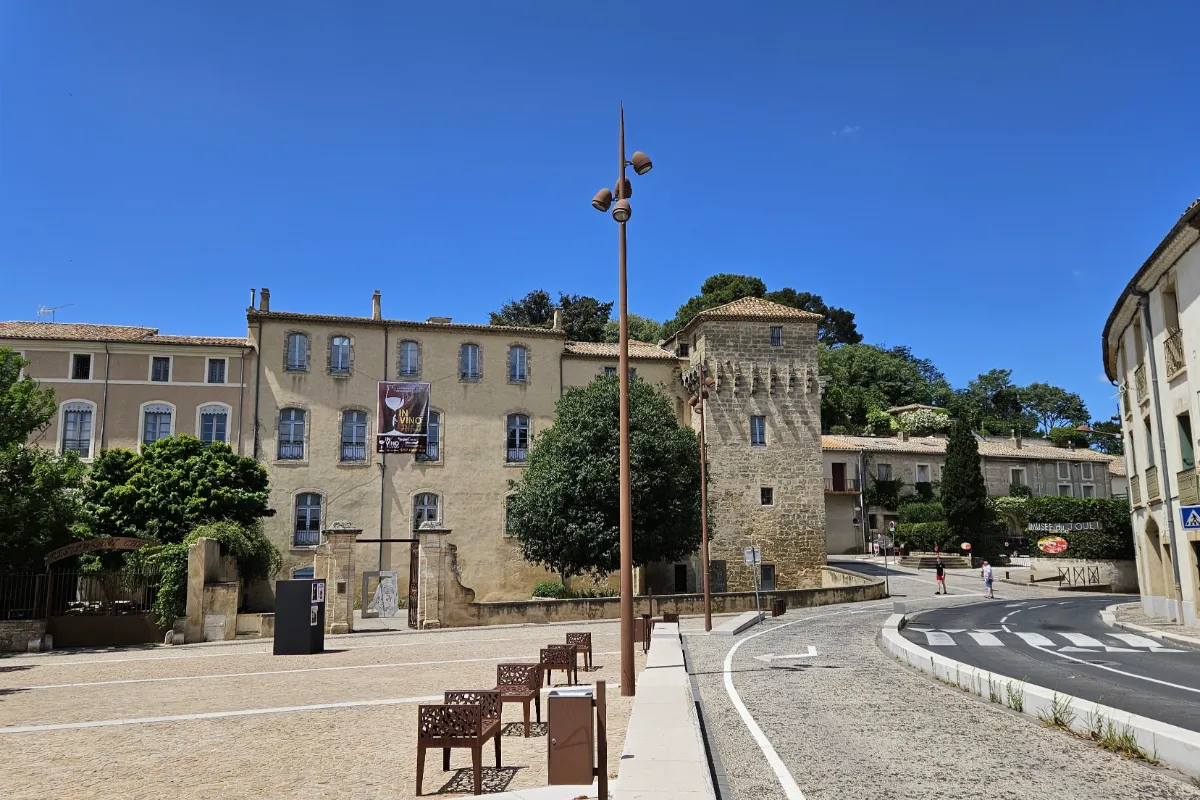
Pézenas has everything to delight anyone who loves historic architecture. Its old center is a maze of cobbled streets lined with grand 17th and 18th-century townhouses, where carved doorways sometimes hide magnificent inner courtyards. Back then, the town was home to powerful political figures and wealthy families.
Pézenas is best known for its connection to Molière, who stayed here several times during the 1650s with his theater troupe. His legacy is still celebrated today through performances and local festivals.
Fontfroide
Type Abbey
Price €14
Full Name
Abbaye de Fontfroide
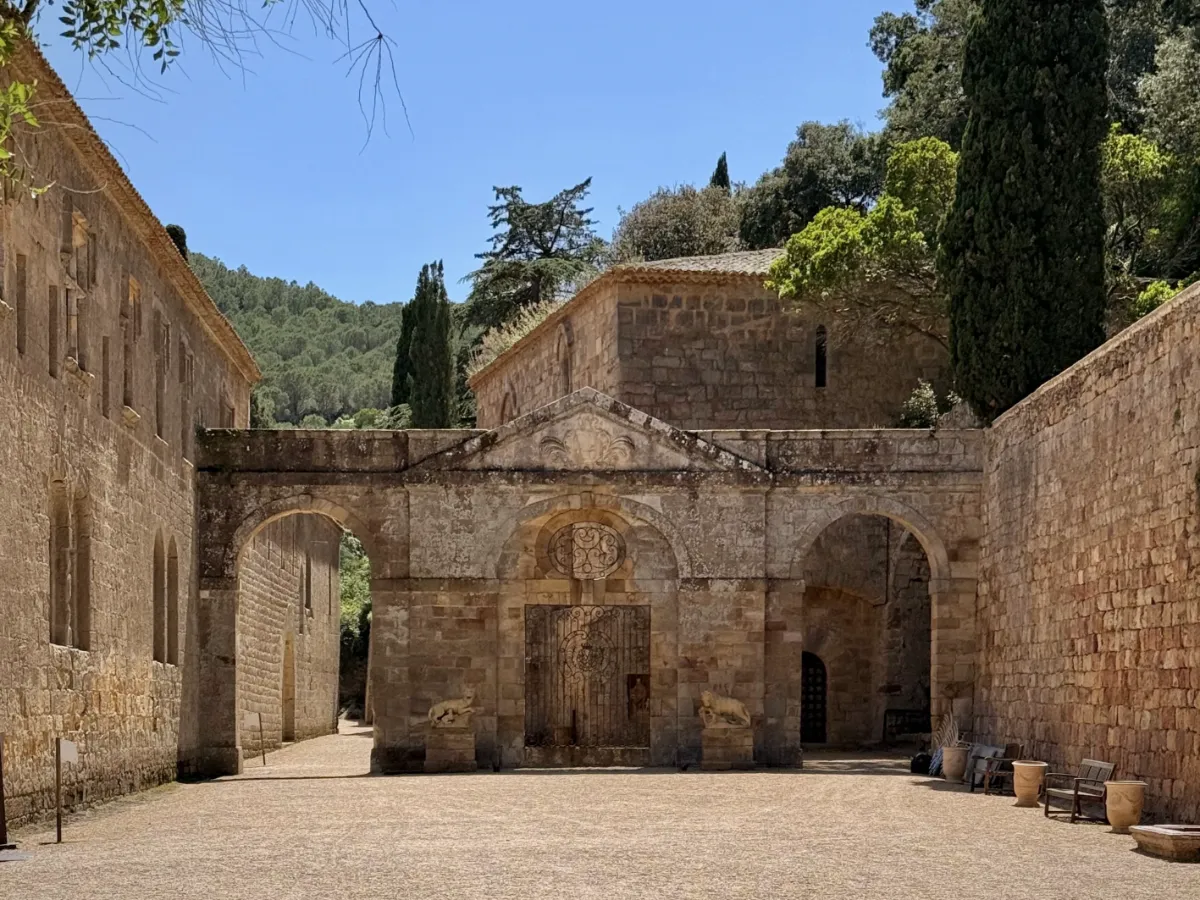
Just a few kilometers from Narbonne, Fontfroide Abbey is tucked away in a quiet valley surrounded by Mediterranean hills. Founded in 1093, it became an important Cistercian monastery in the 12th century, where monks lived according to strict principles of simplicity, work and prayer.
The extensive complex still includes an impressively proportioned church, stone galleries surrounding an inner garden and several former communal rooms. After the last monks left in the early 20th century, painter and art collector Gustave Fayet began restoring the buildings. The gardens and colorful stained-glass windows also reflect this more recent chapter in the abbey’s history.
Minerve
Type Village
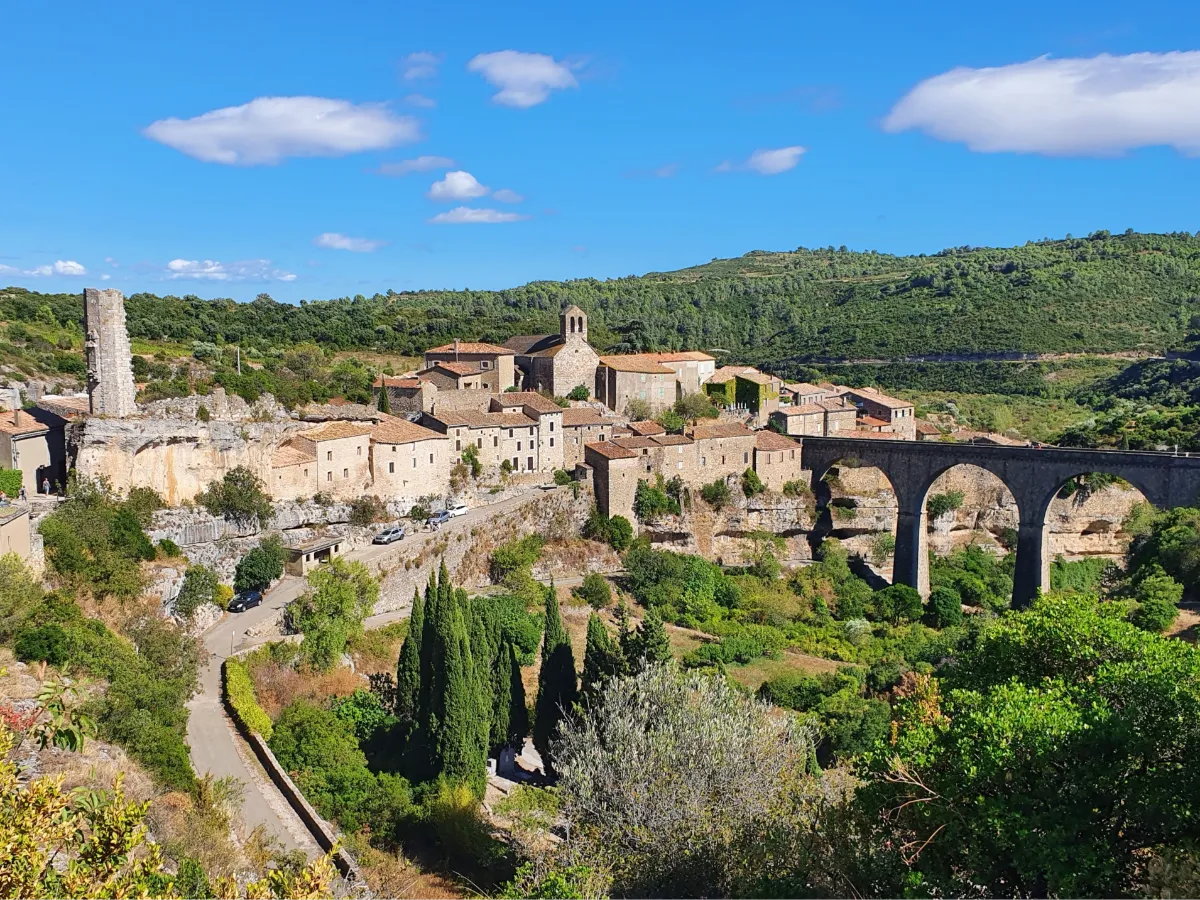
Minerve has a spectacular setting. The village sits on a limestone promontory between two deep gorges, surrounded by a wild landscape of hills and vineyards. In 1210, this fortified stronghold was besieged during the crusade against the Cathars, a Christian religious movement persecuted by the Catholic Church.
Stone houses and narrow passageways cluster around the ruins of the old castle, high above the cliffs. Down in the gorges, the Cesse River has carved remarkable natural tunnels through the rock, which you can admire from the walking paths. When the riverbed is dry, some of these passages can be explored on foot, depending on local conditions.
Lagrasse
In Our Top+ ✅
Type Village
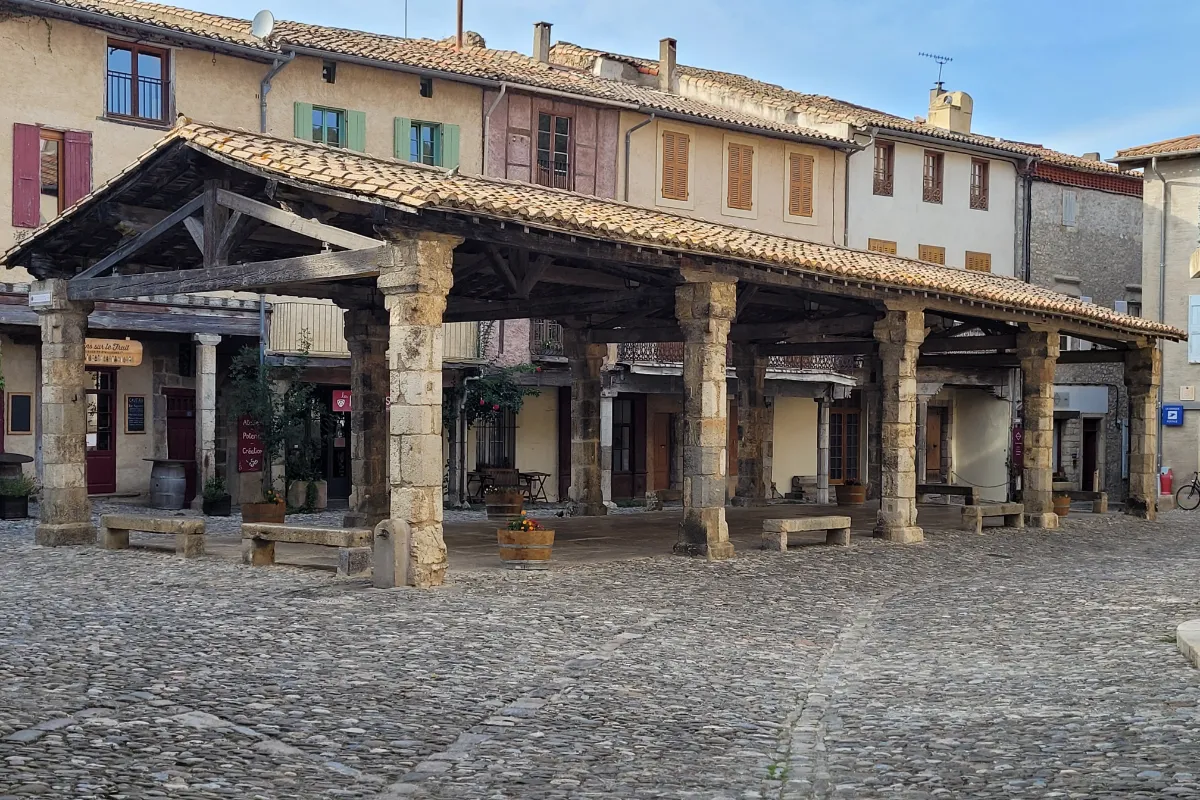
With its old stone bridge, medieval houses and narrow streets lined with historic façades, Lagrasse has an understated elegance. The village grew along the Orbieu River, opposite a powerful abbey founded in the 8th century, whose buildings tell a story spanning more than a thousand years.
At the heart of Lagrasse, a large medieval market hall recalls the importance of trade in this valley. Across the river, the abbey reveals its courtyards, galleries and former religious rooms. All around, the Corbières hills are a mix of vineyards, rocky outcrops and Mediterranean vegetation.
Gorge de Galamus
Type Gorges
Full Name
Gorges de Galamus
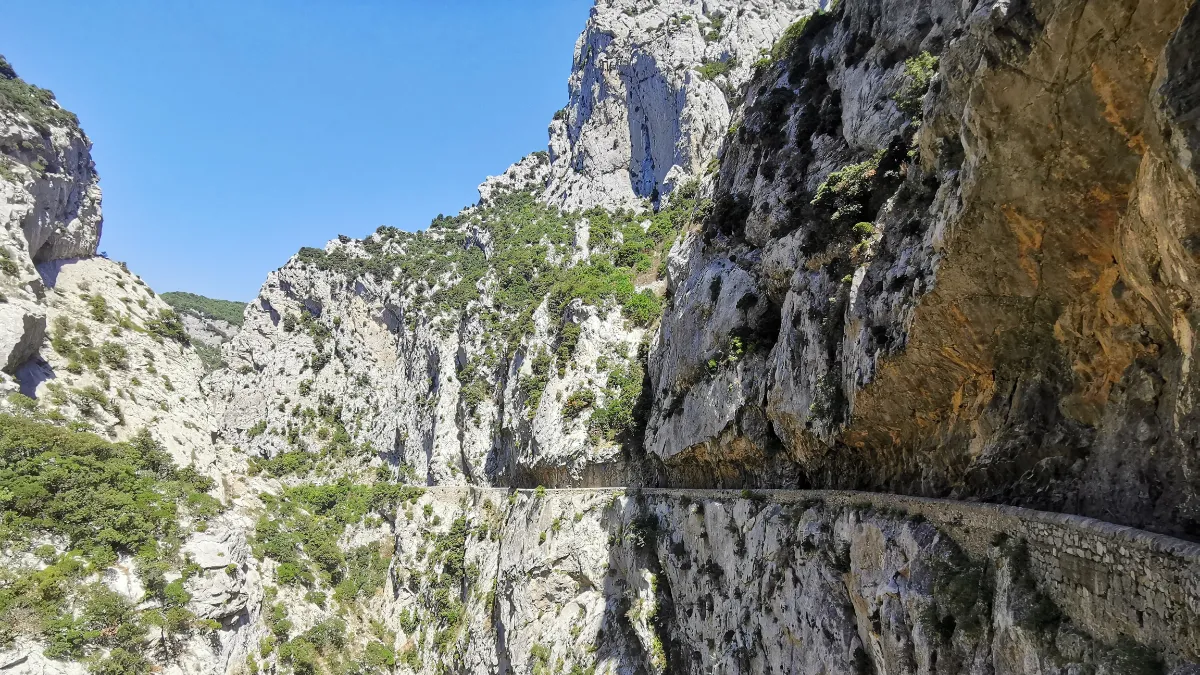
Between the Corbières mountains and the first foothills of the Pyrenees, the Gorges de Galamus are a breathtaking sight. The Agly River has carved a deep channel through the limestone, creating a narrow canyon whose towering walls rise above the green waters below.
A spectacular road cut into the cliffside offers impressive views down into the gorge. Clinging to the rock face, the Saint-Antoine Hermitage occupies a natural cave that has been used as a place of prayer for centuries. Walking trails in the surrounding area reveal stunning views over the cliffs and canyon.
Château de Peyrepertuse
In Our Top+ ✅
Type Castle Ruins
Price €9
Full Name
Château de Peyrepertuse
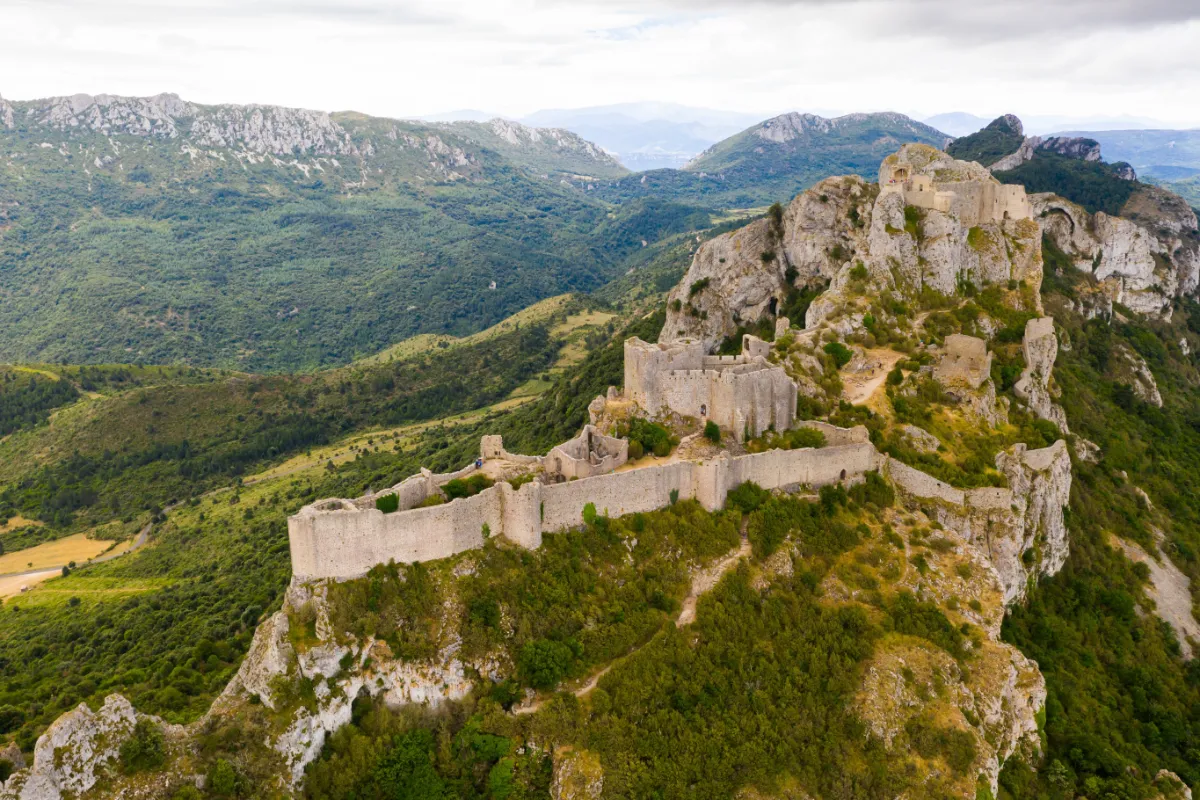
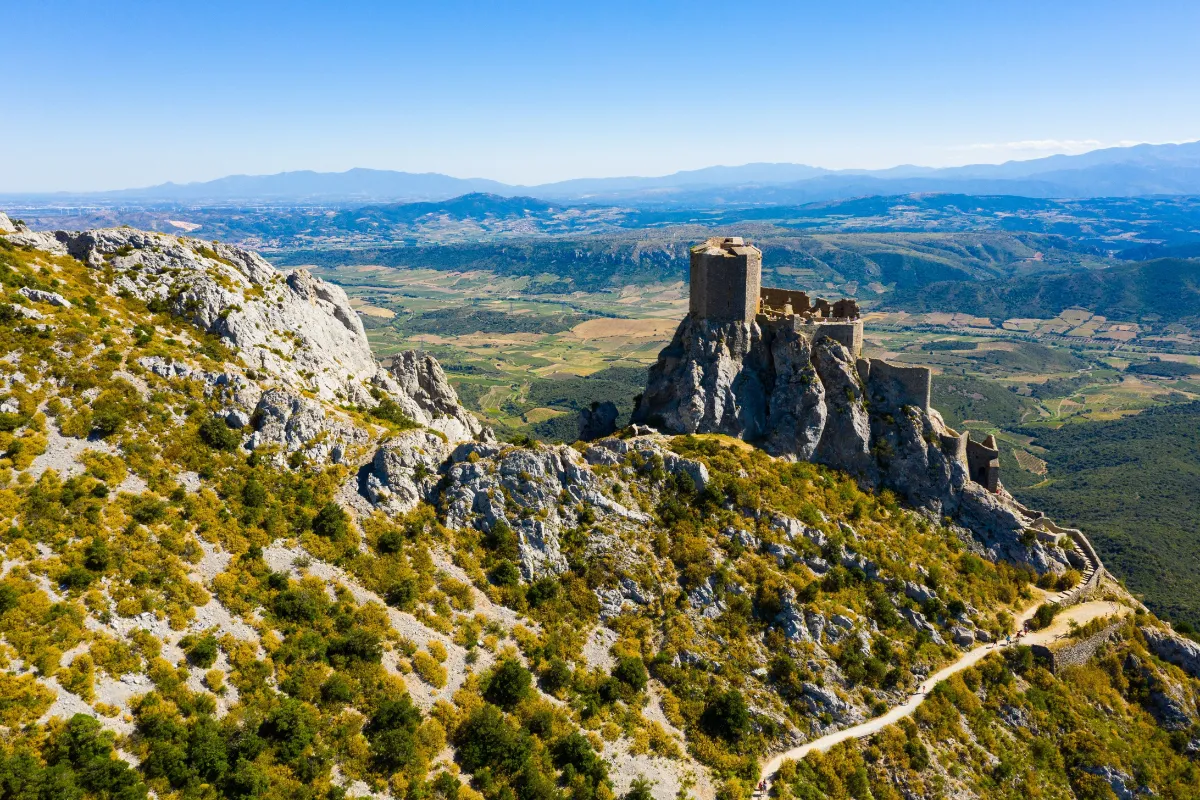
At nearly 800 meters above sea level, Peyrepertuse Castle seems to be a natural extension of the enormous rocky ridge on which it was built. Its defensive walls follow the contours of the cliff so closely that it can be difficult to tell where the fortress ends and the mountain begins.
Strengthened in the 13th century by the kings of France to guard their southern border, this vast fortified complex is reached along steep, rugged paths. The impressive Saint-Louis Staircase, carved directly into the rock, leads to the upper part of the castle. From there, you get sweeping views of the Corbières mountains and valleys covered in Mediterranean vegetation.
Château de Quéribus
Type Castle Ruins
Price €9
Full Name
Château de Quéribus
Perched more than 700 meters above sea level on an isolated ridge, Quéribus Castle seems to defy gravity. This medieval fortress served as a refuge for persecuted Cathars in the 13th century, before becoming an important military outpost for the Kingdom of France facing the territories of Aragon.
The climb to the castle follows a rocky path before passing through several layers of defensive walls. Inside the keep, a remarkable vaulted chamber rests on a central pillar, a masterpiece of medieval architecture. From the upper terrace, the views stretch across the Corbières mountains, the Roussillon plain and sometimes all the way to the Mediterranean.
Perpignan
Type City
Population 120 000
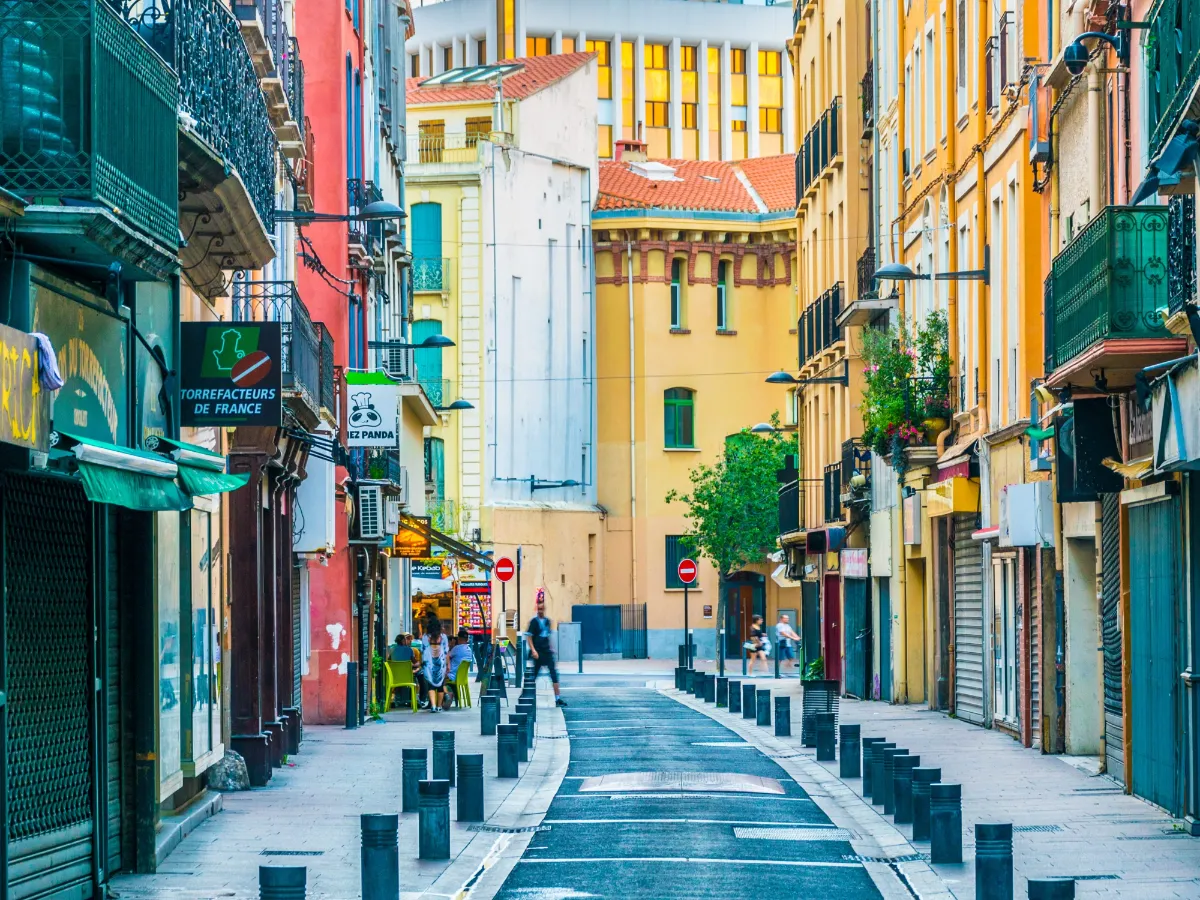
In Perpignan, it’s hard to forget just how close Spain is. The local accent, colorful façades, popular traditions and bilingual signs all remind you that the city’s identity is rooted just as deeply in Catalan history as in French history. Under the southern sun, palm-lined squares and narrow streets give the old town a distinctly Mediterranean atmosphere.
To understand this unique identity, you have to go back to the 13th century, when Perpignan became the mainland capital of the Kingdom of Majorca, which also controlled territories on both sides of the Pyrenees. One of the greatest reminders of this prosperous period is the Palace of the Kings of Majorca, a vast fortified residence overlooking the city. Its courtyards and chapels reveal the elegance of medieval Catalan architecture.
Down below, the historic center has plenty of other surprises, starting with the Castillet. This former fortified gateway, built from red brick, has become the symbol of Perpignan and recalls the defensive walls that once surrounded the city. The nearby streets lead to Saint-Jean-Baptiste Cathedral and old houses with beautifully detailed façades.
Catalan culture is still very much alive, especially during traditional festivals filled with local music and dancing. Perpignan also has the relaxed pace of life you’d expect from a southern French city, despite the tramontane, the sometimes fierce northwesterly wind that sweeps across the plain. In the distance, the peaks of the Pyrenees form a dramatic backdrop.
Collioure
In Our Top+ ✅
Type Village
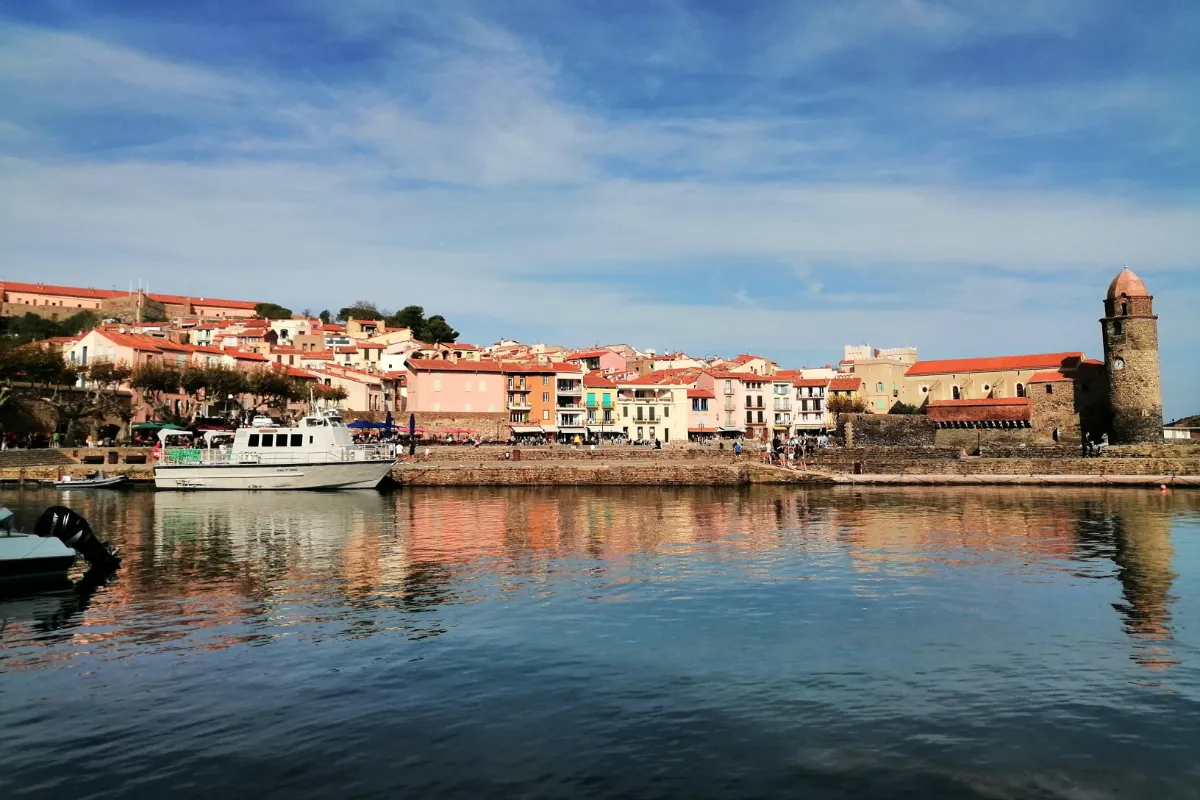
With colorful houses clustered around two small bays, Collioure has the kind of Mediterranean charm that has inspired generations of artists. The Royal Castle, standing right on the waterfront, recalls the strategic importance of this Catalan port, long fought over by different kingdoms. Nearby, the Church of Notre-Dame-des-Anges seems to reach straight out into the sea.
In 1905, Matisse and Derain were captivated by Collioure’s light and helped develop Fauvism here, an artistic movement known for its bold, vibrant colors. Their paintings immortalized the narrow streets of the Mouré neighborhood, the fishing boats and the colorful façades running down to the waterfront.
Orgues d'Ille-sur-Têt
Type Fairy Chimneys
Full Name
Orgues d’Ille-sur-Têt
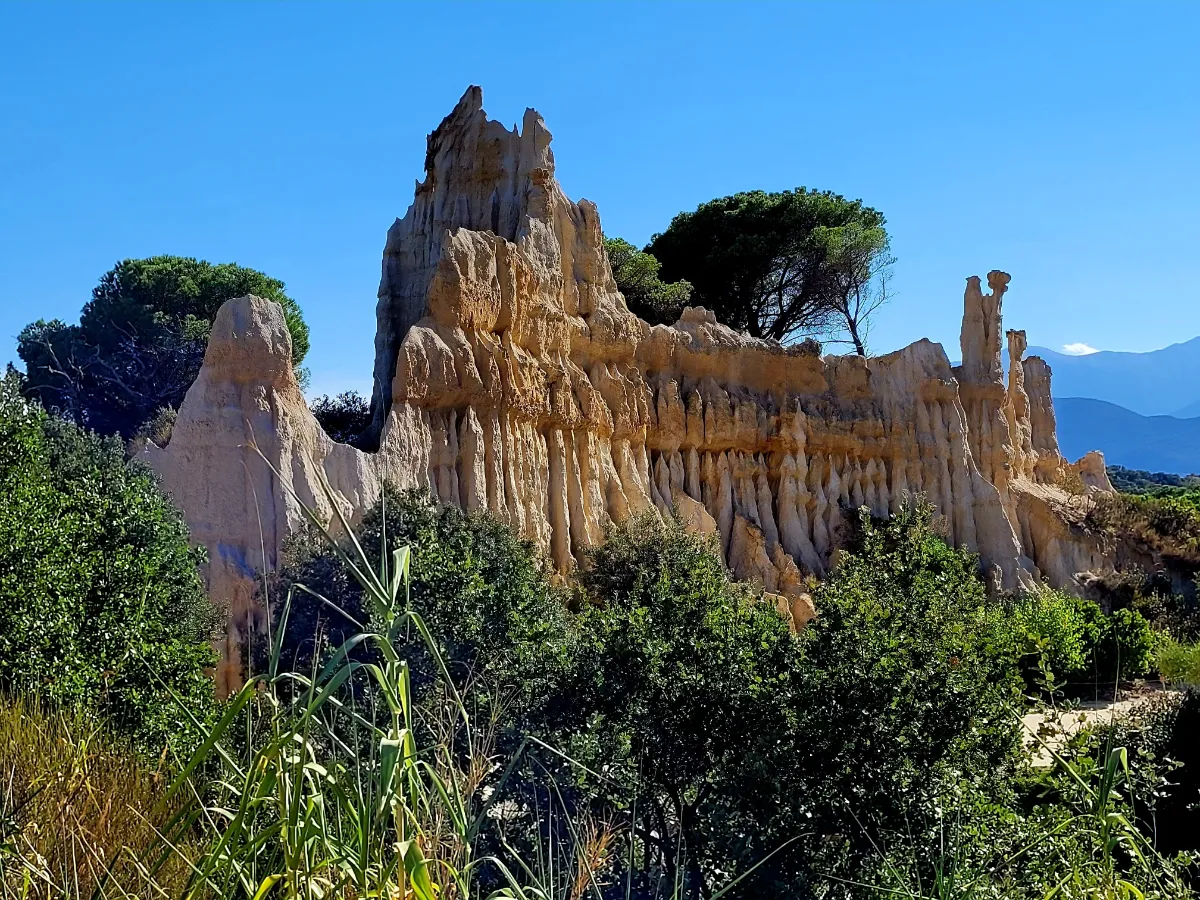
Not far from Ille-sur-Têt, wind and rain have sculpted an almost otherworldly landscape out of ancient layers of sand and clay. Tall columns in shades of ochre and white rise beneath the cliffs, some topped with blocks of stone that seem to balance there almost miraculously.
A marked trail takes you close to these unusual formations, with the Canigó massif in the background. Morning and evening light bring out the textures and colors of the rocks. These natural sculptures are extremely fragile and continue to erode, so climbing on them is not allowed.
Eus
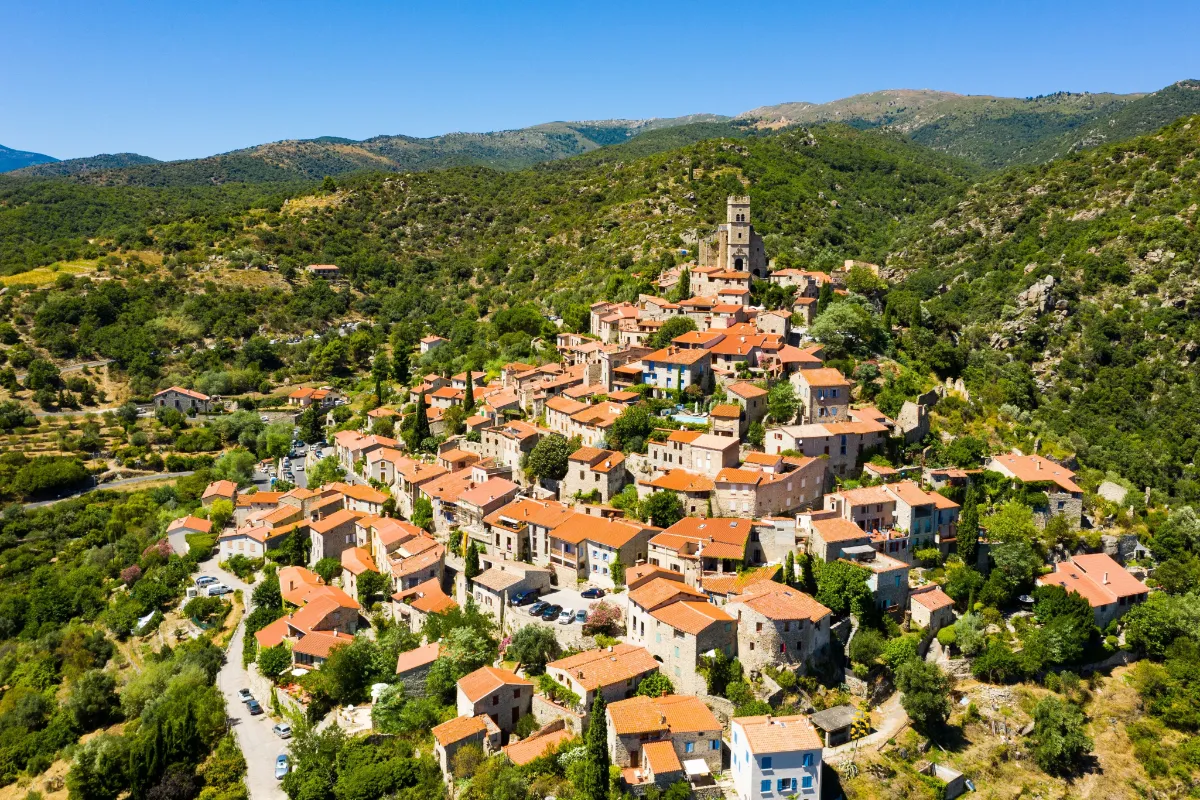
Type Village
Perched on an especially sunny hillside above the Têt Valley, Eus is a picturesque jumble of red rooftops and pale stone houses. Cobbled lanes wind uphill toward Saint-Vincent Church, which dominates the village from the site of a former fortified castle.
Its elevated position once made it possible to keep watch over routes through the valley, a territory often contested by French and Catalan powers. Today, people come mainly for the charm of its stone staircases, narrow passageways and sun-drenched historic façades. Across the valley, the Canigó massif rises majestically against the horizon.
Villefranche-de-Conflent
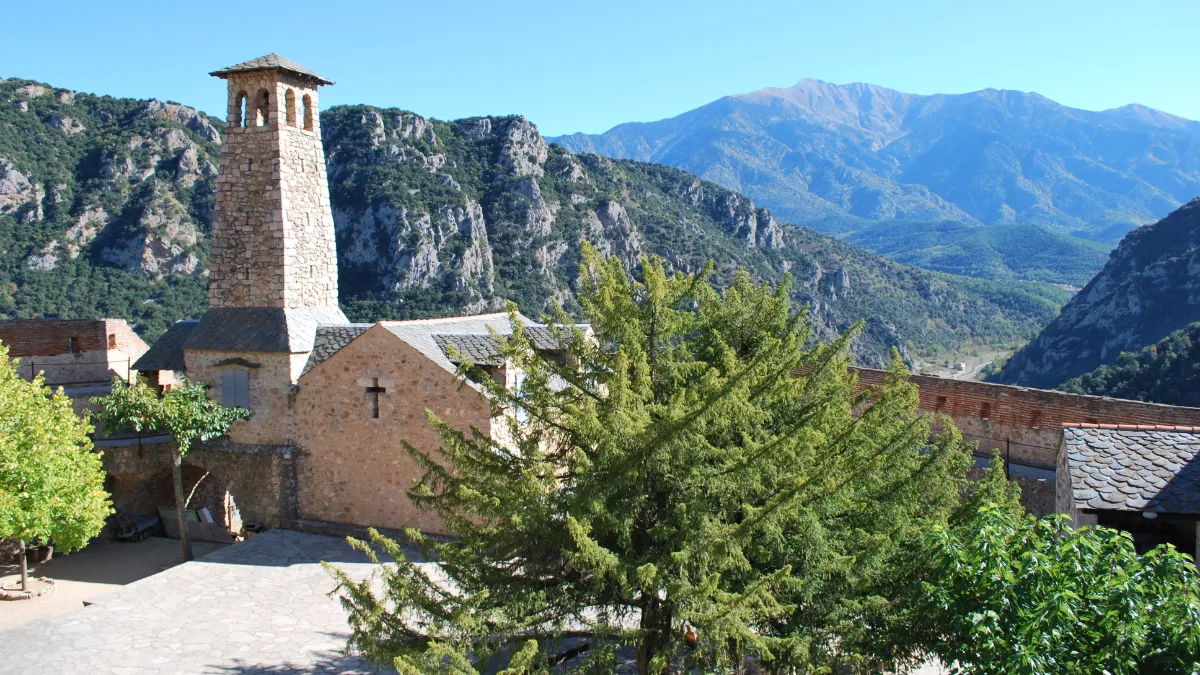
In Our Top+ ✅
Type Village
Surrounded by towering mountains, Villefranche-de-Conflent guards the entrance to several Pyrenean valleys. Founded in the 11th century, this small fortified town was extensively strengthened in the 17th century by Vauban, Louis XIV’s military engineer, after the French border shifted farther south.
Behind its walls, two main streets are lined with old houses and colorful façades. High above the town stands Fort Libéria, built to watch over this strategic passage. An impressive underground staircase with several hundred steps connects the fort to the town below. Vauban’s fortifications here are part of a UNESCO World Heritage Site.
St-Martin-du-Canigou
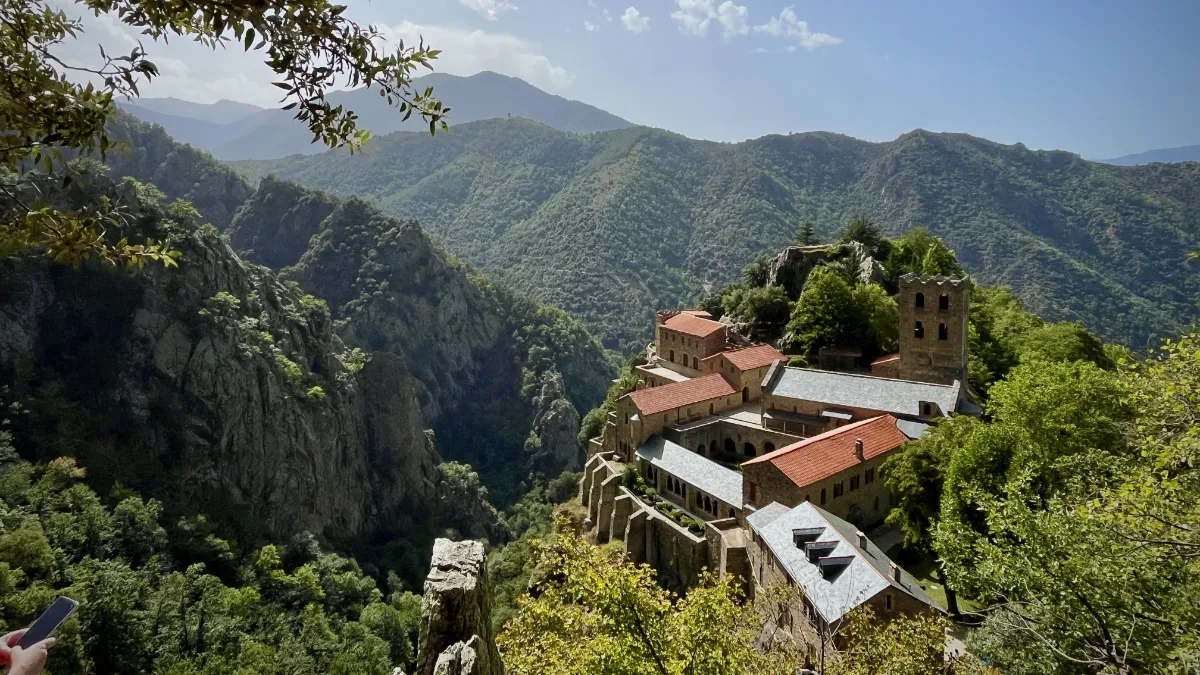
Type Abbey
Price €8
Full Name
Abbaye Saint-Martin du Canigou
Clinging to a rocky outcrop high above deep, forested valleys, Saint-Martin-du-Canigou Abbey looks almost as if it’s suspended in the mountains. Founded in the early 11th century, it was an important religious center for centuries before being abandoned and gradually restored during the 20th century.
The old church, small towers and stone galleries form a beautifully simple architectural complex, surrounded by the mountains of the Canigó massif.
Pyrénees Catalanes
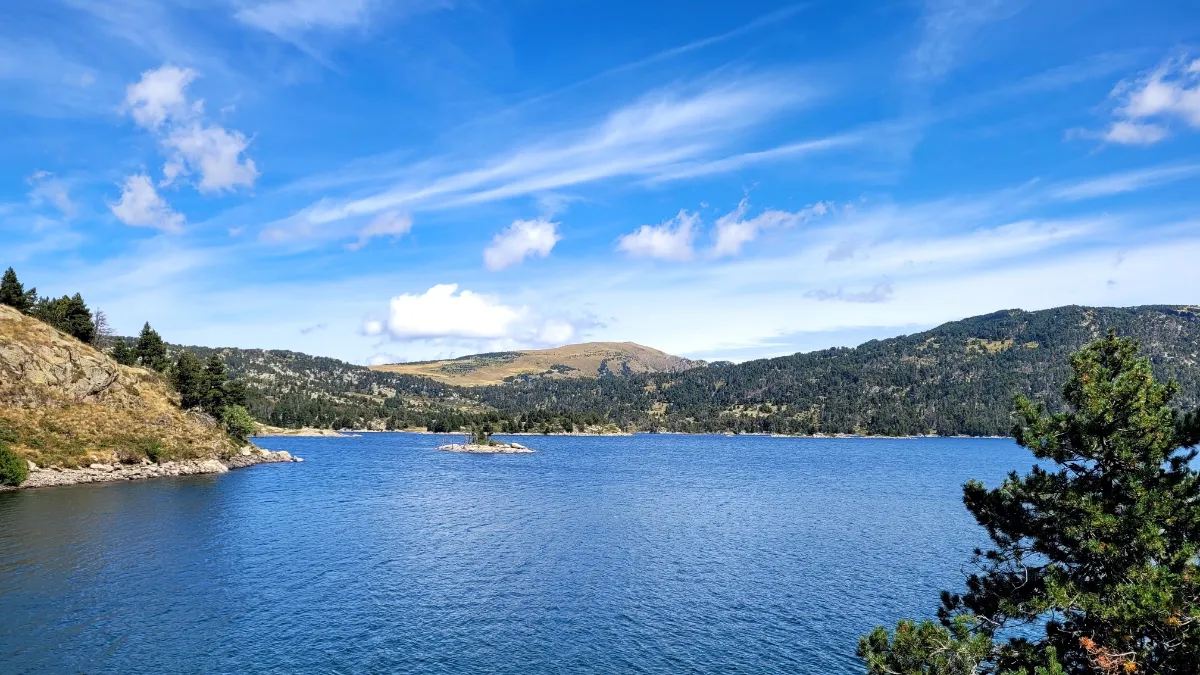
In Our Top+ ✅
Type Mountains
Full Name
Parc Naturel Régional des Pyrénées Catalanes
Stretching between the Mediterranean plains and the Spanish border, the Catalan Pyrenees offer an incredible variety of landscapes. Sunny valleys gradually give way to pine forests, high mountain pastures and rugged peaks, some rising above 2,900 meters. Long isolated from the outside world, this mountain region is dotted with villages that have preserved their traditions and stone architecture.
There are countless hiking opportunities, from easy family walks to challenging climbs for experienced hikers. Around Lake Bouillouses, more than 2,000 meters above sea level, several trails wind between smaller lakes, forests and meadows. The crystal-clear waters reflect the peaks of the Carlit massif, whose highest summit reaches 2,921 meters.
Farther north, the Camporells Lakes offer a particularly wild setting, dominated by the imposing Péric peaks. Trails lead through pine forests before opening out onto vast mountain landscapes, where herds sometimes graze during the warmer months. The scenery takes on a completely different feel when the first snow covers the summits.