


INTERACTIVE MAP

Click on the icon  in the top-right corner to view the map in full screen.
Show/Hide layers as needed.
After clicking on the image,
click on the icon  in the top-left corner to display the map legend.
Show/Hide layers as needed.
EAST
Overview Table
| Name | Type | Top Picks |
|---|---|---|
| Nice | City | ✅ |
| Villefranche | Small Town | |
| Villa Rothschild | Villa & Garden | |
| Cap Ferrat | Coastal Path | ✅ |
| Èze | Village | ✅ |
| Monaco | Principality | ✅ |
| Roquebrune | Village | |
| Ste-Agnès | Village | |
| Menton | Town | ✅ |
Nice

In Our Top Picks ✅
Type City
Population 350 000
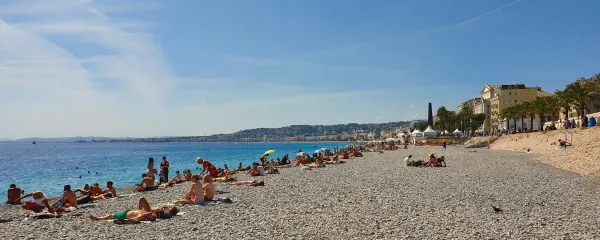
Nice, the capital of the Côte d’Azur and a true Mediterranean gem, blends urban elegance, southern charm, and rich culture like nowhere else. Listed as a UNESCO World Heritage site, the city is way more than just a quick stop, it’s one of the most iconic places on the Riviera thanks to its incredible light, its mix of architecture styles, and its cosmopolitan vibe.
The beating heart of Nice is its old town. It’s a maze of narrow streets, sometimes bustling, sometimes almost empty, where centuries-old palaces sit next to baroque churches and warm-colored façades, from golden yellow to red, all framed by those classic green shutters you see everywhere in Nice. The whole place gives off a lively, authentic feel, with a definite Italian touch in the air.
And then there’s the famous Promenade des Anglais, a long palm-lined walkway that follows the curve of the Bay of Angels. It’s the symbol of Belle Époque elegance, originally built for British visitors escaping the winter chill. Today, it’s full of people year-round, walkers, cyclists, joggers, and people just enjoying the view, under that signature Riviera blue sky.
Nice is a cultural powerhouse too. The city’s packed with world-class museums that celebrate the artists who fell in love with its light, Chagall, Matisse, and the masters of the École de Nice. Even the architecture tells a story, with layers of Sardinian roots, French influence, and bold modern touches.
The hills in Nice are another treat. The Castle Hill (Colline du Château) gives you one of the best panoramic views of the city, the port, and the sea. And there is the Cimiez neighborhood, where you’ll find Roman ruins and an ancient arena, plus a beautiful monastery and peaceful gardens.
Despite all its elegance, Nice keeps a popular, down-to-earth side too. You’ll feel it in the buzzing neighborhoods, the open-air markets, the pebbly beaches, and the simple but delicious local food. Day or night, the city pulses with energy, a mix of Mediterranean ease, local pride, and a touch of party spirit.
Villefranche-sur-Mer

Type Small Town
Villefranche-sur-Mer is a small town, but its heart feels just like a village. Tucked between Nice and Saint-Jean-Cap-Ferrat, it has an incredible setting with its gently sloping old town, a harbor nestled in a dreamy bay, and the emerald green glow of Cap Ferrat on the horizon.
Its historic heart is centered around Rue du Poilu, and you’ll want to explore it slowly, through winding alleys, stepped squares and vaulted passages, including the famous Rue Obscure, an old underground defense tunnel. Along the way, you’ll come across the baroque Saint-Michel church, built in the 15th century.
Down by the Port de la Santé, with its tall red, ochre and golden façades, you get a real Italian vibe and an amazing view of the bay. It’s also where you’ll find the Saint-Pierre chapel, decorated by Jean Cocteau in the 1950s. The artist, who stayed at the nearby Welcome Hotel, left behind a powerful piece full of symbolism, mixing sacred and secular themes.
Villa Rothschild
Type Villa & Garden
Full Name
Villa Ephrussi de Rothschild
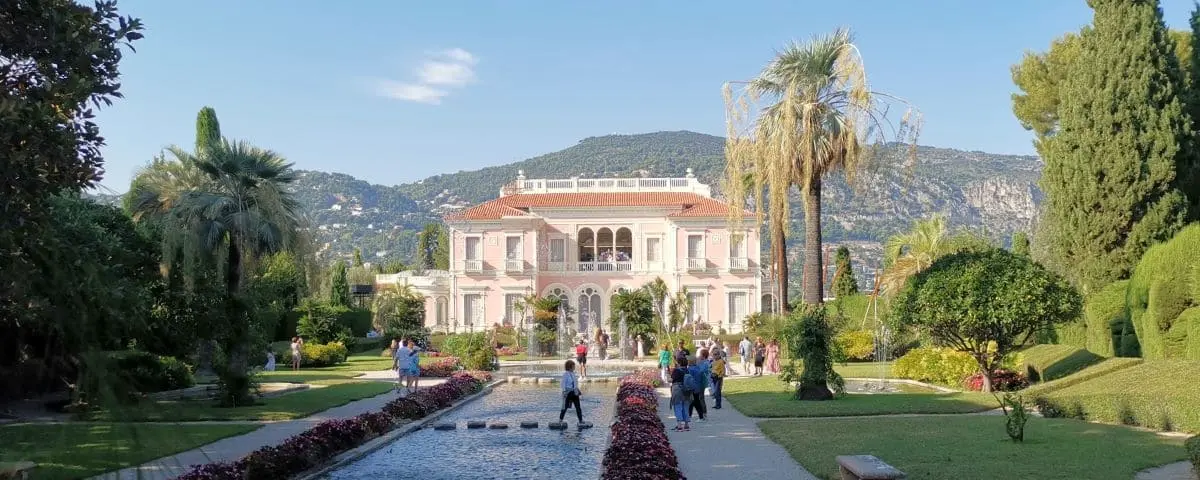
Perched on the prestigious Cap Ferrat, the Villa Ephrussi de Rothschild is basically the wild dream of Baroness Béatrice Ephrussi, born Rothschild, come true. This stunning place, built like an Italian palace, is all about bold eclectic style, with elegance ruling every corner.
Right from the central patio, surrounded by arcades, you know you’re in for something special. Every room feels like a little jewel box, there’s a cute boudoir, Chinese salons, Louis XV furniture, and more. Everything here reflects the lavish taste and whimsical spirit of a woman obsessed with art and travel.
But the real gem is outside. The villa practically dives into the sea, with the bright blue Mediterranean wrapping around it on both sides. And the best part? It’s surrounded by nine themed gardens, some of the most impressive on the French Riviera. There’s a French garden with musical fountains, a Spanish one, Florentine, Japanese, exotic… it’s like a botanical love letter to the whole world, designed to dazzle all your senses.
Cap Ferrat
In Our Top Picks ✅
Type Coastal Path
Full Names
Sentier du Littoral
Sentier de Saint-Jean-Cap-Ferrat
Chemin des Douaniers
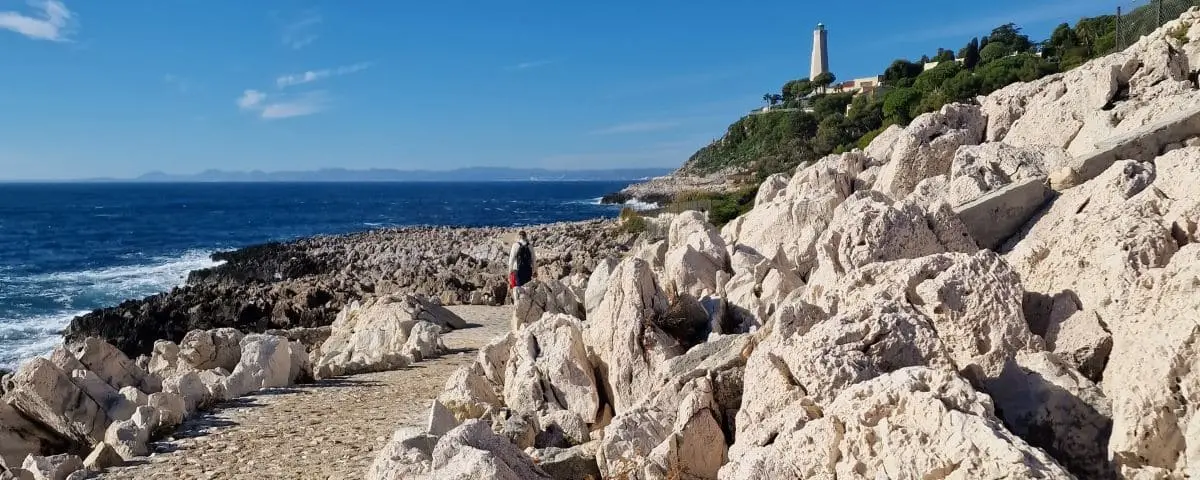
This trail takes you along a wild coastline shaped by wind and waves. You’ll see chalky cliffs, hidden coves, an old quarry, and this stunning rocky landscape at Pointe Causinière. The sea can get pretty loud and rough here. Along the way, you’ll spot the lighthouse in this dramatic, remote Riviera vibe.
Èze
In Our Top Picks ✅
Type Village
Altitude 400m (1310ft)
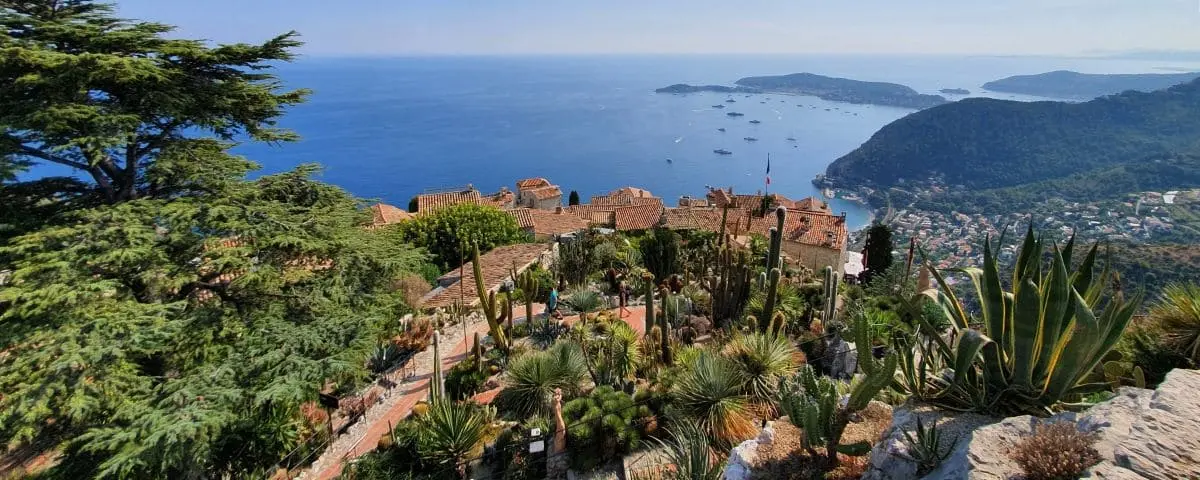
Hanging between the sky and the sea, Èze is one of the most iconic hilltop villages on the French Riviera. Clinging to the cliffside at over 400 meters above sea level, it gives you a spectacular view over the Mediterranean. It totally looks like a postcard, and yes, it’s no hidden gem lots of people come here every year but even with the crowds, the village hasn’t lost an ounce of its charm.
As you climb up to the top, you follow these winding cobbled streets lined with beautifully restored medieval houses. You stroll around with your head in the clouds, checking out the arched passages, flower-covered façades, artisan workshops and little art galleries. Sure it’s a tourist hotspot, but the place still feels authentic.
And at the very top, the best part of the visit: the exotic garden. Set on the ruins of an old castle, this hanging haven is filled with stunning succulents, agaves and cacti from all over the world. But what’ll really blow your mind is the view a jaw-dropping panorama of the whole Riviera, from Saint-Jean-Cap-Ferrat all the way to Italy.
Food Market Thursday and Saturday mornings
Monaco
In Our Top Picks ✅
Type Principality
Population 40 000
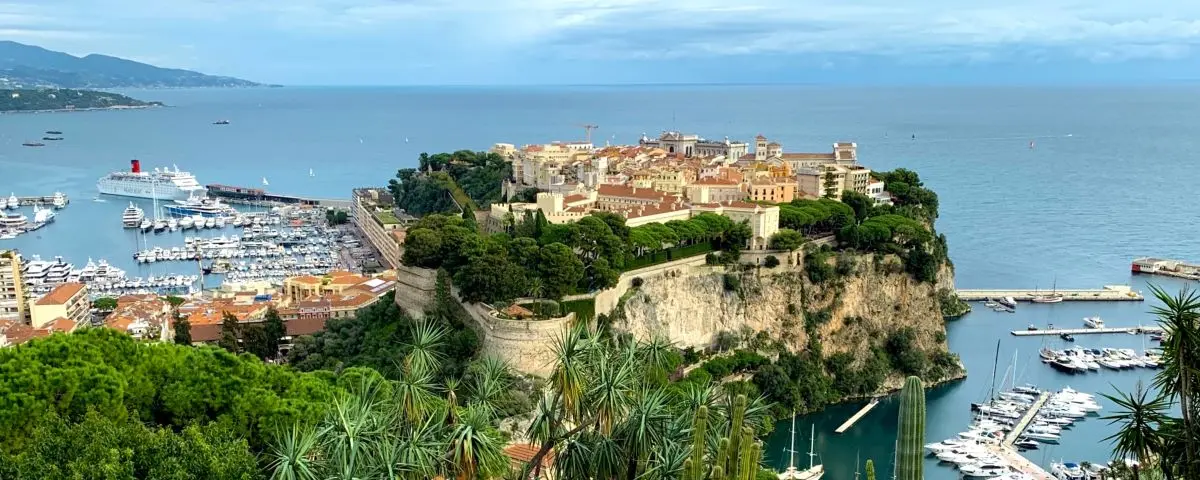
Wedged between the sea and the mountains, the Principality of Monaco unfolds its one-of-a-kind setting across just two square kilometers, where bold urban design meets royal traditions. This tiny sovereign state packs in a whole world of its own, with glitz, culture, sport, and the Mediterranean all wrapped into one. It’s a must-see stop if you’re exploring the French Riviera.
Start with the Rock of Monaco, the historic heart of the city. That’s where you’ll find the Prince’s Palace, home of the Grimaldi family, which you can visit when it’s open to the public. Inside, you’ll walk through grand ceremonial rooms, and outside, the daily changing of the guard always draws a crowd. Just steps away, the narrow streets of old Monaco invite you to wander past colorful houses, tucked-away churches, and charming little squares that feel straight out of another era.
Clinging to the cliffs nearby is the Oceanographic Museum, founded by Prince Albert I. This sea-focused landmark, with its dramatic facade overlooking the waves, is home to a fantastic aquarium and a museum dedicated to marine exploration. It’s one of Monaco’s most iconic spots, just as striking for its architecture as for its exhibits.
Monaco’s full of contrasts, and the Monte-Carlo district shows that perfectly. It’s dominated by the legendary Casino, a Belle Époque palace full of marble and gold-leafed salons. All around it, luxury hotels, high-end boutiques, and sleek cars set the tone for a world that’s as refined as it is flashy. At night, the terraces and gaming rooms buzz with that classic Riviera glamour.
But Monaco isn’t just about luxury. The exotic gardens, hanging on the edge of the cliffs, offer a stunning walk high above the Mediterranean, and the harbor is perfect for a stroll among yachts and lively café terraces.
Monaco also hosts major international events year-round, from the legendary Formula 1 Grand Prix that roars through the streets every spring, to the renowned Monte-Carlo Ballet, the TV Festival, and concerts by the Philharmonic Orchestra. There’s always something big going on, whether it’s culture or sports.
Roquebrune
Type Village
Altitude 220m (720ft)
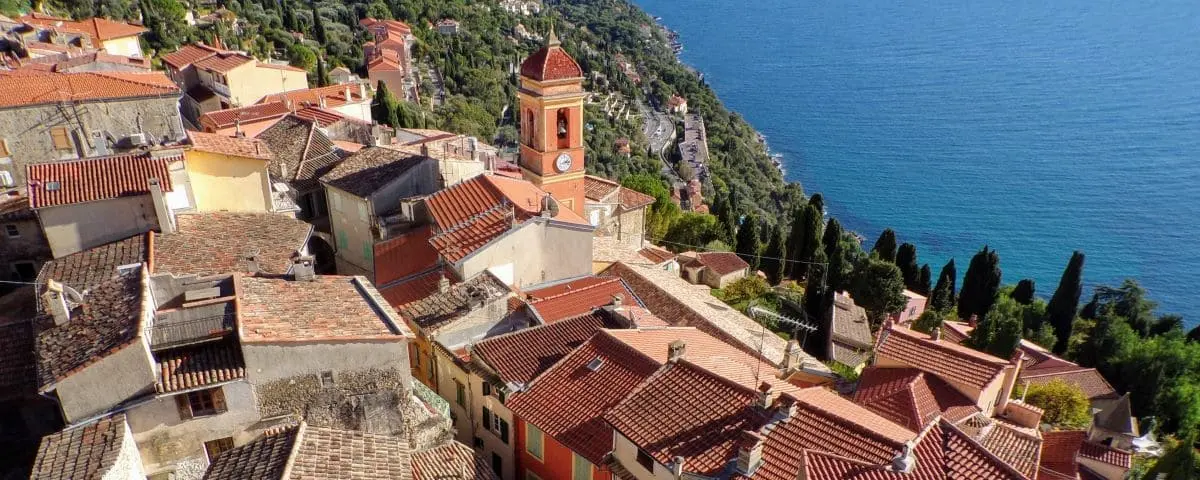
Overlooking the Mediterranean from its rocky spur, the old village of Roquebrune-Cap-Martin is a medieval gem tucked between Menton and Monaco. Sheltered from the coastal hustle, it spreads out in a maze of narrow, steep lanes lined with old houses connected by arches and covered passages. The vibe there is calm, almost like time’s standing still.
At the heart of the village stand the ruins of a feudal castle from the 10th century the only one of its kind in France. This stark but striking fortress was gradually adapted for gunpowder use over the centuries. From the top of the walls, you get an amazing view over Cap Martin and the bay of Menton, with the Mediterranean stretching out in the background.
Just outside the village, stands the ancient olive tree of Roquebrune, this giant with multiple trunks is said to be over 2,000 years old and is listed among France’s remarkable trees. It’s a short walk from the main square and adds a poetic touch to your visit.
Food Market Thursday mornings
⚙️ Info (Tourist Office Website)
Sainte-Agnès
Type Village
Altitude 660m (2160ft)
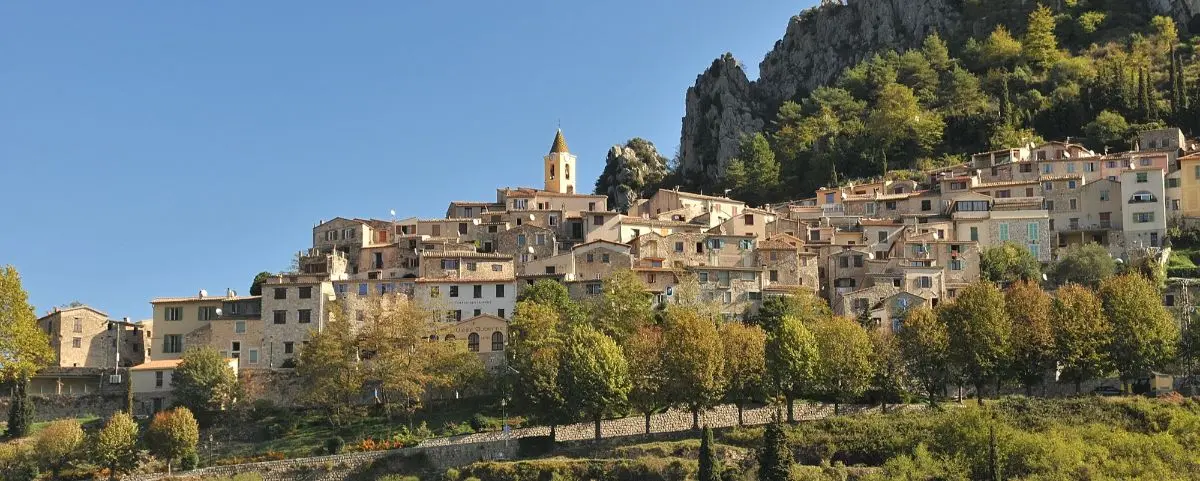
Perched high above Menton on a cliffside, Sainte-Agnès is officially the highest coastal village in Europe, and the view over the Mediterranean is absolutely breathtaking. It’s a rare spot, home to a perfectly preserved old village with a maze of tiny alleys, medieval archways, vaulted passages, and a cobbled main street that leads you to an incredible lookout point.
What makes Sainte-Agnès so special is its mix of history and military heritage. The Fort Maginot de Sainte-Agnès, dug right into the mountain, is basically an underground city covering 2,000 square meters. It played a defensive role during World War II and now you can visit it, with everything from bunkers and kitchens to big machinery and a modern setup that brings its story to life.
Another gem is the old medieval castle site, which you reach via a steep little trail. Up among the ruins, there’s a terraced medieval garden planted with species from the era. It’s a simple, peaceful place that feels both poetic and timeless.
Food Market No
Menton
In Our Top Picks ✅
Type Town
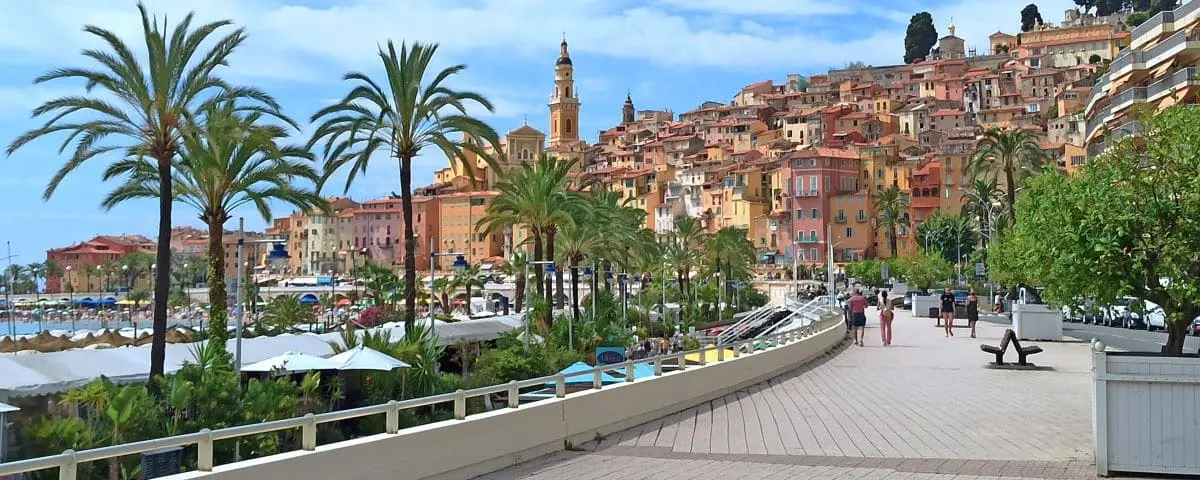
Nicknamed “the pearl of France” Menton charms you with its lovely old-school vibe, its Italian-style colors, and a climate that’s incredibly mild. Tucked away at the far eastern edge of the French Riviera, right near the Italian border, this holiday town has managed to keep its authenticity and elegance while standing out with its own unique character.
The best way to start exploring Menton is along the seafront. From there, you get that picture-perfect view of the old town clinging to the hillside, with its pastel façades, bell tower, and little stair-stepped alleys leading down to the water. It sets the tone right away, Menton is like something out of a postcard, calm and full of light.
You’ve absolutely got to lose yourself in the maze of old town streets. The tightly packed houses and narrow alleys create this almost meditative vibe. All paths lead up to the gorgeous square in front of the Basilica of Saint-Michel-Archange, a baroque masterpiece with a stunning facade that opens onto a stone-paved square with an incredible view. Twisting stairways, archways, and flower-filled corners make the place feel frozen in time.
Menton is also famous for its Lemon Festival, which lights up the town every February. During that time, the city gets decked out in citrus: parades, exhibitions, and giant sculptures made entirely from lemons and oranges. It’s a colorful tradition that celebrates a fruit that’s become a local symbol.
Besides its architecture and cultural life, Menton is known for its beautiful gardens and parks. These lush spaces, full of tropical plants, reflect the history of wealthy 19th-century families who came here to enjoy the sunshine. Thanks to its unique microclimate, lemon trees, orange trees, and palms thrive here all year round.
CENTER
Overview Table
| Name | Type | Top Picks |
|---|---|---|
| Cannes | City | ✅ |
| Saint-Honorat | Island | |
| Antibes | City | ✅ |
| Cap d'Antibes | Coastal Path | |
| St-Paul-de-Vence | Village | ✅ |
| Gourdon | Village | |
| Grasse | Town | |
| Estérel | Mountains |
Cannes
In Our Top Picks ✅
Type City
Population 75 000
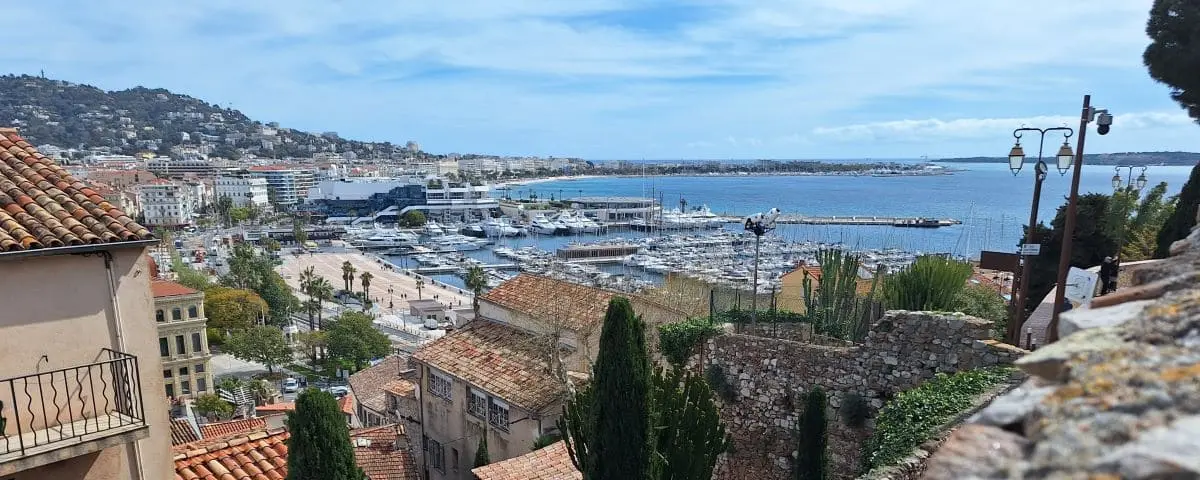
Cannes is like the ultimate star of the French Riviera, with all the fancy hotels, private beaches and the glitter of the film festival. But if you look past the bling, there’s actually a deeper side to the city, a real Mediterranean vibe, and even a few spots away from the spotlight.
It’s hard to talk about Cannes without mentioning the legendary seafront La Croisette, lined with palm trees, luxury hotels and designer stores. That’s where the red carpet rolls out every May under a storm of camera flashes. But outside of festival season, it’s just a chill place to walk, jog or hang out with your family, with the beach and the sea right next to you.
Up on the hill, you’ve got Le Suquet, the old part of Cannes, and it’s a whole different world compared to the glitz of the big hotels. It’s this maze of little medieval streets, old houses, stone stairs and cozy restaurants. At the top, there’s the Notre-Dame-d’Espérance church, watching over the bay, and the view from up there is just stunning: you can see the whole city and the islands of Saint-Marguerite and Saint-Honorat. It’s the perfect spot to get a taste of the real Cannes.
Beyond the clichés, what really makes Cannes special is the lifestyle. You’ve got Provençal markets, the one at Forville is a must, lively cafés, cute little shopping streets downtown, and beaches that are super chill once summer slows down. And all of that under this crazy blue sky that’s been inspiring artists and dreamers for over a century.
St-Honorat
Type Island
Full Name
Île Saint-Honorat
Size 1.5 x 0.4 km (0.9 x 0.2 mi)
Peak Flat
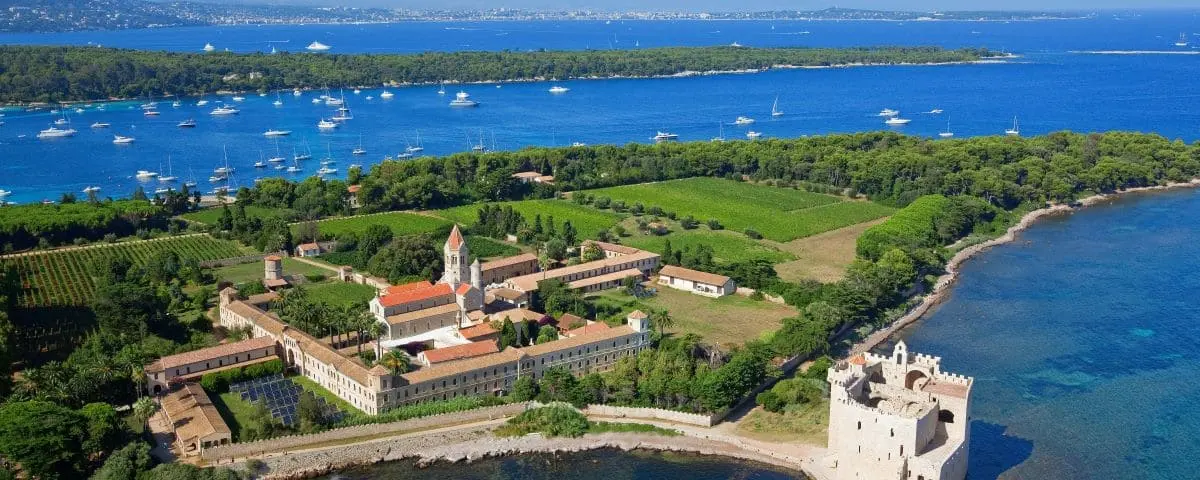
Just off the coast of Cannes, Saint-Honorat Island is like a peaceful bubble, frozen in time, far from the glitz and bustle of La Croisette. It’s the second of the Lérins Islands and, along with its bigger sister Sainte-Marguerite, forms an iconic duo off the Côte d’Azur. But unlike its more visited sibling, Saint-Honorat holds onto a calm, reflective vibe, thanks largely to the presence of an active monastic community. No cars or bikes are allowed here, which only adds to the feeling that you’ve stepped away from the world.
The island actually belongs to the Lérins Abbey, which was founded in the 5th century by Saint Honoratus. The monastery has stood the test of time, and today around twenty Cistercian monks live there, following a life of self-sufficiency and silence. There’s the current abbey, rebuilt in the 19th century, and the remains of a medieval fortified monastery with its striking crenellated towers facing the sea.
Besides its spiritual heritage, Saint-Honorat offers untouched natural beauty, pine forests, hidden coves, quiet beaches, and vineyards. The monks themselves cultivate the vines and produce wine, including some Mediterranean-style vintages.
You can easily walk around the whole island, and the coastal path gives you stunning views over the Bay of Cannes, and the crystal-clear waters lapping against the rocks. It’s a walk that invites quiet reflection, perfect for thinking or just snapping amazing photos.
Ferry
Duration (one-way) 20min
Price (round-trip) €20.50
Company
Planariat
📍 From Cannes
⚙️ Schedules & Prices (Official Website)
Antibes
In Our Top Picks ✅
Type City
Population 75 000
Between Cannes and Nice, Antibes strikes the perfect balance between Provençal charm, artistic buzz, and seaside pleasures. This place has so many different faces, and it’ll win you over both with its historic roots and its lively cultural vibe.
The heart of Antibes beats in the old town, a maze of lively little streets lined with pastel houses and green shutters, dotted with cute little squares and old fountains. Wandering through this neighborhood, you’ll stumble upon a Provençal market full of fresh herbs and sun-soaked fruit, artisan shops, and cozy cafés with a laid-back local feel.
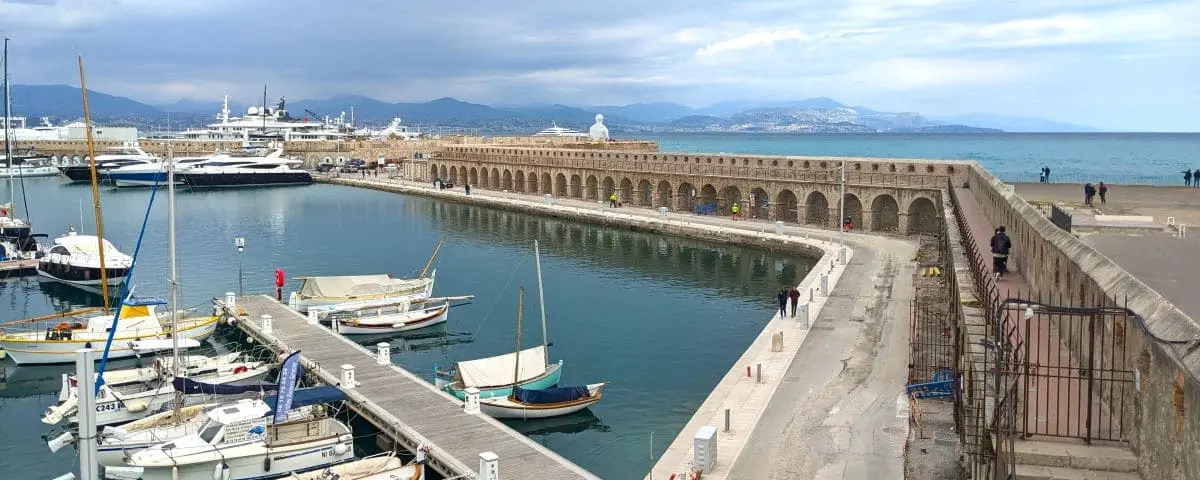
The ramparts of Antibes, some of the best preserved on the coast, remind you just how strategically important the city once was. Sitting high on a rocky outcrop, they offer a stunning walk with views of the Fort Carré fort, the Alps in the background, and the harbor below. These fortifications, especially reinforced in the 16th century, give Antibes its unique defensive look that’s still super visible today.
Between the old town and the ramparts, you’ll find Port Vauban, one of the biggest pleasure marinas in Europe. It’s seriously massive, welcoming everything from sailboats to mega yachts docked along the famous Billionaires’ Quay. The port is always buzzing with activity, but it’s also a great place to stroll around.
One of Antibes’ cultural gems is the Picasso Museum, housed in the old Grimaldi Castle. When Picasso stayed there in 1946, he left behind loads of works full of color, joy, and playful energy. You’ll see various masterpieces, plus about fifty ceramics made in nearby Vallauris town. The whole place feels like a celebration of life, bathed in that special light that inspired Picasso so much.
And then there’s Juan-les-Pins, to the west of town, Antibes’ fun and festive beach resort, famous for jazz and that carefree Riviera vibe. Every summer, the Jazz à Juan festival draws musicians from all over the world, keeping alive a tradition that goes back to the 60s.
To the south, the Cap d’Antibes is perfect for peaceful walks between hidden little coves. The coastal path gives you an idyllic setting to explore Mediterranean plants and enjoy a stretch of coast that still feels untouched.
Cap d'Antibes
Type Coastal Path
Full Names
Sentier du Littoral
Sentier Tirepoil
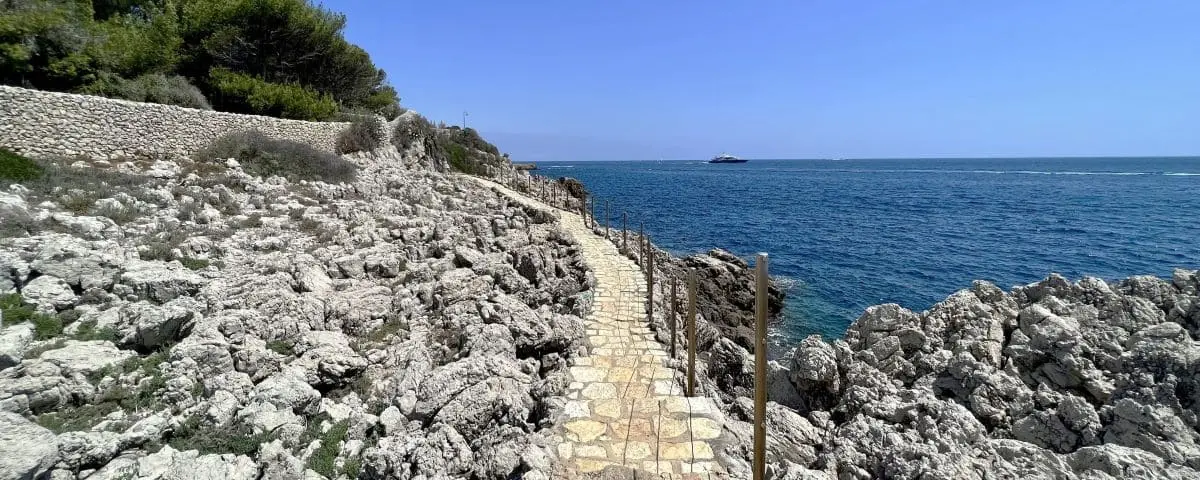
You’ll wind your way through pine trees, past luxury hotels and villas tucked behind high walls. The path hugs tiny coves, loops around the tip of the cape, and follows a rocky shoreline lined with umbrella pines. Down below, the sea gently laps at the rocks. It’s a walk where understated luxury meets Mediterranean nature.
Saint-Paul-de-Vence
In Our Top Picks ✅
Type Village
Altitude 200m (660ft)
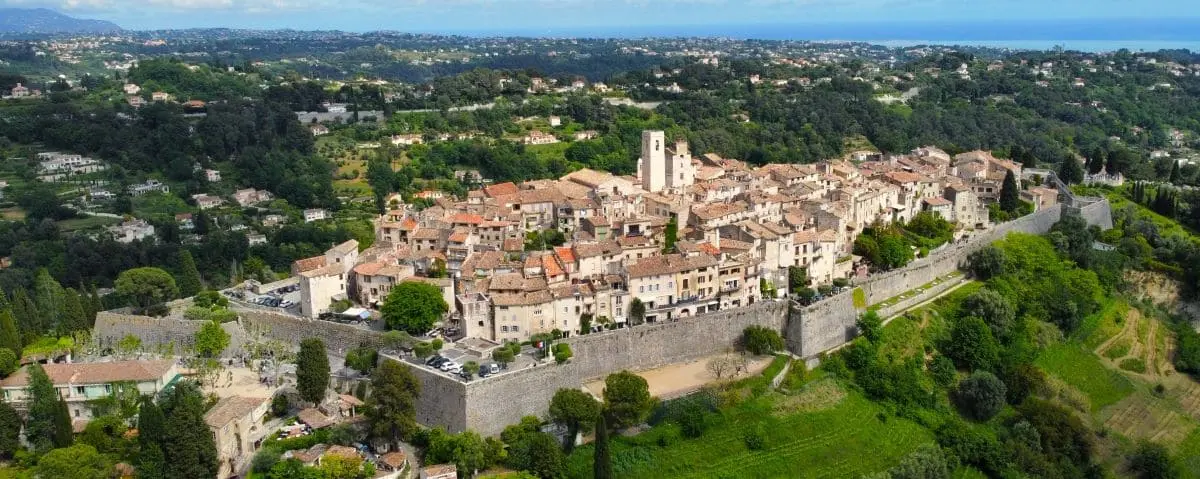
Perched on a hill, Saint-Paul-de-Vence is a true icon of the French Riviera. For a long time it was just a quiet fortified village, but in the 20th century, it took on a whole new artistic life. Back in the 1920s and 30s, when it was still just a peaceful hamlet, painters started showing up, drawn by the region’s ever-changing light. Their canvases and brushes settled there and pretty soon, writers and movie stars followed.
Today, even with all the tourists, the magic’s still very much alive. The cobbled lanes twist and turn between perfectly restored old stone buildings. You’ve got to take your time strolling down Rue Grande, lined with noble houses from the 16th and 17th centuries, now turned into art galleries, studios and little shops. The village’s soul is still deeply artistic with around fifty galleries and studios and of course the must-see Maeght Foundation, a major spot for modern European art, just on the edge of the village.
Walking the ramparts, gives you a peaceful stroll with wide views over the surrounding countryside. There’s also the Henri-Layet path along the western wall, where you can walk in calm.
A few more things: the Folon Chapel, decorated by the Belgian artist in a dreamy mix of stained glass, mosaics and sculptures; the collegiate church, packed with paintings from the 15th to the 18th century; and the cemetery, where Marc Chagall is buried.
Food Market Wednesday and Friday mornings
⚙️ Info (Tourist Office Website)
Gourdon
Type Village
Altitude 730m (2400ft)
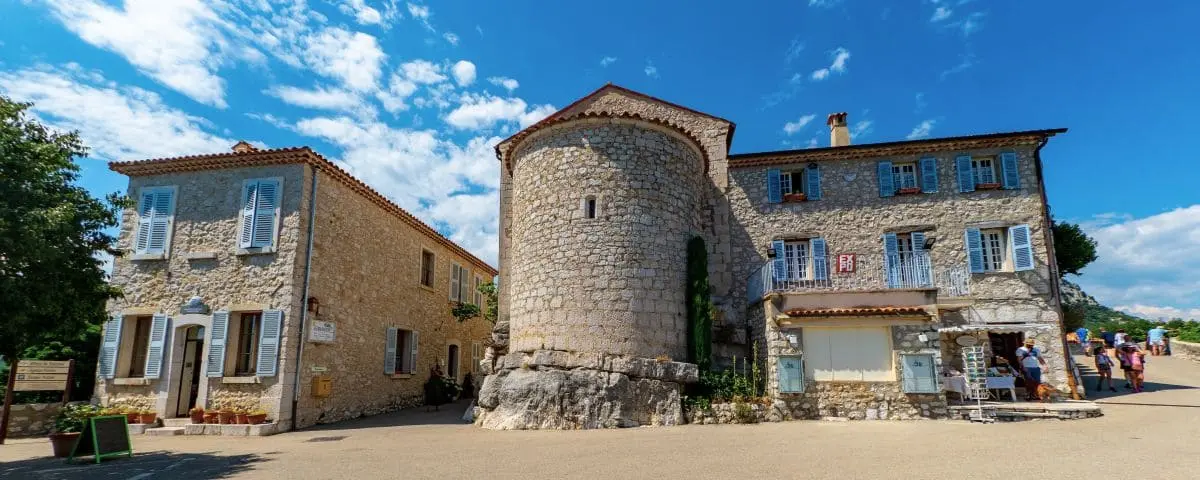
Gourdon is perched on a rocky outcrop that gives it a truly dramatic silhouette. Everything feels suspended above the void, with old stone houses gathered around the small château and narrow lanes that still preserve a strong medieval atmosphere.
What makes the place so special is the feeling of looking down over everything. From the heights of the village, you get an immense panorama, the valley below, then almost 80 kilometers of coastline stretching across the horizon, from the red hills of the Estérel to Nice.
The château, even though it’s not open to the public, add a touch of ancient power to the whole scene. You can feel the village’s defensive purpose. Gourdon looks like a natural lookout point, built to see far, withstand attacks and impress anyone approaching. Its stone setting, extreme position and fortress like profile create a striking visual impact.
As you wander through the village, pay attention to the views and perspectives. A gap between two walls, a lane opening onto the sky, a sunlit façade standing above the drop. Gourdon is experienced as a mineral balcony, where stone, light and the Mediterranean horizon come together, with the rare feeling of standing above the whole French Riviera.
Food Market No
Grasse
Type Town
Altitude 330m (1,080ft)
Grasse, the world’s perfume capital, is one of the iconic towns of the Côte d’Azur backcountry, perched on the first hills behind Cannes. It’s more than just a town, it really embodies the Provençal way of life, full of history, colors, and of course, amazing scents.
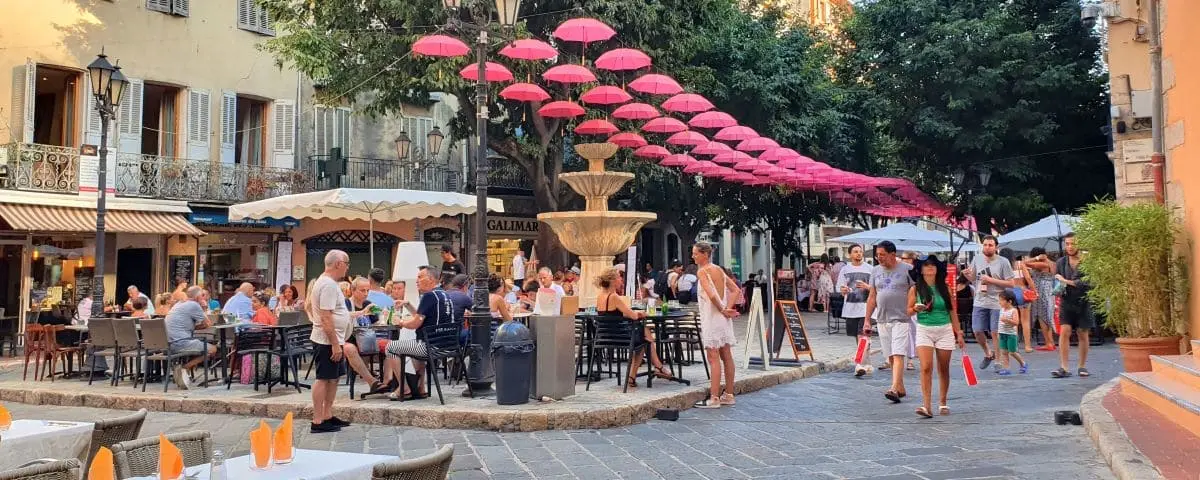
The old town of Grasse is totally charming, with its maze of narrow streets lined with warm-toned medieval buildings. It’s the kind of place where you’ll happily get lost in the shade, passing under arches, through little sun-dappled squares, and past colorful shutters. The whole setting has a mix of Italian flair and Provençal soul, especially in the 17th- and 18th-century architecture.
Grasse became world-famous in the 18th century when glove makers started shifting away from leather and moved toward extracting floral essences and making perfume. From then on, the town turned into the beating heart of this refined craft, blending old-school know-how with new scent innovation.
Even today, people come from all over to explore the secrets of master perfumers. Big names like Fragonard, Galimard, and Molinard open their doors for guided visits and even workshops where you can create your own custom scent.
The International Perfume Museum is a must if you’re into the history behind all this. It takes you through the world of fragrance from ancient times to today, with a stunning collection of bottles, art objects, and interactive displays. It really captures the magic of a craft that mixes science, plants, and a touch of poetry.
Estérel
Type Mountains
Full Name
Massif de l’Estérel
Highest Peak 614m (2,014ft) 📍Mont Vinaigre
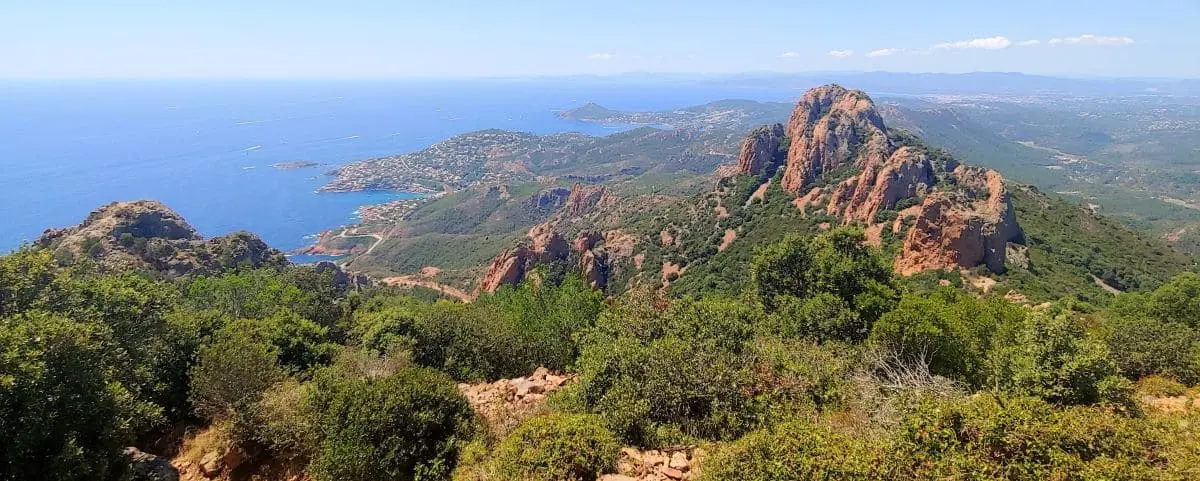
Just a stone’s throw from Cannes, the Estérel Massif offers a breathtaking escape where sky, sea, and fiery red rock come together. This ancient volcanic range, ripped from its original base during the formation of the Mediterranean, unfolds a dramatic landscape of jagged ridges, steep cliffs, dense forests, and fragrant scrubland. But what really grabs you first is the color, deep, glowing shades of red and orange that pop against the intense blue of the sea. The contrast is just stunning.
To really take in the full beauty of the Estérel, though, you’ve got to head inland and gain some altitude.
Not far from the coast, the Pic de l’Ours is one of the massif’s most iconic peaks. You can hike up to it on gorgeous trails, and once you’re at the top, the view is unforgettable, you’ll see the whole coastline laid out before you: the Estérel hills, the Lérins Islands, the bays of Cannes and Saint-Raphaël, and on a clear day, even the Mercantour mountains or Corsica in the distance.
Close by, the Dent de l’Ours peack adds to the drama. This razor-sharp ridge, bristling with jagged red rocks, looks wild and sculptural, like nature’s own art installation.
Between the two, the trails wind through classic Mediterranean vegetation, holm oaks, Aleppo pines, heather, rockrose, and mastic trees, filling the air with resinous scents and salty breezes.
WEST
Overview Table
| Name | Type | Top Picks |
|---|---|---|
| Port-Grimaud | Village | |
| Saint-Tropez | Small Town | ✅ |
| Pampelonne | Beach | |
| Gassin | Village | |
| Bormes-les-Mimosas | Village | ✅ |
Port Grimaud
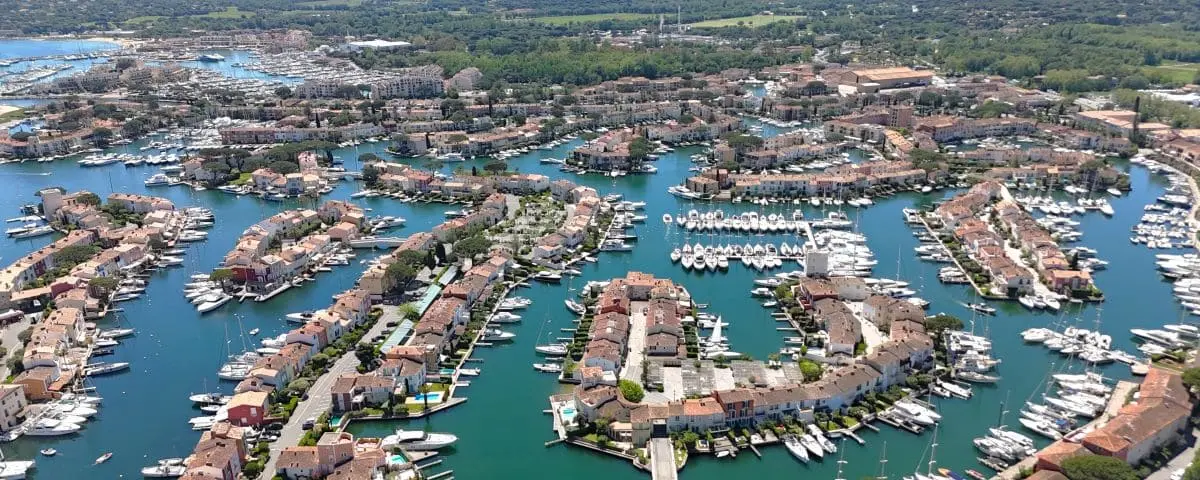
Type Village
Altitude 0
Tucked at the end of the Gulf of Saint-Tropez, you’ll find Port Grimaud, a bold creation born in 1966 from the mind of an architect from Alsace. His vision? Turn a swampy stretch of land into a colorful Mediterranean village built around canals, kind of like a Provençal Venice.
With about 2,500 homes and 7 km of canals lined by 12 km of quays, Port Grimaud is like something out of a dream. Boats are docked right at people’s doorsteps. Every detail was carefully planned to blend beauty, practicality and that sweet Provençal lifestyle. The buildings follow traditional architecture, with soft pastel façades that reflect beautifully in the water.
You should definitely check out the Saint-François des Sables church, it looks a bit like a little fortress. If you climb up to its terrace, you’ll get a breathtaking view over the whole village. Inside, there are modern stained-glass windows by Victor Vasarely, adding a splash of bold color and creativity to the space.
The whole village is pedestrian-only, which makes it perfect for walking around or, better yet, cruising through the canals. You can hop on a little water taxi for a ride.
Food Market Thursday and Sunday mornings
⚙️ Info (Tourist Office Website)
Saint-Tropez
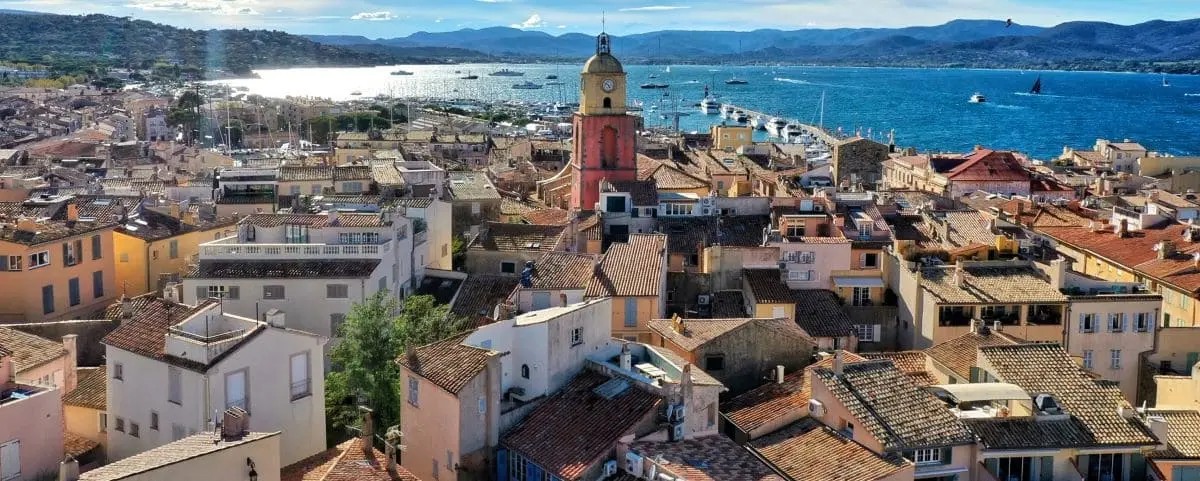
In Our Top Picks ✅
Type Small Town
Saint-Tropez, that legendary town on the coast, is the ultimate symbol of the glamorous, dream-like image of the Côte d’Azur. But beyond the flashy yachts and camera flashes, there’s a real charm hiding under the surface.
The town center, which still feels like a traditional village, has this irresistible vibe: narrow lanes, ochre and soft pink houses with pastel shutters, and little shaded squares where old fountains gently bubble. It’s the kind of place where time seems to slow down.
Of course, the port is the heart of it all. You’ll see everything from small traditional fishing boats to jaw-dropping yachts from around the world. It’s always buzzing, with people strolling by, artists showing off their work, and cafés where you’ll happily linger over a drink just watching it all go by.
Culturally, Saint-Tropez might surprise you. The Annonciade Museum, housed in a former chapel, has an impressive modern art collection, including works by Signac, Matisse, and Bonnard.
If you’re up for a bit of a climb, the Citadel offers a stunning view over the bay, and inside, there’s a maritime history museum worth checking out.
In the end, Saint-Tropez is a town of two faces: party hotspot and charming Provençal village.
Pampelonne

Type Beach
Pampelonne beach isn’t just a beach, it’s a whole experience in itself. This huge 4.5 km stretch pretty much sums up the Côte d’Azur dream: soft sand, open sea, that sweet smell of monoi oil, and yachts floating on the horizon. It’s famous worldwide, not just for the scenery but also for the vibe, somewhere between untouched nature and full-on glam.
In summer, Pampelonne really comes alive. Loads of people head there in high season, drawn by the sea, the sun, and the beach’s reputation. You’ll find plenty of beach bars and restaurants, often quite fancy, lined up along the sand. You can stop for a coffee, grab lunch with your feet in the sand, or just sit back and watch the holiday crowd and the boats coming and going.
But Pampelonne isn’t only about the jet-set scene. It’s been classed as a protected natural area, and it went through a big revamp: fewer places now, built further back from the shore, using more eco-friendly materials. So even when it’s busy, the view stays clear and the stretch of sand still feels massive.
If you’re after some peace and quiet, best bet is to head to the far ends of the beach, or come outside of summer. In spring or autumn, Pampelonne feels totally different: it’s calm, almost wild, and walking along that long sandy ribbon is just pure joy.
Gassin
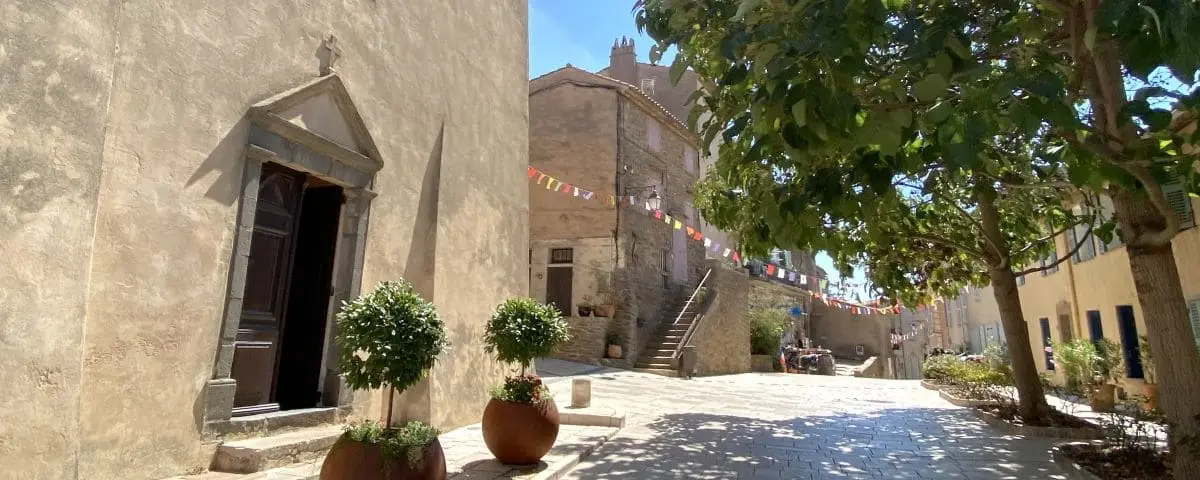
Type Village
Altitude 190m (260ft)
Gassin is a hilltop village perched high above the Saint-Tropez peninsula. You get there by winding your way up a twisty road, and once you’re at the top, the view is just stunning, you can see the whole Gulf of Saint-Tropez dotted with boats, like a living painting.
Part of Gassin’s charm comes from its old historical features. You’ll find yourself strolling past ancient ramparts, stone-paved alleys, and cute little archways. One quirky highlight is the narrowest street in the world.
What really makes Gassin special is how deeply rooted it is in its winegrowing tradition. The village has kept its farming alive, especially with vineyards, which not only keeps the landscape looking beautiful but also supports a sustainable local economy.
If you’re into plants, you’ll love the two gardens. The Marie-Thérèse L’Hardy Garden has nearly 600 types of Mediterranean plants and gives you an amazing view over the valley. And then there’s the Gassin Garden, outside the village, which covers two hectares and was designed with biodiversity in mind, don’t miss the stunning rose garden with 300 old varieties.
Food Market No
Bormes-les-Mimosas
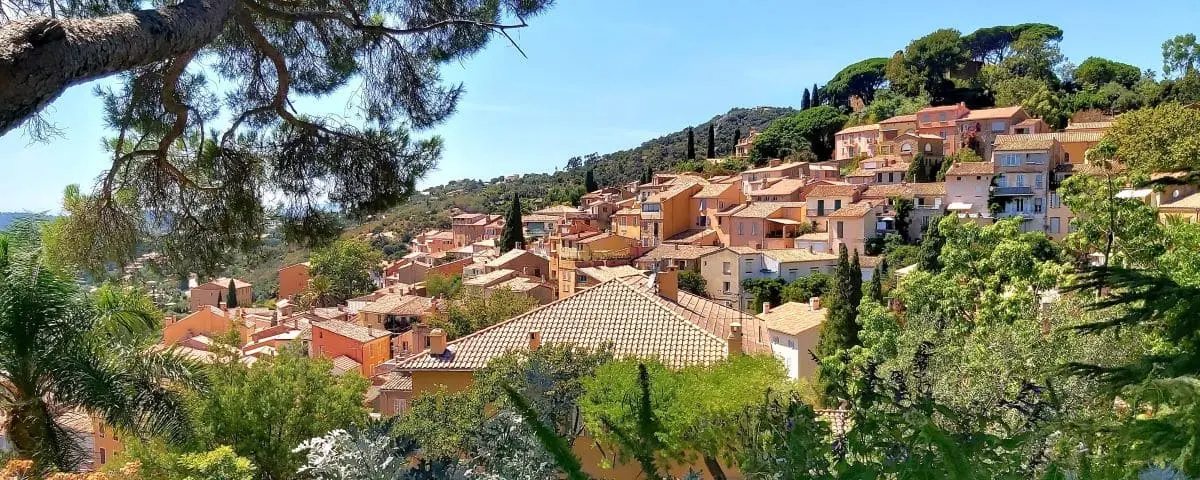
In Our Top Picks ✅
Type Village
Altitude 140m (460ft)
Perched on the lower slopes of the Maures mountains, Bormes-les-Mimosas really stands out as one of the prettiest villages on the French Riviera. The old medieval part has been beautifully restored and you’ll love wandering through its steep little streets full of flowers, its vaulted passages, and all those sunlit stairways and tiny squares.
It’s actually even more charming outside the busy summer season, when you can really take in the village’s amazing plant life, around 700 species from all over the world that fill the place with incredible colours and scents.
Of course, it’s the mimosa that’s put Bormes on the map. It’s been officially linked to the village since 1920 and even gave it part of its name back in 1968. In January and February, the blooming mimosa transforms the whole area and draws in nature lovers, especially for the famous Corso fleuri, a spectacular flower parade that brings thousands of people together every year.
The village also has some lovely buildings worth checking out. The 18th-century Saint-Trophyme church is really elegant with its Romanesque style and old frescoes. Not far from there, the History and Art Museum, which is set in an old mansion, shows off local paintings, sculptures and art objects. And if you head uphill, you’ll get to the ruins of the medieval castle, where the view over Cap Bénat and the Îles d’Or is just stunning.
Food Market Wednesday mornings
⚙️ Info (Tourist Office Website)
DEEP INLAND
Overview Table
| Name | Type | Top Picks |
|---|---|---|
| Coaraze | Village | |
| Saorge | Village | |
| Mercantour | Mountains |
Coaraze
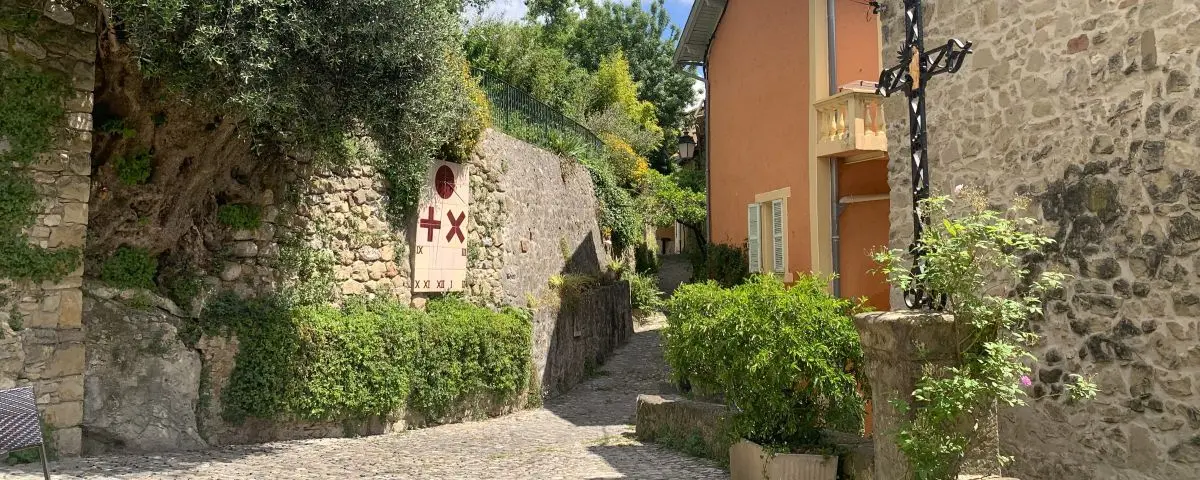
Type Village
Altitude 640m (2100ft)
Coaraze is a medieval gem set in a bright, olive and cypress-covered landscape. The village wins you over with its stepped alleyways, vaulted passages, flower-filled little squares with old fountains, and a timeless atmosphere. From the top of the village, you get an amazing view over the valley.
Since the 1960s, Coaraze has had a real love affair with sundials, many of them made by artists. These colorful pieces are scattered around the village, on the town hall and along the wall by the church square, turning light and time into something almost poetic.
There’s also a rich religious heritage. The Saint-Vincent church, originally Gothic from the 14th century but rebuilt a few times, now shines in full-on baroque style. Just nearby, the Notre-Dame-des-Sept-Douleurs chapel, known as the “Blue Chapel”, is famous for its 1960s frescoes and its stunning view over the village and the valley.
And Coaraze isn’t just about quiet charm, it knows how to party too. In July, it hosts the Championship of pilou (a traditional Niçois game), in August the Rencontres chorales de l’Olivier, and the Coartjazz festival with masterclasses, jam sessions and concerts.
Food Market No
Saorge
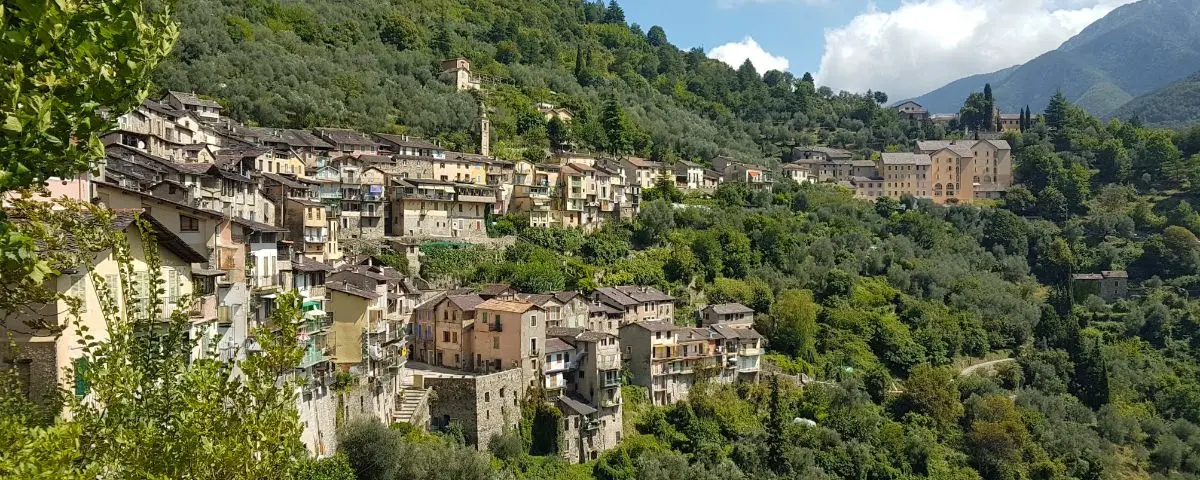
Type Village
Altitude 530m (1740ft)
Perched on the mountainside in the upper Roya valley, Saorge rises like an eagle’s nest, both majestic and dizzying. Its tall houses from the 15th to 17th centuries, painted in shades of violet slate, ochre and faded blue, are stacked on steep rock faces, almost defying gravity. With their balconies hanging over the void, they form a natural wall overlooking the valley, all turned toward the sun.
The village also has some amazing religious heritage, especially the Notre-Dame-des-Miracles Monastery, founded in the 17th century. It sits at the top of the village and is known for its beautiful Franciscan frescoes.
Nature plays a big part in Saorge’s charm too. Just at the entrance of the village. Down the road, the rock pools of the Bendola, known locally as the “bath of the Semite”, offer a refreshing and scenic swim spot.
Food Market Saturday mornings
⚙️ Info (Tourist Office Website)
Mercantour

Type Mountains
Full Name
Parc National du Mercantour
Highest Peak 3143m (10,314ft) 📍Cime du Gélas
The Mercantour is a one-of-a-kind place tucked away in the far southeast corner of the French Alps, where the mountains practically dip into the Mediterranean. It’s one of the wildest and best-preserved national parks in France, a natural treasure full of snowy peaks, deep valleys, crystal-clear streams and little villages clinging to the hillsides.
The park’s made up of seven main valleys, like the Tinée, Vésubie, Var, Cians, Roya and Bévéra, and the variety of landscapes is pretty amazing. You’ve got the red gorges of Cians and Daluis, which look a bit like the canyons in Colorado, mixed in with larch forests and blooming alpine meadows. Along the trails, you might bump into ibexes, chamois, marmots and if you’re lucky, you could even catch a glimpse of a golden eagle or a bearded vulture.
Right in the heart of the area, there’s the Vallée des Merveilles, up near Tende, which is one of the biggest open-air rock art sites in Europe. There are over 40,000 prehistoric carvings there, more than 5,000 years old, etched into the rocks at the foot of Mont Bégo. Hiking through this valley, or the nearby Fontanalba one, gives you this mix of raw natural beauty and ancient art. To keep the place protected, you can only check out the carvings with a guide.