


OVERVIEW
Massif Central
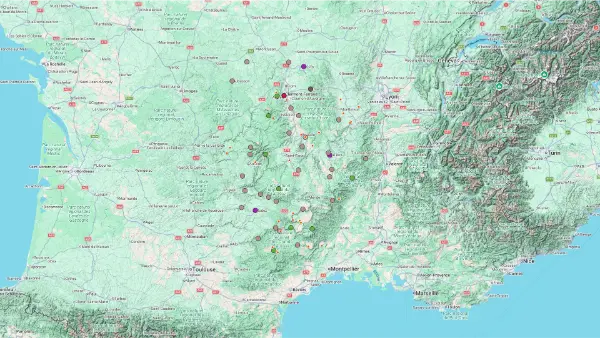
Interactive Map
Massif Central
Interactive Map
Click on the icon  in the top-left corner to display the map legend.
Show/Hide layers as needed.
Click on the arrow icons (v) to display the sublayers.
TOP (15)
| Name | Type | Top+ |
|---|---|---|
| Charroux | Village | |
| Thiers | Small Town | |
| Clermont-Ferrand | City | |
| Puy de Dôme | Mountains | ✅ |
| Puy de Sancy | Mountains | ✅ |
| Salers | Village | ✅ |
| Lavaudieu | Village | |
| La Chaise-Dieu | Abbey | |
| Polignac | Village | |
| Le Puy-en-Velay | Town | ✅ |
| Conques | Village | ✅ |
| Sainte-Enimie | Village | |
| Gorges du Tarn | Gorges | |
| Aven Armand | Cave | |
| La Couvertoirade | Village |
Charroux
Type Village
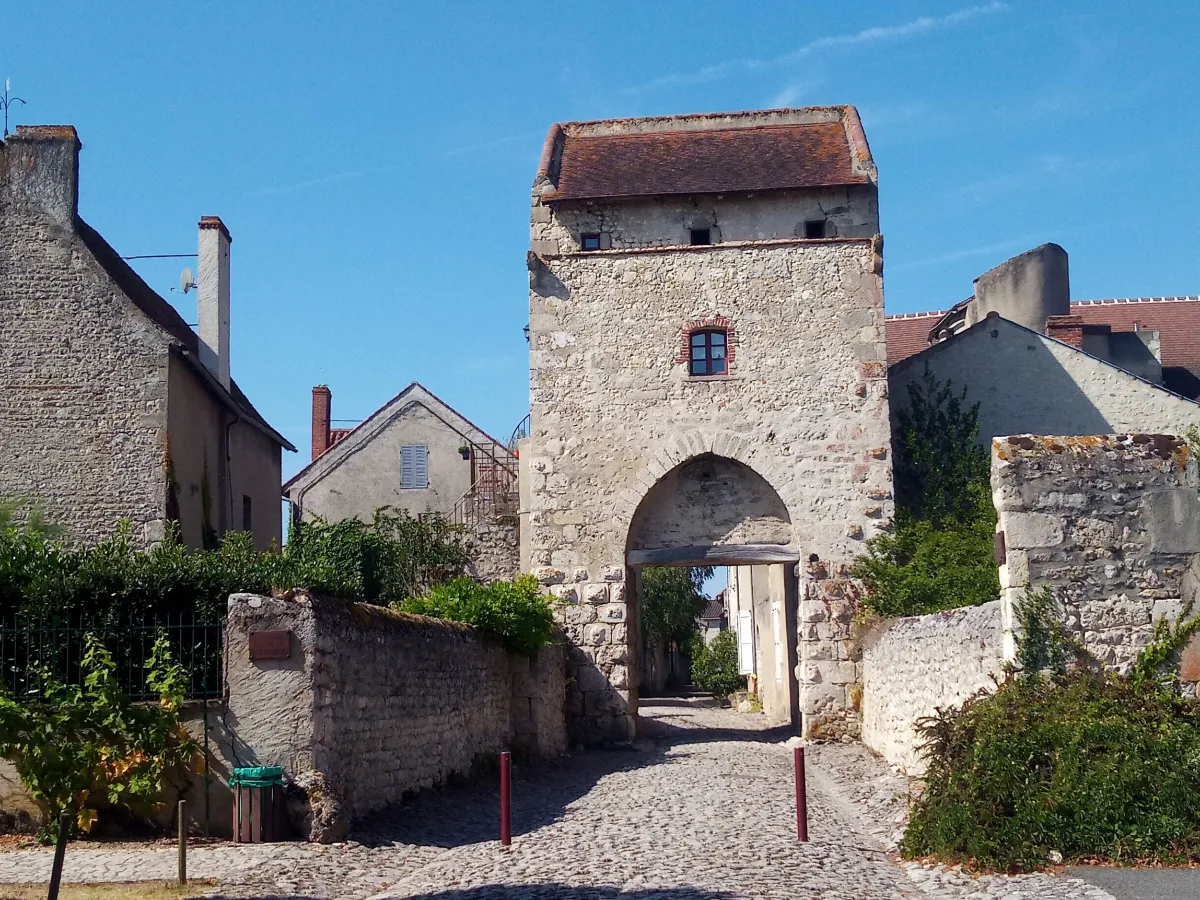
Perched on a small hill overlooking the countryside, Charroux feels like a village where time has moved a little more slowly. Once an important fortified town, it has kept its cobbled lanes, stone houses, and several remains of its old defences. Its unusual truncated bell tower and Clock Tower give it a distinctive silhouette.
As you wander around, you’ll come across little squares, flower-covered façades, and old wells, which are particularly numerous here. There were once several hundred of them. From the edge of the village, the view stretches across rolling countryside and, when the sky is clear, all the way to the volcanoes of Auvergne.
Thiers
Type Small Town
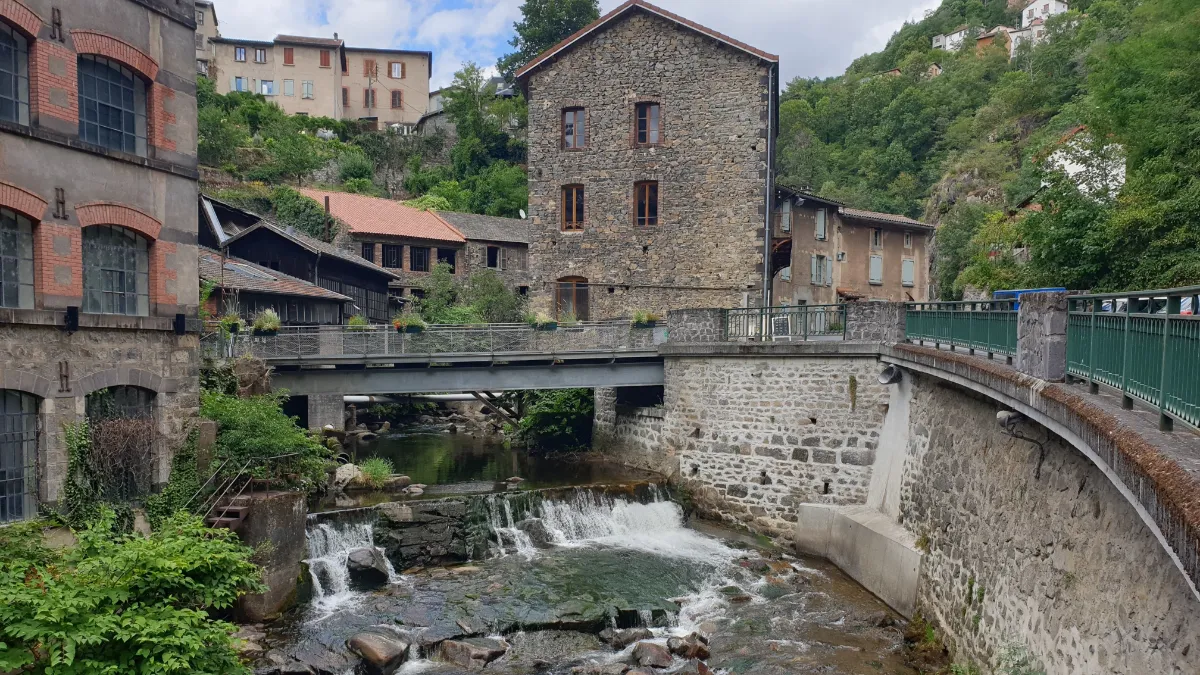
In Thiers, knife-making has been serious business for nearly seven centuries. Clinging to the steep slopes above the Durolle River, this former industrial town has kept a medieval centre full of character. Winding lanes, steep stairways, overhanging houses, and covered passages create a real maze of old stone buildings.
For centuries, the river’s water powered the machinery used to make knife blades. Even today, knife-making remains central to the town’s identity. At the Cutlery Museum, you can discover traditional techniques and the intricate work of skilled craftspeople. From the heights above town, the view stretches across tightly packed rooftops, surrounding hills, and, on clear days, the volcanoes of Auvergne.
Clermont-Ferrand
Type City
Population 150 000
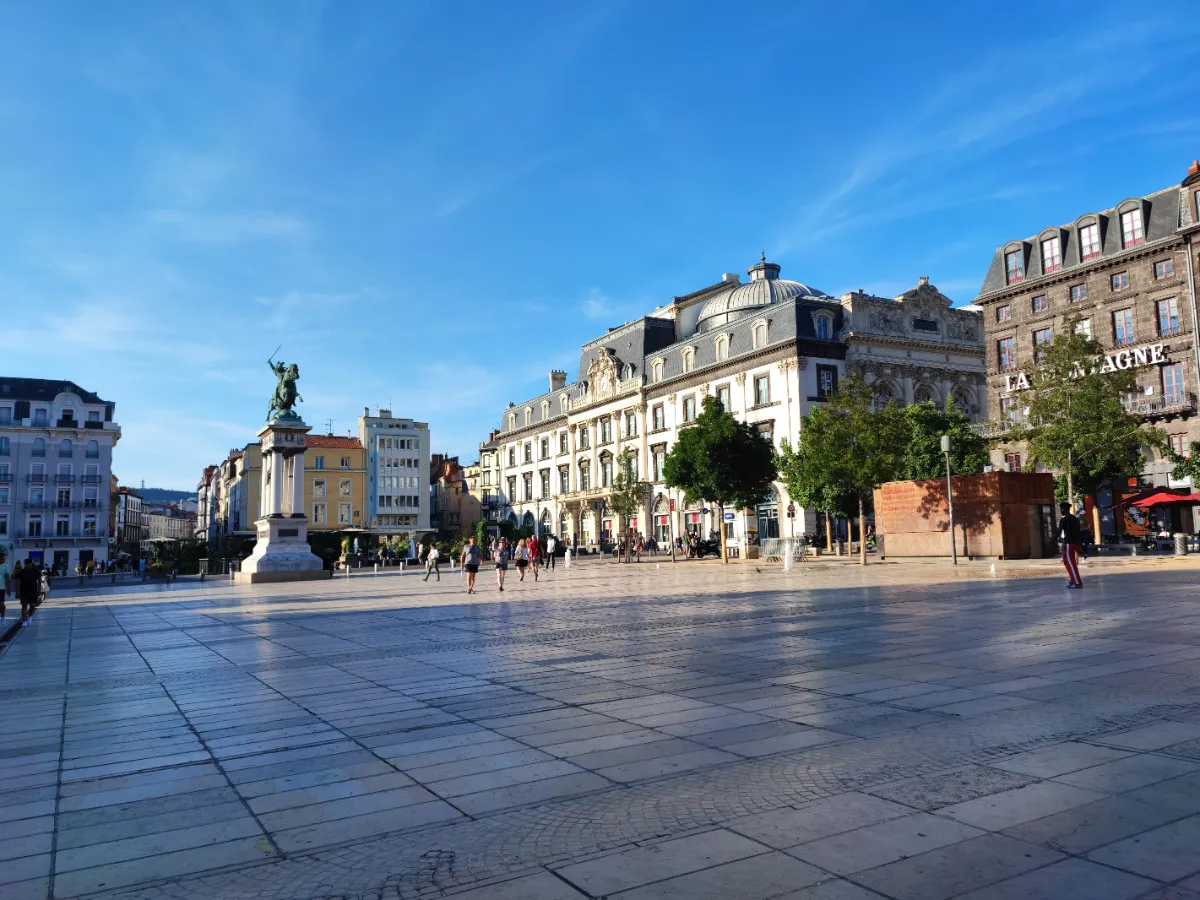
Clermont-Ferrand has character, and you can feel it from the moment you arrive. In the heart of Auvergne, this city at the foot of the volcanoes has a personality all its own, with a mix of medieval heritage, industrial history, and a lively student atmosphere. What makes it special? Many of its monuments are built from volcanic stone, whose dark charcoal-grey colour gives the old town an almost mysterious feel.
You can’t miss Notre-Dame-de-l’Assomption Cathedral, with its two dark spires towering above the rooftops. Construction began in the 13th century, and it’s just as impressive for its striking silhouette as for its colourful stained-glass windows. A few streets away, the much older Notre-Dame-du-Port Basilica offers a beautiful contrast, with its pale stone and delicate carvings.
But there’s much more to Clermont-Ferrand than its churches. Around Place de Jaude, the beating heart of the city, 19th-century façades stand alongside spacious pedestrian areas. In the narrow streets of old Clermont, stairways, little squares, and historic houses are reminders of the city’s trading past. The Montferrand district also has a remarkable collection of medieval and Renaissance houses.
Another source of local pride is Michelin. Founded here in 1889, the famous tyre company has had a huge influence on the city’s history and landscape. You can discover its story at a museum dedicated to its innovations, its early road maps, and its famous white mascot, the Michelin Man. It’s a fascinating look at more than a century of industrial ingenuity.
And all you have to do is look west to see the peaks of the Chaîne des Puys. These dozens of ancient volcanoes create an extraordinary backdrop, practically on the city’s doorstep. From the hills above Clermont-Ferrand, you get a wonderful view of dark stone buildings, green hills, and the rounded shapes of the volcanoes.
Puy de Dôme
In Our Top+ ✅
Type Mountain
Full Name
Puy de Dôme
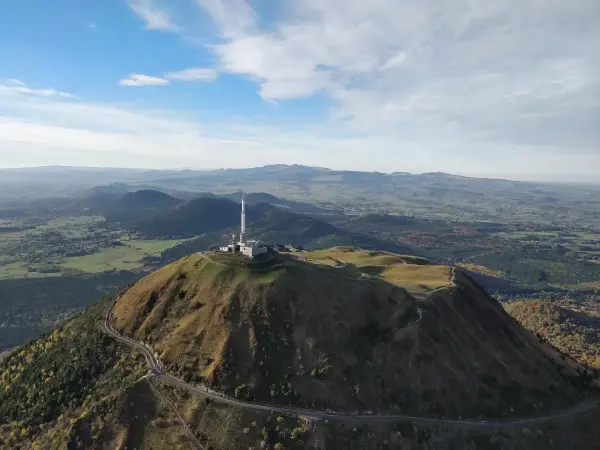
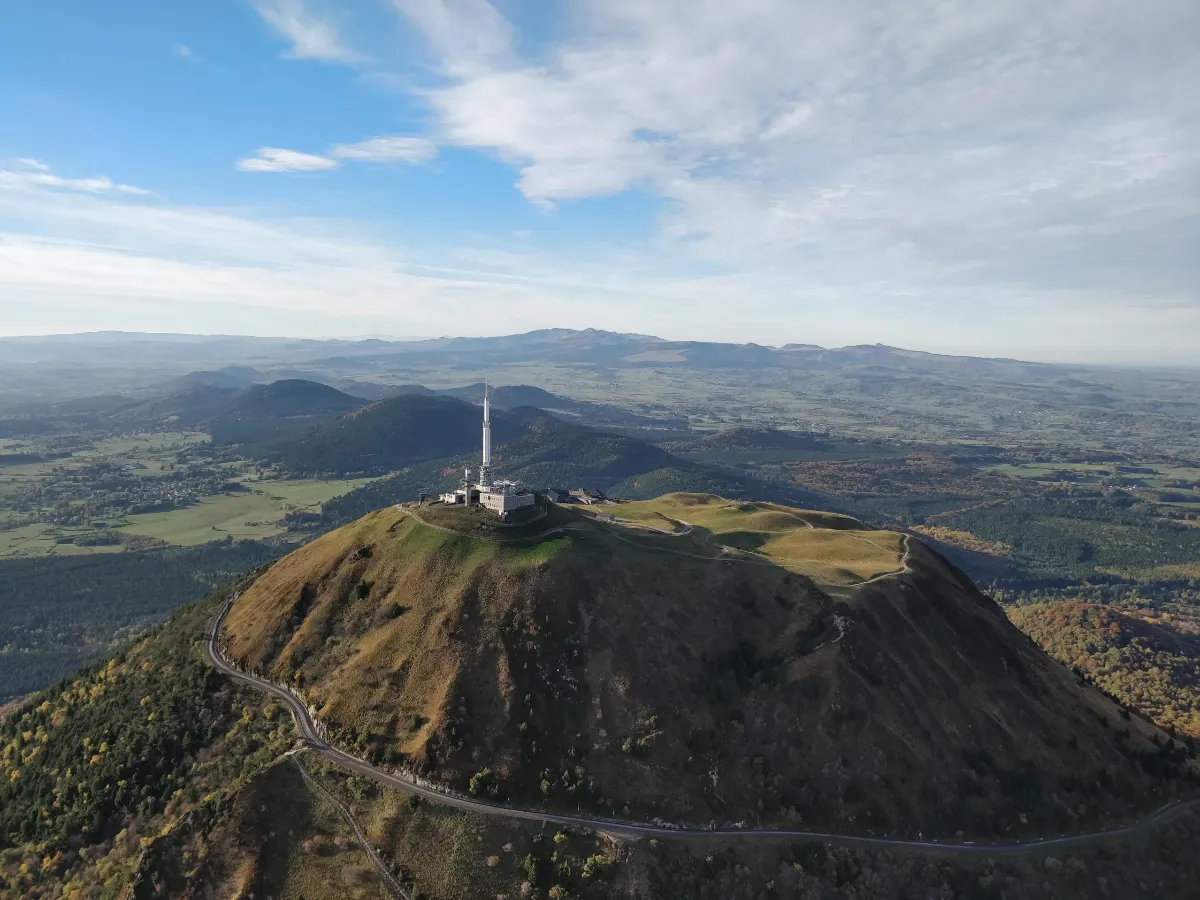
At 1,465 metres high, the Puy de Dôme towers over the volcanoes of Auvergne. Its rounded silhouette, visible from dozens of kilometres away, has become one of the region’s great symbols. This dormant volcano overlooks an extraordinary chain of volcanic cones and craters, reminders of the volcanic activity that dramatically reshaped the landscape.
There are two ways to reach the summit. You can follow the Sentier des Muletiers, a fairly steep hike taking around an hour, or take the little electric rack railway that climbs through the green slopes. At the top, the 360-degree panorama is breathtaking. On a clear day, you can see dozens of ancient volcanoes, valleys, and mountains stretching as far as the eye can see.
The summit also contains the remains of a Roman temple dedicated to Mercury, built nearly 2,000 years ago. Another fascinating sight is the paragliders who regularly launch themselves from the slopes, catching rising air currents to glide above the craters.
Puy de Sancy
In Our Top+ ✅
Type Mountain
Full Name
Puy de Sancy
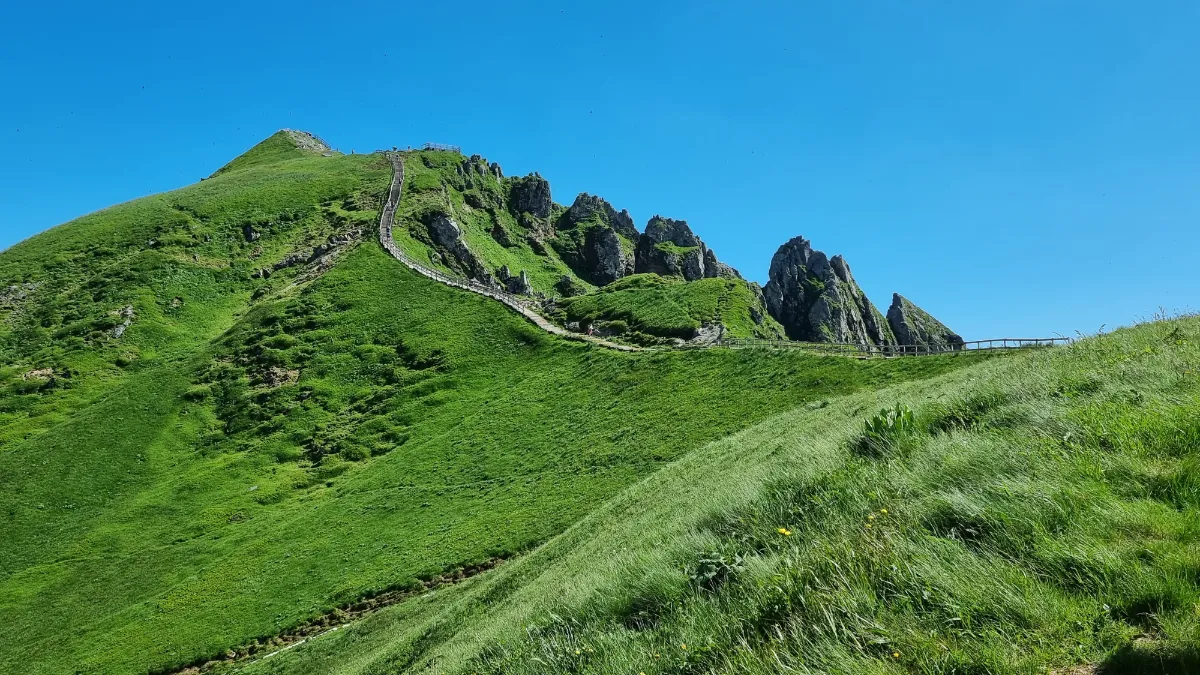
The highest peak in the Massif Central, the Puy de Sancy rises to 1,885 metres above sea level. Unlike the rounded volcanoes of northern Auvergne, this one has a rugged, almost Alpine appearance. Its jagged ridges, deep valleys, and rocky slopes tell the story of a dramatic past, shaped first by volcanic eruptions and later by glaciers.
In summer, walking trails cross vast flower-filled meadows before climbing towards the peaks. Keen hikers can tackle the whole ascent on foot, while a cable car lets you skip much of the climb. From there, several hundred steps still separate you from the summit. Once at the top, the panorama takes in a huge stretch of the mountains of central France.
The Sancy also has an interesting geographical feature: streams that eventually form the Dordogne River begin on its slopes. In winter, snow covers the mountainsides and transforms the landscape into a ski area, offering completely different views from those of the warmer months.
Salers
In Our Top+ ✅
Type Village
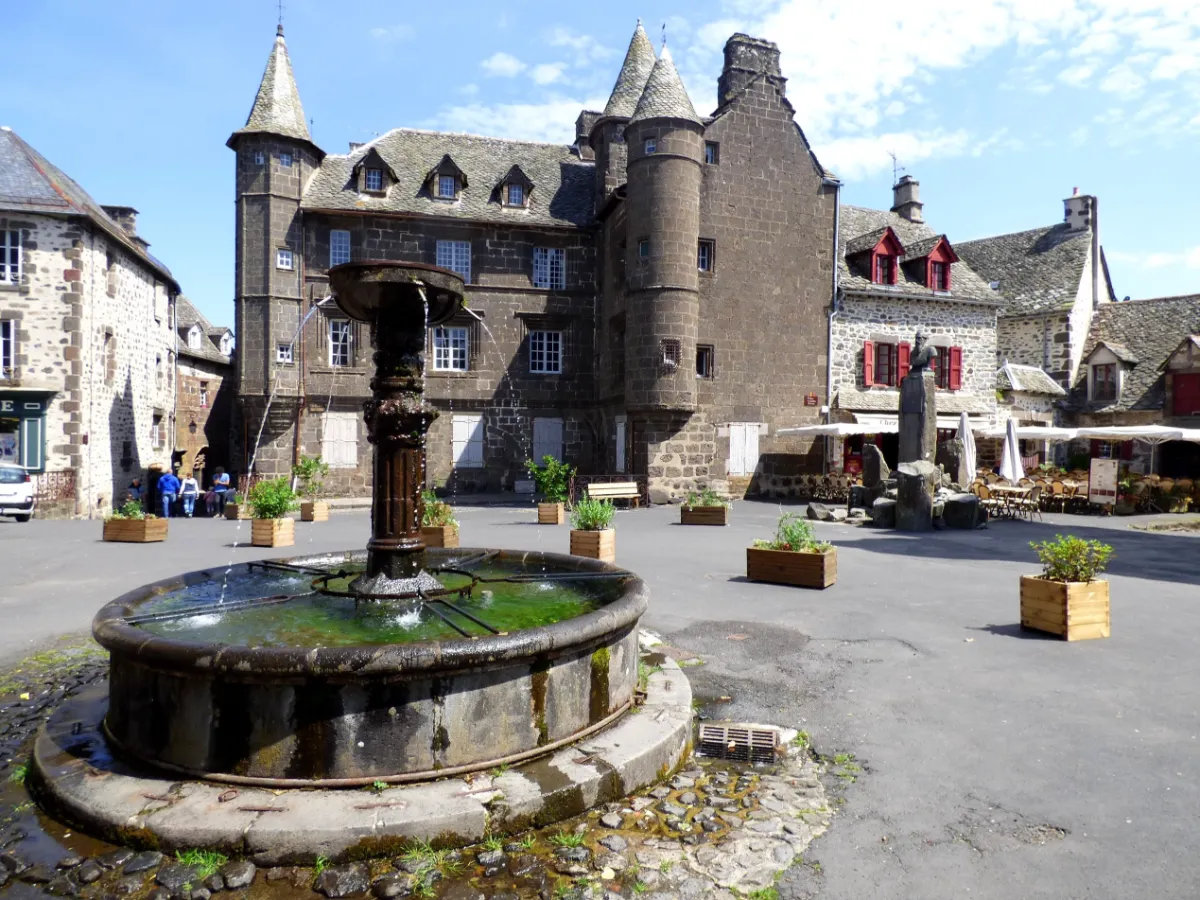
Salers is a real gem built from volcanic stone! Perched at nearly 950 metres above sea level, in the heart of the Cantal Mountains, this village has an exceptionally well-preserved collection of historic buildings. Its dark stone houses with stone roofs, often decorated with little turrets, reflect the prosperity of wealthy families in the 15th and 16th centuries.
Around Place Tyssandier-d’Escous, one beautiful old mansion follows another, creating an almost theatrical setting. Cobbled lanes lead to ancient fortified gateways and superb viewpoints over the mountains. Salers also gave its name to a famous breed of cattle, known for their mahogany coats and long, pale horns. You’ll probably spot some grazing in the surrounding fields.
Lavaudieu
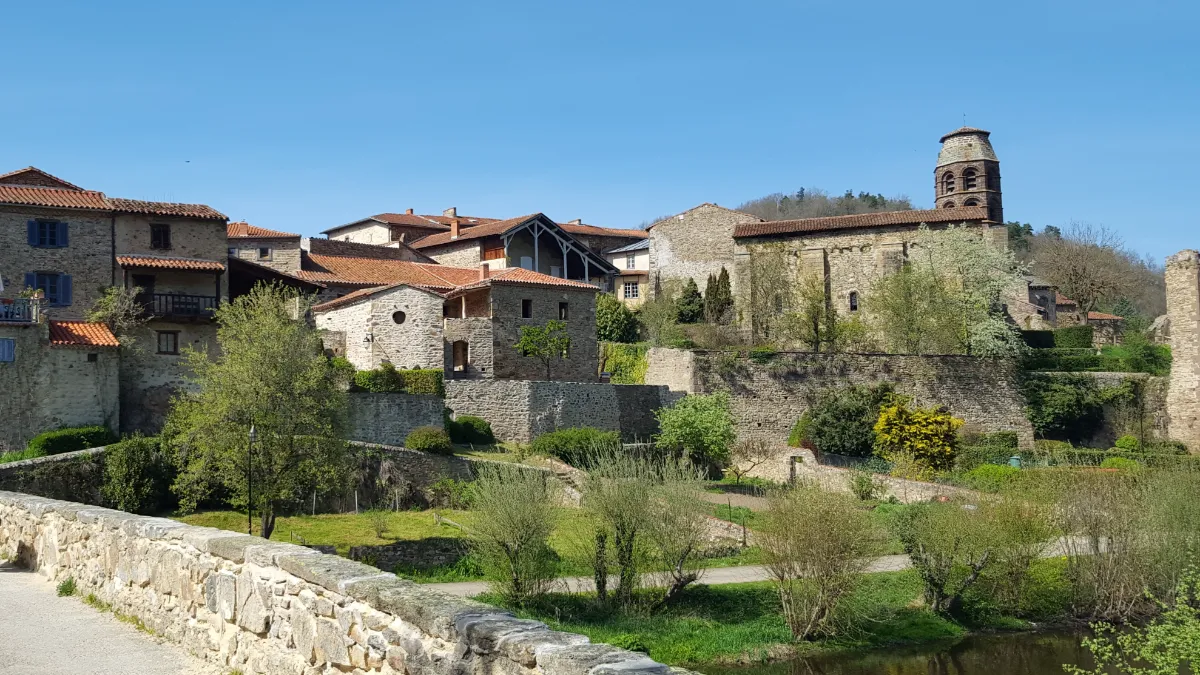
Type Village
Lavaudieu is all about peaceful surroundings and beautiful old stone buildings. Set in a small valley beside the Senouire River, the village owes its existence to a women’s monastery founded in the 11th century. Its church, and especially its magnificent cloister surrounded by columned galleries, form a rare architectural treasure in Auvergne.
Inside, ancient wall paintings reveal the sophistication of religious life in centuries past. Nearby little streets, lined with pale stone houses, lead down to the river. From the outskirts of the village, the tightly packed rooftops, gardens, and wooded hills come together in a wonderfully gentle landscape.
La Chaise-Dieu
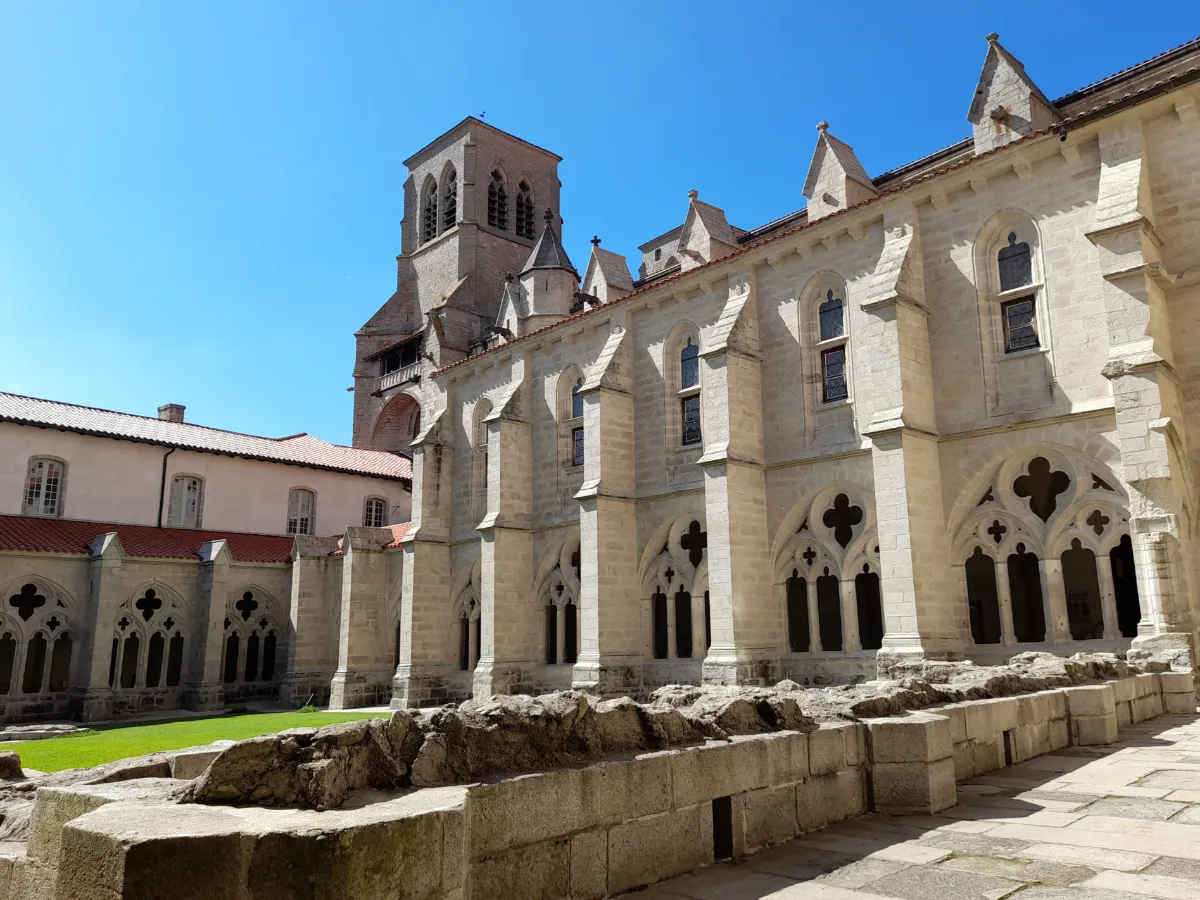
Type Abbey
Price €12
Full Name
Abbaye de La Chaise-Dieu
Imposing, almost austere, La Chaise-Dieu Abbey certainly doesn’t do things by halves! Founded in the 11th century, it became one of France’s major religious centres. Its enormous Gothic church, rebuilt in the 14th century on the orders of Pope Clement VI, is impressive both for its sheer size and its simplicity.
Inside, don’t miss the tomb of Pope Clement VI, the beautifully carved wooden choir stalls, and above all, the extraordinary 15th-century Dance of Death mural, where the living and the dead join hands. The complex also includes a cloister and some remarkable historic tapestries. Every summer, the abbey comes alive with music during its famous classical music festival.
Polignac
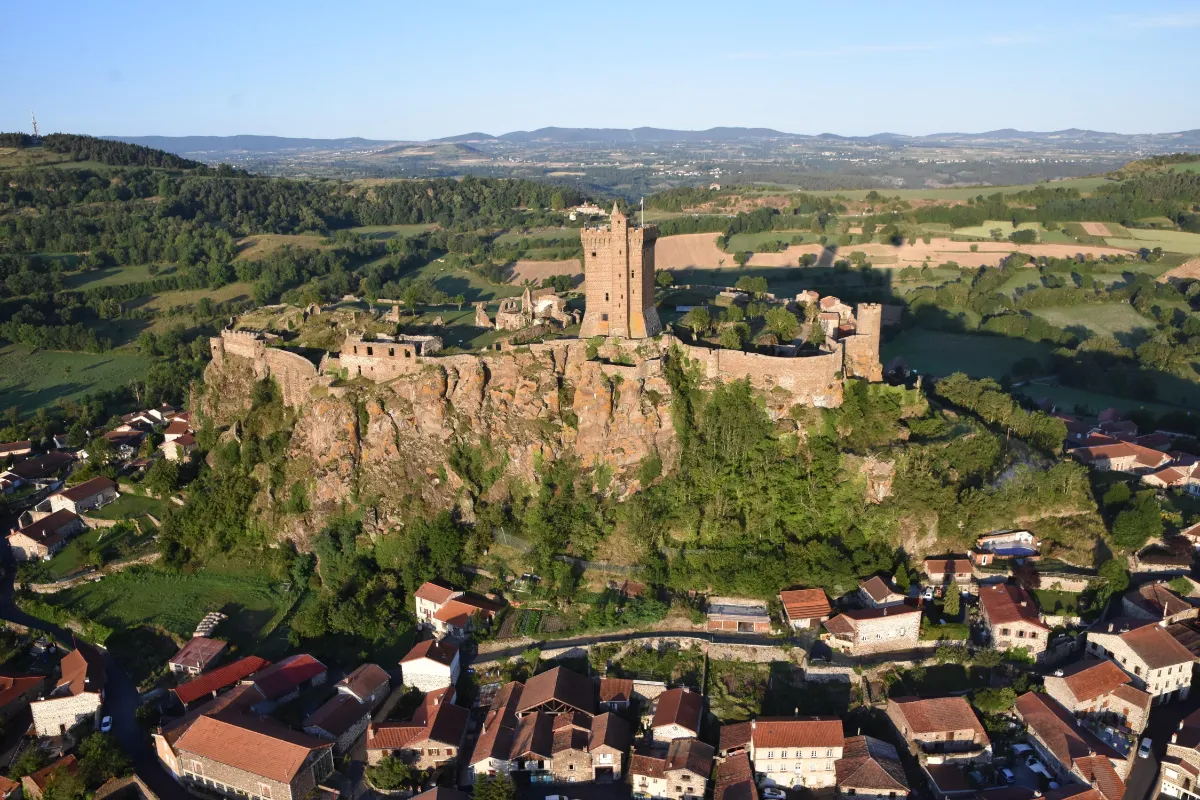
Type Village
Polignac is hard to miss. Just a few kilometres from Le Puy-en-Velay, an enormous fortress dominates the landscape from the top of a volcanic rock. With its sheer cliffs, this natural stronghold was the perfect place to watch over the surrounding countryside and defend against attacks. The powerful Polignac family built one of the region’s most impressive castles here.
Today, the remains of its walls, buildings, and imposing square tower give you an idea of its former grandeur. The climb to the top rewards you with exceptional panoramic views over the hills, volcanic landscape, and rooftops of the village below.
Le Puy-en-Velay
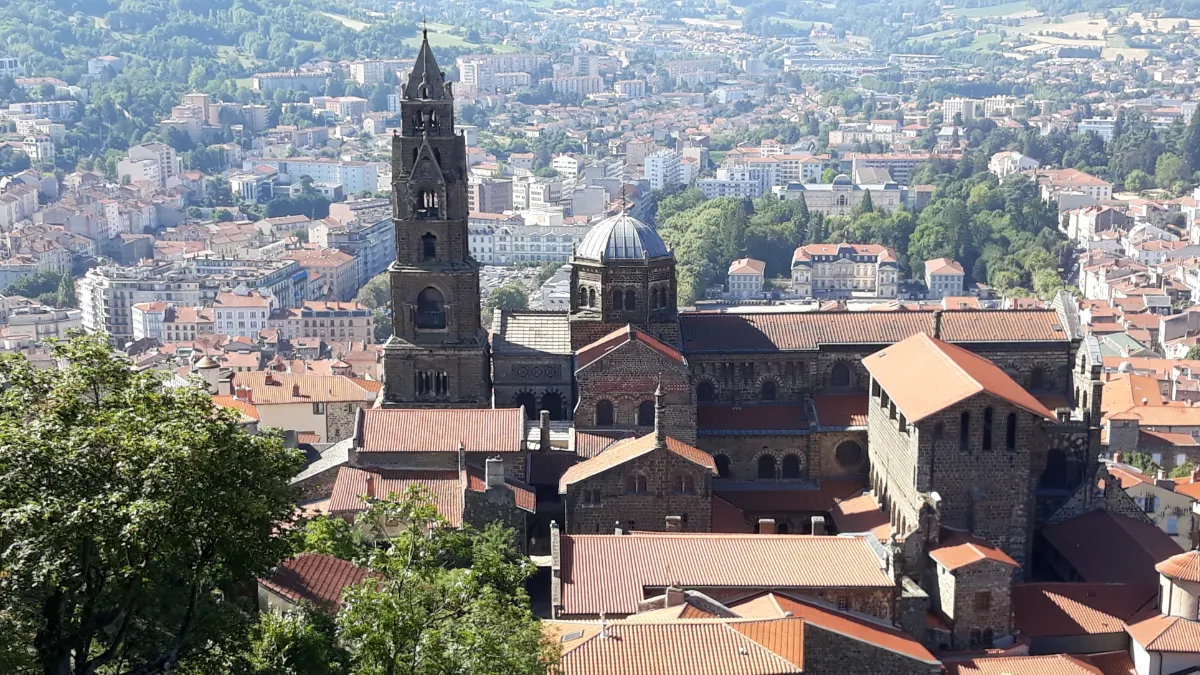
In Our Top+ ✅
Type Town
It’s hard to imagine a more spectacular town. In Le Puy-en-Velay, the volcanoes have been extinct for millions of years, but their ancient rocky cores still tower above the houses. People had the audacity to build religious monuments on top of these natural rock pinnacles, creating a townscape unlike anywhere else. At times, it almost feels like something out of a fantasy film.
Perhaps the most impressive sight is the Saint-Michel d’Aiguilhe rock, topped by a small 10th-century chapel. To reach it, you’ll need to climb 268 steps carved into the rock. Nearby, the enormous Notre-Dame de France statue stands high above the town on the summit of Rocher Corneille.
In the heart of the old town, Notre-Dame-du-Puy Cathedral is also well worth visiting. Its unusual façade, with alternating bands of light and dark stone, leads to a richly decorated interior. For centuries, it has welcomed pilgrims setting off on foot towards Santiago de Compostela in Spain.
Take some time to wander through the steep little streets, with their stairways, vaulted passages, and colourful façades. Old houses cling to the slopes, while small squares open up to unexpected views of the rocky peaks. Le Puy also has a long tradition of bobbin lace-making, a delicate craft practised here for centuries that you can still see in demonstration workshops.
Conques
In Our Top+ ✅
Type Village
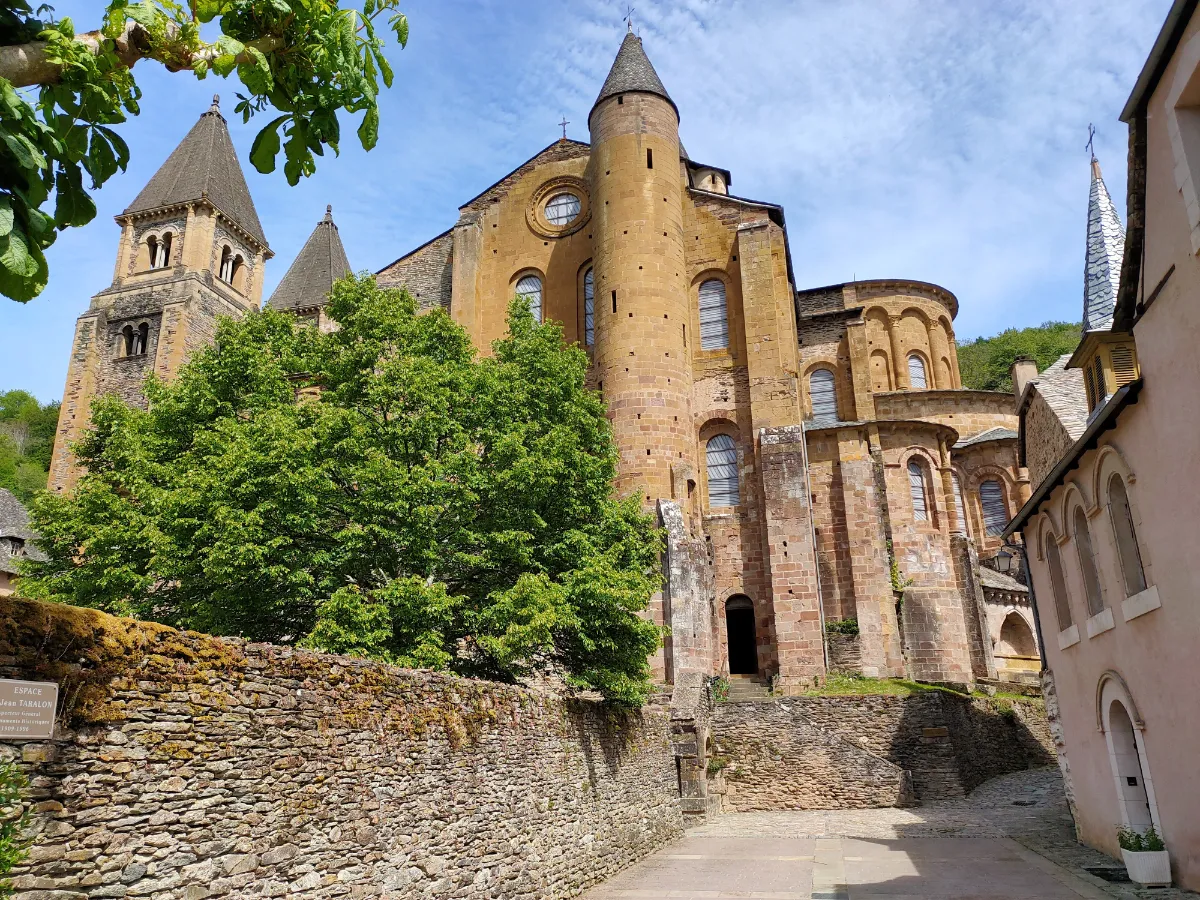
Nestled in a wooded valley, Conques has an almost unreal charm. Old houses with stone roofs cluster around the imposing Sainte-Foy Abbey Church, a masterpiece built in the 11th and 12th centuries. Its sculpted entrance, depicting the Last Judgement, is one of the finest in France.
For more than a thousand years, Conques has welcomed pilgrims travelling to Santiago de Compostela. The church holds precious religious treasures, including a statue covered in gold and gemstones. Inside, contemporary stained-glass windows designed by Pierre Soulages create a wonderfully soft light. In the cobbled streets, the old houses with their timber and stone façades seem frozen in time.
Sainte-Enimie
Type Village
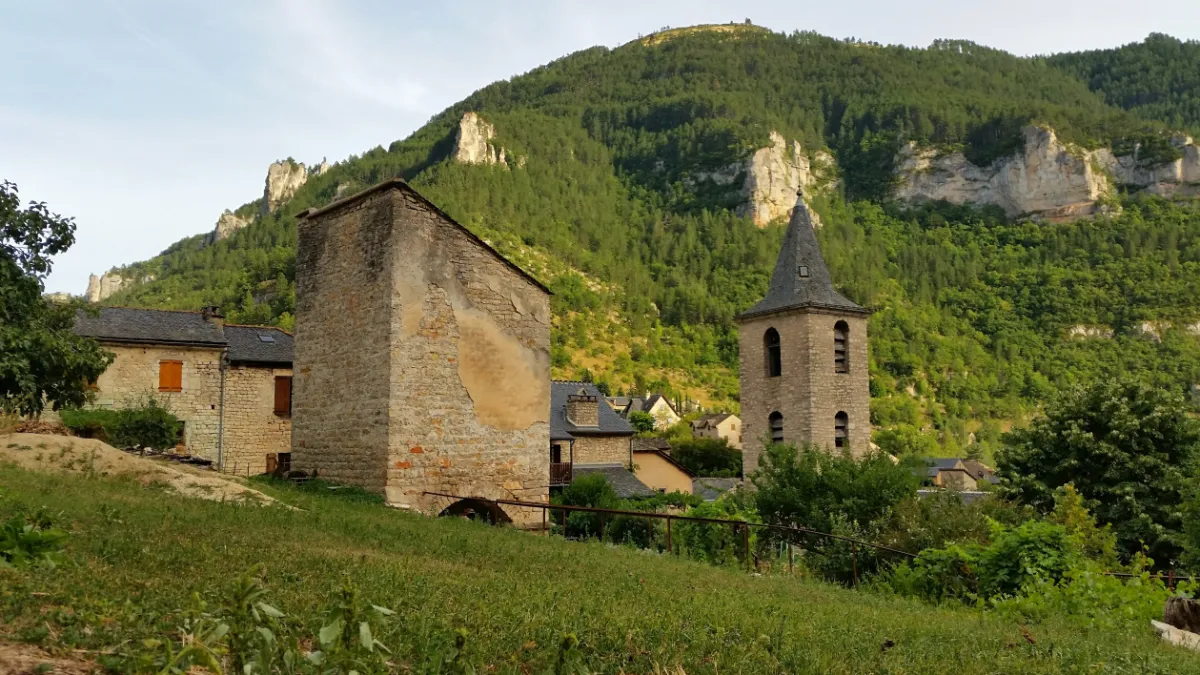
Wedged between the spectacular cliffs of the Tarn Gorges, Sainte-Enimie is one of those villages whose popularity makes perfect sense the moment you see it. Its pale stone houses climb up the hillside, connected by a maze of cobbled lanes and stairways.
The village takes its name from a 7th-century princess who, according to legend, was cured of leprosy by the waters of the Burle spring. You can still visit this blue-tinged spring at the foot of the houses. Below, the turquoise waters of the Tarn River wind between the rocks, creating a stunning setting for walks and canoe trips.
Gorges du Tarn
Type Gorges
Full Name
Gorges du Tarn
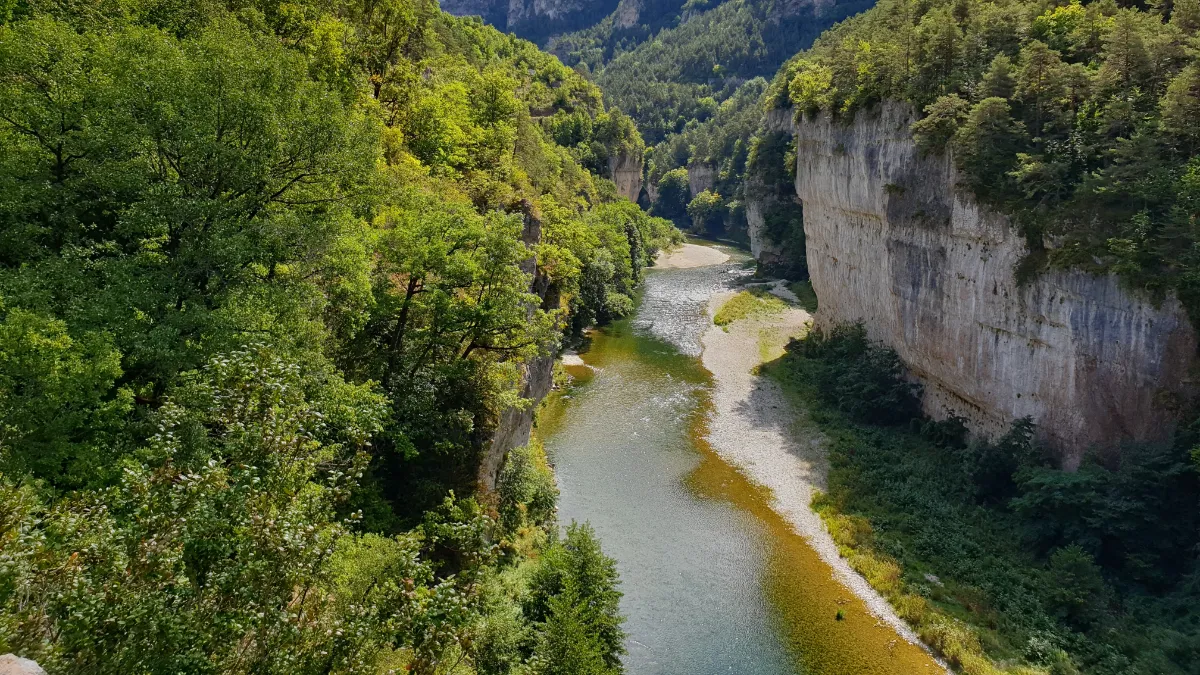
Between the enormous limestone plateaus of the southern Massif Central, the Tarn River has carved out a spectacular canyon, bordered by cliffs that sometimes rise several hundred metres high. At the bottom, the river winds between rocks, pebble beaches, and villages clinging to the slopes.
Canoeing down the river is one of the best ways to discover these landscapes. As you paddle along, the cliffs close in, the rocks take on extraordinary shapes, and birds of prey soar above the canyon. The scenic roads also offer superb viewpoints over the river bends, towering cliffs, and turquoise waters.
Aven Armand
Type Cave
Price €18.50 – Guided Visit only (French only)
Full Name
L’Aven Armand
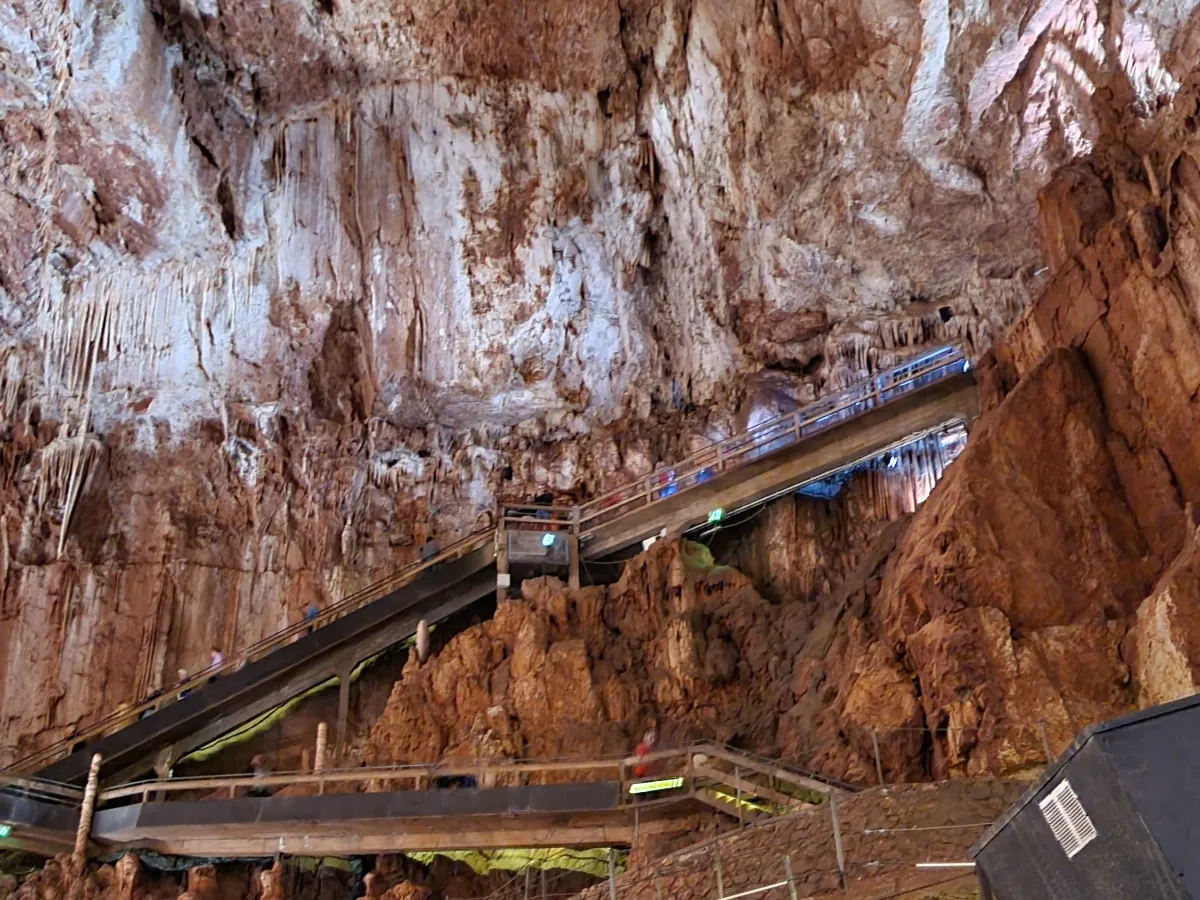
Beneath the dry limestone plateaus of Lozère lies an extraordinary underground world. Discovered in 1897, Aven Armand is home to an enormous natural chamber filled with more than 400 stalagmites, the stone columns that grow incredibly slowly from drops of water falling from the ceiling.
A little funicular takes you down into the depths of the cave. Once inside, the lighting reveals a remarkable forest of stone, filled with fantastic shapes resembling palm trees, jellyfish, and imaginary creatures. The tallest stalagmite reaches around 30 metres high. It’s a fascinating sight, created by the slow work of water over hundreds of thousands of years.
La Couvertoirade
Type Village
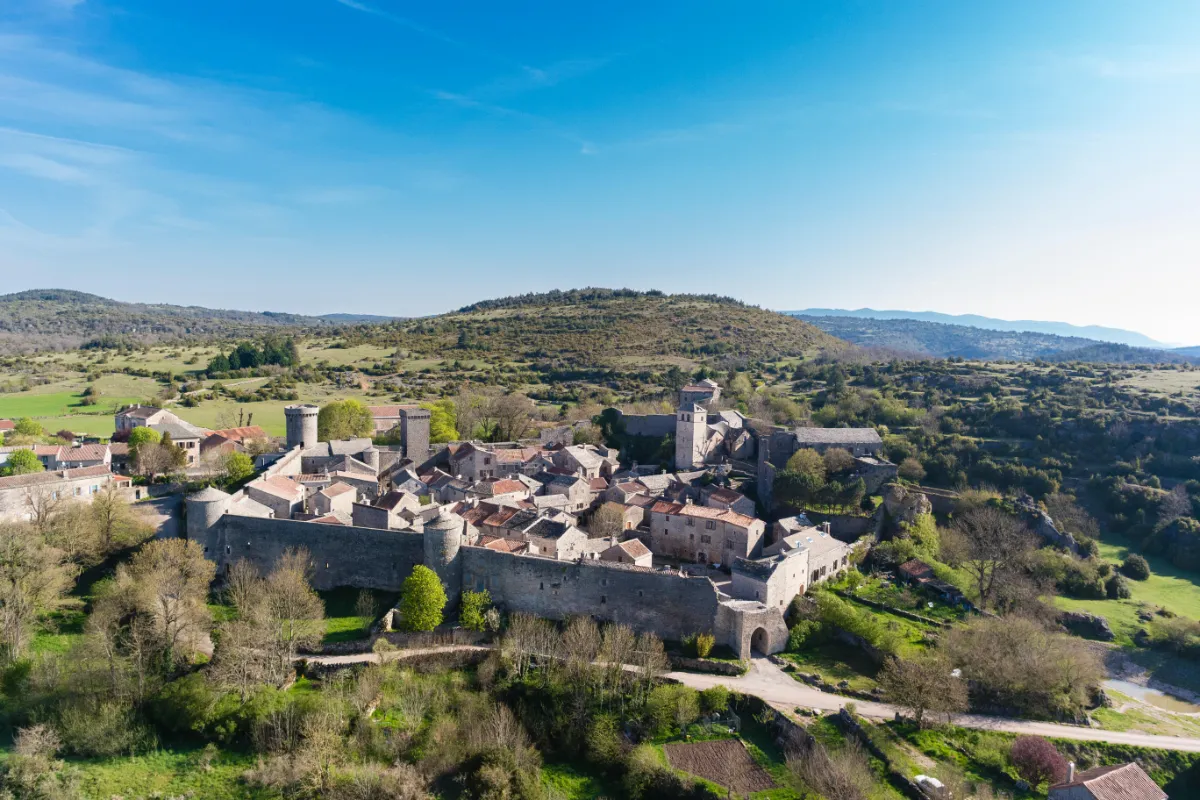
In the heart of a vast limestone plateau, La Couvertoirade looks like a little fortress straight out of the Middle Ages. Surrounded by high defensive walls, the village was first occupied by the Knights Templar, a religious and military order, and later by their successors, the Knights Hospitaller.
Behind the ramparts, cobbled lanes wind between stone houses with traditional roofs. The fortified church, castle, and ancient gateways all recall its defensive past. From the path alongside the walls, you can look out over the almost deserted landscapes of the Larzac plateau, where low stone walls still divide the vast grazing fields.