


OVERVIEW
Massif Central
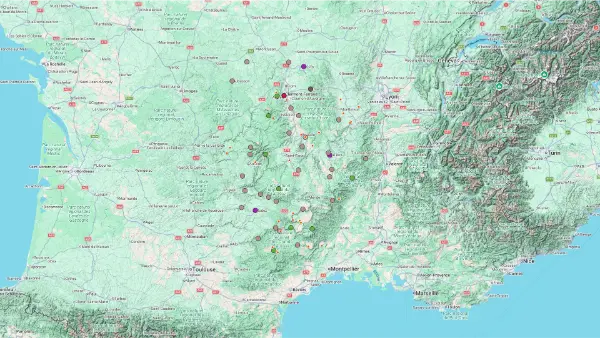
Interactive Map
Massif Central
Interactive Map
Click on the icon  in the top-left corner to display the map legend.
Show/Hide layers as needed.
Click on the arrow icons (v) to display the sublayers.
NORTH
| Name | Top+ | Top |
|---|---|---|
| Aubusson | ||
| Chambon-sur-Voueize | ||
| Charroux | ☑️ | |
| Montpeyroux | ||
| Usson | ||
| Marols |
Aubusson
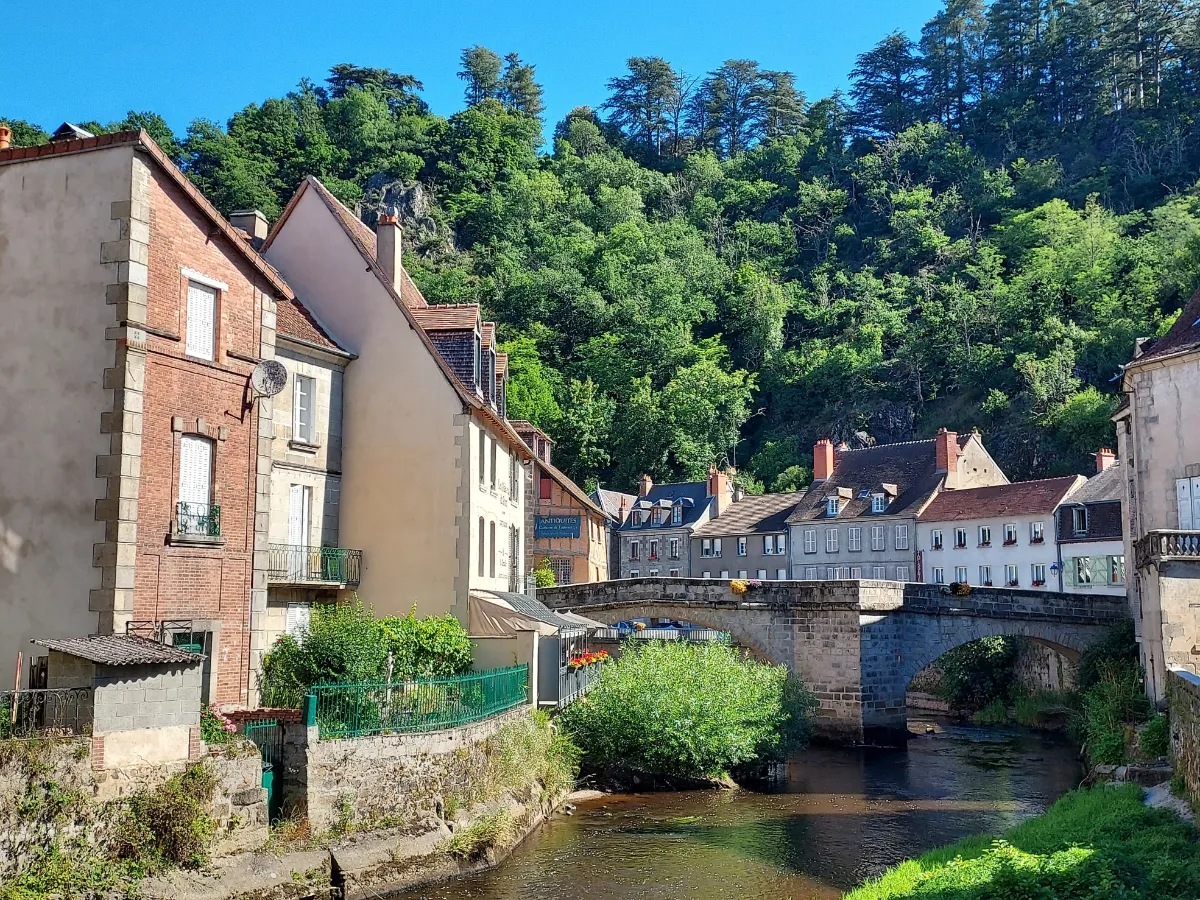
In Aubusson, weaving is taken very seriously. Since the 15th century, this small town in the Creuse region has built an international reputation for its tapestries, large textile artworks made entirely by hand. This exceptional craftsmanship is recognised by UNESCO, and you can discover it at the Cité Internationale de la Tapisserie, where historic pieces sit alongside contemporary creations.
But Aubusson also has a lovely historic centre, with the Creuse River flowing through it. Old houses, little turrets, and the picturesque Pont de la Terrade create a charming setting. From the hills above, you get beautiful views of the rooftops and terraced gardens.
Chambon-sur-Voueize
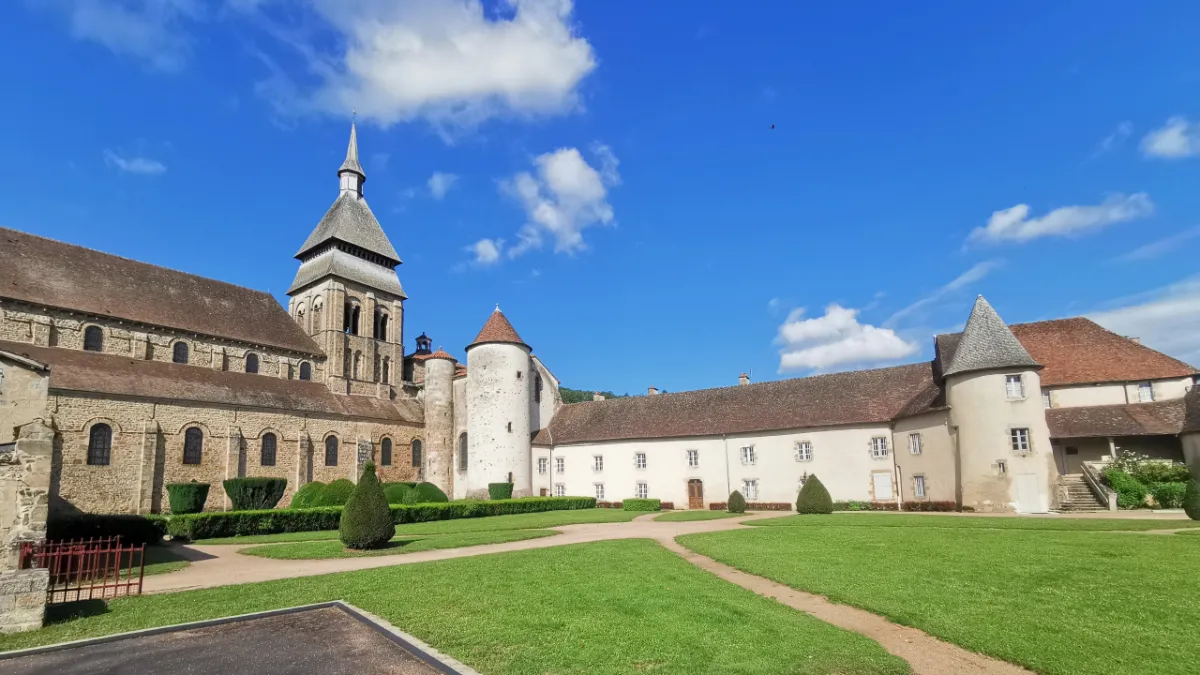
Tucked away where two rivers meet, Chambon-sur-Voueize has all the peaceful charm of a small country town. Its history goes back to the 9th century, when a community of monks settled in the valley. The imposing Sainte-Valérie Church, built mainly in the 11th and 12th centuries, is a reminder of this religious past, with its two bell towers and elegant proportions.
Around it, houses with brown tiled roofs line the quiet little streets. The old stone bridge crossing the Voueize offers a lovely view of the village. Head up to higher ground to admire the church, gardens, and wooded hills surrounding the valley.
Charroux
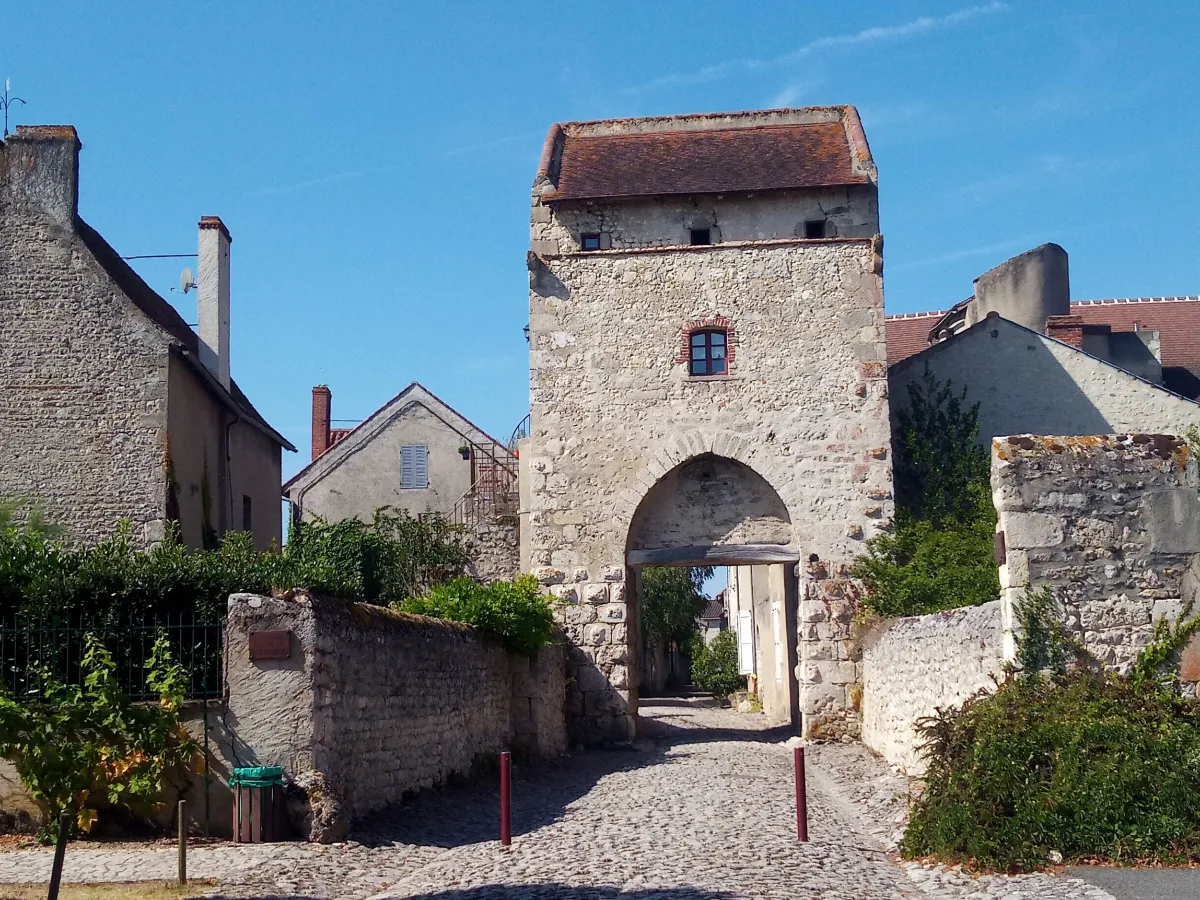
In Our Top ☑️
Perched on a small hill overlooking the countryside, Charroux feels like a village where time has moved a little more slowly. Once an important fortified town, it has kept its cobbled lanes, stone houses, and several remains of its old defences. Its unusual truncated bell tower and Clock Tower give it a distinctive silhouette.
As you wander around, you’ll come across little squares, flower-covered façades, and old wells, which are particularly numerous here. There were once several hundred of them. From the edge of the village, the view stretches across rolling countryside and, when the sky is clear, all the way to the volcanoes of Auvergne.
Montpeyroux
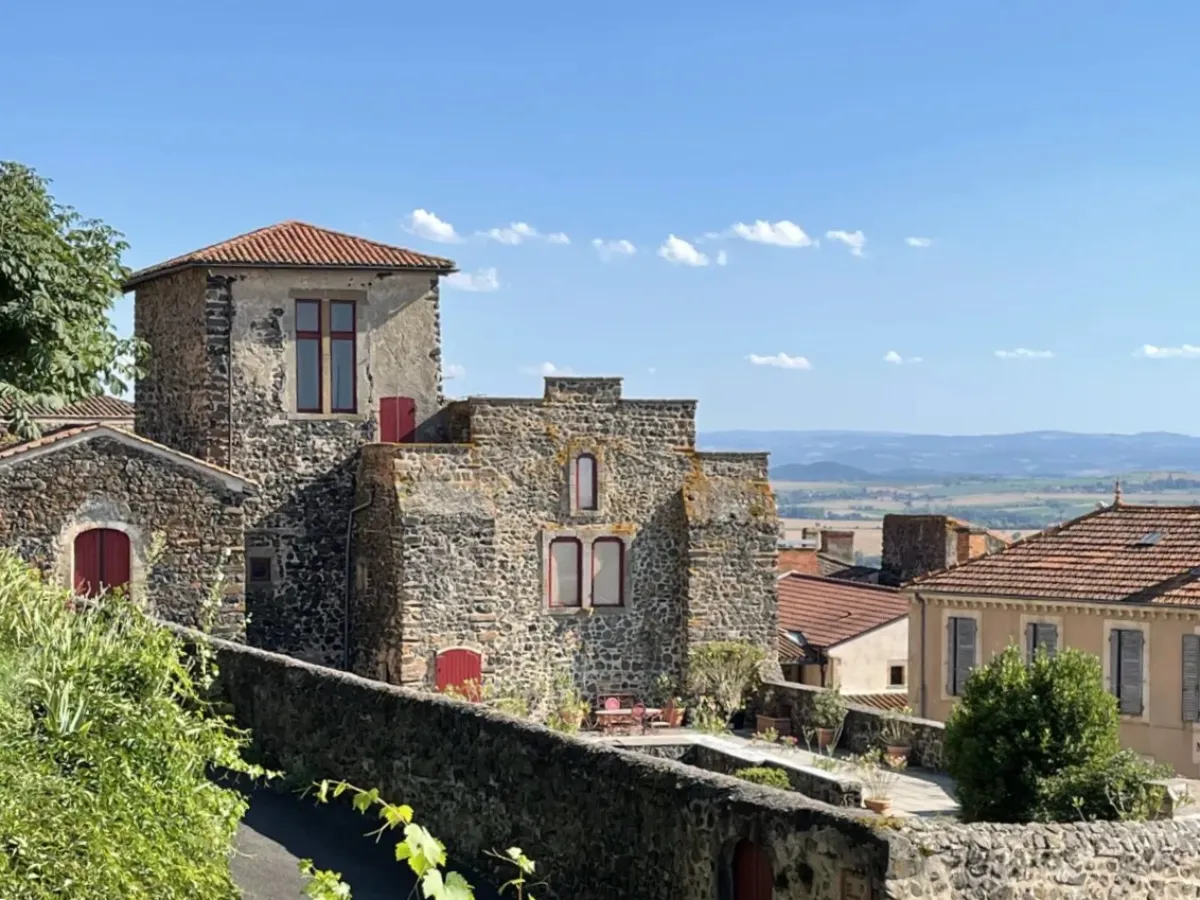
With its honey-coloured houses, Montpeyroux looks quite different from the dark stone villages of Auvergne. Its secret? The golden limestone once quarried nearby, which gives the façades their beautiful warm glow. Perched on a hill, the village has kept much of its medieval appearance.
At its centre stands an imposing 13th-century keep, the last major reminder of the old castle. Narrow streets, ancient doorways, and traditional winegrowers’ houses make it a lovely place for a leisurely stroll. From the higher parts of the village, there’s a wonderful panorama over the Allier Valley and the volcanic mountains.
Usson
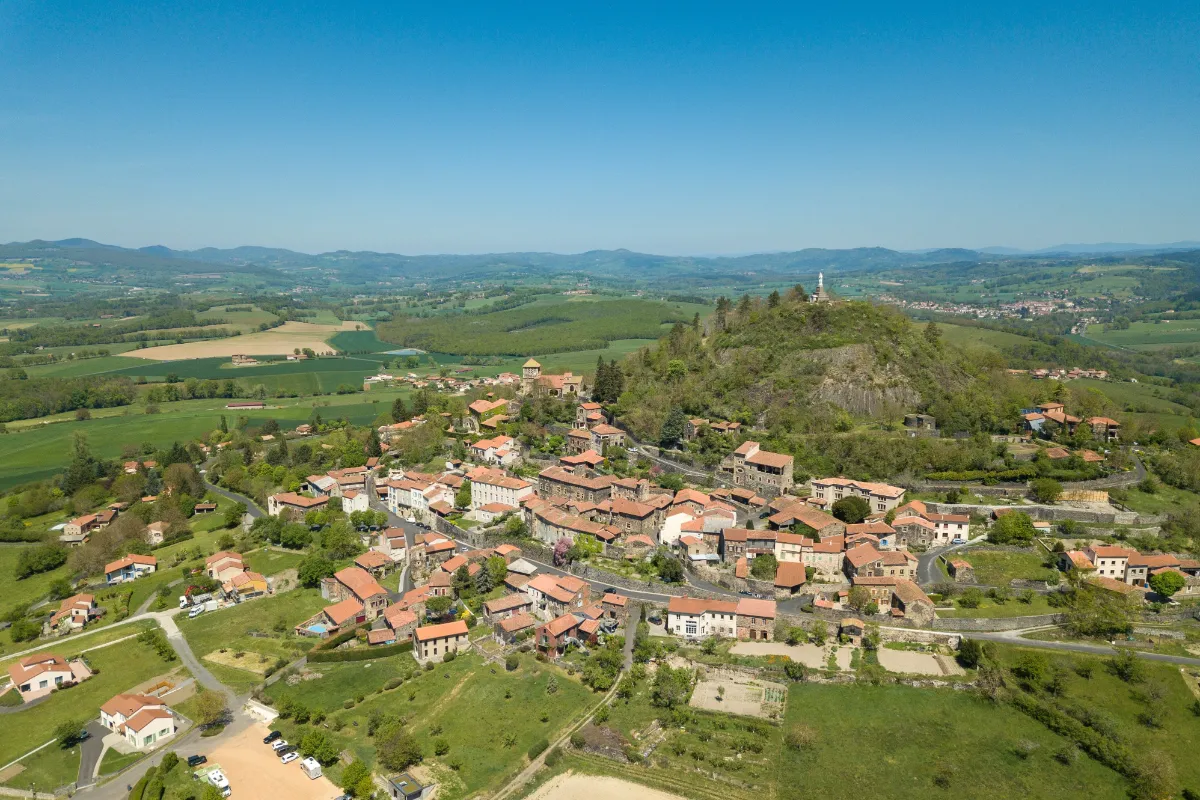
Clinging to the slopes of an ancient volcanic hill, Usson has quite a dramatic past. Marguerite de Valois, known as Queen Margot, was held here for almost nineteen years, from 1586 to 1605. The castle where she lived has disappeared, but the village still has plenty of old houses built from dark stone.
The narrow streets climb past gardens and small houses towards the chapel and the statue of the Virgin Mary at the summit. From up there, you get sweeping views over the Auvergne countryside. Nearby, some remarkable natural columns of volcanic rock reveal the geological origins of the hill.
Marols
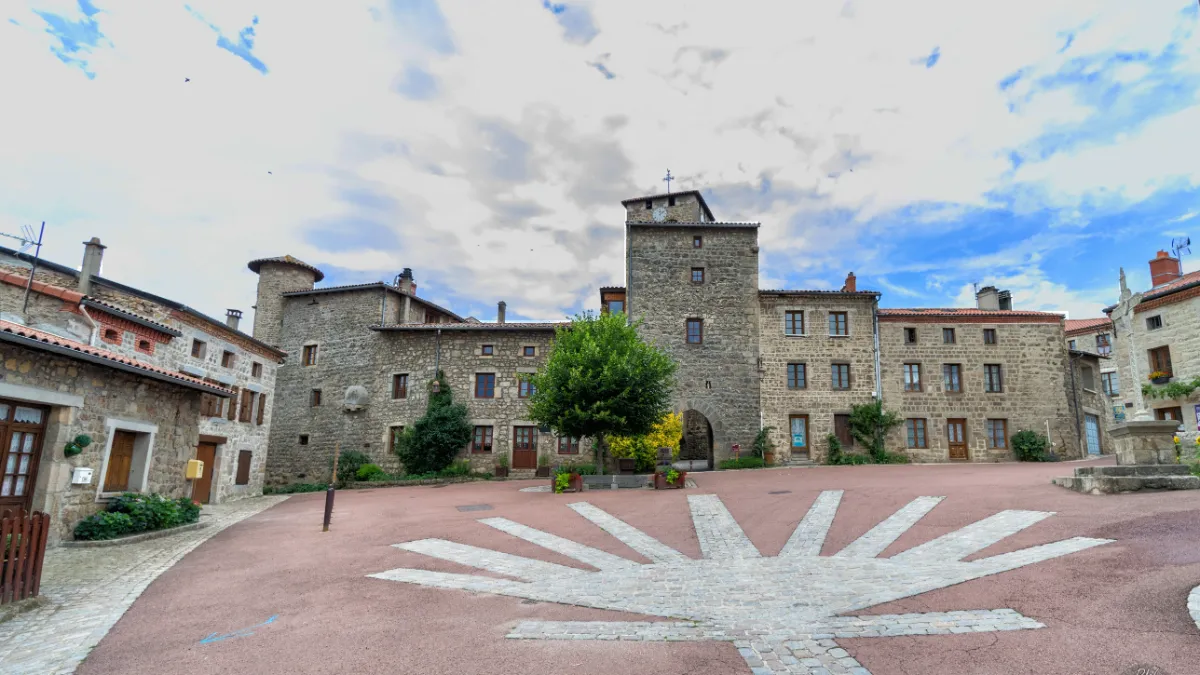
At more than 800 metres above sea level, Marols is tucked away among the wooded hills of the Forez Mountains. This stone village, with its traditional tiled roofs, has a peaceful atmosphere, far from the bustle of big cities. At its heart, Saint-Pierre Church, fortified during the Middle Ages, looks almost like a small castle, with its massive walls and defensive tower.
Today, Marols also has a creative side. Painters and sculptors play an active part in village life, surrounded by beautifully restored houses. Walking trails lead out from the centre through meadows and forests, offering lovely views of the surrounding hills.
SOUTH
| Name | Top+ | Top |
|---|---|---|
| Salers | ✅ | |
| Tournemire | ||
| Marcolès | ||
| Blesle | ||
| Lavaudieu | ☑️ | |
| Lavoûte-Chilhac | ||
| Malzieu-Ville | ||
| Polignac | ☑️ | |
| Arlempdes | ||
| Pradelles | ||
| Désaignes |
Salers
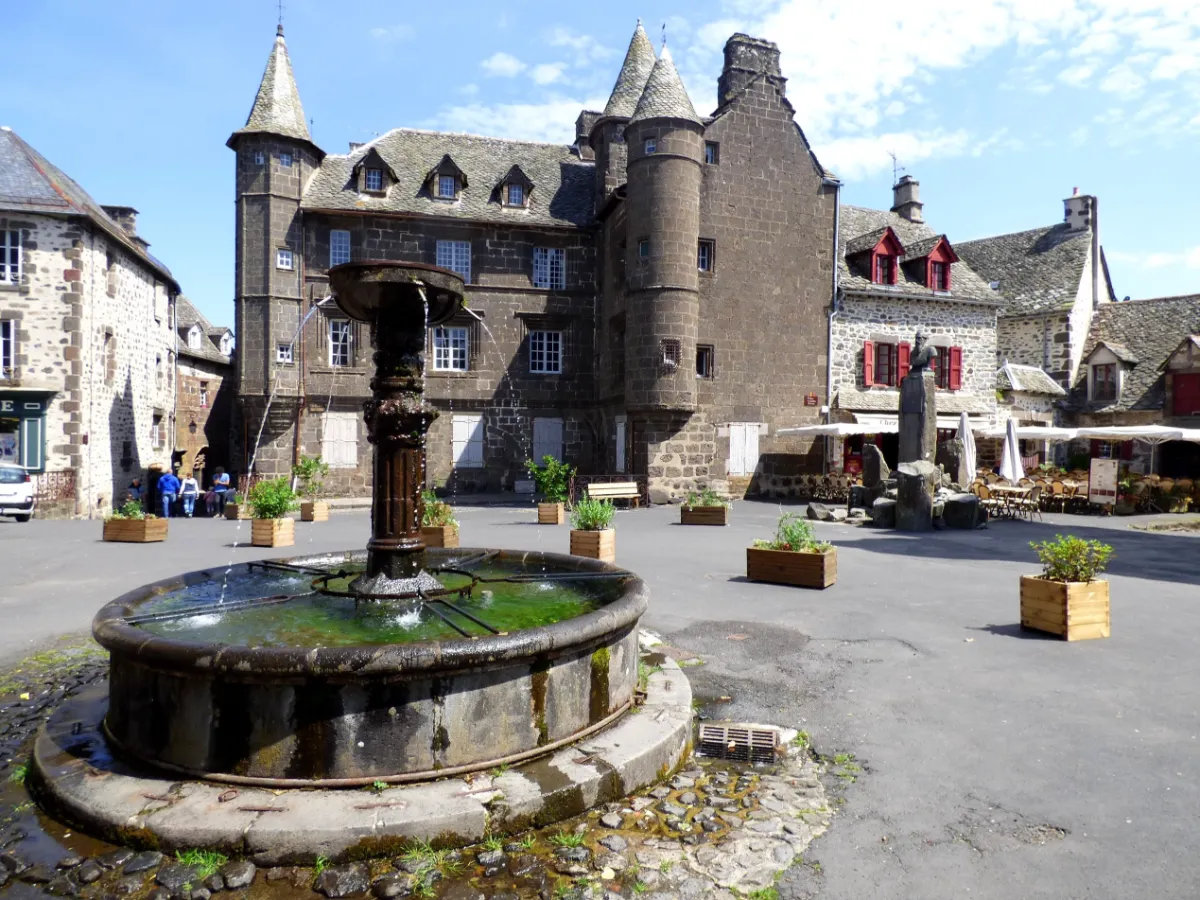
In Our Top+ ✅
Salers is a real gem built from volcanic stone! Perched at nearly 950 metres above sea level, in the heart of the Cantal Mountains, this village has an exceptionally well-preserved collection of historic buildings. Its dark stone houses with stone roofs, often decorated with little turrets, reflect the prosperity of wealthy families in the 15th and 16th centuries.
Around Place Tyssandier-d’Escous, one beautiful old mansion follows another, creating an almost theatrical setting. Cobbled lanes lead to ancient fortified gateways and superb viewpoints over the mountains. Salers also gave its name to a famous breed of cattle, known for their mahogany coats and long, pale horns. You’ll probably spot some grazing in the surrounding fields.
Tournemire
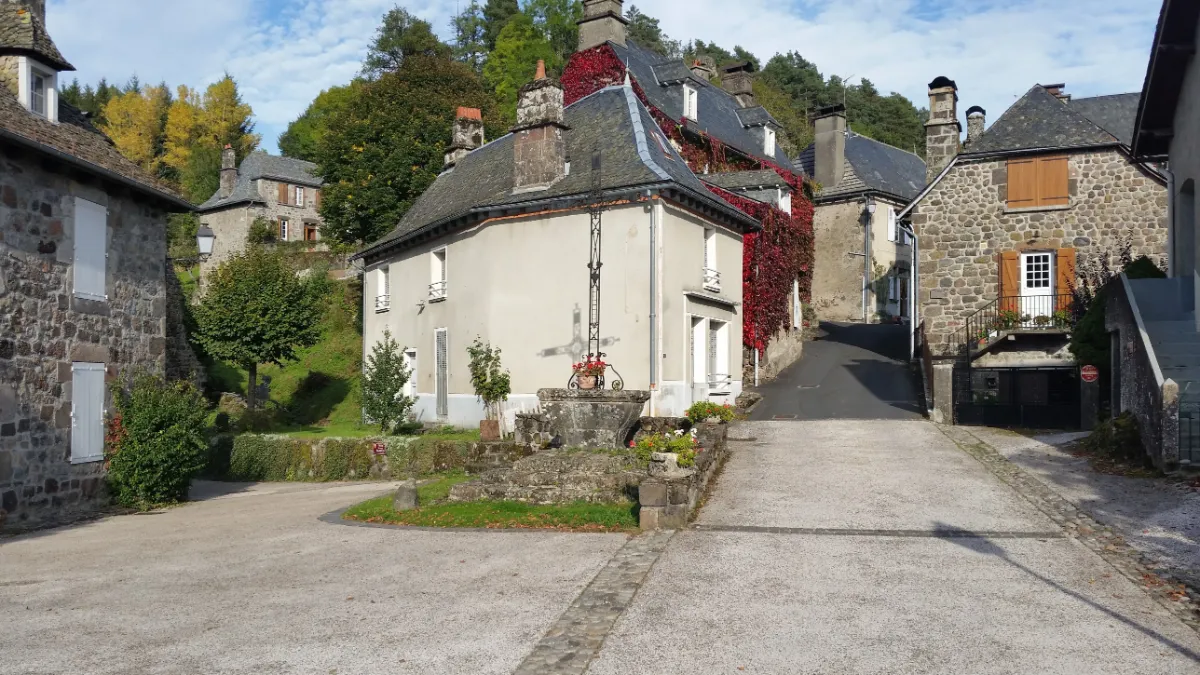
In a lush green valley in the Cantal, Tournemire seems to have been watched over by Château d’Anjony for centuries. With its four round towers and high walls, this 15th-century fortress is a truly impressive sight. It also tells the story of a never-ending rivalry between two noble families, whose feuds troubled the region for generations.
The village itself is more understated, but well worth a wander. Around the old church, stone houses, traditional roofs, and little gardens create a charming scene. The wooded hills and meadows surrounding Tournemire make it a particularly lovely place, especially when the first autumn colours begin to appear.
Marcolès
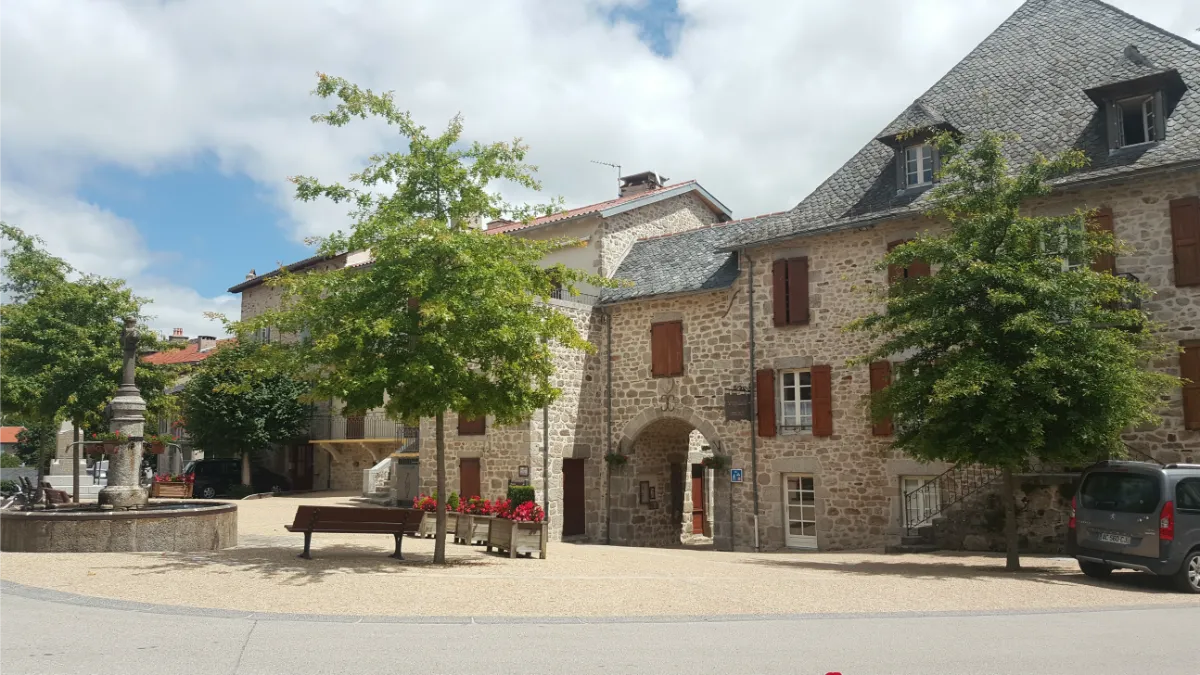
Behind its ancient fortified gateways, Marcolès hides a delightful maze of cobbled streets. This little town in southern Cantal has preserved its medieval layout, with beautifully restored granite houses and narrow passages between the buildings. Two old gateways are reminders of the days when defensive walls protected its inhabitants.
Here, every little detail is worth slowing down for: a carved window, a hidden courtyard, a flower-covered façade, or a wooden door weathered by time. The village really comes to life during its traditional festivals, while the surrounding hills reveal a patchwork of meadows, forests, and chestnut trees.
Blesle
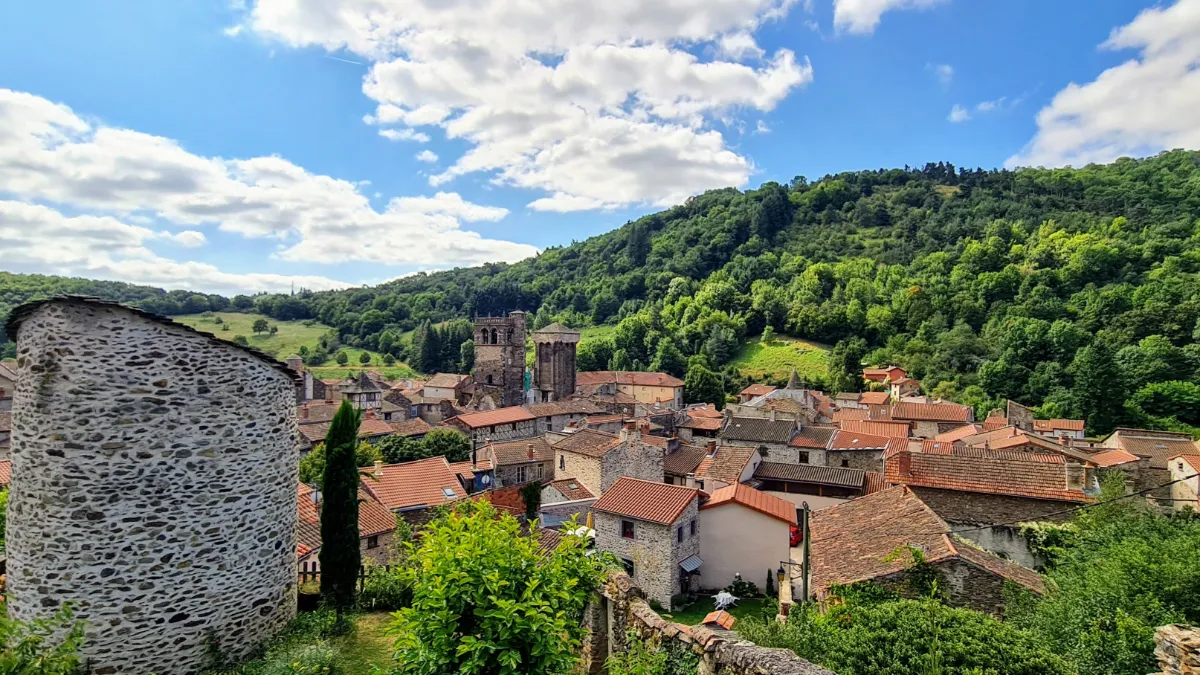
Hidden in a green valley, Blesle has the quiet charm of a village you might stumble upon by chance. Its history began in the 9th century, around a monastery founded by Ermengarde, a noblewoman from Auvergne. Saint-Pierre Church is one of the surviving reminders of this period, its simple architecture contrasting with the village’s old houses.
As you wander through the narrow streets, you’ll discover towers, half-timbered façades, and stone mansions that hint at its former wealth. The little Voireuze River winds past the foot of the houses, alongside gardens and old stone walls. It’s a wonderfully peaceful setting, especially in spring when flowers spill over the façades.
Lavaudieu
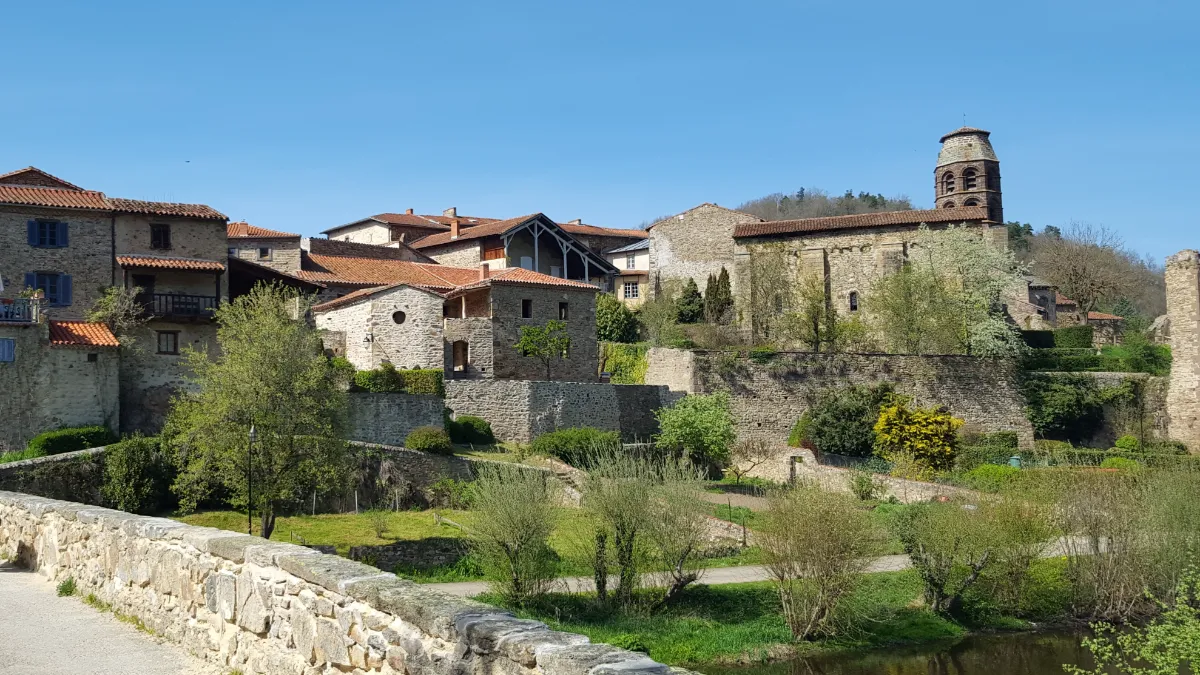
In Our Top ☑️
Lavaudieu is all about peaceful surroundings and beautiful old stone buildings. Set in a small valley beside the Senouire River, the village owes its existence to a women’s monastery founded in the 11th century. Its church, and especially its magnificent cloister surrounded by columned galleries, form a rare architectural treasure in Auvergne.
Inside, ancient wall paintings reveal the sophistication of religious life in centuries past. Nearby little streets, lined with pale stone houses, lead down to the river. From the outskirts of the village, the tightly packed rooftops, gardens, and wooded hills come together in a wonderfully gentle landscape.
Lavoûte-Chilhac
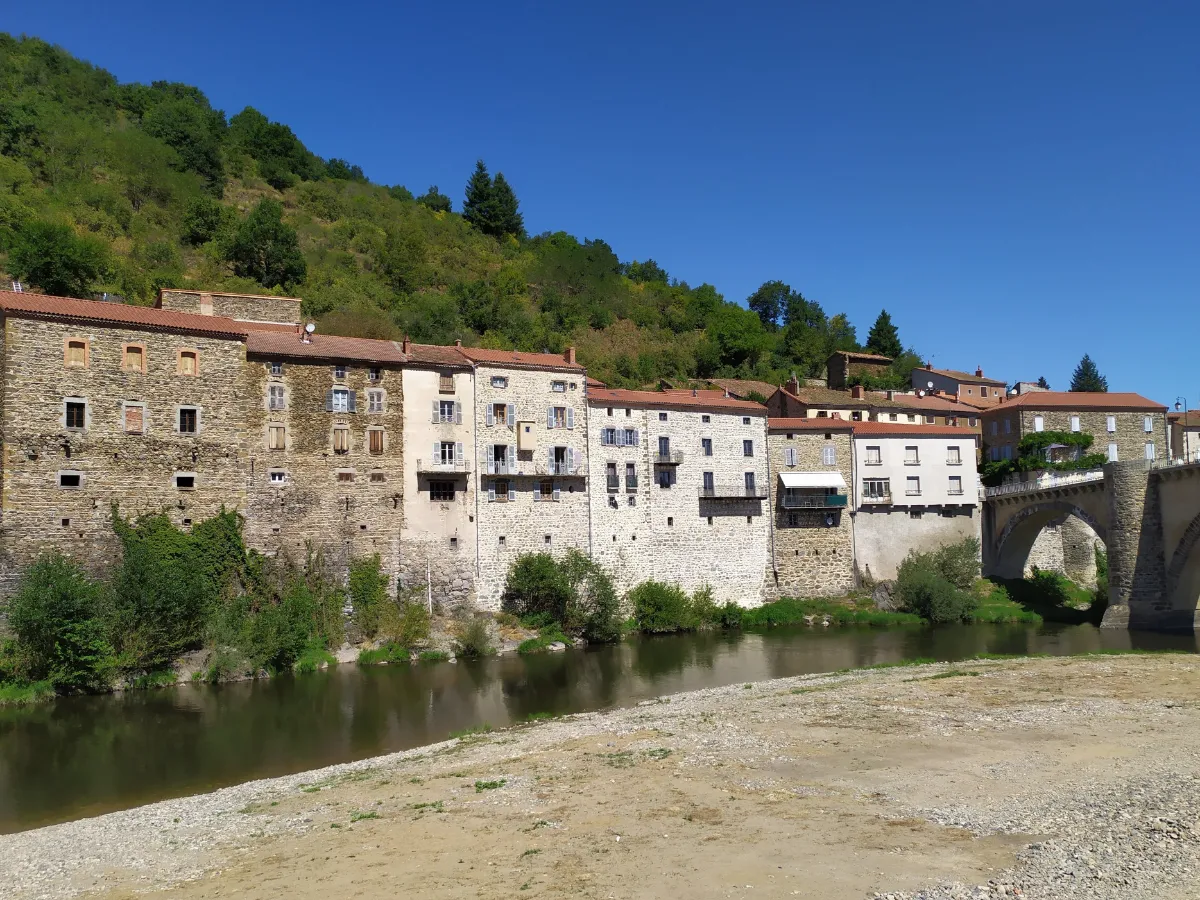
The Allier River makes such a dramatic bend here that it almost seems to turn back on itself! Nestled inside this nearly perfect loop, Lavoûte-Chilhac sits on a narrow strip of land surrounded by wooded hills. Its old houses cluster around a former monastery, whose imposing buildings overlook the water.
A beautiful stone bridge crosses the river, connecting the two parts of the village. From its arches, the view of the façades reflected in the Allier is especially photogenic. Higher up, walking paths offer wonderful perspectives on this remarkable landscape, slowly shaped by the river over time.
Malzieu-Ville
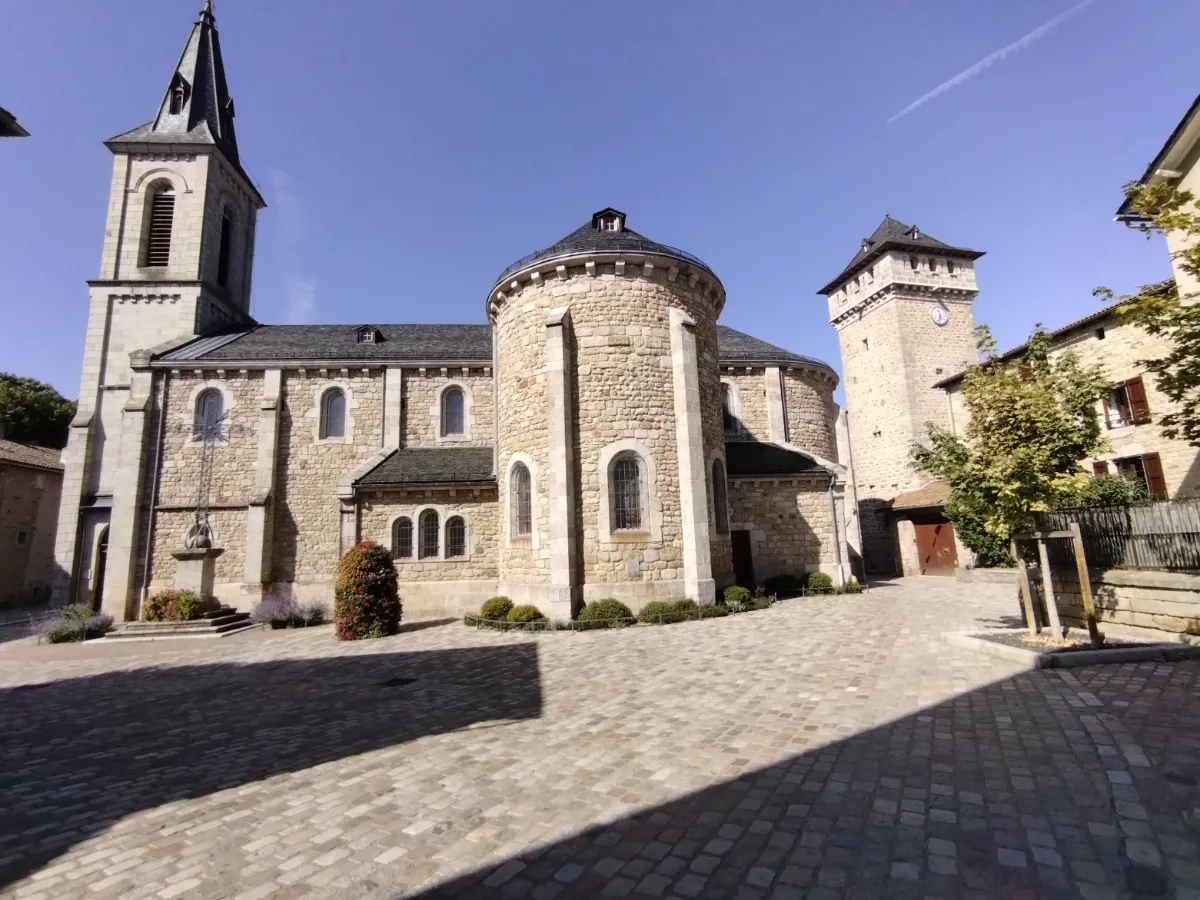
Surrounded by carefully restored ramparts, Le Malzieu-Ville has held on to much of its medieval character. Set in the Truyère Valley at around 850 metres above sea level, the village is a maze of cobbled lanes, little squares, and granite houses. Its defensive towers are reminders of the more turbulent chapters of its history.
The Porte Haute gateway and the Tour de Bodon are among its most remarkable landmarks. But Le Malzieu is also linked to the mysterious Beast of Gévaudan, an animal responsible for deadly attacks in the 18th century, whose story still inspires plenty of local legends.
Polignac
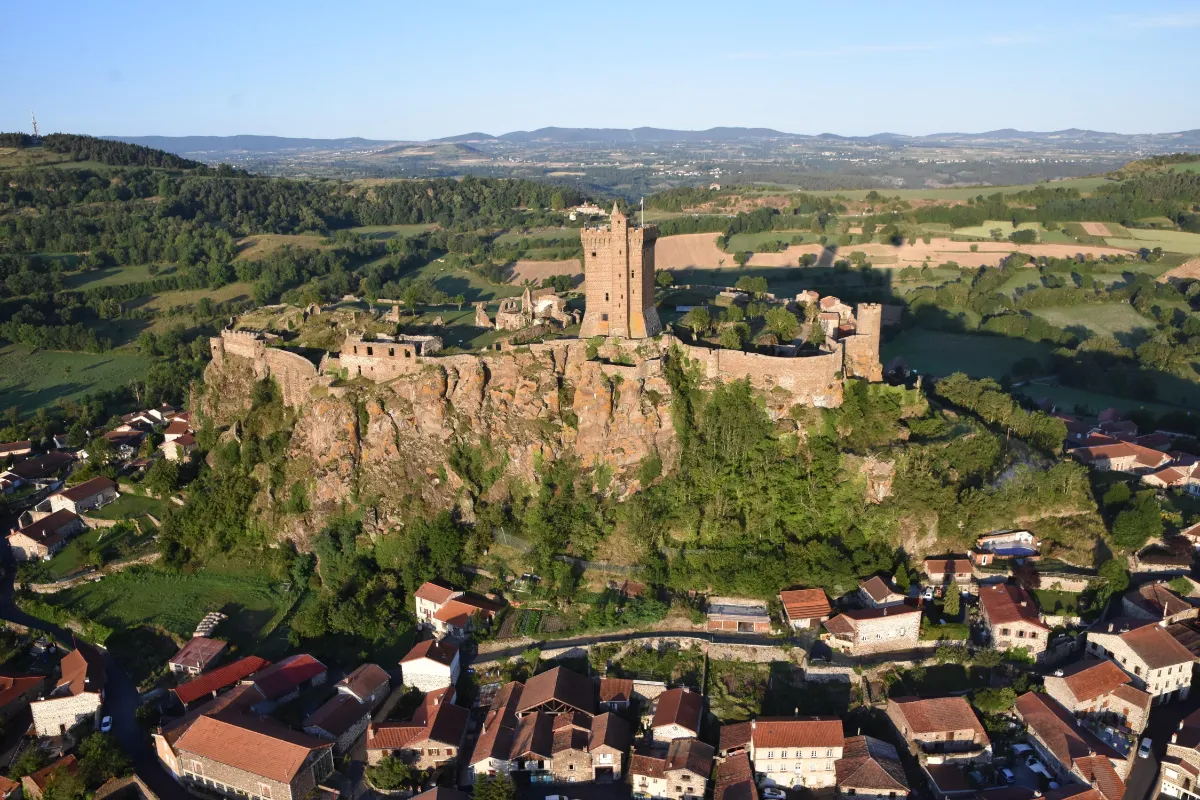
In Our Top ☑️
Polignac is hard to miss. Just a few kilometres from Le Puy-en-Velay, an enormous fortress dominates the landscape from the top of a volcanic rock. With its sheer cliffs, this natural stronghold was the perfect place to watch over the surrounding countryside and defend against attacks. The powerful Polignac family built one of the region’s most impressive castles here.
Today, the remains of its walls, buildings, and imposing square tower give you an idea of its former grandeur. The climb to the top rewards you with exceptional panoramic views over the hills, volcanic landscape, and rooftops of the village below.
Arlempdes
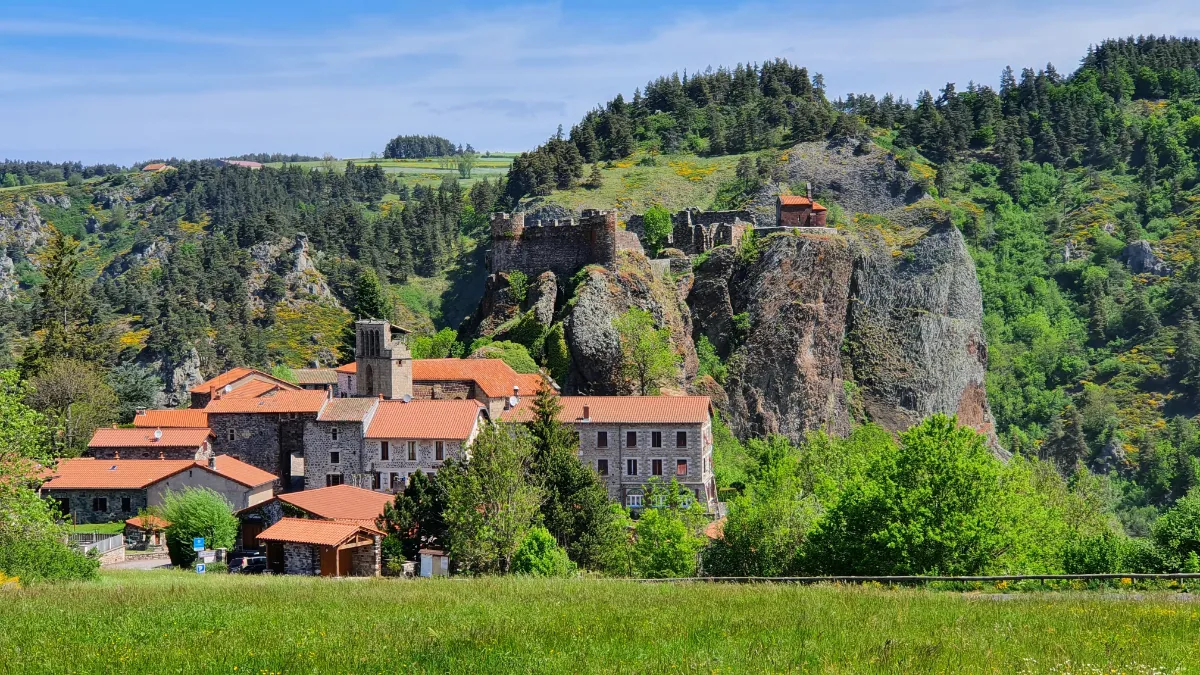
Picture a handful of stone houses nestled beneath a ruined castle, high on a rocky outcrop overlooking a river. Welcome to Arlempdes, one of the most spectacular villages in the upper Loire Valley. Its old fortress, built from the 12th century onwards, once guarded this narrow passage between volcanic cliffs.
The castle is sometimes described as the first château of the Loire, a world away from the magnificent palaces the river passes further north. In the village, the old houses and little church blend beautifully into the rocky landscape. The views over the bends in the river are breathtaking.
Pradelles
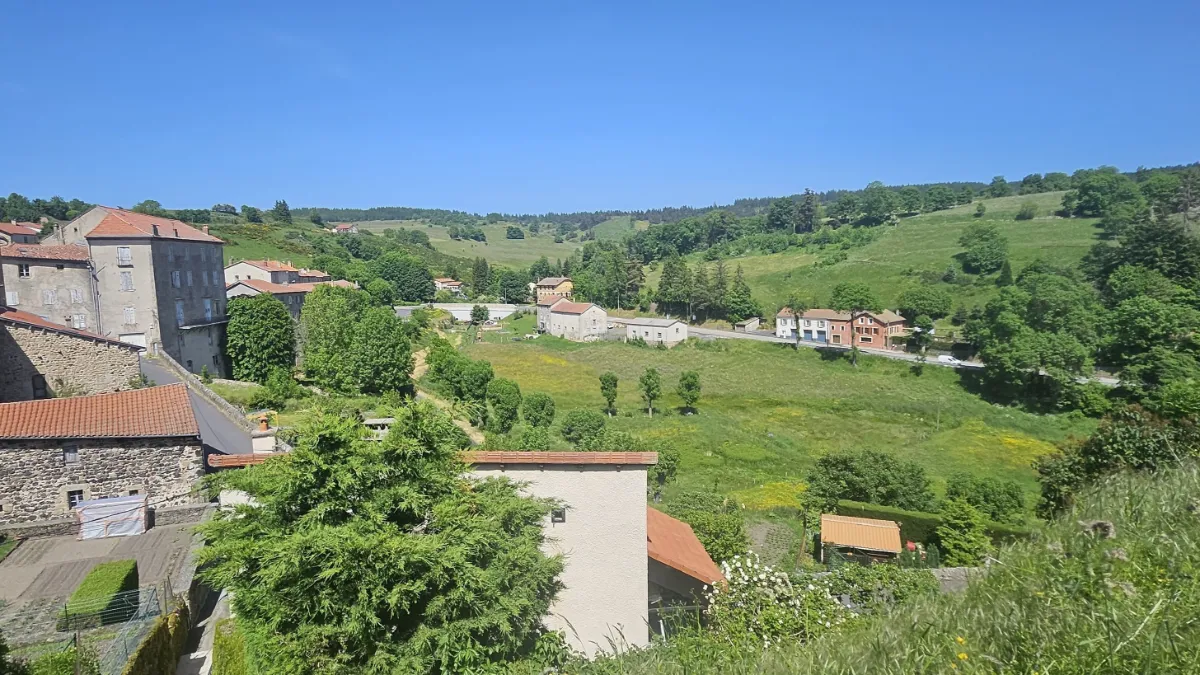
Perched at more than 1,100 metres above sea level, Pradelles overlooks a vast landscape of hills and mountains. This former fortified town once occupied a strategic position on an important trading route. Its monumental gateways, Renaissance houses, and elegant buildings with carved façades are reminders of its prosperous past.
As you explore the cobbled streets, you’ll notice all sorts of architectural details, from outdoor staircases and historic windows to vaulted passages. Pradelles also remembers the heroic defence mounted by its inhabitants during the 16th-century Wars of Religion.
Désaignes
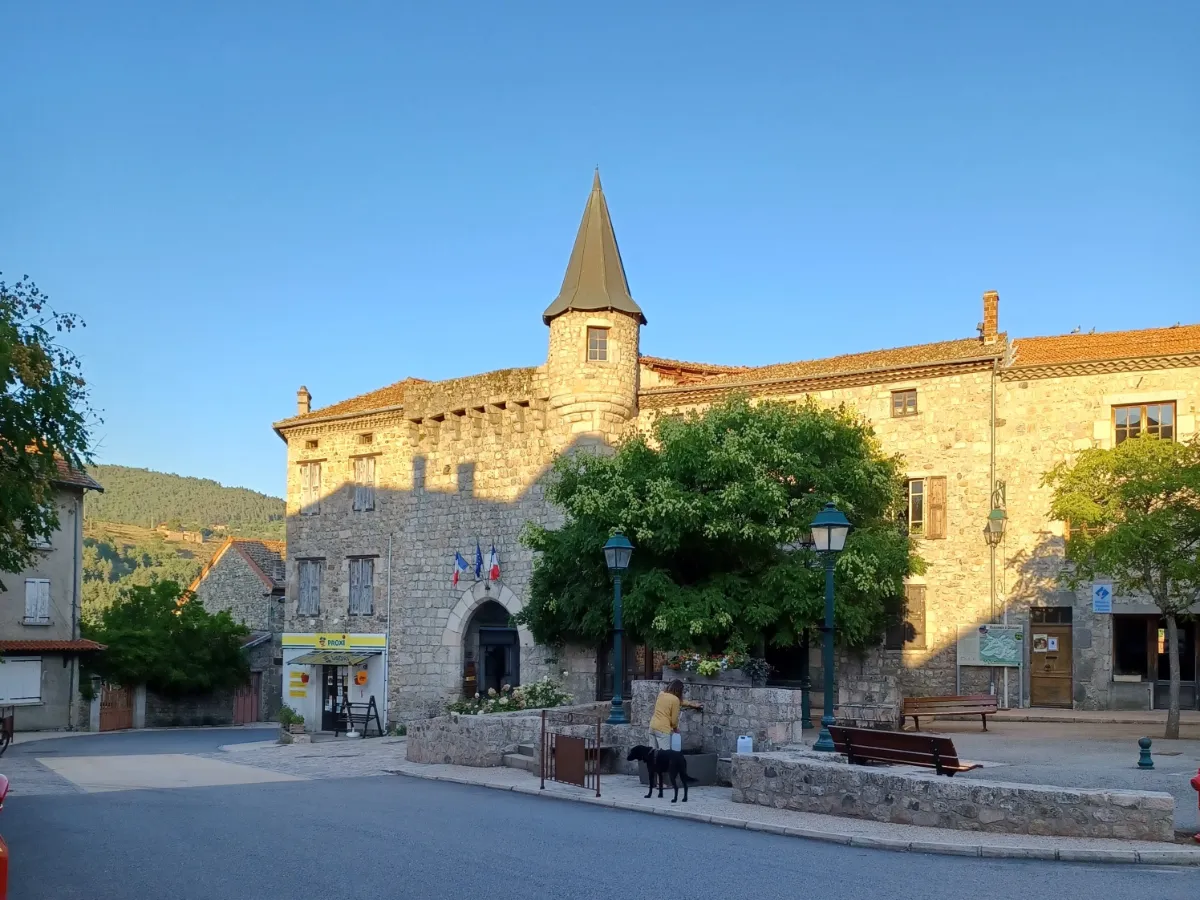
In the heart of the green Ardèche hills, Désaignes preserves traces of a history stretching back more than two thousand years. The village flourished during the Middle Ages, leaving behind several fortified gateways, defensive walls, and a 14th-century castle.
A walk through the old centre takes you past stone houses, little courtyards, and winding lanes. The buildings also tell the story of the trading activities that once supported the Doux Valley. Around the village, terraced hillsides, orchards, and chestnut woods create a landscape typical of the Ardèche mountains.
SOUTH
| Name | Top+ | Top |
|---|---|---|
| Conques | ✅ | |
| Belcastel | ||
| Estaing | ||
| Saint-Côme-d'Olt | ||
| Sainte-Eulalie-d'Olt | ||
| Sainte-Enimie | ☑️ | |
| La Garde-Guérin | ||
| Castelnau-Pégayrols | ||
| Peyre | ||
| Brousse-le-Château | ||
| La Couvertoirade | ☑️ |
Conques
In Our Top+ ✅
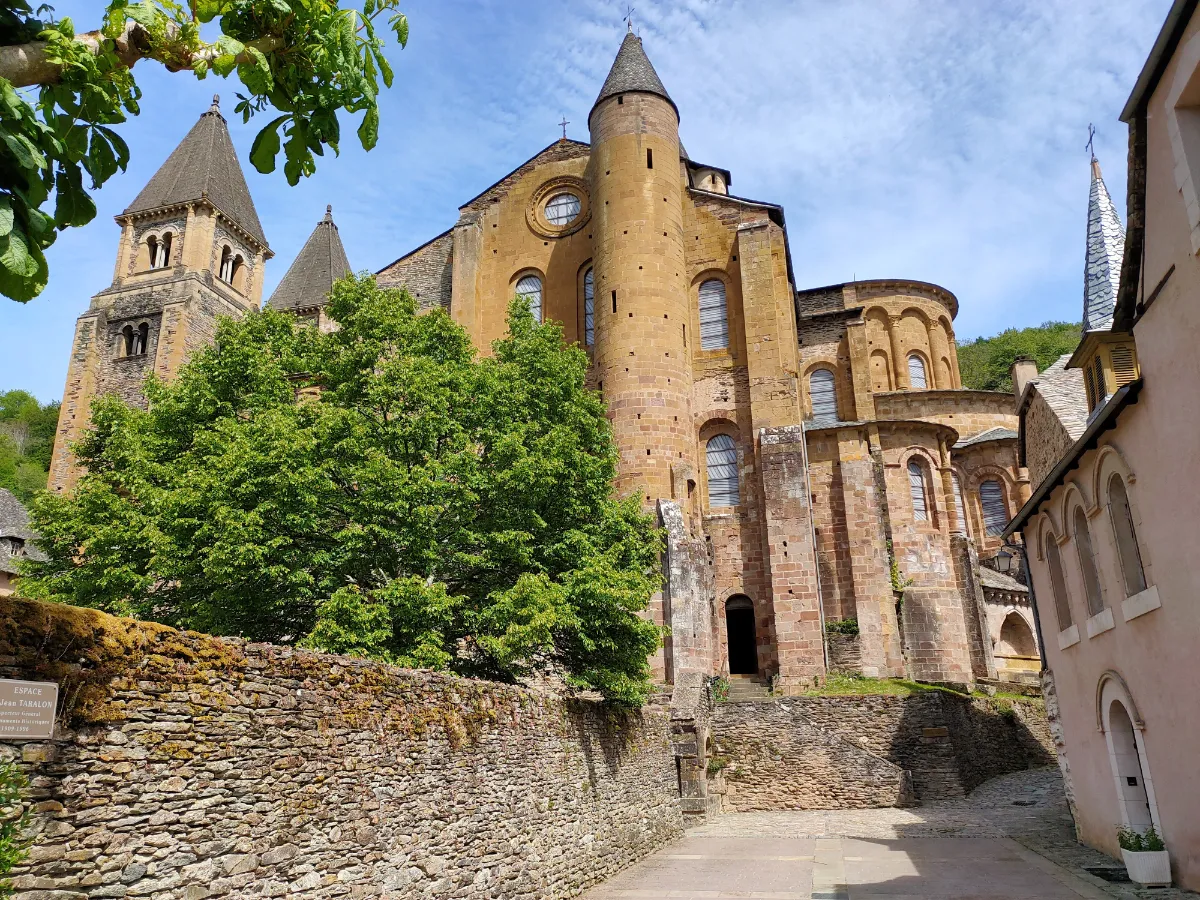
Nestled in a wooded valley, Conques has an almost unreal charm. Old houses with stone roofs cluster around the imposing Sainte-Foy Abbey Church, a masterpiece built in the 11th and 12th centuries. Its sculpted entrance, depicting the Last Judgement, is one of the finest in France.
For more than a thousand years, Conques has welcomed pilgrims travelling to Santiago de Compostela. The church holds precious religious treasures, including a statue covered in gold and gemstones. Inside, contemporary stained-glass windows designed by Pierre Soulages create a wonderfully soft light. In the cobbled streets, the old houses with their timber and stone façades seem frozen in time.
Belcastel
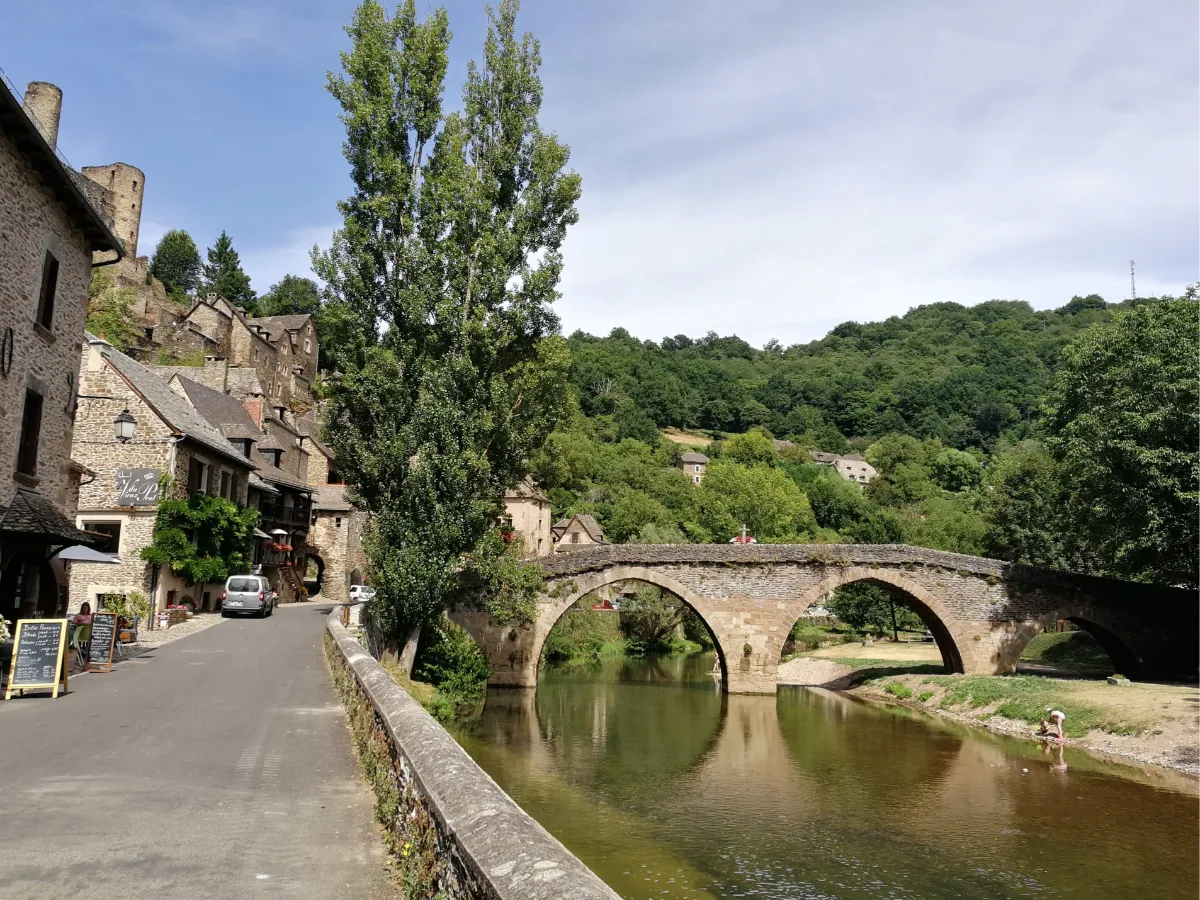
At the bottom of a green valley, Belcastel looks like something straight out of a postcard. A medieval castle rises above stone houses clustered along the Aveyron River, while an old arched bridge crosses the water. Everything fits together in a wonderfully harmonious setting.
Yet the village almost fell into complete ruin. In the 1970s, an architect began restoring the abandoned castle, and the village houses soon followed. Cross the 15th-century bridge and you’ll discover the little church and some beautiful views of the old façades reflected in the water.
Estaing
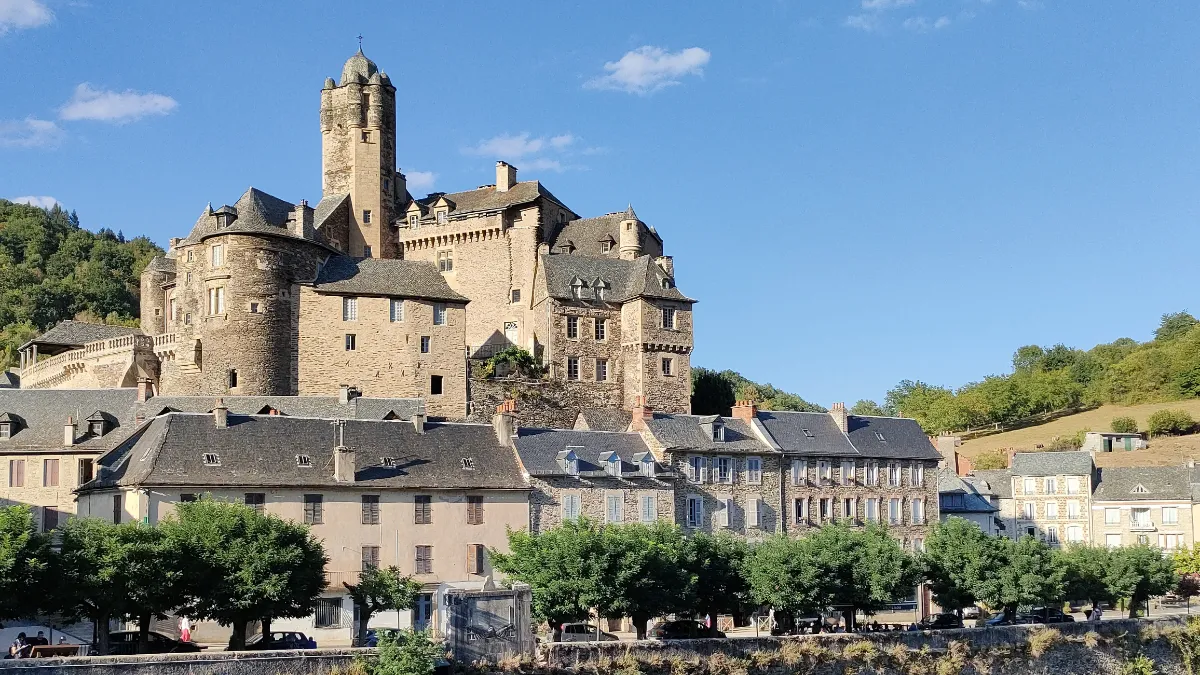
On the banks of the Lot River, Estaing has a skyline that’s instantly recognisable. Its castle, with its collection of towers, rises above the old houses and the stone bridge crossing the river. Once the home of a powerful noble family, the castle reflects several centuries of history.
Narrow streets climb gently between stone façades, while Saint-Fleuret Church preserves some beautiful historic features. Estaing is also a traditional stop for pilgrims walking to Santiago de Compostela. From the bridge, the view of the castle, rooftops, and surrounding wooded hills is particularly beautiful, especially in the late afternoon light.
Saint-Côme-d'Olt
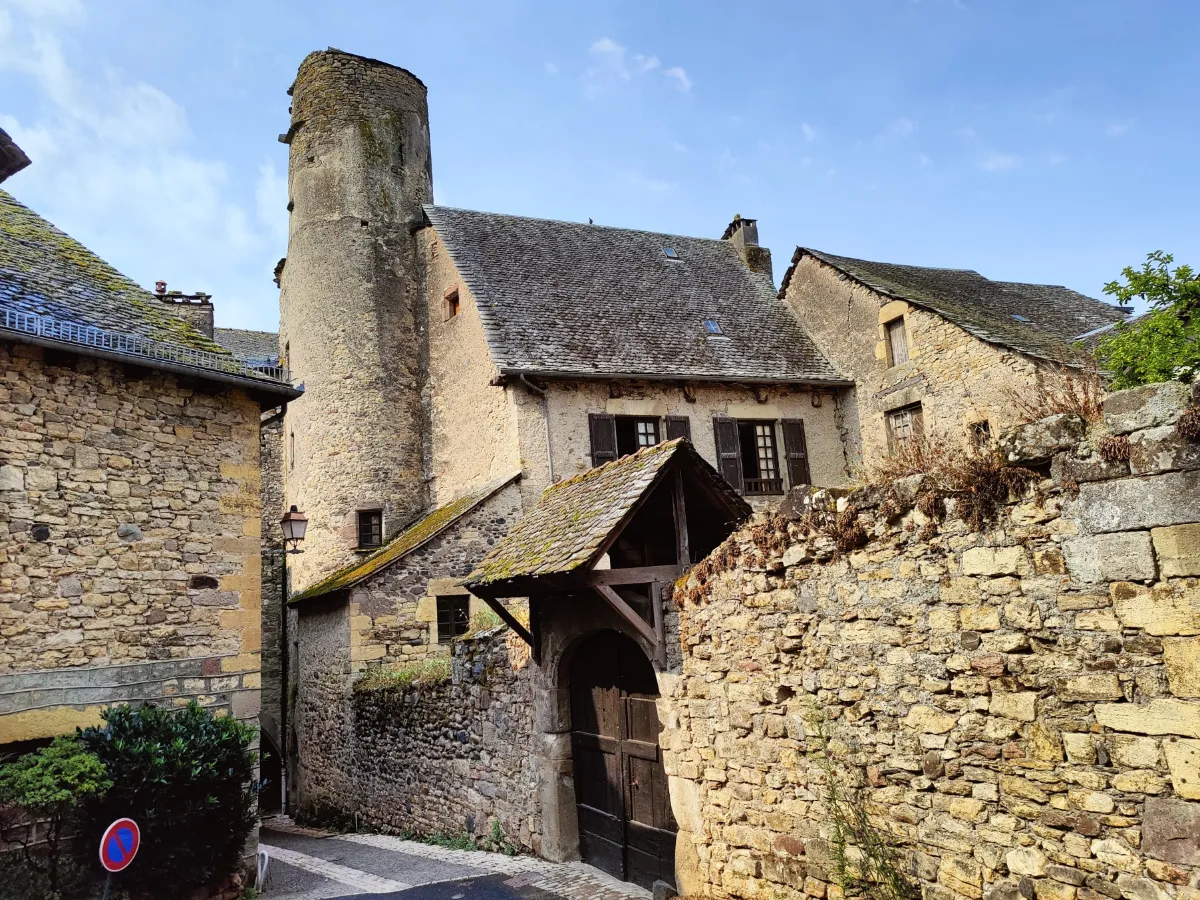
With the unusual twisted spire of its church, Saint-Côme-d’Olt is a charming village near the Lot River. Its old centre still follows a circular layout, dating back to the days when fortifications protected the inhabitants. Narrow lanes and stone houses tell the story of its long history.
Saint-Côme-et-Saint-Damien Church, with its spiral spire, is the village’s most distinctive landmark. Old gateways, small squares, and medieval façades make for a lovely, peaceful stroll. Pilgrims heading to Santiago de Compostela still regularly pass through its streets, keeping alive a tradition that goes back centuries.
Sainte-Eulalie-d'Olt
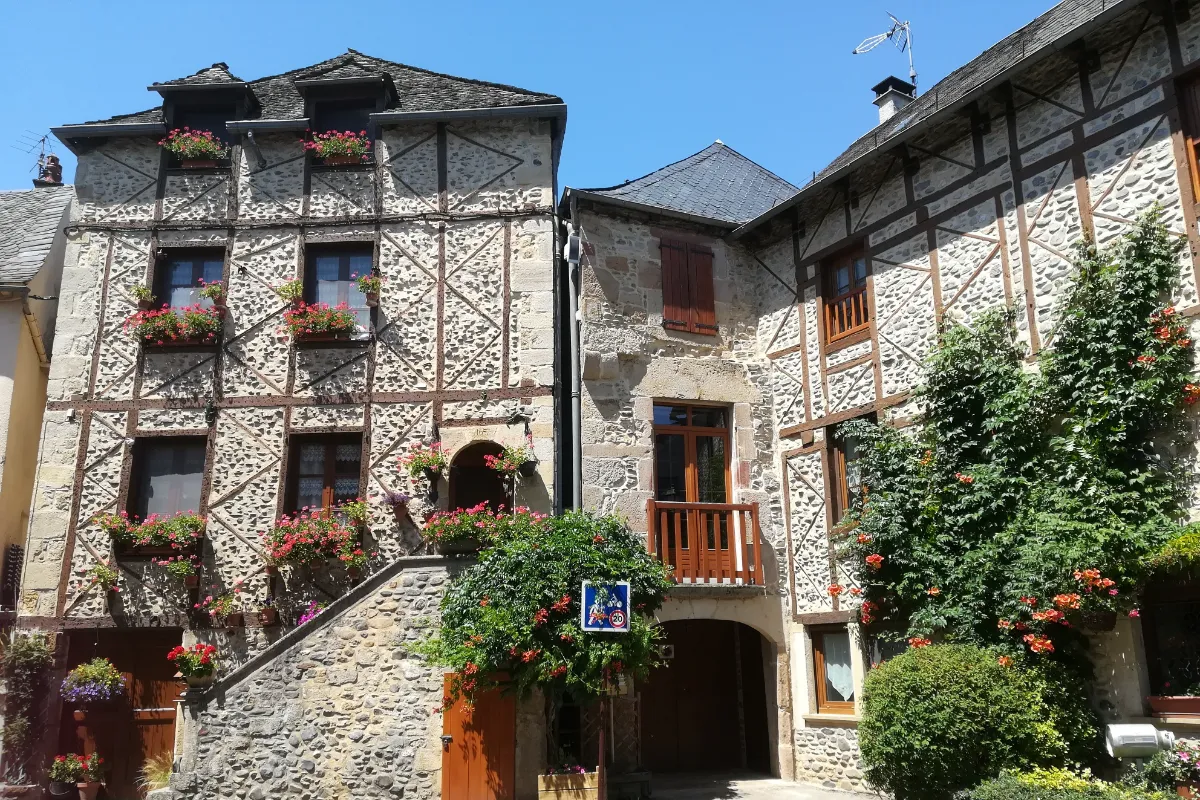
Set beside the Lot River, Sainte-Eulalie-d’Olt wins you over with its flower-covered stone houses and peaceful lanes. The village grew around an old church and still has several houses from the 15th and 16th centuries, easily recognised by their carved windows.
As you wander around, you’ll discover little passageways, hidden courtyards, and old houses built using pebbles from the river. The village also has a long artistic tradition, particularly in painting and sculpture. In spring and summer, flowers spilling out of windows bring splashes of colour to the old stone walls.
Sainte-Enimie
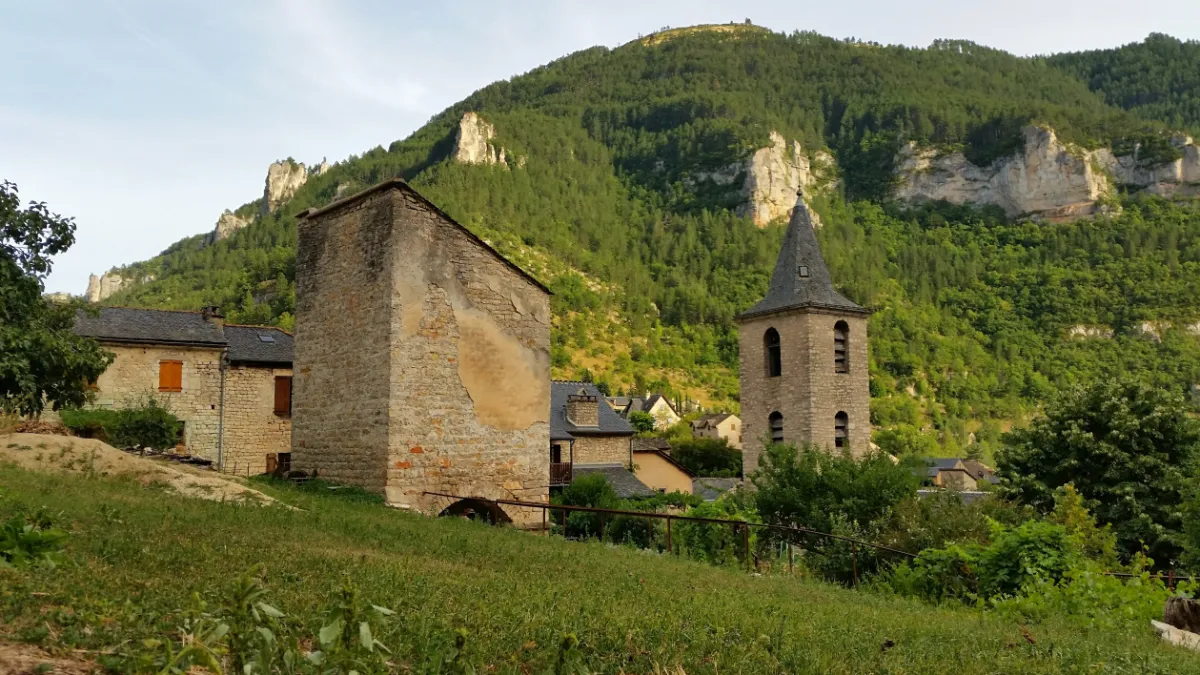
In Our Top ☑️
Wedged between the spectacular cliffs of the Tarn Gorges, Sainte-Enimie is one of those villages whose popularity makes perfect sense the moment you see it. Its pale stone houses climb up the hillside, connected by a maze of cobbled lanes and stairways.
The village takes its name from a 7th-century princess who, according to legend, was cured of leprosy by the waters of the Burle spring. You can still visit this blue-tinged spring at the foot of the houses. Below, the turquoise waters of the Tarn River wind between the rocks, creating a stunning setting for walks and canoe trips.
La Garde-Guérin
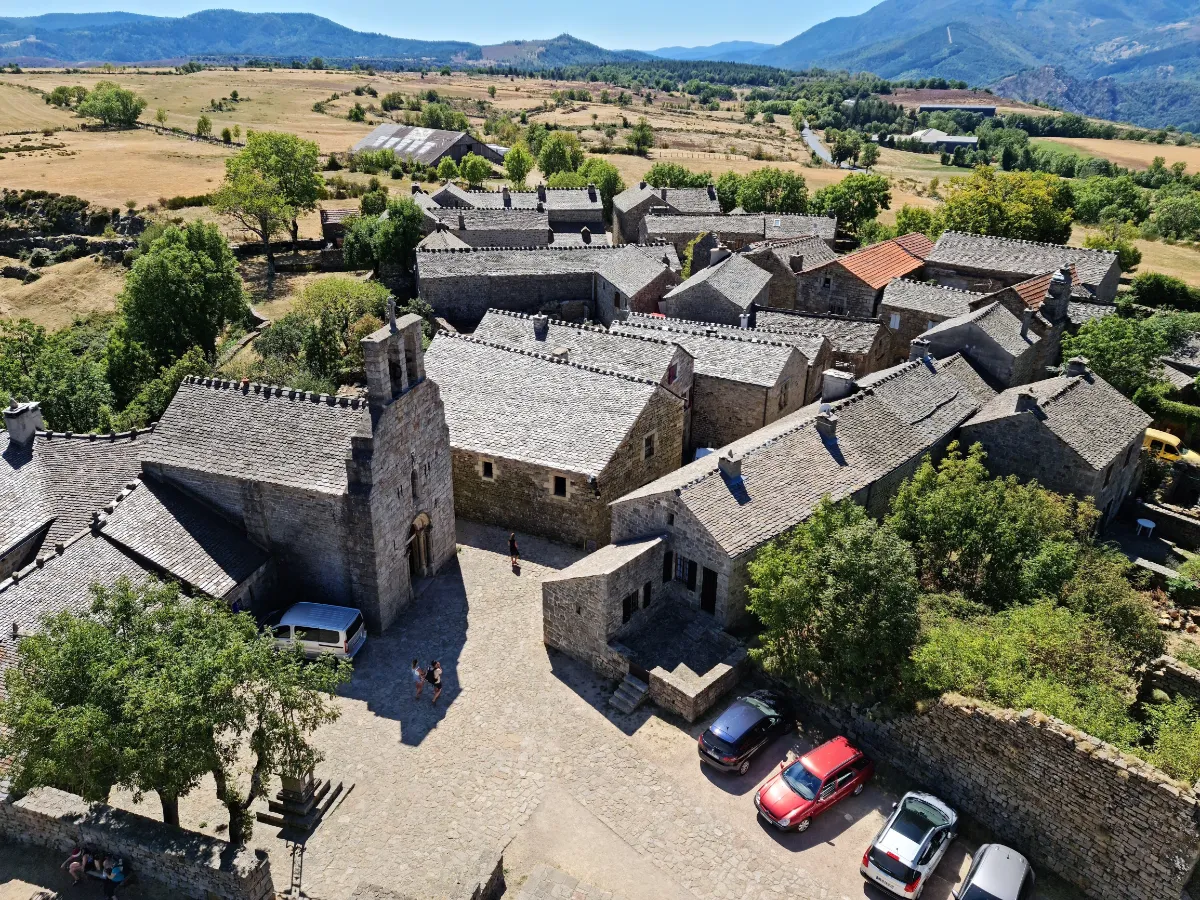
At more than 900 metres above sea level, La Garde-Guérin rises from a landscape of meadows and mountains. This small fortified village once guarded an important route used by merchants and travellers. A community of knights protected the passage in exchange for tolls on the goods passing through.
An imposing square tower, an old church, and several handsome granite houses remain from that time. The cobbled streets have kept an atmosphere that feels almost unchanged. Not far from the village, the landscape suddenly drops away into the impressive Chassezac Gorges, carved deep into the rock.
Castelnau-Pégayrols
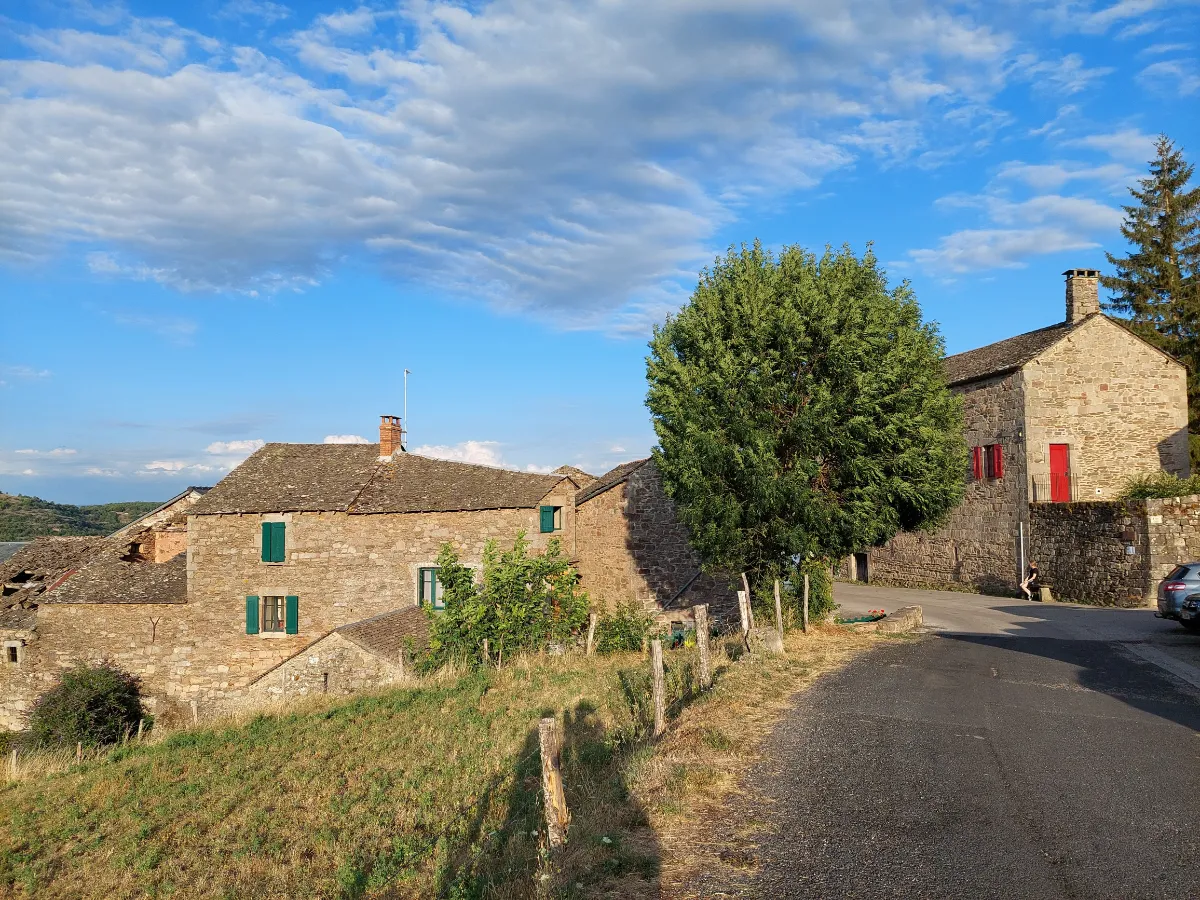
On a hill overlooking the valleys of southern Aveyron, Castelnau-Pégayrols has a quiet charm, well away from the usual tourist routes. This small medieval village is built around an old castle, with stone houses connected by narrow lanes and vaulted passages.
Saint-Michel Church, built in the 11th century, is one of its most remarkable monuments. But Castelnau-Pégayrols also hides a fascinating heritage linked to water. An old network of canals once supplied several mills, showing just how resourceful the villagers were. From the higher ground, there are sweeping views over the surrounding hills and valleys.
Peyre
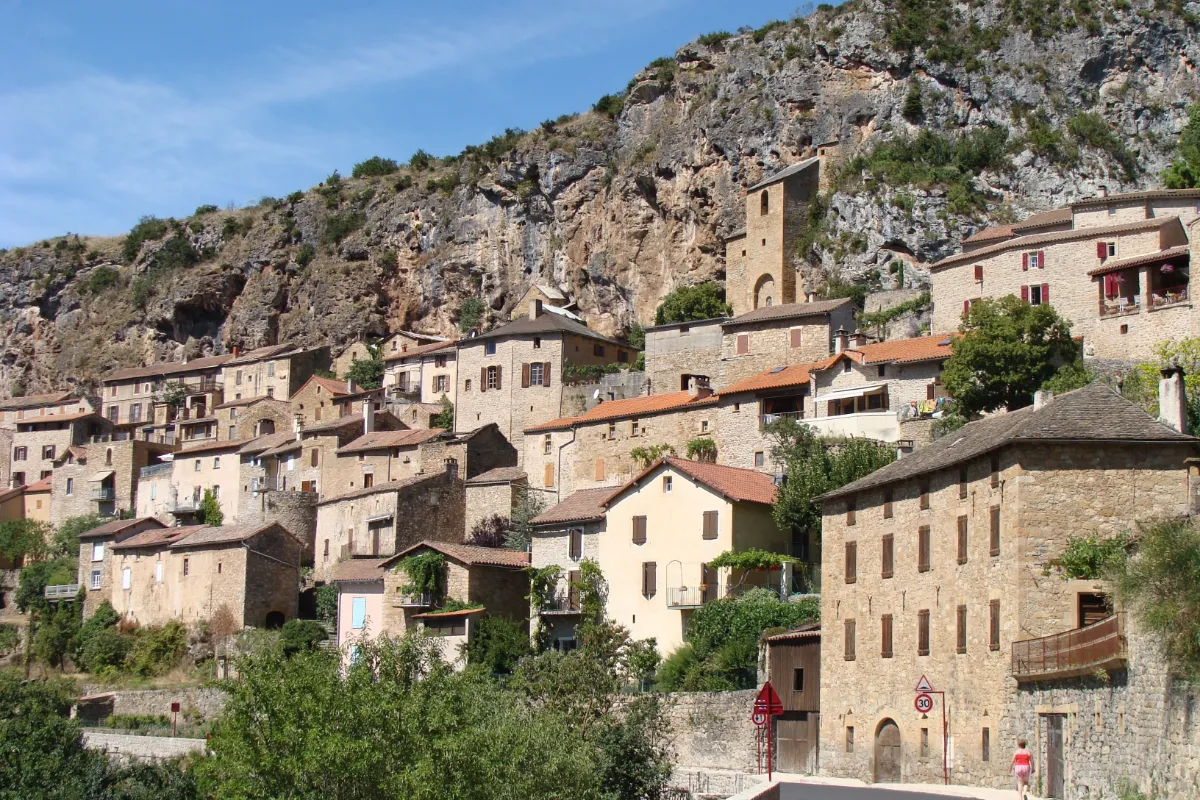
In Peyre, the houses seem to grow straight out of the cliff. Built into a rocky slope overlooking the Tarn River, this tiny village is an unusual sight. Some houses stand directly against the rock face, while others use natural caves as rooms or storage spaces.
Saint-Christophe Church, partly carved into the cliff, is its main curiosity. The sloping lanes also reveal superb views over the river. Look towards the horizon and you’ll spot the enormous pylons of the Millau Viaduct, whose modern architecture creates a striking contrast with the village’s ancient stone buildings.
Brousse-le-Château
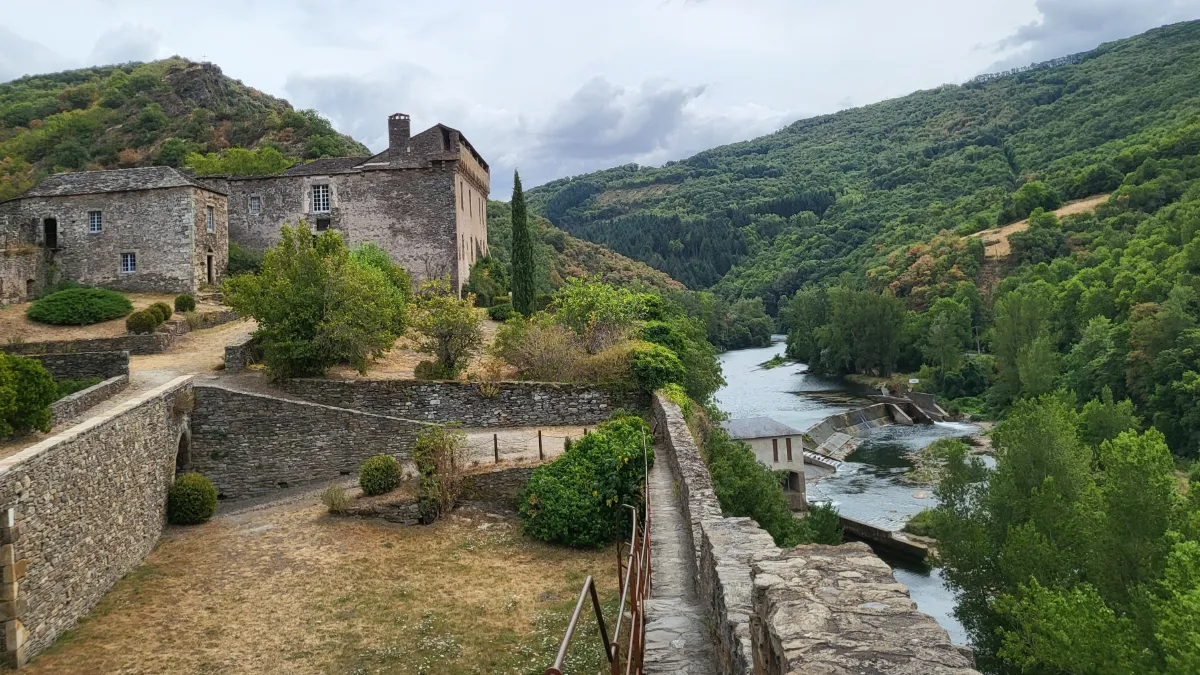
Where two rivers meet, Brousse-le-Château spreads its stone houses beneath the walls of an imposing medieval fortress. Perched on a rocky outcrop, the castle overlooks the village and surrounding valleys. Its towers and old defences are reminders of the strategic importance of this location.
A lovely stone bridge crosses the Alrance just before it joins the Tarn. From here, the view of the old houses and castle is particularly picturesque. Narrow lanes climb between stone façades, sometimes brightened by little gardens, while wooded hills give the village a wonderfully peaceful atmosphere.
La Couvertoirade
In Our Top ☑️
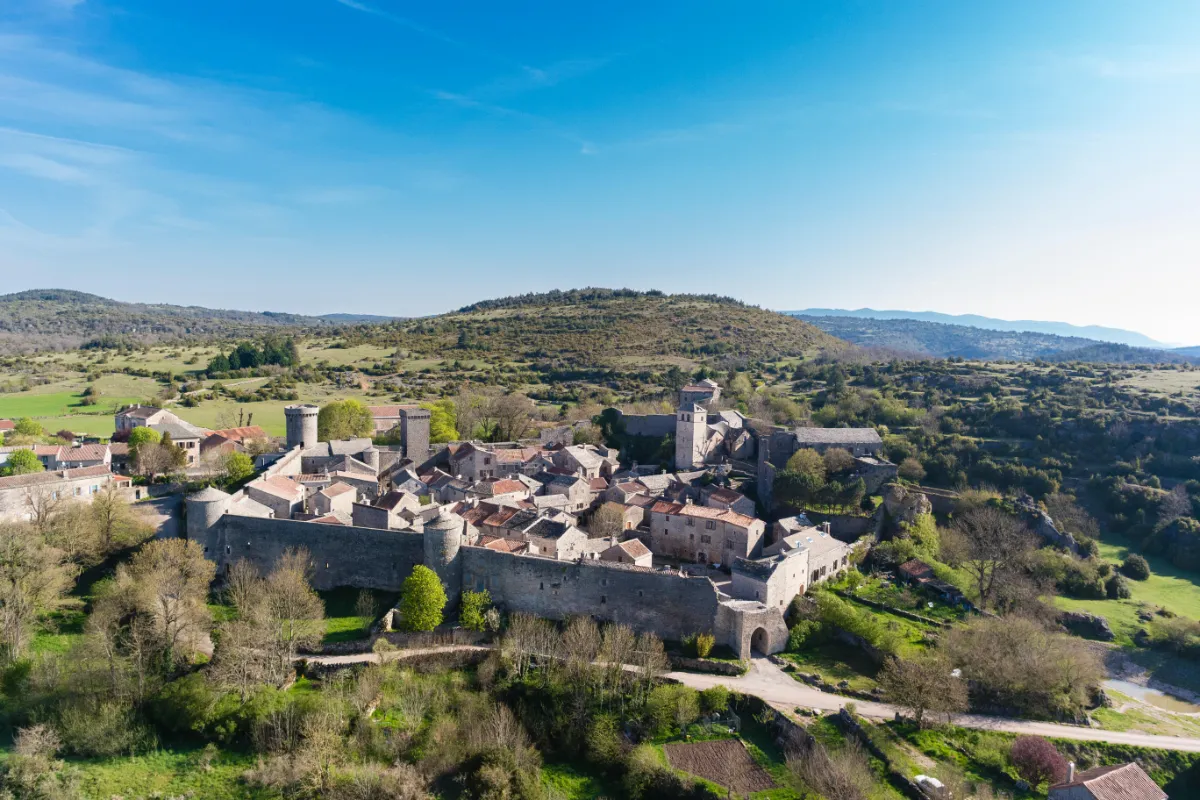
In the heart of a vast limestone plateau, La Couvertoirade looks like a little fortress straight out of the Middle Ages. Surrounded by high defensive walls, the village was first occupied by the Knights Templar, a religious and military order, and later by their successors, the Knights Hospitaller.
Behind the ramparts, cobbled lanes wind between stone houses with traditional roofs. The fortified church, castle, and ancient gateways all recall its defensive past. From the path alongside the walls, you can look out over the almost deserted landscapes of the Larzac plateau, where low stone walls still divide the vast grazing fields.