


OVERVIEW
Massif Central
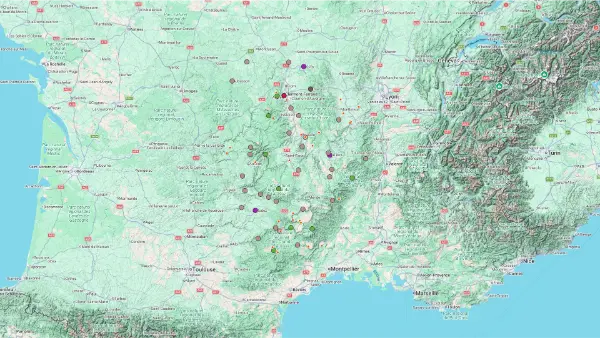
Interactive Map
Massif Central
Interactive Map
Click on the icon  in the top-left corner to display the map legend.
Show/Hide layers as needed.
Click on the arrow icons (v) to display the sublayers.
CITY
| Name | Top+ | Top |
|---|---|---|
| Clermont-Ferrand | ☑️ |
Clermont-Ferrand
In Our Top ☑️
Population 150 000
Clermont-Ferrand has character, and you can feel it from the moment you arrive. In the heart of Auvergne, this city at the foot of the volcanoes has a personality all its own, with a mix of medieval heritage, industrial history, and a lively student atmosphere. What makes it special? Many of its monuments are built from volcanic stone, whose dark charcoal-grey colour gives the old town an almost mysterious feel.
You can’t miss Notre-Dame-de-l’Assomption Cathedral, with its two dark spires towering above the rooftops. Construction began in the 13th century, and it’s just as impressive for its striking silhouette as for its colourful stained-glass windows. A few streets away, the much older Notre-Dame-du-Port Basilica offers a beautiful contrast, with its pale stone and delicate carvings.
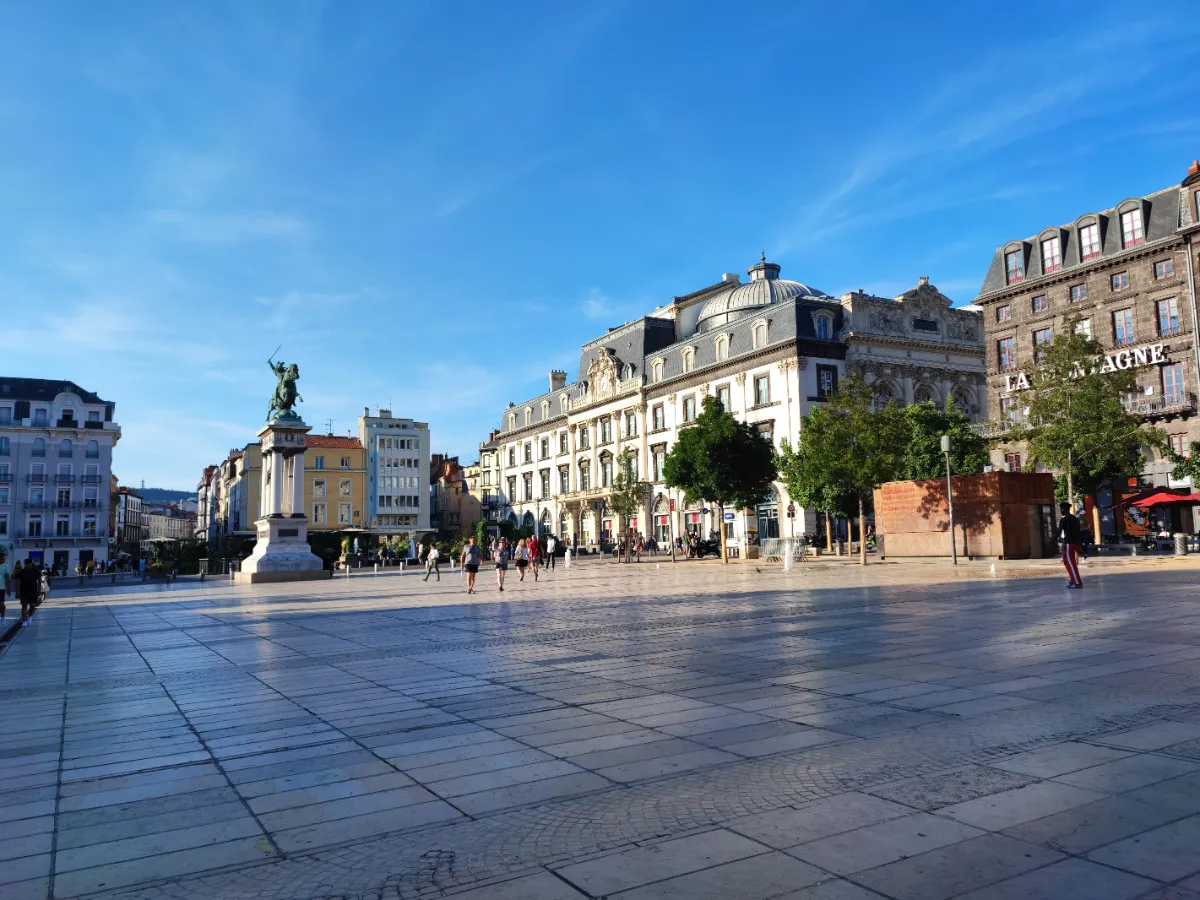
But there’s much more to Clermont-Ferrand than its churches. Around Place de Jaude, the beating heart of the city, 19th-century façades stand alongside spacious pedestrian areas. In the narrow streets of old Clermont, stairways, little squares, and historic houses are reminders of the city’s trading past. The Montferrand district also has a remarkable collection of medieval and Renaissance houses.
Another source of local pride is Michelin. Founded here in 1889, the famous tyre company has had a huge influence on the city’s history and landscape. You can discover its story at a museum dedicated to its innovations, its early road maps, and its famous white mascot, the Michelin Man. It’s a fascinating look at more than a century of industrial ingenuity.
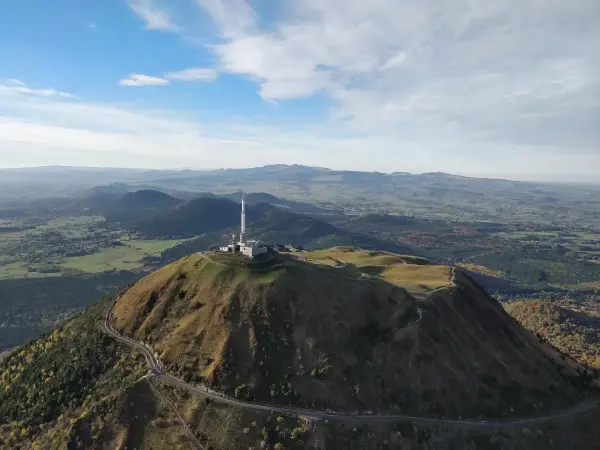
And all you have to do is look west to see the peaks of the Chaîne des Puys. These dozens of ancient volcanoes create an extraordinary backdrop, practically on the city’s doorstep. From the hills above Clermont-Ferrand, you get a wonderful view of dark stone buildings, green hills, and the rounded shapes of the volcanoes.
TOWNS
| Name | Top+ | Top |
|---|---|---|
| Vichy | ||
| Le Puy-en-Velay | ✅ | |
| Rodez |
Vichy
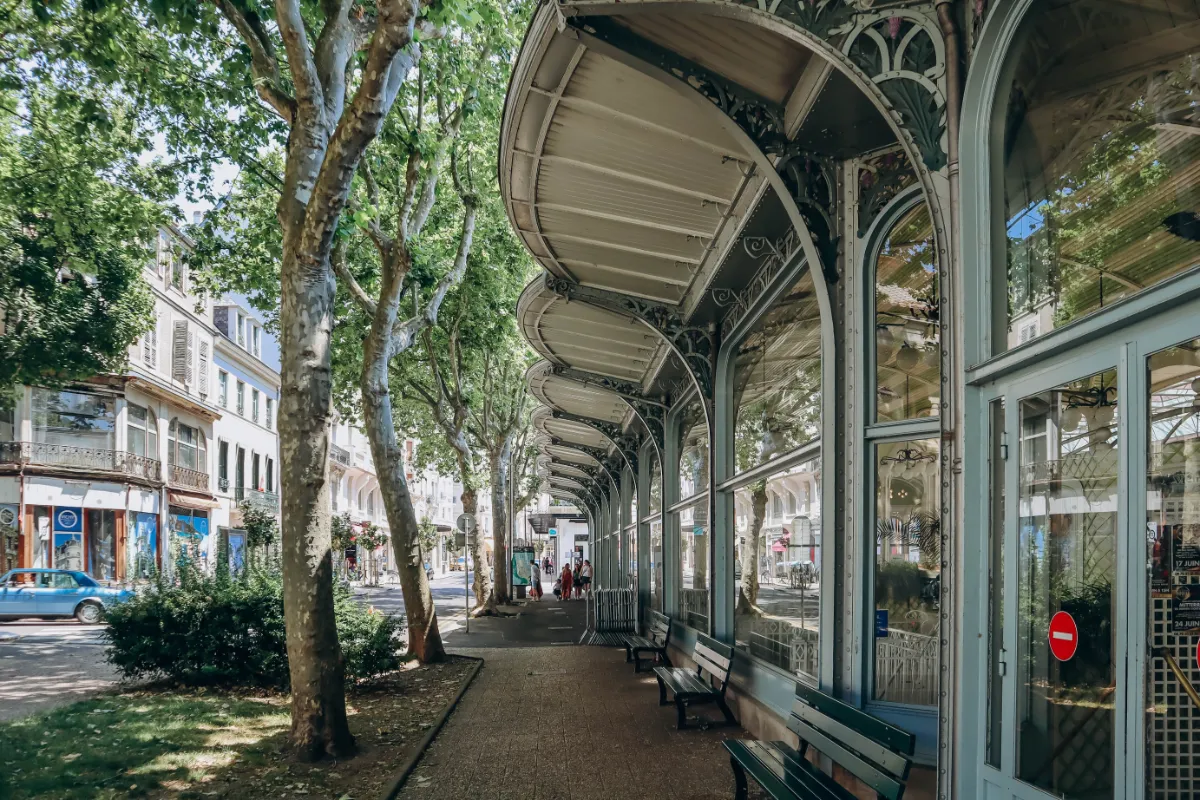
Vichy has a touch of Belle Époque elegance on the banks of the Allier River. Famous for its mineral springs since ancient times, the town really came into its own in the 19th century, when Napoleon III made it one of his favourite destinations. Wealthy European families flocked here to enjoy the thermal waters, beautiful promenades, and sophisticated entertainment.
That glamorous era left behind some extraordinary architecture. You’ll find villas with extravagant façades, former luxury hotels, buildings inspired by Eastern architecture, and Art Nouveau decorations throughout the streets. Don’t miss the Hall des Sources, with its fountains, or the magnificent Opera House, which opened in 1903. Its golden interior gives you a real sense of the elegance of the time.
Vichy also has plenty of green spaces. The Napoleon III parks, lined with century-old trees, are perfect for long, leisurely walks. Further along, the landscaped banks of the Allier are popular with walkers and cyclists.
Le Puy-en-Velay
In Our Top+ ✅
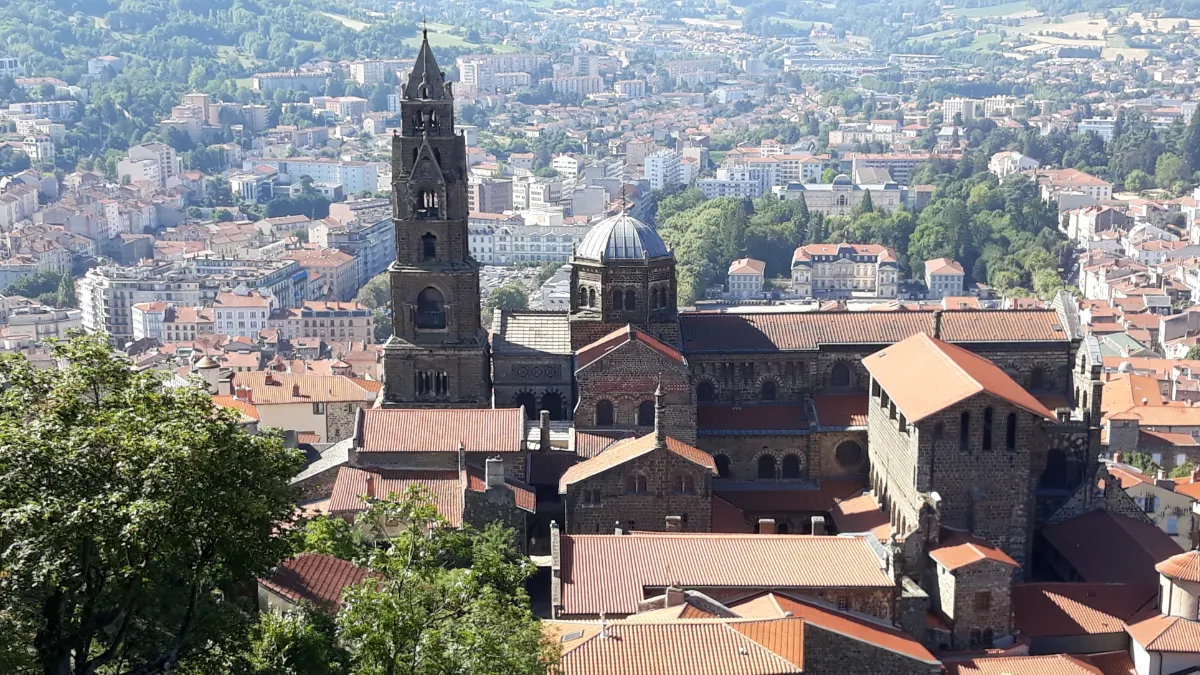
It’s hard to imagine a more spectacular town. In Le Puy-en-Velay, the volcanoes have been extinct for millions of years, but their ancient rocky cores still tower above the houses. People had the audacity to build religious monuments on top of these natural rock pinnacles, creating a townscape unlike anywhere else. At times, it almost feels like something out of a fantasy film.
Perhaps the most impressive sight is the Saint-Michel d’Aiguilhe rock, topped by a small 10th-century chapel. To reach it, you’ll need to climb 268 steps carved into the rock. Nearby, the enormous Notre-Dame de France statue stands high above the town on the summit of Rocher Corneille.
In the heart of the old town, Notre-Dame-du-Puy Cathedral is also well worth visiting. Its unusual façade, with alternating bands of light and dark stone, leads to a richly decorated interior. For centuries, it has welcomed pilgrims setting off on foot towards Santiago de Compostela in Spain.
Take some time to wander through the steep little streets, with their stairways, vaulted passages, and colourful façades. Old houses cling to the slopes, while small squares open up to unexpected views of the rocky peaks. Le Puy also has a long tradition of bobbin lace-making, a delicate craft practised here for centuries that you can still see in demonstration workshops.
Rodez
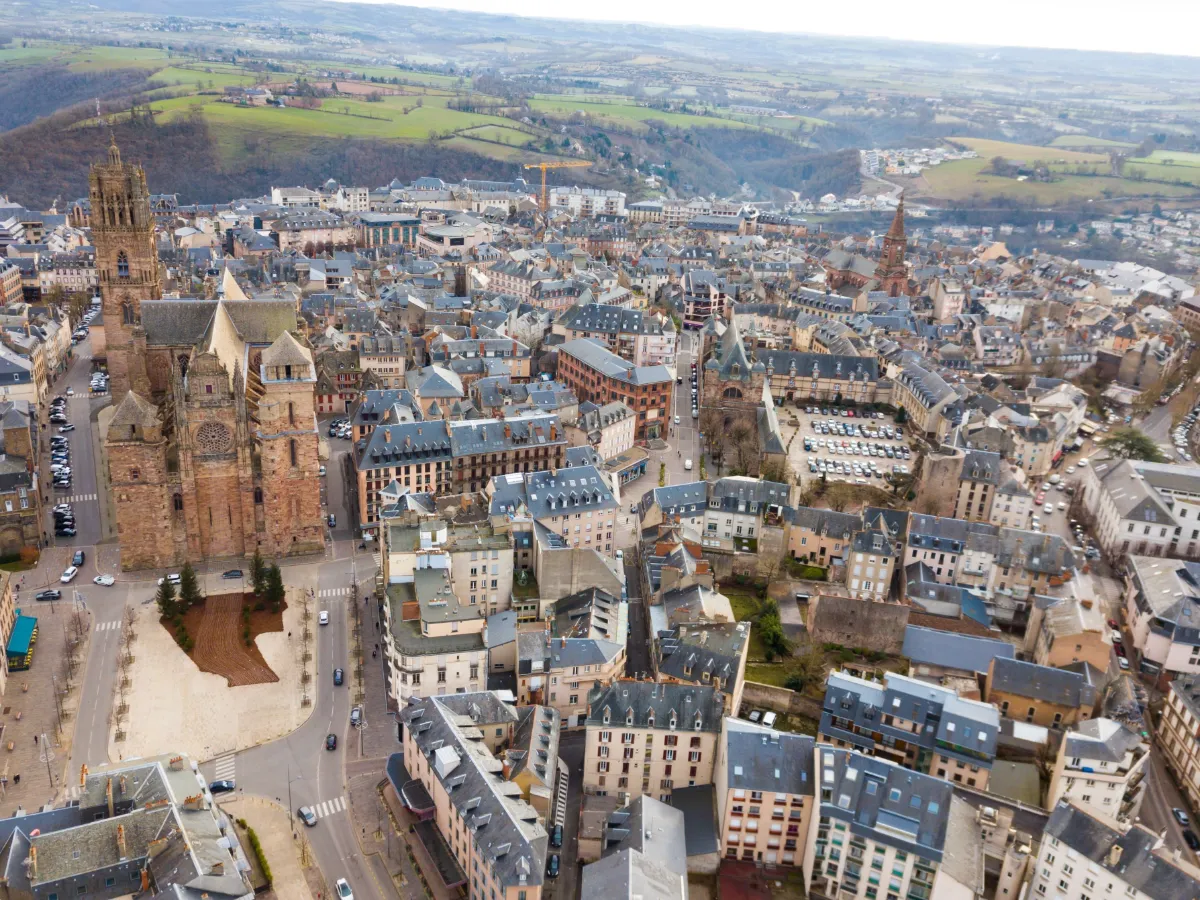
Perched on a hill, Rodez has quite a few surprises in store. Its compact historic centre is lovely to explore on foot, with old houses, small squares, and cobbled streets. But what really catches your eye is the enormous Notre-Dame Cathedral, with its imposing pink stone walls.
Construction began in the 13th century, and the cathedral is striking for its fortress-like appearance and richly carved bell tower, which rises 87 metres high. All around it, medieval houses stand alongside beautiful Renaissance façades, including the Maison d’Armagnac, decorated with intricate carvings. Together, they reflect the former wealth of this historic trading town.
Rodez also has a distinctly modern side, thanks to Pierre Soulages, the French painter famous for his exploration of black and light. The museum dedicated to him, housed in a building made of large steel structures, displays his work and shows how a seemingly uniform colour can reveal endless shades depending on the lighting. It’s a fascinating contrast with the pink stone of the old town.
SMALL TOWN (Village Feel)
| Name | Top+ | Top |
|---|---|---|
| Thiers | ☑️ |
Thiers
In Our Top ☑️
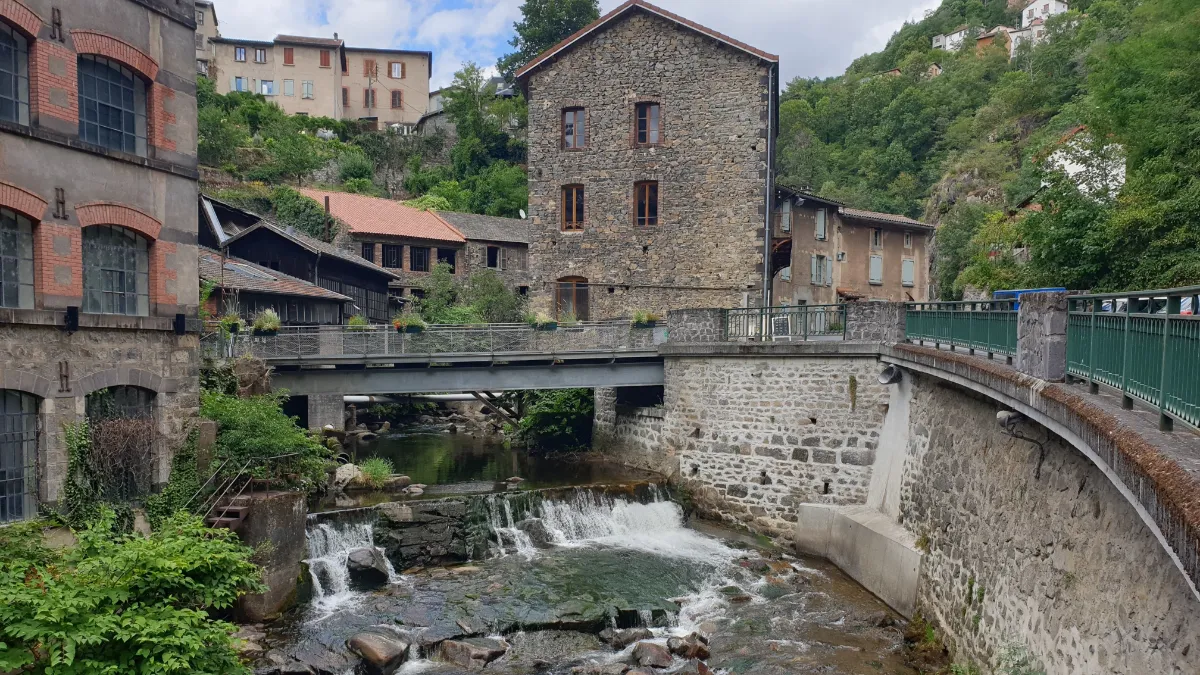
In Thiers, knife-making has been serious business for nearly seven centuries. Clinging to the steep slopes above the Durolle River, this former industrial town has kept a medieval centre full of character. Winding lanes, steep stairways, overhanging houses, and covered passages create a real maze of old stone buildings.
For centuries, the river’s water powered the machinery used to make knife blades. Even today, knife-making remains central to the town’s identity. At the Cutlery Museum, you can discover traditional techniques and the intricate work of skilled craftspeople. From the heights above town, the view stretches across tightly packed rooftops, surrounding hills, and, on clear days, the volcanoes of Auvergne.