


INTERACTIVE MAP
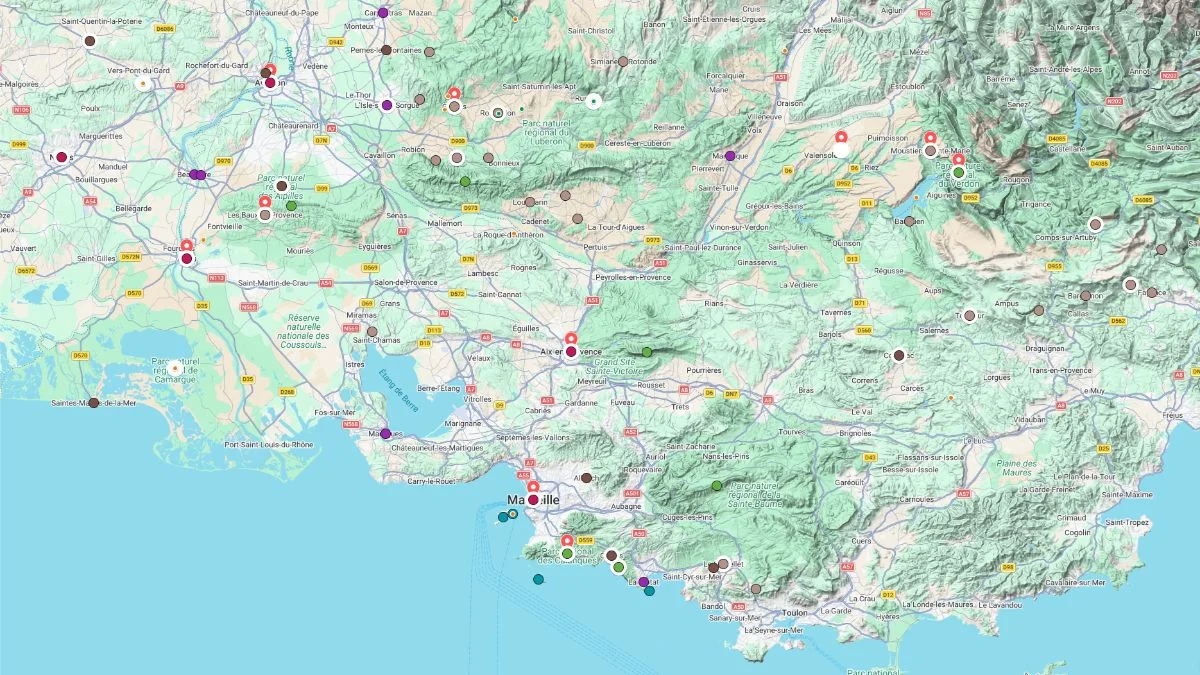
Click on the icon  in the top-right corner to view the map in full screen.
Show/Hide layers as needed.
After clicking on the image,
click on the icon  in the top-left corner to display the map legend.
Show/Hide layers as needed.
CITIES
Overview Table
| Name | Population | Top Picks | Exp. Picks |
|---|---|---|---|
| Marseille | 850 000 | ✅ | ☑️ |
| Aix-en-Provence | 150 000 | ✅ | ☑️ |
| Nîmes | 150 000 | ☑️ | |
| Avignon | 90 000 | ✅ | ☑️ |
| Arles | 50 000 | ✅ | ☑️ |
Marseille

In Our Top Picks ✅
Population 850 000
Founded around 600 BC by Greek sailors from Phocaea, Marseille, then called Massalia, quickly became a city shaped by the sea and by trade. Its port soon turned into the symbol of that maritime and commercial identity, open to the whole Mediterranean.
In the 2nd century BC, the Romans stepped into the region at the request of the people of Marseille, to protect them from raids by Celto Ligurian groups. They then founded Aquae Sextiae, present day Aix en Provence, which marked the beginning of a lasting Roman presence. But during the civil war between Caesar and Pompey, Marseille sided with Pompey. After his defeat, the city was forced to submit to Rome, which absorbed it into Transalpine Gaul, then into Gallia Narbonensis under Emperor Augustus.
At the beginning of the 5th century, the monk John Cassian founded two monastic communities, including Saint Victor, which played a major spiritual role. In spite of the unrest of the early Middle Ages, with invasions and periods of insecurity, Marseille experienced a revival around the year 1000 thanks to the influence of this abbey. The port became active again, taking part in Mediterranean trade and also in the Crusades.
The city still kept its reputation for being independent and unruly. In the 13th century, popular revolts even led religious authorities to place Marseille under interdict, and during a second uprising they went as far as excommunicating its population. The viscounts of Marseille held on for a long time to a high degree of autonomy from the counts of Provence. It was only in the middle of the 15th century, that the city’s strategic importance as a naval base was fully recognized.
When Provence was attached to the Kingdom of France in 1481, Aix was chosen as the regional capital. Marseille then remained on the edge of provincial power and saw itself above all as a Mediterranean city, more focused on the sea than on the inland areas.
Even today, that maritime and cosmopolitan identity still deeply shapes the city. The Old Port, Marseille’s historic and symbolic heart, remains a lively place to walk around, where a small fish market is held every morning.
Not far from there, the Panier district, a real village in the middle of the city, shows the mix of people that has defined Marseille for centuries. Its narrow streets, squares, and historic buildings reflect a rich urban heritage, despite the destruction it suffered during WW2.
The city also shows strong cultural energy. Modern institutions like the Mucem, with its openwork concrete architecture overlooking the harbor, symbolize Marseille’s ability to renew itself while still highlighting its Mediterranean heritage. Facing it, the reconstruction of Cosquer Cave, the famous prehistoric site discovered off the Calanques, reminds you that human history in the region goes back thousands of years.
Aix-en-Provence

In Our Top Picks ✅
Population 150 000
Aix en Provence, the elegant historic capital of Provence, draws you in with its refined atmosphere and rich heritage. The city goes all the way back to Antiquity, it was founded by the Romans, who set up a thermal town there.
Over the centuries, Aix established itself as a city of culture and power. In the 15th century, the city became an important artistic and intellectual centre, the court attracted many artists and helped spread the city’s influence across Provence.
Even today, the old town reflects that prestigious history. As you walk through it, you find a maze of old streets lined with magnificent mansions, among them some fine examples of aristocratic architecture from the 17th and 18th centuries.
Today, Aix en Provence is an elegant city centre where old streets, bright squares and countless fountains create the feeling of a calm, cultured and beautifully maintained place. You wander between honey coloured façades, narrow passageways, hidden courtyards and broad tree lined avenues, in an atmosphere that feels more refined than dramatic.
The Cours Mirabeau is one of the city’s main landmarks. This broad promenade shaded by plane trees connects very different parts of Aix. On one side lies the tightly packed old town, while on the other are more orderly districts marked by grand historic houses built for wealthy families. As you walk along, it quickly becomes clear why Aix embodies a vision of urban Provence, bright, elegant and prosperous, far removed from stone villages or lively fishing ports.
You can also follow the footsteps of Cézanne, who was born here and remained deeply attached to the surrounding landscapes. His studio still contains objects associated with his work, pots, bottles, a ladder and the props he used for his still life paintings. Visiting it offers a more personal and tangible insight into the artist than a museum.
Nîmes
In Our Expanded Picks ☑️
Population 150 000
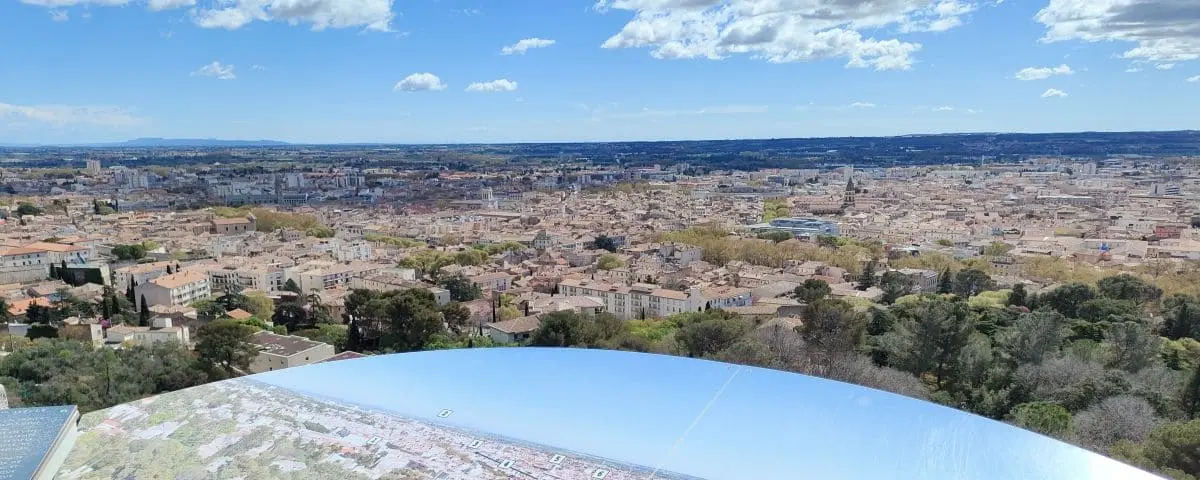
Set right on the western edge of Provence, Nîmes is one of those French cities where the Roman past really hits you. It used to be a wealthy Roman colony, and it has kept an exceptional group of monuments that show just how important it was in Roman Gaul. Even today, the city fully embraces that historical heritage, while still feeling lively and pleasant to walk around.
The city’s most iconic monument is the Arenas of Nîmes, one of the best preserved Roman amphitheaters in the world. Built at the end of the 1st century, they could hold thousands of spectators who came to watch gladiator fights and public shows. Their elliptical shape and beautifully preserved seating still give you a very clear sense of how grand Roman entertainment used to be. The building is still at the heart of the city’s cultural life, with shows and events taking place there on a regular basis.
But Nîmes is more than antiquity. Its history was also shaped by tensions between Catholics and Protestants, followed by the growth of the textile and silk industries. Several grand houses still bear witness to the prosperity of families whose fortunes were built on manufacturing, trade and banking.
The city also has a distinctly Mediterranean character. Around the major monuments, pedestrian areas, gardens and redesigned squares make it particularly pleasant to explore.
Avignon
In Our Top Picks ✅
Population 90 000
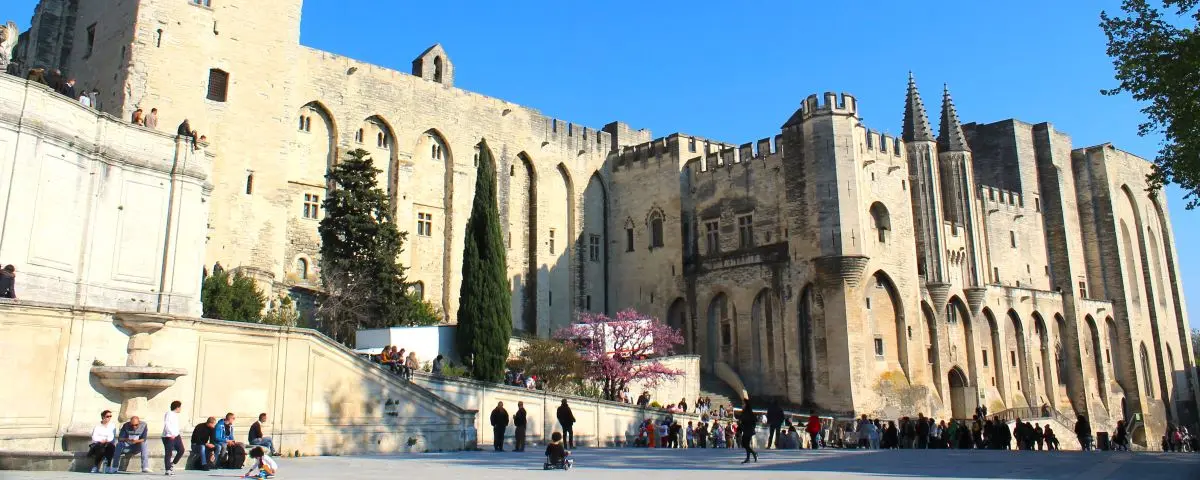
The city is world famous because of its papal past. Between 1309 and 1376, seven popes followed one another in Avignon after leaving Rome, which was then shaken by major political and religious unrest. The arrival of the papal court completely transformed the city, and Avignon became one of the main religious and political centres of medieval Europe. It was during this period that work began on the first papal palace, with construction starting in 1335 under the third pope.
That time was Avignon’s golden age. Around the papal court, you would have found cardinals, diplomats, artists, and merchants. The city grew richer and richer, with many buildings, palaces, and grand townhouses going up, all reflecting the power and prestige of the Church at the time. On the opposite bank of the Rhône, in Villeneuve lès Avignon, wealthy cardinals also settled in large residences known as cardinal palaces, another clear sign of the influence of the papal court.
Even today, Avignon still carries the mark of that exceptional past. Its historic centre, enclosed by ramparts, overlooks the Rhône and is organised around the famous Palace of the Popes.
The city is also known for its lively cultural atmosphere, especially during the famous theatre festival in July, which attracts thousands of visitors and artists every year.
Arles
In Our Top Picks ✅
Population 50 000
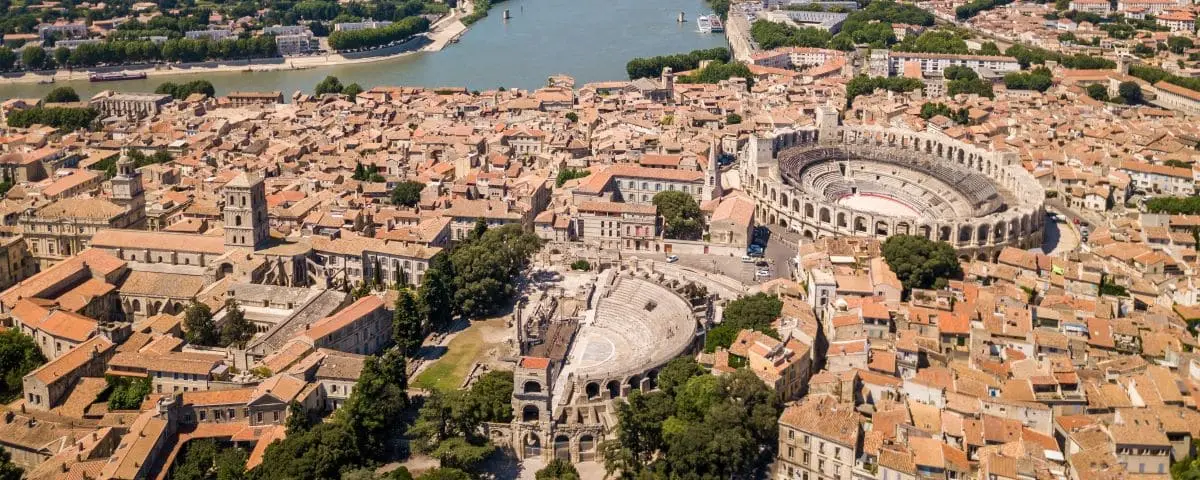
Set right at the gateway to the Camargue and along the Rhône river, Arles is a city deeply shaped by its history and by that very special Provençal light. Beaten by the mistral wind, warmed by the sun, and weathered by the centuries, it still has a remarkably beautiful old center where pale stone and terracotta rooftops stand out everywhere.
Arles goes all the way back to Antiquity, when the city, then known as Arelate, supported Julius Caesar during the civil war against Pompey. As a reward, it was granted a vast territory and privileged access to the sea, and the city quickly became one of the great Roman ones in the region. Emperors such as Augustus and Constantine helped it grow, and the remains you can still see today, especially the arena and the forum, are clear signs of that ancient prosperity. Its strategic position meant it could control access to the Rhône Valley and serve as a key hub for trade and movement.
Arles was also an important religious center very early in Christian history. According to tradition, the city was evangelized as early as the 3rd century by Saint Trophimus. The city even became the seat of the Primate of Gaul and hosted several church councils, which encouraged the building of many churches and gave rise to a rich religious heritage.
Even today, Arles still charms you with its unique atmosphere and with the harmony between its ancient monuments, its medieval heritage, and its old neighborhoods. Walking through the city means moving from one history filled place to another, from the arena to the town hall, past 17th century mansions and the cloister of Saint Trophime. Together, they create a city with a very distinctive character, where the past is everywhere and where you really enjoy getting lost in the streets.
TOWNS
Overview Table
| Name | Top Picks | Exp. Picks |
|---|---|---|
| Beaucaire | ||
| Tarascon | ||
| Orange | ☑️ | |
| Vaison-la-Romaine | ☑️ | |
| Carpentras | ||
| Isle-sur-la-Sorgue | ☑️ | |
| Martigues | ||
| La Ciotat | ||
| Manosque |
Beaucaire
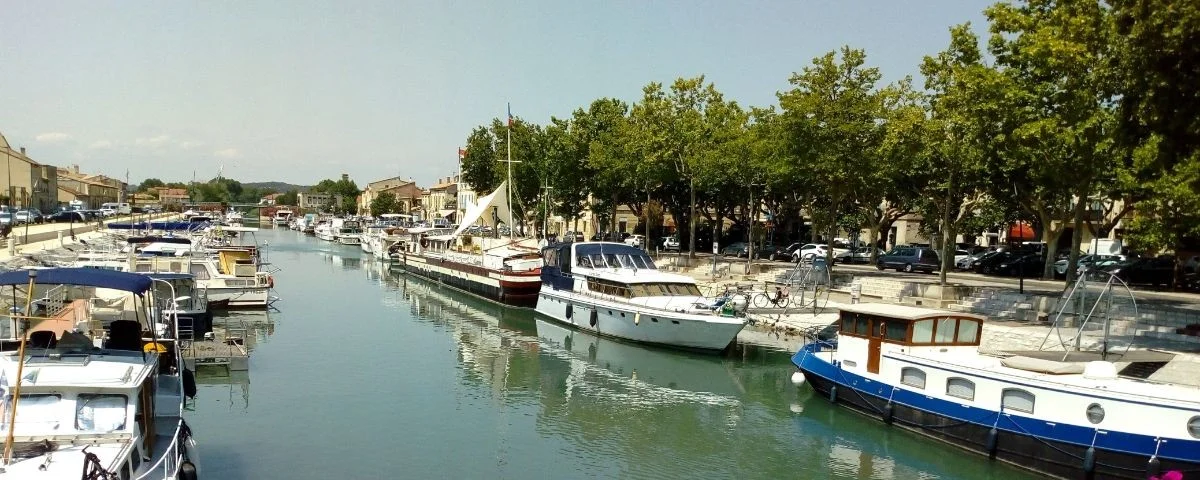
Set on the banks of the Rhône, opposite Tarascon, Beaucaire has long held a strategic position. This historic town, shaped by trade and Mediterranean influences, grew around a major river port and a rich architectural heritage.
The old center still has a very strong medieval feel. Its narrow, winding streets show how the town was originally laid out, while several grand townhouses reflect Beaucaire’s former prosperity. Some of these buildings had their golden age when the town was a busy trading hub on the Rhône. You can discover this urban heritage as you wander through picturesque lanes and lively squares lined with beautifully decorated historic buildings.
The town’s commercial history is closely tied to the river. For a long time, Beaucaire was an important trading center, making the most of navigation on the Rhône to connect northern Europe with Mediterranean regions. This trading activity helped enrich the town and shape its urban landscape, which still bears the marks of that prosperity today.
Tarascon
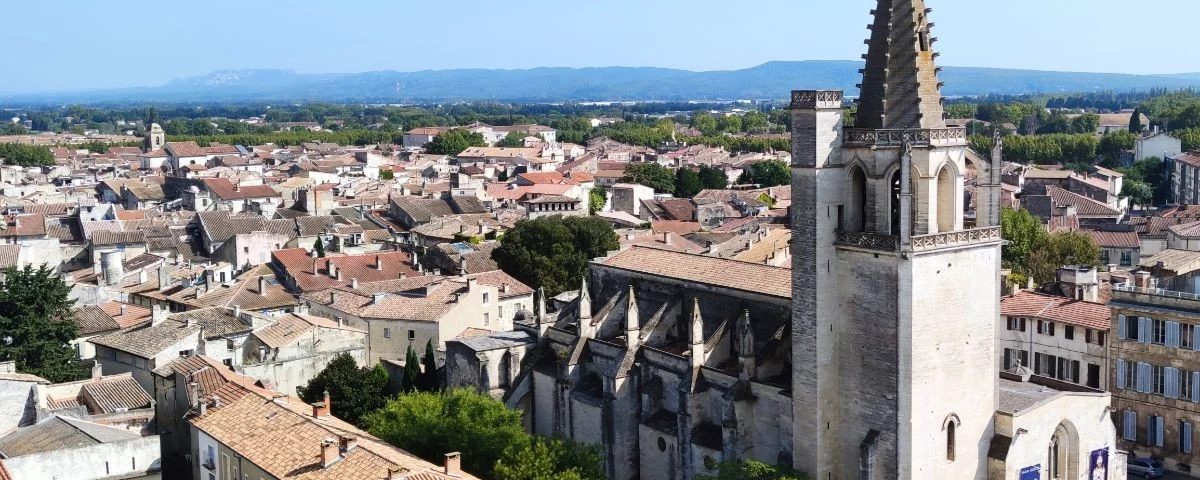
Situated right by the Rhône River and at the gateway to the Alpilles mountains, Tarascon is a Provençal town marked by a rich historical heritage and by traditions that are deeply rooted in the local culture. It is especially associated with the famous legend of the Tarasque, a mythical monster that, according to tradition, Saint Martha defeated. Even today, this story is at the heart of the town’s identity and inspires large popular celebrations.
The most emblematic monument in Tarascon is without a doubt its imposing castle. Built between 1400 and 1435. The building blends Gothic and Renaissance styles and impresses you with its façades pierced with mullioned windows, and its noble residential spaces.
Orange
In Our Expanded Picks ☑️
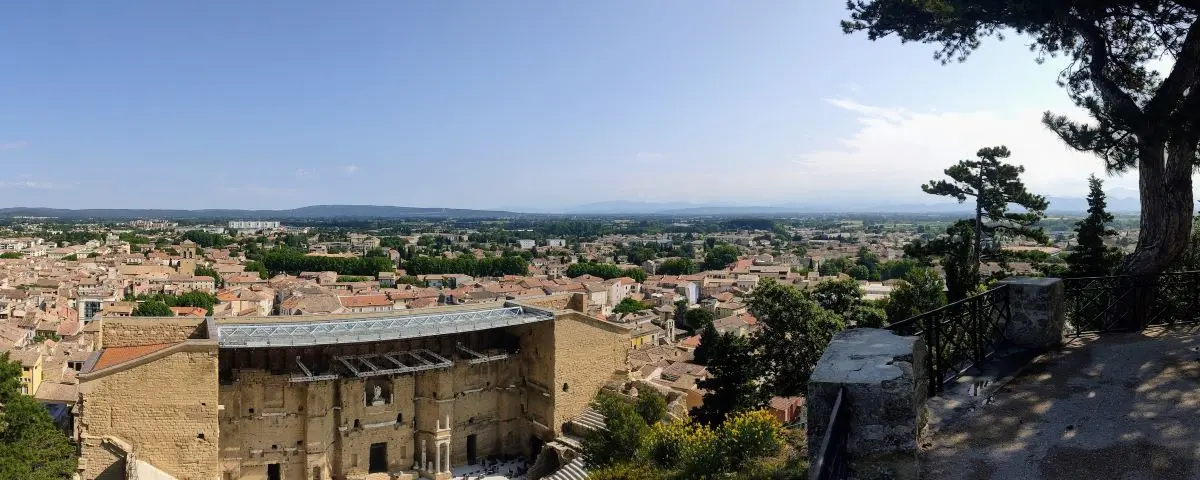
Orange is a Provençal town shaped by an exceptional Roman heritage. For a long time, people saw it as a slightly sleepy town, but it has gradually come back to life thanks to the renovation of its houses and the creation of pedestrian areas that have brought new energy to its old center. Today, Orange draws you in just as much for its historic atmosphere as for its famous cultural events.
Orange is best known first of all for its ancient Roman theatre, one of the most impressive Roman monuments in Provence. What makes this theatre especially remarkable is that it has kept its stage wall, something unique among the ancient theatres known today.
Orange is also well known for its cultural events. Every summer, the famous Chorégies take place there, an opera and music festival held in the ancient theatre, whose exceptional acoustics create a unique experience. Other musical and festive events also fill the summer season, such as concerts, jazz evenings, or wine tastings accompanied by music.
Vaison-la-Romaine
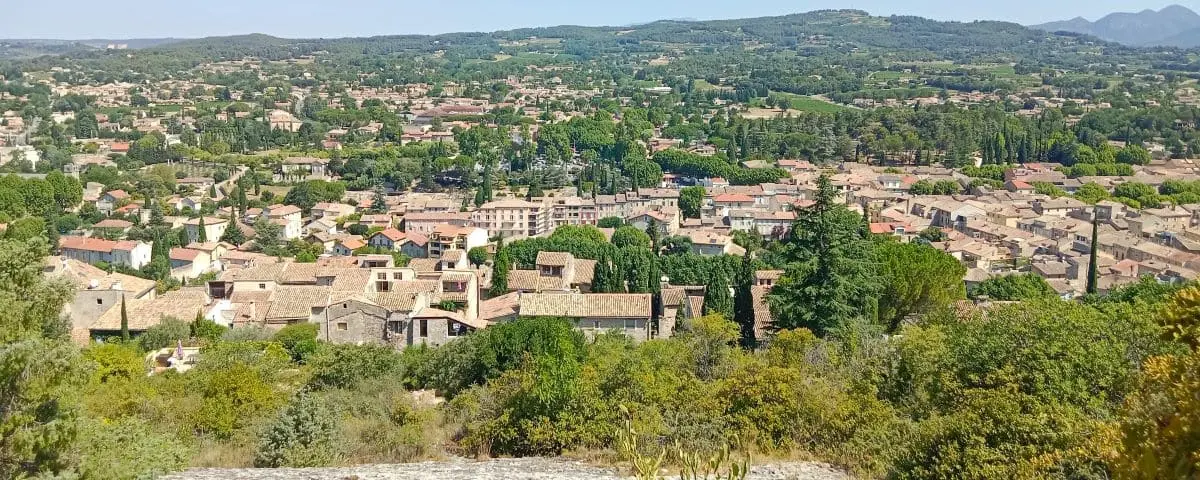
In Our Expanded Picks ☑️
Situated at the foot of Mont Ventoux and crossed by a river, Vaison-la-Romaine is one of the most remarkable archaeological sites in Provence. The town stands out for the exceptional richness of its ancient and medieval heritage, which shows a continuous history from the Gallo Roman period through the Middle Ages.
The origin of the name reflects the importance of the Roman city that prospered here as early as Antiquity. The first archaeological excavations, started in 1907, uncovered a particularly large and well preserved urban area. Today you can discover a complete panorama of Roman architecture, mainly from the 1st and 2nd centuries, including baths, patrician villas, commercial districts and an ancient theatre. The scale of these remains shows just how prosperous Vaison was during the Roman period.
The religious heritage also shows how historically important the town was. In the 5th and 6th centuries, Vaison hosted important church councils in the history of the Church. In the 12th century, the Counts of Toulouse took control of the city and started building a castle that still dominates the town from the left bank of the Ouvèze. That castle marks the development of the hilltop medieval village, with its narrow streets, old houses and defensive walls.
Carpentras
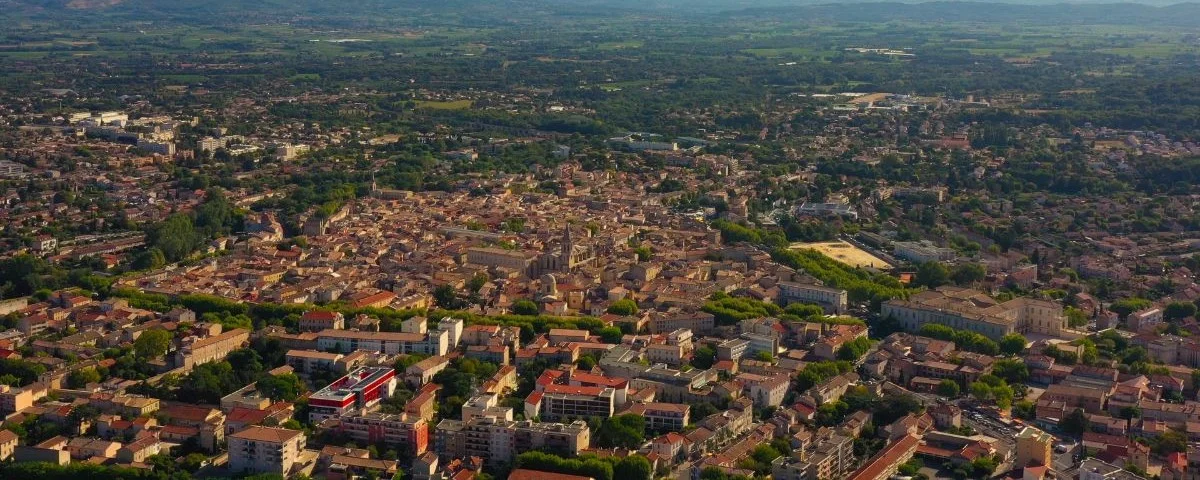
Carpentras feels like a town of inland Provence, set in a broad cultivated plain with the silhouette of Mont Ventoux rising in the background. The surrounding landscape alternates between isolated farms, fields and canals, giving your arrival a slightly rural atmosphere.
As you enter the town, what stands out most is its old centre, which was protected by walls for centuries. Carpentras is best explored for its Provençal atmosphere, its historic streets and its local rhythm, where a lively town centre meets open landscapes stretching toward Mont Ventoux.
Isle-sur-la-Sorgue
In Our Expanded Picks ☑️
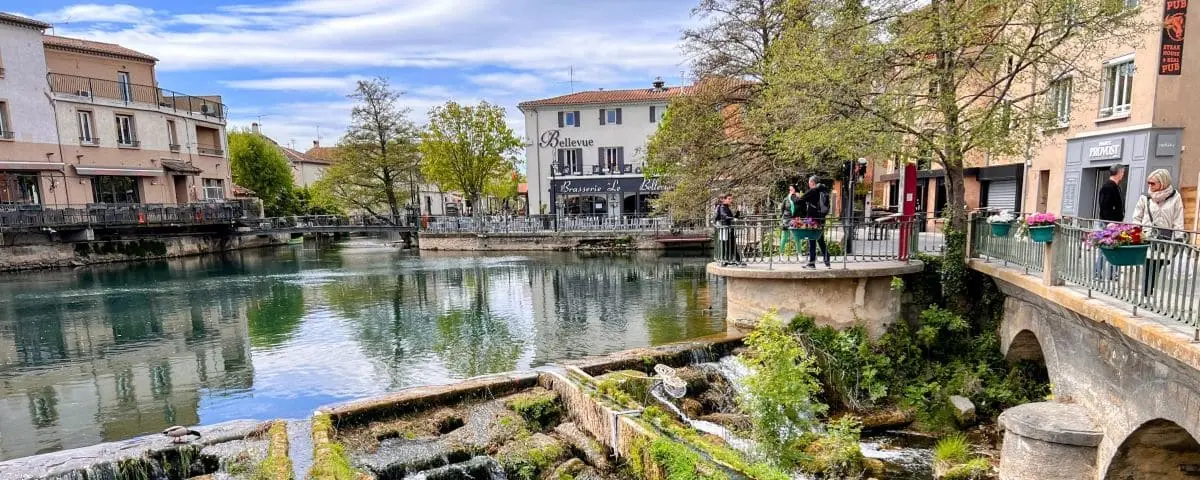
L’Isle sur la Sorgue owes much of its charm to the water that flows through the town in several branches. The atmosphere feels fresh and bright, with riverside walks, shimmering reflections, old houses and narrow passages where the river is always present without overwhelming the setting.
The waterwheels give the town centre a very distinctive character. They are reminders of a time when the power of the river drove workshops and local industries. Today, whether still or turning, they remain one of the town’s defining features and make it instantly recognisable.
L’Isle sur la Sorgue is also famous for its antique dealers and flea markets, which have flourished here since the late 1970s. Even if you are not looking to buy anything, you can enjoy the atmosphere created by old objects, hidden courtyards, repurposed buildings and a certain appreciation for things that have acquired the patina of age.
Martigues
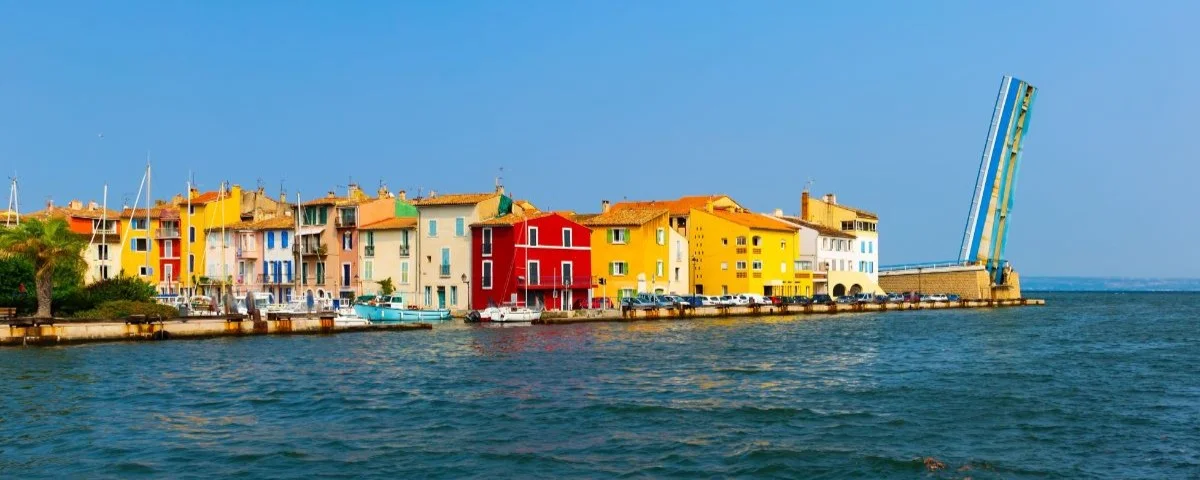
Set between a lake and the Mediterranean, Martigues has a unique charm that often earns it the nickname “the Provençal Venice.” The town is crossed by canals and laid out around several neighbourhoods linked by bridges, with fishing boats moored along quays lined with colourful houses.
The most picturesque part is on the Île, a real little urban island connected to the rest of the town by three bridges. A canal runs through it and creates one of the most photographed spots in Martigues, the Miroir aux Oiseaux, a basin lined with colourful façades whose reflections in the water inspired many painters. The atmosphere there is typically Mediterranean, with boats packed tightly together, lively quays, and quiet little streets that make you want to wander around.
La Ciotat
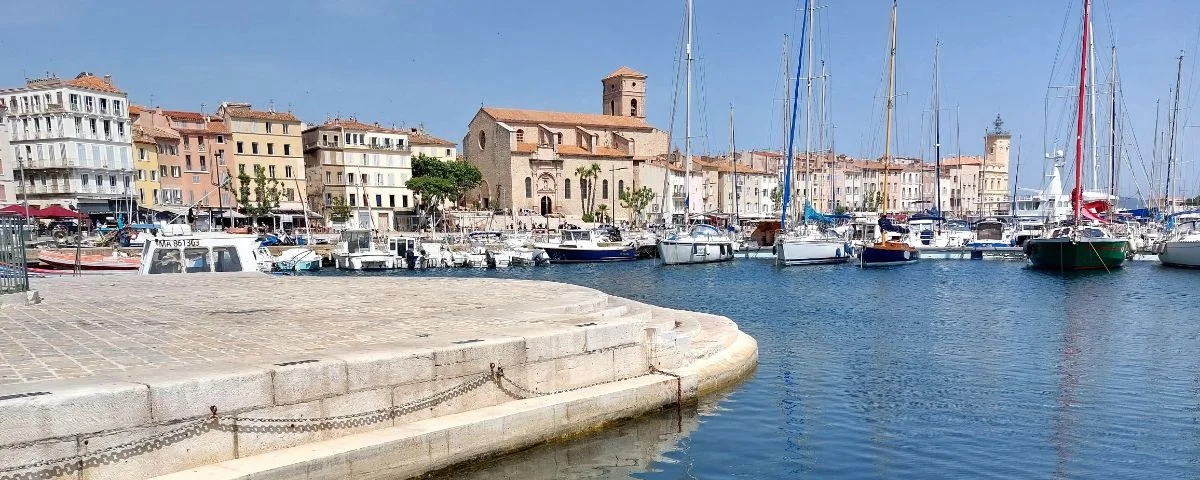
La Ciotat reveals itself as a seaside town with a strong maritime character. You’ll find quays, boats, old façades and an atmosphere that feels more authentic and everyday than glamorous. This is not just a holiday backdrop, the town still carries the memory of its long connection with the sea and its historic shipyards.
The old centre is compact and lively, sometimes simple in appearance, with narrow streets and a direct Mediterranean feel. It’s the kind of place you wander through to absorb the atmosphere rather than to tick off attractions. The bright light, pale walls, glimpses of the water and the constant activity around the harbour give the town plenty of character.
The coastal landscape adds another dimension to La Ciotat. The sea is always close, but the rocky terrain creates a setting that feels wilder and more dramatic. Between the town, the harbour and the mineral horizon beyond, you discover a place that is less polished and more distinctive than a typical seaside town.
Manosque
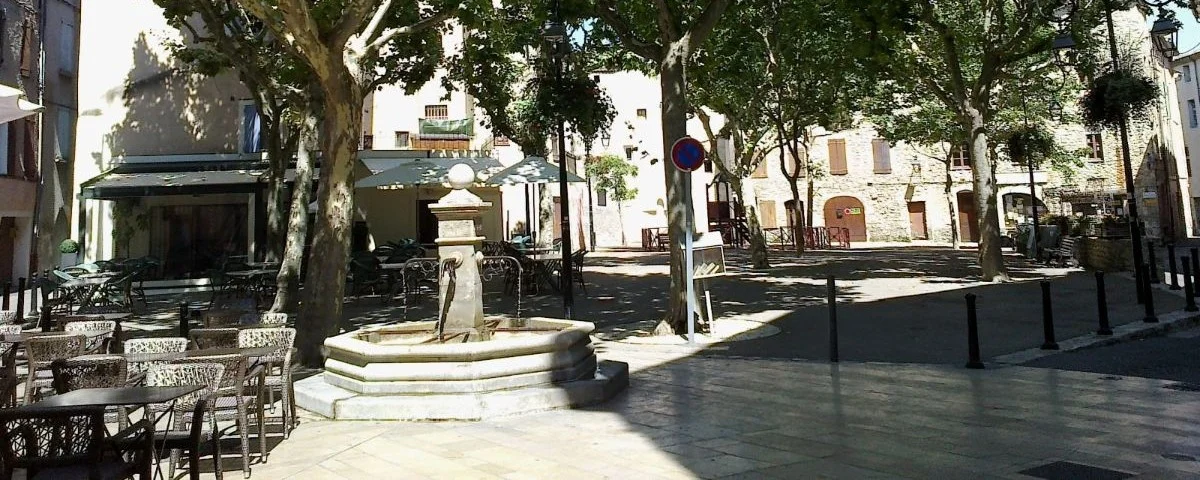
Manosque is best discovered through its old town, surrounded by sreets that follow the line of the former defensive walls. Once inside, you enter a compact maze of narrow streets, partially covered passageways and small squares, all with a distinctly Provençal atmosphere.
The town’s appeal lies mainly in this dense historic centre. You wander between simple façades, shady corners, stairways, doorsteps and subtle architectural details, without any need for grand monuments or dramatic sights. Its charm comes instead from the maze of streets, the play of light on the walls and the relaxed pace of everyday life.
Manosque also has the feel of an inland town, less polished than places shaped by the sea, but more discreet and intimate. Beyond the town, the landscapes become drier and more open, with a side of Provence that already feels wilder and more mineral.
SMALL TOWNS (Village Feel)
Overview Table
| Name | Top Picks | Exp. Picks |
|---|---|---|
| Uzès | ☑️ | |
| Stes-Maries-de-la-Mer | ||
| St-Rémy-de-Provence | ☑️ | |
| Villeneuve-lès-Avignon | ||
| Pernes-les-Fontaines | ||
| Allauch | ||
| Cassis | ☑️ | |
| Cadière-d'Azur | ||
| Cotignac | ☑️ |
Uzès
In Our Expanded Picks ☑️
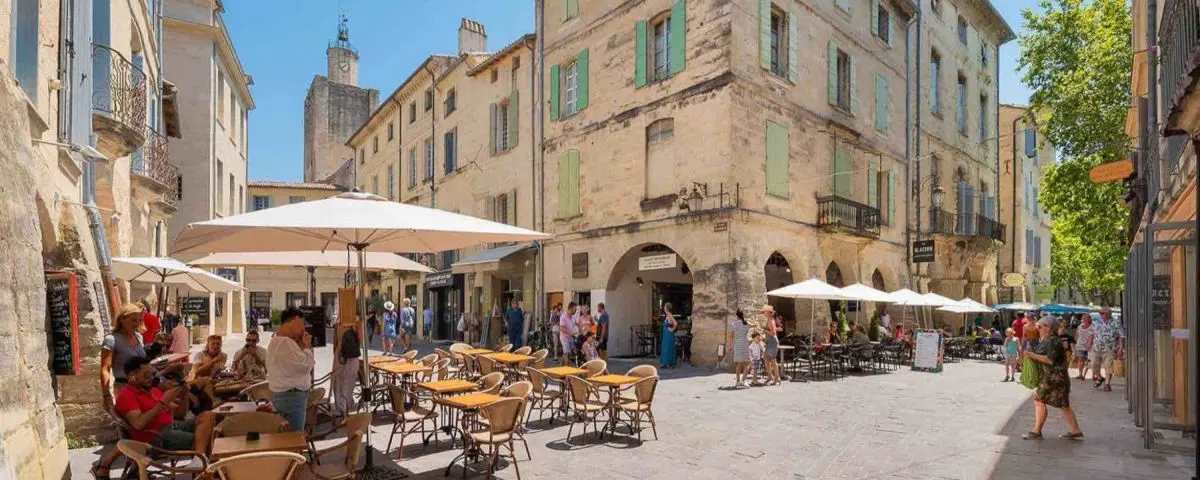
Uzès is one of the most elegant and best preserved towns in the south of France. With its remarkably well preserved historic center, its shaded squares, and its grand townhouses, it perfectly captures the atmosphere of southern towns where history blends with the Provençal art of living.
The heart of the town is organized around a maze of cobbled streets lined with old houses, Renaissance façades, and small artisan shops. When you wander through Uzès, you’re basically walking through several centuries of history, the architectural heritage there is incredibly rich. The town has a remarkable collection of medieval and classical buildings, reminders of its past prosperity.
Local life centers around its main square, the lively heart of the town. Surrounded by arcades and old houses, the square regularly hosts one of the most famous markets in the south, where local produce, the smell of spices, and regional specialties all mix together. The atmosphere feels typically southern, especially on market days when locals and visitors gather in the shade of the plane trees.
Beyond its monuments, Uzès also charms you with its peaceful atmosphere and its authentic character. Café terraces, grand townhouses turned into art galleries, small flower filled streets, and old fountains create a setting that invites you to wander.
Saintes-Maries-de-la-Mer
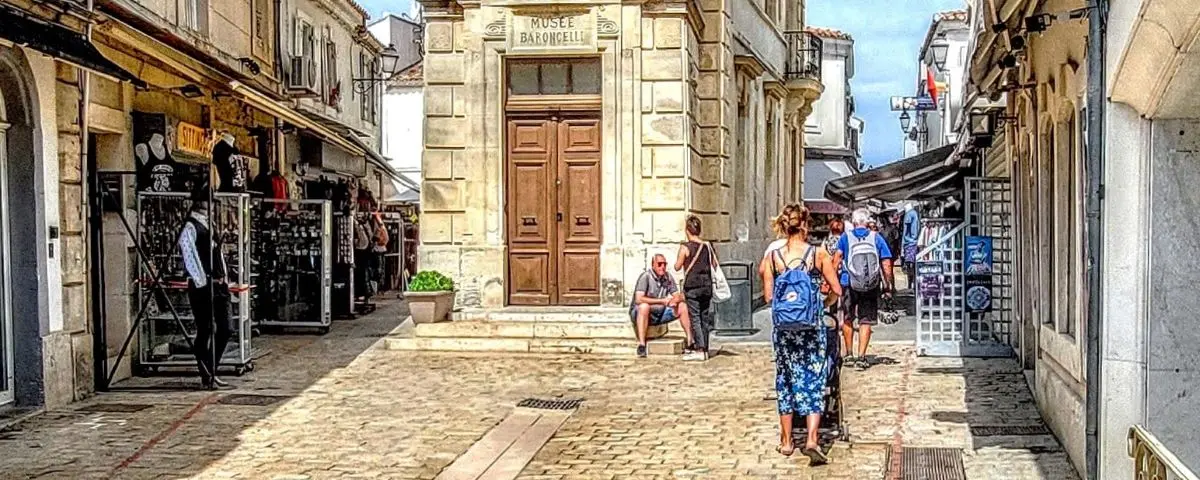
Located in the Camargue, Saintes Maries de la Mer is surrounded by wild landscapes where marshes, lagoons and pastures stretch out, and where Camargue bulls and horses roam. The small town is both a place of tradition, spirituality and lively local celebrations.
The main monument is the church of Notre Dame de la Mer. Its appearance reminds you of a fortress. Inside, the atmosphere is dark and Romanesque, with stones of different colors that give the building a severe and ancient character.
The village is also famous for its pilgrimage, one of the most important in the region. Since the nineteenth century, people have gathered here for a powerful moment of devotion and identity. The celebration moves toward the sea in a dense, emotional procession, with music, crowds, and a festive atmosphere.
Throughout the year, the Saintes Maries de la Mer live to the rhythm of Camargue traditions, local festivals, abrivados in the streets, Camargue bull games in the arena, and events linked to horses or local customs. All these celebrations show a culture that is deeply rooted in the region, where gardians, horses and bulls hold a central place.
Saint-Rémy-de-Provence
In Our Expanded Picks ☑️
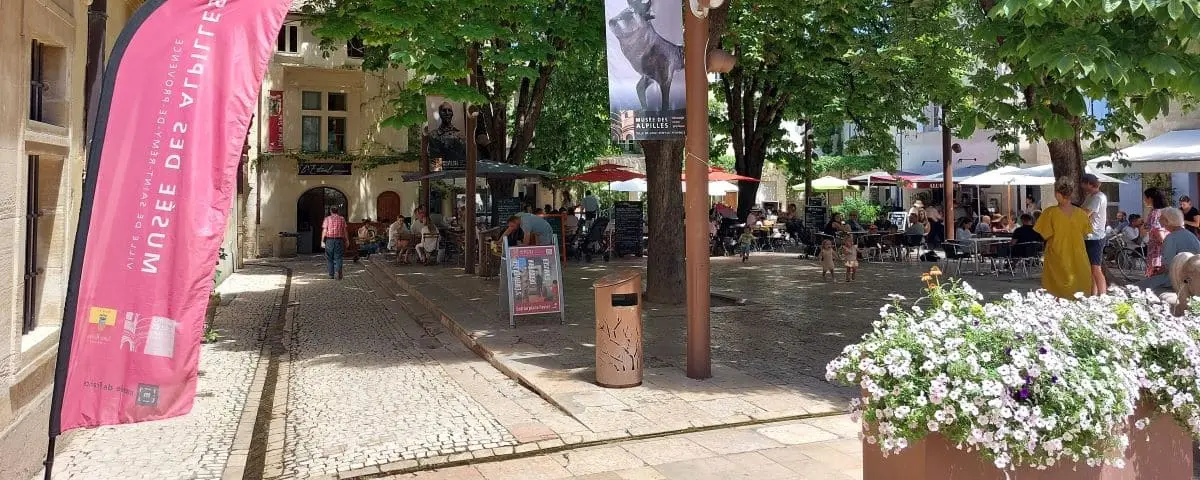
Right in the heart of the Alpilles mountains, Saint Rémy de Provence is one of the most iconic towns in the region. When you walk around here, you really feel the mix of history, Provençal culture, and those bright landscapes the area is famous for. The town sits in a beautiful natural setting surrounded by the limestone hills of the Alpilles.
Saint Rémy de Provence has almost the perfect image of a Provençal town. Its pedestrianised old centre is made up of winding narrow streets, pale façades and a broad tree lined boulevard that follows the line of the former walls around the heart of the town. The whole place feels elegant, bright and wonderfully pleasant to explore.
Here, you’ll find a refined side of Provence. The centre retains a real sense of density, with narrow passageways, lively squares, bustling terraces and a strong artistic atmosphere. The town attracts plenty of visitors, especially in the height of summer, but it quickly regains its charm when you venture away from the busiest streets.
Just outside the town, you’ll find the archaeological site of Glanum, which was discovered in the early 20th century. The city was originally founded in the 4th century BC around a sacred spring by a Celto Ligurian population. Later, it was influenced by Greek culture before becoming a prosperous Roman town under Emperor Augustus. Today, the ruins lie in the beautiful natural setting of the Alpilles and tell the story of this ancient city, which eventually disappeared at the end of the 3rd century.
Villeneuve-lès-Avignon
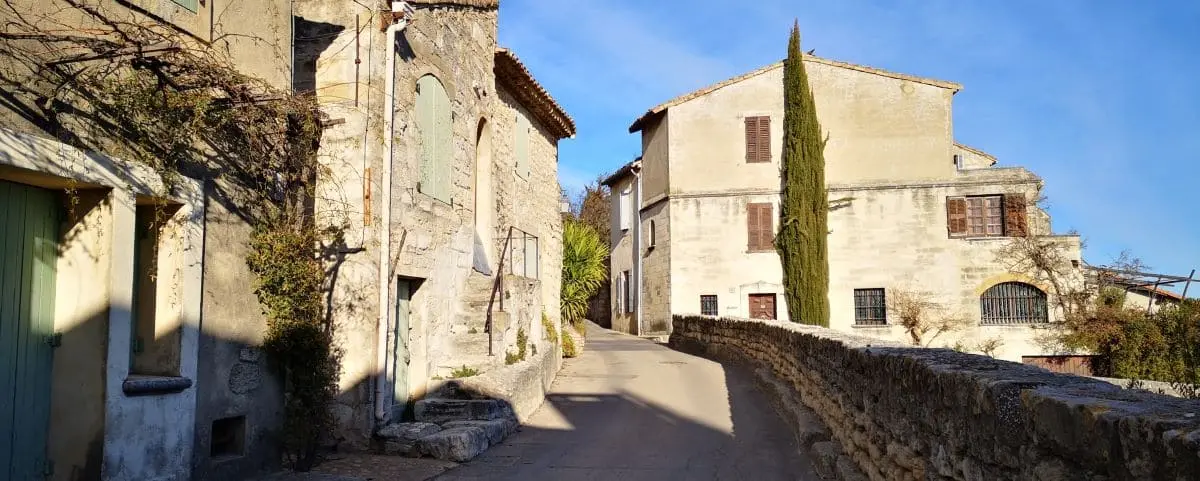
The history of Villeneuve lès Avignon is closely tied to that of Avignon and to the period of the papacy in Provence. Back then, the Rhône river was a real border, on one side Avignon, the land of the popes, on the other Villeneuve, which was part of the kingdom of France. That strategic position had a deep impact on the town’s destiny. Keen to assert royal authority against papal power, the town then became a kind of showcase for French power facing the papal city. It was a prosperous time.
That period was the town’s golden age. Church dignitaries, won over by the calm of the right bank of the Rhône, set up residences and religious institutions there. The famous charterhouse, built around a residence that had belonged to Pope Innocent VI, reflects that architectural and spiritual wealth.
The French Revolution brought an end to that splendor linked to ecclesiastical power. Villeneuve then slipped back into a quieter existence and remained for a long time in Avignon’s shadow. Over time, though, the town managed to preserve its charm and its heritage, and today it has rediscovered a cultural energy and a quality of life that make it so appealing.
Pernes-les-Fontaines
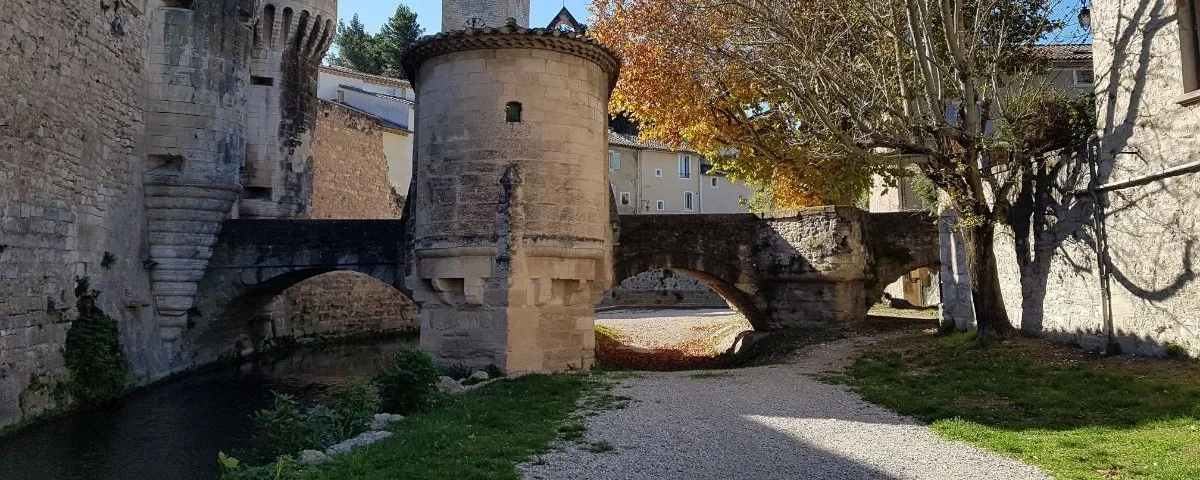
This small town is famous for the forty or so fountains scattered through its streets and squares, so much so that there is even a fountain trail that lets you discover them at an easy pace as you walk around the historic centre.
The town opens up into a maze of little streets where you can hear water murmuring at almost every corner. These many fountains, once essential to everyday life, now give the place its special charm and stay with you all along your walk.
Allauch
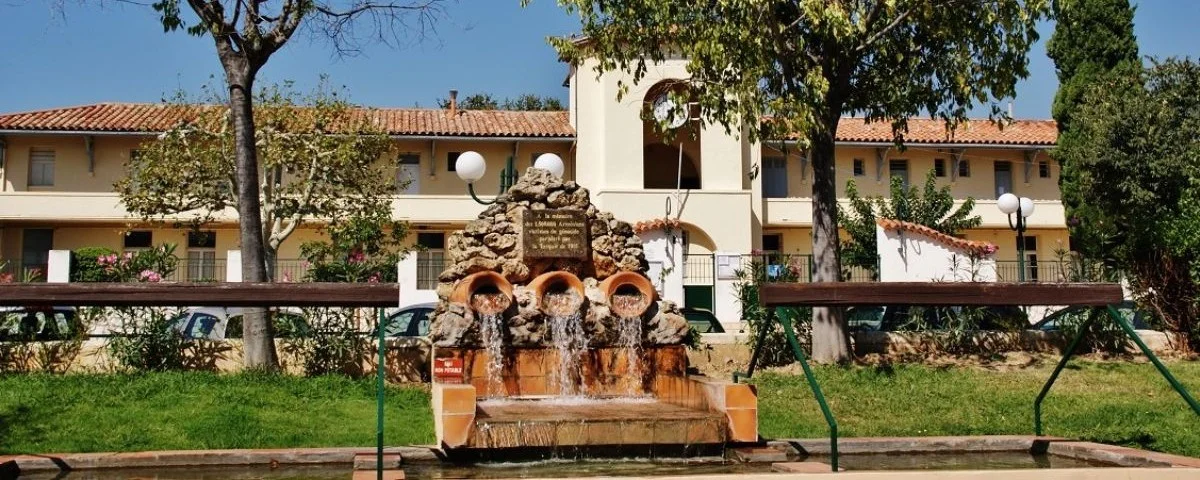
Just a few kilometers from Marseille, Allauch, feels like a real Provençal village that has managed to keep its identity, even though it is right next to the big city. People often describe it as a “village Marseille”, because you still get the soul and charm of a traditional village while looking out over the whole metropolis. After only a few bends in the road, you leave behind the urban sprawl of Marseille and find yourself in a landscape of winding little streets, tightly packed houses, and that typical Provençal nativity scene atmosphere.
As you walk through the narrow streets, you come across the village church, easy to recognize because of its roof covered with multicolored glazed tiles, which is quite rare in Provence. You can then climb to the top of the hill to reach the ruins of the castle and the chapel of Notre Dame du Château, where you get an exceptional view over the whole region.
Cassis
In Our Expanded Picks ☑️
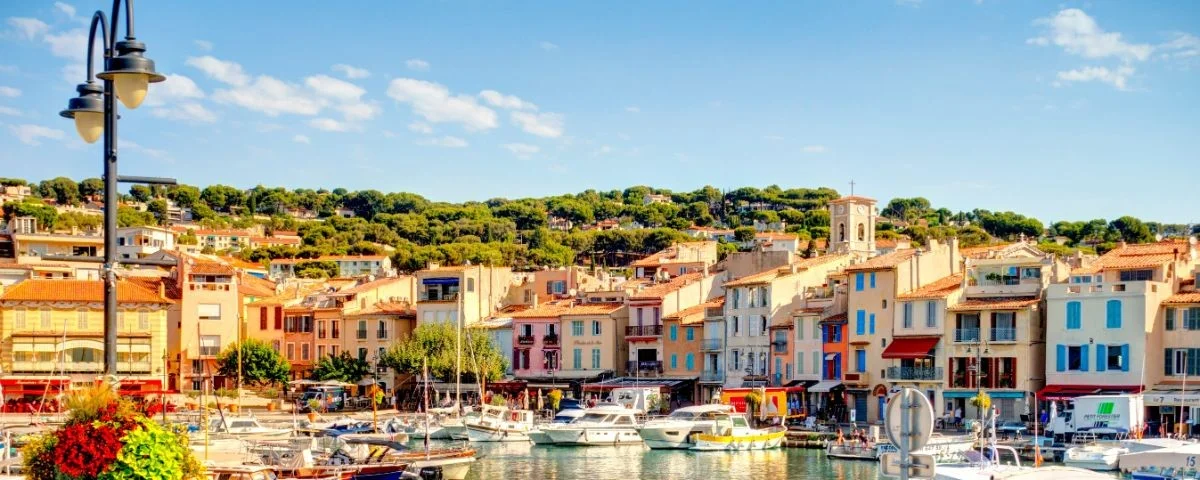
Tucked between the Mediterranean Sea and the tall limestone cliffs of the Calanques massif, Cassis is one of the most iconic places on the Provençal coast. This small fishing port, just east of Marseille, grabs your attention right away with its spectacular natural setting, on one side the turquoise waters of the Mediterranean, on the other the steep relief dominated by Cap Canaille and the wild landscapes of the calanques.
The heart of the village is built around its charming harbor, lined with lively quays, café terraces, and restaurants. This is where you really feel the Mediterranean atmosphere of Cassis, colorful fishing boats, pastel facades, and that relaxed Provençal way of life. The harbor is also the starting point for many excursions to the calanques, those deep rocky inlets that are among the most spectacular landscapes on the Mediterranean coast.
Nature plays a central role in Cassis’ identity. The calanques plunge straight down into the sea and are home to impressive cliffs and particularly rich underwater ecosystems. This rugged coastline is considered one of the birthplaces of modern scuba diving, and it is also where underwater archaeology began to develop, especially through the explorations of Jacques Yves Cousteau and his companions.
Cadière-d'Azur
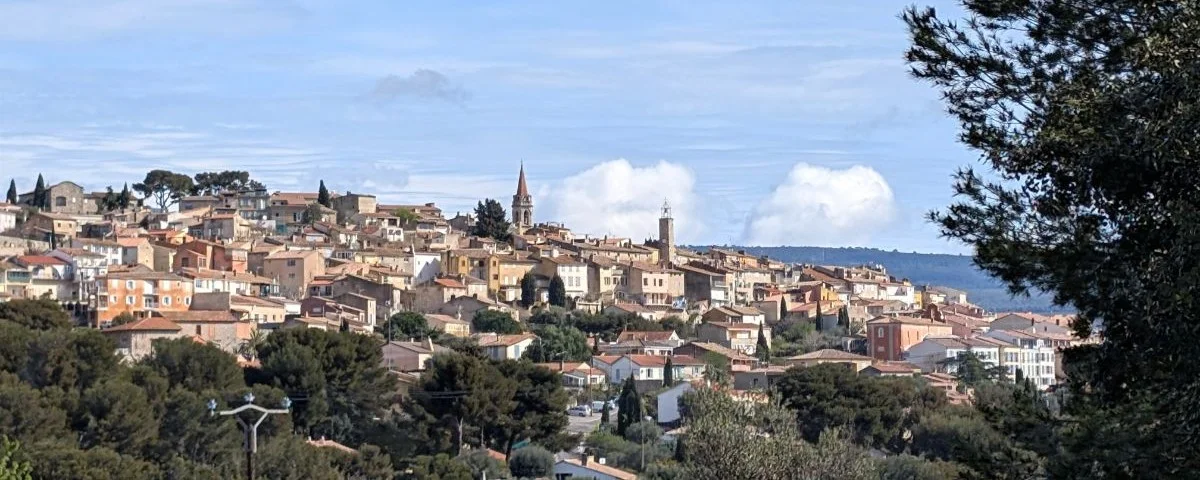
Perched on top of a hill overlooking the vineyards and the Mediterranean, La Cadière d’Azur is one of those Provençal villages that feels like it’s hanging somewhere between the sea and the hills.
The heart of the village has kept a really strong old world feel. The ramparts, leftovers from medieval times, remind you that La Cadière d’Azur was once a strategic lookout point over the coast. Inside, a maze of narrow cobbled streets invites you to wander around. The vaulted passageways, the stone houses with their colourful shutters, and the little shaded squares create a peaceful and authentic atmosphere.
Cotignac
In Our Expanded Picks ☑️
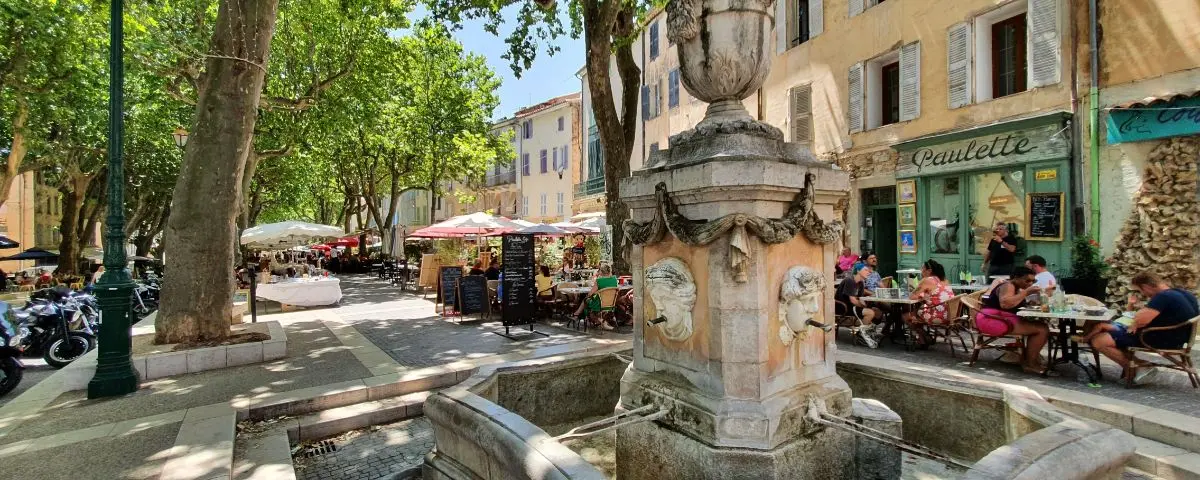
Tucked at the bottom of a valley beneath a dramatic tuff cliff, the town center of Cotignac feels like a dream of a southern village. Surrounded by vineyards, pines, and olive trees, it charms you with its easygoing vibe, shady squares, old fountains, and warm-colored facades. The village stretches along the base of a huge rock dotted with troglodyte caves.
It stayed off the radar for a long time, the road didn’t even reach it until the 19th century, and that helped Cotignac hold onto a rare sense of authenticity.
The heart of the village beats around cours Gambetta, lined with centuries-old plane trees and centered around a fountain. And on Tuesdays, when the market is on, it’s full of life.
Over on Place de la Mairie square, topped by a lovely little bell tower, you’ll see arcaded houses, old facades, and artists’ studios. And if you head down the Grande-Rue, keep an eye out for the 17th-century caryatids, stone statues that once showed off the social status of the families who lived there.