


INTERACTIVE MAP
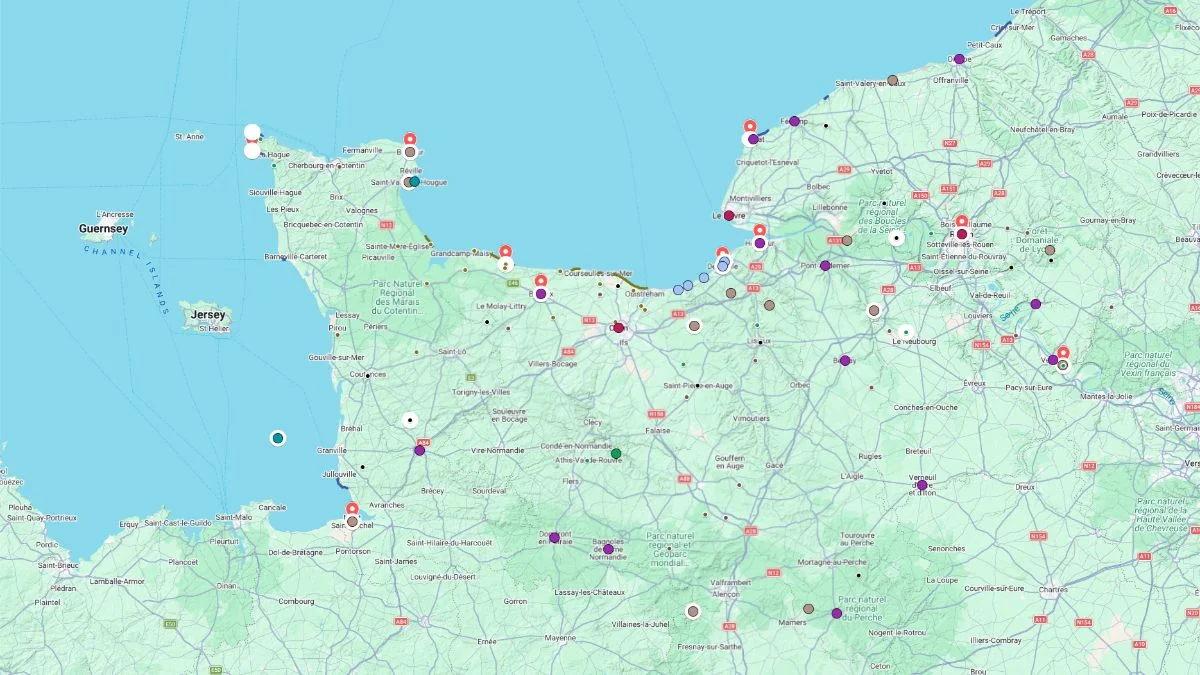
Click on the icon  in the top-right corner to view the map in full screen.
Show/Hide layers as needed.
After clicking on the image,
click on the icon  in the top-left corner to display the map legend.
Show/Hide layers as needed.
CITIES
Overview Table
| Name | Population | Top Picks | Exp. Picks |
|---|---|---|---|
| Rouen | 120 000 | ✅ | ☑️ |
| Le Havre | 170 000 | ||
| Caen | 110 000 |
Rouen
In Our Top Picks ✅
Population 120 000
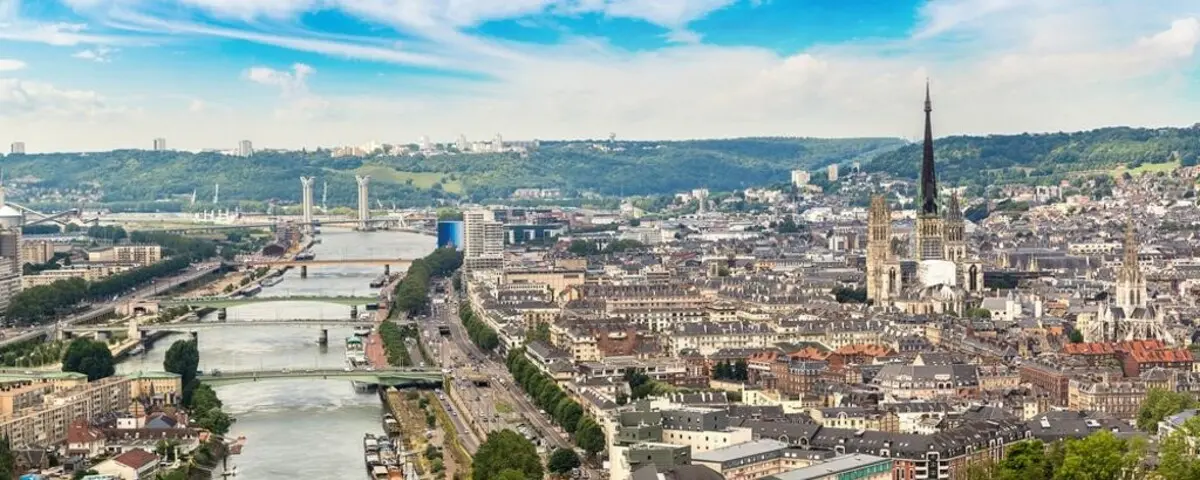
Rouen is a dense city, shaped by stone, timber, the Seine, and a history that’s impossible to miss. In the center, you can go from a lively street to a narrower alley lined with old houses where the wooden framework is still visible. Some facades are elegant, others seem to lean slightly, giving the city an uneven, lively feel that’s almost theatrical.
The huge silhouette of the cathedral dominates the whole area. It’s not just a landmark, it also reflects Rouen’s importance as a major religious, commercial, and artistic center. Around it, several churches, inner courtyards, and richly decorated buildings reveal the wealth accumulated when the port handled salt, fish, wool, and goods brought from far away.
Rouen also carries a darker memory. Joan of Arc was tried and burned there, and the city was hit very hard during WW2. Fires, bombings, and destruction wiped out many old houses, but the center still retains a strong visual continuity.
As you walk around, you see a city that was rebuilt without erasing its past: carved details, blackened stones, tightly packed roofs, pedestrian streets, and views opening up onto the major monuments.
Le Havre
Population 170 000
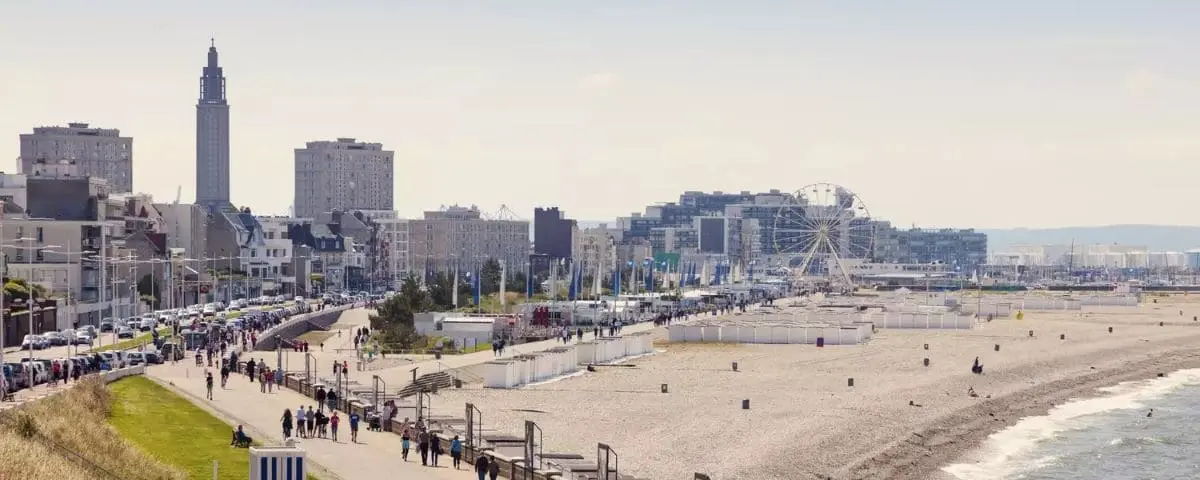
Le Havre doesn’t look like the typical Norman towns with their old stone buildings and medieval streets. About 85% of the city center was destroyed during WW2, then rebuilt over roughly twenty years around concrete, straight lines, and wide open views of the sky.
At first glance, the architecture can seem cold. But as you walk along the broad avenues, you gradually start to understand the logic behind it: there’s space to breathe, the sightlines stretch far ahead, light flows everywhere, and the sea is never far away. The city was designed as a coherent whole, both a place to live, an economic center, and a major modern port.
Le Havre has kept a strong maritime identity. You can feel the presence of the port, the docks, the quays, and the salty air. It’s a city that faces the open sea, shaped by ships, former shipyards, and trade with the rest of the world.
You can also see it as a city of creativity. Concrete isn’t just practical here, it becomes texture, volume, and rhythm. The neighborhoods around the old docks have been redeveloped without completely losing their local character. Farther out, the beach, the green spaces, and the clean, open lines give the city a modern and spacious atmosphere.
Caen
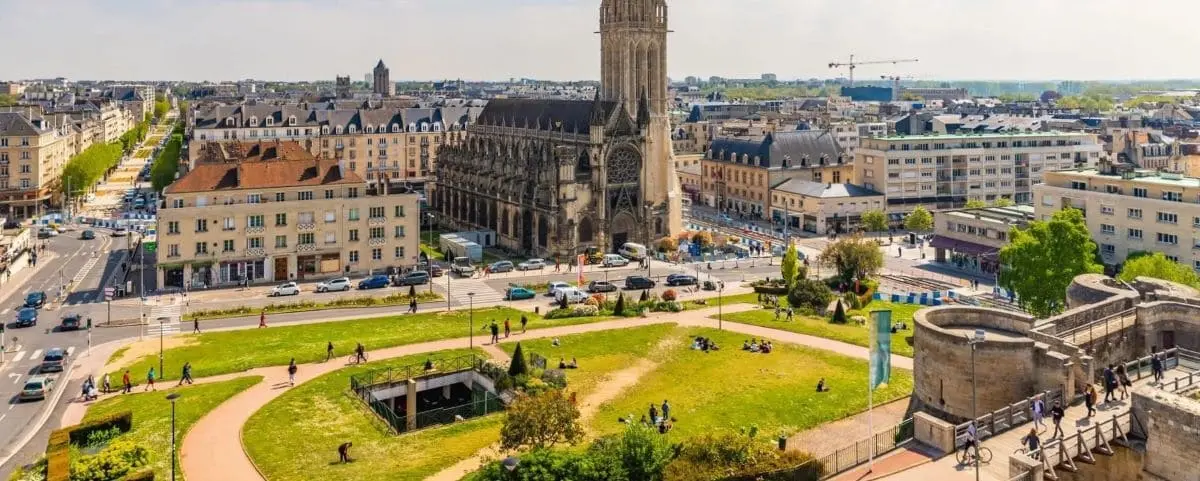
Population 110 000
Caen is a city with two sides to it. It suffered heavily during WW2, but it still preserves strong traces of its older past, especially those linked to William the Conqueror. You’ll find a lively, student friendly city that’s fairly compact, with a center that’s easy to explore on foot.
As you walk around, you can move from surviving old streets to the banks of the inland harbor, which bring a real maritime feel right into the heart of the city. The sea lies about fifteen kilometers away, but you can already sense its presence in the more open atmosphere around the basins and in the long axis leading toward the coast.
The great fortress built in the 11th century for William the Conqueror still overlooks part of the city. Even though its present appearance is fairly restrained, it retains a strong presence: massive walls, ancient gateways, traces of fortifications, and the feeling of a place that remained strategically important for centuries.
Two major religious complexes also reflect Caen’s importance during the Middle Ages: the Abbaye aux Hommes, associated with William the Conqueror, and the Abbaye aux Dames, linked to his wife, Matilda. The first stands out for its harmony, finely cut stone, soaring towers, and its balance between grandeur and simplicity. The second, on the other side of the city center, completes this remarkable medieval legacy and is well worth visiting in its own right.
COASTAL TOWNS
Overview Table
| Name | Top Picks | Exp. Picks |
|---|---|---|
| Dieppe | ||
| Fécamp | ||
| Étretat | ||
| Honfleur | ✅ | ☑️ |
Dieppe
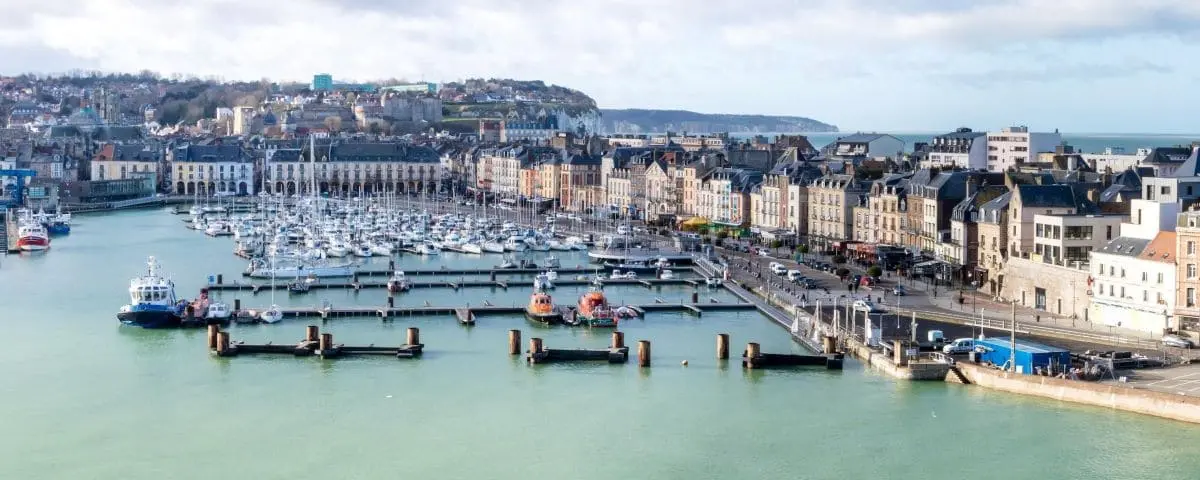
Dieppe is a seaside town set in a natural gap between high white cliffs. You immediately feel the presence of the harbor, the beach, and the pebbles, with that slightly milky light the chalk gives to the water. The town sits between the cliffs, the quays, and a long seafront lined with grassy areas.
Its history is deeply tied to the sea. As early as 1066, William the Conqueror used Dieppe as a base for his connections with the other side of the English Channel. Later, the port became a strategic prize, fought over, burned, recaptured, and eventually protected by a castle overlooking the town.
Dieppe also preserves the memory of great navigators. In the 16th century, it became home to an important school of marine cartography and prospered through trade, shipowners, privateers, and the herring fishing industry.
As you wander through the small town center, you’ll find an old, compact town with two beautiful churches, a castle perched above the town, a long beach, and a very open seafront.
Fécamp

Fécamp is a town facing the sea, set between white cliffs and a port that still feels very present. It has a more working than fashionable atmosphere: quays, sea walls, a pebble beach, the smell of salt air, high chalk cliffs, and an open horizon toward the English Channel.
Its history is strongly tied to fishing. The town still carries the memory of departures for Newfoundland, when boats would leave for months to fish for cod. Herring also plays an important role in this maritime memory, still visible around the port and the old fish related facilities.
Fécamp also has a religious and monumental past. You can see a large old church there, inherited from one of Normandy’s major monastic sites, as well as the Palais Bénédictine, a spectacular building with lavish decoration and an almost theatrical look.
Around the town, paths follow the coast and the higher ground. You quickly move from the port to the cliffs, with views over the sea, the beach, and the tightly packed lines of the town.
Étretat
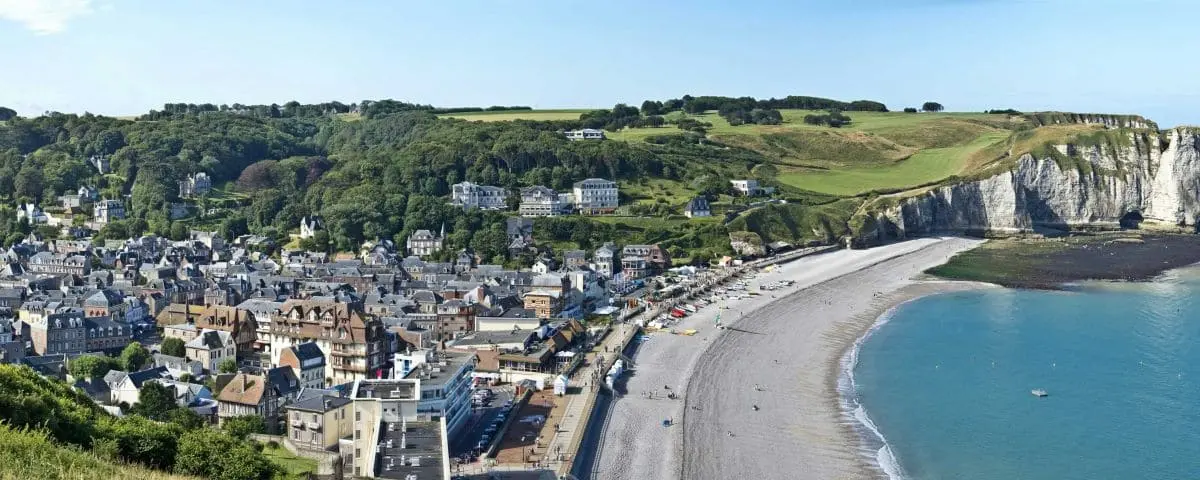
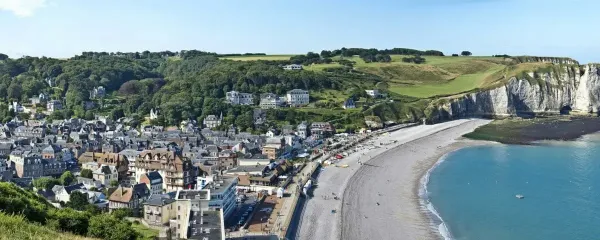
Étretat is best known for its cliffs, but the town itself is worth taking the time to look at. Before becoming a holiday resort, it was a fishing village that gradually turned into a seaside getaway, with a pebble beach squeezed between the great white cliffs.
In the streets, you can still see that history through the villas from the late 19th and early 20th centuries. Some are linked to writers, musicians, or well known figures who came here for the sea air, the landscape, and the fashionable atmosphere of the time.
As you walk around, you move between an elegant seaside town and an old maritime village, with the sea, the pebbles, the villas, and the cliffs all part of the same landscape.
Honfleur
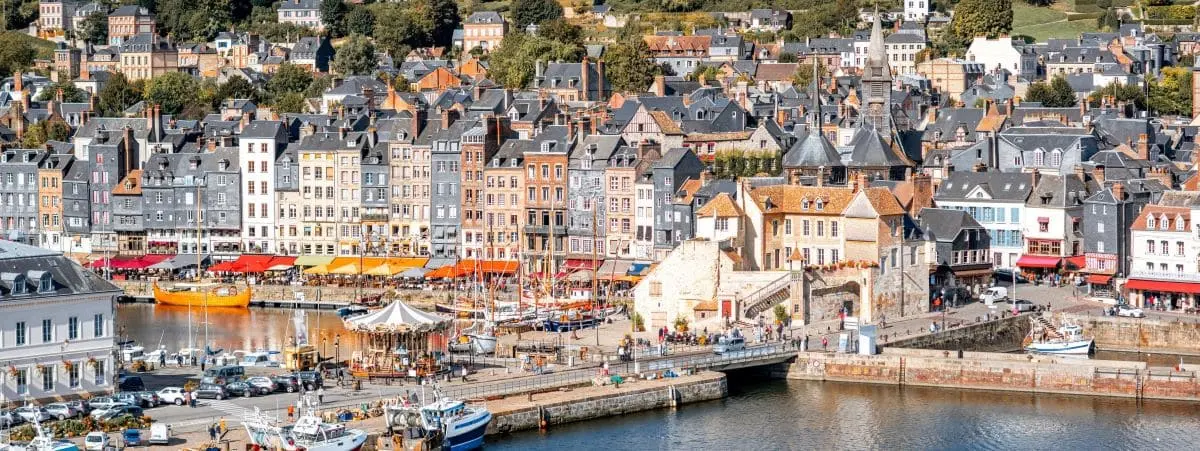
In Our Top Picks ✅
Honfleur is an instantly recognizable harbor town, packed tightly around its inner basins. You see old boats, sturdy fishing vessels, old slate covered houses, and uneven little streets that give the town a very distinctive shape and feel.
The town has long attracted artists. In the 19th century, writers, musicians, and painters came here looking for the shifting light of the Seine estuary, between water, sky, low hills, and nearby countryside.
You also sense a town with two rhythms: more local during the week, busier on weekends and holidays. Despite the crowds, Honfleur keeps a dense, intimate, almost theatrical atmosphere, with its unusual bell tower, quays, tightly packed facades, and constant connection to the sea and the river.
SEASIDE RESORT TOWNS
Overview Table
| Name | Top Picks | Exp. Picks |
|---|---|---|
| Deauville-sur-Mer | ✅ | ☑️ |
| Trouville-sur-Mer | ☑️ | |
| Villers-sur-Mer | ||
| Houlgate | ||
| Cabourg |
Deauville-sur-Mer
In Our Top Picks ✅
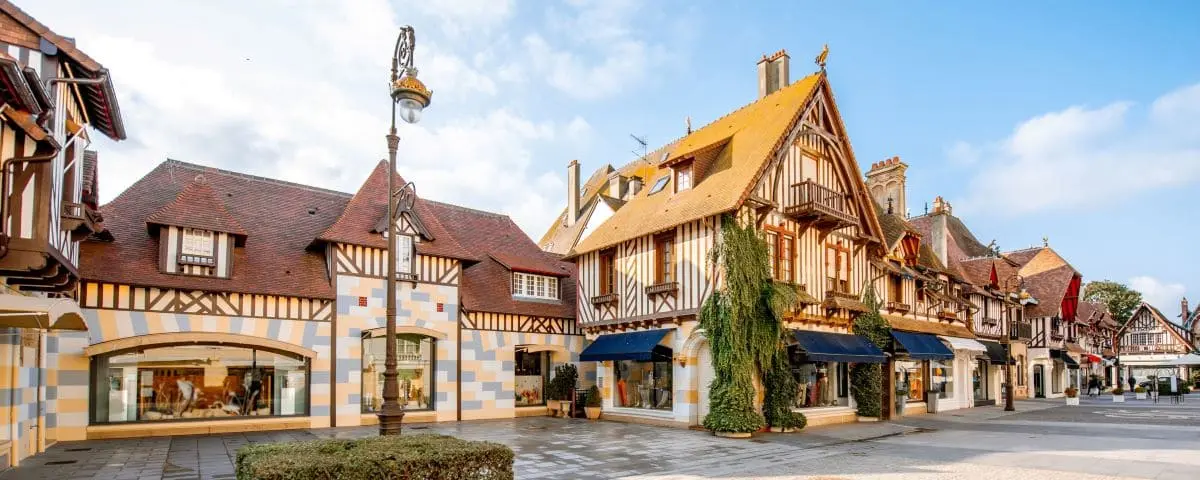
Deauville belongs to the stretch of coast shaped by the 19th century fashion for sea bathing. You’ll find an elegant seaside resort designed for beach stays, with its villas, casino, grand hotels, pale sand, and an atmosphere that feels more chic than wild.
As you walk around, you sense a town built around spectacle: the seafront, sporting events, photography, music, and above all American cinema, celebrated every year in early September. It can get very busy, but Deauville keeps its image as a fashionable resort, open to the beach and major social events.
The town is also closely linked to horses. Racing played a big part in making it famous, with a season that starts in summer and continues into autumn, sometimes even into winter.
Trouville-sur-Mer

In Our Expanded Picks ☑️
Trouville is inseparable from Deauville, just across the water, but its atmosphere is different. You’ll find a simpler, more family friendly town, long shaped by fishing, then transformed in the 19th century by the fashion for sea bathing. Its wide beach of fine sand attracted some of the first holidaymakers well before its neighbor really took off.
The town keeps this mix of old elegance and maritime life. The chalets, villas, casino, and memories of early seaside holidays recall its fashionable past. But the fishing port, still central to its identity, gives Trouville a less polished, livelier character.
Villers-sur-Mer
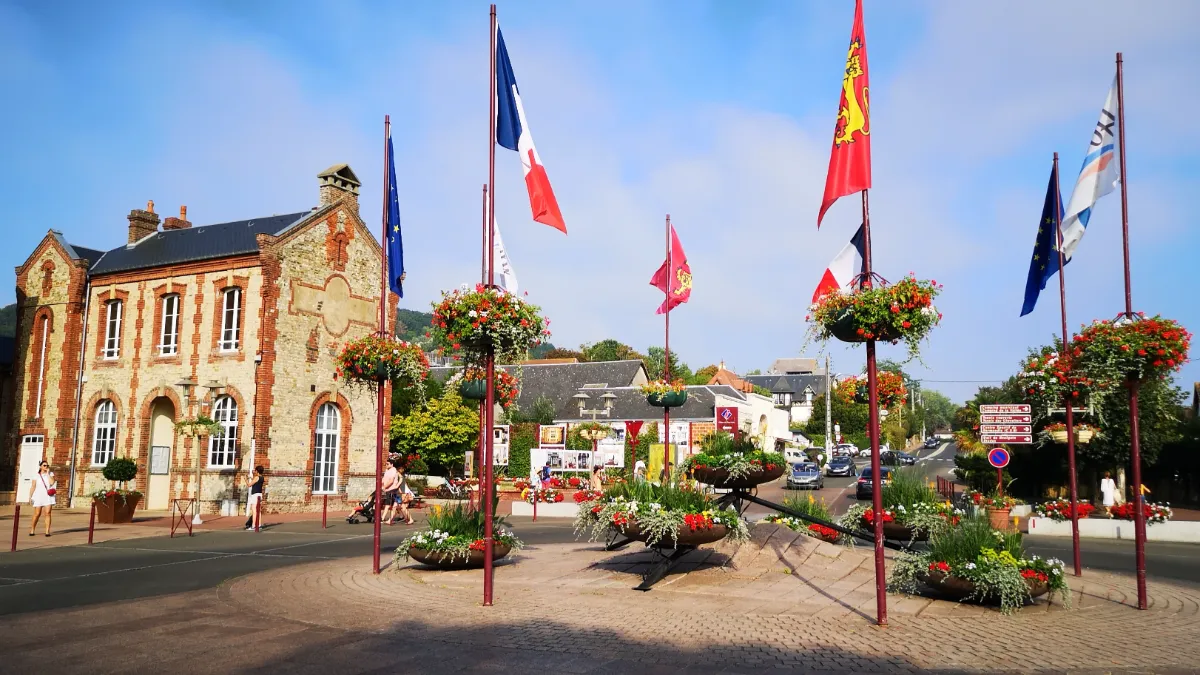
Villers-sur-Mer is a family friendly seaside resort set in front of a long sandy beach. You’ll find a promenade of about 2km, old villas, sloping streets, and a flower filled center.
The town has kept part of its old charm: seaside houses, little uphill streets, stairways, former Art Nouveau public baths, and a market in the heart of town.
The Greenwich meridian also crosses Villers-sur-Mer, marked by a stone marker on the promenade.
Houlgate
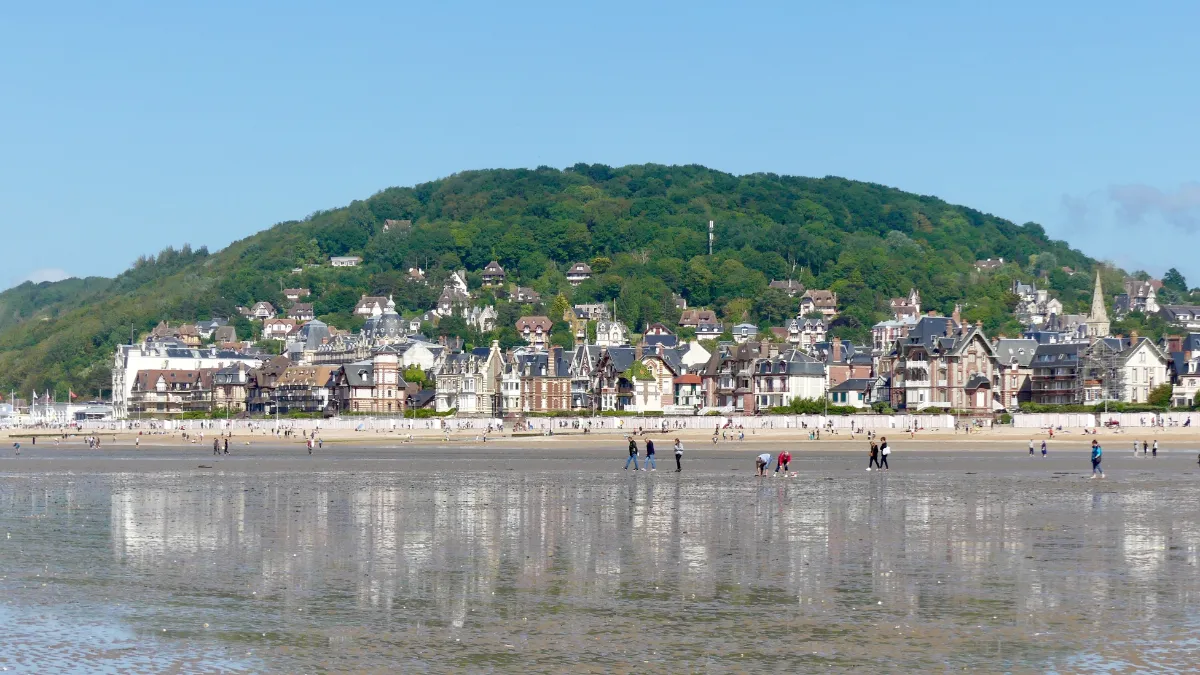
Houlgate is an elegant seaside resort that grew up in the late 19th century along a fine sandy beach. Today, it feels more family friendly, but the setting still carries the memory of a prestigious era, when bankers, judges, artists, and royalty came here for the sea air.
The town is especially known for its old villas, with a wide range of styles: chalets, exposed timber houses, turrets, large fanciful homes, and highly decorated facades.
As you walk around, you can easily move from the beach to the quiet streets, then up toward the heights, where the landscape opens out over the coast.
Cabourg
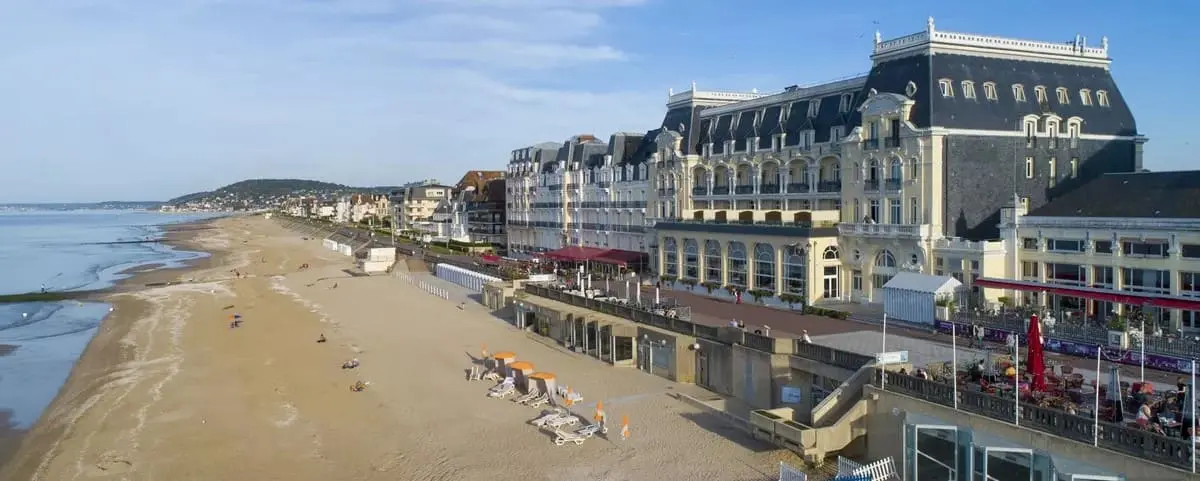
Cabourg is an elegant seaside resort built around a huge sandy beach. It has a gentle atmosphere that feels deeply connected to holidays, with a long seafront promenade, flower filled gardens, and grand old villas that recall the fashion for seaside vacations in the late 19th century.
As you walk near the beach, what stands out most is the calm and carefully maintained atmosphere: historic facades, wide views over the sea, salty air, changing light, and the unhurried pace typical of Normandy’s classic seaside resorts.
INLAND TOWNS
Overview Table
| Name | Top Picks | Exp. Picks |
|---|---|---|
| Vernon | ||
| Les Andelys | ||
| Pont-Audemer | ||
| Bernay | ||
| Bayeux | ✅ | ☑️ |
| Villedieu-les-Poêles | ||
| Domfront | ||
| Bagnoles de l'Orne | ||
| Bellême | ||
| Verneuil d'Avre et d'Iton |
Vernon
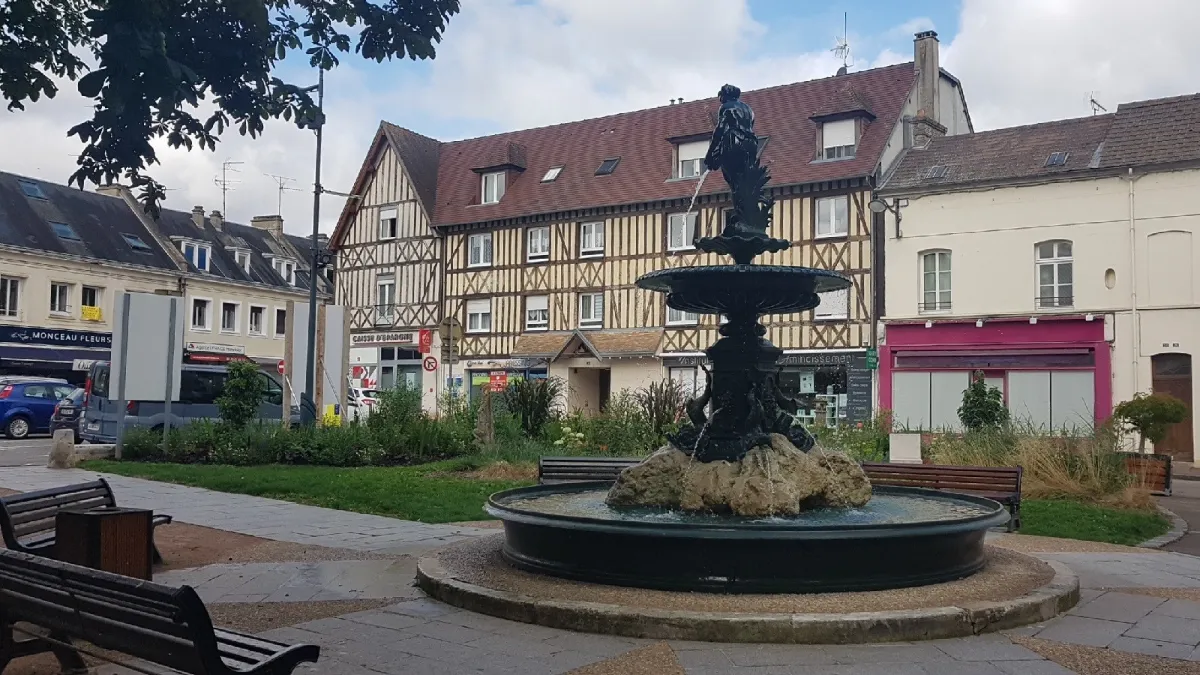
Vernon is a small town on the banks of the Seine, shaped by its long history and by its closeness to Giverny. It was built as early as the 10th century on ancient foundations, then occupied by the English in the 15th century. Although WW2 bombings damaged it, a few traces of old Vernon are still visible.
As you walk through the center, you can see a large historic church, streets that still feel narrow in places, and preserved buildings. Near the river, the Old Mill catches your eye: this house set on the remains of a former bridge seems to balance above the water.
Les Andelys
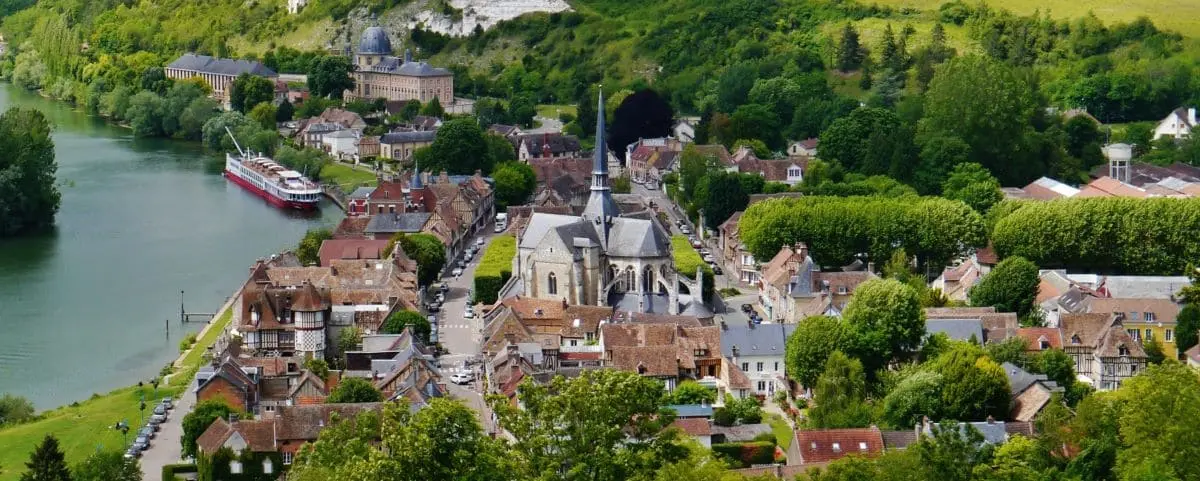
Les Andelys stretches between the Seine, chalk cliffs, and the spectacular ruins of Château Gaillard. The town is actually made up of two parts: one by the river, more charming and overlooked by the fortress, and another slightly inland, more marked by the destruction of WW2.
From the heights, you get one of the most beautiful views in the valley: the Seine forms a wide bend, white cliffs frame the landscape, village rooftops cluster below, and the riverbanks stay very green.
Château Gaillard was built in the late 12th century by Richard the Lionheart, both Duke of Normandy and King of England, to defend this territory against the King of France. Now in ruins, it still has real visual power: thick walls, remains of towers, an inner enclosure, and a dizzying position above the river.
Pont-Audemer
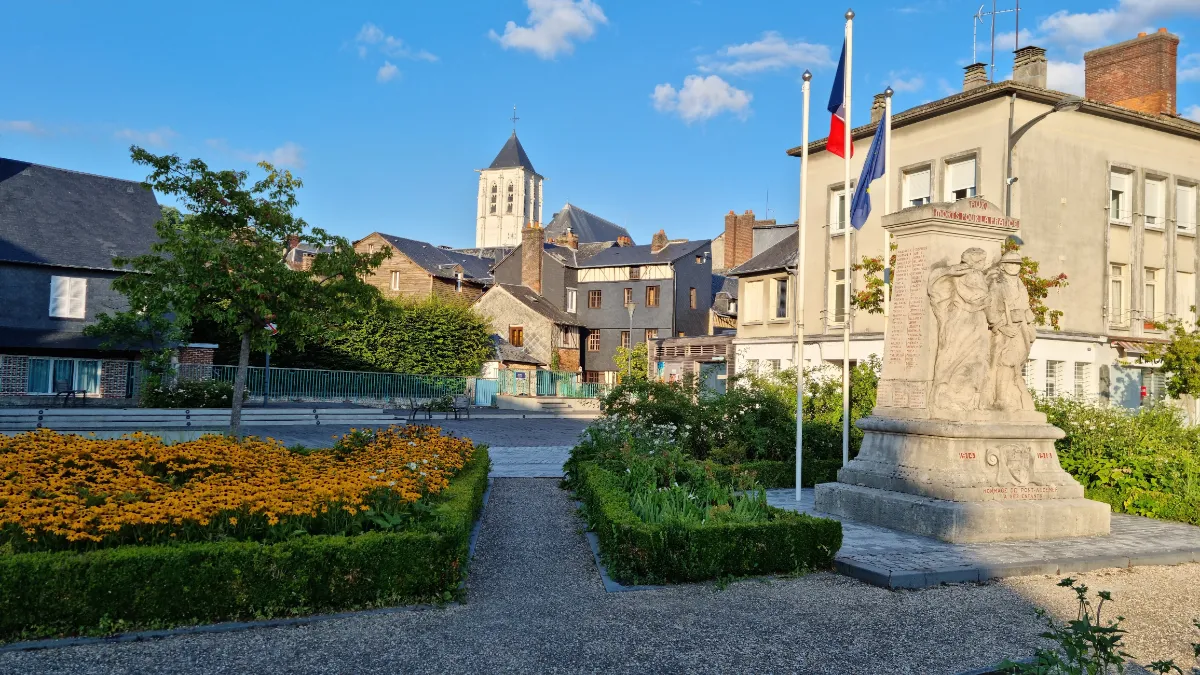
Pont Audemer is a small water town, crossed by canals that give it a gentle, slightly hidden atmosphere. You walk between the branches of the Risle, old bridges, quiet quays, and historic streets where water often appears around the corner of a facade.
The center has kept a real Norman character, with old houses and a large church blending several periods. Inside, the contrast is clear between the oldest sections and the later large stained glass windows.
You can also feel how important the river is to the town: you can explore it on foot, but also by kayak, directly along the canals of Pont Audemer.
Bernay
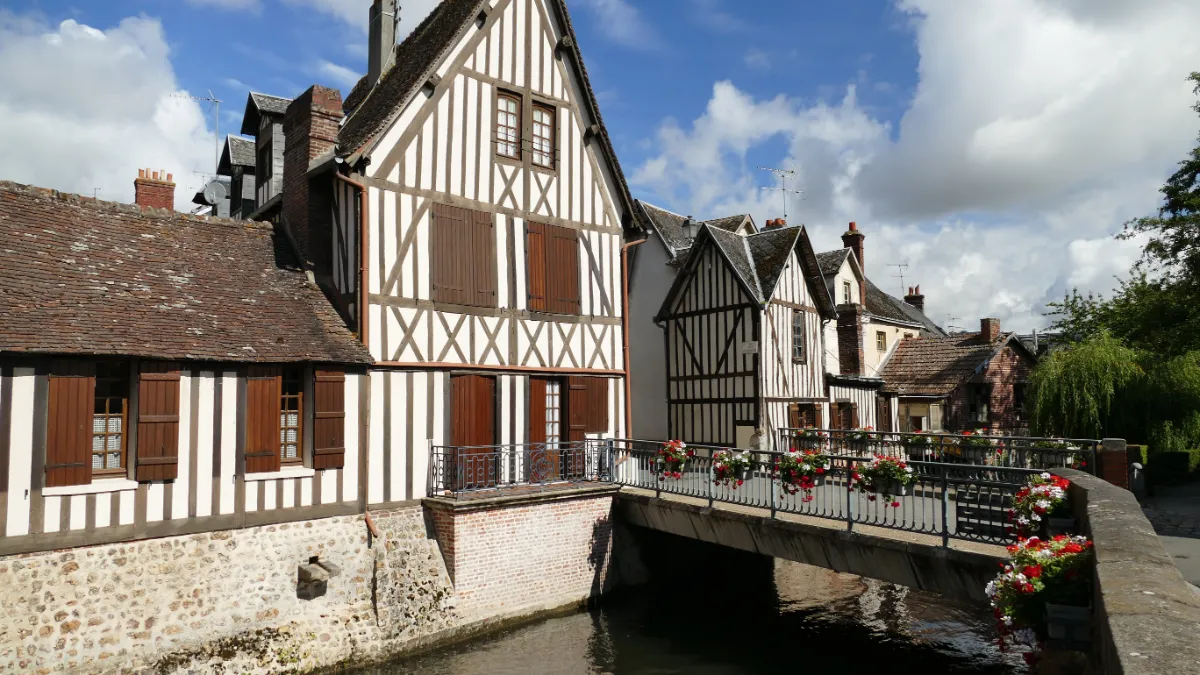
Bernay is a small historic town with quiet charm, pleasant to explore on foot. You’ll find calm streets, exposed timber houses, colorful facades, and a center that still feels like an old Norman town.
The town is also linked to an important former religious complex. Its abbey church recalls the great period of medieval building in Normandy, when abbeys played a major spiritual, economic, and architectural role.
Bayeux
In Our Top Picks ✅
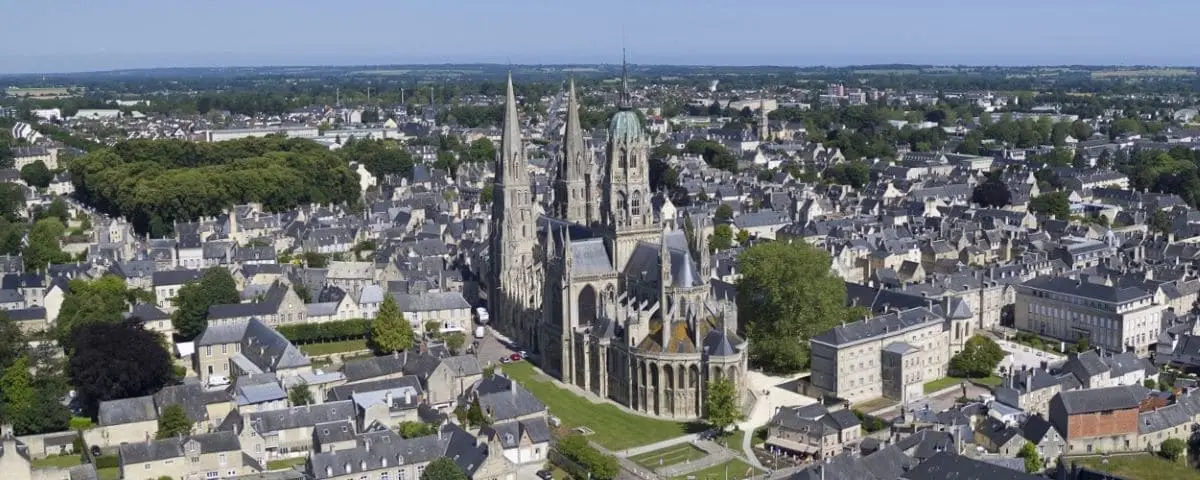
Bayeux is an old town that’s very pleasant to explore on foot. Since it was largely spared from WW2 bombing, you still move between exposed timber houses and grand classical mansions, with quiet streets and a center that has kept a lot of character. The little Aure River runs through the town, with a paved walk that feels almost rural in places.
Bayeux also has a great 11th century cathedral, linked to Odo, William’s half brother. As soon as you step inside, you feel the scale of the building: a very long nave, a sculpted facade, ancient arches, fantastic animal motifs, and decorative details shaped by several influences.
The town is best known for its monumental 70 meter embroidery, listed in UNESCO’s Memory of the World Register. It tells the story of William the Conqueror’s conquest of England, with the visual power of an ancient comic strip.
Villedieu-les-Poêles
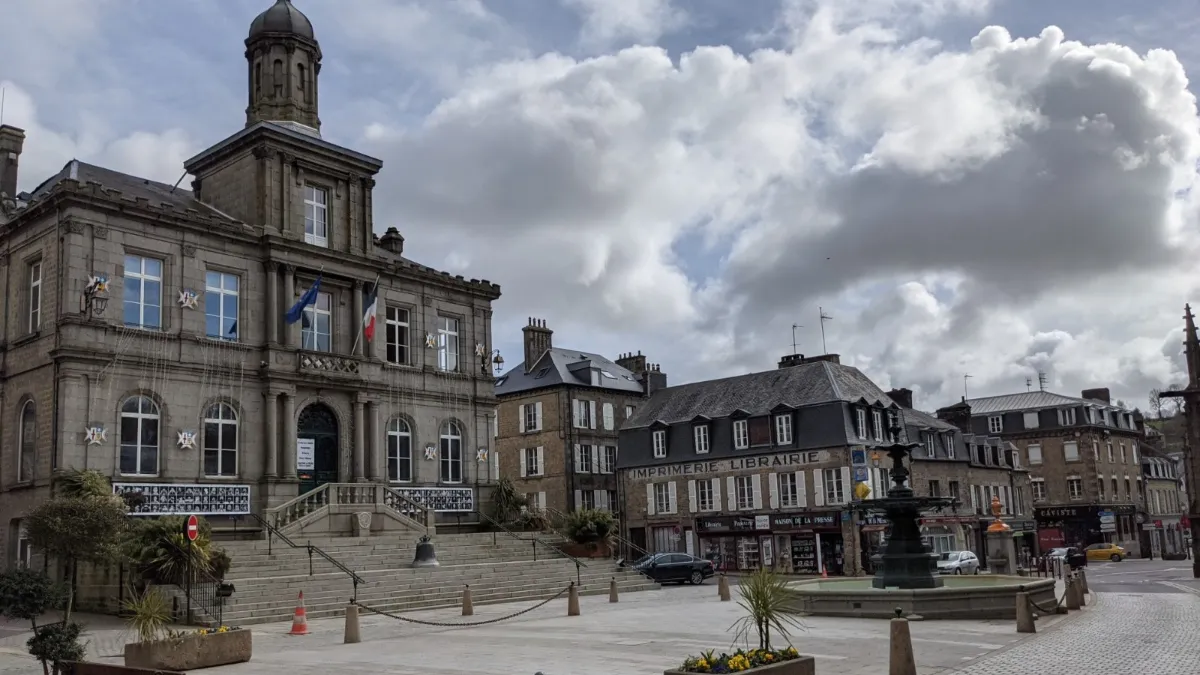
Villedieu les Poêles is an old town with a very craft based character. What you feel most here is the presence of copper: saucepans, pans, and metal objects are still made here, in a tradition that has strongly shaped the town’s identity.
The workshops, museums, and memory of old skills give the place a clear personality, tied to manual work, metal, and passing knowledge down through generations.
Domfront
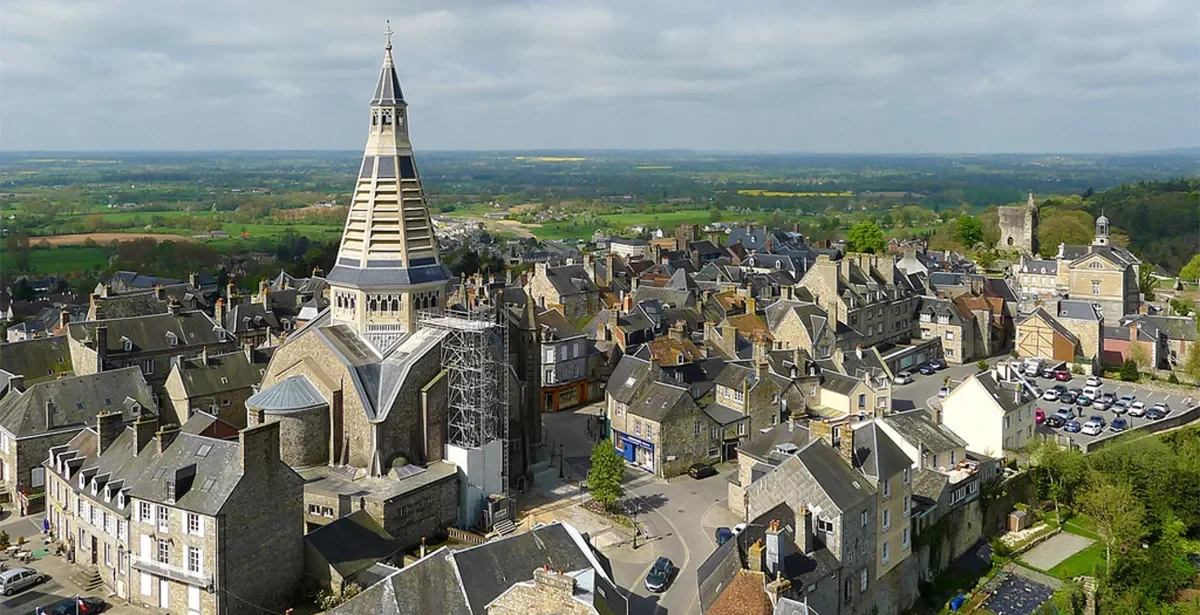
Domfront is a medieval town set on a promontory. From the heights, you overlook the whole region, with the feeling that the towers and old houses are almost hanging in mid air. The site has a strong presence, with narrow streets, stone buildings, and open views over the countryside.
At the end of the promontory, the castle ruins recall the strategic importance of the place. The fortress, founded around 1010, controlled the surrounding regions and once had one of the most powerful keeps in France. Today, the site is a park, with a wide view over the bocage countryside.
Below, the small district of the old tanneries adds a more picturesque touch at the foot of the town. Domfront is also linked to poiré, a sparkling pear drink that is emblematic of the surrounding area.
Bagnoles de l'Orne
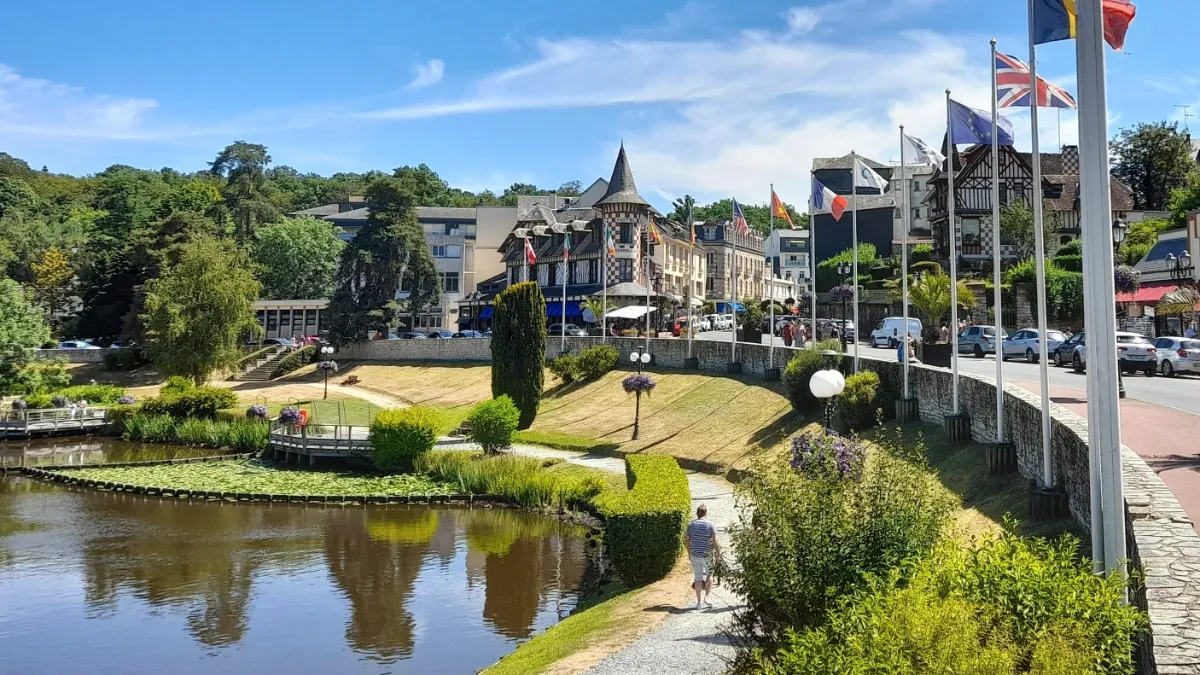
Bagnoles de l’Orne is an old spa town set in a landscape of gentle hills, deep forests, hedgerows, and apple trees. It has a retro atmosphere, with a very green feel.
The town is divided into several districts. The most striking one is the Belle Époque villa district near the lake, with houses that are sometimes massive, sometimes colorful, and often highly original. Some facades mix fake exposed timber, fanciful shapes, and almost theatrical details.
Around Bagnoles, the Andaines Forest wraps around the town like a great green scarf. It’s a landscape of streams, ferns, mushrooms, oaks, and legends, which adds to the peaceful character of the place.
Bellême
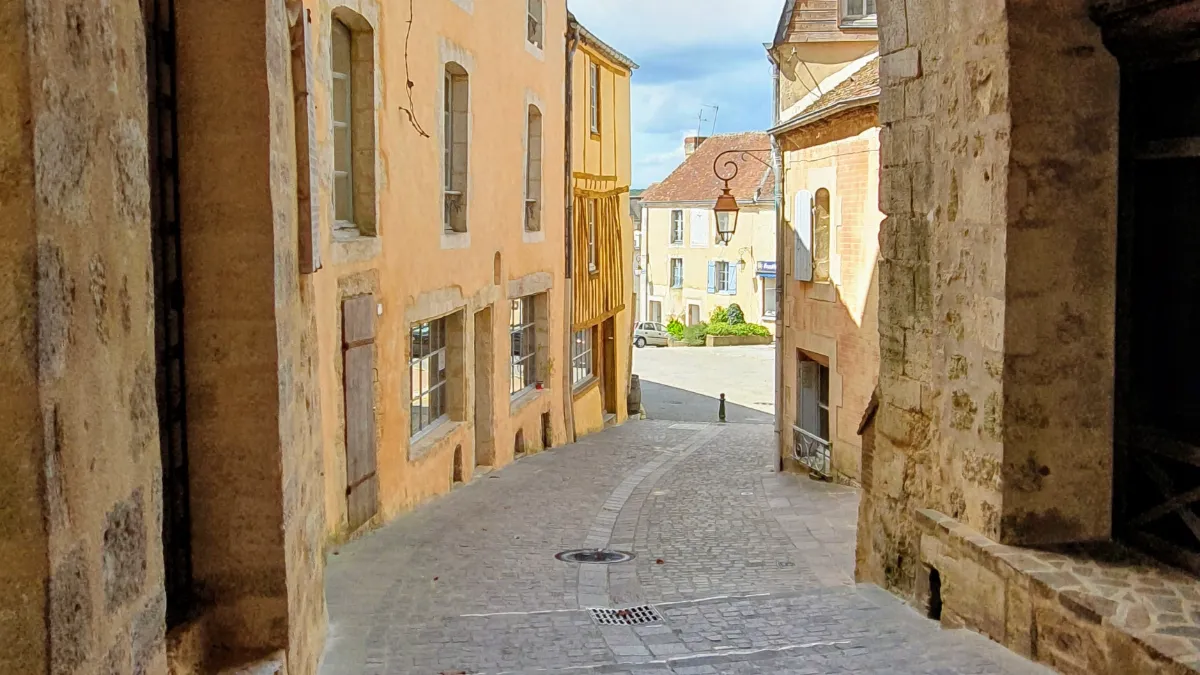
Bellême is a small historic town set above a large forest. It has a quiet atmosphere, especially during the week, with stone streets, a 15th century fortified gate, and an old street lined with beautiful 16th and 18th century mansions.
The forest gives the place much of its character. It’s liked for its old oaks, in a landscape of hills, streams, and manor houses hidden among the trees.
Verneuil d'Avre et d'Iton
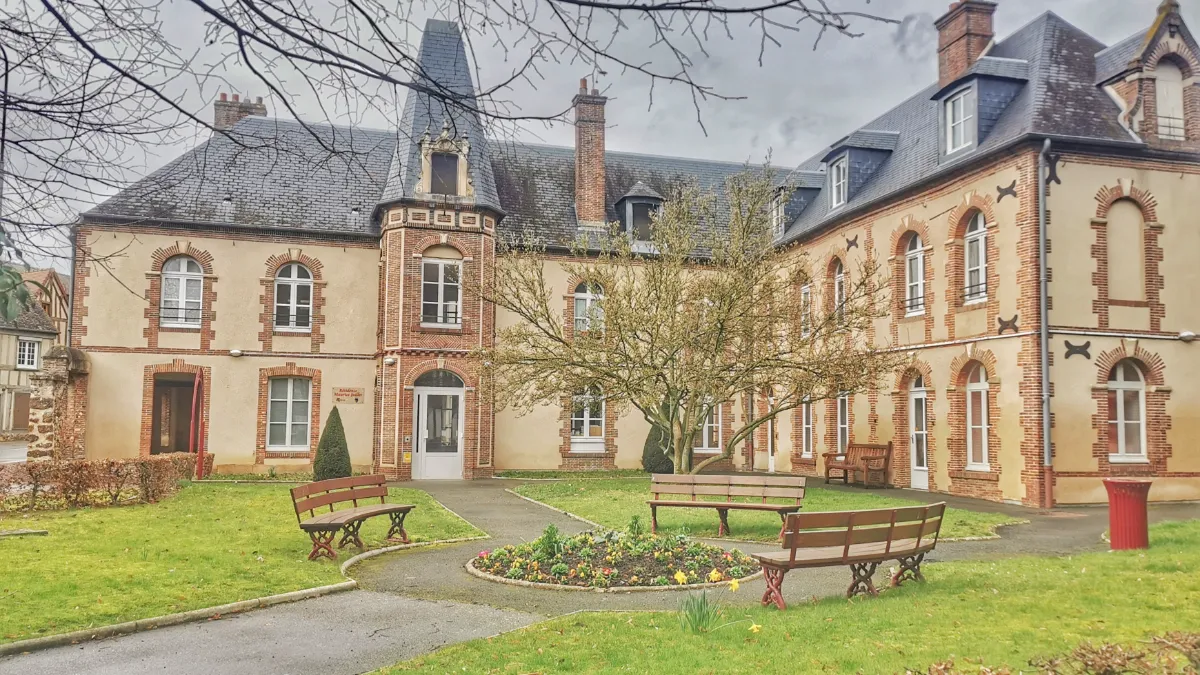
Verneuil d’Avre et d’Iton is a small historic town shaped by stone, towers, and several religious buildings. It has a clear medieval atmosphere, especially around the Tour Grise, a large defensive tower built with dark local stone.
As you walk around, you also pass several old churches. La Madeleine stands out for its tall tower, visible from far away. Notre Dame preserves carved works in wood and stone, recalling the town’s religious importance over the centuries.
The former Saint Nicolas Abbey adds another strong presence to the urban landscape. Between towers, churches, old buildings, and quiet streets, Verneuil feels discreet, but full of history.