


MAP
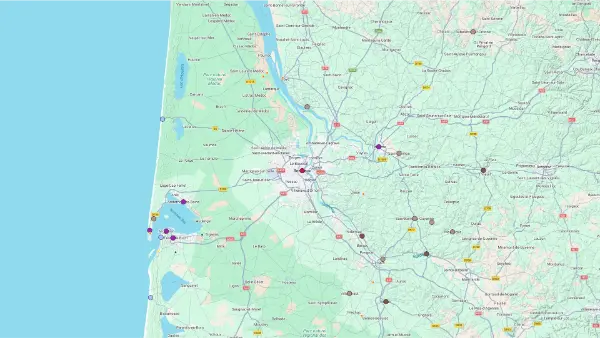
Bordeaux Region
Interactive Map
Bordeaux Region
Interactive Map
Click on the icon  in the top-left corner to display the map legend.
Show/Hide layers as needed.
Click on the arrow icons (v) to display the sublayers.
CITY
| Name | Top+ | Top |
|---|---|---|
| Bordeaux | ✅ |
Bordeaux

In Our Top+ ✅
Bordeaux has a way of winning you over without trying too hard. Nestled in a broad bend of the Garonne River, this former port city stretches out for miles with its honey-colored facades, grand squares, and streets you’ll love getting lost in. The limestone, sometimes golden, sometimes darkened by time, gives the whole city an elegance all its own.
Much of Bordeaux’s wealth came from wine. As early as the Middle Ages, trade with England helped its port thrive. In the 18th century, wealthy wine merchants financed grand mansions and monumental riverfront buildings.
The city’s most beautiful scenery unfolds along the river. The buildings of Place de la Bourse are reflected in the famous Miroir d’eau, while the quays, once bustling with port activity, have been transformed into one long waterfront promenade. Whether you’re walking or cycling, you get sweeping views of the bridges and the old city skyline.
Head into the historic center and the atmosphere changes. The narrow lanes of Saint-Pierre open onto lively squares, while farther south, Saint-Michel has held on to its down-to-earth, multicultural character. To the north, the Chartrons neighborhood recalls the golden age of the wine trade, with its former warehouses and elegant houses. Across the river, the neighborhoods take on a different look again, far removed from the classical architecture of the grand boulevards.
But Bordeaux is far from stuck in the past. The tram network has transformed the way people get around, former industrial areas are finding new life, and the Cité du Vin brings a bold contemporary silhouette to the riverfront. With its heritage, creative energy, and wine culture, Bordeaux has rediscovered the pleasure of simply strolling around, from its gardens to its riverbanks, where locals, cyclists, and visitors all cross paths.
TOWNS
| Name | Top+ | Top |
|---|---|---|
| Soulac-sur-Mer | ☑️ | |
| Andernos-les-Bains | ||
| Arcachon | ✅ | |
| La Teste-de-Buch | ||
| Cap Ferret | ||
| Libourne |
Soulac-sur-Mer
In Our Top ☑️
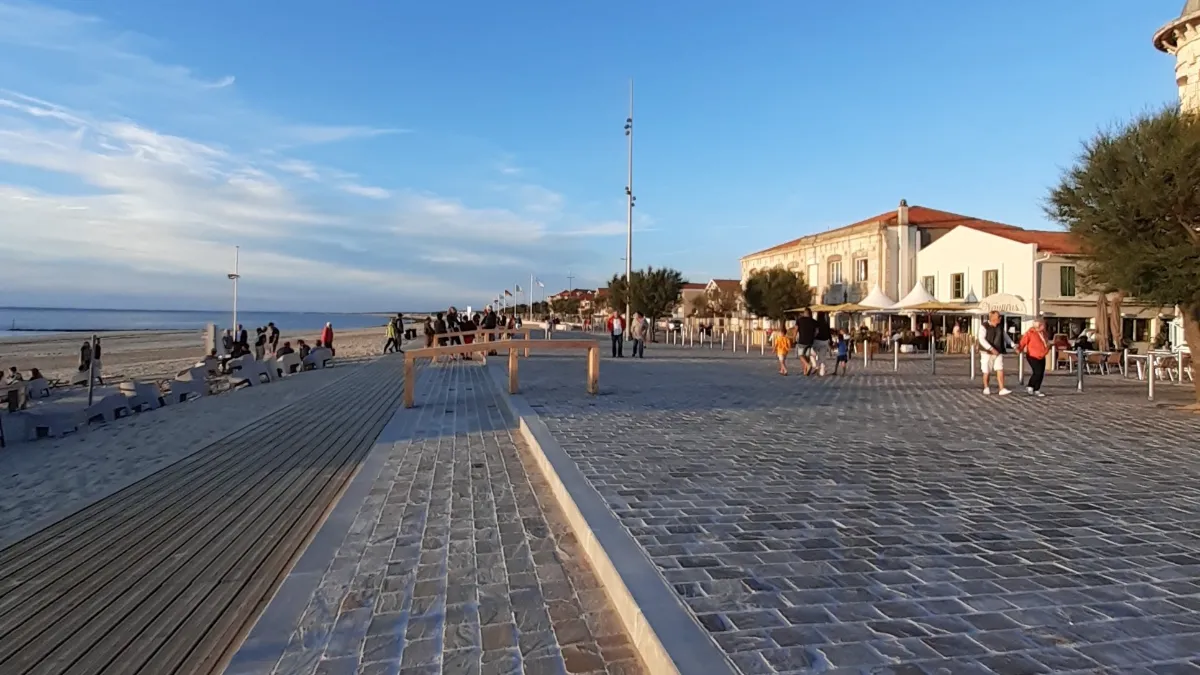
At the northern tip of the Atlantic coast, Soulac-sur-Mer has a wonderfully old-fashioned seaside feel. Behind its wide, wave-swept beaches, the resort reveals streets lined with villas from the 19th and early 20th centuries. Wooden balconies, colorful facades, turrets, and verandas create a surprisingly varied architectural landscape, dating back to the days when seaside holidays were becoming fashionable.
Wander away from the seafront and you’ll discover an even older side of Soulac. The Basilica of Notre-Dame-de-la-Fin-des-Terres, once threatened and partly buried by shifting sands, recalls the pilgrims who passed through on their way to Spain. Its solid, historic architecture makes a striking contrast with the lighter style of the holiday villas.
Here, the ocean is very much in charge. Powerful waves, winds, and tides set the rhythm of the day. Dunes and pine forests provide the backdrop for long walks and bike rides. In the evening, the low sunlight picks out the details of the villas and casts warm colors across the beach.
Andernos-les-Bains
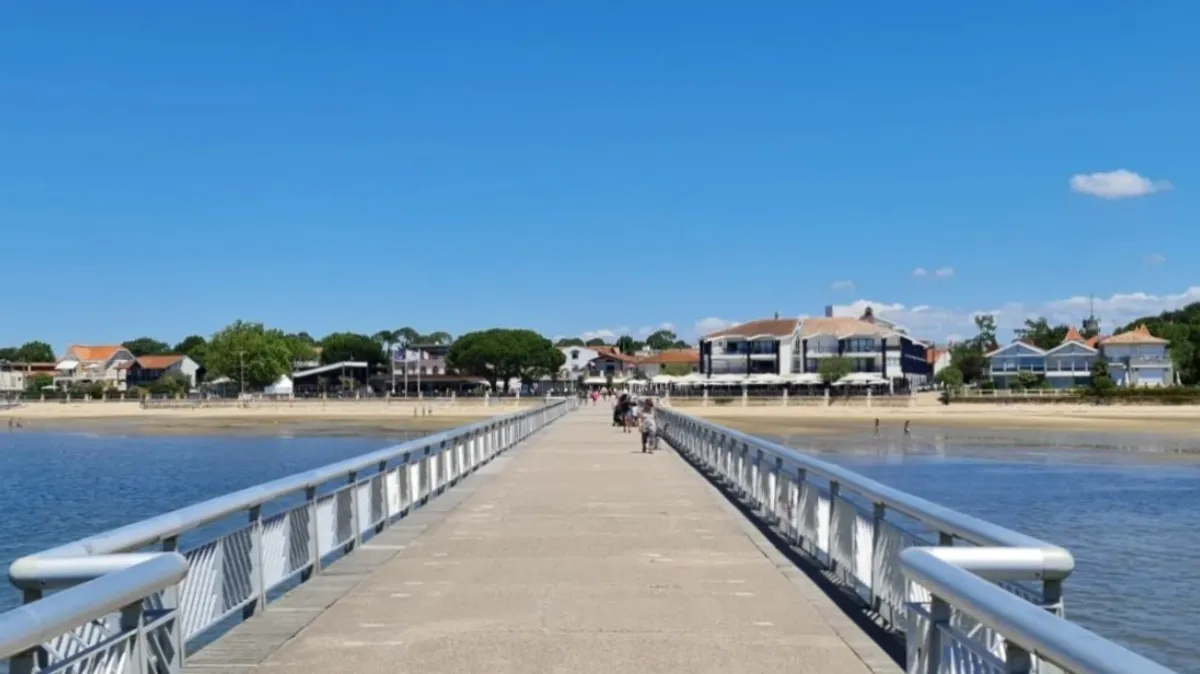
On the eastern shore of Arcachon Bay, Andernos-les-Bains has a peaceful feel that’s a world away from the Atlantic beaches. Here, the sea retreats across vast stretches of sand and mudflats before returning to cover the little beaches. The scenery changes several times a day, and at low tide, the boats sometimes look as though they’re resting on the seabed.
The long pier, stretching 230 meters out into the bay, gives you a lovely view over this vast expanse of water. Just a short walk away, the little harbor is a reminder that oyster farming has been part of local life for generations. Its wooden huts and traditional boats add plenty of charm to a waterfront stroll.
Andernos also has traces of a much older past, including the remains of a Roman villa near Saint-Éloi Church. Keep going toward the natural area of Les Quinconces, and you’ll leave the bustle behind for trees, marshes, and the birdlife of the bay.
Arcachon
In Our Top+ ✅
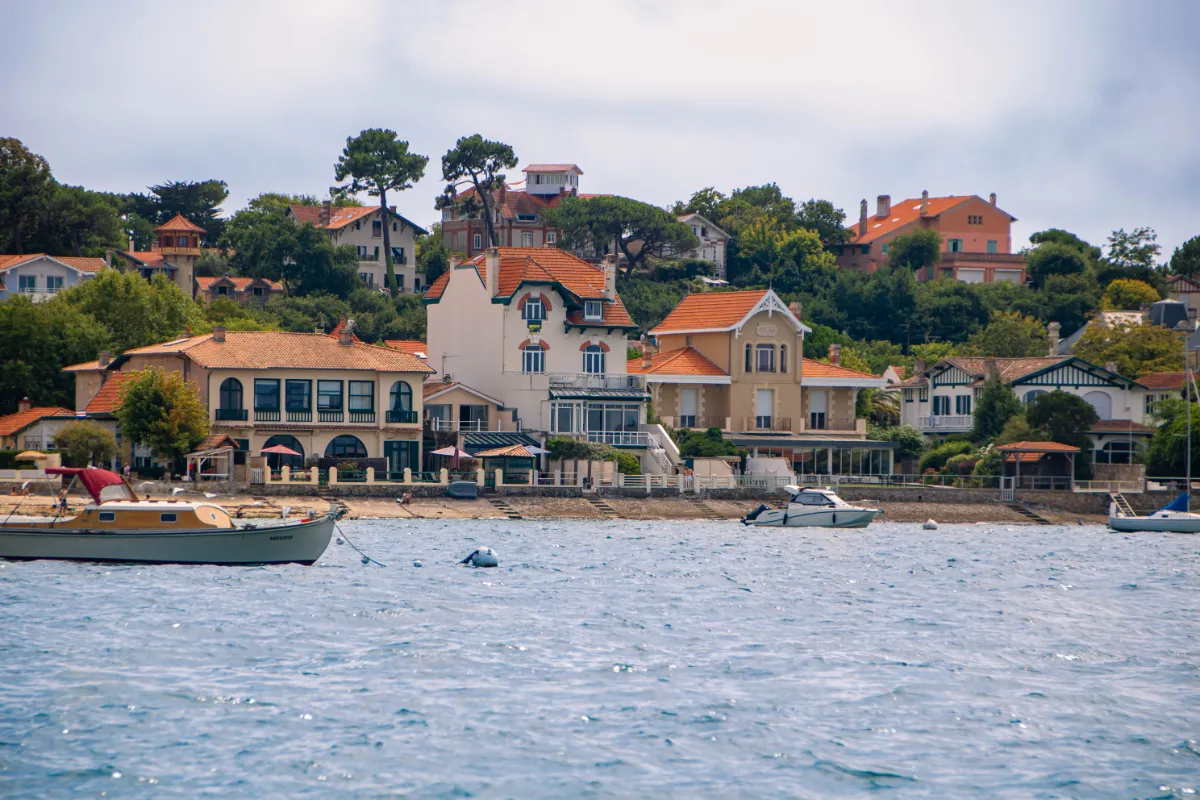
Arcachon grew out of the 19th-century craze for seaside holidays. The railway brought wealthy visitors looking for fresh sea air and a mild climate, and the town has held on to a slightly theatrical sense of elegance ever since.
Up on the hills, the Ville d’Hiver, or Winter Town, is filled with extravagant villas mixing all kinds of architectural styles. Swiss, English, and Oriental influences come together in turrets, bay windows, and beautifully carved balconies. You can wander along winding lanes shaded by tall trees, far from the bustle of the seafront. Down below, beaches and piers face out toward the bay.
Arcachon is also a gateway to a remarkable natural landscape. At low tide, sandbanks emerge, channels become visible, and Île aux Oiseaux, Bird Island, almost seems to float in the middle of the water. Whether you’re watching from the shore or exploring by boat, you quickly see just how much the tides shape the scenery. Boats glide between oyster beds and shallow waters.
La Teste-de-Buch
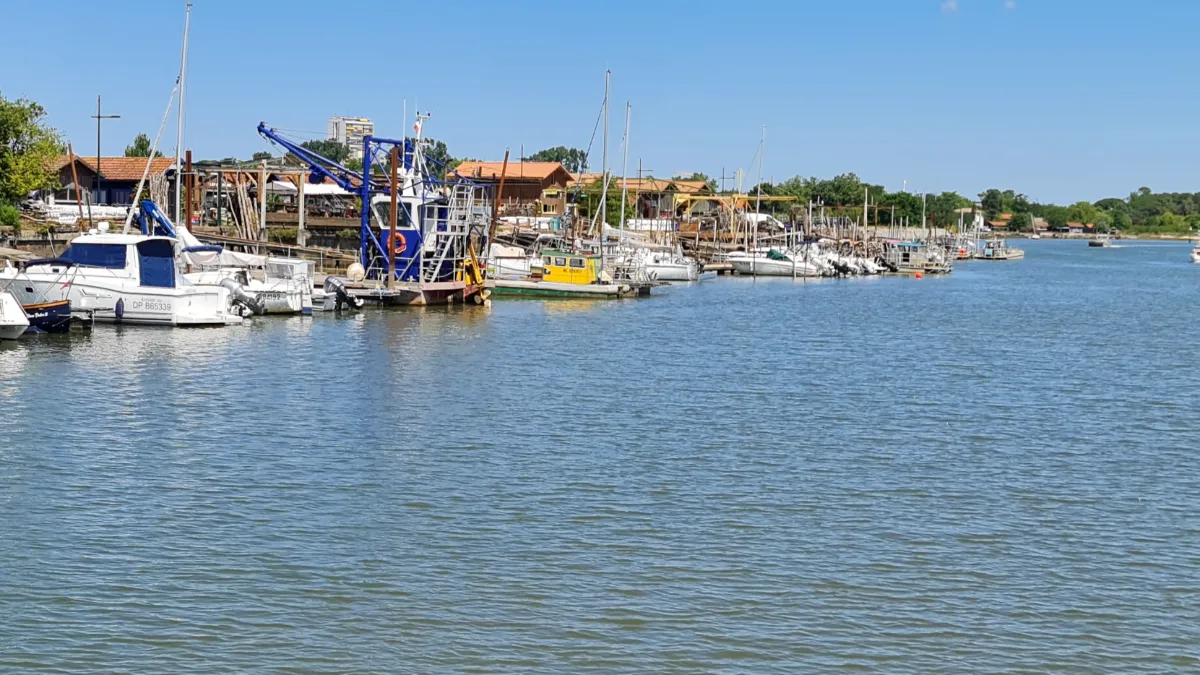
Right next to Arcachon, La Teste-de-Buch has a much quieter personality, deeply rooted in the traditions of the bay. Its old harbor, with wooden huts, working boats, and oyster beds, reminds you that the sea here is a way of life, not just a holiday backdrop. At low tide, the exposed flats take on almost surreal colors.
La Teste also covers a surprisingly large area, stretching from Atlantic beaches to the calm waters of Lake Cazaux and vast pine forests. It’s here that you’ll find the spectacular Dune du Pilat, a towering, shifting mountain of sand overlooking the ocean and the forest. It’s a striking contrast to the peaceful little harbors around the bay.
Around the town center, old houses and natural spaces reveal a local way of life quite different from that of the neighboring resorts. Trails along the salt meadows, grasslands regularly flooded by the sea, are perfect for spotting birds and watching the light change across the landscape.
Cap Ferret
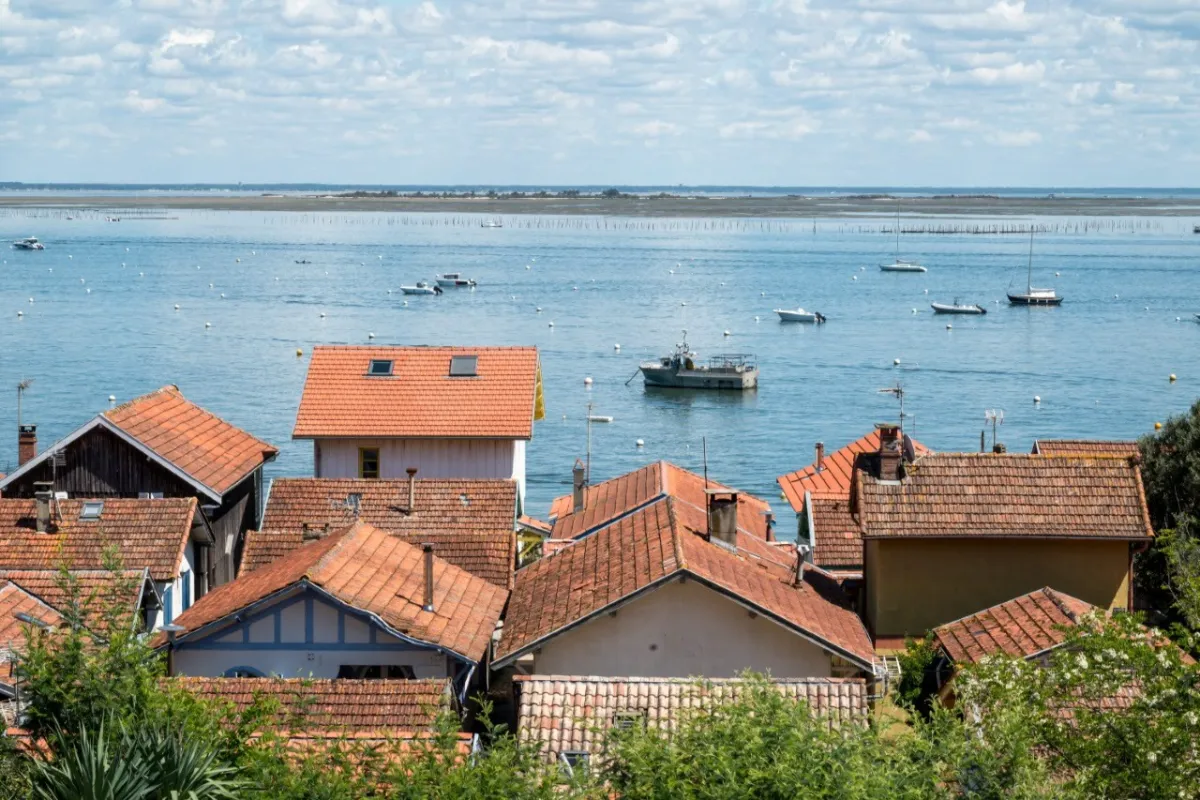
At the end of a long, narrow strip of sand, Cap Ferret offers two completely different worlds. On one side, the Atlantic crashes onto huge beaches backed by dunes. On the other, the sheltered waters of Arcachon Bay lap against little fishing and oyster-farming villages. You only have to cross a few hundred meters to go from one atmosphere to the other.
Much of Cap Ferret’s charm lies in its wooden cabins, sandy paths, and maritime pines. Despite its upscale reputation and holiday homes, some corners still feel wonderfully simple and almost wild. The Cap Ferret lighthouse rises above the landscape, offering sweeping views of the bay, the Dune du Pilat, and the ocean.
At the tip of the peninsula, currents and tides constantly reshape the shoreline. The views are stunning, but coastal erosion means you need to respect areas closed to visitors. By bike, you can follow trails through the pines, surrounded by the lovely scent of resin.
Libourne
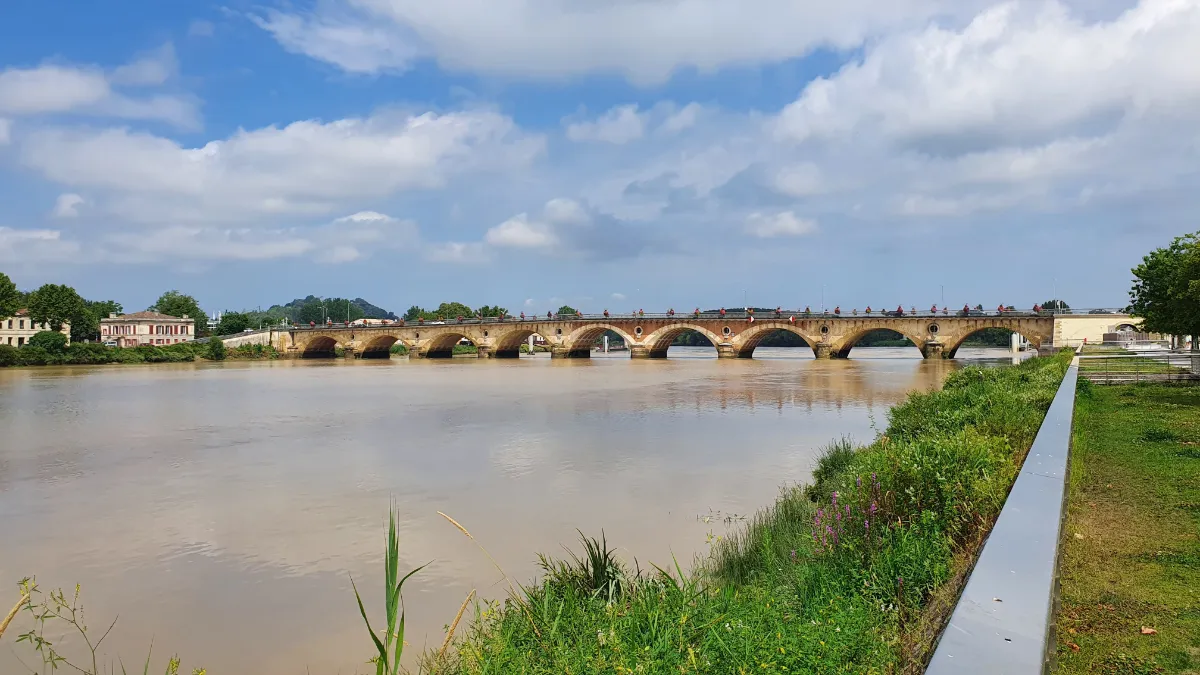
Where the Dordogne and Isle rivers meet, Libourne once thrived on boats carrying goods and wine. Founded in the 13th century under English influence, the town still has a historic center laid out on a regular grid, built around a large square lined with covered walkways. It has a different feel from Bordeaux, smaller, more intimate, and full of local shops.
Place Abel-Surchamp is the historic heart of the town, with facades from different periods and an impressive town hall. Head down toward the quays and you’ll find reminders of the old port. The Porte du Grand-Port, flanked by two towers, recalls the fortifications that once protected the town.
The rivers are never far away. Their banks offer lovely views of the bridges, while the vineyards of Saint-Émilion and Pomerol begin just outside town. Libourne is still a lively place, especially on market days, when its streets and squares fill with people.
SMALL TOWNS (Village Feel)
| Name | Top+ | Top |
|---|---|---|
| Sainte-Foy-la-Grande | ||
| Cadillac-sur-Garonne | ||
| La Réole | ||
| Bazas |
Sainte-Foy-la-Grande
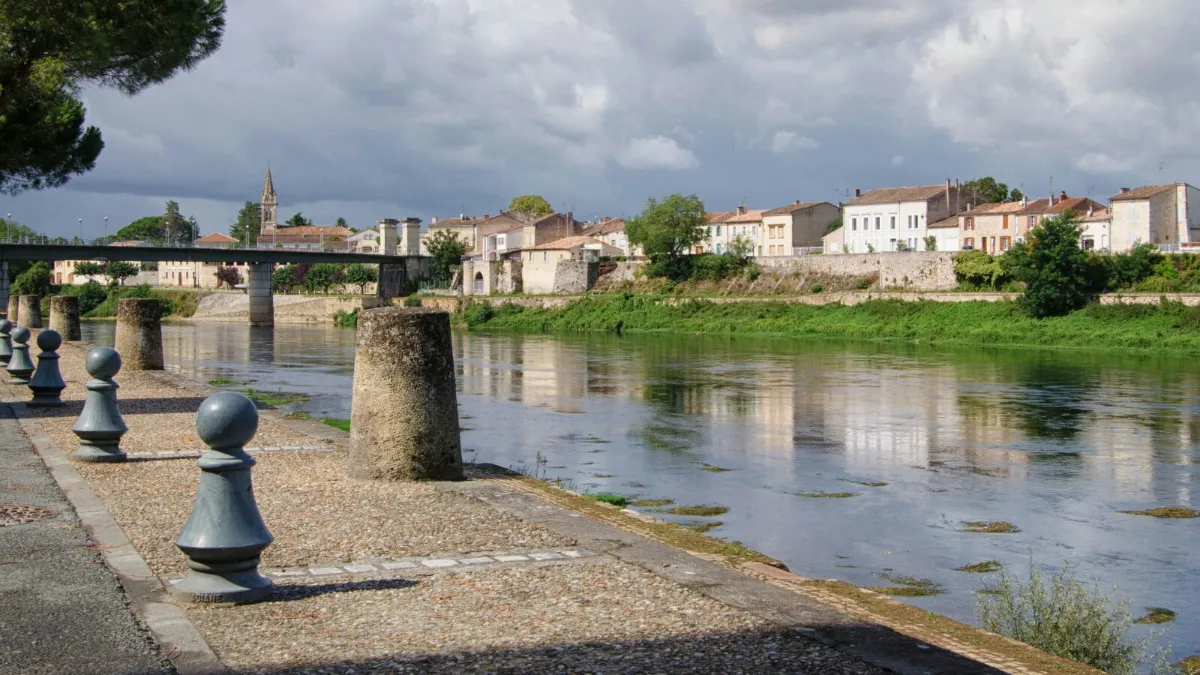
On the banks of the Dordogne, Sainte-Foy-la-Grande has preserved the remarkably geometric layout of a town founded in the 13th century. Its straight streets cross at right angles around a square lined with covered galleries. Behind the facades, you’ll discover old timber-framed houses, where exposed beams and stonework tell the story of centuries gone by.
Once a busy center of river trade, the town has kept its lively, down-to-earth atmosphere. On Saturdays, its large market brings the old streets to life. Walk down toward the river and you’ll enjoy more open views of the quays and the surrounding vineyard landscapes.
Cadillac-sur-Garonne
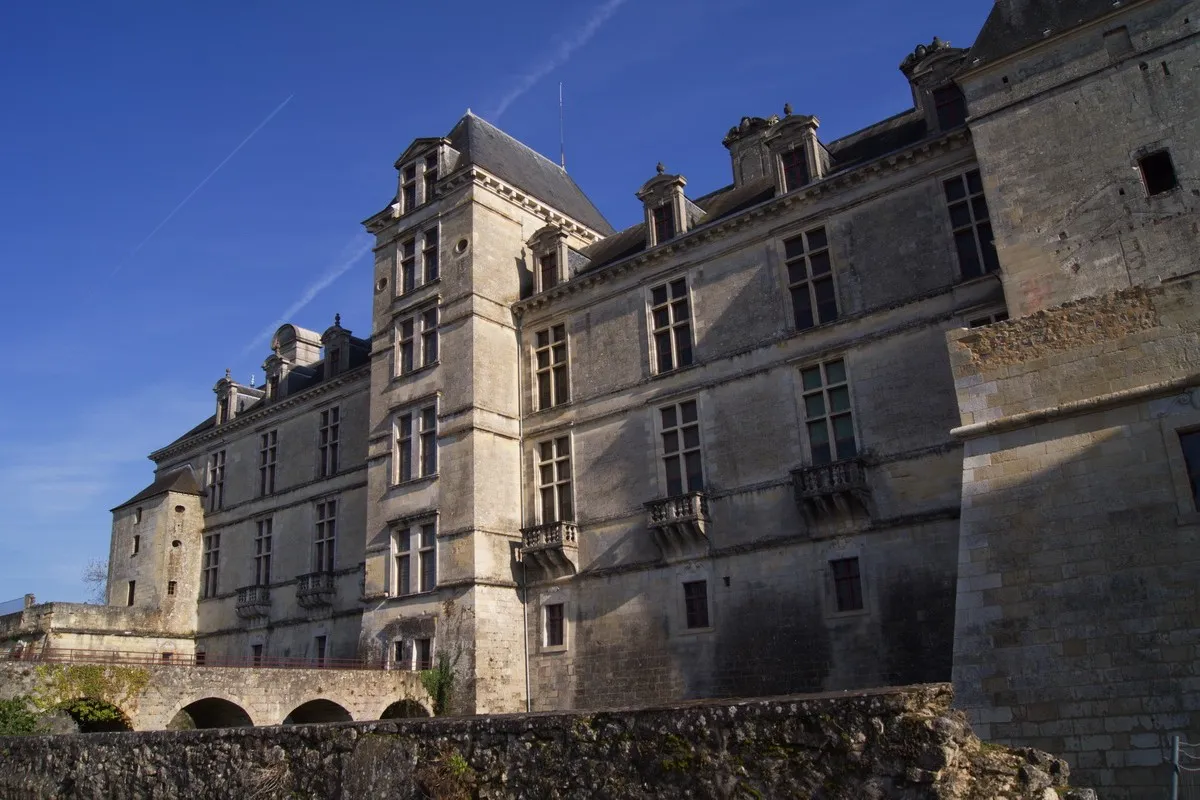
On the banks of the Garonne, Cadillac-sur-Garonne has kept the layout of a small fortified town founded in 1280. You enter its historic center through old stone gateways, then discover an arcaded square and quiet streets lined with centuries-old houses. The remains of its defensive walls recall the struggles between the kings of France and England.
You can’t miss the imposing Château des Ducs d’Épernon, built in the early 17th century. Behind its palace-like exterior, the grand decorated rooms evoke an age of wealth and power. Along the Garonne, the quays open out onto views of vine-covered hillsides.
La Réole
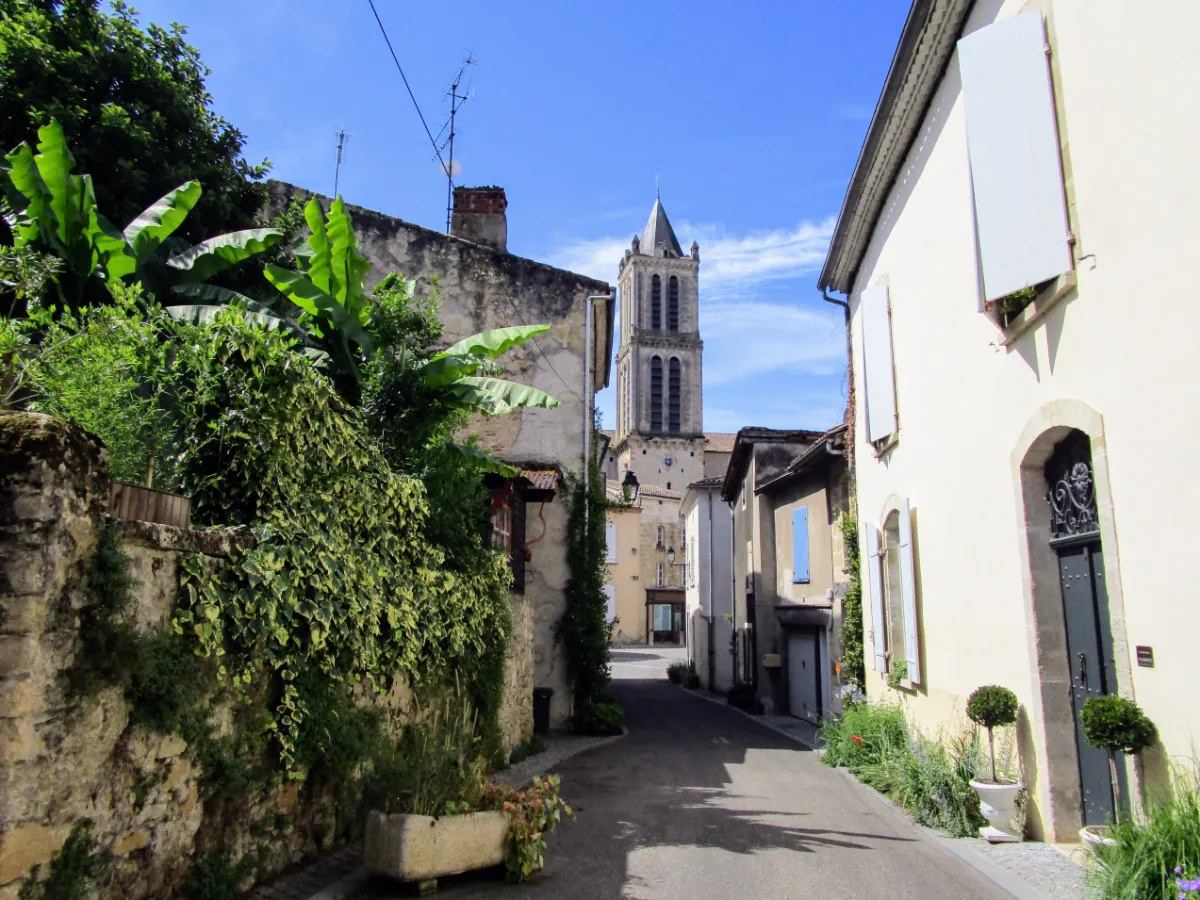
Clinging to a hillside above the Garonne river, La Réole feels a little like a hidden town waiting to be discovered. Its sloping lanes, medieval houses, and stairways make wandering around full of surprises. Once an important religious and trading center, it still has some beautiful reminders of its prosperous past, including its former town hall, one of the oldest in France.
Higher up, the old monastery and the towers of Château des Quat’Sos recall the town’s eventful history. From the heights, you get wonderful views over the river and the tightly packed rooftops of the old town. Down on the quays, everything feels more relaxed, with peaceful riverside walks and the gentle flow of the water.
Bazas
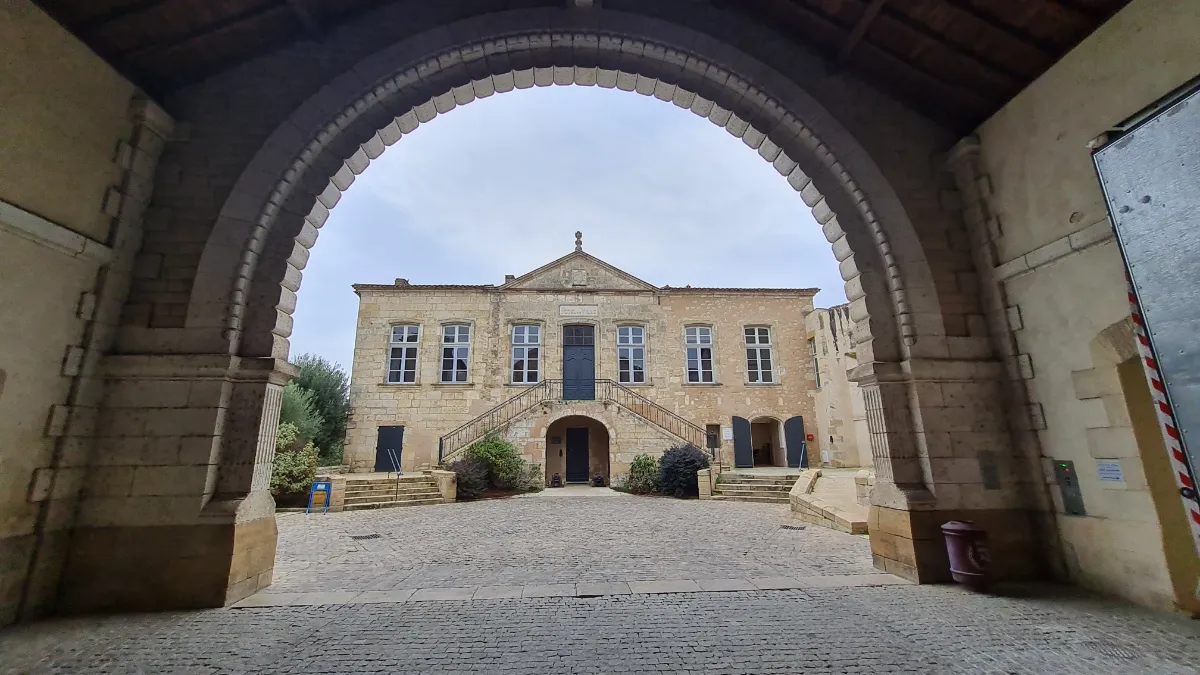
Bazas reveals a beautiful stone skyline surrounded by countryside, forests, and fields. Its historic center is built around a large square lined with old houses and covered arcades. At one end stands the impressive Cathedral of Saint-Jean-Baptiste, with its three carved portals and large stone-framed windows.
This former religious center still has sections of its old walls and elegant houses that reflect centuries of prosperity. As you explore its streets, you’ll also notice the strong ties between the town and the surrounding countryside, famous for its traditional cattle farming and the prized Bazas beef.